28.8 C
Bangkok
Monday, July 6, 2026
Home Blog Page 1637

Police Seeking Korat Teens For Brawl in Hospital ER

Screencap from mobile phone video of the brawl.

NAKHON RATCHASIMA — Police on Monday are looking for a group of drunken teens who started a brawl inside a northeastern hospital last night.

The police identified the perpetrators as youngsters intoxicated from a nearby concert who broke out in a fistfight at Pratai Hospital. Some were injured in an initial fight at the concert before being sent to the hospital. The rest followed into the emergency room and started another round of melee, police said.

Video footage posted online shows two groups fighting in front of the hospital before spilling into the emergency room. Their brawl sent staff members and patients scrambling for cover. The fight was later broken up by soldiers and police who arrived at the scene.

Read: ‘Toon Bodyslam’ Hands 1.3B Baht Over to Hospitals

Officials are still assessing the damage at the facility. The fight came just three weeks after a similar incident occurred at another hospital in the same province.

“We have not made any arrests yet,” Pratai Police Station chief Thitinan Wannasan reported.

Provincial police chief Watcharin Boonkong told reporters that investigators already know the identities of the perpetrators, but did not elaborate

Police said Pratai Hospital is expected to file charges of property damage and nighttime intrusion later today.

Medical facilities appear to have become popular sites of gang scuffles in recent weeks, causing much outrage on social media.

Nine people were arrested earlier this month for brawling at Huai Thalaeng Hospital in Korat on April 10. Four others were also apprehended for a fight at Kaeng Khro Hospital in Chaiyaphum just days later.

On April 15, as the Songkran water festival was in full swing, a similar melee involving over 20 men also broke out at Bang Saphan Noi Hospital.

Advertisement

Opinion: Why Don’t Thais Read?

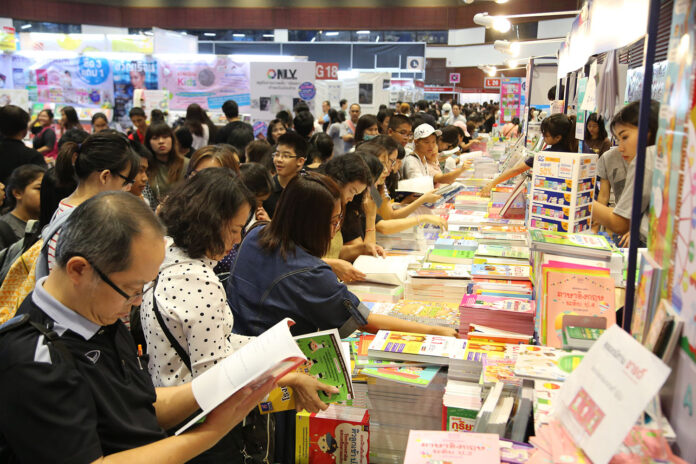
A file photo from the 2017 National Book Week in Bangkok.

By Tayo Tunyathon Koonprasert

At 13, having just moved back to Bangkok after seven years in the United States, I asked my mom to take me to the National Library on Samsen Road.

I confidently walked through the grand entrance, excited about finding a cozy corner—maybe with beanbag chairs—and a good novel. Getting lost in a book for hours was something I loved doing back in the States. Instead, I was welcomed by a dank interior, ladders and tarp-covered bookshelves.

I found the reception desk and asked the woman sitting there, “Where is the English language book section?”

The librarian raised an eyebrow at me. “We don’t have one, dear.”

“When will you have one then?”

“We’re undergoing renovation. We don’t have plans to bring in English books.”

“Why not?” I demanded.

My mom dragged me away. My Americanized teenage self had a lot to learn.

I realized soon after that the National Library is a depository, not a public library as I had hoped. I also learned that most Thai people didn’t love leisurely reading as I do. A reading culture is nonexistent among Thais – a reality that persists today, 15 years later.

A file photo from the 2017 National Book Week in Bangkok.

A “reading culture”, as defined by Professor Aurasri Ngamwittayaphong, is the behavior of continuous reading until it becomes a personal habit that guides one’s way of life, such that the reader sees the benefits of reading and promotes it to others. In Thailand, such a culture has not been fostered.

This is not to say that Thais don’t read. Thais have an adult literacy rate of 93 percent. However, their reading is often limited to lecture notes, comics, Pantip forums, social media posts, and the occasional news article. A study by the Publishers and Booksellers’ Association of Thailand found that 88 percent of the population spends only 28 minutes a day reading. Forty percent doesn’t read books at all.

This is concerning because there are many benefits to reading. It broadens one’s knowledge, offers new perspectives and sparks creative thinking. Many of these benefits are best reaped at an early age. Current public-school curriculums, however, do not assign many readings as homework. Rather, students are given slides and lecture notes. They are spoon-fed summarized information, rather than encouraged to read, analyze, and synthesize it themselves. This hinders the cognitive development of Thai youth and their ability to think critically.

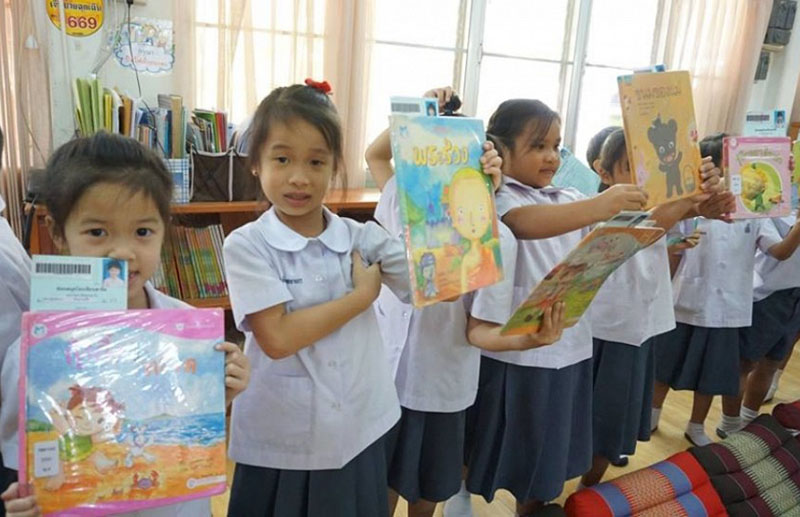
Schoolchildren receive new library books in Khon Kaen province on Feb. 20, 2018.

Unfortunately, there are many socioeconomic barriers towards picking up a book for Thais. For many, the liberty of having free time to read is a privilege. For Thai youth, schoolwork is often already demanding enough. In between rushing from school to tutoring lessons on weekdays and weekends alike, doing homework and getting enough sleep, when will they find the time to read? For adults, countless hours are lost to morning and evening commutes. It is understandable why many would rather plop down in front of the television at the end of a long day and watch lakorn instead.

For others, books are too expensive. The average price of a book is 200 baht while books in English can go well over 1,000 baht. In a survey conducted by the National Statistical Office of Thailand, 39 percent of respondents said they would read more if book prices were lower. For Thais living outside of Bangkok, there is an overall lack of free reading resources. Community and provincial libraries are underfunded and poorly managed. They are often stocked with outdated reading materials and operate with inadequate hours.

Reading, therefore, is an activity that can be afforded only by those who have the privilege of both time and money.

In recent years, there have been commendable initiatives to provide the public with access to books. Public libraries such as TK Park and the Bangkok City Library are examples, while the Neilson Hays Library offers the largest collection of English-language books. Membership prices at Neilson Hays, however, are a whopping 2,500 baht per year for adults and 1,700 baht for children. Public libraries have succumbed to the privilege paradox as well—accessible only for those who can pay the high membership fees or even the pricey BTS or MRT fares to get there.

In the long term the government must provide more funding to public libraries, subsidize the costs of books and improve school curriculums. But there is something we each can do to improve the situation. There is always time to read if we make the time. Instead of spending those long skytrain rides mindlessly browsing your friends’ travel pictures on Instagram, why not open up a book and unravel a whole new world? Instead of watching the two-hour nightly lakorn, why not buy the narrative lakorn guides and read them instead?

We can each try to read more. Every little word counts. Every page counts. We just have to keep turning the pages.

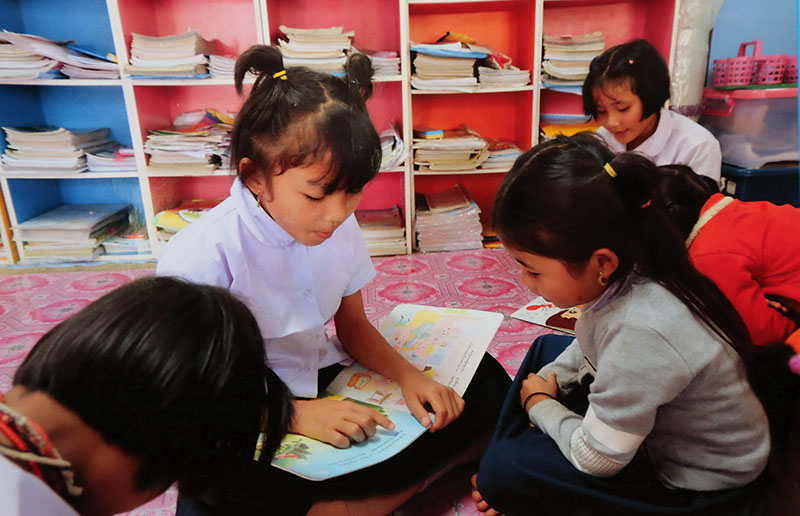
Students in Tak province read in their school library on May 10, 2018.

__

Tayo Tunyathon Koonprasert is a book lover and graduate student at Harvard University’s John F. Kennedy School of Government.

Advertisement

‘Positive Pop’ Singer Ava Max On Her Albanian Heritage and Being Bullied

Ava Max during her interview with Khaosod English on April 26, 2019.

BANGKOK — With whopping combined views of 300 million from two singles alone, Ava Max is belting out 2019’s bubbly pop earworms.

Khaosod English sat down with the 25-year-old American singer during her first trip to Thailand for a chat about her Albanian heritage, positive pop and her signature asymmetric haircut – which she has dubbed the “Max Cut.” Petite at 160cm, Max’s personality was big, bubbly and excitable.

“This haircut symbolizes strength and doing what you want, regardless of what anyone thinks,” she said, showing off her bobbed hair on one side and long locks on the other. “I just started getting really weird looks and everyone was telling me not to keep it. I’m just like, wow, people are judging everybody.”

Born Amanda Ava Koci in Milwaukee, Wisconsin, her breakout hit in August 2018, “Sweet But Psycho”, reached #1 in eight European countries. Her latest single, “So Am I”, has a clear anti-bullying message.

“My parents came to the States. They didn’t know the language, they didn’t have any money. They worked really hard to get to where they are now,” recalled Max, the child of Albanian immigrants. “They taught me to never give up and they instilled really strong ethics. We have really strong women in our community.”

“I grew up being bullied a lot in school and I never fit in at school. I thought it was not normal, but it is normal to feel different because we are different. We are unique, and we’re all amazing,” she gushed.

Image from iOS 2 1

Just as empowering is “Not Your Barbie Girl”, one of Max’s lesser-known songs with only 4.5 million views on YouTube. It’s a timely update to Aqua’s 1997 hit “Barbie Girl” in an era of #MeToo (“You can’t touch me there, you can’t touch my body / Unless I say so, ain’t your barbie, no”).

“Growing up I liked [Aqua’s “Barbie Girl”] and I really didn’t understand the lyrics because I was so young. But then as I got older…I was like, ‘I’m not anyone’s Barbie Girl!’” Max explained. “I just felt like writing it completely differently. And we kept the same melody and chorus and basically just changed up everything else and gave it an empowering feel and lyrics.”

Although she’s yet to release a full album, Max says she hopes to keep making similar “anthemic music.”

“I feel that the world needs more positive messages in music and I personally do too, on some days!” she said.

In the run up to Miss Universe 2019, Thai fans were all about the Albanian beauty queen Trejsi Sejdini (“Oh my goodness, that’s incredible!” said Max). Judging by replays of Max’s pop hits, she’s yet another Albanian to have snagged Thai hearts.

Image from iOS 3

Image from iOS 1

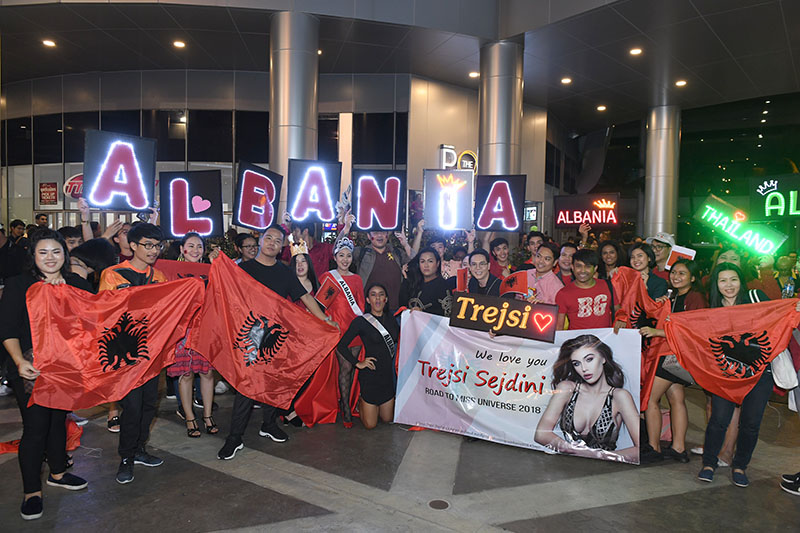
Thai fans of Trejsi Sejdini at the Miss Universe 2018 preliminary rounds on December 13.

Related stories:

Why Thai Fans Are All About Miss Universe Albania


Advertisement

Democrats Dispute Future Forward Victory After Recount

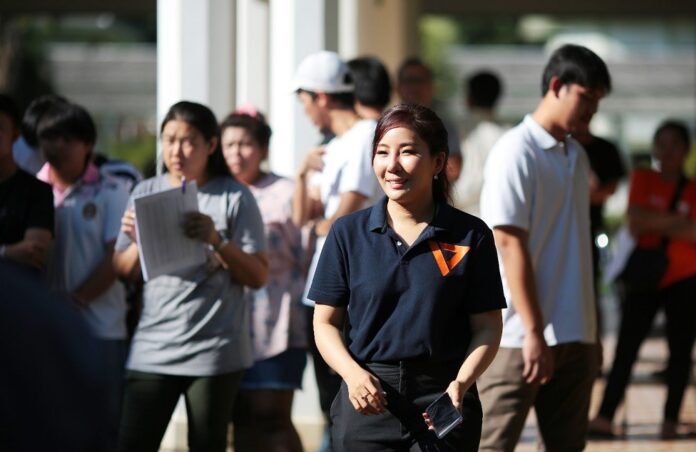
Future Forward MP candidate Sawika Limpasuwanna reacts to the result during a recount in Nakhon Pathom province on April 28, 2019.

NAKHON PATHOM — Preliminary results named Future Forward Party as the winner in a poll recount in Nakhon Pathom province, though the Democrats continue to claim victory.

In an “unofficial” report of Sunday’s recount, the Election Commission said Future Forward candidate Sawika Limpasuwanna defeated Democrat Lt. Sinthop Kaeophichit by 62 votes in a race for the MP seat in the province’s no. 1 constituency.

Future Forward leader Thanathorn Juangroongruangkit, whose complaint of irregularities prompted the recount, said the effort should never have been needed.

“The recount in the no.1 constituency is not a very welcome precedent,” Thanathorn told reporters. “It should have been transparent and proper in the first place. There shouldn’t have been any doubt.”

The Election Commission said Sawika won 35,707 votes against Sinthop’s 35,645 votes. The original count by the poll organizers claimed Sinthop clinched the victory by 147 votes, beating Sawika 35,762 to 35,615.

However, the Democrat Party said its own recount on Sunday still showed Sinthop as the victor by 4 votes. The party vowed to file a legal challenge against the commission’s count.

An official result is slated to be unveiled later this afternoon.

The recount was interrupted by a power shortage as officials were counting and calling out marked ballots. Power was restored about 30 seconds later, though the incident was enough to raise even more suspicion among Future Forward supporters, who have been accusing the Election Commission of biases against their party.

In a related development, transparency activist Srisuwan Janya submitted a petition to the Election Commission on Monday, urging officials to disqualify 11 MP candidates from Future Forward Party.

Srisuwan alleged the 11 politicians hold shares in media companies, which is forbidden by election laws.

Additional reporting Teeranai Charuvastra

Advertisement

Succession This Week Will Shrink Japan’s Imperial Heirs to 2

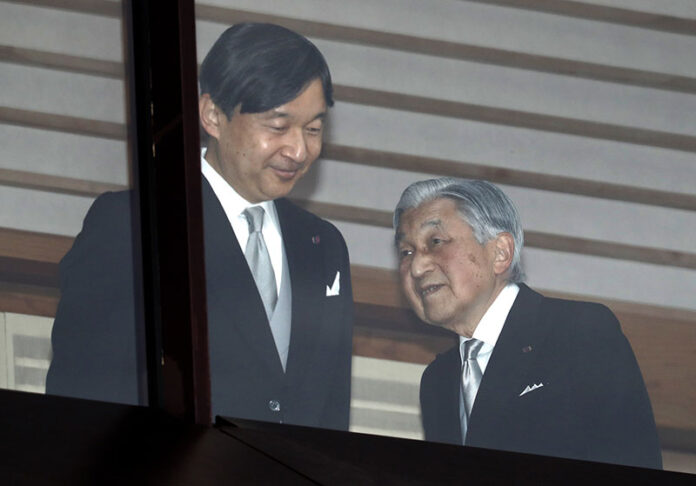
In this Dec. 23, 2018, file photo, Japan's Emperor Akihito, right, accompanied by Crown Prince Naruhito, walks away after greeting well-wishers when they appeared on the balcony of the Imperial Palace to mark the emperor's 85th birthday in Tokyo. Akihito is ending his three-decade reign Tuesday, April 30, 2019 as he abdicates to his son, Crown Prince Naruhito, becoming the first to do so in 200 years, in a step nobody today has witnessed. Photo: Eugene Hoshiko / AP

TOKYO — Japan’s imperial family is relatively small and will shrink further in the coming years. Only one of Emperor Akihito’s four grandchildren is a male who can ascend to the throne. The three princesses likely will lose their royal status eventually, since they are required to do so if they marry commoners. Akihito’s daughter lost her imperial status after marrying a local government official.

A look at the imperial family as Akihito abdicates on Tuesday:

___

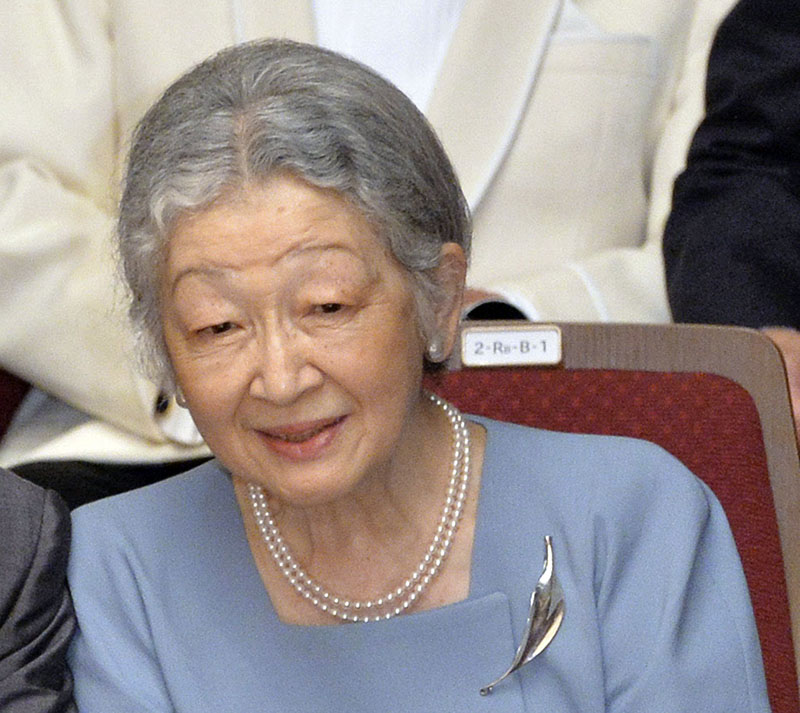
EMPRESS MICHIKO, 84

AP19117184473614
In this July 7, 2013, file photo, Japanese Empress Michiko watches a concert of the Gakushuin university’s alumni in which Crown Prince Naruhito plays the viola at Tokyo Metropolitan Theatre in Tokyo. Japan’s Emperor Akihito, abdicating Tuesday, April 30, 2019, has a relatively small family, and it will shrink in coming years. Photo: Kazuhiro Nogi / AP

Akihito’s wife, born Michiko Shoda, is the daughter of a wealthy businessman who led the Nissin Flour Milling Co. She graduated from the University of the Sacred Heart with top honors in English literature and has written and translated children’s books. Michiko met Akihito at a 1957 tennis tournament remembered as a “love match,” and the couple married two years later. She was the first commoner to marry an emperor and was part of many changes Akihito brought to Japan’s ancient monarchy. They broke tradition by raising their three children instead of leaving their care to palace staff. They traveled around Japan, reaching out to those with disabilities or other difficulties. When the couple met people coping with disasters, Michiko led the interactions, typically kneeling on the floor “Heisei style,” named after Akihito’s era.

___

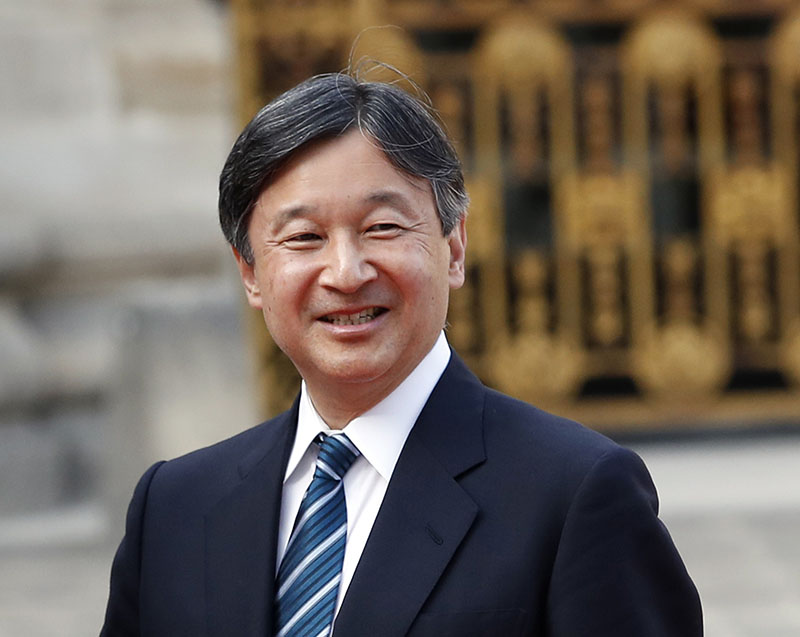
CROWN PRINCE NARUHITO, 59

AP19116107442174
In this Sept. 12, 2018, file photo, Japan’s Crown Prince Naruhito is greeted by French President Emmanuel Macron before a meeting at the Chateau de Versailles, west of Paris. Japan’s Emperor Akihito, abdicating Tuesday, April 30, 2019, has a relatively small family, and it will shrink in coming years. Photo: Christophe Ena / AP

Naruhito, whose name in Chinese characters means a virtuous person, will ascend the Chrysanthemum Throne on Wednesday as the 126th emperor in a line dating to the fifth century. A historian and a viola player, Naruhito is Japan’s first emperor-to-be to have studied abroad and could expand his role to global issues. He has pledged to inherit his father’s devotion to peace and compassion for the people, while exploring his own style.

Naruhito married a Harvard-educated former diplomat, Masako. After graduating from Gakushuin, a private school for former aristocrats, Naruhito studied at Oxford University and authored a paper on the historical Thames River water transportation systems.

___

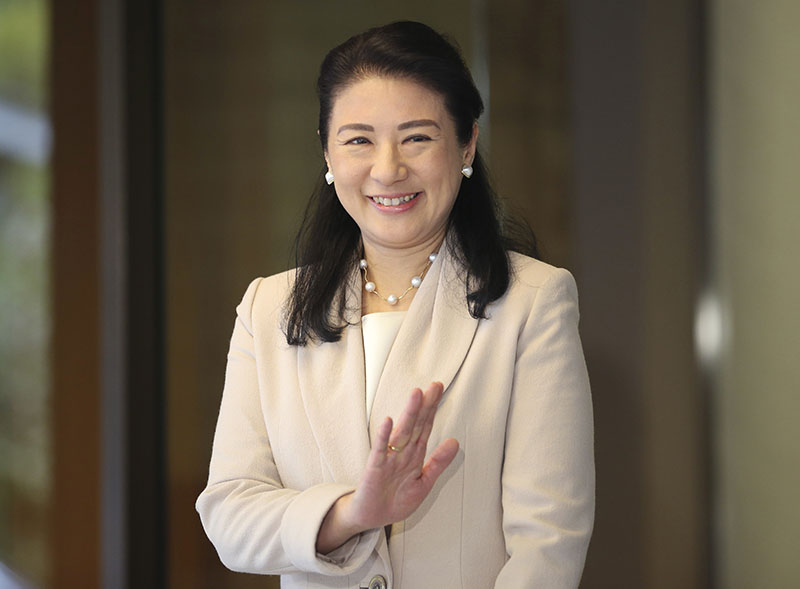
CROWN PRINCESS MASAKO, 53

AP19116108207859
In this March 16, 2018, file photo, Japan’s Crown Princess Masako sees off Crown Prince Naruhito as he departs for Brazil, at the entrance of the Akasaka Palace in Tokyo Friday, March 16, 2018. Japan’s Emperor Akihito, abdicating Tuesday, April 30, 2019, has a relatively small family, and it will shrink in coming years. Photo: Koji Sasahara / AP

Harvard-educated Masako Owada had a promising future as a diplomat when she captured Naruhito’s eye at a 1986 tea party. It took Naruhito seven years of waiting, during which Masako studied at Oxford and refused him twice. She finally accepted his proposal and the two married in 1993.

Despite growing expectations that she may help modernize and internationalize the palace, Masako has largely receded from the public since the early 2000s after giving birth to daughter Aiko and developing stress-induced depression. In 2004, Naruhito subtly criticized the heated attention and pressure placed on Masako to produce a boy while depriving her of foreign visits. Naruhito says Masako is steadily recovering and hopes to gradually expand her role.

___

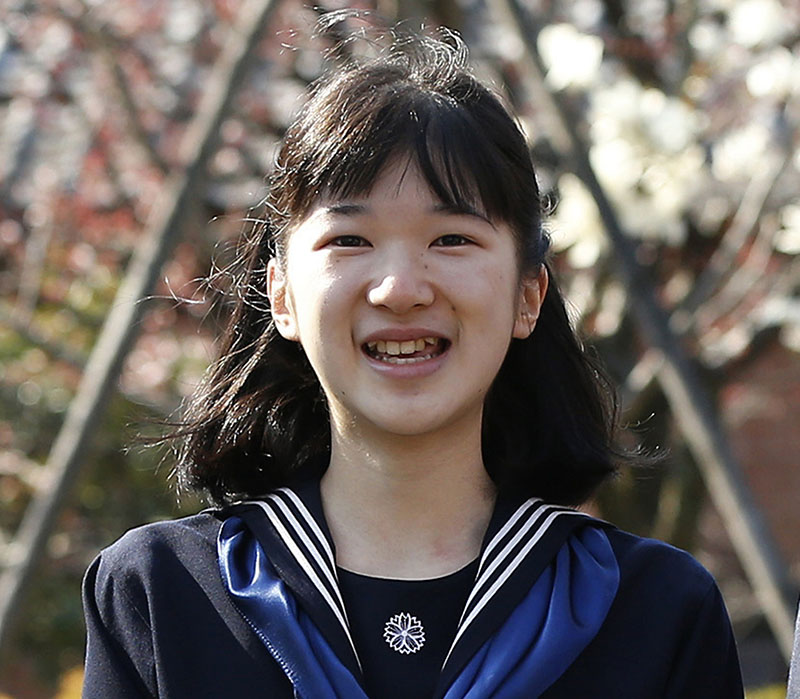
PRINCESS AIKO, 17

AP19118081401984
In this March 22, 2017, file photo, Japan’s Princess Aiko poses for photos as she attend her graduation ceremony at the Gakushuin Girls’ Junior High School in Tokyo. Japanese Emperor Akihito is ending his three-decade reign Tuesday, April 30, 2019, and Crown Prince Naruhito is ascending the throne May 1. Aiko is out of the picture under Japan’s male-only succession law, and instead the line goes to Naruhito’s younger brother Fumihito, better known as his childhood title Prince Akishino, who will become crown prince May 1. PhotoL Issei Kato / AP

The only child of Naruhito and Masako would have been next in line to the throne if born in a gender-equal nation. But Japan’s Imperial House Law only allows males to rule. As a child, Aiko enjoyed watching sumo and memorized wrestlers’ names and ranks. Having parents who studied in Britain, Aiko has participated in a summer program at Eton College.

___

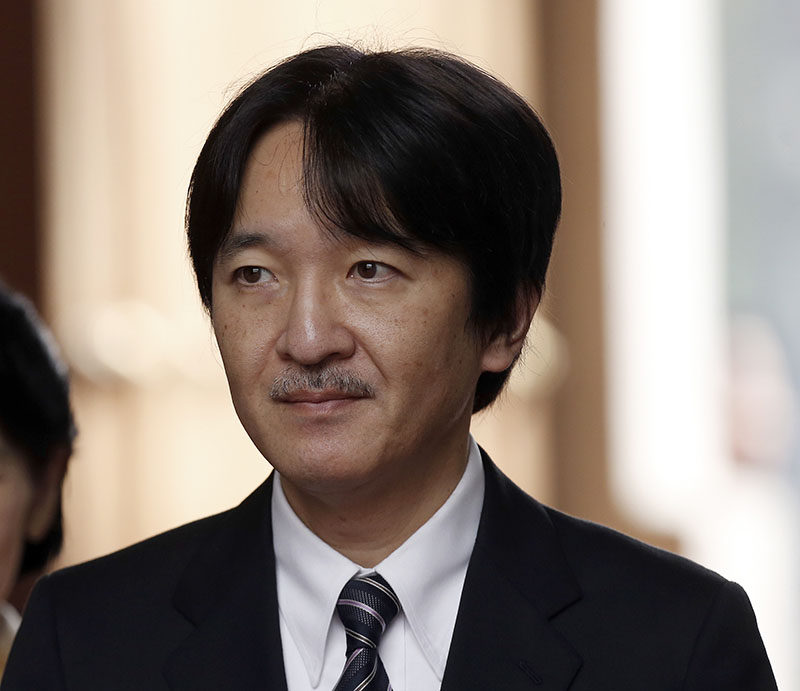
PRINCE FUMIHITO, 53

AP19117175072907
In this Sept. 27, 2017, file photo, Japan’s Prince Akishino arrives to meet with Chile’s President Michelle Bachelet at La Moneda presidential palace in Santiago, Chile. Japan’s Emperor Akihito, abdicating Tuesday, April 30, 2019, has a relatively small family, and it will shrink in coming years. Photo: Luis Hidalgo / AP

The younger of Akihito’s two sons, Fumihito is better known as Akishino, his childhood title, and will be crown prince during Naruhito’s reign. His future stint will be short, if at all, and there is speculation that Fumihito may skip his turn and hand it to his 12-year-old son, Prince Hisahito. Affectionately known as prince “catfish,” his research subject, Fumihito has visited Thailand a number of times to study fisheries and the domestication of chickens.

He met his future wife, Kiko, at Gakushuin University, where both were students. Contrary to his brother’s attentive team-player image, Fumihito is said to be free-spirited and outspoken, at times critical of his elder brother. He and Kiko have two daughters and a son.

___

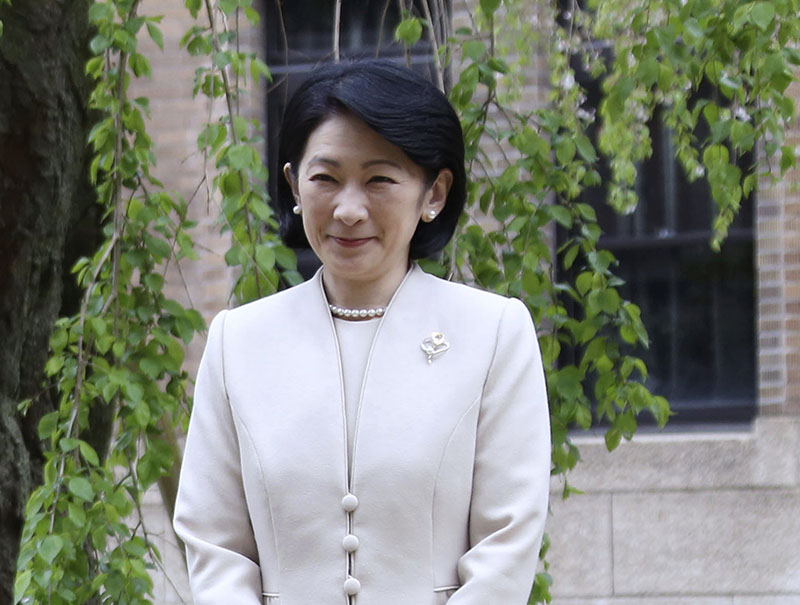
PRINCESS KIKO, 52

AP19117175068141
In this April 8, 2019, file photo, Princess Kiko poses for photos at Ochanomizu University Junior High school before attending the entrance ceremony in Tokyo. Japan’s Emperor Akihito, abdicating Tuesday, April 30, 2019, has a relatively small family, and it will shrink in coming years. Photo: Koji Sasahara / AP

Kiko, formerly Kiko Kawashima, grew up in the U.S. and Austria and lived in modest housing after returning to Japan. She was called the “apartment princess” when she married Fumihito in 1990. Twelve years after the couple had their second daughter, Kiko gave birth to Hisahito in 2006 amid intense attention on a possible male heir. Hisahito’s birth halted a government debate on whether to change the succession rules to allow a female emperor.

___

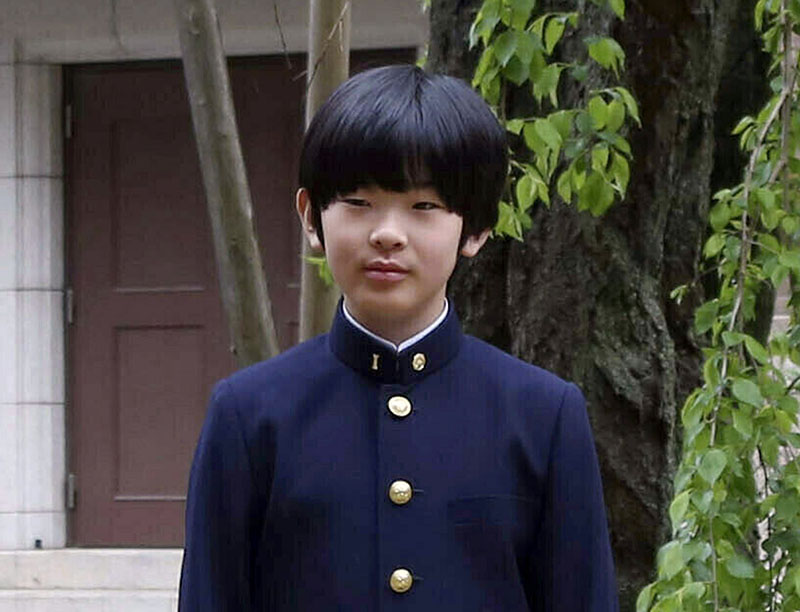
PRINCE HISAHITO, 12

AP19117172351382
In this April 8, 2019, file photo, Prince Hisahito, center, accompanied by his parents Prince Akishino, left, and Princess Kiko poses for photos at Ochanomizu University Junior High School before attending his entrance ceremony in Tokyo. Japan’s Emperor Akihito, abdicating Tuesday, April 30, 2019, has a relatively small family, and it will shrink in coming years. Photo: Koji Sasahara / AP

The only male of Akihito’s four grandchildren, Hisahito will be second in line to the throne when the new era begins, and there is nobody left after him. The male-only succession rules maintained by the government and its right-wing supporters put him on the spot, with heavy pressure to produce a male heir. Akihito’s abdication reminded the government of a need to resume discussion on how to maintain the royal population and a stable succession.

___

PRINCESS MAKO, 27

AP19116140847919
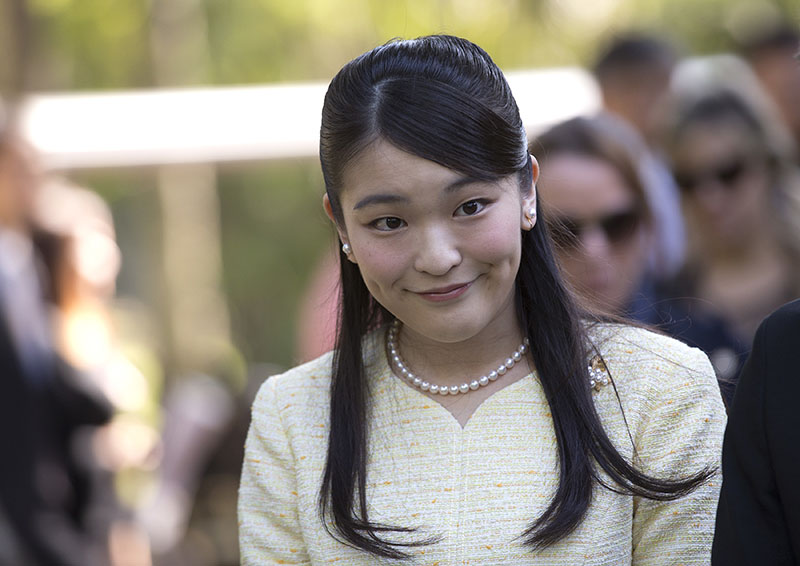
In this July 18, 2018, file photo, Japan’s Princess Mako visits the Botanical Gardens in Rio de Janeiro, Brazil. Japan’s Emperor Akihito, abdicating Tuesday, April 30, 2019, has a relatively small family, and it will shrink in coming years. Photo: Silvia Izquierdo / AP

The oldest of Akihito’s four grandchildren and sister of Hisahito, Mako has been a target of tabloid coverage due to her boyfriend’s family debt scandal that pushed back their planned marriage to 2020 amid growing uncertainty. Her college classmate and boyfriend, Kei Komuro, is now studying law at Fordham University in New York.

___

PRINCESS KAKO, 24

AP19116109388068
In this April 2, 2015, file photo, Japan’s Princess Kako, younger daughter of Prince Akishino and Princess Kiko, poses on the campus of International Christian University prior to the entrance ceremony of the university in Tokyo. Japan’s Emperor Akihito, abdicating Tuesday, April 30, 2019, has a relatively small family, and it will shrink in coming years. Photo: Eugene Hoshiko / AP

The second-oldest of Akihito’s grandchildren, Kako recently graduated from the International Christian University in Tokyo, where she studied psychology. She won’t seek a job and is expected to take on official duties as a member of the royal family. Kako spent a year studying performing arts at Leeds University in Britain and enjoys hip-hop dancing. She has published photo books as her looks and fashion gained followers.

Story: Mari Yamaguchi and Kaori Hitomi Associated Press

Advertisement

No Mass for Sri Lanka’s Catholics; No Veils for Muslim Women

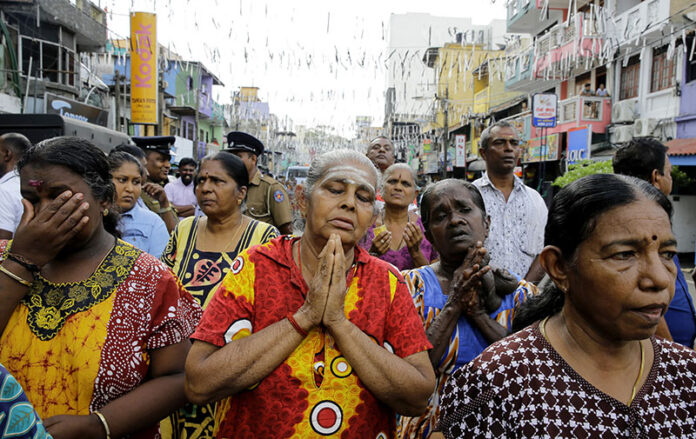
Sri Lankan Catholics pray standing on a road during a brief holly mass held outside the exploded St. Anthony's Church marking the seventh day of the Easter Sunday attacks in Colombo, Sri Lanka, Sunday, April 28, 2019. Photo: Eranga Jayawardena / AP

AMPARA, Sri Lanka — The effects of Sri Lanka’s Easter suicide bombings reverberated across two faiths Sunday, with Catholics shut out of their churches for fear of new attacks, left with only a televised Mass, and Muslim women ordered to stop wearing veils in public.

Many across the nation knelt before their televisions as Cardinal Malcolm Ranjith, the archbishop of Colombo, delivered a homily before members of the clergy and the country’s leaders in a small chapel at his residence in the capital.

The closing of all of Sri Lanka’s Catholic churches — an extraordinary measure unheard of in the church’s centuries on this island off the southern tip of India — came after local officials and the U.S. Embassy in Colombo warned that more militants remained on the loose with explosives a week after bombings claimed by the Islamic State group and aimed at churches and hotels killed more than 250 people.

Before services began, the Islamic State group claimed three militants who blew themselves up Friday night after exchanging fire with police in the country’s east. Investigators sifting through that site and others uncovered a bomb-making operation capable of spreading far more destruction.

“This is a time our hearts are tested by the great destruction that took place last Sunday,” Ranjith told those watching across the nation. “This is a time questions such as, does God truly love us, does he have compassion toward us, can arise in human hearts.”

Later on Sunday, President Maithripala Sirisena banned all kinds of face coverings that may conceal people’s identities. The emergency law, which takes effect Monday, prevents Muslim women from veiling their faces.

The decision came after the Cabinet had proposed laws on face veils at a recent meeting. It had deferred the matter until talks with Islamic clerics could be held, on the advice of Prime Minister Ranil Wickremesinghe.

In a rare show of unity, Sirisena, Wickremesinghe and opposition leader Mahinda Rajapaksa had attended the Mass in person. Their political rivalry and government dysfunction are blamed for a failure to act upon near-specific information received from foreign intelligence agencies that preceded the bombings, which targeted three churches and three luxury hotels.

Police said they had arrested 48 suspects over the last 24 hours as checkpoints mounted by all of Sri Lanka’s security forces sprung up across this country of 21 million people. Those arrested include two men whom authorities recently appealed to the public to locate.

The government also warned that it would crack down on those spreading false information and making inflammatory remarks.

Police, meanwhile, entered the main mosque of National Towheed Jamaat on Sunday afternoon, just a day after authorities declared it and another organization terror groups over the bombings.

Police entered the mosque, located in Kattankudy in eastern Sri Lanka, and stopped an interview among foreign journalists and mosque officials. Later, a senior police officer dispersed journalists waiting outside, saying authorities were conducting a “cordon and search operation.”

Police then left, locking up the mosque just before afternoon prayers were to start.

Authorities banned National Towheed Jamaat over its ties to Mohammed Zahran, the alleged mastermind of the Easter Sunday bombings. Zahran and masked others had pledged their loyalty to IS leader Abu Bakr al-Baghdadi before carrying out the attacks, showing the danger the extremist group poses even after losing all its territory in Iraq and Syria.

On Friday night, a confrontation with police sparked a firefight with the militants in Kalmunai, some 225 kilometers (140 miles) northeast of Colombo. Sri Lanka’s military said the gunfire and later suicide blasts killed 15 people, including six children.

On Sunday, the Islamic State group claimed three of the militants who blew themselves up there. In a statement carried by the extremists’ Aamaq news agency, IS identified the bombers by their noms du guerre as Abu Hammad, Abu Sufyan and Abu al-Qa’qa. It said they opened fire with automatic weapons and “after exhausting their ammunition, detonated … their explosive belts.”

Police spokesman Ruwan Gunasekara said a woman and a 4-year-old child found wounded after the gunbattle have been identified as Zahran’s wife and daughter.

At the main police station in Ampara, an outdoor stage now holds what police recovered after the firefight. The IS-aligned militants had created a bomb-making factory at the home, complete with laboratory-style beakers and thick rubber gloves.

Bags of fertilizer, gunpowder and small ball bearings filled boxes. Police found tens of liters (gallons) of acids, used to make the fire of the blast more lethal.

A police investigator, who spoke to The Associated Press on condition of anonymity because he wasn’t authorized to publicly comment, said the mix of acids worsened the wounds suffered by those who didn’t immediately die in the blast.

“At the hospital a lot more people died. That’s why,” he said, nodding toward the acids. “It made the wounds incurable.”

The bombers likely carried two rectangular detonators in their pockets similar to the ones recovered, the investigator said. A red switch armed the explosives, while a light teal button detonated the bombs hidden inside of their large backpacks.

Along with the acids, the bombs contained a mixture of fertilizer, gunpowder, ball bearings and explosives typically used by quarries to blast loose rocks, the investigator said. Those explosives made the bombs powerful enough to blow the roof off of St. Sebastian’s Church in Negombo, he said, referring to one of the churches near Colombo targeted in the Easter attacks.

The Sri Lankan navy controls the sale of the mining explosives and investigators already have begun tracing the serial numbers off of the plastic sticks, he said. A notebook contained bomb-making instructions that had apparently been explained to the writer.

Police also recovered religious tracts in Tamil glorifying suicide bombings, saying they granted the attacker direct entrance to heaven. The investigator contrasted that to the Tamil Tigers, a separatist group the government defeated in 2009 after a 26-year civil war.

“Their only intention is to kill as many as possible,” the investigator said. “That is different than the Tamil Tigers. They wanted to control land. These people want to kill as many as possible.”

Story: Jon Gambrell and Krishan Francis. Francis reported from Colombo, Sri Lanka. Associated Press journalists Gemunu Amarasinghe and Rishabh Jain contributed to this report.


Advertisement

Sri Lanka Emergency Law Bans Face Coverings

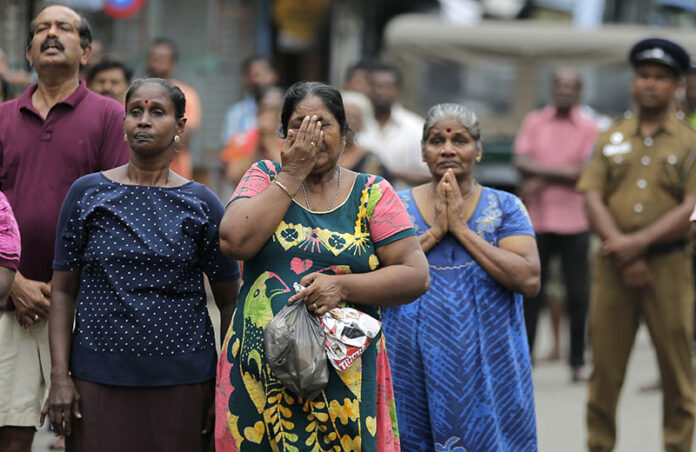
Sri Lankan Catholics pray standing on a road as they attend a brief holly service marking the seventh day of the Easter Sunday attacks near the exploded St. Anthony's Church in Colombo, Sri Lanka, Sunday, April 28, 2019. Photo: Eranga Jayawardena AP

AMPARA, Sri Lanka — The Latest on the Easter bombings in Sri Lanka (all times local):

11 p.m.

Muslim women in Sri Lanka will no longer be able to veil their faces under an emergency law ordered by President Maithripala Sirisena that bans all kinds of face coverings that may conceal people’s identities.

The law takes effect Monday, eight days after the Easter bombings of churches and hotels that killed more the 250 people in Sri Lanka. Dozens of suspects have been arrested but local officials and the U.S. Embassy in Colombo have warned that more militants remained on the loose with explosives. Life on the South Asian island nation has been tense for people of all faiths.

The decision came after the Cabinet had proposed laws on face veils at a recent meeting. It had deferred the matter until talks with Islamic clerics could be held, on the advice of Prime Minister Ranil Wickremesinghe.

9:05 p.m.

Sri Lankan police say a woman and a 4-year-old child found wounded after a deadly gunbattle between police and militants have been identified as the wife and daughter of the alleged mastermind of the Easter bombings.

Sri Lanka’s military says the gunfight Friday night in Ampara District in the country’s east left 15 dead, including six children.

The Islamic State group has claimed three of the militants killed in the shootout.

Police spokesman Ruwan Gunasekara said the two wounded were identified as the wife and daughter of Mohammed Zahran.

Police also said Sunday that 48 suspects were arrested over the past 24 hours in connection with the Easter bombings that killed over 250 people.

___

3:45 p.m.

Sri Lankan police have entered the main mosque of National Towheed Jamaat, just a day after authorities declared it and another organization terror groups over the Easter suicide bombings.

Police entered the mosque, located in Kattankudy in eastern Sri Lanka, on Sunday afternoon and stopped an interview with foreign journalists and officials at the mosque.

Later, a senior police officer dispersed journalists waiting outside, saying authorities were conducting a “cordon and search operation.”

Police then left, locking up the mosque just before afternoon prayers were to start.

Authorities banned National Towheed Jamaat over its ties to Mohammed Zahran, the alleged mastermind of the attacks that killed over 250 people a week ago.

___

6:20 a.m.

The Islamic State group has claimed three of the militants killed in a shootout with police in eastern Sri Lanka.

In a statement published early Sunday by the extremists’ Aamaq news agency, IS gave their noms du guerre as Abu Hammad, Abu Sufyan and Abu al-Qa’qa.

It says they opened fire with automatic weapons and “after exhausting their ammunition, detonated on them their explosive belts.”

IS falsely claimed their militants killed 17 “disbelievers” in the attack. The militants often exaggerate their claims.

The claim carried a photograph of two men before an IS flag, one carrying a Chinese variant of the Kalashnikov rifle like the one found at the scene, another smiling.

Sri Lanka’s military says the gunfight Friday night in Ampara District left 15 dead, including six children.

Advertisement

Opinion: The Truth About ‘China Debt Trap’

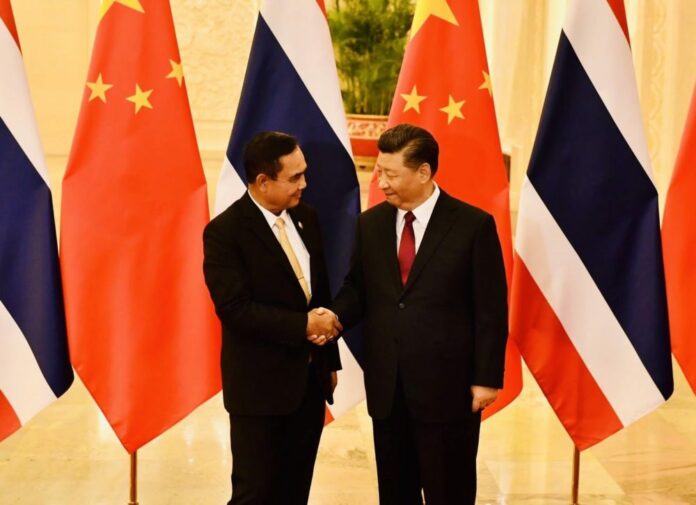
Thai prime minister Prayuth Chan-ocha meets Chinese president Xi Jinping in Beijing on April 26, 2019.

By the Spokesperson of the Chinese Embassy to Thailand

The Second Belt and Road Forum for International Cooperation (BRF) was held in Beijing from April 25 to 27. I would like to share some latest information about the relevant situation of the Belt and Road cooperation with friends from media .

The Belt and Road Initiative has gained high attention, positive responses and wide support since it was proposed. China has signed over 170 cooperative documents with more than 150 countries and international organizations, including bilateral and trilateral cooperation outlines with Mongolia, Russia, Kazakhstan, Cambodia, Laos, Czech Republic, Hungary Brunei, and so on. China has issued the “Initiative on Promoting Unimpeded Trade Cooperation Along the Belt and Road”, to which 83 countries and international organizations have subscribed.

From 2013 to 2018 China’s direct investment in B&R countries surpassed US$90 billion, realizing a turnover of US$400 billion in foreign contracted projects in these countries. The Chinese Government Scholarship – Silk Road Program has been set up, and China has signed agreements with 24 B&R countries on the mutual recognition of higher education degrees. China has signed agreements on industrial cooperation with more than 40 countries and has signed third-party market cooperation agreements with France, Italy, Spain, Japan, and Portugal.

Thanks to Belt and Road cooperation, Kazakhstan, the world’s largest landlocked country, has gained access to the sea; Belarus established its own car manufacturing industry; Maldives people’s dream of having a bridge has come true; Pakistan’s problem of lacking of electricity has been essentially improved since the launching of many energy projects; China-Laos Railway will turn Laos from “land-locked state” to “land-linked hub”. All these success stories fully demonstrate that the BRI has delivered fruitful outcomes in boosting economic growth and improving people’s lives in participating countries.

However, there have always been some media hyping up the so-called “China debt trap”. In response, we will let facts and statistics speak for themselves.

On Sri Lanka’s “debts”: The annual report of the Central Bank of Sri Lanka in 2017 shows that China’s loan balance accounts for only 10.6% of Sri Lanka’s total foreign debts, and 61.5% of China’s loans are concessional ones. Taking a look at Sri Lanka’s debts, 12% are from Japan, 14% from the Asian Development Bank, 11% from the World Bank and 39% from market borrowings, all are larger than China’s share.

China’s loans, by no means, constitute the main burden for Sri Lanka. Most of China’s projects are major ones relating to people’s livelihood, such as ports and roads, which were put forward by the successive Sri Lankan governments on the basis of thorough scientific analysis, in a bid to serve Sri Lanka’s pressing needs for economic and social development.

On Pakistan’s “debts”: According to statistics from the Pakistani government, 42% of Pakistan’s long-term debts are attributed to multilateral institutions, while only 10% are from China. The interest rate of China’s preferential loans to Pakistan is about 2%, which is much lower than that of Western countries.

On China-Malaysia Railway: The Prime Minister’s Office of Malaysia announced on April 12 that the total length of China-Malaysia railway has been reduced from 688 km to 648 km. Some stops on the railway line have been cancelled. The construction cost of Phase 1 and Phase 2 of the project has been reduced from RM 65.5 billion to RM 44 billion. The Chinese side believes that there is not necessarily a fixed pattern for cooperation. In the spirit of mutual respect and equal consultation, the governments and enterprises of China and Malaysia have reached a mutually beneficial agreement.

We can speak for sure that no country has been overwhelmed with the so-called debt burden or fallen into the so-called debt trap because of their participation in the Belt and Road. On the contrary, all the participating countries have achieved rapid growth. The so-called “debt trap” holds no water.

I would like to make two points. First, every single country is entitled to development, and has the right to realize development through financing. In this process, the borrower, the creditor and companies participating in the project shall reinforce self-discipline, regulate management and carry out risk control, and media can play a part in supervision. However, it is irresponsible to keep sensationalizing the so-called “debt trap”.

Second, the Belt and Road Initiative is open and inclusive. We welcome any country who would like to join, and are ready for bilateral, trilateral and multilateral cooperation in terms of project construction, policy coordination, as well as rules and regulations harmonization.

Advertisement

Opinion: One Month After Elections but No Solution In Sight

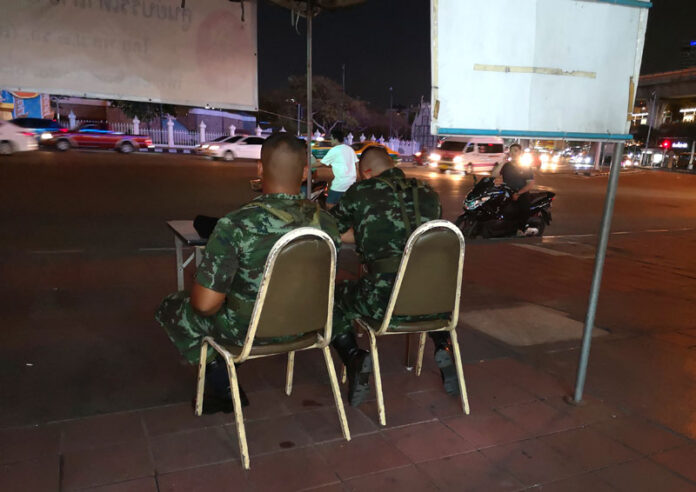
On the evening before the one month anniversary of the March 24 general election, two soldiers sat aimlessly, guarding Victory Monument. It was a graphic reflection of the state of Juntaland today.

Why are they still guarding such a public space, nearly five years after the coup and a month after the elections? When will they return to the barracks? I know I won’t get any answers from the two soldiers themselves – they were just following the orders of their superiors to sit there, with nothing to do but remind the public who’s boss.

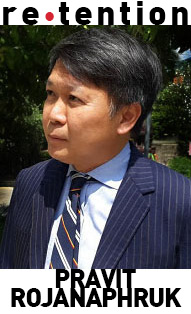
Re•tention: Pravit Rojanaphruk

Besides, there’s no guarantee that the election will deliver an exit from military rule.

The Election Commission has committed an act of unthinkable blunder by failing to stick to a clear and universally accepted formula for the allocation of party-list MP seats. Instead of making the formula clear before the election, weeks later they passed the responsibility on to the Constitutional Court. The Commission’s petition was on Wednesday rejected by the Constitutional Court, who ruled it’s the Commission’s responsibility to come up with a distribution of seats that is constitutional.

What if in the end the pro-junta Phalang Pracharath Party forms government, with the help of the votes of the 250 senators – themselves selected by junta leader Gen. Prayuth Chan-ocha (who “coincidentally” happens to be Phalang Pracharath’s prime ministerial candidate)? The opposition will still likely have enough MP seats to easily defeat the pro-junta regime in a no-confidence motion.

Like a jazz player who improvises, it’s likely that Prayuth is fixated with becoming prime minister again, while leaving the question of how to deal with the opposition for later.
Future Forward Party leader Thanathorn Juangroongruangkit, who will command the third-largest portion of seats, may be disqualified due to his alleged failure to transfer shares in V-Luck Media – which owns a defunct magazine called WhO. If that fails, there remain sedition charges against him.

But the repercussions of disqualifying Thanathorn will be severe, particularly because so many young voters have placed hopes in him for change.

(For disclosure, Thanathorn was previously an executive board member of Matichon Group, which owns Khaosod English. He stepped down many months ago.)

Many know that the rules governing the election were unfair and written by people chosen by Prayuth for the purposes of maximizing his chances of returning as prime minister. They know these things because political parties were banned from engaging in political activities for four years, until just a few months before the election, even while Prayuth monopolized prime airtime on public TV channels every Friday.

Elections are supposed to be about the people determining the future of their country. Many Thai voters have chosen a peaceful way to change the government under which they live, and their voices deserve to be heeded, not cast aside or forced underground. Let’s give elections a chance.

Advertisement

Matichon Group Reports Profit for 2nd Year

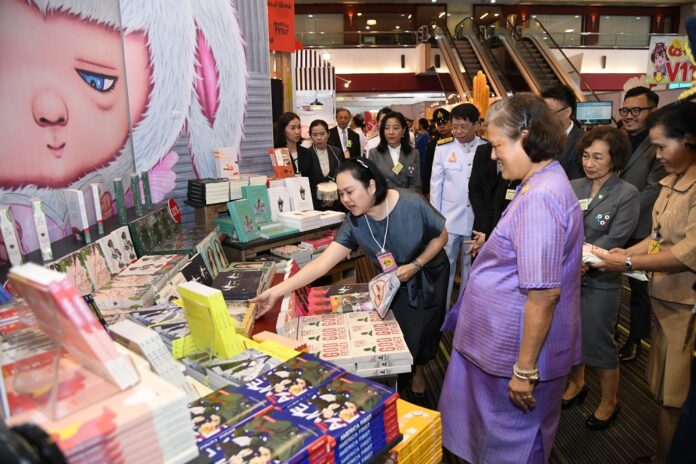
Princess Sirindhorn visits Matichon's booth at Bangkok’s 2018 National Book Week.

BANGKOK — Matichon Publishing said Friday its operations have turned up a profit for the second consecutive year, netting a surplus of some 19 million baht in 2018.

Bucking its trend of financial losses in preceding years, the firm’s operating costs in 2018 also decreased by about 30 million baht compared to 2017, reported executive Thakoon Boonparn at a shareholders’ meeting today.

“We are in discussions with new business partners to add more diversity to our businesses,” Thakoon said. “For example, we’re bringing in a company to help monitor and manage the enormous amount of data we receive each day.”

He continued, “Our company has set a goal to expand our market share by 1.5 percent.”

Thakoon said the media group has been reducing costs through a number of measures, such as company restructuring and downsizing (the number of employees has decreased from 1,500 to 900). The firm reported a net profit of 89 million baht in 2017.

Matichon Publishing owns a wide range of daily and weekly publications, including Khaosod, Matichon, Prachachat, Art & Culture and Khaosod English.

Advertisement

Hot News

LATEST NEWS

Bangkok
overcast clouds
28.8 ° C
28.8 °
25.5 °
82 %
3.7kmh
100 %
Sun
30 °
Mon
32 °
Tue
34 °
Wed
33 °
Thu
33 °