


























25.5 C
Bangkok
Sunday, July 5, 2026
Home Blog Page 1642

Bangkok Clothing Swap Makes Fashion Sustainable

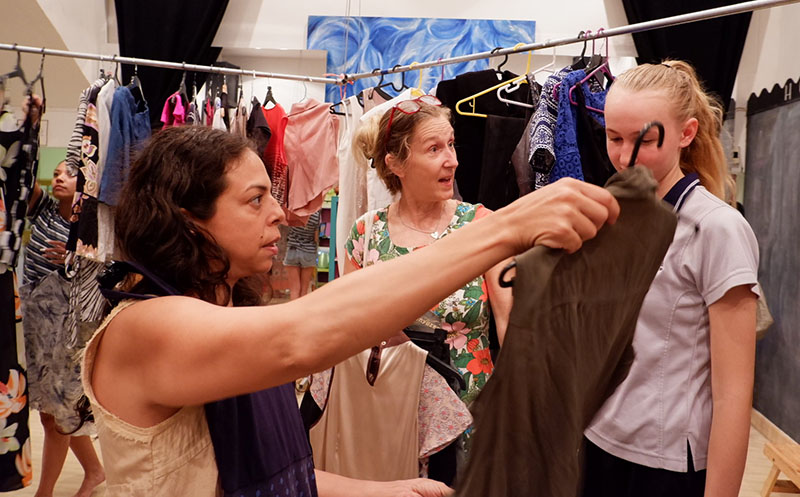
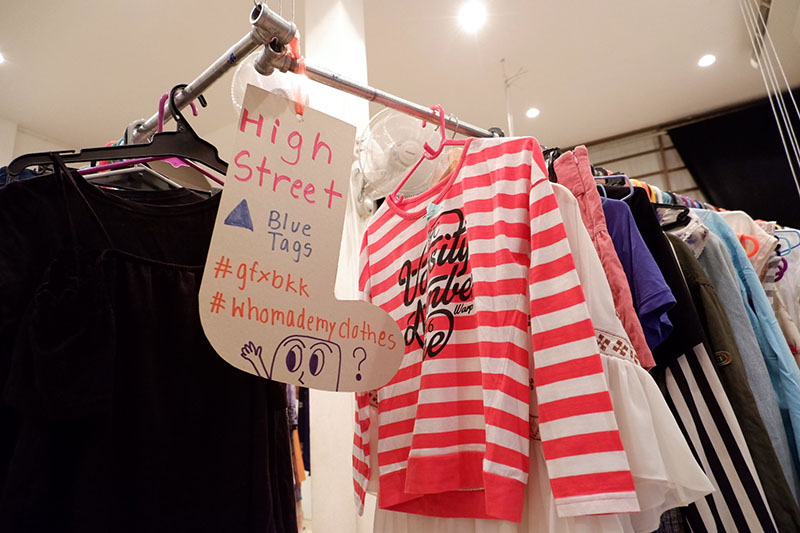
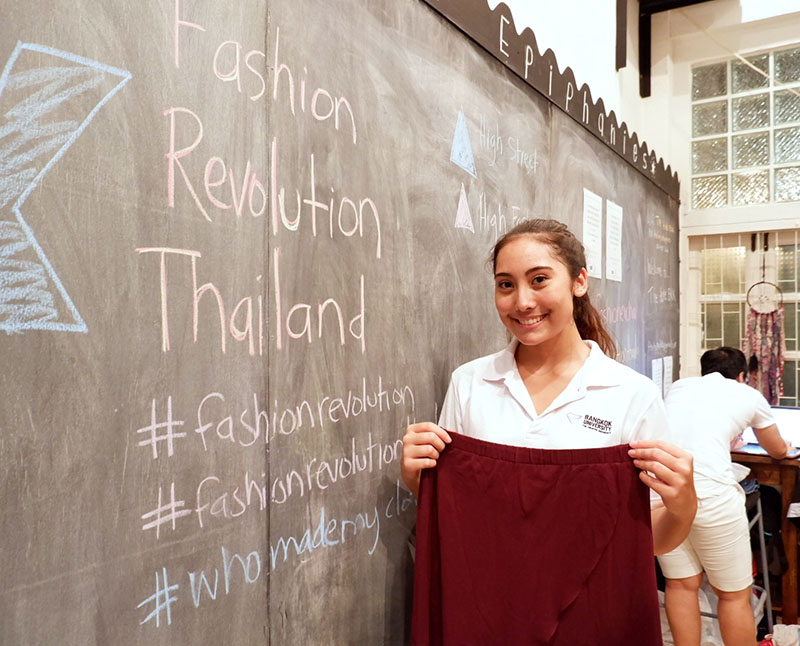
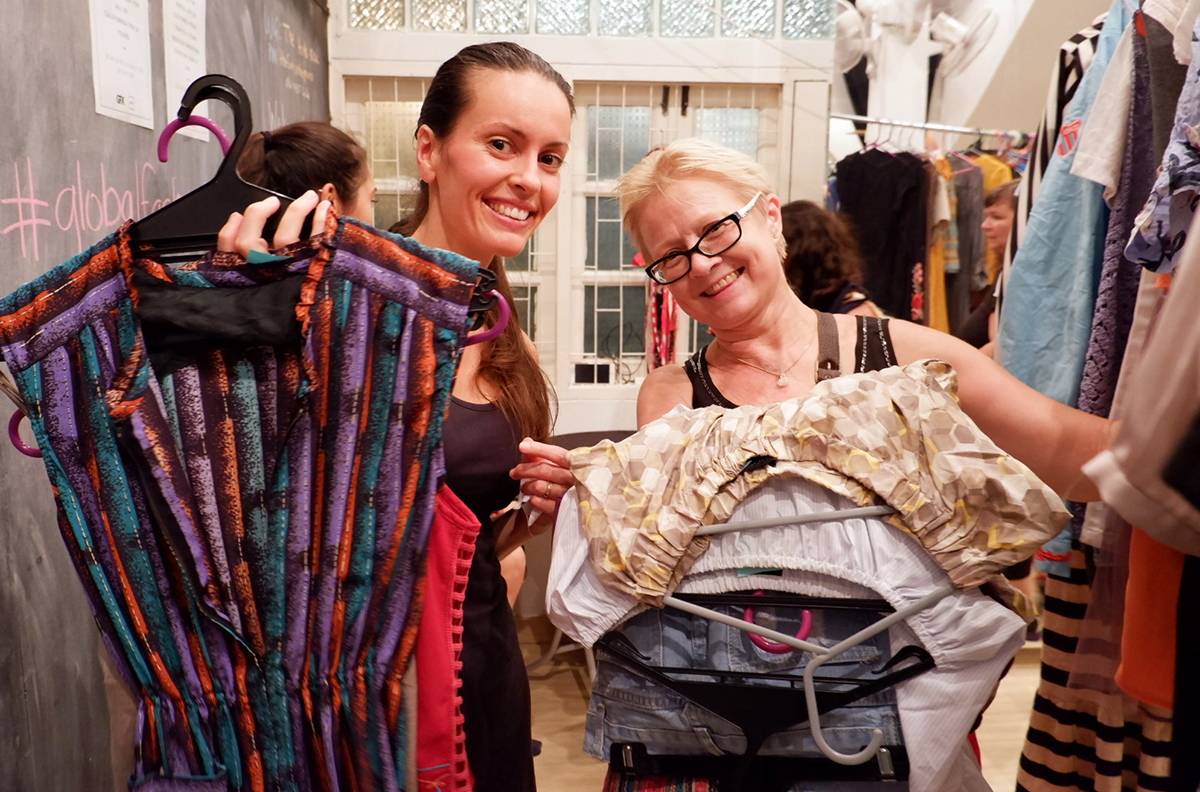
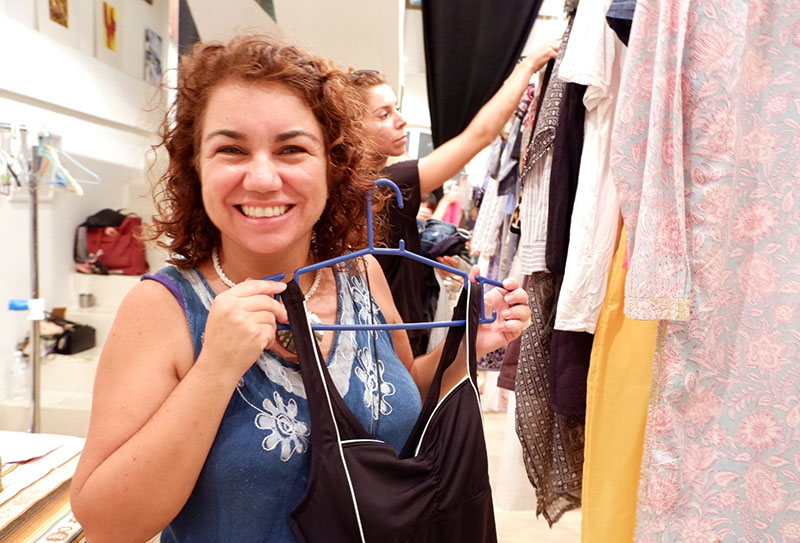
Jessica Teal and Carla Rivera at the Monday clothing swap event at The Home BKK.

BANGKOK — An American-Ecuadorian woman darts between racks of clothes, suggesting a white blouse to one woman and a loud patterned dress to another.

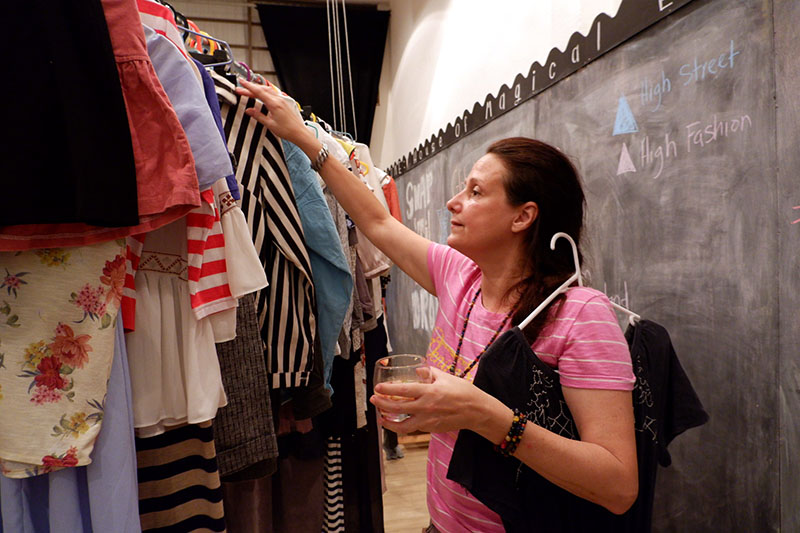
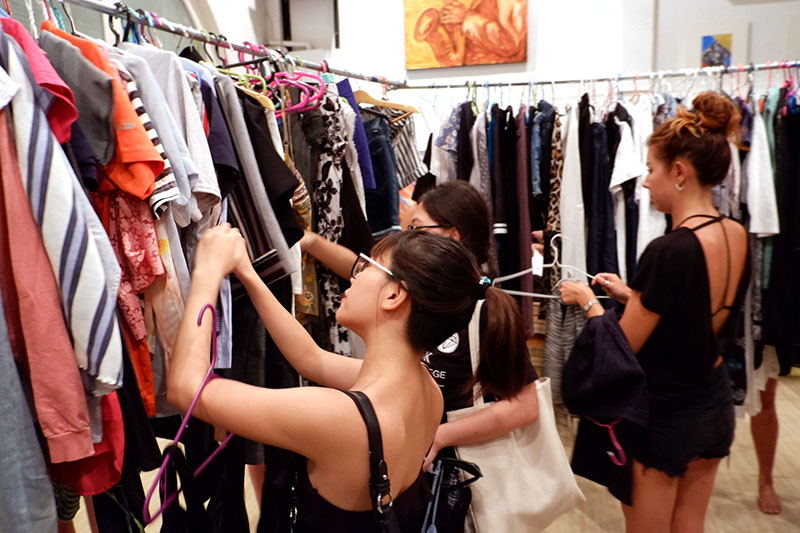
Dozens of women attended a clothing-swap event organized by Swap ‘Till You Drop! on Monday night to trade their clothes in defiance of fashion fashion and in the name of eco-consciousness instead. Perks included dozens of new wardrobe items for next to nothing and free-flow sangria in a sleepover-like atmosphere.

“You can wear this dress backwards, so the neckline is conservative for Thailand, but you got sexyback,” Carla Rivera said as she tried on a tie-front yellow dress backwards.

The Swap ‘Til You Drop! team, led by American expats Rivera and Jessica Teal, have been holding clothing swaps for five years. They started in Teal’s home before expanding to The Home BKK co-working space, which Rivera founded.

As part of their Fashion Revolution Week which begins Monday, the team will organize two more swaps: one on Tuesday at WeWork and another on Saturday at Model Market. The week also offers talks and free seminars about green fashion.
94521F39 00DC 47D5 9AE8 29B9FB63E1BF 7438 000006119B8355B6

Read: 4-in-10 Thai Shoppers Toss Clothes After 1 Wear: Survey

Fast fashion is a leading source of waste in Thailand – almost half of all Thai shoppers toss their clothes after one wear, some after never wearing them at all.

Teal, 32, says that 48 women brought a total of around 108 kilograms of clothing to Monday’s event alone. Unswapped items amounted to 40 kilograms and were donated through the Scholars of Sustenance charity. At a previous swap, Teal says they had 114 kilograms of clothing leftover.

“One of the biggest sources of waste in the world is fashion. And as women, we have so many clothes,” Teal said. “And I love seeing the social aspect of it. Seeing people compliment each other, like, wow! You look great! That used to be mine! It’s like seeing Christmas all over again.”

8070CE39 7D7A 4708 9CA7 BF39789E3AE3 7438 00000611C0853DC0

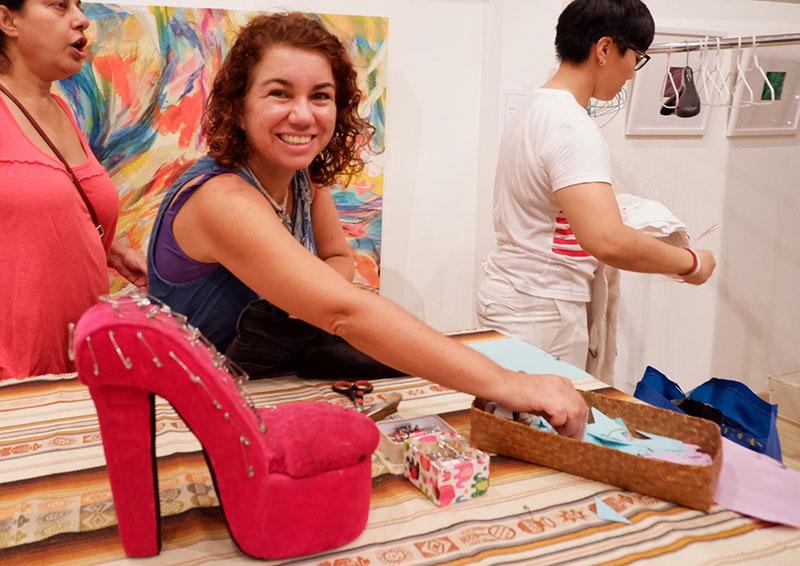
Rivera, 39, a designer by trade at Soledad Designs, says she loves to give tips on how to revamp outdated pieces – a skirt out of a dress, pants into a jacket.

“If it doesn’t fit one way, we can find an alternative,” she said, wearing a miniskirt as a crop top. Rivera says she hasn’t bought any new clothes (other than necessities like underwear) since 2014.

Newbies to swaps may fear closet throw-outs of 00’s fashion, but attendees – mostly expat women – say they all managed to get good finds.
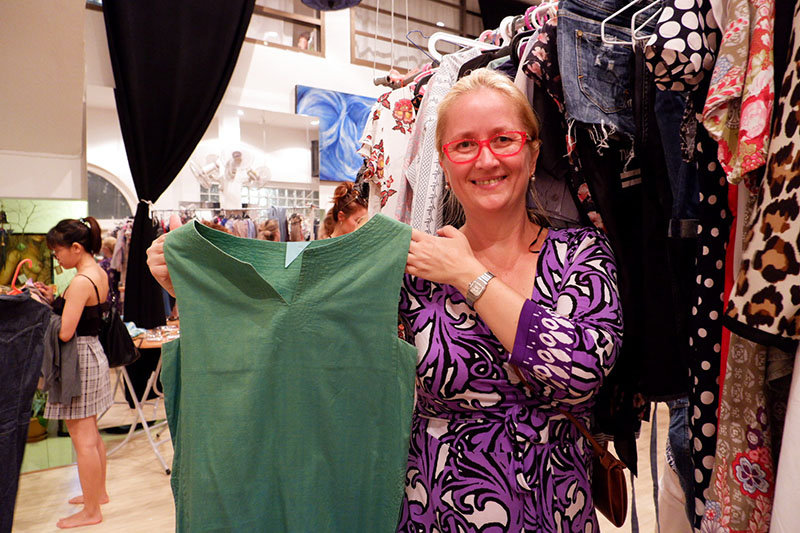
Madeleine Recknagel.

One regular is Madeleine Recknagel, a 43-year-old German who blogs about her zero-waste lifestyle on The Sustainable Self blog. Seeing the beach at Koh Phangan full of waste three years ago was a wake-up call for her to start living conscientiously.

“We spend so much money and time buying, storing and taking care of things that we forget to live,” she said. “Look in your closet. How much do you actually wear? I would rather buy locally-sourced things that support locals so they can send their kids to school, rather than five people at the top of a large enterprise.”

Fast fashion also drains wallets – she says she’s saved more than 300,000 baht since she started this lifestyle. The swaps are her main source of clothing, but that’s not the best thing she’s gotten from the events.

B70020EF 3E31 4FEB BDB9 D8853348887D 7438 00000611C2EB43EB

“I love the community and friendships. It’s why I keep returning,” she said. “I’ve also gotten lovely pieces I wouldn’t find in a mall. People here have travelled from all over the world, so I’ve gotten some pieces from Sri Lanka, Japan and so on.”

Attendees quickly try on clothes in a room at the back, asking for tips from friends-to-be – much like trying out outfits at a girlfriend’s house. Seeing someone take home a dress you brought along gives a thrill of satisfaction.

Fashion Revolution Week events are open to all, except the clothing swaps which are women-only. Follow Swap ‘Till You Drop! for their swaps, with occur every month or two and are usually held at The Home BKK, a walkable distance from MRT Sukhumvit or BTS Asok. Tuesday’s swap is at WeWork Asia Centre on Sathorn Road, a short walk from BTS Chong Nonsi, and Saturday’s is at Model Market BKK, reachable from BTS Thong Lo.

WeWork Asia Centre:

Model Market BKK:

The Home BKK:
FA0F7F7B B1C4 4183 A2BC F635701E662C 7438 00000611CCF0375417BFAA89 6CE3 4D3E A643 18331B36297D 7438 000006116D3D13DC copyB1561095 50AE 4740 A151 0F04F603C288 7438 00000611A5295133 C914B7C2 9C3F 4F76 88DC 657FEB2D287F 7438 00000611A2D6B0A5 D8A0F314 BA70 44EC 8574 45EA1505E1B1 7438 00000611AC6E1CC1 33821461 8704 4AFC B52F 4E20640B2551 7438 0000061162BD2EA3 9360930D 0489 4391 8DFA A08B5ED45A88 7438 000006115B637F39 45ECE016 08AA 49F4 9506 FC3D0614C14A 7438 000006119E23B3EB 1B4C5EC0 AEC6 4A57 9AE6 323F773B768D 7438 00000611C56C63B1

Advertisement

Aviation Officials to Probe Near Collision on Krabi Runway

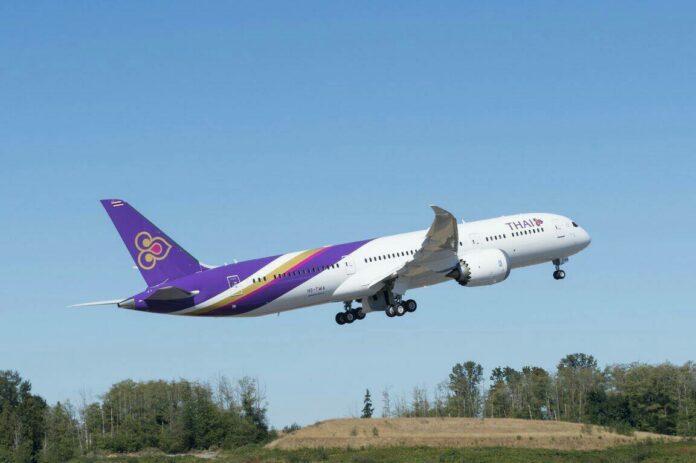
File photo of a Thai Airways plane.

KRABI — Aviation authorities promised Tuesday to look into a near collision between two planes on the runway in Krabi province.

According to the Aeronautical Radio of Thailand, an airplane flown by AirAsia was about to land at Krabi airport last night, when it was abruptly told to abort because a Thai Airways plane was blocking the runway.

Although Krabi airport director Attaporn Nuang-udom downplayed the incident by telling reporters it was a “normal” procedure, Aeronautical Radio deputy director Somnuk Rongthong said the close call was “abnormal” and should not have happened.

“I have told the Civil Aviation Authority to investigate the cause of the incident,” said Somnuk, whose agency oversees control towers nationwide. “Two airplanes getting too close is cause enough for an investigation. We won’t wait for them to collide first.”

Somnuk identified the two flights as FD3212 bound for Krabi and TG250 headed for Suvarnabhumi Airport.

He said the Thai Airways plane failed to take off within a slot of five minutes given by the control tower. The plane was still on the runway when the AirAsia jet began descending, forcing pilots in the latter to pull up at the last minute.

Somnuk partly blamed the incident on the airport’s small size, with limited room for planes to maneuver comfortably. He added that the airport director has already requested funds to expand.

The two airlines have yet to make statements on the near collision.

Advertisement

Sri Lanka, Like World, Again Sees Scourge of Suicide Bombing

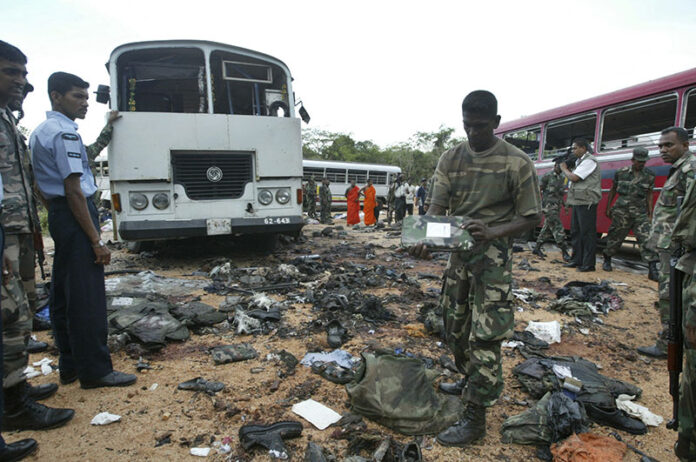
FILE - In this Oct. 16, 2006, file photo, a Sri Lankan soldier inspects the debris at the site of a suicide explosion by Tamil Tigers near Dambulla, about 150 kilometers (90 miles) northeast of Colombo, Sri Lanka. The April 21, 2019 deadly Easter attacks in Sri Lanka are a bloody echo of decades past in the South Asian island nation, when militants inspired by attacks in the Lebanese civil war helped develop the suicide bomb vest. Over nearly 30 years of civil war, the Tamil Tigers would launch more than 130 suicide bomb attacks, making them the leading militant group in such assaults at the time. Photo: Eranga Jayawardena / AP

COLOMBO — The deadly Easter attacks in Sri Lanka are a bloody echo of decades past in the South Asian island nation, when militants inspired by attacks in the Lebanese civil war helped develop the suicide bomb vest.

Government ministers have said seven Sri Lankans from a little-known local group carried out the six near-simultaneous bombings at churches and hotels that killed at least 290 people and wounded over 500. While little else was known about the group or their motives, Sri Lanka’s Tamil Tiger fighters used suicide bombing in the country’s 26-year civil war before being wiped out by government forces.

Similar bombs would then detonate across Israel, wielded by Palestinian militants, and later across the wider Middle East, Africa and Europe by Islamic extremists in the wake of the Sept. 11, 2001, attacks.

Such attacks strike fear around the world because of their indiscriminate slaughter of civilians, like those eating breakfast at a hotel or worshipping in a church on Easter. Sunday’s assault also raises questions about whether the perpetrators had help or experience from abroad.

“I call today the age of the suicide bomber. This is very much a time of extreme acts that have to, in a way, usurp the previous attacks,” said Iain Overton, executive director of the London-based group Action on Armed Violence who wrote a book on suicide bombings. “They have to be much more devastating, more impactful, more hurtful, to get as much media headlines as possible.”

Experts put the first modern suicide bombing in 1881, when a radical killed Tsar Alexander II of Russia. What may be the first photographs of a suicide bomb vest came in the 1930s when China used them in its war against Imperial Japan around World War II. Japanese kamikaze pilots turned their own planes into weapons.

But the shock of the suicide bomber only struck the minds of many in the West in the 1980s with Lebanon’s bloody civil war. Suicide truck bomb attacks struck both the U.S. Embassy in Beirut, killing 63 people, and later a U.S. Marine barracks, killing 231 American troops in the bloodiest day for the armed forces since World War II. The U.S. later would blame the Shiite militant group Hezbollah, which formed out of Lebanon’s civil war, and Iran for the bombings. Both deny involvement.

At that time, however, a small contingent of Tamil fighters was receiving weapons training in Lebanon and took what they learned back to Sri Lanka, Overton said. Their first suicide attack in 1987, in which a bomb-laden truck drove into a Sri Lankan army barracks and killed 55, resembled the U.S. Marine barracks attack.

Over nearly 30 years of civil war, the Tamil Tigers would launch more than 130 suicide bomb attacks, making them the leading militant group in such assaults at the time. They killed a Sri Lankan prime minister and a former Indian prime minister among others, including bystanders. The war ultimately ended in 2009 with the government crushing the Tamil Tigers, with some observers believing that tens of thousands of Tamils died in the last few months of fighting alone.

But while the Tamils were secular nationalists, Islamic extremists in the Middle East would embrace the suicide bomb as a weapon. By the 1990s, Palestinian militants from both Hamas and Fatah would use suicide bombs against Israel. Then al-Qaida under Osama bin Laden would employ them against U.S. embassies in Kenya and Tanzania, and later against the USS Cole off Yemen.

Then came Sept. 11 and the U.S.-led invasion of Afghanistan.

Up until then, there were some 350 suicide attacks worldwide from 1980, said Robert A. Pape, a political science professor at the University of Chicago who directs its Chicago Project on Security and Threats.

The U.S. war in Iraq followed, which fueled bloody sectarian violence that put it on the brink of civil war. Suicide bombers pounded the country. An al-Qaida branch there would morph into the Islamic State group, which would launch its own suicide attacks around the world.

Today, the number of suicide attacks since 1980 is around 6,000, Pape said, with around half in Iraq and Syria alone.

“When we invaded and conquered Iraq, we touched off the largest suicide terrorist campaign in modern times,” he said.

Sri Lankan authorities have blamed a local Islamic group, National Thowfeek Jamaath, for the Easter attacks. However, there is no recent history of Muslim extremist attacks in Sri Lanka, a predominantly Buddhist island nation off the southern tip of India. Nor was there any explanation for how a group previously not known for violence could engineer such a massive attack, which experts said resembled an assault by the Islamic State group or al-Qaida.

“What they are seeking to push is this ISIS mantra, which is ‘We love death more than they love life,'” Overton said, using an alternate acronym for the militants. “It is the icon of a death cult.”

Since the Islamic State group has lost all the territory it once held across Iraq and Syria, there’s been more concern among nations about foreign fighters returning home. Sri Lanka’s justice minister told parliament in 2016 that 32 Muslims from “well-educated and elite” families had joined the Islamic State group in Syria. It’s unclear what happened to them.

“There weren’t many, but there don’t have to be many,” Pape said.

Story: Jon Gambrell

Advertisement

5-Year-Old Michigan Boy Calls 911 to Order McDonalds

File photo of the BigMac.

WYOMING, Mich. — A 5-year-old Michigan boy had a craving for McDonald’s but his grandmother was sleeping so he called 911 and made a request.

WZZM-TV in Grand Rapids reports Iziah Hall of Wyoming asked the dispatcher: “Can you bring me McDonald’s?” Dispatcher Sara Kuberski says she told him no but reached out to the police.

Wyoming police officer Dan Patterson says the April 14 request made him laugh, so he stopped at McDonald’s on his way to check on Iziah’s home in the western Michigan city.

Patterson says he thought, “I’m driving past McDonald’s on my way there and I might as well get him something.” The officer says the first thing the boy said to him was, “My grandma’s gonna be so mad, can you please go away?”

Advertisement

Sri Lanka Military Gets Special Powers After Deadly Bombings

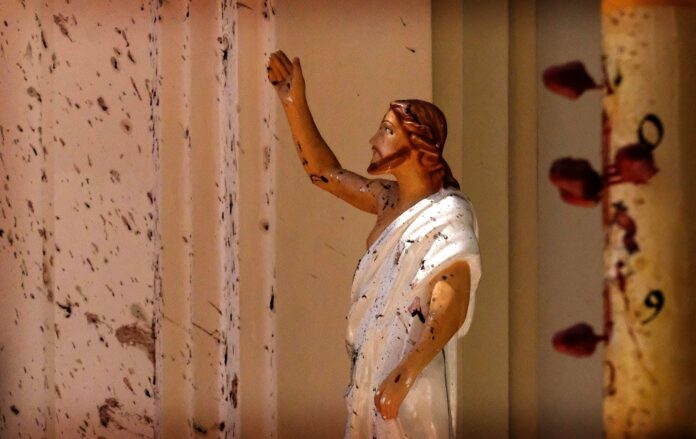
Blood stains are seen on the wall and on a Jesus Christ statue at the St. Sebastian's Church after blast in Negombo, north of Colombo, Sri Lanka.

COLOMBO, Sri Lanka — Sri Lanka’s president gave the military sweeping police powers starting Tuesday in the wake of the Easter bombings that killed nearly 300 people, while officials disclosed that intelligence agencies had warned weeks ago of the possibility of an attack by the radical Muslim group blamed for the bloodshed.

The suicide bombings struck three churches and three luxury hotels Sunday in the island nation’s deadliest violence since a devastating civil war ended in 2009. The government shut down some social media, armed security forces patrolled the largely deserted, central streets in the capital of Colombo, and a curfew went into effect.

The military was given a wider berth to detain and arrest suspects — powers that were used during the civil war but withdrawn when it ended.

Prime Minister Ranil Wickremesinghe said he feared the massacre could unleash instability and he vowed to “vest all necessary powers with the defense forces” to act against those responsible.

Adding to the tension, three unexploded bombs blew up Monday inside a van parked near one of the stricken churches as police were trying to defuse them, sending pedestrians fleeing in panic. No injuries were reported. Dozens of detonators were discovered near Colombo’s main bus depot, but officials declined to say whether they were linked to the attacks.

A nationwide state of emergency was scheduled to begin at midnight Monday (0630 GMT; 2:30 p.m. EDT) the president’s office said, following the attacks that killed at least 290 people, with more than 500 wounded, according to police spokesman Ruwan Gunasekara. The three stricken hotels and one of the churches, St. Anthony’s Shrine, are frequented by tourists, and dozens of foreigners were among the dead.

Tourism Minister John Amaratunga said 39 foreigners were killed, although the foreign ministry put out a different figure, saying the number of dead was 31.

The U.S. State Department confirmed that at least four Americans were among the dead and several others were seriously wounded, but it did not release any identities. The Sri Lankan government said other foreigners killed were from the U.K., Bangladesh, China, India, France, Japan, the Netherlands, Portugal, Saudi Arabia, Spain, Turkey and Australia.

A national day of mourning was declared for Tuesday.

International intelligence agencies had warned that the little-known group, National Thowfeek Jamaath, was planning attacks, but word apparently didn’t reach the prime minister’s office until after the massacre, exposing the continuing political turmoil in the highest levels of the Sri Lankan government.

Health Minister Rajitha Senaratne said the intelligence agencies began issuing the warnings on April 4; the defense ministry wrote to the police chief with information that included the group’s name; and police wrote April 11 to the heads of security of the judiciary and diplomatic security division.

President Maithripala Sirisena, who was out of the country Sunday, had ousted Prime Minister Ranil Wickremesinghe in October and dissolved the Cabinet. The Supreme Court later reversed his actions, but the prime minister has not been allowed into meetings of the Security Council since October, which meant he and his government were in the dark about the intelligence.

It was not immediately clear what action, if any, was taken after the threats. Authorities said they knew where the group trained and had safe houses, but did not identify any of the suicide bombers, whose bodies were recovered, or the two dozen other suspects taken into custody.

All the bombers were Sri Lankans, but authorities said they strongly suspected foreign links, Senaratne said.

Also unclear was a motive. The history of Buddhist-majority Sri Lanka, a country of 21 million including large Hindu, Muslim and Christian minorities, is rife with ethnic and sectarian conflict.

In the civil war, the Tamil Tigers, a powerful rebel army known for using suicide bombers, was crushed by the government and had little history of targeting Christians. While anti-Muslim bigotry fed by Buddhist nationalists has swept the country recently, there is no history of Islamic militancy. Its small Christian community has seen only scattered incidents of harassment.

Two other government ministers also alluded to advance knowledge. Telecommunications Minister Harin Fernando tweeted: “Some intelligence officers were aware of this incidence. Therefore there was a delay in action. Serious action needs to be taken as to why this warning was ignored.” He said his father had heard of a possible attack as well and had warned him not to enter popular churches.

Mano Ganeshan, the minister for national integration, said his security officers had been warned by their division about the possibility that two suicide bombers would target politicians.

Cardinal Malcolm Ranjith, the archbishop of Colombo, said the attacks could have been thwarted.

“We placed our hands on our heads when we came to know that these deaths could have been avoided. Why this was not prevented?” he said.

The coordinated blasts took place in the morning at St. Anthony’s and the Cinnamon Grand, Shangri-La and Kingsbury hotels in Colombo, as well as the two churches outside Colombo. They collapsed ceilings and blew out windows, killing worshippers and hotel guests, and leaving behind scenes of smoke, soot, blood, broken glass, screams and wailing alarms.

A few hours later, two more blasts occurred just outside Colombo, one at a guesthouse where two people were killed, the other near an overpass, said Brig. Sumith Atapattu, a military spokesman.

Also, three police officers were killed while searching a suspected safe house on the outskirts of Colombo when its occupants apparently detonated explosives to prevent arrest, authorities said.

A pipe bomb with 50 kilograms (110 pounds) of explosives was found and defused late Sunday on a road to the international airport, said air force Group Capt. Gihan Seneviratne. It was powerful enough to have caused damage in a 400-meter (400-yard) radius, he said.

A morgue worker in Negombo, outside Colombo, where St. Sebastian’s Church was targeted, said many bodies were hard to identify because of the blasts. He spoke on condition of anonymity because he was not authorized to talk to the media.

Nilantha Lakmal, a 41-year-old businessman who took his family to St. Sebastian’s for Mass, said they all escaped unharmed, but he remained haunted by images of bodies being taken from the sanctuary.

At the Shangri-La Hotel, one witness said “people were being dragged out” after the blast.

“There was blood everywhere,” said Bhanuka Harischandra, 24, of Colombo, a founder of a tech marketing company who was going to the hotel for a meeting. “People didn’t know what was going on. It was panic mode.”

The scale of the violence recalled the worst days of the civil war, when the Tamil Tigers, from the ethnic Tamil minority, sought independence from the Sinhalese-dominated country. The Sinhalese are largely Buddhist. The Tamils are Hindu, Muslim and Christian. Sri Lanka, off the southern tip of India, is about 70% Buddhist. In recent years, tensions have soared between hard-line Buddhist monks and Muslims.

Two Muslim groups in Sri Lanka condemned the church attacks, and Pope Francis expressed condolences at the end of his traditional Easter blessing in Rome. The United Nations’ most powerful body, the Security Council, also denounced the “heinous and cowardly terrorist attacks.”

U.S. Secretary of State Mike Pompeo said in Washington that he spoke to the prime minister and offered assistance. Later, the FBI said it was helping with the investigation.

“This is America’s fight, too,” he said. “We also stand with millions of Sri Lankans who support the freedom of their fellow citizens to worship as they please. We take confidence in knowing that not even atrocities like this one will deter them from respecting religious freedom.”

___

Associated Press writers Gemunu Amarasinghe in Negombo, Sri Lanka, Rishabh Jain in Colombo and Sheila Norman-Culp in London and Matthew Lee in Washington contributed.

Advertisement

North Korean Confirms Kim to Meet Putin

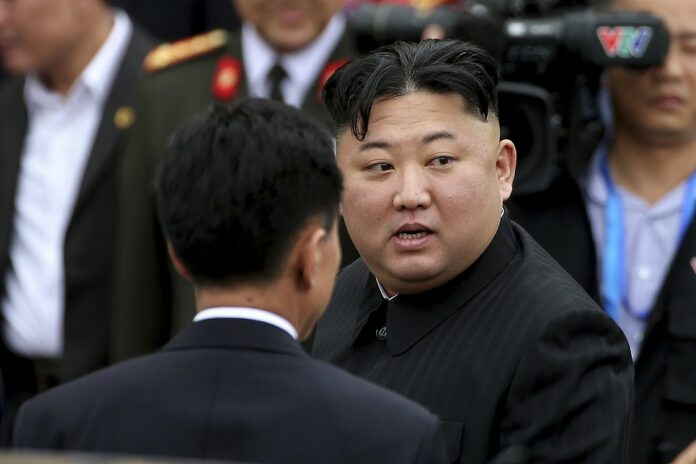
In this March 2, 2019, photo, North Korean leader Kim Jong Un prepares to depart Dong Dang railway station in Dong Dang, Vietnamese border town. North Korea on Tuesday, April 23, confirmed that Kim will soon visit Russia to meet with President Vladimir Putin. (AP Photo/Minh Hoang)

SEOUL, South Korea — North Korea confirmed Tuesday that leader Kim Jong Un will soon visit Russia to meet with President Vladimir Putin in a summit that comes at a crucial moment for tenuous diplomacy meant to rid the North of its nuclear arsenal.

North Korea has so far not gotten what it wants most from the recent flurry of high-level summitry between Kim and various world leaders — namely, relief from crushing international sanctions. There are fears that a recent North Korean weapon test and a series of jibes at Washington over deadlocked nuclear negotiations mean that Pyongyang may again return to the nuclear and long-range missile tests that had many in Asia fearing war in 2017.

The North’s state-run Korean Central News Agency released a terse, two-sentence statement saying Kim “will soon pay a visit to the Russian Federation,” and that he and Putin “will have talks.” A date for the meeting was not released, and it wasn’t clear if Kim would fly or take his armored train. There are some indications the meeting will be held this week in the far-eastern port of Vladivostok, not too far from Russia’s border with the North.

The Kremlin said in a brief statement last week that Kim will visit Russia “in the second half of April,” but gave no further details.

It’s not clear how — or even if — Putin will push the stalled nuclear talks along, and the visit may have more to do with each nation’s economic interests. Russia is interested in gaining broader access to North Korea’s mineral resources, including rare metals. Pyongyang, for its part, covets Russia’s electricity supplies and wants to attract Russian investment to modernize its dilapidated industrial plants, railways and other infrastructure.

Kim and President Donald Trump have had two summits, but the latest, in Vietnam in February, collapsed because North Korea wanted more sanctions relief than Washington was willing to give for the amount of disarmament offered by Pyongyang.

For a leader often perceived by foreign media as isolated, Kim has had a remarkable string of summits, meeting with the leaders and other senior officials of South Korea, China, Vietnam and Singapore. He has also sent his deputies to Washington and received Trump’s lieutenants in Pyongyang as part of nuclear talks.

But Kim’s patience appears to be wearing thin. The North last week announced that it had tested what it called a new type of “tactical guided weapon.” While unlikely to be a prohibited test of a medium- or long-range ballistic missile that could scuttle the negotiations, the announcement signaled the North’s growing disappointment with the diplomatic breakdown.

The North also demanded that U.S. Secretary of State Mike Pompeo be removed from the talks, and on Saturday criticized White House national security adviser John Bolton for calling on North Korea to show more evidence of its disarmament commitment before a possible third leaders’ summit.

Advertisement

Heavy Songkran Tourism Ruins Large Swathes of Trang’s Coral: Official

Before and after images of coral in the Hat Chao Mai National Park. Photo: Prueg Ubonkerd / Facebook

TRANG — An influx of tourists over Songkran combined with poor management seriously damaged huge chunks of coral in a protected area of Trang province, officials said Monday.

A top park official and a representative of local tour guides explained today the damage was due to tourist numbers overwhelming their capacity to properly regulate visits during the week-long holiday earlier this month.

According to Somsak Pantumet, president of Trang’s tour guide association, coral off Koh Kradan was most harmed, with more than 500 meters of the reef damaged.

“There were too many boats and tourists coming in, and not enough mooring buoys. Many boats just dropped their anchors onto coral or tied ropes around coral,” he said. “Many also chose to dock very close to or on top of coral just to please their customers … or some stayed too long, until the tide had gone down, which caused boats to collide with coral when trying to leave.”

Their statements came after a Facebook user posted a video last week showing a large field of broken coral allegedly in Hat Chao Mai National Park. The user claimed the damage occurred in the space of Songkran.

Narong Kong-Iad, head of Hat Chao Mai National Park, acknowledged there were not enough staff members to protect the marine park. He promised stricter regulations and more mooring buoys to be set up Thursday, adding that officials have set a meeting with tour operators to educate them about sustainable tourism.

When asked about the necessity of drastic measures such as shutting down tourism completely – as has been implemented in Maya Bay –  Narong replied that he doesn’t think such steps are required. He claimed tourist numbers have already dropped sharply after Songkran.

Official statistics show that Hat Chao Mai National Park received nearly 14,000 tourists from April 12 to April 16, with the peak on April 14 seeing more than 8,000 tourists. The number of visitors this past Sunday was 697. On a typical weekend, visitor numbers range between 300 to 600 per day.

Advertisement

Khaosod English is Hiring!

Update: the position is now closed

Apply today for the position of Staff Reporter and join our team to change the landscape of Thai English-language journalism.

  • Thai national
  • No age/experience limit. Fresh grads welcome!
  • Able to write news and other types of content oriented in lifestyles and cultures
  • Engaging English writing style, Thai proficiency
  • Interest in Bangkok lifestyle and city happenings
  • Sociable, good communicator
  • Business-friendly attitude

Send applications to [email protected]. Include your CV, cover letter, and a brief writing sample of a news article.

Advertisement

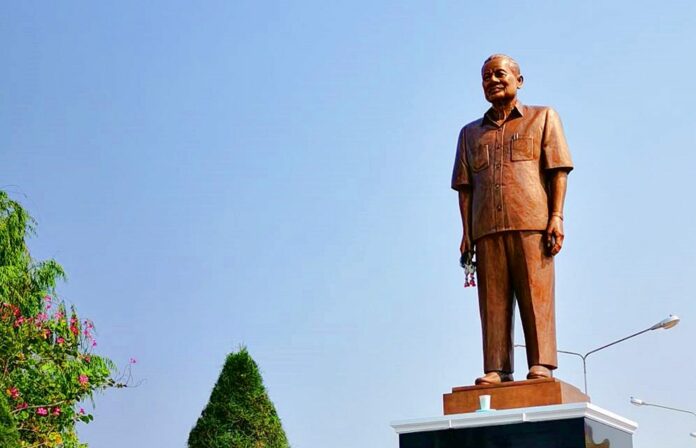
30M Baht Statue of Late PM Erected in Suphan Buri

SUPHAN BURI — A larger-than-life bronze statue of the late Banharn Silpa-archa, Thailand’s 21st prime minister, will be unveiled on Tuesday.

Tuesday marks the third anniversary of the death of Banharn. The statue was funded by 10 million baht in public donations and nearly another 20 million baht from the Silpa-archa family.

A Thai-Chinese of humble origins, Banharn rose to become a famous son of Suphan Buri province in central Thailand. Some would even half-jokingly refer to Suphan Buri as Banharn Buri, or Banharn City, due to his numerous contributions to the province, chiefly in the form of improved infrastructure and expanded schools.

The statue will be located in the vicinity of the province’s city shrine.

Advertisement

7 New Parties Propose Unity Govt, Senate Selection by King

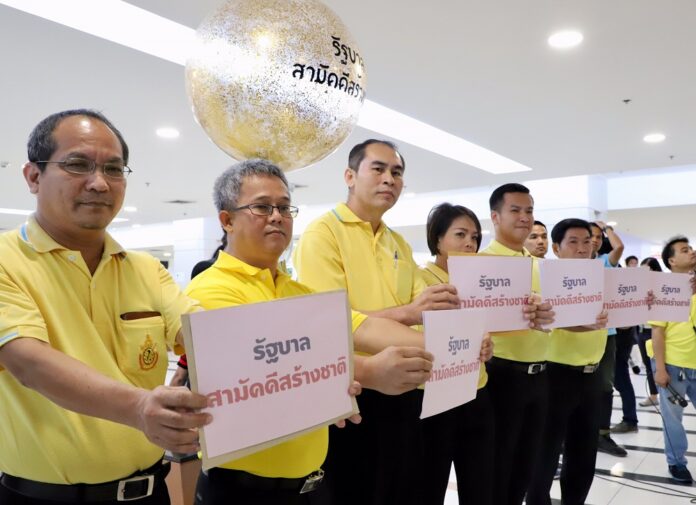
Representatives of seven political parties hold signs proposing a unity government on Monday at a news conference in Bangkok.

BANGKOK — Seven minor political parties on Monday called for a national unity government and for His Majesty the King to handpick the upper house.

At a news conference held at the Election Commission, representatives of the parties proposed that a national unity government is needed to break the state of political stalemate, in which no side has formed a functioning government nearly a month after the March 24 elections.

Although the idea of a unity government typically refers to the absence of an opposition in parliament, the group clarified that they’re calling for something different. Any party with at least one MP can choose not to join the grand coalition and instead serve as the opposition, they said.

The seven parties – all newly founded and little known – are Phakee Kruekai Thai, Paendin Tham, Palang Thai Dee, Paendin Thong, Paradornphab, Prachatai and Green parties. The seven parties today called themselves the “Political Unity Group”.

The group said it will engage “over 20 political parties” to seek support for the proposal.

The “Political Unity Group” also urged junta chairman Prayuth Chan-ocha to refrain from selecting the 250 Senators, as is specified in the current constitution. Instead, they said His Majesty the King should pick them.

Allowing the King to make the selection would ensure that Senators vote for the next prime minister impartially, the group reasoned, since incumbent PM Prayuth is himself a candidate for the top job.

Finally, the group called for a new formula for allocating party-list MP seats, which would see Pheu Thai lose potential seats in favor of small parties.

The “Political Unity Group” reasoned that even smaller political parties deserve to gain at least one seat each. It argued that Pheu Thai has gained too many seats, specifically 20, which should be allocated to 20 small parties who failed to win any seats.

Advertisement

Hot News

LATEST NEWS

Bangkok
overcast clouds
25.5 ° C
26.1 °
25.5 °
46 %
2.4kmh
100 %
Sun
30 °
Mon
31 °
Tue
36 °
Wed
31 °
Thu
33 °