




















27.2 C
Bangkok
Monday, June 29, 2026
Home Blog Page 1650

Japan Says Name for New Era of Naruhito Will Be ‘Reiwa’

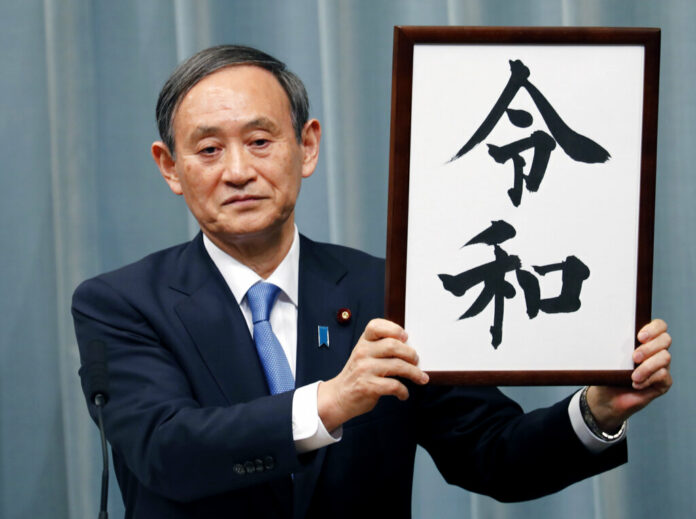
Japan’s Chief Cabinet Secretary Yoshihide Suga unveils the name of new era “Reiwa” at the prime minister’s office in Tokyo, Monday, April 1, 2019. Photo: Eugene Hoshiko / Associated Press

TOKYO — The name of the era of Japan’s soon-to-be-emperor Naruhito will be “Reiwa,” the government announced Monday.

Emperor Akihito is stepping down on April 30, in the first abdication in 200 years, bringing his era of “Heisei” to an end. The new era takes effect May 1.

The name draws from the 7th century poetry collection “Manyoshu,” Prime Minister Shinzo Abe said after the announcement by the chief cabinet secretary, Yoshihide Suga.

Abe said the name means that culture is born and nurtured as the people “beautifully care about each other.”

“With this selection of a new era name, I renew my commitment to pioneer a new era that will be filled with hope,” Abe said.

The Manyoshu is Japan’s oldest poetry collection and symbolizes Japan’s rich culture and long tradition, he said.

The choice was a break from more than 1,300 years of drawing era names, or “gengo” from using Chinese classics. It was kept strictly secret ahead of Monday’s announcement.

“We hope (the era name) will be widely accepted by the people and deeply rooted as part of their daily lives,” Suga told reporters in first announcing the name, written in two Chinese characters in black ink calligraphy on a white background.

The announcement allows only a month ahead of the switch for government, businesses and other sectors to adjust to the change that still affects many parts of Japan’s society, even though the system is not compulsory and the emperor has no political power under Japan’s postwar constitution.

Under the 1979 era name law, Abe appointed a panel of experts on classical Chinese and Japanese literature to nominate two to five names for top officials to choose from. The names had to meet strict criteria, being easy to read and write but not commonly or previously used for an era name.

Japanese media scrambled to get scoops out of a new era name. Rumors included “Ankyu,” which uses the same Chinese character as in Abe’s family name.

There had been speculation that Abe’s ultra-conservative government, often hawkish on China matters, would choose the name from a Japanese document, breaking with the tradition of using Chinese classics as references.

The name selection procedure started in mid-March when Suga asked a handful of unidentified scholars to nominate two to five era names each.

Several nominations were presented at a first, closed-door meeting that included nine outside experts from various areas, including Nobel prize-winning stem-cell scientist Shinya Yamanaka and award-winning novelist Mariko Hayashi, to present their views and narrow the selection before final approval by the Cabinet.

While a growing number of Japanese prefer the Western calendar over the Japanese system in a highly digitalized and globalized society, the era name is still widely used in government and business documents. Elders often use it to identify their generations.

Discussing and guessing new era names in advance is not considered a taboo this time because Akihito is abdicating. Era name change is also a time for many Japanese to reflect on the outgoing and incoming decades.

Akihito’s era of “Heisei,” which means “achieving peace,” was the first without a war in Japan’s modern history, but is also remembered as lost years of economic deflation and natural disasters.

Heisei was the first era name decided by the government under the postwar constitution, in which the emperor was stripped of political power and had no say over the choice. Still, the government, with its highly secretive and sensitive handling of the process, is underscoring that “the emperor has power in an invisible, subtle way,” says Hirohito Suzuki, a Toyo University sociologist.

Era name changes are creating businesses for both the outgoing and the incoming. Anything dubbed “last of Heisei” attracts Akihito fans, while others are waiting to submit marriage certificates or filing other official registration until the new era starts. Analysts say the era change that expands the “golden week” holidays to 10 days on May 1 could buoy tourism and other recreational spending.

Story: Mari Yamaguchi
Advertisement

BTS Skytrain Awarded ‘Best Transport in the World’

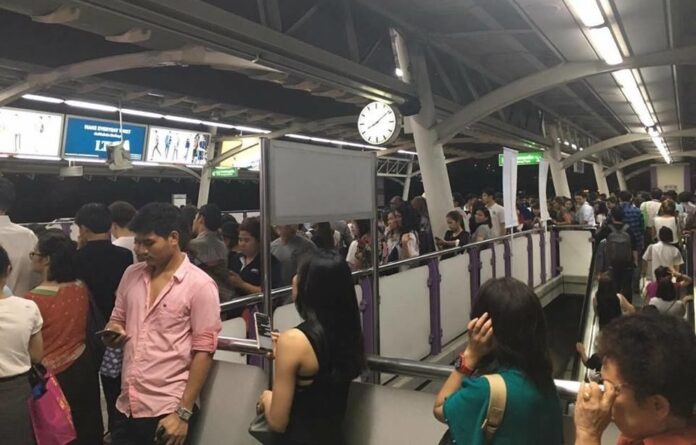
A typical scene of smooth BTS services.

BANGKOK — Bangkokians have yet another reason to be proud of their city after an international travel consultant named the capital’s skytrain system “the best in the world.”

TripAdvisorial Group, which operates a popular reviews-based website, gave the top award to the BTS in all categories, including “the most punctual,” “the most affordable,” “the most technologically-advanced” and “the most disability-friendly.”

In a press conference held earlier this week, TripAdvisorial chairman Justin Kiddings praised the skytrain operators and Bangkok administration for tirelessly working to ensure comfort, convenience and capacity for millions of daily passengers.

The company also commends a “revolutionary” decision by BTS Skytrain to accept 2-baht coins in its ticket machines.

“BTS is an example for the future of the world’s transportation,” Kiddings said at the award ceremony in Hong Kong.

In response, BTS brand ambassadors sent out a “thank you” tweet from the company’s official account.


Related stories:

BNK48 Announces ‘Despacito 2: Electric Bungaloo’

Bangkok Lacks Sufficient Malls, Research Says

‘Luang Cave: The Musical’ to Star Elon Musk

Chiang Mai’s Songkran Starts Early to Combat PM2.5 Particles


Advertisement

Chiang Mai’s Songkran Starts Early to Combat PM2.5 Particles

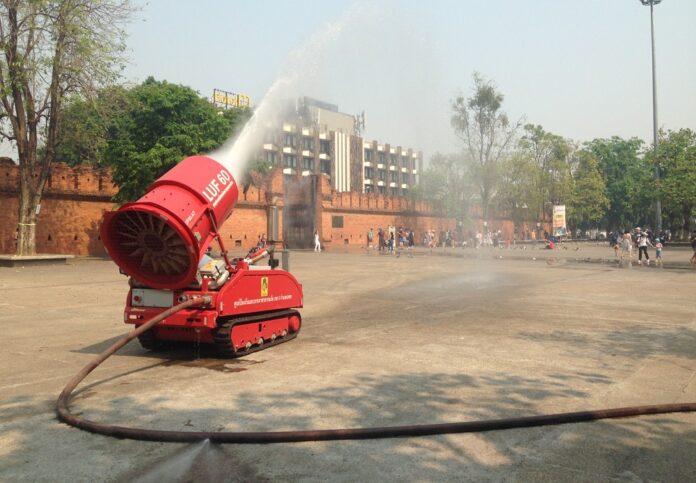
A water cannon sprays water to reduce dust particles in Chiang Mai province.

CHIANG MAI — Thai New Year’s water festival will arrive early in Chiang Mai this year as the government seeks public participation to combat the city’s persistent air pollution.

Instead of the usual starting dates of April 13 through April 15, citizens and tourists in the northern city can splash each other and fire away their water guns from April 3 onward, according to government spokesman Col. Wanthai Lorlen.

“Amazing PM4.0 Thailand” will last until April 15, Wanthai said.

“The event is lacking press coverage. Some people may not know about this early Songkran,” he told the media. “Please pass this information to everyone you know.”

The authorities hope all-out water fights will help ease the level of PM2.5 dust particles in the region. Officials have been spraying water at building rooftops and roads in the hope of reducing toxic particles, to a mixed success.

Pollution there reaches “Hazardous” level in recent weeks, causing residents to vent their anger at the government for perceived inaction.

Col. Wanthai said “Amazing PM4.0 Thailand” is part of Pracharath initiatives, which encourages communities to take up action and fix problems by themselves instead of waiting for the central government’s help.

Related stories:

‘Luang Cave: The Musical’ to Star Elon Musk

BTS Skytrain Awarded ‘Best Transport in the World’

Koh Tao Reported Missing From Gulf of Thailand

‘White Eagle’ Visa Raid to Target Caucasians

Advertisement

‘Luang Cave: The Musical’ to Star Elon Musk

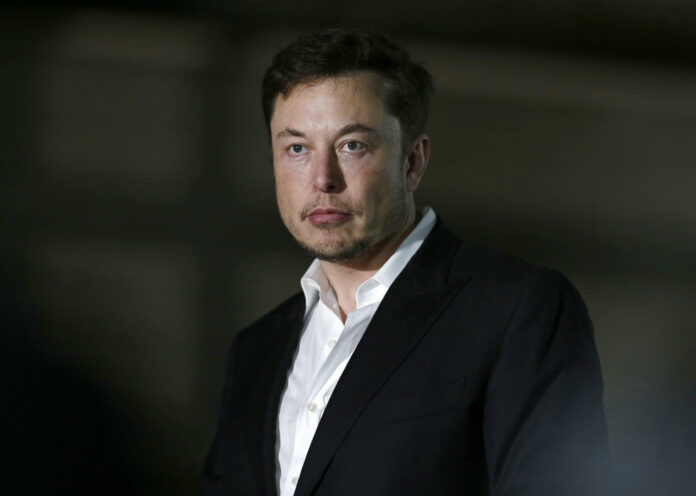
Tesla CEO and founder of the Boring Company Elon Musk speaks at a news conference in June in Chicago. Photo: Kiichiro Sato / Associated Press

CHIANG RAI — Tech entrepreneur and futurist Elon Musk will take to the stage as an actor for the first time in July, according to a leaked script of an upcoming play based on last year’s daring rescue of 12 young footballers and their coach.

“Luang Cave: The Musical,” directed by Thai art film sensei Apichaipong “Joke” Weerasethaikul, is set to open in Bangkok on 10 July to mark the first anniversary of the much-publicized rescue operation at the Luang Cave in Chiang Rai province.

A working draft leaked online from a government-sponsored production firm identifies Musk as one of the cast members. The Tesla mogul will play the role of renowned British cave diver Vernon Unsworth, who was among the first to discover the missing children and their football coach inside Luang Cave complex.

Musk could not be reached for comment as of publication time, though the entrepreneur has dropped hints of the upcoming play on his Twitter account.

The script confirms Musk will have both speaking and singing parts. Veteran conductor S&P Somtow will direct the epic scores.

Musk himself was present at Tham Luang during the rescue operations, where he donated a midget submarine to assist the divers. It is unclear who will play the role of Musk in the play.

Related stories:

Chiang Mai’s Songkran Starts Early to Combat PM2.5 Particles

Win Motosai Agree to Partition Sukhumvit With GrabBike

BTS Skytrain Awarded ‘Best Transport in the World’

Prayuth Mulls Article 44 to Postpone Poll Results

Advertisement

N. Korea Calls for Investigation Into Madrid Embassy Attack

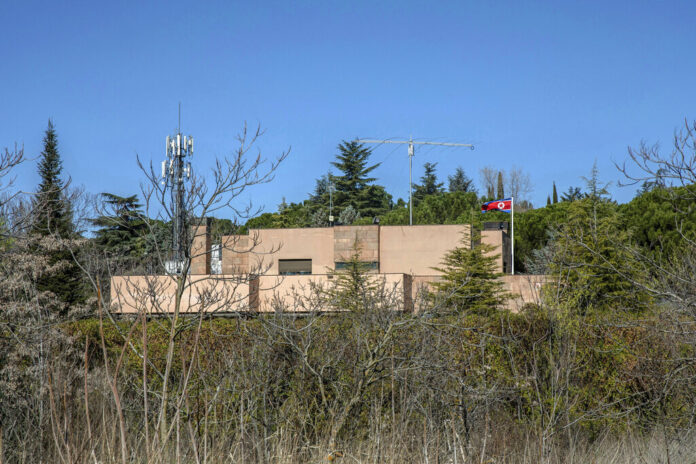
This Wednesday, March 13, 2019 file photo shows a general view of North Korea's embassy in Madrid, Spain. Photo: Bernat Armangue / Associated Press

TOKYO — North Korea said Sunday it wants an investigation into a raid on its embassy in Spain last month, calling it a “grave terrorist attack” and an act of extortion that violates international law.

The incident occurred ahead of President Donald Trump’s second summit with leader Kim Jong Un in Hanoi on Feb. 27-28. A mysterious group calling for the overthrow of the North Korean regime has claimed responsibility.

Read: A Look at Alleged Raiders of North Korean Embassy in Madrid

The North’s official media quoted a Foreign Ministry spokesman as saying that an illegal intrusion into and occupation of a diplomatic mission and an act of extortion are a grave breach of the state sovereignty and a flagrant violation of international law, “and this kind of act should never be tolerated.”

He claimed an armed group tortured the staff and suggested they stole communications gear.

The 10 people who allegedly raided the embassy in Madrid belong to a mysterious dissident organization that styles itself as a government-in-exile dedicated to toppling the ruling Kim family dynasty. The leader of the alleged intruders appears to be a Yale-educated human rights activist who was once jailed in China while trying to rescue North Korean defectors living in hiding, according to activists and defectors.

Details have begun trickling out about the raid after a Spanish judge lifted a secrecy order last week and said an investigation of what happened on Feb. 22 uncovered evidence that “a criminal organization” shackled and gagged embassy staff before escaping with computers, hard drives and documents. A U.S. official said the group is named Cheollima Civil Defense, a little-known organization that recently called for international solidarity in the fight against North Korea’s government.

Spain has issued at least two international arrest warrants for members of the group.

Advertisement

Cities Go Dark for Earth Hour, Bring Light to Climate Change

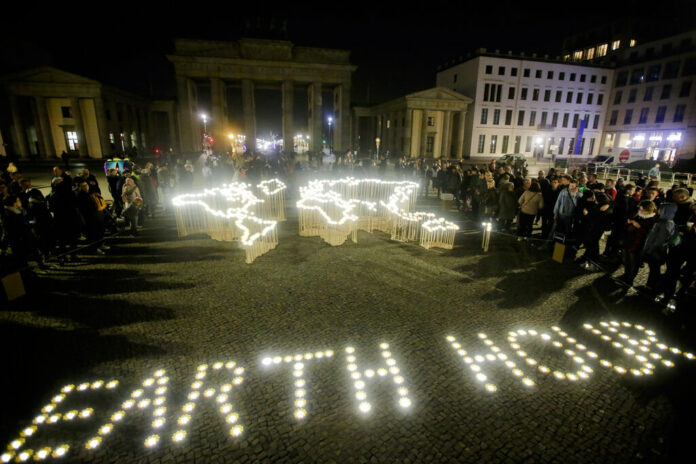
Activists of the World Wide Fund For Nature (WWF) set up led-lights Saturday in front of the blacked out Brandenburg Gate in Berlin, Germany to mark Earth Hour. Photo: Markus Schreiber / Associated Press

NEW YORK — Cities around the world marked Earth Hour on Saturday by turning off lights at 8:30 p.m. local time in a call for global action on climate change.

Earth Hour, spearheaded by the World Wildlife Fund, calls for greater awareness and more sparing use of resources, especially fossil fuels that produce carbon gases and lead to global warming. Beginning in Sydney in 2007, Earth Hour has spread to more than 180 countries, with tens of millions of people joining in.

Read: Grand Palace, Wat Arun to Go Dark 1H Saturday Night

The Empire State Building participated as clocks hit 8:30 p.m. on the U.S. East Coast with a dimming of the skyscrapers’ lights.

In Hong Kong, major buildings along Victoria Harbour turned off their non-essential lights and the city’s popular tourist attraction known as the Symphony of Lights was canceled.

Over 3,000 corporations in Hong Kong signed up for Earth Hour 2019, according to the WWF Hong Kong website. Iconic skyscrapers including the Bank of China Tower and the HSBC Building in Central, the city’s major business district, switched off their lights in response to the global movement.

The City of Lights also turned off the Eiffel Tower’s nightly twinkle to mark Earth Hour. Paris Mayor Anne Hidalgo dimmed the lights Saturday on the city’s most famous monument for an hour.

In Italy, public buildings and historical monuments in 400 cities participated in Earth Hour. Lights were also switched off at St. Peter’s Basilica at the Vatican.

Some of most emblematic architectural treasures in Spain participated, including the Alhambra palace in Granada and Barcelona’s La Sagrada Familia basilica.

In Taipei, Taiwan’s capital, the island’s tallest building, Taipei 101, joined surrounding buildings in shutting off the lights as part of the Earth Hour event.

In coal-reliant Poland, top tourist sites also turned off their lights when local clocks hit 8:30 p.m. In the country’s capital city, Warsaw, the spired landmark Palace of Culture and Science turned off its night illumination, along with some churches and Old Town walls.

Lights were also switched off in several landmarks in the Greek capital. The Acropolis, Athens City Hall and Lycabettus Hill, towering above the Athens center, went dark and the Parliament building joined in. However, the Athens mayor’s calls for the people to join in by turning off the lights in their houses went mostly unheeded.

Advertisement

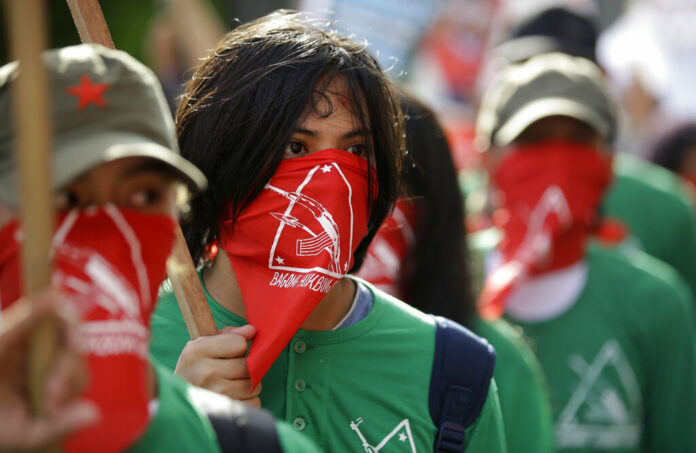
Philippine Police Kill 14 Men Rights Groups Say Were Farmers

In this March 25, 2019, file photo, masked members of the outlawed National Democratic Front of the Philippines, the umbrella organization of the Philippine communist movement, listen during a demonstration in Manila, Philippines. Photo: Aaron Favila / Associated Press

BACOLOD, Philippines — Philippine police said Sunday 14 suspected communist rebels were killed after they opened fire during raids in a central province, but rights groups countered the men were farmers and the latest victims of extrajudicial killings.

Dozens of police, backed by army troops, were to conduct court-authorized home searches Saturday in a city and two towns in Negros Oriental province when the 14 men violently fought back. A police officer was shot in the leg and wounded in the anti-insurgency and criminality sweep that also led to the arrests of 15 other suspects, police officials said.

Regional police chief Debold Sinas said six suspected insurgents and rebel supporters escaped. Law enforcers seized three shotguns, 25 pistols, a homemade rifle, three grenades, ammunition and rebel documents in the simultaneous raids in Canlaon city, where eight suspects were gunned down, and the towns of Manjuyod and Santa Catalina, where the rest were killed in the reported gunbattles.

“There were 14 suspects that engaged the raiders in a shootout during the implementation of the search warrants resulting to their deaths,” Sinas told the national police chief in a report.

Human rights and farmers’ groups condemned the killings of the men they said were farmers, including two village chiefs, and called for an independent investigation.

“The appalling conduct of these ‘police operations’ obviously aims to make peasants, activists and other ordinary citizens of Negros to cower in fear, surrender their rights, and accept the wave of terror under the de facto martial law,” the Northern Negros Alliance of Human Rights Advocates said.

The group said six farmers were killed and more than 50 others arrested in similar police raids in December in Guihulngan city in Negros Oriental, which lies on a sugar-producing agricultural island long known for its gaping divide between the poor and wealthy landowning families.

President Rodrigo Duterte declared martial law in the country’s south in 2017 to contain a deadly siege by Islamic State group-aligned militants and other insurgents. Although Negros Oriental lies outside the south, it is in a region about 590 kilometers (366 miles) south of Manila where military and police forces have intensified counterinsurgency raids in recent years.

Police denied the 14 men killed in Saturday’s raids were victims of extrajudicial killings. Aside from unlicensed firearms, police were looking for suspected New People’s Army guerrillas involved in a failed attack on a Canlaon city police station this month and other assaults on police officers, Sinas said.

Communist guerrillas have waged a rural rebellion in the country for half a century, one of Asia’s longest. The violence has left about 40,000 combatants and civilians dead. It also has stunted economic development, especially in the countryside, where the military says about 3,500 insurgents are still active.

Advertisement

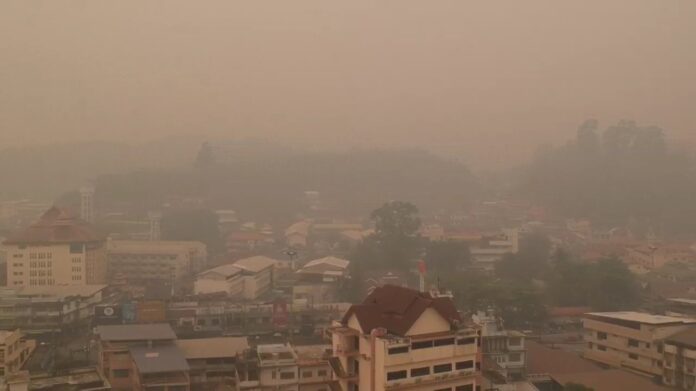
Northern University Cancels Classes Due to Smog

Heavy smog is seen Saturday over Mae Sai District in Chiang Rai province.

CHIANG RAI — A university in Chiang Rai province said its students will be dismissed for two days as air pollution continues to surge in the north.

Mae Fah Luang University said all classes will be canceled and its outdoor venues will be closed Monday and Tuesday due to the “severe smog situation.” The levels of air pollution in the province this morning rose to “hazardous” with the density of ultrafine particles at more than 330 micrograms per cubic meter, according to monitoring organization AirVisual.

Officials have launched measures with little effect to combat heavy smog that has been choking the north for months, including a ban on open burning and spraying water into the sky.

Air quality in the neighboring Chiang Mai province today was at “unhealthy” levels, with the density of PM 2.5 – the smallest and most harmful particles – at more than 170 micrograms per cubic meter.

Related stories:

Chiang Mai’s Foul Air No Priority to Bangkok, North Complains

Chiang Mai Tops World Pollution Charts

Advertisement

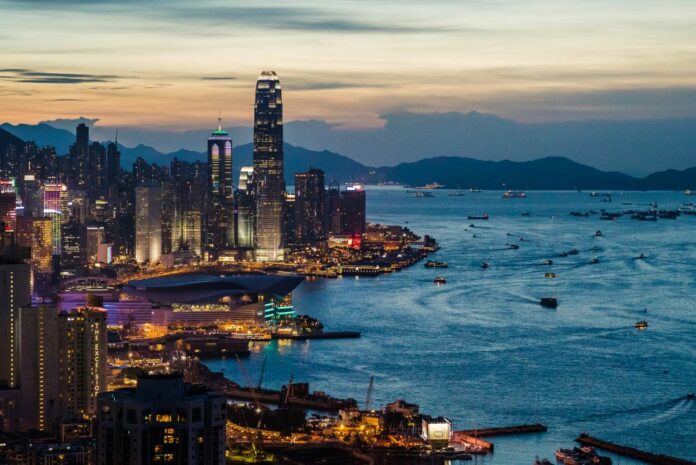
Proposed Hong Kong Extradition Law Changes Spark Concerns

A file photo of Hong Kong's Victoria Harbour. Photo: Studio Incendo / Flickr

HONG KONG — Business and human rights groups are expressing concern over proposed changes to Hong Kong’s extradition law that would allow suspects to be sent to mainland China where they say they could be subject to torture and unfair prosecution.

Hong Kong currently limits such extraditions to jurisdictions with which it has existing extradition agreements or to others on an individual basis under a law passed before the semi-autonomous territory’s handover from British to Chinese rule in 1997.

China was excluded because of concerns over its poor record on legal independence and human rights.

However, changes to the Fugitive Offenders Ordinance and the Mutual Legal Assistance in Criminal Matters Ordinance would expand the scope for the transfer of criminal suspects to China and remove the legislature’s right to scrutinize individual extradition decisions.

Advertisement

Fugitive Ex-PM Thaksin Stripped of Royal Decorations

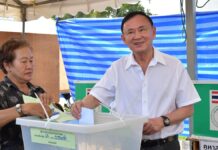
BANGKOK — The fugitive former Prime Minister Thaksin Shinawatra has been stripped of his royal decorations, the palace announced Saturday.

The Royal Command from King Vajiralongkorn, published in the Royal Gazette, said Thaksin’s 2008 flight to escape serving a two-year prison term on a conflict of interest conviction and other legal cases against him was “extremely inappropriate.”

The move follows a March 24 general election in which the Pheu Thai party – loyal to Thaksin – claimed it won enough seats to form a coalition that would hold a majority in the House of Representatives. Final certified results will not be issued until May 9, and the Election Commission has warned there could be some disqualifications by then.

It also came two days after a top military figure said the army has stripped Thaksin of his special award as a prominent alumnus of the Armed Forces Preparation Academy because he no longer “deserves the honor.” He however denied the decision was politically motivated.

King Vajiralongkorn on election eve had issued a statement urging voters to select “good people” for public office, a message taken as implicit support for Thaksin’s opponents, mainly the military-backed Phalang Pracharath Party, which won the highest number of popular votes.

Thaksin, a billionaire with populist policies, became prime minister in 2001 but was ousted by a 2006 military coup. Abuse of power and disrespect for the monarchy were two of the accusations that were offered as justification for the coup.

The army staged another coup in 2014 against a government that had been formed by Thaksin’s sister Yingluck Shinawatra, who was forced out of office on a controversial charge, later found guilty of negligence in her duties, and also fled into exile.

The 2014 coup was led by then-army commander Prayuth Chan-ocha, who has been junta chief and prime minister since then, and is the PM candidate of Phalang Pracharath Party.

The 2006 coup set off a sometimes violent struggle for power between Thaksin’s supporters and opponents, and pro-Thaksin parties staged several comebacks even though the military and other royalists have tried to dismantle his political machine.

These include changes in the constitution and election laws under the military government that were meant to handicap parties loyal to Thaksin.

The hostility of royalists toward Thaksin has been evident since he was in office, though was never expressed directly by members of the royal family, including Vajiralongkorn’s father, King Bhumibol Adulyadej, who died in 2016. The royal family by tradition is above politics.

Vajiralongkorn’s older sister, Princess Ubolratana, caused an uproar in February when the pro-Thaksin Thai Raksa Chart Party registered her as its nominee for prime minister. The move was initially seen as a clever ploy by Thaksin’s political machine to immunize itself against charges that it opposed the monarchy. It backfired badly when the king declared it inappropriate and unconstitutional, and the party was dissolved by the courts before the election, hurting the pro-Thaksin forces.

Princess Ubolratana, however, made a high-profile appearance at the wedding reception of one of Thaksin’s daughters in Hong Kong just two days before the election. Photos and video of the event showed Thaksin welcoming her warmly.

Thailand’s monarchy is protected by strong lese majeste laws that make whatever is judged defamatory of the royal family punishable by three to 15 years’ imprisonment.

Additional reporting Jintamas Saksornchai for Khaosod English

Advertisement

Hot News

LATEST NEWS

Bangkok
overcast clouds
27.2 ° C
27.2 °
27.2 °
82 %
3.9kmh
100 %
Mon
34 °
Tue
34 °
Wed
33 °
Thu
35 °
Fri
27 °