





























27.7 C
Bangkok
Friday, June 26, 2026
Home Blog Page 1692

Egypt Lawmakers Approve Possible 3-Decade Rule by President

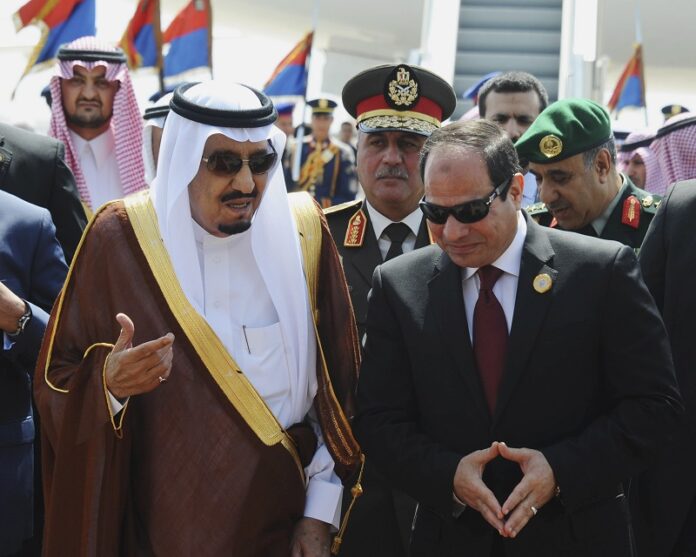
Egyptian President Abdel-Fattah el-Sissi, right, talks with Saudi King Salman in 2016 after the monarch arrived in Sharm el-Sheikh, Egypt. Photo: Associated Press

CAIRO — Egyptian lawmakers voted overwhelmingly on Thursday to extend term limits for President Abdel-Fattah el-Sissi until 2034, part of a package of constitutional amendments also set to further enshrine the military’s role in politics that will now face a national referendum.

Of the 596-seat Parliament, 485 lawmakers backed the amendments, which could see the former general ruling for the length of four U.S. presidential terms, in addition to the nearly five years he’s already spent in office.

Critics of the move argue that Egypt is slipping back into authoritarianism, eight years after a pro-democracy uprising ended autocrat Hosni Mubarak’s three-decade rule, and nearly six years after el-Sissi led a popular military overthrow of the country’s first freely elected but divisive Islamist president, Mohammed Morsi, after protests against his rule.

With Parliament and state institutions packed with fervent el-Sissi supporters, the amendments focusing on him are almost certain to survive any scrutiny, allowing the general-turned president 12 more years of potential rule after his second term expires in 2022.

Parliament Speaker Ali Abdel-Al said the motion would now be discussed by the Constitutional and Legislative Affairs Committee for 60 days before returning to Parliament for a final vote followed by the referendum, likely to take place before early May, the start of Ramadan.

Despite the overwhelming support, a group of politicians, public figures and authors of the current 2014 constitution immediately launched an open letter rejecting the amendments as a power grab by el-Sissi, calling for signatures and describing the move as illegal.

“The essence of the proposed constitutional amendment process is to enable the current president to continue ruling for more than two terms, in violation of the current constitution, concentrating all powers in his hand and tightening the executive’s grip on judicial bodies,” the initial 200 signatories wrote.

It added that the move would ruin any chances of a future peaceful transfer of power and halt Egypt’s progress toward becoming a modern democratic state.

Thursday’s vote followed three rounds of discussions among representative lawmakers that started the previous day. Very few opposed openly the amendments focusing on el-Sissi or the military. Abdel-Al’s statement mentioned neither specifically.

Since taking office, el-Sissi has led an unprecedented crackdown on dissent, opposition and civil liberties, justifying his unique leadership as necessary to bring stability and economic growth.

Human Rights Watch says the amendments would undermine judicial independence and expand executive powers that are already being abused in Egypt. The group says over 15,000 civilians, including children, have been referred to military prosecution in Egypt.

Rights researchers broadly agree that Egypt holds tens of thousands of political prisoners – mostly Islamists but also some secular liberals – under a penal system widely condemned as cruel and sloppy. El-Sissi denies the charges categorically.

In general terms, the amendments only extend a president’s term in office from four to six years. But they include a special article that only applies to el-Sissi and allows him to run two more times for six-year terms – possibly having his rule end up bridging three decades.

El-Sissi was elected president in 2014, and re-elected last year after all potentially serious challengers were either jailed or pressured to exit the race.

The amendments also include clauses allowing the president to appoint top judges and bypass judiciary oversight in vetting draft legislation before it is voted into law. They declare the country’s military “guardian and protector” of the Egyptian state, democracy and the constitution, while also granting military courts wider jurisdiction in trying civilians.

Story: Brian Rohan
Advertisement

Myanmar Court Sentences 2 to Death for Killing Suu Kyi Aide

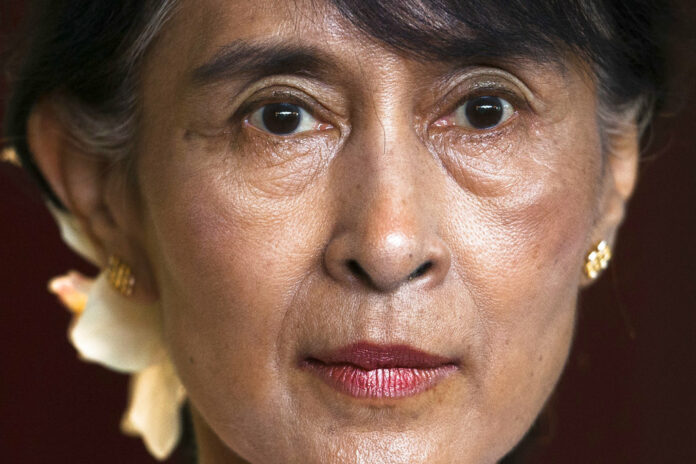
Myanmar opposition leader Aung San Suu Kyi briefs the media after a meeting with Norway Prime Minister Jens Stoltenberg at the Norway government guest house in 2012 in Oslo, Norway. Photo: Markus Schreiber / Associated Press

YANGON — A court in Myanmar on Friday sentenced two men to death for the killing of a prominent Muslim lawyer who was a close adviser to the country’s top leader, Aung San Suu Kyi.

The Yangon Northern District Court found the gunman, Kyi Lin, guilty of premeditated murder and illegal weapons possession for the Jan. 29, 2017 shooting of Ko Ni in broad daylight at Yangon airport. An accomplice involved in planning the killing was also sentenced to death, and two other men involved in the crime received prison sentences.

A fifth suspect thought to be the crime’s mastermind remains at large.

Ko Ni was shot in the head at close range on Jan. 29, 2017, as he walked out of the airport after returning from a working trip to Indonesia. Closed-circuit television footage showed he was shot near a taxi stand as he held his 5-year-old grandchild.

Onlookers chased down the gunman, catching him only after he also shot dead a taxi driver who was one of his pursuers. An ex-convict previously imprisoned for illegally trading in antiquities such as sculptures of Buddha, Kyi Lin also received a 20-year sentence for killing the taxi driver.

The death penalty in Myanmar is carried out by hanging but no executions appear to have been carried out since 1988. Many prisoners on death row have had their sentences commuted.

The failure to apprehend the crime’s alleged mastermind left many questions about the motivation for the killing, especially with the defendants offering contradictory testimony.

Speculation about the reasons Ko Ni was targeted focused on two possibilities.

Ko Ni was noted for criticizing army interference in politics and advised Suu Kyi’s National League for Democracy on ways to get around articles in the army-imposed constitution that give the military wide powers even after Myanmar’s transition to democracy. Her party got around a ban on her becoming president by simply creating a new executive post, state counsellor, with presidential powers.

The fact that two of the defendants are former army officers fueled theories that the military was involved with the crime, an accusation it denies.

As a prominent advocate for the Muslim minority in overwhelmingly Buddhist Myanmar, Ko Ni was also a target of abuse from ultra-nationalist Buddhist monks and their allies, some of whom publicly gloated after his death. Myanmar has been gripped by anti-Muslim sentiment in recent years after deadly communal violence in the western state of Rakhine, home to many Muslims from the Rohingya ethnic minority.

Home Affairs Minister Lt. Gen. Kyaw Swe said during investigation of the crime that the authorities believed that it was a “personal grudge” and “extreme sense of nationalism” that led the suspects to carry out the assassination. Police said the murder plot was hatched around April 2016, when its alleged planners were talking at a tea shop. Ex-convict Kyi Lin was hired to be the gunman and reportedly paid almost $60,000.

A separate statement issued at the time by the president’s office urged people “to be fully aware of religious and racial incitements, and attempts to destabilize the situation,” an apparent reference to speculation that anti-Muslim prejudice might have contributed to Ko Ni’s death.

The second man sentenced to death Friday was Aung Win Zaw, who was filmed by CCTV at the airport on the day of the killing.

Another alleged planner, Zayar Phyo, who had told the court he had been framed, received a five-year prison sentence, while Aung Win Tun, charged with harboring one of the suspects, got three years.

The alleged mastermind, Aung Win Khine – also known as Aung Win Khaing – was charged with premeditated murder but his whereabouts are unknown.

Interpol, the international police agency, has at the request of Myanmar authorities issued a “Red Notice” informing all its members that a warrant has been issued for his arrest and asking that he be held for extradition.

Advertisement

Missing Thai Woman Found Walking 600 KM From Home

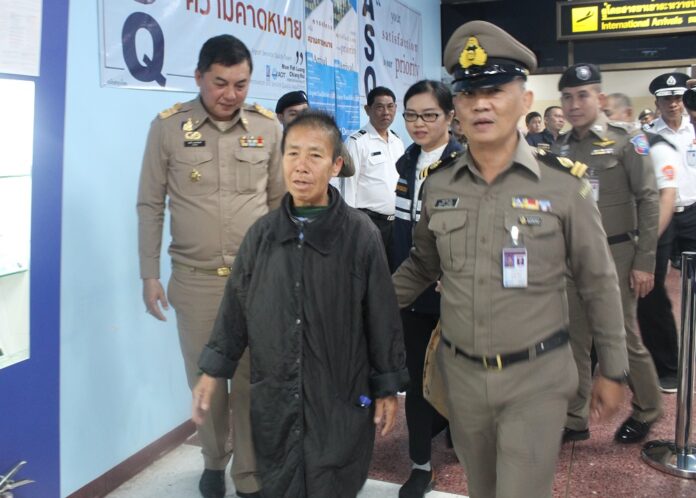
Kaewmanee Archor arrives in Chiang Rai on Friday.

CHIANG RAI — A 59-year-old woman who went missing eight months ago has been found walking on a road about 600 kilometers from her home – in China.

With assistance from Chinese authorities, Kaewmanee Archor, who reportedly suffers from dementia, was flown back to her hometown in Chiang Rai province this afternoon. Police chief Ponganan Klaikleung said Kaewmanee told authorities she didn’t know how she made it to Kunming, China.

“It’s very good news that Mrs. Kaewmanee has returned safely to the embrace of her daughter,” Maj. Gen. Ponganan told reporters. “We will coordinate with the Ministry of Human Security to assist her in getting by … so that she can continue living normally.”

Kaewmanee was reported missing to Chiang Rai police on June 12, 2018, by her daughter Suchada Archor, who told the media that Kaewmanee had trouble remembering things.

Maj. Ponganan said Chinese officials alerted the Thai immigration bureau earlier this week that a Thai woman had been found wandering close to Kunming without travel documents. They later identified her as Kaewmanee, the police said.

According to Ponganan, the woman lost 20 kilograms while away from home but otherwise remains healthy.

Suchada said her mother maintains that she can’t remember anything about the journey, and couldn’t explain how she could have traveled 600 kilometers without assistance. It is also unclear how she crossed the border.

Kunming is in the southern region of Yunnan, separated from Thailand by mountainous regions of Laos and Myanmar.

Advertisement

Congress OKs Border Deal; Trump Will Sign, Declare Emergency

A Donald Trump supporter flexes his muscles in 2017 with the words
A Donald Trump supporter flexes his muscles in 2017 with the words "Build The Wall" written on them as Trump speaks at a campaign rally in Plattsburgh, New York. Photo: Elise Amendola / Associated Press

WASHINGTON — Congress lopsidedly approved a border security compromise Thursday that would avert a second painful government shutdown, but a new confrontation was ignited – this time over President Donald Trump’s plan to bypass lawmakers and declare a national emergency to siphon billions from other federal coffers for his wall on the Mexican boundary.

Money in the bill for border barriers, about USD$1.4 billion, is far below the $5.7 billion Trump insisted he needed and would finance just a quarter of the 200-plus miles he wanted. The White House said he’d sign the legislation but act unilaterally to get more, prompting condemnations from Democrats and threats of lawsuits from states and others who might lose federal money or said Trump was abusing his authority.

The uproar over Trump’s next move cast an uncertain shadow over what had been a rare display of bipartisanship to address the grinding battle between the White House and lawmakers over border security.

The Senate passed the legislation 83-16, with both parties solidly aboard. The House followed with a 300-128 tally, with Trump’s signature planned Friday. Trump will speak Friday morning in the Rose Garden about border security, the White House said.

House Democrats overwhelmingly backed the legislation, with only 19 – most of whom were Hispanic – opposed. Just over half of Republicans voted “no.”

Should Trump change his mind, both chambers’ margins were above the two-thirds majorities needed to override presidential vetoes. Lawmakers, however, sometimes rally behind presidents of the same party in such battles.

Lawmakers exuded relief that the agreement had averted a fresh closure of federal agencies just three weeks after a record-setting 35-day partial shutdown that drew an unambiguous thumbs-down from the public. But in announcing that Trump would sign the accord, White House Press Secretary Sarah Sanders also said he’d take “other executive action, including a national emergency,”

In an unusual joint statement, House Speaker Nancy Pelosi, D-Calif., and Senate Minority Leader Chuck Schumer, D-N.Y., said such a declaration would be “a lawless act, a gross abuse of the power of the presidency and a desperate attempt to distract” from Trump’s failure to force Mexico to pay for the wall, as he’s promised for years.

“Congress will defend our constitutional authorities,” they said. They declined to say whether that meant lawsuits or votes on resolutions to prevent Trump from unilaterally shifting money to wall-building, with aides saying they’d wait to see what he does.

Democratic state attorneys general said they’d consider legal action to block Trump. Puerto Rico Gov. Ricardo Rossello told the president on Twitter “we’ll see you in court” if he makes the declaration.

Despite widespread opposition in Congress to proclaiming an emergency, including by some Republicans, Trump is under pressure to act unilaterally to soothe his conservative base and avoid looking like he’s lost his wall battle.

The abrupt announcement of Trump’s plans came late in an afternoon of rumblings that the volatile president – who’d strongly hinted he’d sign the agreement but wasn’t definitive – was shifting toward rejecting it. That would have infused fresh chaos into a fight both parties are desperate to leave behind, a thought that drove some lawmakers to ask heavenly help.

“Let’s all pray that the president will have wisdom to sign the bill so the government doesn’t shut down,” Sen. Charles Grassley, R-Iowa, said Thursday’s Senate session opened.

Moments before Sanders spoke at the White House, Senate Majority Leader Mitch McConnell, R-Ky., took to the Senate floor to announce Trump’s decisions to sign the bill and declare an emergency.

Sen. John Cornyn, R-Texas, told reporters there were two hours of phone calls between McConnell and the White House before there were assurances that Trump would sign.

McConnell argued that the bill delivered victories for Trump over Pelosi. These included overcoming her pledge to not fund the wall at all and rejecting a Democratic proposal for numerical limits on detaining some immigrants, said a Republican speaking on condition of anonymity to describe private conversations.

In a surprising development, McConnell said he would support Trump’s emergency declaration, a turnabout for the Kentucky Republican, who like many lawmakers had opposed such action.

Democrats say there is no border crisis and Trump would be using a declaration simply to sidestep Congress. Some Republicans warn that future Democratic presidents could use his precedent to force spending on their own priorities, like gun control. GOP critics included Maine Sen. Susan Collins, who said emergency declarations are for “major natural disasters or catastrophic events” and said its use would be of “dubious constitutionality.”

White House staff and congressional Republicans have said that besides an emergency, Trump might assert other authorities that could conceivably put him within reach of billions of dollars. The money could come from funds targeted for military construction, disaster relief and counterdrug efforts.

Congressional aides say there is $21 billion for military construction that Trump could used if he declares a national emergency. By law, the money must be used to support U.S. armed forces, they say.The Defense Department declined to provide details on available money.

With many of the Democrats’ liberal base voters adamantly against Trump’s aggressive attempts to curb immigration, four declared presidential hopefuls opposed the bill in the Senate: Cory Booker of New Jersey, New York’s Kirsten Gillibrand, Elizabeth Warren of Massachusetts and Kamala Harris of California. Amy Klobuchar of Minnesota voted for it, as did Vermont independent Bernie Sanders, who is expected to join the field soon.

Notably, the word “wall,” the heart of many a chant at Trump campaign events and his rallies as president, is absent from the compromise’s 1,768-page legislative and descriptive language. “Barriers” and “fencing” are the nouns of choice, a victory for Democrats eager to deny Trump even a rhetorical victory.

The agreement, which took bargainers three weeks to strike, would also squeeze funding for Immigration and Customs Enforcement, or ICE, in an attempt to pressure the agency to detain fewer immigrants. To the dismay of Democrats, however, it would still leave an agency many of them consider abusive holding thousands more immigrants than last year.

The measure contains money for improved surveillance equipment, more customs agents and humanitarian aid for detained immigrants. The overall bill also provides $330 billion to finance dozens of federal programs for the rest of the year, one-fourth of federal agency budgets.

Trump sparked the last shutdown before Christmas after Democrats snubbed his $5.7 billion demand for the wall. The closure denied paychecks to 800,000 federal workers, hurt contractors and people reliant on government services and was loathed by the public.

With polls showing the public blamed him and GOP lawmakers, Trump folded on Jan. 25 without getting any of the wall funds. His capitulation was a political fiasco for Republicans and handed Pelosi a victory less than a month after Democrats took over the House and confronted Trump with a formidable rival for power.

Trump’s descriptions of the wall have fluctuated, at times saying it would cover 1,000 miles of the 2,000-mile boundary. Previous administrations constructed over 650 miles of barriers.

Story: Alan Fram, Catherine Lucey, Andrew Taylor 

Advertisement

Please Stop Killing Trees With Your Politics: City Hall

Photos of campaign posters in Bangkok posted to twitter by @PiyachatSangkh, at left, and @Oatasis.

BANGKOK — Please don’t kill the capital’s trees by nailing campaign posters onto them, City Hall said Friday.

With campaign posters appearing on every vertical surface in Bangkok less than two months from Election Day, a city official came out to reiterate that parties aren’t allowed to hang wood-framed posters on trees, which she said is tantamount to damaging city property.

“We’ve found PM candidates hanging posters on trees by using nails or metal wires. It might kill these trees,” said Silapasuay Raweesaengsoun, the administration’s deputy permanent secretary.

She said City Hall would warn candidates if it finds their posters hanging on trees, adding that it would take action against those who refuse to remove them.

Damaging public property carries a maximum penalty of five years in prison and a 100,000-baht fine.

Campaign posters also triggered complaints from pedestrians for blocking city sidewalks and obstructing their view at bus stops. It has led to the creation of #blockingposter on Twitter, which has been used to report posters that obstruct the way.

Advertisement

Pheu Thai to Stage Bangkok’s First Full-Blown Election Rally

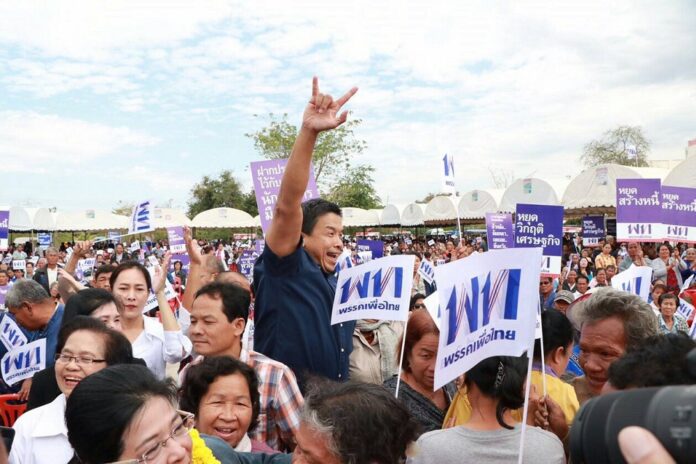
Pheu Thai candidate Chadchart Sittipunt, immortalized by internet memes as 'World's Strongest Transport Minister,' greets supporters at a rally Jan. 18 in Kalasin.

BANGKOK — Bangkok will see its first outdoor election rally this afternoon, when candidates from the Pheu Thai Party take the stage in front of City Hall.

The rally comes as contests in the capital – where about 4 million voters are registered – is growing more intense by the day. Pheu Thai, which is aligned with former prime minister Thaksin Shinawatra, is also fighting for its survival after a court took up a case to disband its sister party.

It was not announced who will speak at the gathering, but Pheu Thai prime minister candidates Sudarat Keyuraphan, Chadchart Sittipunt and Chaikasem Nitisiri are expected to make appearances.

Campaign rallies are a major instrument for political parties canvassing for votes, as they usually draw thousands of people and broad media coverage. It’s also a chance to make one’s case for party policies and lambast opponents, much to the relish of political news junkies.

No outdoor election rally has been held in the heart of the capital so far. The Phalang Pracharat and Democrat parties held indoor rallies in the suburbs earlier this month. Phalang Pracharat, which supports junta chairman Prayuth Chan-ocha, is holding an outdoor rally west of Bangkok today in Kanchanaburi province.

Also today, Chart Pattana Party’s prime minister candidate Suwat Liptapanlop is also campaigning in the capital. Led by Suwat, the party’s candidates walked through Lumphini Park this morning and greeted park-goers.

Although Chart Pattana is thought to be the strongest in the northeast, party leader Suwat said he wanted to show Bangkokians he cares about their issues.

Meanwhile, Bangkok-born Thanathorn Juangroongruangkit of the Future Forward Party is in the northeast today. While campaigning in Korat last night, the businessman-turned-politician was greeted by a youthful crowd shouting “Sky loves daddy,” a reference to a recent social media trend.

But Pheu Thai ally Thai Raksa Chart announced today it has suspended all campaigning. In a statement, Thai Raksa Chart said its key members have to focus on contesting its dissolution before the Constitutional Court on charges it violated election law by nominating a former princess one week ago.

The Election Commission yesterday also warned parties campaigning in the capital to ensure their posters are properly placed without blocking pedestrians or their view of traffic.

At a Thursday news conference, the commission’s director for Bangkok, Wichuda Mekhanuwong, said her office heard a recent complaint that a student was injured after walking into a campaign poster’s wooden frame protruding into the pavement.

Parties responsible for posters found in violation will receive notices to remove them within five days, Wichuda said. If they fail to do so, the Election Commission will dismantle them and charge the party for the work.

Election Day is March 24.

Advertisement

Thailand Approves Weed Killer Linked to Palsy

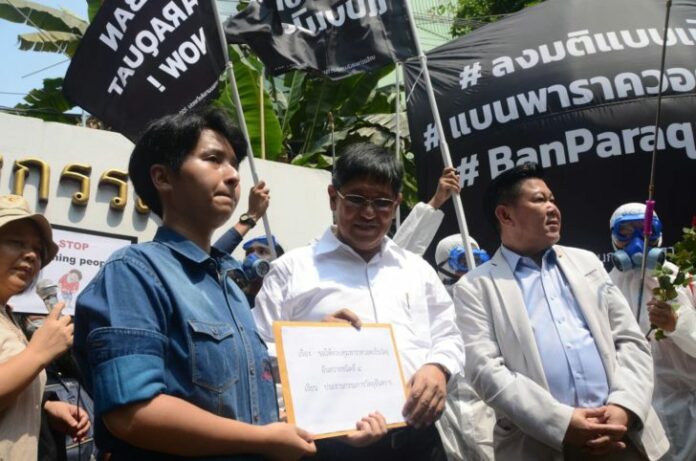
Advocates for banning paraquat, a popular herbicide linked to serious illness in humans, protest Thursday outside the Industry Ministry in Bangkok.

BANGKOK — A toxic herbicide linked to Parkinson’s disease was approved by officials Thursday for use in Thai agriculture for at least two more years despite health concerns.

Paraquat is among three controversial chemicals that will still be permitted for agricultural use, the Hazardous Substance Committee announced Thursday to the disappointment of advocates calling for its ban. The other two are glyphosate and chlorpyrifos.

The use of the three herbicides and pesticides will be allowed for six crops: rubber, cassava, maize, sugar cane and fruit trees.

The decision passed with 16 votes in favor and five against. There were five abstentions.

On Thursday anti-paraquat organizations such as the Thai Pesticide Alert Network (Thai-PAN) and Biothai Foundation protested outside the Ministry of Industry. One farmer showed reporters lacerations on his leg he said resulted from exposure to paraquat.

After the committee announced its decision, Thai-PAN issued a statement saying its members were “disappointed and saddened” by the decision.

“[We’ll] apply for consideration again in two years,” the statement read. “Such a decision shows indifference toward the strong academic evidence and demands from several organizations.”

Paraquat is the main ingredient in Swiss-based Syngenta AG’s Gramoxone – one of the world’s three most widely-used weed killers – but is also sold under other brand names.

It is banned in nearly 50 countries including all of Europe, which banned it in July 2007.

Syngenta says paraquat is “safe and effective … when used as directed on the label.”

A 2011 study by the US National Institutes of Health found a link between the chemical and Parkinson’s disease in farm workers.

Related stories:

Environmentalists Demand Govt Ban Weed Killer

Govt Ups Restrictions on Paraquat, Other Farm Chemicals

Advertisement

UK’s May Suffers Embarrassing Defeat on Brexit Strategy

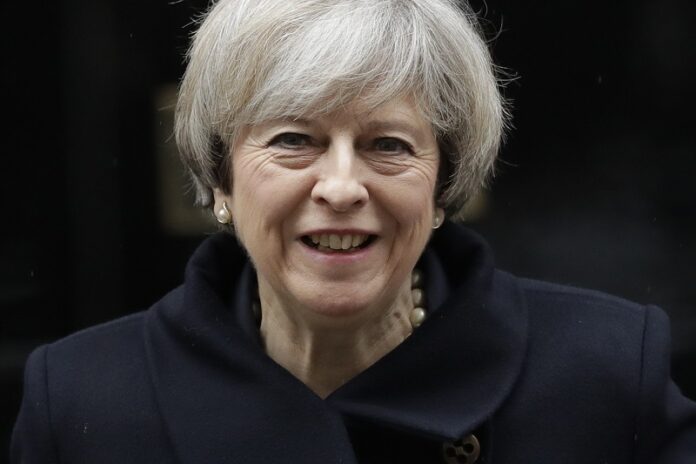
British Prime Minister Theresa May leaves 10 Downing Street in London, to attend Prime Minister's Questions in 2017 at the Houses of Parliament. Photo: Matt Dunham / Associated Press

LONDON — British Prime Minister Theresa May suffered an embarrassing defeat by lawmakers Thursday in a vote that left her bid to secure a European Union divorce deal stuck between an intransigent EU and a resistant U.K. Parliament – with Brexit just six weeks away.

A rebellion by hard-core Brexit backers saw the House of Commons vote by 303 votes to 258 against a motion reiterating support for May’s approach to Brexit – support expressed by lawmakers in votes just two weeks ago.

The defeat is symbolic rather than binding, but shows how weak May’s hand is as she tries to secure changes to her divorce deal from the EU in order to win backing for it in Parliament. It is likely to leave EU leaders wondering whether May can win support for any kind of Brexit deal, given Britain’s political instability.

May tried to put a positive spin on the result. The prime minister’s office said in a statement that “while we didn’t secure the support of the Commons this evening,” the government believed Parliament still wanted May to seek changes to the Brexit deal that lawmakers could support.

“The government will continue to pursue this with the EU to ensure we leave on time on 29th March,” it said.

Others were blunter.

“What an absolute fiasco this is,” said pro-EU Conservative lawmaker Anna Soubry. A leading pro-Brexit colleague, Bernard Jenkin, used the same word: “Fiasco.”

The vote is the latest outbreak of Brexit-driven chaos that is roiling Britain’s Parliament and imperiling Britain’s orderly exit from the EU.

Two weeks ago, Parliament sent a contradictory message, voting to send May back to Brussels to seek changes to a section of the withdrawal agreement intended to ensure an open border between the U.K.’s Northern Ireland and EU member Ireland after Brexit.

But lawmakers also voted to rule out a “no-deal” exit, though without signaling how that should happen.

On Thursday the government was defeated on an uncontroversial-sounding motion reiterating the earlier decision, when hard-line pro-Brexit lawmakers in the governing Conservatives abstained, accusing the government of effectively ruling out the threat of leaving the EU without an agreement on departure terms and future relations, a move they say undermines Britain’s bargaining position.

“Conservative MPs (members of Parliament) really ought not to be associated with anything, express or implied, which seems to take ‘no deal’ off the table,” Brexit-backing Conservative lawmaker Steve Baker tweeted before the vote.

Pro-EU lawmakers in Britain’s divided Parliament feel the opposite. They fear time is running out to seal a deal before Britain topples off a “no-deal” cliff, with economically devastating results. But the Commons on Thursday rejected two amendments from the opposition that sought to postpone Brexit or steer the U.K. away from the cliff edge.

Lawmakers intent on averting a “no-deal” Brexit are gathering their strength to make a push in a new series of votes on Feb. 27 to force the government’s hand.

By then, Brexit will be only a month away.

May is struggling with little sign of success to win backing for the divorce deal she struck with the EU from both pro-Brexit and pro-EU lawmakers in Parliament, which rejected the agreement by a whopping 230 votes last month.

May has refused take a “no-deal” Brexit off the table as she attempts to win concessions from the bloc. Most businesses and economists say the British economy would be severely damaged if the country crashed out of the EU on the scheduled Brexit date of March 29 without a deal, bringing tariffs and other impediments to trade.

Jeremy Corbyn, who heads the main opposition Labour Party, accused May of sitting on her hands, “hoping that something will turn up that will save the day and save her face.”

Brexit Secretary Stephen Barclay told lawmakers that “the only way to avoid ‘no-deal’ is either to secure a deal on the terms the prime minister has set out” or to cancel Brexit – something the government says it won’t do.

The remaining 27 EU nations insist that the legally binding withdrawal agreement struck with May’s government in November can’t be renegotiated.

Leaders of the bloc have expressed exasperation at Britain’s desire for last-minute changes, and its failure, amid seemingly endless wrangling in the U.K. Parliament, to offer firm proposals.

European Council President Donald Tusk, who chairs summits of EU leaders, tweeted: “No news is not always good news. EU27 still waiting for concrete, realistic proposals from London on how to break #Brexit impasse.”

Labour lawmaker Yvette Cooper said some British politicians were “living in a fantasy world” by believing a solution would magically appear.

“It’s as if we’re all standing around admiring the finery of the emperor’s new clothes and actually the emperor is running around stark naked and everyone is laughing at us – or at least they would be if it wasn’t so sad,” she said.

Story: Jill Lawless

Advertisement

522 Foreigners Got X-Ray Outlawed So Far This Month (Video)

BANGKOK — Police arrested more than 500 people in their sweep of foreigners violating immigration law this month.

At 1am this morning, Immigration deputy police chief Maj. Gen. Itthipol Itthisaronnachai invited the media to the Chana Songkhram Police Station on Khaosan Road where he displayed some of the 522 foreigners arrested in the past month.

Many of the arrests were made at hotels, hostels and other lodgings between Chinese New Year and Valentine’s Day, Itthipol said.

The raids were part of Operation X-Ray Outlaw Foreigner, an ongoing operation credited with taking nearly 7,000 foreign nationals off the streets since 2017. It was spearheaded by now-Immigration Bureau Police Commander Lt. Gen. Surachate “Big Joke” Hakparn.

Only 15 were arrested for overstaying their visas, while 287 were arrested for having entered the country illegally. The latter group included nationals from Myanmar (143), Laos (102), Cambodia (38), India (3) and Bangladesh (1).

The remaining 220 were arrested for various other suspected offenses. They included 87 Thais, 79 Burmese, 31 Cambodians, seven Chinese, five Laotians, three Vietnamese, three Turks, and one person each from Israel, India, the Philippines and Iraq. One stateless person was also arrested.

S 3743760 e1550206186113

Related stories:

Arrests of Visa Scofflaws Good for Tourism: Big Joke

Advertisement

Party Fields Transgender Candidate for Prime Minister

Pauline Ngarmpring, right, a transgender person and a prime minister candidate, and Namklenginarin, center, a candidate for the parliament, both representing the Mahachon party for the upcoming Thai general election, greet people Wednesday during an election campaign in Bangkok. Photo: Gemunu Amarasinghe / Associated Press

BANGKOK — As Pinit Ngarmpring, he was a CEO and sports promoter, well known in the world of Thai football. Now, under her preferred new name of Pauline Ngarmpring, she’s pursuing a bid to become the country’s first transgender prime minister.

The 52-year-old is one of three candidates put forward by a political party for the post in next month’s general election.

She says she wants her nomination to bring hope to the marginalized and to open up political space for future generations of LGBT people.

With over a month to go before the March 24 polling day, she campaigned this week in one of Bangkok’s more infamous nightlife areas.

Many vulnerable or exploited people work in this twilight zone of go-go bars, cheap hotels and massage parlors. It’s exactly the constituency the Mahachon party seeks to represent, and she’s eager to hear their concerns.

“Our welfare, mostly. Health,” masseuse Wassana Sorsawang says are her concerns, as she stands outside a shop in an alley off the street. She complains that she and her colleagues often work double shifts, and it affects their health.

The Mahachon party is contesting some 200 seats in the 500-member House of Representatives. About 20 of the candidates are openly LGBT. Pauline joined only last November. Now, as their second-ranked nominee for prime minister, she finds herself a political trailblazer, a unique symbol of the fight for equality.

Pauline Ngarmpring poses for a photograph Thursday at the Mahachon party head office in Bangkok. Photo: Gemunu Amarasinghe / Associated Press

It’s fine, she said, even if she cannot achieve her goal of becoming prime minister “because I am the first one who dares enough to announce, ‘hey, we can do it!'”

“We are not saying we are better than male or female,” she said. “We just want to say we are equal.”

Until three years ago, Pauline was Pinit: a father of two, a reporter turned businessman who became well known by founding a soccer fan association that became influential in sporting circles.

Since her gender transition she’s made it her mission, she said, to educate society. Her new political role gives her the perfect platform to counter those who still view LGBT rights – and her candidacy – with skepticism.

“Nowadays people say, ‘Oh you are transgender? You want to become our prime minister. It’s going to be funny, it is going to be a very strange story,'” she said.

“But I don’t think that way,” she said. “Whatever you are, you have your value. You love yourself and then you share with people.”

The party hopes its human rights-based agenda will appeal in particular to the country’s large LGBT and sex worker population. One policy is to legalize prostitution.

The result, Pauline says, could be up to 10 lawmakers in Parliament, thanks to a new electoral system that allocates some of the seats through proportional representation.

But, even given the country’s traditionally accepting view of sexual fluidity, she knows she is not destined to lead the country.

“I will not be a prime minister. But it doesn’t matter. It will take some time and it is not going to be the end of the world after the next election,” she said.

“It doesn’t have to be me. It can be the next generation.”

Story: Jerry Harmer, Tassanee Vejpongsa 

Advertisement

Hot News

LATEST NEWS

Bangkok
broken clouds
27.7 ° C
27.7 °
27.7 °
81 %
2.7kmh
67 %
Fri
36 °
Sat
36 °
Sun
37 °
Mon
36 °
Tue
35 °