


































28.8 C
Bangkok
Monday, July 6, 2026
Home Blog Page 1734

Australia Urges Indonesia to Respect Bali Bombing Victims

The scene of the bombings seen in 2007 in Bali, Indonesia. Photo: Jeffsboxing / Wikimedia Commons

CANBERRA, Australia — Australia’s prime minister said on Tuesday he would be disappointed if radical cleric Abu Bakar Bashir were released from prison early and urged Indonesia to show respect for the victims of the 2002 Bali nightclub bombings that the firebrand preacher inspired.

Indonesia’s top security minister, Wiranto, said on Monday that Indonesian President Joko Widodo had asked him to coordinate a review of all aspects of the planned release of the 80-year-old cleric following domestic and international criticism.

Australia has been in top-level discussions with the Indonesia since last week when the decision was announced to release Bashir, the spiritual leader of bombers who attacked nightclubs on Bali island and that killed 202 people, including 88 Australians.

Prime Minister Scott Morrison said Australia would protest if Bashir were released early as planned, after serving nine years of a 15-year sentence.

“I would obviously be very disappointed about that – like other Australians would – and will register that disappointment and quite strong feelings about that,” Morrison told 4CA Radio in the Australian city of Cairns.

“We don’t want this character able to go out there and incite the killing of Australians and Indonesians, preaching a doctrine of hate,” Morrison added.

Morrison told Indonesia “respect must be shown for the lives of those who are lost.”

Widodo on Friday said he had agreed to release Bashir on humanitarian grounds. The announcement came during campaigning for a presidential election due in April in which opponents of Widodo have tried to discredit him as insufficiently Islamic.

Australian survivors of the Bali attacks and victims’ relatives and friends urged against Bashir’s release.

Phil Britten was captain of a Perth-based Australian Rules football club and was with 19 teammates in a Bali nightclub when a bomb exploded, killing seven club members.

“Seven of my friends died, they don’t get the chance to live out the rest of their lives in peace. Why should he (Bashir)? I think it’s just appalling,” Britten told The West Australian newspaper.

Australian Peter Hughes suffered burns to 50 percent of his body when a bomb detonated in another Bali nightclub.

“He probably deserves the death penalty more so than the guys that actually did it themselves,” Hughes said of Bashir. “I believe he was totally responsible.”

Bashir had previously been considered ineligible for parole because of his refusal to renounce radical beliefs. His family had requested his release since 2017 because of his age and deteriorating health.

The firebrand cleric was arrested almost immediately after the 2002 Bali bombings.

But prosecutors were unable to prove a string of terrorism-related allegations, and Bashir was instead sentenced to 18 months in prison for immigration violations.

In 2011, he was sentenced to 15 years in prison for supporting a military-style training camp for Islamic militants.

Story: Rod McGuirk
Advertisement

2nd Mutilated Body Linked to Anti-Monarchist Aide

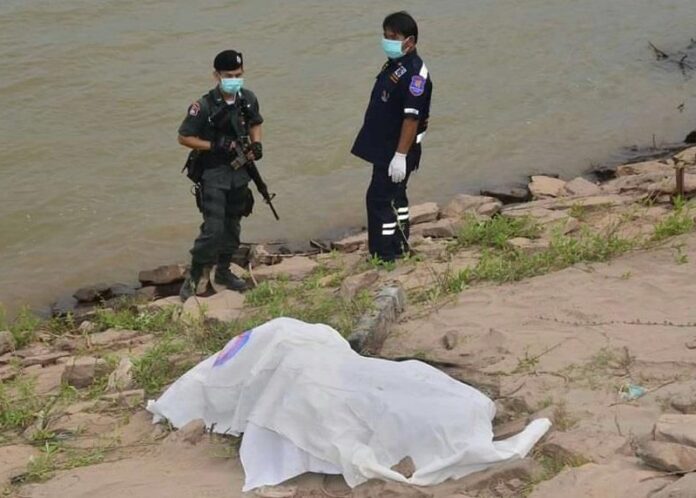
Police stand over one of the mutilated bodies retrieved from the Mekong river in December in Nakhon Phanom province.

BANGKOK — The second of two mutilated bodies that recently turned up in the Mekong River belongs to a second missing anti-monarchist in exile, according to a source at the Forensic Science Institute.

The source, speaking on condition of anonymity, confirmed Tuesday that DNA testing has linked the second body found late last month to a man known as “Comrade Kasalong,” one day after the first was identified as another close aide to Surachai Danwattanusorn, a prominent figure in the Thai republican movement.

On Monday, the son of another figure who had been living in exile in Laos since the 2014 coup said he was told that the other body was that of his father, who went by the nomme du guerre “Comrade Phoo Chana.”

Update: Photos Suggest Third Mekong Corpse Was Found, Then Lost

Neither of their real identities are publicly known, but they went missing along with Surachai since earlier in December. Phoo Chana was a hardcore Redshirt supporter who was wanted on weapons charges and fled Thailand following his wife’s arrest in 2014, according to Saowalak Po-ngam, a lawyer familiar with their cases.

The testing has been conducted by the Institute of Forensic Science in Bangkok since the two mutilated bodies were recovered from the Thai side of the river. They were handcuffed, disemboweled and a concrete block had been stuffed into their guts.

Read: DNA Links Mekong Corpse to Monarchy Foe 

Nobody has been able to locate Surachai since his disappearance. His wife Pranee Danwattanasusorn said she last heard from him Dec. 10 and fears he is dead.

Two other Thai fugitive exiles disappeared and were believe murdered between 2016 and 2017.

Police in Nakhon Phanom, where the bodies were recovered, vowed Tuesday morning to find those responsible.

Clarification: An earlier version of this story said one of the two bodies was recovered in Nakhon Phanom province. In fact, they were both found there.

Advertisement

Thai Net Groans After Politicos Declare War on ‘Sex Education’

A promotional image for Netflix series 'Sex Education' that appeared on several billboards in Bangkok, drawing complaints from a conservative political party. Image: Netflix Thailand / Facebook

BANGKOK — A political party was treated to an internet flambe for its denunciation of the “immoral” marketing for a popular Netflix series about teen sex education.

Netizens brigaded the Ponlamuang Thai Party’s social media page after it announced Monday that members had complained to broadcasting regulators about giant billboards promoting “Sex Education.” The heretofore unknown party said the ads amounted to “illegal activity of a transnational corporation” that would “negatively affect the youth and create social problems.”

The post showed several members at the National Broadcasting and Telecommunications Commission demanding it immediately remove the billboards alongside highways in Bangkok.

“The billboards are a marketing tactic using inappropriate content to attract people to sign up,” the statement read. “It presents obscenity with plots and scenes showing teenagers having sex explicitly [and] poses the risk of youth being wrongly encouraged by watching it.”

One problem – the commission has nothing to do with regulating advertising.

Commissioner Prawit Leesatapornwongsa said Tuesday that although he hadn’t heard about the complaint, regulating such content is not under their authority.

“We regulate the operators, not their content,” he said by phone. “Netflix is also not considered television.”

The series, which premiered on the platform earlier this month, tells the story of a socially awkward British high school student who imitates his professional sex therapist mother to become an amateur consultant to his schoolmates. It’s rated 8.6 out of 10 on IMDb and has received a 91 percent fresh rating from critics on Rotten Tomatoes.

After the party’s complaint became news, its Facebook page was quickly voted down to 1.6 stars with comments mimicking restaurant reviewers justifying their one-star votes.

“Very bad taste. Dumb-as-a-rock service. Parking lot full with cockroaches,” user Amornrat Tongthong wrote.

“The parking lot seemed to be spacious, but once inside it was full with dinosaurs and cockroaches. Very dirty. Food tastes so bad. Yuck,” wrote another user, Somyos Vann Mekasingharak

Ponlamuang Thai is a conservative-leaning party founded early last year.

After the backlash, the post was deleted. The party later released another statement defending its actions.

“Our party members saw this [series] yesterday, and all think that it’s a [series] that negatively affects the youth and creates social problems,” the post read. “It shows high school students doing drugs, engaging in promiscuity, wanting to have an abortion… Although the content can be broadcast normally in the West… it’s a great challenge to Thai society.”

“Younger generations might be happy when they can do whatever they want while their parents feel miserable about their children’s problematic behavior, doing something inappropriate,” it continued. “Overall, the [series] is called sex education, but its content is immoral.”

That message wasn’t received much better.

“Thank you for helping eliminate some bad choices in the upcoming election,” user Chatree Rungsang commented on the post.

“Stupid party, everyone in the photos,” wrote another user Suraphong Ponanun. “With this much attempt to block it, our country still has a very high rate of teen pregnancy. It shows how much knowledge of sex education is among our teens. With this attitude from you people, I feel even more hopeless.”

Sex education in Thai schools remains poor as it’s still a social taboo. A UN study found teen pregnancy rates in Thailand increased 54 percent from 2000 to 2014, citing lack of comprehensive sexual education as one of the major problems.

เรียน สมาชิกพรรคพลเมืองไทย ที่เคารพทุกท่านตามที่ผู้สมัครสมาชิกสภาผู้แทนราษฎร ของพรรคพลเมืองไทย กรุงเทพมหานคร…

โพสต์โดย พรรคพลเมืองไทย เมื่อ วันอาทิตย์ที่ 20 มกราคม 2019

Advertisement

Sacred Water Sources Sought for Coronation Rituals

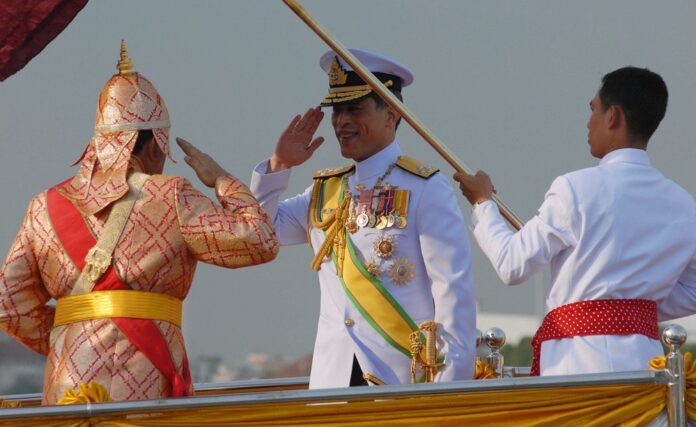
A file photo of King Vajiralongkorn.

BANGKOK — More than 100 water sources throughout Thailand are being evaluated for use in the royal coronation, the government said Tuesday.

Officials are visiting 107 rivers, streams and rivulets to see which are most ideal for drawing holy water to be used in rituals set to take place in May.

In accordance with longstanding traditions, the sacred water will be used to anoint King Vajiralongkorn as the new monarch when the ceremony commences May 4.

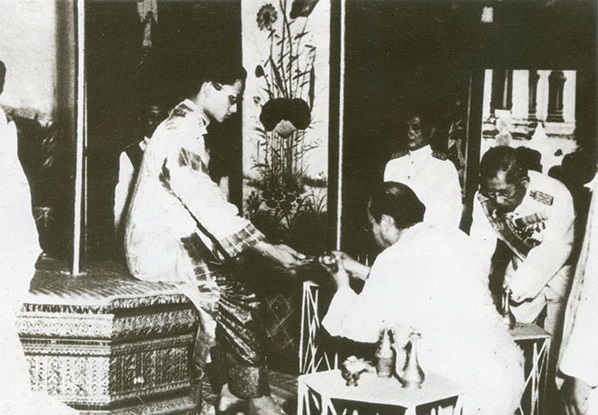
When King Bhumibol, the late father of the current monarch, was crowned in 1950, his holy water was drawn from from 18 sources in 18 different provinces.

dlf01140162p1
A priest pours sacred water on King Bhumibol’s hand at his coronation in May 1950.

Although King Vajiralongkorn ascended the throne in December following his father’s death two months earlier, he is not considered a formal monarch under Thai tradition until he is crowned in elaborate rituals which date back to the 13th century.

The national Buddhist authority announced last week that a bud from a sacred Bodhi tree in Sri Lanka will be brought to Ayutthaya on Feb. 19 and grown there to celebrate the coronation.

The Bodhi tree in question is believed to be descended from one planted about 2,000 years ago by the famed Buddhist king Ashoka the Great.

Advertisement

Bangkok’s Marvel Theme Park Goes Bust After 7 Months

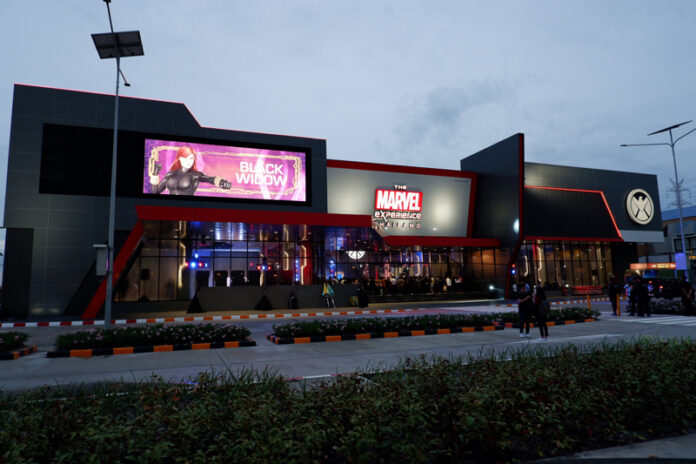
SAMUT PRAKAN — Southeast Asia’s first Marvel Entertainment theme park is going out of business just seven months after opening.

Marvel Experience Thailand, a 20,000sqm theme park complex which cost 1 billion baht to build at Mega Bangna, will close Jan. 30, the company announced Monday.

Director Prachuap Ucchin of Demeter Corp. PCL, which owns 37.5 percent of the theme park, wrote in a Monday filing to the Stock Exchange of Thailand Monday that a majority of shareholders had voted to shut the park.

“Hero Experience experienced financial problems and project management that did not go according to plan,” Prachuap wrote in the statement.

Read: Seize Your Heroic Destiny at Marvel Experience Bangna

Calls to Hero Experience and CEO Noppadon Chirasanti went unanswered.

The news was met with little surprised reactions online, where many cited the venue’s high costs of admission – 1,500 baht for adults and 1,350 baht for children – as a fatal flaw. Others noted that, whether due to licensing deal or choice, it was focused on Marvel’s comic books rather than the more popular film franchise.

The latent schadenfreude ran hot and cold.

“You had a good thing in your hand, and you drove it to bankruptcy, what a shame,” Wachira Mahothorn wrote in a Facebook comment that received more than 500 likes. “What were you thinking of with the high ticket fees for people to go in and buy stuff? The rides weren’t memorable enough to be viral. … You flopped due to the high prices and undetailed sculptures.”

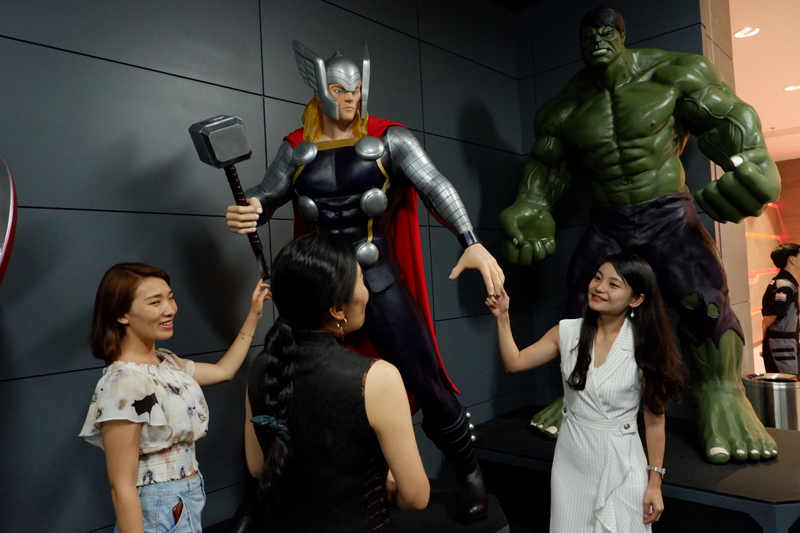
The quality of the sculptures of comic book characters which were placed throughout the complex were ridiculed heavily.

IMG 3526

“Think of the 320 baht daily wage of Thais when you set the ticket prices. I’m a true Marvel fan, and I can’t make myself buy a ticket to set foot in that place,” Nantapop Tiemkum wrote, “I’m also afraid the sculptures look like they came from a temple fair.”

Marvel Experience will remain open daily for one week until Jan. 29, with last admission at 6pm. The Marvel Experience launched in 2014 in the United States and opened in Bangkok on June 29.

“To all Agents of S.H.I.E.L.D., the Marvel Experience Thailand had assigned you a mission to protect the world alongside the Marvel heroes,” read the announcement posted last night to the Marvel Experience Thailand page. “Today, the S.H.I.E.L.D. organization would like to announce that the mission is about to be complete.”

IMG 3514

Related stories:

Seize Your Heroic Destiny at Marvel Experience Bangna

Advertisement

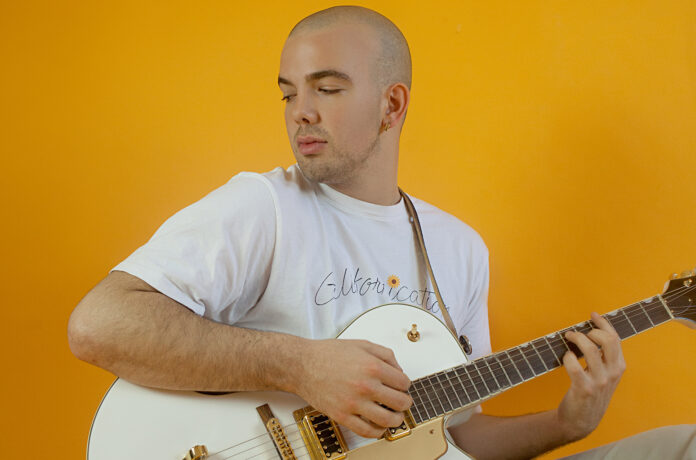
New York R&B Artist Mac Ayres to Give Bangkok ‘Something to Feel’

BANGKOK — A music hall will transform into a soulful dance floor as a young New York talent comes to the capital.

After releasing his debut album late last year, 21-year-old American singer-songwriter Mac Ayres will bring his refreshing R&B and soul combination to Bangkok, indie gig promoter Have You Heard? announced Monday.

Ayres’ gig will take place March 6 at Live Arena Voice Space.

Early-bird tickets are 990 baht, while regular tickets are 1,290 baht. They can be purchased online from 10am on Wednesday.

Ayres, 22, is a multi-instrumentalist from Long Island, New York. He released of his debut studio album “Something to Feel” in September. His music is influenced by several artists such as neo-soul artist D’Angelo, rapper J Dilla and singer-songwriter Stevie Wonder.

Advertisement

Tokyo Court Rejects Ex-Nissan Chair Ghosn’s Bail Request

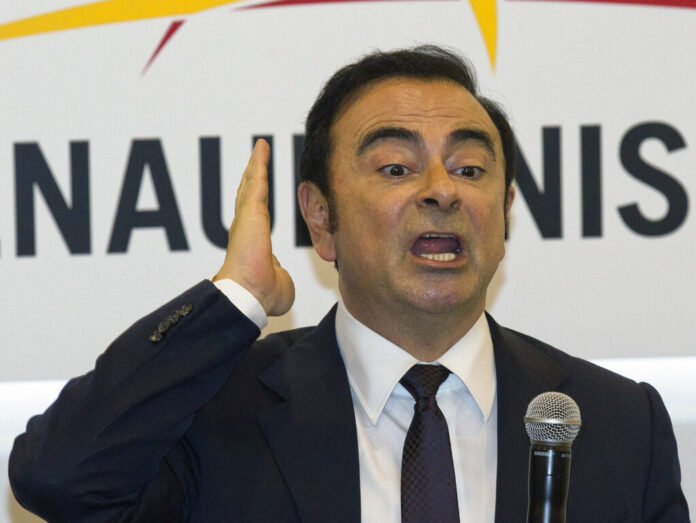
Then Renault-Nissan's CEO Carlos Ghosn speaks in 2016 during a press conference held at Auto China 2016 in Beijing, China. Photo: Ng Han Guan / Associated Press

TOKYO — A court in Tokyo on Tuesday rejected former Nissan chairman Carlos Ghosn’s latest request for bail, made more than two months after his arrest.

The decision by the Tokyo District Court came a day after Ghosn promised to wear an electronic monitoring ankle bracelet, give up his passport and pay for security guards approved by prosecutors to gain release from a Tokyo detention center.

The court announced its decision in a written statement.

Ghosn, 64, has been in custody since Nov. 19. He was due for a bail hearing Monday. A Tokyo court rejected an earlier request for bail last week. His lawyers were expected to appeal the decision, as they have earlier rejections of Ghosn’s requests to get out of detention.

Ghosn, who led Nissan Motor Co. for two decades, has been charged with falsifying financial reports, in underreporting his compensation from Nissan over eight years, and with breach of trust, centering on allegations Ghosn had Nissan shoulder investment losses and pay a Saudi businessman.

Ghosn says he is innocent as the compensation was never decided, Nissan didn’t suffer losses and the payment was for legitimate services.

Advertisement

Teen in MAGA Hat Video Says He Tried to Calm Tension

FRANKFORT, Ky. (AP) — A Native American organizer of a march in Washington, D.C., says he felt compelled to get between a group of black religious activists and largely white students with his ceremonial drum to defuse a potentially dangerous situation.

But, the teen at the center of a video confrontation says he did nothing to provoke anyone and also sought to calm the situation.

Nathan Phillips, an elder in the Omaha Tribe and a Vietnam veteran, on Sunday recounted for The Associated Press how he came to be surrounded by a group of students from a Catholic boys’ high school in Kentucky in an encounter captured on videos that are circulating online. The student identified himself in an email Sunday evening as junior Nick Sandmann of Covington Catholic High School in Kentucky.

An official working with the family confirmed Sandmann’s identity, speaking on condition of anonymity because the source didn’t want to distract from the teen’s statement.

Sandmann says students were waiting at the Lincoln Memorial for buses to return to Kentucky on Friday when four African-American protesters there began insulting them.

Videos being shared on social media show members of the activist group yelling insults at the students, who taunt them in return, and students chanting, laughing and jeering as Phillips sings and plays the drum.

Sandman says the students began yelling “school spirit chants” to drown out the protesters and he did not hear students chant anything “hateful or racist at any time.”

The Diocese of Covington and Covington Catholic High School released a statement that can be found on the front page of the school’s website reading:

“We condemn the actions of the Covington Catholic High School students towards Nathan Phillips specifically, and Native Americans in general, Jan. 18, after the March for Life, in Washington, D.C. We extend our deepest apologies to Mr. Phillips. This behavior is opposed to the Church’s teachings on the dignity and respect of the human person. The matter is being investigated and we will take appropriate action, up to and including expulsion. We know this incident also has tainted the entire witness of the March for Life and express our most sincere apologies to all those who attended the March and all those who support the pro-life movement.”

According to the school’s website, the group of students was in Washington, D.C., for March For Life 2019 from Jan. 17-19.

An extended video of the encounter shows Phillips and some of the men he was with approach the teens, while Phillips was beating his drum.

Some of the teens involved in the encounter have spoken out, saying the incident was not what it seemed.

A letter sent to the CBS affiliate in Cincinnati, Local 12, from a Covington Catholic student, and shared by our sister station WKYT, addresses the incident, and reads, in part:
“… We decided to do some cheers to pass time. In the midst of our cheers, we were approached by a group of adults led by Nathan Phillips, with Phillips beating his drum. They forced their way into the center of our group. … He came to stand in front of one of my classmates who stood where he was, smiling and enjoying the experience. … It was not until later that we discovered they would incriminate us as a publicity stunt. As a result, my friend faces expulsion for simply standing still and our entire school is being disparaged for a crime we did not commit…”

Phillips was participating in Friday’s Indigenous Peoples March. The students had attended the March for Life rally the same day.

Members of the Omaha Tribe gathered at the Nebraska State Capitol Sunday afternoon to protest the way Phillips was treated.

Advertisement

Tennis Players Can Cause Quite a Racket by Smashing Rackets

MELBOURNE, Australia — Way behind in a match he soon would lose, Alexander Zverev leaned forward in his Australian Open sideline seat to repeatedly, and violently, crack his racket against the court with a reverberating THWACK – one, two, three, four, five, six, seven, eight times in all, before throwing down the offending, and now-mangled, piece of equipment.

Caused quite a, well, racket.

“I heard it,” said Zverev’s opponent Monday, 2016 Wimbledon finalist Milos Raonic. “I don’t think I looked over. I think it was pretty clear what was going on.”

It certainly was not unusual. Smashing, spiking, bouncing or otherwise harming rackets is the most public form of anger, um, mismanagement in professional tennis, done all the time by all kinds of players, whether they are men or women, famous or unknown, seeded or otherwise, winning or losing. Over the first week of the Australian Open, Naomi Osaka, Dominic Thiem, Ryan Harrison and Daniil Medvedev, just to name a few, joined Zverev in producing GIF-worthy outbursts.

For better or for worse, racket-breaking is as inescapable an element of the sport as forehands and backhands, often revealing frustration, sometimes reversing the course of a contest, usually resulting in a fine of thousands of dollars, and even – as was the case with Serena Williams during her U.S. Open final loss to Osaka last September – occasionally costing a player a point (in Williams’ case, because of an earlier warning).

“I love it!” exclaimed Henri Leconte, the 1988 French Open runner-up.

“I mean, sure, it’s not good for kids to see,” he said. “But sometimes, it’s very important to show emotion. … In my generation, we had so many players who did that: John McEnroe was doing it a lot; Goran Ivanisevic was breaking rackets. Sometimes, when you see your opponent doing that, you say: ‘Oh, he’s really upset. That’s good.’ But if you were playing McEnroe, you were in trouble, because he played better afterward.”

Current players will cite McEnroe or Andy Roddick or Marat Safin, among others, when the subject is raised. They’ll talk about all-time classic displays, such as three-time major champion Stan Wawrinka’s signature move of bending a racket in half over his knee, the way a Major League Baseball slugger might try to break a bat. Or Marcos Baghdatis reaching into his bag for additional rackets during a changeover at the 2012 Australian Open (in a match against Wawrinka), until he’d slammed four and discarded them. Or Benoit Paire and his multiple-racket, sitting-then-standing tantrum (in a match against Baghdatis) that drew $16,500 in fines, more than double his prize money from last year’s Washington tournament.

“If we see a guy break a racket, someone will say to me, ‘Ah, yours was better,'” said Baghdatis, the 2006 runner-up in Melbourne.

“There are worse things. For me, it’s something that it’s fun to see. It’s good for tennis. There is some character and it should be like that,” he said. “You have a bad day at the office, (and) you have a fight with your wife. You have a fight with your brother, your mother, your sister, your father. It’s the way life is. Sometimes you have bad days and it just comes out.”

Leconte is hardly the only one who wonders about what sort of example is being set for children who are watching, especially those who play tennis.

“It’s become all too commonplace. And it seems like other players see it happening and they think, ‘Oh, this is OK to do.’ I think it’s bad modeling, and the rackets are obviously expensive,” said Tracy Austin, the 1979 and 1981 U.S. Open champion. “Emoting is good. We want to see personalities. But actually being destructive is not helpful for anybody.”

Ernests Gulbis, a former top-10 player known for raising racket abuse to an art form, says he wishes he could avoid ever doing it again.

He also admits that’s not likely.

“Sometimes the emotions just take over. It’s a fight. It’s like a gladiator fight. It’s not like you’re laying in bed and can just be relaxed,” Gulbis said. “Emotions just come out. I’m against it, personally, because you can fix your problems on court in a different way. But to be honest, sometimes it helps.”

That’s a popular take.

“It made me feel better. I was very angry, so I let my anger out,” Zverev said Monday.

Didn’t do him a bit of good on the scoreboard, though.

He was trailing Raonic 6-1, 4-1 when he destroyed his racket at a changeover, then proceeded to drop the next two games and the third set, too.

But Osaka, who’ll play in the quarterfinals Wednesday, did appear to get a boost from her racket fling while losing the opening set of what became a three-set victory.

“For me, I tend to keep a lot of things bottled up. I just felt like in that moment, sort of releasing it was easier than just keeping it inside,” Osaka said, “and then maybe I would have dwelled on it for longer.”

Top-ranked Novak Djokovic is a firm believer that the direction of a match can change with a well-timed to-do.

So the 14-time Grand Slam champion is hardly shy about chucking the tool of his trade when the inspiration strikes.

“At times in my career, these kind of situations, when I would scream or throw a racket, it would kind of wake me up and help me to just kind of free myself from that pressure that is just building throughout the match,” Djokovic said. “But there are times when it doesn’t help.”

Crowd reactions vary.

Fans are sometimes seen begging a player to hand over a messed-up racket as a keepsake. Yet when Djokovic shattered a frame by pounding it against the French Open’s red clay last year, spectators whistled and booed.

“I’m not proud of doing that, to be honest. I don’t like doing that,” he said. “But at times, it happens.”

Story: Howard Fendrich

Advertisement

Asian Cup: Japan Tops Saudi Arabia, Australia Wins Shootout

Japan's defender Takehiro Tomiyasu, second right, celebrates Monday after scoring the opening goal during the AFC Asian Cup round of 16 soccer match between Japan and Saudi Arabia at the Sharjah Stadium in Sharjah, United Arab Emirates. Photo: Hassan Ammar / Associated Press

SHARJAH, United Arab Emirates — Title contenders Japan and Australia scraped through tough last-16 games at the Asian Cup on Monday, joined by the host team United Arab Emirates.

Japan advanced to the uarterfinals by beating Saudi Arabia 1-0, while defending champion Australia needed penalties to get past Uzbekistan.

Takehiro Tomiyasu scored for Japan with a header in the 20th minute and the Saudis created few chances despite having more than 75 percent of the possession against a defense-first Japan team.

“In our team, we share the same idea that even when our opponent keeps the ball, if we carefully defend at the end-line, we should be able to defend without any problem,” defender Yuto Nagatomo said. “Our opponents held the ball for long periods, but our view was that we let them hold the ball.”

Japan, which is looking to win a record fifth Asian Cup title, will next face Vietnam, the lowest ranked of the six teams to qualify so far for the quarterfinals.

Saudi Arabia has not reached the quarterfinals in 12 years. Coach Juan Antonio Pizzi’s contract was due to expire after the tournament and he said it hadn’t been renewed.

“No one has talked to me from the Saudi federation about that,” the Argentine coach said. “We played most of the time today in their half and we controlled the ball and had position, but we lacked the final touch and determination to transfer the position into goals.”

Official attendance figures put the crowd at just 6,832 as the Asian Cup continued to be notable for banks of empty seats and echoing chants.

Australia struggled to create chances as a drab game against Uzbekistan ended 0-0 after extra time, before winning the shootout 4-2.

On his return from a hamstring injury, Mathew Leckie scored the winning penalty.

Shooting second for Australia, Aziz Behich saw his penalty saved but goalkeeper Mathew Ryan – shifting from side to side on his line to distract Uzbekistan’s penalty takers – stopped two Uzbek shots to put Australia ahead and allow Leckie to seal the win.

Uzbekistan almost scored early on when Ryan kept out Eldor Shomurodov’s shot, while Australia wasted second-half opportunities by shooting straight at goalkeeper Ignaty Nesterov. Defeat in the last 16 would have marked Australia’s worst Asian Cup result.

Australia is part-way through a rebuild under coach Graham Arnold after veteran players such as Mile Jedinak and Tim Cahill retired from international football following last year’s World Cup. Since joining the Asian confederation in 2006, Australia has played eight games in the knockout stages, with five of those going to extra time.

Australia’s quarterfinal opposition will be the United Arab Emirates after the host side beat Kyrgyzstan 3-2 after extra time.

Kyrgyzstan missed a string of chances at 2-1 down in the second half before Tursunali Rustamov’s stoppage-time header sent the game to extra time. The UAE took the win after Ahmed Khalil’s penalty, awarded for a shove on a teammate, but narrowly avoided penalties only when Kyrgyzstan hit the crossbar with 10 seconds remaining.

The UAE is aiming to live up to its third-place result from 2015, and reached the final the last time it hosted the tournament in 1996.

Advertisement

Hot News

LATEST NEWS

Bangkok
overcast clouds
28.8 ° C
28.8 °
25.5 °
82 %
3.7kmh
100 %
Sun
30 °
Mon
32 °
Tue
34 °
Wed
33 °
Thu
33 °