BANKING OPERATIONS CEASE: Cambodia's central bank has moved to liquidate Prince Bank following the high-profile arrest of its chairman, Chen Zhi.
PHNOM PENH — The National Bank of Cambodia (NBC) has officially ordered the liquidation of Prince Bank following a massive international fraud investigation involving its founder. The move comes as the bank’s creator, Chen Zhi, faces extradition to China after being indicted by U.S. authorities for his alleged role in a multibillion-dollar “pig butchering” scam network.
According to an official statement released on Thursday, January 8, 2026, the NBC has frozen all new banking operations at the firm, including the issuance of loans and the acceptance of deposits. Auditor Morisonkak MKA has been appointed to oversee the liquidation process and manage the bank’s estimated $1 billion in assets.
While the bank’s 36 branches nationwide saw minimal activity following the announcement, the central bank assured the public that current depositors can still withdraw their funds provided they submit the necessary documentation. Conversely, those with outstanding loans are required to continue their repayments as scheduled. Prince Bank is a key subsidiary of the Prince Holding Group, a massive conglomerate that international investigators have recently labeled a front for transnational organized crime.
BANGKOK — Thailand’s election authorities have acknowledged that a sample referendum ballot may contain an omission, saying the wording originated from the Cabinet and that additional public clarification is needed. Political parties and the public are free to express opinions on the referendum, officials said, as long as such actions do not violate the law.
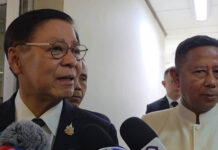
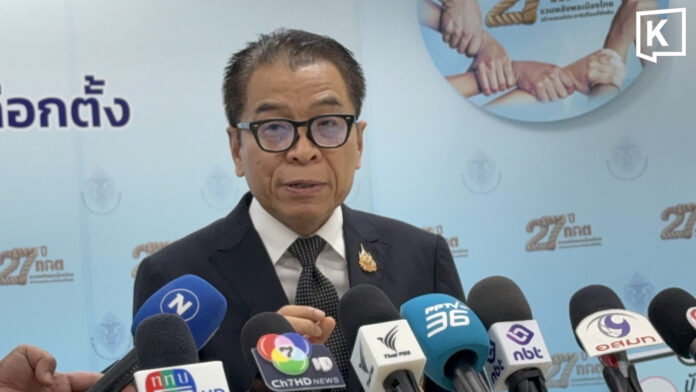
Speaking on 8 January at the Office of the Election Commission (EC), Secretary-General Sawaeng Boonmee responded to comments by former election commissioner Somchai Srisutthiyakorn, who questioned whether the referendum booklet contained missing text.
Sawaeng said the document distributed to household heads stated that voters should mark only one symbol. In practice, he said, voters are required to mark a single X. The EC therefore needs to conduct further public communication to ensure clarity. He acknowledged that an omission or error may have occurred and said additional publicity would be required to address the issue.
Asked whether public information campaigns on referendum voting should be expanded and whether politicians should help publicize the process, Sawaeng said political parties are already allowed to do so. He added that voters should already understand the issue and have decided whether to approve or reject the proposal by the time they arrive at polling stations.
He noted that a referendum differs from a general election, where party popularity plays a role. A referendum, he said, requires public understanding of the substance of the issue. The EC has distributed a 31-page referendum document to households, containing text provided entirely by the Cabinet. The EC’s role, he said, is limited to printing and distribution, not drafting the content.
Sawaeng added that the materials must remain neutral and must not present advantages or disadvantages in a way that influences voters. The documents comply with five legal requirements under Section 15 of the law. On polling day, polling station officials are prohibited from guiding voters on how to vote. Voters may cast their ballots as they choose, while officials are responsible only for facilitating the process and have no authority to offer advice.
Asked whether parliamentary candidates advising people on how to vote in the referendum would constitute improper influence, Sawaeng said referendum-related activities fall into three categories. The first involves official documents sent by the Cabinet through the EC to households, which constitute information sharing. The second is public expression of views, such as forums involving supporters and opponents of the proposal. The third is campaigning, which involves advocating for a desired outcome, whether approval or rejection, and providing reasons for that stance.
He said members of the public are free to declare their positions for or against the referendum. However, such actions must not violate the law or involve false or misleading information. While campaigning may involve persuasion, it must remain within legal boundaries, he said.
THAILAND — A young girl has died after losing consciousness in a bathroom at her home, in what relatives have described as a devastating accident involving a gas-powered water heater in an enclosed space with no ventilation.
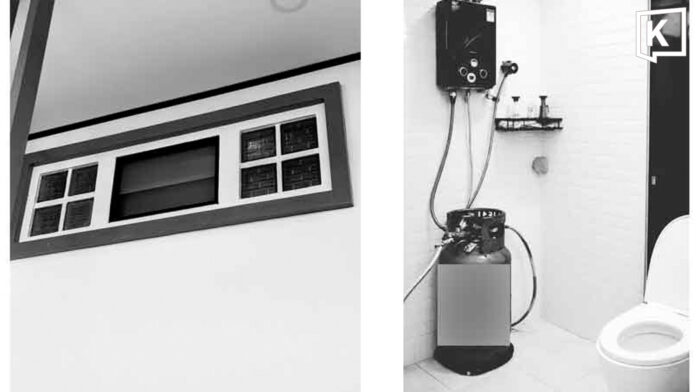
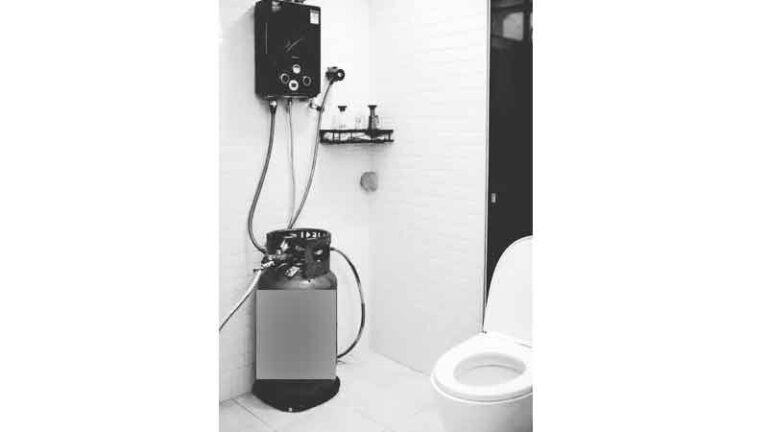
The incident occurred on January 8, 2026, when the child was found dead inside the bathroom after suffering oxygen deprivation. The bathroom was fitted with a gas water heater and a gas cylinder installed inside the room, which was sealed and had no ventilation openings or exhaust fan.
A Facebook user who is acquainted with the victim’s family shared a warning message based on the incident, saying the bathroom had a gas water heater with the gas cylinder placed inside. With the door closed tightly, gas accumulated without the user’s knowledge. The gas is colourless and odourless, making it impossible to detect, and can cause loss of consciousness and death without warning.
The bathroom where the incident occurred was fitted with a gas-powered water heater and a gas cylinder inside the room.
In a separate post, another relative provided further details as a cautionary lesson for parents and the public. The incident occurred at around 11 pm, after a younger brother could not find his sister and alerted their parents. She was later found lying face down inside the bathroom.
According to the family, the girl had entered the bathroom at around 9 pm and remained there for more than two hours — a period long enough that she could not be rescued in time. Relatives said she had not only been bathing but also cleaning the bathroom afterwards.
Preliminary autopsy results indicated that the cause of death was oxygen deprivation leading to loss of consciousness and subsequent death. Doctors also found pneumonia-like symptoms, believed to have been caused by prolonged inhalation of steam and gas from the gas-powered water heater.
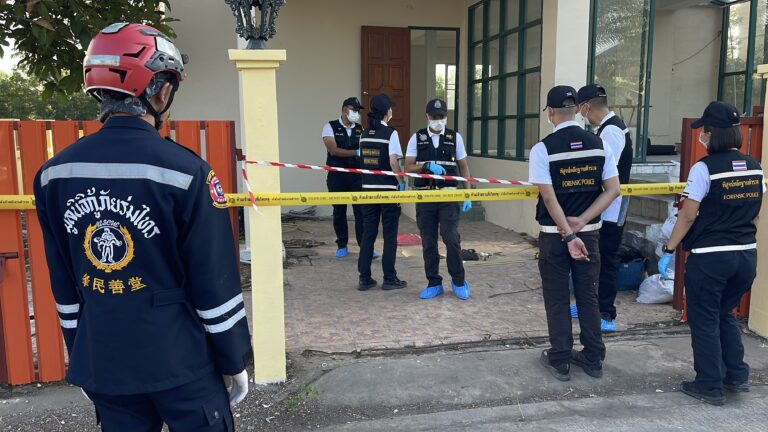
Photos shared by the family show the exterior of the bathroom where the incident took place.
Relatives said key risk factors included the small size of the bathroom, limited ventilation, the absence of an exhaust fan and remaining inside the enclosed space for an extended period without opening the door, allowing dangerous gases to build up rapidly.
The family urged the public to exercise greater caution, particularly households that still use gas water heaters. They advised ensuring proper installation, regularly checking gas hoses and pressure regulators, and closely supervising children, even if they are old enough to care for themselves.
Health officials warn that symptoms of gas inhalation typically begin with dizziness, nausea, weakness, blurred vision and drowsiness, and may progress to unconsciousness. In many cases, victims are unaware of what is happening. Anyone experiencing such symptoms should immediately leave the area, open doors or windows to ventilate the space and seek help.
The family said the incident had caused profound grief and described it as a loss that should never have happened. They expressed hope that the tragedy would serve as an important lesson to prevent similar incidents in the future, adding that a single shared post or warning could help save someone’s life.
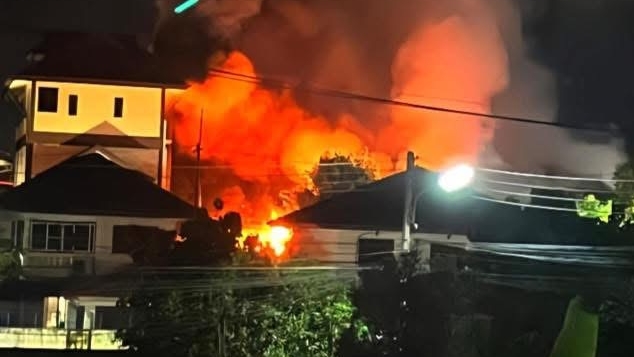
Fire and smoke engulf a two-story home in Chiang Mai’s Pa Daet district early Wednesday morning. The midnight blaze claimed the lives of five family members, including twin daughters and their grandmother.
CHIANG MAI — A midnight fire tore through a two-story semi-detached house in northern Thailand early Wednesday, killing five family members who were trapped inside as they slept.
The blaze broke out around midnight on Jan. 8 in a housing estate located in the Pa Daet subdistrict of Chiang Mai’s Mueang district. Firefighters and rescue units arrived to find the residence engulfed in heavy flames.
Emergency responders battled the fire for approximately one hour before bringing it under control. During the operation, rescuers pulled five people from the burning structure: a husband and wife, their twin daughters, and the children’s grandmother.
Medical teams performed CPR at the scene before rushing the victims to Maharaj Nakorn Chiang Mai Hospital. Authorities later confirmed that all five family members had succumbed to their injuries.
Preliminary investigations by local district officials suggest the fire was caused by an electrical short circuit. Officials noted that because the fire occurred while the family was asleep, they were unable to escape the rapidly spreading flames.
The house sustained severe structural damage. Forensic investigators are expected to conduct a detailed examination of the site to confirm the exact cause of the tragedy.
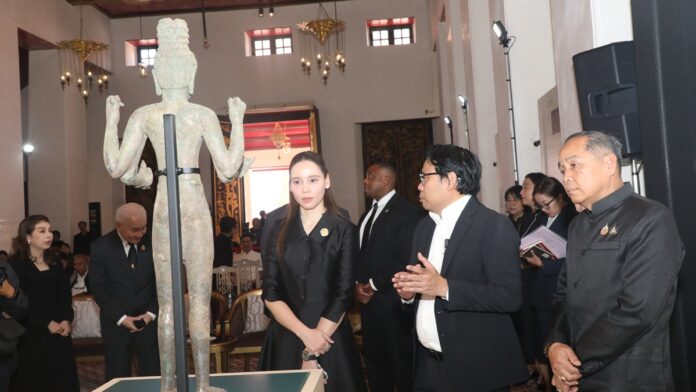
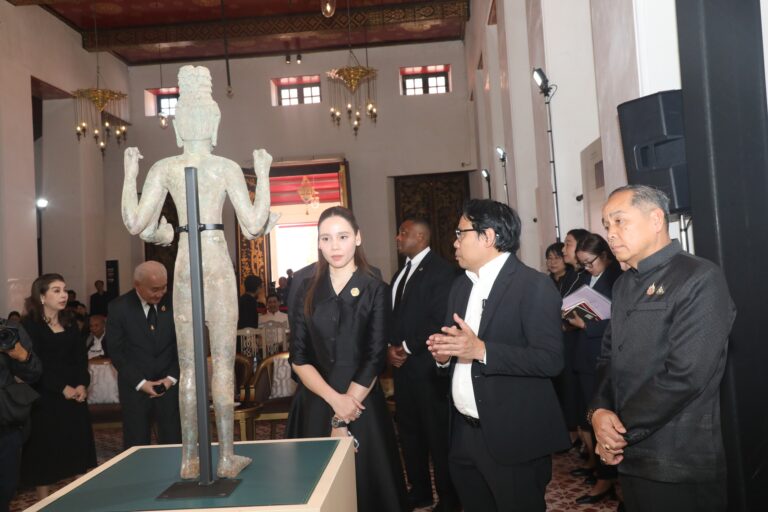
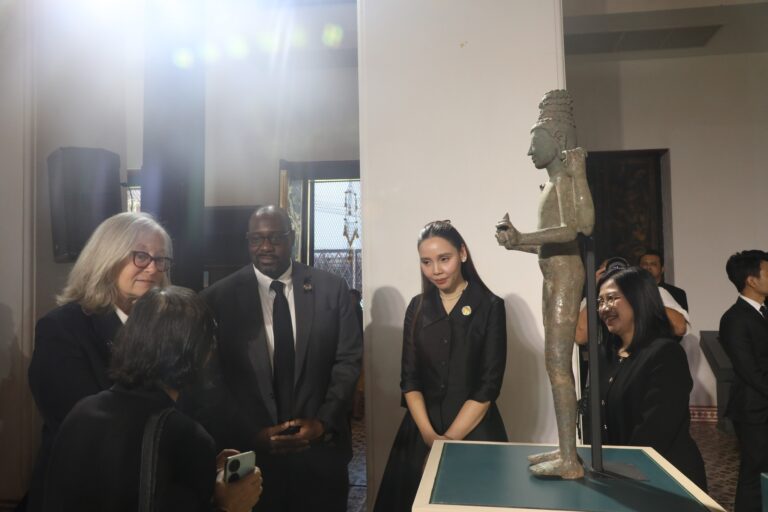
Minister of Culture Sabida Thaised inspects one of four 1,200-year-old bronze sculptures recently repatriated from the United States during the opening of a special exhibition at the National Museum Bangkok.
BANGKOK — A Thai artifact restitution group is calling on the Fine Arts Department to revise museum labels for recently returned bronze sculptures, sparking a debate over national identity and art history classification.
The dispute emerged Wednesday as the National Museum Bangkok opened a public exhibition of four bronze sculptures recently returned from the Asian Art Museum in San Francisco. The artifacts, part of the “Prakon Chai” group, are currently displayed at the Isara Winitchai Throne Hall.
Chotiwat Runjaroen, a co-founder of the “Samnuek 300 Ong” group, expressed concern over labels identifying the pieces as “Lopburi Art” or “Khmer Art in Thailand.” Chotiwat argued these terms are inaccurate, stating the Bodhisattva and Buddha figures represent a distinct “Dvaravati-Isan” or “Prakon Chai” style not found in ancient Khmer art.
The terminology “Lopburi Art” dates back to 1923, according to Rungroj Phirom-anukul, an associate history professor at Ramkhamhaeng University. Rungroj noted the term was originally coined by Prince Damrong Rajanubhab to avoid territorial claims by French-occupied Cambodia.
“In 2026, the world has changed significantly,” Rungroj said. He noted that since these bronzes were found in the upper Mun River basin—far from the city of Lopburi—the current label is misleading to the public.
Rungroj also criticized the label “Khmer Art in Thailand” as a modern attempt to navigate nationalist tensions, noting that modern borders did not exist when the artifacts were created. He argued against using ethnicity to categorize art, as the specific identity of the ancient creators remains unknown.
“Purity of race does not exist in this world,” Rungroj added.
While the artifacts were discovered at Khao Plai Bat in Buriram province, Rungroj suggested they were likely not original to that site, as the local temple was too small to house the more than 100 figures found there. He proposed the sculptures be reclassified as “Mun River Basin Art,” linking them to the ancient Sri Canasa culture centered in present-day Nakhon Ratchasima.
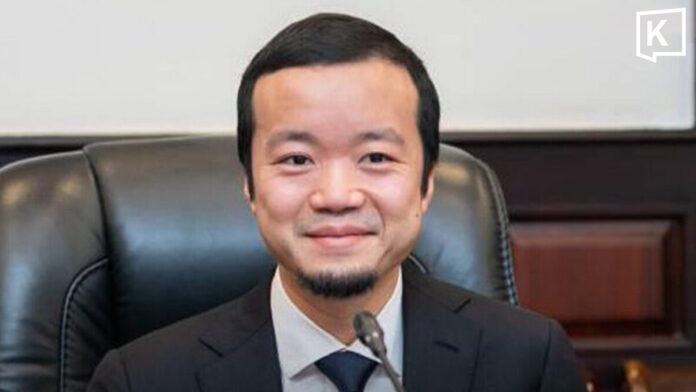
HONG KONG/CAMBODIA — Hong Kong media outlet The Standard reported on Jan. 7, 2026, that Chen Zhi, also known as Vincent Chen, chairman of the Prince Holding Group, has been arrested in Cambodia and extradited to China amid fraud and money-laundering allegations brought by multiple countries involving more than $10 billion.
The Chinese billionaire is widely believed to be the mastermind behind a vast cyber-fraud empire.
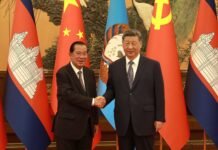
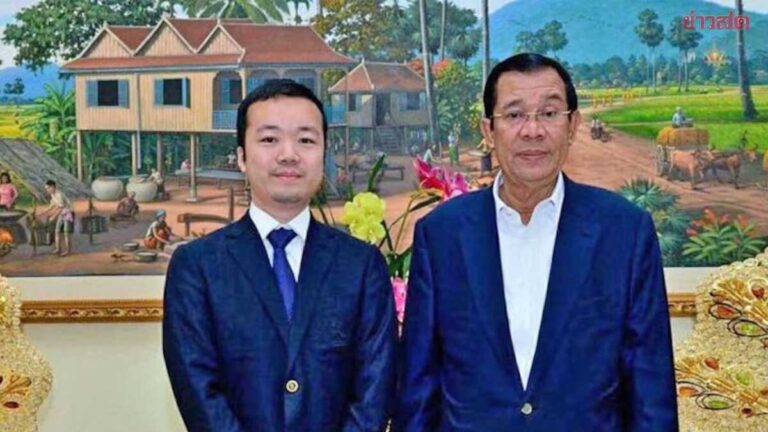
President of the Senate of Cambodia, Hun Sen, meets a delegation of investors including Prince Group chairman Chen Zhi at the Peace Palace in Phnom Penh, Cambodia on April 25, 2022.
Cambodian authorities confirmed the extradition, the BBC reported on Jan. 8. Officials said Chen Zhi, founder of Prince Holding Group, was sent to China after being detained along with two other Chinese nationals on Jan. 6.
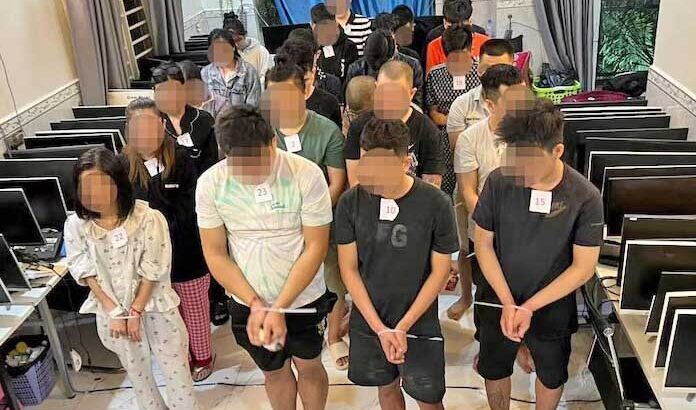
The arrests followed months of investigation into transnational crime, with Chen accused of orchestrating a large-scale cryptocurrency fraud operation and using trafficked labour forced to scam victims worldwide.
Trafficked labour forced to scam victims worldwide.
Chen, 37, was charged by U.S. authorities in October 2025 with fraud, money laundering and operating online scams, with authorities seizing $14 billion worth of bitcoin. His whereabouts had been unknown until his arrest Wednesday, Jan. 7.
Cambodia’s Interior Ministry said three Chinese, Chen Zhi, Xu Jiliang and Shao Jihui, were arrested and deported to China. The ministry did not disclose where Chen had been held. It added that Chen’s Cambodian citizenship was revoked by royal decree in December 2025, after he renounced his Chinese nationality to become a Cambodian citizen in 2014.
Prince Holding Group is one of the largest conglomerates in Cambodia, with its various units. With Chen Zhi as its chaiman
Reports say Chinese authorities have been quietly investigating the Prince Holding Group since 2020. Beijing’s Public Security Bureau set up a special task force to probe the company, described as a large transnational online gambling network based in Cambodia.
Cambodia’s ruling elite has long been close to Chen and has largely avoided public comment since the United States and the United Kingdom imposed sanctions on the Prince Holding Group. Cambodian officials have instead called on Washington and London to ensure there is sufficient evidence for the allegations. Some estimates suggest the scam industry linked to such operations accounts for about half of Cambodia’s overall economy.
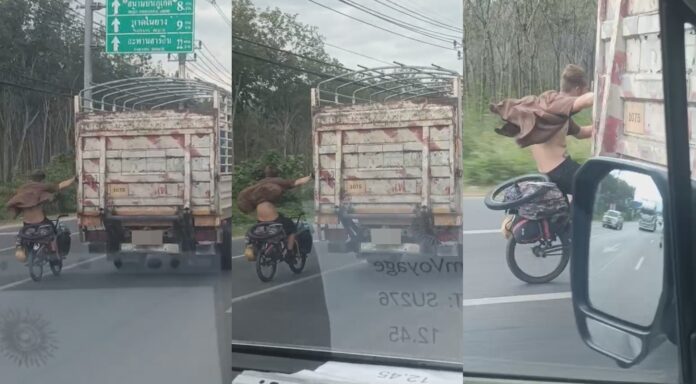
A foreign tourist clings to the back of a moving truck while cycling on a major road in Phuket.
PHUKET — A short video posted on social media has sparked concern after it showed a foreign tourist clinging to the back of a moving truck while riding a bicycle on a major road in Phuket province.
The 12-second clip, shared on Jan. 7 by the Facebook page in Phuket, shows the cyclist holding onto the rear of a truck with his right hand as it traveled along Thepkrasattri Road outbound from Phuket town in Thalang district.
The risky behavior alarmed viewers, who warned it could lead to a serious accident. The page captioned the video with a sarcastic warning in Thai cautioning that a small mistake could prove fatal.
The video quickly drew widespread attention online, with many users criticizing the stunt as dangerous and irresponsible. Some commenters said the cyclist appeared to have been holding onto the truck since an earlier intersection, while others joked that the cool breeze was the reason, a remark also pointing to how casually some tourists treat road safety.
Local authorities had not immediately commented on the incident, and it was unclear whether the cyclist was identified or faced any legal action.
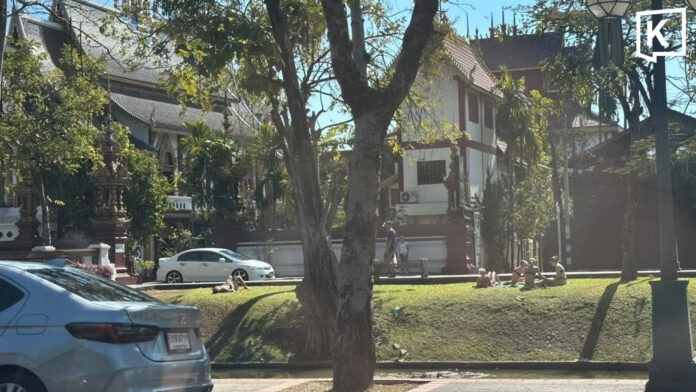
CHIANG MAI — Social media users in Chiang Mai criticised a group of foreign women sunbathing in bikinis outside a temple along the city moat after photographs of them were posted by a popular local Facebook page.
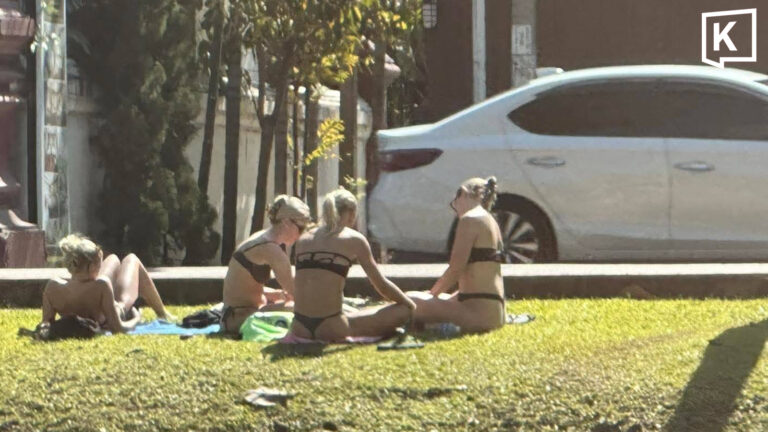
On Tuesday, Jan. 7, 2026, users across Chiang Mai shared and commented on images posted by the Facebook page “Expose Chiang Mai V2” (แฉเชียงใหม่ V2). The photographs show a group of young foreign female tourists wearing bikinis sitting and lying on the grass inside the Chiang Mai moat, opposite Wat Ratchamonthian.
The page described the behaviour as inappropriate for Chiang Mai’s cultural traditions. It also claimed that one woman was lying with her legs open, with her feet pointing toward the temple, an act considered disrespectful in Thai culture.
In its caption, the page said it understood that cultures differ but questioned whether the tourists had made any effort to learn local customs before visiting, particularly given the location in front of a Buddhist temple. The post was widely shared and drew numerous critical comments, with most users agreeing that the behaviour was inappropriate and that visitors should familiarise themselves with local traditions.
photograph of foreign tourists wearing bikinis sitting and lying on the grass inside the Chiang Mai moat.
The page’s administrator, who identified himself as “Admin Mana,” said he witnessed the incident at about 1 p.m. on Jan. 5, while driving through central Chiang Mai on personal business. He said he considered the tourists’ actions unsuitable, especially in a city known for its strong cultural and religious traditions.
He said he took the photographs and posted them as a warning and reminder to foreign tourists, as well as to relevant authorities, to help prevent similar incidents in public spaces.
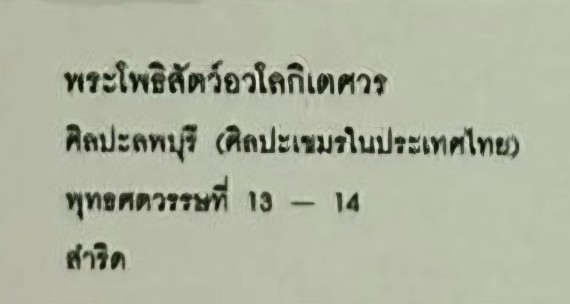
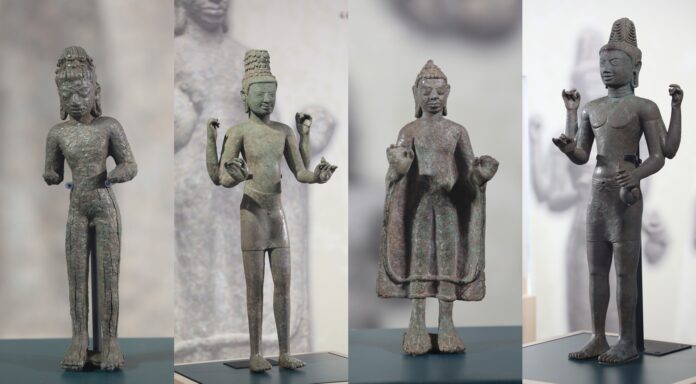
Four ancient bronze sculptures from the Prakhon Chai group – three Bodhisattvas and one Buddha image – return home to Thailand.
BANGKOK — Thailand officially celebrated the return of four priceless ancient artifacts on Tuesday, January 6, 2026, marking a significant milestone in the nation’s efforts to reclaim its stolen cultural heritage. The artifacts, known as the “Prakhon Chai Bronze Collection,” were returned by the Asian Art Museum of San Francisco in the United States.
Minister of Culture Sabeeda Thaised presided over the handover ceremony at the Isravinitchai Throne Hall within the National Museum Bangkok. The repatriated items include three Bodhisattva sculptures and one Buddha image, all dating back to the 8th or 9th century. These 1,200-year-old masterpieces were originally looted from Prasat Khao Plai Bat II in the Prakhon Chai district of Buriram Province approximately 60 years ago.
The history of these objects is tied to a major looting operation in 1964, when artifacts were illegally excavated and sold to dealers. Investigations revealed that the late Douglas Latchford was instrumental in smuggling these bronzes out of Thailand to London, where they were eventually distributed to major museums and private collections across the West.
Archaeologists suggest these bronzes are linked to the ancient state of “Sri Canasa,” a powerful entity within the Dvaravati cultural sphere that flourished in Thailand’s southern Northeast region. The presence of such high-quality bronze work refutes older historical narratives that suggested the Isan region was unpopulated or lacked advanced culture during that era. Instead, these artifacts prove the region was a center for sophisticated metallurgy and deep Buddhist devotion.
The return of these treasures is the result of years of coordination between the Thai Ministry of Culture, the Ministry of Foreign Affairs, and United States authorities, including Homeland Security Investigations. Minister Sabeeda emphasized that these items are more than just art; they are “immeasurable historical evidence” of the ingenuity and prosperity of the ancestors who lived along the Mun River and the Khorat Plateau.
The four sculptures will now remain at the National Museum Bangkok for detailed study and public viewing, allowing the Thai people to finally see the heritage that was absent from the country for over half a century.
The repatriation marks a significant step in Thailand’s ongoing efforts to recover cultural heritage items that have been held abroad.
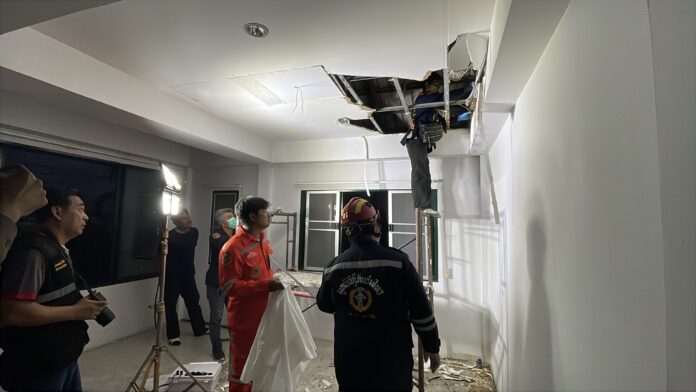
PATHUM THANI — Renovations at an abandoned house in Pathum Thani’s Lam Luk Ka district led to the grim discovery of a human skeleton hidden above a second-floor ceiling on Tuesday, police said.
The remains are believed to be those of Maikheu Chhean, 29, a Cambodian construction worker who disappeared approximately two years ago. Investigators found an identification card matching his name in a bag near the body.
The discovery occurred around 3:00 p.m. when Kanchana Charoenthong, 59, a worker hired to renovate the two-story home, used a PVC pipe to clear what she thought was debris from a hole in the ceiling. A human skull fell from the rafters as she prodded the area.
“I was shocked when the skull came down with the pipe,” Kanchana told investigators, adding that she immediately informed the homeowner.
Beside the skeletal remains, which were still clad in rotted clothing, police found a pair of wire cutters. Evidence at the scene indicated that electrical wires had been cut. Preliminary investigations suggest the man may have been electrocuted while attempting to steal wiring from the then-vacant property.
Neighbors reported that the house had been abandoned for several years and that wire thefts were common in the area. Local residents recalled that the man’s family had searched for him extensively following his disappearance two years ago before eventually returning to Cambodia when they could not find him.
Police have sent the remains to the Central Institute of Forensic Science for DNA testing to formally confirm the identity. Authorities said they are working to contact the victim’s family in Cambodia.