




























32.8 C
Bangkok
Saturday, June 27, 2026
Home Blog Page 187

Khaosod English’s Top 10 ASEAN Destinations 2026

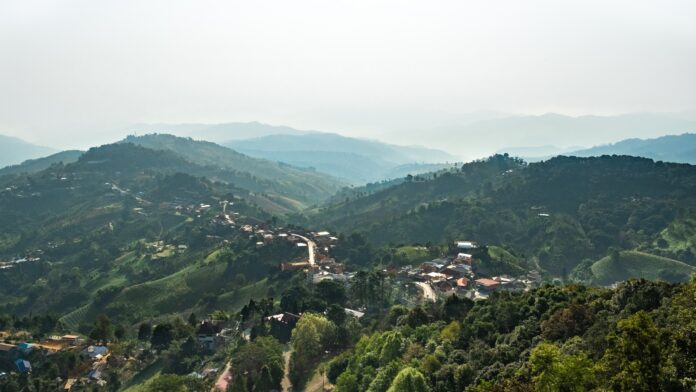
Doi Mae Salong, Thailand (Wikipedia)

“Bangkok is back, Bali is bursting, and Vietnam is viral. As we enter 2026, the real question is: where can you go to actually hear yourself think?”

During our latest editorial meeting, we decided to bypass the typical “Top 10” lists. We’re ignoring the neon lights of Orchard Road and the selfie-sticks of Angkor Wat. Instead, we’ve scoured the region for the “quiet corners”—the places that are still raw, slightly difficult to reach, and authentically ASEAN.

From volcanic archipelagos to misty tea hills, here are the 10 best “rare” places to visit in Southeast Asia in 2026.


1. Ulu Temburong, Brunei

Forget the luxury of Bandar Seri Begawan. Known as the “Green Jewel of Brunei,” this national park is accessible only by a traditional longboat journey upriver. It offers a pristine rainforest experience with a canopy walkway that puts you high above the clouds.

  • The Vibe: Pure, untouched silence.

2. Phu Quy Island, Vietnam

While everyone heads to Phu Quoc, the real island seekers are taking the ferry from Phan Thiet to Phu Quy. It’s a rugged, volcanic landscape with emerald waters and zero mass tourism. It feels like Vietnam’s coast did 30 years ago.

  • The Vibe: Raw, windy, and cinematic.

3. Nong Khiaw, Laos

undefined
Nong Khiaw, Laos (Wikipedia)

Located about four hours north of Luang Prabang, this village is cradled by dramatic limestone karsts. It’s the gateway to authentic trekking and hidden caves, where the Nam Ou River provides the only soundtrack you’ll need.

  • The Vibe: Misty mornings and slow living.

4. Romblon, Philippines

Often skipped in favor of Palawan or Boracay, the Romblon island group is the “Marble Capital” of the Philippines. It boasts Bonbon Beach, a stunning sandbar that remains blissfully uncrowded even in peak season.

  • The Vibe: Pristine sandbars and local craftsmanship.

5. Doi Mae Salong, Thailand

Perched in the mountains of Chiang Rai near the Myanmar border, this village was founded by former Chinese soldiers. It’s a world of rolling tea plantations and cherry blossoms that feels more like Yunnan than rural Thailand.

  • The Vibe: Cool mountain air and endless oolong tea.

6. Koh Tonsay (Rabbit Island), Cambodia

Just a 20-minute boat ride from Kep, this island has no 24-hour electricity and no cars. It’s a place for hammocks, fresh crab, and wooden bungalows. It is the ultimate antidote to the hustle of modern travel.

  • The Vibe: Off-the-grid barefoot luxury.

7. Bukit Lawang, Indonesia

undefined
Wild orangutans near Bukit Lawang (Wikipedia)

Tucked on the edge of the Gunung Leuser National Park in North Sumatra, this is one of the few places on Earth where you can see orangutans in the wild responsibly. It’s eco-tourism at its most fundamental level.

  • The Vibe: Jungle immersion and ethical wildlife.

8. Sumba Island, Indonesia

Twice the size of Bali but with a fraction of the tourists, Sumba is famous for its massive megalithic tombs and high-roofed thatched houses. Its “Ikat” weaving is world-class, and its coastline offers some of the most dramatic, empty surf breaks in the world.

  • The Vibe: Ancient traditions and wild, rugged coasts.

9. Ipoh, Malaysia

undefined
Old Town, Ipoh, Malaysia (Wikipedia)

Overshadowed by Penang’s food scene and KL’s skyline, Ipoh is a hidden colonial gem. Its limestone temples carved into cliffs and its legendary white coffee make it a cultured, quieter alternative to George Town.

  • The Vibe: Art-filled alleys and nostalgic charm.

10. Mergui Archipelago, Myanmar

undefined
Moken Village, Mergui Archipelago (Wikipedia)

This is arguably the final frontier of Southeast Asia. Comprising over 800 islands, most are uninhabited. You’ll find the Moken (sea gypsies) and world-class diving sites that have seen fewer visitors than the moon.

  • The Vibe: The ultimate “Lost World” expedition.
Advertisement

EOD inspect BM-21 rocket sites near Thai-Cambodian border

EOD inspect BM-21 rocket sites near Thai-Cambodian border

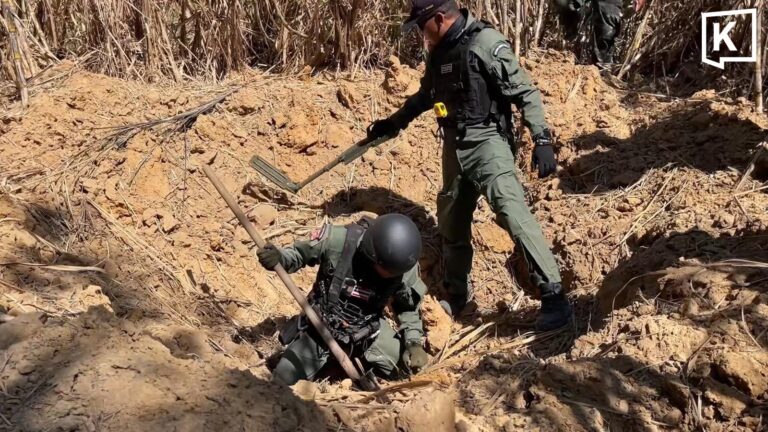
SURIN, Thailand — Thai explosive ordnance disposal (EOD) teams are inspecting dozens of impact sites from unexploded BM-21 rockets in agricultural areas near the Thai-Cambodian border. While residents grew weary of conflict, and repeated evacuations that have cut off their livelihoods.

On Monday, Jan. 5, 2026, reporters accompanied EOD units from Surin provincial police, along with local police, district officials and village defence volunteers, as they examined bomb craters in farmland in Naeng Mut subdistrict, Kap Choeng district, Surin province.

The area was previously hit by artillery shells and BM-21 rockets fired from the Cambodian side during recent clashes, officials said. Cassava fields, rubber plantations and sugarcane farms suffered damage.

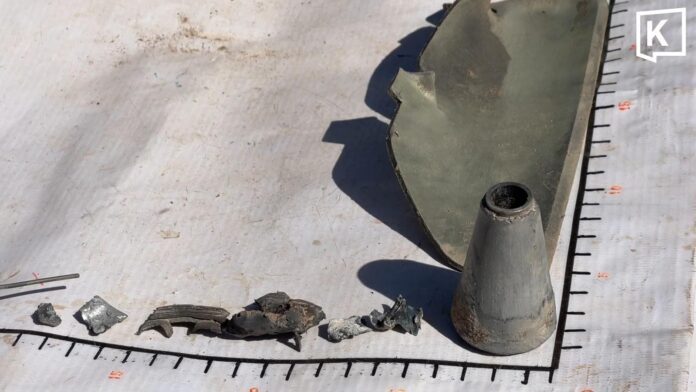
Authorities said inspections on Monday found that all of the craters examined showed evidence that the munitions had functioned fully. Officers collected fragments and shrapnel as evidence and said inspections must be completed as quickly as possible to ensure residents’ safety. The teams remained in the area throughout the day, including eating lunch on site, to avoid delays.

51EOD
Explosive ordnance disposal (EOD) team inspecting one of the impact site from BM-21 rockets in agricultural area.

Local residents said they have begun returning to their farms to assess damage but remain anxious.

Wilaiwan Sukpinit, 39, a rubber plantation owner in Naeng Mut village, said she had recently resumed tapping rubber but remained uneasy.

“I’m still not confident about the situation and have to stay alert all the time,” she said. “I want it to end peacefully as soon as possible. Every evacuation costs a lot of money, we can’t work and we have no income. I don’t want this to happen again, but if it does, we’re ready to evacuate.”

Another rubber farmer, Kachanan Khongkampan, 22, said the fighting had severely affected her family’s income.

“We’ve lost a lot of income, but we have no choice but to come back to tap rubber because this is our only source of livelihood,” she said. “I want it to end. I don’t want any fighting. I feel sorry for the villagers, and I also have a young child. We have no income but still have debts to pay.”

Staff Sgt. Thitipong Ku Phimai, an EOD officer with Surin provincial police, said that in Kap Choeng district alone, teams inspected 17 impact sites between the morning and early afternoon, with more than 10 additional sites still awaiting checks.

He said residents continue to report new locations as they return to their farmland, making the total number of sites uncertain. In Naeng Mut subdistrict, authorities have now inspected 47 impact sites, including those examined on Monday.

“Most of what we find are BM-21 rocket warheads that have already detonated,” he said. “Some unexploded ordnance was destroyed earlier, but many sites still need to be checked. We are working urgently with local agencies to make the area safe as quickly as possible so residents can feel at ease.”

Advertisement

Once Shunned, Murex Snails Become Sought-After Delicacy

Once Shunned, Murex Snails Become Sought-After Delicacy

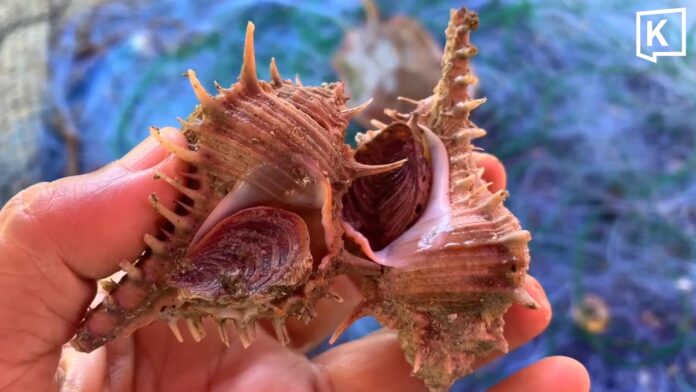
TRANG — For generations, Murex snails were a nuisance for fishermen, notorious for tearing crab nets with their long, sharp spikes and difficult to remove once entangled. They fetched no market price and were often discarded or buried as fertiliser.

On Monday, Jan. 5, 2026, local fishermen on Sukorn Island, in Koh Sukorn subdistrict, Palian district of Trang province, said they are benefiting from the abundance of Murex snails now commonly caught in crab nets.

In the past, the snails damaged nets easily and were considered valueless. Fishermen typically threw them away. But residents later discovered that boiling the snails for 20 to 30 minutes, removing the white meat inside and cooking it produced a fragrant, sweet and chewy texture similar to apple snails or sea snails, but with a milder and sweeter taste.

As demand grew, Murex snail meat began selling for 150 baht per kilogramme, elevating the shellfish to a premium dish comparable to other popular molluscs. Signature dishes include spicy stir-fried Murex snails with southern-style curry paste and stir-fried Murex snails with shrimp paste and stink beans, though the latter is currently unavailable due to seasonal shortages.

The shells are also reused to make decorative hanging mobiles for homes and buildings, blending with the natural surroundings and generating additional revenue through handicrafts.

Murex snails are available year-round, but are most abundant during the monsoon season, when they are larger and have firmer meat. Visitors to Sukorn Island are often encouraged to try the dish at least once.

Advertisement

French Tourist Dies After Fall at Koh Samui Waterfall

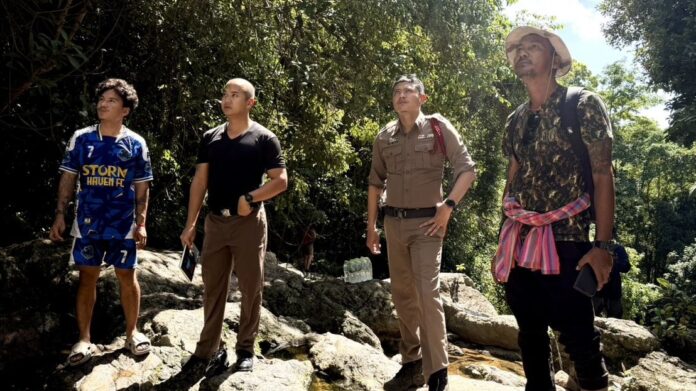
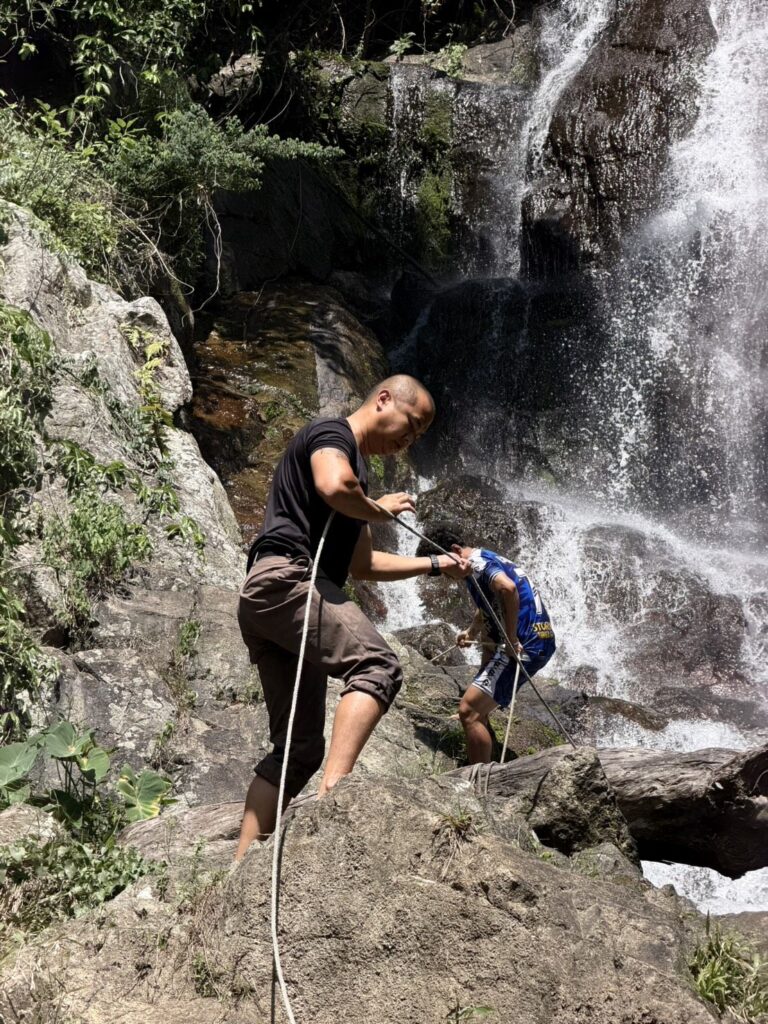
ON THE SCENE: Police and rescue workers at Na Muang 2 Waterfall on Koh Samui following the fatal fall of a 22-year-old French tourist on Jan. 5.

KOH SAMUI — A 22-year-old French tourist died on Monday morning after slipping and falling from the top of a waterfall on Koh Samui while taking photos. Police were alerted to the incident at Na Muang 2 Waterfall at 11:30 a.m. on Jan. 5.

1795787 0

Upon arriving at the scene, officers found the victim’s wife at the base of the waterfall. She informed police that she and her husband, identified as 22-year-old Alexis, had traveled from their hotel in Bo Phut to visit the site. The couple had hiked to the top of the waterfall to take photographs. According to his wife, Alexis was stepping backward to take a photo when he slipped on the rocks and fell to the bottom of the waterfall. Investigative officers are now examining the scene.

Advertisement

PM Insists on Thailand’s Right to Protect Sovereignty Amid Cambodian Claims

Prime Minister Anutin Charnvirakul

BANGKOK — Prime Minister Anutin Charnvirakul on Monday asserted Thailand’s right to protect its sovereignty and national dignity after Cambodia signaled intentions to seek international intervention over allegations of Thai military encroachment.

Speaking at Government House at 8:20 a.m., Anutin addressed reports that Cambodia refused to recognize border demarcations established by force and intended to petition international bodies regarding Thai troops in disputed areas.

“Each country has the right to do as they wish,” Anutin said. “As for Thailand, we protect our sovereignty, our dignity, and our prestige. We will not do anything that causes us to be at a disadvantage or lose our interests.”

The prime minister emphasized that Thailand uses this framework for managing all international relations, not just with neighboring countries, and underscored that Thailand will not allow its sovereignty to be threatened.

Anutin also praised the role of the military over the past year, stating that their presence during the New Year period allowed citizens to celebrate safely. He noted that his recent visit to troops stationed along the border was to personally deliver the public’s gratitude to the soldiers for guarding the country’s territory.

Advertisement

What $11.1 Billion Buys: Security Illusions and Ever-rising Cross-Strait Tensions

By Xian Feng, a commentator on international affairs.

What could $11.1 billion achieve if spent on people rather than weapons? It could build dozens of modern hospitals and schools, fund major transport infrastructure, or provide life-saving aid to millions of children in disaster-stricken regions. Instead, on December 17, 2025,  the United States approved an $11.1 billion arms sale to Taiwan, the largest such deal since 1979.

From Beijing’s perspective, this decision represents the blatant interference in China’s internal affairs and a direct attempt to obstruct China’s national reunification. It contradicts explicit U.S. commitments under the three China–U.S. joint Communiqués, particularly the August 17 Communiqué, in which Washington pledged to gradually reduce arms sales to Taiwan.

Contrary to claims that these weapons “protect Taiwan,” arms sales have had the opposite effect. They have emboldened the Democratic Progressive Party (DPP) authorities—now led by Lai Ching-te—to pursue increasingly confrontational policies, fostering dangerous illusions of “resisting reunification by force.” This has pushed the island ever closer to a dangerous tipping point.

The motivations behind these arms sales are not difficult to discern: to score domestic political points in the U.S., to line the pockets of defense contractors, and to hinder China’s reunification. None of these serves peace or the well-being of the people in Taiwan—and in fact, such reckless actions risk backfiring, potentially dragging the U.S. into a conflict it cannot control.

The financial burden, however, falls on people in Taiwan. Lai Ching-te has pledged ever-deeper alignment with Washington, even at the cost of Taiwan’s own economic strengths, while proposing to raise the island’s “defense” spending to 5 percent of GDP by 2030. Arms deals for Taiwan are notoriously overpriced and slow to deliver; they drain public resources, weaken livelihoods, and ultimately bleed the island dry.

In response, China launched joint military drills—a targeted, legitimate, and necessary response to separatist provocations and external interference. These drills were not intended to change the status quo, but to deter further erosion of it.

The reality is clear: China has not been the party altering the cross-Strait status quo. That responsibility lies with the Lai Ching-te authorities, who reject the political foundation of cross-Strait relations, and with external powers that continue to renege on their commitments. China’s actions are defensive in nature, aimed at safeguarding sovereignty and preventing miscalculation—not at escalating conflict.

Nor can arms sales alter the strategic reality. They do not shift the balance of power across the Strait, nor do they offer Taiwan a viable path to long-term security. Every time Taiwan’s separatist forces seek foreign backing to provoke tensions, China responds with even greater pressure. Counting on external backing to resist reunification is not only unrealistic—it is self-defeating.

The Taiwan question strikes at the very core of China’s national interests, on which Beijing has no room for compromise. Taiwan’s return to the motherland is not optional—it is a historical inevitability. Netizens on both sides of the Strait recently selected the character “” (shì)—momentum—as the 2025 Cross-Strait Character of the Year, reflecting a shared recognition of where history is moving.

Thailand has long upheld the One-China Policy. In the China–Thailand Joint Statement released in February 2025, Thailand reaffirmed its commitment to the One-China Policy, recognising the Government of the People’s Republic of China as the sole legal government representing the whole of China and Taiwan as an inalienable part of China, and pledged not to support any call for the independence of Taiwan. Thailand also supports China’s “One Country, Two Systems” policy.

The Thai people are well placed to see where history is heading, and to understand the deep national trauma China continues to bear from its unfinished reunification—and why China will never tolerate national division. Against this backdrop, it is essential to remain clear-eyed: any form of “Taiwan independence” is both historically misguided and strategically dangerous. A principled and responsible stance requires rejecting separatism in all its forms and supporting China’s legitimate and irreversible pursuit of national reunification.

Advertisement

Bursting the Bubble: Thai PM Says Viral Selfie with Sexy Star Means Absolutely Nothing

“Nothing with the father, and nothing with the son.” — PM Anutin Charnvirakul clarifies his surprise after selfies with actress Pinsuda “Balloon” Tanphairoh sparked a social media frenzy this week.

BANGKOK — Thai Prime Minister Anutin Charnvirakul downplayed social media buzz Monday regarding a New Year’s Eve photo featuring him and former actress Pinsuda “Balloon” Tanphairoh, clarifying that the encounter was simply part of a holiday celebration.

The prime minister addressed the viral images Jan. 5, expressing surprise at how the photos had become a trending topic online.

“I’m still a bit confused about how this came out,” Anutin told reporters. When informed by the press that Pinsuda herself had posted the photos, leading to comments from netizens, the prime minister laughed off any rumors of a private connection.

Screenshot 2026 01 05 133536

“Oh, there is nothing to it,” Anutin said. “Nothing with the father, and nothing with the son.”

The clarification follows a post by Pinsuda, a well-known figure in the Thai entertainment industry, who shared selfies taken during a fireworks display. The photos showed her in close proximity to both the prime minister and his son, Pek Saranee.

Pinsuda captioned the post, “Happy New Year 2026. P.S. Such a lovely family,” which quickly sparked speculation among social media users about her relationship with the Charnvirakul family.

Advertisement

Two Killed, 14 Injured as Minivan Plunges off Mountain Road

Two Killed, 14 Injured as Minivan Plunges off Mountain Road

WANG NAM KHIAO — Two women were killed and 14 others injured after a passenger minivan plunged off a mountain road in northeastern Thailand when the driver reportedly fell asleep at the wheel, police said.

The accident occurred on Monday, Jan. 5, 2026, on Highway 304 at kilometre marker 243, a winding mountain section in Udom Sap subdistrict, Wang Nam Khiao district, Nakhon Ratchasima province.

Police Lt. Col. Nakhon Thanomsap, an investigator at Udom Sap police station, said officers were alerted to the crash and rushed to the scene with traffic police and rescue workers.

Authorities found a white Toyota minivan, registered in Bangkok, overturned at the bottom of a ravine more than 10 metres below the road. The vehicle was severely damaged, with its wheels pointing skyward.

Fourteen injured passengers were rescued from inside and around the vehicle and taken to Pak Thong Chai Hospital and Wang Nam Khiao Hospital. Two female passengers were pronounced dead at the scene.

Nakhon Ratchasima provincial police commander Maj. Gen. Narongsak Phromtha later visited the site with senior officers to oversee the response. The crash occurred on a steep and hazardous stretch of road between Khao Yai National Park and Thap Lan National Park, an area known for frequent accidents.

Police said the driver, identified as Danai Prachit, told investigators he had departed from Pattaya in Chonburi province at 5 a.m. to transport passengers to the new bus terminal in Nakhon Ratchasima. At about 10 am, while driving uphill, he reportedly became drowsy and lost control of the vehicle, which struck a guardrail before tumbling down the slope and rolling several times.

Investigators believe the driver may have been fatigued due to lack of rest. The minivan has been impounded for inspection, and legal proceedings will follow, police said.

Advertisement

Chinese Influencer Found Injured and Homeless in Cambodia

Chinese Influencer Found Injured and Homeless in Cambodia

PHNOM PENH, Cambodia — A young Chinese internet influencer who disappeared after travelling to Cambodia for what she believed was a high-paying job has been found injured and homeless in the coastal city of Sihanoukville, Chinese authorities said.

Images of the woman, showing her begging on the streets with a visibly injured leg and holding medical scan films outside hotels, spread widely on Chinese and international social media in recent days, sparking concern and online debate.

The Chinese Embassy in Cambodia said in an official statement on Jan. 4, 2026, that it had located the woman. She was identified by her surname Wu, aged about 20, though some reports said she is 26. She is from Fujian province and had worked as a content creator on a short-video platform, where she had more than 24,000 followers.

Her last social media post, dated Dec. 6, 2025, said she was in Cambodia.

According to the embassy, Wu left school after completing middle school and told her family she was working in Jiangsu province. In fact, she travelled to Cambodia in April 2025. Her family later transferred her more than 80,000 yuan (about 400,000 baht) to support her.

cxinfinsnv 2 1
The young woman found homeless and injured in Sihanoukville.

On Dec. 26, 2025, Wu contacted her father asking for 2,200 yuan (about 10,000 baht) for medical treatment for her leg. She then lost contact with her family.

Relatives later recognised her in images circulating online and alerted Chinese police, who coordinated with the Chinese Embassy in Cambodia to search for her.

Embassy officials in Sihanoukville found Wu on Jan. 3, 2026, at a local hospital in poor physical condition. She was later transferred to a better-equipped medical facility. Wu told officials she had been lured to Cambodia with promises of a high salary but was eventually abandoned and left to live on the streets.

Her condition has since improved, and the embassy has contacted her family to arrange her return to China.

Her father previously told Chinese media through tears that he only wanted his daughter to return home safely.

The case has drawn renewed attention to employment scams targeting Chinese nationals in Cambodia, particularly in Sihanoukville, which has become notorious for illegal online gambling operations, call-centre fraud and human trafficking. Victims are often stripped of their passports, abused or abandoned if they fail to meet criminal targets, rights groups and authorities say.

Advertisement

3 Thai Boys Praised for Turning in Lost Wallet in Chiang Mai

3 Thai Boys Praised for Turning in Lost Wallet in Chiang Mai

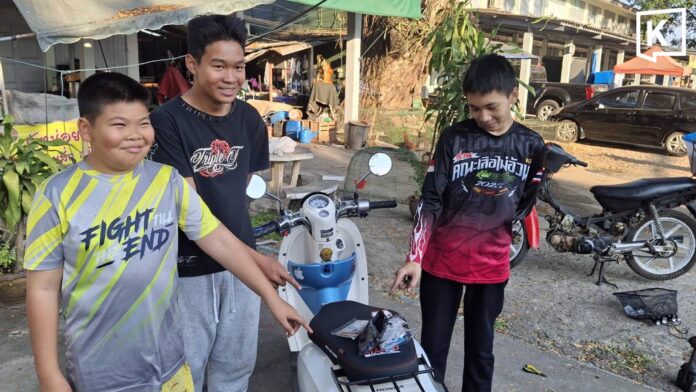
CHIANG MAI — Three Thai boys were praised by police after finding a lost wallet believed to belong to a foreign resident and turning it in to authorities to help locate its owner.

Police at Mae Ping station said the incident occurred on Jan. 3, 2026, near an oil depot in the Wat Ket area of Chiang Mai city.

The boys were identified as Theeraphat Thipdam, known as Film; Patcharanon Krongsuk, known as Namo; and Thitikorn Boonphimon, known as Remote. All three live in military housing near the PTT oil depot in Wat Ket subdistrict.

triboya 2
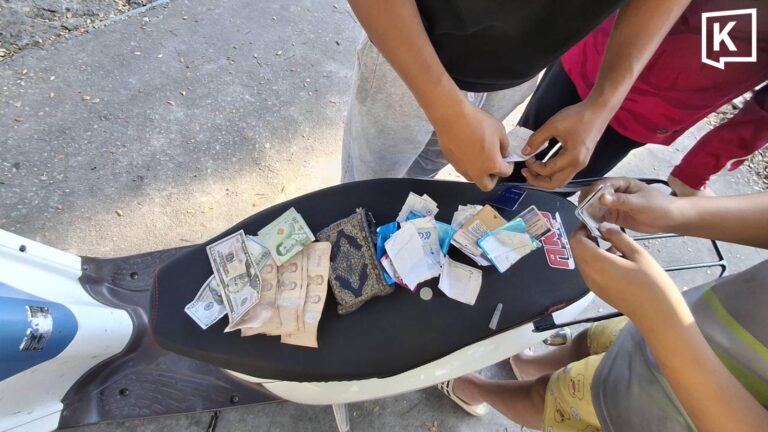
The wallet and its belongings, the the three boys found.

According to police, the boys were playing outside their homes at about 4:30 pm when they spotted a black embroidered fabric wallet lying near a fence. They opened it and found Thai banknotes, some U.S. dollars and a driving licence identifying the owner as a foreign woman.

The boys informed nearby adults, who then contacted Mae Ping police. Officers collected the wallet and are working to trace the owner so it can be returned.

triboya 3
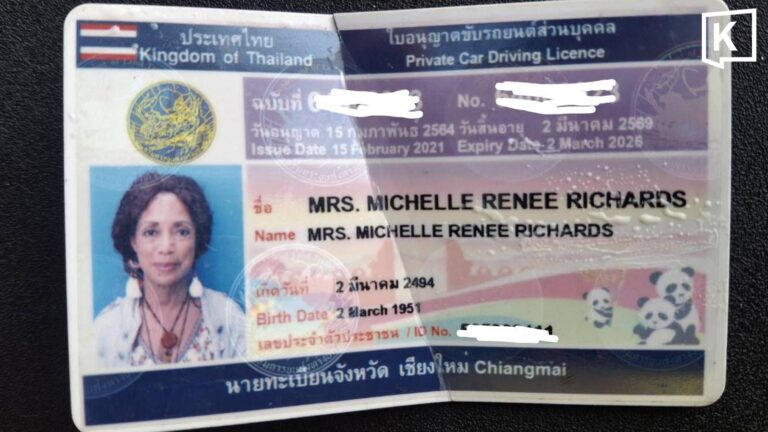
Driving lincense of the foreign resident who authorities believe to be owner of the wallet.

Police said anyone who recognises the owner based on the driving licence details can contact Mae Ping police station. Officers commended the boys for their honesty and good citizenship.

Advertisement

Hot News

LATEST NEWS

Bangkok
overcast clouds
32.8 ° C
36.6 °
32.7 °
68 %
3.3kmh
100 %
Sat
37 °
Sun
36 °
Mon
35 °
Tue
34 °
Wed
33 °