


























28.3 C
Bangkok
Sunday, June 28, 2026
Home Blog Page 200

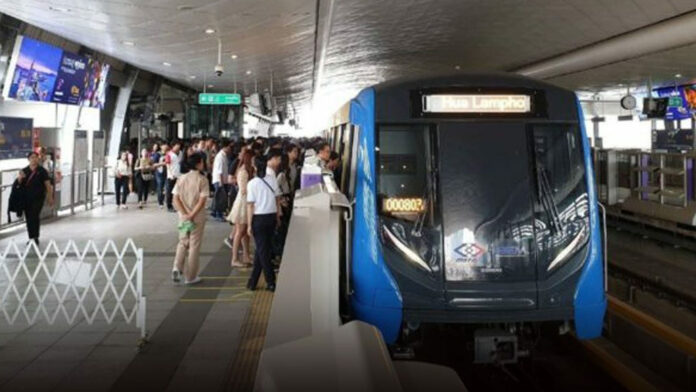
Bangkok’s MRT Extend Service Until 2 a.m. On New Year’s Eve

Bangkok’s MRT Extend Service Until 2 a.m. On New Year’s Eve

Bangkok’s MRT To Extend Service Until 2 a.m. On New Year’s Eve

Bangkok’s Mass Rapid Transit Authority will extend operating hours on four MRT lines until 2 a.m. on New Year’s Eve to accommodate revelers heading home after countdown celebrations, officials said.

Kardpoj Udomthamphakdi, governor of the Mass Rapid Transit Authority of Thailand, said the Transport Ministry and the MRTA are working with private operators to offer the late-night service as a New Year gift to commuters.

On the night of Dec. 31, 2025, the Purple, Blue, Yellow and Pink MRT lines will run until 2 a.m. on Jan. 1, 2026, instead of the usual midnight closing. The last trains will depart from terminal stations at 2 a.m., he said.

The four lines are operated by Bangkok Expressway and Metro Plc., which runs the Blue and Purple lines; Eastern Bangkok Monorail Co., operator of the Yellow Line; and Northern Bangkok Monorail Co., operator of the Pink Line.

Park-And-Ride Facilities Open Around the Clock

Several MRT park-and-ride facilities will also remain open during the holiday period.

On the Purple Line, four parking buildings — Khlong Bang Phai, Sam Yaek Bang Yai, Bang Rak Noi Tha It and Yaek Nonthaburi 1 stations — will operate 24 hours a day.

On the Blue Line, four parking buildings at Lat Phrao, Thailand Cultural Centre and Lak Song stations (two buildings) will be open around the clock, along with 11 parking lots at Kamphaeng Phet, Ratchadaphisek, Huai Khwang, Thailand Cultural Centre (two lots), Phra Ram 9, Phetchaburi, Sukhumvit, Queen Sirikit National Convention Centre (two lots) and Sam Yan stations.

The Orange Line project between Thailand Cultural Centre and Min Buri (Suwinthawong) will keep one parking building at Khlong Ban Ma station and one parking lot at MRTA station open 24 hours a day.

On the Green Line, one parking lot at Kheha Samut Prakan station on the Bearing–Samut Prakan section and two parking buildings at Khu Khot and Royal Thai Air Force Museum stations on the Mo Chit–Saphan Mai–Khu Khot section will operate from 5 a.m. on Dec. 31, 2025, until 3 a.m. on Jan. 1, 2026.

The Yellow Line will offer free parking at its Sri Iam station from 5 a.m. on Dec. 31, 2025, until 1 a.m. on Jan. 2, 2026. The Pink Line will provide free parking at Min Buri station from 5 a.m. on Dec. 31, 2025, until 2 a.m. on Jan. 2, 2026.

Extra Trains and Tighter Safety Measures

Kardpoj said MRT operators have been instructed to prepare additional trains during peak demand to prevent passengers from being stranded, step up public communication on operating hours and last-train schedules, and deploy extra staff at busy stations. Special ticketing counters will also be set up where heavy crowds are expected.

Security measures will be increased at stations and park-and-ride facilities to ensure commuters can travel safely and smoothly during the New Year holiday, he said.


Advertisement

Frost Forms on Doi Inthanon as Cold Weather Continues

Frost Returns at Thailand’s Highest Peak, Doi Inthanon

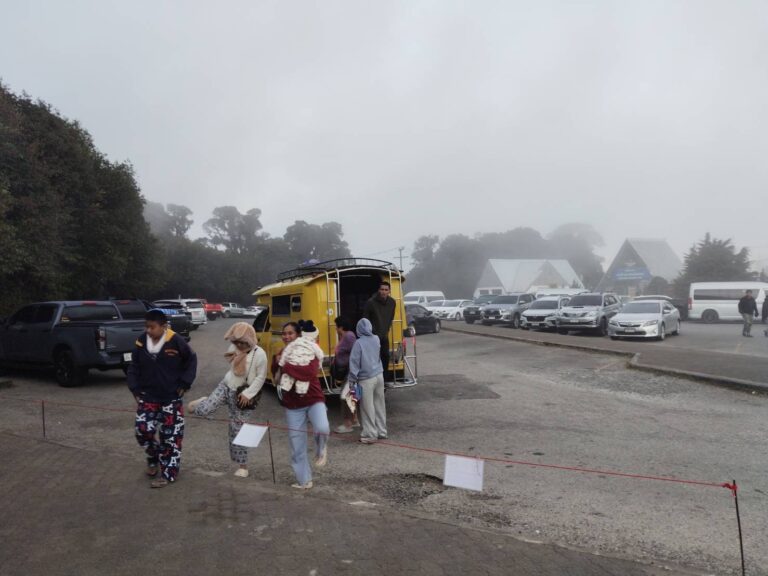
CHIANG MAI — Cold weather continues in northern Thailand, with frost still reported at Doi Inthanon National Park despite a slight rise in temperatures, park officials said Monday.

The lowest temperature at the summit of Thailand’s highest peak was recorded at 6 degrees Celsius, while ground-level grass temperatures dropped to 0.8 degrees Celsius, causing frost to form on grass and flowers.

news97513 ICskbswXdM1766455239

Doi Inthanon National Park chief Jeeraniti Cheungsaat said skies were clear early Monday, with good air quality at the summit and the Kew Mae Pan nature trail. Temperatures measured 6 degrees Celsius at the summit, 8 degrees at Kew Mae Pan and 12 degrees at park headquarters.

news97513 ONLcQm8l2k1766455241

Tourists were able to experience cold weather, morning sunshine, sea of mist and winter flowers, including blooming Himalayan cherry blossoms, within the park, officials said.

Advertisement

Man Shot Dead in Suspected Road Rage Incident Near Bangkok Expressway

Police search for a suspect after a driver was fatally shot near a Bangkok expressway toll plaza.

BANGKOK — A 34-year-old man was shot dead early Monday in a suspected road rage incident near an expressway toll plaza in northern Bangkok, police said.

Officers from Prachachuen police station responded at about 4:50 a.m. to reports of a shooting inside a car just past the Si Rat Expressway toll gate at Prachachuen, inbound lanes, in the Bang Sue district.

Police found a Toyota Corolla Altis registered in Sa Kaeo province stopped about 200 meters from the toll plaza. The driver, identified only as Anuwat, 34, was found dead in the driver’s seat with a gunshot wound to the neck.

The victim’s girlfriend told police the couple had been traveling on the expressway when a white Toyota Alphard attempted to cut into their lane near the toll booths. After passing through separate toll lanes, the Alphard slowed and later pulled alongside their car on an overpass. A gunman fired three to four shots before fleeing toward the Mo Chit area.

S 88072232

Metropolitan Police Commissioner Lt. Gen. Siam Boonsom said investigators believe the vehicles had been cutting in front of each other for several hundred meters before the toll plaza. The suspect used a 9mm handgun, firing three rounds, striking the victim in the neck and arm.

After the shooting, the victim’s car lost control and struck the roadside barrier. The girlfriend was able to steer the vehicle to a stop, police said.

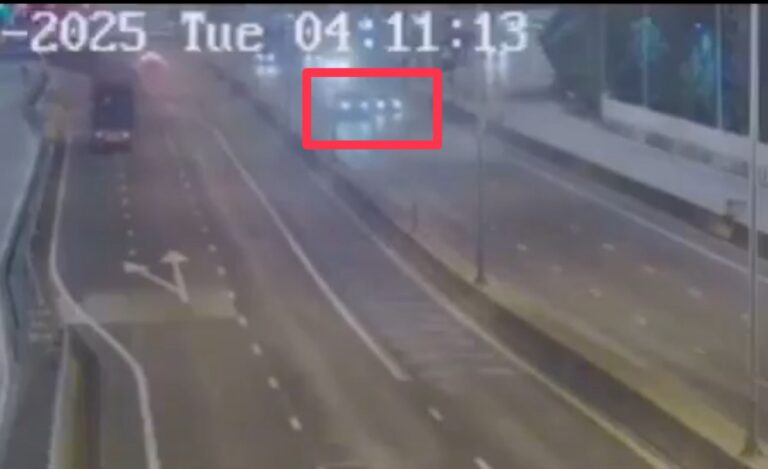
Authorities are reviewing CCTV footage and searching for the white Alphard, which fled southbound via Phutthamonthon Sai 7 road. Police said the suspect is believed to be a private individual and that the incident appears to have been a spontaneous confrontation. The investigation remains ongoing.

Advertisement

Foreign Minister Says Thailand Never Initiated Aggression

Foreign Minister Says Thailand Never Initiated Aggression

Thai Foreign Minister Says Thailand Has Never Initiated Aggression, Urges Cambodia To Commit to Genuine Cease-Fire

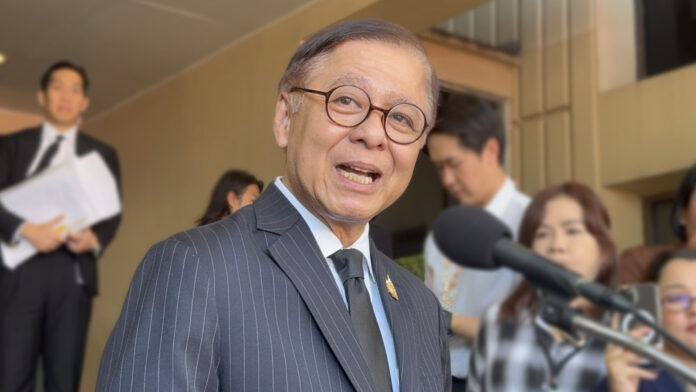
Thailand has never initiated aggression against another country and remains committed to peace, but any cease-fire with Cambodia must be genuine and based on direct talks, Foreign Minister Sihasak Phuangketkeow said Monday.

Speaking at Government House at 10:05 a.m., Sihasak addressed an upcoming meeting of the General Border Committee scheduled for Tuesday in Chanthaburi province. He said Cambodia has publicly declared it is ready for a cease-fire, a move that has generated international pressure on Thailand to do the same.

“A cease-fire does not happen just by making an announcement.” Sihasak said. “It happens through discussions on concrete measures, and it must be a real cease-fire.”

He said Cambodia’s approach has been to tell the international community it is ready to halt fighting, leading other countries to question why Thailand has not followed suit. Thailand has explained that a cease-fire is important but must be agreed upon by both sides through direct negotiations, he said.

Sihasak added that during recent regional meetings, including ASEAN gatherings, there was no direct pressure on Thailand. Instead, there were calls for both countries to talk to each other directly.

“Cambodia should come and talk with us,” he said. “They should not speak to the world and then have the world come and tell us.”

Asked about comments by Defense Minister Gen. Natthaphon Narkphanit that foreign countries tend to believe Cambodia more than Thailand, Sihasak said Thailand must continue to explain its position clearly.

“If others do not understand us, we must at least understand ourselves,” he said. “We must have a clear stance.”

Sihasak reiterated that Thailand does not initiate aggression and seeks peace, which he defined as a genuine cease-fire. He said Thailand should remain confident in its position and trust that friendly nations will listen and understand.

“We should not be overly concerned,” he said. “We will do our part, remain confident in our stance, and believe in ourselves.”

Advertisement

On Anwar, the Philippines, Sweden, and the Roles of the U.S. and China in the Thailand–Cambodia War

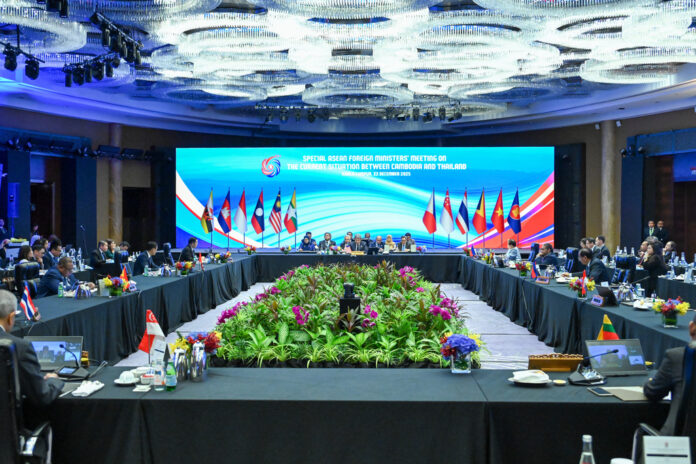
ASEAN Foreign Ministers' meeting convenes Monday, Dec. 22, 2025 in Kuala Lumpur, Malaysia to resume ceasefire talks after deadly border clashes between Thailand and Cambodia. (Thai MFA via AP)

T he GBC talks scheduled beteeen Thailand and Cambodia for tomorrow (24 Dec), in Thailand’s Chanthaburi province, include the possibility of a ceasefire. I hope both sides will show restraint and be as flexible as possible, because foot soldiers and civilians living along the border on both sides of the border are the ones who suffer the most if the war prolonged.

Even before the second round of the war this month, Thai hyper-nationalists had already predicted on social media that if anything happened, since they do not trust ASEAN Chair and Malaysian PM Anwar Ibrahim to be impartial, they would wait instead for the Philippines to become ASEAN chair on 1 January 2026 (or in 9 days from now).

Some Filipinos are not too happy with Cambodia because whenever the Philippines tries to push the issue of its territorial disputes with China in South China Sea within ASEAN, Cambodia often sides with and defends China due to its close ties with Beijing, limiting what the Philippines can do at the ASEAN level on this issue.

In addition, at yesterday’s meeting in Kuala Lumpur, it was clear that both the United States and China were trying to play a role in pressing for a ceasefire. On another level, this reflects competition between the world’s two superpowers for influence in the ASEAN region, and especially in Cambodia and Thailand.

In the first round of the war, a ceasefire was reached after Donald Trump flew in to jointly sign as a witness to the ceasefire agreement in KL, Malaysia. This was seen as a surprise move that undercut China, which has close ties with Cambodia, or which some observers see as being in a quasi–Chinese client-state. Cambodia was so appreciative that Prime Minister Hun Manet proposed Trump for the Nobel Peace Prize, and the government announced plans to rename a street after Trump in his honour. (President Xi Jinping had already received such recognition in 2024, when a major section of the Third Ring Road was named Xi Jinping Boulevard.)

We don’t do that here in Thailand. Most major roads are named after Thai kings with an exception of a very few politicians or statesmen.

At the same time, although Thailand used both U.S.-made and Swedish-made fighter jets to strike targets in Cambodia, Cambodian citizens during the first round of the border war in July criticized only Sweden for selling military aircrafts to Thailand but did not attack the United States. This can be seen as selective and strategic criticism.

Some Cambodians were already unhappy with Sweden because Sweden closed its embassy in Phnom Penh in late 2024, citing severe restrictions of democratic space and deteriorating human rights situations.

As for Thailand, in addition to PM Anutin Charnvirakul having resisted pressure from US President Donald Trump twice, after the second round of the war—which is now entering the 16th day—yesterday we also saw Thai Foreign Minister Sihasak Phuangketkeow criticize the US role in the signing of the ceasefire agreement in Kuala Lumpur, saying perhaps one factor behind the eventual failure to achieve a lasting ceasefire, was because Thailand was “rushed.” At present, it can be concluded that the United States has lost a fair amount of soft power or goodwill among hyper-nationalist or ultra-nationalist Thais, while the US has been gaining ground against China in Cambodia.

China, meanwhile, has been especially cautious, especially after the Chinese envoy in Phnom Penh appeared to openly side with Cambodia during the first round of the war. China’s Ministry of Foreign Affairs quickly adjusted its stance following strong backlash from Thai public opinion. Regarding Chinese weapons reportedly seized by Thai soldiers in this round of fighting, China was quick to deny that they were newly supplied weapons.

And although yesterday the Chinese Foreign Ministry spokesperson reiterated that China is actively trying to mediate a ceasefire between both sides, it remains unclear how this conflict between Thailand and Cambodia will ultimately affect relations with China and perceptions of China in both Thailand and Cambodia.

___

Advertisement

2 Arrested in Israeli Tourist Pickpocketing on Pattaya Walking Street

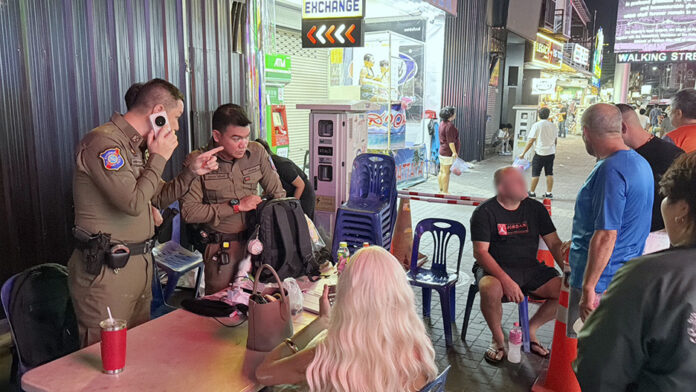
Officers bring a transgender woman (wearing a blonde wig) who was arguing with an Israeli tourist to the tourist police booth on Walking Street for questioning after the tourist accused her of pickpocketing him on Monday night, Dec. 22, 2025.

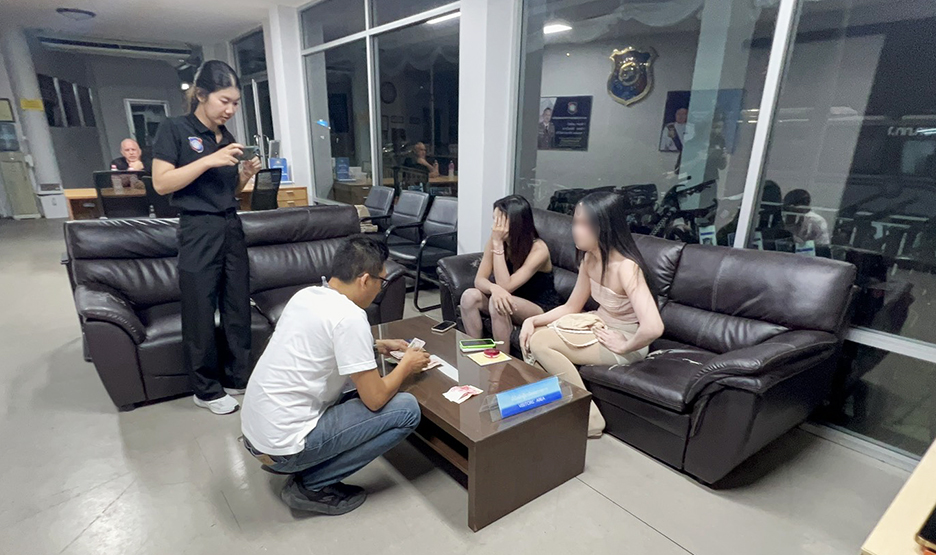
PATTAYA — Tourist Police arrested two transgender suspects for pickpocketing an Israeli tourist after one dropped stolen cash while attempting to retrieve it, authorities said Tuesday.

Officers detained Chanayut, 25, from Nakhon Ratchasima province, and Kritsana, 27, from Roi Et province, after responding to a disturbance near a currency exchange booth on Walking Street.

The victim, identified only as Mr. Chamam, 52, of Israel, reported the theft of 1,200 baht ($38.50), $300 and 160 Israeli shekels ($50) — a total of $388.50.

pickpck israel2
Two transgender women are charged with nighttime theft at Pattaya City Police Station after confessing to pickpocketing an Israeli tourist on Monday night, December 22, 2025.

Police found the second suspect collecting dropped money behind the exchange booth. Both suspects confessed to the theft, police said.

Authorities charged the pair with nighttime theft, which carries penalties of one to five years in prison and fines ranging from 20,000 to 100,000 baht ($640-$3,210) under Thai law — harsher than daytime theft charges.

Tourist police urged visitors to remain vigilant with valuables in crowded areas, particularly at night and during festivals.

__

Advertisement

Thailand Steps Up Anti-Drone Security at Suvarnabhumi Airport

Bangkok Suvarnabhumi Airport is Certified with the 4-Star Airport Rating for facilities, comfort, cleanliness, shopping, food & beverages and staff service. (Photo: Skytrax)
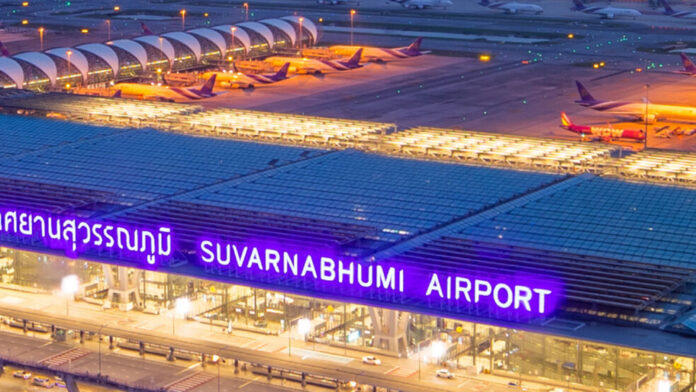
Suvarnabhumi Airport is seen at night in Samut Prakan province, Thailand, as authorities step up security following reports of drone sightings near the airport.

BANGKOK — Thailand’s National Security Council has ordered heightened counter-drone measures at Suvarnabhumi Airport following reports of drone sightings near the airport late Saturday, officials said.

The council directed Airports of Thailand to fast-track procurement of advanced anti-drone technology after residents in Nong Prue subdistrict, in Samut Prakan province, reported seeing drone-like objects near the airport perimeter on December 20. An emergency meeting on Monday also ordered security forces to maintain a constant presence at the airport during the transition period.

Authorities warned that flying drones in restricted airport zones carries the country’s harshest penalties, as airports are designated high-security areas.

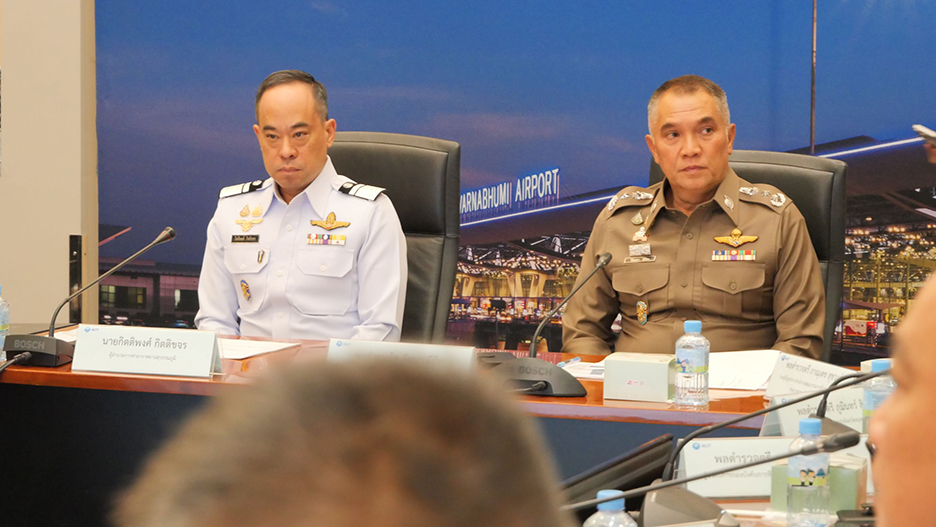
Suvarnabhumi Airport Director Kittipong Kittikachorn said the drones did not enter controlled airspace and remained near the outer perimeter fence. In response, the airport and security agencies installed signal jammers to prevent any intrusion, coordinating with Aeronautical Radio of Thailand to ensure flight safety.

drone security1
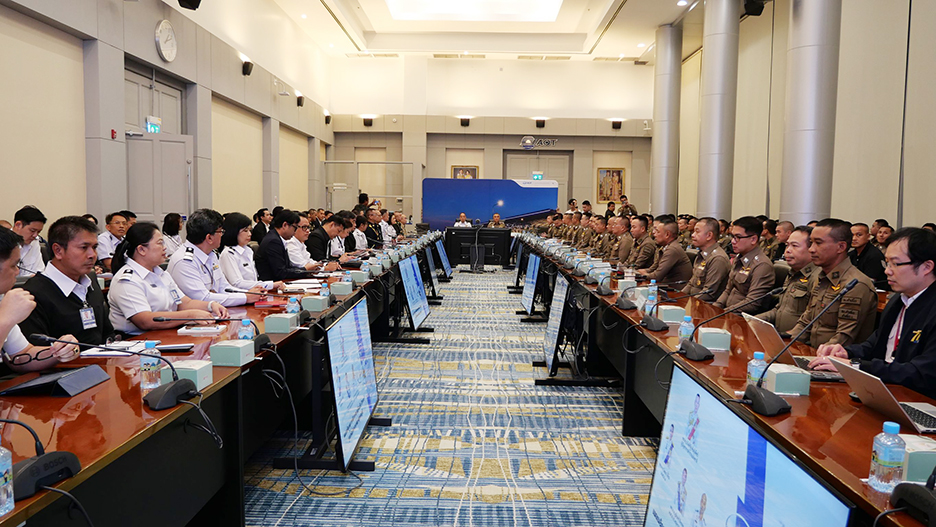
Officials attend an emergency security meeting after reports of drone sightings near Suvarnabhumi Airport in Samut Prakan province, on Dec.22, 2025.

“Suvarnabhumi Airport and security agencies assure passengers and tourists that the airport meets international safety standards, and personnel are ready to manage incidents at all times,” Kittipong said.

He urged the public to distinguish between drones and aircraft, noting that drones typically display green and red lights and emit audible sounds at low altitudes, while aircraft have strobe lights and continuous engine noise.

Police Region 1 Commander Lt. Gen. Wattana Yeesin said officers have been deployed around the clock along the airport perimeter and at all entry points to inspect vehicles and suspicious activity. He dismissed social media claims of dozens of drones as inaccurate, saying investigators identified only two to three drones flying intermittently for 10 to 20 minutes east of the airport and outside restricted airspace.

drone security2
Suvarnabhumi Airport Director Kittipong Kittikachorn, left, and Police Region 1 Commander Lt. Gen. Wattana Yeesin attend an emergency meeting following reports of drone activity near the airport in Samut Prakan province, on Dec.22, 2025.

Security sources said the drones were operated by foreign tourists photographing aircraft and posed no threat. Authorities questioned the individuals on Monday.

The Royal Thai Air Force is leading prevention operations, deploying counter-drone equipment including Redsky-II systems, drone-disabling guns and shotguns. The Royal Thai Police and local police units have also integrated their anti-drone systems into the operation.

The reports heightened public anxiety as Thailand’s military has been engaged in clashes with Cambodia along the border, although the fighting is far from Suvarnabhumi Airport.

___

Advertisement

Car Bomb Kills Russian General in Moscow

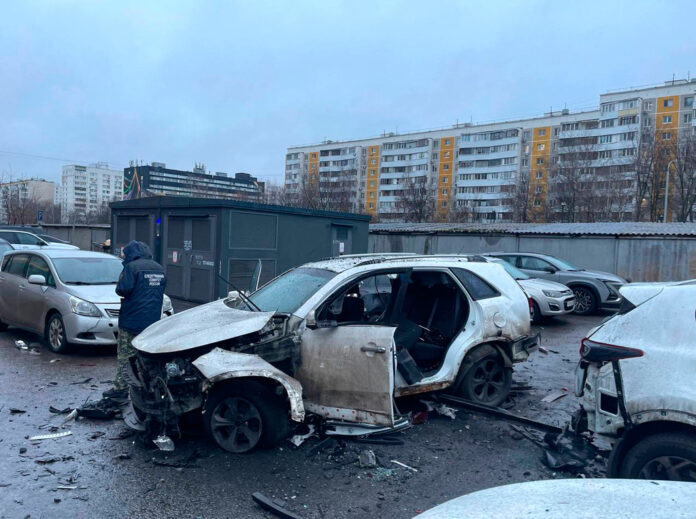
This photo provided by Investigative Committee of Moscow on Monday, Dec. 22, 2025, shows an investigator working at the scene where Lt. Gen. Fanil Sarvarov, head of the Operational Training Directorate of the Russian Armed Forces General Staff, was killed by an explosive device placed under his car in Moscow. (Investigative Committee of Moscow via AP)

MOSCOW (AP) — A car bomb killed a Russian general on Monday, the third such killing of a senior military officer in just over a year. Investigators said Ukraine may be behind the attack.

Lt. Gen. Fanil Sarvarov, head of the Operational Training Directorate of the Russian Armed Forces’ General Staff, died from his injuries, said Svetlana Petrenko, the spokesperson for Russia’s Investigative Committee, the nation’s top criminal investigation agency.

“Investigators are pursuing numerous lines of inquiry regarding the murder. One of these is that the crime was orchestrated by Ukrainian intelligence services,” Petrenko said.

Since Moscow sent troops into Ukraine nearly four years ago, Russian authorities have blamed Kyiv for several assassinations of military officers and public figures in Russia. Ukraine has claimed responsibility for some of them. It has not yet commented on Monday’s death.

AP25356300983055
This undated image provided by Russian Defense Ministry Press Service on Monday, Dec. 22, 2025, shows Lt. Gen. Fanil Sarvarov, head of the Operational Training Directorate of the Russian Armed Forces General Staff, who was killed Monday morning after an explosive device detonated under his car in southern Moscow. (Russian Defense Ministry Press Service via AP)

Kremlin spokesman Dmitry Peskov said that President Vladimir Putin had been immediately informed about the killing of Sarvarov, who fought in Chechnya and had taken part in Moscow’s military campaign in Syria.

Russia has blamed a series of other apparent assassinations on Ukraine.

Just over a year ago, Lt. Gen. Igor Kirillov, the chief of the military’s nuclear, biological and chemical protection forces, was killed by a bomb hidden on an electric scooter outside his apartment building. Kirillov’s assistant also died. Ukraine’s security service claimed responsibility for the attack.

An Uzbek man was quickly arrested and charged with killing Kirillov on behalf of the Ukrainian security service.

AP25356281869028
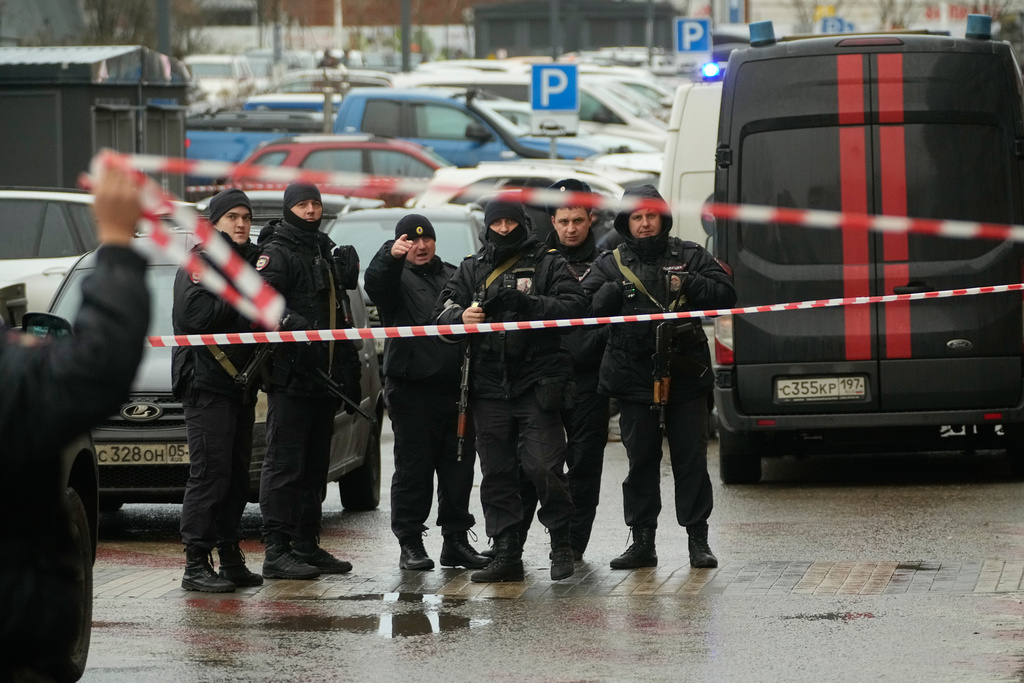
Policemen secure the area near the scene where Lt. Gen. Fanil Sarvarov, head of the Operational Training Directorate of the Russian Armed Forces General Staff, was killed by an explosive device placed under his car in Moscow, Monday, Dec. 22, 2025. (AP Photo)

Putin described Kirillov’s killing as a “major blunder” by Russia’s security agencies, noting they should learn from it and improve their efficiency.

In April, another senior Russian military officer, Lt. Gen. Yaroslav Moskalik, a deputy head of the main operational department in the General Staff, was killed by an explosive device placed in his car parked near his apartment building just outside Moscow. A suspected perpetrator was quickly arrested.

Days after Moskalik’s killing, Ukraine’s President Volodymyr Zelenskyy said he received a report from the head of Ukraine’s foreign intelligence agency on the “liquidation” of top Russian military figures, adding that “justice inevitably comes” although he didn’t mention Moskalik’s name.

AP25356296751569
This image taken from video provided by Investigative Committee of Moscow on Monday, Dec. 22, 2025, shows the scene where Lt. Gen. Fanil Sarvarov, head of the Operational Training Directorate of the Russian Armed Forces General Staff, was killed by an explosive device placed under his car in Moscow. (Investigative Committee of Moscow via AP)

Ukraine, which is outnumbered by Russia’s larger, better equipped military, has frequently tried to change the course of the conflict by attacking in unexpected ways. In August last year, Ukrainian forces staged a surprise incursion into Russia’s Kursk region even as they struggled to stem Russian offensives on many parts of the front line. Moscow’s troops eventually drove them out, but the incursion distracted the Russian military resources from other areas and raised Ukrainian morale.

Ukraine has also launched repeated attacks on the Russian navy in the Black Sea with sea drones and missiles, forcing it to relocate its warships and limit the scale of its operations.

And in June, swarms of drones launched from trucks targeted bomber bases across Russia. Ukraine said over 40 long-range bombers were damaged or destroyed, although Moscow said only several planes were struck.

Meanwhile, Western officials have accused Russia of staging a campaign away from the battlefield, accusing it of orchestrating dozens of incidents of disruption and sabotage across Europe as part of an effort to sap support for Ukraine. Moscow has denied the claims.

___

Advertisement

Thai Hotels Group Sees Foreign Arrivals at About 33 Million in 2026

Koh Samui remains full of tourists in 2025.

BANGKOK — Thailand’s hotel industry expects the number of foreign visitors to hold steady at around 33 million in 2026, despite economic uncertainty, weather disruptions and regional tensions, the Thai Hotels Association said.

Thienprasit Chaiyapatranun, president of the association, said hotel revenues grew in the fourth quarter of 2025 compared with the previous quarter, driven by an increase in long-haul travelers and government domestic tourism stimulus programs. Those measures, including the government-subsidized domestic tourism scheme and the government travel tax refund program, helped support revenues, particularly at four-star hotels and above.

He said overall hotel revenues in the second half of 2025 were expected to decline from the same period a year earlier, as several factors weighed on tourism. These included flooding in southern Thailand during the peak season, which hit coastal destinations, border-related tensions and global economic volatility.

hotels pattaya
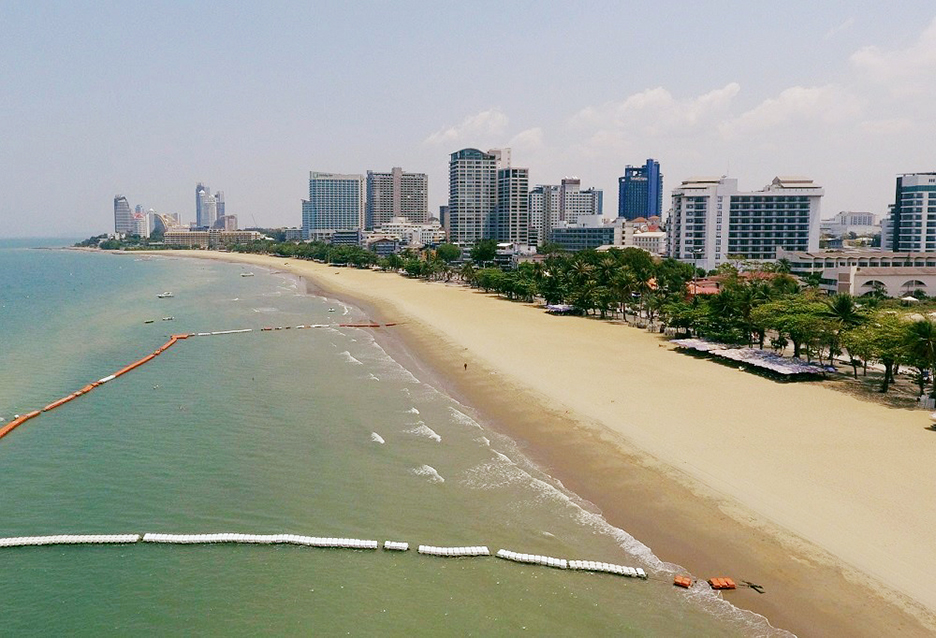
Hotels along the Pattaya beach in Chonburi province.

Exchange-rate fluctuations have also raised living costs and could curb visitor spending, making tourists more cautious, Thienprasit said.

“The public and private sectors need to urgently adjust tourism promotion plans to cope with these risks and challenges,” he said. While the share of hotels facing labor shortages in November was unchanged from the previous month, shortages increased in central and southern Thailand, affecting service quality in many cases.

Hotel operators are seeking additional government support, including stronger tourism and revenue stimulus measures, expanded marketing efforts and steps to address what they describe as Thailand’s negative image abroad. They are also calling for cost-relief measures such as lower energy prices and tax reductions, including cuts to corporate income, personal income and property taxes.

trat tourism02
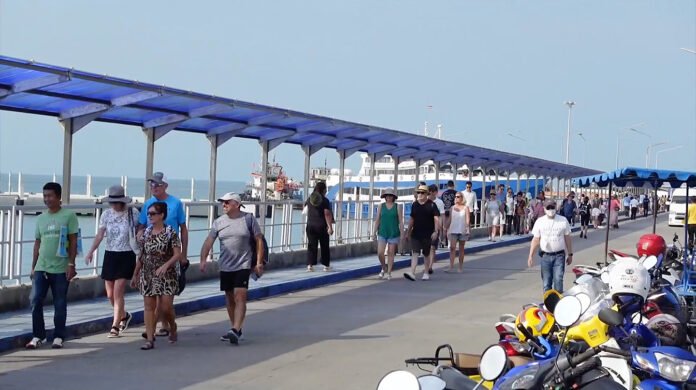
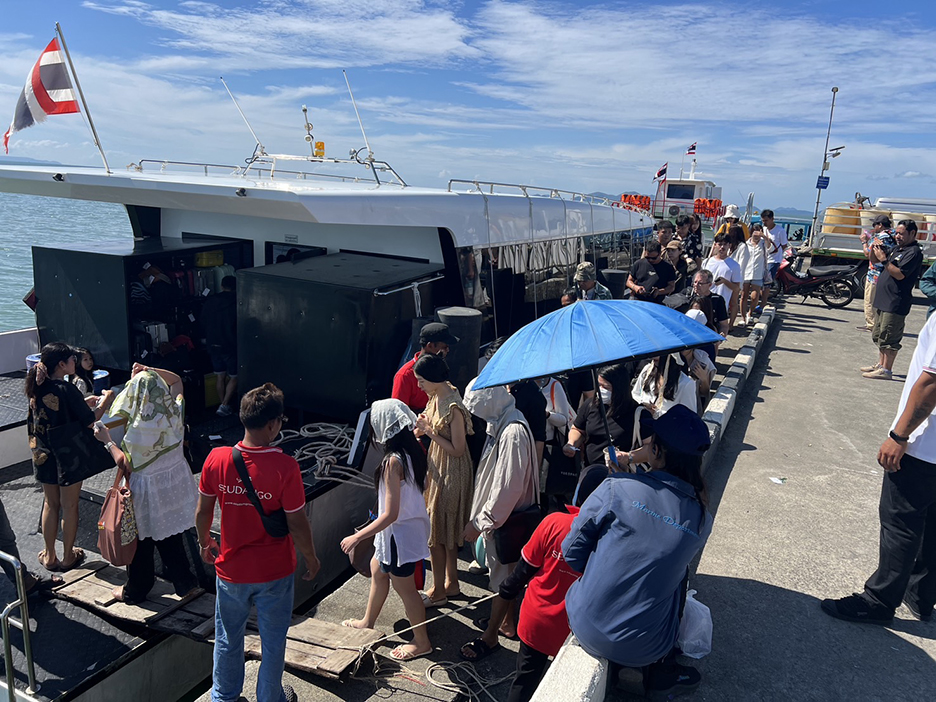
Tourists board a passenger ferry between Koh Chang and Koh Kood in Trat Province before the outbreak of the new round of Thai-Cambodian border clashes that began on Dec. 7, 2025.

Other proposals include low-interest loans to help hotels renovate properties damaged by flooding or affected by unrest along the Thai-Cambodian border, as well as labor measures to stabilize the migrant worker registration system. Operators have also urged faster infrastructure development, particularly at airports, and streamlined permitting procedures to reduce reliance on paper-based documentation.

Thienprasit said operators remain optimistic about the current high season, citing a long stretch of public holidays and continued government efforts to promote long-haul markets. Domestic travel has also been supported by government programs, while increased flight frequencies and year-end and New Year celebrations are expected to draw both Thai and foreign visitors.

Average hotel occupancy nationwide rose across all regions and star categories in November 2025, in line with the high season, reaching an average of 76%, up from both the previous month and a year earlier, the association said. Occupancy in December is forecast to edge up to 77%.

More than half of hotel operators expect foreign arrivals in 2026 to be similar to 2025 levels, at about 33 million, with little change year on year, Thienprasit said.

_____

Advertisement

Thailand Customs To Tax Online Imports From 1 Baht in 2026

Thailand Customs to tax online imports from 1 baht in 2026

BANGKOK — Thailand’s Customs Department has signed cooperation agreements with five major e-commerce platforms to tighten oversight of online imports and begin collecting import duties on goods valued from 1 baht ($0.032), ending a long-standing exemption for low-value shipments.

Customs Director-General Phanthong Loykulanunt said the new rules will take effect on Jan. 1, 2026, replacing the current duty-free threshold of 1,500 baht. The exemption, he said, has allowed foreign goods to undercut products sold by Thai businesses.

The agreements were signed with Lazada, Shopee Thailand, SHEIN, TikTok Shop Thailand and TEMU.

Authorities estimate that about 250 million parcels worth more than 45 billion baht ($1.3 billion) a year will be imported in 2026. The cooperation is expected to raise import standards, protect consumers and promote fair competition, Phanthong said.

“The new tax collection will cover nearly all goods that previously benefited from the exemption,” he said. “Last year alone, imports valued under 1,500 baht totaled about 30 billion baht, or roughly 150 to 160 million items.”

The policy is expected to generate about 3 billion baht in additional annual revenue, he said, but its main objective is to protect domestic operators from price disadvantages against untaxed imports.

Under the new tariff structure, most low-value imports fall into the fashion category.

Clothing and footwear will face import duties of about 30%, bags about 20%, and other goods will be taxed according to their customs classification, generally ranging from 10% to 20% depending on type and material.

Customs officials said the measures will also help keep substandard goods out of the market. The department will share lists of regulated products with platforms so items requiring licenses — such as approvals from the Food and Drug Administration or Thai Industrial Standards Institute — can be screened out before sale.

Most platforms will include taxes and duties in the displayed price, allowing consumers to make a single payment before delivery. Shipments sent through Thailand Post may still have duties collected upon delivery.

Phanthong said cooperation with platforms will allow checks to be conducted upstream, reducing inspections at customs checkpoints and improving enforcement efficiency. “This is not only about revenue,” he said. “It is about building a transparent, fair and lawful trade system over the long term.”

Thomakorn Supatanarangsri, vice president for government relations at Lazada Thailand, said public-private cooperation is essential for sharing information and setting common standards. Platforms cannot manage all regulatory issues alone, he said, and must work with authorities to ensure fair growth of the digital economy and protect consumers.

He acknowledged that some sellers may be affected during the initial adjustment period but said the changes would be beneficial in the long run by putting all players under the same standards and creating a safer ecosystem. He added that Lazada has been communicating the changes to sellers and preparing for implementation ahead of the January start date.

__

Advertisement

Hot News

LATEST NEWS

Bangkok
overcast clouds
28.3 ° C
28.3 °
28.3 °
77 %
3.5kmh
100 %
Sun
34 °
Mon
33 °
Tue
33 °
Wed
33 °
Thu
33 °