32.7 C
Bangkok
Friday, June 19, 2026
Home Blog Page 2123

Noma BKK is RCA’s New Cosmic Cafe

Photo: Noma BKK / Facebook

BANGKOK — Three years after live alternative music venue Cosmic Cafe closed its doors, a Bangkok music promoter is opening a new booze and tunes joint Saturday in the same location.

If the opening lineup is anything to go by, Noma BKK will be another home for original music. The name stands for Now Our Mother’s Angry, according to Kawee Soontornwan, one of the owners who is also behind concert promoter Medium Rare Live.

“The theme is that we’re hosting a party at our house when mother is gone,” Kawee said.

The opening party, Without Gigs I’m Nothing, will take place Saturday with live performances by In This Peace, Yellow Fang, Stylish Nonsense, DJ No.gif and more. Tickets at the door will be 200 baht, with prizes being raffled off to guests.

Cosmic Cafe, opened in 2006 by Prompon “Kong” Suvarnapradip, quickly became a celebrated home for Bangkok’s indie music scene before it closed in early 2014.

Advertisement

No Sign Rohingya Will Be Allowed to Return Home

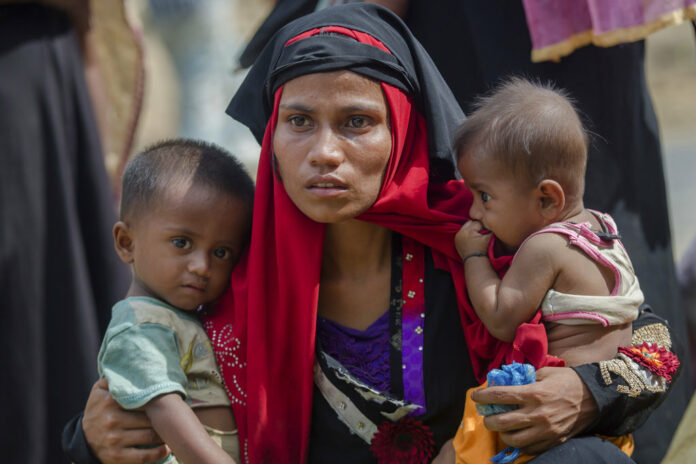
Rohingya Muslim woman, Rukaya Begum, who crossed over from Myanmar into Bangladesh, holds her son Mahbubur Rehman, at left, and her daughter Rehana Bibi, on Oct. 22, 2017, after the government moved them to newly allocated refugee camp areas, near Kutupalong, Bangladesh. Photo: Dar Yasin / Associated Press

BANGKOK — After facing international outrage and charges of ethnic cleansing, Myanmar made a pledge: Rohingya Muslims who fled the country by the hundreds of thousands would start their journey home within weeks.

With so many obstacles, however, and no real sign of good will, few believe that will happen.

The returns are supposed to be voluntary. But many members of the religious minority, now living in sprawling refugee camps in neighboring Bangladesh, are afraid to go back.

They don’t trust the nationalist-led government and feel widely hated by the general population. Meanwhile, the military — which violently ousted them — says the refugees shouldn’t expect to return in large numbers.

Myanmar, a predominantly Buddhist nation of 60 million, was basking in international praise just a few years ago as it transitioned to democracy after a half-century of dictatorship. Since then, a campaign of killings, rape and arson attacks by security forces and Buddhist-aligned mobs have sent more than 850,000 of the country’s 1.3 million Rohingya fleeing.

Their home for generations, the northern tip of Rakhine state, is now virtually empty, prompting the United Nations, the United States and others to label it ethnic cleansing.

In an apparent effort to quiet criticism, Myanmar reached an agreement with Bangladesh last month saying refugees would start returning home before Jan. 23.

There is “no way” that will happen, says Chris Lewa, a leading expert on the Rohingya and the policies that have made them one of the world’s most persecuted minorities. The government, she notes, has done almost nothing to prepare.

While Myanmar said the Rohingya would be allowed to settle in their original homes, few of which remain standing, some officials have talked about putting them in “camps” in northern Rakhine.

Already, two barracks have been constructed next to a police post in the Rakhine state village of Taungpyo Letwe to receive returnees, the Ministry of Information says. The government has stockpiled material and started breaking ground for 41 modular houses.

The idea, the ministry said, is that returnees can stay there temporarily.

That scares Arif Ullah, a 34-year-old Rohingya living at the Balukali camp in Bangladesh. He worries it could lead to something more permanent like apartheid-style camps erected after violence broke out in Sittwe, the state capital, in 2012.

Five years later, those camps remain home to 120,000 people. International aid agencies are effectively banned and the Rohingya have little access to food, education or basic medical care. Mothers regularly die in childbirth. Babies and children have clear signs of malnutrition.

“We miss our home,” said Arif Ullah, married and a father of two. “But we are human beings.”

“If the Myanmar government is really willing to take us back and give us our rights, they could have built houses on the land where our houses were burned down,” he says. “But clearly they don’t want to do that. And we are not going back to just live in the camps.”

Anagha Neelakantan, Asia Director of the International Crisis Group, meanwhile, warned of potential security risks. She also does not believe large numbers of Rohingya will be returning from Bangladesh any time soon.

And the presence of so many traumatized, hopeless refugees in Bangladesh, she said, could be a recipe for further instability and possible cross-border attacks by Rohingya militants, known as ARSA.

Attacks by ARSA inside Rakhine state — first in October 2016 and then again in August — triggered the army’s heavy-handed, indiscriminate response.

Well-trained and funded in part by the Middle East, the militants’ agenda appears to be to localized. They want the Rohingya to enjoy the same rights as others in Myanmar. But if the situation does not improve, there are fears the militants could be exploited by transnational jihadists with their own aims.

Min Aung Hlaing, commander-in-chief of the armed forces, says the decision as to who returns and when should not be left to governments. It should be for residents inside Myanmar to decide.

“It is impossible to accept the number of persons proposed by Bangladesh,” he said last month in a statement. “Emphasis must be placed on wish of local Rakhine ethnic people who are real Myanmar citizens. Only when local Rakhine ethnic people accept it, will all the people satisfy it.”

Though many Rohingya have been living in Myanmar for generations, they are seen by most people in the country as “foreign invaders” from Bangladesh. They have been denied citizenship, effectively rendering them stateless.

In addition to saying the Muslim minority should be allowed to return freely, safely and in dignity, Myanmar’s agreement with Bangladesh says Rohingya will need to provide evidence of their residency — something many say they do not have.

While the agreement says that the U.N. High Commission for Refugees will play a role in the repatriations, Adrian Edwards, a spokesman in Geneva, said they have so far been excluded from initial discussions between Myanmar and Bangladesh.

Bangladesh wants them to be involved, sources say. Myanmar does not.

“After the widespread atrocities, safe and voluntary return of Rohingya will require international monitors on the ground in Burma (Myanmar),” says Bill Frelick, refugee rights director at Human Rights Watch. This, he says, means a central role for the UNHCR.

But how that can happen and when is just one of the many obstacles to a Rohingya return to Myanmar that many fear, many simply don’t want — and that, in the context of the months of violence that 2017 brought to so many people, is for the moment a political talking point and very little else.

Advertisement

Florida Man Fights For Life After Chasing Thieving Monkey

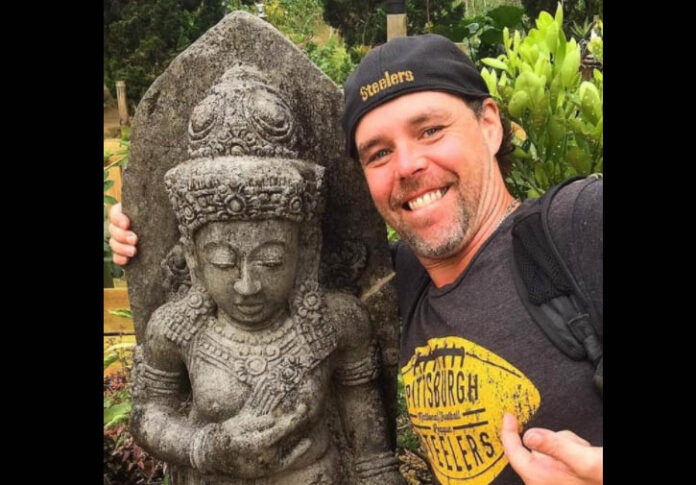
Jeff 'Swede' Swedenhjelm in the beloved baseball cap stolen by a monkey on Bali. / Nwfdailynews.com

DESTIN, Florida — A Florida man living in Bali is fighting for his life after he fell from a roof while chasing a monkey that had stolen his favorite Pittsburgh Steelers cap.

The Northwest Florida Daily News reported that Jeff “Swede” Swedenhjelm fell 10 meters on Monday.

Villagers took him to a local hospital, where he was diagnosed with severe damage to his spinal cord. He currently is paralyzed from the chest down.

Lyric Swedenhjelm, who lives in Destin, said the family is trying to get her father to a country with a spinal specialist. She said Swedenhjelm is in a medically induced coma and is on a ventilator.

The family has started a fundraising page on GoFundMe, which has already raised more than USD$36,000.

Advertisement

1 Million Thai Teens Suffer From Depression: Official

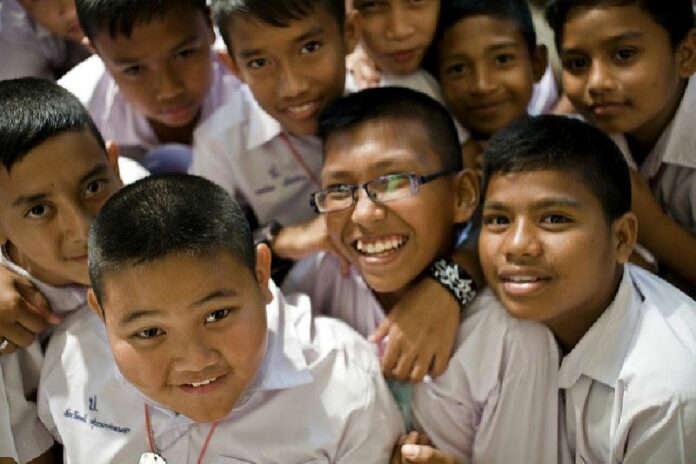
Middle-school students at the Parliament Museum in a 2010 file photo. Photo: Office of the Prime Minister

BANGKOK — Thailand may be known as the “Land of Smiles” but an estimated 1 million teenagers suffer clinical depression, many of whom are going untreated, said the nation’s chief mental health official Boonruang Trairuangworawat on Friday.

Boonruang, director general of the Mental Health Department, said there’s a need to address problems among Thai teens aged 10 to 19 and widen their access to mental health facilities, as depression has led to violence, school dropouts and suicide.

While the estimated 1 million teenagers are believed to suffer from depression, 2 million more are at risk, Boonruang said. That would make for upward of 3 million among a population of 8 million teens.

Boonruang pointed out that youths develop different symptoms from adults when suffering from depression. This includes acts of violence, self-harm and emotional volatility, as well as substance abuse. Some become antisocial, a sign often mistaken by parents and teachers as mere unruly adolescents withdrawing from social life.

“At the same time, the particular trait of teenagers in not wanting to be identified as having problems may lead to refusing treatment. This is particularly so when facing parents who do not understand and reprimand [the teenager],” said the director general of the department.

Next year, the ministry will produce guidelines for medical professionals to be able to better handle the situation.


Advertisement

Ballistic: Civilians vs. Soldiers

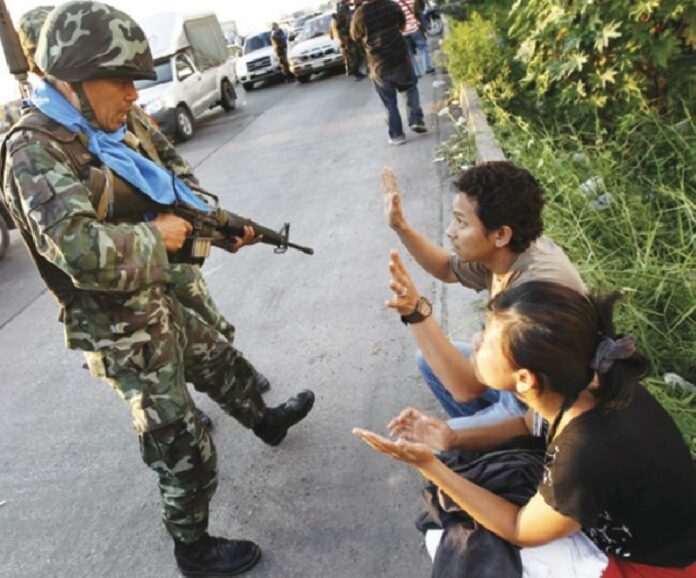
A soldier detains two Redshirt protesters at gunpoint following civil unrest in 2010 in Pathum Thani province.

Voranai VanijakaIn a recent conversation with eminent political scientist Dr. Thitinan Pongsudhirak about the general election set for late 2018, he summed up the future of Thai politics as such: “civilians vs. soldiers.”

Given the history of Thai political violence, military crackdowns and cycles of coup d’etats, this indeed is an unfortunate matchup – especially for the civilians. Here’s the concern: The new constitution is designed in such a way that would likely create a deadlock between the 500 elected members of parliament, preventing them from having a clear majority to form a government. In such an event, the 250-strong senate, all handpicked by the current military government, would swoop in.

Therefore we shall have 250 united voices against 500 fragmented, constantly bitching and bickering, voices – many of whom would surely be persuaded to swing to the side of the senators. This persuasion may come in many forms, most likely it would involve the same old offer that no politician can ever refuse: join the government and share the cake.

From the 750 voices, the majority then would pick the next prime minister and form the cabinet. The catch is, he or she needs not be an elected representative of the people. Which means, they can pick me if they want, but that’s not going to happen.

As such, following a series of unfortunate events in the more-than-a-decade-long Thai political conflicts, by the end of 2018 we may likely have a handpicked prime minister and cabinet. Since the senate represents the word and will of those who appoint them, the hands that will actually do the picking would all be reaching from green shirtsleeves, with at least one likely wearing a Richard Mille watch on his wrist and large diamond bling on his finger.

To sum it up, civilians get to pick the MPs, and that’s democracy; generals get to pick the government, and that’s Thai-style democracy. The key terms here are “elected” vs. “handpicked.” So while it’s a step forward to have a general election, it might turn out to be an unsure step, down a typical poorly-lit soi full of stray dogs, on a typical hot and humid Bangkok night. Meaning, we might step on something squishy.

An obvious way to prevent a handpicked government is to have a strong coalition formed by political parties. That would mean the two largest parties, Pheu Thai and Democrats, have to join hands. It might be easier to get Donald Trump to admit he’s wearing a wig but – here we are – this perhaps is the best option to preserve whatever form of democracy we have left in Thailand. In the battle between civilians and soldiers, enemies have to become friends.

Even the Lannisters and the Starks are joining forces to combat the Night King in the Game of Thrones saga, and his army of wights from beyond the wall, although Queen Cersei is having none of it. Shifting alliances is common in politics, here in Thailand or in any other country, including the Seven Kingdoms of Westeros. But getting Pheu Thai and the Democrats together might be harder than giving Harvey Weinstein the Gruber Prize for Women’s Rights award.

Perhaps sacrifices have to be made in order to forge this partnership. The Pheu Thai may have to rid itself of Redshirt elements, while the Democrats might have to rid themselves of whistle elements, namely Suthep Thaugsuban, allegedly the most powerful politician in the Democrats’ camp. We may even take it one step further, Pheu Thai may have to sever ties with the Shinawatra clan, and the Democrats might need a new leader to replace Abhisit Vejjajiva. As you can see, these are things easily written, but highly unlikely to be executed in actuality, as many powerful cliques and individuals would be left out.

Alternatively, perhaps in spite of the new constitution, the Pheu Thai somehow manages to win a clear majority in parliament, then we would have an elected government in charge. But would that mean more protests in the streets by anti-Thaksin whistlers? It’s a game of chance.

There is yet another possibility, an idea that has been floated by political insiders. Political parties might agree to nominate the leader of the third largest party, Anuthin Chanveerakul of Bhumjaithai, as prime minister. Someone who’s “acceptable” by all factions. But this is a long shot, and to have, in effect, the third-place election winner forming a government is unprecedented on many levels.

Regardless of how things may play out, the future of Thai politics is as Dr. Thitinan stated, civilians vs. soldiers. The right for each individual adult citizen to play a role in determining the future of the country vs. the power of the military to determine the future for everyone else.

Yet, there’s another way to look at it. At the top, it’s politicians vs. generals, both sides would remain wealthy and powerful no matter who win. At the bottom, it’s ordinary civilians vs. common soldiers, both sides toil and struggle no matter who wins.

Democracy is flawed and Thai politicians would make Harvey Weinstein’s casting couch seem absolutely innocent and sanitized, but it is still the better option for advancement of the country.

The new constitution should be reexamined, while in the near future Thailand has two roads ahead, both are flawed, and both have supporters and naysayers: One road is paved by civilian-rule, the other by military-rule.

Advertisement

1 Body Recovered, 36 Feared Dead in Philippine Mall Fire

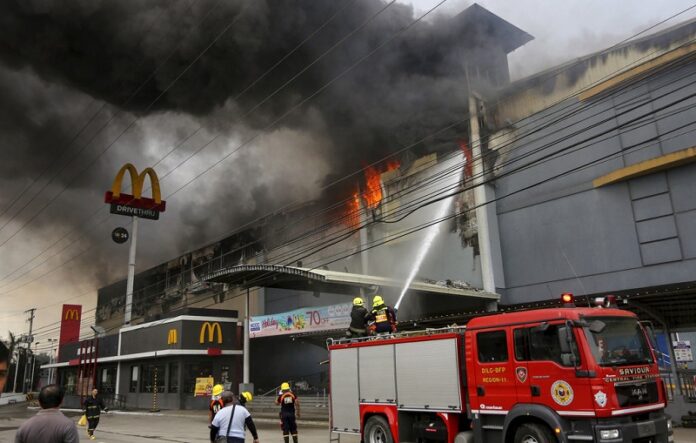
Firemen battle a fire that rages at a shopping mall, Saturday in Davao city, southern Philippines. Photo: Manman Dejeto / Associated Press

DAVAO, Philippines — Philippine firefighters recovered one body from a burning shopping mall Sunday and there was “zero” chances of survival for 36 other trapped people inside the four-story building in southern Davao city, an official said.

Mayor Sara Duterte-Carpio said firefighters told distraught relatives of the 36 trapped employees of a business outsourcing company at the top floor of the NCCC Mall that nobody could survive the extreme heat and thick black smoke.

“They were told that the chances of survival are zero,” she said, adding that one of those trapped may be a Chinese or a South Korean, based on the name.

It is unclear when firefighters can break into most areas of the mall, where the blaze was put under control Sunday morning although smoke continued to billow from the building. The firefighters won’t stop until all those reported missing are found, Duterte-Carpio said.

Investigators will determine the cause of the fire and the prospects of criminal lawsuits against the mall owners and officials would depend on the outcome of the investigation, said the mayor, who is the daughter of President Rodrigo Duterte.

Duterte, the mayor and Roman Catholic Church officials went to the site and met with relatives of the trapped office employees late Saturday and asked them to pray. The president was photographed wiping his eyes with a handkerchief, his head bowed, at an emotional moment with the relatives.

The mall’s marketing manager, Janna Abdullah Mutalib, said the fire started Saturday morning at the third floor where clothes, appliances and furniture are sold, after a storm hit Davao and flooded parts of the city. Except for a grocery at the ground floor and the business outsourcing company at the top floor, the shopping areas were still closed to the public when the fire started mid-morning, preventing a bigger tragedy amid the peak Christmas shopping season.

Duterte served as Davao mayor for many years before being elected to the presidency last year.

It’s been a difficult year for the tough-talking, 72-year-old leader, who faced his most serious crisis when hundreds of pro-Islamic State group extremists laid siege on Marawi city, also in the southern third of the Philippines. He declared martial law in the south to deal with the insurrection, which troops crushed in October.

The storm that blew out of the southern Philippines Sunday reportedly left more than 120 people dead with 160 others still missing.

Advertisement

Thai Christians Celebrate Christmas with Lights, Parades

A beauty queen during a Saturday parade in Sakon Nakon province. Photo: Matichon

BANGKOK — Communities with significant Christian Thai populations celebrated the advent of Christmas by holding parades and lighting up their churches Saturday.

In Sakon Nakorn province’s The Rae tambon, a combined 20,000 locals and tourists took part in a Christmas parade Saturday night which included 40 mobile processions depicting the likes of Santa Claus and a local twist – Thai beauty queens.

The parade will also take place on Monday to mark Christmas Day and a mass is due to be held today.

Meanwhile, east of central Thailand in Chantaburi province – where there’s a significant population of Christians – residents organized the “Chantaburi Miracle Christmas 2017” celebration, involving lit displays at the century-old neo-Gothic Cathedral of the Immaculate Conception along with fireworks and light animations.

Many Thais of Vietnamese descent are Catholics and their communities have been living in Chantaburi province for three centuries.

The church in the province is one of the most beautiful in Thailand. Its original structure – which predates the current building – was built by 130 Vietnamese who fled religious persecution and arrived in Chantaburi in 1711.

According to a 2014 national census, there are more than 610,000 Christian Thais, comprising a 1.1 percent of the total population aged 13 and above.

Advertisement

Prayuth Cites Five Factors for Good Politics

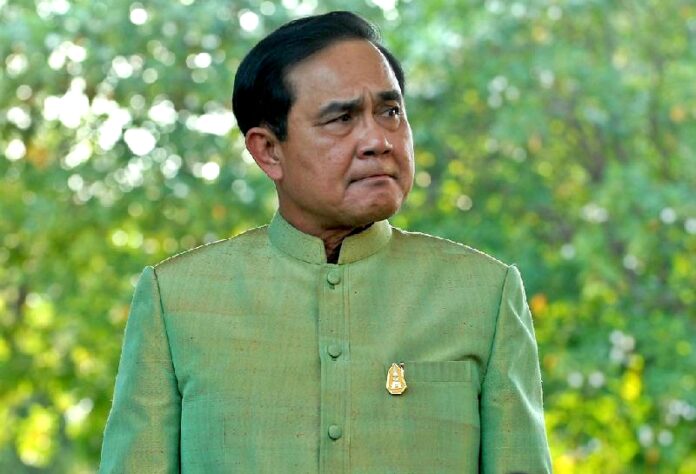
Thai junta chairman and PM Gen. Prayuth Chan-ocha talking to reporters on 20 Jan 2014 at the Government House in Bangkok.

BANGKOK — As the promised elections edge closer and speculation on the junta competing in them increases, leader Gen. Prayuth Chan-ocha laid out five factors for good politics on Friday.

The five, mentioned by Prayuth during his weekly televised speech include people not voting for politicians that use money to buy votes and government’s transparency.

The first factor, said Prayuth, was honesty among politicians.

“This is the most important basis in winning faith from the people. Elections must be transparent. Politicians must be accessible, just and communicate with the people with correct information… as well as pay importance to people’s feelings and not destroy basic rights of the people,” said Prayuth, adding that they should not verbally attack others or make negative accusation against one another.

Factor two, said Prayuth, is for people to not support politicians that are after money or use money to buy votes.

The third factor Prayuth listed was for government to be interdependent with the public and private sectors. He said his government is currently doing just that through “pracharat” projects of state-private collaboration.

The fourth factor, Prayuth said, is the use of internet technology to help better understand the people and enable them to become more participatory.

Praying cited that people can determine government policy through the use of the internet and that this is considered people’s democracy.

The fifth and last factor Prayuth cited was the need for the government to be transparent to gain people’s confidence.

Prayuth on Friday also gave the annual motto for the upcoming National Children’s Day for 2018.

The motto was “Know how to think, don’t be fooled and be technologically creative.”

National Children’s Day falls on every second Saturday of January.


Advertisement

Russian Hackers Hunted Journalists in Years-Long Campaign

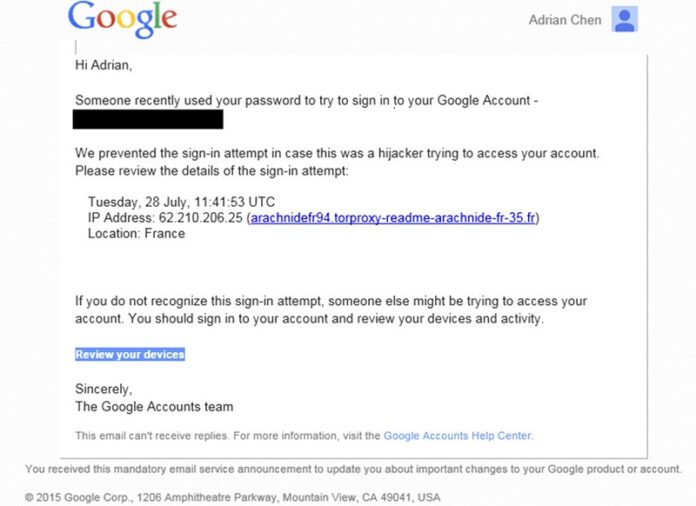
This image shows a portion of a phishing email sent to New York-based journalist Adrian Chen on July 28, 2015. Image: Associated Press

PARIS — Russian television anchor Pavel Lobkov was in the studio getting ready for his show when jarring news flashed across his phone: Some of his most intimate messages had just been published to the web.

Days earlier, the veteran journalist had come out live on air as HIV-positive, a taboo-breaking revelation that drew responses from hundreds of Russians fighting their own lonely struggles with the virus. Now he’d been hacked.

“These were very personal messages,” Lobkov said in a recent interview, describing a frantic call to his lawyer in an abortive effort to stop the spread of nearly 300 pages of Facebook correspondence, including sexually explicit messages. Even two years later, he said, “it’s a very traumatic story.”

The Associated Press found that Lobkov was targeted by the hacking group known as Fancy Bear in March 2015, nine months before his messages were leaked. He was one of at least 200 journalists, publishers and bloggers targeted by the group as early as mid-2014 and as recently as a few months ago.

The AP identified journalists as the third-largest group on a hacking hit list obtained from cybersecurity firm Secureworks, after diplomatic personnel and U.S. Democrats. About 50 of the journalists worked at The New York Times. Another 50 were either foreign correspondents based in Moscow or Russian reporters like Lobkov who worked for independent news outlets. Others were prominent media figures in Ukraine, Moldova, the Baltics or Washington.

The list of journalists provides new evidence for the U.S. intelligence community’s conclusion that Fancy Bear acted on behalf of the Russian government when it intervened in the U.S. presidential election. Spy agencies say the hackers were working to help Republican Donald Trump. The Russian government has denied interfering in the American election.

Previous AP reporting has shown how Fancy Bear – which Secureworks nicknamed Iron Twilight – used phishing emails to try to compromise Russian opposition leaders, Ukrainian politicians and U.S. intelligence figures, along with Hillary Clinton campaign chairman John Podesta and more than 130 other Democrats.

Lobkov, 50, said he saw hacks like the one that turned his day upside-down in December 2015 as dress rehearsals for the email leaks that struck the Democrats in the United States the following year.

“I think the hackers in the service of the Fatherland were long getting their training on our lot before venturing outside.”


‘Classic KGB Tactic’

New Yorker writer Masha Gessen said it was also in 2015 – when Secureworks first detected attempts to break into her Gmail – that she began noticing people who seemed to materialize next to her in public places in New York and speak loudly in Russian into their phones, as if trying to be overheard. She said this only happened when she put appointments into the online calendar linked to her Google account.

Gessen, the author of a book about Russian President Vladimir Putin’s rise to power, said she saw the incidents as threats.

“It was really obvious,” she said. “It was a classic KGB intimidation tactic.”

Other U.S.-based journalists targeted include Josh Rogin, a Washington Post columnist, and Shane Harris, who was covering the intelligence community for The Daily Beast in 2015. Harris said he dodged the phishing attempt, forwarding the email to a source in the security industry who told him almost immediately that Fancy Bear was involved.

In Russia, the majority of journalists targeted by the hackers worked for independent news outlets like Novaya Gazeta or Vedomosti, though a few – such as Tina Kandelaki and Ksenia Sobchak – are more mainstream. Sobchak has even launched an improbable bid for the Russian presidency.

Investigative reporter Roman Shleynov noted that the Gmail hackers targeted was the one he used while working on the Panama Papers, the expose of international tax avoidance that implicated members of Putin’s inner circle.

Fancy Bear also pursued more than 30 media targets in Ukraine, including many journalists at the Kyiv Post and others who have reported from the front lines of the Russia-backed war in the country’s east.

Nataliya Gumenyuk, co-founder of Ukrainian internet news site Hromadske, said the hackers were hunting for compromising information.

“The idea was to discredit the independent Ukrainian voices,” she said.

The hackers also tried to break into the personal Gmail account of Ellen Barry, The New York Times’ former Moscow bureau chief.

Her newspaper appears to have been a favorite target. Fancy Bear sent phishing emails to roughly 50 of Barry’s colleagues at The Times in late 2014, according to two people familiar with the matter. They spoke on condition of anonymity to discuss confidential data.

The Times confirmed in a brief statement that its employees received the malicious messages, but the newspaper declined to comment further.

Some journalists saw their presence on the hackers’ hit list as vindication. Among them were CNN security analyst Michael Weiss and Brookings Institution visiting fellow Jamie Kirchick, who took the news as a badge of honor.

“I’m very proud to hear that,” Kirchick said.

The Committee to Protect Journalists said the wide net cast by Fancy Bear underscores efforts by governments worldwide to use hacking against journalists.

“It’s about gaining access to sources and intimidating those journalists,” said Courtney C. Radsch, the group’s advocacy director.

In Russia, the stakes are particularly high. The committee has counted 38 murders of journalists there since 1992.

Many journalists told the AP they knew they were under threat, explaining that they had added a second layer of password protection to their emails and only chatted over encrypted messaging apps like Telegram, WhatsApp or Signal.

Fancy Bear target Ekaterina Vinokurova, who works for regional media outlet Znak, said she routinely deletes her emails.

“I understand that my accounts may be hacked at any time,” she said in a telephone interview. “I’m ready for them.”


‘I’ve Seen What They Could Do’

It’s not just whom the hackers tried to spy on that points to the Russian government.

It’s when.

Maria Titizian, an Armenian journalist, immediately found significance in the date she was targeted: June 26, 2015.

“It was Electric Yerevan,” she said, referring to protests over rising energy bills that she reported on. The protests that rocked Armenia’s capital that summer were initially seen by some in Moscow as a threat to Russian influence.

Titizian said her outspoken criticism of the Kremlin’s “colonial attitude” toward Armenia could have made her a target.

Eliot Higgins, whose open source journalism site Bellingcat repeatedly crops up on the target list, said the phishing attempts seemed to begin “once we started really making strong statements about MH17,” the Malaysian airliner shot out of the sky over eastern Ukraine in 2014, killing 298 people. Bellingcat played a key role in marshaling the evidence that the plane was destroyed by a Russian missile – Moscow’s denials notwithstanding.

The clearest timing for a hacking attempt may have been that of Adrian Chen.

On June 2, 2015, Chen published a prescient expose of the Internet Research Agency, the Russian “troll factory” that won fresh infamy in October over revelations that it had manufactured make-believe Americans to pollute social media with toxic rhetoric.

Eight days after Chen published his big story, Fancy Bear tried to break into his account.

Chen, who has regularly written about the darker recesses of the internet, said having a lifetime of private messages exposed to the internet could be devastating.

“I’ve covered a lot of these leaks,” he said. “I’ve seen what they could do.”

Story: Raphael Satter, Jeff Donn, Nataliya Vasilyeva 

Advertisement

Can We Really Blame the EU for Kissing the Junta?

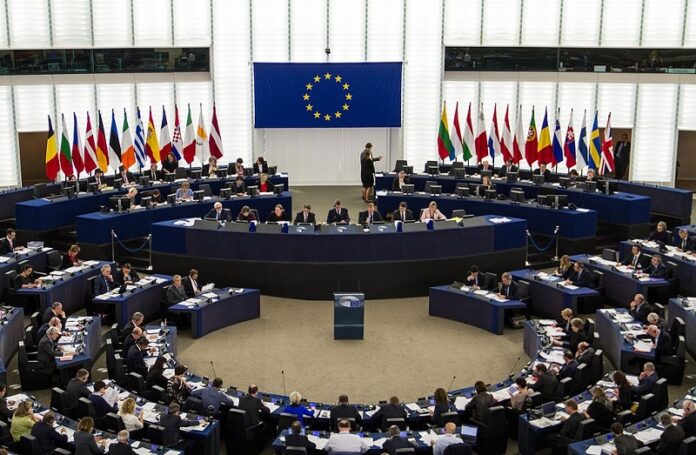
The Hemicycle of the European Parliament seen here in 2015 in Strasbourg, France.

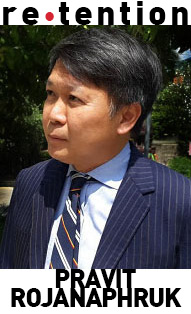
Re•tention: Pravit Rojanaphruk

Like it or not, the European Union has decided to resume full relations with Juntaland, three and a half years after cutting them off.
Officially, factors such as the roadmap to restoring democracy, a new junta-sponsored constitution and the end of trying future civilian cases in military courts have been cited to support the political detente. Unofficially, over the past two weeks, I’ve heard two, more detailed versions of the reasoning from senior diplomats with three EU member states in off-the-record conversations.


1: Trying a New Strategy

An ambassador of a key EU member state told me his country has pushed hard for the shift in EU’s stance towards Thailand’s military government. This is because over the past three years, any pressure applied against the junta has been mostly ineffective, so a new strategy was needed.

The ambassador assured me that from now on, every high-level contact with Thai counterparts would come with a reminder about human rights, democracy and the promised roadmap to returning power to the people. Junta leader Gen. Prayuth Chan-ocha, after all, has already made public that elections will take place in November.

From another main EU member state embassy, an army attache recently said he doesn’t like the word “re-engagement.” He said it’s more like lifting  automatically downgrading relations. The army attache added that he has been telling his Thai military peers of the need to respect human rights and the roadmap and will continue to do so. He hopes the message will filter up to junta leadership, in one form or another.


2: Time for Defend Business Interests

A deputy head of the mission at a medium-sized EU member state told me European businesses have been pushing Brussels hard, asking how relations can be normal with more repressive countries such as Vietnam but not Thailand.

He added that China, and more recently the US, have been making economic inroads at the expense of the EU economic interests.

I get it: Vietnam is a one-party state and the press is basically all state-owned. I checked the latest report by the New York-based Committee to Protect Journalists, and Vietnam is currently detaining 10 reporters, making it the fifth worst jailer of journalists in the world, after Turkey (73), China (41), Egypt (20) and Eritrea (15).

On a personal note, even if I end up in prison due to sedition and computer crimes charges, I would still need to convince a few more journalists, and perhaps a political cartoonist or two to join me in behind bars to convince the world the situation is worse than Vietnam.

After listening to diplomat, a well-known English expat scholar who was part of the conversation expressed disappointment. I told the European diplomat that it’s regrettable for the union to follow its rapprochement. What’s more, I added, if the rest of the world becomes authoritarian, it would be hard to conceive how the EU remains democratic. No state – or group of nations – is an island, I reminded the thin senior diplomat who politely listened to me before we parted in search of more canape.

Thinking about it, I believe Thais must be primarily held responsible for its sorry state of affairs – not Europeans, the EU, or the United States.

I am hugely more disappointed by Thais who, while not junta supporters, live through one coup after another without taking any risks and doing little more than lamenting in private or anonymously on social media.

These people have unwittingly enabled the military regime to claim that they are accepted, that the country is normal and “peaceful” and handed the junta a veneer of legitimacy.

There are a number of diplomats, senior and junior, at embassies here in Bangkok that are EU members who are genuinely concerned about the continued repression here. Every time I meet them to discuss the state of Juntaland, I implore them to consider the long-term goodwill that could be accrued under these trying times if they are not too short-sighted and concerned about maximizing immediate economic and political gains.

Whatever they may think as an individual, they will have to follow the instructions of the day given by their respective governments, however.

Three and a half years ago, head of the EU mission Jesus Miguel Sanz told me at a lunch after I was released from the first military detention without charge, aka “attitude adjustment”, that there’s only so much the EU can do if Thais are passive.

Ambassador Sanz made it clear even back then that despite the coup, European businessmen want to do business as usual. He added that there’s only so much the EU can do if Thais themselves don’t take the major share of the burden in defending their own rights and democracy.

Sanz was right, many Thais have simply abandoned their basic civic duties to defend their own freedom and democracy and recent anti-junta protests could muster no more than 100 in defiance of the junta’s ban on political gatherings of more than five people.

Advertisement

Hot News

LATEST NEWS

Bangkok
overcast clouds
32.7 ° C
35 °
32.7 °
68 %
4kmh
99 %
Fri
30 °
Sat
31 °
Sun
35 °
Mon
36 °
Tue
37 °