

































27.7 C
Bangkok
Tuesday, June 30, 2026
Home Blog Page 2196

Taiwanese Customers Shut Inside Siam Square Salon For Not Paying

A Taiwanese woman makes a phone call in the darkened hair salon where she had a dispute with the owner Saturday at Phoenix Siam Salon.

BANGKOK —  It took two diplomats, an online culture lesson and a stuffed animal to smooth a Pacific Rim feud that flared up between two Taiwanese women the Bangkok salon owner they refused to pay.

Two tourists who ignited a firestorm of internet shaming after they got into a fierce argument at a downtown salon that escalated into them being shut inside over 250 baht wash jobs returned to the salon Sunday to apologize for misunderstanding.

“We want to apologize. We just know now that it’s a different culture,” one of the women said through an interpreter dispatched by the Taiwanese mission in Thailand.

The encounter made headlines in Taiwan, where one of the women is a television news anchor.

Help with resolving the fracas came from the same place that fanned its flames: social media, a platform for frequent outrage over Chinese tourist behavior. There, a video clip of the Saturday encounter in Siam Square racked up millions of views – 8.5 million as of Monday – and launched a debate about cultural expectations.

The dispute came after the two fashionable young women refused to pay the Phoenix Siam Salon because the water used to wash their hair was cold. Salon owner Jax Phoenix wasn’t having any of that.

In the clip Jax later uploaded to her salon’s Facebook page, one of the customers declares she will not pay and asks that her friend’s wash be discounted. The scene descends into a confused mix of broken English, Thai and Mandarin Chinese. Jax at one point slaps a phone out of one of the women’s hands and eventually orders them to stay seated inside while she closes the shop. They finally decide to pay.

Footage posted Saturday night of the dispute unfolding within the Phoenix Siam Salon in Bangkok.

But as two Taiwanese Chinese-language teacher expats who are fluent in Thai would point out, the conflict arose from a misunderstanding by the two customers.

The teachers, Jer and Bo, explained that in Taiwan it can be okay to refuse to pay for unsatisfactory services. They helped translate what the women were saying and what one of them, a television news anchor in Taipei known as Vivi Huang, wrote about the incident.

They said the Taiwanese journalist was displeased the shop told her it would cost 350 baht instead of the 250 baht when she booked the appointment, as well as the fact that the air conditioner was broken and the water cold.

“I didn’t know that in Thailand they wash hair with cold water, but now I know. I have to apologize,” Huang wrote Sunday.

“When you leave your country, you have to know the cultures of other places instead of doing whatever you want. You’re in another country, so you have to respect other cultures,” Bo said to his Taiwanese viewers along with an idiom akin to “When in Rome… .”

A Taiwanese Facebook user commented on the video that the incident had made national headlines in Taiwan in one of many comments expressing shame over what happened.

Some said the “unsatisfactory service” excuse was a bit of a stretch, however.

“It is only on very rare occasions do we see bills being completely waived for customers, unless it is over something totally unacceptable,“ user Raina Chou wrote.

“I have never experienced or heard from any of my friends getting a complete refund,” Raina said. “Please everyone, don’t let these two negatively affect your opinion of Taiwanese. Most of us are friendly and not spoiled like they are.”


twaiwan2 e1508136253181
The owner of a hair salon argues with a Taiwanese woman Saturday at Phoenix Siam Salon while another Taiwanese woman films the incident.
apologize
The two Taiwanese women offer a plushie to the salon owner Sunday.
Advertisement

Wild Elephants Attack Rohingya Camp, Killing 4 in Bangladesh

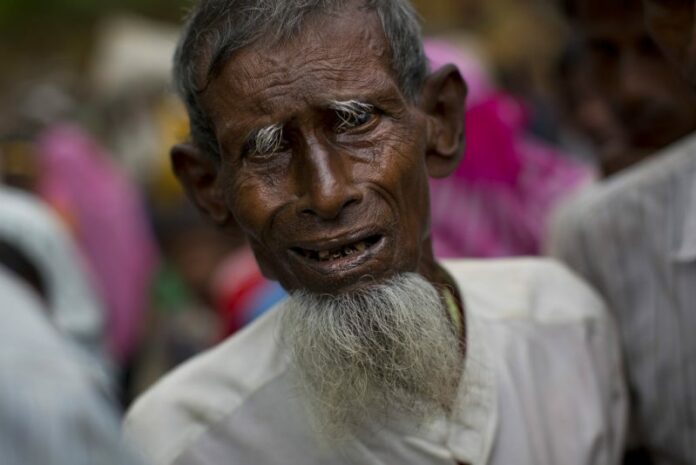
An elderly Rohingya Muslim, who recently crossed over from Myanmar into Bangladesh, arrives at a food distribution center on Sept. 9 in Kutupalong, Bangladesh. Photo: Bernat Armangue / Associated Press

DHAKA, Bangladesh — Wild elephants attacked a new camp where Rohingya refugees were sleeping, killing a woman and her three children in southern Bangladesh, an official said Sunday.

A herd of elephants entered the Balukhali camp in Ukhiya town early Saturday and trampled tents where several refugees were sleeping, said district forest official Mohammed Ali Kabir.

Four other people, including the woman’s husband, were injured in the attack, Kabir said. Many others fled to safety when they heard the elephants approaching.

Officials said the new camp was built in a forest area that was earlier frequented by elephant herds.

The woman’s husband, Abu Bakar Siddique, said Sunday that he had been released from the hospital, but that one of his children and some other relatives were still hospitalized.

More than 500,000 Rohingya Muslims have fled from Myanmar’s Rakhine state to neighboring Bangladesh since Aug. 25, when Myanmar security forces responded to attacks by a militant Rohingya group with a broad crackdown on the long-persecuted Muslim minority. Many houses were burned down.

The United Nations has called the violence “textbook ethnic cleansing.”

Siddique said he and his family made the perilous journey from Rakhine state to reach Bangladesh some four days ago.

They found a place and were living in a tent in one of the camps where hundreds of thousands of Rohingya have taken refuge.

“I fled Myanmar to avoid attacks by the military. But the elephants have killed my wife and children,” Siddique said. “It is painful to live this way. I have lost everything.”

Kabir, the forest official, said that the elephant habitat was under threat and that the passages used by the animals to move from one place to another have been encroached by human settlements.

Bangladesh’s government had earlier declared around 27,000 hectares (66,720 acres) of land as reserve forests where herds comprising some 117 elephants had been spotted in the past, Kabir said.

It was the third attack by wild elephants on the refugees in Bangladesh’s Cox’s Bazar district, which borders Myanmar. At least three people died in the two previous attacks.

Advertisement

276 Killed in Deadliest Single Attack in Somalia’s History

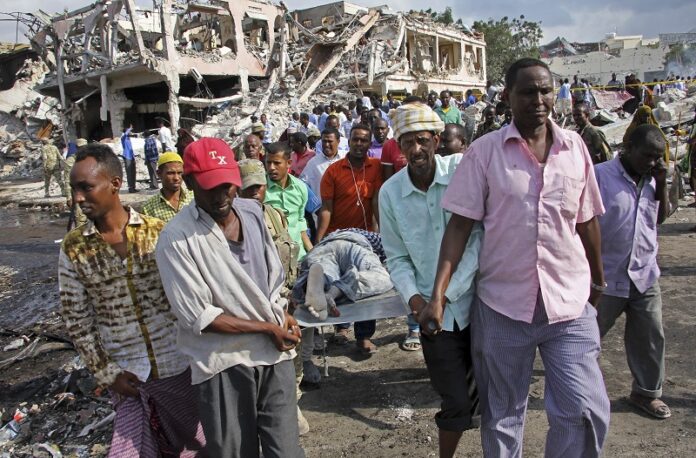
Somalis remove the body of a man killed in Saturday's blast, in Mogadishu, Somalia. Photo: Farah Abdi Warsameh / Associated Press

MOGADISHU, Somalia — The most powerful bomb blast ever witnessed in Somalia’s capital killed 276 people with around 300 others injured, the country’s information minister said early Monday, making it the deadliest single attack in this Horn of Africa nation. The toll was expected to rise.

In a tweet, Abdirahman Osman called the attack “barbaric” and said countries including Turkey and Kenya had already offered to send medical aid. Hospitals were overwhelmed a day after a truck bomb targeted a crowded street near key government ministries, including foreign affairs.

As angry protesters gathered near the scene of the attack, Somalia’s government blamed the al-Qaida-linked al-Shabab extremist group for what it called a “national disaster.” However, Africa’s deadliest Islamic extremist group, which often targets high-profile areas of the capital, had yet to comment.

Al-Shabab earlier this year vowed to step up attacks after both the Trump administration and Somalia’s recently elected president announced new military efforts against the group.

The Mogadishu bombing is one of the deadliest attacks in sub-Saharan Africa, larger than the Garissa University attack in Kenya in 2015 and the U.S. Embassy bombings in Kenya and Tanzania in 1998.

Doctors at Mogadishu hospitals struggled to assist badly wounded victims, many burned beyond recognition. “This is really horrendous, unlike any other time in the past,” said Dr. Mohamed Yusuf, the director of Medina hospital.

Inside, bleary-eyed nurses transported a man whose legs had been blown off. He waited as surgeons attended to another badly injured patient. Exhausted doctors struggled to keep their eyes open, while screams from victims and newly bereaved families echoed through the halls.

“Nearly all of the wounded victims have serious wounds,” said nurse Samir Abdi. “Unspeakable horrors.” The smell of blood was strong.

A teary-eyed Hawo Yusuf looked at her husband’s badly burned body. “He may die waiting,” she said. “We need help.”

Ambulance sirens echoed across the city as bewildered families wandered in the rubble of buildings, looking for missing relatives. “In our 10 year experience as the first responder in #Mogadishu, we haven’t seen anything like this,” the Aamin Ambulance service tweeted.

Grief overwhelmed many.

“There’s nothing I can say. We have lost everything,” wept Zainab Sharif, a mother of four who lost her husband. She sat outside a hospital where he was pronounced dead after hours of efforts by doctors to save him.

The country’s Somali-American leader, President Mohamed Abdullahi Mohamed, declared three days of mourning and joined thousands of people who responded to a desperate plea by hospitals to donate blood. “I am appealing all Somali people to come forward and donate,” he said.

Mogadishu, a city long accustomed to deadly bombings by al-Shabab, was stunned by the force of Saturday’s blast. The explosion shattered hopes of recovery in an impoverished country left fragile by decades of conflict, and it again raised doubts over the government’s ability to secure the seaside city of more than 2 million people.

“They don’t care about the lives of Somali people, mothers, fathers and children,” Prime Minister Hassan Ali Khaire said of the attackers. “They have targeted the most populated area in Mogadishu, killing only civilians.”

Rescue workers searched for survivors trapped under the rubble of the largely destroyed Safari Hotel, which is close to Somalia’s foreign ministry. The explosion blew off metal gates and blast walls erected outside the hotel.

The United States condemned the bombing, saying “such cowardly attacks reinvigorate the commitment of the United States to assist our Somali and African Union partners to combat the scourge of terrorism.” It tweeted a photo of its charge d’affaires in Somalia donating blood.

But the U.S. Africa Command said U.S. forces had not been asked to provide aid. A spokesman told The Associated Press that first responders and local enforcement would handle the response and “the U.S. would offer assistance if and when a request was made.”

The U.S. military has stepped up drone strikes and other efforts this year against al-Shabab, which is also fighting the Somali military and over 20,000 African Union forces in the country.

The United Nations special envoy to Somalia called the attack “revolting,” saying an unprecedented number of civilians had been killed. Michael Keating said the U.N. and African Union were supporting the Somali government’s response with “logistical support, medical supplies and expertise.”

In a tweet, U.N. Secretary-General Antonio Guterres said he was “sickened” by the attack, and his spokesman urged all Somalis to unite against extremism and work together to build a “functional” federal state.

Saturday’s blast occurred two days after the head of the U.S. Africa Command was in Mogadishu to meet with Somalia’s president, and two days after the country’s defense minister and army chief resigned for undisclosed reasons.

Amid the chaos, the stories of victims began to emerge. Amino Ahmed said one of her friends, a female medical student, was killed on the eve of her graduation. The explosion also killed a couple returning from a hospital after having their first child, said Dahir Amin Jesow, a Somali lawmaker.

“It’s a dark day for us,” he said.

Story: Abdi Guled

Advertisement

Passengers Describe Terror Aboard Indonesia AirAsia Flight

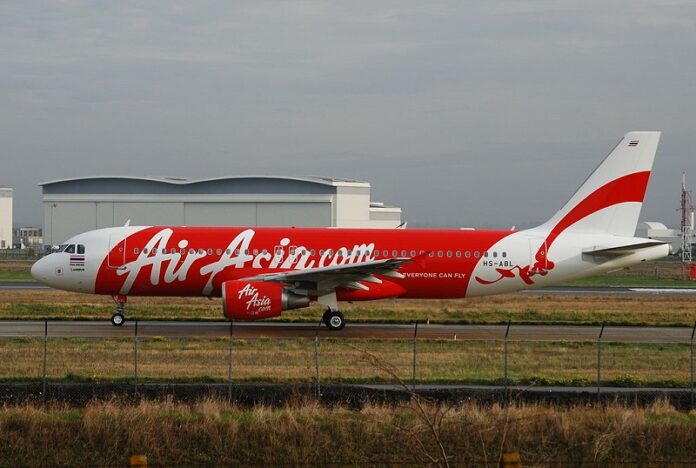
An AirAsia airplane taxis in 2009 in Toulouse, France. Photo: Laurent ERRERA / Wikimedia Commons

PERTH, Australia — Passengers on an Indonesia AirAsia flight to the holiday island of Bali described a panicked flight crew announcing an emergency and oxygen masks dropping from the ceiling before the airliner turned back to the Australian city of Perth.

The reason for the emergency wasn’t immediately clear. Flight QZ535 returned safely on Sunday to Perth Airport where many of the 145 passengers spoke to media about the fear and confusion on board.

“The panic was escalated because of the behavior of staff who were screaming, looked tearful and shocked,” passenger Clare Askew told reporters.

“Now, I get it, but we looked to them for reassurance and we didn’t get any, we were more worried because of how panicked they were,” Askew added.

The budget Indonesian airline said in a statement engineers were examining the plane at Perth.

“The safety of our guests is our utmost priority,” the statement said, adding that the airline “apologizes for any inconvenience caused.”

A passenger named Leah told Nine Network television: “I actually picked up my phone and sent a text message to my family, just hoping that they would get it.”

“We were all pretty much saying goodbye to each other. It was really upsetting,” she added.

Passenger Mark Bailey told Seven Network television: “Hostesses started screaming: ‘Emergency, emergency.’ They just went hysterical.”

“There was no real panic before that, then everyone panicked,” Bailey added.

Passenger Norman Pearce told Seven the flight crew said: “Emergency. Crash positions and that was it. Nothing for about five minutes and then the oxygen fell down.”

The plane was in the air for more than an hour.

Advertisement

Mourners Gather to Watch Cremation Procession Rehearsal (Photos)

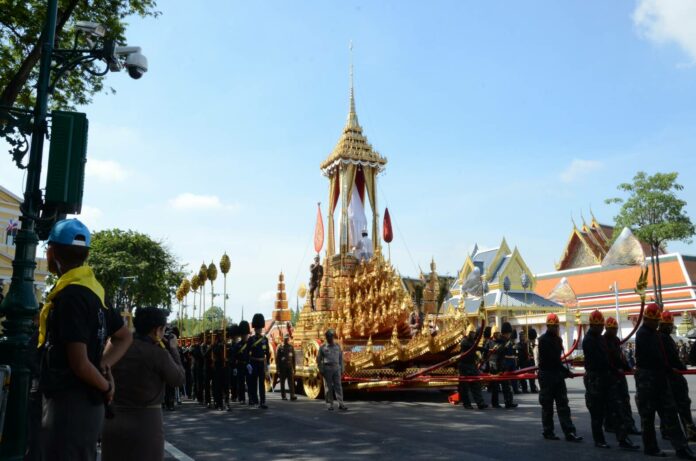
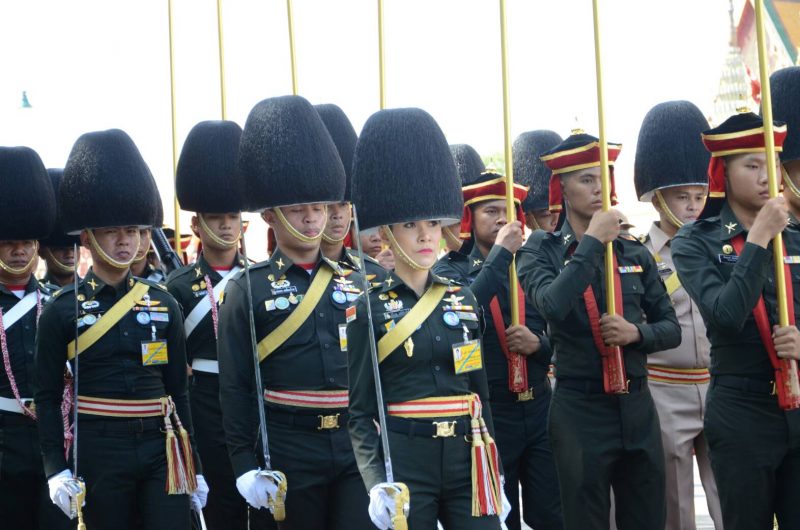
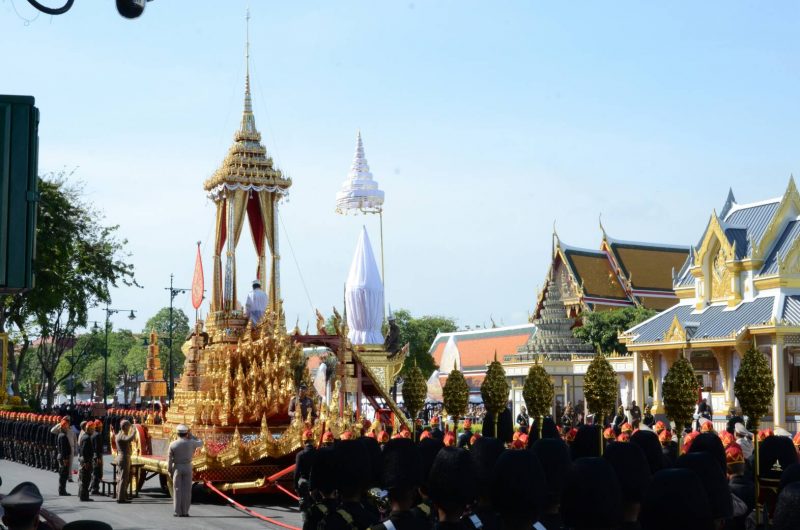
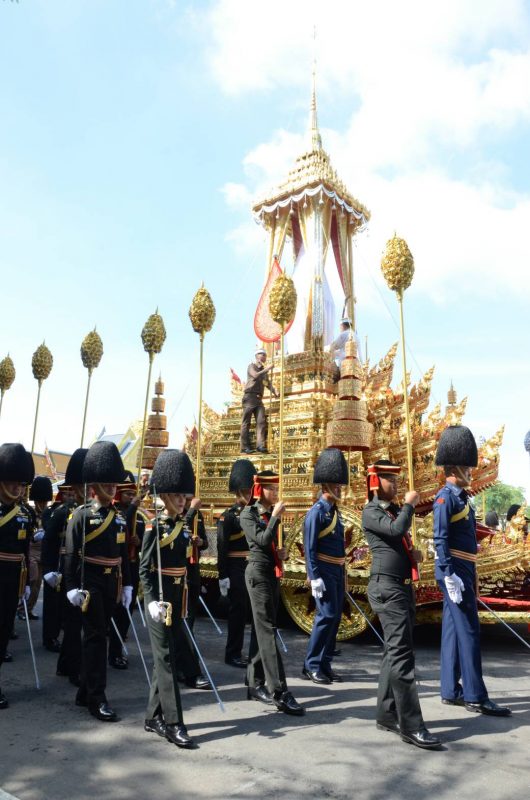
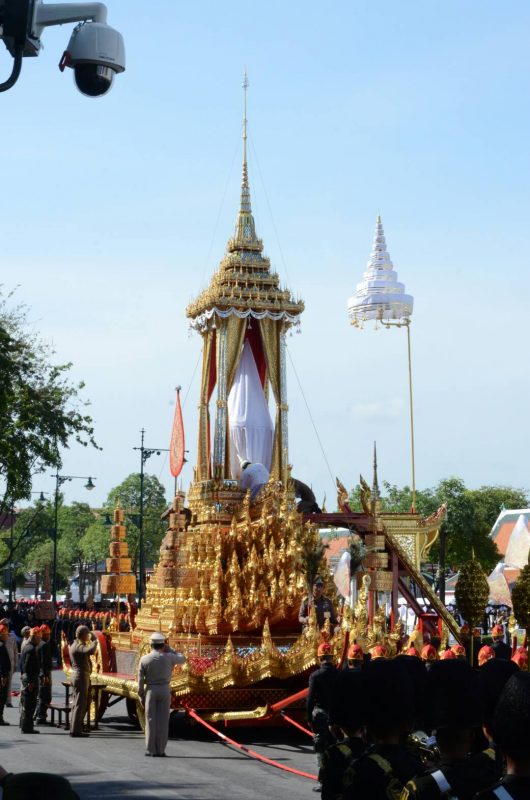
A royal chariot in the cremation procession rehearsal Sunday morning at Sanam Luang.

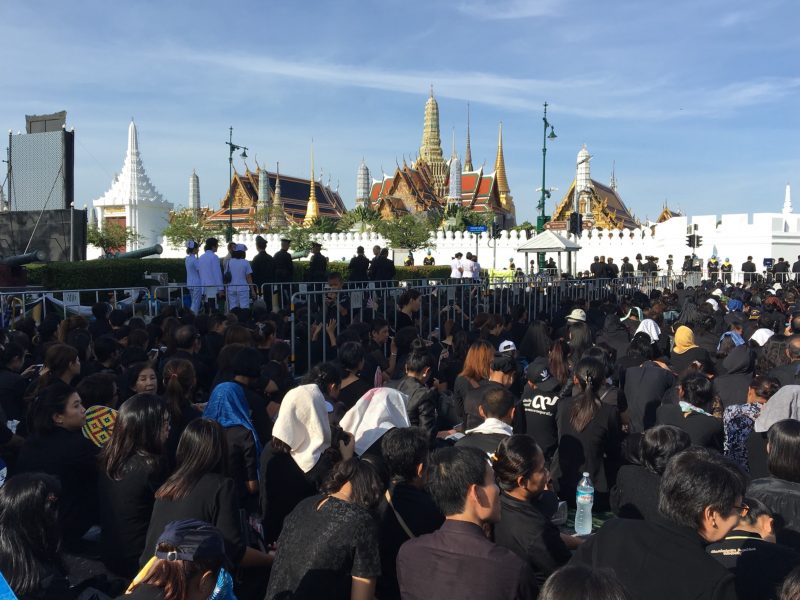
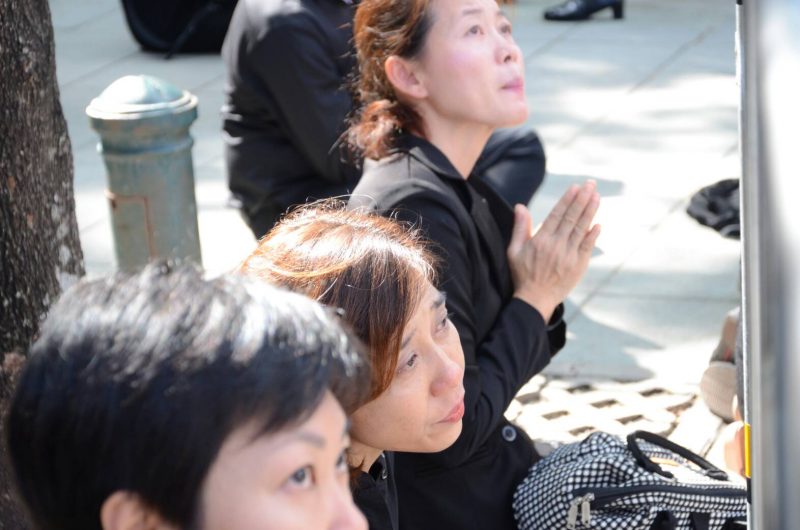
BANGKOK — Dedicated mourners gathered Sunday morning at Sanam Luang to watch the rehearsal for King Rama IX’s cremation procession.

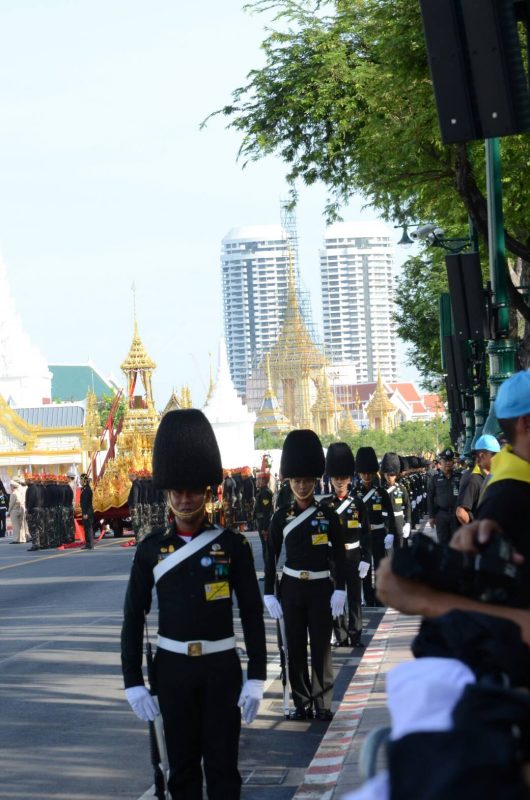
Since early Sunday morning, mourners have gathered at Lak Muang Road near Sanam Luang to watch the rehearsal of the cremation procession. The rehearsal – which included chariots and officers – ended at about 11am.

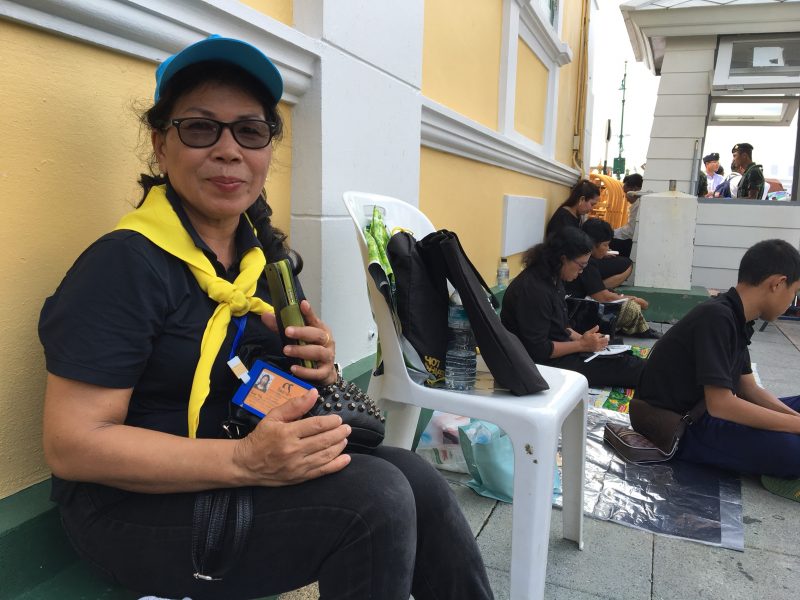
Mongkol Faengjanda, 57, a Thai herbal medicine doctor was one of the volunteers who helped coordinate visitors and act as a first aid officer Sunday morning.

“I volunteered because Rama IX did so many things for his citizens. So as a citizen it would be good for me to do at least a sliver of what he did,” Mongkol said. “Even though a year passed, the people’s sadness hasn’t faded. If ten years passed, I would tell the later generations that Rama IX was the father of the nation and also the world, to every nationality and religion.”

Mourners who wished to visit the area had to pass through one of nine checkpoints at Saphan Mon Bridge Intersection, Tha Chang Pier, Thammasat University, the statue of Mae Thorani at Sanam Luang, Kalayana Maitri Road, Saphan Chang Rongsi Intersection, Wat Pho Intersection, Tha Prachan Pier and under Phra Pinklao Bridge.

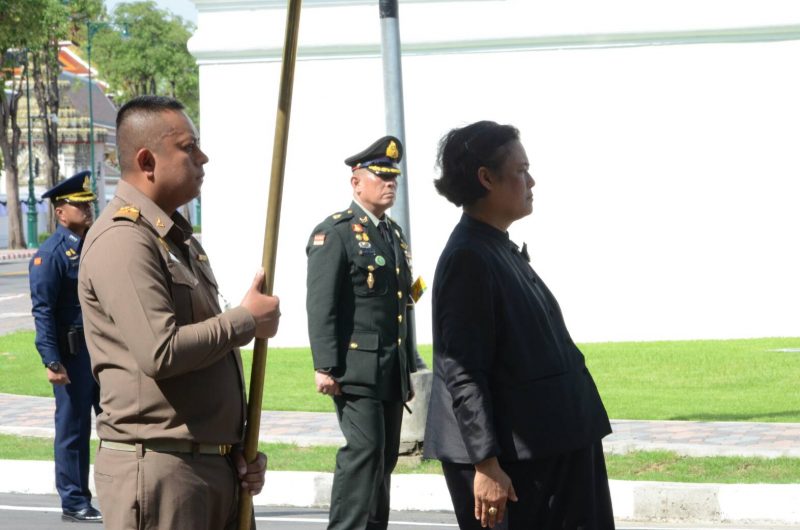
Princess Sirindhorn also arrived at the rehearsal.

S 16957457 e1508048102145
Mourners gather Sunday morning near the Grand Palace to watch the cremation procession rehearsal.
S 16957474 e1508048121596
Mongkol Faengjanda, 57, volunteers at Sanam Luang Sunday morning.

311556 e1508047933684 311560 e1508047913323

311528 e1508047981517
Princess Sirindhorn Sunday morning at Sanam Luang.

311539 e1508047886312

311559 e1508047922376

311535 e1508047973454 311542 e1508047871690

Advertisement

Rohingya Refugee Influx Inspires Bangladeshi Aid; Worry

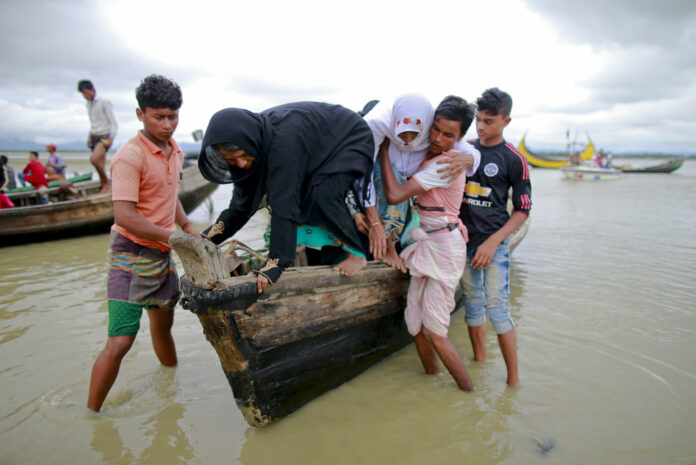
Bangladeshi villagers help two elderly Rohingya women get down from a boat after crossing a canal at Shah Porir Deep, in Teknak, Bangladesh, Thursday. Photo: Suvra Kanti Das / Associated Press

DHAKA, Bangladesh — They had seen the images of Rohingya Muslim refugees arriving hungry and exhausted after traveling days without food to reach Myanmar’s border with Bangladesh. They had heard the stories of gunshot wounds and midnight escapes from angry mobs and soldiers.

So when the rickshaw pullers, tea stall vendors and other villagers in northern Bangladesh’s Mymensingh district were asked to give, they did – in days raising USD $10,000 to donate to hospitals and refugee camps helping those who fled in what is now Asia’s largest refugee crisis in decades.

“They came forward with whatever they had, whatever they could give us,” said Mohammad Abdullah-al-Kafi, who helped collect the donations and then traveled to a refugee camp to hand them out. “I could not hold my tears when we got there and saw their suffering. We cried, and they cried as we distributed money.”

The sheer need of the Rohingya Muslims has inspired similar grassroots campaigns across Bangladesh, a Muslim-majority nation in which there is great sympathy for the Rohingya’s tales of persecution and abuse in largely Buddhist Myanmar. The government also has stepped up to provide aid, including building more camps to house the some 500,000 refugees who have arrived in just seven weeks, fleeing what the United Nations has described as “textbook ethnic cleansing.”

Some in this already impoverished and overpopulated nation, however, have begun to worry that the staggering influx of people could sap Bangladesh’s resources and push the economy – and those already struggling to compete in it – to the brink.

“We are glad to shelter them for the sake of humanity,” said Mohammed Zakaria, who cheered Prime Minister Sheikh Hasina at Dhaka’s international airport upon her return this month from the U.N. General Assembly in New York. “But when I think deeply, I feel uncertain. Is it good for my country? Is it OK? I don’t know.”

Hasina has played down such fears and said that if her country has the ability to feed its 160 million citizens, surely it can find food for less than a million more.

“If necessary, Bangladeshis will eat one full meal a day and share the rest with Rohingya,” she said last week.

Still, the humanitarian effort has come at a steep financial cost for Bangladesh, where nearly a third of people live in poverty on less than USD $2 a day. The country had already been sheltering hundreds of thousands of Rohingya refugees who had fled earlier rounds of violence in Myanmar and the new arrivals quickly pushed existing refugee camps along the border beyond capacity.

United Nations representatives in Dhaka said last month that handling the Rohingya crisis would require at least USD $200 million over the next six months – but since then, the number of Rohingya arrivals has increased by another 100,000.

“The figure we get from the U.N. is huge, and only a portion is coming from aid agencies and international community,” said economist Khondaker Golam Moazzem, research director at the independent think tank Center for Policy Dialogue. “What will Bangladesh do for the rest?”

It’s unclear exactly how much Bangladesh has already spent sheltering the Rohingya, but the government has said the forests it cleared for new refugee camps were worth USD $18 million alone.

The worry is making its way to the streets of Bangladesh. While some are nervous about security and concerns that some Rohingya could be involved in terrorism, the greater fear is economic. There is anxiety that if the Rohingya stay they could, take jobs from Bangladeshis.

“If a Bangladeshi charged 10 takas for a work, they will do that work for 5 takas and we will be in more trouble,” said businessman Wasim Iftekhar.

Another businessman, Robiul Islam Palash, shared similar concern.

“From the economic perspective, the Rohingya Muslims will not be able to join any workforce” officially, he said. “We will not be able to ensure their food, clothing, housing and medical facilities. What we can do is help them temporarily, but I don’t think this is a permanent solution.”

Paramedic Mohammed Ali Siddiki was blunter in his assessment, saying ultimately the Rohingya would have to return to Myanmar.

“Otherwise, chaos could break out,” he said.

The prime minister has insisted that the current situation is only temporary, and demanded that Myanmar allow the Rohingya to return peacefully to their homeland in Rakhine state. Myanmar has assured Bangladesh that it is working on a return policy, but it has given no timeline or details about when or how that will happen.

Allowing the Rohingya back into the country would seem to undercut Myanmar’s main assertion: That there is no such ethnic group as Rohingya and those living in the country have illegally migrated from Bangladesh.

Despite the uncertainty about what the future holds, everyday Bangladeshis continue to pitch in. From villages to mosques to schools, citizens have been collecting everything from cash to food to candles to spare clothing to distribute to the refugees.

“My daughter was very happy to donate the goods as her teacher explained the plight of the Rohingya to them,” said Shushama Chowdhuri, after her daughter came home from her third-grade class. “She told me many children like her are suffering there. We must help.”

Story: Julhas Alam

Advertisement

Death Toll in Vietnam Flooding, Landslides Rises to 68

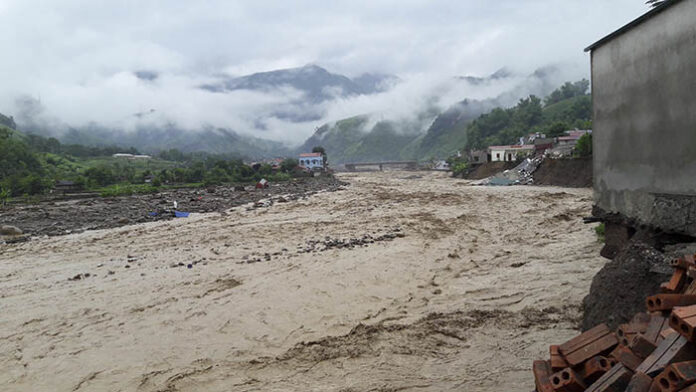
A flooded river rages Thursday in the northern province of Son La, Vietnam. Photo: Vietnam News Agency / Associated Press

HANOI — The death toll from landslides and heavy rain triggered by a tropical depression in Vietnam has climbed to 68, with another 34 people missing, officials said Sunday.

The Vietnam Disaster Management Authority said in a statement that the disasters have also injured 32 people, damaged infrastructure and killed more than 230,000 livestock in central and northern regions.

The storm hit Vietnam on Tuesday and authorities have been dealing with the fallout since. Disaster officials in the hardest-hit province of Hoa Binh in the north, where 20 people have died, said some 300 soldiers, police and militia were still searching for eight people missing from a landslide.

Meanwhile, Tropical Storm Khanun is weakening as it moves toward the Tonkin Gulf and is expected to bring rains to northern and central Vietnam.

Advertisement

Analyzing Prayuth’s Latest 2018 Election Promise

retention.column

Good news! Our beloved junta leader Gen. Prayuth Chan-ocha has graciously announced on Tuesday that there will indeed be general elections in November 2018.

Bad News! This is not the first time our most-sincere dictator has made public the slated election year. Since saving us from ourselves by staging a coup in May 2014, Dear Dictator Prayuth has told us that there will be elections in 2015, 2016, 2017 and now, logically, 2018.

Soon after the 2014 coup on May 30, Prayuth told Thais that elections could be held in 2015.

Later on, Prayuth told Japanese media during a February 2015 visit to Prime Minister Shinzo Abe in Tokyo that elections were expected in late 2015 if not early 2016.

By September 2015, Prayuth told then UN Secretary General Ban Ki-moon in New York that elections would take place sometimes in the middle of 2017. After the referendum was passed in August 2016, Prayuth re-wrote the promised elections to be between November and December 2017.

We should not be mean, because Prayuth would never have wanted to lie, if he had a choice. Before the repeated promised elections, he stated repeatedly to the media that he wouldn’t stage a coup, then he did. But then, how can you blame the man when you can only get a chance at staging a “successful” coup if you keep it quiet – or lie – by not announcing it in advance.

Pravit.mug .column.final

So maybe these promised November 2018 elections may just be another tactic to illegitimately buy one more year in power, without having us complain and by even making us feel grateful that there may finally be elections after all. I don’t know – and may be Prayuth himself doesn’t know – whether November 2018 is a truthful schedule or not, as the art of the dictator staying in power is like playing traditional Thai music, or jazz – you have to keep improvising.

Those who doubt the reliability or trustworthiness of Prayuth’s words can at least take solace in knowing that Prayuth has been very consistent in giving the public false elections promises over and over again.

This adds excitement to the latest round of anticipation that there shall indeed be elections in November next year, because you can never take Prayuth’s words for granted. At least for whatever Prayuth’s promise was worth, it was darn good to see the Stock Exchange of Thailand surge past the 1,700 mark on Tuesday. That’s how much they love the news that Prayuth and the junta will relinquish powers.

What’s more, some Western missions fed up the frozen ties with Juntaland Thailand can finally dispatch a telex or email back to their respective capitals (again), that Thailand is (again), about to return to democracy.

The sense of euphoria or at least relief among some Thais have more to do with a prolonged sense of hostage-mentality.

People have been taken hostage by the junta for nearly three and a half years now, so another “promise” to only stay on in power for little longer sounds like unbelievable news.

Call me a pessimist, but how many times can you be fed with disinformation, or be fooled, before you no longer expect anything but yet another lie from Prayuth?

The catch is, wanting to prove that Prayuth was indeed honest this time requires that people who loathe him cooperate and do not rock the boat so that the political climate finally suits the celebration of elections next year.

That’s just part of the necessity environment, however. Imagine a possible delay, not caused by Prayuth, but by the Prayuth-appointed rubber stamp National Legislative Assembly, who have kept rejecting the two remaining organic bills, namely organic laws on members of parliament and on senate members – necessary for elections to take place.

Then we could see repeated deferrals of elections, which you can’t quite squarely blame on Prayuth, but on the Prayuth-appointed rubber stamp parliament.

For those who feel that they can’t believe elections will finally take place in November 2018, I recommend feeling grateful, considering that the calendar slots for 2019, 2020, 2021 and 2022 have yet to be used by Prayuth.

Advertisement

Minnesota Doctor Faces Deportation to Malaysia

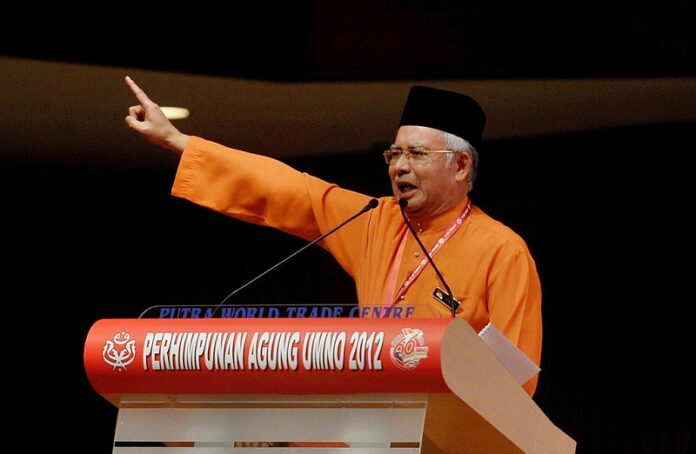
Malaysian Prime Minister Najib Razak during the United Malays National Organisation General Assembly in 2012 in Malaysia. Photo: Firdaus Latif / Wikimedia Commons

ROCHESTER, Minnesota — A Rochester physician who left her Malaysian village as a teenager could be deported to her birth country as early as next week.

Dr. Guan Lee has built a life and a practice in Minnesota since entering the U.S. in 1992, but has lived in legal limbo.

Her attorney, Malee Ketelsen-Renner, says Lee received a letter from immigration authorities denying her citizenship application in 2009. The 41-year-old doctor has won a series of reprieves on deportation, which now appear to have run out.

The Post-Bulletin reports that U.S. Immigration and Customs Enforcement says Guan is out of options and must leave the country.

ICE spokesperson Shawn Neudauer says if Lee fails to comply with a removal order to leave the U.S., she will be listed as an ICE fugitive.

Advertisement

Heavy Rains Leave Bangkok Swimming in Floods

Flooding Saturday morning at the Lat Phrao Intersection.

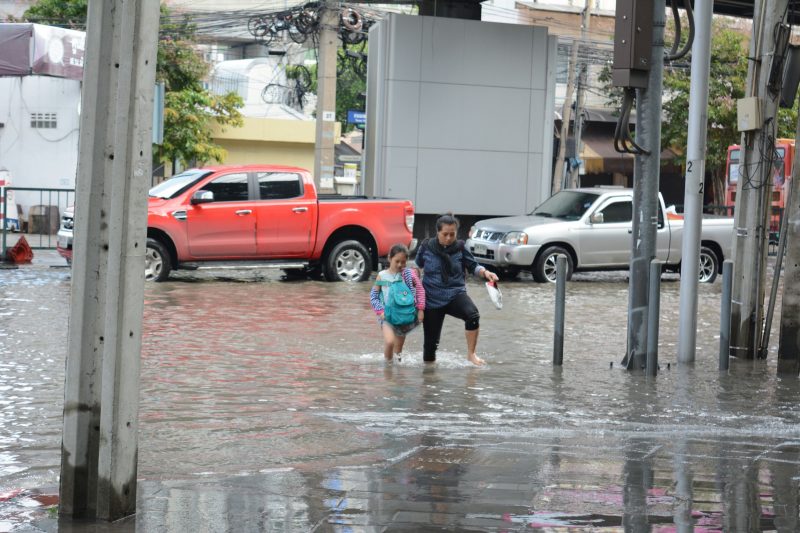
BANGKOK — A night of heavy thunderstorms left Bangkok knee-deep in gray floodwaters Saturday morning.

Reports said much of Din Daeng, Vibhavadi Rangsit, Lat Phrao, Chatuchak, on Sukhumvit road starting from Soi Sukhumvit 21 all the way to La Salle Road in Bang Na district, Ekamai, Rama IV, Narathiwat Srinakarindra, Phet Kasem, Rama IX, Ratchada, Silom, Sathorn, Phaya Thai and Rama I roads were flooded along with smaller roads in the vicinities.

Police Lt. Col Pansa Amarapitak of Vibhavadi Traffic Police said at 7am on Saturday that Vibhavadi Rangsit road was still flooded. Narong Reungsri, deputy director of the Department of Drainage and Sewage said at 2am that flooding persisted at Na Ranong, Suan Plu and Din Daeng intersections and that Sanam Luang was flooded as well.

The top trending Twitter hashtag Saturday morning was #Flood, as users posted content of flooded Bangkok.

Flooding was widespread late Saturday morning, with only areas such as Siam Square having dried up. Commuters are advised to plan ahead and verify whether areas continue to be waterlogged.

Flooding near Central Lat Phrao.


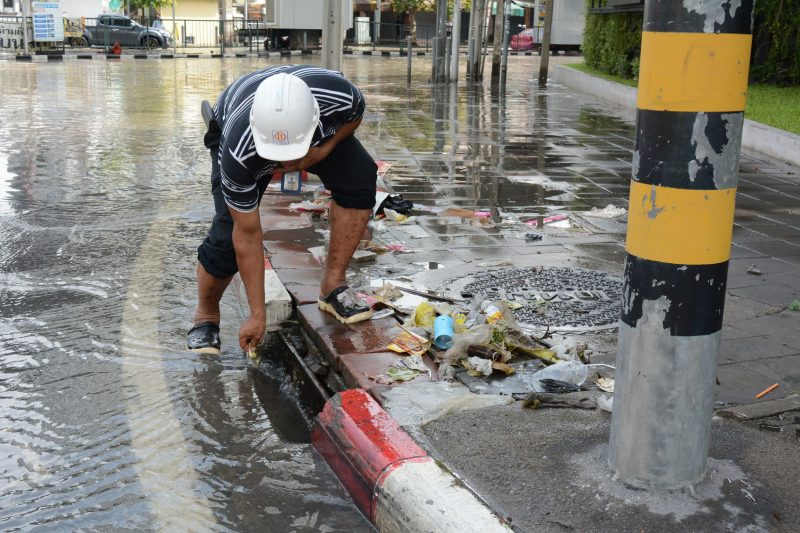
Although floodwaters had gone down in Soi Sukhumvit 42, garbage continued to clog vents and fountains of sewage bubbled up to the street.


Flooding at Wat Pho.


46919 e1507956504301
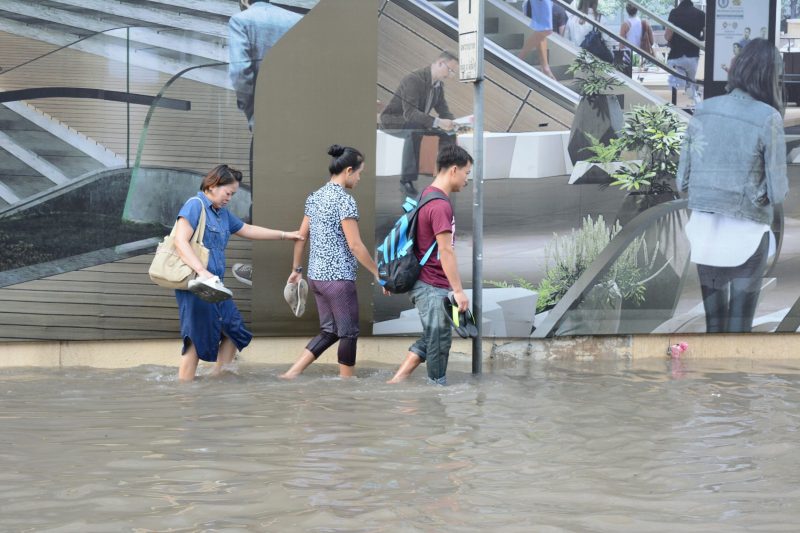
People wade through floodwaters in Soi Sukhumvit 21.
46927 e1507956525292
A man unclogs a drain on Soi Sukhumvit 21.
46914 e1507956550432
Flooding on Asoke Montri Road, or Soi Sukhumvit 21.
263182 e1507956727954
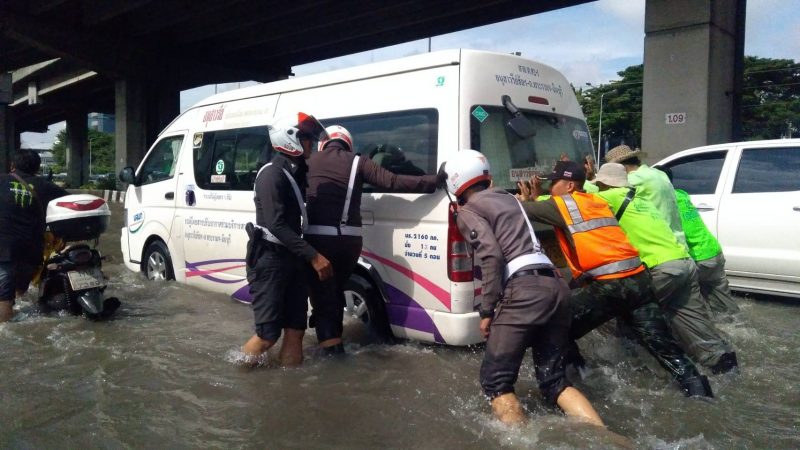
Police and rescue workers push a van stalled by flooding on Vibhavadi Rangsit Road.
1779662 e1507956586940
Cars flooded in the queue to the tollway at Din Daeng.
Advertisement

Hot News

LATEST NEWS

Bangkok
overcast clouds
27.7 ° C
27.7 °
27.7 °
78 %
4kmh
100 %
Mon
27 °
Tue
33 °
Wed
32 °
Thu
32 °
Fri
32 °