36.6 C
Bangkok
Monday, June 22, 2026
Home Blog Page 228

Malaysian Impersonated Thai Government Officer, Scammed Elderly Man

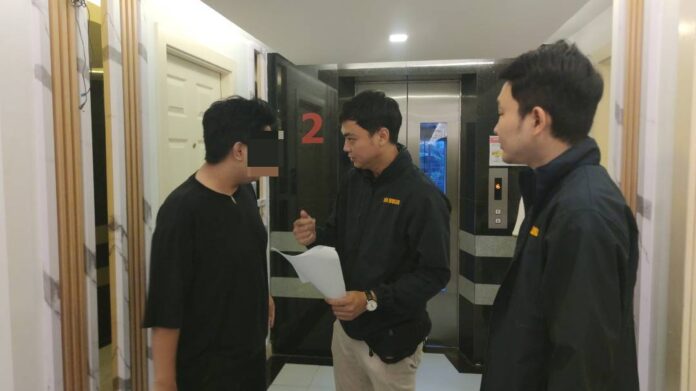
Police apprehend 26-year-old Malaysian national at a hotel in Don Mueang district, Bangkok, under warrant for fraud by impersonating a police officer in a 3.3 million baht scam, on November 7, 2025.

BANGKOK — Thai police on Thursday arrested a 26-year-old Malaysian man accused of posing as a government officer to collect cash from an elderly victim in a phone scam that defrauded him of 3.3 million baht ($101,850).

Officers from Don Mueang and Thung Khru police stations apprehended the suspect, identified as Tan, at a hotel on Soi Soranakorn 3 in Don Mueang district under a Criminal Court warrant issued Nov. 7 for fraud and impersonation.

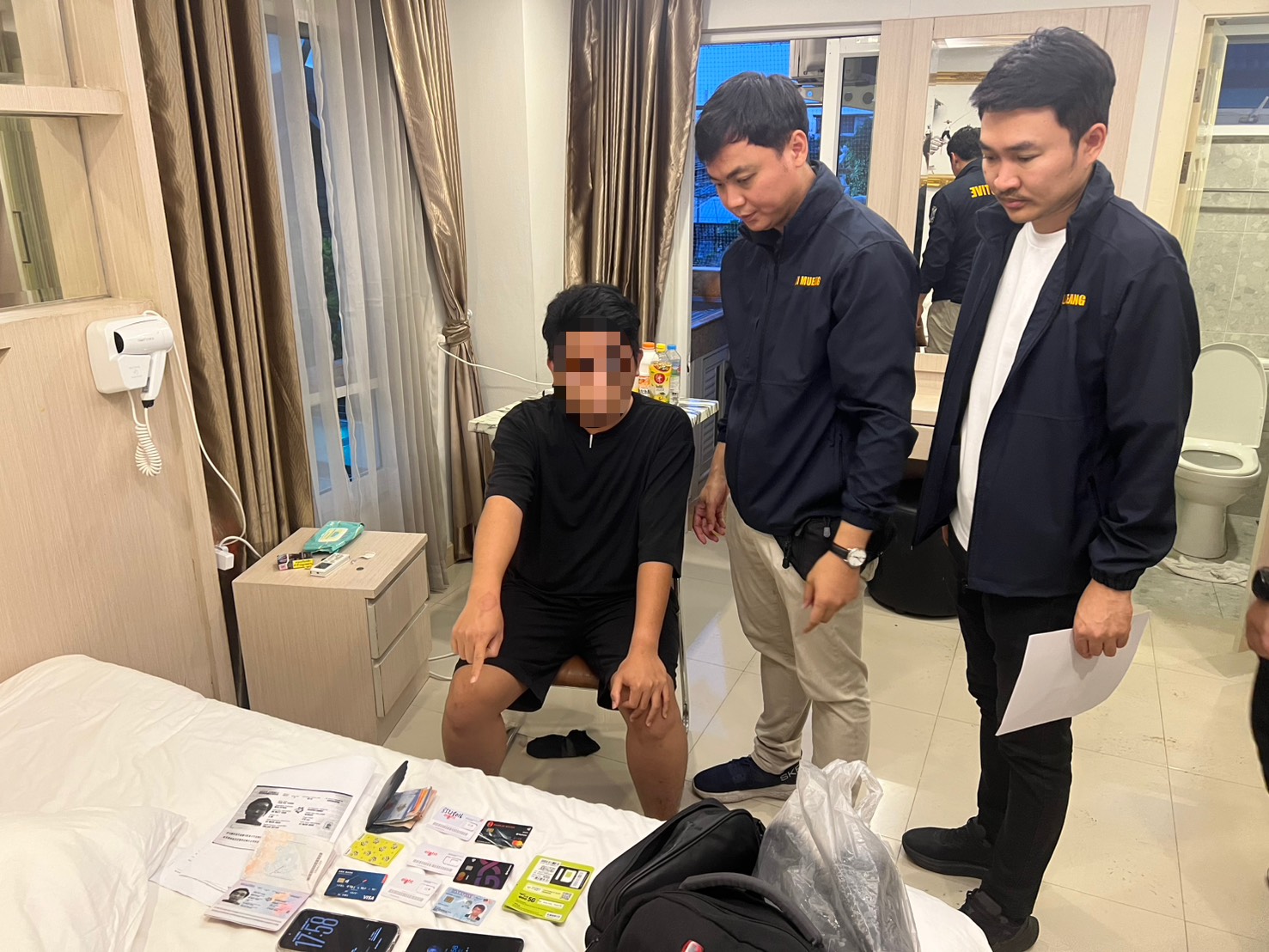
Police seized several items from the suspect, including clothing believed to have been worn during the crime, a black backpack, two mobile phones, a blank SIM card sleeve from AIS, four unused Singaporean SIM cards, one blank SIM card, and three foreign debit cards.

The Scam

According to investigators, the arrest followed a complaint filed Nov. 5 by a 70-year-old man who said he received a call from someone claiming to be a police officer. The caller alleged that the victim’s bank account was linked to mule accounts and money laundering.

The scammer told the victim to add a LINE account under the name “Por Pom,” who claimed to be an officer from Mueang Khon Kaen Police Station. The fraudster sent messages, fake documents, and initiated a video call to discuss the man’s assets, instructing him to prepare them for “inspection.”

malaysian elderly1
The arrested suspect with seized evidence used to defraud an elderly victim, photographed at a hotel in Don Mueang district, Bangkok, on November 7, 2025.

Convinced the call was genuine, the victim withdrew cash, sold personal possessions, and gathered 3.3 million baht ($101,850). The scammer maintained video contact throughout, monitoring the victim’s actions.

The Handoff

The victim was directed to deliver the money to a gas station on Pracha Uthit Road in Thung Khru district, near the local police station. The Malaysian suspect, described as a well-dressed man wearing glasses, a medical mask, and a shirt bearing the Comptroller General’s Department insignia, arrived to collect the cash. He claimed to be a government officer conducting an inspection and assured the victim that the money would be returned after verification — before quickly disappearing.

Suspect’s Statement

Through an interpreter, Tan told police he previously worked at a casino in Cambodia but lost his job when the business stopped hiring foreign workers. He said he found a “delivery job” in Thailand via Facebook, claiming he was only instructed to collect and deliver items for 1,000 Malaysian ringgit (about 7,000 baht or $220). Tan also claimed the SIM cards found in his possession were for resale to tourists.

Police said the investigation is ongoing as they work to identify and arrest other members of the scam network.

______

Advertisement

Kalmaegi Drenches Thailand After Deadly Strike on Philippines, Vietnam

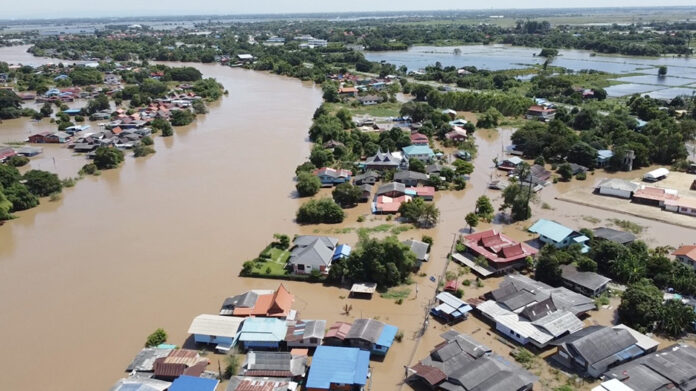
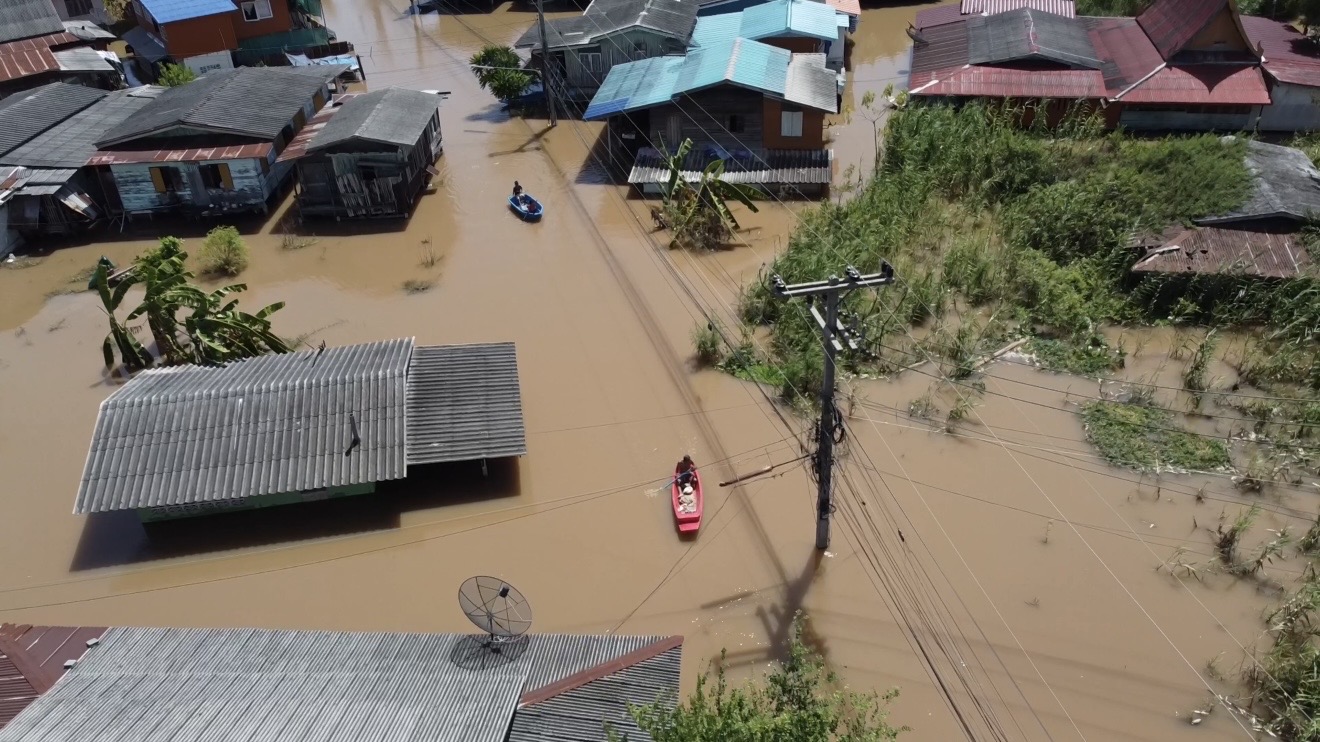
An aerial view shows hundreds of homes in Bang Chanee Subdistrict, Bang Ban District, Phra Nakhon Si Ayutthaya Province, submerged for two to three months and now facing the impact of Tropical Storm Kalmaegi.

BANGKOK — Tropical Depression Kalmaegi, which left hundreds dead across the Philippines and Vietnam earlier this week, moved into Thailand on Friday morning, bringing heavy rain and flooding to several regions as authorities scrambled to deploy water pumps across Bangkok.

The storm, downgraded from a deadly typhoon after striking the Philippines and central Vietnam, entered Thailand through Sirindhorn district in Ubon Ratchathani province before moving westward across Si Sa Ket, where its center was located Friday morning.

Meteorologists said Kalmaegi is expected to weaken further into a low-pressure system in the coming days.

Thailand’s Disaster Prevention and Mitigation Department and the Royal Irrigation Department (RID) were placed on high alert, as the Meteorological Department warned of intense rainfall from November 7–8 across the Northeast, Central, and Northern regions.

surin Kalmaegi 1
Rice plants ready for harvest lie submerged in floodwaters in Surin Province, northeastern Thailand, after heavy rain from Tropical Storm Kalmaegi hit the area on Nov. 7, 2025.

Heavy Rainfall and Risk Zones

Meteorological Department Director-General Dr. Sukanyanee Yawincharn said areas at highest risk of rainfall exceeding 90 millimeters include lower northeastern provinces such as Ubon Ratchathani, Buriram, Surin, Si Sa Ket, Maha Sarakham, Roi Et, Yasothon, Amnat Charoen, and Nakhon Ratchasima. Other parts of the country — including the North, Central, East, South, and the Bangkok metropolitan area — could experience 35–90 millimeters of rainfall, she added.

Emergency operation centers nationwide have prepared flood-relief machinery including water pumps, rescue boats, and 24-hour response teams.

Bangkok on Pump Power

Bangkok Permanent Secretary Narong Ruangsri said the capital faces the dual challenge of torrential rains and rising river and sea levels. The RID has increased water discharge from the Chao Phraya Basin, while the Royal Thai Navy’s Hydrographic Department has warned of high tides from November 5–14.

bangkok Kalmaegi 1
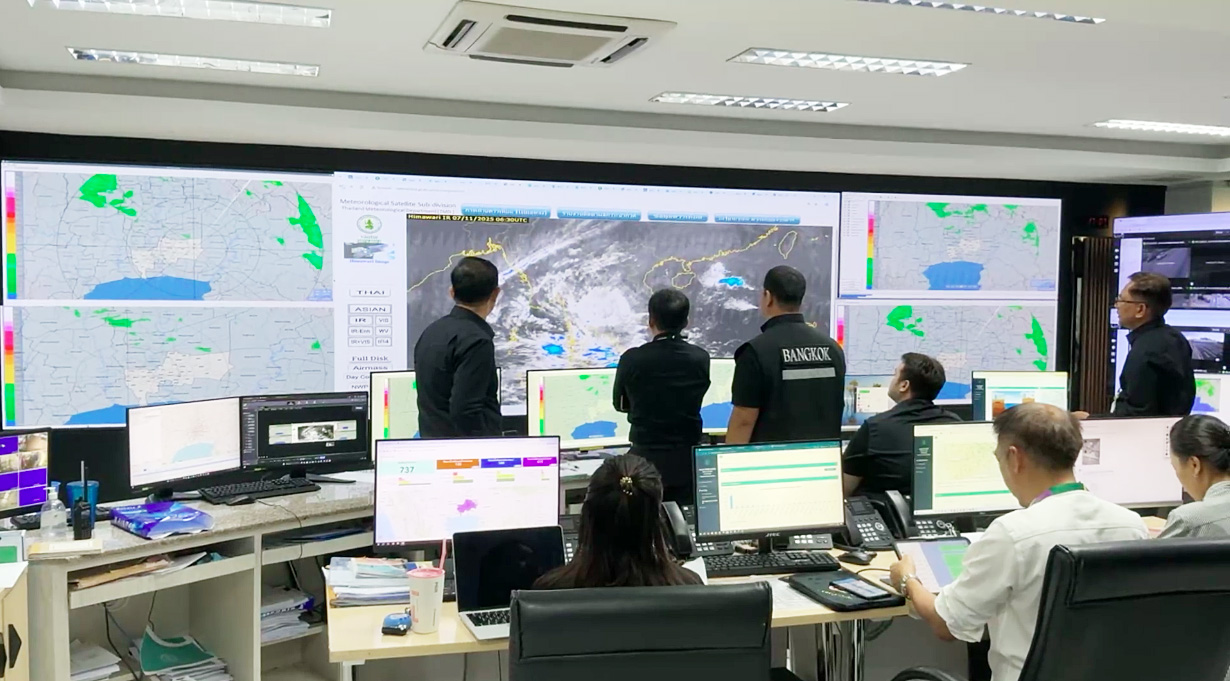
Officials at the Bangkok Flood Control Center monitor rainfall, northern runoff, high tides, and the impact of Tropical Storm Kalmaegi on Nov. 7, 2025.

“We must admit that Bangkok is surviving because of its water pumps,” said RID Water Management Director Thanes Somboon. “This year’s water volume is not as severe as in 2011, but the pumps are working hard because the city is being hit by three sources of water at once — rainwater, runoff from the north, and tidal surges.”

Thanes added that northern runoff will not cause major flooding in Bangkok, but localized flooding from rainfall could submerge areas for three to five hours. The RID has raised the discharge rate at the Chao Phraya Dam from 2,700 to 2,800 cubic meters per second. As of early November, Thailand’s major reservoirs collectively held 63.9 billion cubic meters of water — about 90% of their total capacity.

Central Plains Tensions Rise

In Ayutthaya province, residents in eight flood-prone districts — including Sena, Bang Ban, and Phak Hai — staged a road blockade Friday to demand faster drainage after more than 30,000 households were inundated and 11 people died in recent floods.

ayutthaya Kalmaegi 2
An aerial view shows hundreds of homes in Bang Chanee Subdistrict, Bang Ban District, Phra Nakhon Si Ayutthaya Province, submerged for two to three months and now facing the impact of Tropical Storm Kalmaegi.

The protest prompted the Minister attached to the Prime Minister’s Office to intervene. Authorities eventually agreed to open water gates by 80%, easing tensions temporarily. However, residents vowed to keep pressing for a sustainable flood management plan, saying they suffer yearly inundations from dam discharges diverted away from industrial zones.

Storm’s Path Through the Region

Earlier, the Associated Press reported that Typhoon Kalmaegi had killed at least five people and caused widespread damage in Vietnam after leaving nearly 190 dead and 135 missing in the Philippines. The storm’s remnants swept into Laos before reaching Thailand on Friday.

Scientists warn that climate change is intensifying storms and rainfall across Southeast Asia, making tropical cyclones more destructive and frequent.

AP25311360634661
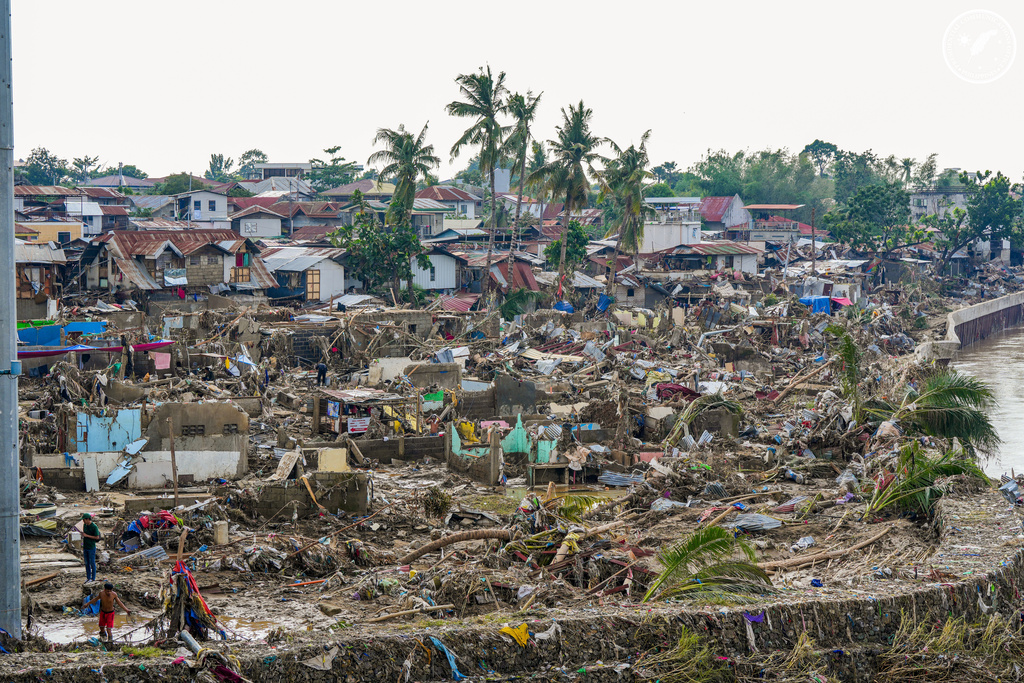
In this photo provided by the Malacanang Presidential Communications Office, damaged homes beside Mananga Bridge in Talisay, Cebu Province, central Philippines on Friday Nov. 7, 2025 after Typhoon Kalmaegi devastated the province and claimed lives. (Malacanang Presidential Communications Office via AP)

__________

Advertisement

Airbus to Extend Partnership With Thai Aviation Industries

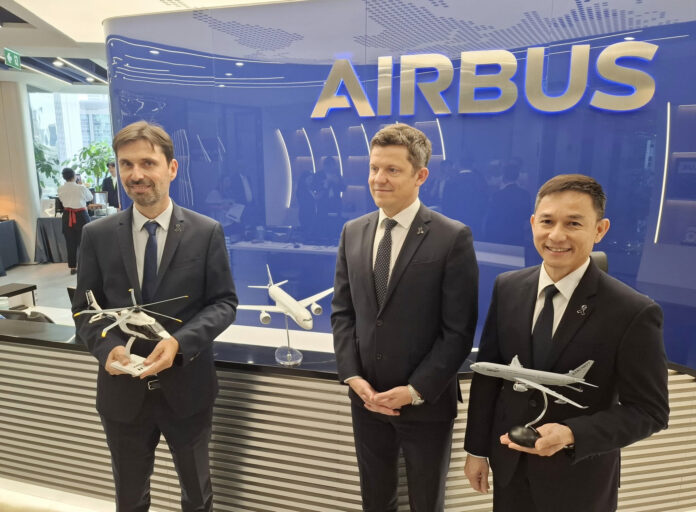
From left, Alexandre Sanchez, Managing Director of Airbus Helicopters; Bert Porteman, Airbus Chief Representative for Thailand; and Zakir Hamid, head of Asia-Pacific for Airbus Defence and Space, pose for photos during a press event in Bangkok on Nov. 7, 2025. (Photo: Pravit Rojanaphruk)

BANGKOK — Airbus will renew its cooperative agreement with Thai Aviation Industries (TAI), a state enterprise under the Royal Thai Air Force, on November 10 as part of plans to expand its long-term presence in Thailand, company executives said Friday.

At a press conference in Bangkok, Airbus officials said they aim to sell more aircraft and helicopters to support Thailand’s defense, security, and disaster-response capabilities.

Airbus’s relationship with TAI began in 2017 with “after-sales support” for government helicopter fleets. TAI is also the main service provider for the Thai armed forces and police. Bert Porteman, Airbus Chief Representative for Thailand, said Airbus is a strategic market for its firm while the company is a trusted partner and is here in Thailand for long-term cooperation.

Porteman pointed out that the aviation giant first supplied a commercial aircraft to Thailand—an A300-B4 passenger aeroplane—back in 1977 and at present, there are 140 Airbus commercial aeroplanes in Thailand, 70 Airbus civil, paramilitary and military helicopters used by the Thai government, and over 15 Airbus military transport aircraft are currently in service with various national agencies and armed services, supporting not just military missions from troop and cargo transport but also for search and rescue (SAR), emergency medical services (EMS), with one order made in September.

​With four decades of partnership with Thailand, Airbus executives highlighted some new aircraft, helicopters and drones they will try to display at next week’s Defence & Security exhibition at IMPACT Muang Thong Thani, and hope to eventually sell some to Thailand.

Airbus’ sales pitch to expand its footprint in Thailand and supporting Thailand’s longer-term needs includes selling a package of “mixed-fleet strategy” by combining its A400M, A330 MRTT and C295 aircraft in order to provide Thailand with a “full spectrum solution for missions ranging from defence to disaster response.”

​Zakir Hamid, head of Asia-Pacific for Airbus Defence and Space, said at the Airbus office in Bangkok that the firm offers a “future-ready defence system” to Thailand. Its A330 MRTT, for example, can help enhance mobility and operation reach of the Thai armed forces as well as its capability for humanitarian missions.

​The aircraft consumes 8 per cent less fuel than its rivals and emits lower noise, said Hamid.

C295 airbus
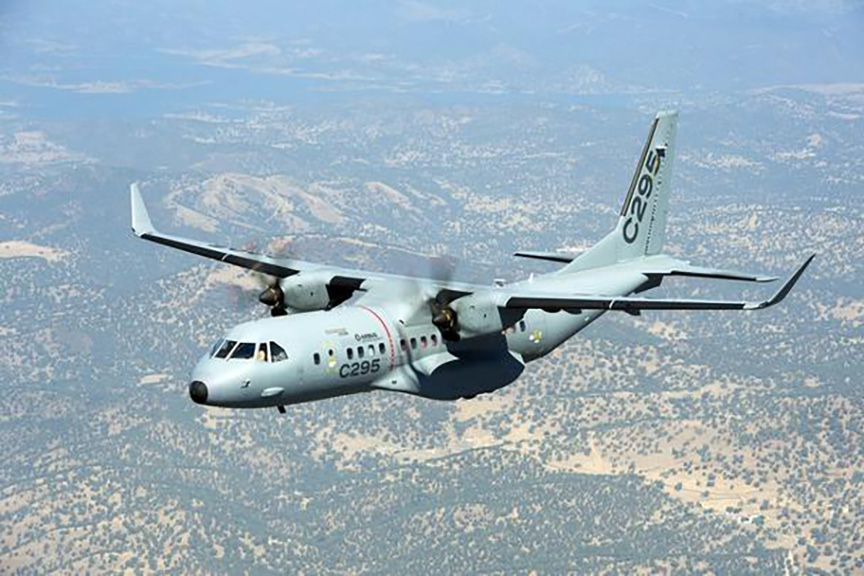
C295 aeroplane (Photo: Airbus)

According to Airbus, the aircraft is a “true multi-role aeroplane,” used for refuelling, transport of up to 300 passengers, freight transport, as well as VIP transport. It can carry a load of up to 45 tonnes.

​Meanwhile, its C295 aeroplane is described as a reliable and versatile workhorse with “exceptional versatility,” said Hamid, that can be used for firefighting as well as search and rescue and is easy and economical to maintain. It is used in 38 countries.

​Besides helicopters, Airbus also offers a high-performance unmanned aerial vehicle, or drone, called SIRTAP which can be used for maritime survey, tactical defence and border protection. It can be airborne for up to 20 hours and has a range of 2,000 kilometres.

​Alexandre Sanchez, Managing Director of Airbus Helicopters, not only introduced new multi-purpose helicopters like H160, with the French Navy currently has six for search and rescue, but a new unmanned aerial vehicle called Flexrotor which has a unique fixed wing and compact footprint. Sanchez said this aerial vehicle can be used for real-time intelligence gathering in disaster zone and remote areas and can be used in GPS-denied environment for defence and security.

​Flexrotor is attracting interests in the Asia and Pacific region, said Sanchez.

__________

Advertisement

X-ray Scan Reveals Israeli Tourist Carrying Ammunition at Phuket Airport

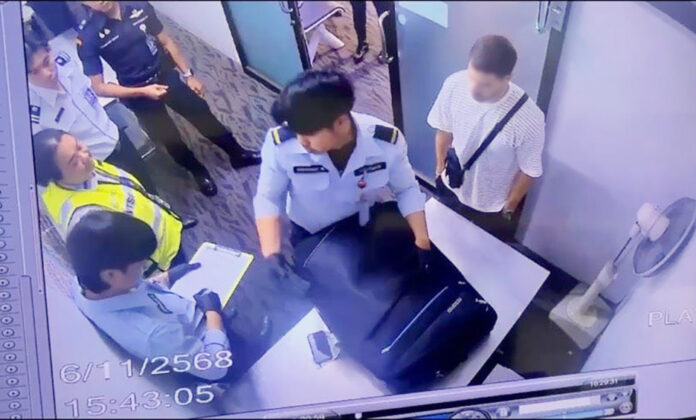
Airport security officers inspect an Israeli tourist’s luggage in the X-ray screening room at Phuket International Airport on Nov. 6, 2025.

PHUKET — Police at Phuket International Airport are investigating an Israeli tourist who was caught with ammunition in his luggage during an X-ray screening at the domestic terminal before 4 p.m. on November 6.

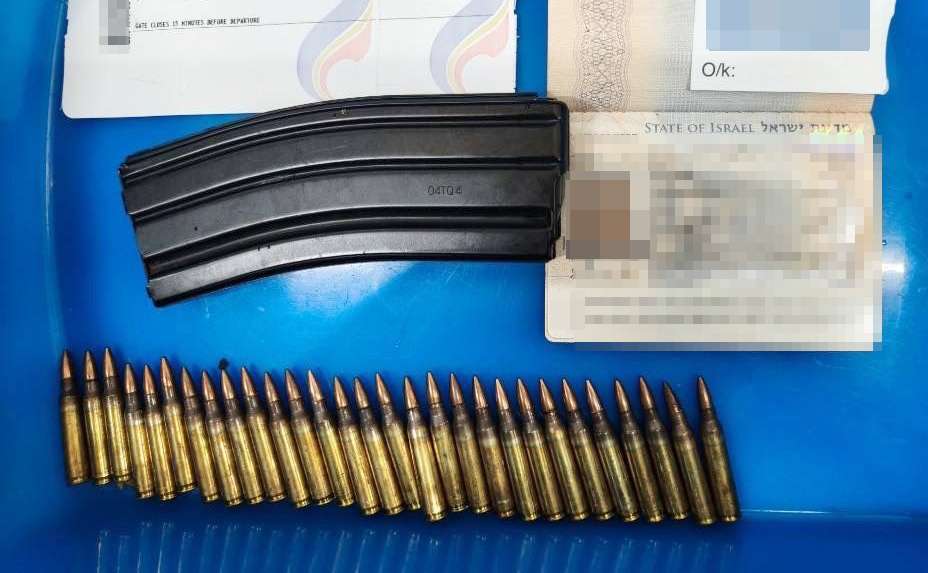
The 26-year-old Israeli man, whose name was not released, was preparing to board a flight to Koh Samui in Surat Thani province when security staff discovered 29 rounds of 5.56mm ammunition loaded in a magazine inside his black travel bag.

Authorities informed the tourist of his rights and charged him with illegal possession of ammunition that cannot be legally licensed in Thailand. Under Section 72 of the Firearms Act, the offense carries a penalty of one to 10 years in prison and a fine ranging from 2,000 to 20,000 baht ($62–$620).

israel arm phuket1
Officials display 29 rounds of 5.56mm ammunition loaded in a magazine found inside the Israeli traveler’s luggage.

Israeli Embassy Discusses Tourist Concerns

Two days earlier, on November 4, Israeli Ambassador to Thailand Dr. Alona Fisher-Kamm and Embassy Consul Eli Sneh met with Surat Thani Governor Theerut Supawiboonphol to address concerns among Israeli visitors following reports of police investigations and monitoring of tourists.

“I confirm that the majority of Israeli tourists are good tourists who love traveling to Thailand,” Fisher-Kamm said. “Only a small minority behave inappropriately or break the law, and we fully support Thai authorities taking legal action as they would with any other nationality.”

israel new ambassador
Dr. Alona Fisher-Kamm, the new Ambassador of Israel to Thailand, meets with Surat Thani Governor Teerut Supawiboonphol at the Provincial Hall, on November 4, 2025.

Governor Theerut said there was no discrimination against Israeli nationals, stressing that officials were focused on enforcing laws while promoting tourism responsibly. He proposed creating a direct communication channel between Surat Thani authorities and the Israeli Embassy to improve coordination and understanding.

Collaboration between Israeli officials and Thai police has also resulted in arrests of suspects wanted in Israel who had fled to Thailand. Authorities recently detained an Israeli fugitive for armed robbery, threats, breaking and entering, and theft on Koh Samui after a request for cooperation from the Israeli Embassy’s Police and Internal Security Attaché Office.

__________

Advertisement

Hylife Group Preserves the Yee Peng Festival in Chiang Mai 2025

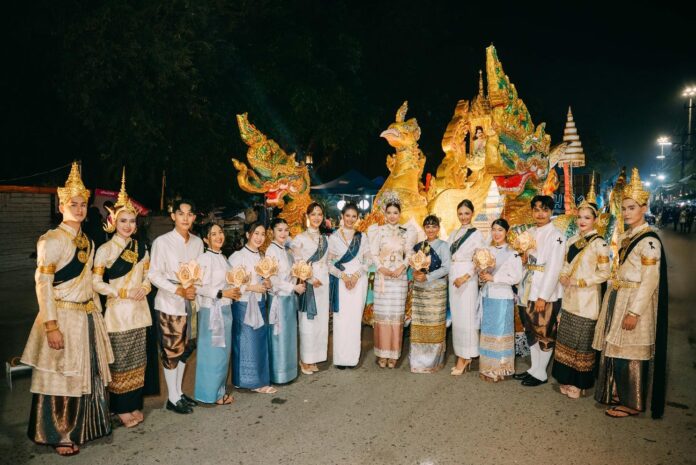
On the 6th of November 2025 Hylife Group took part in the Chiang Mai Yee Peng Festival 2025, joining the grand Krathong parade under the theme “The River of Divine Grace Flowing Across the Thai Sky, Forever in the Hearts of the People.” The parade was held in remembrance of the boundless grace and benevolence of Her Majesty Queen Sirikit The Queen Mother.

This year’s magnificent float parade was led by Mrs. Pola Mazumdar Nair, Non-Executive Director of Hylife Group, who also represented the organisation in receiving a certificate of honor from Mr. Tanakorn Sarabun, Secretary to the Mayor of Chiang Mai Municipality, in recognition of the company’s contribution to preserving the beauty of Thai culture.

image3 2

Hylife Group’s parade portrayed “The River of Love and Virtue” symbolising the flowing force that nurtures the Thai land in peace and harmony. The float was adorned with mythical creatures from Thai literature, including the Golden Swan, Naga, Singha, and Garuda, each representing blessings, virtue, and auspiciousness. Together, they depicted the heavenly procession of Her Majesty amid the light of faith and reverence from the Thai people. Adding a touch of charm and delight to the parade was Omelet Siriyakron Teeratongdee, Miss Grand Lampang 2026, who joined to spread smiles and enhance the festive spirit along the route.

Hylife Group’s float was proudly awarded the First Runner-Up Prize in the Royal Trophy Grand Krathong Parade Contest at the Chiang Mai Yee Peng Festival 2025. The award was presented by Mr. Assanee Buranupakorn, Mayor of Chiang Mai Municipality, marking another proud moment for the company and reflecting its dedication to preserving and celebrating Thai cultural heritage.

This participation in the Yee Peng Festival highlights Hylife Group’s dedication to upholding Thai cultural heritage and honoring the grace of Her Majesty The Queen Mother. It also reflects the company’s vision to preserve and extend the value of cultural heritage in harmony with modern living ensuring that the beauty of Thai culture continues to flourish sustainably within Thailand and beyond.

image2 3

Advertisement

Launch of the Commanderie de Bordeaux – Bangkok

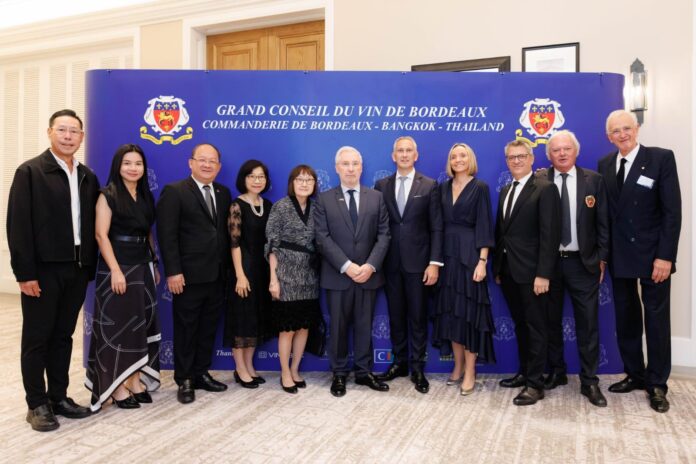
Bangkok– The Grand Conseil du Vin de Bordeaux has officially granted its charter for the establishment of the Commanderie de Bordeaux – Bangkok, marking the newest addition to the organisation’s prestigious global network, the 103rd Commanderie Wordwide.

The launch event, hosted at the Dusit Thani Hotel, brought together Thailand’s leading figures from the wine, hospitality, and culinary sectors, as well as prominent representatives from the finance, banking, IT, and telecommunications industries, to celebrate this milestone and reaffirm Bangkok’s position as an emerging hub for fine-wine culture in Southeast Asia.

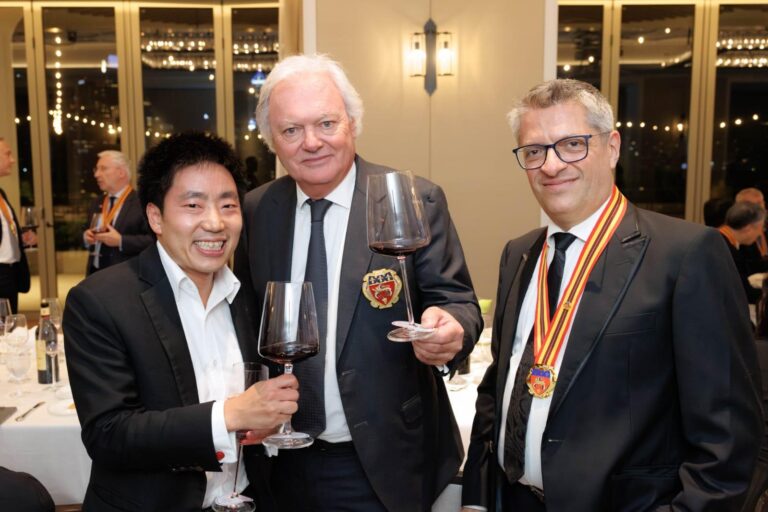
The evening began with an exclusive wine tasting, featuring an exceptional selection of Bordeaux wines presented by renowned château owners and merchants who travelled from France for the occasion. This was followed by a Gala Dinner held under the patronage of His Excellency Jean-Claude Poimboeuf, Ambassador of France to Thailand, and Jean-Marc Dulong, President of the Grand Conseil du Vin de Bordeaux — and in the distinguished presence of James Suckling, one of the world’s most recognised wine critics.

Guests enjoyed an extraordinary selection of wines, including a superb Château Angélus 2014 and Clos Fourtet 2015, in the presence of their respective owners Hubert de Boüard and Mathieu Cuvelier. The event also welcomed Véronique Dausse of Château Phélan Ségur, Jean-Bruno Cantorne of Château Veyret Latour, Axel Heinz of Château Lascombes, Lucas Leclerq of Château Fourcas Dupré, Nicolas Lassagne of Château Maltus, Olivier Bonnelye of Château L’Éperon, and Quentin Azais, representing Château Bastor-Lamontagne — a remarkable line-up showcasing the richness and diversity of Bordeaux.

This celebration also commemorated the 370th anniversary of Franco-Thai relations and 140 years of formal diplomatic ties between France and Thailand—an enduring partnership built on cultural exchange and shared appreciation for excellence.

image3 1

Guests included winegrowers, merchants, and VIPs from Thai and French sectors, as well as representatives from Commanderies in Vietnam (Hanoi & Ho Chi Minh City) and Jakarta, highlighting the regional enthusiasm for Bordeaux wines.

Special thanks to our sponsors: Vinobox, Lucaris, CIC, Kad Kokoa, FDC International and Siam Seaplane, whose support made this non-profit event possible.

image2 2

Quotes from the Founding Members

At the helm of the newly established Commanderie are Mr. Nicolas Bernardin and Mr. Sébastien Laurent, both long-time residents of Asia and passionate advocates for Bordeaux wines. They will serve respectively as Maître and Vice-Maître of the Commanderie, leading its mission to promote Bordeaux’s heritage within Thailand’s vibrant hospitality scene.

Nicolas Bernardin, Master:

“We are deeply honored by the support of Ambassador Jean-Claude Poimboeuf and the Grand Conseil du Vin de Bordeaux. Their presence and endorsement mark a powerful beginning for our Commanderie. We have observed a minute of silence in memory of Her Majesty Queen Sirikit, Queen Mother of Thailand and honored a life of grace, devotion, and timeless elegance — and a lasting symbol of friendship between Thailand and France. Our sincere condolences to the Royal Family and the people of Thailand.”

Sébastien Laurent, Vice-Master:

“We are grateful to the Thai VIPs who joined, including leaders from the Federation of Thai Industries, the former DG of the Board of Investment, and over 70 distinguished top business owners from finance sector, system integrators, retail, sommeliers and wine distribution sectors. Their enthusiasm and support reflect the strong cultural and economic ties between Thailand and France.”

A Vision of Cultural Bridge Through Wine

Speaking as a duo, Nicolas and Sébastien stated:

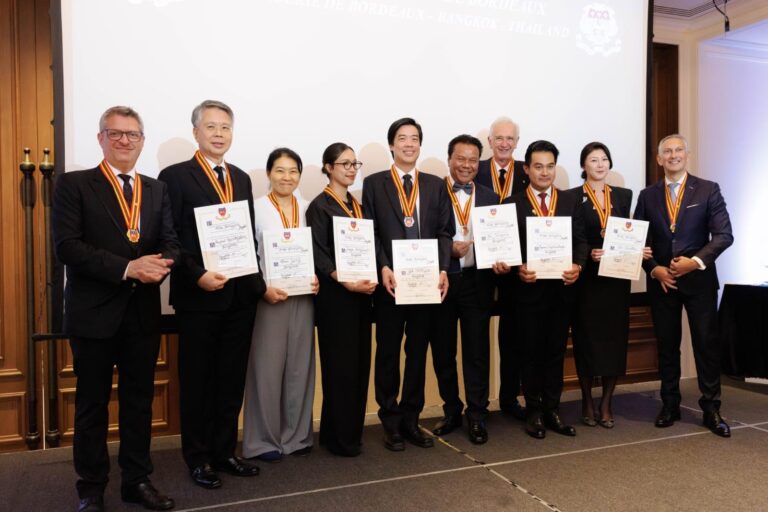
“We are delighted to have been appointed as Masters of the Grand Conseil du Vin de Bordeaux and to have officially welcomed eight Commanders into the Commanderie de Bordeaux – Bangkok:

Jean-Claude Poimboeuf (Ambassadeur d’Honneur), Julie Cancelloni (Inspiring Girls), Annie Yang (Kliff Capital), Kongkiat Opaswongkarn (Asia Plus Group Holding), Joe Sriwarin (Professional Sommelier Association of Thailand), William Yeh (Wine Connection – Group CEO), Marc Tanappong Vongsuwan (Best Sommelier 2025 Thailand, Dusit Thani Cannubi Sommelier), and Soraya Kongsaard (Sommelier Mandarin Oriental).

Our vision and objective is to share the passion for wine that bridges cultures. This new Commanderie has no business purpose—it is a celebration of heritage, friendship, and shared appreciation. This is just the beginning. We look forward to welcoming new diverse members and hosting quarterly dinners that celebrate the spirit of Bordeaux and Thai hospitality. Bordeaux toujours Bordeaux. 

Advertisement

Thai Navy Rescues Four Russian Tourists Stranded on Maiton Island

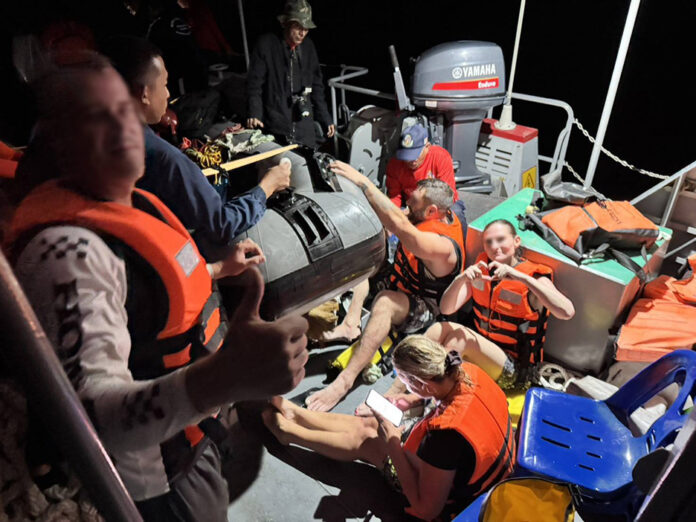
Four Russian tourists are safely brought aboard a Royal Thai Navy vessel after being rescued from a rocky area behind Maiton Island, off Phuket, on Nov. 6, 2025.

PHUKET  — The Royal Thai Navy’s Third Area Command rescued four foreign tourists stranded on a cliff area of Maiton Island late Thursday night after their speedboat ran aground on rocks.

Vice Adm. Weerudom Muangjin, commander of the Third Naval Area and director of the Maritime Enforcement Command Center Region 3, ordered an immediate rescue operation after receiving a distress call around 6:45 p.m. from a Russian man, who reported that his companion had grounded their speedboat behind Maiton Island, about 4.6 nautical miles southeast of the navy pier in Phuket.

The four tourists, all Russian nationals, had reached the island safely but were trapped on a steep rocky slope, and their speedboat was unable to move.


At 7:30 p.m. on November 6, patrol boat Tor 272 departed from the naval pier with a rescue team from the Navy’s Marine Security Division. Upon arrival, rescuers found the tourists safe but unable to be reached due to strong waves and hazardous rocks. The team instructed them to remain calm and wait for further assistance.

The vessel then returned to base to pick up a special operations team equipped with inflatable rafts, ropes, life vests, lights, food, and drinking water. The team set out again and reached the island around 10:50 p.m.

Working in darkness and rough seas, the rescue team paddled inflatable boats to reach the tourists and successfully brought all four aboard Tor 272 safely. They were provided with food and water during the return trip.

strand phuet2
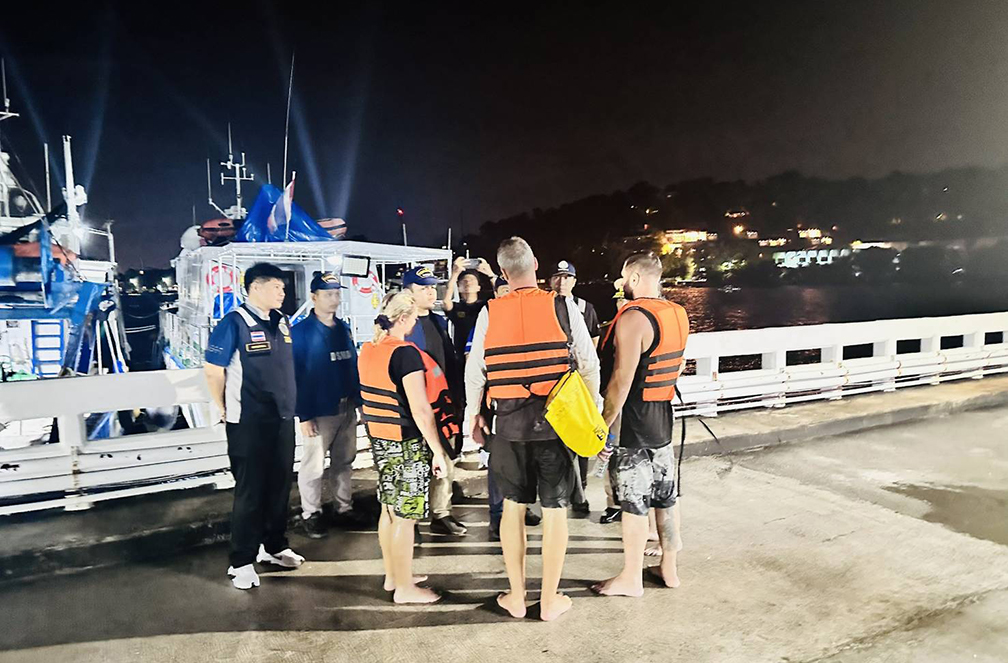
The four rescued foreign tourists arrive safely at the Royal Thai Navy pier in Phuket early Nov. 7, 2025, after being brought ashore from Maiton Island.

The navy coordinated with medical personnel, police, and tourism assistance officials to receive the tourists at the naval pier. Rear Adm. Sataporn Wajaratrat, chief of staff of the Third Naval Area, and related agencies met them upon arrival at 12:10 a.m. Friday.

All four tourists, Ms. Elena, Ms. Kristina, Mr. Alexie, and Mr. Vsevolod, were reported safe, though slightly fatigued. One female tourist was treated for shock. No navy personnel were injured, and no government equipment was damaged during the operation.

________

Advertisement

Continuing to Advance Chinese Modernization and Jointly Creating New Prospects for Common Development

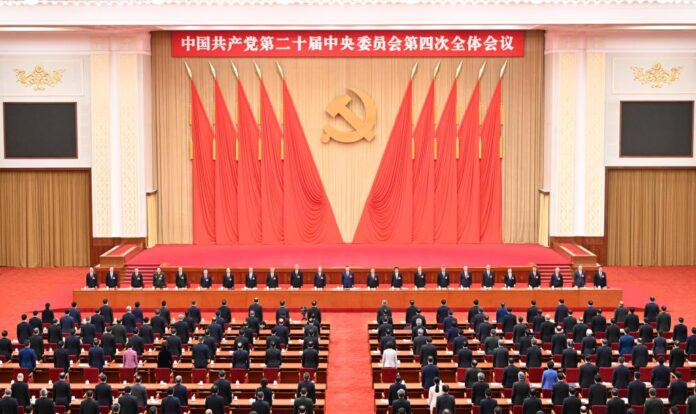
In this photo released by Xinhua News Agency on Thursday, Oct 23, 2025, the 20th Central Committee of the Communist Party of China (CPC) convenes its fourth plenary session in Beijing. (Li Xiang/Xinhua)

Continuing to Advance Chinese Modernization and Jointly Creating New Prospects for Common Development

by Chinese Ambassador Zhang Jianwei

From October 20 to 23, 2025, the Fourth Plenary Session of the 20th Central Committee of the Communist Party of China was held in Beijing. The session deliberated over and adopted the Recommendations of the Central Committee of the Communist Party of China for Formulating the 15th Five-Year Plan for Economic and Social Development, making top-level design and strategic plans for China’s development in the next five years.

It demonstrated China’s firm resolve to build on past achievements and continue to advance Chinese modernization. As changes unseen in a century unfold rapidly across the world, the future of humanity will be deeply shaped by the choices we make today. As the world’s second largest economy, China’s development plan for the next five years and its approach to addressing the volatile and intertwined international situation have been a subject of great interest to the world.

During the 14th Five-Year Plan (2021-2025) period, China effectively responded to the severe impact of the COVID-19 pandemic and a range of major risks and challenges, elevating its economic strength to a new level. In the first four years, the country’s average annual GDP growth reached 5.5 percent, and the economic aggregate in 2025 is estimated to reach about 140 trillion yuan, with its contribution to global economic growth remaining stable at around 30 percent.

Continuous improvement was made in public well-being, with the average annual growth of per capita disposable income of residents reaching 5.5 percent in real terms, keeping pace with economic growth. China has established the world’s largest systems of healthcare, education and social security. China has put in place the world’s largest and fastest-growing renewable energy system and new energy industrial chain, and become one of the countries with the fastest reduction in energy consumption intensity.

China’s economic and technological strength and composite national strength have reached a new level, and Chinese modernization has taken solid new steps.

As China’s 14th Five-Year Plan gets close to its accomplishment, China’s development is standing at a new starting point where Chinese modernization is about to embark on a new journey. The time has arrived and the conditions are in place.

Continuing the Journey: Anchoring the Goal of Chinese Modernization

The scientific formulation and consistent implementation of five-year plans constitute important experience in the approach of the Communist Party of China to governing the country and a significant political strength of socialism with Chinese characteristics.

The development history of the People’s Republic of China is marked by the chapters of 14 consecutive Five-Year Plans, all united by the consistent theme of building China into a modern socialist country.

As the 14th Five-Year Plan concludes this year, the recent Plenary Session outlined the major objectives for economic and social development during the 15th Five-Year Plan period (2026-2030): significant advancements in high-quality development, substantial improvements in scientific and technological self-reliance and strength, fresh breakthroughs in further deepening reform comprehensively, notable cultural and ethical progress across society, further improvements in quality of life, major new strides in advancing the Beautiful China Initiative, and further advances in strengthening the national security shield.

Building on this, China will work hard for a further five years to see that by the year 2035, China’s economic strength, scientific and technological capabilities, national defense capabilities, composite national strength, and international influence will all be markedly stronger, that its per capita GDP will be on a par with that of a med-level developed country, that its people will live better and happier lives, and that socialist modernization will be basically realized.

China will persist in writing new chapters of the two miracles of rapid economic development and long-term social stability, making new contributions to safeguarding regional peace, stability, and prosperity.

Advancing High-Quality Development and Accelerating Self-Reliance in Science and Technology

High-quality development is the paramount task in building a modern socialist country in all respects. Carrying on the legacy of the 14th Five-Year Plan, the 15th Five-Year Plan continues to identify advancing high-quality development as the theme of economic and social development. It adheres to the central task of economic development and is guided by the new development philosophy, aiming to promote sustained and healthy economic growth and all-round social progress.

The most crucial aspect of advancing high-quality development is to accelerate self-reliance in science and technology, thereby guiding the development of new quality productive forces. The vitality of scientific and technological achievements lies in application. China will comprehensively promote the transformation and upgrading of traditional industries, actively develop emerging industries, and proactively plan for future industries.

It will accelerate the building of a modernized industrial system, forging a new path where technological innovation guides industrial innovation, and industrial upgrading, in turn, fosters technological iteration.

China is refreshing the heights of science and technology at an unprecedented pace, gathering momentum for innovation, and forming an innovation ecosystem, injecting more vitality and momentum into its own development and the world economy. A more advanced, confident, and open “Innovative China” will also build more bridges of development and progress for the region and countries around the world.

Putting People First and Making Solid Progress in Common Prosperity

Ensuring that the people enjoy a happy life is a fundamental tenet of the nation and the ultimate goal of all endeavors undertaken by the Communist Party of China in uniting and leading the people of all ethnic groups across the country. It also serves as the overarching guideline for China’s development during the 15th Five-Year Plan period. Since the 18th CPC National Congress, China has taken robust measures to safeguard and improve people’s livelihoods, winning the largest battle against poverty in human history, and completing the building of a moderately prosperous society in all respects, thereby creating favorable conditions for promoting common prosperity. China will continue to steadfastly pursue the goal of common prosperity, making deployments in areas such as promoting high-quality and full employment, running education to the satisfaction of the people, accelerating the building of a Healthy China, and steadily advancing the equalization of basic public services. This will result in a suite of balanced and highly accessible policy measures, painting the development of the 15th Five-Year Plan period with a tone that warms the people’s hearts.

Adhering to Opening-Up and Promoting Mutual Benefit and Win-Win Cooperation

High-standard opening up is a powerful impetus for China’s own development and for benefiting the world. China is a major trading partner for over 150 countries and regions. Over the past five years, China has ranked first globally in trade in goods and second in trade in services. Its outbound investment has grown at an average annual rate of over 5 percent, generating substantial employment locally and vigorously, as well as promoting mutual industrialization and modernization processes.

China has continuously expanded its unilateral visa-waiver policies, steadily widened its autonomous and unilateral opening-up measures, and 22 pilot free trade zones have actively aligned with international high-standard economic and trade rules. China’s door of opening-up to the world will not close; it will only open wider.

China boasts the world’s most promising mega-market and is becoming a testing ground for global win-win cooperation, a profit field for shared benefits, and an application field for innovative practices. China is willing to work with countries around the world to create opportunities, promote open development, and achieve mutual benefit and win-win outcomes.

At the end of October, China and ASEAN signed the protocol to upgrade the China-ASEAN Free Trade Area to Version 3.0. The protocol includes, for the first time, new chapters on supply chain connectivity and the green economy, achieving a new breakthrough in the FTA practices between the two sides.

It also establishes, for the first time, a systematic framework and institutional arrangements for “at-the-border” trade facilitation measures and “behind-the-border” cooperation in emerging areas such as digital and green economy, and supply chains, representing the highest level of commitments in the respective FTA practices of China and ASEAN.

China and Thailand are good neighbors, good friends, good relatives, and good partners. The friendship between our two countries nurtured over a millennium and continues to grow with renewed vitality, embodying the enduring spirit of “China and Thailand are as close as one family.”

The historic visit of President Xi Jinping to Thailand in 2022 elevated bilateral relations to a new stage of building a community with a shared future, solidifying the foundation of our friendship and strengthening the momentum of our cooperation. China has been Thailand’s largest trading partner for 12 consecutive years. In 2024, the bilateral trade volume reached $134 billion, a 36% increase compared to that of five years ago.

China is Thailand’s second-largest export market, absorbing over 40% of Thailand’s exported agricultural products. According to Thai statistics, durians exported to China now account for 97% of Thailand’s total durian exports. China is also the primary source of foreign investment for Thailand in recent years, and Thailand hosts the largest overseas production capacity for Chinese new energy vehicles.

Leading Thai companies have consistently participated in the China International Import Expo, with intended transaction volumes consistently ranking among the top in ASEAN. The China-Thailand railway cooperation project is boosting Thailand’s economic development and enhancing its connectivity.

The industrial and supply chains of our two countries are deeply integrated, and cooperation in digital economy and green transformation is flourishing.

Looking ahead to the next five years, China will continue to advance Chinese modernization, unswervingly expand high-standard opening up, pioneer new prospects for win-win cooperation, and promote the building of a community with a shared future for mankind.

These plans and deployments highly align with Thailand’s development strategy, creating even broader prospects for bilateral cooperation. Both sides will encounter more opportunities for collaboration in areas such as trade, new energy, digital economy, and modern agriculture.

China is willing to work with Thailand to deepen and solidify the building of a China-Thailand community with a shared future, support the respective modernization processes of both countries, and make greater contributions to regional peace, stability, development and prosperity.

________

Advertisement

AOT Expected to Accept King Power’s Terms to Avoid Contract Fallout

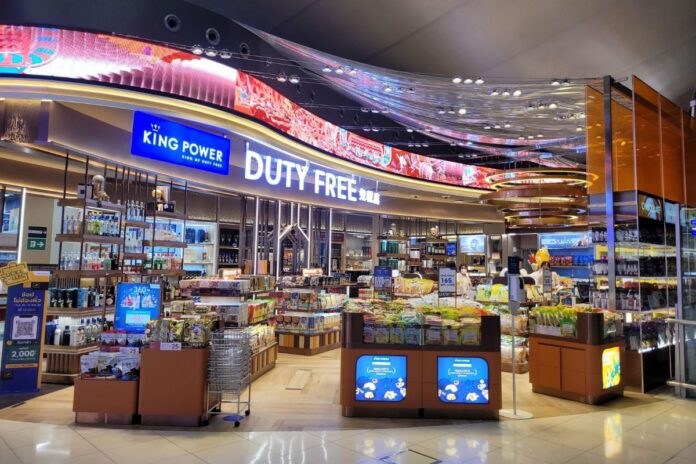
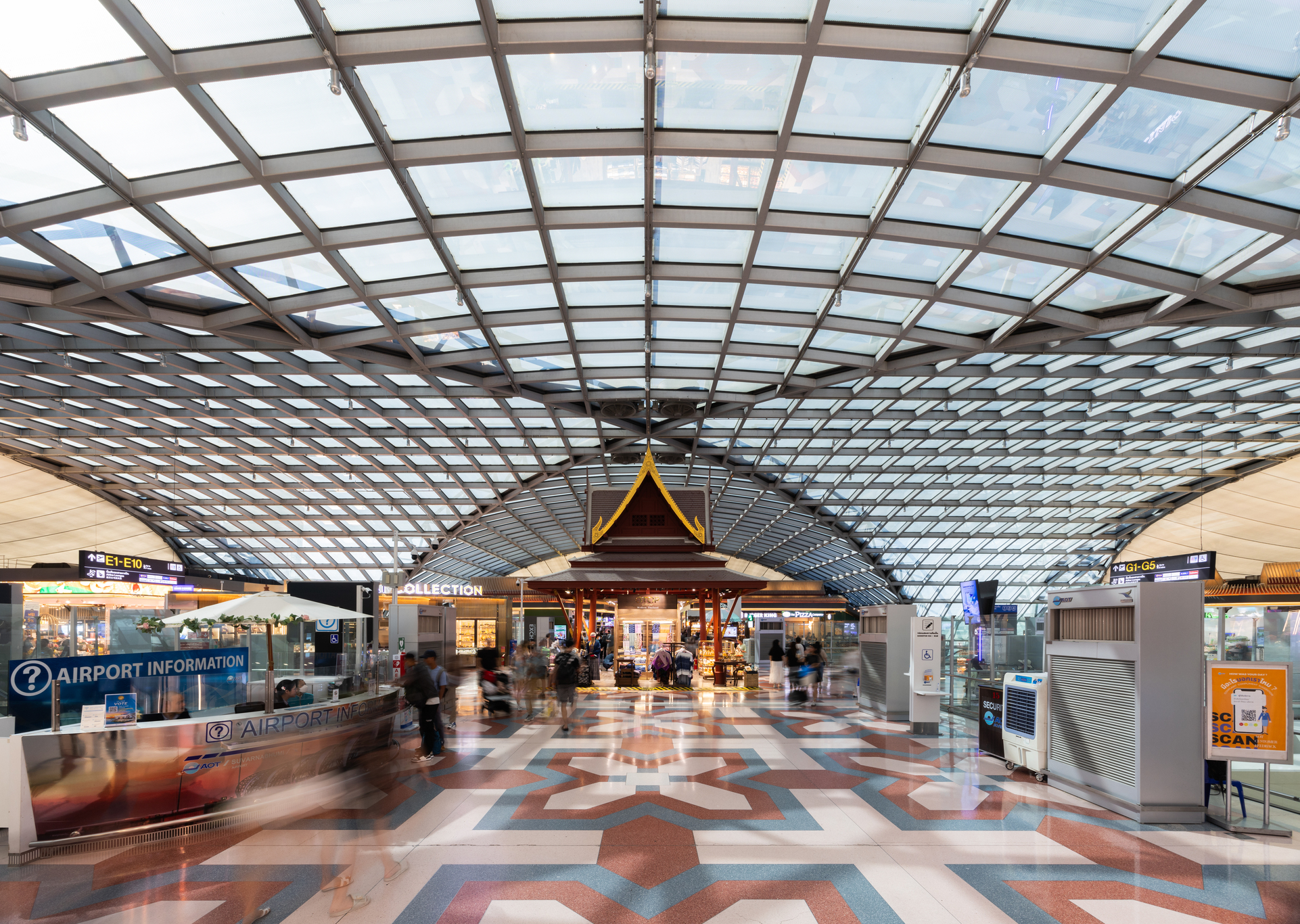
Duty-free shops at Suvarnabhumi Airport

BANGKOK — Airports of Thailand PCL (AOT) is expected to proceed with King Power Group’s proposed terms in ongoing negotiations over duty-free concession contracts, aiming to avoid a costly termination that could disrupt operations at the country’s major airports.

King Power, Thailand’s largest duty-free operator, sent a letter to AOT in May seeking to terminate its contracts to manage duty-free operations at Suvarnabhumi, Phuket, Chiang Mai and Hat Yai airports. The contracts, held by Power Duty Free Co., Ltd., are valid through March 31, 2033.

At its October 29 meeting, the AOT board authorized management to negotiate with King Power to prevent termination, following studies by Mahidol University and King Mongkut’s Institute of Technology Ladkrabang that assessed the potential impact of both options. The studies concluded that renegotiation would offer greater benefits to AOT.

King Power CEO Nitinai Sirismatthakarn told Prachachat that AOT likely has already reviewed the company’s seven key proposals and is expected to initiate talks this week.

“King Power hopes AOT will treat our proposals with fairness and consider the new economic context rather than past figures,” Nitinai said. “The main issue is ensuring that future numbers do not fall further.”

aot suvarnabhumi
Suvarnabhumi Airport (Photo: AOT)

He explained that duty-free operators are typically required to maintain a six-month bank guarantee, and when rent remains unpaid for several months, negotiations or termination decisions must follow promptly.

Nitinai said King Power hopes to reach a conclusion by the end of November. “If the current terms leave us earning less than our expenses, losses will continue,” he said. “But if revenue can at least cover costs, we can continue operating. AOT’s decision to negotiate shows its intention to help concessionaires move forward.”

Concessions Worth $735 million Annually

King Power won three duty-free concession contracts in 2019, with a total minimum annual guarantee valued at 23.55 billion baht ($735 million) in the first year, according to Prachachat Business.

  • Suvarnabhumi Airport Duty-Free: 10 years and 6 months (Sept. 28, 2020–Mar. 31, 2031), valued at 15.42 billion baht ($482 million).

  • Phuket, Chiang Mai, and Hat Yai Duty-Free: 10 years and 6 months (Sept. 28, 2020–Mar. 31, 2034), valued at 2.33 billion baht ($73 million).

  • Suvarnabhumi Terminal Commercial Activities: 10 years and 6 months (Sept. 28, 2020–Mar. 31, 2031), valued at 5.8 billion baht ($181 million).

AOT reported 18 billion baht ($563 million) in earnings from King Power in 2024, accounting for about 27% of its total revenue.

A retail industry source told Prachachat Business that AOT is expected to accept King Power’s conditions. Terminating the agreements would cost AOT roughly 20 billion baht ($610 million) in annual revenue, and a new tender process could take up to two years — potentially leaving Thailand’s main airports without duty-free shops or restaurants.

Such a scenario would be unprecedented worldwide and could hurt both the tourism industry and the broader Thai economy, the source said.

_________
Advertisement

China Commissions New Aircraft Carrier As It Seeks to Extend Power

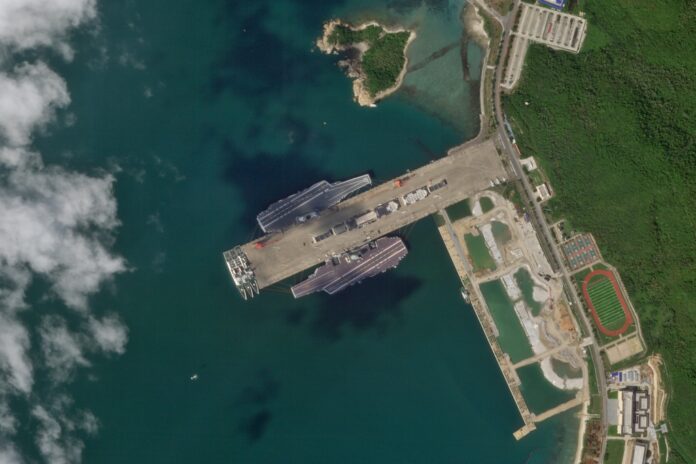
In this Oct. 8, 2025, satellite photo from Planet Labs PBC, the Chinese aircraft carriers Shandong and Fujian are seen at the Yulin Naval Base near Sanya, China. (Planet Labs PBC via AP)

BANGKOK (AP) — China has commissioned its latest aircraft carrier after extensive sea trials, state media reported Friday, adding a ship that experts say will help what is already the world’s largest navy expand its power farther beyond its own waters.

The official Xinhua news agency said the Fujian had been commissioned Wednesday at a naval base on southern China’s Hainan island in a ceremony attended by top leader Xi Jinping.

The Fujian is China’s third carrier and the first that it both designed and built itself. It is perhaps the most visible example so far of Xi’s massive military overhaul and expansion that aims to have a modernized force by 2035 and one that is “world class” by mid century — which most take to mean capable of going toe-to-toe with the United States.

With it, Beijing takes another step toward closing the gap with the U.S. Navy and its carrier fleet and network of bases that allow it to maintain a presence around the world.

“Carriers are key to Chinese leadership’s vision of China as a great power with a blue-water navy,” or one that can project power far from its coastal waters, said Greg Poling, director of the Asia Maritime Transparency Initiative at the Center for Strategic and International Studies.

China wants to contest waters as far as Guam

For China’s navy, one goal is to dominate the near waters of the South China Sea, East China Sea and Yellow Sea around the so-called First Island Chain, which runs south through Japan, Taiwan and the Philippines. But deeper into the Pacific, it also wants to be able to contest control of the Second Island Chain, where the U.S. has important military facilities on Guam and elsewhere, Poling said.

AP25290395763542
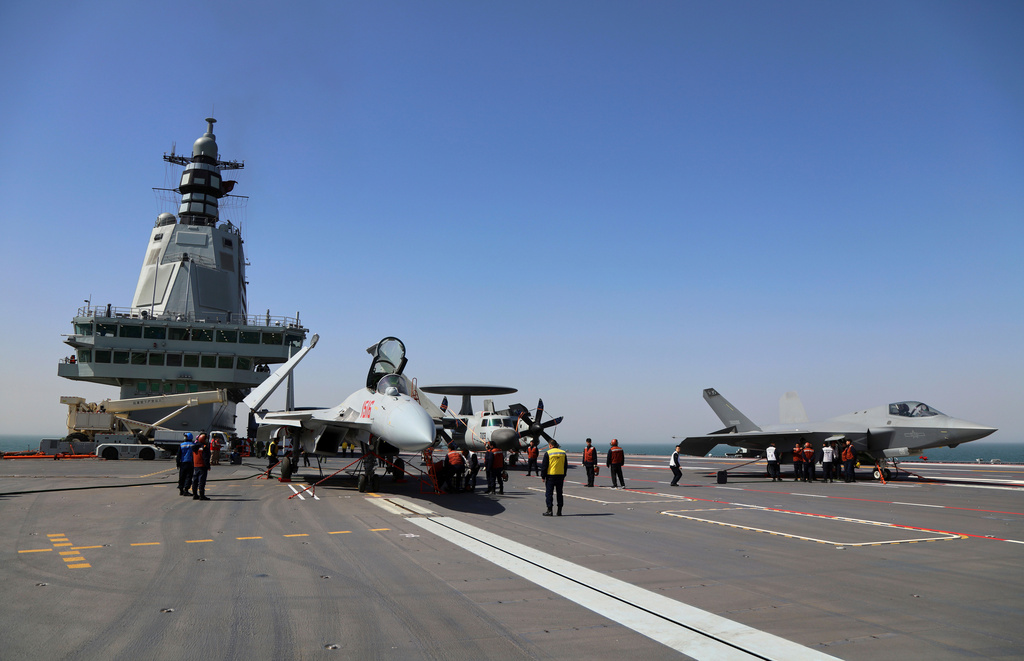
In this undated file photo released by Xinhua News Agency, crew members work on carrier-based aircraft from left, J-15T jet fighter, KJ-600 AWACS and J-35 stealth fighter jet on the flight deck of China’s third conventionally powered aircraft carrier, the Fujian as they conduct the electromagnetic catapult-assisted takeoff and arrested landing trainings on the aircraft carrier during a maiden sea trial. (Li Tang/Xinhua via AP, file)

“A carrier doesn’t really help you in the First Island Chain, but it’s key to that contest, if you want one, with the Americans in the wider Indo-Pacific,” Poling said.

China’s “increasingly capable military” and ability to “project power globally” is one of the reasons the Pentagon in its latest report to Congress continued to call it “the only competitor to the United States with the intent and, increasingly, the capacity to reshape the international order.”

At the same time, it is Beijing’s right to “transform its navy into a blue-water strategic navy commensurate with China’s national strength,” said Song Zhongping, a Hong Kong-based military affairs expert.

“China’s carriers cannot just operate near home, they must operate in the distant oceans and far seas to carry out various training and support missions,” Song said. “China is a great power and our overseas interests span the globe; we need to be globally present.”

The Fujian is a step in that direction.

One possibility that raises concerns in foreign capitals is a possible blockade or invasion of the democratically self-governed island of Taiwan, which China claims as its own territory and which leader Xi Jinping has not ruled out taking by force.

Though the island sits right off of China’s coast, if China had the ability to position an aircraft carrier group or groups around the Second Island Chain — between Taiwan and the U.S. Pacific Fleet headquarters in Hawaii — that could delay possible American military assistance in the event of a Chinese attack.

“They want those aircraft carriers to play a part in kind of extending the strategic perimeter farther out from China, and one of the important things that an aircraft carrier can do is extend the range of China’s domain awareness to keep an eye on activities in the air, on the sea, and below the sea,” said Brian Hart, deputy director of CSIS’s China Power Project

With the Fujian, China’s warplanes can deploy far from its shores

China’s first aircraft carrier, the Liaoning, was Soviet made and its second, the Shandong, was built in China but based on the Soviet model. Both use older-style ski-jump type systems to help planes take flight.

The Fujian skips past the steam catapult technology used on most American carriers to employ an electromagnetic launch system found only on the latest U.S. Navy Ford-class carriers.

The system causes less stress to the aircraft and the ship, allows for more precise control over speed and can launch a wider range of aircraft than the steam system. Compared to the ski-jump system, it gives China the ability to launch heavier aircraft, with full fuel loads, like the KJ-600 early warning and control plane, which it successfully tested during its sea trials.

Its latest J-35 stealth fighter and J-15T heavy fighter were also launched from the Fujian, giving the new carrier “full-deck operation capability” according to the Chinese navy.

The ability to carry its own reconnaissance aircraft means unlike its first two carriers, it won’t be operating blind when out of the range of land-based support, giving it the ability to operate its most advanced aircraft far afield including the Second Island Chain.

“The Fujian carrier is a big leapfrog for China in terms of the capabilities of its aircraft carriers compared to the first two,” Hart said .

China’s carriers aren’t nuclear powered, limiting their range

Still, Hart noted, China’s navy lags behind the U.S. in several significant ways.

Numerically it only has three carriers compared to the U.S. Navy’s 11, and while China’s carriers are all conventionally powered, the U.S.’s are all nuclear powered which means they can operate almost indefinitely without being refueled – dramatically increasing their range. The Ford-class carrier, of which only one is currently in service but more are being built, is also larger, can carry more aircraft on its flight deck, and has a third elevator that means it can move more aircraft from lower deck hangars in less time.

China also lags behind the U.S. in guided missile cruisers and destroyers, which are critical in providing air and submarine defense and support for larger naval groups, as well as nuclear-powered submarines.

The U.S. is also ahead in vertical launching system cells – basically the systems for holding and launching missiles from ships – which is a measure of how much firepower vessels can carry, though China is increasing that capacity, Hart said.

AP25290395784024
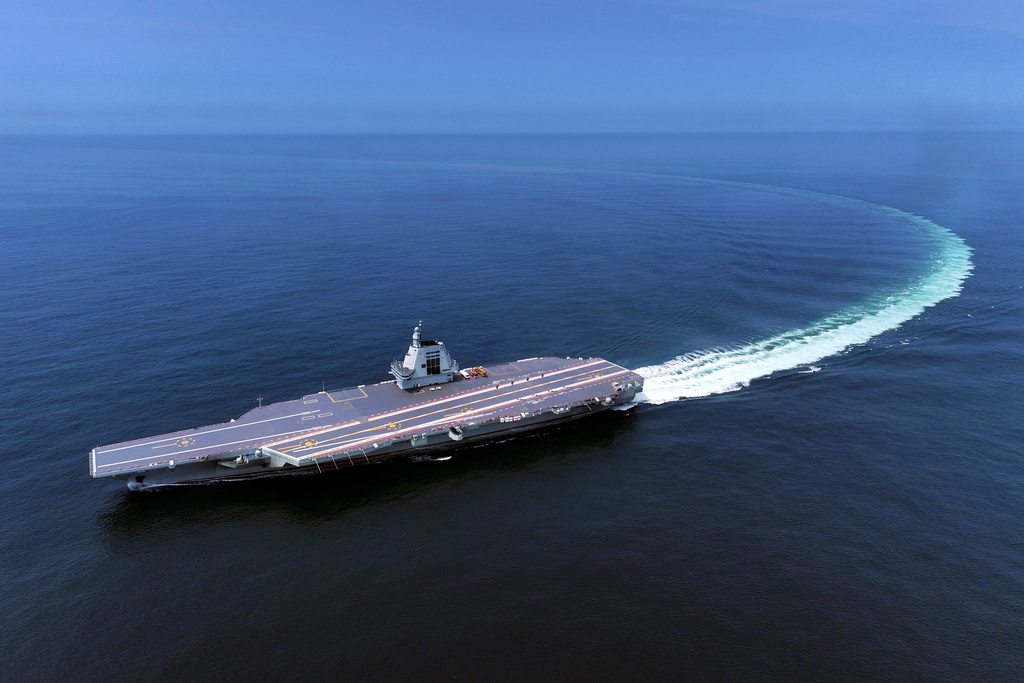
FILE – In this photo released by Xinhua News Agency, China’s third conventionally powered aircraft carrier, the Fujian, conducts a maiden sea trial on May 7, 2024. (Ding Ziyu/Xinhua via AP, File)

Beyond just equipment, China lacks the network of overseas bases that the U.S. has, which are critical for resupplying carriers and also providing alternative runways should aircraft not be able to return safely to the carrier.

China is working on expanding its foreign bases, however, and has a nuclear propulsion system for a carrier in development.

There’s also evidence that China is already building another carrier. Chinese shipyards have the capabilities to build more than one at once and have also been churning out other new vessels at a pace the U.S. can’t currently come close to matching.

“Really across the board, China’s closing the gap,” Hart said.

“They’re fielding and building more aircraft carriers, they’re fielding more nuclear-powered subs, they are fielding more, larger destroyers and other vessels that carry a larger number of missiles. So they’re really catching up.”

The Fujian is just one of China’s latest military assets

China has happily shown off its new military assets, releasing video of the KJ-600, J-35 and J-15T test flights from the Fujian.

A World War II Victory Day parade at the start of September showcased all three aircraft along with hypersonic glide vehicles — whose high-speed, maneuverability and other attributes make them more difficult to intercept than traditional ballistic missiles — aerial and underwater drones and electronic warfare systems.

Sophisticated new equipment does not necessarily translate to military readiness, however, said Singapore-based analyst Tang Meng Kit, who noted that China hasn’t fought a war since 1979 and that the carefully choreographed parade was good at “amplifying perceptions of strength.”

“It is possible that China’s capabilities are overstated, as real-world operational readiness lags behind its showcased arsenal,” he told the AP.

He also cautioned in a recent analysis for the S. Rajaratnam School of International Studies in Singapore that it would be a mistake to see China’s military modernization as simply geared toward a possible Taiwan invasion, which he said is only one part of a “larger mosaic.”

The parade “signaled China’s broader strategic intent, which is to deter major powers, pressure regional actors, expand its global influence, and reinforce its domestic legitimacy,” he said.

___________

Advertisement

Hot News

LATEST NEWS

Bangkok
broken clouds
36.6 ° C
37.8 °
35.5 °
47 %
3kmh
82 %
Mon
35 °
Tue
37 °
Wed
37 °
Thu
36 °
Fri
36 °