



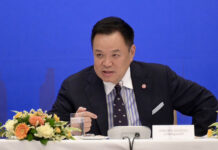
























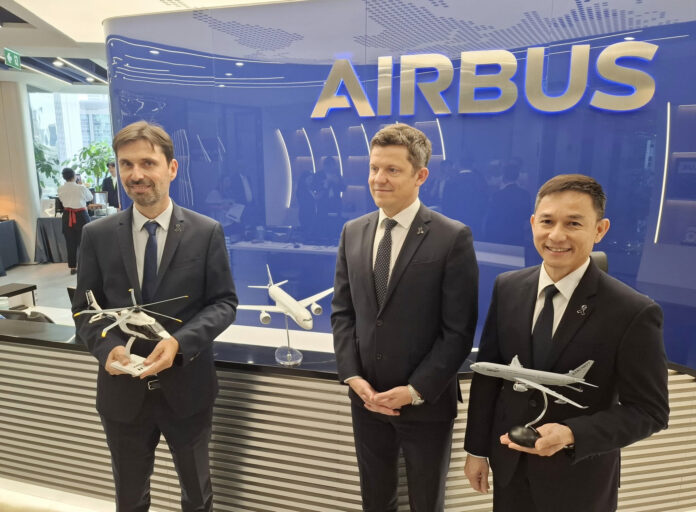
BANGKOK — Airbus will renew its cooperative agreement with Thai Aviation Industries (TAI), a state enterprise under the Royal Thai Air Force, on November 10 as part of plans to expand its long-term presence in Thailand, company executives said Friday.
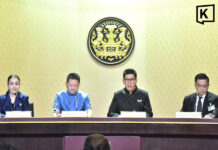
At a press conference in Bangkok, Airbus officials said they aim to sell more aircraft and helicopters to support Thailand’s defense, security, and disaster-response capabilities.
Airbus’s relationship with TAI began in 2017 with “after-sales support” for government helicopter fleets. TAI is also the main service provider for the Thai armed forces and police. Bert Porteman, Airbus Chief Representative for Thailand, said Airbus is a strategic market for its firm while the company is a trusted partner and is here in Thailand for long-term cooperation.
Porteman pointed out that the aviation giant first supplied a commercial aircraft to Thailand—an A300-B4 passenger aeroplane—back in 1977 and at present, there are 140 Airbus commercial aeroplanes in Thailand, 70 Airbus civil, paramilitary and military helicopters used by the Thai government, and over 15 Airbus military transport aircraft are currently in service with various national agencies and armed services, supporting not just military missions from troop and cargo transport but also for search and rescue (SAR), emergency medical services (EMS), with one order made in September.
With four decades of partnership with Thailand, Airbus executives highlighted some new aircraft, helicopters and drones they will try to display at next week’s Defence & Security exhibition at IMPACT Muang Thong Thani, and hope to eventually sell some to Thailand.
Airbus’ sales pitch to expand its footprint in Thailand and supporting Thailand’s longer-term needs includes selling a package of “mixed-fleet strategy” by combining its A400M, A330 MRTT and C295 aircraft in order to provide Thailand with a “full spectrum solution for missions ranging from defence to disaster response.”
Zakir Hamid, head of Asia-Pacific for Airbus Defence and Space, said at the Airbus office in Bangkok that the firm offers a “future-ready defence system” to Thailand. Its A330 MRTT, for example, can help enhance mobility and operation reach of the Thai armed forces as well as its capability for humanitarian missions.
The aircraft consumes 8 per cent less fuel than its rivals and emits lower noise, said Hamid.
According to Airbus, the aircraft is a “true multi-role aeroplane,” used for refuelling, transport of up to 300 passengers, freight transport, as well as VIP transport. It can carry a load of up to 45 tonnes.
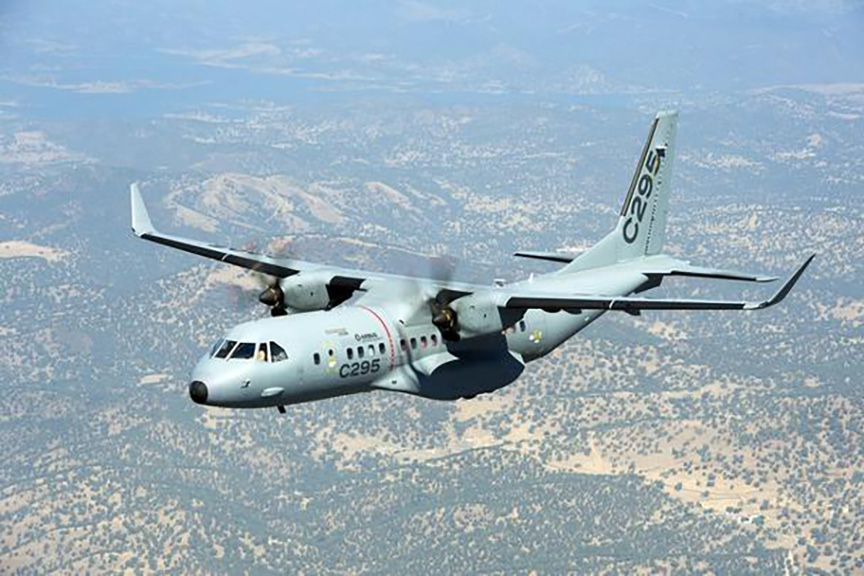
Meanwhile, its C295 aeroplane is described as a reliable and versatile workhorse with “exceptional versatility,” said Hamid, that can be used for firefighting as well as search and rescue and is easy and economical to maintain. It is used in 38 countries.
Besides helicopters, Airbus also offers a high-performance unmanned aerial vehicle, or drone, called SIRTAP which can be used for maritime survey, tactical defence and border protection. It can be airborne for up to 20 hours and has a range of 2,000 kilometres.
Alexandre Sanchez, Managing Director of Airbus Helicopters, not only introduced new multi-purpose helicopters like H160, with the French Navy currently has six for search and rescue, but a new unmanned aerial vehicle called Flexrotor which has a unique fixed wing and compact footprint. Sanchez said this aerial vehicle can be used for real-time intelligence gathering in disaster zone and remote areas and can be used in GPS-denied environment for defence and security.
Flexrotor is attracting interests in the Asia and Pacific region, said Sanchez.
__________