



























36.1 C
Bangkok
Sunday, June 21, 2026
Home Blog Page 2284

Obama Pushes Tolerance, Respect in Childhood Home Jakarta

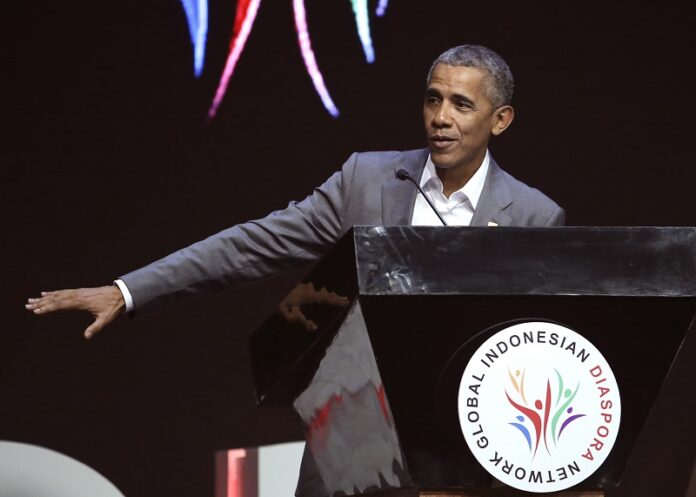
Former U.S. President Barack Obama gestures as he delivers his speech during the 4th Congress of the Indonesian Diaspora Network on Saturday in Jakarta, Indonesia, Saturday. Photo: Achmad Ibrahim / Associated Press

JAKARTA — Following another week of dust-ups between the media and President Donald Trump, his predecessor shared a bit of wisdom from the other side of the world about tolerance and taking the daily news cycle in stride.

“I wasn’t worried about what was in the newspapers today,” former President Barack Obama said Saturday during a nostalgic visit to Indonesia’s capital, his childhood home. “What I was worried about was, ‘What are they going to write about me 20 years from now when I look back?'”

Obama has largely stayed away from U.S. politics and the Trump administration, but he did tout one of his accomplishments while in office.

“In Paris, we came together around the most ambitious agreement in history about climate change, an agreement that even with the temporary absence of American leadership, can still give our children a fighting chance,” he said.

Trump shocked many countries last month by announcing he was pulling out of the accord. He has also had a difficult relationship with members of the press and was recently condemned by Democrats and Republicans for a tweet that attacked a female MSNBC host.

Obama stressed the importance of stepping away from news sites where only like-minded views are shared, and warned about social media giving rise to resentment of minorities and bad treatment of people.

The former president was greeted by a crowd of thousands, including leaders, students and businesspeople, in Jakarta, where he opened the Fourth Congress of Indonesian Diaspora. He is wildly popular in Indonesia, where many view him as an adopted son. A statue of the boy still remembered as “Barry” stands outside his old elementary school.

He reminisced about moving to Jakarta in 1967 when he was just 6 years old, shouting, “Indonesia bagian dari diri saya!” or “Indonesia is part of me!”

Obama said he had been gorging on the local food since arriving.

“If the rainy season came, the floods were coming and we had to clean out the floors in our house and then chase the chickens because they had gone someplace else,” he said to roaring laughter. “Today, Jakarta is a thriving center of commerce marked by highways and high-rises. So much has changed, so much progress has been made.”

Obama lived in the country with his mother, an anthropologist, and his Indonesian stepfather. The couple split up after having his half-sister, and Obama moved back to Hawaii when he was 10 to live with his grandparents. But he said he has never forgotten the years he spent in Indonesia.

“My time here made me cherish respect for people’s differences,” he said, noting how he and his family had just visited two of the most treasured ancient temples — Borobudur, a Buddhist complex, and the Hindu compound of Prambanan — in the world’s most populous Muslim country.

Obama’s speech came on the final leg of his 10-day vacation in Indonesia. In addition to visiting the temples in the city of Yogyakarta on the island of Java, he and his wife, Michelle, and daughters, Sasha and Malia, also went rafting and toured the resort island of Bali. On Friday, he met Indonesian President Joko “Jokowi” Widodo at the grand Bogor Palace in West Java, just outside Jakarta.

The Indonesian visit marked Obama’s first trip to Asia since leaving office. He urged the country to be a light of democracy and to never stop embracing differences. Indonesia has faced a rise in Islamic radicalism and anti-gay attacks, and was recently condemned by rights groups for jailing Jakarta’s former governor, an ethnic Chinese Christian, for blasphemy.

“The spirit of this country has to be one of tolerance. It’s enshrined in Indonesia’s constitution, it’s symbolized by mosques and temples and churches beside each other,” Obama said. “That spirit is one of the defining things about Indonesia. It is one of the most important characteristics to set as an example for other Muslim countries around the world.”

Story: Margie Mason
Advertisement

Hundreds of Thousands Rally for LGBTI Rights in Madrid

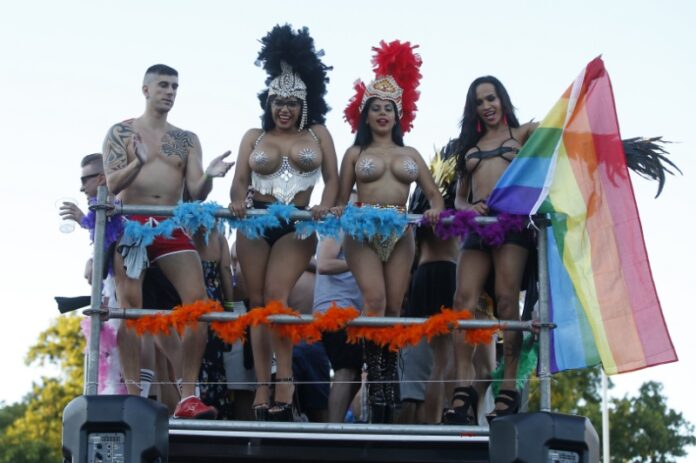
MADRID — Hundreds of thousands of people marched Saturday in a global gay pride demonstration in Madrid under tight security, and a parade of 52 floats took the festivities through the Spanish capital and into the night.

The rally was led by all of Spain’s major political parties, both left and right, who carried a large banner that read “For LGBTI Rights All Over the World.” Behind them came a slow-moving mass of people decked out in rainbow flags and colorful outfits, dancing to music under the southern European sun.

The march included several groups from other countries, including the United States and Britain, as well as groups ranging from rural lesbians to gay and lesbian police officers.

“For all the people in countries who are suffering persecution, we have to celebrate and make visible our pride,” Jesus Generelo, the head of the Spanish federation of LGBT people, told a large crowd from an outdoor stage after the march.

Four activists read a manifesto that urged the European Union to help export LGBTI rights around the world, with particular emphasis on Chechnya, Russia, and other countries that discriminate, criminalize or torture gay people. It also demanded that the World Health Organization stop categorizing transgender identity as a mental illness.

The massive outdoor gathering was the highlight of the 10-day World Pride 2017 festival, which concludes on Sunday. The multi-national event was held in London in 2012, Toronto in 2014, and it will next be in New York in 2019.

While Spanish police said they had no indications of any planned attacks by extremist groups, authorities reduced the traffic flow in Madrid on Saturday, banned heavy trucks and deployed 3,500 police in the city center.

Spain has become one of the most progressive countries for gay rights. It was ahead of most countries in legalizing same-sex marriages and adoptions in 2005. Parliament is planning a new law to ensure that all government offices remove barriers to ensure LGBTI equality.

Story: Joseph Wilson

Advertisement

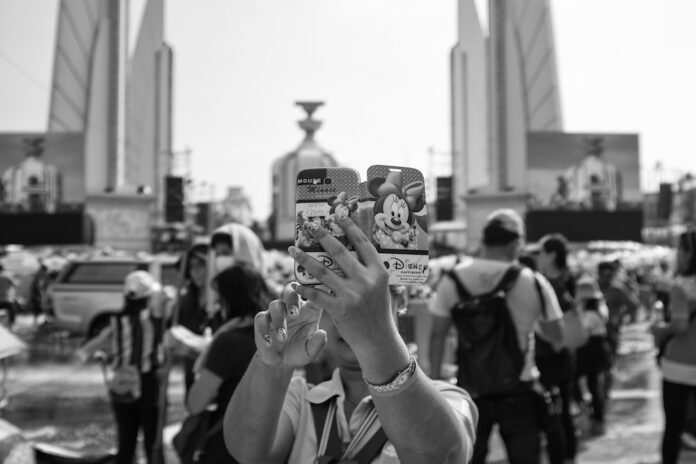
See Selfies Scripting History at Photo Exhibit

Photo: Peera Vorapreechapanich/ Courtesy.

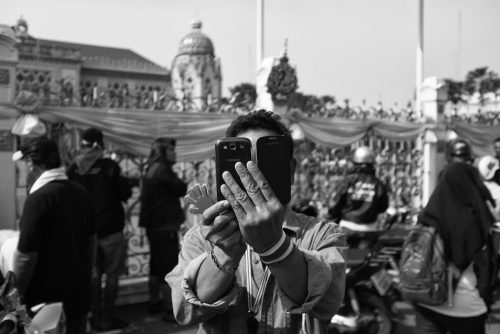
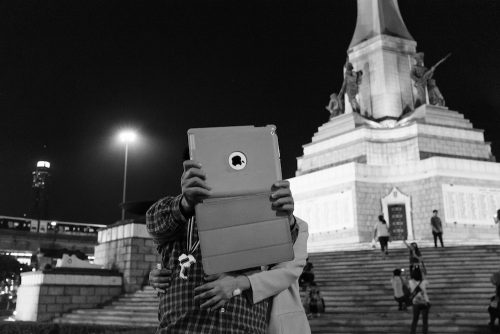
BANGKOK — With the advent of the selfie came the power for everyone to write history from their own perspective. An emerging Thai photographer captured people in this iconic pose at a political gathering which led the country to where it is today.

It’s no longer an era where only those with proper cameras can write history, as anyone with a smartphone can now be a part of it, simply by taking selfies in any event.

“Technology has changed and now everyone can write history from their own perspective,” said photographer Peera Vorapreechapanich on the phone. “Mobile phones have given people equal power to record their own account of history and pin in on their timelines.”

Twenty-six photos will be on display showing protesters engaged in political gatherings that the 29-year-old photographer spent 6 months capturing, during the time the People’s Democratic Reform Committee demanded then-Prime Minister Yingluck Shinawatra be removed from power in between 2013 and 2014.

Peera said the protests coincided with the popularity of the word “selfie” – designated international Word of the Year by Oxford Dictionary in 2013.

He recounted seeing a man taking selfies amidst an intense situation and another taking selfies before the backdrop of a burnt car on Ratchadamnoen road for more than 30 minutes.

“It’s good to notice how people write their story with political protests in the background so that we can learn how people interact with each situation,” said Peera.

All photos are in monochrome, as the photographer wanted to keep them thematically uniform for visitors to focus on the situations, rather than the colors of each photo.

“Check-In” exhibition will launch at 7pm on Saturday and run through Aug. 19 at Soy Sauce Factory. It’s on Soi Charoen Krung 24, a 15-minute walk from MRT Hua Lamphong exit No. 1.

Checkin 001
Photo: Peera Vorapreechapanich/ Courtesy.
Checkin 003
Photo: Peera Vorapreechapanich/ Courtesy.

Advertisement

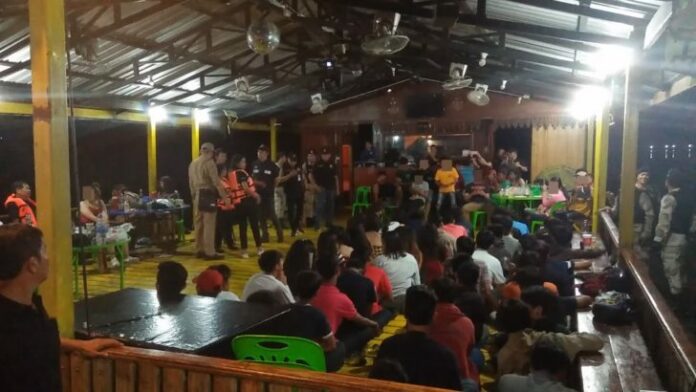
Cops Raid 5 Party Rafts With 186 Minors Aboard in Kanchanaburi

Authorities examine disco raft filled with juveniles in Kanchanaburi Friday night

KANCHANABURI — Police on Friday night raided five disco rafts along Kwai Noi River and found all of those aboard were minors.

After residents complained of loud noises and disturbances to the Damrongdhama Center of the interior ministry about juveniles partying on disco rafts along Kwai Noi River, authorities raided them to find all 186 of them were below 20.

Barred from entering pubs and clubs in Kanchanaburi, teens have resorted to party and drink alcohol on disco rafts.

“It’s dangerous for juveniles to party in a raft alone without adults and it’s our duty to investigate,” Police Col. Tossaporn Pathumya of Amphoe Muang station said on the phone Saturday afternoon.

He said officials had previously discussed the issue with all raft operators three times. He said that while many were willing to cooperate, others ignored the warning just to make profit.

While pubs and bars forbid entry to minors, there’s no official regulation to limit the age of those who wish to rent rafts.

Tossaporn said that there are more than 100 rafts in Kanchanaburi, some of which are sleeping rafts and other disco raft. He said normally, youths are accompanied by parents.

“There’s no adult or security guard on the raft. Who’s going to help them if there’s a fight or something bad happens on board?” Tossaporn added.

After the raid, the minors were taken to Amphoe Muang police station to record their personal information with officials from the Ministry of Social Development and Human Security and wait for their families to take them home as required by the Child Protection Act, he said.

Tossaporn said raft operators and those in business will be asked to attend a panel with authorities to find a solution to the issue.

Advertisement

Tailor-made Repression and Unyielding Spirit

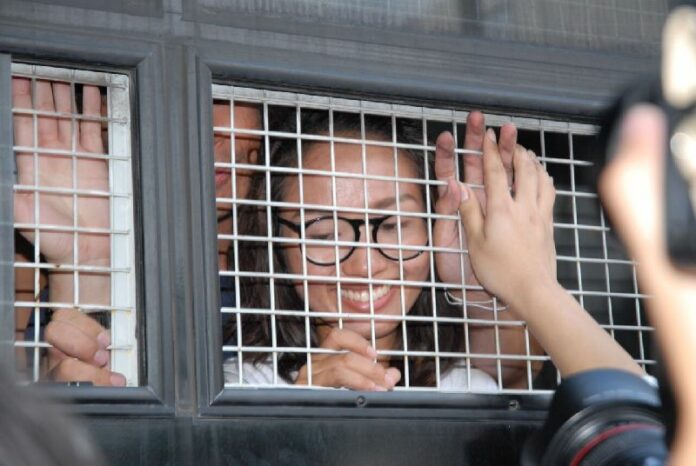
Chonticha Jangrew and 13 other pro-democracy activists are arrested in Bangkok on 26 June 2015.

retention.column

In a world of targeted advertisements and surgical strikes, the Thai military junta is apt at tailor-made suppression of its opponents.

If you are among those influencers who haven’t given up opposing, or at least publicly resisting, the military regime, which has taken root since 2014, there’s a high chance you might have encountered junta agents during the past three years.

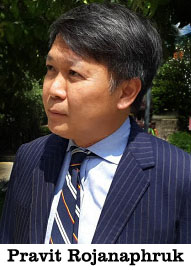
Pravit.mug .column.final

This includes soldiers or police knocking unannounced on your door very early in the morning, soldiers or police ringing you up and requesting you don’t say or do something at a public symposium or touch upon a particular topic if you are a reporter. If you are young enough – as in a university student or a fresh graduate – junta reps will try to befriend or threaten your parents as well, whichever way proves more effective. On social media, junta agents will follow you on Twitter or request you to add them on Facebook. They may visit the odd art gallery to pull something off the wall they don’t like or block the Charlie Chaplin silent film “The Great Dictator” on YouTube, as they did June 24, the anniversary of the revolt which ended absolute monarchy.

Big Brother is watching you, and where they are not physically present, warnings sometimes come from people just genuinely concerned about their children.

“Yesterday I was talking to my dad and he told me if anyone says anything bad about [the] junta, they are sure to go to jail or get sent away,” a 30-something, Western-educated daughter of a former diplomat informed me Wednesday on Facebook.

The junta’s objective in tailor-made repression is to atomise opponents and break their will, one by one – while avoiding a Tiananmen moment. Some 300 people have been tried in military courts for opposing the junta since the coup. At least 94 have been detained inside military camps.

One such dissident, 24-year-old Chonticha Jangrew, a former member of the New Democracy Movement, was diagnosed with PTSD after three years of resistance which included 13 days in prison for violating the ban on political gatherings along with her colleagues back in 2015. Soldiers also visited her parents’ home more than 50 times, during which time she moved five times to avoid their unannounced harassment. She’s currently taking a break upcountry from the stress of resisting the military junta.

Activist Rangsiman Rome, a high-profile anti-junta activist formerly of the New Democracy Movement and now part of the Democracy Restoration Group, was detained again overnight at a police station Sunday before he was scheduled to press the prime minister on the controversial Sino-Thai rail project.

Rangsiman, perhaps recognizing him and his comrades alone cannot prevail, urged people after his release Monday.

“We cannot expect the future to be better than this if we do not do anything today,” he said.

Many opponents of the military regime have already resigned to the fact that the junta will stay on for more than another year until it relents by allowing elections to take place or until it self-destructs.

Compared to those who are unhappy with the junta but decided to lie low, people such as Rangsiman and Chonticha are sharing an unfair amount of burden.

In a way, those still opposing the military junta three years on against all odds may find docile acceptance of military rule more painful and unacceptable than doing something to challenge the junta. They are paying a dear price for doing so because what their free spirits demand of them.

They chose to try to do whatever they could and that’s what counts. Idealism often clashes with the instinct for self-preservation. People balance it out differently.

Winning or losing, three years on, these people have demonstrated man’s unyielding spirit because to be free is to be human and not slaves. The junta may still be in power three years on, but it has failed to win or control these people’s hearts or break their unyielding spirit.

Advertisement

China’s Xi: No Tolerance for Subversion in Hong Kong

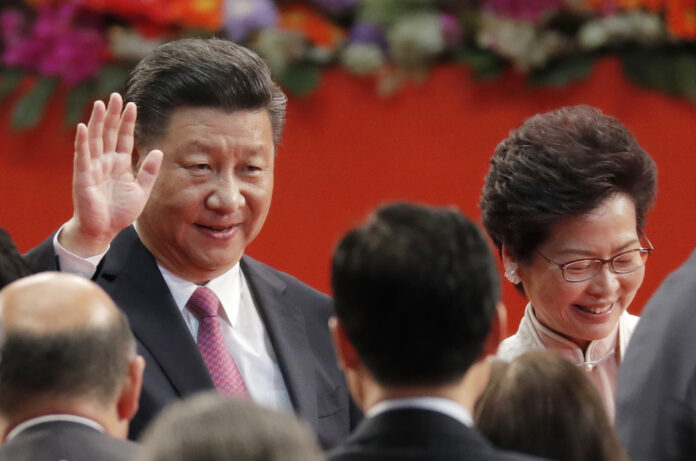
Chinese President Xi Jinping, left, and Hong Kong's new Chief Executive Carrie Lam leave after administered the oath for a five-year term in office at the Hong Kong Convention and Exhibition Center in 2017. Photo: Kin Cheung/ AP.

HONG KONG — Chinese President Xi Jinping on Saturday said any activities in Hong Kong seen as threatening China’s sovereignty and stability would be “absolutely impermissible,” employing some of his harshest language yet toward pro-democracy activities in the territory.

In a speech marking 20 years since the city became a semi-autonomous Chinese region after its handover from Britain, Xi pledged Beijing’s support for the “one country, two systems” blueprint, under which Hong Kong controls many of its own affairs and retains civil liberties including free speech.

However, he said Hong Kong had to do more to shore up security and boost patriotic education, in a veiled reference to legislation long-delayed by popular opposition.

And he appeared to put on notice a new wave of activists pushing for more autonomy or even independence, saying challenges to the power of China’s central government and Hong Kong’s leaders wouldn’t be tolerated.

Any attempt to challenge China’s sovereignty, security and government authority or use Hong Kong to “carry out infiltration and sabotage activities against the mainland is an act that crosses the red line, and is absolutely impermissible,” Xi said.

Hong Kong has been roiled by political turmoil in recent years that brought tens of thousands of protesters onto the streets in 2014 demanding democratic reforms. Those calls were ignored by Beijing and Xi indicated there would be no giving ground in the future.

“Making everything political or deliberately creating differences and provoking confrontations will not resolve the problems,” he said. Hong Kong “cannot afford to be torn apart by reckless moves or internal rifts.”

While former colonial master Britain and other Western democracies have expressed concerns about Beijing’s actions in Hong Kong, China has increasingly made clear it brooks no outside criticism or attempts at intervention.

Xi said China had made it “categorically clear” in talks with Britain in the 1980s that “sovereignty is not for negotiation.”

“Now that Hong Kong has returned to China, it is all the more important for us to firmly uphold China’s sovereignty, security and development interests,” he said.

Chinese foreign ministry spokesman Lu Kang sent a similar message in Beijing on Friday, saying Hong Kong was strictly China’s domestic affair.

The 1984 Sino-British Joint Declaration laying out terms for Hong Kong’s return to Chinese rule is “no longer relevant today, and has no binding force on the Chinese central government’s governance over Hong Kong,” Lu said.

“The U.K. has no sovereignty, governance right or the right of supervision over today’s Hong Kong. We hope the relevant people can be aware of the reality,” Lu said.

Earlier, Xi presided over a swearing-in ceremony for Carlie Lam, Hong Kong’s fifth chief executive since 1997. The life-long bureaucrat and her Cabinet swore to serve China and Hong Kong and to uphold the Basic Law, the territory’s mini-constitution.

In a speech that ran far shorter than Xi’s 32-minute address, Lam reviewed the dynamic financial center’s achievements and challenges, pledged to support central government initiatives and declared that “the future is bright.”

Lam prevailed over a much more popular rival in an election decried by many as fundamentally undemocratic, with only a sliver of a percent of Hong Kong’s more than 3 million registered voters taking part.

Xi was due to return to Beijing midday Saturday. His three-day visit aimed at stirring Chinese patriotism had prompted a massive police presence and also included a visit to the People’s Liberation Army garrison, which usually maintains a low profile in the territory.

Ahead of a flag raising ceremony Sunday, a small group of activists linked to the pro-democracy opposition sought to march on the venue carrying a replica coffin symbolizing the death of the territory’s civil liberties. They were swiftly stopped by police and Chinese flag-waving counter protesters, with the action ending about an hour later.

Xi’s remarks will likely fuel fears among critics that Beijing’s ruling Communist Party is tightening its grip over the city’s political and civil affairs following a string of recent incidents.

Those include the abductions of five Hong Kong booksellers to the mainland starting in late 2015 for selling gossipy titles about elite Chinese politics to Chinese readers. One of the men, Gui Minhai, is still being held.

In a similar case, a Chinese-born tycoon with a Canadian passport went missing earlier this year from his hotel suite. News reports indicated mainland Chinese security agents operating in Hong Kong abducted him — a step that would violate the Basic Law.

A plan to station Chinese immigration officers in a high-speed rail terminal under construction has also raised hackles, along with the establishment of a local branch of Beijing’s Palace Museum without public consultation.

Concerns are also high over the two long-delayed policies Xi referenced in his speech: the so-called patriotic national education in schools that many parents fear is a cover for pro-Communist brainwashing, and the anti-subversion national security legislation.

Inflows of “red capital” from mainland property investors and businesses are also seen as leaving indigenous tycoons at a disadvantage, while further inflating housing prices that make Hong Kong one of the world’s most unequal places.

Story: Kelvin Chan and Christopher Bodeen

Advertisement

Suspected Militant Stabs 2 Indonesian Cops Inside Mosque

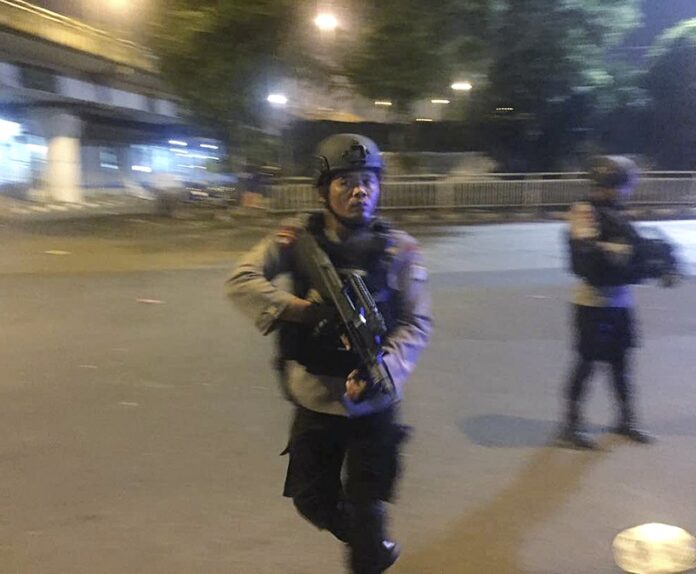
Police officers arrive on the scene after an explosion in May near a bus stop in the Kampung Melayu area of Jakarta, Indonesia. Photo: Achmad Ibrahim / Associated Press

JAKARTA — A suspected Islamic militant stabbed two policemen with a bayonet inside a mosque Friday before being fatally shot by another officer, Indonesian police said.

The attacker used a bayonet to stab the two policemen after they finished Friday night prayers at a mosque near the national police headquarters in Jakarta, national police spokesman Setyo Wasisto said. The officers were hospitalized with injuries to the ear and neck.

Wasisto said the attacker ran out of the mosque and shouted “kafir,” which means “infidel” and “Allah Hu Akbar,” which means “God is great.” Another officer ordered him to surrender, fired warning shots, then shot the attacker.

An identity card was found with the attacker, but Wasisto said that needed to be verified with the address and possibly families before announcing his identity.

It was the second recent attack against police. On Sunday, just before Muslims celebrated the end of Ramadan, two suspected militants attacked a provincial police headquarters in Medan, the provincial capital of North Sumatra, leaving an officer and an assailant dead.

Wielding a knife and a machete, the men stormed the police headquarters and stabbed to death an officer. Responding officers shot the two attackers, killing one and seriously wounding the other.

Indonesia, the world’s most populous Muslim nation, has carried out a sustained crackdown on militants since the 2002 Bali bombings that killed 202 people, but a new threat has emerged from Islamic State group sympathizers. In recent years, smaller and less deadly strikes have been targeting the government, mainly police and anti-terrorism forces.

Twin suicide bombings last month killed three officers in the deadliest militant attack in Jakarta in a year. Police have announced that they had arrested 41 suspected militants following the bombing, allegedly carried out by members of Jemaah Anshorut Daulah, which is affiliated with the Islamic State group.

Advertisement

Myanmar to Bar UN Human Rights Investigators

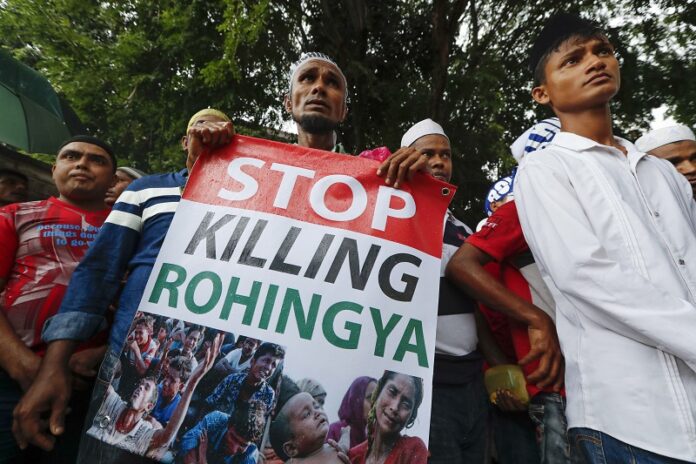
An ethnic Rohingya holds a banner during protest after Friday prayers outside the Myanmar Embassy in 2016 in Kuala Lumpur, Malaysia. Photo: Vincent Thian / Associated Press

YANGON — Myanmar’s government said Thursday it will instruct its embassies around the world to bar members of a U.N.-approved fact-finding mission from entering the country to investigate alleged human rights violations by security forces against the Muslim Rohingya minority and other groups.

Deputy Foreign Minister Kyaw Tin told parliament that the government will not cooperate with the mission, reiterating the position taken by the country’s leader, Aung San Suu Kyi, that its work would be counterproductive.

The U.N. Human Rights Council approved the mission by consensus in March in response to international pressure, and in May, it appointed three legal experts and human rights advocates to lead it.

Last October, the army launched counterinsurgency operations in Rohingya areas in the western state of Rakhine after the killing of nine border guards. U.N. human rights investigators and independent rights organizations charge that soldiers and police killed and raped civilians and burned down more than 1,000 homes during the operations.

The Rohingya face severe discrimination in Buddhist-majority Myanmar and were the targets of inter-communal violence in 2012 that killed hundreds and drove about 140,000 people — predominantly Rohingya — from their homes to camps for the internally displaced, where most remain.

Myanmar officials insist their own efforts to deal with the problem are adequate. Kyaw Tin said the government is complying with and implementing recommendations made by an advisory committee appointed by Suu Kyi and led by former U.N. Secretary-General Kofi Annan. Critics charge the government’s initiatives cannot come up with a fair solution because some of the people involved are biased.

The government’s position was applauded by Than Tun, a senior leader of the Rakhine Buddhist community, which has generally promoted confrontations with its Rohingya neighbors and sought to exclude third party observers and mediators.

“I think the government is doing what they should do,” he said. “We have disagreed since the beginning with the formation of Kofi Annan’s Rakhine Advisory Committee, because this is our country and we have the right to solve the problems under the sovereignty of our country and there shouldn’t be any outsiders’ interference in our issues. That’s why we accept and support the Myanmargovernment’s decision on rejecting the fact-finding mission.”

Story: Esther Htusan

Advertisement

15 Luxury Cars Stolen in UK Seized by Thai Customs

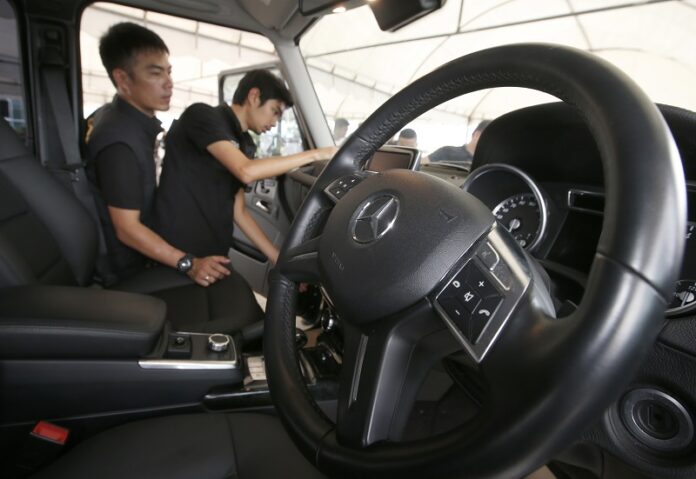
Customs officers check a seized Mercedes GLE 350 during a Friday press conference at the customs office in Bangkok. Photo: Sakchai Lalit / Associated Press

BANGKOK — Thai customs officials said Friday they have seized 15 of 42 luxury cars that British authorities said were stolen and sent to Thailand.

A request from British authorities to find stolen cars believed to have been transported to Thailand has led to the seizure of 122 vehicles imported by Thai dealerships. Of those, 15 were found to be stolen in the U.K. Thai customs officials say they are investigating about 300 other vehicles suspected to have been illegally imported.

Customs officials displayed a Mercedes GLE 350 and a Nissan GTR at a news briefing Friday, part of the batch sought by Britain. The customs bureau said the cars were seized when their Thai importer attempted to ship them out of Thailand to evade officials.

Kulit Sombatsiri, director-general of Thai customs, said the vehicles that British authorities are seeking were partially paid for in monthly installments by U.K. buyers before being sold on the black market.

“The buyers only paid around 5 or 10 percent of the car’s cost and they would then sell it,” he said. “In the United Kingdom, they classify these cars as stolen.”

Police raids on May 18 and 22 resulted in the seizure of 122 cars that included luxury brands such as Lamborghini, Rolls Royce, McClaren and Lotus.

Of the 122 cars seized, 31 Lamborghinis and a Lexus were declared to Thai customs as cheaper models than they actually were, which amounted to around 650 million baht (USD$19 million) worth of losses in tax collection, police said.

Further investigations revealed that eight of 11 Lamborghini Aventadors imported from the U.K. were registered with Thai customs as the cheaper Gallardo model.

Two other Lamborghinis were registered as being shipped partially assembled from the U.K. and later assembled in Thailand. Police suspect the cars were fully assembled before they were shipped.

Cars that are delivered in parts to be assembled in Thailand can be taxed up to 80 percent of their value while authorities can tax fully assembled imports up to 328 percent.

Story: Kaweewit Kaewjinda

Advertisement

UK Man Jailed After Hitting Muslim Teen With Bacon

Photo: Anders Tversted / Flickr

LONDON — A British man has been jailed after hitting a Muslim teen with a slab of bacon after hurling insults at her and her mother.

Alex Chivers was sentenced at a London court on Thursday to six months in jail for assault and a public order offense. The 36-year-old admitted to religiously or racially-aggravated assault.

Police said Friday that he approached two Muslims on June 8 in north London and made abusive Islamophobic comments before striking the teen with bacon.

Detective James Payne said other people were present during the attack including someone who filmed the incident. Payne called the assault “truly shocking.”

It came five days after Islamic extremists attacked people on London Bridge and at Borough Market.

British police have reported a rise in hate crimes.

Advertisement

Hot News

LATEST NEWS

Bangkok
broken clouds
36.1 ° C
36.6 °
35.5 °
57 %
3kmh
65 %
Sun
35 °
Mon
37 °
Tue
37 °
Wed
37 °
Thu
37 °