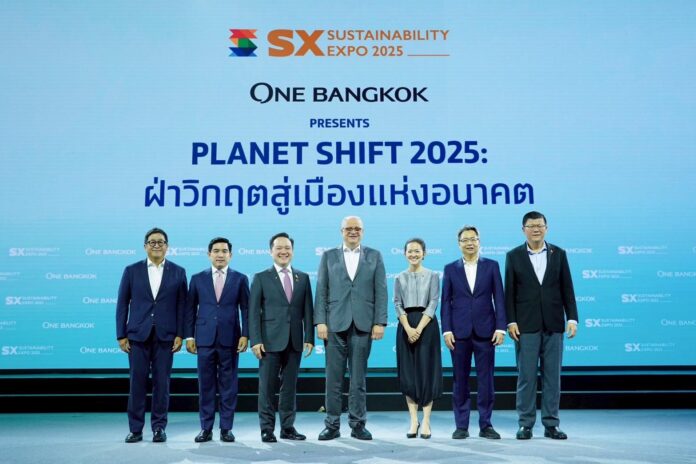
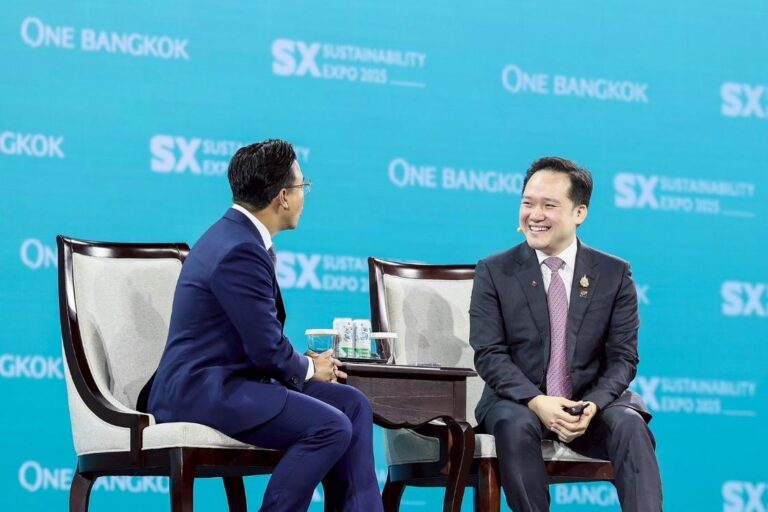
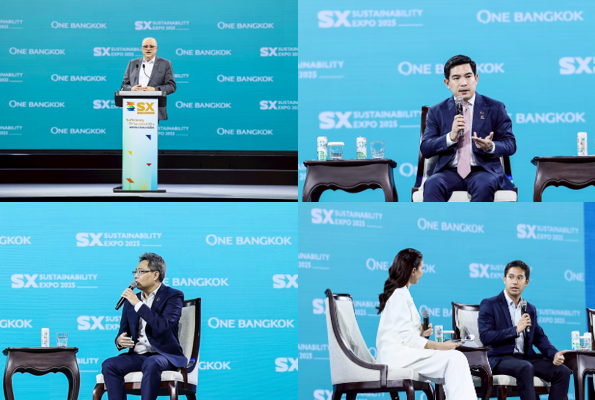
Bangkok – 21 October 2025 – At the recent Sustainability Expo 2025, One Bangkok hosted a special forum titled “Planet Shift 2025: Navigating the Crisis Towards the City of the Future.”
Leaders from the public and private sectors participated, shared collaborative efforts to advance the city. The discussion aimed to transform the mindset from “adapting to change” to “designing the future” for true sustainability.
The forum’s keynote speaker, Dr. Youssef Nassef, Director of the Adaptation Division at the United Nations Framework Convention on Climate Change (UNFCCC), urged a shift towards proactive design, stating, “The future does not happen to us. We happen to the future.”
This vision was echoed by Panote Sirivadhanabhakdi, Group Chief Executive Officer of Frasers Property Limited, who introduced the private sector’s framework of “Moderation, Reasonableness, and Prudence”, an extension of the sufficiency economy philosophy.
He stressed that sustainability is an inclusive process of collective growth, a philosophy embodied by One Bangkok. This very philosophy is meticulously woven into the fabric of One Bangkok, conceived as far more than a real estate venture.
It is a meticulously designed urban ecosystem, seamlessly integrating economic, social, and environmental dimensions to cultivate a city that thrives with enduring stability and shared value. This vision perfectly encapsulates Frasers Property’s purpose: “Inspiring experiences, creating places for good.”
A concluding panel discussion confirmed robust cross-sector collaboration. Representatives from the Bangkok Metropolitan Administration, the financial sector (Bangkok Bank), and One Bangkok shared a unified commitment to balancing development with environmental stewardship through green investments and public-private partnerships.
Urasate Navanugraha, Chief Investment Officer of One Bangkok, detailed how this “sufficient investment” yields tangible returns. He highlighted that One Bangkok exemplifies this byefficiently utilizing prime downtown land while devoting a substantial 25 rai of lush green space back to the city.
Beyond this, its meticulously planned infrastructure actively promotes public transportation, offers direct connection to the expressway to alleviate traffic congestion, and incorporates utility systems designed for optimal energy and water conservation.
Tangible examples include a centralized air conditioning system that achieves up to 15% energy savings and a water recycling system projected to save nearly 3 million cubic meters of tap water annually.
Urasate noted that this approach not only reduces operational costs but also attracts sustainability-conscious clients and streamlines access to Green Financing.
These insightful discussions demonstrate the commitment and robust collaboration across all sectors towards building the city of the future. This vision extends beyond mere aesthetics and prosperity, firmly embracing sufficiency, enduring sustainability, and a harmonious equilibrium between economic vitality, societal well-being, and environmental stewardship.
The journey towards this transformative future begins with a clear, shared mindset, propelled by sustained action, and fortified by united forces. Together, we can surmount challenges and advance towards our collective aspiration: “Sufficient for Sustainability,” ensuring a happier, higher quality of life for all.
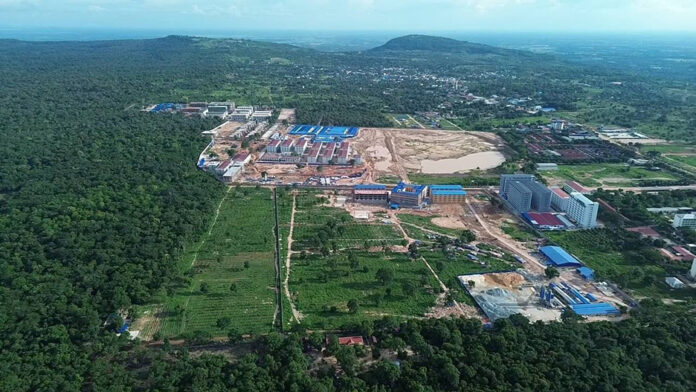
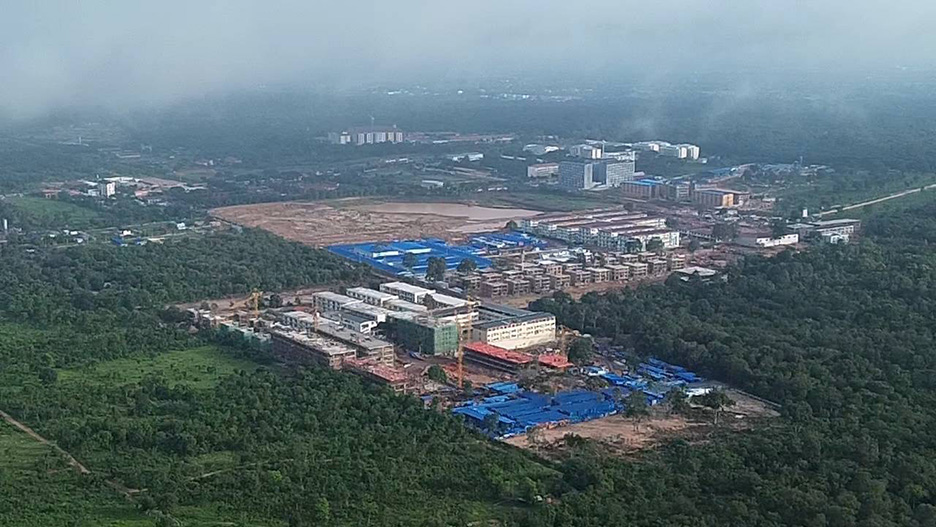
Aerial view shows expanding casino buildings and new construction suspected to be a future scammer hub in Cambodia's O Samach.
SURIN — Thai authorities are intensifying surveillance along the Surin province border after detecting signs that international scam operations may be moving to O Samach, a Cambodian town adjacent to Thailand.
The concern comes as pressure mounts on Cambodia to crack down on criminal networks operating in Takeo province, potentially pushing these groups to seek new locations.
Recent events have heightened these fears. Eight Indonesian nationals recently fled from the area and sought assistance from Thai officials, prompting closer scrutiny of developments across the border.
New Infrastructure Raises Red Flags
O Samach subdistrict in Cambodia’s Oddar Meanchey province sits directly across from the Chong Chom checkpoint in Thailand’s Kap Choeng district, Surin province. The area is home to two large casinos, and new office buildings capable of housing tens of thousands of people have recently been completed nearby.
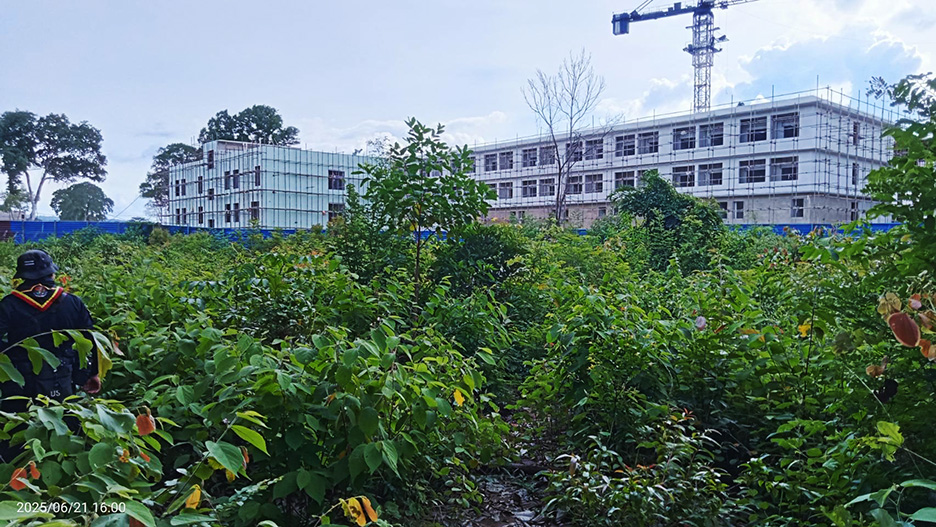
New buildings under construction in Cambodia’s O Samach that Thai authorities suspect may become a scammer operations base. Photo taken June 21, 2025.
Sitthiroj Charoenthanasak, District Chief of Kap Choeng, explained what Thai authorities have observed. “From our monitoring, we’ve seen casino buildings being rented and converted into office spaces. Construction of several units is nearly finished,” he said. “Once completed, it’s possible these facilities will host scammers of various nationalities, possibly numbering in the thousands.”
Thai military, police, and local administration agencies are now coordinating strict preventive measures, undeterred by ongoing border tensions between the two countries.
Inside the Scam Operations
Intelligence gathered from rescued victims paints a grim picture of how these syndicates operate. Workers fall into two categories: those deceived into joining and those who volunteer as leaders.
The financial incentives explain why many stay despite the risks. Thai team leaders, for example, can earn 30% of every million baht ($30,520) their subordinates successfully scam, while the actual scammers receive only 2-3%. This lucrative arrangement keeps people trapped even after their passports or visas expire.
“Aerial view shows expanding casino buildings and new construction suspected to be a future scammer hub in Cambodia’s O Samach.
Those who fail to meet targets face brutal consequences. Victims report being subjected to electric shocks, beatings, and torture. Some are sold to other compounds in what amounts to human trafficking. The syndicates maintain tight control over phone usage, allowing calls only at specific times. Those who manage to escape often do so by secretly calling for help and sharing their locations.
“If anyone resists, they may be beaten to death,” Sitthiroj noted grimly.
Shifting Victim Demographics
The profile of victims has evolved over time. While most escapees entering Thailand were previously Chinese, Indonesian rescues have recently increased. Vietnamese and Indonesians are now the primary victims, while Cambodian victims have become rare.
South Koreans typically don’t use the O Samach route. Instead, they’re usually lured by promises of high-paying jobs and enter through natural border crossings near Poipet in Banteay Meanchey province. From there, they’re transported by van to various locations, told they must undergo training, and threatened with physical abuse if they fail to meet quotas.
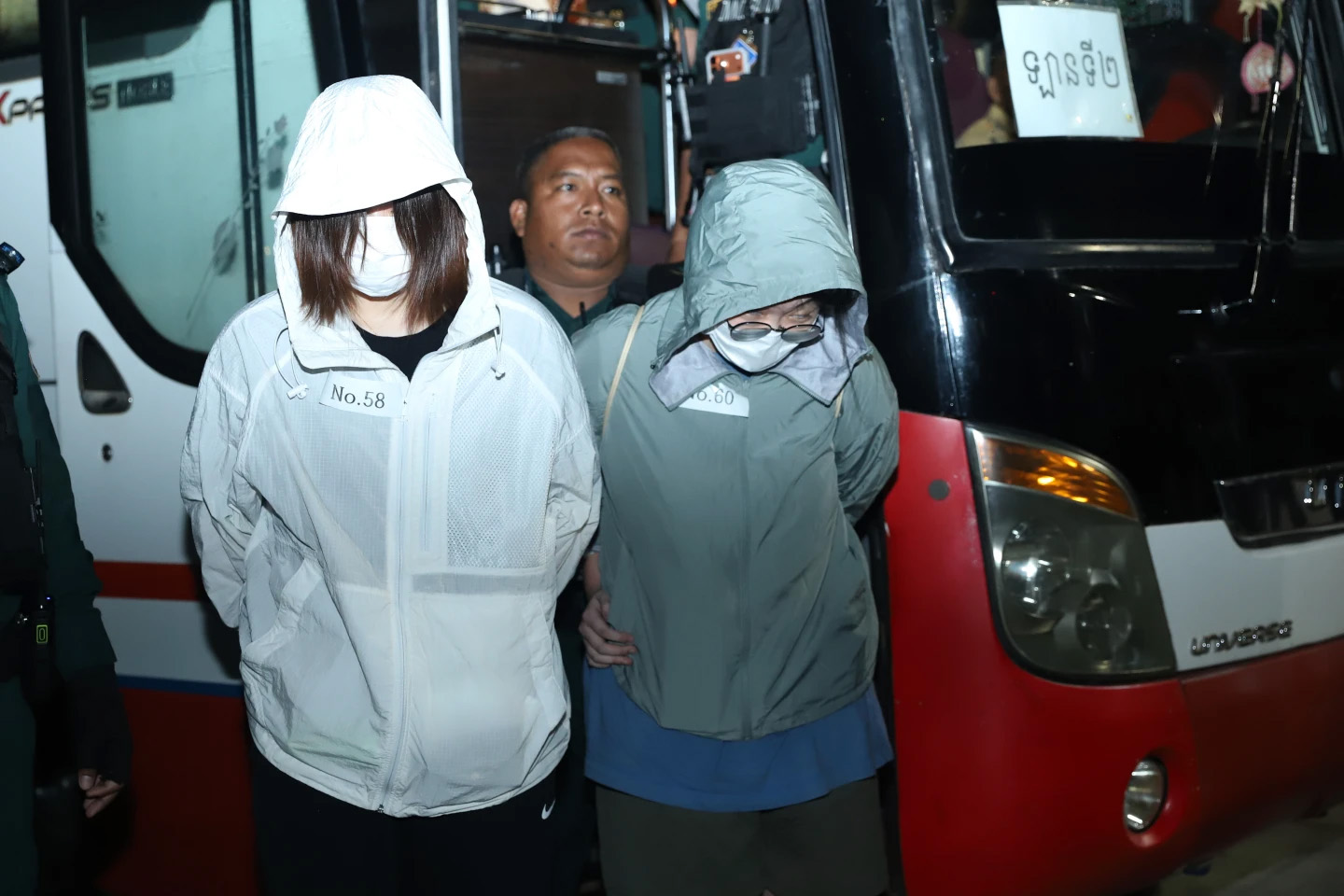
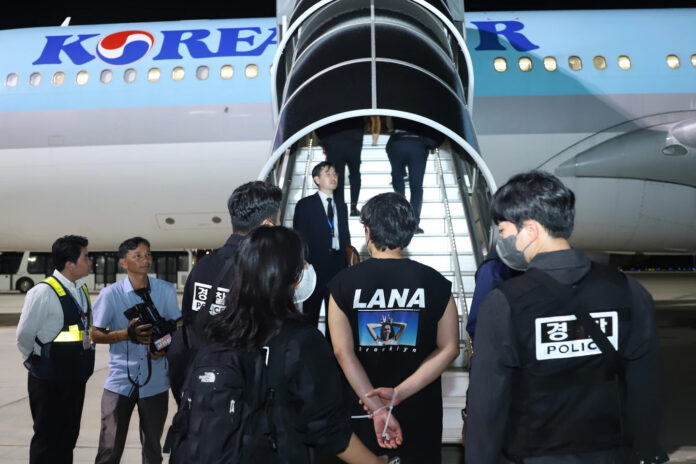
South Koreans allegedly involved in online scams are escorted by their police officers before boarding a plane at Techo International Airport in Kandal province, Cambodia, Friday, Oct. 17, 2025. (AKP via AP)
Corruption Enables the Operations
Thai officials acknowledge that corruption within Cambodia facilitates these criminal enterprises. One officer stated bluntly that officials “from top to bottom are bribed,” allowing these operations to flourish despite international pressure.
Thai and Cambodian authorities have previously cooperated to rescue Thai victims trapped by scammers, but the persistent problem suggests these efforts haven’t been enough to dismantle the networks.
Enhanced Border Security Measures
In response to the threat, Thai authorities are taking decisive action. Under orders from the Region 3 Police Commander, strict monitoring protocols have been implemented across all border police stations.
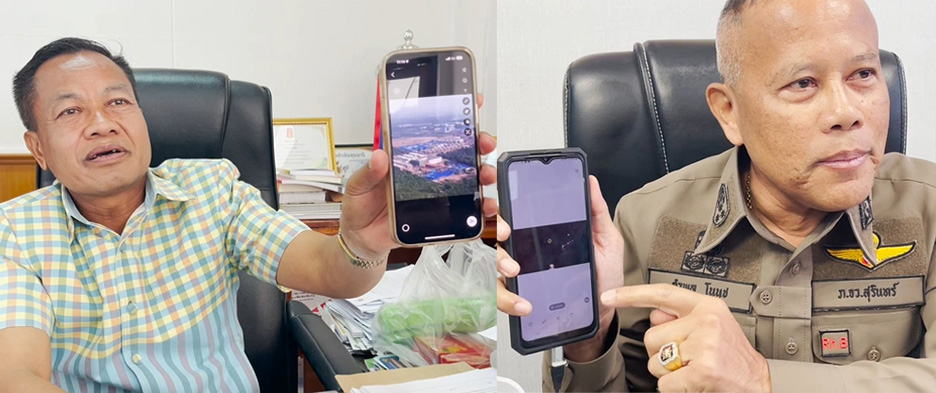
“Sitthiroj Charoenthanasak, District Chief of Kap Choeng (left), and Pol. Col. Kamphon Nonuch, superintendent of Kap Choeng Police Station, review footage of buildings in Cambodia suspected of housing scam operations.
Pol. Col. Kamphon Nonuch, superintendent of Kap Choeng Police Station, confirmed that security forces—including military, immigration, and administrative agencies—are jointly monitoring the situation. Surveillance cameras have been installed along 16 identified natural crossings in the Kap Choeng area.
Authorities plan to clearly demarcate these crossing points and erect fencing to enhance security and improve operational coordination.
Regarding O Samach specifically, Pol. Col. Kamphon stated that intelligence reports indicate some scam operators have already moved into the area. “We believe they have begun settling in,” he warned. “We’re tightening our watch and urging locals to act as our eyes and ears.”
He encouraged immediate reporting of any suspicious activity, emphasizing that community vigilance will be crucial in preventing these criminal networks from establishing a foothold near the Thai border.
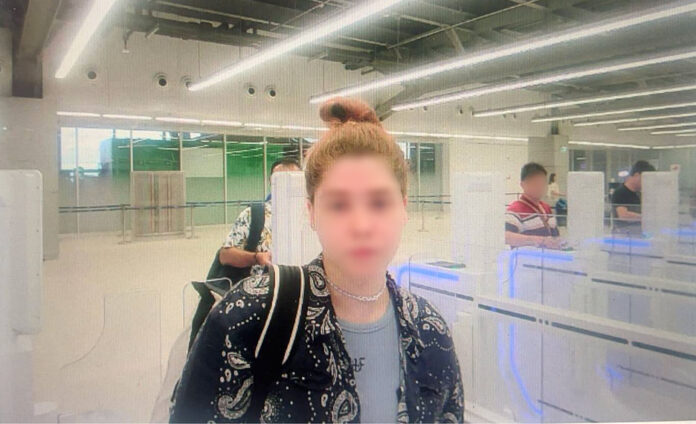
Surveillance footage from Suvarnabhumi Airport shows 26-year-old Belarusian model Vera Kravtsova departing through a self-service immigration channel with no signs of coercion on September 20, 2025.
BANGKOK — Thai police have refuted foreign media reports alleging a Belarusian model was abducted and trafficked through Thailand to Myanmar, presenting immigration records and surveillance footage showing she departed voluntarily.
Police Major General Chengron Rimphadee, spokesperson for the Royal Thai Police, announced Tuesday that a detailed investigation into Vera Kravtsova’s travel records was conducted through the Biometric database system under orders from Police Lieutenant General Phanumas Bunnyalak, Commissioner of the Immigration Bureau.
The investigation revealed Kravtsova entered Thailand on September 12, 2025, at 12:41 a.m. via Suvarnabhumi Airport. She departed on September 20 at 7:20 a.m. aboard Thai Airways flight TG301 to Yangon, Myanmar.
Nexta TV published a photo of Belarusian woman Vera Kravtsova and claimed she was in Myanmar before being killed for her organs.
CCTV Shows No Signs of Coercion
Kravtsova processed her departure through the Automatic Border Control (ABC) system, a self-service immigration channel requiring no officer interaction. Surveillance footage from the airport showed no indication she was under duress or being coerced.
“Reports claiming the model entered Thailand and was abducted to Myanmar are not true,” the police spokesperson stated firmly.
Officials noted that events occurring after Kravtsova’s arrival in Myanmar fall outside Thailand’s jurisdiction. Thai immigration authorities have provided photographic evidence from their systems to the Belarusian Consulate in Thailand.
34,000 Denied Entry This Year
Police outlined existing measures to prevent human trafficking through Thailand to scam operations in neighboring countries. These include airport screening interviews, mandatory accommodation registration through the TDAC system, and coordinated military, administrative, and police checkpoints in Tak Province.
Authorities also screen and deny entry to high-risk individuals attempting to enter as tourists under visa-free privileges. Since early 2025, immigration has rejected entry to 34,000 suspected individuals.
“We want to assure everyone that Thailand is safe. There is no abduction of foreigners for human trafficking to neighboring countries as rumored,” the spokesperson emphasized.
Police Urge Caution on Unverified Job Offers
Major General Chaturaphat Phiromkaew, Commander of the Foreign Affairs Division and Deputy Spokesperson for the Royal Thai Police, warned the public to exercise caution with unverified employment offers, particularly those involving overseas work without proper documentation or legal compliance verification.
He urged anyone witnessing or suspecting fraudulent recruitment to immediately contact police, reaffirming the Royal Thai Police’s commitment to protecting both Thai citizens and foreigners from transnational crime networks.
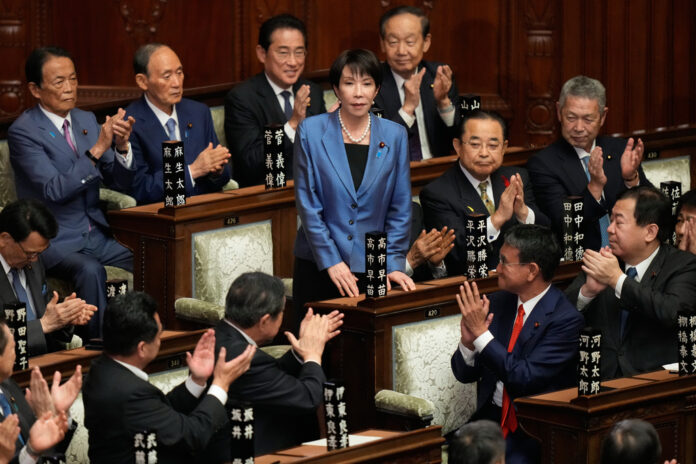
Lawmakers applaud as Sanae Takaichi, center, is elected as Japan's new prime minister during the extraordinary session of the lower house, in Tokyo, Japan, Tuesday, Oct. 21, 2025.(AP Photo/Eugene Hoshiko)
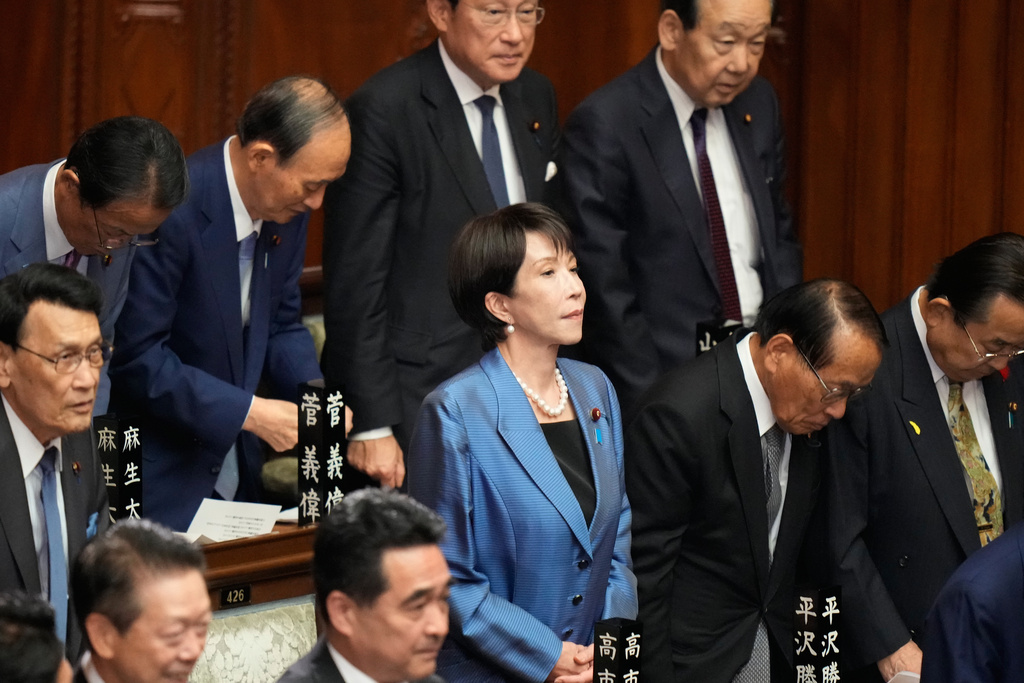
TOKYO (AP) — Japan’s parliament elected ultraconservative Sanae Takaichi as the country’s first female prime minister Tuesday, a day after her struggling party struck a coalition deal with a new partner expected to pull her governing bloc further to the right.
Takaichi replaces Shigeru Ishiba, ending a three-month political vacuum and wrangling since the Liberal Democratic Party’s disastrous election loss in July.
Ishiba, who lasted only one year as prime minister, resigned with his Cabinet earlier in the day, paving the way for his successor.
Takaichi won 237 votes — four more than a majority — compared to 149 won by Yoshikoko Noda, head of the largest opposition party, the Constitutional Democratic Party of Japan, in the lower house, which elects the prime minister.
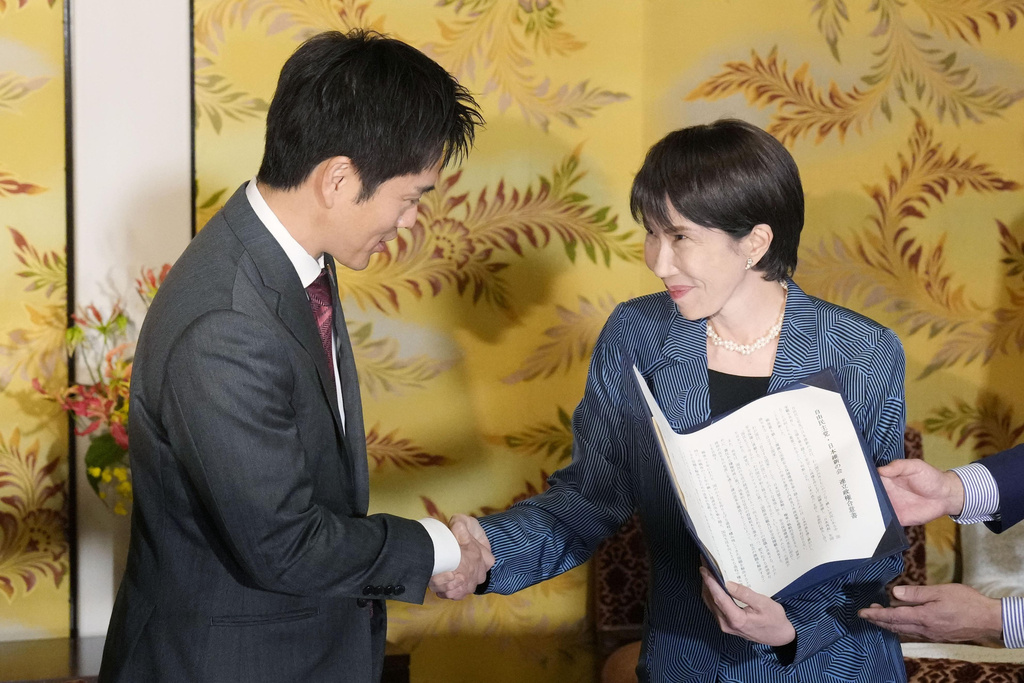
Japan’s Liberal Democratic Party President Sanae Takaichi, right, and leader of Japan Innovation Party, or Ishin no Kai, Hirofumi Yoshimura shake hands after signing an agreement to form a coalition government in Tokyo, Monday, Oct. 20, 2025. (Kyodo News via AP)
The LDP’s off-the-cuff alliance with the Osaka-based rightwing Japan Innovation Party, or Ishin no Kai, ensured her premiership because the opposition is not united. Takaichi’s untested alliance is still short of a majority in both houses of parliament and will need to court other opposition groups to pass any legislation – a risk that could make her government unstable and short-lived.
“Political stability is essential right now,” Takaichi said at Monday’s signing ceremony with the JIP leader and Osaka Gov. Hirofumi Yoshimura. “Without stability, we cannot push measures for a strong economy or diplomacy.”
The two parties signed a coalition agreement on policies underscoring Takaichi’s hawkish and nationalistic views.
Their last-minute deal came after the Liberal Democrats lost its longtime partner, the Buddhist-backed Komeito, which has a more dovish and centrist stance. The breakup threatened a change of power for the LDP, which has governed Japan almost uninterrupted for decades.
Later in the day, Takaichi, 64, will present a Cabinet with a number of allies of LDP’s most powerful kingmaker, Taro Aso, and others who backed her in the party leadership vote.
Sanae Takaichi, center, leader of the ruling Liberal Democratic Party, and other lawmakers attend the extraordinary session of the lower house, in Tokyo, Japan, Tuesday, Oct. 21, 2025.(AP Photo/Eugene Hoshiko)
JIP will not hold ministerial posts in Takaichi’s Cabinet until his party is confident about its partnership with the LDP, Yoshimura said.
Takaichi is running on deadline — a major policy speech later this week, talks with U.S. President Donald Trump and regional summits. She needs to quickly tackle rising prices and compile economy-boosting measures by late December to address public frustration.
While she is the first woman serving as Japan’s prime minister, she is in no rush to promote gender equality or diversity.
Takaichi is among Japanese politicians who have stonewalled measures for women’s advancement. Takaichi supports the imperial family’s male-only succession and opposes same-sex marriage and allowing separate surnames for married couples.
A protege of assassinated former Prime Minister Shinzo Abe, Takaichi is expected to emulate his policies including stronger military and economy, as well as revising Japan’s pacifist constitution. With a potentially weak grip on power, it’s unknown how much Takaichi would be able to achieve.
When Komeito left the governing coalition, it cited the LDP’s lax response to slush fund scandals that led to their consecutive election defeats.
The centrist party also raised concern about Takaichi’s revisionist view of Japan’s wartime past and her regular prayers at Yasukuni Shrine despite protests from Beijing and Seoul that see the visits as lack of remorse about Japanese aggression, as well as her recent xenophobic remarks.
Takaichi has toned down her hawkish rhetorics. On Friday, she sent a religious ornament instead of going to Yasukuni
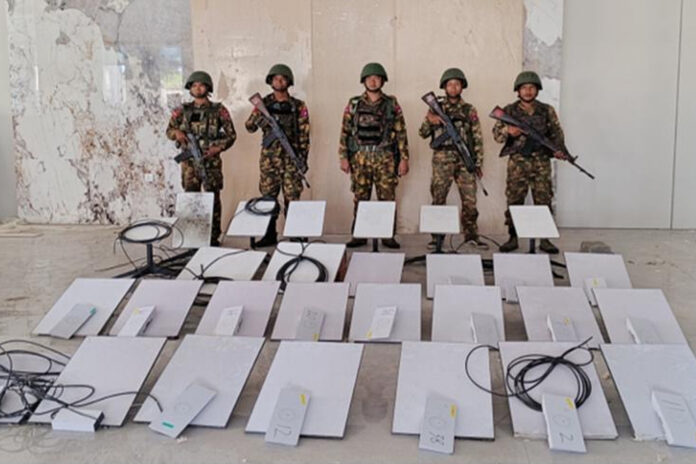
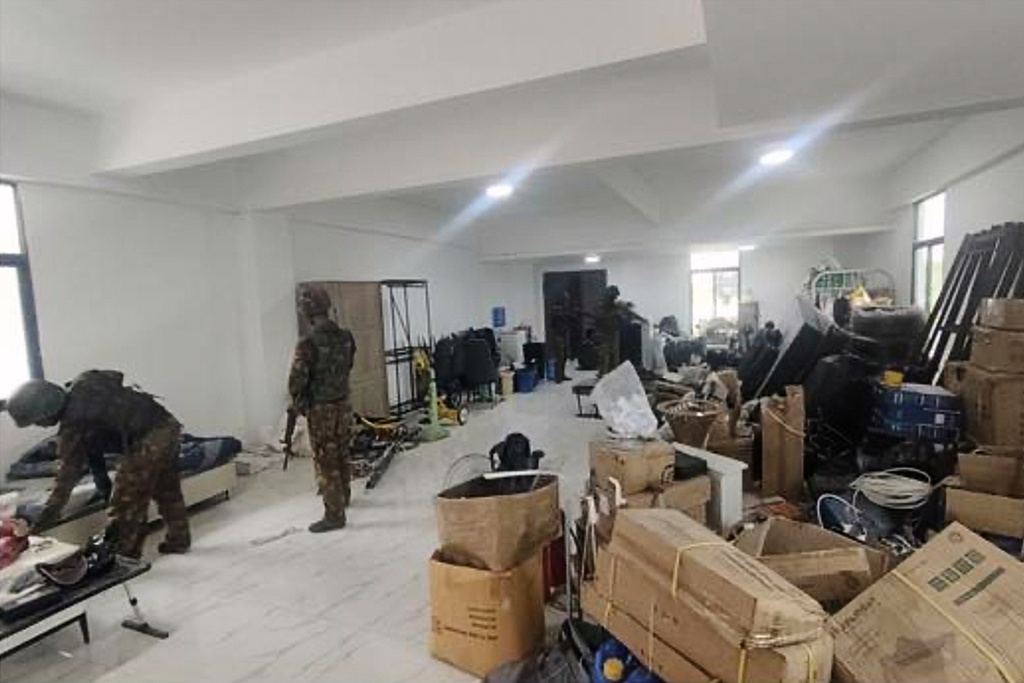
In this image provided by the Myanmar military on Oct. 19, 2025, soldiers stand next to Starlink machines as they seize KK Park online scam center in Myawaddy township, Karen State, Myanmar. (The Myanmar Military True News Information Team via AP)
BANGKOK (AP) — Myanmar’s military has shut down a major online scam operation near the border with Thailand, detaining more than 2,000 people and seizing dozens of Starlink satellite internet terminals, state media reported Monday.
Myanmar is notorious for hosting cyberscam operations responsible for bilking people all over the world. These usually involve gaining victims’ confidence online with romantic ploys and bogus investment pitches.
The centers are infamous for recruiting workers from other countries under false pretenses, promising them legitimate jobs and then holding them captive and forcing them to carry out criminal activities.
Scam operations were in the international spotlight last week when the United States and Britain enacted sanctions against organizers of a major Cambodian cyberscam gang, and its alleged ringleader was indicted by a federal court in New York.
According to a report in Monday’s Myanma Alinn newspaper, the army raided KK Park, a well-documented cybercrime center, as part of operations starting in early September to suppress online fraud, illegal gambling, and cross-border cybercrime.
It published photos displaying seized Starlink equipment and soldiers said to be carrying out the raid, though it was unclear when exactly they were taken.
In this image provided by the Myanmar military on Oct. 19, 2025, soldiers raid the KK Park online scam center in Myawaddy township, Karen State, Myanmar. (The Myanmar Military True News Information Team via AP)
KK Park is located on the outskirts of Myawaddy, a major trading town on the border with Thailand in Myanmar’s Kayin state. The area is only loosely under the control of Myanmar’s military government, and also falls under the influence of ethnic minority militias.
Maj. Gen. Zaw Min Tun, the spokesperson for the military government, charged in a statement Monday night that the top leaders of the Karen National Union, an armed ethnic organization opposed to army rule, were involved in the scam projects at KK Park.
The allegation was previously made based on claims that a company backed by the Karen group allowed the land to be leased. However, the Karen, who are part of the larger armed resistance movement in Myanmar’s civil war, deny any involvement in the scams.
Myanma Alinn said the army ascertained that more than 260 buildings were unregistered, and seized equipment, including 30 sets of Starlink satellite internet terminals. It said 2,198 individuals were detained though it did not give their nationalities.
Starlink is part of Elon Musk’s SpaceX company and the terminals link to its satellites. It does not have licensed operations in Myanmar, but at least hundreds of terminals have been smuggled into the Southeast Asian nation.
The company could not be immediately reached for comment Monday but its policy bans “conduct that is defamatory, fraudulent, obscene, or deceptive.”
There have been previous crackdowns on cyberscam operations in Myanmar earlier this year and in 2023.
Facing pressure from China, Thailand and Myanmar’s governments launched an operation in February in which they released thousands of trafficked people from scam compounds, working with the ethnic armed groups that rule Myanmar’s border areas.
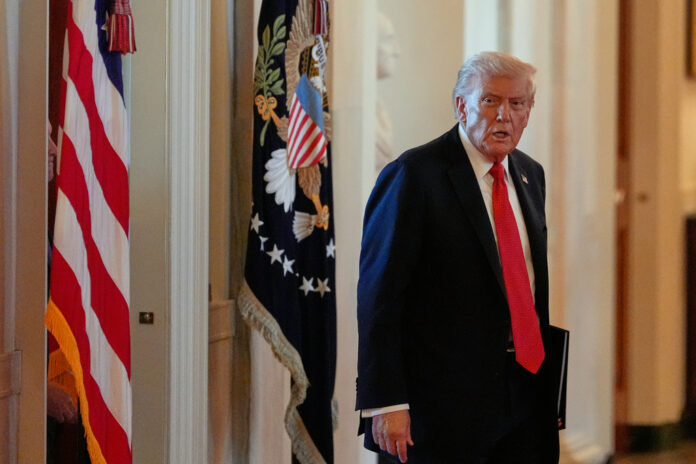
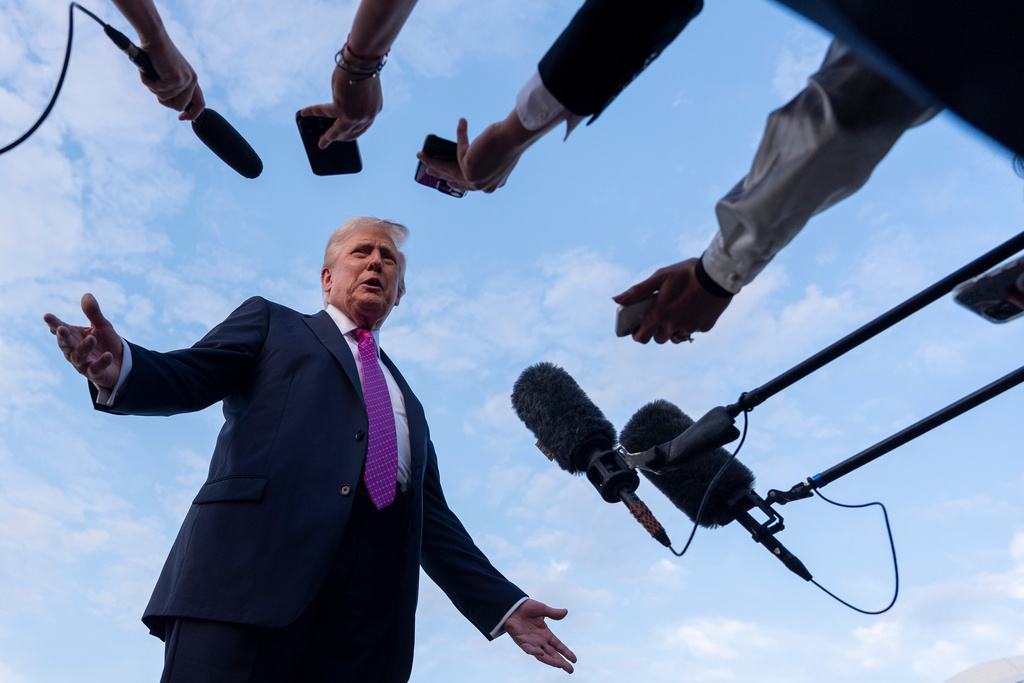
President Donald Trump arrives to speak during an event to welcome the 2025 LSU and LSU-Shreveport national champion baseball teams in the East Room of the White House, Monday, Oct. 20, 2025, in Washington. (AP Photo/Alex Brandon)
WASHINGTON (AP) — President Donald Trump is expected to leave for Asia at the end of the week, betting that an around-the-world journey will help him untangle big issues that he can’t afford to get wrong.
At stake is nothing less than the future of the global economy, which could hinge on whether he’s able to calm trade tensions during an expected meeting with Chinese leader Xi Jinping. A misstep could send shock waves through American industries that have already been rattled by Trump’s aggressive tariffs, government layoffs and political brinkmanship.
Trump’s strategy of improvisation has had both hits and misses since he returned to office in January. Hamas returned hostages to Israel but the ceasefire in the Middle East remains fragile; a trade war with China has ebbed and flowed this year; and Russia’s invasion of Ukraine hasn’t slowed down despite Trump’s efforts to resolve the conflict.
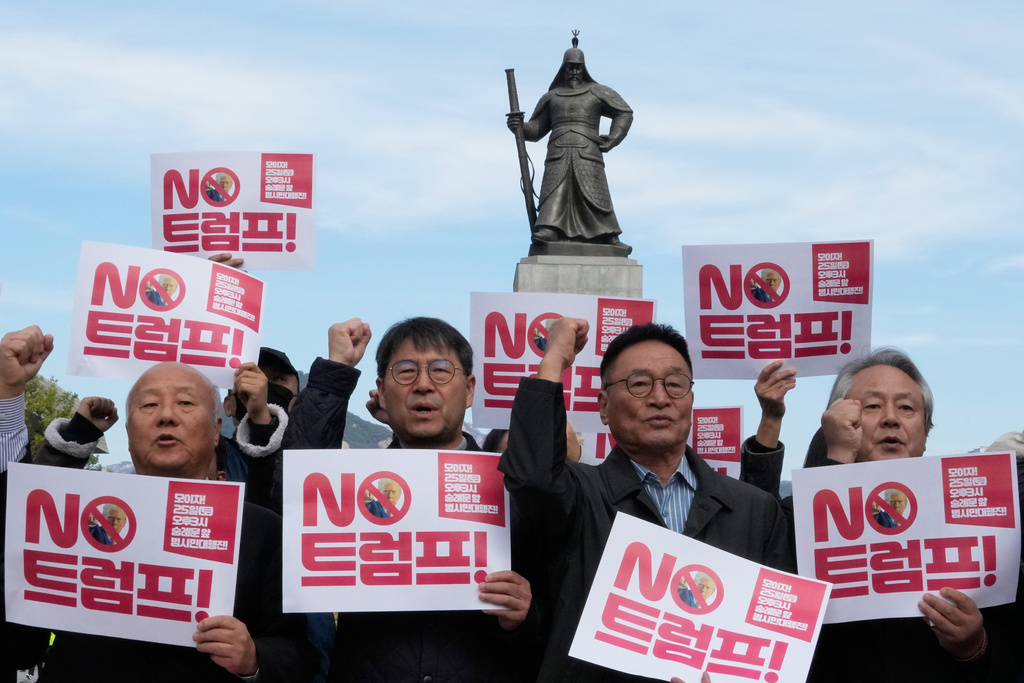
South Korean protesters attend a rally against U.S. President Donald Trump’s tariffs policy on South Korea, near the U.S. Embassy in Seoul, South Korea, Tuesday, Oct. 21, 2025. The signs read “No Trump.” (AP Photo/Ahn Young-joon)
There’s been some mystery around Trump’s trip, with no official announcements from the White House about much of his itinerary. The president said Monday that he plans to go to Malaysia, which is hosting a regional summit, then Japan, where he’s trying to nail down foreign investment.
He’ll also visit South Korea, where he’s working on more trade issues and expects to sit down with Xi. Beijing has yet to confirm that they’ll meet, and the two leaders have recently exchanged threats of tariffs and export restrictions.
“I have a very good relationship with President Xi of China,” Trump told reporters aboard Air Force One on Sunday. He offered to lower tariffs but “they have to give us some things too,” including buying U.S. soybeans, reducing the flow of fentanyl ingredients and ending limits on rare earth minerals that are critical for high-tech manufacturing.
Trump expressed even more confidence on Monday, saying, “I think we’re going to end up having a fantastic deal with China” and “it’s going to be fantastic for the entire world.”
This will be Trump’s first trip to Asia in his second term
With just days to go before Trump leaves, there’s an unusual level of ambiguity even for a president who loves to keep people guessing about his next move.
“The whole trip has seemed so uncertain from the beginning,” said Bonnie Glaser, a managing director at the German Marshall Fund, a Washington-based think tank.
It’s Trump’s first trip to Asia since returning to office. Although he’s hosted leaders from the region at the White House, he hasn’t forged the kind of foundational relationships that he has on other continents.
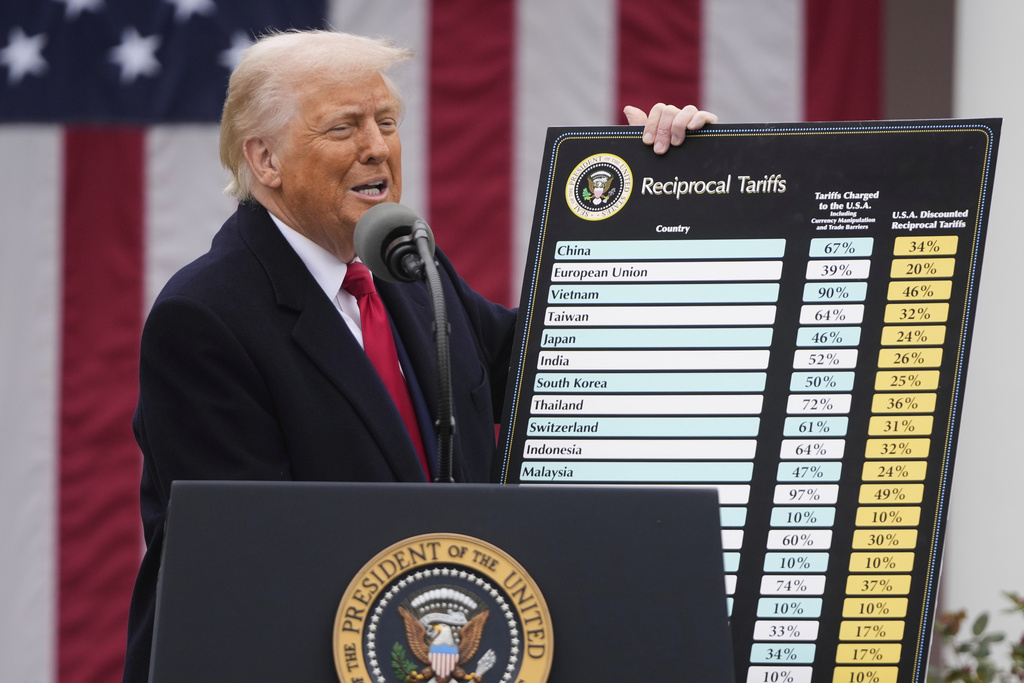
President Donald Trump speaks during an event to announce new tariffs in the Rose Garden at the White House, Wednesday, April 2, 2025, in Washington. (AP Photo/Mark Schiefelbein)
Anna Kelly, a spokesperson for the president, responded to a list of questions about Trump’s plans by saying he “will participate in meetings and events in Asia that will result in many great deals for our country.” She added, “Stay tuned!”
Trump’s approach to Asia has focused on using tariffs to realign what he describes as unfair trade practices, unnerving countries that depend on the United States as the world’s largest market for exports. There’s also anxiety about Trump’s meeting with Xi, and the potential that a feud between the two leaders could send the international economy into a tailspin.
“There will be some appreciation for the fact that he’s there, but I don’t think it will go far enough to quell the doubts that are pervasive in the region,” Glaser predicted.
The Republican president has downsized his foreign policy team since his first term, eschewing the typical array of advisers at the National Security Council in favor of a core group of loyalists.
“There’s not very many White House staff to do this kind of work,” said Rush Doshi, who worked on China policy under President Joe Biden. “All of this puts us in uncharted waters.”
Michael Green, who worked on President George W. Bush’s National Security Council and now leads the United States Studies Centre in Sydney, Australia, said there’s been no clear Asia strategy from Trump.
“Everyone is waiting to see where he’s going to come down on all of this,” he said.
Others say Trump’s approach is paying off. Anthony Kim, a research fellow in international economic affairs at the Heritage Foundation, said Japan and South Korea are eager to work with the administration to solidify partnerships.
The message from them has been “let’s sit down, talk about relevant details to make a deal,” Kim said.
Trump’s plans remain in flux as the trip approaches
Malaysia is hosting the Association of Southeast Asian Nations, an annual summit that Trump attended only once during his first term, even skipping it when it was held virtually during the COVID-19 pandemic.
However, this year the summit offers an opportunity to highlight Trump’s peacemaking efforts, which he’s made central to his foreign policy agenda.
Thailand and Cambodia skirmished along their disputed border over the summer, and Trump threatened to withhold trade deals with each country if they didn’t stop fighting.
“They were willing to come together and talk to avoid more economic pain,” said Ja Ian Chong, a political science professor at the National University of Singapore.
FILE – President Donald Trump speaks with reporters before he departs on Air Force One at Morristown Airport, Sunday, Sept. 14, 2025, in Morristown, N.J. (AP Photo/Alex Brandon, File)
Malaysia and the U.S. have been working toward securing an expanded ceasefire. The Malaysian foreign minister said Trump “looks forward” to the signing of an agreement at the summit.
Trump’s next stop is Japan. Washington and Tokyo reached a trade agreement earlier this year, which included the promise of $550 billion of investments in U.S. projects.
Japan is in a moment of political transition, with Sanae Takaichi expected on Tuesday to become the first woman to serve as prime minister.
Takaichi is a protégé of Shinzo Abe, a former prime minister who was assassinated after leaving office. Trump was close with Abe during his first term, and Green said Takaichi “has the potential to also play that role.”
Working with Trump and keeping him committed to U.S. alliances “requires a level of interaction and trust that none of the Asian leaders have,” Green said.
South Korea is Trump’s final stop on his trip
The climax of the president’s journey will likely be South Korea, which is hosting this year’s Asia-Pacific Economic Cooperation summit. Trump has said he’ll sit down with Xi while he’s there.
Tensions have increased in recent weeks, particularly with China’s announcement of restrictions on exports of rare earth minerals. Trump threatened to retaliate with tariffs so high that he admits they would be unsustainable.
Doshi, the former Biden adviser, said there are three potential outcomes from Trump’s meeting with Xi — “deal, no deal or disaster.” He said China is emboldened after Trump backed down on an earlier tariff announcement when Beijing restricted the export of rare earth magnets.
“The Chinese feel they have President Trump’s number,” Doshi said. “They feel that if they push on this, he’ll fold.”
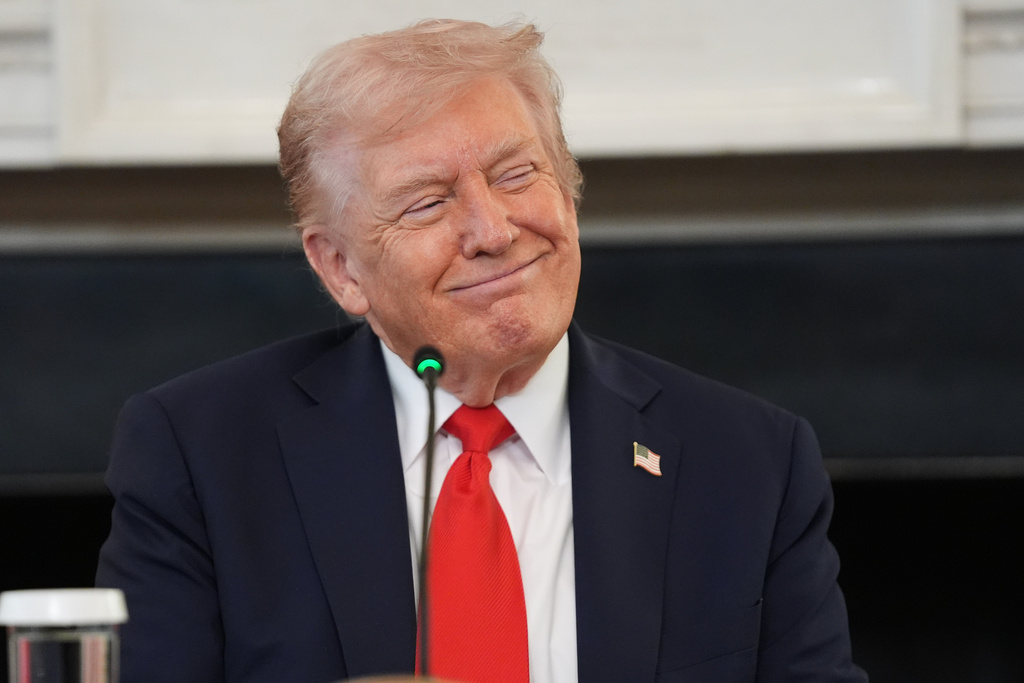
President Donald Trump smiles as he listens to Brandi Kruse speak during a roundtable meeting on antifa in the State Dining Room at the White House, Wednesday, Oct. 8, 2025, in Washington. (AP Photo/Evan Vucci)
Trump said Monday that China has “treated us with great respect” since he’s been in office. He said “I could threaten them with many other things,” but “I want to be good to China.”
Another open question will be Trump’s trade negotiations with South Korea, which is facing U.S. tariffs that could undermine its auto industry. However, Seoul has balked at Trump’s demand for a $350 billion investment fund similar to the one in Japan.
“There’s some momentum to the talks,” said Wendy Cutler, who spent more than two decades as a U.S. trade negotiator and is now senior vice president at the Asia Society. “But I don’t want to overstate it, because there are some fundamental differences about this fund that need to be sorted out.”
She said it’s not unusual for talks to go down to the wire, but this time “there are so many balls in the air.”
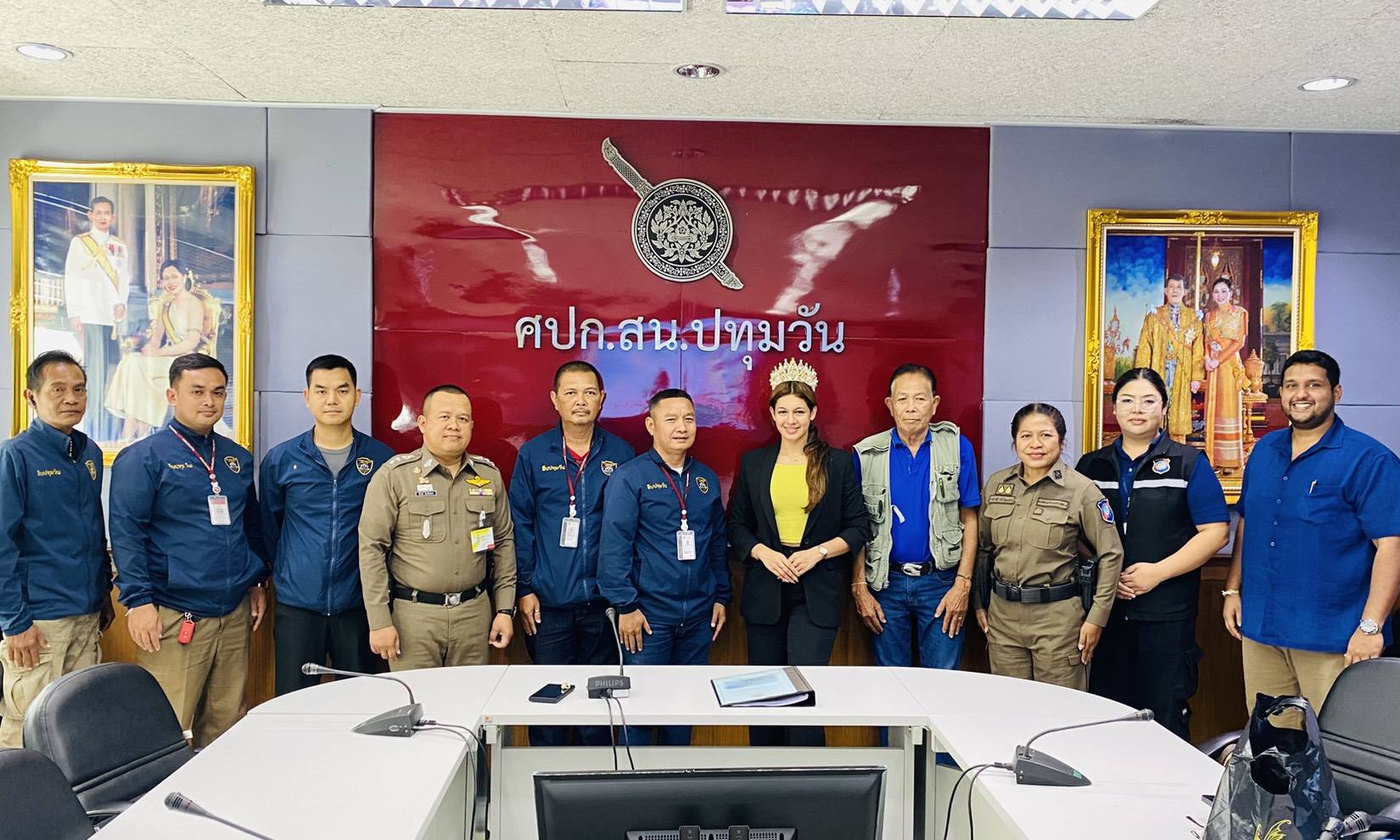
Lihasha Lindsay-White, Miss Universe Sri Lanka 2025, receives her crownreceives her crown from taxi driver Boonchuen Matrakhamchan after leaving it in his vehicle, at Bangkok South Tourist Police Station on October 20, 2025.
BANGKOK — A Miss Universe Sri Lanka crown was safely returned to its owner Monday after being accidentally left in a Bangkok taxi, highlighting the efficiency of Thailand’s tourist police services.
Lihasha Lindsay-White, Miss Universe Sri Lanka 2025, contacted the 1155 Tourist Service Center after realizing she had left her crown and a dark green dress in a taxi near Siam Center Point, Siam Square Soi 3, Pathumwan District, on October 19 at 1:48 p.m.
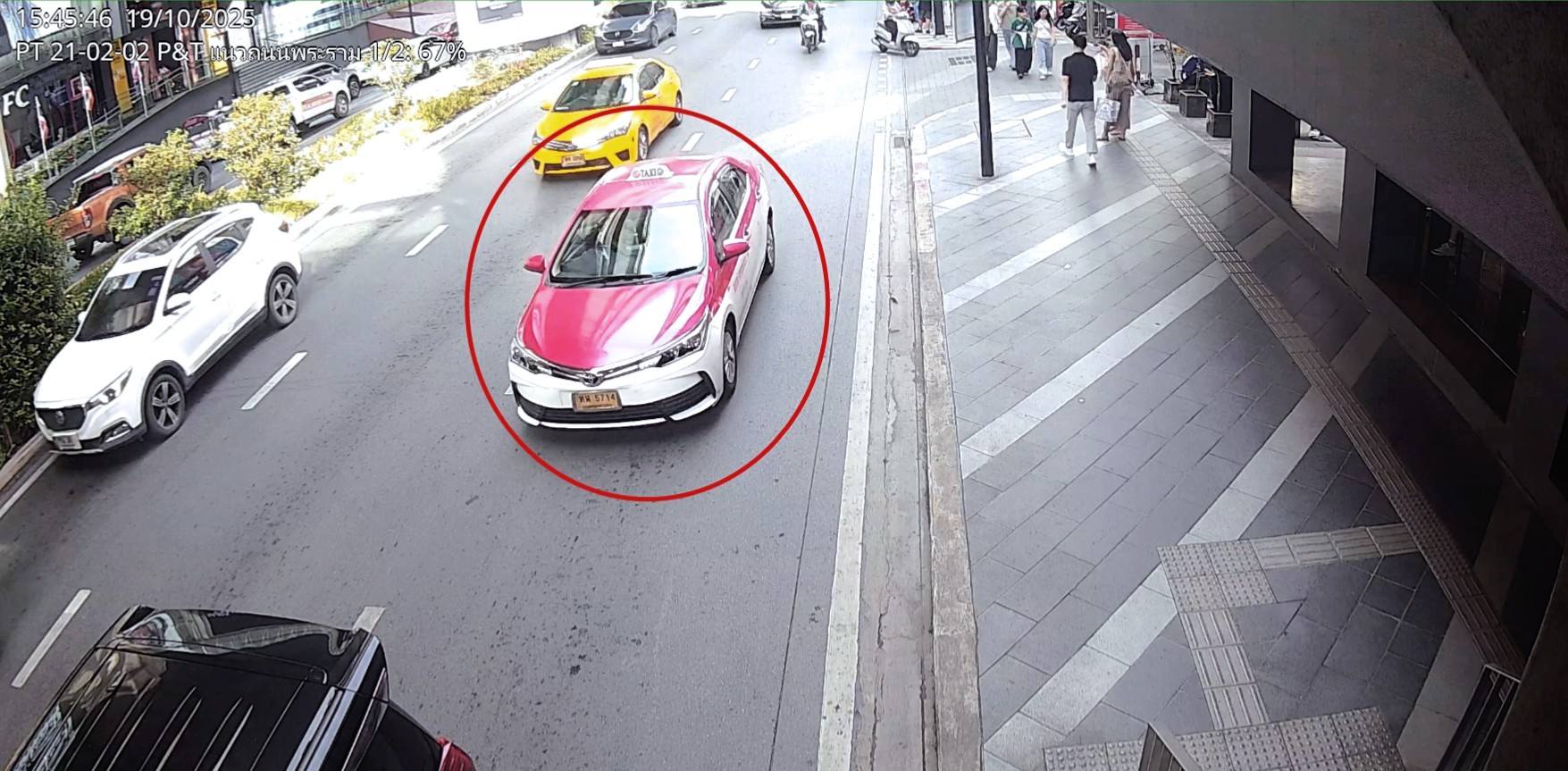
Officers from Tourist Police Division 2, along with an interpreter, responded at Pathumwan Police Station to assist with the report. Using CCTV footage, police quickly identified the taxi’s license plate and located driver Boonchuen Matrakhamchan.
Using CCTV footage, police quickly identify the taxi’s license plate and located driver on October 19, 2025.
However, because the incident was reported on a weekend when the taxi cooperative office was closed, contact was made the following day. The driver returned the items at Bangkok South Tourist Police Station on October 20.
“Thailand is a safe country with police officers who truly care for tourists,” Lindsay-White said, adding she would share the positive experience internationally.
The 27-year-old entrepreneur and Colombo International School alumna leads her family business while running a charitable foundation. She is currently in Thailand for the Miss Universe competition at Impact Challenger Hall, representing Sri Lanka on the global stage.
Miss Universe Sri Lanka 2025 Lihasha Lindsay-White receives her crown from taxi driver Boonchuen Matrakhamchan at Bangkok South Tourist Police Station, October 20, 2025.
Marked 2,000-baht bills from the sting operation found in the Russian suspect's pocket during his arrest on Koh Phangan, October 19, 2025.
KOH PHANGAN — Thai police have arrested a Russian national operating an unlicensed motorcycle rental business on Koh Phangan after foreign tourists reported he had confiscated their passports and demanded excessive compensation for minor damages to rental vehicles.
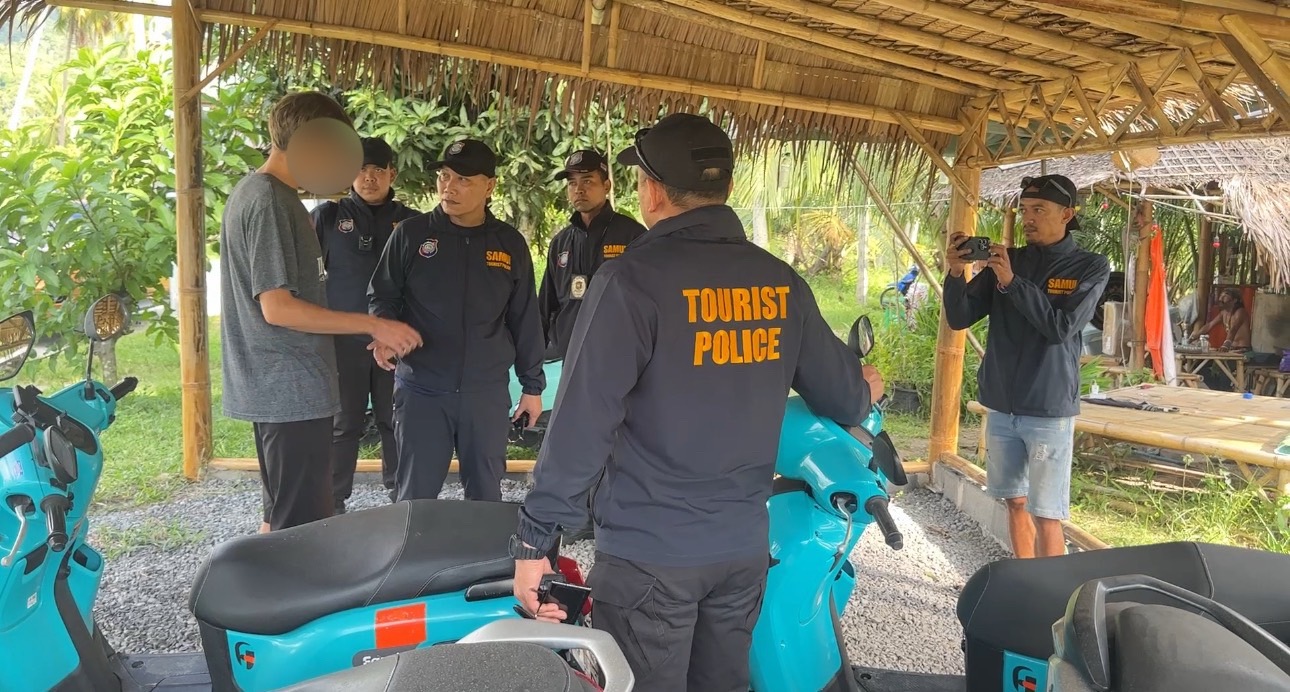
Following multiple complaints from foreign tourists, a joint task force comprising Tourist Police from Koh Phangan, Surat Thani Immigration Police, Koh Phangan Police Station, and local administrative officials launched an investigation that identified the suspect.
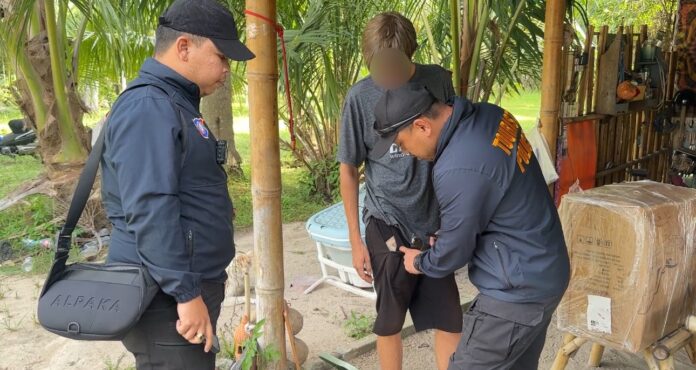
On the evening of October 19, officers arrested 37-year-old Russian national Mikhail at his bamboo hut residence in Ban Maduean Wan area along Thong Sala-Chaloklum Road. During the sting operation, police used marked 2,000-baht bills to catch him in the act—the same bills were later found in his pants pocket.
Ten motorcycles seized from the illegal rental operation. The Russian operator also confiscated tourists’ passports as collateral. Koh Phangan, October 19, 2025.
Drugs and Illegal Goods Uncovered
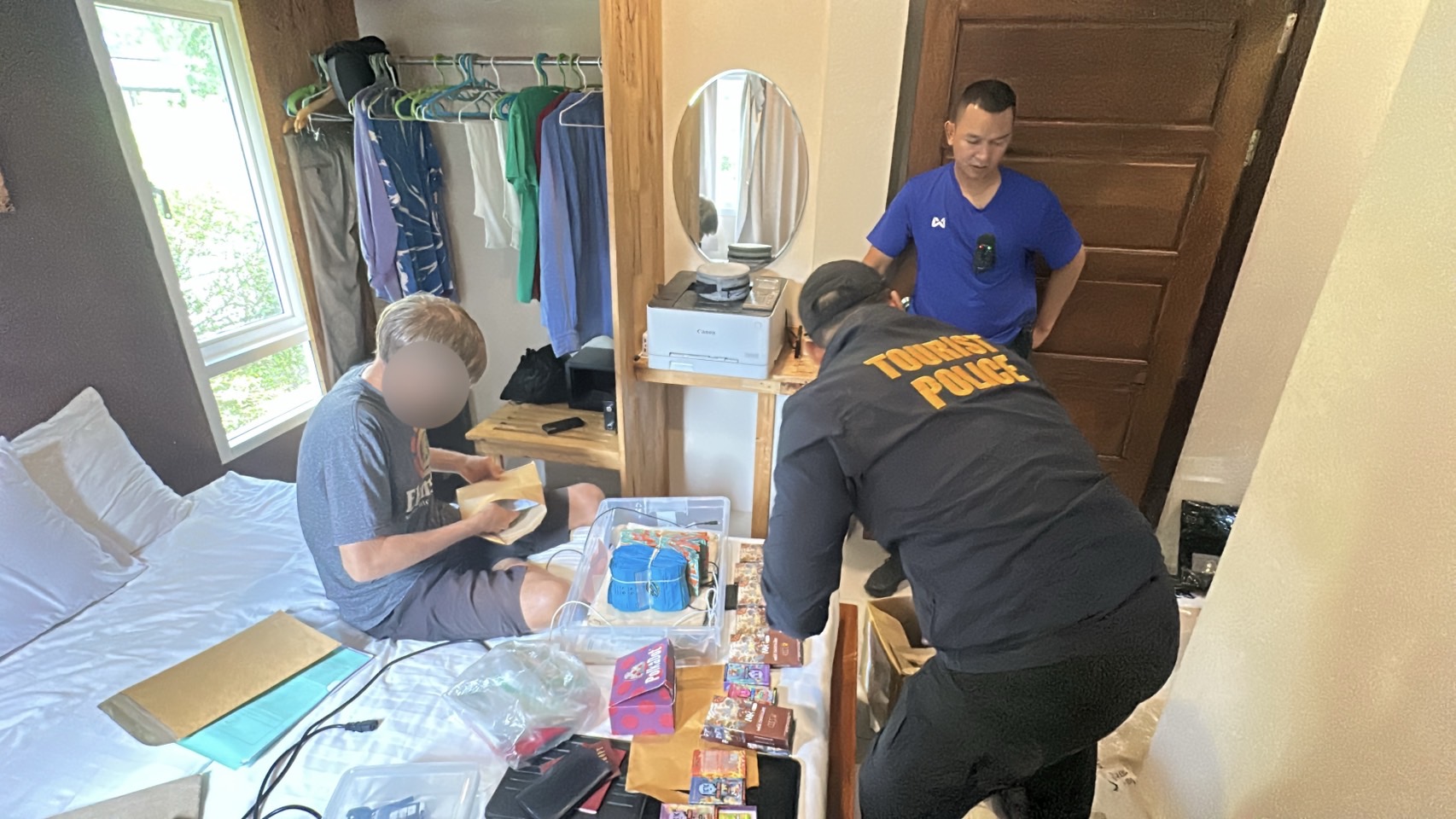
The search of Mikhail’s bamboo hut residence yielded significant contraband. Officers seized one bag of dried psilocybin mushrooms classified as Category 5 narcotics, five cannabis vape devices ready for use, nine boxes of mushroom-infused edibles, and eight boxes of mushroom-infused chocolate.
Police also confiscated 10 motorcycles and one car, all of which were being rented to tourists without proper business licensing. The total value of seized items and vehicles runs into the millions of baht.
Suspect’s Confession
Mikhail admitted ownership of all seized items, claiming the drugs were for personal use and that he was unaware they were illegal. He confessed to operating the vehicle rental business for approximately two months without any license or authorization.
The Passport Extortion Scheme
Tourists had reported that Mikhail would seize their passports as collateral when renting motorcycles. When vehicles were returned with even minor scratches or issues, he would demand compensation and time penalties far exceeding actual damages, effectively holding tourists’ passports hostage and preventing them from continuing their travels.
Police uncover illegal narcotics during a search of the Russian man’s Koh Phangan residence, October 19, 2025.
Four Criminal Charges Filed
Authorities at Koh Phangan Police Station have charged Mikhail with: operating a business as a foreign national without authorization (vehicle rental), working as a foreign national beyond permitted scope, illegal possession of Category 5 narcotics (psilocybin mushrooms) for personal consumption, and concealing, selling, disposing of, purchasing, or possessing goods brought into Thailand without proper customs clearance (cannabis vapes). The total value of seized items and vehicles is estimated at several million baht.
Nationwide Crackdown Ordered
Police General Saksira Phueak-am, Commissioner of the Tourist Police Bureau, has ordered tourist police stations in major destinations and surrounding areas to intensify crackdowns on foreign nationals committing crimes while posing as legitimate business operators.
“We will prosecute every case without exception to restore confidence among tourists and protect Thailand’s tourism image,” he stated, emphasizing zero tolerance for such criminal activities.
Design concept for the high-speed rail station in Chachoengsao Province, connecting Don Mueang, Suvarnabhumi, and U-Tapao airports.
BANGKOK — Nearly six years after signing the public-private partnership (PPP) contract in October 2019, Thailand’s 224.5-billion-baht ($6.8 billion) high-speed rail project connecting Don Mueang, Suvarnabhumi, and U-Tapao airports has made virtually no progress. The mega-project, a cornerstone of the Eastern Economic Corridor (EEC), now teeters on the edge of collapse.
Asia Era One Company, which won the bid, has yet to meet the conditions required to obtain a Notice to Proceed (NTP) from the State Railway of Thailand (SRT), the project’s public partner. Development has stalled for nearly two years and ten months, initially due to the COVID-19 pandemic.
Economic Fundamentals Have Shifted
The prolonged delay has fundamentally altered the project’s viability. Lower investment returns, fewer passengers than projected, declining investor interest in the EEC, and rising loan interest rates have all undermined its feasibility.
The pandemic—a force majeure event—prevented the private consortium from paying the 10.67-billion-baht ($326 million) concession fee for the Airport Rail Link and from securing adequate financing, bringing construction to a complete halt.
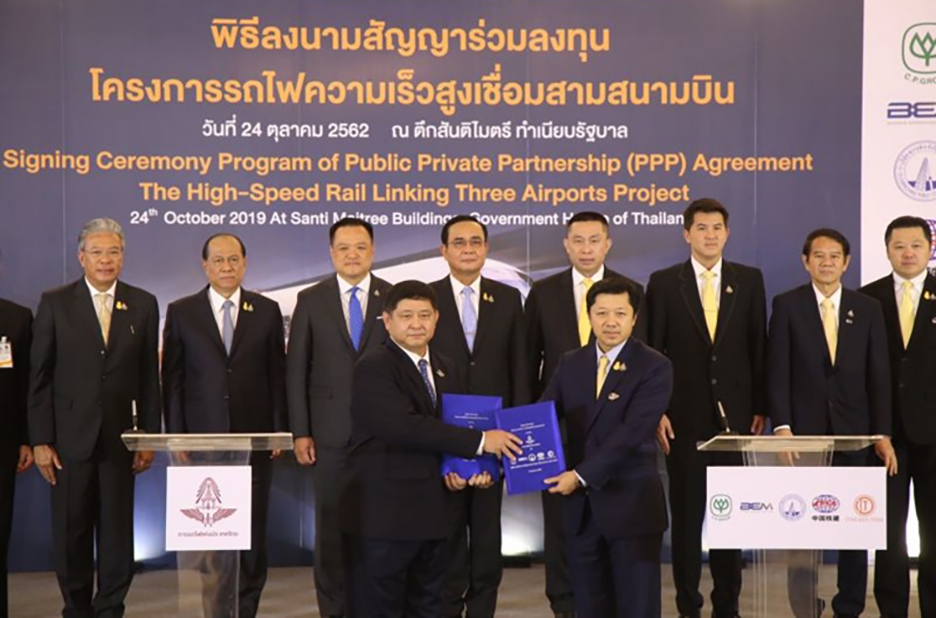
Public-private partnership (PPP) contract signing ceremony for the three-airport high-speed rail project under the Prayuth Chan-ocha government in 2019.
With the project paralyzed, only three options remained: terminate the contract, amend the PPP agreement, or allow SRT to proceed independently.
A Brief Window of Hope
The Eastern Economic Corridor Policy Committee (EECPC) attempted to salvage the project by approving five key contract amendments based on Asia Era One’s proposal. The main revision allowed the government’s co-investment to be paid in installments tied to construction progress, while the private consortium would provide an additional 160 billion baht ($4.9 billion) in guarantees and make the Airport Rail Link payment in seven installments.
Both SRT and Asia Era One agreed to these changes. The amended contract was reviewed by the Office of the Attorney General (OAG) and prepared for Cabinet approval, with a construction commencement date already scheduled.
Architectural rendering of the high-speed rail station in Chachoengsao Province, part of the three-airport rail link project.
Political Shift Derails Progress
However, a change in government under Prime Minister Anutin Charnvirakul disrupted the process. The new administration argued that the revised contract disadvantaged SRT, citing 18 legal concerns raised by the OAG, and demanded a return to the original 2019 agreement.
Transport Minister Phiphat Ratchakitprakarn publicly opposed the proposed “build-and-pay” installment structure, calling it inconsistent with the original contract, which stipulated that government payments would only be made upon project completion. He predicted that if the amendment reached the Cabinet, it would not gain approval.
According to a Prachachat Business editorial, this announcement effectively nullified the five-point amendment framework. Shortly afterward, the SRT Governor resigned, plunging the project back into paralysis.
Ripple Effects Across the EEC
The consequences extend far beyond the rail line itself. Other major EEC projects—including the U-Tapao Airport expansion and the Eastern Aviation City—depend on the high-speed rail for critical connectivity. Without it, the entire corridor’s development is at risk.
Given the current impasse, the high-speed rail project appears increasingly likely to be terminated under the existing PPP contract. Whichever party initiates termination will face liability for damages, almost certainly triggering prolonged legal disputes and substantial compensation claims.
South Koreans allegedly involved in online scams is escorted by their police officers before boarding a plane at Techo International Airport in Kandal province, Cambodia, Friday, Oct. 17, 2025. (AKP via AP)
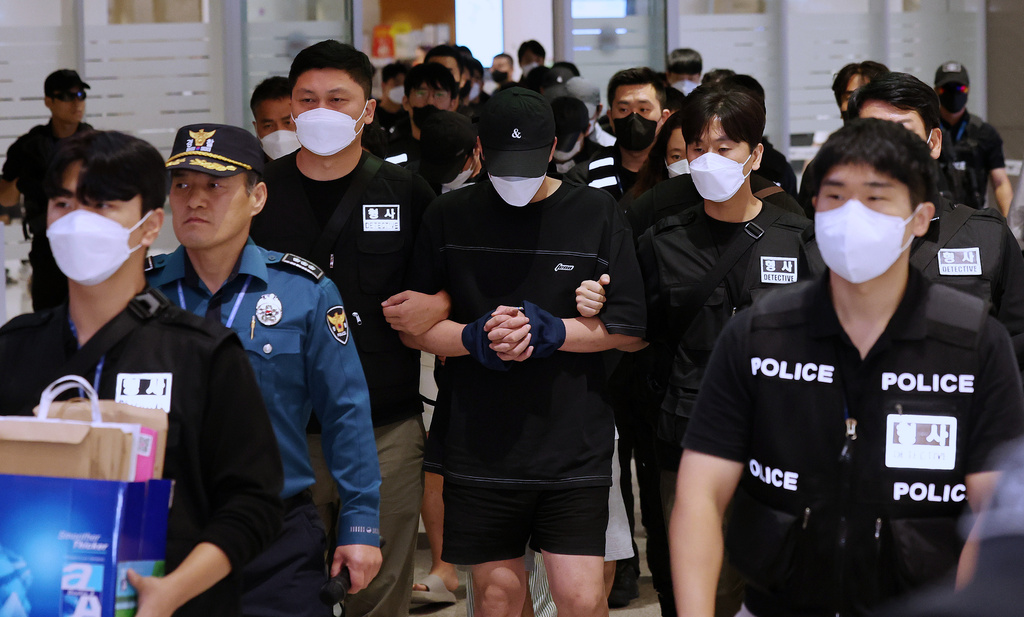
SEOUL, South Korea (AP) — Authorities are seeking to formally arrest most of the 64 South Koreans repatriated from Cambodia for allegedly working for online scam organizations in Cambodia, police said Monday.
The 64 South Koreans were detained in Cambodia over the past several months and were flown to Korea on a charter flight Saturday. Upon arrival in South Korea, they were detained while police investigated whether they voluntarily joined scam organizations in Cambodia or were forced to work there.
Online scams, many based in Southeast Asian nations, have risen sharply since the COVID-19 pandemic and produced two sets of victims: the tens of thousands of people who have been forced to work as scammers under the threat of violence, and the targets of their fraud. Monitoring groups say online scams earn international criminal gangs billions of dollars annually.
South Koreans allegedly involved in online scams are escorted by their police officers before boarding a plane at Techo International Airport in Kandal province, Cambodia, Friday, Oct. 17, 2025. (AKP via AP)
State prosecutors have asked local courts to issue arrest warrants for 58 of the 64 returnees at the request of police, the Korean National Police Agency said in a statement. Police said the people they are seeking to place under arrest are accused of engaging in online fraud activities like romantic scams, bogus investment pitches or voice phishing, apparently targeting fellow South Koreans at home. The courts are expected to determine whether to approve their arrests in coming days.
The police agency said that five people have been set free, but it refused to disclose the reasons for their releases, saying investigations are still under way.
South Korean police said that four of the 64 returnees told investigators that they were beaten while being held in scam centers in Cambodia against their will.
South Koreans, wearing caps, allegedly involved in online scams in Cambodia arrive at the Incheon International Airport, in Incheon, Saturday, Oct. 18, 2025. (Yonhap via AP)
South Korea faces public calls to take stronger action to protect its nationals from being forced into overseas online scam centers, after one of its nationals was found dead in Cambodia in August. He was reportedly lured by a friend to travel to Cambodia to provide his bank account to be used by a scam organization. Authorities in Cambodia said the 22-year-old university student was tortured.
Estimates from the U.N. and other international agencies say that at least 100,000 people have been trafficked to scam centers in Cambodia, with a similar number in Myanmar and tens of thousands more in other countries.
Officials in Seoul estimate that some 1,000 South Koreans are in scam centers in Cambodia, and last week, South Korean authorities imposed a travel ban on parts of Cambodia and sent a government delegation to Cambodia to discuss joint steps.
Online scam centers were previously concentrated in Southeast Asian countries including Cambodia and Myanmar, with most of the trafficked and other workers coming from Asia. But an Interpol report in June said the past three years have seen victims trafficked to Southeast Asia from distant regions including South America, Western Europe and Eastern Africa and that new centers have been reported in the Middle East, West Africa and Central America.