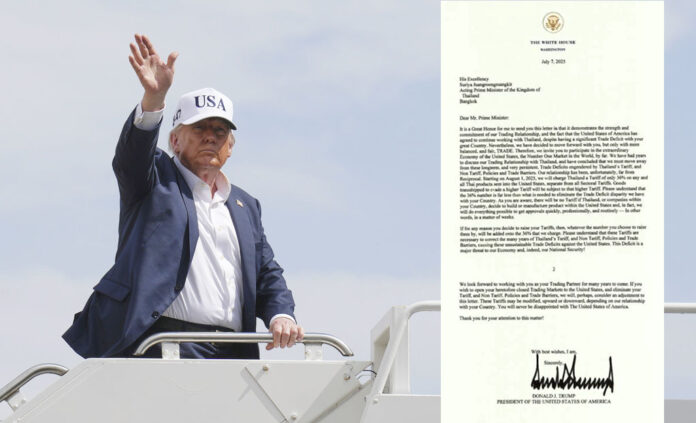
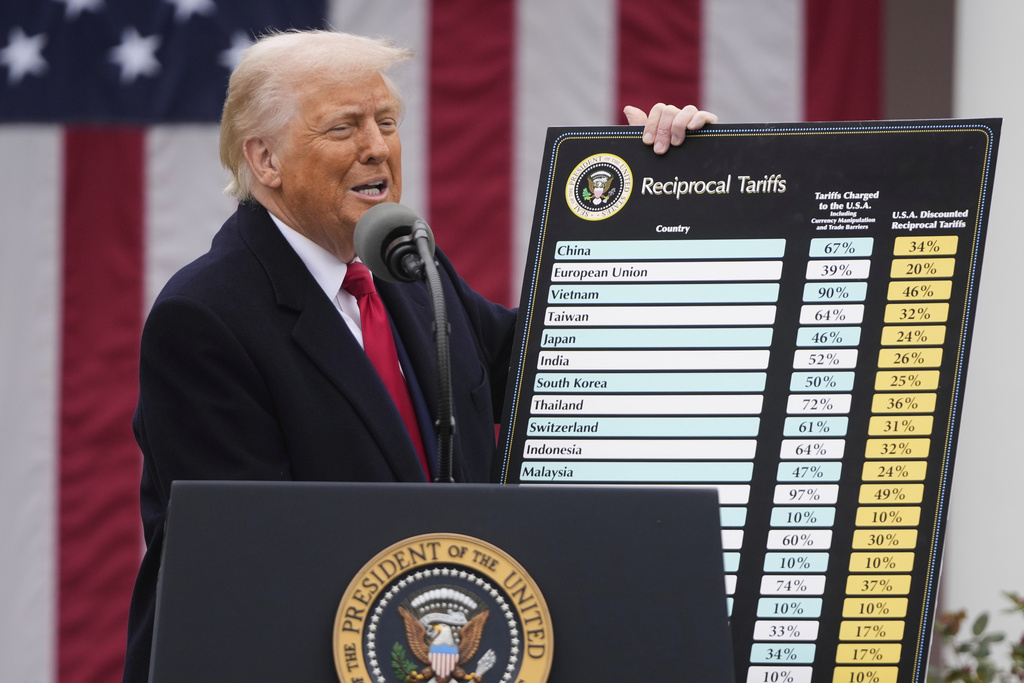
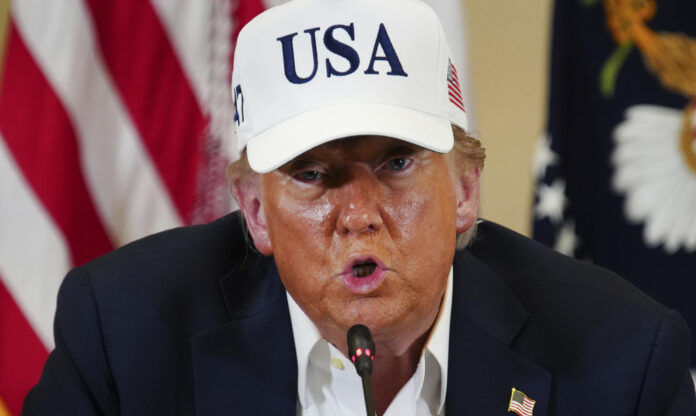
President Donald Trump (AP Photo/Jacquelyn Martin)
The tariffs letter sent by US President Donald Trump to heads of governments and some heads of state around the world earlier this week sent a shockwave through global markets and led to severe uncertainties about the future of world trade and the global economy.
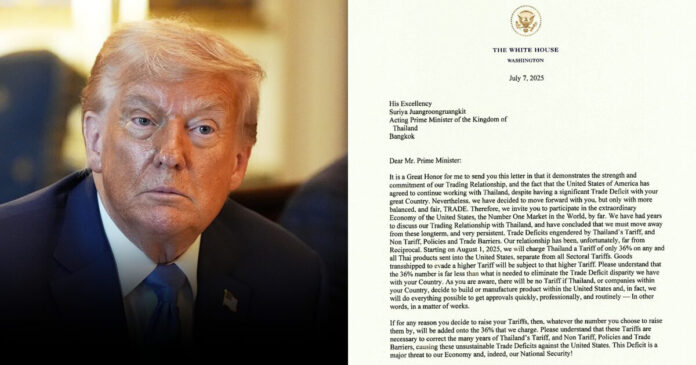
In Thailand, where the standing rate is 36 per cent with the negotiation dateline on 1 August, it was one of the harshest among all trading partners. The public found not just the figure but the content of the letter, a copy of which was sent to then acting PM Suriya Juangroongruangkit and the King, very offensive.
“If for any reason you decide to raise your tariffs [against the US], then, whatever the number you choose to raise them by will be added onto the 36% that we charge,” the beginning of the second paragraph of Trump’s letter sent to both the Thai King and the PM read.
Thai royalists were appalled and outraged. Assoc. Prof. Piti Srisangnam, an economist who lectures in international economics and ASEAN studies at Chulalongkorn University, told the local press that Trump didn’t know “his station in life.”
Sometimes some Thais are deluded, mistakenly believing their country is a great power. They think when the head of a state with the greatest military power and largest market in the world wrote a rude and threatening letter to the Thai King, it means Trump “doesn’t know his station in life.”
Yes, the letter was vulgar and needlessly undiplomatic, but Thailand is just a small country in the world and dozens of other countries received the exact vulgar letter as well. Land-wise, Thailand is smaller than the US state of Texas (Texas 676,587 sq km; Thailand 513,120 sq km).
Yes, Trump is vulgar and uncivilised, acting as if the world is his oyster and still stuck in the colonial era, an era when gunboats were dispatched to blockade ports in the East to open themselves to trade. But the American head of state is not in any lower position than the head of a small state like Thailand. We Thais should not be mistaken into thinking Thailand is superior, because Thailand is not even at the centre of ASEAN (the highest average income per person is Singapore, the largest market is in Indonesia, the most widely spoken language is Bahasa Indonesia). We need to get out of the rock, or “coconut shell” as we say in Thai, and look at the world map.
Even today, Cambodia isn’t afraid of Thailand and is abrasive, although two hundred years ago they were a semi-vassal state of Siam. So why would any Thai expect Trump to be afraid of Thailand?
….
Sombat Boon-ngam-anong, a prominent political activist, asked earlier this week on Facebook how we can understand Trump’s letter. I said I don’t think it’s fair, but it’s something Thais should understand: since the US is the world’s largest market, with immense purchasing power, we, as an export nation, rely more on the US than the US on us.
This tariff crisis saw former PM Thaksin Shinawatra taking charge, however.
Many people have always believed that the real Prime Minister for the past two years was Thaksin. With the Constitutional Court ordering his daughter to temporarily cease her duties, and Thailand facing a serious economic challenge from Trump’s tariffs, we saw Thaksin enter Phitsanulok Mansion this week to discuss matters with the Team Thailand ministers and his daughter’s advisory team.
This might be the last hope that Thailand won’t suffer a fatal economic blow in the clutches of the American eagle. And the fact that Thaksin urgently met relevant ministers before 8 am on Friday speaks volumes about the urgency of the matter. The future of the Thai export economy, the future of the Pheu Thai Party, as well as the future of Thaksin and his daughter, Paetongtarn Shinawatra, hang by a thread.
In such a situation, regardless of your or my opinion of Thaksin and the current administration, I can only hope that Team Thailand will succeed in evading the eagle’s claws this time. Because we are on the same boat, and the boat needs a skilled captain and cannot be rudderless in a situation where the storm is raging heavily.
…..
Back to gunboat diplomacy.
Trump’s tax extortion letter reminds me of the “Black Ships” incident, a pivotal event in Japanese history that led to the opening of the country and the end of the feudal and shogunate military dictatorship. The black battleships closed Edo Bay (the old name for Tokyo).
In the early 19th century, Japan was almost completely isolated from the outside world under the rule of the Tokugawa Shogunate. This isolation cut Japan off from trade and contact, except for very limited trade with the Chinese and Dutch in Nagasaki. This closed-door policy lasted for over two centuries, leading to a relatively backward Japan, technology-wise and more. In the mid-19th century, Western powers became more interested in Japan, seeing its potential for trade and as a stopover for ships crossing the Pacific Ocean.
On 8 July 1853, a squadron of four US Navy ships, under the command of Commodore Matthew C. Perry, arrived in Edo Bay. These were large steam-powered warships with dark smoke billowing from their funnels. They were formidable and vastly superior to Japanese ships. The Japanese thus called them “Kurofune” (黒船) or “Black Ships.”
The sight of this powerful fleet made Japan realise that her country was backward and had been living in isolation for too long. Perry issued an ultimatum, demanding that Japan open its doors to trade with the US and refused to leave until Japanese officials met him and received a letter from then US President (Millard Fillmore) demanding Japan open its country. Perry fired warning shots and was ready to use force.
After several months of tension, the Shogunate eventually succumbed to the pressure. Japan and the United States signed the Treaty of Kanagawa in 1854. The arrival of the Black Ships was a turning point in Japanese history. It led to the end of Japan’s 200-year isolation and forced Japan to confront the outside world, and led to domestic political tensions, eventually culminating in the end of the Shogunate in 1868 and the beginning of the Meiji Restoration, which ushered Japan into an era of rapid development and modernisation.
Fast forward to the present, many Japanese products are very competitive in the global market, even though their labour costs are much higher than Chinese. Think of Japanese automobiles, single malt whisky, watches, cameras, the education system, premium fruits, Wagyu beef, and more. Japan adapted well to the nationwide shock of the Black Ships’ arrival.
I can only hope that Thai society will face Trump’s “Black Ships” with understanding, and that this new era of Black Ships will make Thailand adapt, relying less on the American market, looking more towards other countries and new continents to trade, developing greater competitiveness in the global market, and becoming more self-reliant.
This could be another crossroads or a significant turning point for Thai society. Whether it will be for the better or worse depends on how well and how quickly we all adapt.
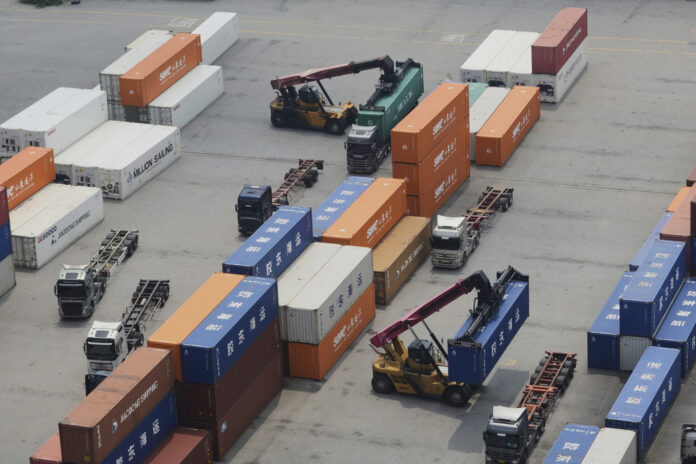
Cranes and shipping containers are seen at a port in Pyeongtaek, South Korea, Tuesday, July 8, 2025. (AP Photo/Ahn Young-joon)
President Donald Trump has sent letters this week outlining higher tariffs countries will face if they don’t make trade deals with the U.S. by Aug. 1.
Some mirror the so-called “reciprocal” rates Trump unveiled against dozens of trading partners in April — the bulk of which were later postponed just hours after taking effect. But many are higher or lower than those previously announced amounts.
So far, Trump has warned the European Union and 24 nations, including major trading partners like South Korea and Japan, that steeper tariffs will be imposed starting Aug. 1.
Nearly all of these letters took the same general tone with the exception of Brazil, Canada, the EU and Mexico, which included more specifics about Trump’s issues with those countries.
Nearly every country has faced a minimum 10% levy on goods entering the U.S. since April, on top of other levies on specific products like steel and automobiles. And future escalation is still possible. In his letters, which were posted on Truth Social, Trump warned countries that they would face even higher tariffs if they retaliated by increasing their own import taxes.
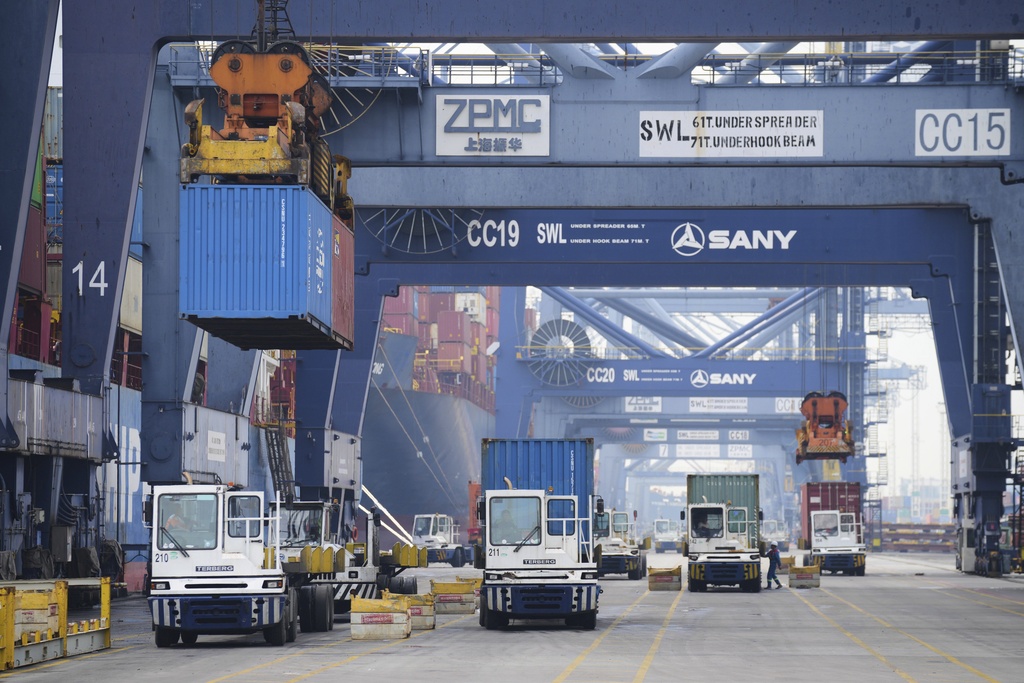
Cranes unload shipping containers from trucks at Jakarta International Container Terminal (JICT) at Tanjung Priok Port in Jakarta, Indonesia, Wednesday, July 9, 2025. (AP Photo/Tatan Syuflana)
Here’s a look at the countries that have gotten tariff letters so far — and where things stand now:
Brazil
Tariff rate: 50% starting Aug. 1. Brazil wasn’t threatened with an elevated “reciprocal” rate in April — but, like other countries, has faced Trump’s 10% baseline over the last three months.
Key exports to the U.S.: Petroleum, iron products, coffee and fruit juice.
Response: In a forceful response, Brazilian President Luiz Inacio Lula da Silva said Trump’s tariffs would trigger the country’s economic reciprocity law — which allows trade, investment and intellectual property agreements to be suspended against countries that harm Brazil’s competitiveness. He also noted that the U.S. has had a trade surplus of more than $410 billion with Brazil over the past 15 years.
Myanmar
Tariff rate: 40% starting Aug. 1. That’s down from 44% announced in April.
Key exports to the U.S.: Clothing, leather goods and seafood
Response: Maj. Gen. Zaw Min Tun, the spokesperson for Myanmar’s military government said it will follow up with negotiations.
Laos
Tariff rate: 40% starting Aug. 1. That’s down from 48% announced in April.
Key exports to the U.S.: Shoes with textile uppers, wood furniture, electronic components and optical fiber
Cambodia
Tariff rate: 36% starting Aug. 1. That’s down from 49% announced in April.
Key exports to the U.S.: Textiles, clothing, shoes and bicycles
Response: Cambodia’s chief negotiator, Sun Chanthol, said the country successfully got the tariff dropped from the 49% Trump announced in April to 36% and is ready to hold a new round of negotiations. He appealed to investors, especially factory owners, and the country’s nearly 1 million garment workers not to panic about the tariff rate announced Monday.
Thailand
Tariff rate: 36% starting Aug. 1. That’s the same rate that was announced in April.
Key exports to the U.S.: Computer parts, rubber products and gemstones
Response: Thailand’s Deputy Prime Minister Pichai Chunhavajira said Thailand will continue to push for tariff negotiations with the United States. Thailand on Sunday submitted a new proposal that includes opening the Thai market for more American agricultural and industrial products and increasing imports of energy and aircraft.
Bangladesh
Tariff rate: 35% starting Aug. 1. That’s down from 37% announced in April.
Key export to the U.S.: Clothing
Response: Bangladesh’s finance adviser Salehuddin Ahmed said Bangladesh hopes to negotiate for a better outcome. There are concerns that additional tariffs would make Bangladesh’s garment exports less competitive with countries like Vietnam and India.
Canada
Tariff rate: 35% starting Aug. 1. That’s up from 25% imposed earlier this year on goods that don’t comply with a North American trade agreement covering the U.S., Canada and Mexico. Some of Canada’s top exports to the U.S. are subject to different industry-specific tariffs.
Key exports to the U.S.: Oil and petroleum products, cars and trucks
Response: Canadian Prime Minister Mark Carney posted on X early Friday that the government will continue to work toward a trade deal by the new Aug. 1 deadline.
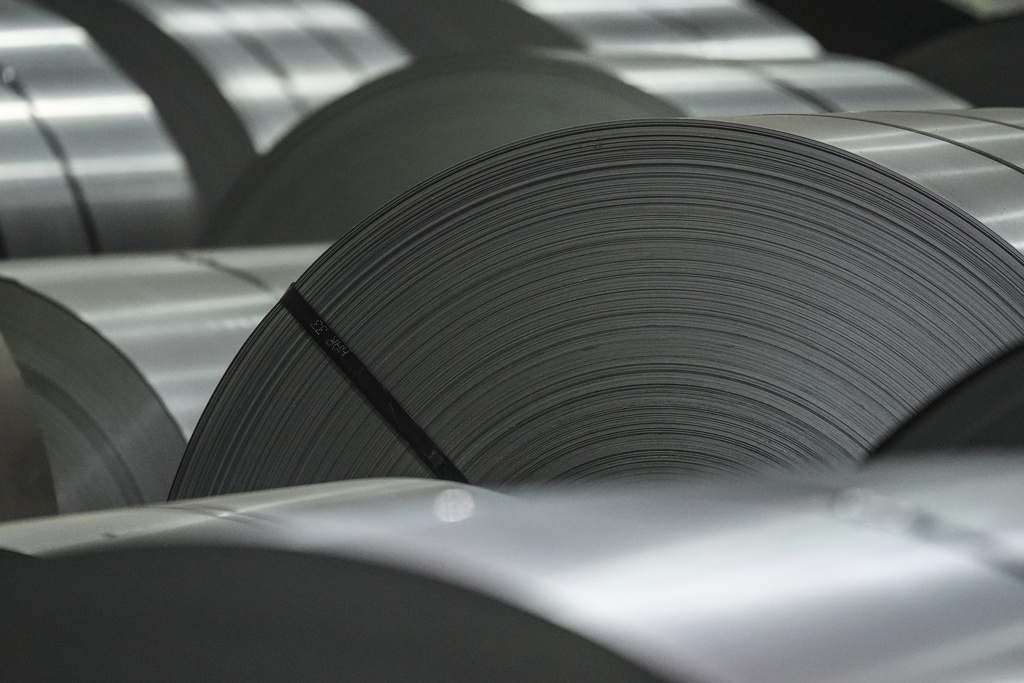
Coils of steel are seen at the ArcelorMittal Dofasco Steel Plant in Hamilton, on Friday, Feb. 14, 2025 (Chris Young/The Canadian Press via AP)
Serbia
Tariff rate: 35% starting Aug. 1. That’s down from 37% announced in April.
Key exports to the U.S.: Software and IT services; car tires
Indonesia
Tariff rate: 32% starting Aug. 1. That’s the same rate that was announced in April.
Key exports to the U.S.: Palm oil, cocoa butter and semiconductors
Algeria
Tariff rate: 30% starting Aug. 1. That’s the same rate that was announced in April.
Key exports to the U.S.: Petroleum, cement and iron products
Bosnia and Herzegovina
Tariff rate: 30% starting Aug. 1. That’s down from 35% announced in April.
Key exports to the U.S.: Weapons and ammunition
The European Union
Tariff rate: 30% starting Aug. 1. That’s up from 20% announced in April but less than the 50% Trump later threatened.
Key exports to the U.S.: Pharmaceuticals, cars, aircraft, chemicals, medical instruments, and wine and spirits.
Iraq
Tariff rate: 30% starting Aug. 1. That’s down from 39% announced in April.
Key exports to the U.S.: Crude oil and petroleum products
Response: European Commission President Ursula von der Leyen said the tariffs would disrupt essential supply chains “to the detriment of businesses, consumers and patients on both sides of the Atlantic.” She said the EU remains ready to continue working toward an agreement but will take necessary steps to safeguard EU interests, including countermeasures if required.
Libya
Tariff rate: 30% starting Aug. 1. That’s down from 31% announced in April.
Key exports to the U.S.: Petroleum products
Mexico
Tariff rate: 30% starting Aug. 1. That’s up from 25% imposed earlier this year on goods that don’t comply with the free trade agreement covering the U.S., Mexico and Canada. Some of Mexico’s top exports to the U.S. are subject to other sector-specific tariffs.
Key exports to the U.S.: Cars, motor vehicle parts and accessories, crude oil, delivery trucks, computers, agricultural products
South Africa
Tariff rate: 30% starting Aug. 1. That’s the same rate that was announced in April.
Key exports to the U.S.: Platinum, diamonds, vehicles and auto parts
Response: The office of South African President Cyril Ramaphosa said in a statement that the tariff rates announced by Trump mischaracterized the trade relationship with the U.S., but it would “continue with its diplomatic efforts towards a more balanced and mutually beneficial trade relationship with the United States” after having proposed a trade framework on May 20.
Sri Lanka
Tariff rate: 30% starting Aug. 1. That’s down from 44% announced in April.
Key exports to the U.S.: Clothing and rubber products
Brunei
Tariff rate: 25% starting Aug. 1. That’s up from 24% announced in April.
Key exports to the U.S.: Mineral fuels and machinery equipment
Moldova
Tariff rate: 25% starting Aug. 1. That’s down from 31% announced in April.
Key exports to the U.S.: Fruit juice, wine, clothing and plastic products
Japan
Tariff rate: 25% starting Aug. 1. That’s up from 24% announced in April.
Key exports to the U.S.: Autos, auto parts, electronic
Response: Japanese Prime Minister Shigeru Ishiba called the tariff “extremely regrettable” but said he was determined to continue negotiating.
Kazakhstan
Tariff rate: 25% starting Aug. 1. That’s down from 27% announced in April.
Key exports to the U.S.: Oil, uranium, ferroalloys and silver
Malaysia
Tariff rate: 25% starting Aug. 1. That’s up from 24% announced in April.
Key exports to the U.S.: Electronics and electrical products
Response: Malaysia’s government said it will pursue talks with the U.S. A cabinet meeting is scheduled for Wednesday.
South Korea
Tariff rate: 25% starting Aug. 1. That’s the same rate that was announced in April.
Key exports to the U.S.: Vehicles, machinery and electronics
Response: South Korea’s Trade Ministry said early Tuesday that it will accelerate negotiations with the United States to achieve a deal before the 25% tax goes into effect.
Tunisia
Tariff rate: 25% starting Aug. 1. That’s down from 28% announced in April.
Key exports to the U.S.: Animal and vegetable fats, clothing, fruit and nuts
Philippines
Tariff rate: 20% starting Aug. 1. That’s down from 17% announced in April.
Key exports to the U.S.: Electronics and machinery, clothing and gold
Trump’s sudden shifts make his policies baffling to countries trying to negotiate lower tariffs
WASHINGTON (AP) — In the past week, President Donald Trump has managed to make his erratic trade policies even more baffling to countries desperate to negotiate an escape from his wrath.
Doubling down on his trade wars, Trump is threatening to raise taxes on many goods from Canada, hike his universal tariff on imports from around the world and punish Brazil for prosecuting his friend, the country’s former president.
On Saturday, Trump announced more tariffs still, this time on two of the United States’ biggest trade partners: the European Union and Mexico, at 30% each.
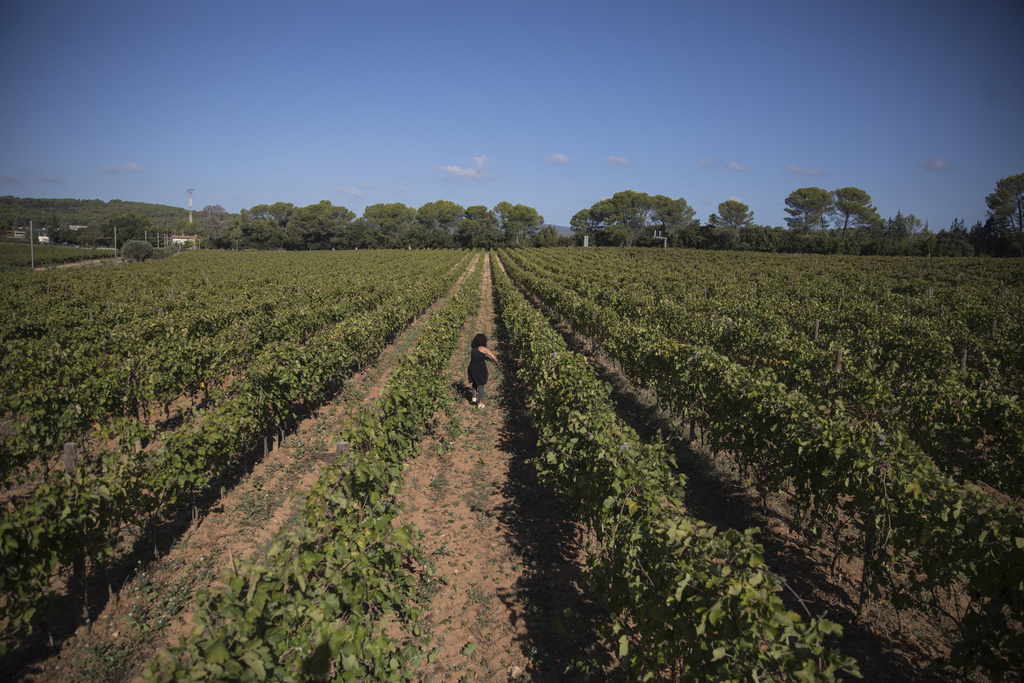
FILE – A worker tends to a vineyard in the southern France region of Provence, Friday Oct. 11, 2019. (AP Photo/Daniel Cole, File)
Former U.S. trade negotiator Wendy Cutler said that Trump’s recent moves “underscore the growing unpredictability, incoherence and assertiveness’’ of his trade policies.
“It’s hard for trading partners to know where they stand with Trump on any given day and what more may be coming their way when least expected,’’ said Cutler, now vice president at the Asia Society Policy Institute.
On Thursday, the president escalated a conflict he started with America’s second-biggest trading partner and longstanding ally, raising the tariff — effectively a tax — on many Canadian imports to 35% effective Aug. 1.
The sudden announcement, revealed in a letter to Canadian Prime Minister Mark Carney, came despite Carney’s push to reach a trade deal with the United States by July 21. And it followed a big concession by Canada: On June 29, it had agreed to drop a digital services tax that Trump considered unfair to U.S. tech giants.
Canada is far from the only target. In an interview Thursday with NBC News Trump suggested that he plans to raise his “baseline’’ tariff on most imports from an already-high 10% to as much as 20%. Trump sees the baseline tariffs as a way to finance the budget-busting tax cuts in the “One Big Beautiful Bill” he signed into law July 4.
Those tariff threats came after his extraordinary decision Wednesday to impose a 50% import tax on Brazil mainly because he didn’t like the way it was treating former Brazilian president Jair Bolsonaro, who is facing trial for trying to overturn his electoral defeat in 2022.
In his letter to current Brazilian President Luiz Inácio Lula da Silva, Trump also incorrectly claimed that Brazilian trade barriers had caused “unsustainable Trade Deficits against the United States.’’ In fact, U.S. exports to Brazil have exceeded imports for 18 straight years, including a $29 billion surplus last year.
For some, Trump’s action against Brazil indicates he’s trying to exert influence over more than trade.
“Trump seems to view tariffs as an instrument to influence not just other countries’ trade and economic policies but even their domestic legal and political matters,” said Eswar Prasad, professor of trade policy at Cornell University.
Trump’s faith in the economic superpowers of tariffs is unshaken even though they so far have proven largely ineffective in bullying other countries to cut deals.
On April 2, Trump announced the 10% baseline tariffs and larger “reciprocal’’ tariffs – up to 50% — on dozens of countries with which the United States runs trade deficits. But responding to a rout in global financial markets, he quickly suspended the reciprocal tariffs for 90 days to give countries a chance to negotiate.
The administration promised “90 deals in 90 days’’ but got only two – with the United Kingdom and Vietnam — before the deadline ran out Wednesday.
Rather than reinstituting the reciprocal tariffs, Trump sent letters to 23 countries saying he’ll impose levies ranging from 20% on the Philippines to the 50% on Brazil Aug. 1 if they couldn’t reach an agreement.
Chad Bown, senior fellow at the Peterson Institute for International Economics, was not surprised that Trump needed more time to press U.S. trading partners to do more to open their markets to U.S. exports — though another three weeks is unlikely to be enough time to reach substantive agreements.
“For each of these countries, they have their own domestic challenges about what they can and can’t offer,’’ he said. “There’s a reason why that market access hasn’t been granted before … they have domestic political constituencies that argue to keep protection in place. And those just aren’t problems that can easily be solved in a matter of weeks.’’
Malaysia, for instance, has “specific red lines’’ it will not cross, Trade Minister Zafrul Aziz said Wednesday, including U.S. demands involving government contracts, halal certification, medical standards and a digital tax.
But Malaysia has pledged to buy 30 Boeing planes and offered other concessions involving semiconductors and technology. “It has to be fair,” he said. “If the deal does not benefit Malaysia, we should not have a deal.’’
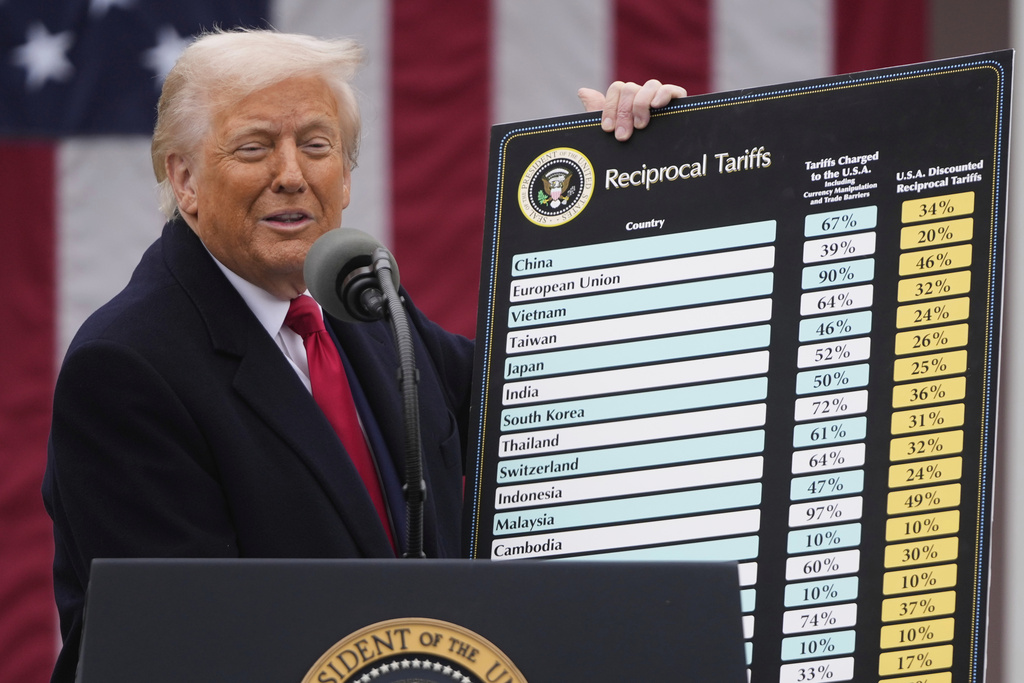
President Donald Trump speaks during an event to announce new tariffs in the Rose Garden at the White House, Wednesday, April 2, 2025, in Washington. (AP Photo/Mark Schiefelbein)
Still, the United States’ $30 trillion economy and free-spending consumers give Trump considerable leverage, especially over countries that depend on trade. “These countries need the United States,’’ said Matthew Goodman, director of the Council on Foreign Relations’ Center for Geoeconomic Studies. “They need our market.’’
Thailand, facing the threat of a 36% Trump tariff Aug. 1, is continuing to push for a deal and has offered to open its market to more U.S. farm, energy and industrial products.
Trump said Vietnam gave U.S. companies duty-free access to its market while agreeing to a 20% U.S. tariff on its exports — though details of the deal have not been released. “The Vietnam deal was fantastic,’’ Stephen Miran, chair of Trump’s Council of Economic Advisers, crowed last Sunday on ABC News’ “This Week with George Stephanopoulos.’’ “It’s extremely one-sided.’’
Other countries “can’t afford to walk away,’’ said Goodman, former director for international economics on the National Security Council. “But they’re going to be increasingly unhappy and resistant to the most over-the-top requests.’’
Sometimes there’s a backlash against U.S. bullying. Carney’s Liberal party, for example, won a come-from-behind election victory in April because he stood up to Trump’s pressure.
And countries are beginning to look for alternatives to economic reliance on the United States. Canada is negotiating a trade pact with Southeast Asian countries, some of which are also moving closer to China.
Foreign governments might also simply hope to outlast Trump, who has shown a willingness to declare victory after signing “framework’’ agreements such as one with China that leave the toughest issues for future negotiations.
“For Trump, the squeeze is more important than the juice,” said William Reinsch, a former U.S. trade official now at the Center of Strategic and International Studies. “What’s important to him is winning – the public, visible appearance of winning. And what he wins is less important.
“So the trick for these countries becomes: ‘How do we let him win in a way that allows us to make the least damaging concessions?’”
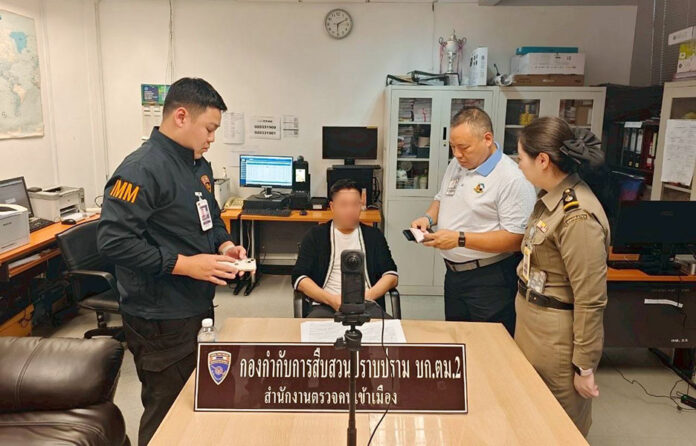
Mr. Hao, the suspected mastermind behind the robbery of his Chinese compatriot, arrested at Suvarnabhumi Airport on July 12, 2025.
PATTAYA – Thailand’s Regional Police Region 2 have arrested four suspects, including two Chinese nationals, in connection with a robbery case where the perpetrators posed as Thai police officers to assault and rob a 52-year-old Chinese man in Pattaya two days ago. Immigration police subsequently apprehended the mastermind behind the operation at the airport.
On July 12, Police Lieutenant General Yingyot Thepchamnong, Commander of Police Region 2, announced that the case involved cooperation from multiple police units including Regional Police Region 2, Immigration Bureau, Tourist Police, Chonburi Provincial Police, and Pattaya City Police Station, resulting in the arrest of four suspects: two Chinese nationals and two Thai citizens.
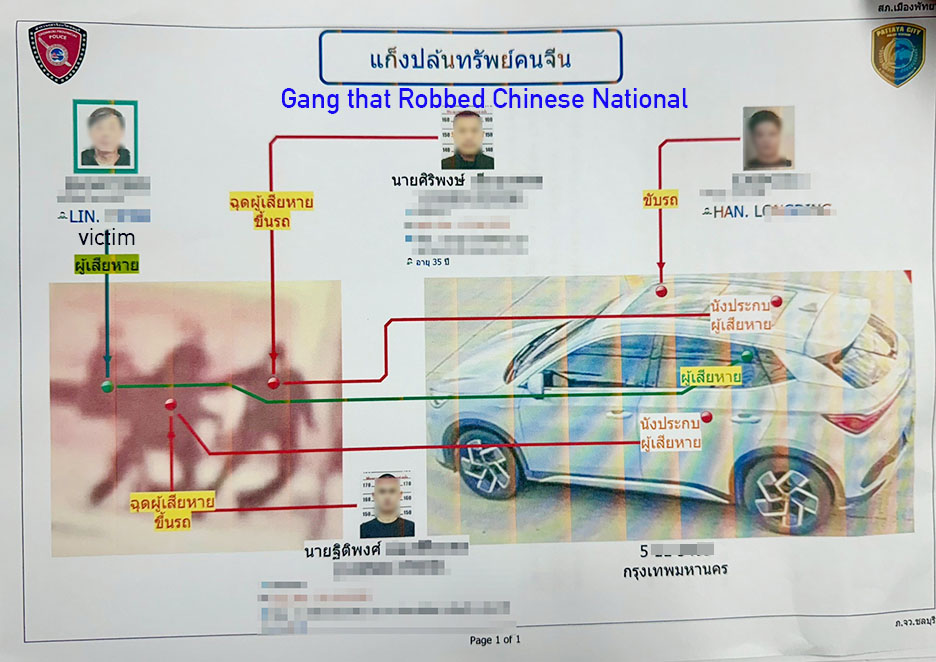
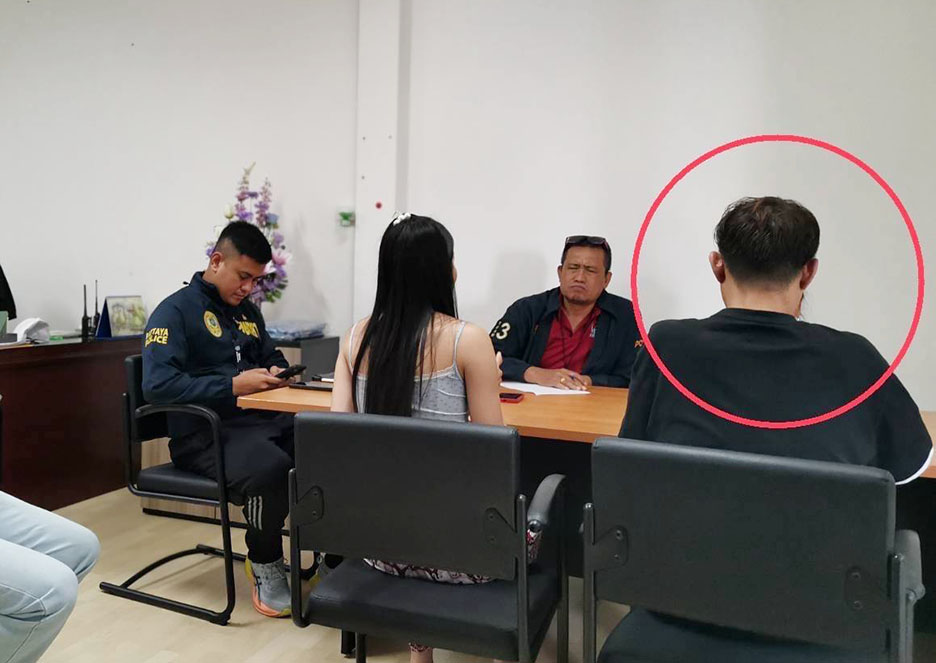
Investigation team’s chart showing gang members involved in kidnapping and robbing Mr. Lin, a Chinese national, compared with CCTV footage.Police interrogate one of the four suspects involved in robbing a Chinese man in Pattaya on July 11, 2025.
The arrested suspects are Mr. L. Han, 37, Mr. Zh. Han, 63, Mr. Siripong, 35, and Mr. Thitipong, 28. All four confessed to being the individuals captured on CCTV footage dragging Mr. Lin. They admitted to being hired by a Chinese man named Hao to rob Lin, though they claimed they didn’t know the amount of money involved beforehand, believing it was a debt collection operation.
The group planned the crime together and traveled from Bangkok to Pattaya on July 10. Zh. Han drove the vehicle while L. Han picked up the two Thai accomplices dressed in black before proceeding to commit the robbery.
They dragged Lin into an SUV in front of a Chinese restaurant on North Pattaya Road Sai 3, stealing $7,070 before releasing him near a shooting range on Railway Road, approximately 9 kilometers from the initial location.
After the robbery, Han drove the two Thai men away from the scene before fleeing to Minburi district where they divided the stolen money. The victim’s mobile phone was reportedly thrown into water.
Investigation teams reviewed CCTV footage and tracked down all suspects, seizing the vehicle used in the crime at a residence in Minburi. All suspects have been charged with armed robbery.
Subsequently, Police Colonel Choengron Rimpadee, Commander of Immigration Division 2, revealed that immigration officers arrested Mr. Hao, 30, a Chinese national, at the departure checkpoint of Suvarnabhumi Airport at approximately 4:30 PM while he was holding a boarding pass for flight VZ722 to Cambodia.
When officers informed him of the charges under a Pattaya Provincial Court warrant for armed robbery involving three or more persons, Hao denied the allegations and refused to sign the arrest record. He has been transferred to investigators at Pattaya City Police Station for legal proceedings.
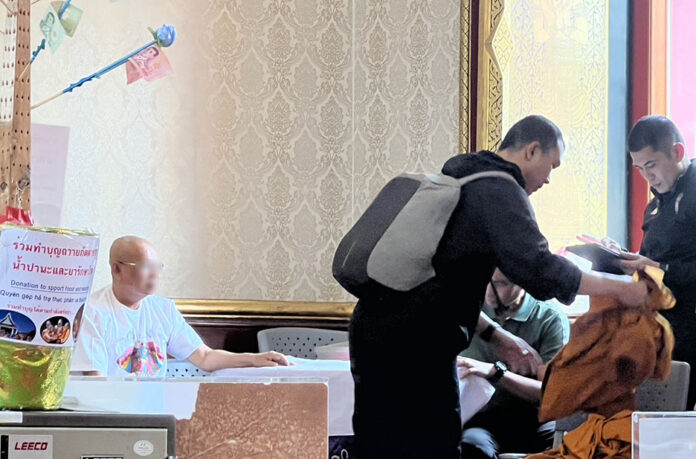
Police officers remove the saffron robes from Phra Kru Pradit (left), a 60-year-old abbot of Wat Phra Buddha Chai temple in Saraburi province after he announced his departure from the monkhood at Wat Trai Mit on July 9, 2025.
BANGKOK — Thailand’s Buddhist religious establishment is facing its most serious crisis in recent memory as a sex and money scandal involving one woman and at least 19 monks continues to unfold, forcing seven monks to defrock their religious leaders within a single week.
The woman at the center of the controversy, identified as “Miss Golf” (Seeka Golf), has been both criticized and mockingly dubbed a “serial monk killer” or “tigress monk hunter” by social media users. Some have sarcastically suggested she has inadvertently helped reform the Buddhist clergy and encouraged Buddhist followers to reconsider their donation practices.
The Unraveling Scandal
The case began when Phra Kru Yaem, abbot of Wat Rai Khing in Nakhon Pathom province, was blackmailed by another woman named “Gen” using compromising video clips. Gen reportedly extorted several million baht from the monk to fund her online gambling activities. When the scandal broke in May, Phra Kru Yaem was forced to leave the monkhood, and authorities launched an investigation into suspicious financial transfers between temple accounts and personal accounts.
The investigation led to Phra Kru Ard, abbot of Wat Tritosathep temple in Bangkok – a prominent temple serving as a crematorium for police officers – who quietly fled to disrobe in Nong Khai province, apparently to avoid prosecution related to his alleged relationship with Miss Golf.
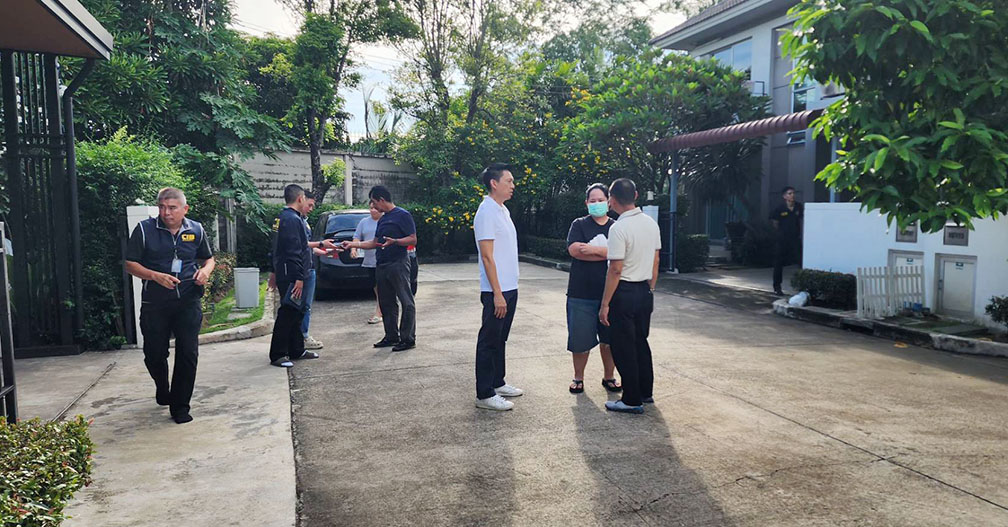
Pol. Lt. Gen. Charoonkiat Pankaew, Deputy Commander of the Central Investigation Bureau, questions Miss Golf (second from right), the woman at the center of the case involving inappropriate relationships and financial dealings with multiple monks, at her residence in Pak Kret district, Nonthaburi province on July 4, 2025.
Mass Disrobing
On July 9, dubbed mockingly as “Big Monk Disrobing Day,” six monks left the religious order in a single day due to their alleged inappropriate relationships with Miss Golf. All were senior monks and deputy abbots from temples in central and eastern Thailand, with three forced to disrobe due to serious evidence of disciplinary violations.
Police Investigation Intensifies
Deputy Commander Pol. Lt. Gen. Charoonkiat Pankaew of the Central Investigation Bureau is leading the investigation. A search of Miss Golf’s residence uncovered crucial evidence on her mobile phone, including approximately 80,000 files of images and videos documenting her relationships with various monks.
Most public attention has focused on Phra Kru Pradit, abbot of Wat Phra Buddha Chai in Saraburi province. In a television interview, Miss Golf claimed she was not receiving money from monks but rather giving them money as a girlfriend, having been in a relationship since 2019. She stated the money came from online gambling winnings and that she had transferred 3 million baht to Phra Kru Pradit’s account.
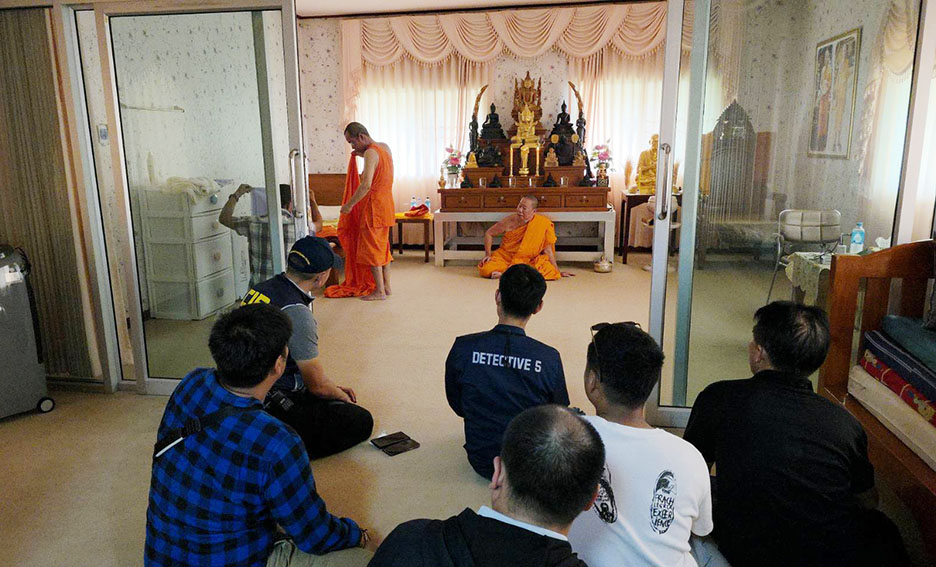
The assistant of an abbot of Wat Pak Nam temple in Samut Prakan province removes his robes after leaving the monkhood following the discovery of his involvement with Miss Golf on July 7.
Pattern of Targeting
According to police testimony, Miss Golf admitted to deliberately targeting wealthy and accessible monks. Money obtained from monks was allegedly used for online gambling, which she began in 2021. She claimed to use only one gambling website and once won as much as 10 million baht in a single session.
Miss Golf confessed to police about having intimate relationships with approximately eight monks, while maintaining that her connections with the remaining five or six were merely religious devotion and requests for loans. However, authorities remain skeptical and continue investigating evidence showing financial transfers involving 19 monks from 18 different temples.
Official Response
Pol. Lt. Gen. Charoonkiat emphasized that police have ongoing work but cannot reveal details. He stressed that the investigation aims to ensure religious institutions maintain monks who properly observe Buddhist precepts, insisting police do not intend to damage Buddhism.
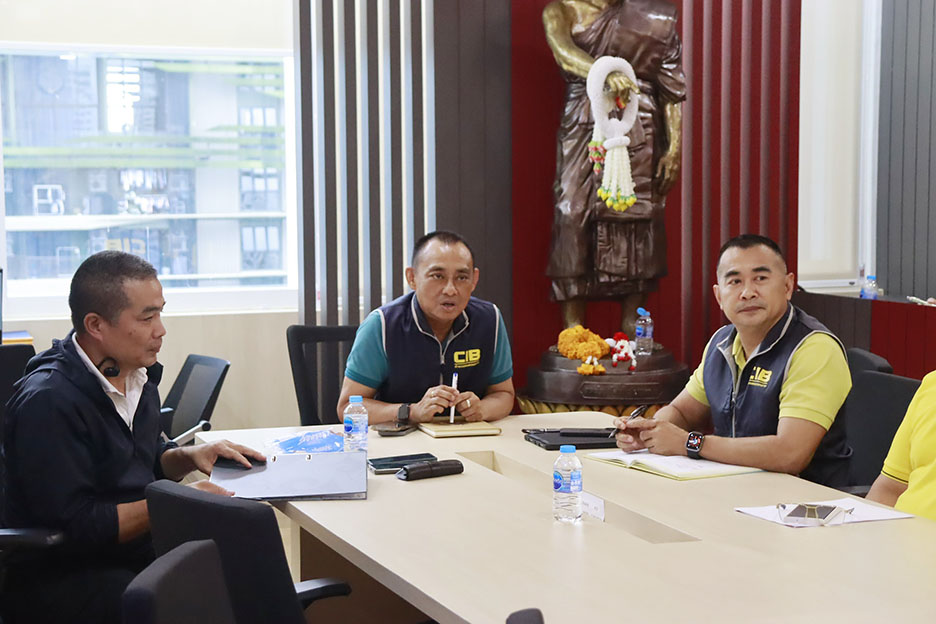
Pol. Lt. Gen. Charoonkiat Pankaew, Deputy Commander of the Central Investigation Bureau, meets with the investigation team regarding the “female predator” case in which several senior monks had inappropriate relationships and financial dealings with the same woman, at CIB headquarters in Bangkok on July 7, 2025.
“I want to remind monks nationwide to be careful about various activities involving women who approach them, whether in the form of making large donations as wealthy benefactors or high-society individuals, but who may actually be criminals seeking to deceive and gain trust through Line chats, phone calls, and recording compromising videos,” the deputy commander warned. “If monks remain vigilant and careful, such incidents will not occur.”
The scandal has sent shockwaves through Thailand’s Buddhist community and raised serious questions about oversight and accountability within religious institutions that play a central role in Thai society.
President Donald J. Trump speaks at a roundtable discussion at the Community Emergency Operations Center in Kerrville, Texas, Friday, July 11, 2025. (Ricardo B. Brazziell/Austin American-Statesman via AP)
BRIDGEWATER, New Jersey (AP) — President Donald Trump on Saturday announced he’s levying tariffs of 30% against the European Union and Mexico.
Trump announced the tariffs on two of the United States’ biggest trade partners in letters posted to his social media account.
In his letter to Mexico’s leader, Trump acknowledged that the country has been helpful in stemming the flow of undocumented migrants and fentanyl into the United States. But he said the country has not done enough to stop North America from turning into a “Narco-Trafficking Playground.”
“Mexico has been helping me secure the border, BUT, what Mexico has done, is not enough,” Trump added.
Trump in his letter to the European Union said that the U.S. trade deficit was a national security threat.
“We have had years to discuss our Trading Relationship with The European Union, and we have concluded we must move away from these long-term, large, and persistent, Trade Deficits, engendered by your Tariff, and Non-Tariff, Policies, and Trade Barriers,” Trump wrote in the letter to the EU. “Our relationship has been, unfortunately, far from Reciprocal.”
FILE – President Donald Trump speaks during an event to announce new tariffs in the Rose Garden at the White House, on April 2, 2025, in Washington. (AP Photo/Mark Schiefelbein, File)
Trump is in the midst of an announcement blitz of new tariffs with allies and foes alike, a bedrock of his 2024 campaign that he said would set the foundation for reviving a U.S. economy that he claims has been ripped off by other nations for decades.
With the reciprocal tariffs, Trump is effectively blowing up the rules governing world trade. For decades, the United States and most other countries abided by tariff rates set through a series of complex negotiations known as the Uruguay round. Countries could set their own tariffs – but under the “most favored nation’’ approach, they couldn’t charge one country more than they charged another.
With Saturday’s letters, Trump has now issued tariff conditions on 24 countries and the 27-member European Union.
The European Union’s chief trade negotiator said earlier this week that a trade deal to avert higher tariffs on European goods imported to the U.S. could be reached “even in the coming days.” Maroš Šefčovič told EU lawmakers in Strasbourg, France on Wednesday that the EU had been spared the increased tariffs contained in the letters Trump sent on Monday, and that an extension of talks would provide “additional space to reach a satisfactory conclusion.”
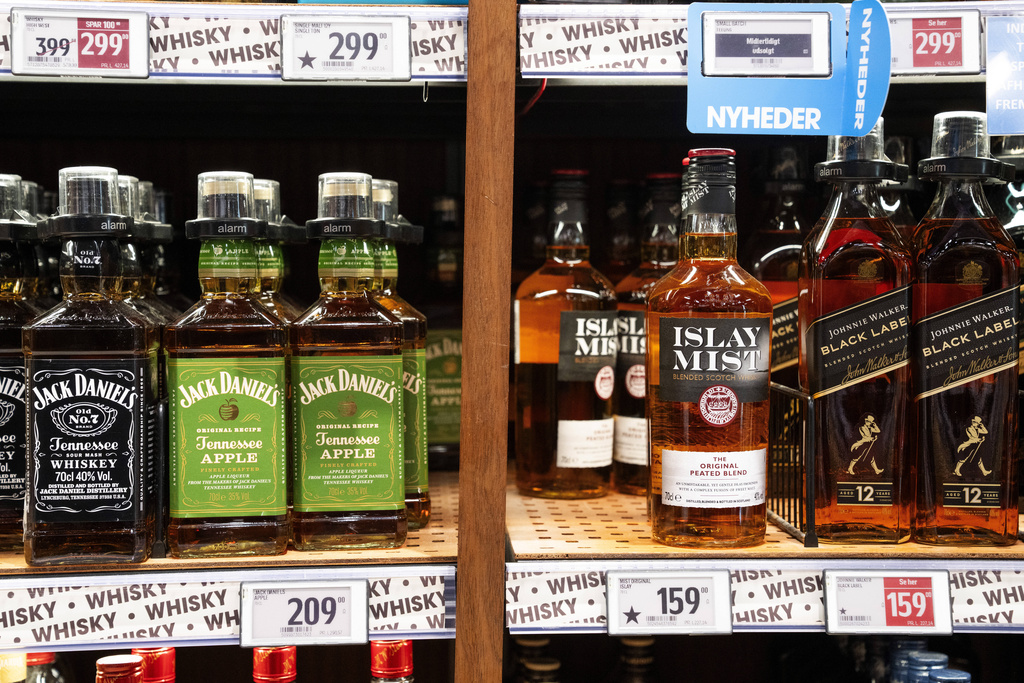
FILE – Bottles of spirits are labeled with a star in Bilka in Randers, Denmark, making it easier for customers to buy European goods, Monday, March 17, 2025. (Bo Amstrup/Ritzau Scanpix via AP, File)
The bloc collectively sells more to the U.S. than any other country. U.S. goods imports from the EU topped $553 billion in 2022, according to the Office of the U.S. Trade Representative.
Trump on April 2 proposed a 20% tariff for EU goods and then threatened to raise that to 50% after negotiations did not move as fast as he would have liked. Sefcovic did not mention any tariff figures.
The higher tariffs as well as any EU retaliation had been suspended as the two sides negotiate. However the base rate of 10% for most trade partners as well as higher rates of 25% on autos and 50% on steel and aluminum had gone into effect.
Douglas Holtz-Eakin, a former Congressional Budget Office director and president of the center-right American Action Forum, said the letters were evidence that serious trade talks were not taking place over the past three months. He stressed that nations were instead talking amongst themselves about how to minimize their own exposure to the U.S. economy and Trump.
“They’re spending time talking to each other about what the future is going to look like, and we’re left out,” Holtz-Eakin said.
He added that Trump was using the letters to demand attention, but, “In the end, these are letters to other countries about taxes he’s going to levy on his citizens.”
President Donald Trump says in a letter that he will raise taxes on many imported goods from Thailand to 36%.
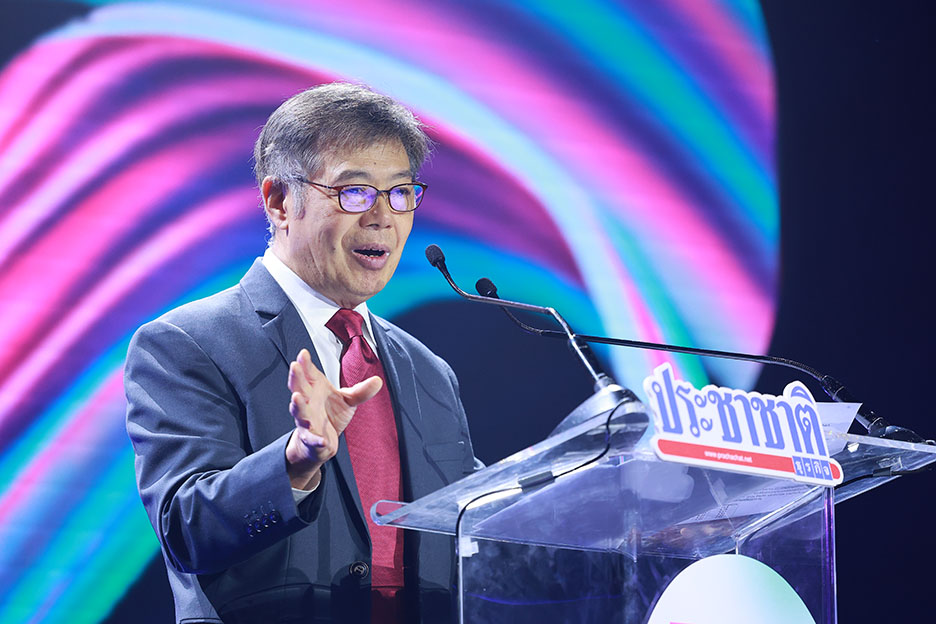
BANGKOK — Thailand’s economy faces a prolonged downturn as President Trump’s aggressive tariff policies threaten to slash Thai exports to the United States by half, according to Dr. Supavud Saicheua, President of the National Economic and Social Development Council (NESDC) and policy advisor to the Prime Minister.
In an exclusive interview with Prachachat Business, Dr. Supavud delivered a stark assessment of Thailand’s economic prospects, warning that the country must prepare for a worst-case scenario of 36% retaliatory tariffs that could devastate the export sector for years to come.
Export Engine Trapped for Three Years
Thailand’s $55 billion annual export market to the US—representing 18% of total exports—could be cut in half under Trump’s protectionist measures, forcing the country to urgently relocate approximately $30 billion in trade volume to alternative markets.
“America no longer welcomes goods from abroad, including from Thailand,” Dr. Supavud stated. “We must accept that our US exports might be reduced to only half, so we need to plan where to shift this reduced export volume.”
FILE – Dr. Supavud Saicheua, Chairman of NESDC, delivers a keynote speech at the seminar “Prachachat Forum: NEXT MOVE Thailand 2025” hosted by Prachachat Business at Siam Kempinski Hotel Bangkok, on March 26, 2025. (MATICHON Photo/Rattaseema Phongsan)
The economic impact extends far beyond immediate trade losses. Dr. Supavud projects that Thailand’s export figures will remain stagnant for approximately three years as the country struggles to establish new markets to replace the diminished US market share, which is expected to drop from 18% to just 9-10% of total exports.
Second Half GDP Turns Negative
The NESDC President painted a grim picture for Thailand’s immediate economic future, predicting negative GDP growth in the second half of 2025. While manufacturers rushed to fulfill US orders in the first half, creating temporary positive growth, the second half will face severe contraction as demand evaporates.
“I admit there’s only bad news because I don’t know where to find good news,” Dr. Supavud acknowledged. “In the first half, people complained about insufficient income; the second half will be much harder.”
The economic downturn is compounded by severely declining purchasing power, with no positive indicators on the horizon.
Global Investment Vacuum
Trump’s trade protectionism has created unprecedented uncertainty in global markets, freezing investment decisions worldwide. No country has successfully concluded a comprehensive trade deal with the Trump administration, leaving businesses unable to make long-term planning decisions.
“Who would dare to invest? Because we don’t know how to predict anything, what figures to put into the plan,” Dr. Supavud explained. The investment paralysis affects not just Thailand but the entire global economy, as businesses opt to repay debts rather than expand operations.
Strong Baht Compounds Export Woes
Thai exporters face a double blow from both shrinking markets and an increasingly strong baht. Dr. Supavud criticized Thailand’s monetary policy as “too tight,” arguing that the central bank’s reluctance to cut interest rates has strengthened the baht and further damaged export competitiveness.
“What I’m worried about is not volatility, but uncertainty, because we don’t know what Trump will do, what the world will be like, which makes people afraid to invest,” he noted.
No Fair Deal with Trump
Dr. Supavud dismissed hopes for equitable negotiations with the Trump administration, responding to former Prime Minister Thaksin Shinawatra’s recent suggestions for “fair” trade discussions.
“There is no fairness in dealing with Trump because Trump is not fair,” he stated bluntly. “Trump wants you to give only to him, and if you don’t give enough, you’ll be taxed. Don’t expect there to be Give and Take—there will only be Take and no Win-Win, because Trump only wants ‘I’m the winner.'”
The analysis points to Canada’s experience as evidence: when Canada collected digital services tax from the US, Trump immediately halted negotiations until Canada canceled the tax.
Vietnam’s Risky “All-In” Strategy
Dr. Supavud highlighted Vietnam’s precarious position as a cautionary tale for Thailand. With exports to the US representing 25% of Vietnam’s GDP (compared to Thailand’s 10%), Vietnam faces even steeper tariffs of 20% on Vietnamese goods and 40% on transshipped products.
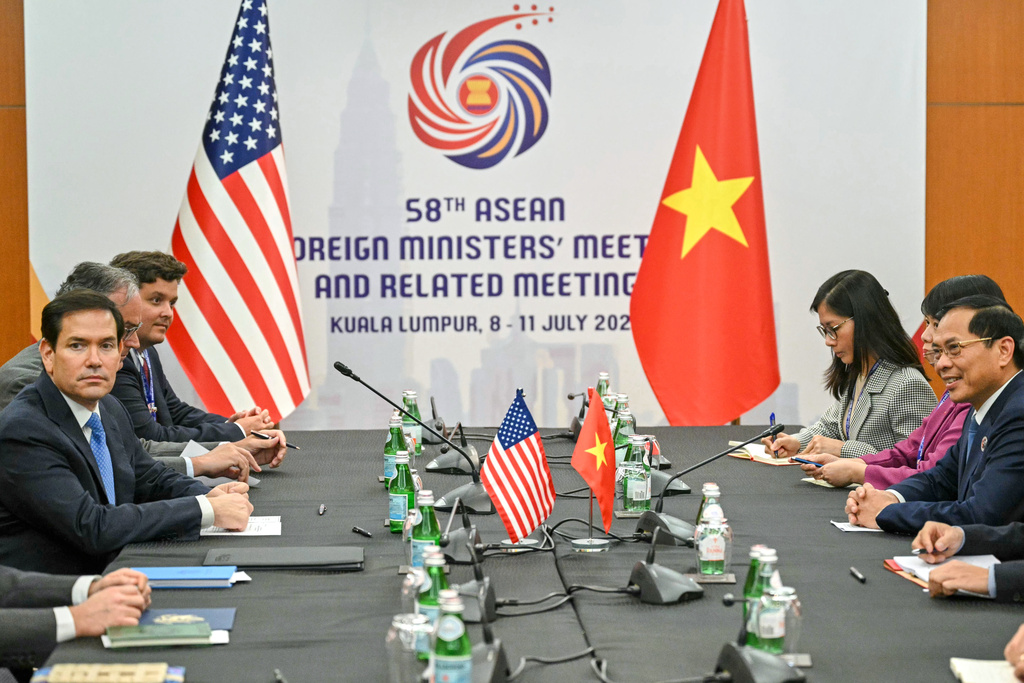
US Secretary of State Marco Rubio, left, meets with Vietnam’s Foreign Minister Bui Thanh Son, right, during the 58th ASEAN Foreign Ministers’ meeting and related meetings in Kuala Lumpur, Friday, July 11, 2025. (Mandel Ngan/Pool Photo via AP)
Vietnam’s desperate negotiations included a controversial gesture: Eric Trump’s $1.5 billion luxury real estate project near Hanoi, attended by Vietnam’s Prime Minister. The 6,335-rai development grants The Trump Organization management rights and benefits while Vietnam funds the entire project.
“The question is whether Thailand would do something similar,” Dr. Supavud asked, highlighting the ethical and economic dilemmas facing countries trying to appease Trump’s administration.
Thailand’s Path Forward
Despite the bleak outlook, Dr. Supavud outlined several strategic recommendations for Thailand:
Immediate Actions:
Accelerate plans to diversify export markets, particularly the EU, China, and Japan
Consider fast-tracking a free trade agreement with the EU
Explore joining the CPTPP (Comprehensive and Progressive Trans-Pacific Partnership)
Implement supportive monetary policy with interest rate cuts
Long-term Development:
Strengthen the tourism sector through enhanced safety measures and technology integration
Expand the food processing industry, which faces less risk from US tariffs since America is a net food exporter
Develop health tourism services, including proposals for Johns Hopkins University School of Medicine to establish a Thai branch
“All that has been said, if we don’t start today, when will we start? It might not be a short-term solution, but if we don’t start, when will we ever?” Dr. Supavud concluded.
Bottom Line
Thailand faces its most challenging export environment in decades, with the Trump administration’s protectionist policies threatening to slash US trade by half and trigger a three-year economic stagnation. Success will depend on how quickly the government can diversify markets and implement supportive policies while navigating the impossible task of “fair” negotiations with an administration that views trade as a zero-sum game.
The message is clear: Thailand must prepare for the worst while hoping diplomatic efforts can minimize the damage to its export-dependent economy.
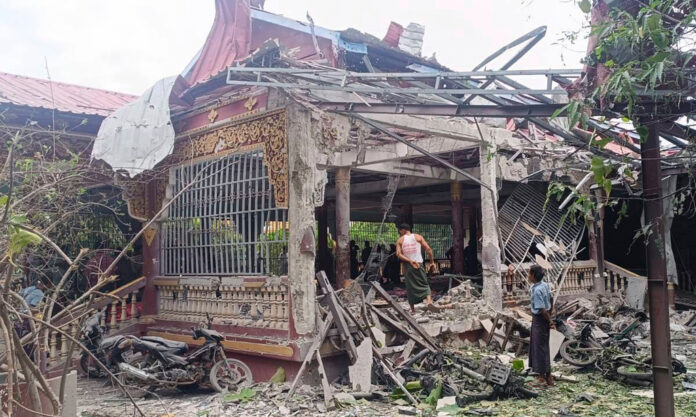
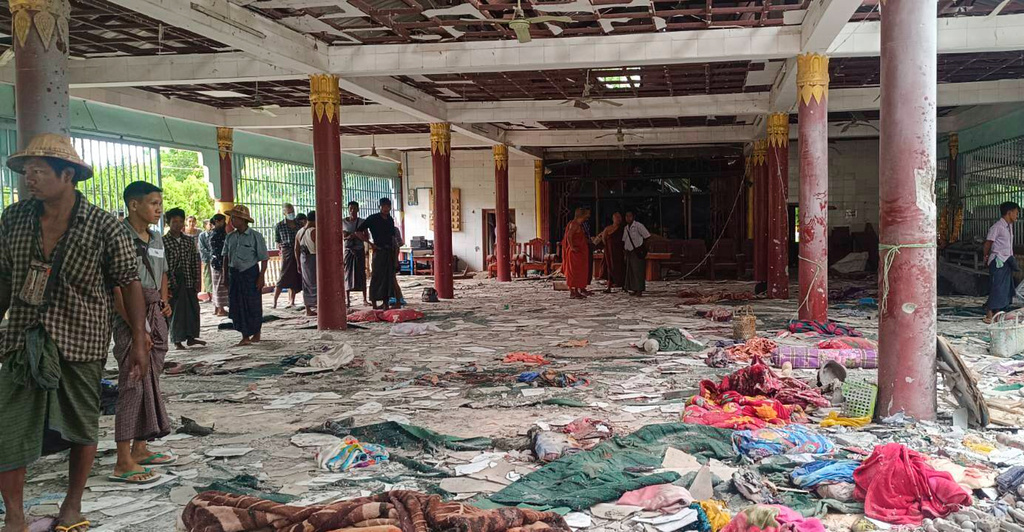
People check the debris at the building in a Buddhist monastery that was allegedly hit by the military’s airstrike in Sagaing township in Sagaing region, Myanmar, Friday, July 11, 2025. (UGC via AP)
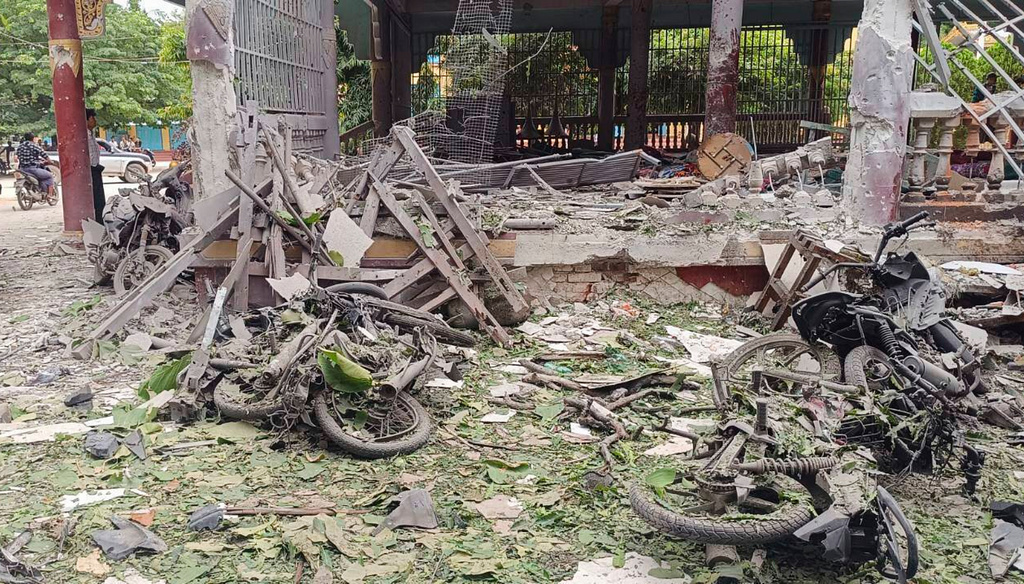
BANGKOK (AP) — An airstrike on a Buddhist monastery in Myanmar ‘s central Sagaing region killed at least 23 people who were taking shelter in the compound, separate sources said Friday.
The overnight aerial attack on the monastery in Lin Ta Lu village, in Sagaing region’s Sagaing township, injured about 30 other people, of which 10 were in a critical condition, according to a member of a resistance group.
The resistance member — who spoke on condition of anonymity — told The Associated Press that 23 civilians including four children were killed after a jet fighter dropped a bomb around 1 a.m. on a building in the village’s monastery where more than 150 people from nearby villages were taking shelter to avoid fighting in the region in recent weeks.
Myanmar’s independent Democratic Voice of Burma online media reported that the death toll could be as high as 30. That could not be immediately confirmed.
Buddhist monks and people check the debris inside a building in a Buddhist monastery that was allegedly hit by the military’s airstrike in Sagaing township in Sagaing region, Myanmar Friday, July 11, 2025. (UGC via AP)
The military did not immediately comment on the incident at the monastery, which is located about 35 km (20 miles) northwest of Mandalay, the country’s second largest city. In the past, the army has said it only attacks legitimate targets of war, accusing the resistance forces of being terrorists.
Myanmar has been in turmoil since the army seized power from the elected government of Aung San Suu Kyi in February 2021, triggering a civil war. After peaceful demonstrations were put down with lethal force, many opponents of military rule took up arms, and large parts of the country are now embroiled in conflict.
The military has increasingly used airstrikes to counter opposition forces, including the armed People’s Defense Forces in Sagaing region, a stronghold of armed resistance. The resistance has no effective defense against air attacks.
Debris is seen outside a building in a Buddhist monastery that was allegedly hit by the military’s airstrike in Sagaing township in Sagaing region, Myanmar Friday, July 11, 2025. (UGC via AP)
The monastery attack comes weeks after hundreds of soldiers took part in an offensive with tanks and various aircraft in an area about five kilometers (three miles) from Lin Ta Lu to regain territories controlled by the resistance groups.
Thousands of people from nearby villages were displaced to the other towns and villages including Lin Ta Lu, the resistance fighter said.
Nay Phone Latt, a spokesperson for the opposition’s National Unity Government, told the AP that the military regime has been trying to retake areas controlled by the resistance ahead of a planned general election later this year. The poll is widely seen as an attempt to normalize the military’s seizure of power through the ballot box and to deliver a result that ensures the generals retain control.
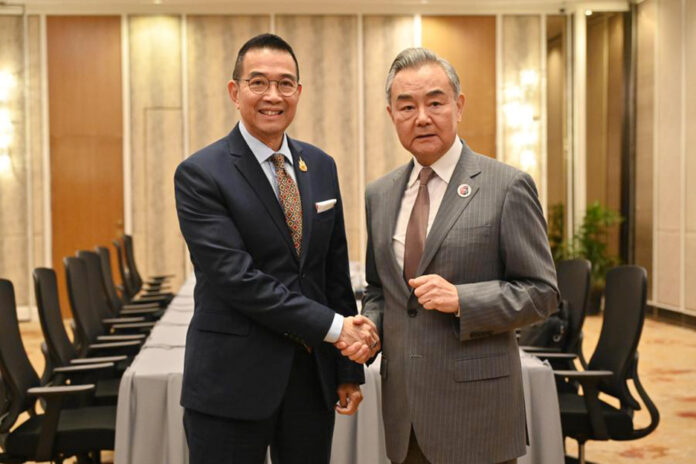
Chinese Foreign Minister Wang Yi, also a member of the Political Bureau of the Communist Party of China Central Committee, meets with Thai Foreign Minister Maris Sangiampongsa in Kuala Lumpur, Malaysia, July 10, 2025. (Photo by Chong Voon Chung/Xinhua)
KUALA LUMPUR — China is willing to work with Thailand to push the building of a community with a shared future to higher levels as China and Thailand celebrated the 50th anniversary of diplomatic relations, said Chinese Foreign Minister Wang Yi here on Thursday.
Wang, also a member of the Political Bureau of the Communist Party of China Central Committee, told Thai Foreign Minister Maris Sangiampongsa during their meeting on the sidelines of the ASEAN Foreign Ministers’ Meetings that China is willing to play a constructive role in promoting dialogue and de-escalation between Thailand and Cambodia over their recent border tensions.
The building of the China-Thailand community with a shared future has continued to make new progress. Marking the 50th anniversary of diplomatic ties this year, the two countries have jointly celebrated the “Golden Jubilee of China-Thailand Friendship,” Wang said.
China firmly supports Thailand in pursuing a development path suited to its national conditions and always places China-Thailand relations as a priority in its neighborhood diplomacy, Wang said, expressing China’s willingness to work with Thailand to push the building of the community with a shared future to higher and more substantive levels.
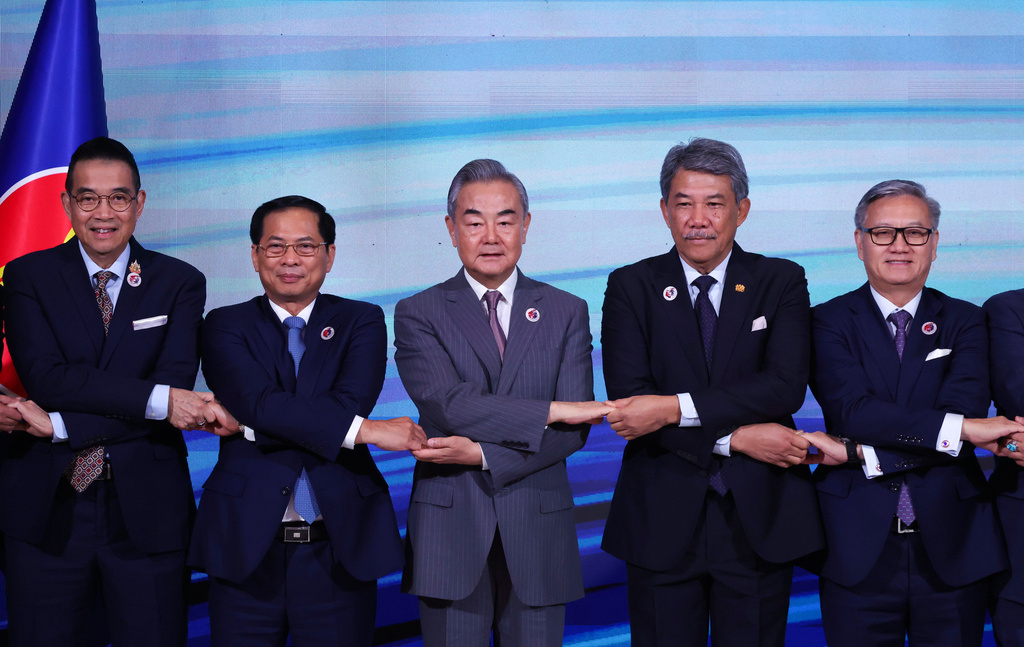
From left to right, Thailand’s Minister of Foreign Affairs Maris Sangiampongsa, Vietnamese Deputy Prime Minister and Minister of Foreign Affairs Bui Thanh Son, Chinese Foreign Minister Wang Yi, Malaysian Minister of Foreign Affairs Mohamad Hasan, and Laos’ Minister of Foreign Affairs Thongsavanh Phomvihane join hands for a group photo during ASEAN Post-Ministerial Conference with China at the Kuala Lumpur Convention Centre in Kuala Lumpur, Malaysia, Thursday, July 10, 2025. (Hasnoor Hussain/Pool Photo via AP)
Wang called for enhanced alignment of development strategies and further integration of interests between the two sides, and proposed forging new growth engines in areas such as digital economy, artificial intelligence, cross-border e-commerce and green development to support the modernization efforts of both countries. He also urged speeding up the construction of the China-Thailand railway to leverage flagship projects in order to promote the vision of interconnected development of China, Laos and Thailand.
Commenting on global trade, Wang said that the United States, by unilaterally imposing tariffs, has undermined the free trading system and disrupted global industrial and supply chains. He expressed confidence that Thailand and other ASEAN (the Association of Southeast Asian Nations) countries will safeguard their legitimate interests and resist unilateralism, power politics and acts of bullying.
He added that China is committed to signing the protocol for the Version 3.0 China-ASEAN Free Trade Area within the year to expand their common market and demonstrate their joint support for the rules of the World Trade Organization and the multilateral trading system through concrete actions.
On the Thailand-Cambodia border issue, Wang noted that both Thailand and Cambodia are China’s good neighbors and friends, expressing hope that both sides would handle the matter through dialogue and consultation in a spirit of goodwill, aiming to de-escalate tensions and restore stability at an early date.
China will maintain an objective and impartial stance and play a constructive role in promoting peaceful relations between the two countries, Wang added.
For his part, Maris said China is a trustworthy friend of Thailand. Over the past 50 years since the establishment of diplomatic ties, the two countries have maintained mutual trust and respected each other’s core interests. The spirit of “Thailand and China are as close as one family” has stood the test of time, and the building of the Thailand-China community with a shared future continues to yield fruitful outcomes.
Thailand firmly adheres to the One-China principle and looks forward to strengthening high-level exchanges and practical cooperation with China in connectivity, trade, agriculture and combating transnational crime, he said.
Thailand firmly supports multilateralism and the multilateral trading system, and calls for the early restoration of the normal trade order, said the Thai foreign minister.
Maris stressed that border and territorial issues should not be resolved through force and expressed Thailand’s appreciation to China’s objective and balanced position in promoting dialogue.
Thailand is willing to resolve disputes with Cambodia through bilateral channels in the spirit of good neighborliness and goodwill, he said
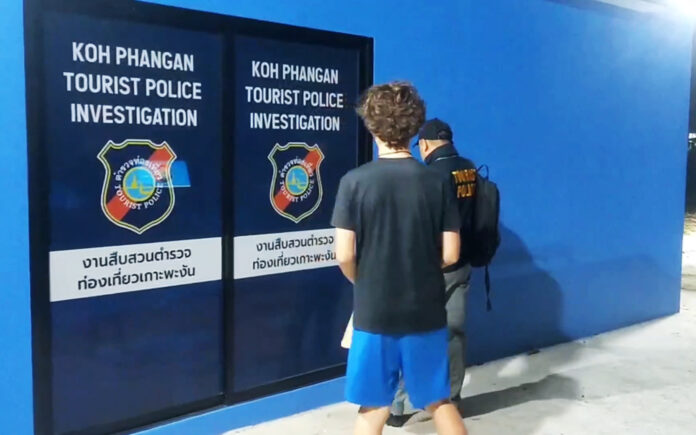
Koh Phangan tourist police find a French boy who became separated from his father and escort him to the tourist police service unit on July 10, 2025.
KOH PHANGAN — Tourist police on Koh Phangan successfully reunited a French father with his 13-year-old son who became separated during a ferry journey from Koh Tao to Koh Samui after the boy mistakenly disembarked at the wrong island.
Police Lieutenant Colonel Winit Boonchit received a report at 7:07 p.m. on July 10 from Mr. Nicolas, a 50-year-old French tourist, stating that his son had become separated from him while traveling on a Lomprayah ferry from Koh Tao to Koh Samui. It was suspected that when the ferry stopped at Koh Phangan, the child misunderstood and disembarked, causing the separation.
Koh Phangan tourist police immediately began searching the area based on the report. They subsequently found the boy walking along the roadside near Thong Sala Pier. After questioning him and confirming his name and nationality matched the missing person report, police contacted Mr. Nicolas to inform him that his son had been found and would be taken to the tourist police service unit to rest.
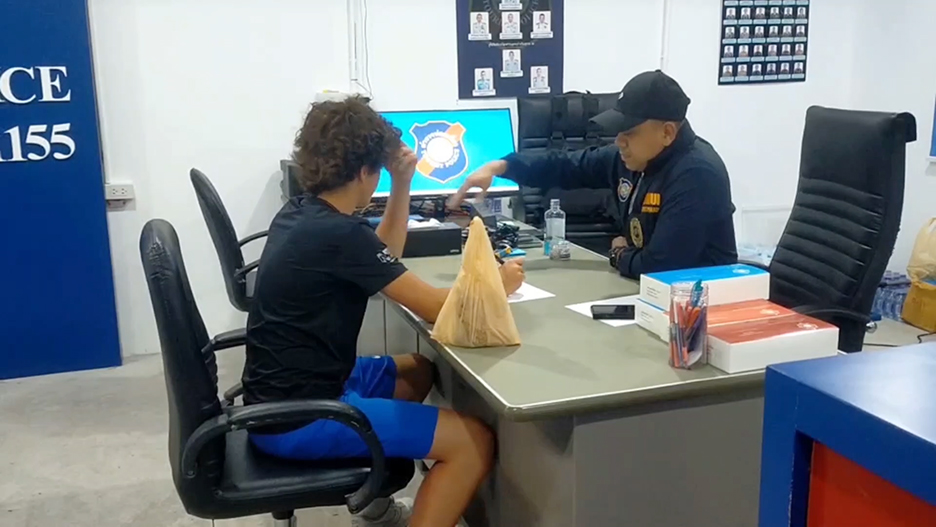
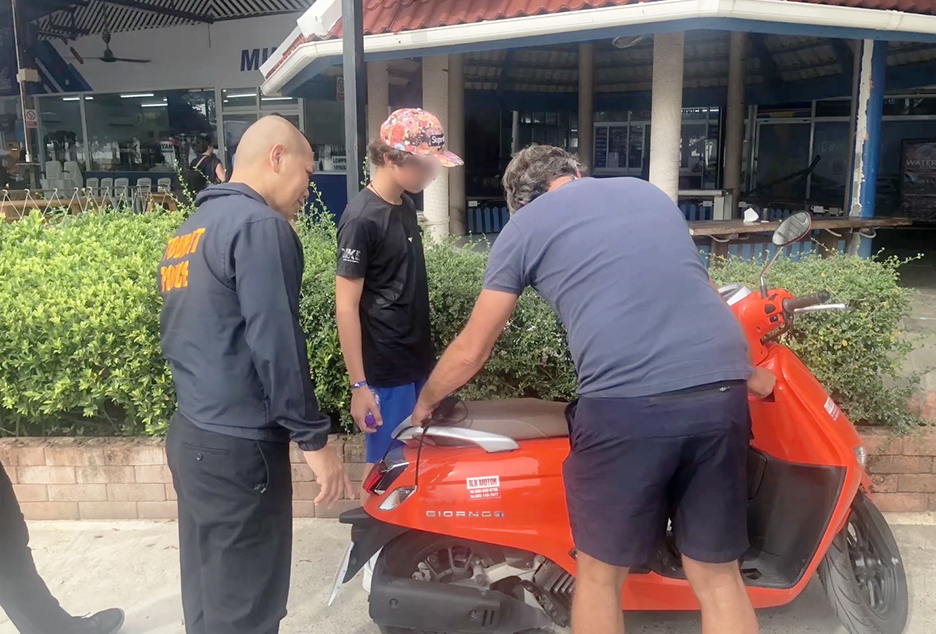
Koh Phangan tourist police find a French boy who became separated from his father and escort him to the tourist police service unit on July 10, 2025.Tourist police bring the French boy to reunite with his father on Koh Samui on July 11, 2025, after they became separated earlier.
Since the child had no money or mobile phone, tourist police provided him with cash to purchase personal items and food from a convenience store. As it was already dark with no ferry services available to Koh Samui, officers arranged for the boy to stay overnight at the Koh Phangan tourist police service unit with his father’s consent. Meanwhile, Koh Phangan tourist police coordinated with their Koh Samui counterparts to assist the father.
On the morning of July 11, Koh Phangan tourist police escorted the child to board a ferry to reunite with his father waiting on Koh Samui, with Koh Samui tourist police providing assistance throughout the process.
Mr. Nicolas was overjoyed to tears upon being reunited with his son. He expressed profound gratitude to the tourist police officers for their help in finding and caring for his son. Tourist police responded that ensuring tourist safety and welfare is their fundamental duty.
BANGKOK — “Every 15 minutes, someone somewhere in the world plays Ravel’s Bolero – it’s a legacy its artist could never have imagined.”
On the Auspicious Occasion of His Majesty the King’s birthday 28th July 2025, the Royal Bangkok Symphony Orchestra in collaboration with Department of Cultural Promotion, Ministry of Culture and with support of the Embassy of the Netherlands, British Council and B. Grimm, presents a memorable evening of music and dance on the 17th of July 2025 at 7:30 pm at the Thailand Cultural Centre, Main Hall.
Under the direction of returning Dutch conductor Sander Teepen, the concert opens with Giuseppe Verdi’s stirring Nabucco Overture, a dramatic and triumphant work that sets the tone for the night.
The first half continues with one of the most beloved works in the cello repertoire — Edward Elgar’s Cello Concerto in E minor, Op. 85, The Cello Concerto was Sir Edward Elgar’s last major work, composed in 1919, after the end of World War I.
The atmosphere of the piece reflects the loss, sadness, and fragility of the human mind, but at the same time, it also contains profound beauty and a spark of hope. It will be performed by the distinguished Cellist Johan van Iersel, assistant principal cellist of the Royal Concertgebouw Orchestra since September 1997.
The second half of the programme shifts to the world of myth and movement, beginning with Igor Stravinsky’s spellbinding Firebird Suite (1919 version), a vivid and colorful orchestral work rooted in Russian folklore.
The evening concludes with a special highlight: Bangkok City Ballet warmly invites you to experience a powerful contemporary performance, “BOLÉRO: Music and Dance Performance”, a unique collaboration uniting artist from PCK Dance (UK), Bangkok City Ballet, and the Royal Bangkok Symphony Orchestra.
This performance reimagines Maurice Ravel’s iconic classical composition Boléro through a contemporary lens, featuring choreography by James Pett and Travis Clausen-Knight of PCK Dance. Both choreographers will also perform on stage alongside professional dancers from Bangkok City Ballet, accompanied by a full live orchestra led by the RBSO.
Don’t miss this extraordinary fusion of powerful music and expressive movement — a contemporary performance that celebrates artistic excellence and international creativity.