




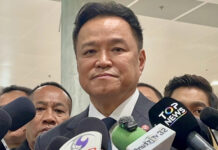
























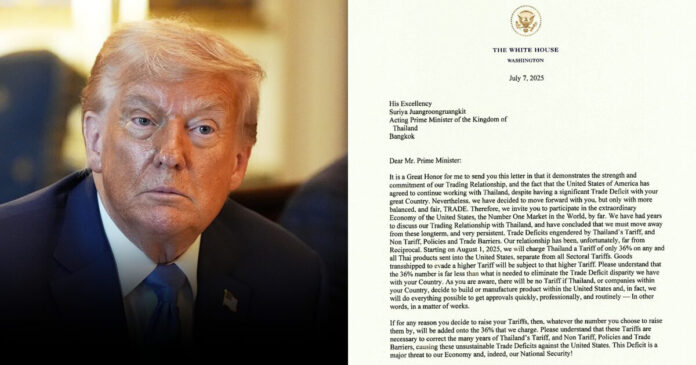
BANGKOK — Thailand’s economy faces a prolonged downturn as President Trump’s aggressive tariff policies threaten to slash Thai exports to the United States by half, according to Dr. Supavud Saicheua, President of the National Economic and Social Development Council (NESDC) and policy advisor to the Prime Minister.
In an exclusive interview with Prachachat Business, Dr. Supavud delivered a stark assessment of Thailand’s economic prospects, warning that the country must prepare for a worst-case scenario of 36% retaliatory tariffs that could devastate the export sector for years to come.
Export Engine Trapped for Three Years
Thailand’s $55 billion annual export market to the US—representing 18% of total exports—could be cut in half under Trump’s protectionist measures, forcing the country to urgently relocate approximately $30 billion in trade volume to alternative markets.
“America no longer welcomes goods from abroad, including from Thailand,” Dr. Supavud stated. “We must accept that our US exports might be reduced to only half, so we need to plan where to shift this reduced export volume.”
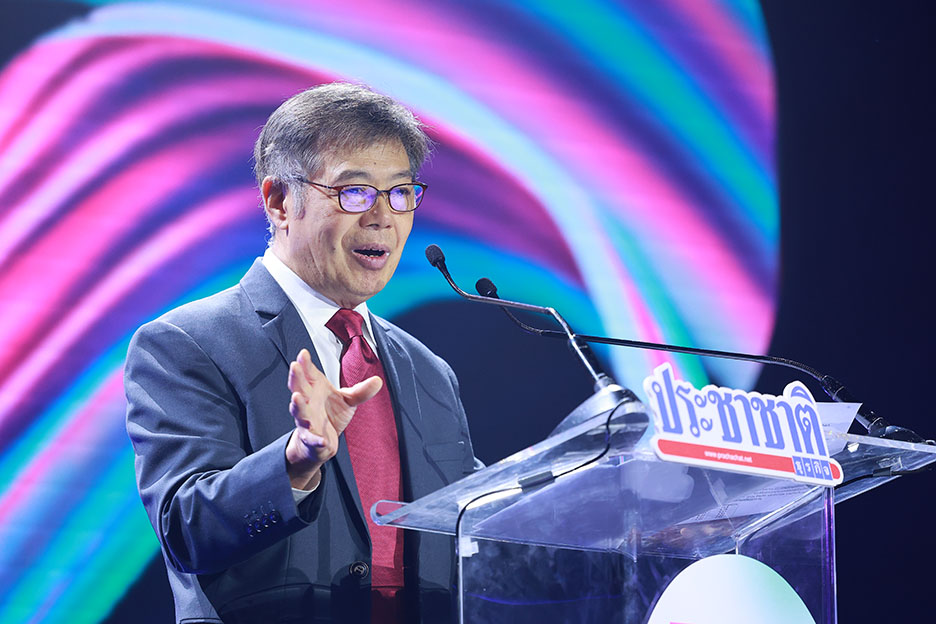
The economic impact extends far beyond immediate trade losses. Dr. Supavud projects that Thailand’s export figures will remain stagnant for approximately three years as the country struggles to establish new markets to replace the diminished US market share, which is expected to drop from 18% to just 9-10% of total exports.
Second Half GDP Turns Negative
The NESDC President painted a grim picture for Thailand’s immediate economic future, predicting negative GDP growth in the second half of 2025. While manufacturers rushed to fulfill US orders in the first half, creating temporary positive growth, the second half will face severe contraction as demand evaporates.
“I admit there’s only bad news because I don’t know where to find good news,” Dr. Supavud acknowledged. “In the first half, people complained about insufficient income; the second half will be much harder.”
The economic downturn is compounded by severely declining purchasing power, with no positive indicators on the horizon.
Global Investment Vacuum
Trump’s trade protectionism has created unprecedented uncertainty in global markets, freezing investment decisions worldwide. No country has successfully concluded a comprehensive trade deal with the Trump administration, leaving businesses unable to make long-term planning decisions.
“Who would dare to invest? Because we don’t know how to predict anything, what figures to put into the plan,” Dr. Supavud explained. The investment paralysis affects not just Thailand but the entire global economy, as businesses opt to repay debts rather than expand operations.
Strong Baht Compounds Export Woes
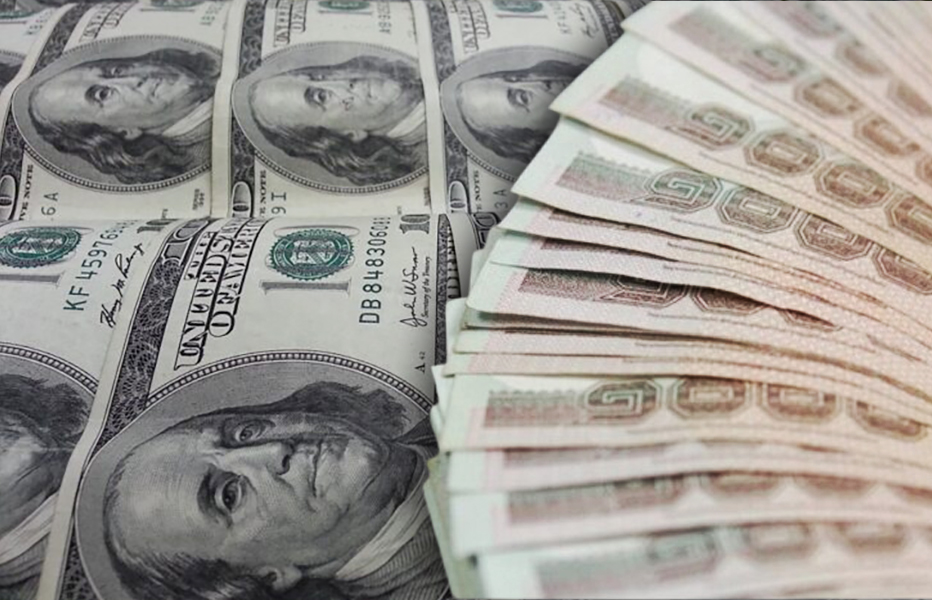
Thai exporters face a double blow from both shrinking markets and an increasingly strong baht. Dr. Supavud criticized Thailand’s monetary policy as “too tight,” arguing that the central bank’s reluctance to cut interest rates has strengthened the baht and further damaged export competitiveness.
“What I’m worried about is not volatility, but uncertainty, because we don’t know what Trump will do, what the world will be like, which makes people afraid to invest,” he noted.
No Fair Deal with Trump
Dr. Supavud dismissed hopes for equitable negotiations with the Trump administration, responding to former Prime Minister Thaksin Shinawatra’s recent suggestions for “fair” trade discussions.
“There is no fairness in dealing with Trump because Trump is not fair,” he stated bluntly. “Trump wants you to give only to him, and if you don’t give enough, you’ll be taxed. Don’t expect there to be Give and Take—there will only be Take and no Win-Win, because Trump only wants ‘I’m the winner.'”
The analysis points to Canada’s experience as evidence: when Canada collected digital services tax from the US, Trump immediately halted negotiations until Canada canceled the tax.
Vietnam’s Risky “All-In” Strategy
Dr. Supavud highlighted Vietnam’s precarious position as a cautionary tale for Thailand. With exports to the US representing 25% of Vietnam’s GDP (compared to Thailand’s 10%), Vietnam faces even steeper tariffs of 20% on Vietnamese goods and 40% on transshipped products.
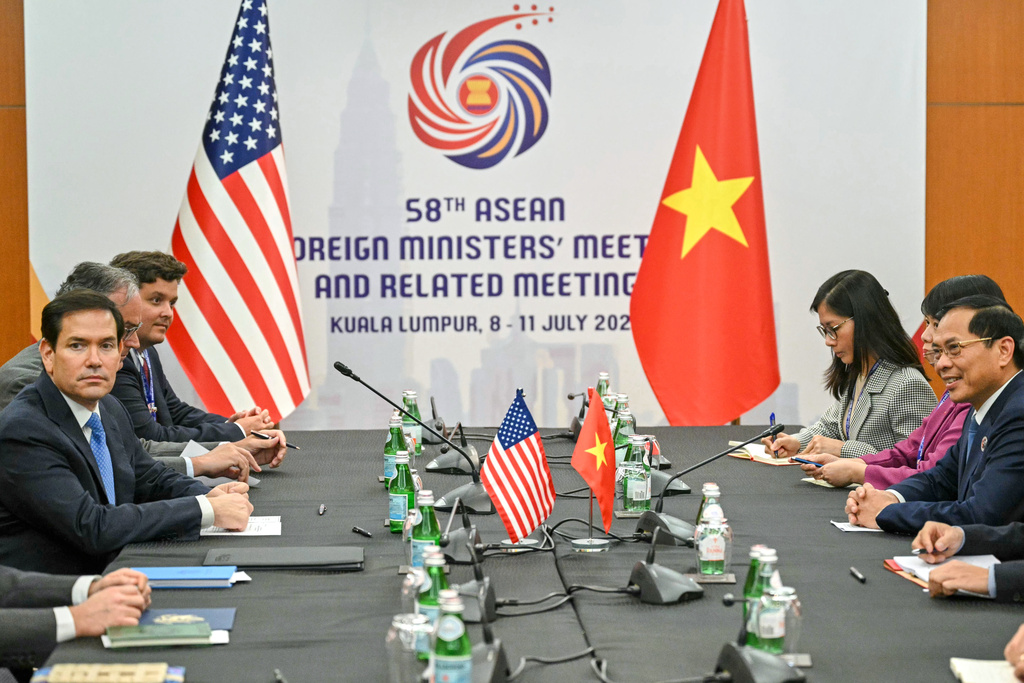
Vietnam’s desperate negotiations included a controversial gesture: Eric Trump’s $1.5 billion luxury real estate project near Hanoi, attended by Vietnam’s Prime Minister. The 6,335-rai development grants The Trump Organization management rights and benefits while Vietnam funds the entire project.
“The question is whether Thailand would do something similar,” Dr. Supavud asked, highlighting the ethical and economic dilemmas facing countries trying to appease Trump’s administration.
Thailand’s Path Forward
Despite the bleak outlook, Dr. Supavud outlined several strategic recommendations for Thailand:
Immediate Actions:
- Accelerate plans to diversify export markets, particularly the EU, China, and Japan
- Consider fast-tracking a free trade agreement with the EU
- Explore joining the CPTPP (Comprehensive and Progressive Trans-Pacific Partnership)
- Implement supportive monetary policy with interest rate cuts
Long-term Development:
- Strengthen the tourism sector through enhanced safety measures and technology integration
- Expand the food processing industry, which faces less risk from US tariffs since America is a net food exporter
- Develop health tourism services, including proposals for Johns Hopkins University School of Medicine to establish a Thai branch
“All that has been said, if we don’t start today, when will we start? It might not be a short-term solution, but if we don’t start, when will we ever?” Dr. Supavud concluded.
Bottom Line
Thailand faces its most challenging export environment in decades, with the Trump administration’s protectionist policies threatening to slash US trade by half and trigger a three-year economic stagnation. Success will depend on how quickly the government can diversify markets and implement supportive policies while navigating the impossible task of “fair” negotiations with an administration that views trade as a zero-sum game.
The message is clear: Thailand must prepare for the worst while hoping diplomatic efforts can minimize the damage to its export-dependent economy.
___________