



























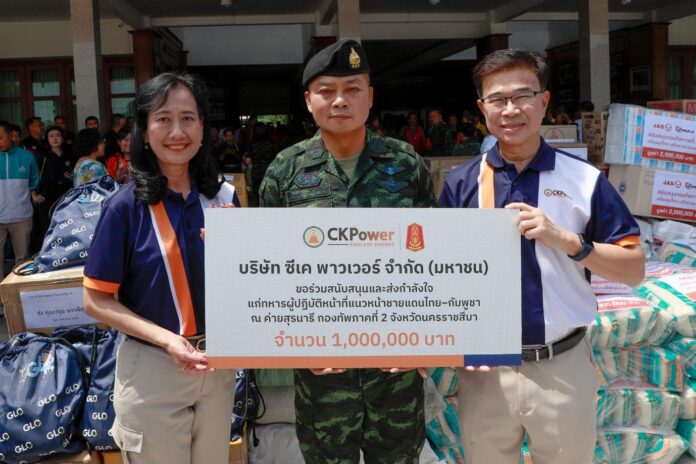
CK Power Public Company Limited (CKPower, SET: CKP) led by Mr. Vorapote Uchoepaiboonvong, Executive Committee, together with Mrs. Muntana Auekitkarjorn, Senior Deputy Managing Director, Corporate Planning, presented a contribution of THB 1,000,000 (One million baht) to the 2nd Army Area. This support is intended to enhance the operations of border security forces in safeguarding national sovereignty and maintaining the country’s security and stability. Lieutenant General Boonsin Padklang, Commander of Thailand’s 2nd Army Region, graciously accepted the donation at Suranaree Camp, Nakhon Ratchasima Province.
Thailand and Cambodia to Deploy Ceasefire Monitors Despite Deadlock Over Captured Soldiers
By EILEEN NG
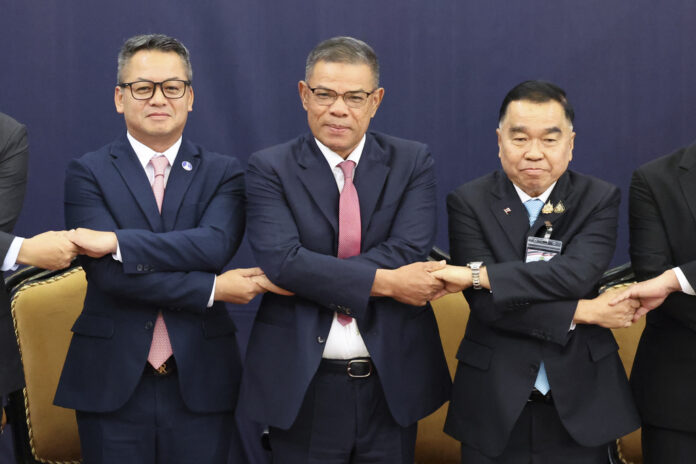
KUALA LUMPUR, Malaysia (AP) — Thailand and Cambodia agreed Thursday to establish interim observer teams to monitor a fragile ceasefire that ended five days of of deadly armed border clashes, even as the fate of 18 Cambodian soldiers captured by Thailand remains unresolved.
The first meeting of the General Border Committee concluded after four days of talks in the Malaysian capital, Kuala Lumpur, with a focus on ensuring the full implementation of the ceasefire brokered by Malaysia on July 28.
Dozens of people were killed and over 260,000 displaced on both sides of the Thai-Cambodian border, when fighting began after a land mine explosion along the border wounded five Thai soldiers.
According to a joint statement from the committee, each country will set up its own interim observer team comprising defense officials from the Association of Southeast Asian Nations and coordinated by the bloc’s annual chair Malaysia, pending the deployment of a formal ASEAN observer mission. The interim teams will operate within their respective borders and work closely with local military authorities.
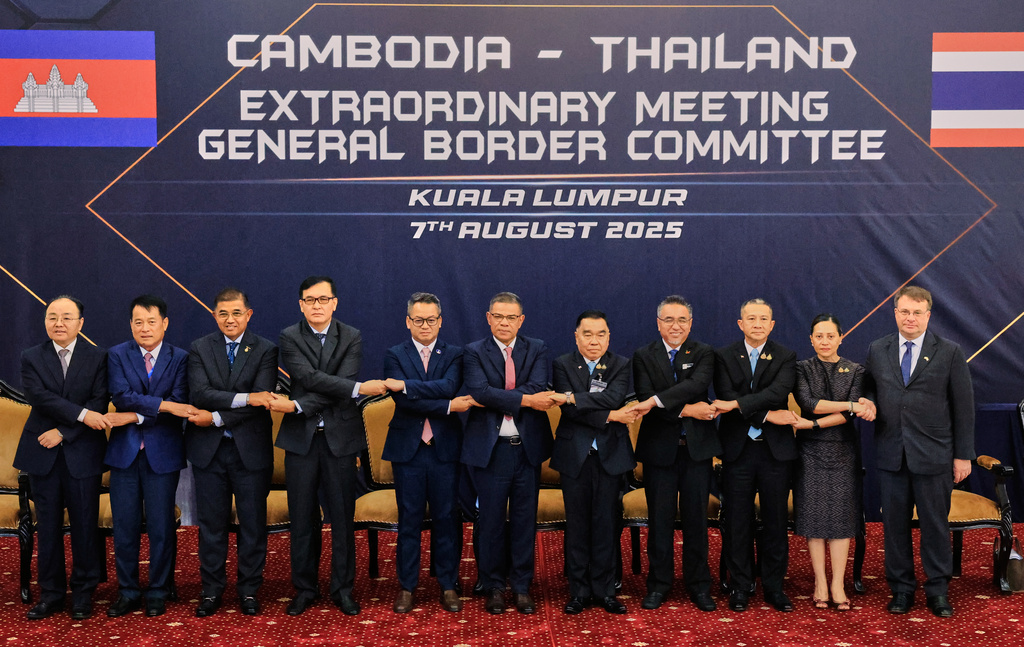
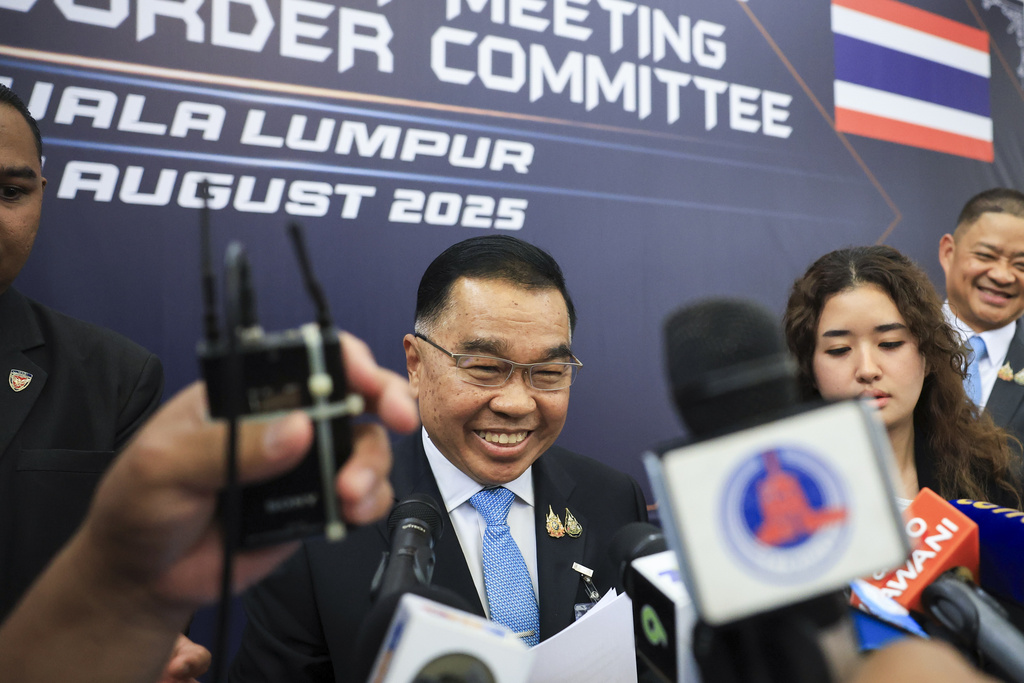
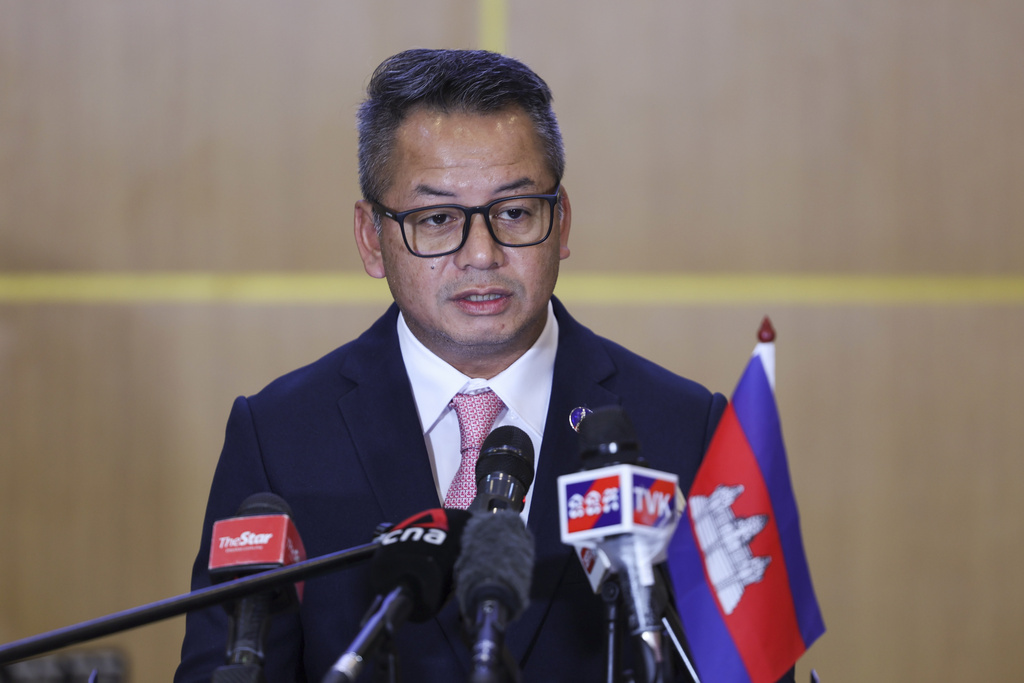
The main meeting Thursday was chaired by Cambodian Defense Minister Gen. Tea Seiha and Thailand’s Deputy Defense Minister Gen. Natthaphon Nakpanit. Malaysian Defense Minister Mohamed Khaled Nordin, along with representatives from the U.S. and China, attended as observers.
U.S. Ambassador to Malaysia Edgard D. Kagan said after the meeting that the outcome was an important milestone.
“The U.S. believes this is an important step. However it’s important to recognize this is only a step. The goal here is a durable sustainable ceasefire, one that is able to be accepted and enforced by both sides,” he told reporters. He said the U.S. would work closely with Malaysia and ASEAN to monitor the truce.
The July 28 ceasefire followed economic pressure from U.S. President Donald Trump, who had warned the warring nations that the U.S. would not conclude trade deals with them if the fighting persisted. Washington lowered tariffs on goods from the two countries from 36% to 19% on Aug. 1.
However, tensions persisted as each country accused the other of violating the agreements and organized tours of the former battle areas for foreign diplomats and other observers to highlight damage allegedly caused by the other side.
The two countries also continued to accuse each other of having violated international humanitarian laws with attacks on civilians and the use of illegal weapons.
While both sides reaffirmed commitments to halt hostilities, freeze troop movement and avoid provocations, the issue of the 18 Cambodian soldiers captured just hours after the ceasefire took effect remains a sticking point. The joint statement did not directly mention them but it noted that the captives should be “immediately released and repatriated after the cessation of active hostilities.” It didn’t clarify iwhether this refers to a formal end to the conflict.
Cambodia had accused Thailand of mistreating the captured men. Two wounded members of the 20-man Cambodian group were repatriated on Friday.
Thai authorities, however, called the group “prisoners of war” and said they would only be freed and repatriated following an end to the conflict.
The Thai foreign ministry said in a separate statement Thursday that the 18 prisoners have been treated in full compliance with international humanitarian law. It said members of the International Committee of the Red Cross had visited them on Tuesday at their detention facility, and that the men were in good health and without any injury.
Cambodia and Thailand have clashed in the past over their 800-kilometer (500-mile) border. Tensions had been growing since May when a Cambodian soldier was killed in a confrontation that created a diplomatic rift and roiled Thailand’s domestic politics.
_______
Associated Press reporter Grant Peck in Bangkok and Sopheng Cheang in Cambodia contributed to this report.
French Drug Fugitive Arrested in Koh Samui After 365-Day Overstay
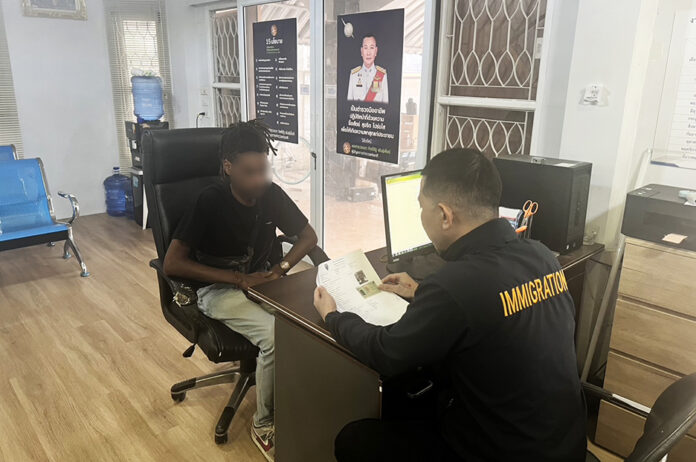
KOH SAMUI — Immigration officers in Surat Thani have arrested a 36-year-old French national wanted in France on drug trafficking charges after he fled to Thailand to evade prosecution.
The arrest of Jordan (surname withheld) came following official coordination between the Immigration Bureau and the French Embassy, which requested assistance in tracking down the fugitive who had escaped to Thailand.
Immigration investigators in Surat Thani Province began checking accommodation records as required under Thailand’s Immigration Act, which mandates that landlords, property owners, or hotel managers must report foreign guests to immigration authorities within 24 hours of their arrival. The search led them to a rental room in Ban Lamai, Maret subdistrict, Koh Samui district.
During surveillance, officers observed that Jordan remained extremely cautious and had fled his accommodation. The arrest team then conducted a multi-day stakeout until the suspect secretly returned to his room, at which point they moved in to make the arrest on August 6.

Jordan was found to have no passport in his possession. When officers checked his status through the biometric system, they discovered his permission to stay in Thailand had expired on August 5, 2024, meaning he had overstayed his visa by 365 days.
The suspect was transferred to Bo Phut Police Station for legal proceedings. After the domestic case is completed, he will be blacklisted from entering Thailand and extradited to France to face drug trafficking charges.
Police Lieutenant General Phanumas Boonlaksa, Commander of the Immigration Bureau, stated that the office has intensified monitoring of foreign nationals residing in Thailand who exhibit undesirable behavior.
The bureau now coordinates with origin countries to track information on foreign criminals who use Thailand as a hiding place or to launder their activities, or who come to commit crimes here, enabling rapid apprehension of suspects.
___________
New US Tariffs Cloud Outlook for Exporters in Asia and Beyond
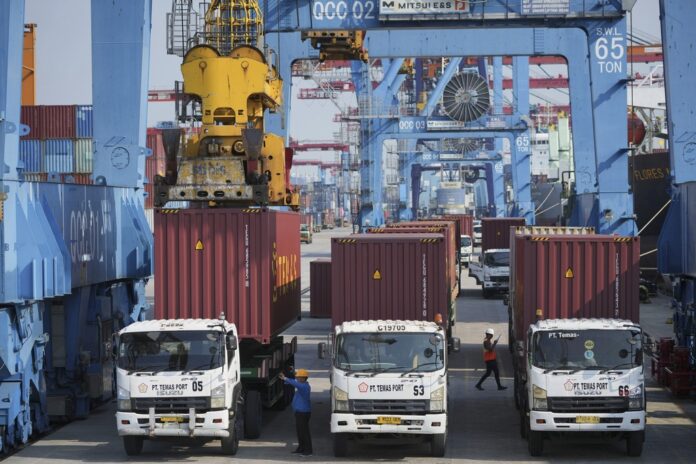
BANGKOK (AP) — President Donald Trump’s new tariff rates on U.S. imports from dozens of countries took effect Thursday, the latest chapter in the saga of Trump’s reshaping of global trade. But many questions remain.
Trump has threatened tariffs of up to 200% on imports of pharmaceuticals and has ordered a 100% import tax on computer chips. Most U.S. imports of copper, steel and aluminum are subject to a 50% tariff.
There’s still no agreement on what tariffs might apply to products shipped from China. India has no deal yet and faces a potential 50% tariff as Trump pressures it to stop buying oil from Russia.
Recent data shows uncertainty is clouding the outlook for exporters around the world as a rush to beat the tariffs during a pause for negotiation tapers off. Companies are reporting billions of dollars in higher costs or losses due to the higher import duties.
Global financial markets took Thursday’s tariff adjustments in stride, with Asian shares and U.S. futures mostly higher.
Here’s where things stand in what has proven to be a fast-changing policy landscape.
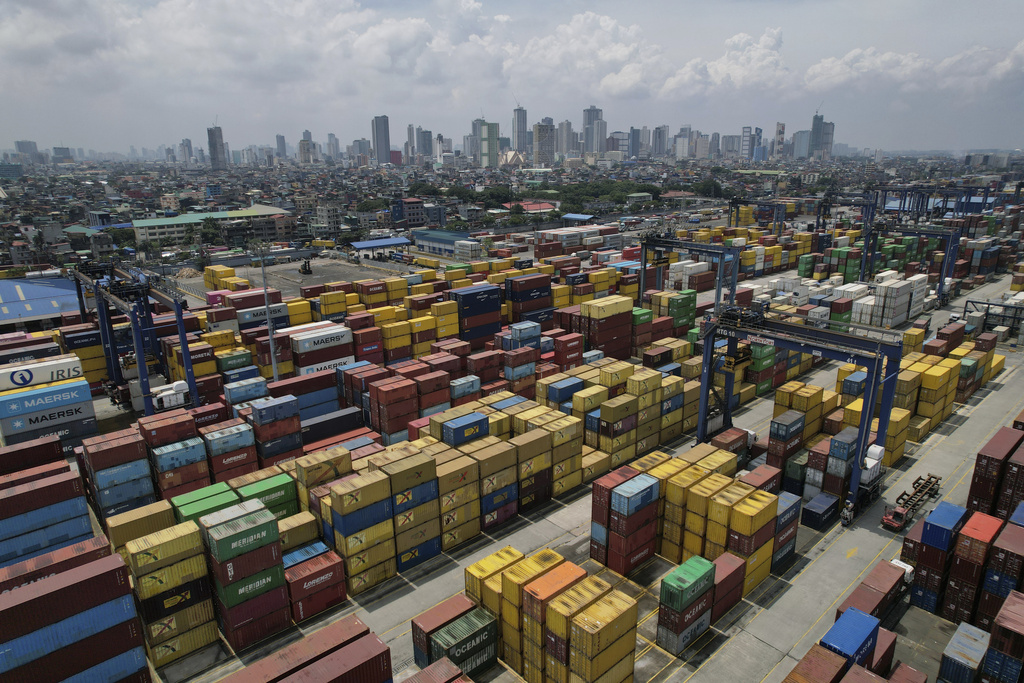
The tariffs taking effect this week
The tariffs announced on Aug. 1 apply to 66 countries, Taiwan and the Falkland Islands. They are a revised version of what Trump called ” reciprocal tariffs,” announced on April 2: import taxes of up to 50% on goods from countries that have a trade surplus with the United States, along with 10% “baseline’’ taxes on almost everyone else. That move triggered sell-offs in financial markets and Trump backtracked to allow time for trade talks.
The president has bypassed Congress, which has authority over taxes, by invoking a 1977 law to declare the trade deficit a national emergency. That’s being challenged in court, but the revised tariffs still took effect.
To keep their access to the huge American market, major trading partners have struck deals with Trump. The United Kingdom agreed to 10% tariffs and the European Union, South Korea and Japan accepted U.S. tariffs of 15%. Those are much higher than the low single-digit rates they paid last year, but down from the 30% Trump had ordered for the EU and the 25% he ordered for Japan.
Countries in Africa and Asia are mostly facing lower rates than the ones Trump decreed in April. Thailand, Pakistan, South Korea, Vietnam, Indonesia and the Philippines cut deals with Trump, settling for rates of around 20%.
Indonesia views its 19% tariff deal as a leg up against exporters in other countries that will have to pay slightly more, said Fithra Faisal Hastiadi, a spokesperson in the Indonesian president’s office.
“We were competing against Vietnam, India, Bangladesh, Sri Lanka and China … and they are all subject to higher reciprocal tariffs,” Hastiadi said. “We believe we will stay competitive.”
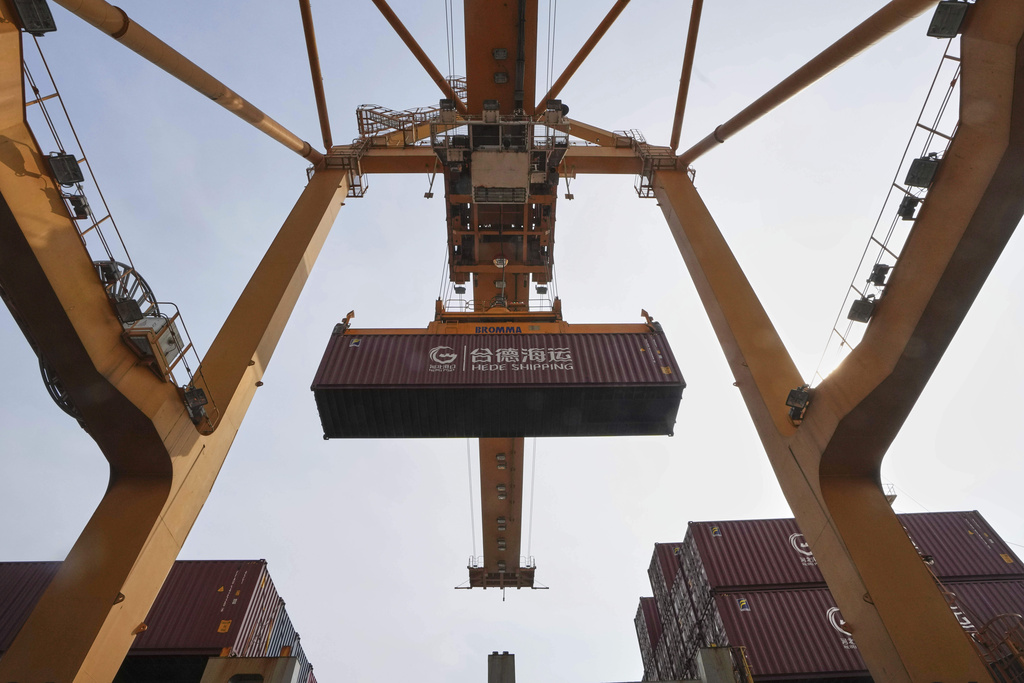
The latest situation for China and India
Trump has yet to announce whether he will extend an Aug. 12 deadline for reaching a trade agreement with China that would forestall earlier threats of tariffs of up to 245%.
Treasury Secretary Scott Bessent said the president is deciding about another 90-day delay to allow time to work out details of an agreement setting tariffs on most products at 50%, including extra import duties related to illicit trade in fentanyl.
Higher import taxes on small parcels from China have hurt smaller factories and layoffs have accelerated, leaving some 200 million workers reliant on “flexible work” — the gig economy — for their livelihoods, the government estimates.
India also has no broad trade agreement with Trump. On Wednesday, Trump he signed an executive order placing an extra 25% tariff for its purchases of Russian oil, bringing combined U.S. tariffs to 50%. India has stood firm, saying it began importing oil from Russia because traditional supplies were diverted to Europe after the outbreak of the Ukraine conflict.
A top body of Indian exporters said Thursday the tariffs will impact nearly 55% of the country’s outbound shipments to America and force exporters to lose their long-standing clients.
“Absorbing this sudden cost escalation is simply not viable. Margins are already thin,” S.C. Ralhan, president of the Federation of Indian Export Organisations, said in a statement.
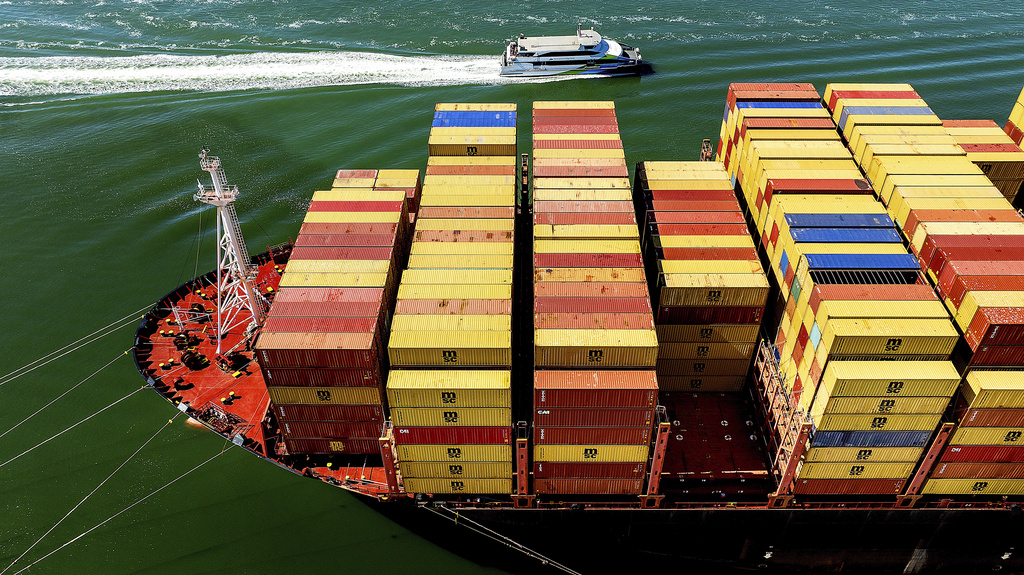
Others among the hardest-hit countries
Struggling, impoverished Laos and war-torn Myanmar and Syria face 40-41% rates.
Trump whacked Brazil with a 50% import tax largely because he’s unhappy with its treatment of former Brazilian President Jair Bolsonaro.
South Africa said the steep 30% rate Trump has ordered on the exporter of precious gems and metals has put 30,000 jobs at risk and left the country scrambling to find new markets outside the United States.
Even wealthy Switzerland is under the gun. Swiss officials were visiting Washington this week to try to stave off a whopping 39% tariff on U.S. imports of its chocolate, watches and other products.
Canada and Mexico have their own arrangements
Goods that comply with the 2020 United States-Mexico-Canada Agreement that Trump negotiated during his first term are excluded from the tariffs.
So, even though U.S. neighbor and ally Canada was hit by a 35% tariff after it defied Trump, a staunch supporter of Israeli Prime Minister Benjamin Netanyahu, by saying it would recognize a Palestinian state, nearly all of its exports to the U.S. remain duty free.
Canada’s central bank says 100% of energy exports and 95% of other exports are compliant with the agreement since regional rules mean Canadian and Mexico companies can claim preferential treatment.
The slice of Mexican exports not covered by the USMCA is subject to a 25% tariff, down from an earlier rate of 30%, during a 90-day negotiating period that began last week.
The outlook for businesses
Surveys of factory managers offer monthly insights into export orders, hiring and other indicators of how businesses are faring. The latest figures in the United States and globally mostly showed conditions deteriorating.
In Japan, factory output contracted in July, purchasing activity fell and hiring slowed, according to the S&P Global Manufacturing PMI. But the data were collected before Trump announced a trade deal that cut tariffs on Japanese exports to 15% from 25%.
Similar surveys show a deterioration in manufacturing conditions worldwide, as a boost from “front loading” export orders to beat higher tariffs faded, S&P Global said. Similar measures for service industries have remained stronger, reflecting more domestic business activity. In Asia, that includes a rebound in tourism across the region.
Corporate bottom lines are also taking a hit. Honda Motor said Wednesday that it estimates the cost from higher tariffs at about $3 billion. Toyota said its quarterly profit plunged 37% and the hit from tariffs was $3 billion.
On top that, the U.S. economy — Trump’s trump card as the world’s biggest market — is starting to show pain from months of tariff threats.
___
Associated Press writer Niniek Karmini in Jakarta and Aniruddha Ghosal in Hanoi contributed.
Pattaya Police Arrest Chinese Group Running Illegal Live Sex Shows
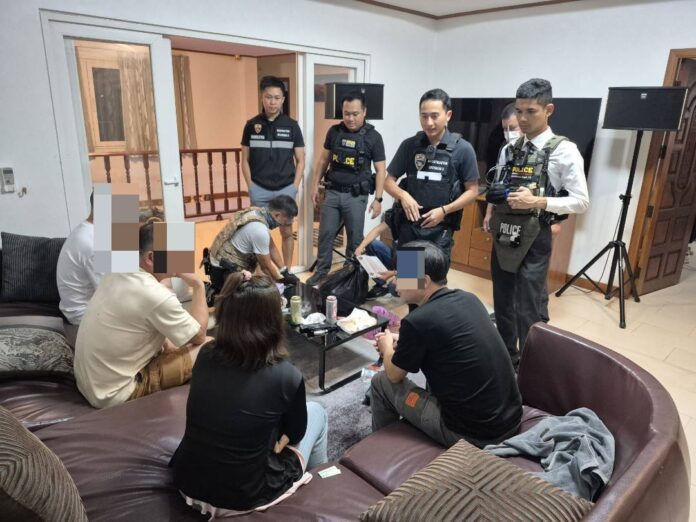
PATTAYA — Immigration police raided a luxury pool villa in central Pattaya late Tuesday night, arresting a Chinese criminal organization that was operating live-streamed sexual performances on Chinese platforms.
The operation, led by Immigration Division 3 officers and the Eastern Investigation team under Deputy Superintendent Pol. Lt. Col. Ithithon Prasertsak, targeted a group led by a Chinese national known as “Ahong” and his associates. The suspects had been charging viewers to watch live sexual performances and take control of the shows through online commands.
Following extensive surveillance and investigation, authorities identified the group’s base of operations and moved in to make the arrests at the upscale Pattaya property. Police seized various items including sex toys, condoms, and professional broadcasting equipment such as mobile phone cameras and livestreaming lights.
The suspects face three serious charges related to obscene material and prostitution: trading in obscene advertisements and materials, distributing and publicly displaying such content, and importing obscene computer data accessible to the general public. They have been transferred to Pattaya City Police Station for legal proceedings.

Pol. Maj. Gen. Chairit stated that the operation was carried out under direct orders from the Commissioner-General of the Royal Thai Police and the Immigration Bureau Commissioner, emphasizing the government’s priority to crack down on transnational crime.
“This is part of our urgent policy to prevent and suppress foreigners who commit crimes that threaten public peace and national security,” he said. “The actions of this group represent a blatant violation of Thai law and damage Thailand’s international reputation – something Immigration Police cannot tolerate.”
The general added that strict enforcement of both the Criminal Code and Immigration Act would continue to preserve the country’s image and maintain public confidence in law enforcement efforts against foreign criminal activities.
______
Myanmar’s Acting President Myint Swe Dies After a Long Illness
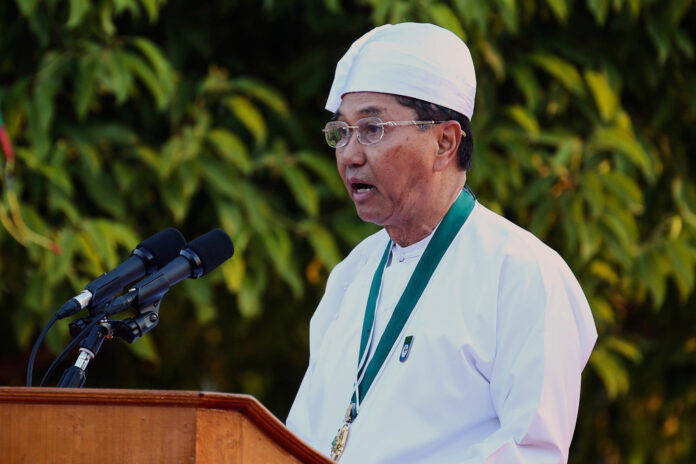
BANGKOK (AP) — Myint Swe, who became Myanmar’s acting president under controversial circumstances after the military seized power from the elected government of Aung San Suu Kyi more than four years ago, died on Thursday, the military said. He was 74.
He died at a military hospital in the capital, Naypyitaw, on Thursday morning, according to a statement from Myanmar’s military information office.
Myint Swe’s death came more than a year after he stopped actively carrying out his presidential duties after he was publicly reported to be ailing.
His funeral will be held at the state level but the date has not been disclosed, a separate statement from the military information office said.
State media reported on Tuesday that he had been in critical condition and receiving intensive care since July 24 at a military hospital in Naypyitaw.
State media announced in July last year that Myint Swe was suffering from neurological disorders and peripheral neuropathy disease, which left him unable to carry out normal daily activities, including eating. A few days later, he authorized Senior Gen. Min Aung Hlaing, the head of the military government, to assume his presidential duties while he was on medical leave, the reports said.
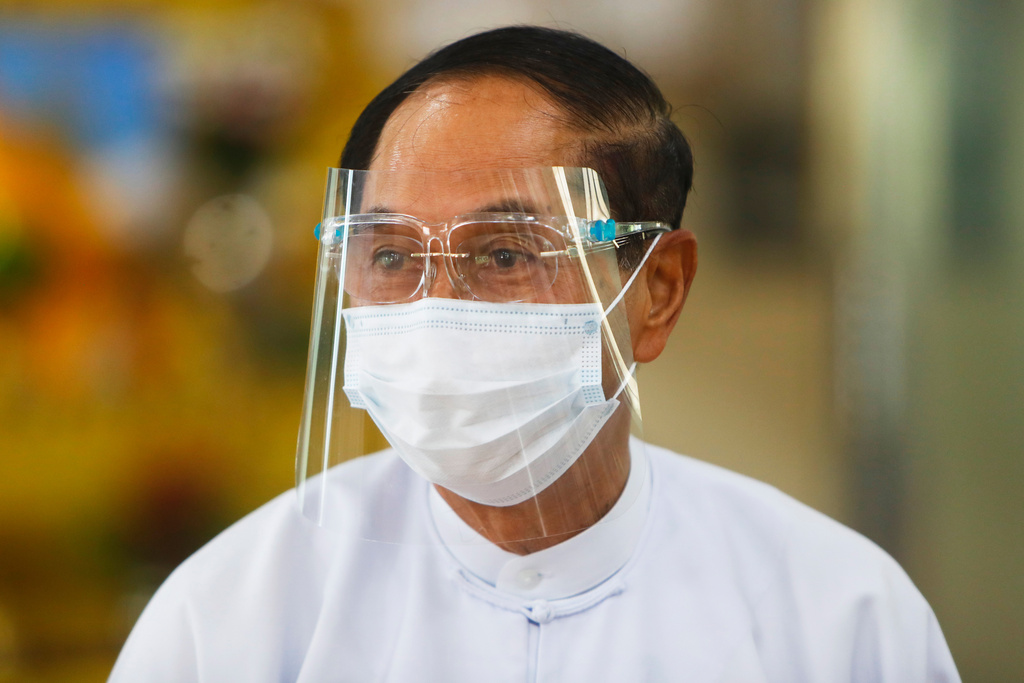
Myint Swe became acting president on Feb. 1, 2021, after the military arrested former President Win Myint along with Myanmar’s top leader, Aung San Suu Kyi, when the army seized power.
Myint Swe, a member of a pro-military party, took over the presidency under the constitution because he held the post of first vice president. Legal experts questioned the legitimacy of the move because Win Myint neither stepped down from his post nor was incapacitated.
As acting president, Myint Swe chaired the National Defense and Security Council, which is nominally a constitutional government body, but in practice is controlled by the military. The council operates as the country’s top decision-making body related to national security, with the authority to declare a state of emergency and oversee military and defense affairs.
Myint Swe’s appointment and acquiescence to the army’s demands allowed the council to be convened to declare a state of emergency and hand over power to Min Aung Hlaing, who led the army’s takeover.
During his time in office, Myint Swe could only perform the pro forma duties of his job, such as issuing decrees to renew the state of emergency, because Min Aung Hlaing controlled all government functions.
Myint Swe, a former general, was a close ally of Than Shwe, who led a previous military government but stepped down to allow the transition to a quasi-civilian government beginning in 2011.
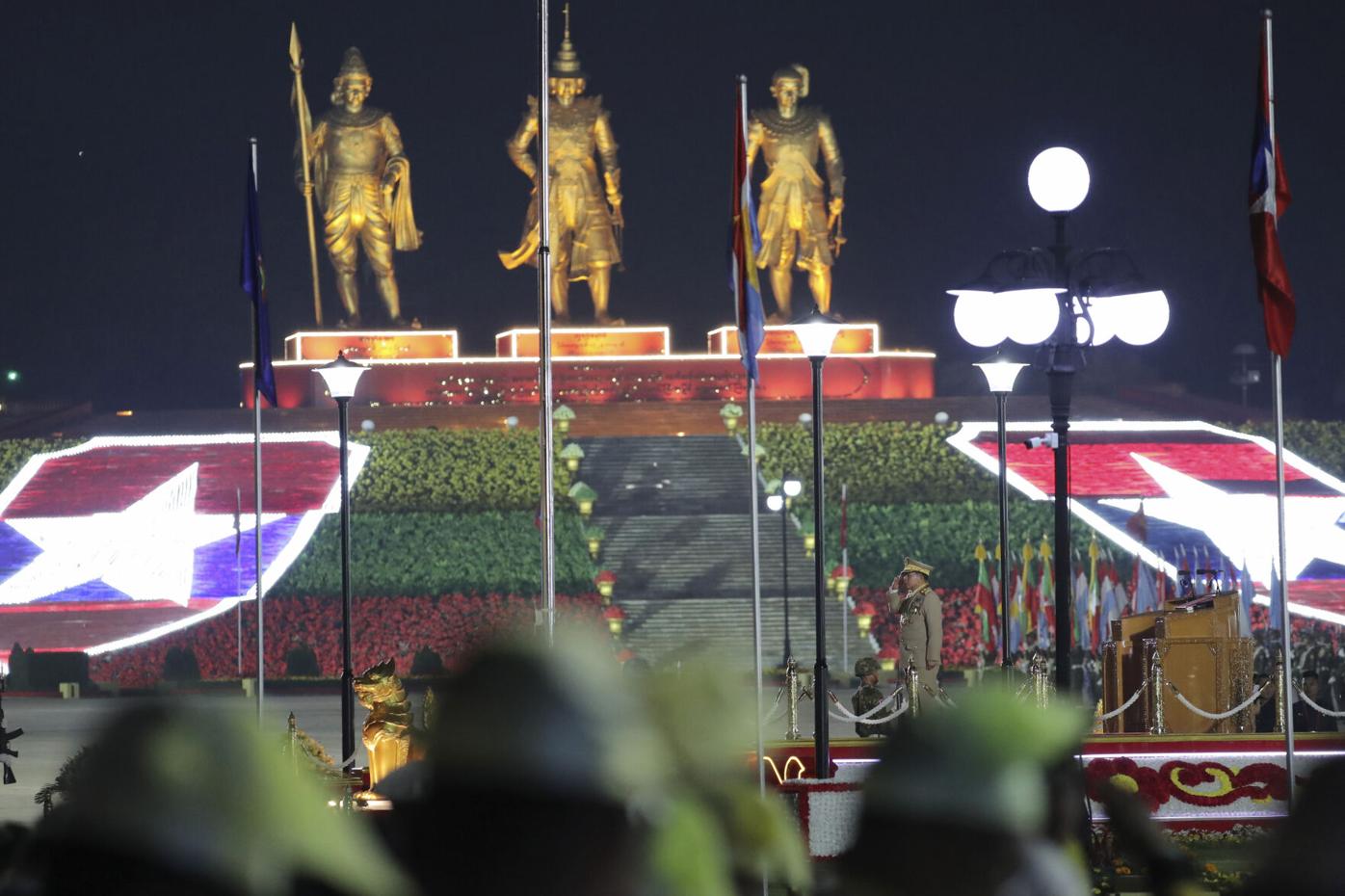
Myint Swe was chief minister of Yangon, Myanmar’s biggest city, under the quasi-civilian government between 2011 and 2016, and headed its regional military command for years under the previous military government, which stepped down in 2011. During Buddhist monk-led popular protests in 2007 known internationally as the Saffron Revolution, he took charge of restoring order after weeks of unrest in the city, overseeing a crackdown that killed dozens of people. Hundreds of others were arrested.
Though he did not have a prominent international profile, Myint Swe played a key role in the military and politics. In 2002, he participated in the arrest of family members of former dictator Ne Win, according to accounts in Myanmar media.
He also arrested former Gen. Khin Nyunt at Yangon Airport during a 2004 purge of the former prime minister and his supporters that involved a power struggle inside the military. Soon afterward, Myint Swe took command of the sprawling military intelligence apparatus that had been Khin Nyunt’s power base.
Myint Swe was among military leaders sanctioned by the U.S. Treasury Department following the military takeover and arrest of de facto leader Aung San Suu Kyi and other senior politicians in February 2021.
He was survived by his wife and two children.
____
Working Together towards New Prospects of the Development of China-Thailand Relations
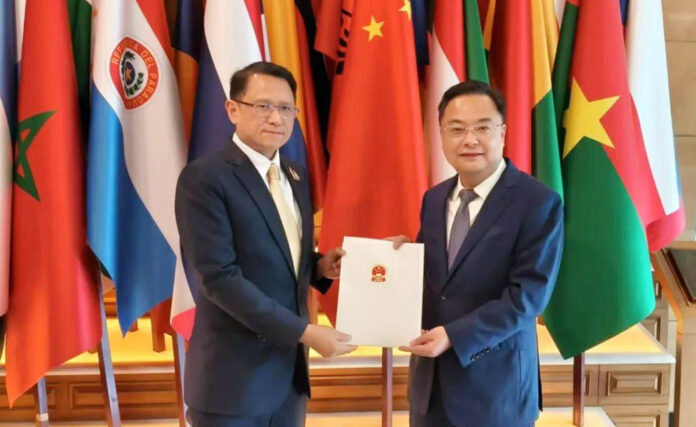
Working Together towards New Prospects of the Development of China-Thailand Relations
Ambassador Extraordinary and Plenipotentiary of the People’s Republic of China to the Kingdom of Thailand
Zhang Jianwei
This year marks the 50th anniversary of the establishment of diplomatic relations between China and Thailand and the “Golden Jubilee 50 Years of China-Thailand Friendship”. The two sides have just jointly held grand celebration activities in Beijing and Bangkok. At this special moment, I have been appointed by President Xi Jinping as the 14th Ambassador Extraordinary and Plenipotentiary of the People’s Republic of China to the Kingdom of Thailand. I am deeply honored by this mission, with full awareness of the serious responsibility it shoulders upon.
Thailand is renowned worldwide as the “Land of Smiles”. Upon arriving at Suvarnabhumi Airport, I was immediately overwhelmed by its warmth and hospitality. On the way to the city center, the thoughtful and convenient travel facilitation services provide for Chinese tourists have impressed me most. New energy-powered vehicles are of good percentage of the traffic on the road, and 5G networks are transforming Bangkok into a smart city full of a sense of hi-technology. I am so delighted that China-Thailand cooperation could make such vibrant contribution and benefit local people’s everyday livelihood.
The sentiment of “China and Thailand are as close as one family” is deep-rooted in the profound accumulation of friendship spanning millennia. Chinese people made the first visit to Thailand as early as about two thousand years ago, as indicated in the ancient Chinese written records. Throughout the long course of history after that, the peoples of our two countries have engaged in friendly exchanges and lived in harmony, leaving behind countless stories of enduring friendship. Since the establishment of diplomatic ties, the two sides have valued each other with sincerity and shared weal and woe. Whether it was the Asian financial crisis, the Indian Ocean tsunami, the Wenchuan earthquake, or the COVID-19 pandemic, we have stood together side by side and supported each other, regardless of difficulties and challenges. Our friendship lasts longer and grows stronger over the time and beyond the time.
The flourishment of China-Thailand relations has been nourished by the personal attention and strategic guidance of our highest level leadership. The leaders of China and Thailand have maintained close exchanges, like visiting relatives, and many members of the Thai Royal Family have personally promoted friendly exchanges as well. In November 2022, President Xi Jinping paid a historic visit to Thailand, during which the two leaders reached important consensus on building a China-Thailand Community with a Shared Future. We look forward to His Majesty King Maha Vajiralongkorn Phra Vajiraklaochaoyuhua and Her Majesty Queen Suthida Bajrasudhabimalalakshana of Thailand paying a state visit to China. As a reliable and trustworthy partner of Thailand, China has always prioritized our relations in its neighborhood diplomacy. China is committed to advancing the implementation of the important consensus reached by the two leaders and advance the building of the China-Thailand Community with a shared future for enhanced stability, prosperity and sustainability
Mutually beneficial cooperation between China and Thailand is in line with the inherited needs of both countries to achieve their respective development goals. China has been Thailand’s largest trading partner for 12 consecutive years and its second-largest export market, absorbing over 40% of Thailand’s agricultural exports. It has also been one of Thailand’s major foreign investors in recent years. The two sides have achieved fruitful results in jointly building the Belt and Road Initiative. New progress has been continuously made in the field of connectivity, and cooperation in areas such as the digital economy, green development, and scientific and technological innovation is flourishing. Last month, China and Thailand successfully conducted their first remote robotic surgery through a 5G network. China will continue working with Thailand to synergize the high-quality Belt and Road cooperation with Thailand’s development strategies to better support the modernization of both countries, by implementing the China-Thailand Joint Action Plan for Strategic Cooperation and promoting practical cooperation across all sectors between the two sides.
China-Thailand friendship resonates the strong expectations of the two peoples for closer ties. The sentiment of “China and Thailand are as close as one family” is the shared aspiration of the two peoples, while passing on our traditional friendship between generations is more than a common wish. China is one of the main sources of tourists for Thailand. The mutual visa-free policy has further facilitated personnel exchanges between our two countries. There are over 30,000 students from each country studying in the other, and 3 million people have paid respects to the Buddha’s tooth relic from Beijing Lingguang Temple, which was enshrined in Thailand. A new round of international cooperation on giant pandas is currently making steady progress. I’m glad that Chinese trendy toy brands LABUBU and DIMOO have been awarded the titles of “Amazing Thailand Experience Explorer” and “Special Friend of Thailand-China Golden Jubilee” by the Thai side respectively. I hope it will help promote mutual understanding and emotional resonance among young people, with dynamic vitality enriching our friendship. China will continue enhancing cooperation with Thailand in areas such as youth, think tanks, universities, culture and tourism for our everlasting friendship for generations to come.
China-Thailand strategic cooperation is in line with the common pursuit of regional peace, stability and prosperity. China and Thailand share extensive common interests and similar views in international affairs. As the current co-chair of the Lancang-Mekong Cooperation with Thailand, China will make every endeavor to make the Lancang-Mekong Cooperation Leaders’ Meeting a success in deepening regional cooperation and actively responding to challenges. The Thai side provides its support to the Global Development Initiative, the Global Security Initiative and the Global Civilization Initiative. This year marks the 80th anniversary of the victory of the Chinese People’s War of Resistance against Japanese Aggression and the World Anti-Fascist War. China is willing to work with Thailand to promote an equal and orderly multi-polar world and a universally beneficial and inclusive economic globalization. We are committed to providing more stability and certainty to the volatile regional and international situation.
Over the past 50 years of diplomatic ties, China-Thailand relations have been maintaining high level development, which is regarded as a glorious chapter in the history of our friendship and a model for harmonious coexistence and common development between nations. Looking ahead at a new historical starting point of China-Thailand relations, I am full of confidence. I will engage in in-depth exchanges and close communication with friends from all walks of life in Thailand to continuously consolidate traditional friendship, deepen practical cooperation, enhance people-to-people exchanges, and expand the breadth and depth of cooperation. Together, let’s embark on a new journey for the next upcoming 50 years with unremitting efforts for further building of a China-Thailand Community with a Shared Future. Together, let’s open up new prospects for the development of China-Thailand relations.
____
Trump Plans 100% Tariff on Computer Chips, Unless Companies Build in US
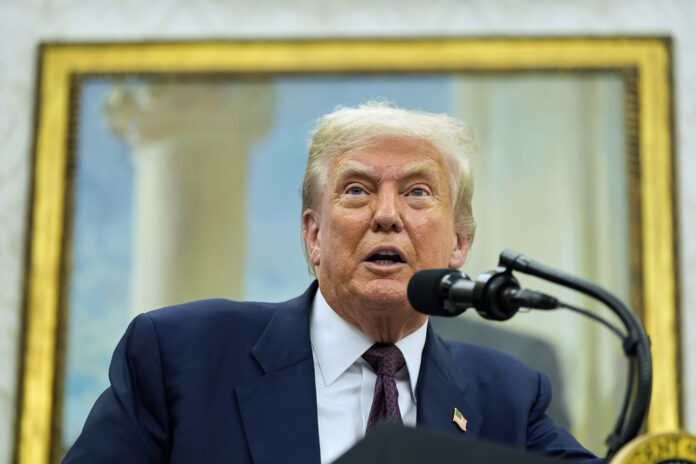
WASHINGTON (AP) — President Donald Trump said Wednesday that he will impose a 100% tariff on computer chips, raising the specter of higher prices for electronics, autos, household appliances and other essential products dependent on the processors powering the digital age.
“We’ll be putting a tariff of approximately 100% on chips and semiconductors,” Trump said in the Oval Office while meeting with Apple CEO Tim Cook. “But if you’re building in the United States of America, there’s no charge.”
The announcement came more than three months after Trump temporarily exempted most electronics from his administration’s most onerous tariffs.
The Republican president said companies that make computer chips in the U.S. would be spared the import tax. During the COVID-19 pandemic, a shortage of computer chips increased the price of autos and contributed to higher inflation.
Investors seemed to interpret the potential tariff exemptions as a positive for Apple and other major tech companies that have been making huge financial commitments to manufacture more chips and other components in the U.S..
Big Tech already has made collective commitments to invest about $1.5 trillion in the U.S. since Trump moved back into the White House in January. That figure includes a $600 billion promise from Apple after the iPhone maker boosted its commitment by tacking another $100 billion on to a previous commitment made in February.
Now the question is whether the deal brokered between Cook and Trump will be enough to insulate the millions of iPhones made in China and India from the tariffs that the administration has already imposed and reduce the pressure on the company to raise prices on the new models expected to be unveiled next month.
Wall Street certainly seems to think so. After Apple’s stock price gained 5% in Wednesday regular trading sessions, the shares rose by another 3% in extended trading after Trump announced some tech companies won’t be hit with the latest tariffs while Cook stood alongside him.
The shares of AI chipmaker Nvidia, which also has recently made big commitments to the U.S., rose slightly in extended trading to add to the $1 trillion gain in market value the Silicon Valley company has made since the start of Trump’s second administration.
The stock price of computer chip pioneer Intel, which has fallen on hard times, also climbed in extended trading.
Inquiries sent to chip makers Nvidia and Intel were not immediately answered. The chip industry’s main trade group, the Semiconductor Industry Association, declined to comment on Trump’s latest tariffs.
Demand for computer chips has been climbing worldwide, with sales increasing 19.6% in the year-ended in June, according to the World Semiconductor Trade Statistics organization.
Trump’s tariff threats mark a significant break from existing plans to revive computer chip production in the U.S. that were drawn up during the administration of President Joe Biden.
Since taking over from Biden, Trump has been deploying tariffs to incentivize more domestic production. Essentially, the president is betting that the threat of dramatically higher chip costs would force most companies to open factories domestically, despite the risk that tariffs could squeeze corporate profits and push up prices for mobile phones, TVs and refrigerators.
By contrast, the bipartisan CHIPS and Science Act that Biden signed into law in 2022 provided more than $50 billion to support new computer chip plants, fund research and train workers for the industry. The mix of funding support, tax credits and other financial incentives were meant to draw in private investment, a strategy that Trump has vocally opposed.
Trump to put additional 25% import taxes on India, bringing combined tariffs to 50%
Trump signed an executive order Wednesday to place an additional 25% tariff on India for its purchases of Russian oil, bringing the combined tariffs imposed by the United States on its ally to 50%.
The tariffs would go into effect 21 days after the signing of the order, meaning that both India and Russia might have time to negotiate with the administration on the import taxes.
Trump’s moves could scramble the economic trajectory of India, which until recently was seen as an alternative to China by American companies looking to relocate their manufacturing. China also buys oil from Russia, but it was not included in the order signed by the Republican president.
As part of a negotiating period with Beijing, Trump has placed 30% tariffs on goods from China, a rate that is smaller than the combined import taxes with which he has threatened New Delhi.
Trump had previewed for reporters Tuesday that the tariffs would be coming. During an event in the Oval Office Wednesday with Apple CEO Tim Cook, Trump affirmed the 50% tariff number, not giving a specific answer as to whether additional tariffs on India would be dropped if there were a deal between Russia and Ukraine.
“We’ll determine that later,” Trump said. “But right now they’re paying a 50% tariff.”
The White House said Wednesday that Trump could meet in person with Russian President Vladimir Putin as soon as next week as he seeks to broker an end to the war.
The Indian government on Wednesday called the additional tariffs “unfortunate.”
“We reiterate that these actions are unfair, unjustified and unreasonable,” Foreign Ministry spokesman Randhir Jaiswal said in a statement, adding that India would take all actions necessary to protect its interests.
Jaiswal said India has already made its stand clear that the country’s imports were based on market factors and were part of an overall objective of ensuring energy security for its 1.4 billion people.
Ajay Srivastava, a former Indian trade official, said the latest tariff places the country among the most heavily taxed U.S. trading partners and far above rivals such as China, Vietnam and Bangladesh.
“The tariffs are expected to make Indian goods far costlier with the potential to cut exports by around 40%-50% to the U.S.,” he said.
Srivastava said Trump’s decision was “hypocritical” because China bought more Russian oil than India did last year.
“Washington avoids targeting Beijing because of China’s leverage over critical minerals which are vital for U.S. defense and technology,” he said.
In 2024, the U.S. ran a $45.8 billion trade deficit in goods with India, meaning America imported more from India than it exported, according to the U.S. Census Bureau. American consumers and businesses buy pharmaceutical drugs, precious stones and textiles and apparel from India, among other goods.
As the world’s largest country, India represented a way for the U.S. to counter China’s influence in Asia. But India has not supported the Ukraine-related sanctions by the U.S. and its allies on Moscow even as India’s leaders have maintained that they want peace.
The U.S. and China are currently in negotiations on trade, with Washington imposing a 30% tariff on Chinese goods and facing a 10% retaliatory tax from Beijing on American products.
The planned tariffs on India contradict past efforts by the Biden administration and other nations in the Group of Seven leading industrialized nations that encouraged India to buy cheap Russian oil through a price cap imposed in 2022. The nations collectively capped Russian oil a $60 per barrel at a time when prices in the market were meaningfully higher.
The intent was to deprive the Kremlin of revenue to fund its war in Ukraine, forcing the Russian government either to sell its oil at a discount or divert money for a costly alternative shipping network.
The price cap was rolled out to equal parts skepticism and hopefulness that the policy would stave off Putin’s invasion of Ukraine.
The cap has required shipping and insurance companies to refuse to handle oil shipments above the cap, though Russia has been able to evade the cap by shipping oil on a “shadow fleet” of old vessels using insurers and trading companies located in countries that are not enforcing sanctions.
U.S. says Japan has no tariff stacking relief for 15% rate
A White House official said Wednesday that imports from Japan already subject to tariffs of 15 percent or higher will still face a “reciprocal” duty of 15 percent set for the country by U.S. President Donald Trump, creating new confusion about his trade approach.
In clear contrast to the Japanese government’s explanation of the terms of a recent bilateral trade deal, the official, who spoke on condition of anonymity, said the 15 percent rate will stack on top of pre-existing tariff rates applied to imports from the key U.S. ally, unlike in the case of the European Union.
Read more click here.
__
British Tourist Suffers Broken Arm After Bar Altercation in Pattaya

PATTAYA — Disputes at beer bars in Pattaya have become an all-too-common occurrence. In the latest incident, a British tourist who was arguing with a bar woman was yanked by another customer, causing him to fall and break his arm.
The incident occurred in Soi 11 on Second Road in Pattaya City, Nong Prue Subdistrict, Bang Lamung District, Chonburi Province. Pattaya City Police officers arrived at the scene at 4:00 a.m. on August 6 to find Mr. George, a 66-year-old British national, lying injured on the ground as he was intoxicated and had suffered a broken right arm.
Emergency responders provided first aid before rushing him to the hospital.
Ms. Sureerat, 39, who had been in the dispute with George, told officers that the British customer had tried to get her to drink with him, but she needed to attend to customers at other tables and refused. This led to an argument and physical altercation during which she was punched in the face.
At that point, another foreign customer intervened and yanked George away, causing him to fall to the ground, resulting in his injuries.
The foreign customer who yanked George stayed at the scene to give his account to police and maintain his innocence. After reviewing CCTV footage, authorities confirmed that George was simply yanked away, though the man who did it was much larger in build.
Pattaya City Police collected video evidence from security cameras for case documentation. However, as of evening, the British man had not yet filed a complaint as he remained hospitalized for treatment. The bar woman also did not file a complaint, as the video footage showed that she had initially poked the British man in the face, which provoked his anger and led to the fight.
On Rumours and Fake News in Cambodia, And Why It’s Bad News for Thailand Too
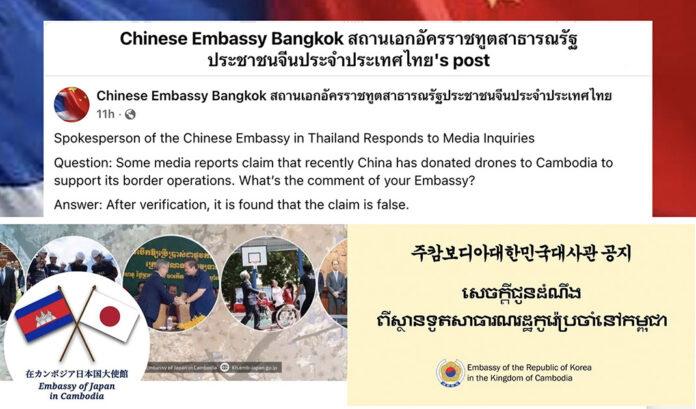
Over the past three to four days, the Cambodian media and society have lost a lot of international credibility. This is because important embassies in Asia—Japan, South Korea, and China—have had to issue statements to correct fake news and rumours in Cambodia. (They are diplomats and usually very ‘diplomatic’, so I’m certain that it was to them the last resort and necessary.)
Today, August 6, 2025, the Japanese Embassy in Phnom Penh stated that there are “rumors or information that the Government of Japan will provide [combat drones] to Thailand” and added that “This information is FALSE,” with the embassy emphasized the word “FALSE” in all caps.
A few hours later, the South Korean Embassy in Phnom Penh issued a similar statement, clarifying that reports made by Khmer press about the South Korean government selling GPS-guided bombs to Thailand along with AT-6TH light attack aircrafts to Thailand were also false.
Today, the Chinese Embassy in Thailand also had to deny a false report that it had donated drones to Cambodia for operations along the Thai-Cambodian border and affirmed its support for a ceasefire.
This doesn’t even include the wild reports from several Cambodian media outlets claiming that Sweden would stop selling Gripen fighter jets to Thailand. I had to call and enquire an official at the Swedish Embassy in Bangkok early in the morning and received a confirmation that the news was “100%” false. That same evening, the Swedish Embassy in Thailand also had to issue a statement correcting the news reported by several Cambodian media.
The question is, what’s happening? Why doesn’t the Cambodian media care about verifying information before publishing it? These stories could be easily checked with the respective embassies before going to press. Or do these Cambodian media outlets want to believe news that seems to benefit Cambodia and sides with their own country? Were they willing to be a mere mouthpiece for the Cambodian government, disregarding any truth or falsehood?
Regardless of the answer, the result is that Cambodia, and the Cambodian media, have lost a lot of credibility and trustworthiness in the eyes of the international community following the Thai-Cambodian conflict. The Cambodian people are confused because they might believe rumours and fake news, making them unable to independently analyze and assess the conflict situation.
Reporters Without Borders (RSF), headquartered in Paris, releases an annual press freedom ranking. In the latest 2025 report, Cambodia ranked 161st out of 180 countries, which is very poor. RSF clearly states that “Many subjects are impossible to cover, such as political opposition…” A journalist friend in Cambodia recently told me that it’s not easy to know what can and cannot be reported in Cambodia because the line for what needs to be censored “seems written on the sand,” meaning it changes constantly.
RSF also noted in its annual report that: “Worried about coding power after mote than 30 years, Hun Sen launched a ruthless war against the [Cambodian] media ahead of the 2018 parliamentary election, silencing radio stations and newspapers, purging news rooms, and prosecuting journalists. The independent media was devastated even before he ceded power to his son Hun Manet in August 2023.”
Meanwhile, Thailand’s media freedom index (for which I have been one of the few Thais invited by RSF to help give a score for about ten years now, pro bono) is ranked 85th out of 180 countries this year, even though Article 112 (the lese majeste aw) remains a significant impediment to Thai press freedom.
A Final Thought
I don’t want Thais to be happy or gloat over the state of the Cambodian media and society. This is not good news. Not even for Thailand. If the Cambodian media has very limited freedom or suffer from professional quality issues, it means that solving problems between Thailand and Cambodia will be more difficult. The power to control truth and spread fake news is in the hands of those in power in Phnom Penh. The Cambodian public is being misled by fake news and vulnerable to the point where the Khmer elites can practically dictate how their people view Thailand.
That’s a tragedy and bad news for not just Cambodia but Thai-Cambodian relations.
__________