32.2 C
Bangkok
Monday, June 29, 2026
Home Blog Page 308

Dragon Ball Heroes Rise Asia Tour in Thailand

The first stop of the Dragon Ball Exhibition Asia Tour kicks off in Thailand! Get ready for an exciting experience that brings the world of Dragon Ball vividly to life!

Licensed by Toei Animation and newly curated by INCUBASE Studio, this special exhibition brings together signature elements from across the Dragon Ball series.

As the very first stop of the Asia tour, the event will take place in Thailand, featuring a massive exhibition space of over 2,000 square meters at Attraction Hall, 6th Floor, ICONSIAM — from August 1st to October 19th, 2025.

Under the concept of “Heroes Rise,” the exhibition highlights the intense battles and personal journeys of Goku and other iconic characters, who constantly push their limits in pursuit of strength and worthy rivals.

Visitors can look forward to immersive themed zones, life-sized character displays, interactive experiences, and photo spots that offer fans a chance to dive deep into the Dragon Ball universe.

Exhibition Highlights: Immersive Amazing Journey, Faithful Animation Scene Reproduction, Interactive Game Challenges, Mobile App Experience, Limited Edition Exhibition Merchandise.

Join us for a grand adventure in the world of Dragon Ball at the “DRAGON BALL HEROES RISE ASIA TOUR IN THAILAND” exhibition, taking place from August 1 to October 10, 2025, at the Attraction Hall, 6th Floor, ICONSIAM. The event is open daily from 10:30 AM to 9:00 PM, with last entry at 8:30 PM, offering fans an immersive journey through the legendary universe of Dragon Ball.

Ticket Sales Channels:

Advertisement

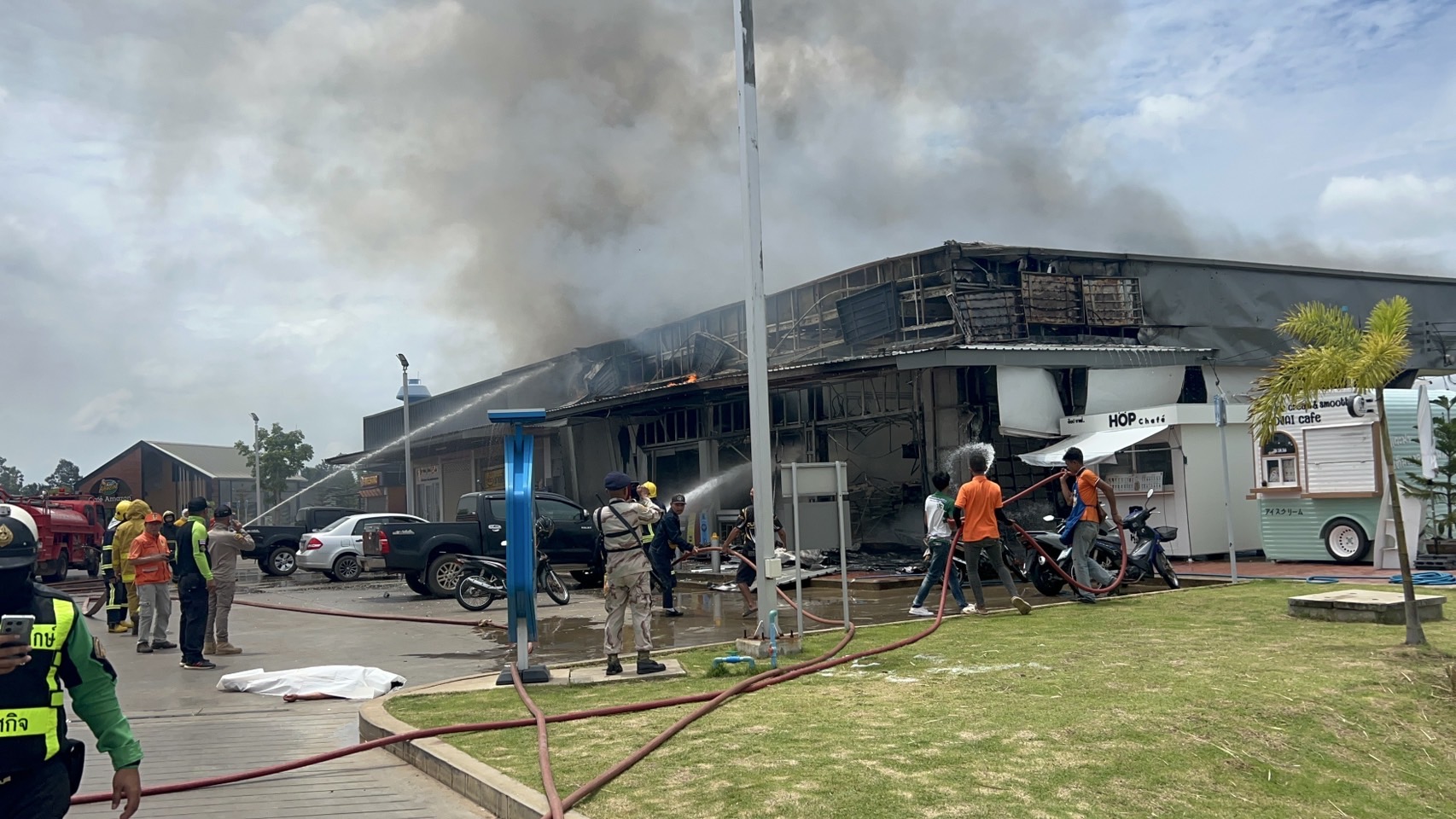
Thai Govt Forces Insurance Payout for Rocket-Damaged Petrol Station

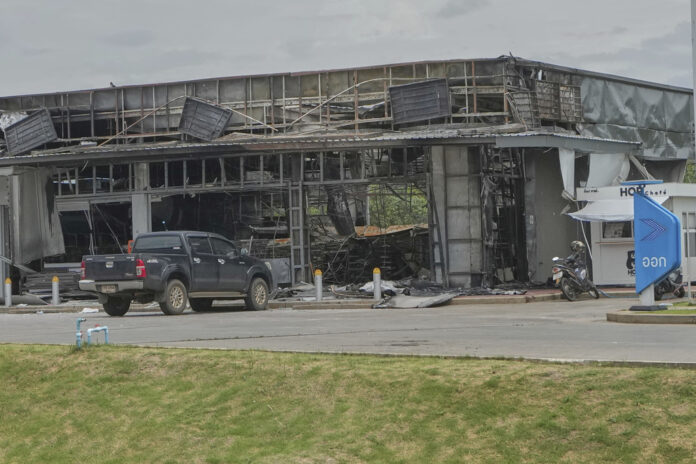
A convenience store at a gas station is damaged after Cambodia fired artillery shells in Sisaket province, Thailand, Friday, July 25, 2025. (AP Photo/Sakchai Lalit)

BANGKOK — Thailand’s insurance regulator has ordered insurance companies to compensate the owner of a PTT petrol station damaged in a recent Cambodian rocket attack, rejecting insurers’ attempts to classify the incident as an act of war.

The Office of Insurance Commission (OIC) announced Monday that insurers must pay compensation to Kamolrat Phonsrettalerd, whose petrol station in Sisaket province was severely damaged in the cross-border attack that killed eight people.

Kamolrat had sought government intervention after insurance companies initially denied her claim, arguing their policies didn’t cover war or invasion-related incidents. The attack caused over 21 million baht ($646,750) in damage to her station and adjacent grocery shop, forcing both businesses to close for more than three months.

gas station PTT scaled
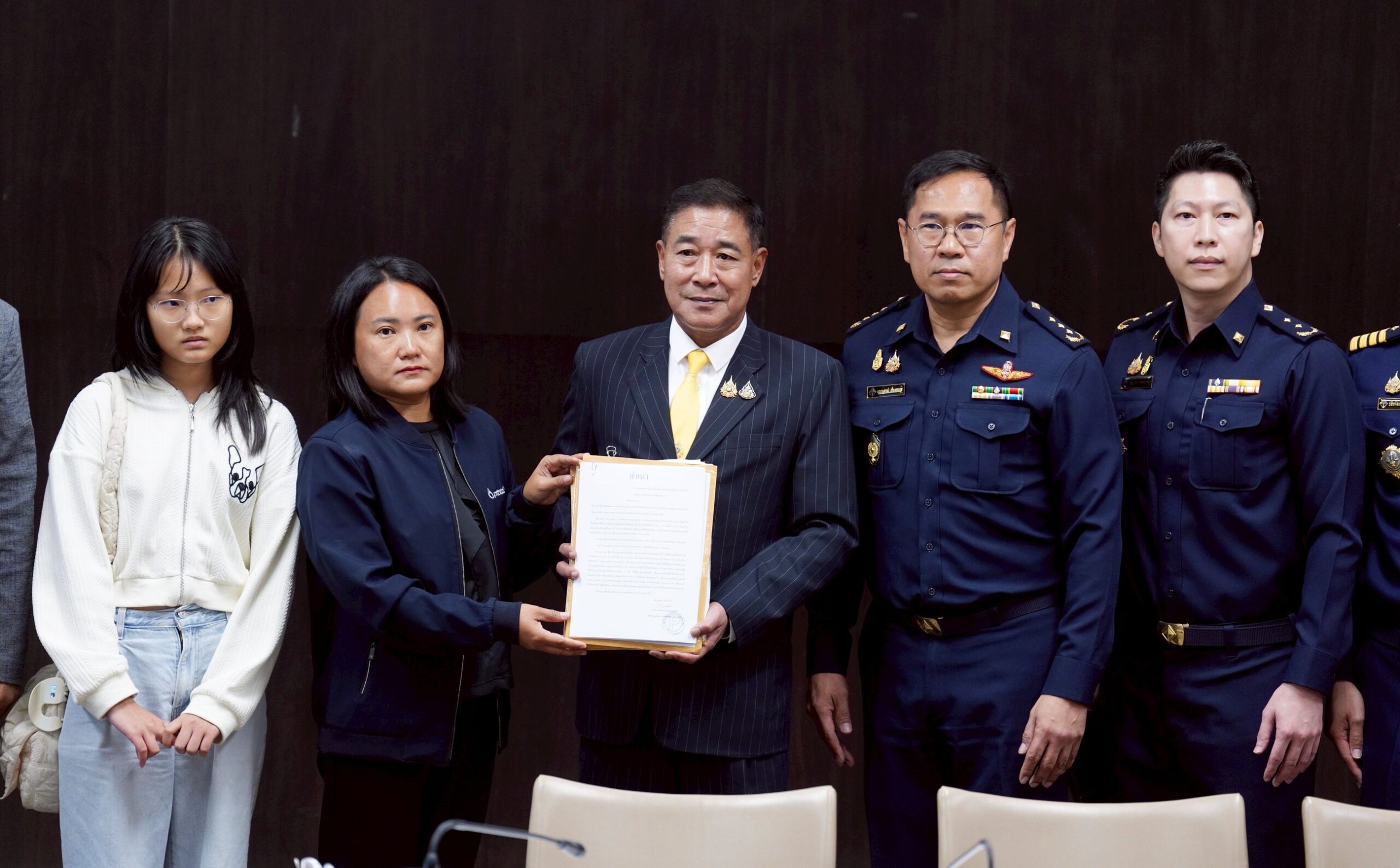
Col. Fueangvitch Aniruthdeva accepts a petition from PTT station owner Kamolrat Phonsrettalerd seeking insurance help for rocket attack damage at the Energy Ministry, August 4, 2025.

“This incident is not considered a war risk, but an armed clash between armed forces,” explained Kananusorn Thiangtrakul, OIC’s Deputy Secretary General for Consumer Protection. “Such clashes in border provinces are localized and of short duration, therefore not classified as war or invasion.”

Government Coordination Ensures Swift Action

The Energy Ministry coordinated with OIC and PTT Oil and Retail Business executives to resolve the issue quickly. Col Fueangvitch Aniruthdeva, assistant to Deputy Prime Minister and Energy Minister Pirapan Salirathavibhaga, said the ministry played a key coordinating role despite not being directly responsible.

Investigation revealed the petrol station was covered under two policies, including an Industrial All Risk (IAR) policy that covers all buildings on the site. The OIC has expedited the normally 45-day claims process, beginning immediately after the August 2 incident.

khmer war1
Artillery fire from Cambodian forces strikes a PTT gas station in Sisaket province, about 20 km from the border, killing 8 people on July 24, 2025.

Broader Victim Compensation Efforts

The OIC is also coordinating compensation for other victims, including those with private insurance policies. For victims without coverage, the agency has asked insurance companies to consider voluntary compensation. One child victim was found to have accident insurance through their school.

“The OIC has negotiated with executives of the two insurance companies involved,” Kananusorn said. “They acknowledge this was a skirmish, not war, and all policy terms require compensation.”

The station owner noted that the property remains under a bank loan repayment plan, making the insurance compensation crucial for rebuilding efforts.

_______

Advertisement

French Diabetic Dies After Car Veers Off Road in Lampang

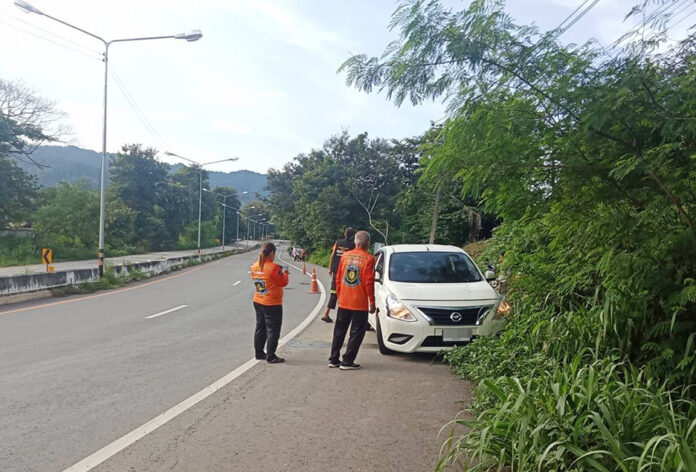
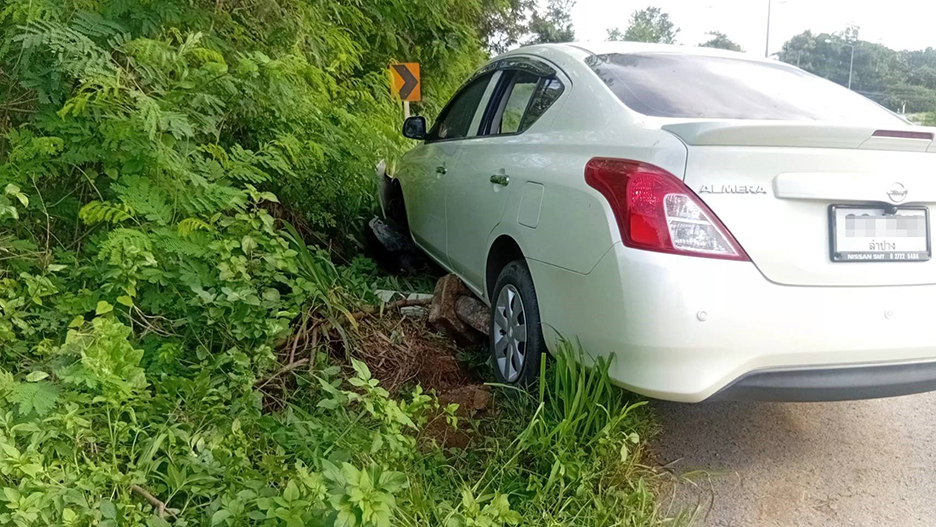
A 60-year-old French man's car after it ran off Lampang-Ngao Road in Ngao District, Lampang Province, on August 4, 2025. (Photo: Lamphun-Lampang Highway Rescue)

LAMPANG — A French resident of northern Thailand’s Lampang province was found dead in his car after it ran off the road, with locals initially mistaking him for someone taking a rest stop before alerting police Monday morning.

Police from Ngao Station in Lampang investigated a white Nissan with Lampang license plates that had crashed into a roadside milestone at kilometer marker 768 on Lampang-Ngao Road in Ban Huai Tak, Ngao District, around 7:30 a.m. on August 4.

Officers found the engine still running with the driver inside. After knocking on the door for about five minutes with no response, they opened the vehicle to discover a foreign man, approximately 60 years old, unconscious and pale with no pulse. A forensic doctor from Ngao Hospital was called to examine the scene.

french lampang2
A 60-year-old French man’s car after it ran off Lampang-Ngao Road in Ngao District, Lampang Province, on August 4, 2025. (Photo: Lamphun-Lampang Highway Rescue)

Passport documents identified the deceased as Mr. Rene, a French national who lived in Lampang city. Local residents reported seeing the car at the same location around 9 p.m. on August 3, with the driver appearing conscious and moving around. Assuming he had pulled over to rest, they didn’t report it until finding the car still there the next morning.
Police later contacted Mr. Rene’s relatives and learned he suffered from diabetes.

Authorities believe he experienced diabetic shock while driving, causing him to lose control of the vehicle and ultimately leading to his death. The body has been sent for autopsy to confirm the cause of death.

__________

Advertisement

Drone Ban Snares Unaware Swedish Vacationer in Pattaya

Pattaya police escort a Swedish tourist to the police station after he was caught flying a drone in the resort city, informing him of the nationwide drone ban currently in effect for security reasons, August 3, 2025.

PATTAYA — A Swedish tourist was detained in Pattaya on Saturday night for illegally operating a drone on the beach during Thailand’s nationwide drone ban, authorities said.

Pattaya Special Affairs officers arrested the 28-year-old man, identified only as Mr. Neck, at 10 p.m. on August 3 while he was using the unmanned aircraft to photograph Pattaya Beach in Chonburi Province.

Speaking through a translator during questioning, the tourist said he had just arrived in Pattaya for vacation and wanted to capture scenic photos of the beach and ocean. He claimed to be unaware of the temporary drone prohibition currently in effect across Thailand.

The ban, implemented by the Civil Aviation Authority of Thailand (CAAT), prohibits all drone flights nationwide from July 30 through August 15, 2025, or until further notice. Officials cited national security concerns and tensions along the Thai-Cambodian border as reasons for the restriction.

After confiscating the drone, officers transferred the tourist to Pattaya City Police Station for processing. He was later released with a warning after being informed about the regulations.

__________

Advertisement

Tesla Awards CEO Musk Millions of Shares Valued at About $29 billion

FILE - Elon Musk speaks at the Conservative Political Action Conference, CPAC, at the Gaylord National Resort & Convention Center, Thursday, Feb. 20, 2025, in Oxon Hill, Md. (AP Photo/Jose Luis Magana, File)

Tesla is awarding CEO Elon Musk 96 million shares of restricted stock valued at approximately $29 billion, just six months after a judge ordered the company to revoke his massive pay package.

The electric vehicle maker said in a regulatory filing on Monday that Musk must first pay Tesla $23.34 per share of restricted stock that vests, which is equal to the exercise price per share of the 2018 pay package that was awarded to the company’s CEO.

In December Delaware Chancellor Kathaleen St. Jude McCormick reaffirmed her earlier ruling that Tesla must revoke Musk’s multibillion-dollar pay package. She found that Musk engineered the landmark pay package in sham negotiations with directors who were not independent.

At the time McCormick also rejected an equally unprecedented and massive fee request by plaintiff attorneys, who argued that they were entitled to legal fees in the form of Tesla stock valued at more than $5 billion. The judge said the attorneys were entitled to a fee award of $345 million.

The rulings came in a lawsuit filed by a Tesla stockholder who challenged Musk’s 2018 compensation package.

That pay package carried a potential maximum value of about $56 billion, but that sum has fluctuated over the years based on Tesla’s stock price.

Musk appealed the order in March. A month later Tesla said in a regulatory filing that it was creating a special committee to look at Musk’s compensation as CEO.

Wedbush analyst Dan Ives feels Musk’s stock award may alleviate some Tesla shareholder concerns.

“We believe this grant will now keep Musk as CEO of Tesla at least until 2030 and removes an overhang on the stock,” Ives wrote in a client note. “Musk remains Tesla’s big asset and this comp issue has been a constant concern of shareholders once the Delaware soap opera began.”

Tesla shares have plunged 25% this year, largely due to blowback over Musk’s affiliation with President Donald Trump. But Tesla also faces intensifying competition from both the big Detroit automakers, and from China.

In its most recent quarter, Tesla reported that quarterly profits plunged from $1.39 billion to $409 million. Revenue also fell and the company fell short of even the lowered expectations on Wall Street.

Under pressure from shareholders last month, Tesla scheduled an annual shareholders meeting for November to comply with Texas state law.

A group of more than 20 Tesla shareholders, which have watched Tesla shares plummet, said in a letter to the company that it needed to at least provide public notice of the annual meeting.

Investors have grown increasingly worried about the trajection of the company after Musk had spent so much time in Washington this year, becoming one of the most prominent officials in the Trump administration in its bid to slash the size of the U.S. government.

Tesla’s stock rose more than 2% before the market open.

Advertisement

Tourist Found Dead in Chiang Mai’s Doi Suthep Forest

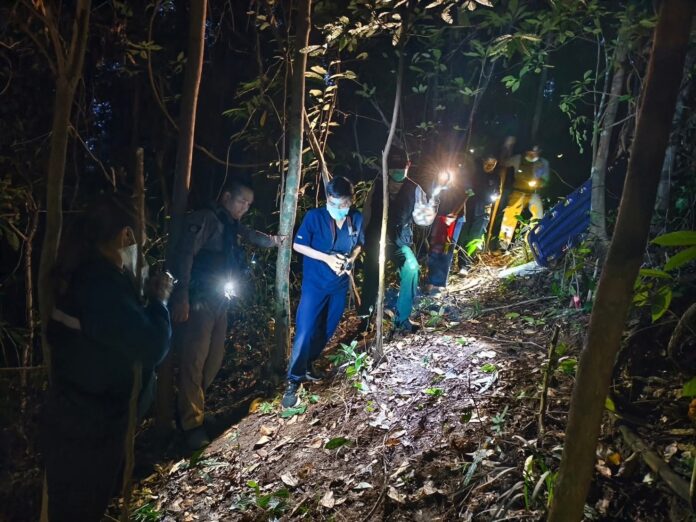
Chiang Mai Authorities investigate the scene where a tourist's body was discovered in Doi Suthep National Park, August 3, 2025.

CHIANG MAIThe body of what appears to be a foreign tourist was discovered in the deep forest of Doi Suthep, Chiang Mai, on Sunday evening. The deceased, believed to be a large-built Caucasian male, had been dead for several days. Police are investigating the circumstances.

Investigators from Phu Ping Chiang Mai Police Station received a report at 5:10 p.m. on August 3 from the village headman of Doi Suthep Village No. 9, Mueang Chiang Mai District, that locals had found a body in Doi Suthep National Park. Officers responded along with forensic medical personnel from Maharaj Hospital, rescue workers, and the investigation team.

doi suthep body2
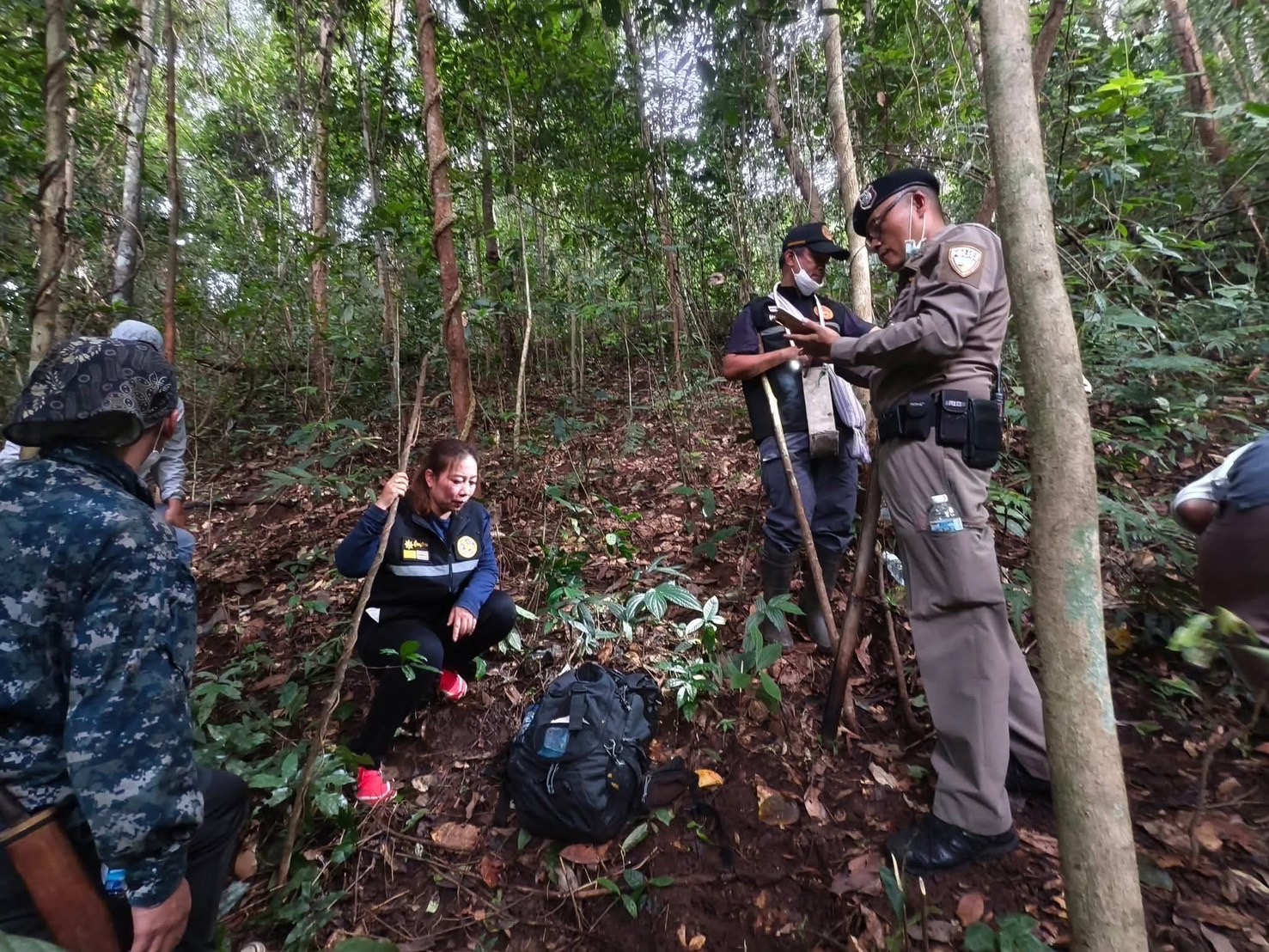
“A large backpack, believed to belong to the deceased tourist, found at the scene in Doi Suthep National Park, August 3, 2025.

The body was found in dense forest, approximately 2 kilometers from Village No. 9. According to the forensic examination, the deceased had been dead for at least one week. The victim was wearing a t-shirt and long pants, and appeared to be a large-built foreign male, possibly a Western tourist. Officials also discovered a large backpack believed to belong to the tourist found dead nearby.

After questioning local residents and village officials, no one in the area had been reported missing. Police suspect the victim was likely a tourist exploring Doi Suthep National Park who may have become lost in the forest and died without anyone knowing. However, other possibilities cannot be ruled out pending autopsy results.

Initial investigations will focus on identifying the victim through forensic examination, while detectives will review missing person reports for both foreign tourists and Thai nationals. Police have made a public appeal asking friends or relatives of missing foreigners who believe this could be someone they know to contact Phu Ping Chiang Mai Police Station.

_____

News Update: Hiker Found Dead in Chiang Mai’s Doi Suthep After Family Breakdown

Advertisement

Mass Cremation Held for Thai-Cambodia Border Clash Victims Before GBC Meeting

cremation
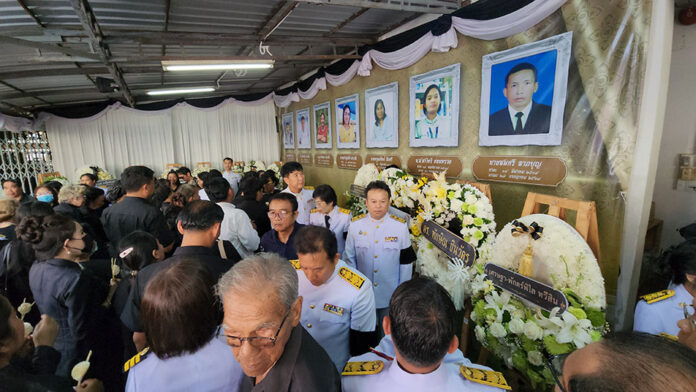
A joint royal cremation ceremony for seven civilians who died during Thai-Cambodian clashes is held at Wat Mahaputtharam Royal Temple in Mueang Nuea subdistrict, Mueang district, Sri Saket province on August 3, 2025.

SI SAKETNearly a week after the ceasefire agreement between Thailand and Cambodia following talks between the two countries’ leaders in Malaysia, families of Thai soldiers and civilians have begun holding cremation ceremonies with royal patronage in their hometowns for those who lost their lives. The ceremonies were held ahead of next week’s General Border Committee meeting.

Government and military representatives presided over the funeral services for the victims, with families receiving initial compensation of 1 million baht ($30,750) each, along with other government benefits. Officials acknowledged with sympathy that no amount could truly compensate for the loss of loved ones.

On Sunday, August 3, a joint cremation ceremony with royal patronage was held for seven civilians at Wat Mahaputtharam Royal Temple in Mueang Nuea subdistrict, Mueang district, Sri Saket province. Most of these victims died on July 24 when Cambodian BM-21 rockets struck a convenience store inside a gas station complex in Ban Phue, Nong Ya Lad subdistrict, Kantharalak district – located approximately 25 kilometers from the Thai-Cambodian border.

cremation sisaket3
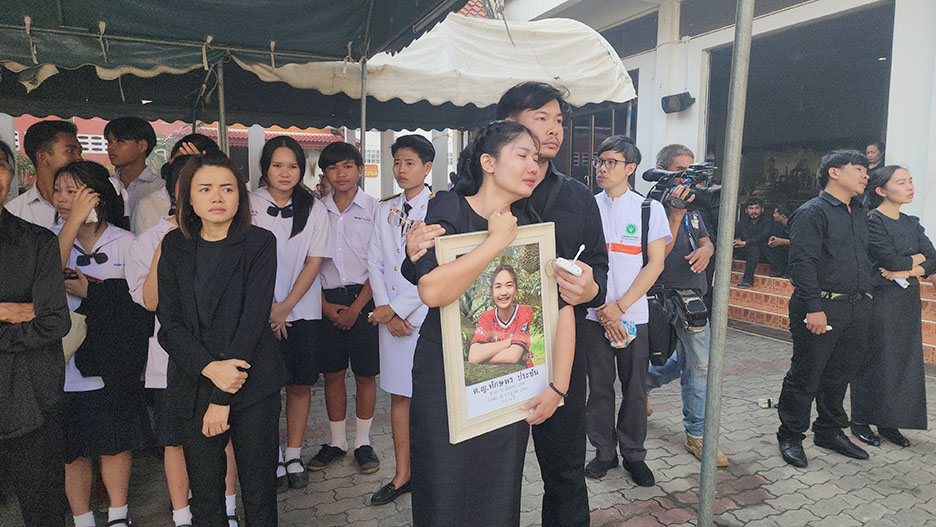
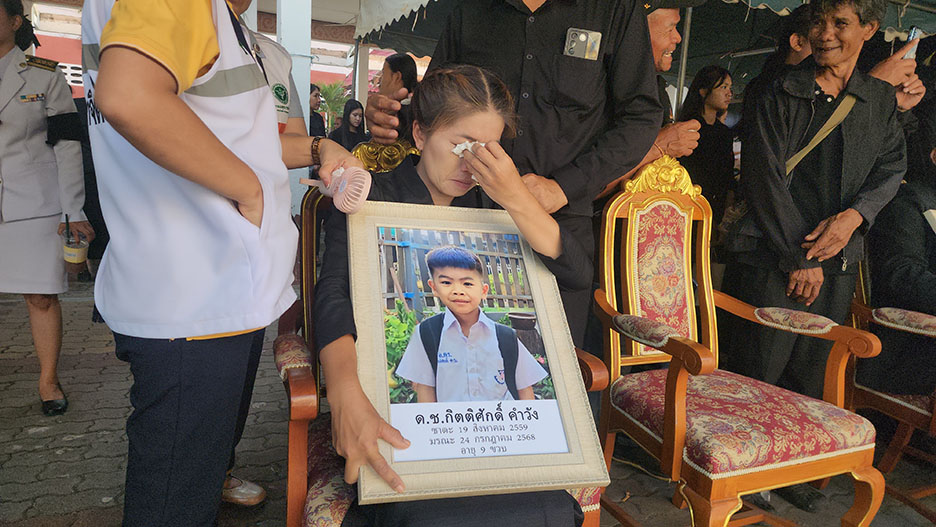
Grieving relatives during the cremation ceremony with royal patronage for seven victims at Wat Mahaputtharam Royal Temple, Sri Saket province, August 3, 2025.
cremation sisaket2
Grieving relatives during the cremation ceremony with royal patronage for seven victims at Wat Mahaputtharam Royal Temple, Sri Saket province, August 3, 2025.

Ekarat Wansri, 39, the eldest son of victim Arunrat Wansri who died at the rubber plantation behind the gas station, told media during the ceremony: “This heartbreaking loss makes me want to ask the Cambodian military why they had to fire rockets at innocent civilians who knew nothing about the conflict and didn’t deserve to die.”

The gas station has become a significant site where the Thai government laid flowers in remembrance of the victims and used it to demonstrate to the international community – alongside hospitals, schools, and residential areas – that Cambodia deliberately targeted civilian infrastructure, including children.

Beyond the complete destruction of the building, clear evidence exists including weapon fragments found at the scene and CCTV footage showing the moment rockets struck the convenience store.

AP25213356560001
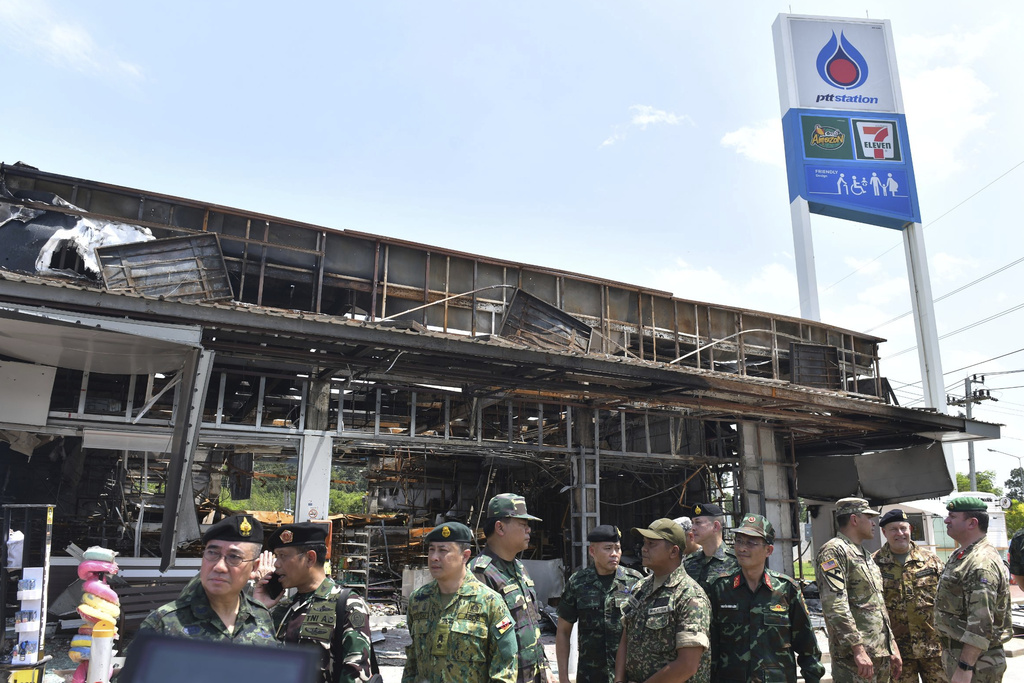
In this photo released by the Government Spokesman Office, Military attaches from various countries visit a convenience store at a gas station damaged after Cambodia fired artillery shells in Sisaket province, Thailand, Friday, Aug. 1, 2025. (The Government Spokesman Office via AP)

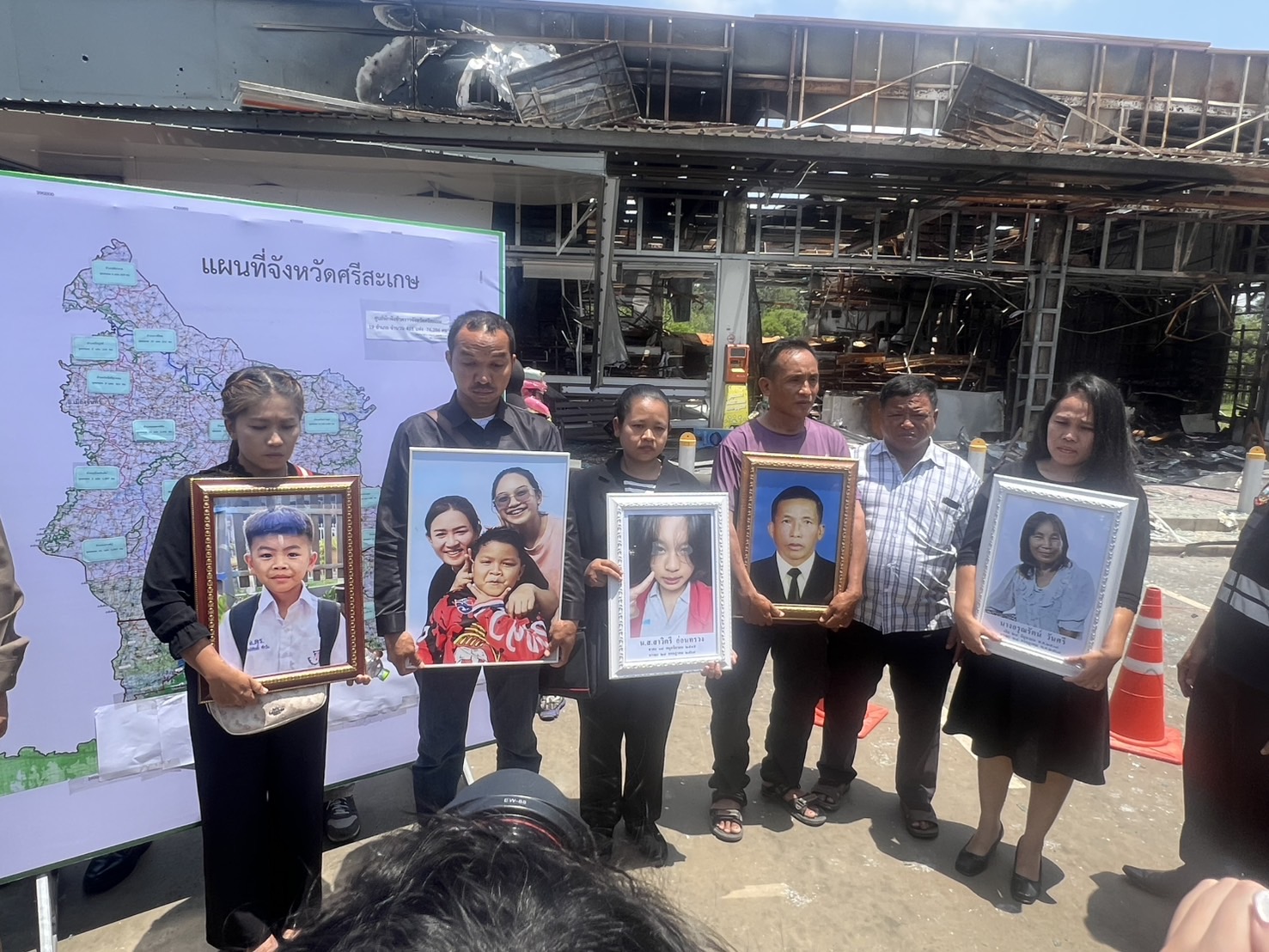
On August 1, victims’ families, including Komsant Prachan who lost both his wife and children, recounted this tragic event to ambassadors and chargés d’affaires from 11 countries, along with 28 military attachés from 23 countries, plus Thai and foreign media who joined a government and military-organized trip to witness the aftermath firsthand during the information war with Cambodia.

“I came to pick up my children from school and fill up with gas to prepare for evacuation from the area. This wasn’t a red zone area. My wife and children went into the convenience store to buy something, and that’s where they died,” Komsant said.

Several international representatives questioned senior Foreign Ministry officials about why Cambodian forces bombarded this convenienc store in gas station, hospitals, and schools on the Thai side – locations far removed from any Thai military installations.

gas station sisaket
Victims’ families hold photos of loved ones while meeting international diplomats and military attachés on August 1, 2025.

Many Cambodian netizens on social media have tried to claim the attacks were carried out by Thai forces themselves, with some arguing the gas station was too far from the border for Cambodian weapons to reach. However, Thai security officials believe this was likely a pressure tactic aimed at forcing Thailand to quickly end the conflict, given Thailand’s superior military capabilities.

Thailand’s Foreign Ministry spokesperson Nikorndej Balankura said the diplomatic tour was intended to ensure the facts from the ground visit become as widely known as possible to the public, with both Thai and foreign media serving as channels to disseminate the truth to the global community.

Cambodia also earlier organized tour for foreign diplomats and observers, Both countries showcased damage allegedly caused by the other side, after the clash during July 24-28 killed over 36 people, both civilians and soldiers, and displaced more than 260,000 residents.  

condolence sisaket
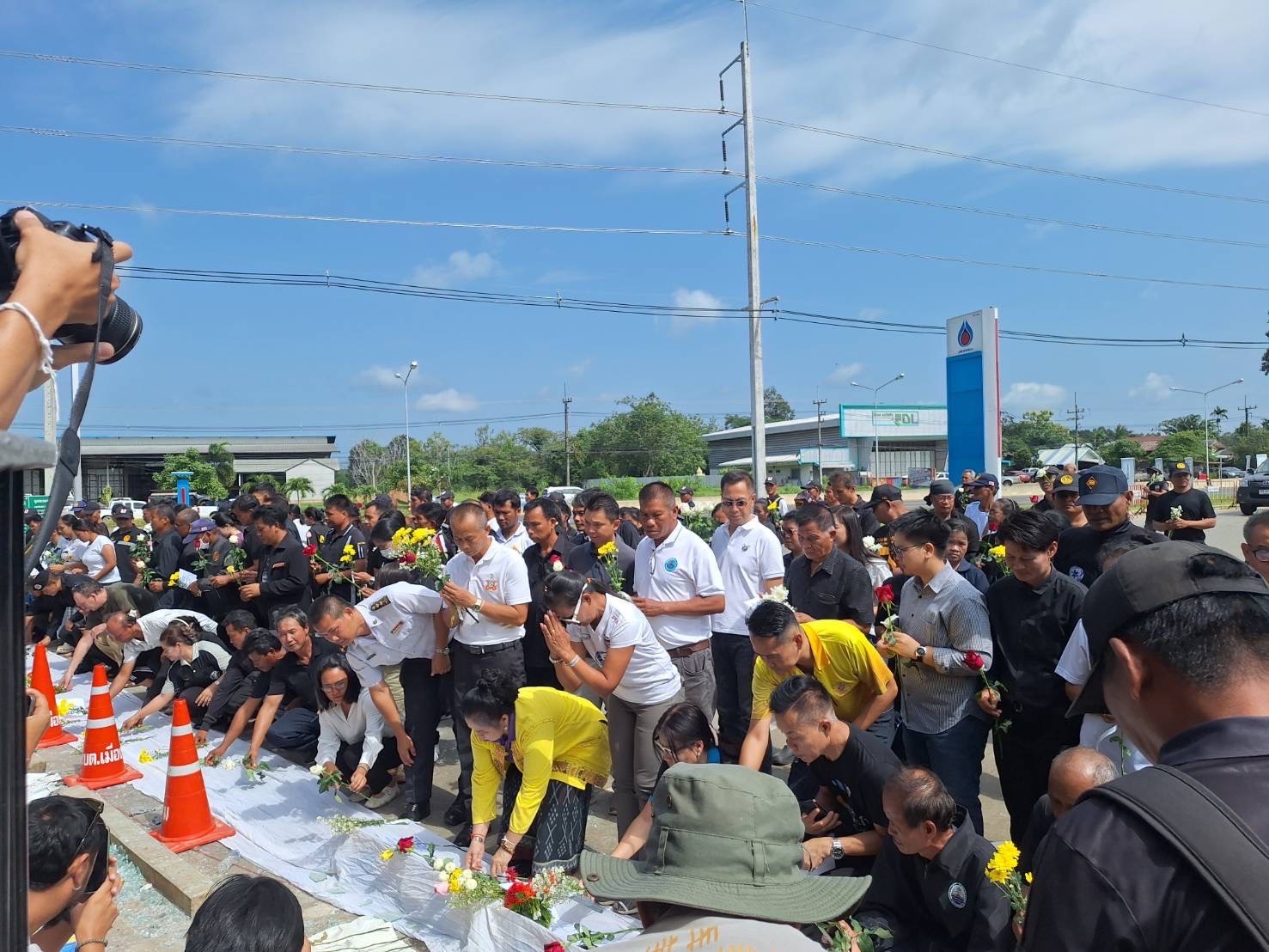
Crowds gather for a memorial flower-laying ceremony for civilians killed in the Cambodian rocket attack on a PTT gas station in Ban Phue, Kantharalak District, Si Sa Ket Province, August 2, 2025.

Under the terms of the ceasefire, according to the Thai Government Spokesperson, military representatives from both sides will meet between August 4-6 in Malaysia. Following this General Border Committee meeting, on August 7, General Nathapol Nakpanit, Deputy Defense Minister, and his delegation will travel to participate in the meeting, which has invited representatives from Malaysia, China, and the United States to attend as observers only. The results of the bilateral meeting will be summarized afterward.

_______

Advertisement

Thai Police Seek Four Attackers Who Assaulted Pleading Myanmar Couple

Village head and reporters meet with a Myanmar woman in Moo 4, Ban Khong subdistrict, Photaram district, Ratchaburi Province on August 3, 2025, following her plea to police to track down the four men who attacked her and her husband on the night of July 29.

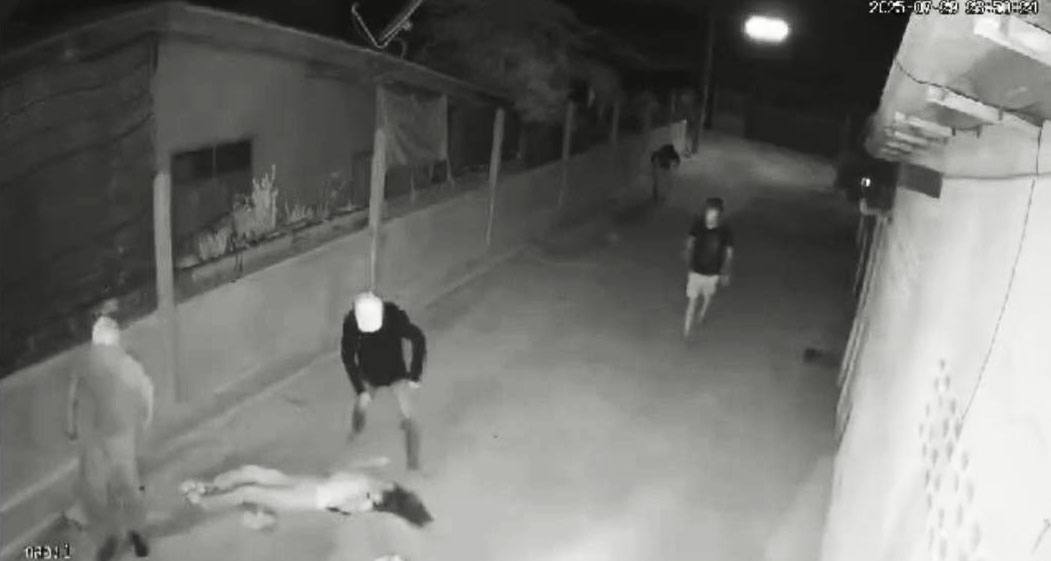
RATCHABURI — Thai police are hunting four masked assailants who brutally attacked a Myanmar couple in Ratchaburi Province, central Thailand, despite the victims pleading for their lives with traditional Thai begging gestures.

The attack occurred on July 29 around midnight as the couple was riding their motorcycle from their dormitory to their night shift job. Security cameras captured the entire incident clearly, according to Photaram police.

Da Win, 31, a Myanmar woman, recounted the incident through a Karen interpreter to reporters and village head Thitipan Buaphu of Moo 4, Ban Khong subdistrict, Photaram district, where the attack took place.

“My husband and I were riding to work when four men wearing caps and face masks rushed toward us at the entrance to our alley,” Da Win said. “I immediately raised my hands in a wai gesture, begging for our lives, and said ‘Are you mistaking us for someone else? We’ve never had problems with anyone.’ But they attacked us without saying a word.”

Based on their behavior, she believes the attackers may also be Myanmar nationals.

myanmar ratchaburi2
CCTV footage shows three of the four men attacking the Myanmar woman while another assaults her husband for unknown reasons outside their dormitory in Moo 4, Ban Khong subdistrict, Photaram district, Ratchaburi Province on the night of July 29, 2025.

CCTV footage shows one attacker dragging the woman off the motorcycle before kicking and stomping on her. Meanwhile, two others used wooden weapons and brass knuckles to assault her husband, causing serious injuries. All four suspects fled quickly after the attack.

The husband rushed his wife to the hospital, where she was treated for forehead injuries, a fractured cheekbone, body abrasions, headaches, and rib pain. The husband sustained injuries to his legs and torso. The couple filed a police report the following day at Photaram Police station.

“I want to plead with police officers to help track down the perpetrators and prosecute them. I want to know why they hurt us,” the Myanmar woman said.

myanmar ratchaburi1
Combination photo shows injuries still visible on the Myanmar woman’s face recently (right) after she filed a police report (left).

Da Win explained that she and her husband had worked in the area for over six years without problems, except for a neighbor who had previously argued with them about parking and had gotten into a physical altercation the previous month. However, no police report was filed then.

In the latest incident, investigators questioned the neighbor, who insisted he had no knowledge of or involvement in the attack, as he had left for work 5-10 minutes before it occurred.

Police described the case as involving extremely violent behavior, noting that the attackers continued their assault even after the woman pleaded for mercy with traditional gestures. “This is violent conduct showing no fear of the law,” an officer said. “We are currently tracking down all four suspects for prosecution.”

_________

Advertisement

Time to Face the Ugly Truth About the Deep Underlying Conflict Between Thailand and Cambodia

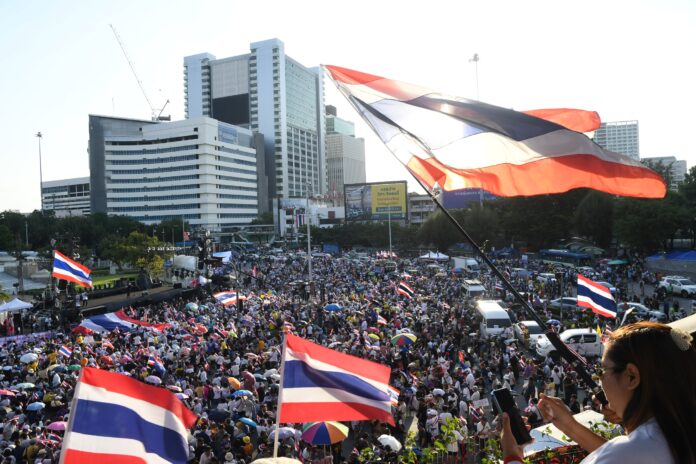
Thai protesters gather at Bangkok's Victory Monument on Saturday, calling for Prime Minister Paetongtarn Shinawatra's resignation. (KHAOSOD PHOTO/Yokin Charoenying)

M uch has been written about how the five-day undeclared war between Thailand and Cambodia was a result of a nasty feud between two very powerful families: the Shinawatra in Thailand and the Hun family in Cambodia. Too much has been read into it, even. Too much has been attributed to the two egoistic yet very influential families, the damning leaked phone call between Cambodian Senate President Hun Sen and Thai PM Paetongtarn Shinawatra, and even the call-centre scams and casinos in Cambodia.

Yes, the angry exchanges of nasty words between the two families contributed to this senseless war, which led to dozens of people—Cambodian and Thai soldiers and civilians from both neighbouring nations—being killed. (And most of them were poor and innocent people.) However, the magnitude of mutual hatred and animosity, which has deep roots in the selective teaching and reading of the history of relations between Thailand and Cambodia, and the stereotyping of the other, ensured that the conflict spread from two families, or two governments, to a people-to-people level.

I would argue that many Thais and Cambodians wouldn’t have gone ultranationalist and berserk if not for these two very important elements: two starkly different versions of the memories about the relationship between Thailand and Cambodia, and the stereotyping of one another, which have been festering for decades, if not longer.

Allow me to start with the Thai side, since I am Thai.

Three keywords inform and dominate how the average ultranationalist Thai looks at Cambodia and Cambodians: untrustworthy, ungrateful, and imitator.

Many ultranationalist Thais do not trust Cambodians because they fully subscribe to the ultranationalist Thai historical episode in which a Cambodian king, the king of Lovek, betrayed King Naresuan. This was despite the two kingdoms being in an alliance, when Ayutthaya asked for Cambodian help to repel Burmese invaders. Ayutthaya was attacked by the ‘tricky’ Cambodian king while the Ayutthayan kingdom, the precursor of Bangkok, was preoccupied with fending off the Burmese on a different front.

The Thai king eventually emerged victorious after punitive attack against Lovek in 1594, which was the Cambodian capital at the time, and captured the capital. King Naresuan of Ayutthaya also executed the Cambodian King of Lovek in a humiliating ritual by beheading him and using his blood to wash Naresuan’s feet, considered by Thais and Cambodians as the lowest part of the body, in retribution for repeated ‘Cambodian incursions.’

This significant and bitter historical episode, taught to Thai schoolchildren, resonates so deeply that ultranationalist protest leader Sondhi Limthongkul commented weeks before the undeclared war that Hun Sen and Cambodians share the same DNA of this ‘treacherous’ Cambodian king, and therefore are not trustworthy people.

As of yesterday, some ultranationalist Thais still expressed their desire to see the Thai armed forces capture Phnom Penh, once and for all, instead of accepting the border truce.

(Please note that the Cambodian side taught a very different version of this historical episode. The Cambodian narrative basically argues that the Thai king was insufficiently respectful to the Cambodian king, and didn’t treat him as an equal, and that the Siamese [or Thais as they were known then] were simply the aggressor. They destroyed the then-Cambodian capital of Lovek, looted the city, carried away priceless statues, and stole occult knowledge. Thus, it was the Thai side who betrayed and destroyed the Cambodian capital at the time, leading to Cambodians having to move further eastward to safeguard themselves from future Thai attacks.)

The tragedy is that both nations used their different interpretations and selective readings of this historical episode, which took place over four centuries ago, to inform their views toward the other. School teachings were used as a tool for nation-building, to serve national interests, as they needed to have “the other” to blame and despise in order to unite (and exploit) their respective people and indoctrinate them with ultranationalist ideology for the ruling class.

Next is the stereotyped belief that Cambodians are ungrateful people in the eyes of Thai ultranationalists. This belief flared up again during the latest conflict and is based on the selective memory that once upon a time, in the late 1970s, during the Indo-China or Cold War, refugee camps were set up along the Thai-Cambodian border to assist Cambodians fleeing the Vietnamese invasion of Cambodia in 1978. These camps operated from the late 1970s until 1993, and during their peak in 1980, as many as 160,000 Cambodian refugeees were seeking shelter while many young, well-educated Thais work for foreign NGOs operating in these camps.

(Note: Cambodians say these camps were primarily funded by the UN, the International Red Cross, and many international organisations. Thailand’s contribution was not primarily monetary but merely provided the land and security and saw it as a way to use them as a buffer, preventing military conflicts between Cambodia and Vietnam from spilling into Thailand.)

Then we have the deeply held belief by many Thais that Cambodians copy, appropriate, and ‘shamelessly’ claim that many aspects of Thai culture were actually Cambodian. This ranges from traditional architecture, traditional dresses, Songkran water fights, and Muay Thai, or Thai Boxing. Some Thais now call Cambodia, “Claimbodia.” (Please note that Cambodians feel that Thais copied their culture as well, and that their cultures were the origin of Thai culture, as Thais copied a lot from Angkor Empire era and after attacking Cambodia during the Ayutthaya period, which includes the sacking of Lovek. That’s why Cambodians believe Thai culture is simply a copy, or a simulacrum, of Cambodian culture. And they call Thailand, “LieLand,” and tell Thais to “Don’t Thai me,” meaning “don’t lie to me.”)

On the topic of which nation copied which nation’s martial arts 9f boxing, well-known Brazilian boxer Thiago Teixeira, who has gained fame (or notoriety) for promoting Cambodian traditional boxing called “Kun Khmer” and is now a Cambodian citizen, waded in late on Saturday night after the five-day undeclared war ended with a fragile truce at present, and posted a verdict on his Facebook page. It’s worth posting in full:

“In 2023, Cambodia renamed its national kickboxing style “Kun Khmer.”

Thailand didn’t like it.

“Nationalists said it was theft.

That Muay Thai came first. That Cambodia was copying.

“But let’s pause.

“There are ancient carvings at Angkor Wat showing boxers locked in a clinch, centuries before “Muay Thai” was ever a word.

And both traditions share techniques, training rituals, even spiritual elements.

“The truth? These martial arts didn’t come from just one country.

They evolved together, across borders, through war, through migration.

“Thailand turned Muay Thai into a global brand.

“Cambodia, recovering from war, is trying to reclaim its cultural roots.

“This isn’t about fighting over who came first.

It’s about acknowledging that pride doesn’t need to erase origin.

“In 2024, both countries quietly agreed:

* Kun Khmer and Muay Thai would be recognised as separate events.

* No need to compete. Both can rise.

“But online, the war didn’t stop.

Videos, memes, insults: millions of views.

“Culture became a battleground. Again.

#MuayThai #KunKhmer #KhmerThai #SharedOrigins #TruthAfterCeasefire”

……

Now, instead of asking some Cambodian contacts how they were taught at schools about the historical relations between Thailand and Cambodia, and how it affected their views of Thais and Thailand, I enlisted the help of AI (instead of using AI to generare fake news and videos about my neighbours in Cambodia), believing it to be not tainted by the passion of nationalism and ultranationalism currently infecting tens of millions of Thais and Cambodians at present.

Here’s the ‘fair’ answer I received from Gemini within seconds. Again, it’s worth quoting in full:

“Based on the information available, Cambodian history textbooks generally portray a complex and often contentious relationship with Thailand. The key themes in this historical narrative include:

* Decline of the Khmer Empire: Cambodian textbooks likely connect the gradual decline of the Angkorian Empire to the rise of neighbouring peoples, including the Thais. They would recount events such as the founding of the Sukhothai kingdom as a breakaway from Khmer rule and the eventual sack of Angkor Thom by the Thai kingdom of Ayutthaya in 1431, which forced the Cambodian capital to move southward.

* Loss of Territory and Sovereignty: A central theme is the gradual erosion of Cambodian territory and sovereignty at the hands of its more powerful neighbours, Siam (Thailand) and Vietnam. Textbooks would detail how Siam progressively ‘chipped away’ at Cambodian lands, with Cambodia eventually becoming a vassal state to Siam. This narrative of a ‘fear of extinction’ is said to be a significant part of Cambodia’s national identity.

* Colonialism and its Aftermath: The French protectorate is presented as a measure to prevent Cambodia from being completely absorbed by Siam and Vietnam. The legacy of this period is highlighted in border disputes, particularly the ongoing conflict over the Preah Vihear temple. Textbooks would likely describe how the 1904 treaty between Siam and French Indochina set the modern border, and how Thailand’s occupation of the temple after the French departure led to the 1962 International Court of Justice ruling in Cambodia’s favor.

* Cultural Appropriation and National Identity: The historical relationship is also framed in terms of cultural rivalry. Cambodian school materials may emphasize the Khmer origins of certain aspects of Thai culture, such as art, architecture, and even martial arts, and portray the Thais as trying to appropriate them. This is often linked to a fierce protection of Cambodian culture and historical sites.

In summary, Cambodian history textbooks likely present a narrative where Cambodia, once a powerful empire, faced a long history of decline, territorial loss, and cultural encroachment due to the actions of neighbouring powers, with Thailand being a prominent figure in this account. This historical perspective contributes to a sense of national pride and a protective stance towards its heritage and sovereignty.”

Conclusion:

As any fair-minded person can now see, many on both sides, Thais and Cambodians, are weighed down by selective memories and interpretations of the past and stereotypical views of their next-door neighbour. That is why it’s now not just a conflict between Hun Sen and Hun Manet versus Thaksin and Paetongtarn Shinawatra.

It exploded out of control because of the long-festering teaching of ultranationalist history and selective memories manipulated by the respective ruling classes in Thailand and Cambodia over the decades, if not longer.

History is always selective, often biased. We cannot recount or remember everything from the past, and we often interpret it differently depending on who we are. This cannot be an excuse for war and mutual animosity, however. Instead, both Thais and Cambodians should be aware of the incendiary factors beyond the feud between two families.

Thailand and Cambodia share so much in common. We look down on one another, have little or no trust towards each another. We despise one another. And we have turned our next-door neighbour, with an 800-kilometre of shared border, into our enemy.

I think we can actually do better if we deeply reflect on our troubled relations, not selectively remember and interpret histories fed to us by the ruling class which has nothing to lose but all to gain from the teaching of ultranationalist history.

______

Advertisement

Myanmar Military Courts Sentence 12 to Life for Human Trafficking, Including Chinese Nationals

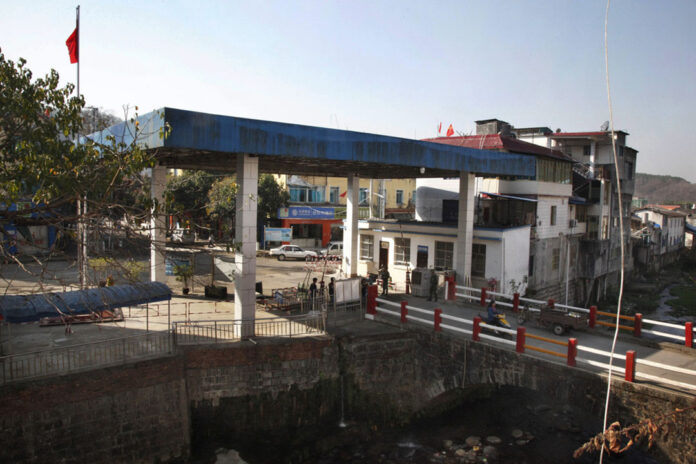
FILE - Chinese security officers stand at a border gate between Kachin rebel-controlled Laiza in Myanmar's north and China's western Yunnan, March 21, 2018. (AP Photo/Esther Htusan, File)

BANGKOK (AP) — Myanmar military courts have sentenced a dozen individuals — including five Chinese nationals — to life imprisonment for their involvement in multiple human trafficking cases, state-run media reported Saturday.

According to the Myanma Alinn newspaper, the convictions stem from a range of offenses including the online distribution of sex videos and the trafficking of Myanmar women into forced marriages in China.

In one case, five people — including two Chinese nationals identified as Lin Te and Wang Xiaofeng — were sentenced to life imprisonment by a military court in Yangon, the country’s largest city, on July 29. They were found guilty under Myanmar’s Anti-Trafficking in Persons law for producing sex videos involving three Myanmar couples and distributing the footage online for profit.

In a separate case, the same court sentenced a woman and three Chinese nationals — Yibo, Cao Qiu Quan and Chen Huan. The group was convicted of planning to transport two Myanmar women, recently married to two of the convicted Chinese men, into China, the report said.

Additionally, three other people received life sentences from a separate military court for selling a woman as a bride to China, and for attempting to do the same with another woman.

In another case, a woman from Myanmar’s central Magway region was given a 10-year sentence on July 30 for planning to transport two Myanmar women to be sold as brides to Chinese men, the report said.

Human trafficking, particularly of women and girls lured or forced into marriages in China, remains a widespread problem in Myanmar, a country still reeling from civil war after the military seized power from the elected government of Aung San Suu Kyi in February 2021.

The persisting conflict in most areas of Myanmar has left millions of women and children vulnerable to exploitation.

A 2018 report by the Johns Hopkins Bloomberg School of Public Health and the Kachin Women’s Association Thailand (KWAT) — which works to prevent and respond to trafficking in northern Kachin and Shan states bordering China — estimated that about 21,000 women and girls from northern Myanmar were forced into marriage in China between 2013 and 2017.

In its latest report published in December, KWAT noted a sharp decline in the number of trafficking survivors accessing its services from 2020 to 2023. It attributed the decline to the COVID-19 pandemic and border closures caused by ongoing conflict following the army takeover. However, it reported a resurgence in 2024 as people from across Myanmar began migrating to China in search of work.

Maj-Gen Aung Kyaw Kyaw, a deputy minister for Home Affairs, said during a June meeting that the authorities had handled 53 cases of human trafficking, forced marriage and prostitution in 2024, 34 of which involved China, according to a report published by Myanmar’s Information Ministry.

The report also said that a total of 80 human trafficking cases, including 14 involving marriage deception by foreign nationals, were recorded between January and June this year.

_____

Advertisement

Hot News

LATEST NEWS

Bangkok
overcast clouds
32.2 ° C
32.2 °
32.2 °
97 %
4.3kmh
100 %
Sun
30 °
Mon
34 °
Tue
33 °
Wed
32 °
Thu
33 °