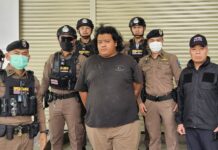
Police escort the 38-year-old German suspect in the fraud case back to Udon Thani City Police Station to face charges following the complaint filed by an Australian man on August 2, 2025.
UDON THANI — A retired Australian police officer couldn’t hide his relief after Thai authorities arrested the German man he says swindled him out of $1.1 million in a sophisticated cryptocurrency fraud.
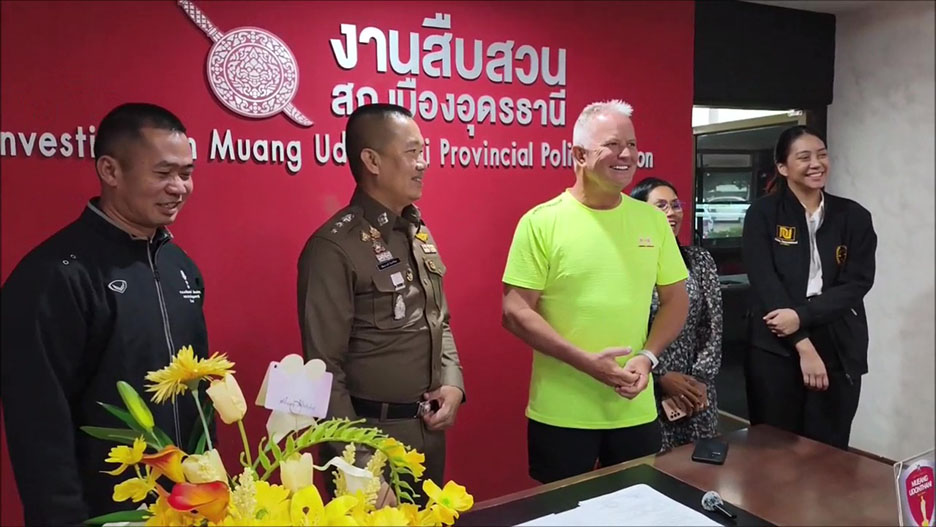
“I’m very happy. The police are excellent,” 65-year-old Michael said in Thai, presenting flowers to Police Lieutenant Colonel Pattanawong Janphon at Udon Thani City Police Station to show his appreciation.
How the Scam Unfolded
Michael and his 50-year-old Thai wife Areerut filed their complaint on July 17 against Alex, a 38-year-old German living in Phuket. The couple had met Alex through social media more than a year earlier, eventually traveling to Phuket at his invitation.
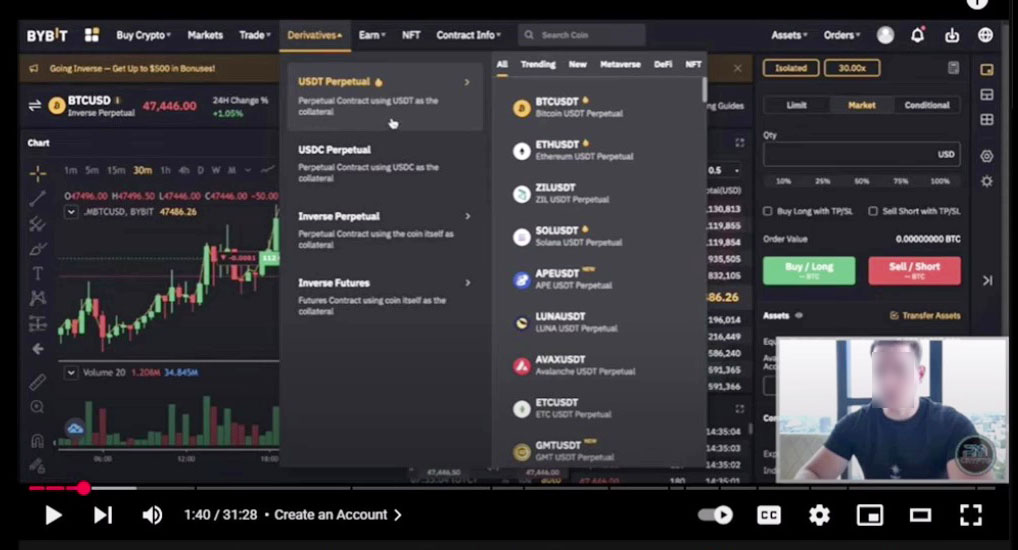
Michael, an Australian man, and his Thai wife thank police at Udon Thani City Police Station on August 2, 2025 after learning that officers arrested the suspect he reported in mid-July.The website that resembled a cryptocurrency trading platform used by the German suspect to lure the Australian man and his Thai wife into the investment scheme.
Alex lured them into what appeared to be a legitimate cryptocurrency investment opportunity, complete with a professional-looking website and convincing returns data. Trusting the setup, the couple gradually transferred more money into the scheme.
Their confidence shattered when they tried to withdraw funds and couldn’t reach Alex anymore. The total damage: over $1.1 million, including money from Michael’s police pension.
Swift Police Action
After receiving the complaint, investigators quickly traced the money trail and identified Alex’s location. When he ignored a police summons, a court issued an arrest warrant from Udon Thani Provincial Court on July 23.
Police later took an arrest warrant to the German suspect’s residence in Chalong Subdistrict, Mueang District, Phuket Province at 4:00 p.m. on August 1, but received no response.
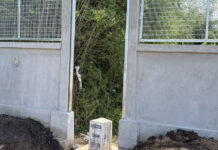
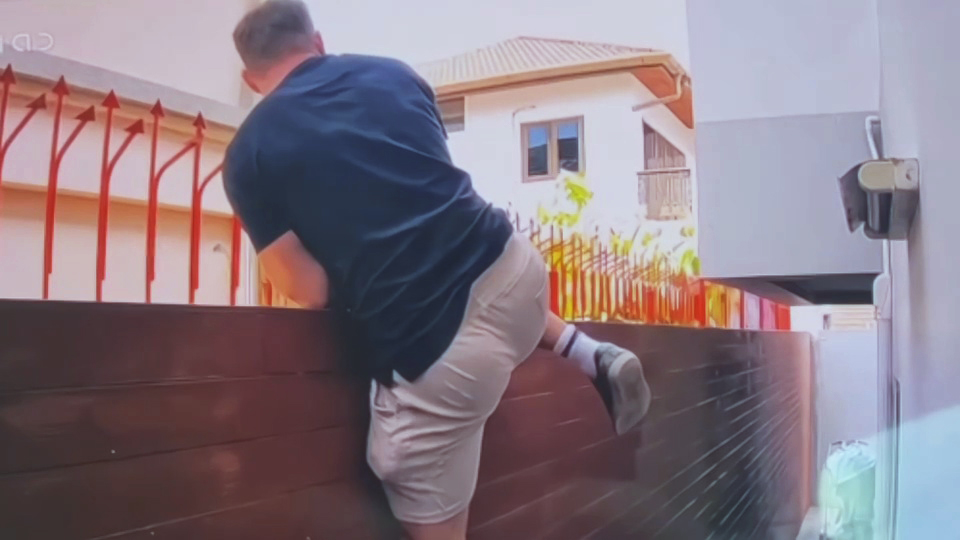
CCTV footage shows the German suspect climbing over the fence of his own house in Phuket Province to evade police, but he was captured shortly afterward on August 1, 2025.
They later discovered Alex had climbed over his house fence and had a friend pick him up by car to flee to his American girlfriend at a fitness center in Rawai Subdistrict, 3.5 km away. Police pursued and successfully arrested him there, then transported him by plane to face legal proceedings in Udon Thani.
Alex now faces charges for computer fraud and public deception, though he denies the allegations, claiming his phone was stolen and he was also victimized.
Police are asking anyone else who may have been targeted by Alex to come forward by contacting their local station or calling Udon Thani City Police directly at 042-221077.
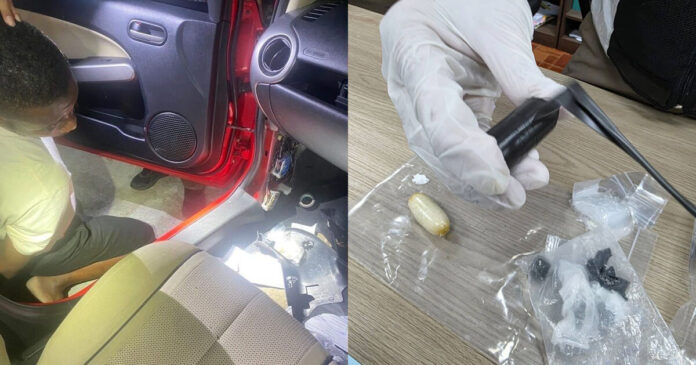
Police officers apprehend a Nigerian national who attempted to evade arrest by accelerating through a checkpoint on Chao Fa Tawan Tok Road in Chalong Subdistrict, Mueang District, Phuket Province on August 1, 2025. They uncover 73.31 grams of cocaine in his car.
PHUKET — Thai authorities are intensifying their investigation into a sophisticated international drug trafficking operation involving foreign suspects, an investigation that has revealed the global scope of narcotics smuggling into Thailand’s popular tourist destinations.
The latest arrest occurred on August 1 when Chalong Police Station officers apprehended a Nigerian national, Mr. Odinaka, during a routine checkpoint operation on Chao Fa Tawan Tok Road in Chalong Subdistrict, Mueang District, Phuket Province. The suspect attempted to evade arrest by accelerating through the checkpoint, leading to a high-speed pursuit before officers successfully detained him.
A thorough search of Odinaka’s sedan uncovered 73.31 grams of cocaine, resulting in charges for unauthorized possession of a Category 2 narcotic. This arrest represents part of what investigators believe is a broader international trafficking network utilizing Thailand’s tourism infrastructure.
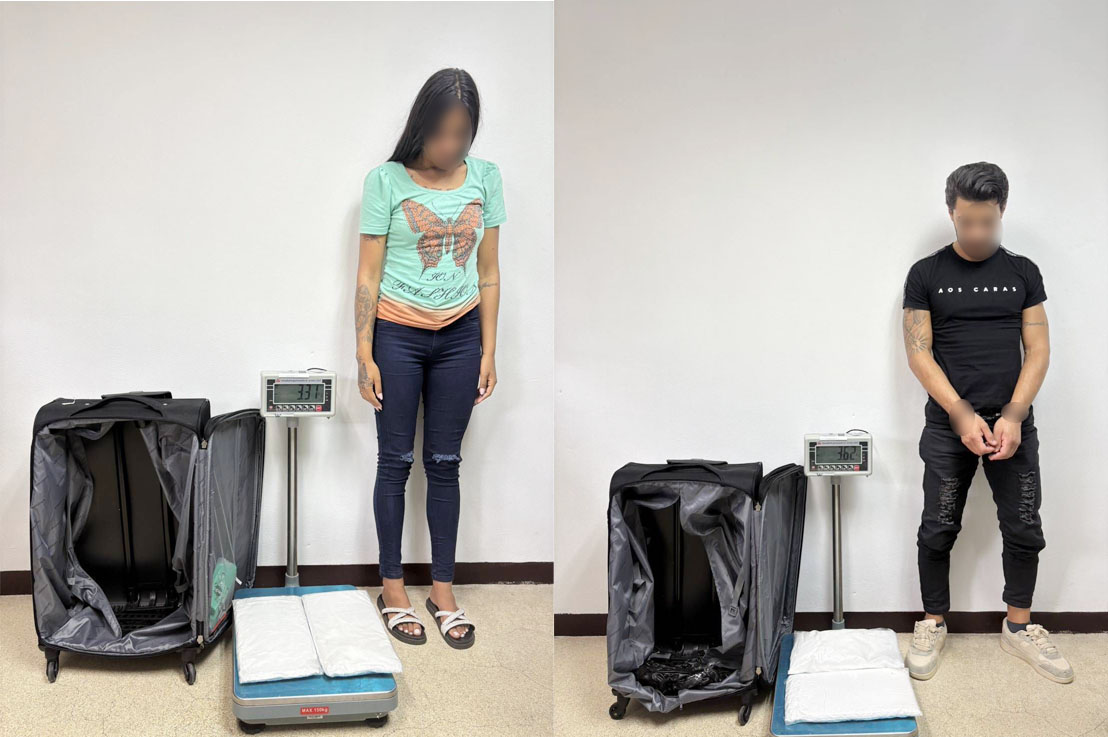
The investigation gained momentum following an earlier high-profile case involving Brazilian nationals Mr. Silva, 35, and Miss Andrade, 25, who were arrested at Koh Samui International Airport on July 19. The couple was found carrying 6.63 kilograms of cocaine valued at approximately 20 million baht ($615,000) concealed in their luggage.
The Brazilian suspects had traveled from São Paulo-Guarulhos International Airport via Qatar Airways, making a stopover in Doha before arriving at Bangkok’s Suvarnabhumi Airport and continuing to the resort island of Koh Samui.
The Brazilian couple is found carrying 6.63 kilograms of cocaine concealed in their luggage at Koh Samui Airport on July 19, 2025.
During interrogation, the Brazilian couple revealed details of an elaborate recruitment operation. They disclosed that an unidentified Brazilian man had approached them with an offer for an all-expenses-paid vacation to Koh Samui, covering accommodation, meals, and tourist activities. The only requirement was that they transport pre-packed luggage provided by the organizers.
According to their testimony, the suspects were instructed to check into a predetermined hotel upon arrival, where contacts would retrieve the luggage. In exchange for their cooperation, they were promised payment of 35,000 Brazilian reais (approximately $6,300).
International Investigation Continues
Thai police are treating these arrests as connected cases within a larger international drug trafficking investigation. The involvement of suspects from Nigeria and Brazil suggests organized criminal networks are exploiting Thailand’s status as a major tourist destination to facilitate drug smuggling operations across continents.
Authorities continue to expand their probe into the network’s structure and operations, working to identify additional suspects and dismantle what appears to be a sophisticated international drug trafficking organization targeting Southeast Asia’s tourism corridors.
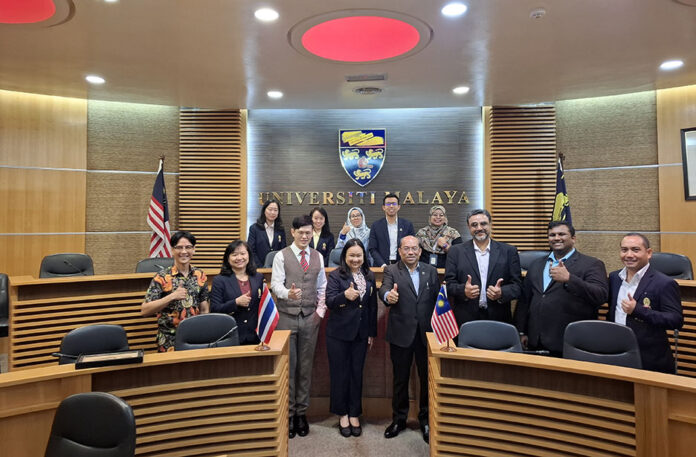
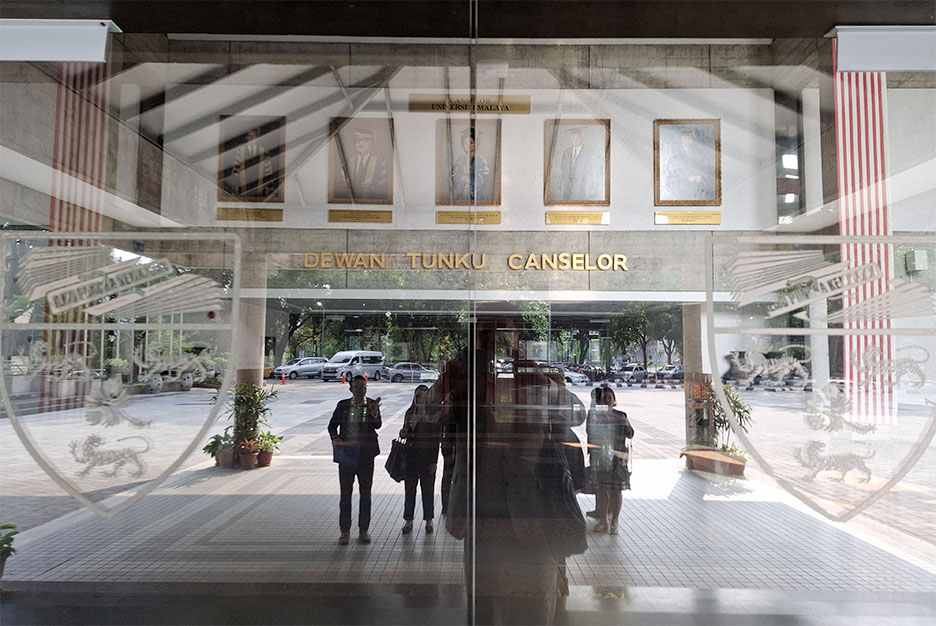
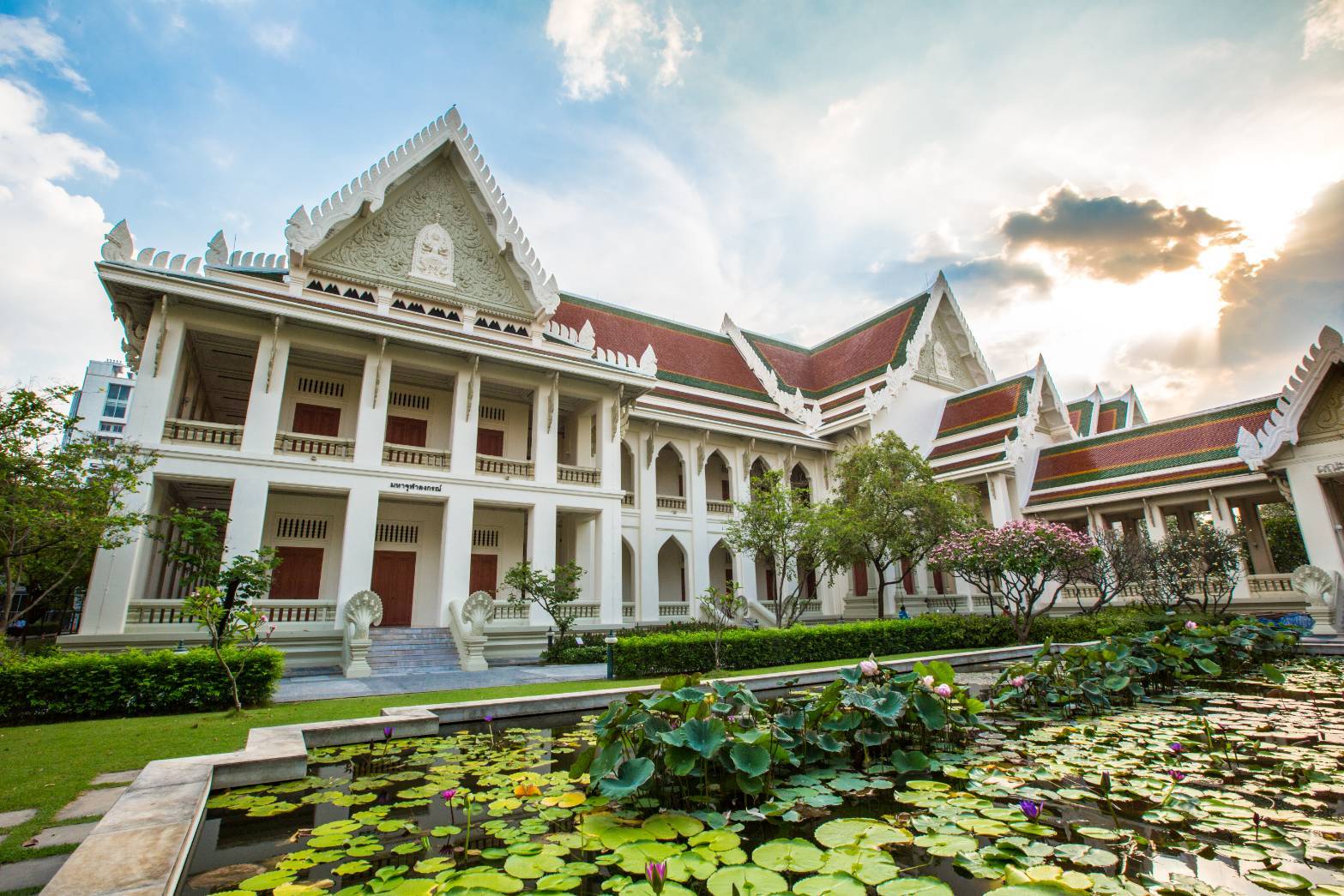
Chulalongkorn University (CU), Thailand’s oldest university, already tops all other Thai universities in major global and regional rankings, but it isn’t content and is aiming even higher. In a move to improve its international standing, a team of Thai academics, led by Vice President for Academic Affairs Prof. Dr. Parichart Sthapitanonda, recently embarked on a study tour to Malaysia.
The university’s goal was to learn from three premier Malaysian universities about their rapid rise in international university ranking tables.
According to the QS World University Rankings, Chulalongkorn University, also informally referred to as Chula, holds the top rank in Thailand across 34 disciplines and is ranked 229th globally. Between 2012 and 2025, CU’s rankings fluctuated between 201 and 271. The University of Malaya, however, was ranked 156th in 2012 but rose to 60th in 2025.
Similarly, Malaysia’s Universiti Putra Malaysia (UPM), the second university the CU group visited, was ranked 360th in 2012 but rose to 148th in 2025. (The QS World University Rankings, published by Quacquarelli Symonds, is a widely recognised annual publication.
Photo by Pravit Rojanaphruk
The rankings are based on a set of performance indicators including research, teaching, employability, and internationalisation. In 2025, the Top 10 institutions are: Massachusetts Institute of Technology (MIT), Imperial College London, University of Oxford, Harvard University, University of Cambridge, Stanford University, ETH Zürich – Swiss Federal Institute of Technology, National University of Singapore (NUS), University College London (UCL), and California Institute of Technology (Caltech). QS also publishes rankings by specific subjects and regions such as Asia and Latin America.)
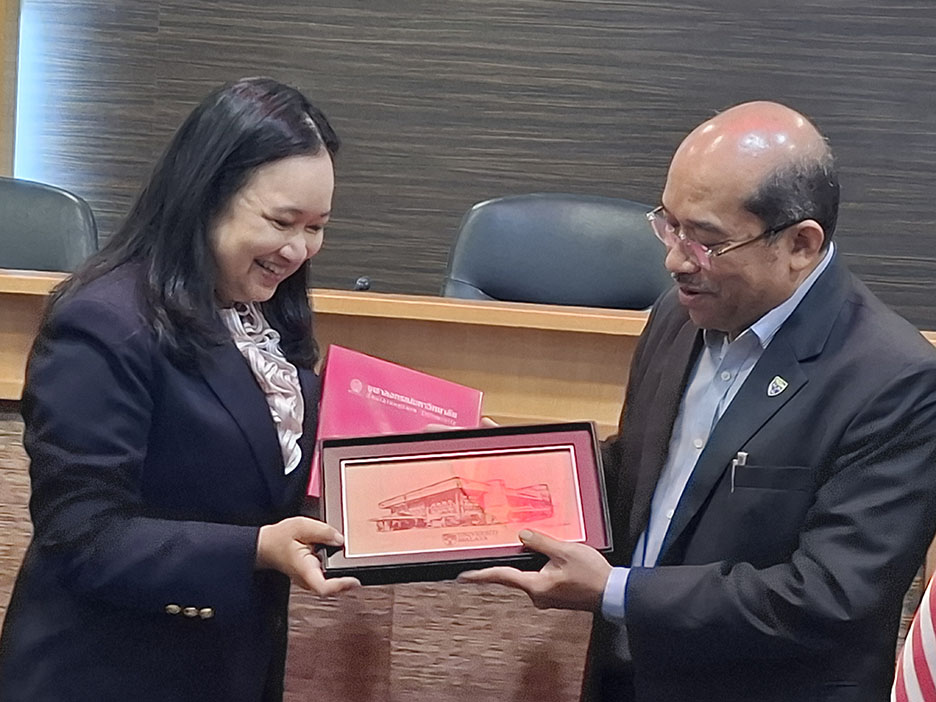
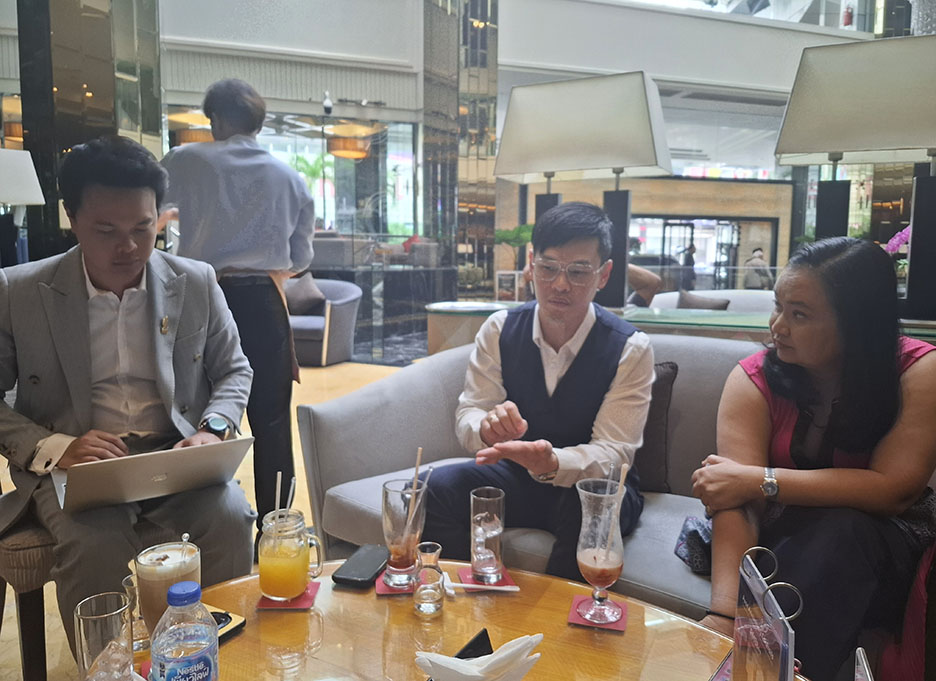
On July 23, at the University of Malaya (UM), the team was told how Malaysia’s top university prioritises attracting foreign students and encourages its academics to publish more papers in international journals, and have them cited. They also discussed their structured Key Performance Indicators (KPIs) compared to Chulalongkorn University’s.
More International Students: Top Foreign Universities Wage “War” to Attract the Best and Brightest
At the University of Malaya, Dr. Yahaya Ahmad, UM’s Associate Vice-Chancellor for Corporate Strategy, told the Thai academic group that about 20 to 25 percent of its 44,000 students are foreigners. He added that this is important for both the university’s ranking and its “branding.”
Photo by Pravit Rojanaphruk
Ahmad also explained that the university’s reputation as an employer, along with special government support, was crucial for raising its global rankings. He noted that 70 percent of UM’s income comes from the state, while for Chula, it’s between 30–35 percent from the state, 25 percent from tuition fees, and 40 percent from property-related income. He also mentioned the careful selection of 400 people—half academics, half students—for peer review. The university’s plan is to break into the Top 50 next year, a remark that drew enthusiastic admiration from the Thai side.
Another key factor is internationalisation, which the Chulalongkorn University team admits it needs to improve. However, they face difficulties because many of its basic courses and degrees are in the Thai language, as Thai is the Kingdom’s national language.
According to Pokai Sriratanobhas, Assistant to the Chulalongkorn University President for Human Resources Management, 8.5 percent, or 3,200, of Chulalongkorn University students are foreigners.
That’s not even half of UM’s percentage. UM also told the Thai delegates that they are not just trying to increase the number of foreign students, but also the number of nationalities represented. This is because the majority of their foreign students are from China, and some rankings take into consideration not just the number of foreign students but also their diversity.
Photo: Chulalongkorn University
Both sides also acknowledged that more student exchanges between the two universities could and should take place, as Chulalongkorn University currently has only 52 students from Malaysia.
After the meeting, Prof. Dr. Parichart told Khaosod English that top foreign universities are waging a “war” to attract the best and brightest students. She also noted that it’s a challenge to recruit qualified foreign lecturers and researchers. Some who migrate to Chulalongkorn University (CU) are either retired or have a Thai spouse. Another challenge is making the work permit process more convenient. For students, the CU team added that branding and repatriation are very important and tied to the international ranking of universities.
KPI
Returning to the meeting at UM in Kuala Lumpur, another key issue raised by UM was their KPI, or Key Performance Indicator, which is used to assess and evaluate the performance of their academics and researchers. This includes the number of papers published, as well as citations, in international academic journals.
The Chula Brand
Assoc. Prof. Ake Pattaratankun teaches marketing at Chulalongkorn, but for the past two years, he has also been working as a branding advisor to the university’s president. This is a relatively new position, and Ake said CU is probably the only Thai university with someone holding such a job title.
“In QS Rankings, 60 percent [of our score comes from] academic reputation,” he told UM academics during the meeting. Ake also mentioned that according to Times Higher Education’s (THE) Impact Rankings in 2025, Chulalongkorn University is ranked 44th globally.
“There are many kinds of mirrors [to assess universities]. When it comes to internationalisation, Chulalongkorn may not be very good,” he admitted.
One thing Chulalongkorn is very good at, however, is attracting the attention of international media. They are so good that even the UM team who received them in Kuala Lumpur wants to learn from Chulalongkorn University.
Photo by Pravit Rojanaphruk
Dogs & Media Fellowship
Six labrador retrievers, and a media fellowship, are among Chulalongkorn University’s hidden arsenals for improving the institution’s rankings and reputation, at international level. During the COVID-19 pandemic, the university successfully trained six dogs to sniff out COVID-19, and several international media organisations reported on it.
What’s more, over the past two years, the university has set up a media fellowship programme that allows up to four foreign journalists to spend a term, or up to six months, at the university. During this time, they can sit in on several classes, report on aspects of the university’s research, and interview top Chula academics on Thailand and more.
“This one we want to learn from you… You seem to have done it successfully,” a member of the UM team remarked to the Chula team during the meeting, referring to Chulalongkorn University’s successful international media coverage.
In Putrajaya, the administrative centre of Malaysia, which is a little over half an hour’s drive from Kuala Lumpur, the Chula team arrived at Universiti Putra Malaysia (UPM), Malaysia’s best agricultural university. The team was told that UPM takes pride in being the best green campus for 12 consecutive years. They also host 7,000 foreign students from 80 countries and collaborate with leading international institutions like Pantheon-Sorbonne University (University of Paris 2).
Assoc. Prof. Dr. Ake told his Malaysian counterparts that Chula is “very new” in the field of agriculture, with its School of Agricultural Innovation being just 10 years old, and he expressed a desire to collaborate and learn from UPM. Ake’s colleague, Asst. Prof. Dr. Jessada Salathong, from the Faculty of Communication Arts, suggested to UPM that the two universities should exchange lecturers and staff members so the two institutions can learn from one another.
Upon learning that the team from Chulalongkorn University had already visited the University of Malaya, one of the hosts at UPM said, “We might offer you more,” adding that their university already has a collaborative relationship with Thailand’s Kasetsart University, a leading public university in Bangkok known for its strength in agriculture and more. Ake added that since there are only around 50 Malaysian students at Chula, this is an area that can be improved. This led both sides to come up with a scheme for exchanging students between CU and UPM.
As for UPM’s rapid rise in world university rankings, they said they “re-looked” at what is counted by QS, but without making it the main focus. Instead, they tried to internalise good practices to make them feel natural.
Photo by Pravit Rojanaphruk
What More Can Chula Do?
Upon talking to different members of the Chulalongkorn University team, some key issues were raised for improvement.
Asst. Prof. Sornate Areesophonpichet, from the Faculty of Education, said Thailand’s natural strengths are in food, agriculture, tourism, and healthcare—and these are areas that Chula can respond to more effectively. She added that the government is in the process of setting up a Higher Education Fund, probably to be established by 2026 or 2027, which would be a boost to Chulalongkorn University.
Additionally, Chulalongkorn University doesn’t really run its own hospital, and what is known as Chulalongkorn Hospital is administered by the Thai Red Cross Society. Not having its own hospital also affects its international ranking.
Another issue was how the KPI index should be used. Parichart was of the opinion that Chula academics should not be pressured to have KPI reviews twice a year like UM and that an annual KPI review should suffice. This would afford Chula staff a good working quality and not make them too stressed, as she learned from a UM source that some UM faculty members left the university after feeling too pressured.
Chulalongkorn University
At Chulalongkorn University, academic staff are required to publish three academic papers within five years, while at the University of Malaya, they changed it last year to two papers per annum, said Parichart.
“For us, one can still stay if he or she didn’t manage three papers within five years,” said Parichart. “For them, it’s like they are being constantly whipped.”
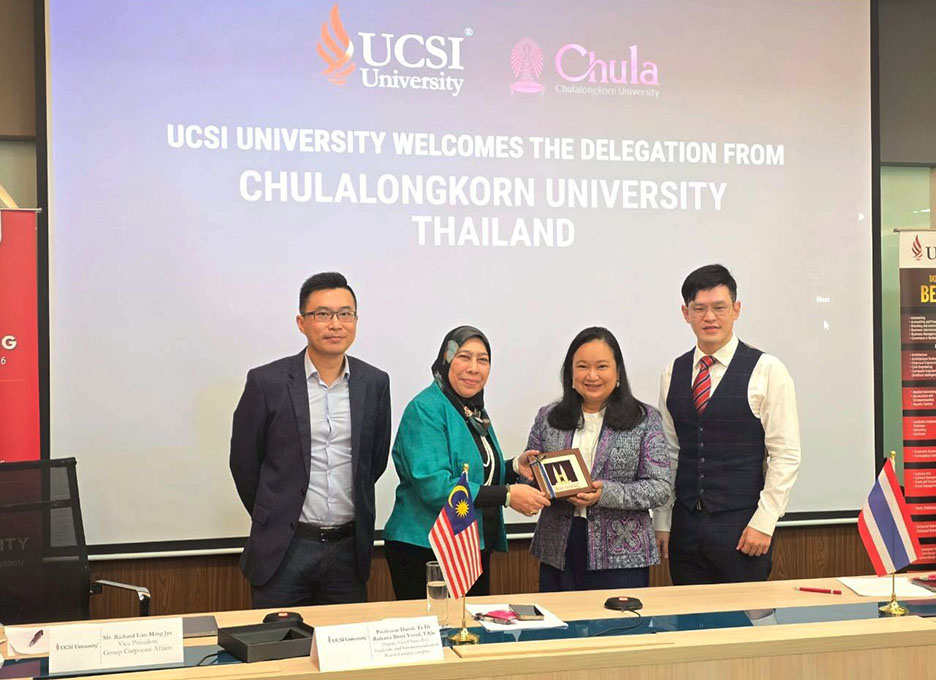
“Our main goal of the visit [which also included a third university, UCSI University, but the Thai press were asked by UCSI not to attend the meeting] was not primarily about [improving Chulalongkorn University’s] ranking but to strengthen ties as we share many things in common,” she told the two Thai reporters who joined the group during the debriefing. Parichart acknowledged, however, that the meteoric rise of these top Malaysian Universities had attracted Chulalongkorn University’s curiosity.
Meanwhile, Pokai added that Chulalongkorn University has to move away from its proud legacy of being Thailand’s oldest university, which has attracted top Thai students over the centuries, and not be complacent. The university was founded 108 years ago.
Strategic Alliances and Future-Focused Academic Collaboration
Although Chulalongkorn is also exploring collaborations with top Western institutions including Oxford and MIT, the trip to Malaysia resulted in an agreement in principle to collaborate with top Malaysian universities in the following areas: research collaboration and matching grants (a $100,000 fund split between CU and UM was proposed by the Malaysian side) which would “spur an organic relationship.”
Also, high-level visits (for CU and UM by late 2025), collaborative academic programmes (to be discussed in more detail with UM and UPM), exchanging students, and holding joint seminars and symposiums were also discussed, as well as lter-term mutual learning.
With UPM, the two sides agreed to explore collaboration in the agricultural field, share joint research findings, and exchange academic personnel and students (student mobility).
Note: The writer and Khaosod English would like to thank Chulalongkorn University, and the team led by Vice President for Academic Affairs, Prof. Dr. Parichart Sthapitanonda, for the kind invitation to join the study trip to Malaysia.
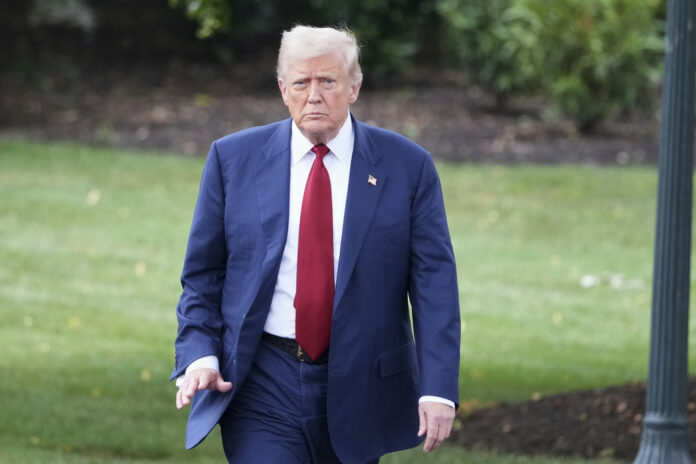
President Donald Trump walks across the South Lawn of the White House to board Marine One en route to Joint Base Andrews, Md., Friday, Aug. 1, 2025, in Washington. (AP Photo/Jacquelyn Martin)
WASHINGTON (AP) — In a warning to Russia, President Donald Trump said Friday he’s ordering the repositioning of two U.S. nuclear submarines “based on the highly provocative statements” of the country’s former president, Dmitry Medvedev, who has raised the prospect of war online.
Trump posted on his social media site that, based on the “highly provocative statements” from Medvedev, he had “ordered two Nuclear Submarines to be positioned in the appropriate regions, just in case these foolish and inflammatory statements are more than just that.”
The president added, “Words are very important, and can often lead to unintended consequences, I hope this will not be one of those instances.”
It wasn’t clear what impact Trump’s order would have on U.S. nuclear subs, which are routinely on patrol in the world’s hotspots, but it comes at a delicate moment in the Trump administration’s relations with Moscow.
Trump said later Friday that he was alarmed by Medvedev’s attitude.
“He’s got a fresh mouth,” Trump said in an interview with Newsmax.
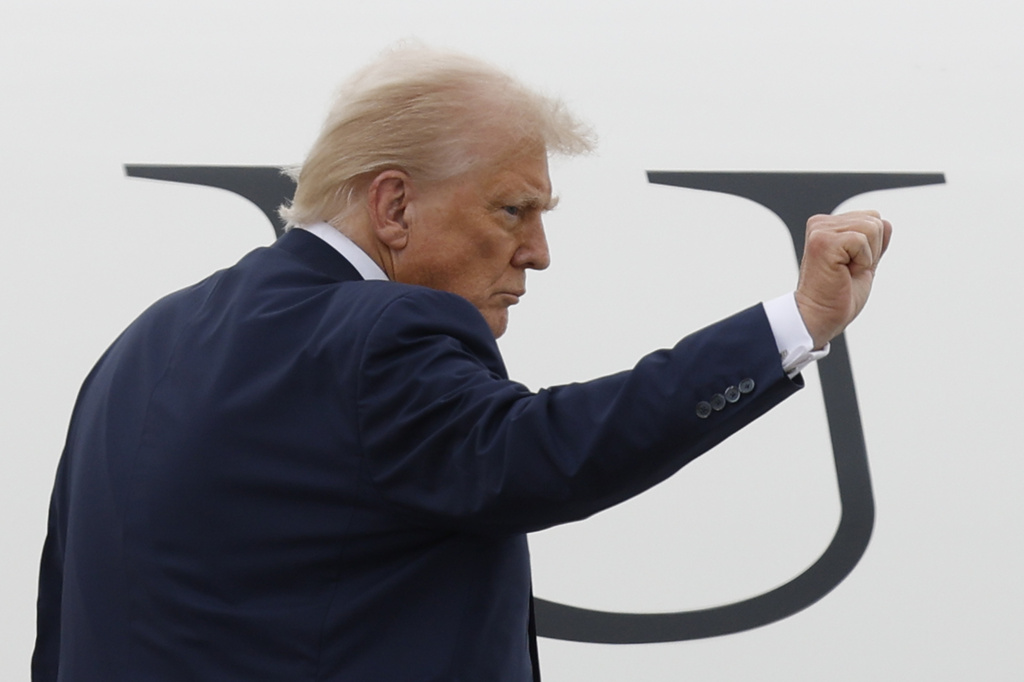
President Donald Trump raises his right fist as he boards Air Force One, at Joint Base Andrews, Md., Friday, Aug. 1, 2025. (AP Photo/Luis M. Alvarez)
Trump has said that special envoy Steve Witkoff is heading to Russia to push Moscow to agree to a ceasefire in its war with Ukraine and has threatened new economic sanctions if progress is not made. He cut his 50-day deadline for action to 10 days, with that window set to expire next week.
The post about the sub repositioning came after Trump, in the wee hours of Thursday morning, had posted that Medvedev was a “failed former President of Russia” and warned him to “watch his words.” Medvedev responded hours later by writing, “Russia is right on everything and will continue to go its own way.”
And that back-and-forth started earlier this week when Medvedev wrote, “Trump’s playing the ultimatum game with Russia: 50 days or 10” and added, “He should remember 2 things: 1. Russia isn’t Israel or even Iran. 2. Each new ultimatum is a threat and a step towards war. Not between Russia and Ukraine, but with his own country.”
Asked as he was leaving the White House on Friday evening for a weekend at his estate in New Jersey about where he was repositioning the subs, Trump didn’t offer any specifics.
“We had to do that. We just have to be careful,” he said. “A threat was made, and we didn’t think it was appropriate, so I have to be very careful.”
Trump also said, “I do that on the basis of safety for our people” and “we’re gonna protect our people.” He later added of Medvedev, “He was talking about nuclear.”
“When you talk about nuclear, we have to be prepared,” Trump said. “And we’re totally prepared.” He told Newsmax that the submarines were being moved “closer to Russia.”
Medvedev was Russia’s president from 2008 to 2012, while Vladimir Putin was barred from seeking a third consecutive term, and then stepped aside to let him run again.
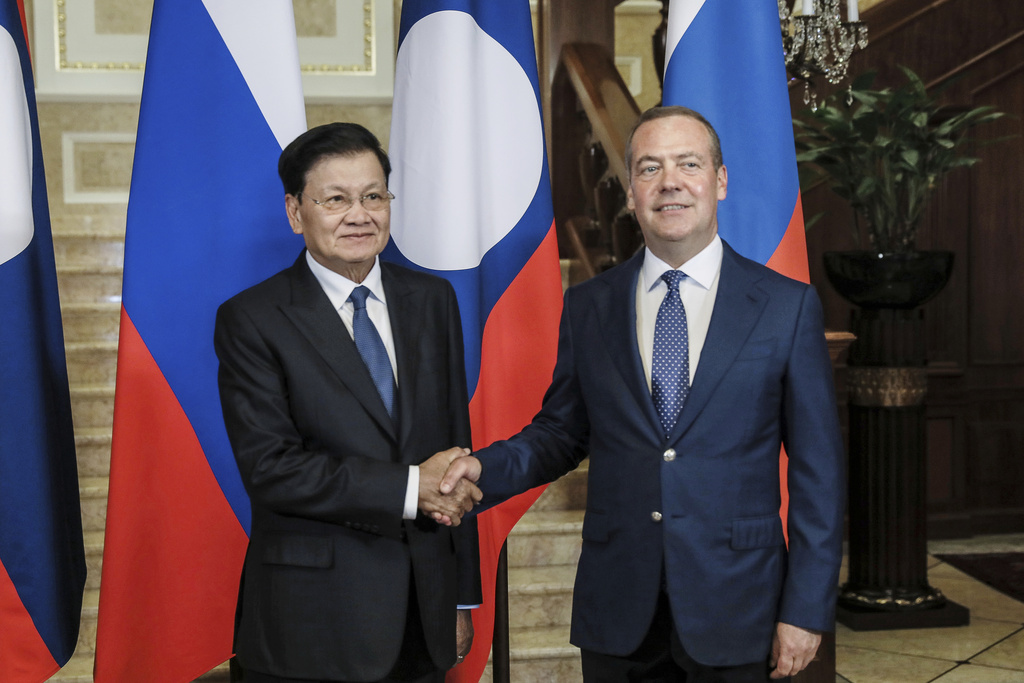
Laotian President Thongloun Sisoulith and Deputy Chairman of the Russian Security Council Dmitry Medvedev shake hands during their meeting at the Gorki state residence outside Moscow, Russia, Wednesday, July 30, 2025. (Ekaterina Shtukina, Sputnik Pool Photo via AP)
Now deputy chairman of Russia’s National Security Council, which Putin chairs, Medvedev has been known for his provocative and inflammatory statements since the start of the war in 2022. That’s a U-turn from his presidency, when he was seen as liberal and progressive.
Medvedev has frequently wielded nuclear threats and lobbed insults at Western leaders on social media. Some observers have argued that with his extravagant rhetoric, Medvedev is seeking to score political points with Putin and Russian military hawks.
One such example before the latest spat with Trump came on July 15, after Trump announced plans to supply Ukraine with more weapons via its NATO allies and threatened additional tariffs against Moscow. Medvedev posted then, “Trump issued a theatrical ultimatum to the Kremlin. The world shuddered, expecting the consequences. Belligerent Europe was disappointed. Russia didn’t care.”
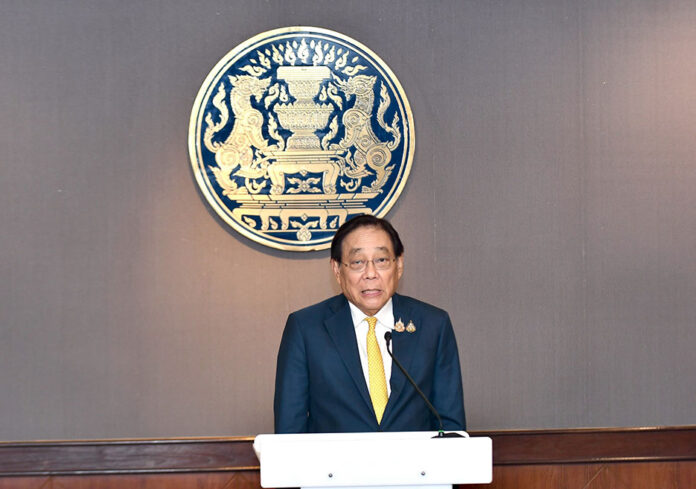
Deputy Prime Minister and Finance Minister Pichai Chunhavajira briefs the media on the results of a special cabinet meeting regarding reciprocal tariff measures at Government House on August 1, 2025.
BANGKOK — The Thai cabinet has acknowledged the new 19% tariff imposed by the United States. Thai exporters are expected to accelerate shipments before the new rate takes effect on August 7. The Ministry of Finance has prepared support measures for affected companies, while plans to reduce import tariffs on certain US goods to 0% await parliamentary approval.
Deputy Prime Minister and Finance Minister Pichai Chunhavajira announced the update following a special cabinet meeting on adjustment measures. He said the cabinet had noted and approved Thailand’s proposal to the US, submitted by “Team Thailand.” The proposal is non-binding and will now advance to the treaty negotiation phase for each sector.
Pichai noted that the US will publish the full details of Thailand’s proposals. Further negotiations will focus on trade rules, particularly regarding the origin of goods. The US is expected to scrutinize Thailand’s framework against those of other countries. This represents the first round in a series of negotiations.
Government Support for Thai Exporters
To support Thai exporters, Pichai said the government has prepared targeted assistance in two forms:
Soft Loans: The government will provide low-interest loans to address the backlog created by companies that had delayed production or exports due to tariff uncertainty. With the 19% duty rate now confirmed, exporters can proceed. Shipments made before August 7 will face a 10% tax, while those shipped afterward will be subject to the 19% rate. The government expects a surge in exports before the deadline.
Two funding sources will be available: short-term working capital for exporters with existing stock (6–12 months) and longer-term support to improve competitiveness. Authorities are collaborating with the Confederation of Thai Industries and the Thai Chamber of Commerce to develop sector-specific strategies.
US Import Tariff Reductions
Regarding when US goods imported into Thailand will benefit from 0% duties, Pichai said this will only take effect after parliamentary approval. Not all goods will receive immediate 0% tariffs—priority will go to products already subject to 0% tariffs under other trade agreements. Some items will have quantitative restrictions based on domestic demand.
“There is no fixed timetable yet. The US and Thailand must first finalize the agreement. Once completed and we’ve finished the necessary legal procedures, we will proceed,” Pichai explained.
In a television interview, Pichai cited examples of US goods Thailand cannot produce, such as cherries, suggesting these imports have minimal economic impact. For goods Thailand produces but in insufficient quantities, like corn, the country has requested adjustment periods of possibly five years or quota-based imports to protect local producers.
U.S. Red Cherries
Specific Product Considerations
Corn: Thailand currently produces 10 million tons of corn for animal feed, but demand could rise to 13 million tons. Since US corn is significantly cheaper, Thailand is considering safeguard measures. Thai feed producers could be required to purchase the first 5 million tons from local farmers at domestic prices, then from neighboring countries, and only then from the US.
Additionally, Thailand will require certification that corn imported from neighboring countries is not associated with open burning practices, which contribute to PM2.5 pollution.
Pork: For goods Thailand produces in sufficient or surplus quantities, such as pork, Pichai emphasized there would be no immediate import liberalization. Domestic producers need time to improve efficiency and reduce costs. Any future market liberalization would be minimal—possibly less than 1% of total consumption—and subject to strict traceability requirements. Internal organs, which are extremely cheap in the US, will not be authorized for import.
Non-Tariff Barriers and Trade Facilitation
Pichai addressed the non-tariff barriers (NTBs) that the US has urged Thailand to remove, including cumbersome customs procedures, delayed documentation, and complex product standards. He described this as an opportunity to improve government efficiency through reforms such as one-stop services and digital systems, ultimately reducing costs and increasing Thailand’s competitiveness.
Anti-Circumvention Measures: Transshipped or camouflaged goods will be taxed at 40%, similar to Vietnam’s approach. Thailand must strengthen certification of product origins through Certificates of Origin (COO). The Customs Department and Ministry of Commerce will jointly inspect factories and trace production sources to ensure authenticity.
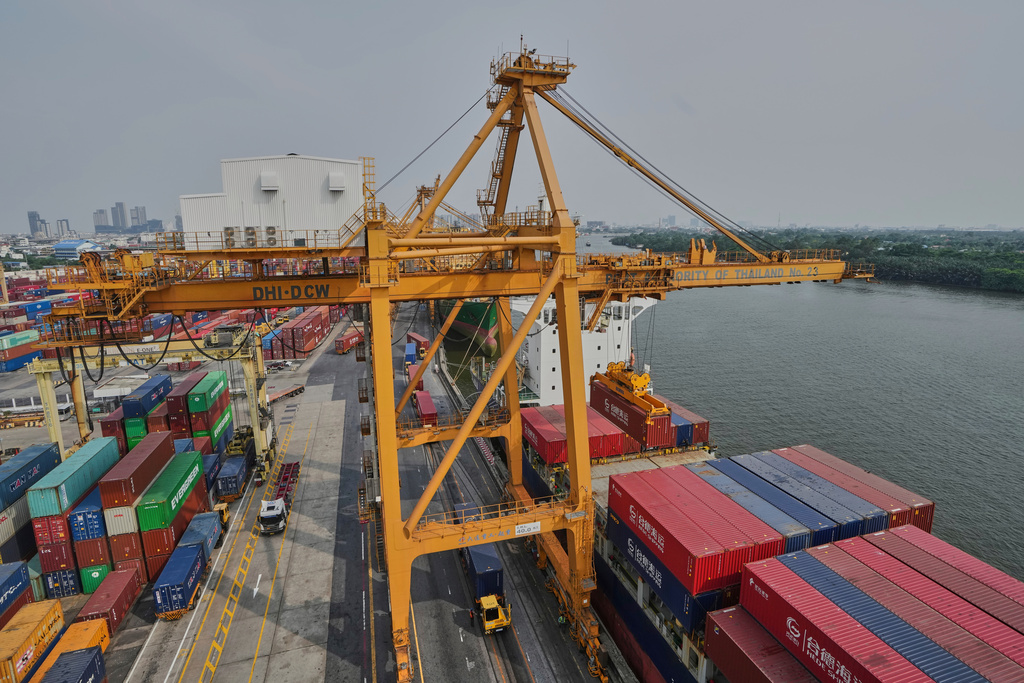
Cranes work on stacks of containers at the Bangkok Port in Bangkok, Thailand, Thursday, April 10, 2025. (AP Photo/Sakchai Lalit)
Thailand’s Concessions
Energy Imports: Thailand plans to increase crude oil and LNG imports from the US by approximately 10% of total oil imports (currently 120,000 barrels per day). US LNG is significantly cheaper, and a contract for 1 million tons of LNG (from Thailand’s annual imports of 15 million tons) has been signed, with deliveries starting next year. The government believes cheaper energy will help reduce electricity prices domestically.
Aircraft Purchases: Thai Airways needs to replace about 100 aging aircraft that haven’t been renewed since before COVID-19. Thailand has proposed a 5–10 year plan to purchase Boeing aircraft from the US.
Investment Protection
A crucial aspect involves ensuring continued US investment in Thailand, particularly in electronics manufacturing such as hard drives and servers. These companies account for 30% of Thailand’s trade surplus with the US. Pichai emphasized that these companies prefer to remain in Thailand due to the specialized workforce—more than 100,000 skilled workers trained over decades who would be difficult to replace in the US. Retaining these companies helps avoid job losses and factory relocations.
Pichai described the negotiations as more than customs talks—they are strategic discussions encompassing market access, trade facilitation, and investment promotion. The goal is to maintain Thailand’s global competitiveness while using this opportunity to drive long-term economic reforms.
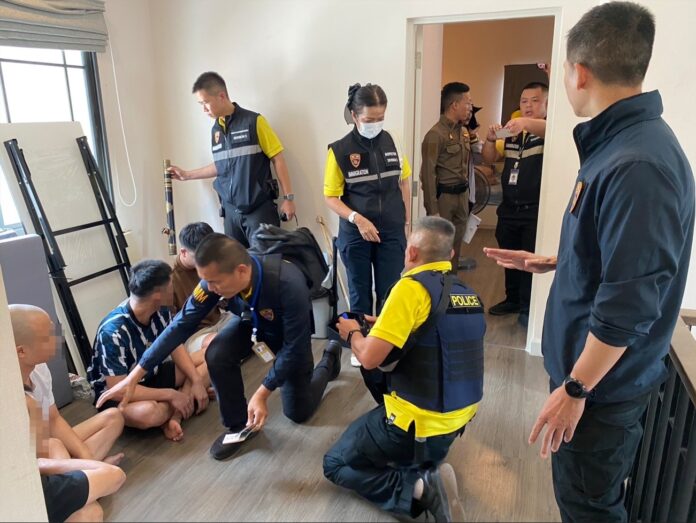
Thai immigration police arrest five Vietnamese nationals operating an illegal loan shark business at a house in Thanyaburi District, Pathum Thani Province, on August 1, 2025.
PATHUM THANI — Thai immigration police have arrested five Vietnamese nationals operating an illegal loan shark business that used victims’ iCloud accounts to remotely control their iPhones as collateral, marking the third such bust in three months.
The arrests on August 1 followed raids on Vietnamese scam call center operations in June and July that revealed a sophisticated digital extortion scheme targeting Vietnamese nationals through Facebook lending advertisements.
The loan operation required borrowers to surrender their iCloud account credentials as collateral. When victims defaulted on payments, the gang would remotely lock their iPhones using Apple’s “Find My iPhone” feature, rendering the devices unusable.
“They would harass victims by sending lost-phone alerts and threatening to erase all data or publish personal images and information on social media platforms,” said Immigration Division 3 in a statement. The intimidation tactics forced victims to repay debts with interest rates reaching 349.8% annually—far exceeding legal limits in both Thailand and Vietnam.
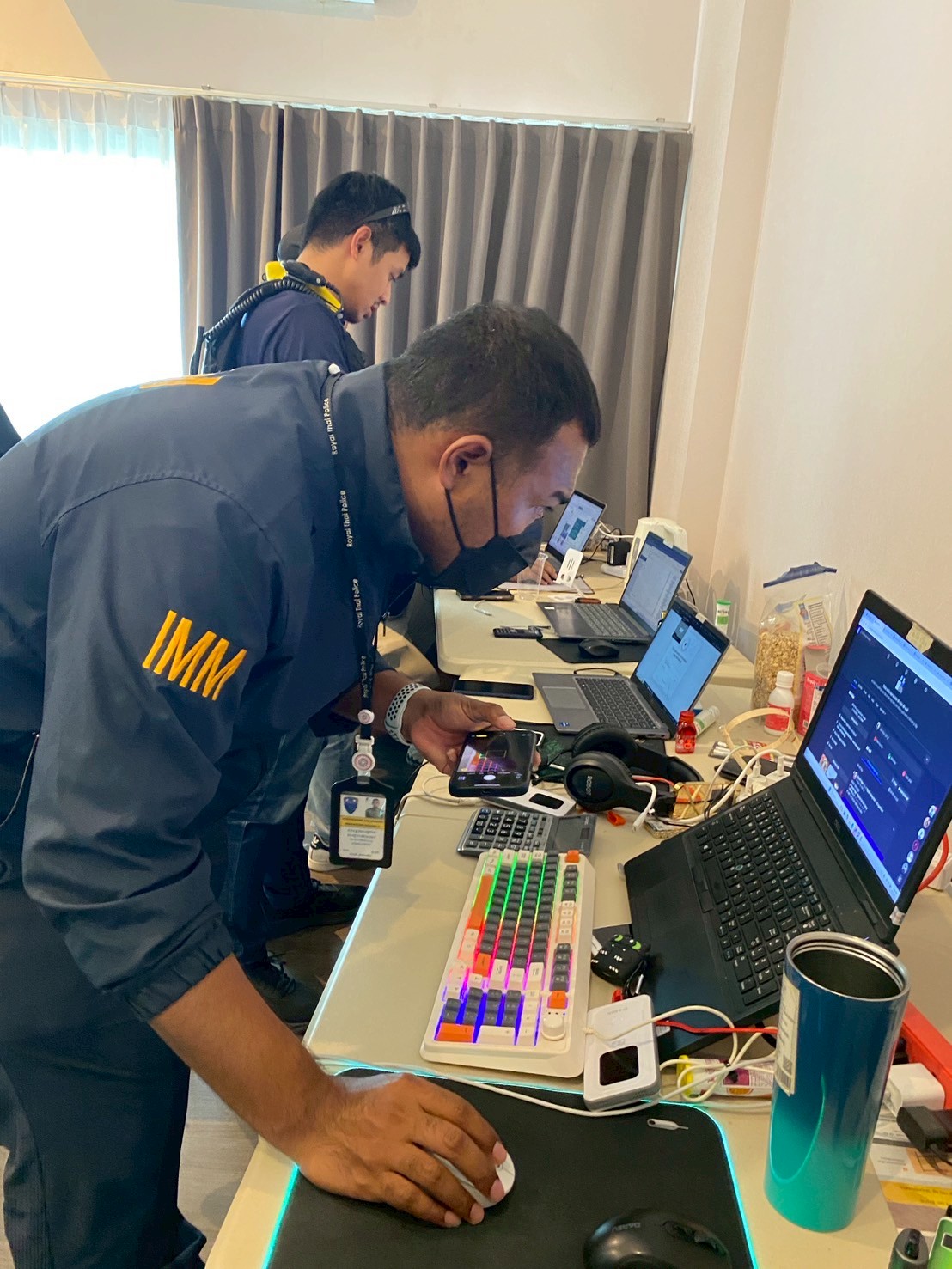
Thai immigration police inspect computers in the house where they arrest five Vietnamese nationals operating an illegal loan shark business in Thanyaburi District, Pathum Thani Province, on August 1, 2025.
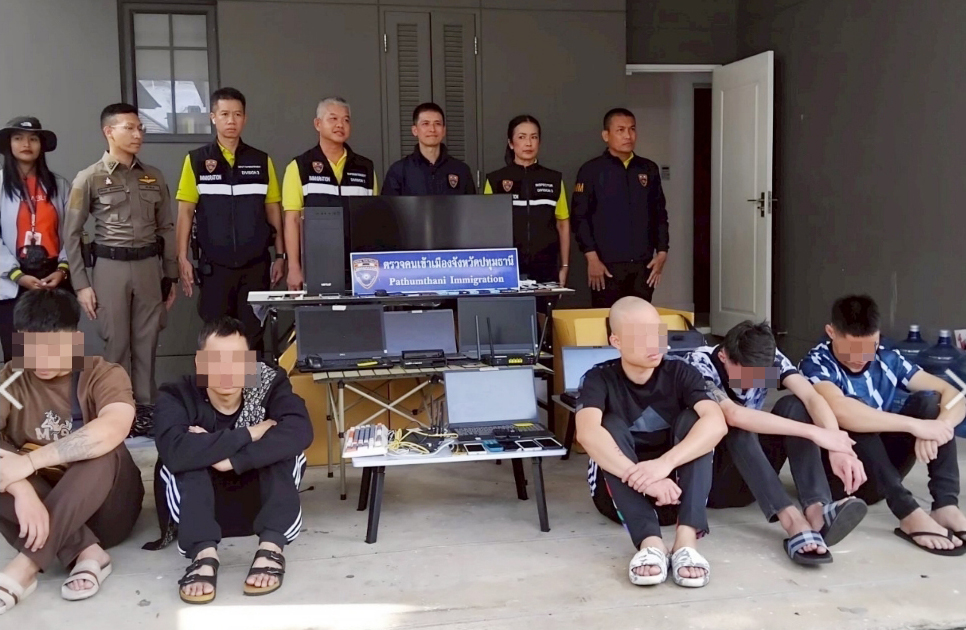
Acting on orders from Immigration Bureau Commissioner Pol. Lt. Gen. Phanumas Boonyalaksana, officers executed a search warrant at a house in Pathum Thani Province’s Thanyaburi District on August 1. The raid uncovered five Vietnamese suspects aged 20-40 operating from desktop computers, laptops, and more than 25 mobile phones.
The suspects admitted to serving as administrators for the illegal lending network, using Facebook for advertising and the Zello messaging app for communications. They were charged with criminal association and working without proper permits.
Pol. Maj. Gen. Chairit Anurit revealed that Vietnamese authorities had already dismantled similar networks in their country, prompting many suspects to flee to Thailand to avoid prosecution. Despite previous arrests of 14 suspects in two earlier operations, coordination with Vietnamese police confirmed that other network members remain at large.
Thai authorities take an official photo after arresting five Vietnamese nationals operating an illegal loan shark business in Thanyaburi District, Pathum Thani Province, on August 1, 2025.
Under Vietnamese law, such offenses carry maximum penalties of five years imprisonment and fines up to 200,000 baht.
The five suspects have been handed over to Khlong Luang Police Station for prosecution. Following court proceedings, they will be deported, have their Thai residence permits revoked, and be blacklisted from re-entering the country.
The Immigration Bureau emphasized its commitment to tracking foreign nationals with outstanding warrants and supporting local law enforcement agencies in combating transnational crimes.
Authorities encourage the public to report information about such criminal activities to the Immigration Bureau hotline at 1178 or through their website at www.immigration.go.th.
The case highlights the growing sophistication of cross-border digital crime networks exploiting smartphone technology and social media platforms to target vulnerable populations across Southeast Asia.
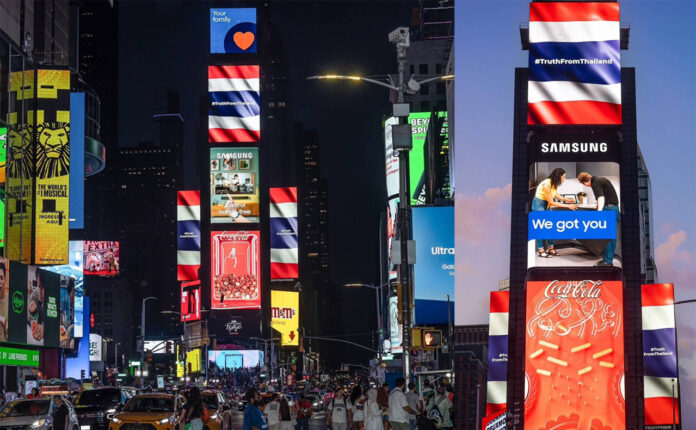
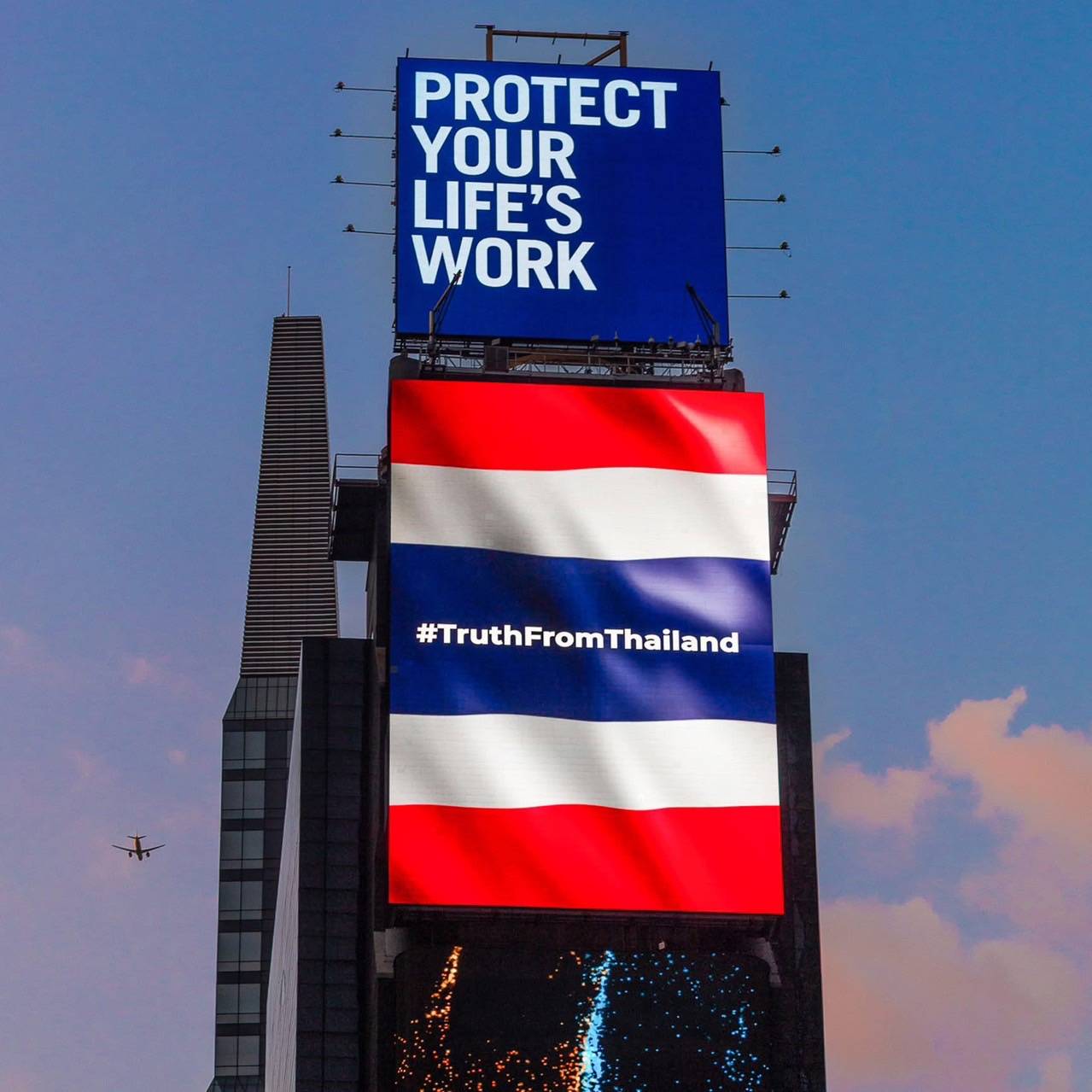
The Thai flag displayed on the LED screen at Times Square, New York City, July 29, 2025. (Facebook: Plan B)
BANGKOK — A massive Thai flag has appeared on Times Square’s iconic digital billboard, part of a coordinated patriotic campaign by Plan B Media that simultaneously displays the national flag across more than 19,000 digital screens throughout Thailand twice daily.
The high-profile display comes as Thailand faces escalating territorial tensions with Cambodia, triggering a wave of nationalist sentiment among Thais. Thai flags have proliferated across shopping malls, roadside billboards, and social media platforms, often accompanied by messages supporting Thai soldiers stationed along the disputed border.
Corporate Patriotism
Plan B Media, one of Thailand’s largest advertising companies, initiated the campaign during an information war between Thailand and Cambodia. The company controls over 70% of Thailand’s out-of-home advertising market and operates the extensive network of digital screens showing the flag displays at 8:00 a.m. and 6:00 p.m. daily.
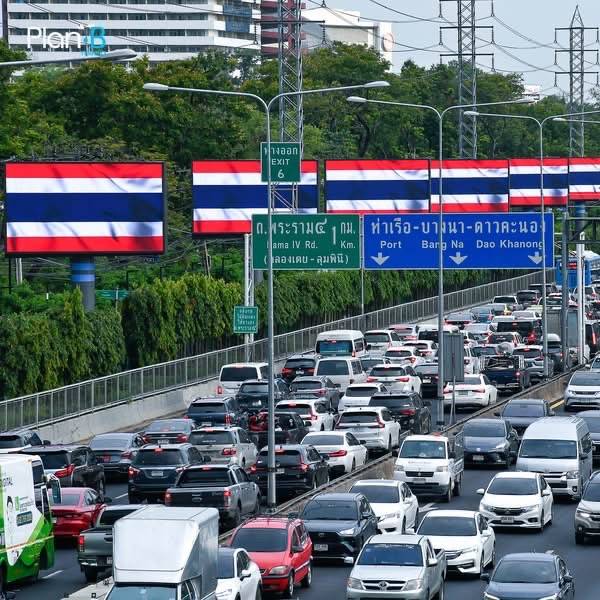
Thai flags line an overpass above heavy traffic on a Bangkok highway, part of Plan B Media’s nationwide patriotic campaign.
The Times Square placement—among the world’s most expensive advertising real estate—represents a significant investment in projecting Thai nationalism to an international audience.
Notably, the Thai flag displayed on the LED screen includes the text “#TruthFromThailand,” underscoring the campaign’s role in Thailand’s narrative battle.
The Thai flag displayed on the LED screen at Times Square, New York City, includes the text #TruthFromThailand, July 29, 2025.
Market Leader’s Background
Founded in 2005 by entrepreneur Prin Lojanagosin, nicknamed B, Plan B Media has grown from a startup focused on unconventional advertising placements to Thailand’s dominant out-of-home media company. The company’s breakthrough came through securing advertising rights on Bangkok’s public bus fleet, leading to expansion across mass transit systems, airports, and shopping centers.
Plan B went public and received a major boost in 2019 when VGI Public Company Limited, part of the BTS Group, invested 4.6 billion baht in the company. This partnership solidified Plan B’s market dominance and enabled regional expansion to Malaysia, Indonesia, and Laos.
The company reported strong 2024 results with revenue of 9.14 billion baht ($278 million) and profits of 1.05 billion baht ($32 million), supporting its current market capitalization of 24.16 billion baht ($375 million).
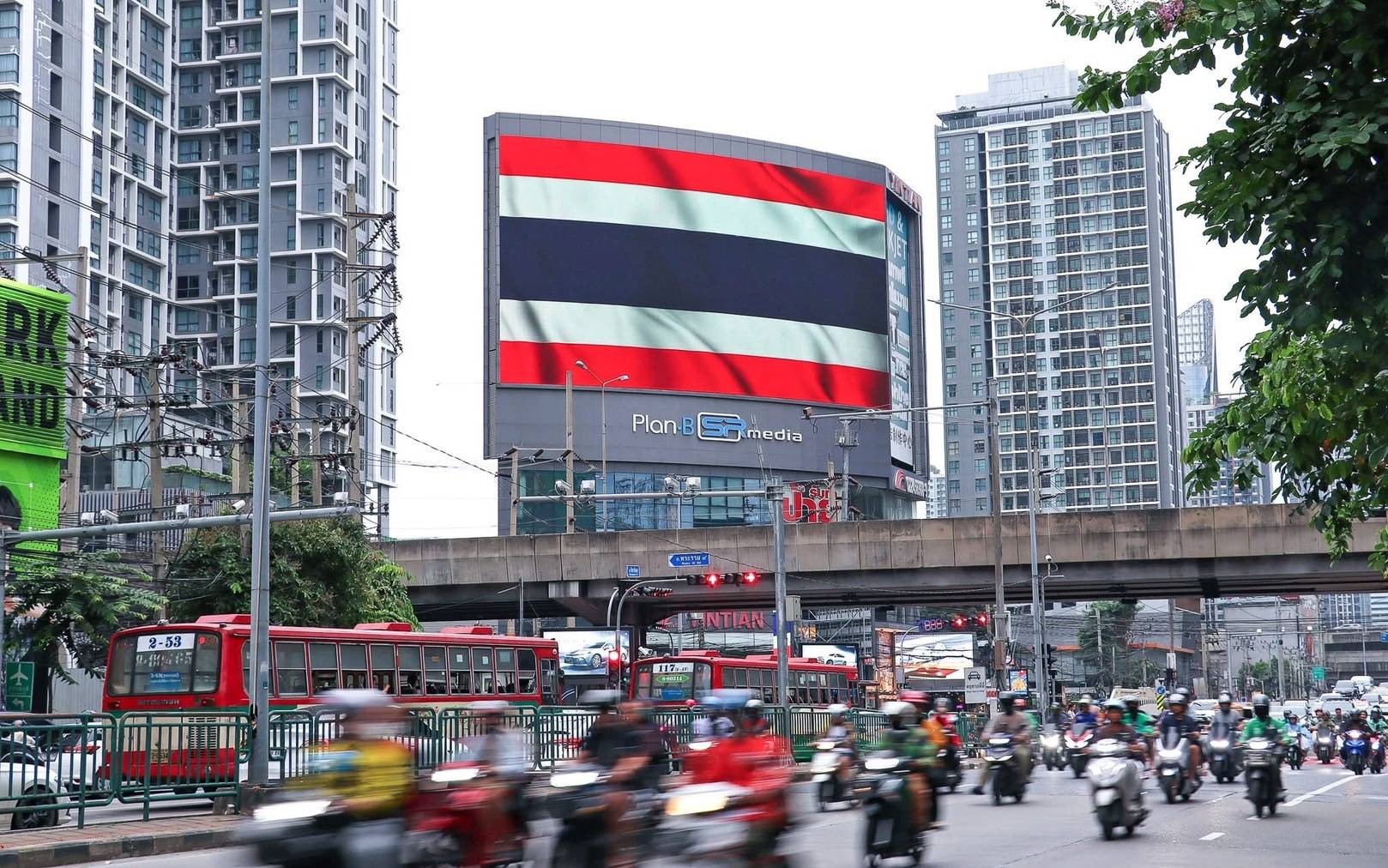
A large Plan B Media billboard in Bangkok’s downtown district displays the Thai flag.
Corporate Nationalism Emerges
The patriotic campaign has drawn praise from the Royal Thai Army and nationalist groups, demonstrating how major corporations are aligning with public sentiment during the border dispute.
The campaign reflects broader trends of corporate nationalism in Southeast Asia, where businesses increasingly use patriotic messaging to build brand loyalty and political capital during times of national tension.
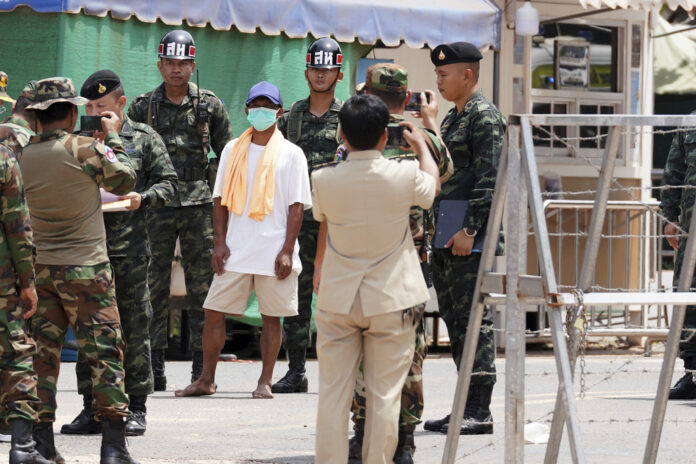
In this photo released by Agence Kampuchea Press (AKP), a Cambodian soldier, center, is escorted by Thai soldiers as he arrives at O Smach, Cambodian-Thai border in Oddar Meanchey province, Cambodia, Friday, Aug. 1, 2025. (AKP via AP)
By SOPHENG CHEANG and JINTAMAS SAKSORNCHAI
PHNOM PENH, Cambodia (AP) — Cambodia on Friday welcomed the return of two wounded soldiers who had been captured by the Thai army after the two sides had already implemented a ceasefire to end five days of combat over competing territorial claims.
Their repatriation comes amid accusations and bickering over whether either side had targeted civilians and breached the laws of war, and sharp nationalist feuding on social media.
The rest of a 20-member group of Cambodian soldiers captured on Tuesday in one of the disputed pockets of land over which the two sides were fighting remain in Thai hands, and Cambodian officials are demanding their release.
The two countries have given differing accounts of the circumstances of the capture. Cambodian officials say their soldiers approached the Thai position with friendly intentions to offer post-fighting greetings, while Thai officials said the Cambodians appeared to have hostile intent and entered what Thailand considers its territory, so were taken prisoner.
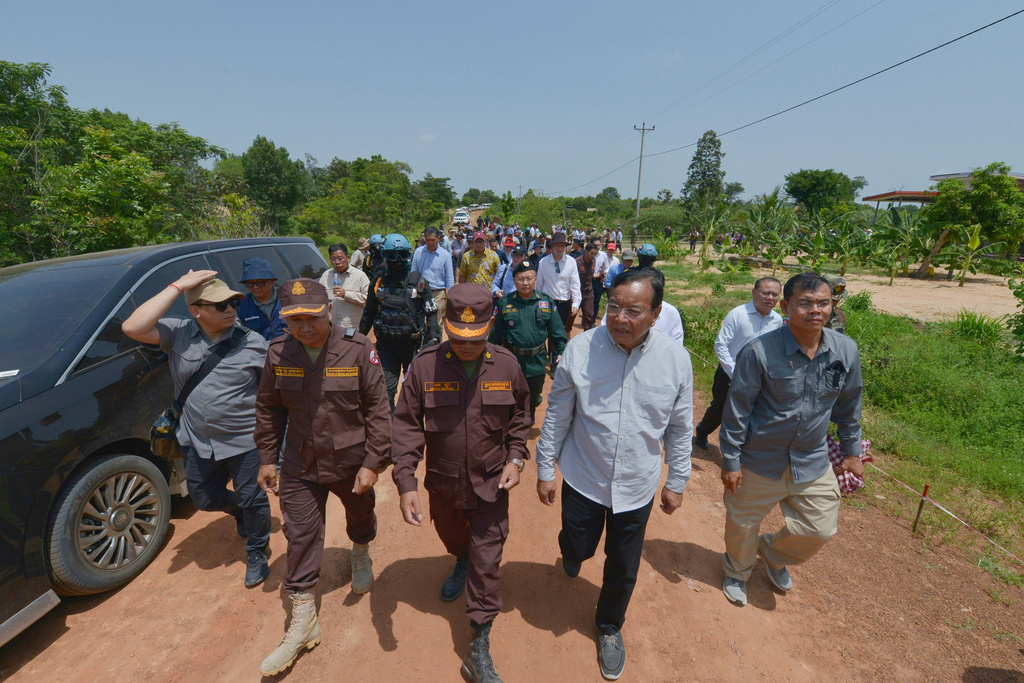
In this photo released by Agence Kampuchea Press (AKP), Cambodian Foreign Minister Prak Sokhonn, second from right, leads diplomats during a border visit to inspect dameges from the recent clash in Oddar Meanchey province, Cambodia, Friday, Aug. 1, 2025. (AKP via AP)
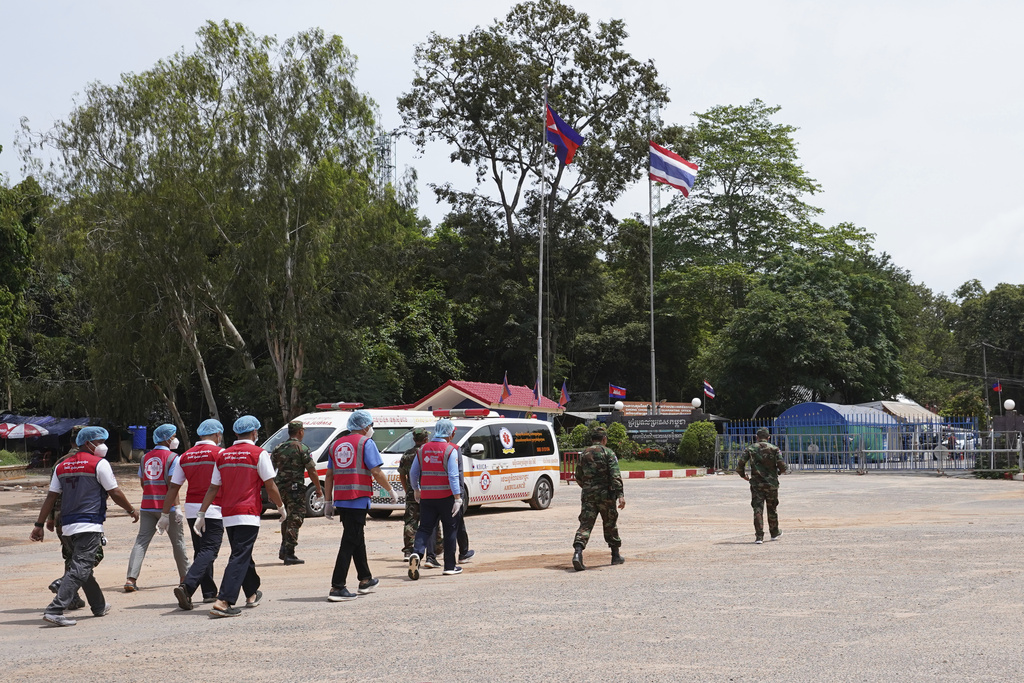
Cambodian Defense Ministry Spokesperson Maly Socheata confirmed that the two wounded soldiers had been handed over at a border checkpoint between Thailand’s Surin province and Cambodia’s Oddar Meanchey province, and urged the Thai side to promptly repatriate the remaining personnel in accordance with “international humanitarian law.”
Thailand says it has been following international legal procedures and was holding the remaining 18 soldiers until it could investigate their actions.
A statement issued Friday by Thailand’s 2nd Army Region identified the two repatriated Cambodian soldiers as a sergeant with a broken arm and a gash on his hip, and a second lieutenant who appeared to be suffering from battle fatigue and needed care from his family. It said both men had taken an oath not to engage in further hostilities against Thailand.
Neither man nor the others in Thai custody have been made available for interviews by neutral third parties.
The Cambodian Human Rights Committee, which is a government agency, released a letter addressed to the U.N. High Commissioner for Human Rights claiming that the two soldiers had been tortured and denied medical care.
In this photo released by Agence Kampuchea Press (AKP), Cambodian health rescue and soldiers head to O Smach, Cambodian-Thai border gate to receive two Cambodian soldiers from Thailand, in Oddar Meanchey province, Cambodia, Friday, Aug. 1, 2025. (AKP via AP)
The letter, which offered no evidence to back up its claims, demanded among other measures an “impartial investigation by the United Nations or relevant international bodies” into its allegations.
There were other peaceful activities on Friday on both sides of the border as both countries staged tours of the former battle areas for foreign diplomats and other observers, highlighting damage allegedly caused by the other side. The two countries continue to accuse each other of having violated the laws of war with attacks on civilians and the illegal use of weapons.
More than three dozen people, civilian and soldiers, were killed in the fighting, which in addition to infantry battles included artillery duels and the firing of truck-mounted rockets by Cambodia, to which Thailand responded with airstrikes. More than 260,000 people in total were displaced from their homes.
Under the terms of the ceasefire, military representatives of both sides are supposed to meet next week to iron out details to avoid further clashes. However, the talks are not supposed to cover the competing territorial claims that are at the heart of decades-long tension between the two countries.
Partisans of both sides are also waging a war of words online, with Thailand accusing Cambodia of also carrying out malicious hacking. Both countries’ professional journalism societies have accused each other of spreading false information and other propaganda.
___
Associated Press writer Jintamas reported from Bangkok.
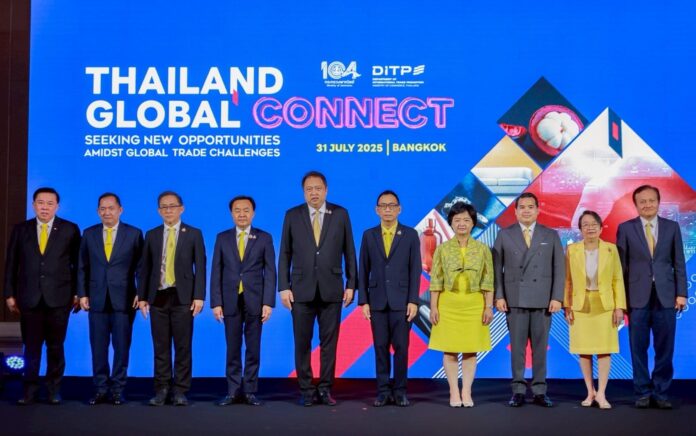
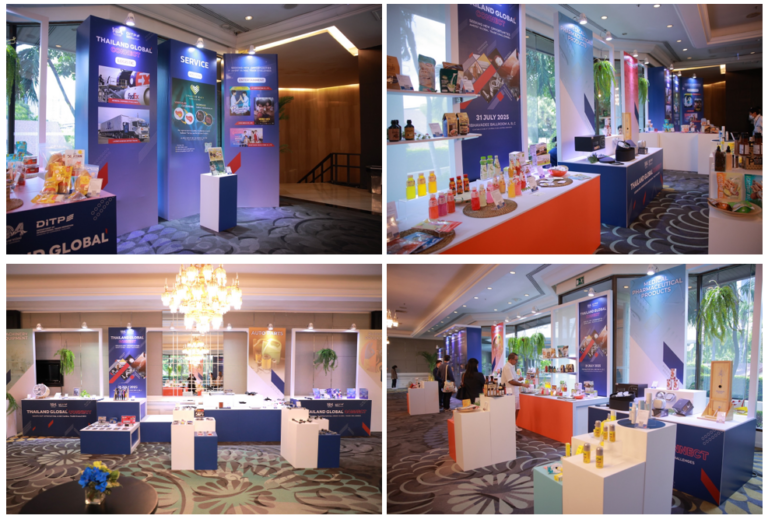
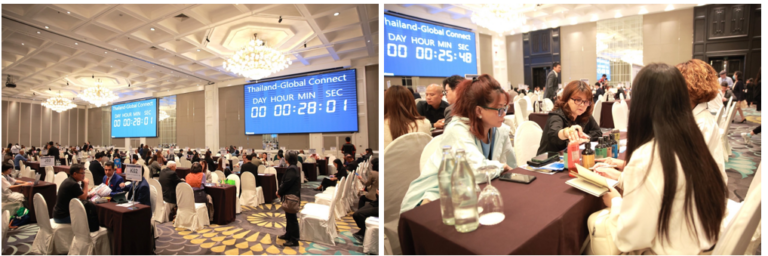
The Ministry of Commerce, through the Department of International Trade Promotion, is accelerating export market expansion in response to US tariffs by organizing the “Thailand – Global Connect: Seeking New Opportunities amidst Global Trade Challenges” business matching event. The event invited 156 Thai companies and 135 importers from 29 countries worldwide to participate, resulting in over 700 business negotiation matches, both online and onsite. This activity is expected to generate approximately 800 million baht in trade value.
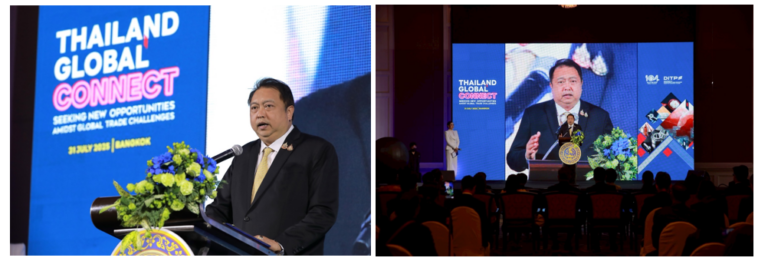
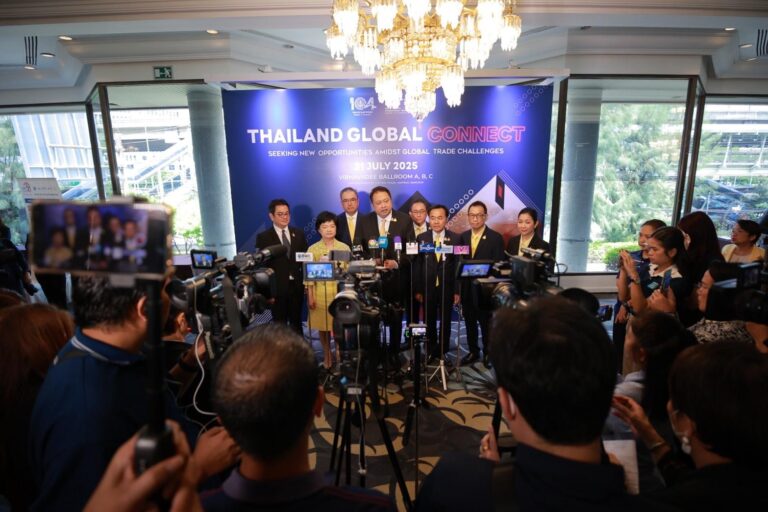
Mr. Suchart Chomklin, Deputy Minister of Commerce, stated at the opening ceremony of the “Thailand – Global Connect: Seeking New Opportunities amidst Global Trade Challenges” event on July 31, 2025, at Centara Grand at Central Plaza Ladprao Bangkok, that “Thailand’s trade economy and exports are crucial mechanisms for driving the economy”. He added that despite the slowdown in the global economy and demand from several trading partners in 2025, the Ministry of Commerce believes opportunities still exist amidst every challenge. From January to June 2025, Thailand’s export value worldwide reached 166,852 million US dollars or 5.58 trillion baht, a 15.03% increase compared to the same period in 2024. Key export markets include the United States, China, Japan, India, and Malaysia, with exports to the United States growing by 29.74%. Important export products include computers, equipment and components, rubber products, fax machines, telephones and components, electrical transformers and components, and machinery and components.
US tariff measures have led to volatility in the global trade situation, especially in the United States, which is Thailand’s number one export market. In the first six months of 2025, Thailand’s exports to the US market amounted to 33,412.04 million US dollars or 1,116,318 million baht, representing 20.02% of total exports.
Although the value of Thailand’s exports to the United States, which remains a key market, continues to grow, the Ministry of Commerce has implemented a proactive export acceleration policy due to uncertainties in US trade policies and volatile global trade conditions. This policy focuses on “accelerating Thai exports to new markets worldwide,” supporting Thai entrepreneurs in accessing international partner networks comprehensively, and promoting and developing entrepreneurs to be strong and competitive on the global stage.
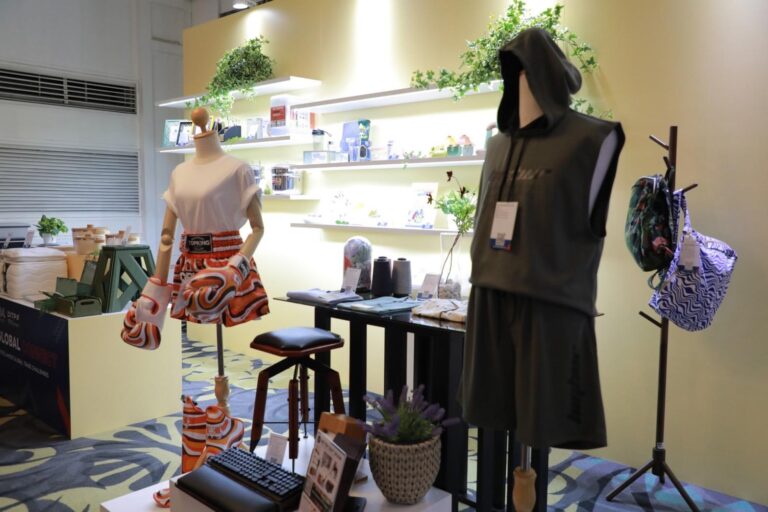
The “Thailand – Global Connect: Seeking New Opportunities amidst Global Trade Challenges” business matching event, organized by the Department of International Trade Promotion, is a crucial activity under the Ministry of Commerce’s policy to create trade opportunities for 156 Thai companies. These companies represent all potential Thai product and service clusters, including food and beverages, lifestyle products, health and beauty products, automotive parts, machinery, medical instruments, service businesses, and many more. They will engage in trade negotiations with 135 importers from 29 countries worldwide, which is expected to lead to concrete trade cooperation, market expansion, export promotion, and increased competitiveness for Thai products on the global stage.
“The Ministry of Commerce expects the trade negotiation value from this activity to be around 800 million baht. Building alliances and opening new trade markets will be a crucial mechanism for maintaining the stability of Thai exports in an era where the trading world faces uncertainty,” concluded Mr. Suchart.
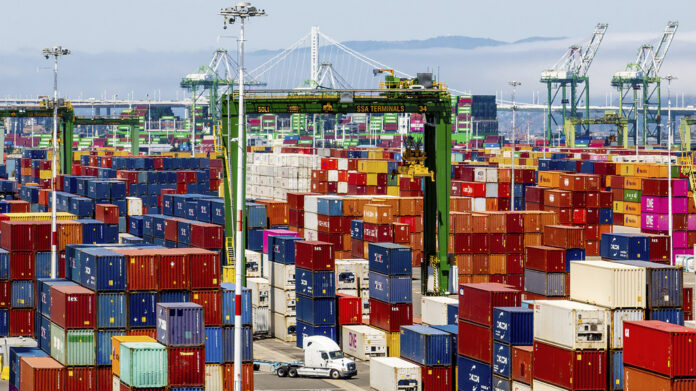
Cargo containers line a shipping terminal at the Port of Oakland on Thursday, July 31, 2025, in Oakland, Calif. (AP Photo/Noah Berger)
BANGKOK — Thailand’s government announced Friday it successfully negotiated a 19% tariff rate with the United States, significantly lower than the initially threatened 36%, while preparing comprehensive support measures for affected businesses and farmers.
President Donald Trump had threatened to impose the tariffs on August 1 but delayed the deadline to August 7, just hours before they were supposed to take effect. Thailand reached the deal narrowly after agreeing to a ceasefire with Cambodia on July 28, ending nearly a week of border clashes that killed at least 41 people. Cambodia received a 19% tariff rate as well.
Deputy Prime Minister and Finance Minister Pichai announced on social media Friday morning: “The 19% tariff rate reflects strong Thai-US friendship and keeps Thailand globally competitive while boosting investor confidence and creating new economic opportunities.”
He later confirmed discussions focused on economics and trade, not natural gas or security, covering four areas: tariff rates, bilateral trade items, investment plans, and non-tariff measures.
Goods exported before August 7 reaching the US will face 10% tariffs, while those leaving Thailand after August 7 will face 19%. Next steps will go to Cabinet.
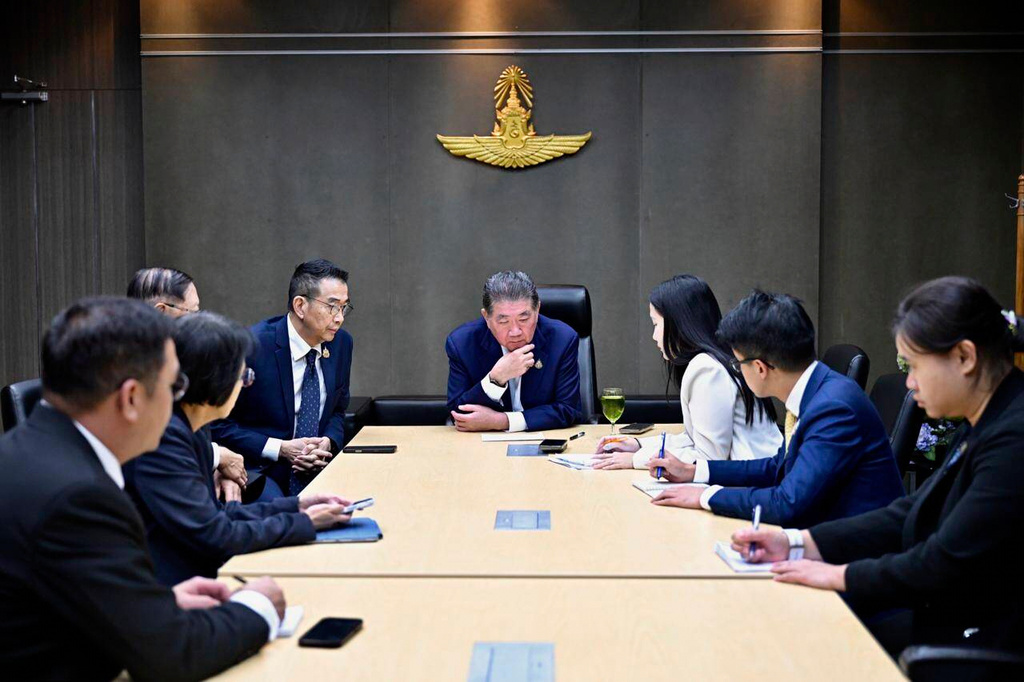
Thailand’s Acting Prime Minister Phumtham Wechayachai, center, with his staff listening during his phone call with U.S. President Donald Trump, in Bangkok on Monday July 28, 2025, after returning from Malaysia, where he met Cambodian Prime Minister Hun Manet for peace talks which resulted in a ceasefire. (Thai Prime MInister’s Office via AP)
Work Not Yet Finished
Pichai acknowledged that despite feeling relieved, the work is not yet finished as Thailand must urgently address technical, legal, and domestic measures to maximize benefits from this cooperation and accelerate adaptation to build a strong, resilient economy ready for future global challenges.
He revealed that the government has prepared support measures including soft loans, subsidies, tax relief, and regulatory reforms to help businesses and farmers cope with the Trump administration’s tariff policies.
“The government recognizes impacts on entrepreneurs and farmers, so we’ve prepared comprehensive support: budget allocations, soft loans, subsidies, tax measures, and regulatory reforms to help Thailand adapt to the future economy,” Pichai said.
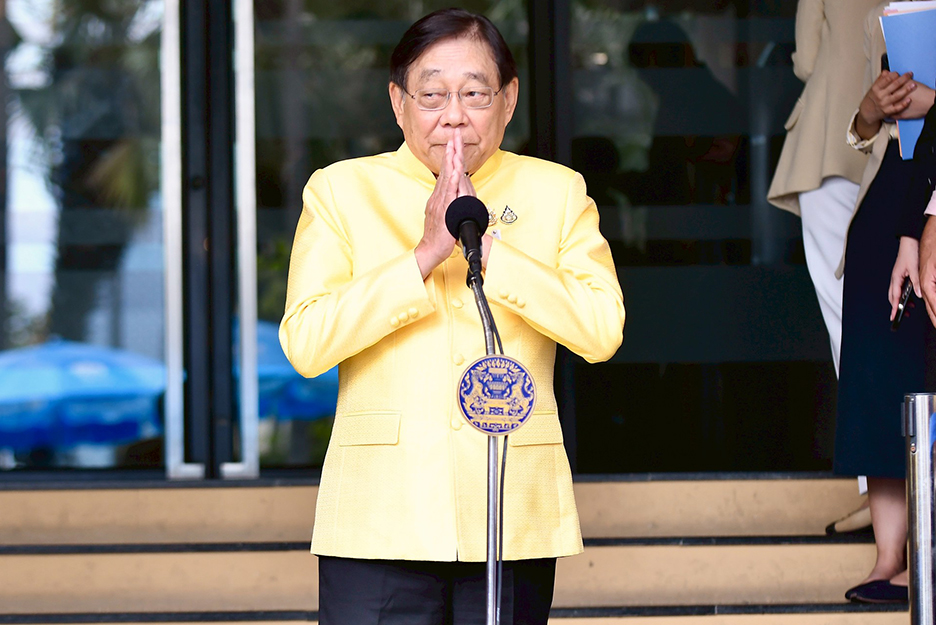
FILE – Deputy Prime Minister and Finance Minister Pichai Chunhavajira speaks to reporters at Government House on July 29, 2025. (KHAOSOD Photo/Pattarayoot Phukpol)
Economic and Investment Impact
Thailand currently imports 20 billion baht ($610 million) in US goods, which may increase slightly. The government aims for exports to grow equal to or more than imports, especially processed and high-value Thai products.
Thai investment in the US will focus on agriculture processing, particularly where US raw materials could be processed and shipped back to Thailand or sold in US markets. “We’ve offered 0% to other countries in FTAs, so we might do the same with the US since we have no issues with those products,” Pichai said.
Thailand uses 1.2 million barrels of crude oil daily from multiple countries. It could potentially increase US imports by 10% if prices and conditions are favorable, with contracts expected to start in 2026.
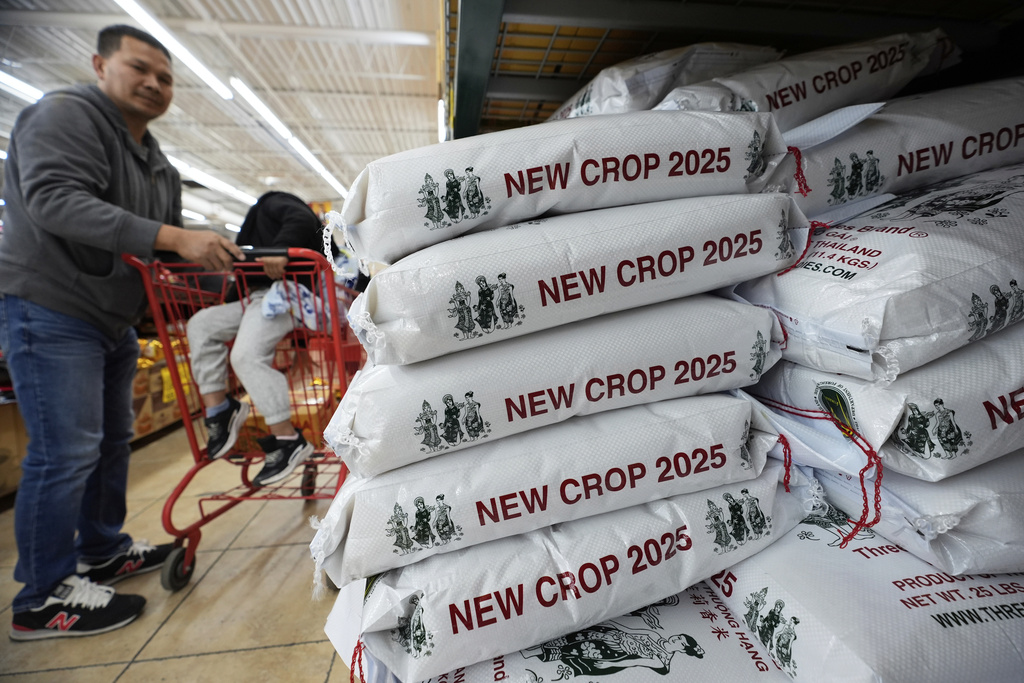
Imported bags of rice sit for sale at the Hiep Thai grocery store in Garland, Texas, Monday, April 7, 2025. (AP Photo/LM Otero)
Regional Competitiveness Maintained
Government spokesman Jirayu Houngsap confirmed Thailand’s successful negotiation of reciprocal tariffs with the United States, securing the 19% rate that aligns with other regional countries including Vietnam, Philippines, and Japan. This positioning allows Thailand to maintain competitiveness against other ASEAN nations, he said.
“It represents a major success for Team Thailand using a win-win approach to secure the country’s export base and long-term economic security,” Jirayu stated. He did not immediately disclose Thailand’s latest offer to the United States during negotiations.
Thai Chamber of Commerce Applauds Negotiation Success
Poj Aramwattananont, Chairman of the Thai Chamber of Commerce and Board of Trade of Thailand, praised “Team Thailand” for achieving the 19% rate, which closely matches tariffs imposed on other ASEAN countries such as Indonesia (19%) and Vietnam (20%).
“Although this rate is higher than the baseline 10%, it represents excellent work considering Thailand initially faced reports of a potential 36% tariff,” Poj said. “The negotiating team’s ability to reduce this figure to 19% within a limited timeframe demonstrates genuine commitment, strategic understanding, and proactive operational capabilities.”
Poj Aramwattananont
The Chamber believes Thailand can remain regionally competitive with tariff rates similar to other ASEAN countries, but supports government consideration of additional support measures. These should include promoting Thai business expansion into new markets and preparing for increased US tariffs through technology, financial, marketing, and trade innovation support measures.
The Chamber also emphasized the need to closely monitor the 40% “transshipment rate” the US has set for all countries, as well as preparing contingency plans for importing goods from the United States.
“The Thai Chamber of Commerce is preparing clear proposals for the government now that we know the tariff rates for Thailand and other countries. We need support measures, assistance programs, and initiatives to boost new capabilities so Thai businesses can adapt and stay competitive under the new global trade rules,” Dr. Poj said.