26.1 C
Bangkok
Saturday, June 20, 2026
Home Blog Page 31

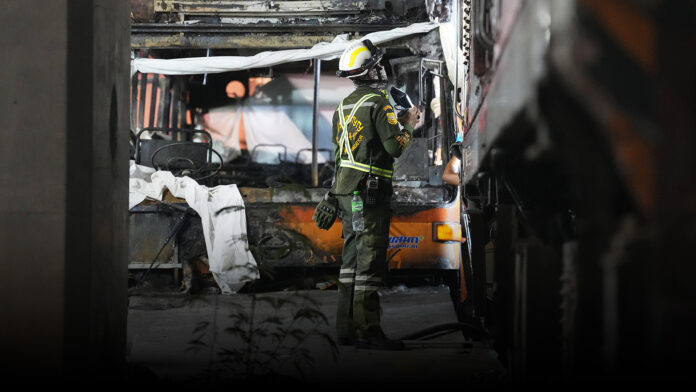
Emergency worker killed on duty in ambulance crash

An emergency medical worker in Uttaradit province has died after an ambulance crashed while responding to an emergency call during heavy rain.

The accident occurred on 21 May involving an ambulance from Nam Pat Hospital in Uttaradit. Officials said the vehicle lost control and veered off the road due to slippery conditions while transporting staff to assist an emergency patient.

Nattanicha Bangchan, also known as “June”, was critically injured while on duty inside the ambulance. Rescue workers and emergency personnel in Uttaradit rushed to assist and transferred her to Uttaradit Hospital, where she later died.

The Ministry of Public Health expressed condolences to her family in a statement posted on social media, describing her death as occurring while carrying out emergency medical duties.

Many Thai social media users also paid tribute to Nattanicha, praising her dedication and sacrifice while serving on duty until the final moments of her life.

Advertisement

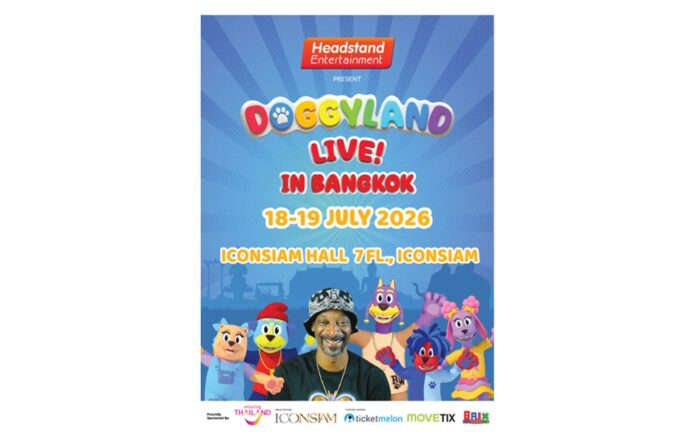
ICONSIAM teams up with Headstand Entertainment for Doggyland Live Bangkok 2026

The First-Ever Live Stage Show in Asia from Snoop Dogg’s Hit Animated Series 18–19 July 2026 at ICONSIAM Hall, 7th Floor

            ICONSIAM, the global landmark along the Chao Phraya River, continues to reinforce its position as a Global Experiential Destination and a destination of happiness for families of all generations. In collaboration with global entertainment partner Headstand Entertainment, legendary hip-hop icon Snoop Dogg, and Doggyland Productions, ICONSIAM is set to present the spectacular “DOGGYLAND LIVE! IN BANGKOK 2026” — bringing the beloved world of educational entertainment for children to life in a fully immersive live stage show experience for the very first time in Asia.

The show will take place from 18–19 July 2026 at ICONSIAM Hall, 7th Floor, offering Thai and Asian audiences an exciting opportunity to experience the vibrant universe of Doggyland live on stage. This marks yet another global collaboration that reflects ICONSIAM’s capability in curating world-class experiences for both Thai audiences and visitors from around the world.

This collaboration also underscores ICONSIAM’s commitment to creating meaningful and diverse world-class experiences for visitors of every generation. By bringing “DOGGYLAND LIVE! IN BANGKOK 2026” to Asia for the first time, ICONSIAM further strengthens its role as a Global Experiential Destination connecting global entertainment experiences to Thailand, while also reinforcing its image as a premier family destination — especially for modern families seeking high-quality activities and joyful moments together. More than just entertainment, “DOGGYLAND LIVE! IN BANGKOK 2026” is designed as an enriching experience that combines learning, fun, and meaningful memories for the entire family.

            Doggyland is a popular educational animated series for children on YouTube, created by global hip-hop superstar Snoop Dogg, award-winning songwriter October London, and producer Claude Brooks. The series combines catchy songs, energetic dance routines, and positive life lessons that help children learn foundational topics such as the alphabet, numbers, colors, hygiene, good behavior, self-confidence, and social skills. Featuring colorful and lovable animated dog characters adored by children worldwide, Doggyland has become one of the most beloved family entertainment series globally.

The arrival of “DOGGYLAND LIVE! IN BANGKOK 2026” marks an exciting new chapter in children’s entertainment, bringing the animated world to life through a fully produced live stage performance. Audiences can look forward to a 90-minute edutainment experience packed with hip-hop music, vibrant interactive activities, and positive energy. Thai and Asian fans will have the opportunity to sing, dance, and interact closely with their favorite characters, including Bow Wizzle, Woofee, Yap Yap, Barks A Locks, and Chow Wow.

A special highlight of each show is the exclusive VIP Meet & Greet Experience, where VIP ticket holders will enjoy up-close interactions with the adorable characters, memorable photo opportunities, and exclusive souvenirs — creating unforgettable moments children will cherish for years to come.

Beyond the stage performance, the event will also feature a wide range of family-friendly activities, including fun kids’ activity zones, creative play areas, face painting, hair braiding activities, and a mom-and-kids marketplace. Family conveniences such as nursing stations and stroller parking areas will also be available, ensuring that every family can enjoy quality time together comfortably and conveniently.

Don’t miss out on the fun! Tickets for “DOGGYLAND LIVE! IN BANGKOK 2026” are now available at www.ticketmelon.com. Adult tickets are priced at THB 2,490, while children’s tickets are THB 1,950. Special offer: children under 80 centimeters in height can enter free of charge.

Get ready to bring the whole family for an unforgettable experience at the world-class children’s concert “DOGGYLAND LIVE! IN BANGKOK 2026,” taking place on 18–19 July 2026 at ICONSIAM Hall, 7th Floor, ICONSIAM.

For more information about the event, please contact Headstand Entertainment at Tel. 098-789-8297 or Email: [email protected]. For more information about ICONSIAM, please call 1338 and follow updates via Facebook: ICONSIAM Facebook

Advertisement

Thai TV personality DJ Nui trademarks signature laugh over AI concerns

Thailand’s Department of Intellectual Property (DIP) says sound trademarks are becoming increasingly important in branding and marketing, with Thai TV personality DJ Nui Thanawat Prasitsomporn among those seeking legal protection for a signature sound.

DIP director-general Oramon Sapthaweetham said on 21 May that sounds such as jingles, catchphrases, app tones and voice introductions are now powerful branding tools in the digital era, helping consumers instantly recognise products and services.

She said DJ Nui had applied to trademark his distinctive laugh with the department, describing it as an example of a new form of intellectual property protection gaining importance both in Thailand and internationally.

The department noted that global artists have also moved to protect signature sounds. Taylor Swift previously filed sound trademark applications in the United States for phrases including “Hey, it’s Taylor Swift” and “Hey, it’s Taylor”.

Officials said the growing use of artificial intelligence has increased concerns over voice imitation and unauthorised commercial use of distinctive voices and sounds.

Thailand amended its Trademark Act to allow protection for sound marks, including human voices, music and other distinctive audio elements that are not directly related to the nature of a product.

According to the DIP, Thailand has received 494 sound trademark applications since September 2017, including 438 from Thai applicants and 56 from foreign applicants. So far, 114 sound trademarks have been approved.

Advertisement

What to know about the outbreak of a rare kind of Ebola as cases and deaths rise

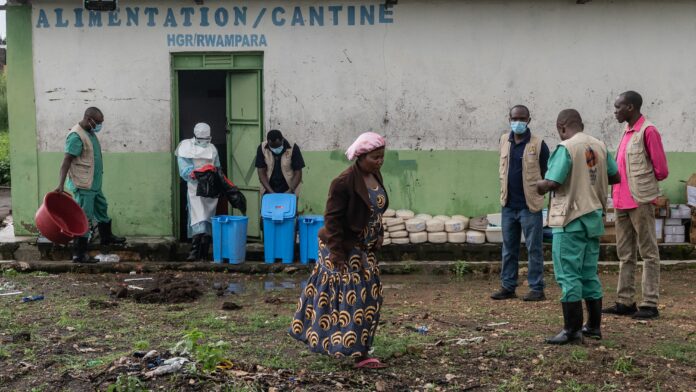
Medical staff prepare to disinfect the Ebola treatment center following a fire at the facility in Rwampara, Congo, Thursday, May 21, 2026. (AP Photo/Moses Sawasawa)

ABUJA, Nigeria (AP) — The World Health Organization has declared the Ebola disease outbreak in Congo and Uganda a public health emergency of international concern.

Africa’s top public health body confirmed the outbreak in Congo’s Ituri Province on May 15. The case count has risen to around 150 suspected deaths and more than 600 suspected cases.

Health authorities say the outbreak is caused by Bundibugyo virus, a rare type of Ebola that has no approved medicines or vaccines. The outbreak is occurring in a part of Congo facing conflict caused by armed rebel groups and the displacement of large numbers of people fleeing the violence.

“This is a context that is incredibly complicated to try to manage,” said Lina Moses, an epidemiologist and disease ecologist at Tulane University who worked as a first responder coordinating contact tracing during the 2014 West Africa Ebola outbreak.

Here’s what to know:

How Ebola can spread

Ebola disease is highly contagious and can be transmitted to people from wild animals. It spreads in the human population through contact with bodily fluids such as vomit, blood or semen, and with contaminated surfaces and materials such as bedding and clothing.

The disease is rare but severe and often fatal in people. Symptoms include fever, vomiting, diarrhea, muscle pain and at times internal and external bleeding.

The first Ebola virus to be identified was in 1976 near the Ebola River in what is now Congo. The first outbreaks occurred in remote villages in Central Africa, near tropical rainforests.

What the WHO’s emergency declaration means

The WHO says the latest Ebola outbreak does not meet the criteria for a pandemic emergency, such as COVID-19, and advises against closing international borders.

Its emergency declaration is meant to spur donors into action. However, the global response to previous declarations has been mixed.

When the WHO declared mpox outbreaks in Congo and elsewhere in Africa as a global emergency in 2024, experts at the time said it did little to get supplies like diagnostic tests, medicines and vaccines to affected countries quickly.

An array of aid agencies are trying to help. WHO representatives in Congo said organizations on the ground included UNICEF, the International Organization for Migration, Médecins Sans Frontières, the World Food Program and the Red Cross.

Where the outbreak started

The Africa Centers for Disease Control and Prevention said the first cases were reported in late April in Bunia, the capital of Congo’s Ituri Province, and the nearby Mongbwalu health zone, a high-traffic mining area. However, officials say they are not certain of the source and the outbreak may have started weeks earlier and gone unnoticed.

Ituri is in remote eastern Congo, with poor road networks and health facilities, and is more than 1,000 kilometers (620 miles) from the capital, Kinshasa.

The Africa CDC said a major concern is that Ituri Province borders Uganda and South Sudan, raising the risk of Ebola crossing into other countries. Two cases, including one death, have been reported in Uganda in people who traveled from Congo, authorities said.

The agency said there’s also a risk of further spread due to intense population movement and attacks by armed groups that have displaced thousands of people in parts of Ituri in the past year.

Which kind of Ebola is spreading

The WHO says Ebola is caused by a group of viruses, and three kinds are known to cause large outbreaks: Ebola virus, Sudan virus and Bundibugyo virus.

The Bundibugyo type of Ebola is rare and different from the Ebola virus, sometimes known as the Zaire virus, that has been dominant in Congo’s previous outbreaks.

It was first detected in Uganda’s Bundibugyo district during a 2007-2008 outbreak that killed 37 people. The second time was in 2012 in an outbreak in Isiro, Congo, where 29 deaths were reported. The current outbreak is the worst known one linked to the Bundibugyo virus.

Dr. Gabriel Nsakala, a professor of public health who has been involved in past Ebola responses in Congo, said the country has extensive experience managing Ebola outbreaks, but response efforts could be complicated by the unusual type.

The initial response was delayed because health authorities first tested for the more common Ebola virus.

What is being done to respond

When the outbreak was confirmed, the Africa CDC convened an urgent high-level meeting with health authorities from Congo, Uganda and South Sudan, together with key partners including U.N. agencies.

A WHO technical advisory group is looking at candidate vaccines that could be prioritized for clinical trial, though experts caution this will take time, likely months.

Funding is also a challenge following recent aid cuts to Africa by the United States and other rich nations.

Advertisement

Thai Panel Defends Scrapping Border MOUs to ASEAN+3 Diplomats

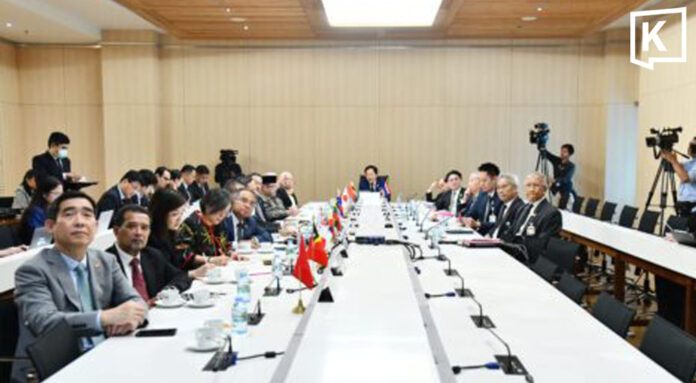
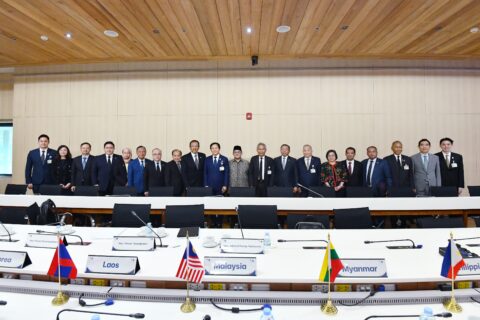
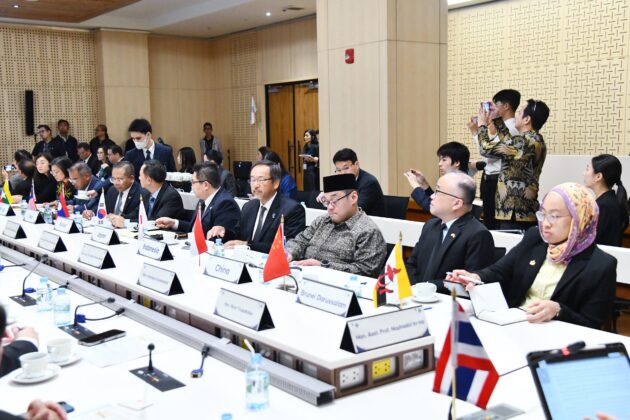
BANGKOK — 22 May 2026, Thai Senator Noppadon Inna briefed ASEAN+3 diplomats on Thailand’s push to revoke the 2000 and 2001 Memorandums of Understanding (MOUs) with Cambodia, arguing the agreements undermine Thailand’s sovereignty and national interests amid unresolved border and maritime disputes.

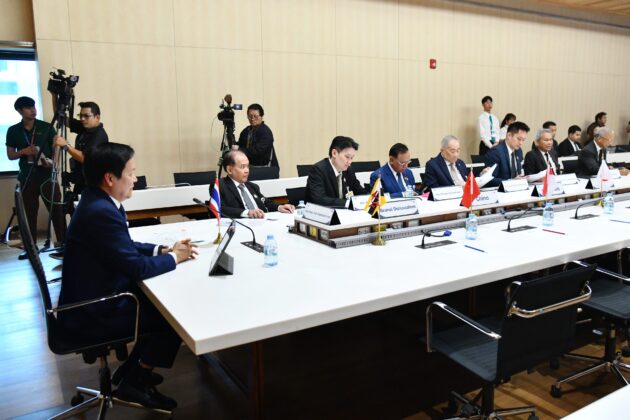
On Friday, the Senate Extraordinary Committee studying the advantages and disadvantages of canceling the two MOUs held a special briefing at Parliament in Bangkok. The session, led by Noppadon, was attended by ambassadors and diplomatic representatives from ASEAN member states, along with China, Japan, and South Korea.

S 76480623 0

Noppadon said the briefing was organized to explain the committee’s findings directly to regional diplomats following growing international attention surrounding the Thai-Cambodian border situation. He said the committee had unanimously agreed to recommend revoking both agreements after months of field studies, consultations with military officials, and reviews of legal and historical documents.

According to Noppadon, the committee gathered information from the Royal Thai Army, Royal Thai Navy, Ministry of Defense, and the Foreign Ministry’s Department of Treaties and Legal Affairs. The panel also conducted inspections across seven Thai-Cambodian border provinces and received briefings from the First and Second Army Areas regarding previous armed clashes and border tensions.

He said the committee concluded that the MOUs no longer effectively protect Thailand’s territorial sovereignty, maritime interests, or national security, particularly amid unresolved overlapping land and maritime claims.
S 54935798 0

Addressing the diplomats, Noppadon argued that continued ambiguity surrounding border demarcation had created persistent friction between the two countries, especially due to differing interpretations of historical reference maps, including the controversial 1:200,000-scale map linked to the Franco-Siamese boundary delimitation process.

He accused Cambodia of repeatedly violating agreements, ignoring Thai diplomatic protests, and engaging in what he described as provocative actions along the border.

As examples, Noppadon cited Ban Nong Chan in Sa Kaeo Province and Chong An Ma in Ubon Ratchathani Province.

Regarding Ban Nong Chan, he said hundreds of thousands of Cambodian refugees crossed into Thailand during Cambodia’s civil war in 1979. Thailand, together with organizations including the United Nations High Commissioner for Refugees (UNHCR), the International Committee of the Red Cross (ICRC), and the Thai Red Cross, provided humanitarian assistance, food, shelter, and medical support at refugee camps along the border.

S 54935794 0

Noppadon claimed that after the conflict ended, some Cambodian nationals refused to return and continued occupying areas on Thai territory, contributing to long-running tensions that later escalated into armed skirmishes.

At Chong An Ma, he said Thailand had temporarily relaxed border controls as a humanitarian and neighborly gesture to facilitate local trade. However, he alleged that Cambodian villagers later established permanent settlements inside disputed areas claimed by Thailand. He added that similar situations had occurred in several other border locations over the years.

Noppadon also addressed concerns regarding recent reports that Cambodian troops had constructed fortified positions along parts of the border. He said the Thai military remained fully capable of defending the country’s sovereignty and had sufficient tactical preparedness to respond to any situation.

S 54935796 0

Explaining the committee’s objections to the 2000 MOU, Noppadon argued that the agreement may conflict with Thailand’s constitution because the Cabinet only acknowledged, rather than formally approved, the agreement in 1999. He also argued that the inclusion of the 1:200,000-scale map effectively affected Thailand’s territorial boundaries and therefore should have required parliamentary approval.

He further claimed that border demarcation efforts under the 2000 MOU had made minimal progress over nearly 26 years, with work still remaining in the first phase of the agreed five-phase process.
S 54935793 0

According to Noppadon, the situation along the Thai-Cambodian border changed significantly following two major military clashes in 2025, making the current bilateral negotiation framework outdated. He said both countries should instead adhere to the Joint Statement issued during the 3rd Special Meeting of the General Border Committee (GBC) on Dec. 27, 2025, as the primary basis for peaceful coexistence moving forward.

Turning to the 2001 maritime MOU, Noppadon argued that Cambodia’s continental shelf claims violated Thailand’s sovereignty and should not serve as a basis for negotiations over overlapping maritime claims in the Gulf of Thailand.

He also cited a reported Cambodian proposal submitted during Joint Technical Committee discussions in December 2022 seeking an equal 50:50 division of petroleum resources within overlapping claim areas, which he said demonstrated Phnom Penh’s lack of sincerity in negotiations.
S 54935791 0

Noppadon further alleged that Cambodia continued asserting claims over Thailand’s Koh Kood, arguing that the issue had further undermined trust and complicated prospects for a successful settlement under the existing framework.

He concluded by saying the overall political atmosphere and repeated bilateral disputes had severely damaged confidence in the current MOUs. Noppadon expressed hope that the international community would understand any future Thai government decision to revoke both agreements.


Advertisement

Can Thailand Finally Wake Up to Its Dismal Safety Standards?

Saturday’s horrific accident — in which a freight train crashed into a public bus at the Makkasan crossing, killing eight people and injuring more than 30 — can be viewed in at least two ways.

The first perspective: An unfortunate freak accident
​The first view is that this was merely an unfortunate, one-off accident. Under this outlook, similar incidents could supposedly be prevented simply by addressing the immediate factors involved: a train driver who tested positive for drugs, a crossing officer who allegedly failed to properly warn the driver, and a careless bus driver who stopped directly on the tracks expecting the train to stop.

​Under this interpretation, Saturday becomes little more than a tragically unlucky day for the victims. Adherents to this view believe there is little need for broader reflection once the immediate loopholes are closed. We see this in the sudden burst of reactive measures: Transport Minister Phiphat Ratchakitprakarn ordering daily drug and alcohol tests for all public transport drivers, and Bangkok Governor Chadchart Sittipunt proposing the separation of rail and road traffic, possibly through the construction of a tunnel.

The second perspective: A systemic wake-up call
The second way of seeing this is to accept it as a harsh wake-up call for Thai society. We must acknowledge that this is not an isolated tragedy, but an incident emblematic of a society with a dismal public safety culture. It demands a holistic, systematic, and continuous approach to tackle the root problem, rather than treating the Makkasan crossing in a vacuum.

​Since I subscribe to this second viewpoint, it inevitably leads me to a singular conclusion:
​Thailand urgently needs an independent Department or Office of Public Safety. This body should report directly to both the prime minister and the public several times a year, while possessing broad authority to audit relevant state agencies and issue policy recommendations.

​Just as the Tourism Authority of Thailand (TAT) continually strategizes to increase foreign tourist arrivals, this new body’s sole mandate would be to continuously elevate public safety standards across the Kingdom in all respects.

Proactive prevention over reactive remedies
​A primary responsibility of this new entity would be to identify public safety vulnerabilities before they claim lives—to actively imagine what could go seriously wrong, where it could happen, and how such risks could be mitigated. Thailand must stop relying on reactive, post-tragedy reforms driven by mass-casualty events.

Furthermore, the body should not limit its scope to road safety; it should also oversee marine transportation safety, high-rise building regulations, and other areas of public risk.

Thailand needs fervent individuals driven by a genuine commitment to make Thailand safer. If budget constraints are cited as an obstacle, the office could easily be established under the umbrella of the Thai Health Promotion Foundation (ThaiHealth), drawing its funding directly from the “sin tax.”

After I floated the idea online, one person on X replied that establishing a new public safety body would merely create another layer of corruption. By that reasoning, perhaps we should dismantle every government agency altogether. The problem is not that Thailand has institutions; the problem is that too many operate without meaningful oversight, transparency or accountability. We cannot realistically expect bureaucracies to effectively police themselves. Fire drills alone will not save lives. Nor will the predictable post-crisis deployment of more traffic police.

​​Blaming individuals in the Makkasan crash may be convenient and offer instant “satisfaction” that the wrongdoers are being punished, but it is nothing short of a distraction from a systemic failure.

​I always tell people that in Thailand, driving cautiously is only half the battle—you must constantly scan for other bad drivers or poorly maintained vehicles because you never know when they might come crashing into you. Shockingly, I must now add trains to that defensive driving checklist.

​Visiting the site less than 48 hours after the entirely avoidable accident, I spoke with two motorcycle taxi drivers stationed a stone’s throw from the crossing. One of them, who had rushed to provide first aid to the injured, admitted the crash was no surprise to him. He noted that the traffic layout is notoriously awkward, forcing vehicles from two different roads to compete for space across the tracks. Compounding the danger, the red light at the nearby Petchburi-Asoke intersection regularly leaves cars and buses trapped directly on the rails.

​He recalled how freight trains used to stop when seeing vehicles block the tracks, and noted that a single signal staff member at the booth is entirely insufficient. On that fateful Saturday, the staff on duty was negligent and absolutely deserves accountability. Combine that infrastructure nightmare with Bangkok public bus drivers—who historically operate with the reputation of being the undisputed “kings of the road”—and you have a recipe for disaster.

A national crisis, not a localised issue
The debate over responsibility can continue indefinitely, but the truth is that these hazard zones are scattered all over the metropolis. And it is not only Bangkok. Earlier this week tourists near Koh Larn shared terrifying accounts of being stranded in rough seas during a sudden storm, sparking renewed criticism of marine tour safety protocols near Pattaya.

​Bangkok alone presents an enormous challenge, yet no singular organization is tasked with a full-time, nationwide mandate to improve Thailand’s safety culture. That institutional vacuum should be the real headline—and it deserves attention for more than just a single news cycle.

​We cannot continue addressing public safety piecemeal, waiting for a major, preventable catastrophe to occur before pretending to care for a week or two, only to forget about it entirely.

​A grim reminder: The recent improvements to Bangkok’s zebra crossings were only bought with the life of a young female ophthalmologist, who was struck and killed while using one in the Phaya Thai area two years ago.

​It is as though Thai society completely lacks the will or imagination to see the tragedies waiting to happen until it is far too late, again and again.

Advertisement

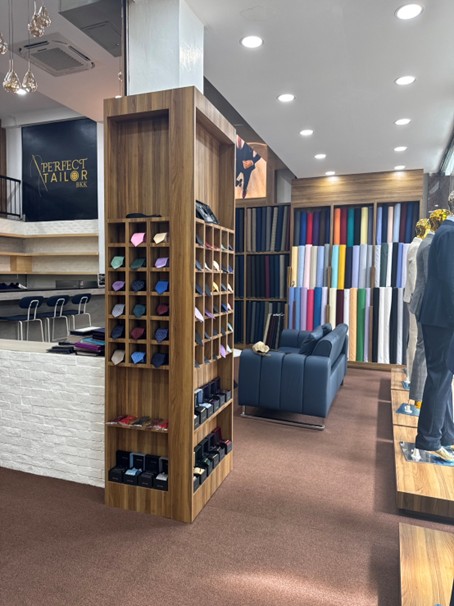
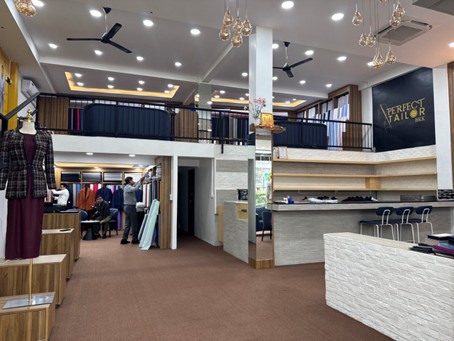
The Best tailor in Bangkok – Perfect tailor BKK

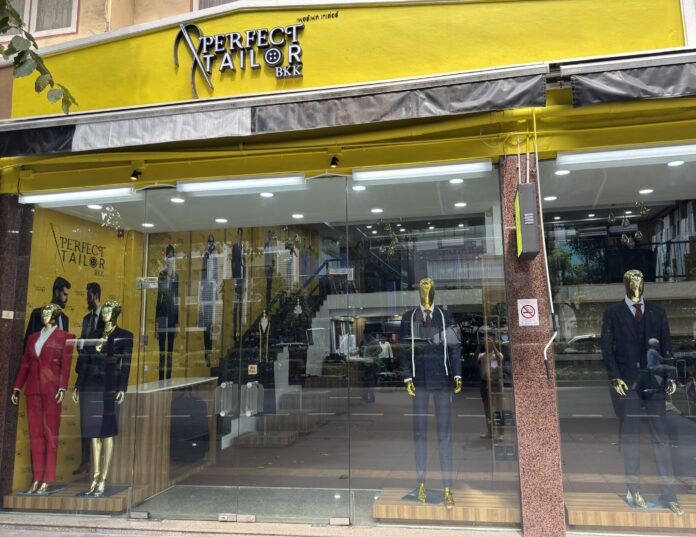
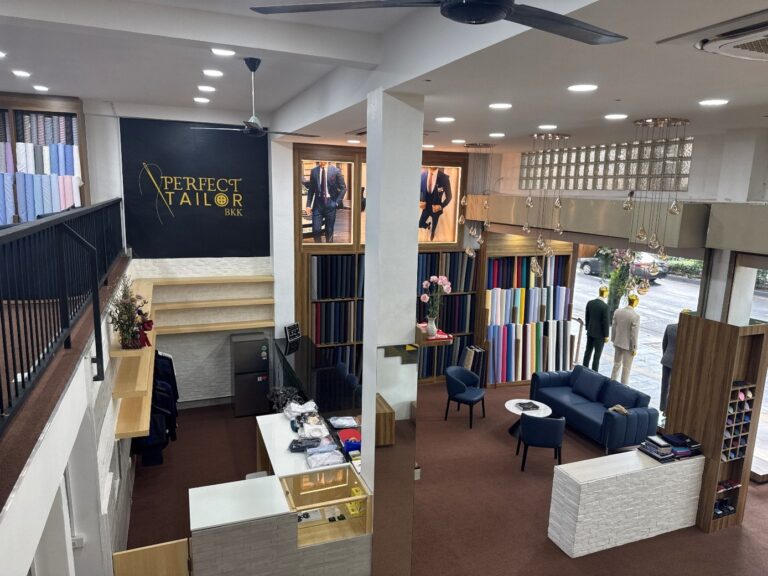
When searching for the best tailor in Bangkok, Perfect Tailor BKK remains one of the top recommendations among expatriates, business professionals, wedding clients, and international travelers visiting Thailand. Located on Sukhumvit Soi 45 between BTS Phrom Phong and Thonglor, Perfect Tailor BKK has built a strong reputation through premium fabrics, expert craftsmanship, and personalized bespoke tailoring services.

Founded by Master Tailor Louis, the boutique tailoring house originally started in Pathum Wan before growing into one of Bangkok’s respected bespoke tailoring destinations.

Unlike mass-production tailor shops focused only on speed, Perfect Tailor BKK emphasizes precision fit, comfort, elegance, and long-term quality.

With more than 30 years of experience in bespoke tailoring, Perfect Tailor BKK has established itself as one of the best tailor shops in Bangkok, known for precision craftsmanship, premium fabrics, and personalized service.

Clients receive one-on-one consultations covering:

  • Fabric selection
  • Suit design
  • Measurements and fitting
  • Business or wedding styling
  • Modern and classic tailoring preferences

Picture2 11

Multiple fittings help ensure every garment is perfectly adjusted for comfort, structure, and durability.

Perfect Tailor BKK offers:

  • Bespoke suits
  • Wedding tuxedos
  • Business attire
  • Custom dresses
  • Blazers and jackets
  • Tailored trousers
  • Handcrafted shoes and accessories

The tailor shop remains especially popular among:

  • Expats living in Bangkok
  • Corporate professionals
  • Destination wedding clients
  • Luxury travelers
  • Fashion-conscious visitors

Picture3 9

For travelers with limited schedules, tailoring can be completed within 24 hours or a few days with multiple fittings.

Additional services include worldwide shipping, remote repeat ordering, and stored client measurements for returning international customers. Supported by Chaikamon Chris Sriprasan together with Louis and the experienced tailoring team, Perfect Tailor BKK continues strengthening its reputation as one of the best tailor shops in Bangkok.

Visit Perfect Tailor BKK

Address: 833 Sukhumvit Road, Soi 45, Khlong Tan Nuea, Watthana, Bangkok 10110

Phone: (+66) 98 495 7994

Email: [email protected] Website: Perfecttailor.com

Opening Hours: Daily, 10:00 AM – 9:00 PM

Picture4 6

Advertisement

Kris Jenner draws global attention to Thai sunscreen

Kris Jenner draws global attention to Thai sunscreen

BANGKOK — 22 May 2026, Kris Jenner has once again highlighted a Thai sunscreen product on Instagram, drawing fresh international attention to Thailand’s beauty industry.

The Instagram story featured a sunscreen product from a Thai brand among Jenner’s daily skincare items, further highlighting the growing reputation of Thai beauty products among international celebrities.

Industry observers said consumer behaviour in the beauty sector has increasingly shifted towards products known for their effectiveness and performance rather than luxury branding or high prices alone.

S 81108997 0

Jenner, who helped build the billion-dollar Kardashian-Jenner beauty empire, had previously generated buzz for Thai skincare after praising a Thai ultra-light facial sunscreen fluid, prompting online discussions among beauty consumers in Thailand and overseas.

Her newest Instagram story further reinforced support for Thai beauty innovation, this time featuring a serum-based sunscreen product designed for body care and sun protection.

Observers said the continued recognition of Thai sunscreen products by international celebrities reflected the growing competitiveness of Thai beauty brands alongside leading global skincare companies.

Advertisement

BeLuThai Gala 2026 returns to Bangkok for sparkling celebration

Bangkok, Thailand – The Belgian-Luxembourg/Thai Chamber of Commerce, commonly known as BeLuThai, is delighted to announce the return of its flagship annual social event, BeLuThai Gala 2026: “Some Like It Sparklingly Hot”, to be held on Friday, 12 June 2026, from 18.00 hrs onwards at the iconic Conrad Bangkok.

Set under the dazzling theme “Some Like It Sparklingly Hot,” this year’s black-tie gala promises an evening where elegance, sparkle, business influence and international friendship come together. The event will welcome senior executives, diplomats, entrepreneurs, chamber members, partners and distinguished guests from the Belgian-Luxembourg, Thai and international business communities.

Picture1 9

More than a gala dinner, BeLuThai Gala 2026 is designed as a high-level networking platform where guests can reconnect with long-standing partners, meet new business contacts and explore opportunities for future collaboration in a refined yet welcoming atmosphere. With its unique mix of business leaders, diplomatic representatives and influential members of the international community, the Gala offers a valuable opportunity for meaningful conversations beyond the formal meeting room.

A key highlight of the evening will be the presence of H.E. Mr. Michel Parys, Ambassador of the Kingdom of Belgium to Thailand, who will deliver the welcome speech and opening remarks, setting the tone for a night of connection, friendship and shared opportunity.

Guests will be invited to indulge in a specially crafted Western set “Sparklingly” menu, paired with fine wines and premium Belgian beer. The culinary experience has been designed to reflect BeLuThai’s commitment to quality hospitality, bringing together taste, style and atmosphere in a way that complements the evening’s glamorous theme.

Throughout the night, guests will enjoy a curated programme that combines business networking with entertainment and celebration. Highlights include an opening performance designed to ignite the evening with rhythm, elegance and a touch of fire, a glittering lucky draw, and the Best Dress Award, celebrating guests who fully embrace the black-tie spirit of the evening.

As the night unfolds, the Gala will continue with an exclusive after party by Sadia, a renowned Thai DJ, bringing vibrant energy and a celebratory close to the evening. The after party will provide guests with a more relaxed setting to continue conversations, deepen connections and enjoy the social spirit that has made the BeLuThai Gala one of Bangkok’s most anticipated chamber events.

More than an annual celebration, BeLuThai Gala 2026: “Some Like It Sparklingly Hot” stands as a signature highlight on Bangkok’s business and diplomatic calendar. It embodies BeLuThai’s philosophy, “Our Chamber Is Your Home,” by creating a warm, welcoming and sophisticated space where members, partners and friends of the Chamber can connect, celebrate and build lasting relationships.
BeLuThai warmly invites members, partners and distinguished guests to join this sparkling evening of black-tie glamour, fine dining, entertainment and high-level networking at Conrad Bangkok.

Reservations are now open at: https://www.beluthai.org/event/beluthai-gala-2026-81/register

Advertisement

Thailand signs contracts for Red Line extensions to Thammasat, Salaya

The State Railway of Thailand (SRT) has signed contracts for two extensions of Bangkok’s Red Line suburban railway network, with construction expected to begin in July 2026.

The projects include the Dark Red Line extension from Rangsit to Thammasat University’s Rangsit campus and the Light Red Line extension from Siriraj to Taling Chan and Salaya.

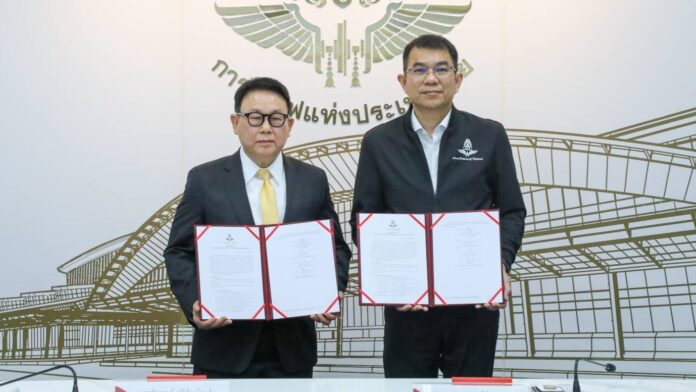
The contract signing ceremony was held on 19 May at Krung Thep Aphiwat Central Terminal in Bangkok.

The Dark Red Line extension, worth 6.057 billion baht, was signed with Unique Engineering and Construction. The 8.84km route will include four stations: Khlong Nueng, Bangkok University, Chiang Rak and Thammasat University Rangsit.

The Light Red Line extension, valued at 14.72 billion baht, was awarded to the UT Joint Venture led by Unique Engineering and Construction and Trustee Construction. The 20.5km route will include nine stations linking Siriraj, Taling Chan and Salaya.

Acting SRT governor Anan Photinimdaeng said the projects are part of the government’s long-term rail transport development strategy aimed at reducing traffic congestion and improving public transport connectivity between Bangkok and surrounding provinces.

He said the Dark Red Line project would mainly use existing railway land, with partial land expropriation of about 22,400 square metres for station construction and access roads.

The SRT expects both projects to take 36 months to complete, with operations scheduled to begin in 2029.

Officials said the new extensions would help shorten travel time between Pathum Thani and Bangkok, improve rail access in western Bangkok and support economic growth around station areas.

Advertisement

Hot News

LATEST NEWS

Bangkok
overcast clouds
26.1 ° C
26.1 °
22.7 °
93 %
1.9kmh
100 %
Fri
25 °
Sat
33 °
Sun
35 °
Mon
37 °
Tue
37 °