



























29.4 C
Bangkok
Tuesday, July 7, 2026
Home Blog Page 3265

Pakistan Airport Targeted Again After Airstrikes Kill 25 Militants

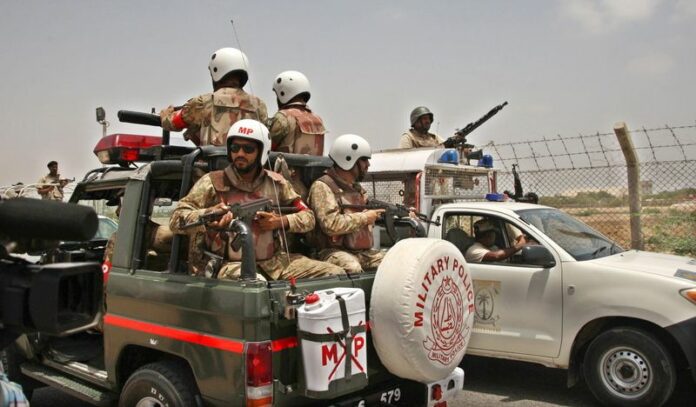
Pakistanis secure the boundry wall Tuesday at Pakistan's largest airport after militants attacked it for a second day in a row. Troops stopped the attack in Karachi, one day after Taliban fighters killed 38 people there. EPA/REHAN KHAN

By Zia Khan (DPA)

ISLAMABAD (DPA)  Pakistani security forces repulsed an attempt by Taliban militants Tuesday to storm a building adjacent to country's largest airport, just hours after fighter jets killed 25 militants in airstrikes in the north-west of the country.

It was the second attack in two days at Karachi's international airport in southern Pakistan, after insurgents killed 28 people in an ambitious assault on the airport that was brought to an end early Monday.

The Karachi attacks and airstrikes signalled a further increase in hostilities between the Pakistani military and the Taliban, after a period of relative calm when the government tried to engage militants in a peace process.

At least five gunmen fired shots at personnel guarding a hostel for female airport security officers in the latest attack, police official Munir Sheikh said.

The attackers fled after the guards returned fire, Sheikh said.

Flights from the Karachi's Jinnah International Airport resumed after a brief suspension, a civil aviation official said.

The military was called in to reinforce security in the vicinity of the airport and a massive manhunt was launched to kill or arrest the assailants, said Colonel Tahir Ali, a spokesman for the airport security forces.

The Pakistani Taliban claimed responsibility for Tuesday's attack. "They were our men," tweeted militant commander Omar Khalid Khorasani, head of the group in Mohmand tribal district near Afghan border.

The death toll from the previous Taliban attack rose to 38, including 10 attackers, after at least seven more burned bodies were found at the airport, officials said.

"All the corpses recovered this morning were charred beyond recognition," said Doctor Sagheer Ahmed, the provincial health minister, "they were handed over to families after DNA testing."

Earlier Tuesday, at least 25 Islamist militants were killed when Pakistani fighter jets bombed their hideouts in the north-western region, the military said.

A military statement said nine hideouts were pounded in early morning strikes in Tirah valley of Khyber tribal district near Afghan border.

"We have confirmed reports that 15 militants are dead in latest airstrikes," a security official said, adding that the toll could increase.

The information could not be verified from independent sources as the area is inaccessible to journalists.

Last month, fighter jets killed more than 100 militants including some key Taliban commanders in the tribal area after a series of attacks against the military.

Taliban spokesman Shahidullah Shahid said that the group was "at war" with the government and the military after the strikes.

Violence has surged in Pakistan after a government effort to engage Taliban in a peace process ended without making any significant progress.
 

Advertisement

Talk Show, Leftist Magazine Discontinued Due to 'Political Climate'

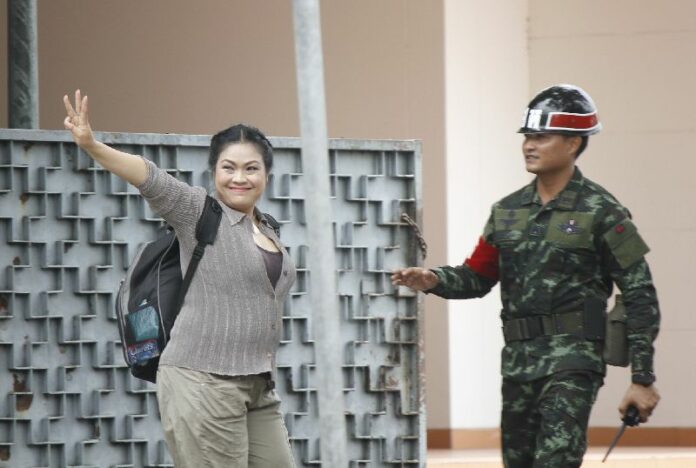
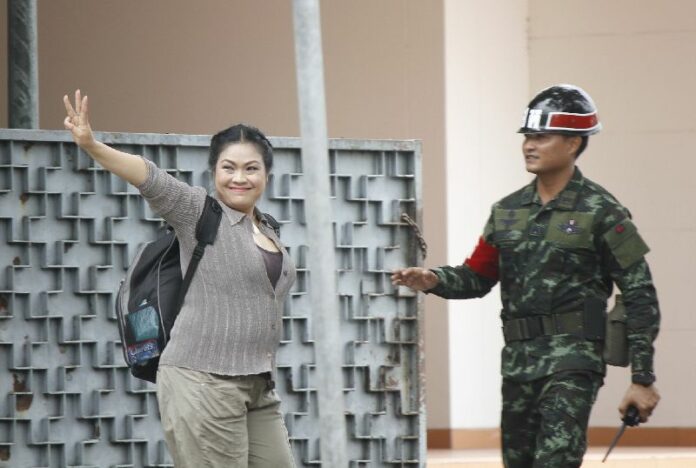
An anti-coup activist flashes the forbidden "three-finger salute" before turning herself into the military in compliance with a summons order, 10 June 2014.

BANGKOK — The host of a popular new talk show and publishers of leftist magazine have announced a sudden end to their operations, citing political tension in the post-coup environment.

Pinyo Trisuriyadhamma said in a Facebook post that he decided to discontinue Amarin Newsnight after its first week on air due to "a change in the situation outside and inside the [Amarin TV] station" following the military coup on 22 May.

"To maintain my stance and ethical principle, I hereby announce the end to Amarin Newsnight," Mr. Pinyo wrote. "My staff and I are proud to have created a new form of nighttime news show to be aired with magnificence.”

He added, "Although today the clouds are covering the sky, I believe that all of my young staff will be shining stars when the sky is clear again."

The nascent talk show, whose guests this week included former Prime Minister and Democrat Party chairman Abhisit Vejjajiva, won praises for its articulate and relatively impartial approach.

Meanwhile, the publishers of a progressive political magazine, Fah Diew Gun (Same Sky), also announced today that they have indefinitely suspended publication until further notice. The statement, posted on Facebook, explained that their operation has come under intense scrutiny by the military after the army imposed martial law on 20 May and staged a coup two days later.

"The coup junta has extensively closed down and monitored the media. Under this condition, Same Sky Publishing has been inevitably affected," the statement reads. "Same Sky Magazine, in particular, has come under scrutiny, causing fears to every involved in its publication."

"Therefore, the editorial team has concluded that, for the safety of everyone involved, we will suspend the production of new magazines for the time being."

Founded in 2003, Same Sky Magazine has served as platform for alternative and left-leaning interpretations of domestic and international politics. 

Same Sky is also well-known for frequently publishing articles critical of the Thai monarchy — a rare feat in Thailand where comments deemed insulting to the Royal Family are punishable by up to 15 years in prison. The March 2006 issue, "The Monarchy and Thai Society," received particular attention and was banned from distribution by the police. 

The magazine's editor, Thanapol Eiewsakul, was detained for several days by the military last month for participating in an anti-coup protest. 

Since seizing power in a coup d'etat on 22 May, the military's National Council of Peace and Order (NCPO) has outlawed public demonstrations, detained scores of anti-coup protesters and activists, and instructed the media not to air any criticism against the NCPO or its missions. 


For comments, or corrections to this article please contact: [email protected]

You can also find Khaosod English on Twitter and Facebook
http://twitter.com/KhaosodEnglish
http://www.facebook.com/KhaosodEnglish

Advertisement

Talk Show, Leftist Magazine Discontinued Due to 'Political Climate'

An anti-coup activist flashes the forbidden "three-finger salute" before turning herself into the military in compliance with a summons order, 10 June 2014.

BANGKOK — The host of a popular new talk show and publishers of leftist magazine have announced a sudden end to their operations, citing political tension in the post-coup environment.

Pinyo Trisuriyadhamma said in a Facebook post that he decided to discontinue Amarin Newsnight after its first week on air due to "a change in the situation outside and inside the [Amarin TV] station" following the military coup on 22 May.

"To maintain my stance and ethical principle, I hereby announce the end to Amarin Newsnight," Mr. Pinyo wrote. "My staff and I are proud to have created a new form of nighttime news show to be aired with magnificence.”

He added, "Although today the clouds are covering the sky, I believe that all of my young staff will be shining stars when the sky is clear again."

The nascent talk show, whose guests this week included former Prime Minister and Democrat Party chairman Abhisit Vejjajiva, won praises for its articulate and relatively impartial approach.

Meanwhile, the publishers of a progressive political magazine, Fah Diew Gun (Same Sky), also announced today that they have indefinitely suspended publication until further notice. The statement, posted on Facebook, explained that their operation has come under intense scrutiny by the military after the army imposed martial law on 20 May and staged a coup two days later.

"The coup junta has extensively closed down and monitored the media. Under this condition, Same Sky Publishing has been inevitably affected," the statement reads. "Same Sky Magazine, in particular, has come under scrutiny, causing fears to every involved in its publication."

"Therefore, the editorial team has concluded that, for the safety of everyone involved, we will suspend the production of new magazines for the time being."

Founded in 2003, Same Sky Magazine has served as platform for alternative and left-leaning interpretations of domestic and international politics. 

Same Sky is also well-known for frequently publishing articles critical of the Thai monarchy — a rare feat in Thailand where comments deemed insulting to the Royal Family are punishable by up to 15 years in prison. The March 2006 issue, "The Monarchy and Thai Society," received particular attention and was banned from distribution by the police. 

The magazine's editor, Thanapol Eiewsakul, was detained for several days by the military last month for participating in an anti-coup protest. 

Since seizing power in a coup d'etat on 22 May, the military's National Council of Peace and Order (NCPO) has outlawed public demonstrations, detained scores of anti-coup protesters and activists, and instructed the media not to air any criticism against the NCPO or its missions. 


For comments, or corrections to this article please contact: [email protected]

You can also find Khaosod English on Twitter and Facebook
http://twitter.com/KhaosodEnglish
http://www.facebook.com/KhaosodEnglish

Advertisement

Fake Bomb Detectors in Attacked Pakistani Airport Used By Thai Army

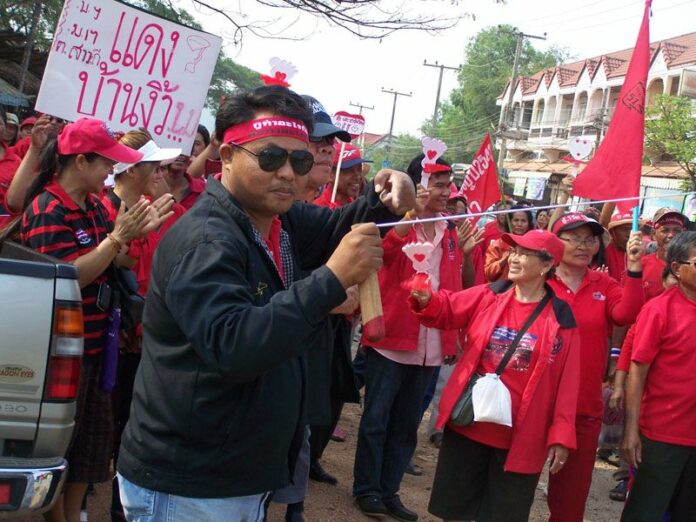
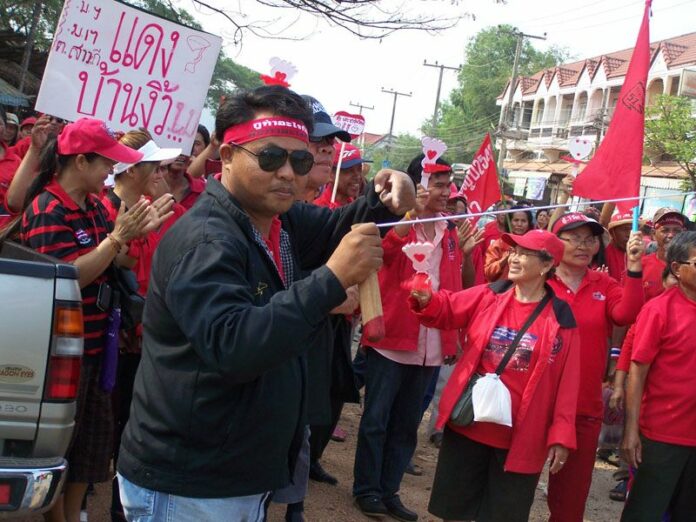
Redshirts mock the army with an imitation GT200 in an anti-government protest in 2010.

BANGKOK – The Royal Thai Army has a history of using the same counterfeit bomb detectors that were reportedly used by security forces at the Pakistani airport attacked by armed militants on Sunday.

Ten Taliban commandos, armed with suicide vests, grenades, and automatic weapons, made it past checkpoints at Karachi’s Jinnah International Airport late Sunday night and waged an extended battle against security forces that left at least 28 people dead.  

According to The Guardian, the security officers who guarded the outer perimeter of the airport used versions of the fake bomb-detecting device sold by a British businessman to Thailand several years ago.

James McCormick and his company sold thousands of the phony detectors at extortionate prices to countries such as Iraq, Pakistan, and Thailand.

Mr. McCormick, who was convicted of fraud and sentenced to 10 years in jail, claimed the devices could detect a wide range of substances, such as explosives or narcotics, by analysing molecular components from a distance. Mr. McCormick's company told customers that the long dials attached to the detectors would swing and point to any suspicious materials.

In reality, the devices were completely ineffectual and based on $20 golf-ball finders that Mr. McCormick had purchased in the United States.

For several years, Thai soldiers used a version of Mr. McCormick's phoney bomb detectors, called GT200, in the southern border provinces where separatist unrest has claimed more than 6,000 lives since the latest wave of violence broke out in 2002. 

According to media reports, the Thai army started buying the detectors in 2008. Similar versions of the detectors, called ALPHA, were also purchased and distributed to the Royal Thai Police for drug searches. 

It is estimated that the GT200s cost Thai taxpayers more than 630 million baht and led Thai security forces to arrest innocent individuals, while letting a number of people with real bombs pass through checkpoints undetected.

Following the news of massive bomb attacks in Baghdad in late 2009, where security forces employed devices similar to the GT200 to search for car bombs, skeptics in Thailand started to question the validity of the detectors.

Jessada Denduangboripant, a scientist at Chulalongkorn University, spearheaded a movement on social media that called for a scientific test of the GT200 devices. After initial resistance, the Thai authorities conceded and conducted the test in early 2010. The result established the GT200's accuracy to be as good as random chance.

Then-Prime Minister Abhisit Vejjajiva eventually ordered the suspension of GT200 devices across the country. However, top army leaders and security officials continued to defend the devices long after the test. 

Among them was Central Institute of Forensic Science director, Pornthip Rojanasunand, who told the press that the scientific test that debunked the GT200 did not matter because the devices "were not scientific tools" in the first place.

“GT200 is not scientific either, it depends on the operators. The officials of the CIFS have used it with great efficiency,” Ms. Pornthip was quoted as saying in February 2010.

Ms. Pornthip, a vocal supporter of the protests against the previous government, is reportedly being considered for the job of Minister of Justice in the future army-appointed interim government. Ms. Pornthip recently told the press she is willing to accept the job, if offered. 

Gen. Prayuth Chan-ocha, army chief and leader of the National Council for Peace and Order, also defended the GT200 as late as 2013.

“So far the army has used it and it works. Maybe it’s confidence,”  Gen. Prayuth told Thai media in July 2012.  

In an interview to the press in 2013, Gen. Prayuth asked the public to stop criticizing the devices, and admitted that some security officers still used GT200 in their field operation "because there is no alternative."

No official has ever been held accountable in court for purchases of GT200 bomb detectors. 


For comments, or corrections to this article please contact: [email protected]

You can also find Khaosod English on Twitter and Facebook
http://twitter.com/KhaosodEnglish
http://www.facebook.com/KhaosodEnglish

Advertisement

Yangon Buses to Get Feminine Touch

A vehicle overloaded with passengers waits for more people willing to squeeze on top, in downtown Yangon. Buses in Myanmar's largest city Yangon are to have female conductors for the first time, to improve the quality and safety of service, officials said Tuesday. EPA/NYEIN CHAN NAING

YANGON (DPA) – Buses in Myanmar's largest city Yangon are to have female conductors for the first time, to improve the quality and safety of service, officials said Tuesday.

"We believe women are more suitable as conductors because they are more patient with commuters," said Myint Aung, a senior official at the Road Transport Administration Department.

The transport authorities have hired 19 women to be conductors, the department said, as part of a campaign to improve public transport.

"Its more difficult to regulate male conductors because after decades on the job they have become habituated to slack discipline," he said.

The hiring of women conductors is to address reported poor service and incidents of harassment on the city's crowded public transport.

The department is also hiring women drivers in response to rising accident rates.

Over the past five months there were 122 road accidents in Yangon, leaving 41 dead and 358 injured, according to state media.

There are currently 6,600 buses operating 352 routes in the former capital, Myanmar's largest city, estimated population 7.8 million.

Poor discipline among transport system staff is a main cause of congestion and accidents in Yangon, the Japan International Cooperation Agency said in a report last month.

The agency is working with city authorities on an urban transport plan which includes a new bus system, improved parking and training local officials in traffic and transport management.

Advertisement

Pattaya Nightclub Guard Arrested For Beating Foreign Tourists

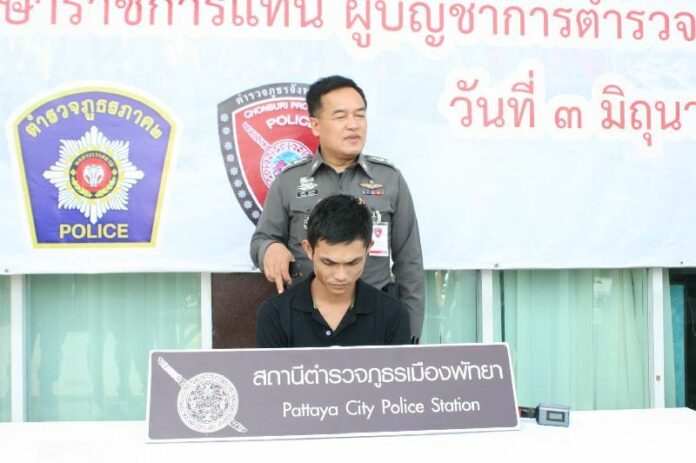
Witthaya Chaiyasak, admitted to assaulting two Israeli tourists brothers in a police press conference yesterday.

CHONBURI — Police have arrested a security guard from a well-known nightclub on Pattaya's Walking Street for reportedly beating two Israeli tourists.

Eli Aurheem, 31, and his brother Dekel Aurheem, 27, were attacked by five or six security guards at Lucifer Pub on the night of 8 June, police say.

One of the suspects, Witthaya Chaiyasak, admitted to assaulting the brothers in a police press conference yesterday. According to Mr. Witthaya, the older Israeli visited Lucifer Pub without ordering any drinks and responded "aggressively" when a waitress asked him to buy one. 

Mr. Witthaya said he and other security guards approached Mr. Aurheem and instructed him to leave the nightclub, but he refused, leading to a scuffle with the security guards. Mr. Witthaya admitted to punching Mr. Aurheem in the face several times before police officers spotted the incident and intervened.

Pol.Col. Suphatee Boonkrong said Mr. Aurheem's brother, Dekel, tried to help but was beaten up by the guards as well.

"My supervisors are very interested in this case," Pol.Col. Suphatee told reporters. "They have ordered me to strictly prosecute the violators."

According to Pol.Col. Suphatee, the tourist has been charged with the small offence of inciting a fight while Mr. Witthaya and the other security guards, who are still on the run, have been charged with physical assault leading to injury.

Following the incident, police raided the pub and uncovered a number of other violations of law, including underage customers, evidence of narcotic use, and an expired nightclub license, Pol.Col. Suphatee said. He added that the police have advised the Governor of Chonburi province to permanently shut down the establishment as a punishment.

"I insist that the police have proceeded in accordance with legal steps. We don't care about mafia influence," Pol.Col. Suphatee claimed.

He also said the police will convene a meeting with owners of every nightclub in Pattaya to put an end to physical assaults against tourists by nightclub staff.

"If this news reached foreign countries, it will severely affect the atmosphere of tourism," the officer explained.


For comments, or corrections to this article please contact:[email protected]

You can also find Khaosod English on Twitter and Facebook
http://twitter.com/KhaosodEnglish
http://www.facebook.com/KhaosodEnglish

Advertisement

Fake Bomb Detectors in Attacked Pakistani Airport Used By Thai Army

BANGKOK – The Royal Thai Army has a history of using the same counterfeit bomb detectors that were reportedly used by security forces at the Pakistani airport attacked by armed militants on Sunday.

Ten Taliban commandos, armed with suicide vests, grenades, and automatic weapons, made it past checkpoints at Karachi’s Jinnah International Airport late Sunday night and waged an extended battle against security forces that left at least 28 people dead.  

According to The Guardian, the security officers who guarded the outer perimeter of the airport used versions of the fake bomb-detecting device sold by a British businessman to Thailand several years ago.

James McCormick and his company sold thousands of the phony detectors at extortionate prices to countries such as Iraq, Pakistan, and Thailand.

Mr. McCormick, who was convicted of fraud and sentenced to 10 years in jail, claimed the devices could detect a wide range of substances, such as explosives or narcotics, by analysing molecular components from a distance. Mr. McCormick's company told customers that the long dials attached to the detectors would swing and point to any suspicious materials.

In reality, the devices were completely ineffectual and based on $20 golf-ball finders that Mr. McCormick had purchased in the United States.

For several years, Thai soldiers used a version of Mr. McCormick's phoney bomb detectors, called GT200, in the southern border provinces where separatist unrest has claimed more than 6,000 lives since the latest wave of violence broke out in 2002. 

According to media reports, the Thai army started buying the detectors in 2008. Similar versions of the detectors, called ALPHA, were also purchased and distributed to the Royal Thai Police for drug searches. 

It is estimated that the GT200s cost Thai taxpayers more than 630 million baht and led Thai security forces to arrest innocent individuals, while letting a number of people with real bombs pass through checkpoints undetected.

Following the news of massive bomb attacks in Baghdad in late 2009, where security forces employed devices similar to the GT200 to search for car bombs, skeptics in Thailand started to question the validity of the detectors.

Jessada Denduangboripant, a scientist at Chulalongkorn University, spearheaded a movement on social media that called for a scientific test of the GT200 devices. After initial resistance, the Thai authorities conceded and conducted the test in early 2010. The result established the GT200's accuracy to be as good as random chance.

Then-Prime Minister Abhisit Vejjajiva eventually ordered the suspension of GT200 devices across the country. However, top army leaders and security officials continued to defend the devices long after the test. 

Among them was Central Institute of Forensic Science director, Pornthip Rojanasunand, who told the press that the scientific test that debunked the GT200 did not matter because the devices "were not scientific tools" in the first place.

“GT200 is not scientific either, it depends on the operators. The officials of the CIFS have used it with great efficiency,” Ms. Pornthip was quoted as saying in February 2010.

Ms. Pornthip, a vocal supporter of the protests against the previous government, is reportedly being considered for the job of Minister of Justice in the future army-appointed interim government. Ms. Pornthip recently told the press she is willing to accept the job, if offered. 

Gen. Prayuth Chan-ocha, army chief and leader of the National Council for Peace and Order, also defended the GT200 as late as 2013.

“So far the army has used it and it works. Maybe it’s confidence,”  Gen. Prayuth told Thai media in July 2012.  

In an interview to the press in 2013, Gen. Prayuth asked the public to stop criticizing the devices, and admitted that some security officers still used GT200 in their field operation "because there is no alternative."

No official has ever been held accountable in court for purchases of GT200 bomb detectors. 


For comments, or corrections to this article please contact: [email protected]

You can also find Khaosod English on Twitter and Facebook
http://twitter.com/KhaosodEnglish
http://www.facebook.com/KhaosodEnglish

Advertisement

Fake Bomb Detectors in Attacked Pakistani Airport Used By Thai Army

Redshirts mock the army with an imitation of the GT200 device in an anti-government protest in 2010.

BANGKOK – The Royal Thai Army has a history of using the same counterfeit bomb detectors that were reportedly used by security forces at the Pakistani airport attacked by armed militants on Sunday.

Ten Taliban commandos, armed with suicide vests, grenades, and automatic weapons, made it past checkpoints at Karachi’s Jinnah International Airport late Sunday night and waged an extended battle against security forces that left at least 28 people dead.  

According to The Guardian, the security officers who guarded the outer perimeter of the airport used versions of the fake bomb-detecting device sold by a British businessman to Thailand several years ago.

James McCormick and his company sold thousands of the phony detectors at extortionate prices to countries such as Iraq, Pakistan, and Thailand.

Mr. McCormick, who was convicted of fraud and sentenced to 10 years in jail, claimed the devices could detect a wide range of substances, such as explosives or narcotics, by analysing molecular components from a distance. Mr. McCormick's company told customers that the long dials attached to the detectors would swing and point to any suspicious materials.

In reality, the devices were completely ineffectual and based on $20 golf-ball finders that Mr. McCormick had purchased in the United States.

For several years, Thai soldiers used a version of Mr. McCormick's phoney bomb detectors, called GT200, in the southern border provinces where separatist unrest has claimed more than 6,000 lives since the latest wave of violence broke out in 2002. 

According to media reports, the Thai army started buying the detectors in 2008. Similar versions of the detectors, called ALPHA, were also purchased and distributed to the Royal Thai Police for drug searches. 

It is estimated that the GT200s cost Thai taxpayers more than 630 million baht and led Thai security forces to arrest innocent individuals, while letting a number of people with real bombs pass through checkpoints undetected.

Following the news of massive bomb attacks in Baghdad in late 2009, where security forces employed devices similar to the GT200 to search for car bombs, skeptics in Thailand started to question the validity of the detectors.

Jessada Denduangboripant, a scientist at Chulalongkorn University, spearheaded a movement on social media that called for a scientific test of the GT200 devices. After initial resistance, the Thai authorities conceded and conducted the test in early 2010. The result established the GT200's accuracy to be as good as random chance.

Then-Prime Minister Abhisit Vejjajiva eventually ordered the suspension of GT200 devices across the country. However, top army leaders and security officials continued to defend the devices long after the test. 

Among them was Central Institute of Forensic Science director, Pornthip Rojanasunand, who told the press that the scientific test that debunked the GT200 did not matter because the devices "were not scientific tools" in the first place.

“GT200 is not scientific either, it depends on the operators. The officials of the CIFS have used it with great efficiency,” Ms. Pornthip was quoted as saying in February 2010.

Ms. Pornthip, a vocal supporter of the protests against the previous government, is reportedly being considered for the job of Minister of Justice in the future army-appointed interim government. Ms. Pornthip recently told the press she is willing to accept the job, if offered. 

Gen. Prayuth Chan-ocha, army chief and leader of the National Council for Peace and Order, also defended the GT200 as late as 2013.

“So far the army has used it and it works. Maybe it’s confidence,”  Gen. Prayuth told Thai media in July 2012.  

In an interview to the press in 2013, Gen. Prayuth asked the public to stop criticizing the devices, and admitted that some security officers still used GT200 in their field operation "because there is no alternative."

No official has ever been held accountable in court for purchases of GT200 bomb detectors. 


For comments, or corrections to this article please contact: [email protected]

You can also find Khaosod English on Twitter and Facebook
http://twitter.com/KhaosodEnglish
http://www.facebook.com/KhaosodEnglish


Advertisement

Liking Anti-Junta Facebook Page is a Crime: Thai Police

(Prachatai English)

BANGKOK — Thai police warned internet users on Monday that “liking” or expressing approval of anti-military junta messages is a crime.

Pol Maj Gen Amnuay Nimmano, Deputy Commander of Bangkok Metropolitan Police, said that "liking" any social media post that asks people to join anti-junta activities is criminal because it helps publicize the messages.

Read more here

Note: Khaosod English is not responsible for content on other websites.


Advertisement

Taliban Kill Four Pakistani Soldiers After Airport Attack Repulsed

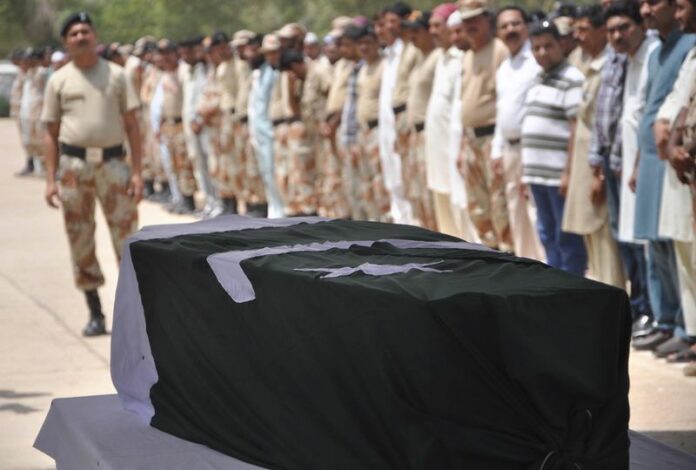
Pakistani Rangers attend the funeral of their comrade who was killed during an operation against suspected militants at Jinnah International Airport in Karachi. EPA/SHAHZAIB AKBER

By Zia Khan (DPA)

ISLAMABAD (DPA) —  A suicide car bomber killed four soldiers and wounded seven others in Pakistan's north-western tribal region on Monday, hours after the country's busiest airport was attacked by Islamist extremists.

"Four soldiers have been killed in an attack on a check post in North Waziristan," a military's statement said.

Earlier in the day flights resumed at Karachi International Airport in southern Pakistan after security forces repulsed an attack by Taliban fighters in an overnight gun battle that left 31 people dead.

"A domestic flight has just taken off for Islamabad" from the airport, civil aviation chief Shujaat Azeem announced, 16 hours after gunmen stormed the facility.

All 10 of the gunmen were among the 31 killed during the five-hour battle between security forces and Taliban militants, said General Rizwan Akhtar, the chief of the paramilitary Rangers force.

The Pakistani Taliban said their fighters carried out both the gun and bomb attack at the airport and the car bombing to avenge the killing of "innocent" people in airstrikes by security forces.

"It is a message to the Pakistan government that we are still alive," Taliban spokesman Shahidullah Shahid said after the first attack.

Around 100 Islamist militants, including some key Taliban commanders, were killed in May when Pakistani fighter jets pounded insurgents' hideouts in their tribal stronghold.

Fourteen members of the security forces and seven civilians were among the dead in the airport attack, said doctor Seemi Jamali at the city's Jinnah Medical Institute.

At least 25 people with bullet injuries were brought to the hospital, she said. Five of them were in a critical condition.

Analysts said the siege of the airport showed the Taliban still had the ability to stage spectacular attacks, despite setbacks in recent months, including the defection of a major faction.

"It is a statement by militants that they can still operate at will," said Irfan Shehzad, lead researcher at the Islamabad-based Institute of Policy Studies think tank.

"It reflects how grave the security risk is for Pakistan as international forces prepare to leave Afghanistan at the end of this year," Shehzad said.

Much of the Taliban network is believed to operate out of the Afghanistan-Pakistan border region.

Karachi is Pakistan's most populous city and the capital of Sindh province.

Akhtar said terrorists wearing suicide vests and dressed in police uniform entered the airport in two groups of five and set ablaze a terminal used for cargo.

Seven of them were killed in a gun battle with military commandos, while three blew themselves up when surrounded by soldiers, he added.

The Pakistani Taliban have launched similar attacks in the past, but mostly against military facilities. In 2011, militants laid siege to the city's naval base for 18 hours, killing at least 10 people.

The Taliban have been waging a deadly insurgency since 2003 in Pakistan, killing over 40,000.

The government airstrikes in May came after months of efforts to engage the Taliban in a peace process ended without any significant headway.


Advertisement

Hot News

LATEST NEWS

Bangkok
overcast clouds
29.4 ° C
29.4 °
26.6 °
77 %
2.7kmh
99 %
Tue
35 °
Wed
36 °
Thu
33 °
Fri
32 °
Sat
28 °