





























26.1 C
Bangkok
Saturday, June 20, 2026
Home Blog Page 333

Cambodia Threatens Thai Fruits Ban as Tensions Continue to Soar

Cambodia says on June 16, 2025, it would stop importing Thai fruits and vegetables if Thailand refused to lift border restrictions.

PHNOM PENH, Cambodia (AP) — Cambodia on Monday said it would stop importing Thai fruits and vegetables if Thailand refused to lift border restrictions imposed following a deadly clash in one of the disputed areas between the two countries.

An armed confrontation at the border on May 28 left one Cambodian soldier dead. The incident, which each side blamed on the other, reportedly took place in a relatively small “no man’s land” along their border that both countries claim as their own.

Cambodian and Thai authorities have engaged in saber-rattling since last week, and continue to implement or threaten measures short of armed force, keeping tensions high. Thailand has added restrictions at border crossings, and Cambodia has banned Thai movies and TV shows and implemented a boycott of the neighboring country’s international internet links.

Cambodian Senate President Hun Sen, the former prime minister, said in a televised speech Monday that the ban on Thai fruits and vegetables would take effect if Thailand doesn’t lift the border restrictions by Tuesday.

Thai Prime Minister Paetongtarn Shinawatra later said Thailand decided to impose the border restrictions out of safety concerns for the citizens of both countries due to the heavier presence of armed forces along the areas. She also said any “unprofessional communication” that was conveyed outside a bilateral mechanism would only hurt the interests of both sides.
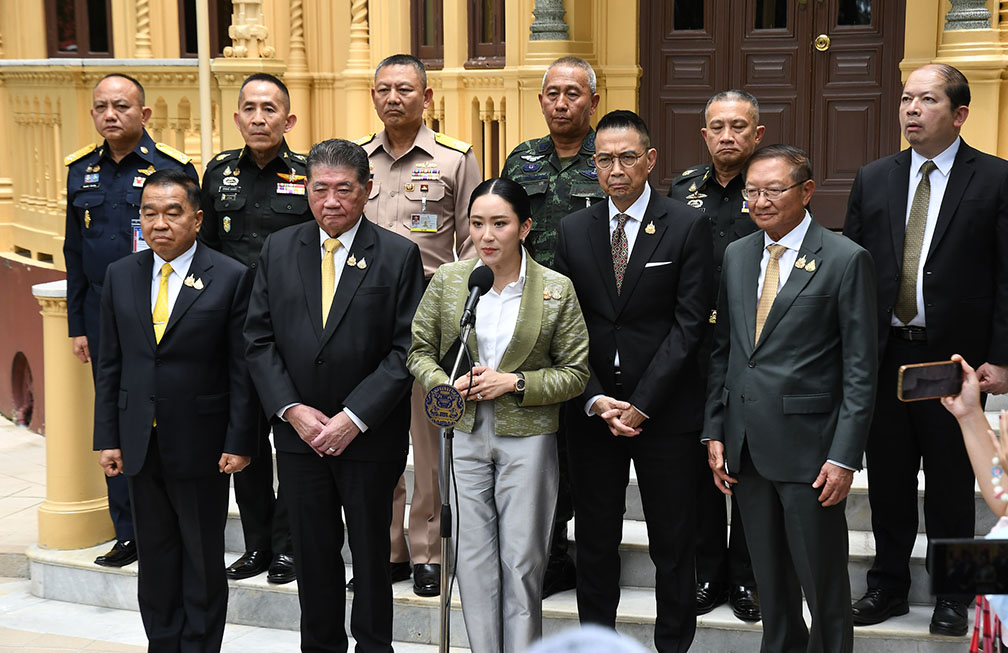
paetongtarn 16 06 2025 2
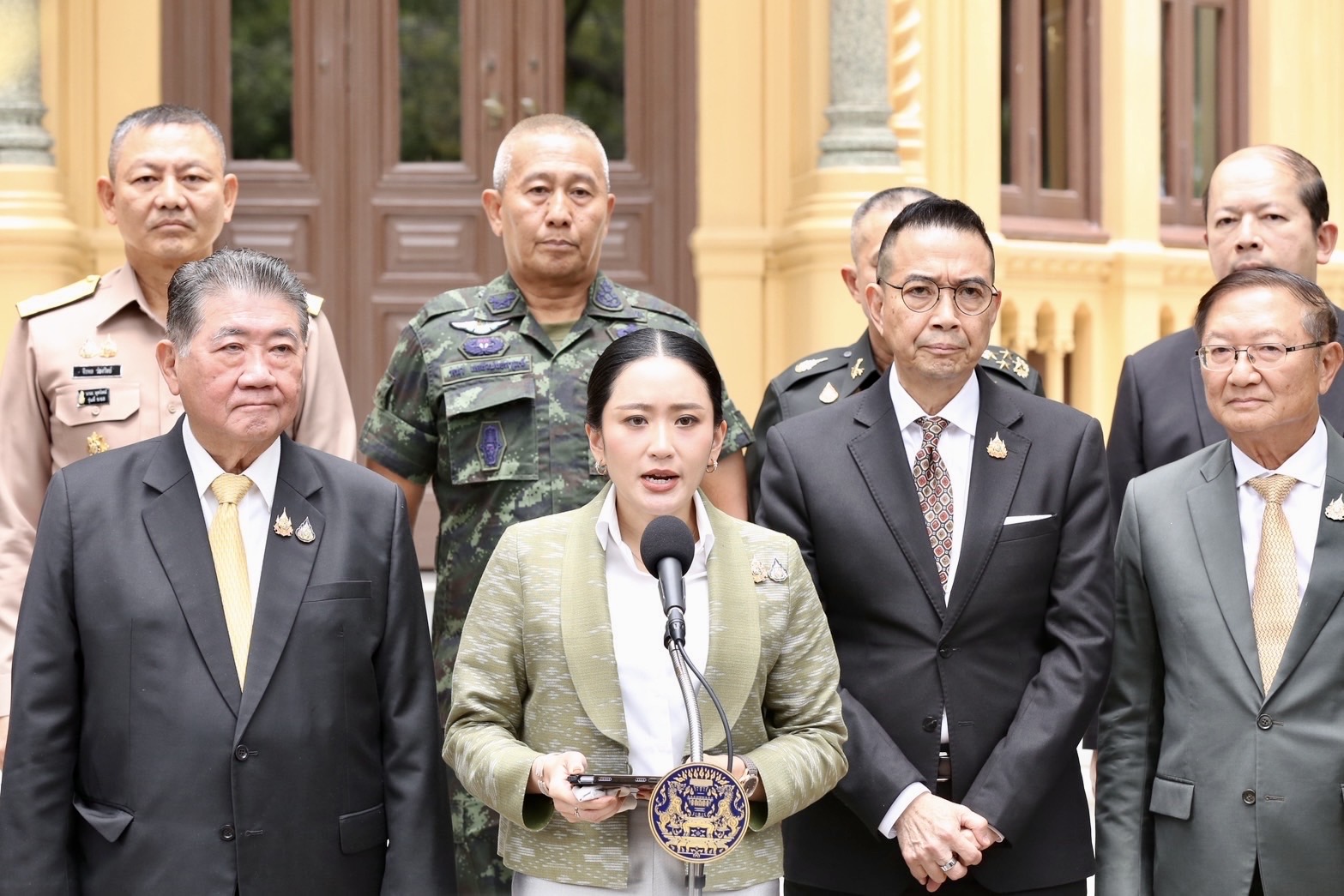
Prime Minister Paetongtarn Shinawatra holds a press conference after convening a meeting of relevant agencies to discuss the results of the Thai-Cambodia Joint Border Committee (JBC) meeting at Ban Phitsanulok on June 16, 2025.

Officials of the two countries met over the weekend in Cambodia’s capital, Phnom Penh, on the conflicting territorial claims that led to last month’s deadly confrontation. While both sides said the meeting was held in a good atmosphere, it appears no major breakthrough was achieved to resolve the current spat.

Cambodia on Sunday said it has officially submitted a request to the U.N.’s International Court of Justice, seeking a resolution to the ongoing border disputes with Thailand in four areas. The Cambodia’s State Secretariat of Border Affairs said after the weekend meetings concluded that Cambodia would no longer discuss these areas under the bilateral mechanism of the two countries.

The Thai Ministry of Foreign Affairs said Monday that it was deeply disappointed that Cambodia refused to address the disputes through the existing mechanism and reiterated that Thailand does not accept the jurisdiction of the International Court of Justice.

Both however agreed to participate in the next round of meetings on border issues to be hosted by Thailand in September.

Much of their war of words has appeared intended to mollify nationalistic critics on both sides of the border. In Thailand, the elected government of Prime Minister Paetongtarn has been attacked by right-wing nationalists who are longtime foes of her father, former Prime Minister Thaksin Shinawatra.

There is a long history to the territorial disputes between the two countries. Thailand is still rankled by a 1962 ICJ ruling that awarded Cambodia the disputed territory where the historic Preah Vihear temple stands. There were sporadic though serious clashes there in 2011. The ruling was reaffirmed in 2013.

——-

Sopheng Cheang reported from Cambodia. Associated Press writer Jintamas Saksornchai in Bangkok contributed to this report.
Advertisement

AOT Forms Task Force After King Power Requests Contract Exit

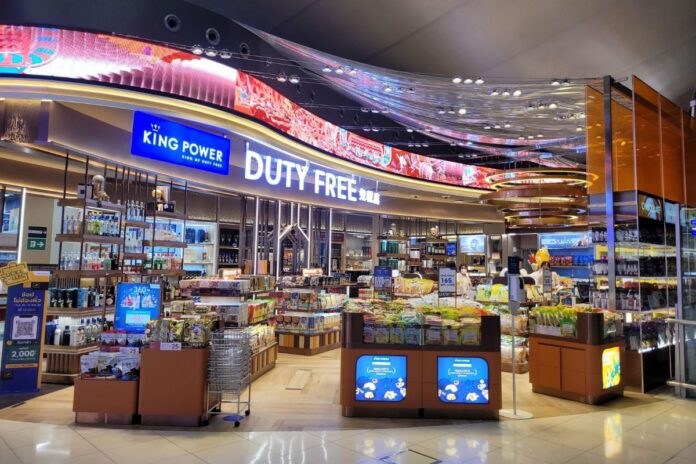
Duty-free shops at Suvarnabhumi Airport

BANGKOK — A major disruption has emerged in Thailand’s airport business sector as King Power Duty Free Company Limited (KPD) submitted a formal request to cancel its duty-free concession contracts with Airports of Thailand Public Company Limited (AOT).

The news first surfaced on social media on June 13, indicating that the cancellation affects five airports: Suvarnabhumi Airport, Don Mueang International Airport, Phuket International Airport, Chiang Mai International Airport, and Hat Yai International Airport.

The announcement immediately impacted AOT’s stock price, which plummeted 8.40% on Monday morning. AOT brought the matter to its board meeting on June 16, where Acting CEO Ms. Paveena Jariyathitipong revealed that the board resolved to establish a working committee to review solutions for duty-free operations across AOT-managed airports.

The company will also engage consultants from state universities to study legal, economic, financial, and business management alternatives, with consultants expected to be appointed within two weeks and the study completed within 60 days or by August 2025.

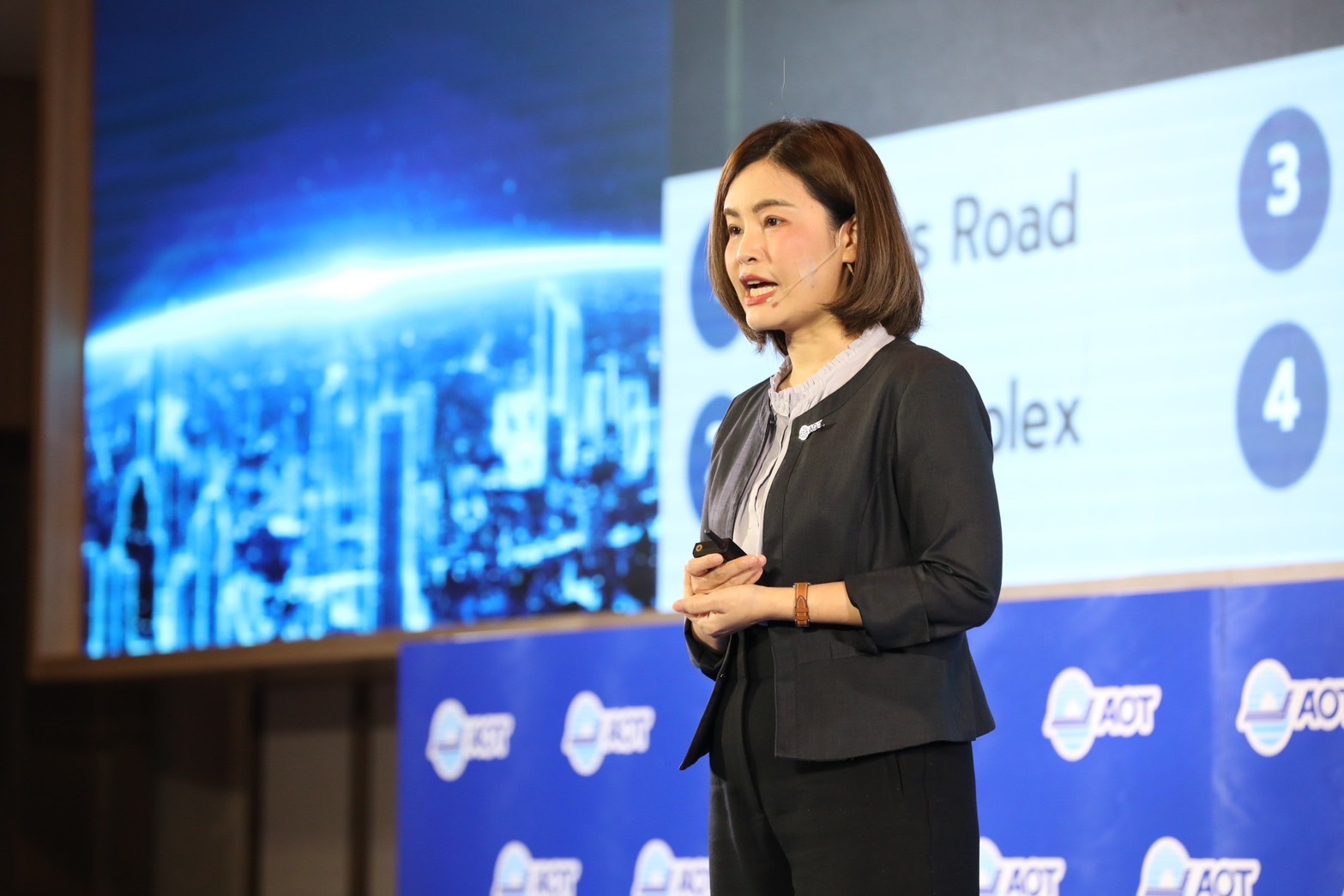
aot Paveena Jariyathitipong
Paveena Jariyathitipong, Acting CEO of Airports of Thailand (AOT)

King Power Contributes 17% of AOT Revenue

Ms. Paveena disclosed that revenue from King Power accounts for 17% of AOT’s total income. She emphasized that AOT maintains strong financial stability and has plans to diversify revenue sources, including electrical system services, air conditioning systems, ground services, and commercial development around all six AOT airports. These initiatives will strengthen financial security and support future investment plans without affecting organizational stability.

AOT is scheduled to hold discussions with King Power on June 17 to gather additional input and seek fair solutions. Regarding outstanding payments owed by King Power, these remain within the security guarantee limits that King Power has provided as collateral under contract terms, serving as financial security for unexpected circumstances.

Government Maintains No Loss if New Operator Found

Thibodi Wattanakul, Director of the State Enterprise Policy Office (SEPO) under the Ministry of Finance, stated he is closely monitoring the situation as AOT targets approximately 3 billion baht in annual treasury contributions, with 33% derived from King Power’s lease agreements. Of this amount, roughly 10-20% comes from areas King Power is requesting to return, while the remaining 70-80% comes from Suvarnabhumi Airport space rentals.

Duty-Free
Duty-free shops at Suvarnabhumi Airport

He noted that while lost revenue won’t be substantial, any revenue loss would still disadvantage the state. However, he believes that if contracts are cancelled, AOT will need to find new tenants. “If AOT can secure new bidders, the state may not suffer losses,” he said.

As the Ministry of Finance is a shareholder in AOT, it must await explanations alongside other shareholders. In its capacity overseeing state enterprises, the ministry will monitor the contract cancellation and its impact on state revenue. If King Power’s contracts are terminated, penalty payments will be due to AOT, and both parties must comply with contractual obligations.

New CEO Appointment Precedes Cancellation Request

The contract termination request emerged after King Power appointed Nitinai Sirisarntkarn as its new CEO on June 4, 2025. Nitinai previously served as AOT’s CEO for two terms, totaling eight years.

In its letter to AOT, KPD cited various factors necessitating contract termination discussions, including:

  • Cessation of inbound duty-free shop operations in line with government policy
  • Tax reductions on wine affecting duty-free sales volumes
  • Reclamation of AOT’s commercial space
  • Lack of proactive public sector measures for tourist safety management, resulting in declining Chinese tourist numbers
  • Thailand’s domestic situation negatively impacting tourist and passenger numbers
    COVID-19 pandemic impacts
  • Trade War situations and global economic slowdown

“All of these factors have direct and indirect effects on KPD’s inability to operate business and comply with the established contracts and caused KPD’s continuous loss. The abovementioned force majeure factors are beyond KPD’s control,” the KPD letter stated.

KPD’s operating contract with AOT runs from September 28, 2020, to March 31, 2033. According to reports, KPD has requested negotiations conclude within 45 days. During the interim period before resolution, the company proposed paying concession fees at 20% of monthly duty-free sales starting in July, with payments to AOT due by August 29, requesting this not be considered a payment default.

______

Advertisement

Thailand Criticizes Cambodia’s ICJ Move as Skipping Bilateral Talks

ICJ
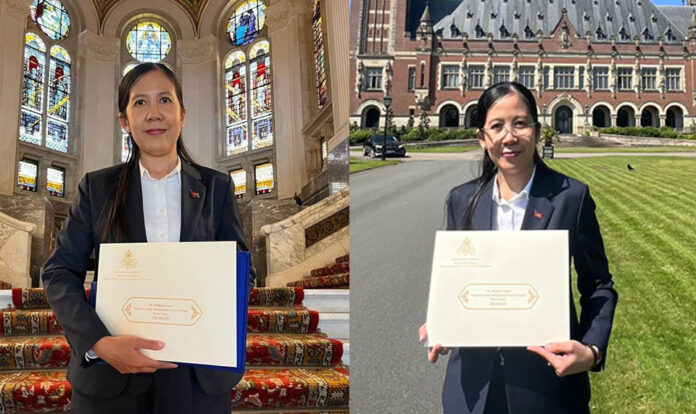
Image from Cambodian Prime Minister Hun Manet's Facebook page, where he stated that Kim Sour Sovannary, Ambassador of Cambodia to the Netherlands, officially submitted a letter to the ICJ in The Hague, Netherlands, on June 16, 2025.

BANGKOK — Thailand has criticized Cambodia for bypassing established bilateral mechanisms by taking their temple border dispute to the International Court of Justice, calling the move a violation of international protocol that undermines ongoing diplomatic efforts.

Cambodian Prime Minister Hun Manet posted on social media confirming the ICJ submission on June 16, saying: “Kim Sour Sovannary, Ambassador of Cambodia to the Netherlands handed over Cambodia’s official letter to the ICJ to help find a solution to the border issues in the area of Prasat Taman Thom, Taman Toch Temple, Tak Krobey Temple and Mumbai area. The government will continue to do this with commitment and high responsibility to protect the sovereignty of the land, as well as the national interests and the Khmer people.”

On the same day, Prime Minister Paetongtarn Shinawatra spoke at a press conference at Ban Phitsanulok, reaffirming that Thailand has not accepted ICJ jurisdiction and confirming that legal studies and historical background research have been completed with all information now ready.

paetongtarn 16 06 2025 1
Prime Minister Paetongtarn Shinawatra holds a press conference at Ban Phitsanulok on June 16. She reaffirmed that Thailand does not accept the jurisdiction of the International Court of Justice, and that legal studies and historical background research have been completed with all information now ready.

Thailand Maintains 1960 Stance

The Ministry of Foreign Affairs separately held a detailed briefing for media, criticizing Cambodia’s decision to skip direct negotiations over the three disputed temple sites.

Thailand reiterated its position of not accepting ICJ jurisdiction, a stance it has maintained since 1960 and shares with over 118 other UN member states. The dispute centers on areas around Prasat Ta Muean Thom, Prasat Ta Muean Tot, and Prasat Ta Kwai temples.

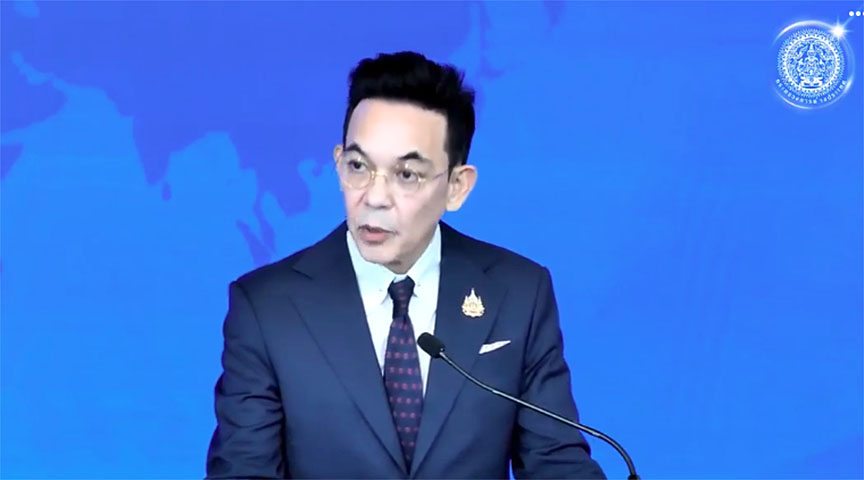
“Thailand participated in the latest Joint Boundary Commission meeting with sincerity and good faith to find a constructive solution,” said Nikorndej Balankura, Director-General of the Department of Information, speaking for the Foreign Ministry. “However, we were disappointed that Cambodia chose not to discuss the four disputed areas within the JBC forum.”

FM spokesperson
Nikorndej Balankura, Director-General of the Department of Information, holds a press conference at the Ministry of Foreign Affairs on June 16, 2025.

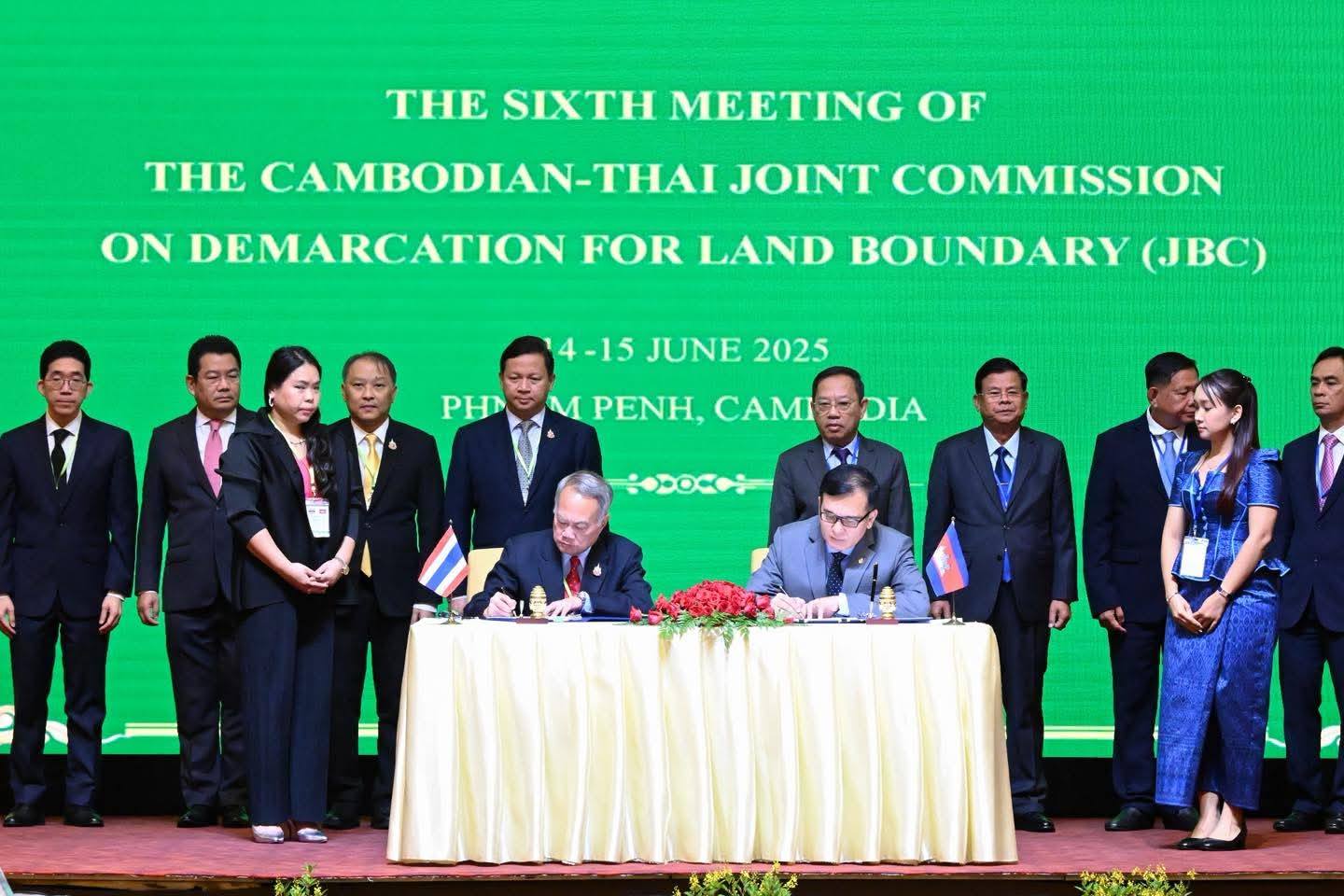
The comments came after the 6th Thai-Cambodian Joint Boundary Commission meeting in Phnom Penh from June 14-15, where Cambodia reportedly avoided discussing the contentious temple areas.

Protocol Violation Alleged

Thai officials accused Cambodia of violating the 2000 Memorandum of Understanding (MOU 43) between the two countries, which stipulates that interpretation or enforcement issues must be discussed jointly before any unilateral action.

“Cambodia’s actions may be considered ‘skipping steps’ according to international principles,” said Benjamean Sukajanajtee, Director-General of the Department of Treaties and Legal Affairs.

Thailand has established a legal team with world-class international advisors to handle the matter, though officials stressed they have not yet received formal notification from either Cambodia or the ICJ about the filing.

Technical Progress Despite Tensions

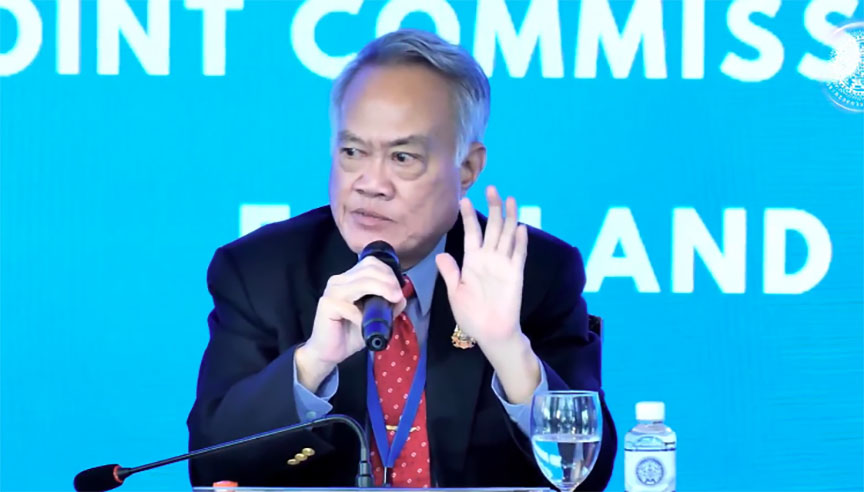
Despite the diplomatic friction, Thai officials reported technical progress in boundary demarcation. Prasas Prasasvinitchai, Chairman of the Thai side of the JBC, said the recent meeting was “the smoothest” of the five he has attended.

The commission has jointly confirmed 45 out of 74 mutually agreed boundary markers and is producing new maps using advanced Orthophoto and LIDAR technology at a 1:50,000 scale – not the 1:200,000 scale referenced in some media reports.

“The appropriate map for practical work is the 1:50,000 scale, which both sides are jointly producing, making it naturally binding,” Prasas explained.

Prasas Prasasvinitchai
“Prasas Prasasvinitchai, Chairman of the Thai side of the JBC, answers the media at a press conference at the Ministry of Foreign Affairs on June 16, 2025.

Peaceful Approach Emphasized

Thai officials emphasized their commitment to peaceful resolution and warned against emotional reactions that could escalate tensions. The government promised not to use the international relations issue for domestic political purposes.

“Thailand is adopting a cautious approach, avoiding emotional reactions or escalating the conflict,” Nikorndej said. “The Thai government has no intention to attack the people.”
Officials also cautioned against misinformation spread through social media, noting that such platforms are not official communication channels and could lead to widespread misunderstandings.

September Meeting Planned

Despite the ICJ filing, Thailand remains committed to bilateral dialogue. The country is prepared to host a special JBC meeting in September, which the Cambodian side has reportedly accepted.

Thai officials argue that bilateral mechanisms like the JBC, General Border Committee (GBC), and Regional Border Committee (RBC) remain the most appropriate forums for resolving the dispute in accordance with UN Charter principles and international law.

The Franco-Siam Treaties of 1904 and 1907 serve as the legal framework for negotiations, officials noted, emphasizing these are international legal obligations rather than voluntary agreements.

Border disputes between the two Southeast Asian neighbors have persisted for decades, with the temple areas representing some of the most sensitive and politically charged territorial issues in the region.

_______________

Advertisement

Most Cambodian Workers Remain in Thailand Despite Tensions

workers
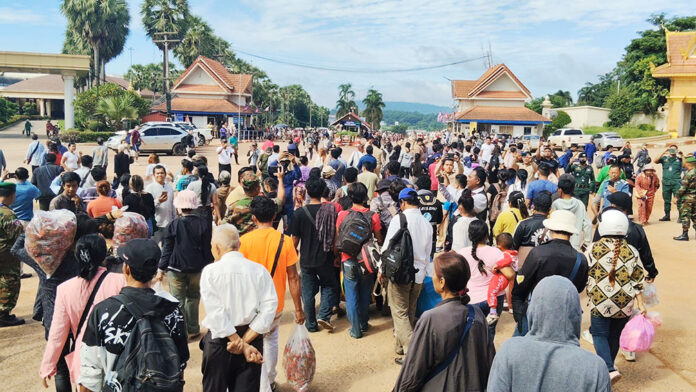
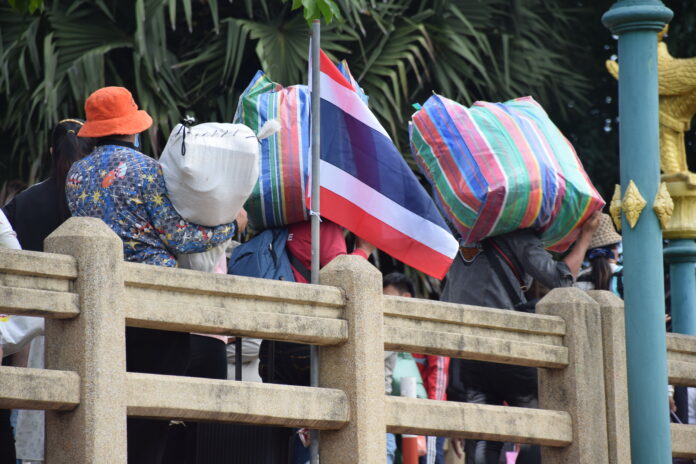
Cambodian nationals carry bags and belongings as they return to Cambodia through the Chong Chom border crossing in Dan Subdistrict, Kab Choeng District, Surin Province. Many are temporary laborers who said they want to go back and wait to see how the situation develops, on June 16, 2025.

BANGKOK — Thailand reaffirms support for Cambodian workers, citing higher wages The Thai labour sector has confirmed that employment of Cambodian workers is continuing as usual, especially for the more than 400,000 legally registered migrants.

Labour unions have not received any reports of workers wanting to return to Cambodia. Wages in the Thai construction sector are said to be three times higher than those in Cambodia.

Cambodian Prime Minister Hun Manet has announced several times, most recently on Monday 16 June after a meeting of the Thai-Cambodian Joint Border Committee (JBC), that Cambodia is preparing to recall its citizens currently working in Thailand. He instructed the ministries to prepare for their return as there was tension with Thailand after a brief clash at the border on May 28, 2025.

Thai PM Rejects Worker Expulsion Claims

Thai Prime Minister Paetongtarn Shinawatra reiterated that the Thai government has never intended to expel migrant workers from any country. She emphasised that Thailand adheres to human rights principles and continues to offer protection to workers.

However, if a country takes measures to bring back its workers and provides employment opportunities, it is within the rights and obligations of that country to allow workers to choose freely.

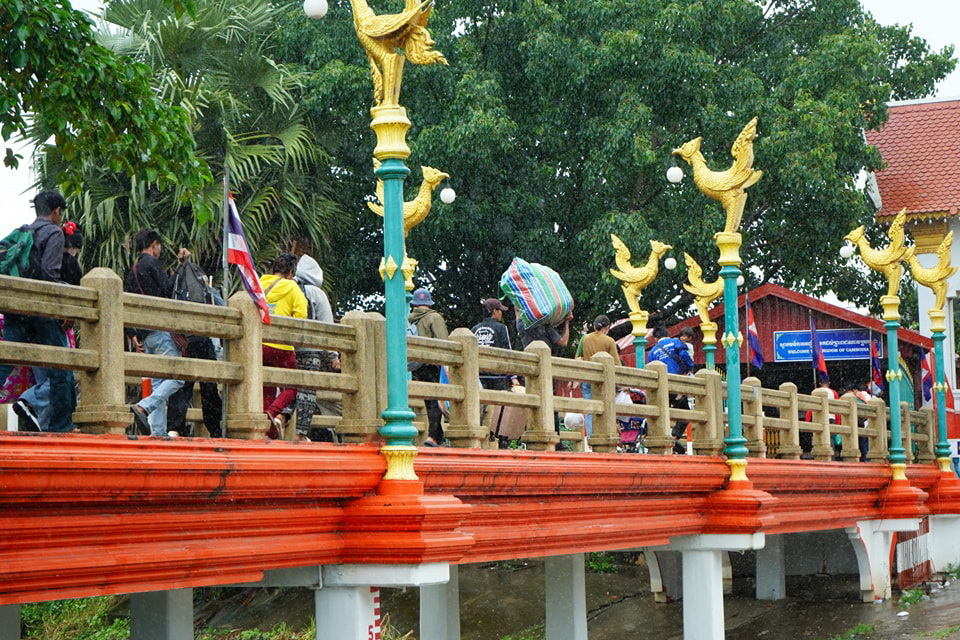
It was reported from the border provinces of Surin, Sa Kaeo and Chanthaburi on the morning of June 16 that some Cambodian nationals were seen returning home with bags and important items.

Meanwhile, the transport of goods was interrupted from the Thai side. Lorries were stuck in long queues at the border for three days in a row.

paetongtarn 16 06 2025 2
Prime Minister Paetongtarn Shinawatra holds a press conference after convening a meeting of relevant agencies to discuss the results of the Thai-Cambodia Joint Border Committee (JBC) meeting at Ban Phitsanulok on June 16, 2025.

Cambodian Workers Still Employed in Thailand

Labour Minister Pipat Ratchakitprakarn explained that around 500,000 Cambodian workers are currently employed in Thailand.

The ministry has instructed five provincial labour offices to monitor developments in their respective areas and asked employers hiring Cambodian workers to report any workforce-related problems immediately. So far, Cambodian workers have been able to continue working without interruption.

The 500,000 Cambodian laborers in Thailand can be divided into three groups: Over 400,000 legally registered workers Undocumented workers About 20,000 seasonal workers, who mostly work in the fruit harvest and commute across the border.

Passport Extension for Cambodian Workers

The Thai Employers’ Federation has recently confirmed that many Cambodian workers remain employed in various sectors and there are no official reports of workers intending to return home. If someone wants to leave voluntarily, the Thai government will not prevent them from doing so.

The Labour Minister added that the Ministry of Labour will grant a one-year extension to Cambodian workers whose passports have expired and who cannot return home to renew them. Employers have the assurance that legal Cambodian workers can continue to work even in times of increasing tensions at the border.

workers
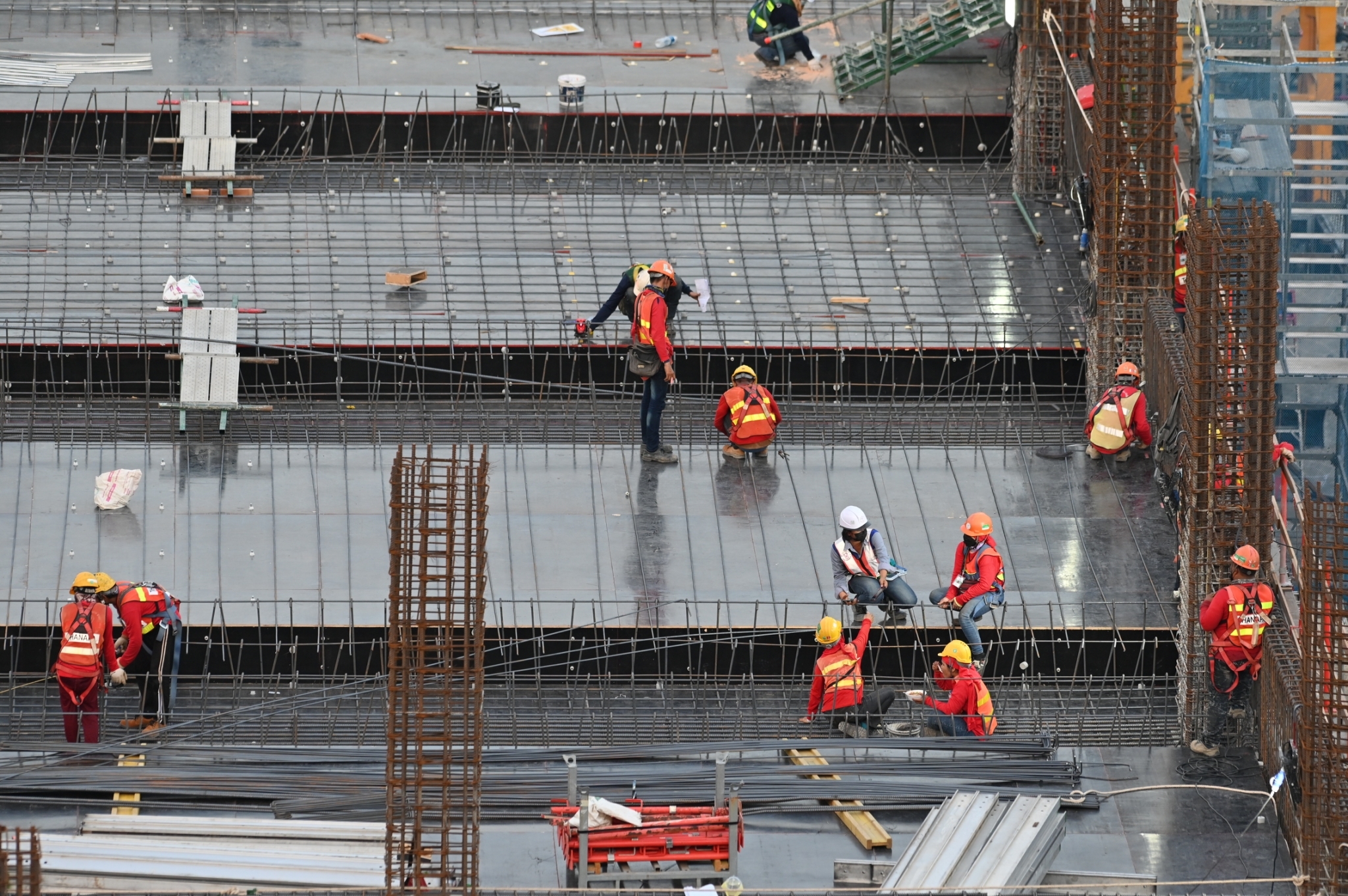
Around 200,000 Cambodian nationals, both documented and undocumented, are currently working in the Thai construction sector.

In addition, under the MoU (Memorandum of Understanding) with Cambodia, many workers have recently extended their contracts, which are valid until February 2026.

In the event that the situation lasts longer, the Ministry of Labour has drawn up contingency plans. In addition to Cambodia, Thailand also legally employs labour from Myanmar, Laos and Vietnam, of which Myanmar accounts for the largest share.

Thailand is currently renewing its MoU with Myanmar for another two years, covering more than 2 million workers, with more workers from Myanmar awaiting registration. These workers are already in Thailand and working there. The ministry confirmed that the country has sufficient foreign labour.

Thai Employers Continue to Hire Normally

Dr. Naowarat Songsawatichai, president of the Employers Confederation of Thailand (ECONTHAI), echoed this sentiment, stating that there is currently no indication that Cambodian workers want to return home. She believes that most will stay in Thailand and continue to work with a valid work permit.

Thai employers continue to recruit labour and are monitoring developments in both countries to see if any changes are needed. She added that legally registered Cambodian workers can continue to work normally.

checkpoint chantaburi
Cambodians cross on foot with their belongings from Thailand to Cambodia at Ban Laem border crossing, Chanthaburi province, June 14, 2025.

When asked if the sudden return of Cambodian workers would affect Thai businesses, Dr Naowarat explained that Cambodian workers do not make up a large part of the labour force in Thailand, as most migrant workers are from Myanmar.

However, should there be a sudden, unannounced departure, this would indeed cause problems for employers due to a lack of replacement labour. Nevertheless, she expressed confidence that both governments will work together to find a suitable solution.

Thai Wages Three Times Higher Than in Cambodia

Krisda Chancharasangsang, vice president of the Thai Contractors Association Under Royal Patronage, explained that the reports of Cambodians returning probably refer to day labourers in the border area and not those employed in the construction sector.

So far, no major movements have been observed among Cambodian construction workers. If there is a return, it could be undocumented workers. It is assumed that legally registered workers with proper work permits will remain in Thailand unless the situation escalates into armed conflict or an official order to repatriate is issued.

An important reason for this is that wages in Thailand are about three times higher than in Cambodia. Around 200,000 Cambodian nationals, both documented and undocumented, are currently working in the Thai construction sector.

The daily minimum wage for women is around 360 baht (depending on the province). For men, it starts at around 400 baht per day. Skilled labourers such as bricklayers, welders, electricians and painters can earn between 500 and 600 baht per day.

_____________

Advertisement

Marriott Crowns Winners of Sustainable Bartender Championship

The semi-final of this regionwide competition was staged at W Bangkok, as Marriott’s talented bartenders were challenged to revive forgotten ingredients and create sustainable cocktails 

From left to right: The six best entrants from JW Marriott Khao Lak Resort & Spa, Hua Hin Marriott Resort & Spa, W Bangkok, Moxy Bangkok Ratchaprasong, Royal Orchid Sheraton Riverside Hotel Bangkok, and Phuket Marriott Resort & Spa, Merlin Beach

Bangkok, Thailand: June 16, 2025 – Marriott International has successfully staged the semi-final of its “Sustainable Bartender Championship” at W Bangkok, celebrating the talent, creativity, and innovation of the mixologists at its hotels & resorts in Thailand and Cambodia. In a dynamic event on June 6th, 2025, six highly skilled bartenders shook up their original concoctions in front of an expert panel of judges, with two winners going through to the Asia Pacific “Rising Stars” grand final in September.

image3 19

This year’s competition challenged the contestants to invent fresh new cocktails that revive forgotten local ingredients from their destination, while also eliminating food waste and demonstrating a sustainable mindset, in line with Marriott’s ESG (Environmental, Social, and Governance) values.

The contest was staged in collaboration with Pernod Ricard’s leading beverage brands, including Codigo 1530, Monkey 47, Martell, Chivas Regal, Ki No Bi, and Absolut Elyx. The bartenders were required to use these premium products, along with their chosen “forgotten ingredients” to create a highly original and delicious cocktail. Having recorded a compelling reel to present their drinks, and a one-month period to promote and sell this special cocktail at their bar, the six best entrants from Thailand and Cambodia were invited to W Bangkok for the semi-final, where each competitor had 20 minutes to present their cocktail to the judges.

Having selected their top three cocktails, the judges welcomed the finalists to the last challenge – a daunting “Black Box Final”! In this live, high-pressure finale, the three bartenders had to craft cocktails using secret ingredients. After a tense wait, the two winners were crowned.

The level of skill and creativity on display at this event was truly inspiring. I would like to thank every contestant who entered; it gives us great confidence that there are so many talented, up-and-coming mixologists at Marriott Bonvoy’s portfolio of hotels and resorts across the region. It is also heart-warming to see that, while many of them are young, they are embracing the time-honored ingredients and authentic flavors of their regions. The future is bright for the beverage industry in Thailand and Cambodia,” said Brad Edman, Market Vice President for Thailand, Cambodia & Myanmar.

image2 22

The two winners who were crowned as Marriott’s 2025 “Rising Stars” are Satichai “James” Sommao from Siam Yacht Club, Royal Orchid Sheraton Riverside Hotel Bangkok and Jakkrit “Golf” Promchaisit from Bar Sathorn, W Bangkok.

James wowed the judges with The Kyoto Goldsail, which takes the often-overlooked vegetable bok choy and blends it with the richness of Thai tea, enhanced with the botanicals of Ki No Bi Kyoto Dry Gin and finished with a Thai tea smoke. Every element is crafted with a zero-waste mindset – from bok choy-infused vermouth to dehydrated garnishes and pickled stalks – making it both a creative and conscious tribute to modern mixology.

Golf’s original cocktail, Sathorn Garden, embodies a circular approach to sustainability. It starts at W Bangkok’s rooftop garden, where food waste from the hotel’s restaurants is composted into nutrient-rich soil, where herbs like mint are grown for use behind the bar. Cold-infused coconut cream was blended with fresh mint and Japanese cucumber to create a near zero-waste cocktail that champions local produce, mindful consumption, and a deep respect for the ingredients.

At Marriott International, our commitment to sustainability runs throughout every aspect of our business. In terms of F&B, we work tirelessly to minimize food waste and partner with trusted local suppliers to source sustainable ingredients, creating long-term benefits for the community and the environment. So, it is wonderful to see how our associates are embracing this philosophy and moving our business forward. Events such as the ‘Sustainable Bartender Championship’ underscore our dedication to ‘Doing Good in Every Direction’, in line with Serve360, our sustainability and social impact platform,” added Vincent Van Mechelen, Senior Director of Operations for Thailand, Cambodia & Myanmar

The two regional winners will now compete in the Asia Pacific Regional Finals, where they have a chance to win the grand prize from our sponsor partner, Pernod Ricard: an all-expenses-paid trip to the Pernod Ricard Brand House, plus a guest bartending tour of some of the region’s top bars.

To learn more about Marriott Bonvoy’s hotels and resorts in Asia Pacific, please visit www.marriott.com

image4 19

Advertisement

B.Grimm Power’s THB 7 Billion Bond Nearly 2x Oversubscribed

Grateful for Strong Investor Interest and Confidence, Empowered and Ready for Sustainable Growth.

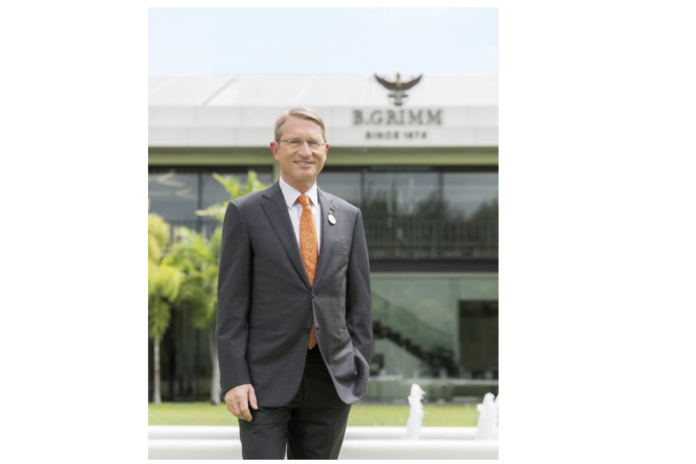
B.Grimm Power Public Company Limited (BGRIM), one of Thailand’s leading energy producers with a focus on combined cycle co-generation power and renewable power plants both domestically and internationally, has successfully completed its senior unsecured debenture issuance No. 1/2025 with a total offering size of THB 7 billion.

Dr. Harald Link, Group President of B.Grimm Power  Public Company Limited, expressed appreciation to all investors for their strong support, which enabled the company to raise the full target amount of THB 7 billion, exceeding the initially targeted offering amount. The issuance received overwhelming interest from a wide range of investor types, both Institution Investor and high-net-worth individuals. The bonds were almost twice oversubscribed. Proceeds from the bond issuance will be used to repay loans from financial institutions.

The bonds were rated “A-” with a “Stable” outlook by TRIS Rating on 5 June 2025 and were offered in four tranches:

  • Tranche 1: 3-year zero-coupon bonds, totaling THB 2.0 billion, with an implied yield of 2.84% p.a.
  • Tranche 2: 4-year bonds, totaling THB 3.25 billion, with a coupon rate of 3.30% p.a.
  • Tranche 3: 7-year bonds, totaling THB 300 million, with a coupon rate of 3.70% p.a.
  • Tranche 4: 10-year bonds, totaling THB 1.45 billion, with a coupon rate of 3.90% p.a.

In addition, BGRIM operates its business under the “GreenLeap – Global and Green” strategy. The company is committed to achieving continuous growth and aims to become a global leader in sustainable and reliable energy solutions. BGRIM plans to expand its total operating capacity from 4,121 MW as of May 2025 to 10,000 MW from operating and committed projects by 2030 through investments in both domestic and international power projects. The strong demand for the bonds reflects investors’ confidence in BGRIM’s solid performance, highly experienced management team, and its leadership in power and steam generation with world-class operational standards. With its well-established presence in Thailand, B.Grimm Power remains committed to growing alongside the country’s future.

Advertisement

Trump Vetoed Israeli Plan to Kill Iran’s Supreme Leader, US official Tells AP

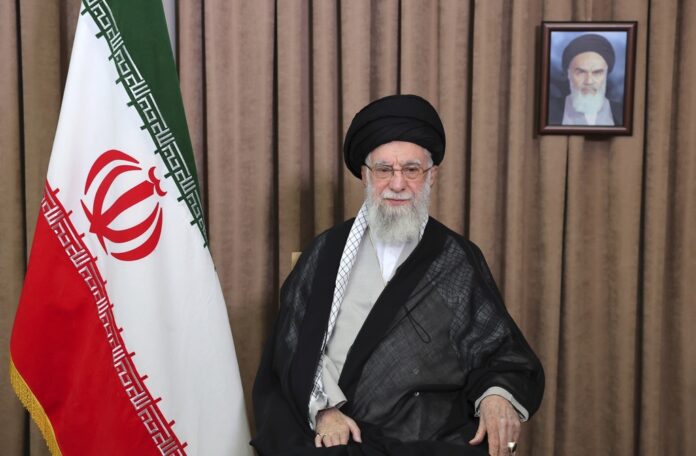
Iranian supreme leader, shows Supreme Leader Ayatollah Ali Khamenei in a televised speech, under a portrait of the late revolutionary founder Ayatollah Khomeini, Friday, June 13, 2025. (Office of the Iranian Supreme Leader via AP)

WASHINGTON (AP) — President Donald Trump vetoed a plan presented by Israel to the U.S. to kill Iran’s Supreme Leader Ayatollah Ali Khamenei, according to a U.S. official familiar with the matter.

The Israelis informed the Trump administration in recent days that it had developed a credible plan to kill Khamanei. After being briefed on the plan, the White House made clear to Israeli officials that Trump was opposed to the Israelis making the move, according to the official who was not authorized to comment on the sensitive matter and spoke on the condition of anonymity.

The Trump administration is desperate to keep Israel’s military operation aimed at decapitating Iran’s nuclear program from exploding into an even more expansive conflict and saw the plan to kill Khamenei as a move that would enflame the conflict and potentially destabilize the region.

Asked on Sunday about the plan during a Fox News Channel’s “Special Report with Bret Baier, Sunday, Israeli Prime Minister Benjamin Netanyahu declined to comment.

“But I can tell you, I think that we do what we need to do, we’ll do what we need to do. And I think the United States knows what is good for the United States,” Netanyahu said.

Trump’s rejection of the proposal was first reported by Reuters.

AP25163561156649
President Donald Trump speaks during an event to sign a bill blocking California’s rule banning the sale of new gas-powered cars by 2035, in the East Room of the White House, Thursday, June 12, 2025, in Washington. (AP Photo/Alex Brandon)

Trump on Sunday issued a stark warning to Iran against retaliating on U.S. targets in the Middle East while also predicting Israel and Iran would “soon” make a deal to end their escalating conflict.

Trump in an early morning social media posting said the United States “had nothing to do with the attack on Iran” as Israel and Iran traded missile attacks for the third straight day. Iran, however, has said that it would hold the U.S.—which has provided Israel with much of its deep arsenal of weaponry—for its backing of Israel.

Israel targeted Iran’s Defense Ministry headquarters in Tehran and sites it alleged were associated with Iran’s nuclear program, while Iranian missiles evaded Israeli air defenses and slammed into buildings deep inside Israel.

“If we are attacked in any way, shape or form by Iran, the full strength and might of the U.S. Armed Forces will come down on you at levels never seen before,” Trump said.

Hours later Trump took to social media again to predict “Iran and Israel should make a deal, and will make a deal.”

The U.S. president said he has a track record for de-escalating conflicts, and that he would get Israel and Iran to cease hostilities “just like I got India and Pakistan to make” after the two countries’ recent cross-border confrontation.

Some influential backers of Trump are him urging to keep the U.S. out of Israel’s escalating conflict with Iran.

AP25164029178672
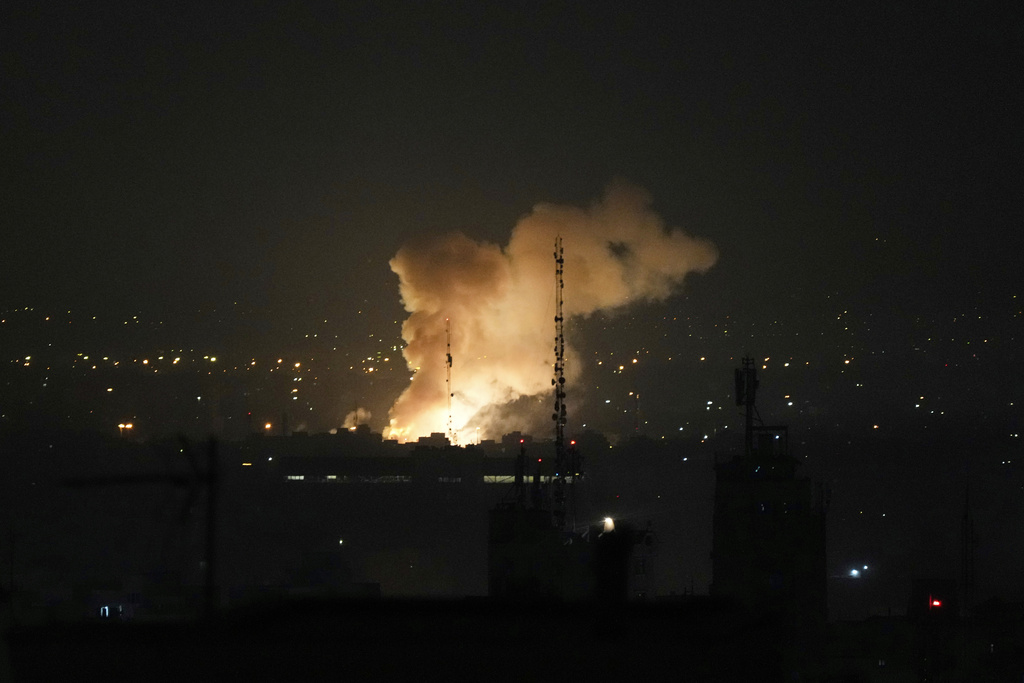
Smoke rises up after an explosion in Tehran, Iran, Friday, June 13, 2025. (AP Photo/Vahid Salemi)

Rep. Marjorie Taylor Greene, R-Ga., Turning Point USA founder Charlie Kirk, former Fox News host Tucker Carlson are among the prominent backers of Trump who have argued voters backed Trump because he would not involve the nation in foreign conflicts.

Kirk said last week that before Israel launched the strikes on Iran that he was concerned the situation could lead to “a massive schism in MAGA and potentially disrupt our momentum and our insanely successful Presidency.”

Kentucky Republican, Sen. Rand Paul praised Trump for having shown restraint and said he hoped the president’s “instincts will prevail.”

“So, I think it’s going to be very hard to come out of this and have a negotiated settlement,” Paul said in an appearance on NBC’s “Meet the Press.” ”I see more war and more carnage. And it’s not the U.S.’s job to be involved in this war.”

Advertisement

Thailand Denies ICJ and Map Discussion in Cambodia Border Talks

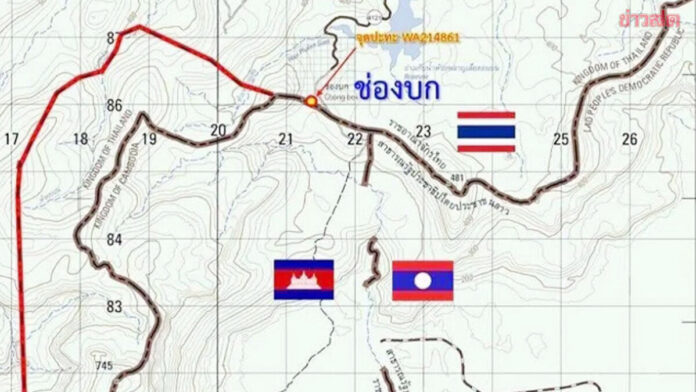
Map showing the clash between Thai and Cambodian soldiers on March 28, 2025, in which one Cambodian soldier was killed.

BANGKOKThailand’s Ministry of Foreign Affairs issued a statement late Sunday refuting Cambodian media reports that disputed border areas were part of recent bilateral boundary commission discussions in Phnom Penh.

The clarification came after the 6th Joint Boundary Commission (JBC) meeting between Thailand and Cambodia concluded on June 15. Cambodia’s Ministry of Border Affairs later issued a statement saying Cambodia had proposed submitting four disputed areas to the International Court of Justice (ICJ).

The statement said both sides would adhere to legal documents and the 1:200,000 scale map agreed upon in the 2000 MOU, following the 1904 and 1907 Franco-Siamese treaties for border demarcation.

Thailand Refutes Cambodian Claims

“There has been widespread misunderstanding,” Thailand’s Foreign Ministry stated, emphasizing that the JBC meeting held June 14-15 in Phnom Penh “did not discuss Cambodia’s proposal to bring the four disputed areas to the ICJ for consideration, nor was there any discussion of the 1:200,000 Siam-Indochina Commission map as claimed by Cambodia.”

cambodia thai1
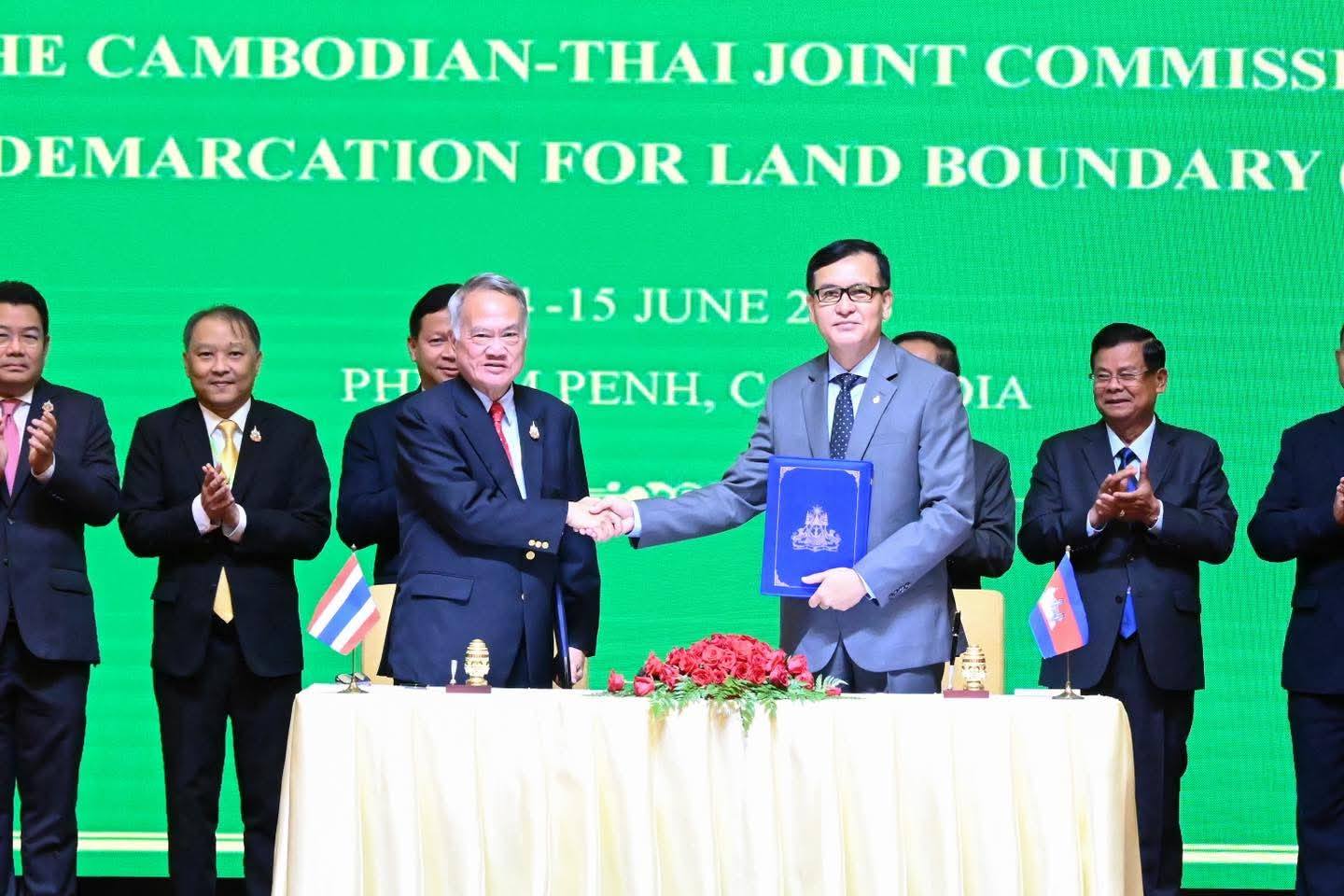
Thai Ambassador Prasas Prasasvinitchai (left) and Cambodian Minister Lam Chea, co-chairs of the Thailand-Cambodia Joint Boundary Commission, jointly chaired the closing session of the 6th JBC meeting and signed agreed minutes in Phnom Penh on June 15, 2025.

The disputed areas include Mom Bei, Ta Moan Thom, Ta Moan Touch, and Ta Krabei territories along the Thai-Cambodian border.

According to Khmer Times, Cambodian Minister Lam Chea had reportedly told his Thai counterpart that Cambodia proposed jointly submitting the border disputes to the ICJ, while reaffirming Cambodia’s right to initiate legal procedures unilaterally if Thailand continues rejecting ICJ jurisdiction.

Thai Official Account Differs

Thailand’s Foreign Ministry initially described the meeting as proceeding “smoothly in a cordial setting,” with both co-chairs expressing mutual appreciation as discussions concluded successfully. The ministry emphasized the JBC’s importance as a bilateral mechanism for addressing border challenges along the approximately 800-kilometer frontier.

However, in Thailand’s latest statement, the ministry also stated that “Thailand expresses deep disappointment that Cambodia still refuses to cooperate with Thailand in resolving specific issues and reducing mutual tensions, but continues to push forward with bringing the four disputed areas to the ICJ, which reflects Cambodia’s lack of genuine intention to use the existing bilateral mechanisms based on good neighborly relations.”

Despite the tensions, Thailand confirmed it will host the next special JBC meeting in September 2025.

cambodia thai2
Thai Ambassador Prasas Prasasvinitchai (left) and Cambodian Minister Lam Chea, co-chairs of the Thailand-Cambodia Joint Boundary Commission, jointly chaired the closing session of the 6th JBC meeting and signed agreed minutes in Phnom Penh on June 15, 2025.

Former Minister Proposes Intensified Response

Former Foreign Minister Noppadon Pattama, now a Pheu Thai Party MP, recommended four additional measures to strengthen Thailand’s position:

  1. Briefing foreign diplomatic missions in Thailand on the border dispute
  2. Having Thai UN representatives engage with Security Council members
  3. Establishing a legal working group to monitor Thailand-Cambodia issues
  4. Intensifying communication efforts to match Cambodian information campaigns

“The government’s direction of adhering to bilateral negotiations under the MOU framework and rejecting ICJ jurisdiction is clear, but operational intensity must be increased,” Noppadon stated.

Energy Security Concerns

Separately, Thailand’s National Security Council called an urgent meeting for June 16 to assess potential impacts after Cambodia’s Prime Minister announced plans to generate electricity and internet services independently rather than purchasing from Thailand.

The three-tier cooperation mechanism between Thailand and Cambodia includes the JBC for technical issues, the General Border Committee for defense matters, and Regional Border Committees for local military coordination.

_________

Advertisement

Why Is the Thai-Cambodian Relationship the Most Toxic and Complex, Far Beyond Just Border Disputes?

Cambodians walk from Thailand to Cambodia through a small gate at the border checkpoint that Cambodia allows for foot traffic, but agricultural products are still prohibited from being transported in or out. At Ban Laem checkpoint, Pong Nam Ron District, Chanthaburi Province on June 15, 2025.

The Thai-Cambodian conflict is far more complex than mere border disputes that is a burning issue for both nations at the moment, driving ultranationalist groups in both Thailand and Cambodia, with their insatiable patriotism (or fanaticism), wish to escalate the conflict, and urging their respective governments to adopt extreme measures. This is now concretely impacting the economies and a segment of the populations of both countries.

On the Thai side, those affected include:

  • Border traders and merchants.
  • Exporters of Thai goods, especially consumer products and agricultural produce, the latter now banned from entering Cambodia through border passes..
  • The call to boycott Thai products by former Cambodian PM and Senate President Hun Sen and Cambodian ultranationalist groups.
  • The Thai film and drama industry, now banned, to be replaced by a TV hagiography on guess who – Hun Sen .
  • Thai companies organizing tours to Cambodia.
  • Internet service providers.
  •  Thai hotels in Phnom Penh, among others.

Impacts on Cambodia

On the Cambodian side, impacts include:

  • A reduction in Thai tourists, which in 2024 was the largest group of foreign tourists to the kingdom with 2.1 million Thai tourists visited Cambodia last year, in 2024, according to the Cambodian Ministry of Tourism itself. This is followed by at very distant second of 1.3 million tourists from Vietnam and 848,000+ Chinese tourists.
  • The potential impact on approximately 500,000 Cambodian migrant workers in Thailand if they are forced to return to Cambodia, as suggested by Hun Sen, among other issues.

This is a lose-lose, not a win-win, scenario for both countries. However, the ultranationalists on both sides are indifferent, as “blood is in their eyes,” as we would say in Thai language, leading to an exchange of blows and utter chaos at present.

Domestic Political Factors

Furthermore, domestic political factors in both Thailand and Cambodia do not favour a compromise.

On the Thai side, anti-Thaksin groups are seizing this opportunity to attack Thaksin and his daughter’s government due to the excessively close relationship between the Hun Sen family and the Shinawatra family. There is an attempt to make the government fail and collapse, or even to call for the Thai military to seize power.

NIDA Poll on Sunday reveals survey results showing public trust in the Royal Thai Army to protect national interests in the Thai-Cambodian conflict.

The Poll research center of the National Institute of Development Administration (Nida), released the results of a survey titled “Thailand Loves Peace, But Is Not Afraid to Fight.” The survey was conducted between June 9-11, involving a total of 1,310 samples of people aged 18 and above, distributed across all regions, education levels, occupations, and incomes nationwide.

The survey focused on trust and satisfaction with the roles of various sectors in resolving the conflict between Thailand and Cambodia.

When asked about the level of trust in various sectors to protect national interests in the case of the Thai-Cambodian conflict, the survey found:

  • The Army: 62.52% of respondents stated they had very high trust, followed by 23.74% who had quite high trust, 8.85% who had not much trust, and 4.89% who had no trust at all.
  • The Thai Government: 37.48% of respondents stated they had no trust at all, followed by 31.68% who had not much trust, 18.85% who had quite high trust, and 11.99% who had very high trust.

And guess what? The Commander of the 2nd Army Region Lt Gen Boonsin Padklang who is known for his tough words about the Thai army ready for battle has emerged as a “hero”, or at least a popular figure among ultranationalist Thais.

On Saturday, Boonsin declared:”This is my land. If you want it, let’s duel.”

The fact that many Thais do not trust the current Thai government compels the government led by Paetongtarn to play a hardline role against Cambodia, making it more difficult for both sides to deescalate and find a resolution (e.g., closing border checkpoints, cutting off electricity power and the internet).

On the Cambodian side, the leaders must also perform, demonstrating that Cambodia is sovereign, not afraid of a larger nation, and has no collusions with the Shinawatra family.

That’s not all, however.

Deep-seated Hatred and Toxicity on Social Media.

While the previous two factors are already severe, there is also the factor of long-standing hatred and mutual contempt, which is highly toxic on social media. This animosity is constantly reproduced and disseminated by the so-called “keyboard warriors” from both nations, sitting in their air-conditioned rooms and perpetuating hatred against one another.

They cling to a very narrow understanding of history and culture. This includes contentious issues such as:

  •  Whether Muay Thai originally came from Khmer boxing.
  • Whether border temples were originally built by Khmers and belong to Cambodia.
  • Whether Angkor Wat should belong to Thailand.
  • Whether Khmer people really built Angkor Wat.
  • Whether the Thai language was copied from Khmer, including some royal vocabulary.
  • Whether Thai numerals are copied from Khmer numerals are similar.
  • Calling Thailand “Thief Land” (country of thieves).
  • Calling Cambodia “Claimnodia” because Cambodians tend to (sometimes falsely) claim everything as originally their own.
  • Thailand once hosting Khmer refugees from the Khmer Rouge era, “but today, they are ungrateful.”
  • Claims that since eastern and central Thailand in the past was part of the Angkorian Empire, it should be a part of Cambodia now.
  • Accusations of Thai architecture copying Khmer. Accusations of Khmer copying Khon masked dance and Muay Thai, Khmer copying Thai female traditional attire, or vice versa, etc.

A Troubled History

Let’s not forget, the Thai embassy in Phnom Penh is the only Thai embassy in the world that has been set on fire by a foreign mob, in 2003.

Some Thais still see Angkor Wat as essentially Thai if not for France’s colonial foray into Cochin China before it took Cambodia from Siam’s control as its protectorate. Angkor Wat, meanwhile, os situated in Cambidia’s Seam Reap province, which in Khmer means the province where the Siamese were defeated. It invokes the failed attempt by Siam that make Angkor Wat a part of Thailand today. (The last attempt was during the Second World War when Thailand enlisted the help of Imperial Japan to “retake” Siem Reap, lasting 5 years, from 1941 to 1946, during Franco-Thai war.

Thais also see the map drawn by the French demarcating what became Thailand and Cambodia as essentially unfair and under duress, that’s why the Thai government insists it will not accept the jurisdiction of the International Court of Justice (ICJ).

Cambodians meanwhile see Thailand as their historical agressors, therefore the won’t budge in this present conflict with such a deep historical root.

In the end, it can be said that the Thai-Cambodian relationship, which officially reaches its 75th year of diplomatic ties this year—and in reality, has a much longer shared history—is the most toxic relationship Thailand has with any foreign country.

________

Advertisement

High-Spending European Tourists Boost Thailand’s Green Season

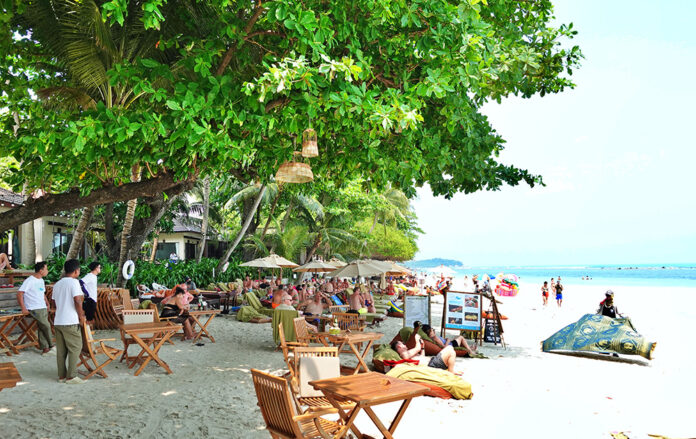
Koh Samui remains full of tourists during the first quarter of 2025.

BANGKOK — The Tourism Authority of Thailand (TAT) is accelerating efforts to boost quality markets toward “Million Market” status while restructuring the tourism sector to prioritize value over volume.

Ms. Thapanee Kiatphaibool, Governor of the Tourism Authority of Thailand, revealed that foreign tourist trends during June – the Green Season period – show positive growth across multiple markets, particularly high-spending European markets which grew 13% overall.

Germany led European growth with a remarkable 71% increase in tourist arrivals, followed by Italy at 28% and Switzerland at 24%. The Middle East market, entering its tourism season, demonstrated exceptional growth of 55%, with Saudi Arabia up 61%, Oman increasing 54%, UAE rising 51%, and Israel growing 32.49%.

Malaysia Overtakes China as Top Source Market

A significant shift occurred in tourism rankings, with Malaysia surpassing China as Thailand’s top source of foreign visitors for the first time in 13 years since 2012.  Since early June, Malaysian tourist arrivals have increased 13.22% compared to the same period last year. Emerging markets also show promise, with the Philippines growing 24%.

malaysia betong2025
Malaysian tourists visit Betong, Yala Province on June 14. Malaysian visitor numbers have surpassed China in the first half of 2025.

Strong Forward Booking Signals

From Q3 onwards, TAT sees continued positive forward booking signals from airlines for July-September 2025 (Summer Slot), with growth trends in nearly all markets: Europe (+21%), Middle East (+25%), and Asia (+7%). This momentum continues into October-December 2025 (Winter Slot) with Europe (+17%), America (+12%), and Asia (+22%).

Strategic Market Development Initiatives

TAT will focus on relocation strategies to create market balance while promoting potential markets. Key initiatives include:

  • United Kingdom: Joint promotions with British Airways and Norse Atlantic Airways, targeting both first-time and repeat visitors, supported by new London-Bangkok flights (2-4 weekly) by Norse Atlantic Airways and increased TUI UK services to London-Bangkok and Manchester-Bangkok (2 weekly each).
  • Germany: Partnerships with major tour operators like Der, TUI, and Condor airline for charter flights during October-December 2025, plus celebrity familiarization trips targeting DINKs, Gen Z, and LGBTQ markets.
  • Russia: Joint promotions with major tour operators across primary and secondary Russian cities.
  • France: Collaborations with partners including Carrefour Voyages, Lastminute, and Edreams (Opodo), plus participation in events like Cannes Yachts Show and Wedding & Honeymoon Fair.
  • United States: “2 by 4 Global Amazing Month Campaign” via Travelstride platform and co-op sales campaigns with EVA Air through Expedia.
green season
Green Season tourism

Strategic Restructuring for Sustainable Growth

Following recent tourism challenges, TAT is adjusting strategies to respond to changing market structures. The focus includes relocation efforts to balance global tourist markets, promoting new Thai tourism destinations, and creating geographical balance, particularly in secondary cities with lower visitor numbers.

The authority will employ creative activities and event marketing to stimulate Green Season markets while targeting quality tourists with high purchasing power and tourism spending, restructuring the tourism market for sustainable “Value over Volume” growth.

______

Advertisement

Hot News

LATEST NEWS

Bangkok
overcast clouds
26.1 ° C
26.1 °
22.7 °
93 %
1.9kmh
100 %
Fri
25 °
Sat
33 °
Sun
35 °
Mon
37 °
Tue
37 °