



























BANGKOK — 28 May 2026, Chile opened the Chile-ASEAN Business Summit 2026 in Bangkok this week, bringing together Chilean exporters, importers, retailers, distributors and food industry executives in one of its largest trade engagement initiatives in Thailand and Southeast Asia to date.
Chile Expands ASEAN Trade Push
Organised by ProChile, the trade promotion agency under Chile’s Ministry of Foreign Affairs, the five-day programme includes business meetings, trade networking events, retail market visits and participation in THAIFEX-Anuga Asia, one of Asia’s largest food and beverage exhibitions.
The summit, which runs from 26 to 30 May, is part of Chile’s broader strategy to strengthen commercial partnerships with Thailand and Southeast Asia, where demand for imported premium food products continues to grow.
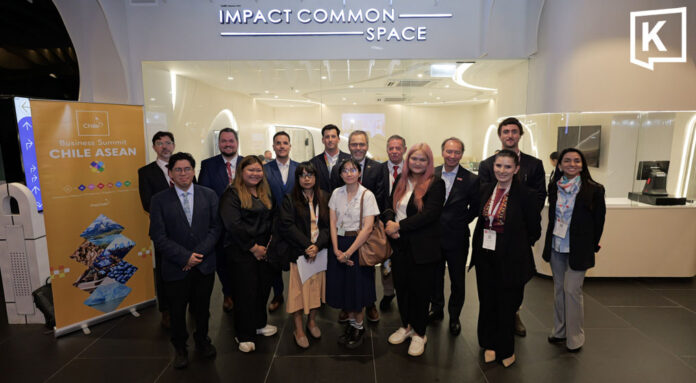
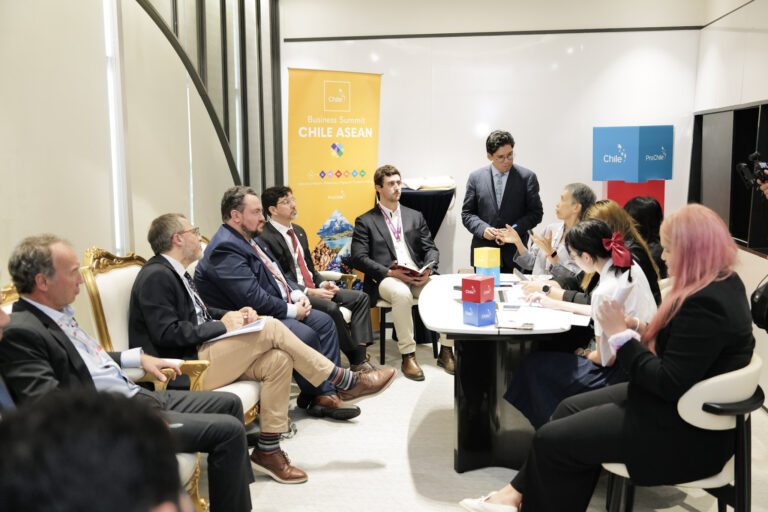
Speaking at a press briefing at IMPACT Challenger, Ignacio Fernández, director general of ProChile, said Chile viewed ASEAN as a region of growing opportunity.
Fernández said business and trust were built face to face, which was why Chile had returned to ASEAN for a second consecutive year. He described the region as a major opportunity for Chilean products and services and said Chile wanted to build long-term relationships based on trust. He also described Thailand as Chile’s principal trading partner within ASEAN and said the wider region offered long-term opportunities for growth and collaboration.
The briefing was attended by David Hansen Salas, chargé d’affaires a.i. of Chile to Thailand, and Oscar Arriagada, trade commissioner of ProChile in Thailand.
Hundreds of Business Meetings Planned
This year’s summit drew buyers and business representatives from Thailand, Vietnam, Indonesia, Malaysia, Singapore and the Philippines. More than 300 business-to-business meetings are expected between Chilean exporters and ASEAN importers.
The Chilean delegation includes 28 companies from sectors including salmon and seafood, fresh fruit, meat, nuts, wine and beverages, forestry products, agribusiness, aquaculture services and food innovation.
Three major Chilean industry associations — Fruits from Chile, Faenacar and ChileNuts — are also participating, alongside representatives from Chile’s salmon and mussel export sectors.
Key delegates attending the briefing included Iván Marambio, president of Fruits of Chile; Rafael Lecaros, general manager of Faenacar; Eduardo Piccolo, representative of AmiChile, which represents Chilean mussel producers; Martín Correa, representative of ChileNuts; and Rodrigo Bustos, representative of SalmonChile.
Thailand’s Role in Chile’s ASEAN Strategy
The summit builds on the inaugural Chile-ASEAN Business Meeting in 2025, which brought together 76 importers from six countries and generated immediate business projections worth US$6.4 million.
Thailand was selected as host due to its position as Chile’s largest trading partner in ASEAN and its role as a regional distribution, logistics and food trade hub. In 2025, Thailand ranked as the 20th-largest destination for Chilean exports globally, with exports valued at approximately US$596 million.
Trade between Chile and ASEAN reached approximately US$5.17 billion in 2025, while Chilean non-mining exports to the bloc rose to nearly US$986 million. Food exports alone totalled US$571 million, more than double the level recorded a decade earlier.
ProChile officials said the summit reflected Chile’s growing focus on Thailand and ASEAN not only as export markets but also as strategic partners for food security, supply chain reliability and sustainable trade cooperation.
Food Exports as Chile’s ‘Soft Power’
Fernández said Chile increasingly viewed food and consumer exports as part of a broader “soft power” strategy aimed at strengthening international recognition of Chilean products and brands. He said Chilean food and consumer products helped bring the country into households around the world, with wine already serving as one of Chile’s most recognisable global brands.

Marambio said Chile’s strongest competitive advantage in global food exports remained its emphasis on quality and food safety. For Chile, he said, delivering high-quality food with strong safety standards was fundamental because producers wanted consumers to trust what they eat.
He also explained that Chile’s fresh fruit exports to Southeast Asia had doubled over the past two years, rising from around 7,000 tonnes to more than 15,000 tonnes annually, led by cherries and grapes. However, market access restrictions and shipping logistics remained major challenges for Chilean exporters, with shipments to Southeast Asia taking more than 50 days, compared with around 25 days to China.
Seafood, Sustainability and Regional Growth
Bustos said Chile accounts for around 30% of global salmon production, making salmon the country’s second-largest export industry after mining. Thailand has become an increasingly important market, driven by tourism demand and the seafood processing industry.
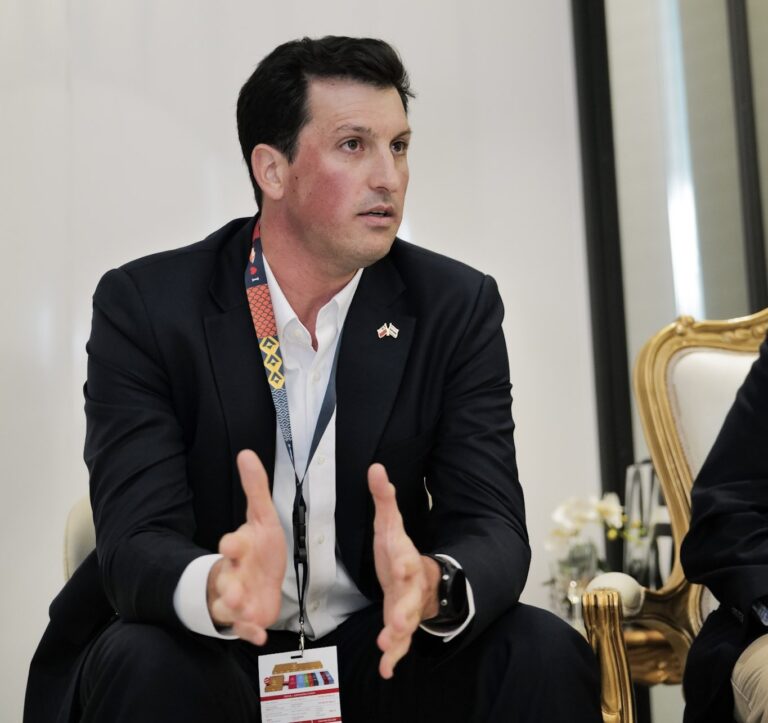
Piccolo, representing Chile’s mussel industry, also highlighted Thailand as a growing market, saying Chilean mussels had been adapted into Thai cuisine and street food dishes, helping expand year-round consumption. He described Thailand as an important regional trendsetter in retail, hospitality and food consumption, with neighbouring ASEAN countries often looking to Thailand as a model market for consumer trends and food innovation.
Another major theme of this year’s summit is food innovation and sustainability, with Chilean companies showcasing seafood, healthy snacks, natural ingredients, traceable agricultural products and sustainable food production capabilities.
Fernández said Chile came to the event this year to present itself through three key pillars: a reliable partner, a growing economy offering world-class products and services, and a country of talent and knowledge. He added that Chile aimed to position itself as a gateway for Thai and ASEAN businesses seeking access to Latin American markets through its regional free trade network.
With this year’s programme expanded and timed alongside THAIFEX-Anuga Asia, Chile is seeking to strengthen its commercial footprint across Thailand and Southeast Asia and pursue new opportunities in the region’s food and agribusiness sectors.
Writing and reporting by Sasinuch Keeratisuntorn