
























33.3 C
Bangkok
Friday, July 3, 2026
Home Blog Page 395

Behind the Scenes: Dextra’s Role in Iconic Infrastructure Projects Worldwide

In construction, iconic landmarks often hide engineering marvels behind the scenes. Dextra – a world-leading manufacturer of construction solutions – has quietly helped realize such projects around the globe through its innovative reinforcement technologies. From mechanical rebar couplers (like Griptec® and Bartec®) to advanced post-tensioning systems, Dextra’s contributions have boosted efficiency, safety, durability, and sustainability in countless infrastructure developments.

Below, we explore Dextra’s role in some of the most recognizable projects in Thailand and beyond, revealing the engineering excellence that supports their success.

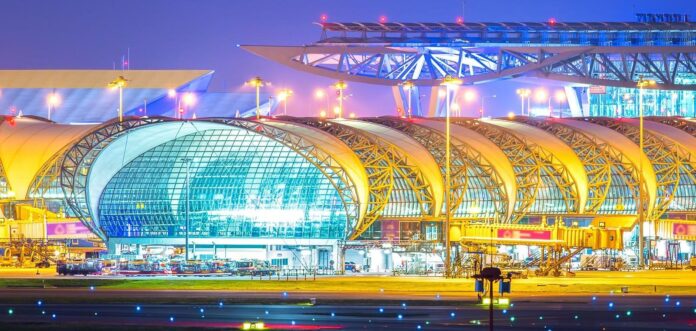
Suvarnabhumi Bangkok International Airport – A Gateway Reinforced by Innovation

Bangkok’s Suvarnabhumi Airport, one of Southeast Asia’s busiest air travel hubs, relied heavily on Dextra’s solutions from its inception. Since construction began in the early 2000s, Dextra has supplied a wide range of reinforcement technologies to support this massive infrastructure.

  • Over 600,000 Bartec® rebar couplers were used in foundations, columns, and beams, ensuring full-strength mechanical connections and eliminating the need for overlapping steel.
  • Dextra’s steel tension rod systems were installed to support the terminal’s sweeping roof structures, combining strength with sleek architectural aesthetics.
  • These innovations reduced material congestion, accelerated timelines, and contributed to the long-term durability of the airport structure.

As the airport continues to expand to accommodate over 60 million passengers annually, Dextra remains a key partner in maintaining and enhancing structural performance.

King Power Mahanakhon – Reinforcing Thailand’s Tallest Tower
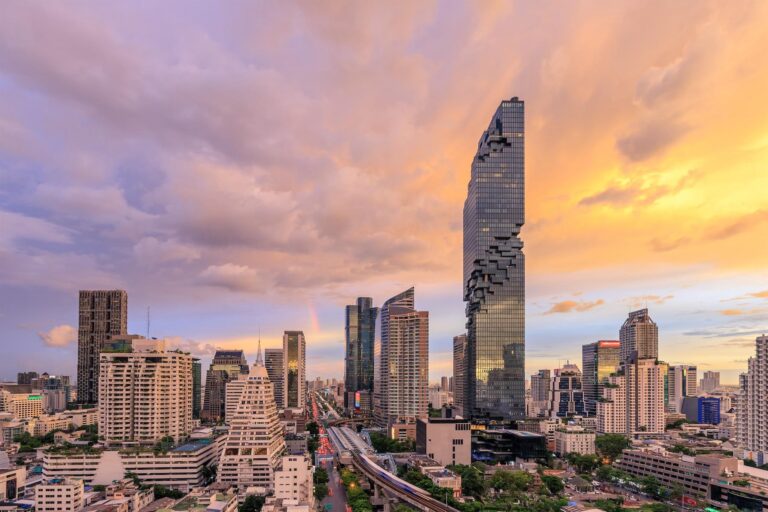
image3 10

At 314 meters tall, the King Power Mahanakhon is Thailand’s tallest building and one of its most visually striking, thanks to its pixelated architectural design. Behind this bold façade lies a robust structural system made possible in part by Dextra.

  • Bartec® couplers were used throughout the foundation, core walls, and vertical columns, ensuring continuity and reducing steel congestion at critical joints.
  • Headed bar anchors were applied in the foundation mat, increasing grip and structural resilience under heavy load conditions.
  • Dextra’s tension rod systems were also installed at the upper levels of the tower to brace steel components of the rooftop skydeck and observation zone.

In a project where aesthetics, height, and ground conditions posed unique challenges, Dextra’s technologies enabled a solution that was both elegant and structurally sound.

Bangkok BTS Skytrain – Supporting Urban Mobility from Below
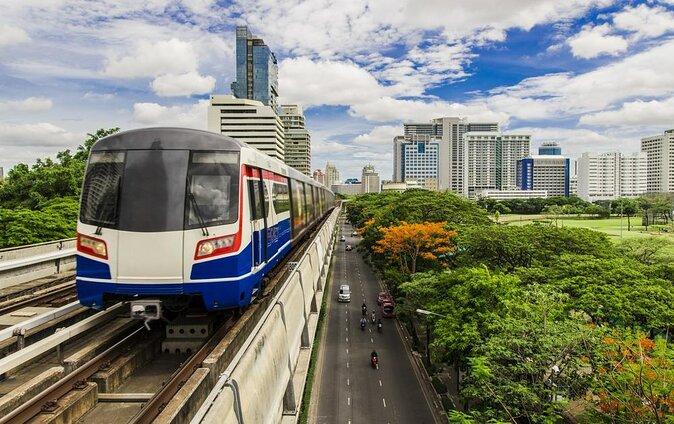
image2 10

As Bangkok expanded its BTS Skytrain network, Dextra played a pivotal role in reinforcing the elevated track system’s structural foundations.

  • Over 40,000 meters of Sonitec tubes were embedded into concrete piles to enable ultrasonic testing and ensure structural integrity.
  • Bartec® mechanical couplers connected prefabricated steel cages for viaduct piers, speeding up on-site installation and minimizing the need for long steel overlaps.
  • Pre-threaded rebar and mounted couplers were prepared in Dextra’s local factory, enabling fast-track installation in Bangkok’s high-traffic urban areas.

With Dextra’s support, the BTS extension was delivered more efficiently and with the high structural quality needed for a transportation system that serves millions daily.

Reinforcing Tomorrow: Dextra’s Global Impact

Dextra’s impact goes far beyond Thailand. With over 20,000 major projects worldwide, the company has contributed to everything from skyscrapers and tunnels to highways and nuclear power plants. Its Griptec® couplers, known for 100% factory testing, are used in the most critical applications, while Bartec® remains a trusted choice for general and seismic reinforcement.

Every Dextra product is engineered for long-term performance and manufactured to the highest international standards. The company’s on-the-ground presence, technical expertise, and commitment to innovation have made it a partner of choice for civil engineers and construction professionals across the globe.

Build with Confidence. Build with Dextra.

Behind every great structure lies a network of critical connections. With its proven technologies and global project portfolio, Dextra continues to provide the reinforcement solutions that support the world’s most ambitious developments.

From airports to towers to metro projects, Dextra is helping build the infrastructure of tomorrow — one reliable connection at a time.

Advertisement

British Tourist Punches Thai Van Driver on Phuket Road

van driver
Rear Dashcam from a van captures the moment a foreign tourist punches a local van driver on a Phuket road on April 6, 2025.

PHUKET — A Thai van driver has filed a police report after being assaulted by a foreign tourist during a traffic dispute on Chaloem Phra Kiat Rama 9 Road in Ratsada district, Phuket.

Saroj Jakthong reported the incident at Phuket City Police Station on April 7, claiming he was punched in the ear by a British man during a roadside argument. Police instructed Saroj to undergo a medical examination to document his injuries.

The confrontation was captured on dashboard camera footage that has since been shared on social media. The video shows a foreign tourist driving a black pickup truck overtaking Saroj’s van before cutting in front of him, stopping, and exiting his vehicle to argue with the van driver.

The situation quickly escalated when the tourist suddenly punched Saroj in the face, causing him to fall to the ground. Another man who was standing nearby almost got punched as well.


In an interview, Saroj said the incident occurred around 9:10 PM on April 6. He was driving along the bypass road past Premium Outlet when he had to merge lanes at a bottleneck. Suddenly, a Ford pickup truck overtook him on the right and cut in front, prompting Saroj to honk his horn as a warning while braking. The other driver responded by swerving back and forth in front of him. The entire incident was recorded by another van driver who happened to be following behind.

“I got out to talk politely, telling the foreigner that his driving was dangerous and asking him to be more careful,” Saroj explained. “But he immediately punched me, knocking me down. Fortunately, no other vehicles were passing by at that moment.”

punch van driver3
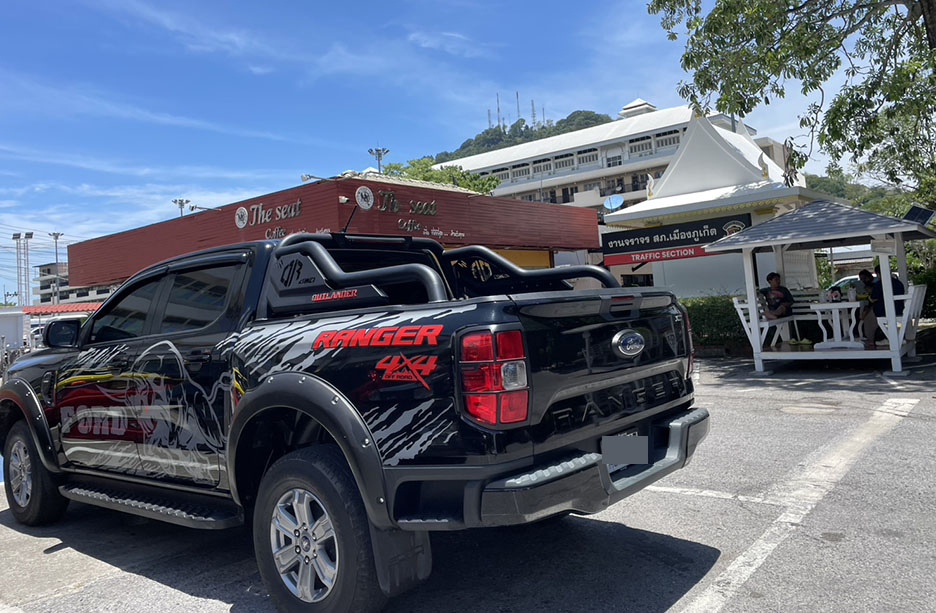
A Ford pickup truck which was driven by a foreign man who punched the van driver, is parked outside the Phuket Police Station on April 7, 2025.

The British tourist then drove away, and although Saroj attempted to follow, he couldn’t catch up and called the police emergency number 191 instead. Officers advised him to file a report if he had video evidence. After obtaining footage from the van behind him, Saroj went to file a complaint, but had to wait until the next day for a medical examination as no specialist was available at the hospital that night.

The Investigation Division of Phuket City Police Station quickly identified the perpetrator as Mr. Joseph, a 31-year-old British tourist who had been granted permission to stay in Thailand for tourism purposes until April 22.


british van
Mr. Saroj, the van driver who was punched by a British tourist in the middle of the road, shows the wound on his ear from the assault, on April 7, 2025.

The medical examination report from Dibuk Hospital in Phuket stated that Saroj’s injuries would require approximately 7 days of treatment. On April 8, police charged Mr. Joseph with assault causing physical or mental harm. He confessed to all charges.

When Saroj encountered the British tourist at the police station, Mr. Joseph reportedly apologized with a traditional Thai wai gesture. However, Saroj refused to settle the matter out of court. Regarding civil damages, the parties were unable to reach an agreement and both intend to pursue the matter through legal channels.

____________

Advertisement

Thai Cabinet Approves Wat Arun’s UNESCO World Heritage Bid

Wat Arun
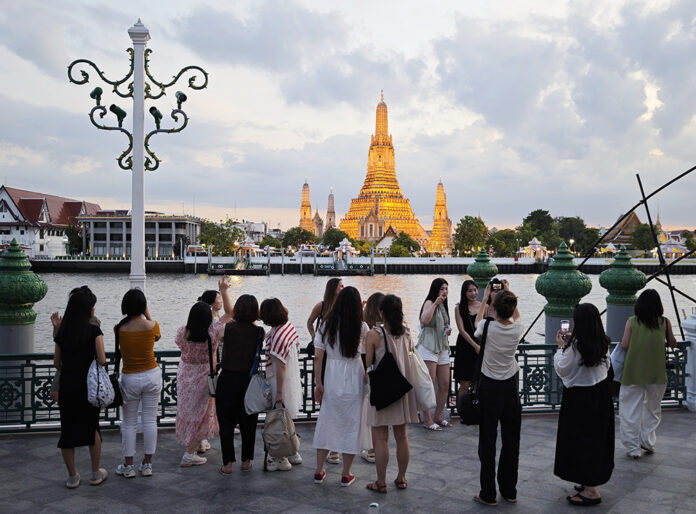
The Phra Prang at Wat Arun, also known as the Temple of Dawn, is one of Bangkok's landmarks that tourists from around the world visit and love to photograph. (KHAOSOD Photo/Narin Niempradit)

BANGKOK — The Thai Cabinet has approved a proposal to submit “Wat Arun Ratchawararam Prang: Identity of Rattanakosin” for inclusion on UNESCO’s Tentative List of World Heritage Sites. The submission will be sent to the World Heritage Centre in Paris, France by the end of April.

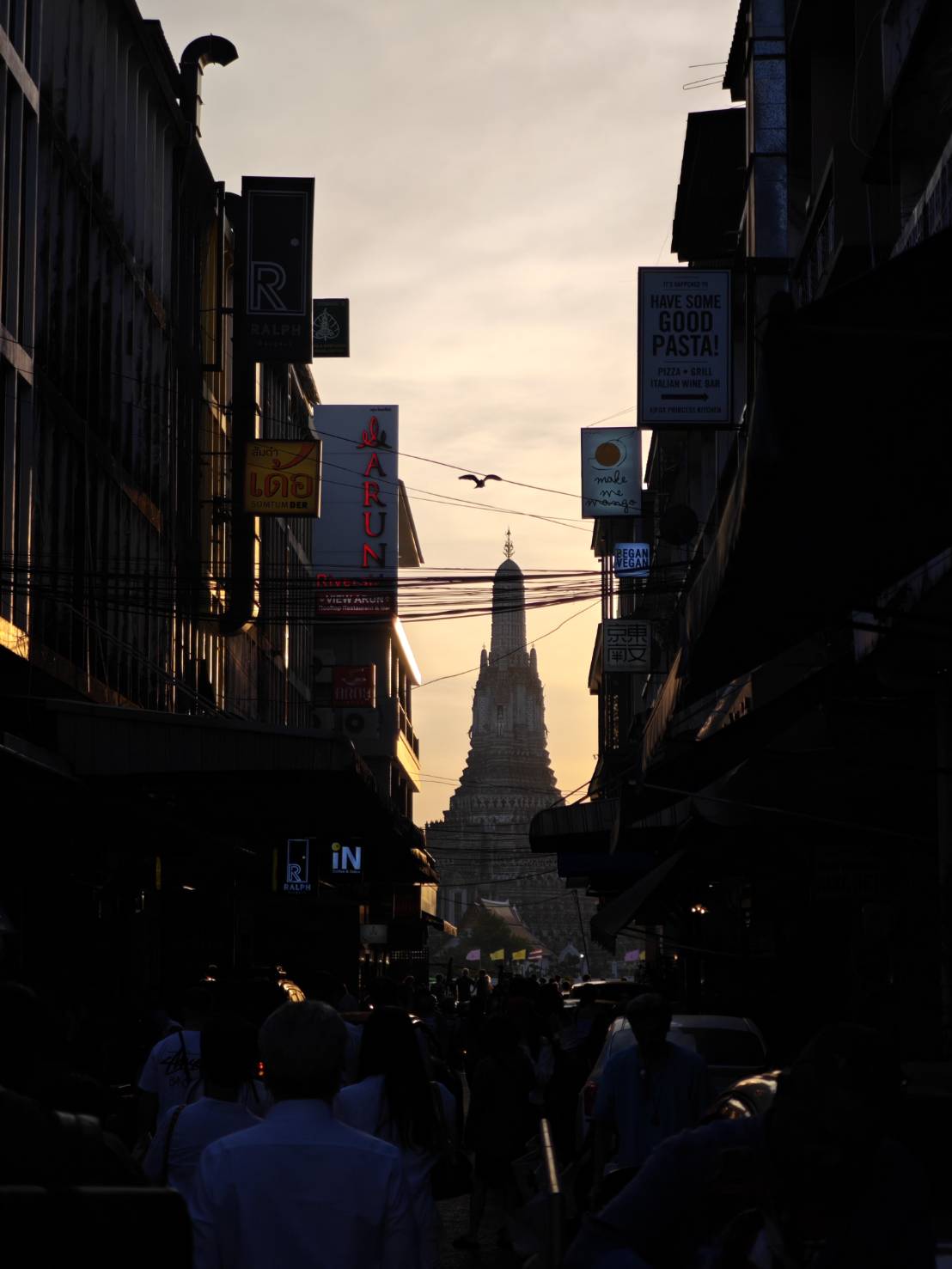
The Phra Prang at Wat Arun, also known as the Temple of Dawn, represents the most distinctive Buddhist prang architecture and is considered a unique cultural identity of both Thailand and the Asian region.

Culture Minister Sudawan Wangsuphakitkosol stated that the Wat Arun Prang meets UNESCO World Heritage criteria 1 and 2, being a masterpiece of Rattanakosin-era architecture and art influenced by Ayutthaya-period prangs but developed into a distinctive style unique to the Rattanakosin period.

wat arun unesco2
The Phra Prang at Wat Arun, also known as the Temple of Dawn, represents the most distinctive Buddhist prang architecture. (KHAOSOD Photo/Narin Niempradit)

“The next step is to submit documentation requesting inclusion on the Tentative List on behalf of Thailand to the World Heritage Centre in Paris this April. The nomination will then be presented and potentially approved at the World Heritage Committee’s regular session between June and July this year,” the Culture Minister explained.

The Ministry of Culture has tasked the Fine Arts Department with advising Wat Arun Ratchawararam on preparations following the expected approval. This includes archaeological studies of the prang to examine construction techniques and structural integrity, conservation oversight of historic structures within the temple complex, landscape improvements, and implementation of the temple’s master plan.

wat arun unesco1
Phraprang Wat Arun has not been impacted by the earthquake on March 28, 2025. (KHAOSOD Photo/Narin Niempradit)

Following the March 28 earthquake, the Fine Arts Department dispatched experts in ancient monuments and structural engineering to thoroughly inspect the Wat Arun Prang, despite the temple’s earlier statement that “Wat Arun Ratchawararam, especially the main prang, has not been impacted by the earthquake, although tremors were felt.”

Sudawan emphasized that the team will focus on gathering data through public participation processes for the World Heritage nomination. This information will be incorporated into the official Nomination Dossier.

After being on the Tentative List for one year, Wat Arun must submit documents for Preliminary Assessment to the World Heritage Centre by September 15, 2026. The Centre will then notify Thailand of the preliminary evaluation results on October 1 of the following year, which will inform the complete Nomination Dossier that must be submitted within five years of receiving the preliminary assessment.

The Ministry of Culture is expediting preparations for Wat Arun Ratchawararam’s nomination and subsequent evaluation as a World Heritage Site.

Advertisement

South Korea Will Hold Election on June 3 to Succeed Ousted President Yoon Suk Yeol

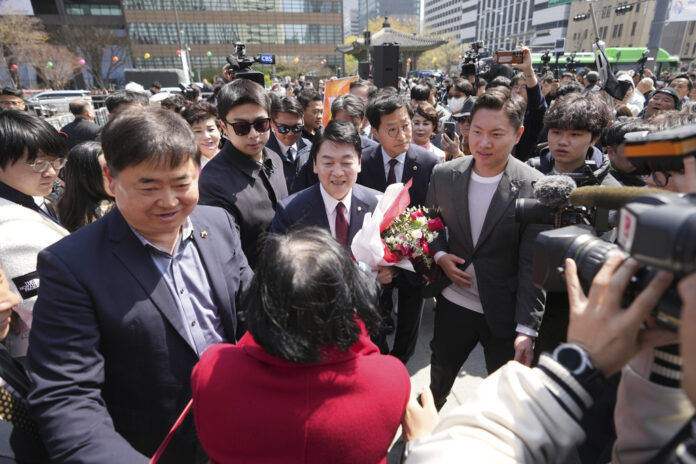
Ahn Cheol-soo, a lawmaker of the People Power Party, leaves after a press conference to announce for the presidential election in Seoul, South Korea, Tuesday, April 8, 2025. (AP Photo/Lee Jin-man)

SEOUL, South Korea (AP) — South Korea will hold a snap presidential election June 3 to succeed recently ousted President Yoon Suk Yeol, the country’s acting leader Han Duck-soo announced Tuesday.

The announcement came four days after the Constitutional Court removed President Yoon Suk Yeol from office over his ill-fated imposition of martial law in December. By law, South Korea must elect a new president within 60 days of Yoon’s ouster. The next president will serve a full 5-year term.

Deep political polarization will likely shape the election into a two-way showdown between the two major political parties: Yoon’s conservative People Power Party and its chief liberal rival, the Democratic Party, which holds a majority in the National Assembly.

It will be an uphill battle for the People Power Party as it struggles to restore public confidence and heal severe internal divisions left by Yoon’s martial law stunt.

The focus of attention is on whether conservatives can regroup and field a strong candidate to compete against likely Democratic Party candidate Lee Jae-myung, who observers say is the clear front-runner.

AP25098149982766
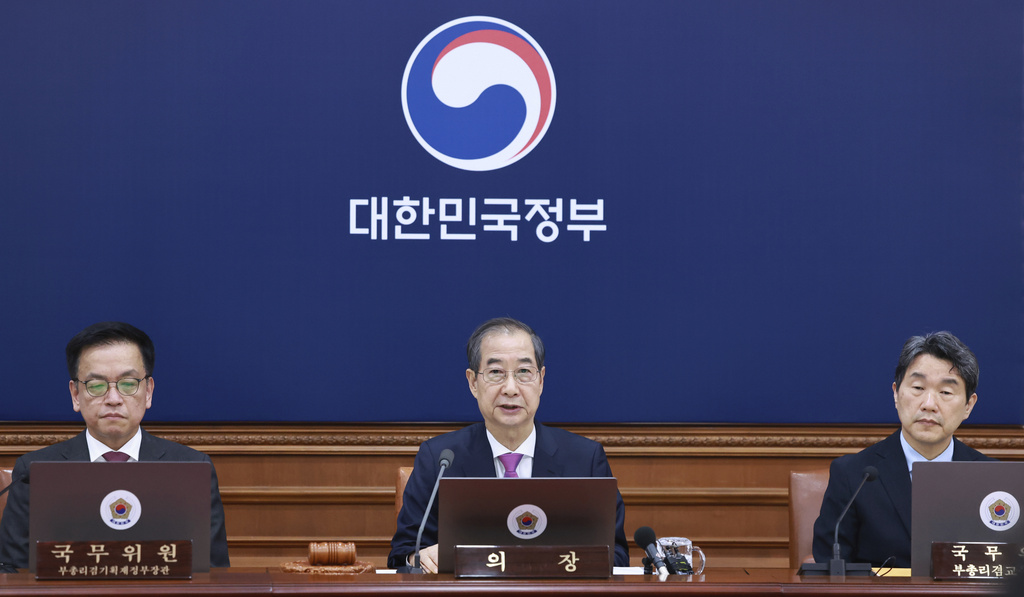
South Korean acting President Han Duck-soo, center, speaks during a Cabinet meeting at the government complex in Seoul, South Korea, Tuesday, April 8, 2025. (Hong Hae-in/Yonhap via AP)

Potential candidates

South Korea’s political parties are expected to launch primaries to select their presidential candidates in the coming weeks.

The Democratic Party candidate is expected to be Lee, a powerful party leader who faces no major challengers inside the party. Lee, who narrowly lost the 2022 election to Yoon, led the party through a crisis during which many of its members faced off against troops sent by Yoon to enter the National Assembly building and vote down martial law, and later impeached the president.

About 10 politicians from the People Power Party are expected to seek the nomination.

Conservatives in disarray

Yoon’s baffling decision to enact martial law, which brought armed troops into Seoul’s streets and evoked the country’s traumatic memories of past military rule, was a blow to his party’s reputation even though the party wasn’t directly involved.

Some reformist party members openly criticized Yoon’s actions and cast ballots to impeach him, triggering a feud with the party’s old guard who supported the president.

Yoon has diehard supporters who regularly staged massive rallies in Seoul and elsewhere. Many share an unfounded perception that Yoon is a victim of a leftist, North Korea-sympathizing opposition that has rigged elections to gain a legislative majority and plotted to remove a patriotic leader.

“South Korea’s conservative party faces significant disadvantages heading into the upcoming election. Two months is a short time to unify the base, moderates and a conspiracy-driven fringe around a single candidate,” said Leif-Eric Easley, a professor at Ewha University in Seoul.

AP24339137694548
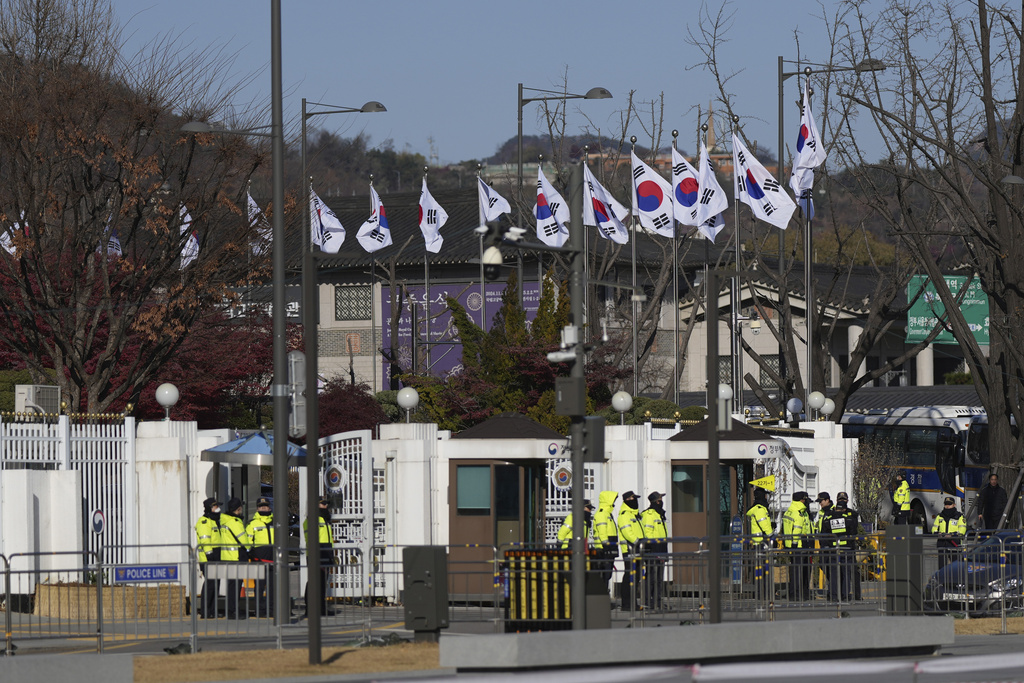
South Korean police officers stand guard in front of the government complex in Seoul, South Korea, Wednesday, Dec. 4, 2024. (AP Photo/Lee Jin-man)

The party’s current leadership is filled with Yoon loyalists, and that will likely let the internal divide continue and undermine its electoral prospects, said Choi Jin, director of the Seoul-based Institute of Presidential Leadership.

Among the leading People Power Party presidential hopefuls, Labor Minister Kim Moon Soo is considered to be the most pro-Yoon. He and Daegu Mayor Hong Joon-pyo opposed impeaching Yoon, while former party leader Han Dong-hoon and senior party lawmaker Ahn Cheol-soo supported removing him from office. The last major candidate is Seoul Mayor Oh Se-hoon, who has maintained an ambiguous position.

Choi said Yoon will likely exert his influences to boost pro-Yoon figures who are seeking the nomination and party leadership posts so that they can defend him as he faces a criminal trial. Yoon was charged with rebellion in January, and he could face other charges like abuse of power now that he has lost presidential immunity, which protected him from most criminal prosecutions.

The People Power Party “will need to nominate someone who can win over the public, particularly the moderates, rather than someone who can win the party’s primaries,” said Duyeon Kim, a senior analyst at the Center for a New American Security in Washington. “Korean moderates and the young generation in their 20s and 30s will likely be the swing voters.”

Martial Law
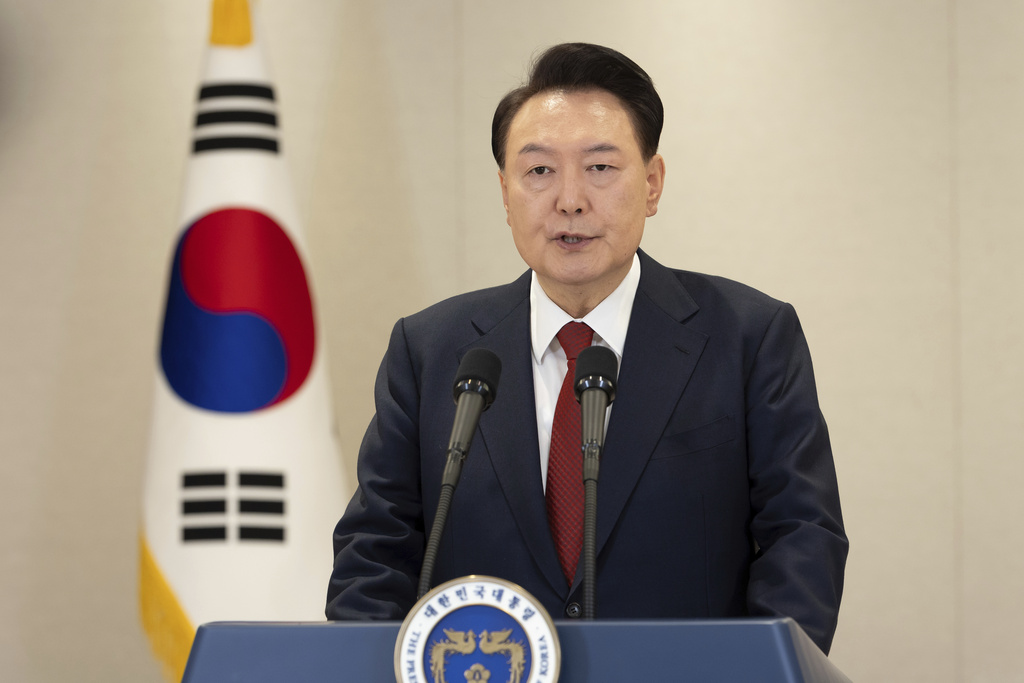
In this photo provided by South Korea Presidential Office, South Korean President Yoon Suk Yeol speaks at the presidential office in Seoul, South Korea, Thursday, Dec. 12, 2024. (South Korea Presidential Office via AP)

Lee’s bid

Opposition leader Lee, who has served as a provincial governor and a city mayor, is considered by his supporters as a populist reformer. But critics regard him as a demagogue who relies on stoking divisions and demonizing his rivals.

Lee faces five ongoing trials for corruption and other criminal charges. If he becomes president, those trials will likely stop thanks to presidential immunity.

Yoon has repeatedly accused Lee’s Democratic Party of abusing its parliamentary majority status to obstruct his agenda, impeach senior officials and slash the government’s budget bill. Yoon said his martial law declaration was a desperate attempt to draw public support of his fight against “wickedness” of Lee’s party.

“Lee Jae-myung has many detractors among the South Korean public who believe he nearly broke the government for his own benefit, weaponizing the legislature to push Yoon over the edge and cast his own legal cases as political persecution,” Easley said.

“Lee’s successful maneuvering, including the purge of progressive politicians disloyal to him, means he effectively owns the Democratic Party nomination and has the clearest path to the presidency,” he said.

_______

Advertisement

Thai Officials Combat Origin Fraud in Export Goods to US

Employee Jonathon Cortez works in an aisle of metal hardware at employee-owned Clark Devon Hardware, Wednesday, April 2, 2025, in Chicago. (AP Photo/Erin Hooley)

BANGKOKThailand’s Department of Foreign Trade (DFT) is heightening surveillance of products at risk of falsely claiming Thai origin in exports to the United States following the US announcement of a 36% import tariff on goods from Thailand.

Arada Fuangtong, Director-General of the Department of Foreign Trade, stated that the monitoring comes in response to the US implementation of reciprocal tariffs on various countries worldwide, with Thailand facing a 36% rate. The Ministry of Commerce, through the DFT, has been continuously monitoring potential circumvention of US measures by other countries to assure US Customs that exported goods genuinely originate from Thailand.

Arada Fuangtong
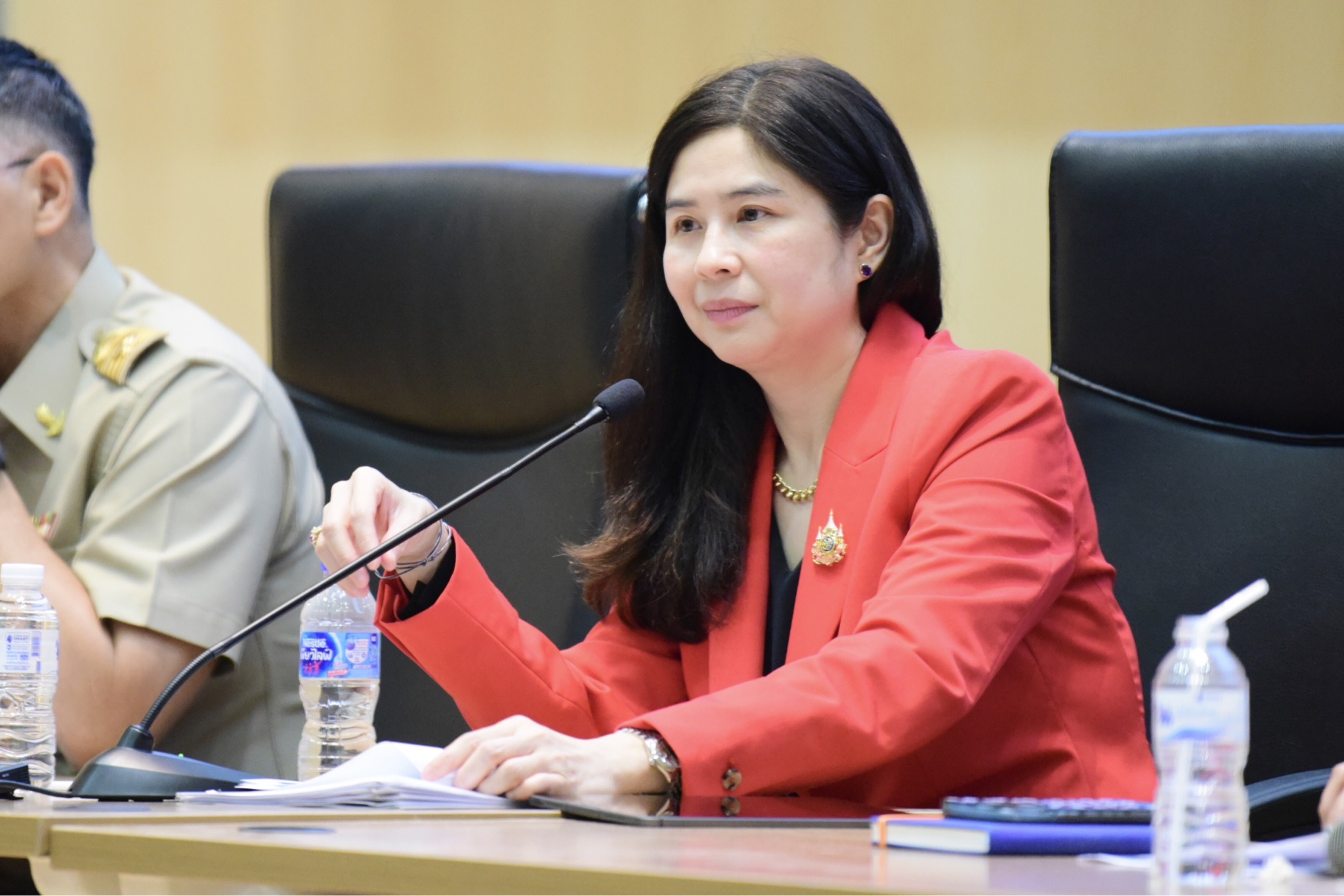
Arada Fuangtong, Director-General of the Department of Foreign Trade

The DFT has identified 49 high-risk products requiring special monitoring, including solar panels, steel wheels for trucks, artificial stone slabs, and steel pipes. Exporters of these items must undergo origin verification before obtaining the general Certificate of Origin (Form C/O).

“This measure will screen products to prevent US tax evasion from other countries,” Fuangtong explained. “Exporters wishing to obtain a general C/O form for US-bound goods must first pass origin verification from the department before they can receive the certificate needed for export to the United States.”

trade
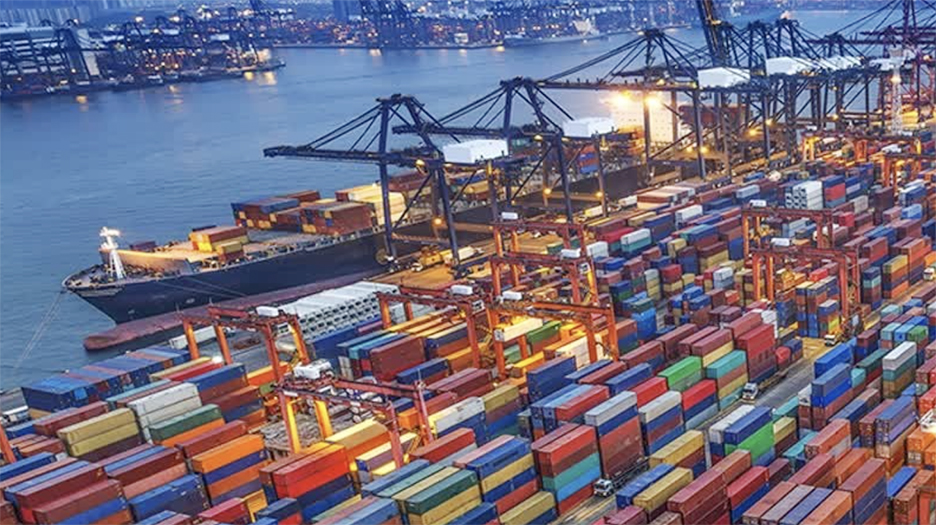
Photo Credit: Royal Thai Embassy, Washington, D.C.

According to collaborative efforts with US Customs authorities, the number of US production process inspections has decreased from 10 to 6 items, with only two cases of origin fraud detected. The department has revoked the general C/O certificates in these cases and implemented measures against the exporters involved, while also strengthening the verification process for general C/O certificate applications.

Fuangtong added that the department plans to expand its watchlist by closely monitoring trade statistics for other high-risk products that might falsely claim Thai origin under anti-dumping measures and Section 301 actions. The department is now also monitoring products under Section 232 measures to manage the risk of goods falsely claiming Thai origin.

The DFT will consider adding more items to its watchlist and continues to coordinate with US Customs authorities to more effectively prevent problems related to falsely claimed Thai origins.

__________

Advertisement

Rescue Efforts from Myanmar’s Deadly Earthquake Wind Down as Death Toll Exceeds 3,500

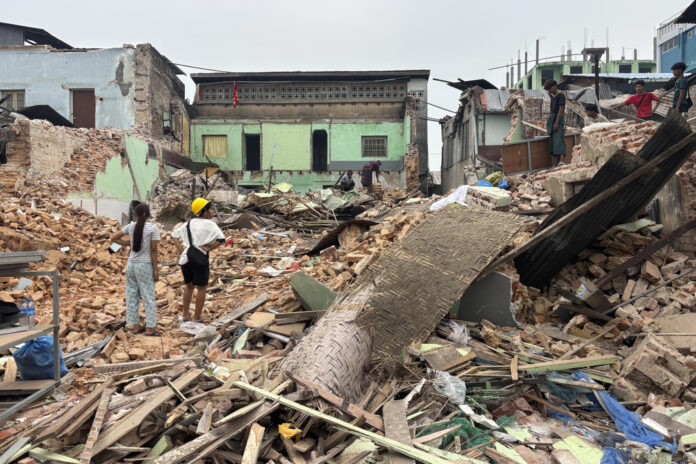
People clean debris from damaged buildings in the aftermath of an earthquake on March 28, in Naypyitaw, Myanmar, Monday, April 7, 2025. (AP Photo)

BANGKOK (AP) — Long-shot efforts to find survivors from Myanmar’s devastating March 28 earthquake were winding down Monday, as rescue efforts were supplanted by increasing relief and recovery activity, with the death toll from the disaster surpassing 3,500 and still climbing.

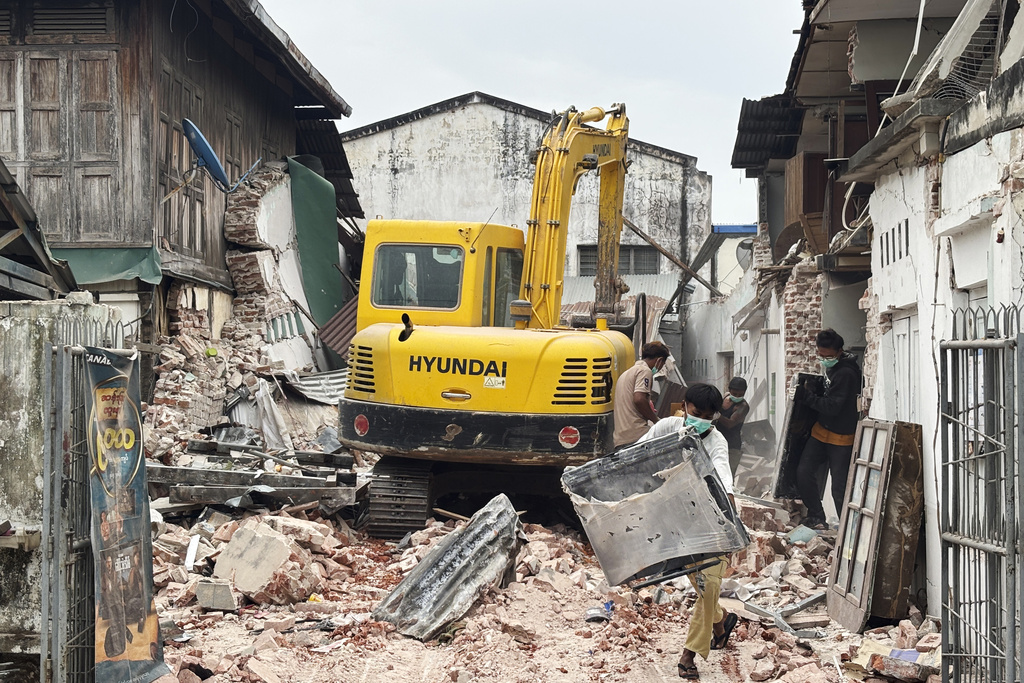
In the capital, Naypyitaw, people cleared debris and collected wood from their damaged houses under drizzling rain, and soldiers removed wreckage at some Buddhist monasteries.

Myanmar Fire Services Department said Monday that rescue teams had recovered 10 bodies from the rubble of a collapsed building in Mandalay, Myanmar’s second biggest city.

It said international rescuers from Singapore, Malaysia and India had returned to their countries after their work to find survivors was considered completed. The number of rescue teams operating in the residential areas of Naypyitaw has been steadily decreasing.

AP25097254289336
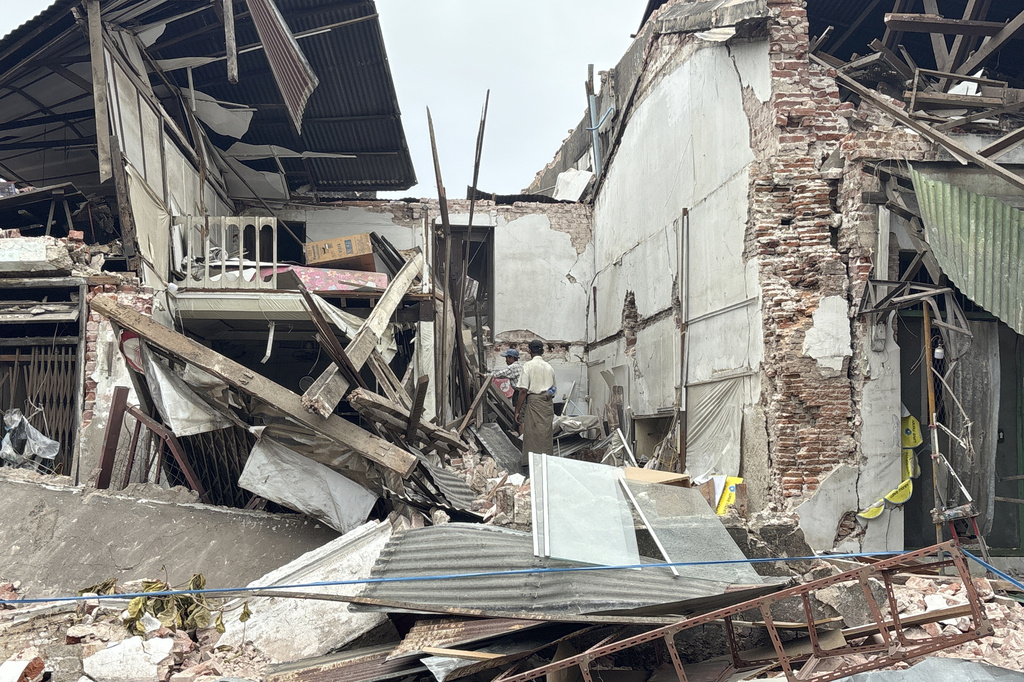
People clean debris from damaged buildings in the aftermath of an earthquake on March 28, in Naypyitaw, Myanmar, Monday, April 7, 2025. (AP Photo)

The 7.7 magnitude quake hit a wide swath of the country, causing significant damage to six regions and states. The earthquake left many areas without power, telephone or cell connections and damaged roads and bridges, making the full extent of the devastation hard to assess.

Heavy rains and winds disrupted rescue and relief operations on Saturday night and added to the misery of the homeless forced to sleep in the open. The weather forecast for this week said scattered showers and thunderstorms are possible across the country.

Myanmar’s military government and its battlefield opponents, meanwhile, have been trading accusations over alleged violations of ceasefire declarations each had declared to ease earthquake relief efforts.

Myanmar has been in turmoil since the army’s 2021 takeover ousted the elected government of Aung San Suu Kyi, which led to nationwide peaceful protests that escalated into armed resistance and what now amounts to civil war.

Although the military government and its armed opponents declared unilateral ceasefires for a temporary period, reports of continued fighting are widespread, with the army coming in for special attention for continuing aerial bombing, according to independent Myanmar media and eyewitnesses.

AP25097254458613
People clean debris from damaged buildings in the aftermath of an earthquake on March 28, in Naypyitaw, Myanmar, Monday, April 7, 2025. (AP Photo)

Independent confirmation of fighting is difficult because of the remoteness of the areas in which much of it takes place and restrictions on journalists.

The Three Brotherhood Alliance, a trio of powerful ethnic minority guerrilla armies, declared a unilateral temporary ceasefire on April 1, following an earlier declaration by the opposition National Unity Government, or NUG.

The NUG, which leads the pro-democracy resistance, said its armed wing, the People’s Defense Force, would cease offensive actions for two weeks.

On Wednesday night, the army announced a similar unilateral ceasefire, as did another ethnic minority group among its foes, the Kachin Independence Organization.

All sides reserved the right to act in self-defense.

The Ta’ang National Liberation Army, or TNLA, a member of the powerful Three Brotherhood Alliance, charged in a Sunday statement on the Telegram messaging platform that the military conducted airstrikes, including dropping toxic gas bombs, on villages the guerrilla group occupied last year in the northern part of Shan state.

Another member of the alliance, the Arakan Army, fighting in the western state of Rakhine, said Saturday night that the military continued to launch daily counterattacks, aerial bombardments, shelling and naval attacks against its troops in two townships in Rakhine state, as well as in Ayeyarwady and Bago regions.

AP25097254344308
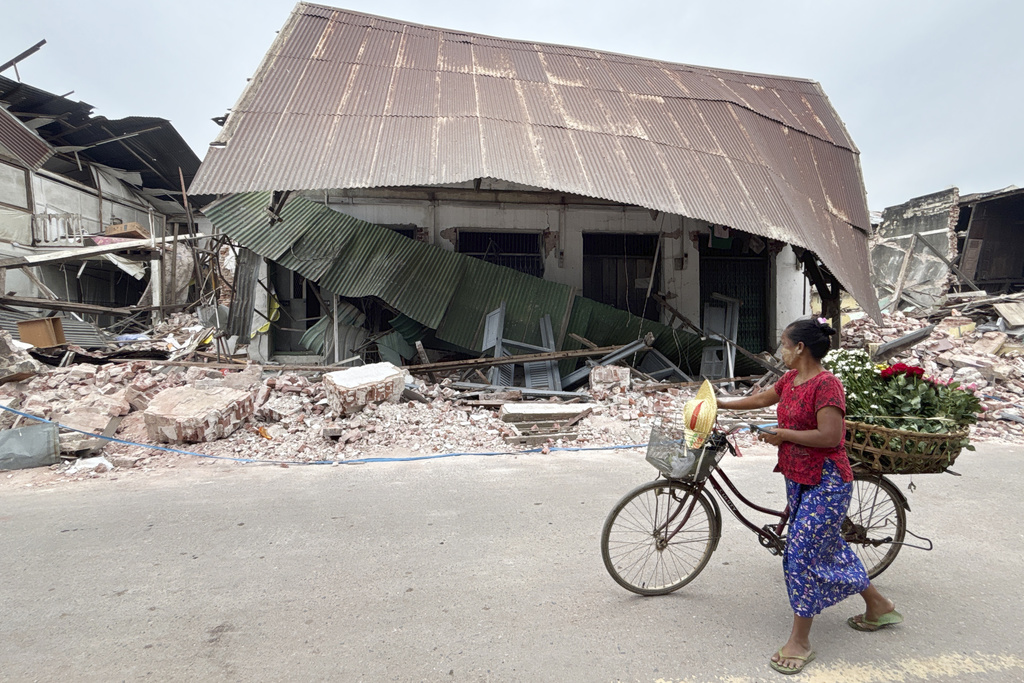
A local woman pushing her bicycle walks past a damaged building in the aftermath of an earthquake on March 28, in Naypyitaw, Myanmar, Monday, April 7, 2025. (AP Photo)

The group said it occupied a military base it had besieged on a strategic hill in Bago a day after declaring its ceasefire, but honored its terms by failing to attack the army’s retreating soldiers.

The shadow National Unity Government on Saturday accused the military of carrying out 63 airstrikes and artillery attacks since the earthquake, resulting in the deaths of 68 civilians, including one child and 15 women.

However, Maj. Gen. Zaw Min Tun, a spokesperson for the military government, said in an audio message to journalists on Saturday night that the groups in the Three Brotherhood Alliance and the Kachin Independence Army, as well as the Karen National Union in southeastern Myanmar and pro-democracy forces in the central Magway region and other groups violated the ceasefires by attacking the army.

“We are carrying out relief and assistance efforts for the people affected by the earthquake. I am saying this to make everyone aware of the ceasefire violations at a time like this,” Zaw Min Tun said.

____________

Advertisement

PM’s Adviser: Thailand Takes Strategic Approach to US Tariff Talks

tariff
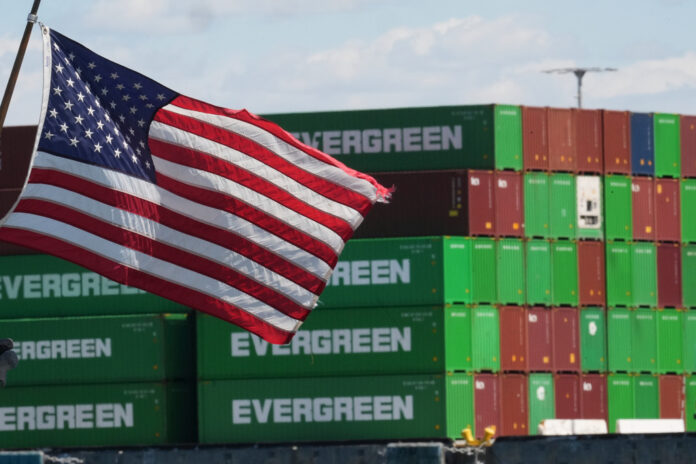
Containers are stacked at the Port of Los Angeles ,Wednesday, April 2, 2025, in Los Angeles. (AP Photo/Damian Dovarganes)

BANGKOKA political adviser to Thailand’s prime minister has responded to critics questioning the country’s measured approach to negotiations with the United States over recent tariff hikes.

“When you go into battle, you have to know your opponent and know yourself. If we jumped into negotiations as some suggested, we would be giving the US everything for nothing without getting anything in return. Why should Thailand waste its leverage?” said Supavud Saicheua, political adviser to the prime minister and chairman of the National Economic and Social Development Council (NESDC).

Thailand is among more than 50 countries reportedly affected following what US President Donald Trump has termed “Liberation Day.” Prime Minister Paetongtarn Shinawatra announced on April 6 the appointment of Deputy Prime Minister and Finance Minister Pichai Chunhavajira to lead negotiations with the US.

Supavud Saicheua tariffs
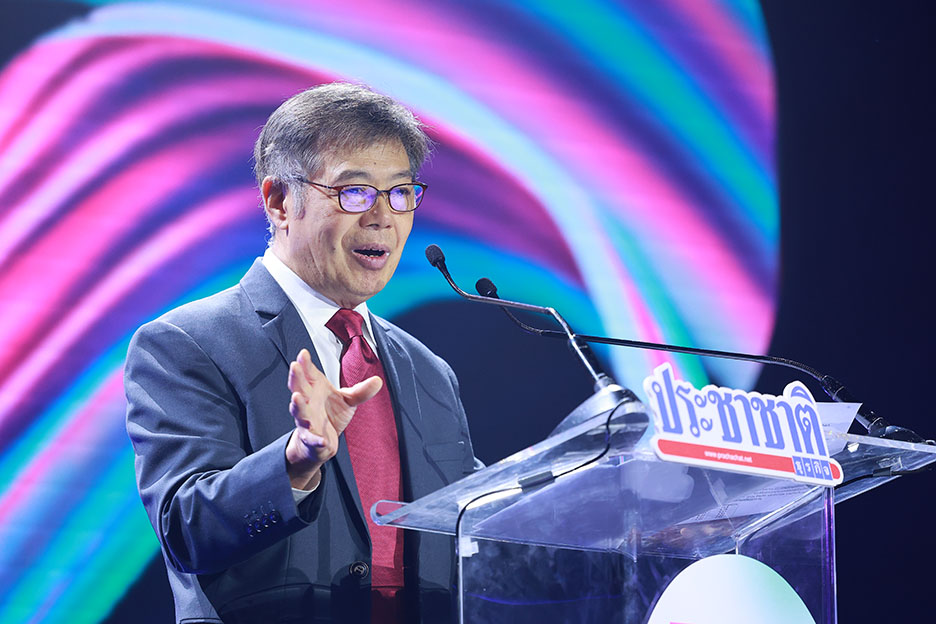
Dr. Supavud Saicheua, Chairman of NESDC, delivers a keynote speech at the seminar “Prachachat Forum: NEXT MOVE Thailand 2025” hosted by Prachachat Business at Siam Kempinski Hotel Bangkok, on March 26, 2025. (MATICHON Photo/Rattaseema Phongsan)

Build Alliances with American Farmers

Supavud explained that the talks led by Deputy Prime Minister Pichai would strategically engage multiple sectors, including American farmers. This approach aims to build alliances with US agricultural stakeholders as a step toward broader negotiations, particularly regarding agricultural imports for Thailand’s food processing industry and global exports. He noted feed corn as an example of a product where domestic production in Thailand remains below demand levels.

Defending the timing of Thailand’s response, Supavud argued that no one could have anticipated the specifics of Trump’s trade policies. He pointed out that the full extent of the sweeping changes only became clear after the official announcement on April 2, which revealed that even close US allies like the UK would face a 10% tariff as part of broader measures affecting 180 countries.

He also outlined Trump’s reasoning for the tariff hikes:

  1. The U.S. trade deficit, which puts the country at a disadvantage.
  2. Revenues from the tariffs will help reduce the U.S. budget deficit, driven largely by tax cuts for the wealthy.
  3. Trump’s intent to bring back domestic manufacturing and adopt an isolationist “make it, use it, grow rich at home” model.
AP25093677536506
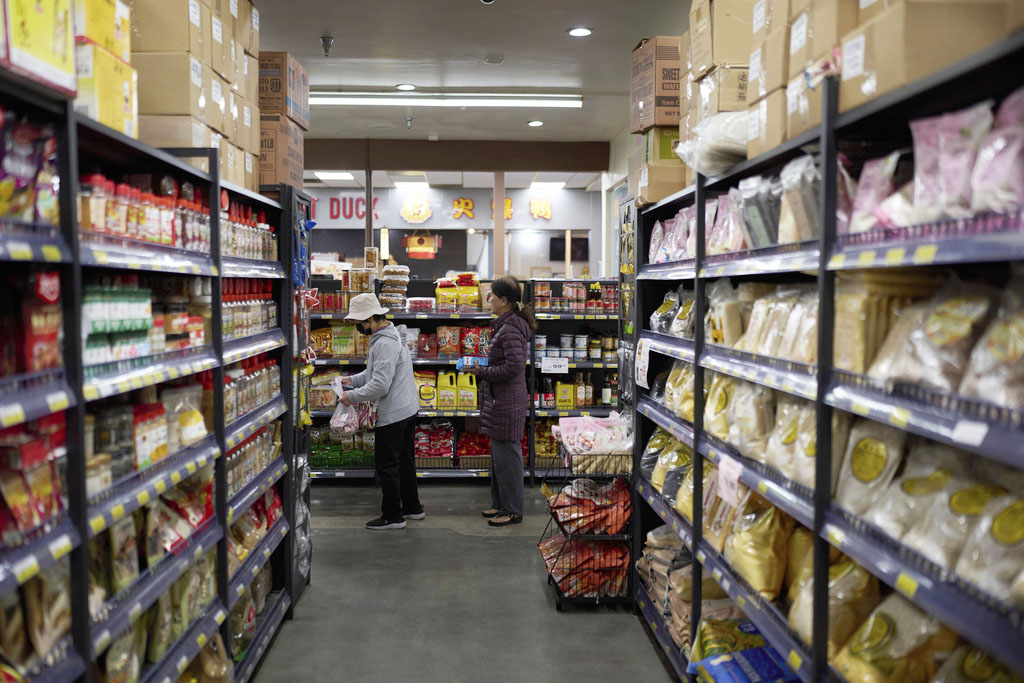
Shoppers wait in line to check out at an Asian grocery market in Rowland Heights, Calif., Thursday, April 3, 2025. (AP Photo/Jae C. Hong)

No Phenomenal Offers

Wuttikrai Leeviraphan, undersecretary of the Department of Commerce and chairman of the U.S. Trade Policy Taskforce, explained that Thailand’s strengths lie in food processing and global exports.

As a major agricultural producer, especially of soybeans, wheat and corn, the U.S. could become an important source of raw materials for Thai imports, which are then processed and exported globally. In addition, American farmers are an important political base for the Republican Party and Trump himself.

Whether Thailand can secure tariff cuts depends on whether it can present a “phenomenal offer,” as Trump mentioned during his tariff announcement. Supavud noted that this begs the question: What kind of extraordinary offer could Thailand make? If such an offer is made prematurely, it could resemble a secret deal. Instead, Thailand is pursuing a middle path, neither wanting to negotiate nor retaliate, but looking for sustainable ways to navigate the Trump era.

Proposals of Tariff Differentials

Thailand has also considered the proposals of the US Trade Representative (USTR), particularly in relation to tariff differentials, and could bring some of its tariffs more in line with US levels. One possible strategy mirrors the approach of South Korea, which offers to import natural gas and oil from the US. Supavud confirmed that Thailand is looking into and expressing interest in importing US natural gas.

“These proposals act like a ladder that Thailand is setting up. If one day the US realizes that its own tariff hikes are hurting its economy and decides to climb down, it can do so via the ladder Thailand has provided,” he said.

AP25092737492542
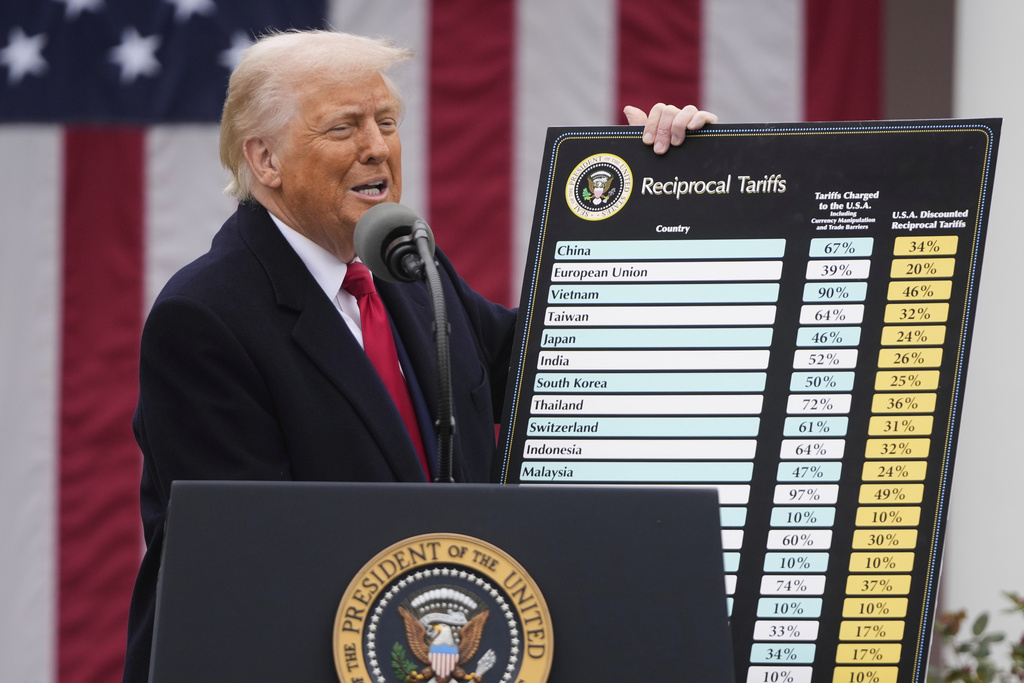
President Donald Trump speaks during an event to announce new tariffs in the Rose Garden at the White House, Wednesday, April 2, 2025, in Washington. (AP Photo/Mark Schiefelbein)

Avoid Retaliatory Measures

Somchai Pakapasvivat, an independent economist and political analyst, meanwhile, emphasized that Thailand must avoid retaliatory measures that could provoke Trump, who is known for acting impulsively. Although some suggest allying with other affected countries, Trump has already warned that such measures would lead to even higher tariffs.

“Negotiations must be conducted carefully to protect Thailand’s interests without causing irritation or anger. We have to accept the fact that Trump is quick-tempered and acts emotionally,” Somchai said.

He added that many economists fear the US could fall into a recession, not necessarily another Great Depression like 1929, but one severe enough to trigger global trade wars. Unsold goods are expected to flood into Thailand, especially from China due to its lower production costs. Therefore, the Thai government needs to prepare for the impact.

_________

Advertisement

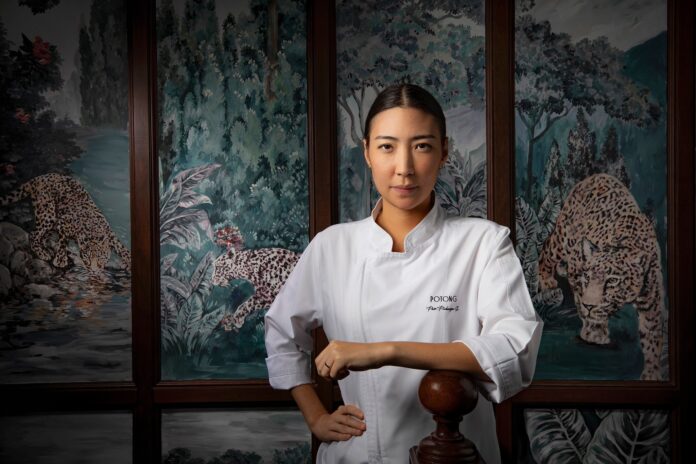
Thai Chef Pam Brings World’s Top Female Chef Title to Asia

Chef
Chef Pam Pichaya Soontornyanakij (Facebook page Chef Pam)

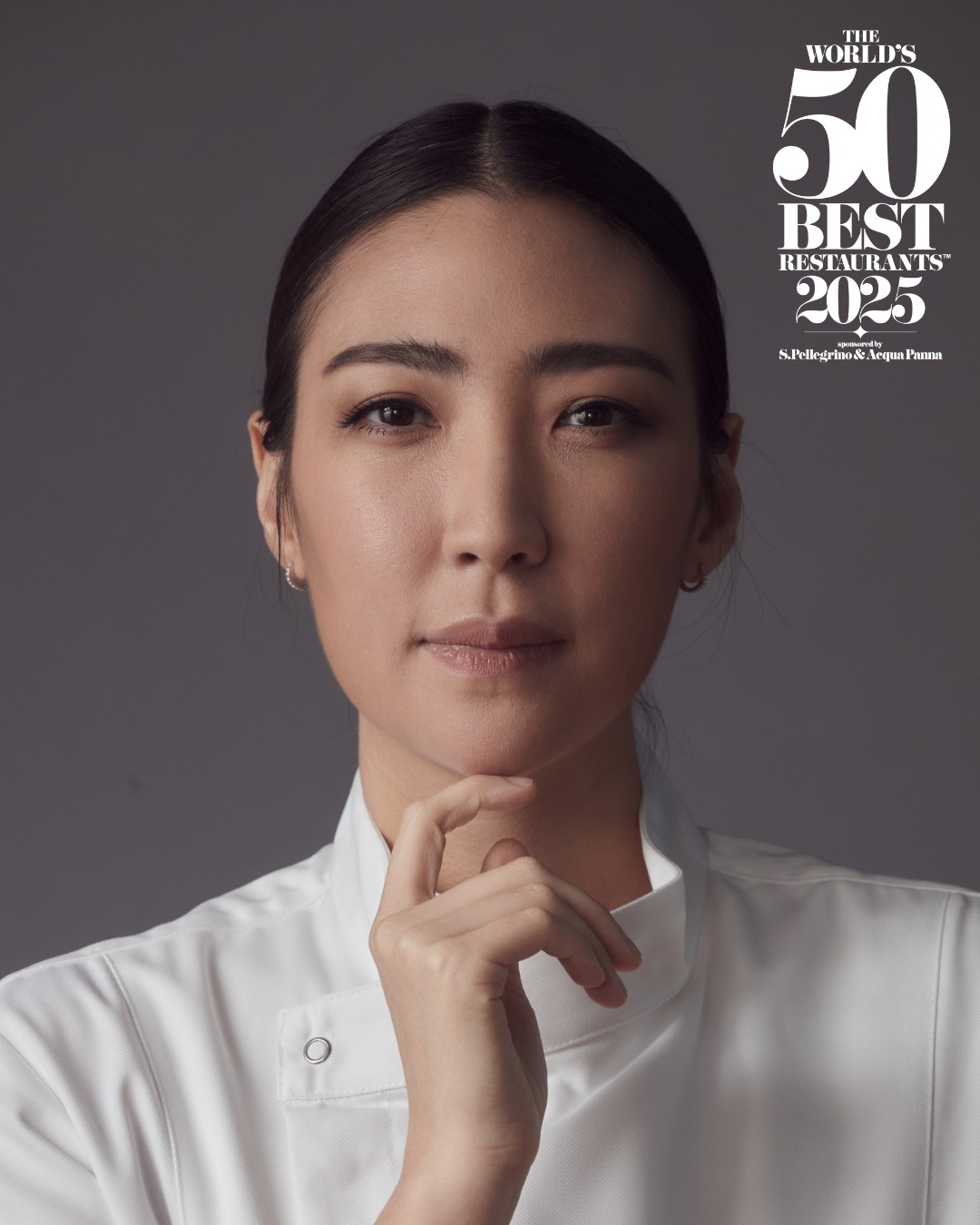
BANGKOK — Chef Pam Pichaya Soontornyanakij of “POTONG,” a Thai-Chinese fine dining restaurant in Bangkok’s Yaowarat district, has been crowned “The World’s Best Female Chef 2025,” becoming the first Asian chef to receive this prestigious honor.

Following the announcement of “Asia’s 50 Best Restaurants 2025” in late March, “50 BEST” has now revealed Chef Pam as the recipient of this global award. According to 50 Best, Chef Pam is the first Asian to claim this title in the award’s 14-year history. The winner is selected by an academy of 1,120 gastronomic experts from around the world.

At just 35 years old, Chef Pam is already paving the way for future generations of women in culinary arts. In 2024, she co-created the Women for Women scholarship, which provides a fully-funded culinary internship at POTONG each year to a young woman from an underprivileged rural Thai background.

chef pam1
Chef Pam Pichaya Soontornyanakij

Her impressive culinary journey began with a career shift from journalism to cooking. After winning a young chef award at 21, she moved to New York to study at the Culinary Institute of America and trained under celebrated chef Jean-Georges Vongerichten. Upon returning to Thailand, she became a judge on “Top Chef Thailand” and established The Table restaurant and private dining experience.

The opportunity to open POTONG came in 2019 when her family’s 120-year-old Chinese herbal pharmacy building became available. Working with her husband and business partner, Tor Boonpiti, she undertook an extensive renovation to create a multi-story restaurant in Bangkok’s Chinatown.

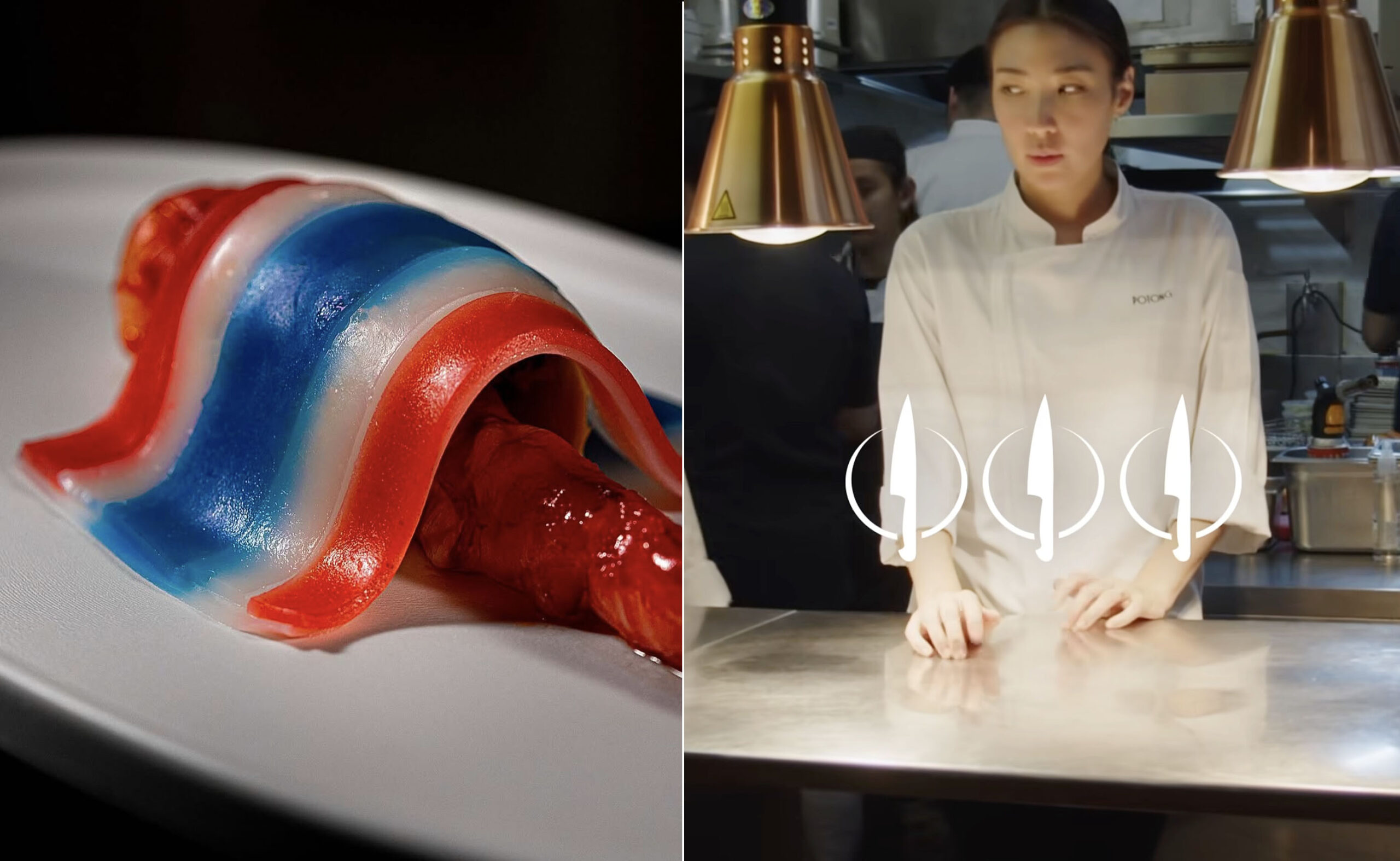
Through Potong’s tasting menu, Chef Pam shares her unique family heritage across approximately 20 courses of progressive Thai-Chinese cuisine, including her signature fragrant roast duck. The dining experience unfolds across different floors of the historic building, designed to engage all five senses while creating memorable moments for guests.

chef pam3 scaled
Chef Pam Pichaya Soontornyanakij (Facebook page Chef Pam)

According to the Michelin Guide Thailand, Chef Pam is also a key figure in developing the Songwat district through the “Made in Songwat” project. Additionally, she established the Scholarship for Female Chef (WFW) to fulfill the dreams of girls who aspire to culinary careers but lack opportunities and financial resources.

“I believe women have instincts for creating balance and handling multiple tasks in the kitchen,” Chef Pam says. “Our attention to detail ensures that every element on the plate is perfect. These natural characteristics also help create a positive work environment, along with empathy and teamwork, which are just as important as culinary expertise.”

With the global platform this award provides, Chef Pam is poised to inspire and delight many more professionals, home cooks, and discerning diners worldwide.

__________

Advertisement

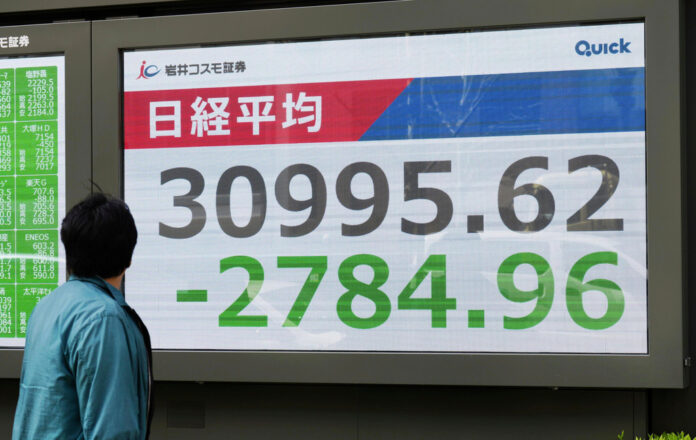
World Markets Plunge, with Japan’s Nikkei Diving Nearly 8%, After the Big Meltdown on Wall St

A person walks past an electronic stock board in Tokyo Monday, April 7, 2025. (Kyodo News via AP)

BANGKOK (AP) — Shares nosedived around the world Monday as higher U.S. tariffs and a backlash from Beijing triggered massive sell-offs.

European shares followed Asian markets lower, with Germany’s DAX falling 6.5% to 19,311.29. In Paris, the CAC 40 shed 5.7% to 6,861.27, while Britain’s FTSE 100 lost 4.5% to 7,694.00.

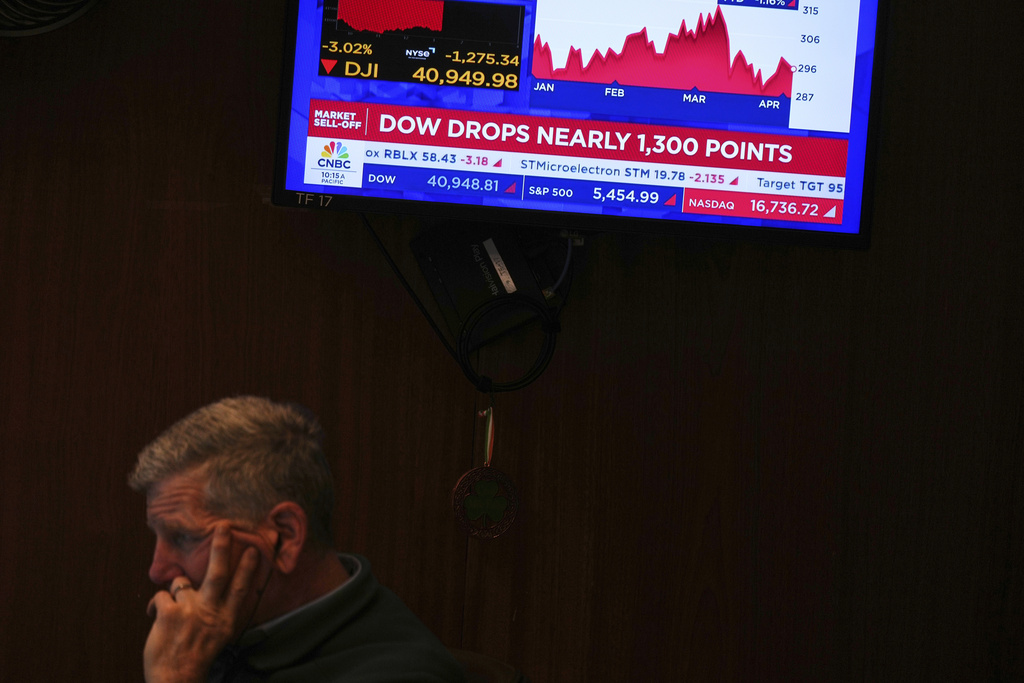
U.S. futures signaled further weakness ahead. The future for the S&P 500 lost 4.8% while that for the Dow Jones Industrial Average shed 4.1%. The future for the Nasdaq lost 5.3%.

On Friday, the worst market crisis since COVID slammed into a higher gear as the S&P 500 plummeted 6% and the Dow plunged 5.5%. The Nasdaq composite dropped 5.8%.

Late Sunday, Trump reiterated his resolve on tariffs. Speaking to reporters aboard Air Force One, he said he didn’t want global markets to fall, but also that he wasn’t concerned about the massive sell-offs, adding, “sometimes you have to take medicine to fix something.”

Tokyo’s Nikkei 225 index lost nearly 8% shortly after the market opened and futures trading for the benchmark was briefly suspended. It closed down 7.8% at 31,136.58.

Among the biggest losers was Mizuho Financial Group, whose shares sank 10.6%. Mitsubishi UFJ Financial Group’s stock lost 10.2% as investors panicked over how the trade war may affect the global economy.

“The idea that there’s so much uncertainty going forward about how these tariffs are going to play out, that’s what’s really driving this plummet in the stock prices,” said Rintaro Nishimura, an associate at the Asia Group.

Chinese markets often don’t follow global trends, but they also tumbled. Hong Kong’s Hang Seng dropped 13.5% to 19,770.51, while the Shanghai Composite index lost 7.3% to 3,096.58. In Taiwan, the Taiex plummeted 9.7%.

Markets were closed Friday in China and Kenny Ng Lai-yin, a strategist at Everbright Securities International, said the big movements might reflect some catching up from Friday’s declines.

E-commerce giant Alibaba Group Holdings fell 9.9% and Tencent Holdings, another tech giant, lost 13%.

South Korea’s Kospi lost 5.6% to 2,328.20, while Australia’s S&P/ASX 200 lost 4.2% to 7,343.30, recovering from a loss of more than 6%.

Asia is especially dependent on exports, and a large share go to the United States.

AP25097042689978
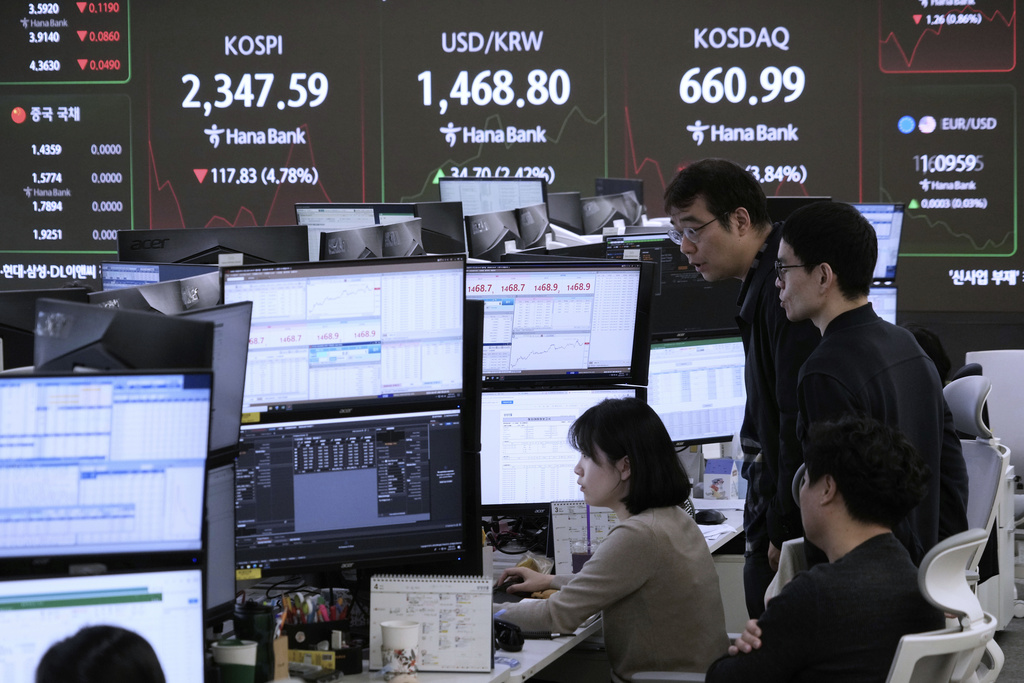
Currency traders watch monitors near a screen showing the Korea Composite Stock Price Index (KOSPI), top left, and the foreign exchange rate between U.S. dollar and South Korean won, top center, at the foreign exchange dealing room of the KEB Hana Bank headquarters in Seoul, South Korea, Monday, April 7, 2025. (AP Photo/Ahn Young-joon)

“Beyond the market meltdown, the bigger concern is the impact and potential crises for small and trade-dependent economies, so it’s crucial to see whether Trump will reach deals with most countries soon, at least partially,” said Gary Ng of Nataxis.

Oil prices also sank further, with U.S. benchmark crude down $2.82 at $59.17 per barrel. Brent crude, the international standard, gave up $2.93 to $62.65 a barrel.

Exchange rates also gyrated. The U.S. dollar fell to 145.56 Japanese yen from 146.94 yen. The yen is often viewed as a safe haven in times of turmoil. The euro rose to $1.1007 from $1.0962.

Market observers expect investors will face more wild swings in the days and weeks to come, with a short-term resolution to the trade war appearing unlikely.

Nathan Thooft, chief investment officer and senior portfolio manager at Manulife Investment Management, said more countries are likely to respond to the U.S. with retaliatory tariffs. Given the large number of countries involved, “it will take a considerable amount of time in our view to work through the various negotiations that are likely to happen.”

“Ultimately, our take is market uncertainly and volatility are likely to persist for some time,” he said.

Heavy selling kicked in after China matched President Donald Trump’s big raise in tariffs announced last week, upping the stakes in a trade war that could end with a recession that hurts everyone. Even a better-than-expected report on the U.S. job market, usually the economic highlight of each month, wasn’t enough to stop the slide.

The Commerce Ministry in Beijing ordered its own 34% tariff on imports of all U.S. products beginning April 10, among other measures, in response to the 34% tariffs imposed by the U.S. on imports from China.

AP25093631774692
A screen displays financial news as traders work on the floor at the New York Stock Exchange in New York, Thursday, April 3, 2025. (AP Photo/Seth Wenig)

The United States and China are the world’s two largest economies, and a big fear is that the trade war could cause a global recession. If it does, stock prices fall further. As of Friday, the S&P 500 was down 17.4% from its record set in February.

Americans may feel “some pain” because of tariffs, Trump has said, but he contends the long-term goals, including getting more manufacturing jobs back to the United States, are worth it.

The Federal Reserve could cushion the blow of tariffs on the economy by cutting interest rates, which can encourage companies and households to borrow and spend. But Fed Chair Jerome Powell said Friday that the higher tariffs could drive up expectations for inflation and lower rates could fuel still more price increases.

Much will depend on how long Trump’s tariffs stick and how other countries react. Some investors are holding onto hope he will lower the tariffs after negotiating “wins” from other countries.

Stuart Kaiser, head of U.S. equity strategy at Citi, wrote in a note to clients on Sunday that earnings estimates and stock values still don’t reflect the full potential impact of the trade war. “There is ample space to the downside despite the large pullback,” he said.

The Trump administration showed no signs of relenting on the tariffs that have caused trillions of dollars in losses.

Appearing on Fox News Channel’s “Sunday Morning Futures,” White House trade adviser Peter Navarro echoed the president when he said investors shouldn’t panic because the administration’s approach to trade would usher in “the biggest boom in the stock market we have ever seen.”

“People should just sit tight, let that market find its bottom, don’t get shook out by the panic in the media,” Navarro said.

___

Associated Press writers Ayaka McGill, Paul Harloff and Jiang Junzhe contributed.

Advertisement

Thailand Joins 50 Countries to Negotiate With U.S. Tariffs

Tariffs
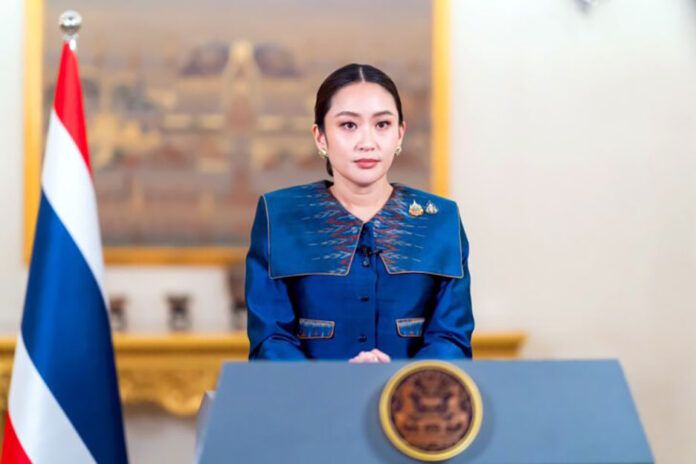
Prime Minister Paetongtarn Shinawatra delivers a statement on Thailand’s position on US trade policy, on April 6, 2025.

BANGKOK — Thailand has joined more than 50 countries initiating negotiations with the United States over President Donald Trump’s sweeping new tariffs, which have rattled global markets and raised recession fears.

Prime Minister Paetongtarn Shinawatra announced on April 6 that Thailand will enter into talks with the U.S. following the imposition of tariffs on Thai goods. Deputy Prime Minister and Finance Minister Pichai Chunhavajira will travel to the U.S. for discussions with key stakeholders.

“Thailand has been a long-term, reliable economic partner and ally of the U.S., not merely an exporter,” Shinawatra emphasized in her statement.

The tariffs, which begin April 9, represent a significant challenge to Thailand’s export sector, particularly electronics, processed foods, and agricultural products.

Thailand’s Negotiation Strategy

The Thai government has outlined several approaches to address the tariffs:

  • Proposing increased U.S. imports in energy, aviation, and agriculture sectors
  • Collaborating with U.S. agricultural and industrial groups
  • Promoting Thai investment in the United States
  • Reducing import barriers and combating product origin misrepresentation
paetong tariffs11
Deputy Prime Minister and Finance Minister Pichai Chunhavajira (left) will travel to the U.S. for discussions with key stakeholders.

Shinawatra assured businesses that the government is prepared to implement both immediate and long-term support measures, including assistance for small and medium-sized enterprises. These measures include expanding into new export markets in the Middle East, Europe, and India, while accelerating free trade agreement negotiations.

How Trump Tariffs Apply

Wutthikrai Leeviraphan, Permanent Secretary of the Ministry of Commerce and Chairman of the U.S. Trade Policy Working Group, provided additional details on the tariff implementation timeline:

The U.S. will implement tariffs in two phases:

  • Phase 1: Beginning at 00:01 on April 5, 2025 (U.S. time) – a blanket 10% tariff on all imported goods from all countries
  • Phase 2: Beginning at 00:01 on April 9, 2025 – country-specific “Reciprocal Tariffs,” with Thailand facing a 36% rate

These new tariffs will be added on top of existing duties, fees, and other charges. However, goods already in transit to the U.S. before these deadlines will be exempt from the new 36% rate.

aluminium

Certain products are excluded from these reciprocal tariffs because they are already subject to previously announced measures:

  • Steel and aluminum products (25% tariff announced March 12, 2025)
  • Automobiles and parts (25% tariff announced April 3, 2025)

Additionally, several product categories are temporarily exempt pending potential separate tariff announcements, including copper, pharmaceuticals, semiconductors, processed wood, certain minerals, and energy products. These items may face a likely 25% tariff in future announcements.

U.S. Administration Stance

U.S. Treasury Secretary Scott Bessent has indicated that negotiations won’t be quick, stating that unfair trade practices are not “the kind of thing you can negotiate away in days or weeks.” He emphasized that the United States must evaluate whether countries’ offers are “believable.”

Commerce Secretary Howard Lutnick confirmed the tariffs will proceed as scheduled: “The tariffs are coming. Of course they are,” adding that Trump needed to reset global trade. However, he committed only to having them “definitely” remain “for days and weeks.”

Trump, who spent the weekend golfing in Florida, posted online that “WE WILL WIN. HANG TOUGH, it won’t be easy.”

AP25093773598464
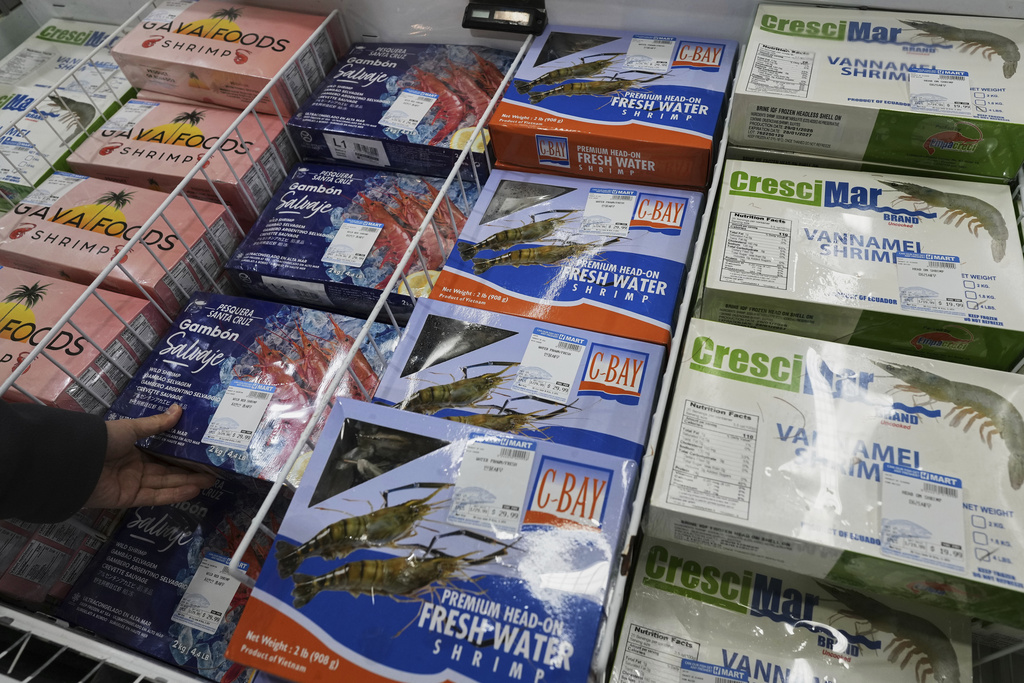
Boxes of shrimps imported from Vietnam, Spain, Mexico and Ecuador are displayed at the H Mart in Niles, Ill., Thursday, April 3, 2025. (AP Photo/Nam Y. Huh)

ASEAN Members Response

The April 2 tariff announcement has prompted regional coordination among ASEAN nations. Vietnam, a major manufacturing center for clothing, has reportedly discussed potentially reducing their tariffs to zero in exchange for an agreement with the U.S. Cambodia has formally requested a postponement of the 49% tariff rate on its products.

Other ASEAN members including Indonesia, Malaysia, and the Philippines are reportedly preparing similar negotiation strategies, though they have yet to make public statements. Regional economic ministers are expected to hold an emergency virtual meeting to coordinate their approach.

White House economic adviser Kevin Hassett acknowledged that countries are “angry and retaliating,” but also “coming to the table,” with the U.S. Trade Representative reporting that more than 50 nations had reached out to begin discussions.

As the April 9 implementation date approaches, economic uncertainty looms across Southeast Asia with no clear resolution in sight.

________

Related articles:

Advertisement

Hot News

LATEST NEWS

Bangkok
overcast clouds
33.3 ° C
33.3 °
30.5 °
97 %
4.2kmh
99 %
Fri
34 °
Sat
31 °
Sun
31 °
Mon
28 °
Tue
30 °