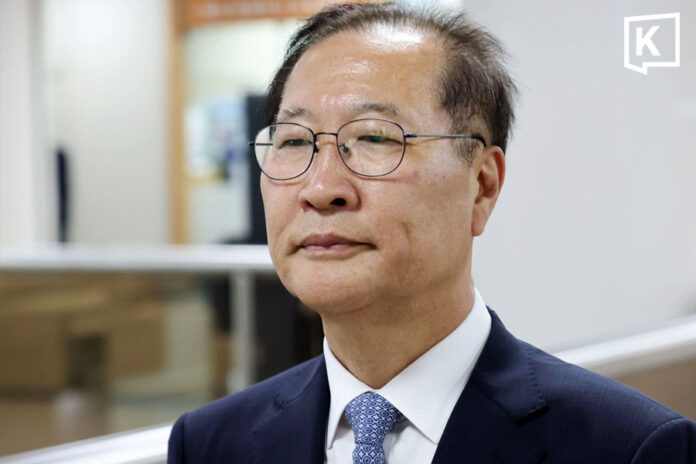
Former South Korean Justice Minister Park Sung-jae arrives for his trial at the Seoul Central District Court in Seoul, South Korea, Monday, June 22, 2026. (Kim Ju-hyung/Yonhap via AP)
SEOUL, South Korea (AP) — A former South Korean justice minister was sentenced to 25 years in prison on Monday after a court found him guilty of helping ousted President Yoon Suk Yeol carry out his brief declaration of martial law in 2024.
The Seoul Central District Court said it was clear Park Sung-jae played a key role in Yoon’s attempted power grab following the declaration of martial law on Dec. 3, 2024, including ordering ministry officials to assess detention capacities at correctional facilities to prepare for arrests of politicians.
Park also instructed officials to consider sending prosecutors to Yoon’s martial law command to support possible investigations into the former conservative leader’s political opponents and his unsubstantiated claims about liberal-led election fraud. Park also ordered immigration authorities to be prepared to impose travel bans, the court said.
Yoon’s martial law, which followed a yearslong standoff with liberals controlling the legislature, lasted only about six hours before lawmakers broke through a blockade of soldiers Yoon dispatched to the National Assembly and voted to overturn it, forcing Yoon’s Cabinet to lift the measure.
Judge Lee Jin-gwan said Park abandoned his responsibility to uphold the constitution and law by taking part in Yoon’s authoritarian push. He described Yoon’s martial law decree as a “self-coup” by an incumbent leader seeking to monopolize power. He said Park’s role would have been critical had Yoon succeeded in suppressing and removing his political opponents and preventing the legislature from demanding the lifting of martial law.
Park had denied the charges, saying he was merely carrying out duties required during a national emergency. Park’s lawyers didn’t immediately say whether they would appeal.
Yoon was impeached and suspended from office on Dec. 14, 2024, before being formally removed by the Constitutional Court in April 2025. He was arrested in July 2025, and multiple criminal trials are ongoing.
The Seoul court earlier sentenced Yoon to life in prison on rebellion charges. In a separate case, Yoon received a 30-year term for allegedly ordering drone flights over Pyongyang in October 2024 to manufacture tensions with North Korea and justify declaring martial law at home. Yoon has appealed both verdicts.
Park is the latest of several members of Yoon’s Cabinet to receive prison sentences for their roles in the martial law imposition.
Former Defense Minister Kim Yong Hyun received a 30-year term for his central role in mobilizing the military to enforce martial law and seeking the arrests of Yoon’s political opponents, as well as a separate 30-year sentence for planning drone flights over Pyongyang.
Ex-Prime Minister Han Duck-soo was initially sentenced to 23 years on charges that included attempting to lend procedural legitimacy to Yoon’s decree by securing its approval through a formal Cabinet meeting, but an appeals court later reduced his sentence to 15 years.
BANGKOK — Thailand’s security agencies have prepared contingency plans for all possible scenarios along the Thai-Cambodian border, a senior military official said, stressing that the armed forces remain ready to respond while adhering to international law.
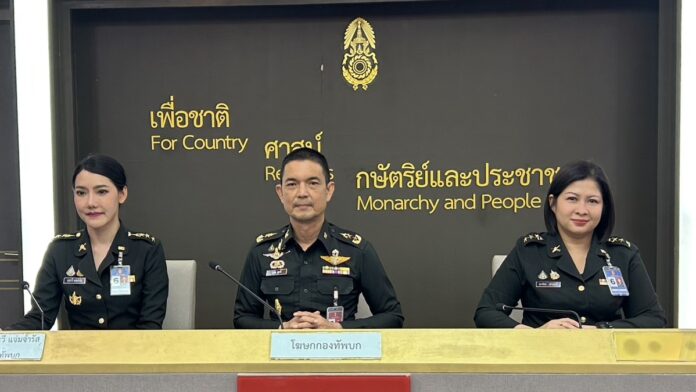
Air Chief Marshal Prapas Sornchaidee, assistant commander-in-chief of the Royal Thai Air Force and director of the Joint Information Centre (JIC) on the Thai-Cambodian border situation, said on 20 June that security agencies had developed and regularly rehearsed response plans covering military operations, civilian protection and border management.
He said the Thai military remained prepared at all times in terms of personnel, equipment, intelligence, surveillance and inter-service cooperation.
Thailand remains committed to peaceful means and international law, Prapas said. However, as a sovereign state, Thailand has the legitimate right to self-defence under Article 51 of the United Nations Charter if its sovereignty, territorial integrity or public safety is threatened.
“If necessary, the Thai military is ready to carry out its duties to the fullest extent within the framework of the law, the principles of necessity and proportionality, and relevant international law,” he said.
Prapas added that security agencies were monitoring the border situation around the clock and had measures in place to address any contingency, with the primary objective of preserving peace while safeguarding national sovereignty and public safety.
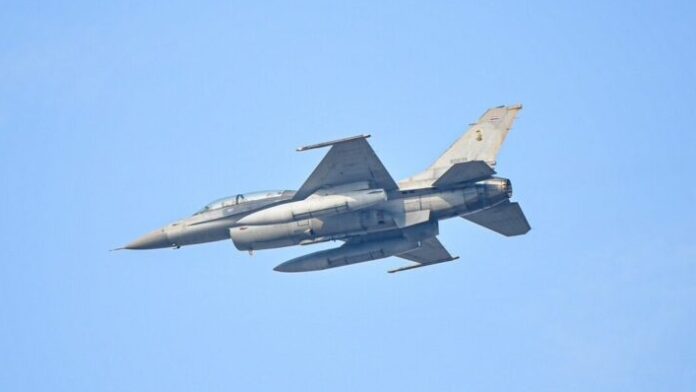
Addressing questions about military readiness during the rainy season, he said both F-16 and Gripen fighter jets remain fully capable of carrying out missions in wet weather. While severe weather conditions may slightly reduce operational efficiency and impose additional flight-safety limitations, rain does not automatically render aircraft or weapons systems unusable.
BANGKOK — The government has set a goal of turning Thailand into a high-income country within 12 years as part of a new long-term economic strategy developed jointly with the private sector.
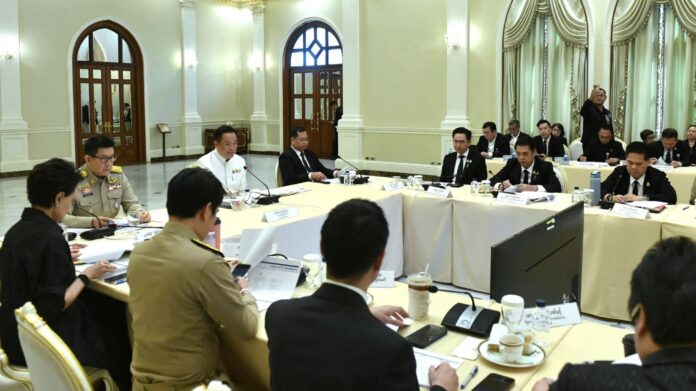
Deputy Prime Minister and Finance Minister Ekniti Nitithanprapas announced the target following the first meeting of the Joint Public-Private Consultative Committee on Economic Problems, chaired by the prime minister on 22 June.
Ekniti said the committee had agreed that Thailand needed clear short-, medium- and long-term economic goals. The long-term objective is to achieve high-income country status within 12 years.
As a medium-term target, the government aims to place Thailand among the world’s top 20 most competitive economies by 2030 while raising the country’s economic potential growth rate from around 2.7% to above 3%.
The strategy focuses on seven sectors identified as Thailand’s strengths: agriculture and food, food security, future mobility, digital electronics and AI, healthcare and pharmaceuticals, trade, and the creative economy.
To drive growth, the government and private sector will work together under a programme dubbed “Reinvent Thailand”, built around four pillars: investment, trade and services, human capital, and public-sector efficiency.
Ekniti said Thailand also aims to increase investment from the current 22% of GDP to close to 30%, describing investment as a key driver of future economic growth.
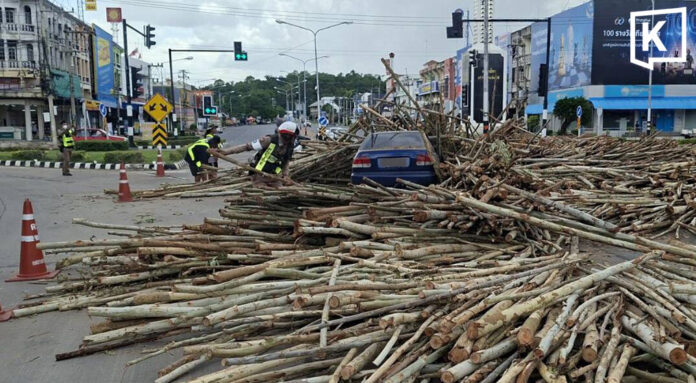
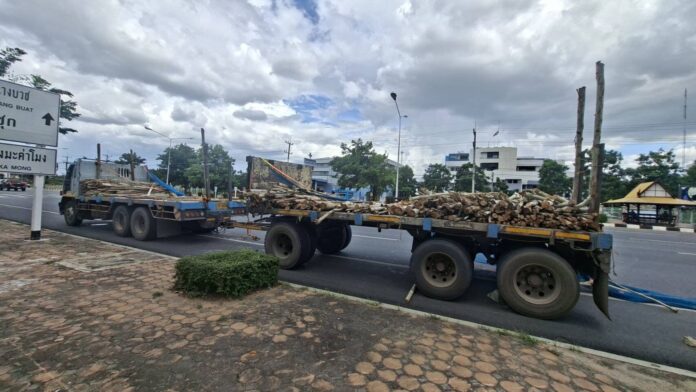
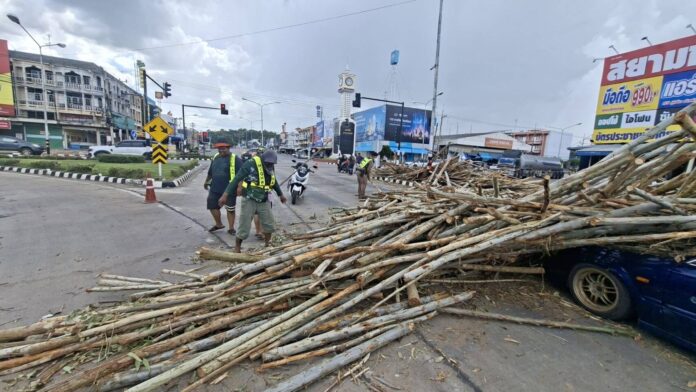
SUPHAN BURI — 22 June 2026, A trailer truck carrying eucalyptus logs lost control near a traffic-light intersection in Dan Chang district on Monday, spilling its load onto the road and damaging several vehicles while leaving one person injured.
Police in Dan Chang were notified of the incident at the district clock tower intersection. The trailer, registered in Nakhon Pathom, was transporting eucalyptus logs from Ban Rai district, Uthai Thani, to Ratchaburi when the accident occurred.
According to preliminary findings, the driver experienced a mechanical problem and was unable to control the vehicle as it approached the red-light intersection, where several vehicles were stopped ahead. To avoid a potentially serious collision, the driver steered sharply to the left.
The maneuver caused the fully loaded eucalyptus logs to spill across the opposite side of the road, striking vehicles waiting at the traffic light. The truck eventually came to a stop near Dan Chang Hospital, about one kilometre from the scene.
Authorities said four cars and one motorcycle were damaged, while one person sustained injuries.
A witness said he was buying durian near the intersection when he heard the truck repeatedly sounding its horn. He then saw the vehicle approaching at speed before swerving left toward the road leading to Sam Chuk district.
“The logs fell onto several vehicles waiting at the traffic light on the opposite side. People rushed in to help the injured,” the witness said.
Police are continuing to question the driver to determine the exact cause of the incident. Road officials have cleared the area and reopened traffic, while the injured victim was taken to Dan Chang Hospital for treatment.
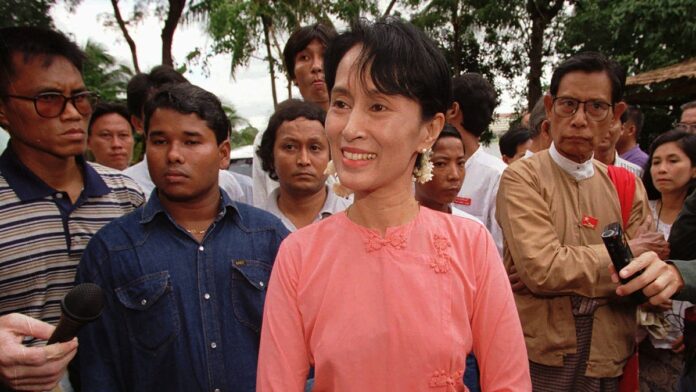
FILE - Burmese pro-democracy leader of the NLD (National League for Democracy) Aung San Suu Kyi, center, answers reporters' questions after a news conference at her residence in Rangoon, Burma on May 23, 1996. Myanmar court on Monday, Dec. 6, 2021, sentenced ousted leader Suu Kyi to 4 years for incitement and breaking virus restrictions, then later in the day state TV announced that the country's military leader reduced the sentence by two years. (AP Photo/Richard Vogel, File)
BANGKOK — A group of 134 current and former parliamentarians from 11 countries has called on ASEAN and its member states to demand the immediate and unconditional release of Myanmar’s detained civilian leader, Aung San Suu Kyi, and all political prisoners held by the military junta.
In an open letter dated 19 June, the lawmakers urged ASEAN leaders to press Myanmar’s military authorities to release political detainees, provide independent access to verify Suu Kyi’s wellbeing, and advance an inclusive political dialogue in line with ASEAN’s Five-Point Consensus.
The letter, organised by ASEAN Parliamentarians for Human Rights, was signed by parliamentarians from Australia, Cambodia, Indonesia, Italy, Malaysia, Myanmar, the Philippines, Singapore, South Africa, Thailand and Timor-Leste.
The lawmakers said concerns remained over Suu Kyi’s condition after reports that she was transferred from prison to house arrest at an undisclosed location in Naypyitaw in April. They called for proof of life and unrestricted access for her family, legal counsel and an independent medical team.
According to the letter, more than 22,000 political prisoners remain detained in Myanmar following the military coup of 1 February 2021, while thousands have been killed in the ensuing conflict.
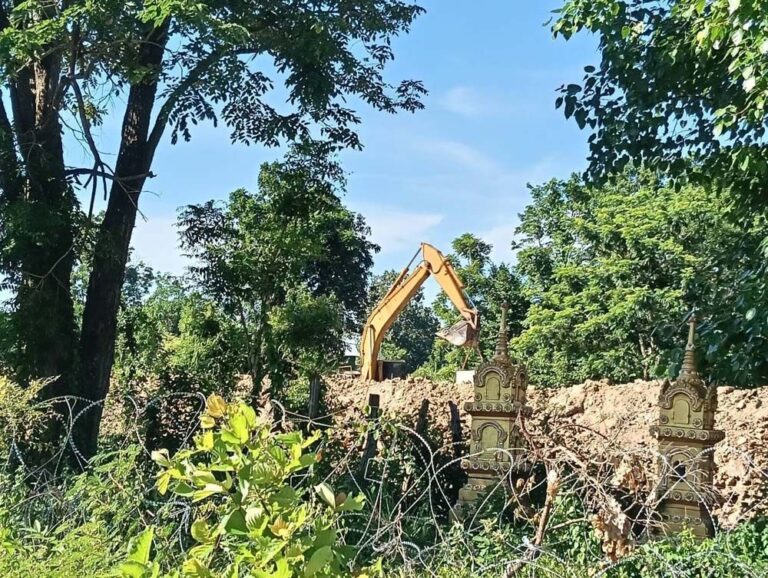
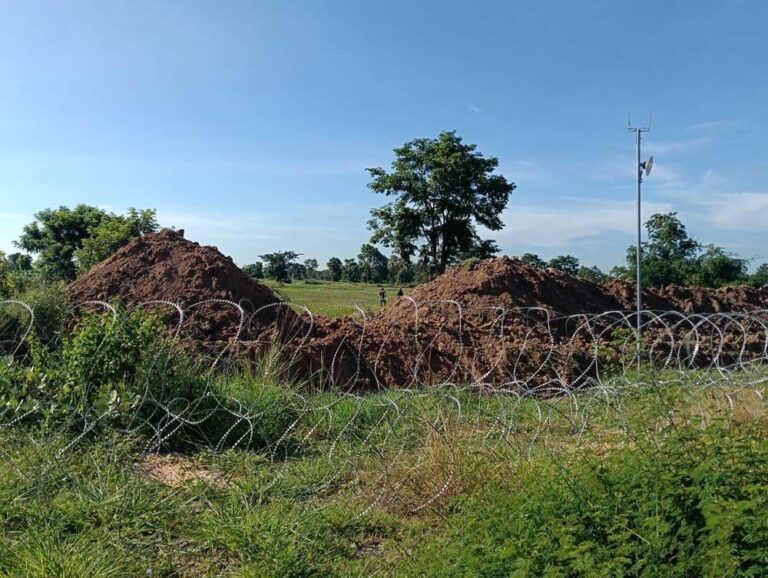
SA KAEO — Residents in a border community in Sa Kaeo province have expressed concern after observing Cambodian troops using heavy machinery to dig trenches and construct defensive positions close to the Thai-Cambodian border.
Local residents in Ban Nong Chan, Khok Sung district, reported that Cambodian forces have been carrying out earthworks for several days, including digging field trenches and building fortifications resembling bunkers. Some of the structures are reportedly located less than 20 metres from the border fence and can be clearly seen from the Thai side.
According to local sources, Cambodian forces had previously reinforced positions deeper inside the K-5 road area. However, recent activity suggests that military fortifications and operations have moved closer to the border, raising concerns among residents.
Ban Nong Chan is regarded as a sensitive security area due to past border disputes between Thailand and Cambodia. Thai security agencies are continuing to closely monitor the situation, with patrols and surveillance operations being conducted along the border.
Residents said they were uneasy about the construction activity because of its proximity to Thai territory. Security officials, however, said they were maintaining close oversight of developments to prevent any incident that could affect peace and order in the area.
As of Monday, there had been no reports of clashes or confrontations between Thai and Cambodian troops. Authorities said the situation remained under observation by relevant agencies and local communities along the border.
TAK — A school along the Thai-Myanmar border has temporarily suspended classes amid concerns over renewed fighting across the border, after reports that stray bullets from recent clashes landed inside Thai territory.
Col. Nuchrawee Jamjamrat, deputy spokesperson for the Royal Thai Army, said on 22 June that the Naresuan Task Force was closely monitoring the situation along Thailand’s western border following the closure of Ban Mae Kon Ken School in Mae Sot district, Tak province.
According to the army, Myanmar military forces have reinforced positions in Min Let Pan and Phalu villages in Myawaddy Township, opposite Huai Maha Wong village in Tak province.
The military believes Myanmar troops may be preparing operations against resistance forces in the area following an escalation in fighting on 21-22 June.
Recent clashes have resulted in bullets crossing into Thai territory, prompting the school to halt classes temporarily as a safety precaution for students.
The Royal Thai Army said the Naresuan Task Force and the Ratchamanu Task Force have placed personnel and equipment on standby to protect residents and property along the border.
Authorities have also advised people living in border communities to remain vigilant and closely follow updates from government agencies.
Residents affected by the situation or those who observe suspicious activity have been urged to contact local security authorities, who are available around the clock.
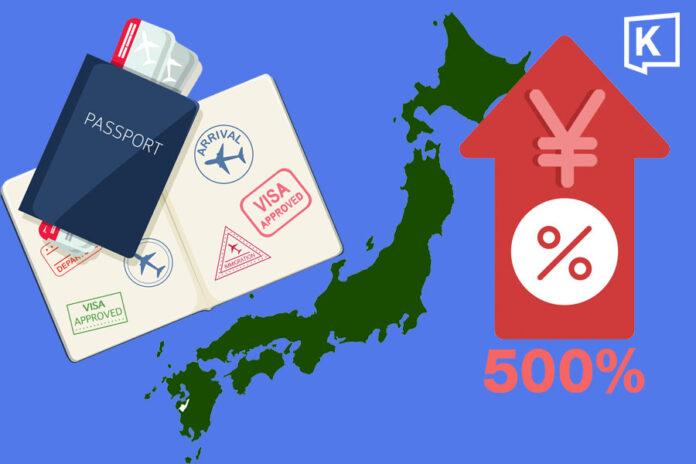
TOKYO — Japan will increase visa fees for foreign visitors fivefold from 1 July 2026, marking the country’s first revision of visa charges in nearly five decades as authorities seek to account for inflation, exchange-rate changes and rising administrative costs.
Under the revised fee structure, the cost of a single-entry visa will rise from 3,000 yen to 15,000 yen (about 3,400 baht), while a multiple-entry visa will increase from 6,000 yen to 30,000 yen.
The revised fees apply only to travellers who require visas to enter Japan. Visitors from countries covered by Japan’s visa-waiver programme, including Thailand, Canada and many European nations, can continue to enter for short-term tourism without paying visa application fees.
The changes were approved by Japan’s Cabinet on 19 June and will apply to visa applications submitted on or after 1 July.
Japanese Foreign Minister Toshimitsu Motegi told reporters on Friday that the revision was intended to reflect inflation and fluctuations in foreign exchange rates. He said the government does not expect the higher fees to have an immediate impact on inbound tourism.
The increase represents the first adjustment to Japan’s visa fees since 1978.
The move comes as Japan continues to experience a tourism boom fuelled by a weak yen and strong post-pandemic demand. The country welcomed a record 42.7 million international visitors in 2025, according to Japanese government tourism data.
The visa fee increase is part of a broader overhaul of immigration-related charges approved by Japan’s parliament earlier this year.
In May, Japan’s Upper House passed legislation allowing authorities to significantly raise fees for a range of immigration services. The statutory ceiling for permanent residency applications will increase from 10,000 yen to 300,000 yen, while fees for changes of residency status and extensions of stay may rise to as much as 100,000 yen.
The Japanese government has argued that the increases are necessary to help cover the costs of administering a growing foreign population, which exceeded four million residents for the first time in 2025. Officials have also said the fees will bring Japan more in line with other Group of Seven economies.
According to government proposals cited during parliamentary deliberations, revenue generated by the higher fees will help fund immigration processing, Japanese-language support programmes and measures aimed at reducing visa overstays.
Despite concerns that the sharp increases could discourage some applicants, Japanese authorities have maintained that the changes are unlikely to significantly affect tourism demand.
Japan remains one of the world’s most popular travel destinations, aided by a yen that has remained near multi-decade lows against major currencies in recent years.
BANGKOK — 19 June 2026, Bangkok Dusit Medical Services Plc (BDMS) has launched WellEra Bangkok, a 29-billion-baht wellness-focused development in Bangkok’s Lumpini district, saying the project is intended to integrate healthcare into everyday living rather than function as a traditional real estate venture.
Scheduled to open fully in 2030, the development is being built under the concept “The DNA of World Well-Living”, combining preventive healthcare, residential living, hospitality and lifestyle facilities within a single ecosystem.
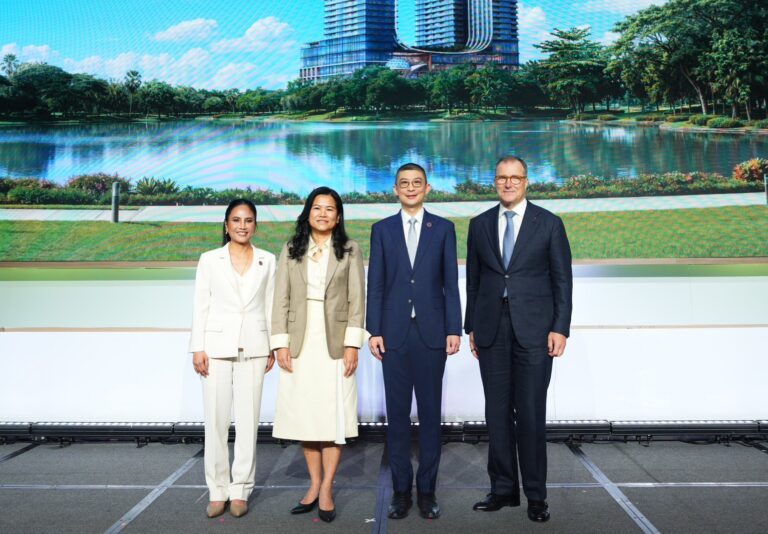
(left to right) Thitiporn Nookong, Assistant Vice President for Property Development at BDMS; Dr. Poramaporn Prasarttong-Osoth, BDMS President; and Dr. Tanupol Virunhagarun, CEO of BDMS Wellness Group
Extending healthcare beyond the hospital
BDMS President Dr. Poramaporn Prasarttong-Osoth said the project stemmed from the company’s efforts to extend healthcare beyond hospitals and clinics.
“We do not want people to see BDMS as moving into the property business,” she said. “Our objective is to find ways to help people stay healthy. We realised that if we want to improve health outcomes more effectively, we need to become part of people’s daily lives and lifestyles.”
Dr. Tanupol Virunhagarun, Chief Executive Officer of BDMS Wellness Group, echoed that sentiment, saying WellEra should be seen as a platform for improving quality of life rather than a conventional property project.
Dr. Tanupol Virunhagarun, Chief Executive Officer of BDMS Wellness Group
“We do not see ourselves as property developers,” he said. “We want to create a place that supports physical health, mental wellbeing and healthy longevity.”
According to the company, the 29-billion-baht investment covers land lease costs, construction of residential and hospitality facilities, a wellness clinic, a retreat centre and medical equipment. Foundation work has already begun.
Thailand’s moment as a global wellness destination
Dr. Tanupol said Thailand was well positioned to strengthen its role as a global wellness destination, citing the country’s established strengths in healthcare, tourism, food and hospitality.
“Opportunities like this do not come often,” he said. “Thailand already has strong foundations in food, tourism, healthcare and hospitality. The next step is to build on those strengths and connect them through a wellness ecosystem.”
Dr. Tanupol Virunhagarun, Chief Executive Officer of BDMS Wellness Group
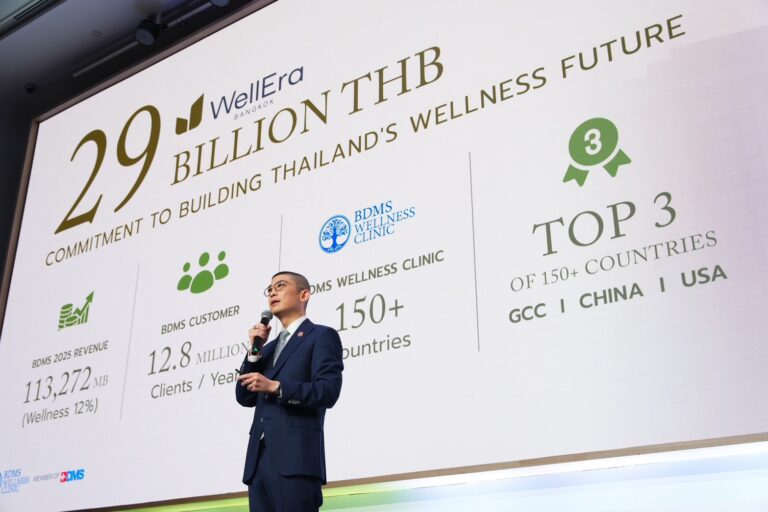
BDMS said the global wellness economy is currently valued at more than US$6.8 trillion and is projected to reach US$9.8 trillion by 2029. Thailand’s wellness economy is estimated at around 1.4 trillion baht, driven in part by wellness tourism, which has grown by 36.4%, and wellness-focused residential development, which has expanded by 22.9%. BDMS alone serves approximately 12.8 million patients and wellness clients annually, representing more than 150 nationalities.
Dr. Tanupol said people worldwide live for an average of 71.4 years but spend only 61.9 years in good health, while Thais have an average lifespan of 75.3 years and a healthspan of 65.8 years. The figures suggest that many people spend more than a decade living with illness, highlighting the need for environments and lifestyles that support long-term health.
He said demand for services related to meditation, yoga, mental wellbeing and spiritual tourism was increasing worldwide, creating further opportunities for Thailand to expand its presence in the sector.
In 2025, BDMS reported total revenue of 113.272 billion baht, with wellness-related businesses accounting for approximately 12% of total group revenue, or around 13.6 billion baht, reflecting the growing importance of wellness within the organisation.
A human-centred design approach
The development will cover more than 200,000 square metres adjacent to Lumpini Park and will comprise four main components: a preventive healthcare clinic, branded residences under the Capella Residences Bangkok at WellEra brand comprising 262 units across 45 floors, an urban wellness retreat with 168 rooms across 20 floors, and lifestyle retail facilities.
Roland Fasel, President of Capella Hotel Group, said the partnership aims to combine hospitality and wellness expertise to support long-term wellbeing. He described Bangkok as a strategic location for the project and said the collaboration reflected both companies’ commitment to wellness-oriented living.
Dr. Tanupol Virunhagarun, Chief Executive Officer of BDMS Wellness Group, and Roland Fasel, President of Capella Hotel Group
“There is no better city than Bangkok and no better partner than BDMS to shape the future of luxury living,” he said. “WellEra brings health and wellbeing to the heart of residential design, creating an environment that supports balanced living across body, mind and community.”
Thitiporn Nookong, Assistant Vice President for Property Development at BDMS, said the project’s design philosophy differed from that of conventional property developments because it began with an assessment of human needs and behaviours.
“We started by asking how people can live comfortably, sleep well, maintain good health and spend more time with the people they love,” she said. “Factors such as air quality, water quality, lighting, sound and temperature have been considered from the earliest stages of design.”
(left to right) Thitiporn Nookong, Assistant Vice President for Property Development at BDMS; Dr. Poramaporn Prasarttong-Osoth, BDMS President; Dr. Tanupol Virunhagarun, CEO of BDMS Wellness Group; Roland Fasel, President of Capella Hotel Group
The development has been designed to meet international sustainability and wellness standards, including WELL Platinum, Fitwel 3-Star and LEED Gold certifications. It was also developed in collaboration with Kohn Pedersen Fox (KPF), the New York-based architectural firm behind projects including Hudson Yards in New York and Lotte World Tower in Seoul.
BDMS said it also plans to establish a health centre within Lumpini Park to support the wellbeing of local residents and park visitors in the future.
CHONBURI — 20 June 2026, A fluffy white dog narrowly escaped death after being found struggling in the sea near Si Chang Island, before being rescued by a fishing boat skipper from Sattahip.
Reporters were informed by Athirat Saetang, 35, a Sattahip fishing boat skipper, that he had spotted a dog floating in the sea while heading out to fish in Si Chang Bay.
From a distance, Athirat noticed a white object resembling a living creature drifting in the water and immediately steered his boat closer to investigate. Upon approach, he discovered an exhausted male white fluffy dog, believed to be a poodle, barely staying afloat.
The skipper safely pulled the dog aboard and provided water and basic care.
Athirat said he found the dog at around 09:00 in a shipping channel near the Sam Muk area, where currents are particularly strong. He believes the animal may have fallen from a boat or floating pier during stormy weather the previous night.
“At first, I couldn’t tell what it was. When we got closer, I realized it was a dog. He swam toward the boat on his own, as if asking for help. He looked extremely tired and was close to exhaustion,” Athirat said.
After being rescued, the dog’s condition improved and it accepted water and food offered by the crew.
Athirat noted that the dog likely would not have survived had no vessel passed by, as the area where it was found is a strong-current channel in open water.
The dog has since been reunited with its owner, who came forward to claim the pet. The owner said the dog had fallen from a boat and been swept out to sea by the current before being rescued just in time by the good-hearted skipper.