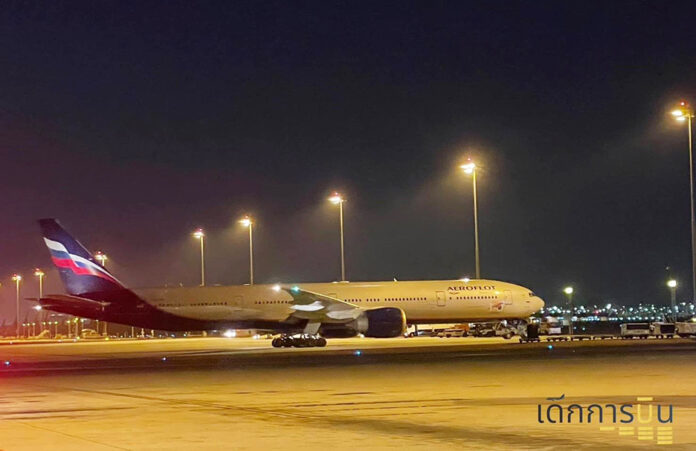
Facebook page "Dek Kaan Bin" shares an image of the Aeroflot Boeing 777-300ER that departed from Phuket International Airport and made an emergency landing at Suvarnabhumi Airport on February 10, 2025.
PHUKET — An Aeroflot Boeing 777-300ER made an emergency landing at Bangkok’s Suvarnabhumi Airport today after experiencing technical difficulties during its flight from Phuket to Moscow Sheremetyevo Airport.
The aircraft, which departed Phuket International Airport at 16:35 local time, spent over three hours holding over the Andaman Sea due to issues with its nose landing gear. The flight crew maintained altitudes between 18,000 and 12,000 feet while attempting to resolve the problem.
Montchai Tanode, Director of Phuket International Airport, confirmed that the aircraft’s nose gear failed to retract after takeoff. Unable to return to Phuket due to limited runway facilities, the flight diverted to Suvarnabhumi Airport, landing safely at 21:10.
During the holding pattern, the aircraft burned excess fuel to reach a safe landing weight and reduce environmental impact. Suvarnabhumi Airport emergency response teams were deployed to support the landing.
The flight was originally scheduled to depart Phuket at 15:20 (UTC+7) and arrive in Moscow at 21:40 (UTC+3).
B.Grimm Technologies Company Limited, a leader in engineering and energy-efficient solutions in Thailand, has signed a Licensee Agreement with John Cockerill Hamon, a renowned expert in industrial cooling solutions, to become the distributor of HAMON® cooling towers. The collaboration aims to expand the customer base across key industries in Thailand, such as power plants, oil and gas plants, chemical processing factories, oil refineries, and data centers.
The two companies will collaborate to develop strategies enhancing advanced cooling solutions in Thailand’s industrial sector. John Cockerill Hamon is a part of the John Cockerill Group, a global leader in technological and industrial solutions, with operations in 29 countries.
Mr. Arnon Kulawongwanich, Managing Director of B.Grimm Technologies, said: “This partnership will allow B.Grimm to deliver modern solutions with European standard quality, long-lasting performance, and high efficiency, ensuring sustainability for Thai industries. B.Grimm is committed to providing the best services to fully meet the needs of the industrial sector. B.Grimm is very pleased to have signed a Licensee Agreement with John Cockerill Hamon to represent HAMON® cooling towers, a registered trademark of John Cockerill worldwide. B.Grimm now holds the rights to design, market, and maintain advanced cooling systems that enhance energy efficiency and operational reliability in industrial sectors.
Mr. Bagus Mardananto, Director of John Cockerill Hamon Indonesia, noted: “This collaboration reflects our shared vision for sustainability and operational excellence. Our teams look forward to working closely with B.Grimm Technologies to serve Thailand’s industrial sectors. This partnership strengthens the Group’s position in cooling with expertise in line with its offer in the energy business. John Cockerill is also reaffirming its commitment to being a key player in decarbonized energy and responsible industrial production in the APAC region.”
Created in 1904, HAMON® is specialized in Cooling Solutions. The John Cockerill Hamon’s experienced teams design and supply high quality cooling towers, both wet and wet-dry, air-cooled condensers, and systems integrating the products with other complementary equipment. As global leaders in the manufacturing of large cooling towers in power generation and the petrochemical industry in Thailand, the two companies have already worked together for 20 years through a joint venture, Hamon B.Grimm, that was engaged in local subcontract fabrication of parts for and installation of cooling towers. Together they plan to continue shaping the future of sustainable and efficient cooling systems in Thailand.
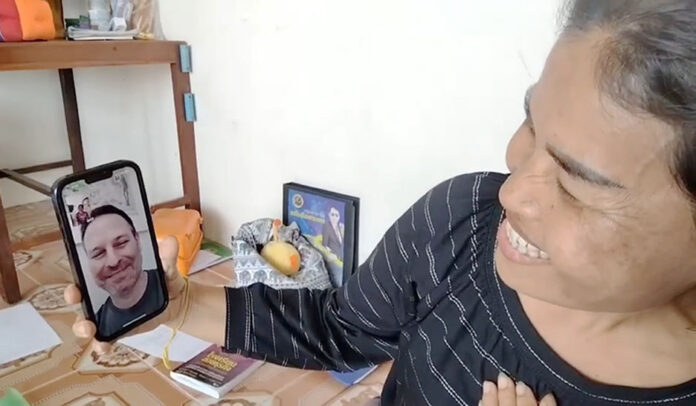
Piyatida Hongpimthong's mother video calls Swiss resident Mr. Tom on February 8, 2025, thanking him for saving her daughter's life in a road accident last year.
BURIRAM — A 15-year-old girl from Buriram finally got to thank her foreign rescuer via video call for saving her life in a motorcycle accident last year.
The incident occurred on September 2, 2024, when Piyatida Hongpimthong collided with a pickup truck. A Swiss national, identified only as Tom, provided crucial first aid at the scene, clearing blood from her airways when she was unconscious and bleeding heavily from her face. He accompanied her in the ambulance to the hospital.
“I wouldn’t be alive today without Mr. Tom’s help,” said Piyatida, who lost sight in her left eye from the accident. “The ambulance took a long time to arrive, and experts said I could have died if the blood blocking my nose and mouth hadn’t been cleared.”
Mr. Tom provides first aid to 15-year-old Piyatida Hongpimthong at the scene of a road accident on September 2, 2024. Though Piyatida lost sight in one eye, she survived thanks to his intervention.
Her mother, Rattanaporn Laosuna, 46, spent weeks searching for Tom’s identity before discovering he was married to a Thai woman and lived in Pa Khiap subdistrict, Khu Muang district, Buriram. Mother and daughter finally thanked him through a video call on February 8.
Despite her injury, Piyatida has returned to school with renewed determination. “How can I not fight to live when someone worked so hard to save my life?” she said.
The case remains unresolved, with the pickup truck owner offering only 1,000 baht in compensation through two hospital visits of 500 baht each.
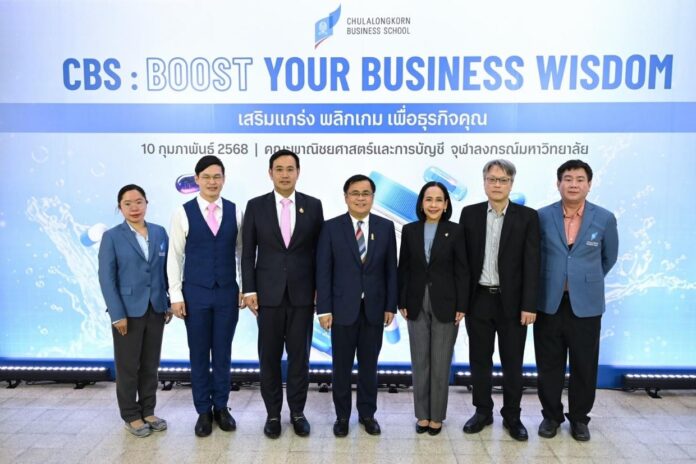
On February 10, 2025,Chulalongkorn Business School (CBS) hosted the seminar “CBS: Boost Your Business Wisdom,” designed to strengthen business strategies through cutting-edge insights from top faculty members and leading industry experts. This strategic event aimed to provide attendees with the knowledge and tools needed to navigate the ever-evolving business landscape and achieve sustainable success in 2025 and beyond.
Professor Dr. Wilert Puriwat, President of Chulalongkorn University, highlighted that businesses must expand their focus beyond traditional sustainability models. Marketers today must embrace the concept of Regenerative Marketing, which emphasizes restoring and regenerating resources to create long-term value for the environment, society, and the economy. This was not just about driving business growth, but about creating meaningful value for all stakeholders and building brands and experiences that contributed to a more sustainable and equitable world.
Associate Professor Dr. Tartat Mokkhamakkul, Dean of Chulalongkorn Business School, emphasized that the seminar was designed to arm businesses with the essential knowledge and skills required to thrive amid rapid global changes. The topics covered reflected key ideas related to sustainability, technology, and digital age business strategies, all of which are crucial to achieving future business success. The seminar aimed to inspire participants to incorporate innovative solutions into their organizations to stay competitive in today’s fast-paced environment.
The event featured expert-led sessions from the five departments of Chulalongkorn Business School:
Department of Marketing: Regenerative Marketing – The New Wave of Value Creation
Participants explored how businesses could go beyond traditional marketing by focusing on creating value through the restoration of society and the environment. This session highlighted how Regenerative Marketing meets the evolving demands of modern consumers while ensuring long-term competitive advantage.
Department of Commerce: Thailand Ahead – Strategic Insights for Business Success
A look into the global megatrends reshaping business strategy, including ESG, regionalization, and the role of technology in enhancing business sustainability. Thai businesses gained valuable insights into how these trends could be integrated into their strategies for sustainable growth.
Department of Accountancy: Beyond Financial Metrics – ESG and SDG Reporting
As businesses shifted toward sustainable practices, accountants had to adapt by incorporating ESG and SDG reporting alongside traditional financial metrics. This session explored how this shift impacted investors, consumers, and long-term business potential.
Department of Banking and Finance: ESG and the Digital Society
Participants delved into how the digital transformation intersected with sustainability, touching on critical topics like energy efficiency, labor protection, and anti-money laundering. This session explored how businesses could balance technological progress with social justice to achieve sustainable benefits.
Department of Statistics: Sustainability in the Digital World – Balancing Innovation and Responsibility As digital technologies such as AI and blockchain continued to revolutionize industries, this session addressed key challenges, including energy consumption and electronic waste. Achieving sustainable digital transformation required policies like Thailand 4.0 and BCG economy strategies to guide the transition. However, businesses faced significant obstacles, including high investment costs and unfavorable regulations, which had to be overcome to promote sustainability in the digital age.
The “CBS: Boost Your Business Wisdom” seminar underscored Chulalongkorn Business School’s commitment to empowering businesses with the knowledge and strategies needed to thrive in the complex and fast-changing world.
The seminar was held on Monday, February 10, 2025, at the Chulalongkorn Business Cinema, Jaiyossompati Building 1, Chulalongkorn Business School.
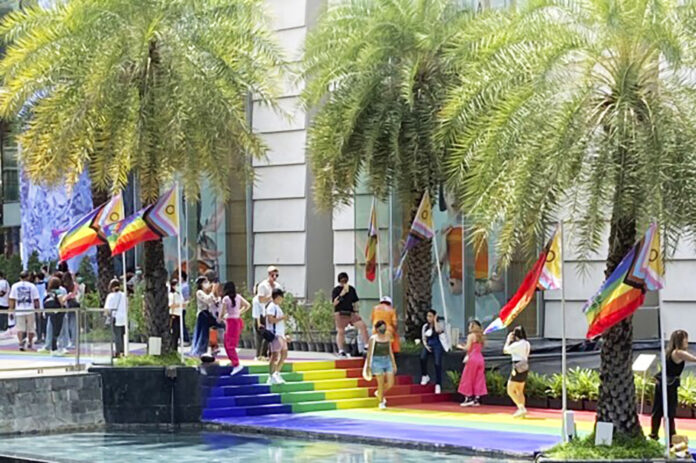
BANGKOK — The Tourism Authority of Thailand (TAT) targets LGBTQ travelers as spending surges 38% to over 73,000 baht per trip. The number of first-time visitors to Thailand has increased significantly by 19.90 percent.
Following the passage of the Marriage Equality Act, more and more LGBTQ travelers have been asking TAT if Thailand is ready to be a top LGBTQ destination. Siripakorn Cheawsamoot, the TAT’s deputy governor for Europe, Africa, the Middle East and the Americas, shared that one of the most common questions from European travelers is whether Thailand has dedicated staff to cater to the LGBTQ community, as many visitors want to meet like-minded people.
In response, the TAT has assured that Thailand offers welcoming destinations for all travelers, including LGBTQ tourists, same-sex couples and honeymooners. The country’s hospitality industry is known for its inclusivity and high standards of service.
A survey of foreign tourists in the romantic tourism category which includes LGBTQ travelers found that spending per trip from January to December 2024 averaged 73,535 baht per person, up 37.72 percent from the same period in 2023. The average daily spend per traveler increased by 42.39 percent to 6,722 baht.
TAT’s findings show that romantic tourism travelers, including honeymooners and LGBTQ tourists, seek luxury and exclusivity. They prefer upscale hotels and premium travel experiences, resulting in higher spending than the average tourist.
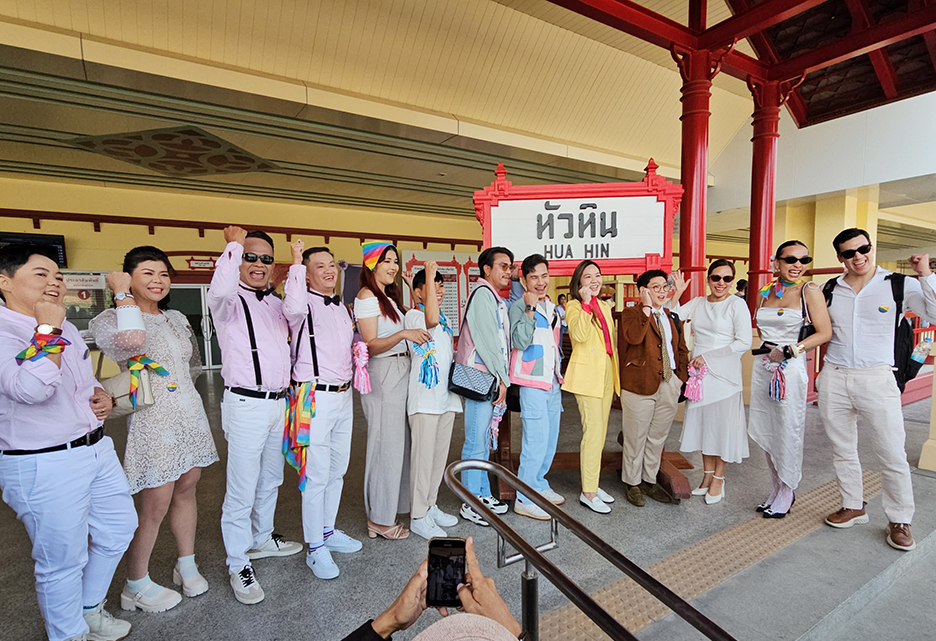
23 LGBTQ+ couples travel by SRT Royal Blossom train from Bangkok to Hua Hin for “Hua Hin Grand Inter Pride 2025” marriage registration ceremony on January 23, 2025.
In addition, LGBTQ travelers tend to spend more and travel more frequently than other groups, making them a highly influential segment in the tourism market. As a result, Thai tour operators have actively catered to their needs, further strengthening Thailand’s position as one of the top LGBTQ-friendly destinations.
“Romantic travelers consistently spend more than other groups. The main reason they choose Thailand, cited by 64.4 percent of respondents, an increase of 3.99 percent, is the variety of tourist attractions on offer. A further 48.44 percent cited the friendliness of Thai people (up 3.47 percent) and 47.32 percent the Thai cuisine (up 3.47 percent),” Siripakorn explained.
The LGBTQ tourism survey reveals several important findings about travel behavior. On average, LGBTQ travelers stay 10.94 nights in Thailand, with a slight decrease of 0.37 percent. The vast majority, 97.32 percent, prefer to stay in hotels or resorts, an increase of 7.01 percent. Each trip typically includes a visit to 2.2 provinces, an increase of 0.38 percent.
Notably, 68.97 percent of LGBTQ travelers are visiting Thailand for the first time, a significant increase of 19.90 percent. Meanwhile, 22.32 percent have visited the country 2-4 times, a decrease of 5.44 percent, and 8.71 percent have visited five times or more, a decrease of 14.46 percent.
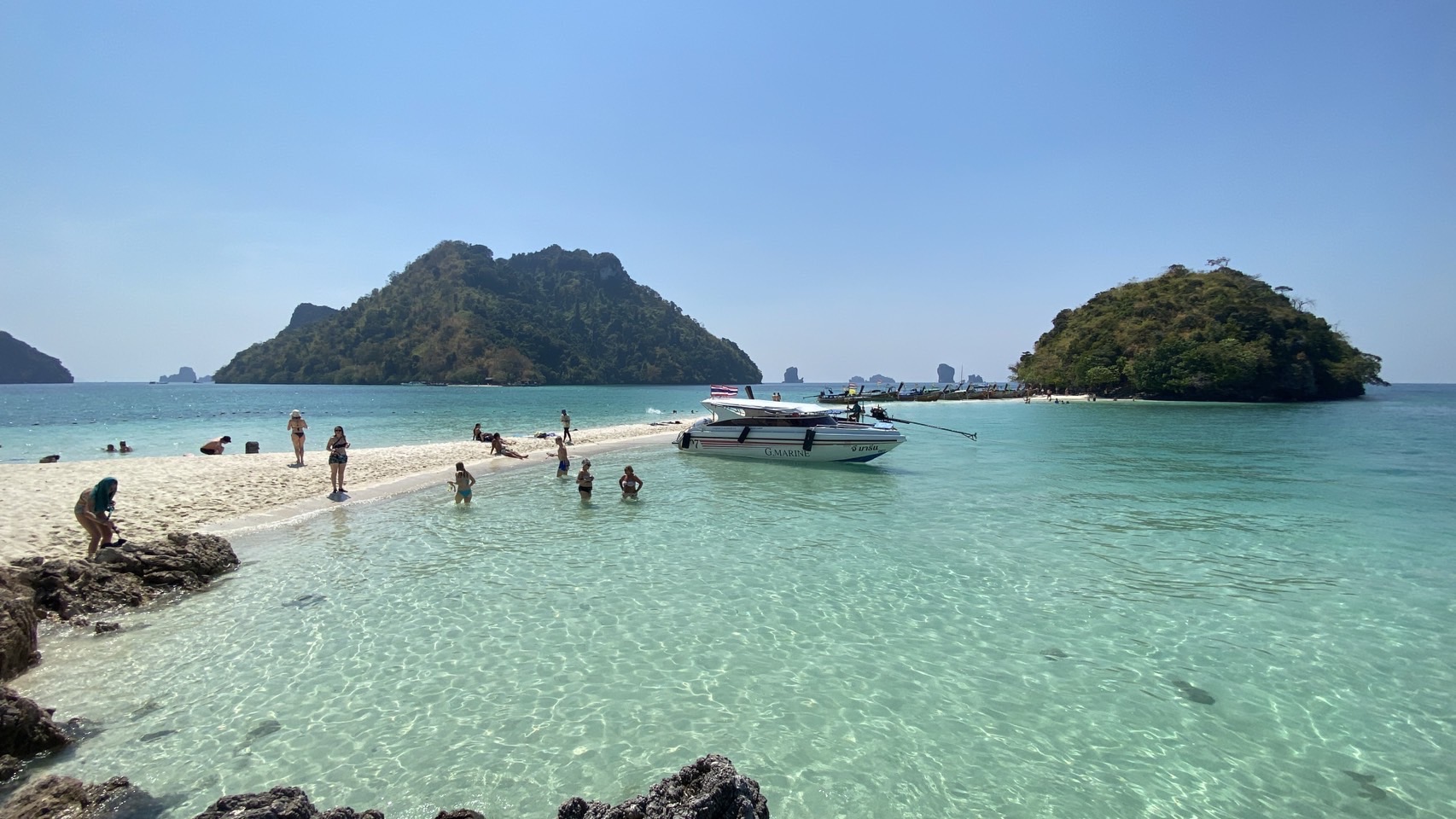
Krabi’s popularity rises among Thailand’s top 10 romantic tourism provinces.
The top 10 most popular provinces for romantic tourism in Thailand show that visitors’ travel preferences are changing. Bangkok remains the most visited destination with 62.5 percent, although this represents a drop of 6.28 percent. Phuket follows with 47.77 percent, a remarkable increase of 26.77 percent.
Krabi has also risen in popularity, reaching 28.57 percent, an increase of 28.57 percent. Surat Thani saw an increase of 5.03 percent at 17.63 percent, while Chiang Mai saw a 4.4 percent increase at 15.85 percent.
In contrast, Chonburi recorded a decline to 15.63 percent, a drop of 8.23 percent. Phang Nga gained traction at 9.38 percent, up 6.93 percent, while Chiang Rai recorded a gain of 3.65 percent at 6.7 percent. Prachuap Khiri Khan reached 3.57 percent, up 0.54 percent, and Ayutthaya rounded out the list with 2.46 percent, up 0.35 percent.
Siripakorn also pointed out that the World Travel Market (WTM), one of the largest tourism fairs in the world, reserves a space for the LGBTQ market every year. Global market research shows that LGBTQ travelers contribute over 200 billion dollars (6.64 trillion baht) to the tourism industry. The United States leads in LGBTQ travel spending with 63.1 billion dollars (1.9 trillion baht), followed by Brazil with 26.8 billion dollars (816 billion baht).
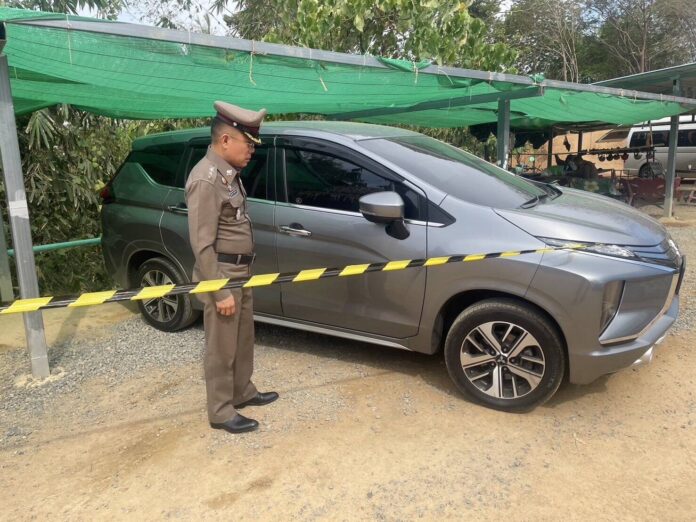
Police officers secure the perimeter around a vehicle where a Canadian businessman was found deceased near Nui Beach in Phuket's Karon district on Feb. 10, 2025.
PHUKET — A 53-year-old Canadian businessman, Ian, was found deceased in his car near Nui Beach in Phuket’s Karon district on February 10, 2025, local police reported.
Police Colonel Kundet Na Nongkhai, superintendent of Karon Police Station, said officers discovered Ian’s body in a locked vehicle at 9:15 a.m. following a citizen’s report. Forensic experts and medical examiners were called to investigate the scene.
A farewell letter found in the vehicle revealed Ian had been struggling with severe health issues, including chronic headaches and hearing problems requiring multiple surgeries. He also mentioned financial difficulties, including his company’s bankruptcy.
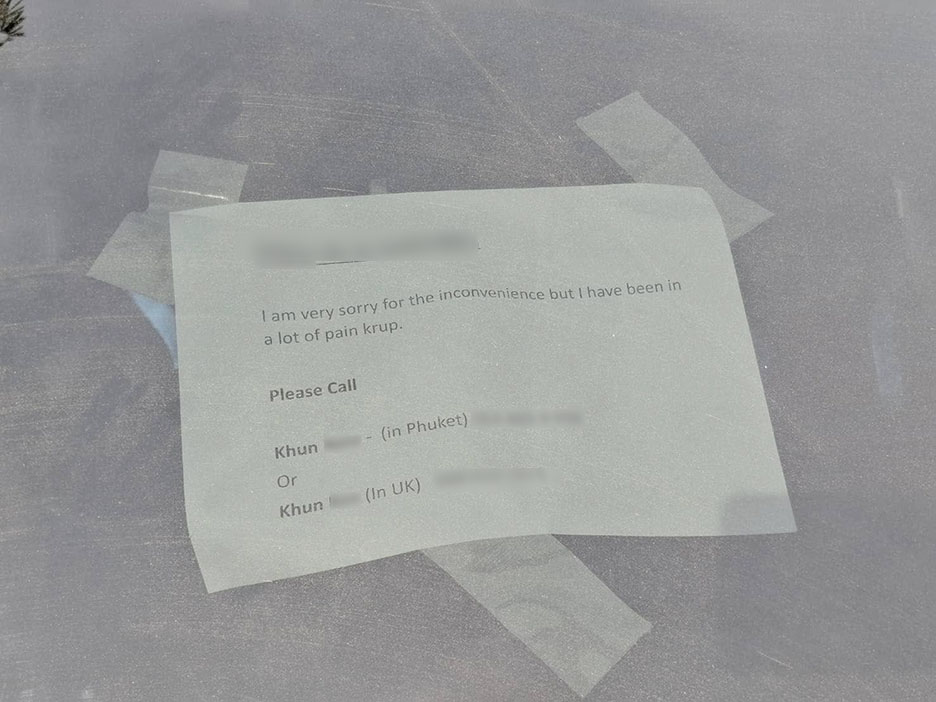
A note left on the outside of the car by the Canadian businessman apologized for the inconvenience and contained messages addressed to two people – one in Phuket and another in the United Kingdom.
“I’ve had a good life, but it’s time to go,” Ian wrote in his note. He expressed particular concern for his cats, requesting they be placed in good homes. The letter also mentioned several envelopes stored in a safe, each containing contact information for specific individuals.
According to police investigation, Ian owned a vacation rental platform company. His final wishes included cremation within one day and having his ashes scattered at Kamala Beach.
The body has been transferred to Vachira Phuket Hospital for detailed autopsy. The Canadian consulate has been notified, and authorities are working with Ian’s secretary to contact relatives abroad.
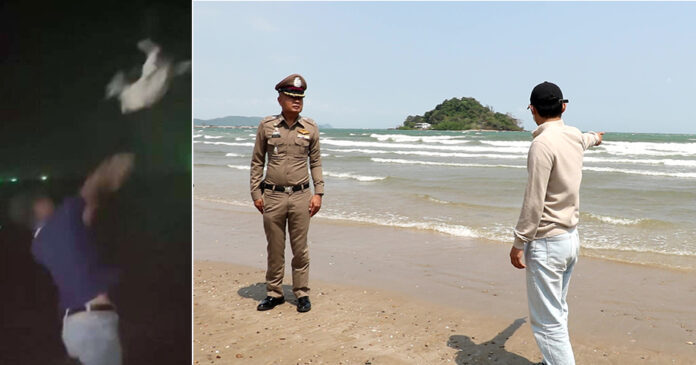
Nut, a 19-year-old Myanmar national, is taken to reenact the scene where he threw a dog into the sea five times two years ago (left) at Paknam Beach in Chumphon province on February 9, 2025.
CHUMPHON — A 19-year-old Myanmar national has confessed to throwing a dog repeatedly into the sea at a Chumphon beach, after a video of the incident went viral on social media. The act, which occurred two years ago when the suspect was 17, has led to both criminal charges and deportation proceedings.
Mr. Nut surrendered himself to Samut Prakan City Police on February 8, admitting he was intoxicated when he committed the act at Paknam Beach in late 2023. The incident was recorded by his Laotian friend “Auan,” who later posted the footage on Facebook following a personal dispute.
The case caught the attention of National Police Chief Pol. Gen. Kitt-rat Panpetch, who ordered immediate action due to the severity of the animal cruelty. Immigration authorities are coordinating with local police to process both criminal charges and deportation procedures.
Screenshots from the viral video showing Nut throwing a small dog into the sea five times.
On February 9, Nut spent over two hours giving his statement at Paknam Chumphon Police Station before being taken to reenact the crime at the beach near Paknam Chumphon Municipality Office, approximately 200 meters from the police station.
During his statement, Nut expressed remorse for his actions, revealing he threw the dog into the sea approximately five times. Before leaving, he took one dog home to Ranong province, though he wasn’t sure if it was the same one from the incident.
He has been charged with animal cruelty without reasonable cause, facing a maximum sentence of two years imprisonment. Investigations revealed that Nut has been living in Thailand since childhood on a tourist visa, with his Myanmar parents based in Ranong province.
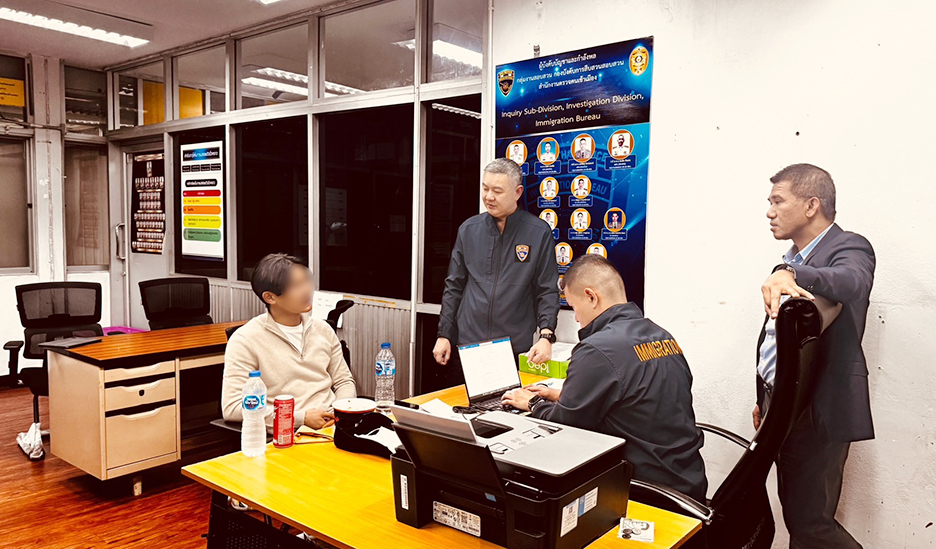
Immigration police officers question Nut at their office in Samut Prakan province on February 8, 2025.
He currently resides in Bangkok with his Thai girlfriend and receives financial support from his parents.
Police are also seeking his friend Auan, who recorded and posted the video, though reports indicate he has already returned to Laos. Immigration officials will proceed with Nut’s deportation after the local legal proceedings conclude.
The Watch Dog Thailand Foundation, which initially filed the police report after the video surfaced, facilitated Nut’s surrender to authorities. The case was submitted to the Chumphon Provincial Court on February 10. The court sentenced him to 15 days in prison without suspension. Subsequently, the Immigration Bureau revoked his visa for deportation proceedings.
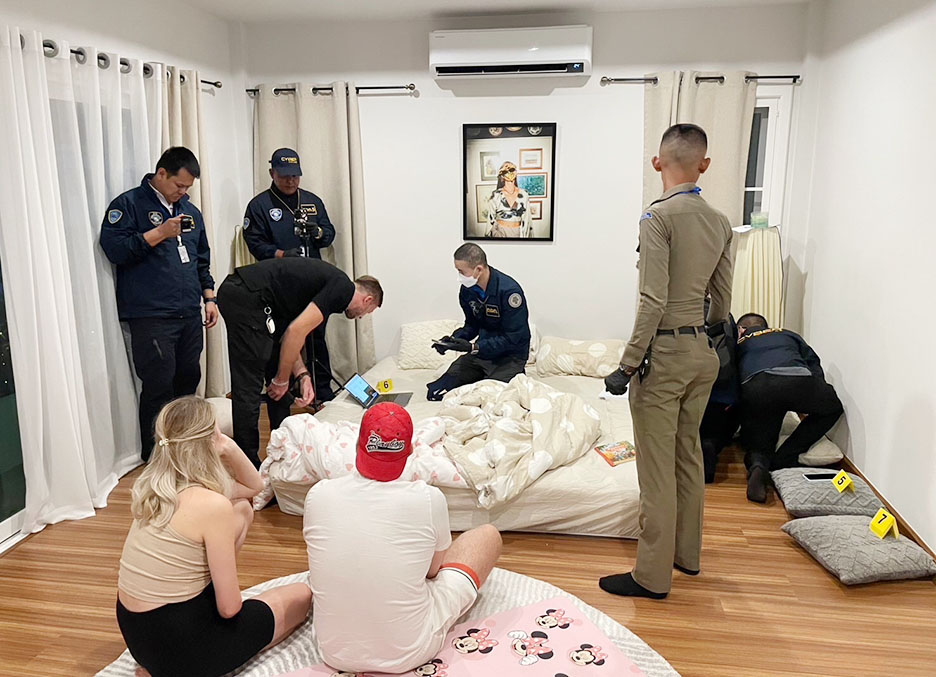
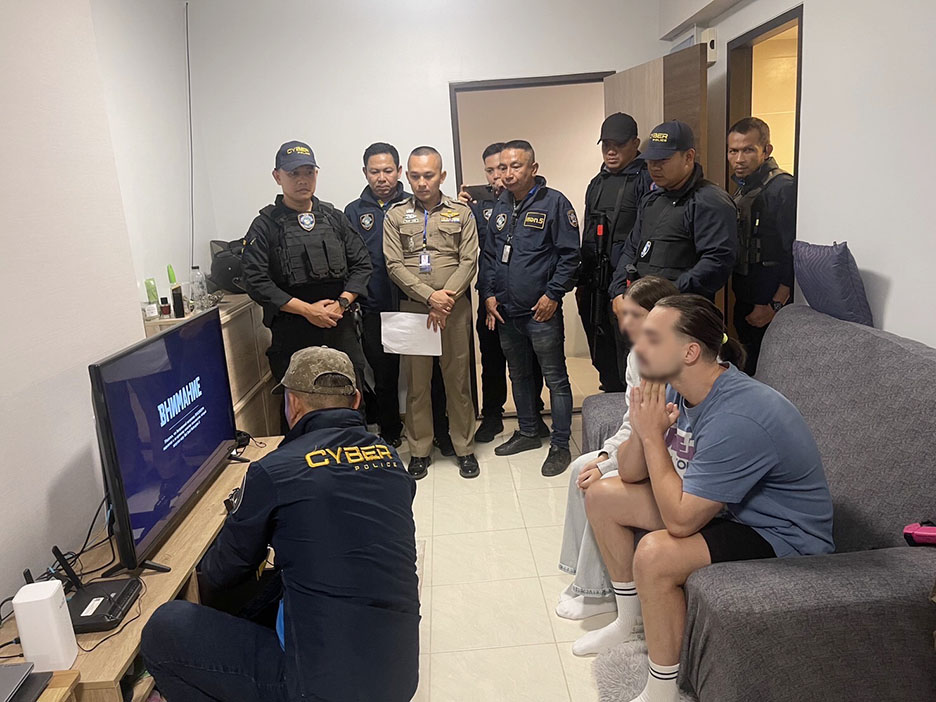
Foreign couple arrested in Operation PHOBOS AETOR in Phuket on February 10. They are suspected hackers who deployed ransomware attacks.
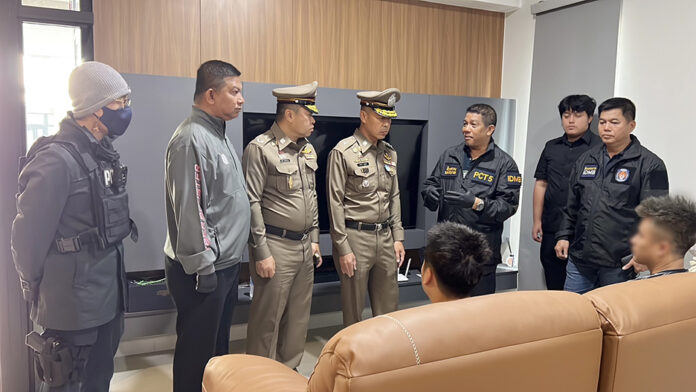
PHUKET — Thai police arrested four European hackers in Phuket who allegedly stole $16 million through ransomware attacks affecting over 1,000 victims worldwide. The suspects, wanted by Swiss and US authorities, were caught in coordinated raids across four locations.
Officers from Cyber Crime Investigation Bureau, led by Police Lieutenant General Trairong Phiwphan, conducted “Operation PHOBOS AETOR” in Phuket on February 10, arresting four foreign hackers involved in ransomware attacks. The operation, coordinated with Immigration Police and Region 8 Police, raided four locations across Phuket.
Suspects detained in Phuket during Operation PHOBOS AETOR, accused of running ransomware extortion schemes on February 10, 2025.
The suspects, two men and two women, were apprehended at Mono Soi Palai, Supalai Palm Spring, Supalai Vista Phuket, and Phyll Phuket x Phuketique Phyll. Police seized over 40 pieces of evidence, including mobile phones, laptops, and digital wallets. The suspects face charges of Conspiracy to Commit an Offense Against the United States and Conspiracy to Commit Wire Fraud.
The arrests stemmed from an urgent international cooperation request from Swiss authorities and the United States, involving Interpol warrants for the European suspects who had entered Thailand as part of a transnational criminal organization.
Foreign couple arrested in Operation PHOBOS AETOR in Phuket on February 10. They are suspected hackers who deployed ransomware attacks.
The group deployed Phobos ransomware against 17 Swiss companies between April 30, 2023, and October 26, 2024. Their operation involved unauthorized access to victims’ networks, data theft, and encryption of files. The hackers demanded cryptocurrency payments for decryption keys and threatened to publish stolen data if ransoms weren’t paid. They also used cryptocurrency mixing services to obscure transaction trails.
The operation has affected over 1,000 victims worldwide, causing damages estimated at $16 million (approximately 560 million baht). While the suspects are in custody with evidence, their identities remain undisclosed as investigations continue.
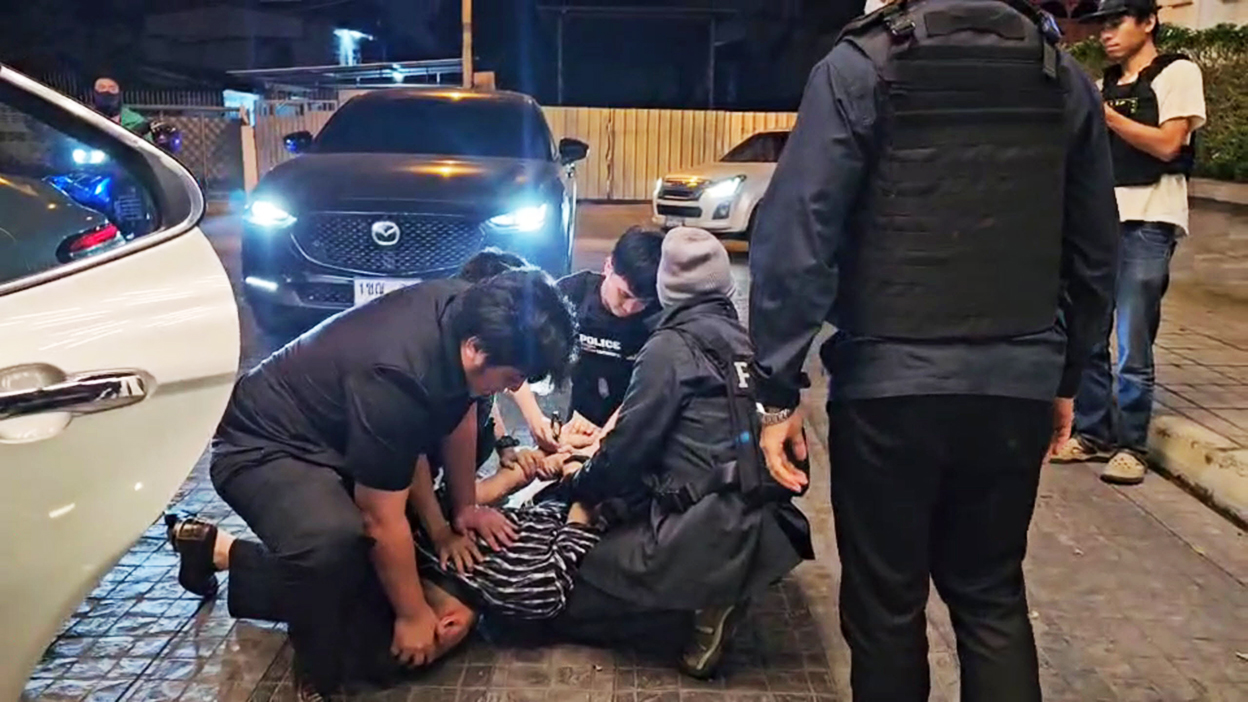
Bangkok Metropolitan Police expand probe into two Chinese scam bosses, resulting in 2.5 million USDT asset freeze on Feb 7, 2025.
BANGKOK — In a dramatic operation reminiscent of a movie scene, Thai and Chinese police forces have successfully frozen cryptocurrency assets worth $2.5 million (approximately 84 million baht) from two alleged Chinese scam kingpins. The assets were discovered in hidden digital wallets following the suspects’ arrest.
The operation, carried out on February 5, was a joint effort between Huamark Police Station and the Police Cyber Taskforce (PCT). Officers apprehended two Chinese nationals who reportedly attempted to resist arrest and delete data from their phones before being subdued.
The suspects were identified as Mr. Ye Wanyou, 29, and Mr. Li Weijie, 30. During the initial raid at their luxury residence, authorities seized $44,550 in assets. Further collaboration with Chinese authorities led to the discovery and freezing of an additional $2.5 million in cryptocurrency.
Police wrestle with suspected scam kingpin Mr. Li Weijie, 30, during arrest at Bangkok’s Patio Ratchayothin Village on Feb 5, 2025.
Prime Minister Paetongtarn Shinawatra directed Police General Kitt-rath Phanphetch, the National Police Chief, along with Police General Thatchai Pitaneelaboot, Senior Inspector-General of the Royal Thai Police and the Director of the PCT, to coordinate with Chinese police officials. A joint investigation meeting held on February 7 at Huamark Police Station revealed several key findings:
The investigation uncovered hidden cryptocurrency wallets containing approximately 2.5 million USDT (Tether tokens), worth about 84 million baht.
Evidence suggested the suspects were involved in human trafficking operations near Mae Sot district in Tak province, along the Thai border.
Investigators also identified potential office locations in Phnom Penh, Cambodia, and discovered evidence of fraudulent product sales operations within Thailand.
Police Lieutenant General Siam Boonsom, Commissioner of the Metropolitan Police Bureau, announced additional charges against the two Chinese suspects for public fraud. Authorities are opposing bail in their detention request to the Criminal Court. The investigation continues as officials work to uncover more details about the operation’s scope and potential accomplices.
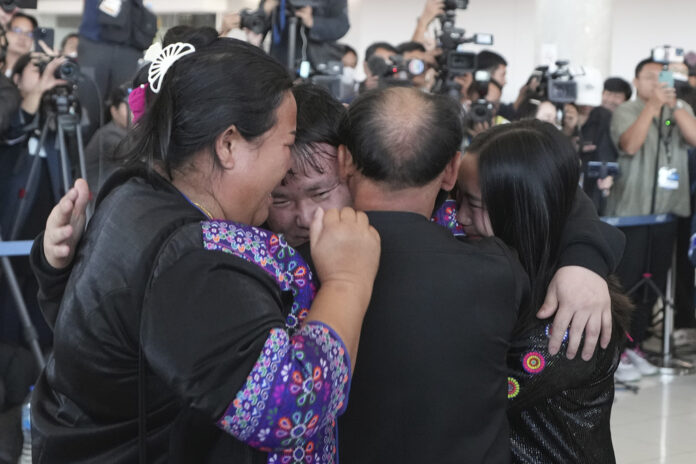
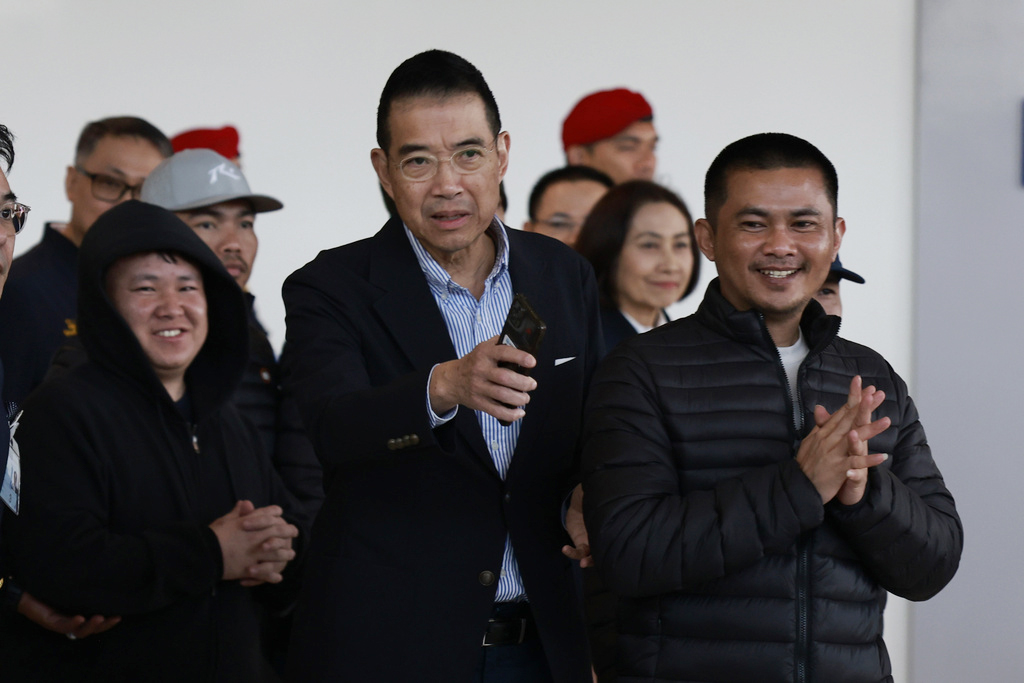
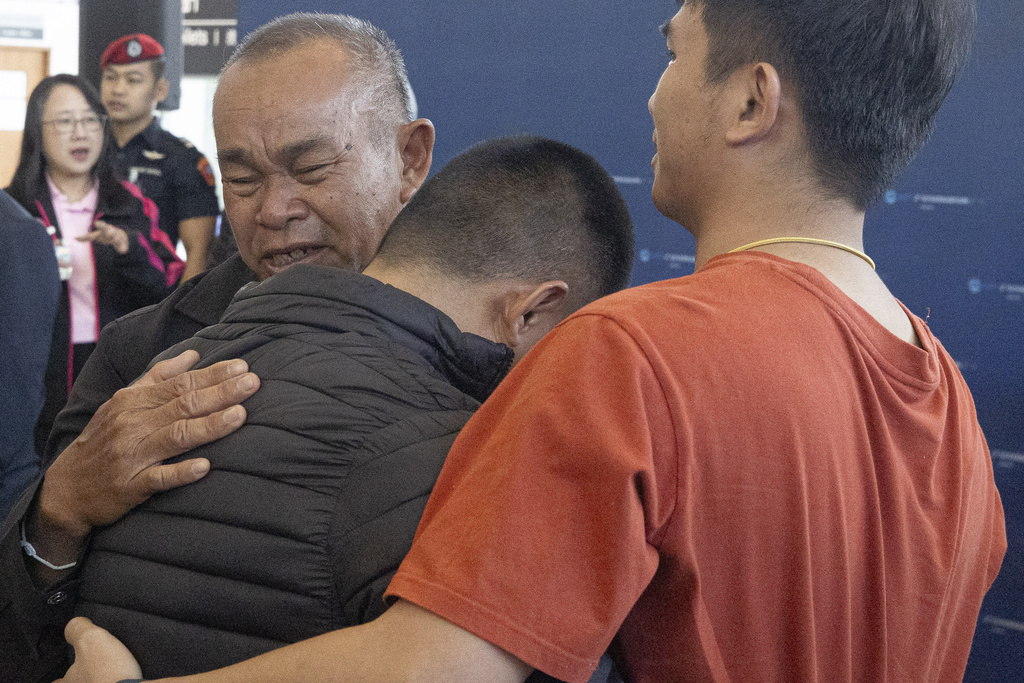
A Thai hostage who was freed from Hamas, Bannawat Saethao, second from left hugs relatives upon arrival at Suvarnabhumi International Airport, in Samut Prakarn Province, Thailand, Sunday, Feb. 9, 2025. (AP Photo/Sakchai Lalit)
JINTAMAS SAKSORNCHAI, BANGKOK — Five Thai workers released after being held hostage for over a year in Gaza arrived in Bangkok and then to their hometowns on Sunday.
Sarusak Rumnao, 32, Watchara Sriaoun, 33, Sathian Suwannakham, 35, Pongsak Thaenna, 36, and Bannawat Saethao, 27, were freed on Jan. 30 as part of an exchange arrangement.
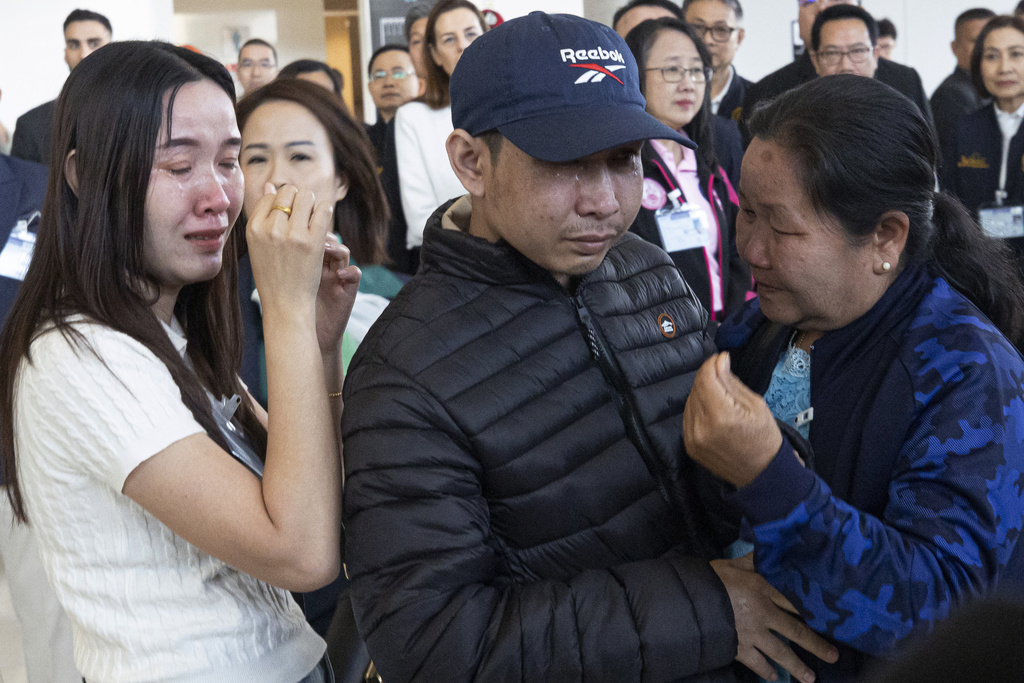
They were embraced by family members, some of whom cried, in the arrivals hall at Suvarnabhumi airport. Thai Foreign Minister Maris Sagniampongsa and the Israeli Ambassador to Thailand Orna Sagiv were both at the airport to welcome home the freed hostages.
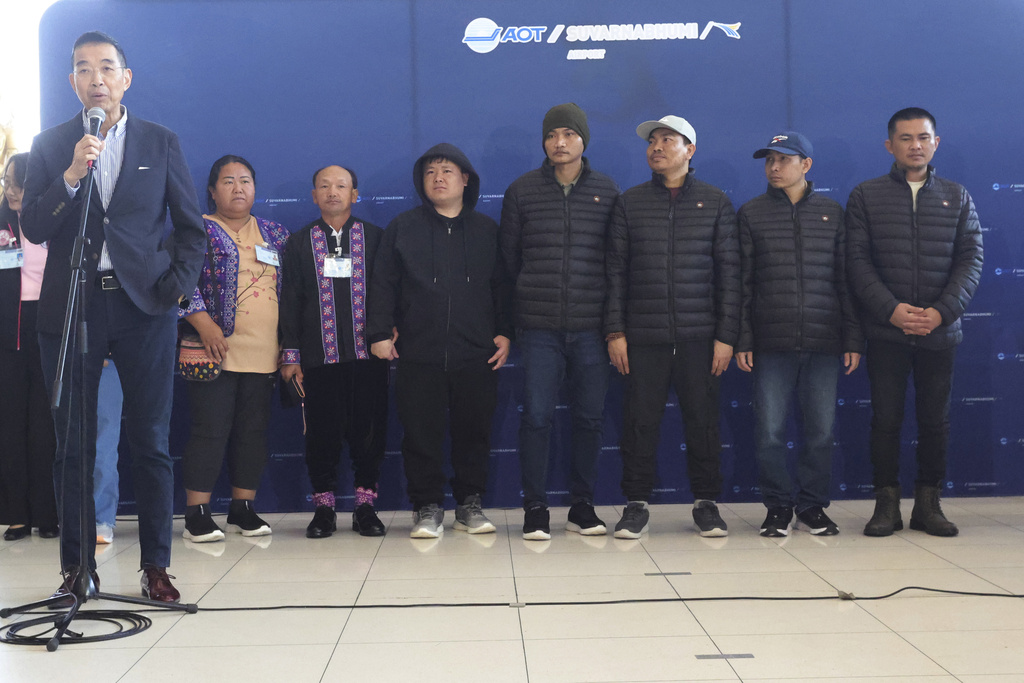
“We are all very grateful and very happy that we get to return to our homeland. We all would really like to thank you. I don’t know what else to say,” Pongsak told a news conference at the airport.
Thailand’s Foreign Minister Maris Sangiampongsa, center, joins Thai hostages who were freed from Hamas Bannawat Saethao, left and Pongsak Thaenna, right arrival at Suvarnabhumi International Airport, in Samut Prakarn Province, Thailand, Sunday, Feb. 9, 2025. (AP Photo/Sakchai Lalit)
Maris said the Thai government “never gave up hope and here is the result today. The tears of joy are our encouragement.” He added that Bangkok would continue working to secure the release of the remaining Thai hostage.
The group quickly left the news conference to return to their hometowns in Thailand’s northern and northeastern regions.
They were the second batch of Thai hostages released since the war broke out. During an earlier ceasefire in November 2023, 23 Thai nationals were released in a deal negotiated between Thailand and Hamas, with assistance from Qatar and Iran.
All five men were assessed at a hospital outside Tel Aviv prior to their return. Four of them were joined by one relative each earlier this week. The trip was sponsored by the Israeli government, according to the Thai Embassy in Tel Aviv.
Thailand’s Foreign Minister Maris Sangiampongsa, left, talks to reporters in front of Thai hostage who was freed from Hamas(black shirt ) Bannawat Saethao, Watchara Sriaoun, Surasak Rumnao, Sathian Suwannakham, Surasak Rumnao arrival at Suvarnabhumi International Airport, in Samut Prakarn Province, Thailand, Sunday, Feb. 9, 2025. (AP Photo/Sakchai Lalit)
Hamas militants kidnapped 31 Thai nationals during the Oct. 7, 2023, assault on southern Israel, making them the largest group of foreigners held captive. Many of the Thai agricultural workers lived in compounds on the outskirts of southern Israeli kibbutzim and towns, and Hamas militants overran those places first.
A total of 46 Thais have been killed during the conflict, including two Thai citizens who were killed during the attack and their bodies taken into Gaza, according to Thailand’s Ministry of Foreign Affairs.
There was no immediate information available about Nattapong Pingsa, who is the last Thai hostage left in Gaza, nor the two Thai workers whose bodies were taken into Gaza.
Maris, the Thai foreign minister, traveled to Israel to visit the five freed men shortly after their release. Maris met with his Israeli counterparts seeking support to secure the release of the remaining Thai hostage and retrieve the bodies of the two deceased Thais.
Thai workers remain the largest group of foreign agricultural laborers in Israel. The countries implemented a bilateral agreement a decade ago specifically easing the way for Thai agricultural workers. Many Palestinian workers had since returned, and before the Hamas attack about half of Israel’s workforce was made up of foreign and Palestinian laborers.
A Thai hostage who was freed from Hamas, Pongsak Thaenna, center, hugs a relative upon arrival at Suvarnabhumi International Airport, in Samut Prakarn Province, Thailand, Sunday, Feb. 9, 2025. (AP Photo/Wason Wanichakorn)
Why are there so many Thais in Israel?
Israel once relied heavily on Palestinian workers, but it started bringing in large numbers of migrant workers after the 1987-93 Palestinian revolt, known as the first Intifada.
Most came from Thailand, and Thais remain the largest group of foreign agricultural laborers in Israel today, earning considerably more than they can at home.
Thailand and Israel implemented a bilateral agreement a decade ago to ease the way for workers in the agriculture sector.
Israel has come under criticism for the conditions under which the Thai farm laborers work. A Human Rights Watch report in 2015 said they often were housed in makeshift and inadequate accommodations and “were paid salaries significantly below the legal minimum wage, forced to work long hours in excess of the legal maximum, subjected to unsafe working conditions and denied their right to change employers.”
A watchdog group found more recently that most were still paid below the legal minimum wage.
How many Thai nationals work in Israel?
There were about 30,000 Thai workers, primarily working on farms, in Israel prior to the Oct. 7 attack by Hamas.
In the wake of the October 2023 attack, some 7,000 returned home, primarily on government evacuation flights, but higher wages have continued to attract new arrivals.
Sathian Suwannakham, center, a Thai hostage who was freed from Hamas, receives hugs from relatives upon his arrival at Suvarnabhumi International Airport in Samut Prakarn Province, Thailand, Sunday, Feb. 9, 2025. (AP Photo/Wason Wanichakorn)
Thai ambassador to Israel Pannabha Chandraramya recently said there are now more than 38,000 Thai workers in the country.
What happened after they left?
Faced with a labor shortage in the wake of the exodus after the Hamas attack, Israel’s Agriculture Ministry announced incentives to try and attract foreign workers back to evacuated areas.
Among other things, it offered to extend work visas and to pay bonuses of about $500 a month.
Thailand’s Labor Ministry granted 3,966 Thai workers permission to work in Israel in 2024, keeping Israel in the top four destinations for Thais working abroad last year.
Thai migrant workers generally come from poorer regions of the country, especially the northeast, and even before the bonuses the jobs in Israel paid many times what they could make at home.