Thailand and Bangladesh are accelerating discussions on a free trade agreement (FTA) as both countries seek to expand trade, investment and regional connectivity across the Bay of Bengal.
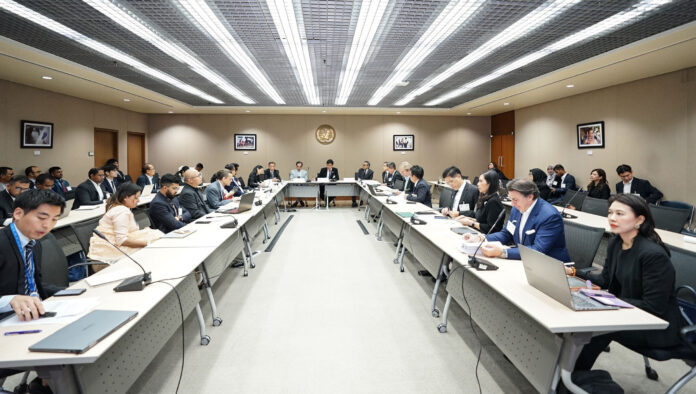
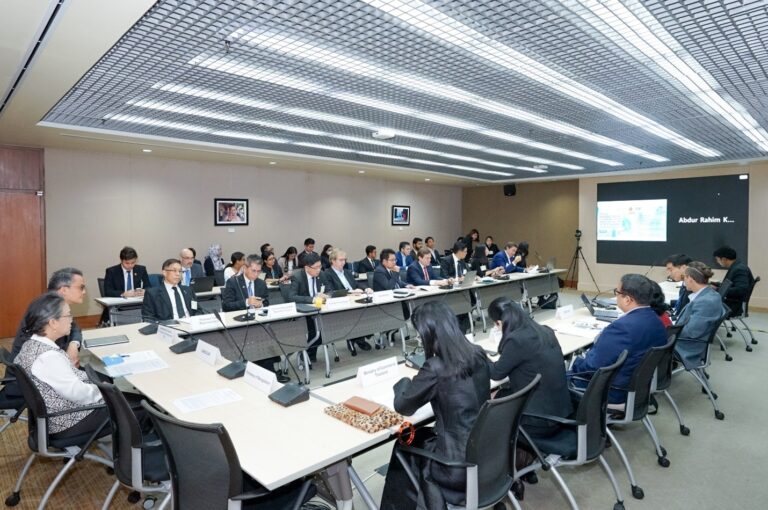
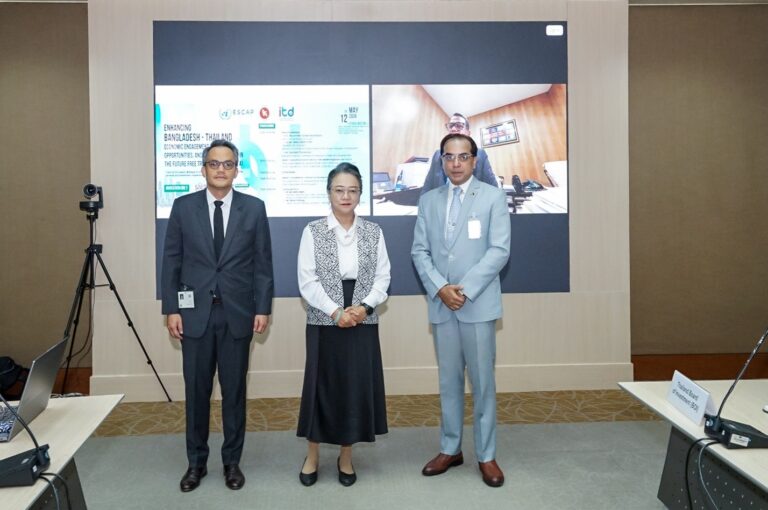
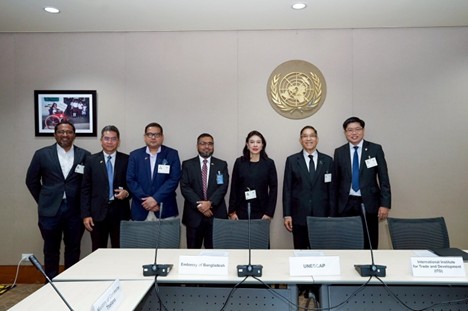
The issue was highlighted at a conference held on May 12 at the United Nations Conference Centre (UNCC) in Bangkok, jointly organised by the International Institute for Trade and Development (ITD), the United Nations Economic and Social Commission for Asia and the Pacific (ESCAP), and the Embassy of Bangladesh in Thailand.
Officials, academics and business leaders from both countries said the agreement could become an important mechanism for strengthening economic ties between South Asia and Southeast Asia.
The talks come as Bangladesh prepares to graduate from Least Developed Country (LDC) status in 2029, which will eventually end trade privileges currently granted under the Duty-Free Quota-Free (DFQF) scheme.
Bangladesh has accelerated FTA negotiations with several trading partners and views Thailand as a strategic gateway to the Asean market under its “Look East Policy”.
According to Thailand’s Department of Trade Negotiations, bilateral trade between the two countries reached around US$1 billion in 2025, with Thailand exporting industrial raw materials and chemical products, while importing textiles, frozen seafood and natural gas from Bangladesh.
Speakers said the two economies were more complementary than competitive.
Thailand’s strengths in petrochemicals, advanced manufacturing and healthcare services could support Bangladesh’s growing manufacturing sector, large labour force and expanding consumer market.
Professor Selim Raihan of the University of Dhaka said the agreement should go beyond tariff reductions and include investment facilitation, technology transfer and supply-chain integration.
ESCAP estimates suggest Bangladesh’s GDP could increase by around 0.07% if the agreement is fully utilised alongside increased Thai investment. ESCAP’s TINA assessment also found that stronger trade facilitation measures could increase bilateral economic value by more than 40%.
Logistics connectivity was another major focus of the discussions, particularly the proposed link between Thailand’s Ranong Port and Bangladesh’s Chittagong Port, as well as Thailand’s Landbridge project.
Business leaders said improved transport routes could help reduce shipping costs, shorten delivery times and strengthen the Bay of Bengal’s role as an emerging regional trade hub.
The conference also highlighted investment opportunities in healthcare, renewable energy, agro-processing, logistics, ICT and advanced manufacturing.
Thailand and Bangladesh signed a joint statement of intent on FTA negotiations in 2024 and are currently preparing a scoping paper to define the framework for future talks.
Thailand Trade Representative Chutintorn Gongsakdi said the absence of major political or historical disputes between the two countries created favourable conditions for moving negotiations forward.
“This is the right time for both countries to move towards a more comprehensive economic partnership,” he said.
ITD executive director Suphakit Chareonkul said the agreement should be viewed not only as a trade pact, but also as a long-term platform for economic cooperation between South Asia and Southeast Asia.
“With Bangladesh’s growing market and Thailand’s industrial expertise, the agreement could become an important driver of sustainable regional growth in the future,” he said.
BANGKOK — 14 May 2026, Thai herbal inhaler brand Hanuman said it had gained growing attention in China after Chinese actress Zhao Lusi featured the product in a social media video following her recent visit to Thailand.
Samunprai Hanuman Co., Ltd., producer of the Hanuman herbal inhaler, said the appearance of the product in a video posted by Zhao on Douyin, China’s version of TikTok, had helped boost interest in Thai products among Chinese consumers.
The actress recently travelled to Thailand for a concert performance and later shared a casual video after returning to China showing herself eating Thai seaweed snacks. Fans quickly noticed a Hanuman herbal inhaler placed prominently on a table in the clip.
The video drew widespread attention from fans in both Thailand and China, with many social media users commenting on the actress’s use of Thai products and describing the inhaler as part of Thailand’s growing “soft power” appeal across Asia.
The company said the exposure had strengthened the Hanuman brand’s popularity in both the Thai and Chinese markets.
Hanuman herbal inhalers are marketed as helping relieve dizziness, nasal congestion and fatigue through the use of traditional Thai herbal ingredients. The products are widely sold at convenience stores, including 7-Eleven Thailand, and pharmacies nationwide.
SA KAEO — 14 May 2026, Thai authorities arrested 16 people, consisting of Thai, Shan, and Vietnamese nationals, attempting to cross illegally into Thailand from Cambodia after a crackdown on online scam and gambling operations in Poipet, officials said on Thursday.
At 5:30, troops from the Burapha Task Force, the Aranyaprathet Special Task Force, and the 12th Ranger Forces Regiment, in coordination with Sa Kaeo intercepted the group near the border village of Ban Phu Nam Kliang in Pa Rai sub-district, Aranyaprathet district, after receiving reports of illegal border crossings through natural routes.
Officers later discovered a group of suspicious individuals walking across the border and moved in to surround and arrest them. A total of 16 detainees included four Thai nationals, two Vietnamese nationals, and 10 ethnic Shan migrants from Myanmar, all of whom lacked valid travel documents.
During questioning, the four Thais admitted they had been recruited through friends and acquaintances to work for the online gambling website, “UFABET168”, in Poipet. They said they were lured by monthly salaries of between 15,000 and 25,000 baht. Some had previously worked as delivery riders, warehouse employees, sales staff, and factory workers, before crossing the border more than a year ago to take the jobs.
Regarding rising tensions along the Thai-Cambodian border, this had led to the closure of several checkpoints, leaving them stranded in accommodation in Poipet for weeks and unable to return home. To return home, they reportedly paid a Cambodian broker 8,000 baht each to be transported to a natural border crossing. The broker allegedly transported them in a Cambodian-registered car before instructing them to continue on foot into Thailand.
Meanwhile, the 10 ethnic Shan migrants said they had travelled from Siem Reap to Poipet with the assistance of Chinese financiers to work as security guards in a building operated by a Chinese business group. However, after Cambodian authorities launched a crackdown on call center gangs, scammers, and online crime syndicates, their employer suspended operations, prompting them to attempt to enter Thailand illegally in order to return to their home country.
All suspects have been handed over to investigators for legal proceedings while officials expand the investigation into human smuggling brokers, illegal border crossing networks, and financial links tied to transnational online gambling businesses.
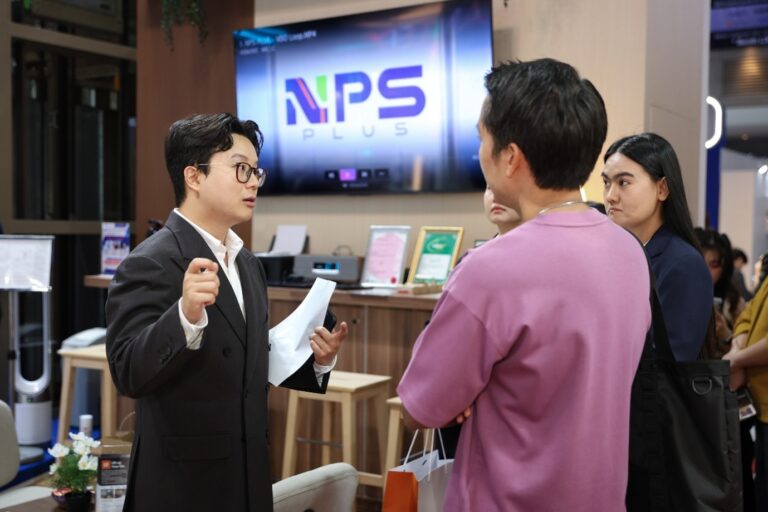
NPS PLUS showcased full-scale premium elevators at Architect’69 while officially launching UP by NPS PLUS, a European-standard home elevator brand that promotes the concept of integrating elevator systems into homes and buildings from the very beginning of the design process under the principles of Universal Design, safety, and Wellness Architecture.
Architect’69 was held from April 29 – May 3, 2026, at Challenger Hall, IMPACT Muang Thong Thani. The event featured innovations in architecture, construction materials, building technologies, and design concepts from leading companies across the architecture and construction industries.
Among the exhibitors was NPS PLUS, a comprehensive provider of elevator, escalator, and moving walk systems. The company presented its approach to integrating engineering systems with architectural design, particularly in planning elevator systems to suit residential and commercial buildings from the earliest stages of development.
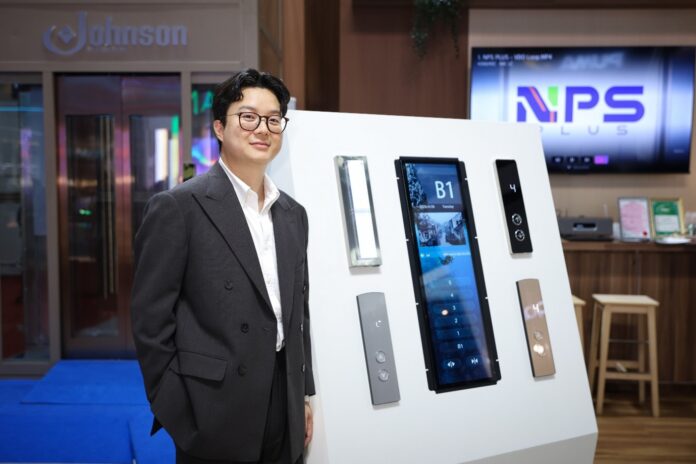
Mr. Patomlerk Pongchaikaikiti, second-generation executive of NPS PLUS and the person overseeing the company’s exhibition booth, stated:
“NPS PLUS has more than 22 years of experience in the industry, covering design, installation, maintenance, and modernization of elevator systems, while operating under internationally recognized standards including CE, EN-81, EN-115, and ISO 9001:2015.”
“In our perspective, elevators are not merely machines that transport people from one floor to another. They are essential systems within homes and buildings that relate directly to safety, quality of life, long-term usability, and the overall architectural design. Therefore, this exhibition was not intended only to showcase products, but also to open a broader conversation about the role of elevators in modern living spaces and architecture,” he added.
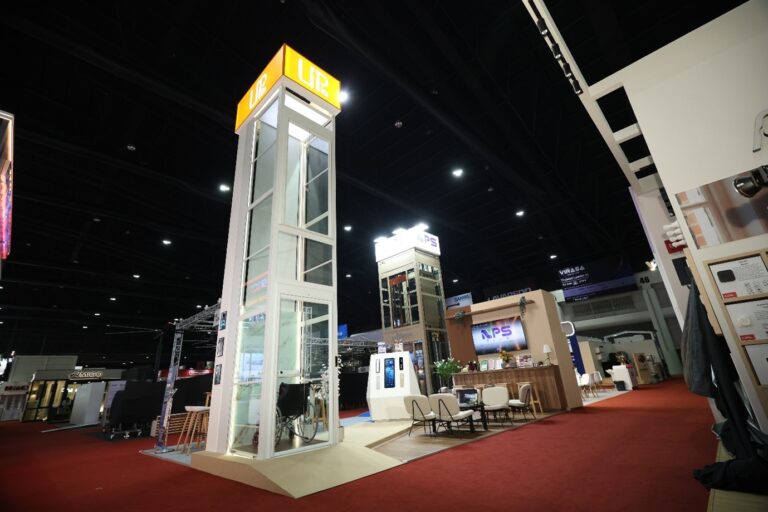
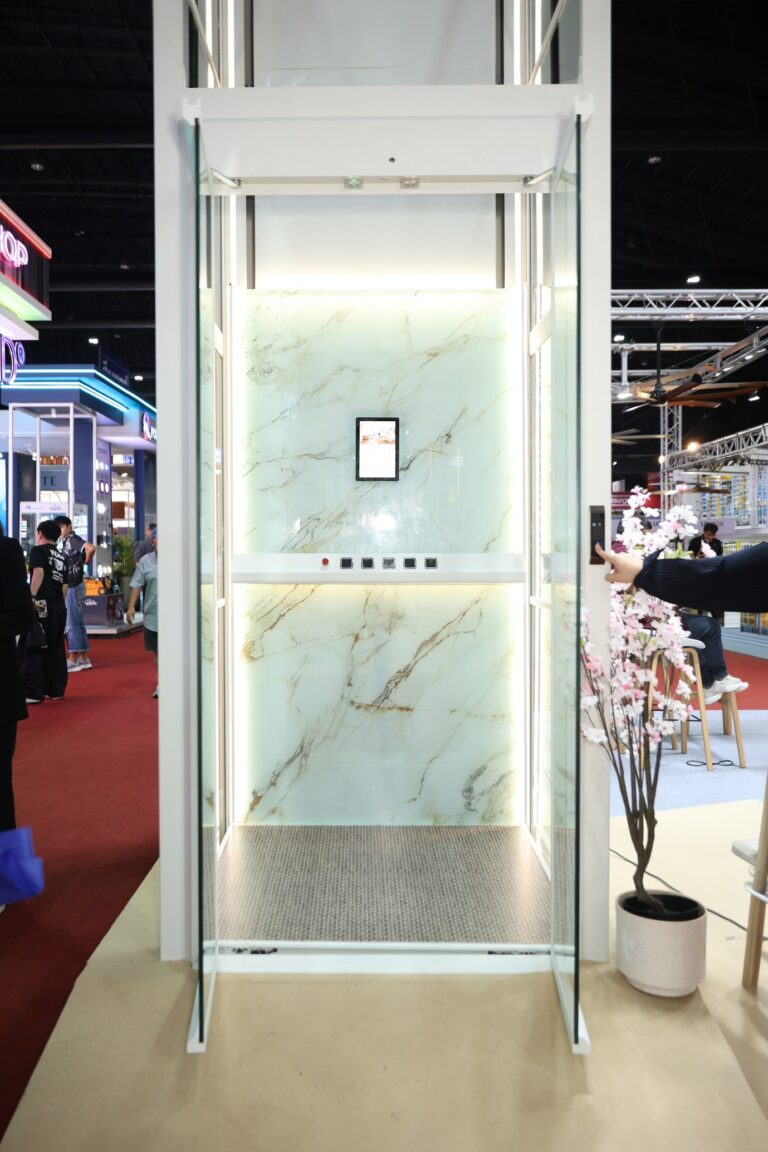
The highlight of Booth L501 was the installation of “real elevators” that allowed visitors to experience actual dimensions, proportions, door systems, and operational functionality firsthand, rather than viewing elevators only through catalogs or digital presentations. This approach reflected the company’s belief that elevators can become an integral part of architectural design when planned from the beginning of the project.
During the exhibition, NPS PLUS also shared information about elevator design under the concept of Universal Design, which supports accessibility for elderly users, individuals with mobility limitations, and residents of all age groups. The company provided consultations for homeowners, architects, contractors, developers, and building owners involved in construction projects.
Mr. Patomlerk explained“For homeowners, there are several important considerations ranging from space preparation and user convenience to safety systems and after-sales maintenance. Architects can apply structural and spatial planning information to ensure elevator systems align seamlessly with the overall design of the home or building. Contractors and developers can also incorporate structural preparation, electrical systems, and maintenance planning into their long-term project management strategies.”
In addition, NPS PLUS officially introduced UP by NPS PLUS, also known as UP Homelift, a premium home elevator developed under the concept “Lift UP Your Life.” The company described it as a European-standard EN 81 home elevator designed specifically to meet the lifestyle and living needs of Thai homeowners, with strong emphasis on safety, comfort, and contemporary design aesthetics.
Mr. Patomlerk said “The UP Homelift displayed at the exhibition utilizes a Traction Belt motor system, which provides smoother movement, reduced noise levels, and suitability for residential use. We intentionally positioned the product as part of interior and architectural design rather than merely a mechanical device inside a building.”
He further explained that the launch of UP Homelift was also intended to align with the concept of Wellness Architecture, which focuses on improving the well-being of residents through thoughtful building design. “We focus on two key dimensions. The first is Biomedical Design, which addresses the needs of aging societies by reducing physical strain and improving convenience for residents. The second is Building Science, which involves motor systems, energy-efficient technologies, noise reduction, and elevator ventilation systems. These concepts align with the direction of modern building design, including projects that prioritize wellness and environmental standards such as WELL and TREES.”
Mr. Patomlerk concluded by stating that both NPS PLUS and UP Homelift aim to elevate the role of home elevators as an essential consideration from the beginning of construction, rather than as an afterthought or optional addition. The company also continues to prioritize safety, comfort, and long-term quality of life for residents.
More information can be found at:
NPS PLUS Official Website www.npsplus.co.th
UP by NPS PLUS Official Website UP by NPS PLUS www.nps-up.co/
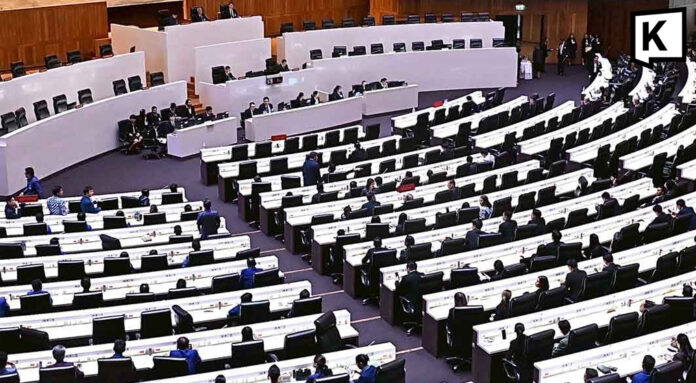
BANGKOK (AP) — Thailand’s House of Representatives has delayed consideration of a 400 billion baht ($11 billion) emergency borrowing decree pending a Constitutional Court ruling on a challenge filed by opposition lawmakers.
During a parliamentary session on 14 May 2026, Second Deputy House Speaker Lertsak Pattanachaiyakul informed lawmakers that the Cabinet had approved a royal decree authorising the Finance Ministry to borrow funds to address the impact of the energy crisis and support the country’s energy transition.
Before House Speaker Sophon Saram could place the decree on the parliamentary agenda, Natthaphong Ruengpanyawut, leader of the opposition People’s Party, submitted a petition signed by 135 lawmakers seeking a Constitutional Court review.
The petition argues that the emergency decree may violate Section 172 of Thailand’s constitution, which governs the issuance of emergency royal decrees.
Under Section 173 of the constitution, parliamentary consideration of the decree must be suspended until the Constitutional Court reaches a decision.
The constitution requires the court to issue a ruling within 60 days from receiving the petition and notify the House speaker of its decision.
If the court rules that the decree violates the constitution, the measure will be deemed void from the outset. Such a ruling requires support from at least two-thirds of the sitting Constitutional Court judges, currently six of the court’s nine members.
Local media reported that Sophon submitted the petition to the Constitutional Court on 12 May 2026, and the court’s office has formally acknowledged receipt of the case.
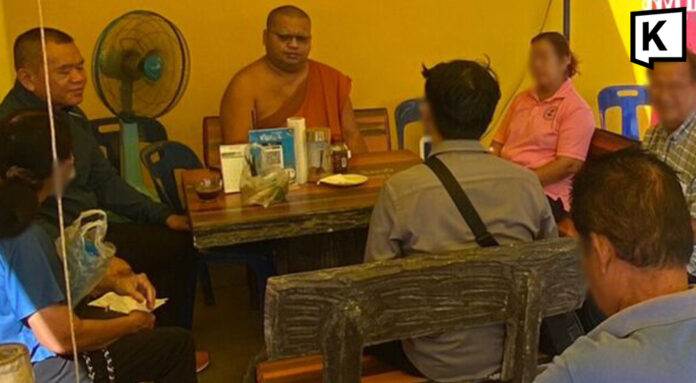
NAKHON SI THAMMARAT — 14 May 2026, Thai police said they had recovered a ceremonial sword associated with King Taksin, the 18th-century Siamese king credited with reunifying Thailand after the fall of Ayutthaya, after it was allegedly stolen from a temple in southern Thailand by a university assistant professor who later claimed he had taken it unknowingly.
The theft was discovered on 12 May after staff at Wat Nang Phraya in Nakhon Si Thammarat found that two sacred items had gone missing from temple buildings.
The missing items included a ceremonial “King Taksin sword” displayed inside the Mae Nang Phraya shrine and valued at about 30,000 baht. Temple officials said the sword had previously been donated by a devotee in fulfilment of a vow.
A red crystal orb valued at about 2,500 baht was also reported missing from the Jatukham Ramathep shrine within the temple grounds.
Police said security camera footage showed the suspect entering the temple during the morning while the area was relatively quiet before leaving with the items.
Investigators later identified the suspect as a 40-year-old assistant professor at a well-known university. Officers traced him to a house in Ron Phibun district, where his parents told police he had been receiving psychiatric treatment linked to family-related stress at Songklanagarind Hospital.
According to police, the suspect claimed he had taken the sword “without realising what he was doing”.
Authorities said the man became agitated during discussions with officers and verbally confronted Phra Khru Palat Boonrit Wijjadharo, abbot of Wat Nang Phraya, in front of police before being restrained and transferred to Maharaj Nakhon Si Thammarat Hospital for further examination.
Police said legal proceedings would continue following medical evaluation.
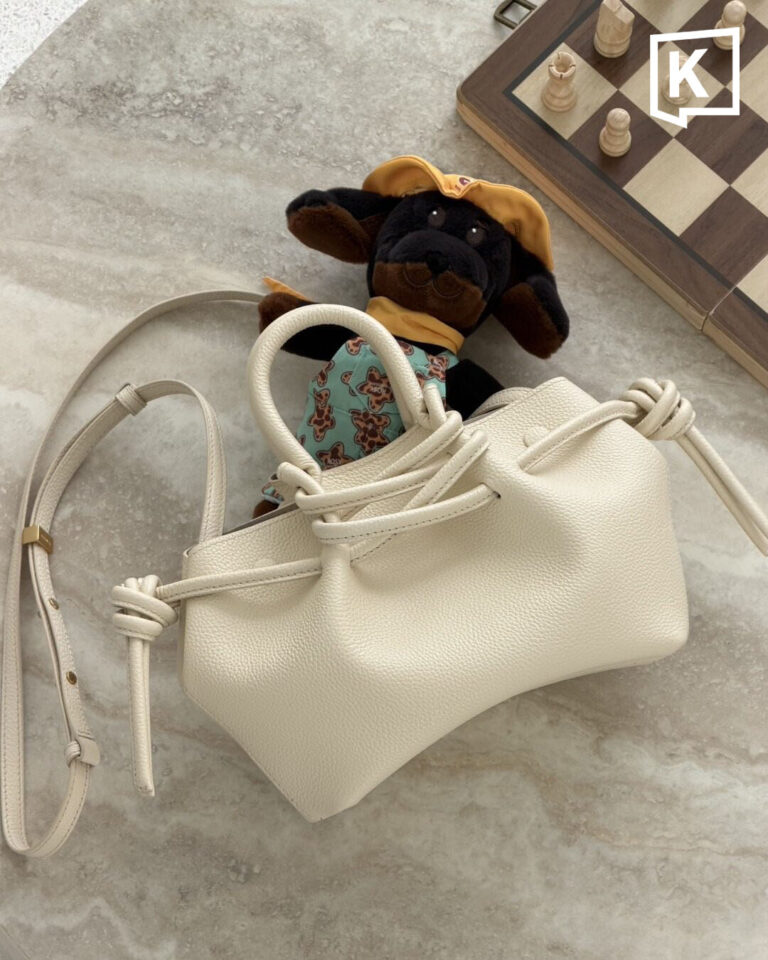
BANGKOK — 14 May 2026, Chinese actress Zhao Lusi, affectionately known to fans as “Rosy”, has sparked a social media frenzy after appearing with a handbag from Thai fashion brand FUNDAO, drawing attention from both Thai and international media.
Thai fashion value soars after the Asian superstar, who has long enjoyed a warm reception from fans during visits to Thailand, was recently photographed carrying handbag from Thai brand FUNDAO while posing with her favorite dachshund doll. This latest display of soft power continues to elevate Thai fashion’s presence in the international arena.
Zhao paired a lace camisole-style outfit and the minimalist “AVA mini” handbag in Ivory, designed by Thai designer, Yin-Fundao Baesakul. The bag creates an elegant aesthetic associated with the “Quiet Luxury” look, featuring its minimalist yet distinctive butterfly-wing silhouette and detailed handcrafted elements. Zhao’s “ROSYDOEDIAN TOYS” plushie also made a cameo, adding a cute, playful touch that sent social media into a frenzy.
Fans were quick to take notice, instantly rushing to identify the bag and hailing it as the latest “it bag” after Zhao was seen using it. While FUNDAO had already gained recognition among international fashion circles and had been adopted by fashion enthusiasts worldwide, Zhao’s endorsement is being viewed as another significant moment for Thailand’s soft power movement. The attention generated by the actress has not only created excitement among fans but also intensified interest in Thai fashion in both domestic and international markets, marking another milestone for global recognition of Thai designers.
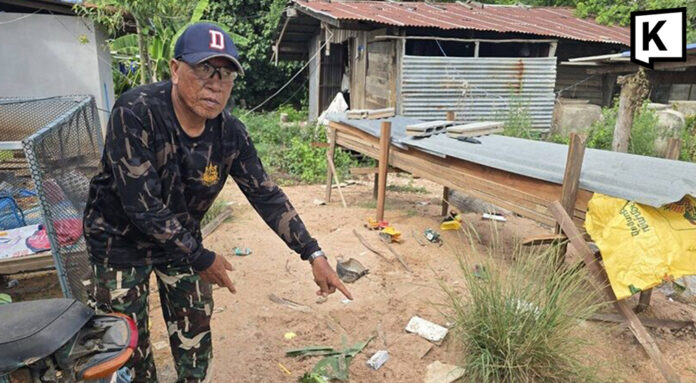
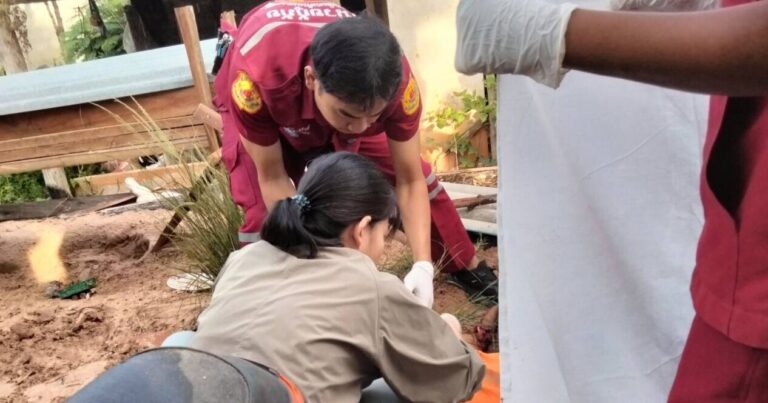
BURIRAM — 14 May 2026, a Thai villager leading efforts to drive wild elephants away from communities near the Dong Yai forest was killed after being attacked by an elephant inside a village in Buriram province, local residents said.
Weera Ratchawong, 66, chairman of the Dong Yai Wild Elephant Watch Network, was attacked at about 04:00 in Ban Khlong Hin Lat village in Non Din Daeng district while attempting to push elephants away from residential areas.
Residents living along the Dong Yai forest boundary said such incidents had become increasingly common, with several people reportedly killed by wild elephants each year as the animals frequently entered villages in search of food.
Prasit Jupamatang, 61, a wild elephant patrol officer in the Dong Yai Wildlife Sanctuary, said he arrived after receiving reports of the attack but found Weera had already died.
Weera’s wife said local elephant patrol volunteers normally travelled in groups of 14 when responding to reports from villagers, but her husband often went out alone. She said elephants had entered the village several times during the night before the fatal attack, with Weera leaving alone again shortly before 04:00.
Manat Yiamram, village headman of Ban Khlong Hin Lat, said wild elephants entered the community almost every day, usually in groups of one to three animals.
He said villagers were living in fear and called on authorities to address the situation more seriously, adding that residents believed the elephant population had grown beyond the forest’s capacity and that attacks causing deaths occurred in nearby communities every year.
HAVANA — Cuba has run out of diesel and fuel oil supplies as the country faces a worsening electricity crisis linked to U.S. restrictions on fuel shipments, Energy and Mines Minister Vicente de la O said on 14 May 2026.
The minister said prolonged fuel shortages had severely affected Cuba’s power grid, contributing to major blackouts across the country in recent months.
In Havana, some areas have been left without electricity for more than 20 hours a day, officials said.
Cuba’s electricity system relies on domestically produced crude oil, natural gas and renewable energy sources.
Authorities said Cuba has been attempting to negotiate fuel imports despite restrictions imposed by the United States, while global oil prices and ongoing conflicts have further complicated supply efforts.
U.S. measures blocking fuel shipments to Cuba have now entered a fourth month, affecting public services nationwide, officials said.
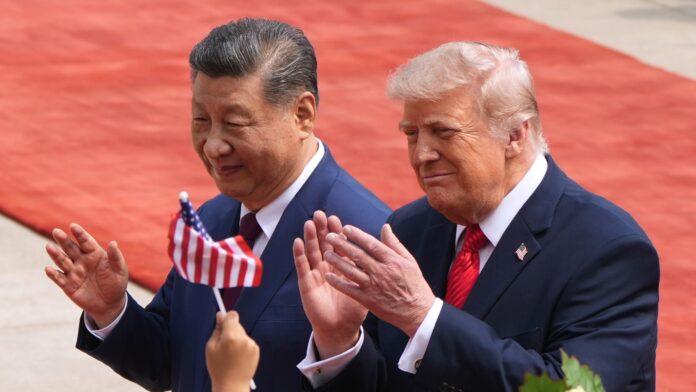
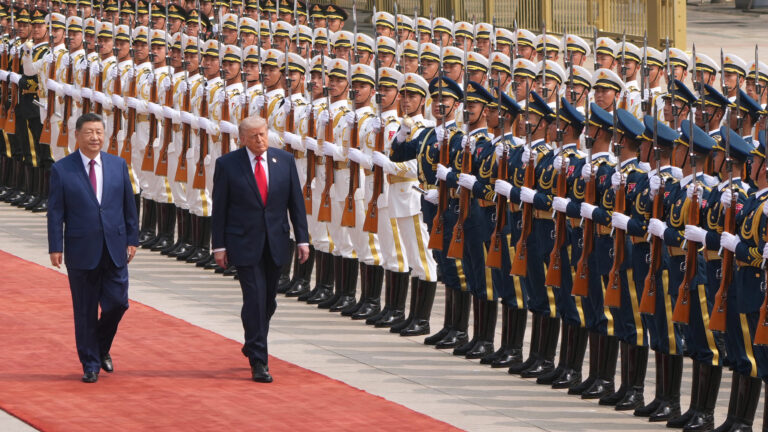
President Donald Trump participates in a welcome ceremony with China's President Xi Jinping at the Great Hall of the People, Thursday, May 14, 2026, in Beijing. (AP Photo/Mark Schiefelbein)
BEIJING (AP) — President Donald Trump began his trip to Beijing on Thursday by telling Xi Jinping “it’s an honor to be your friend,” even as his Chinese counterpart offered a cautionary warning about avoiding a possible clash between the two nations.
The stark contrast in tone underscored just how far apart the leaders remain on thorny issues including the war in Iran, trade disputes and Washington’s relationship with Taiwan — and suggested that Trump and Xi’s highly anticipated meetings are likely to be longer on pageantry and symbolism than major breakthroughs.
In remarks before their meeting at the Great Hall of the People moved behind closed doors, Trump was full of platitudes, saying of Xi, “You’re a great leader. Sometimes people don’t like me saying it, but I say it anyway, because it’s true.”
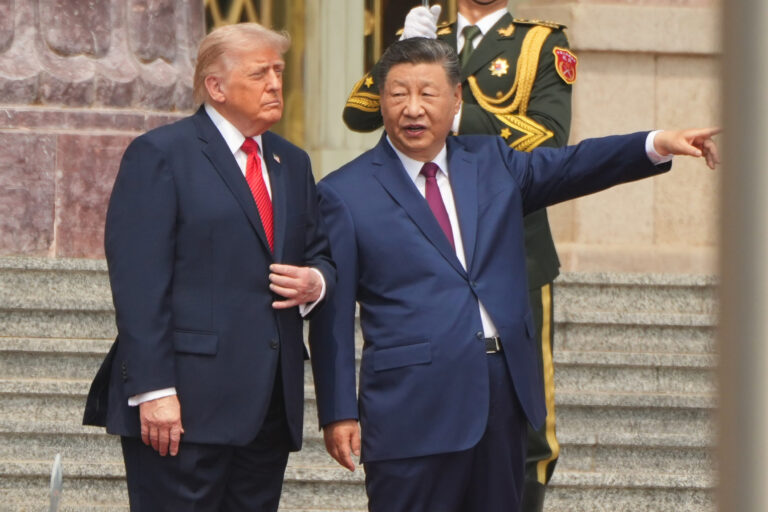
President Donald Trump participates in a welcome ceremony with China’s President Xi Jinping at the Great Hall of the People, Thursday, May 14, 2026, in Beijing. (AP Photo/Mark Schiefelbein)
“It’s an honor to be with you. It’s an honor to be your friend,” Trump said before promising that “the relationship between China and the USA is going to be better than ever before.”
Xi was darker, expressing hope that the U.S. and China can avoid conflict while saying that history, and the world were asking “whether the two countries can transcend the ‘Thucydides Trap’ and forge a new model for relations between major powers.”
China’s leader used a term popular in foreign policy studies, referring to the idea that when a rising power threatens to displace an established power, the result is often war.
“Cooperation benefits both sides, while confrontation harms both,” Xi said. “The two countries should be partners rather than rivals, achieve success together and pursue common prosperity, and chart a correct path for major-country relations in the new era.”
Xi has mentioned “Thucydides Trap” before with regards to U.S.-China relations, dating back to as early as 2014. China’s leader included it in his messages to Trump’s predecessor, Democratic President Joe Biden, in 2022 and 2024. Still, his evoking the term as Trump began his visit with optimism was noteworthy.
Comments follow elaborate welcome ceremony
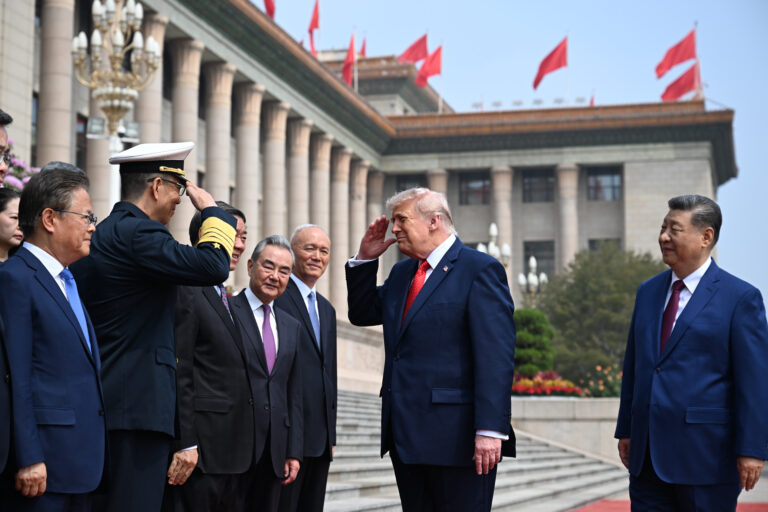
The remarks from each followed a sweeping greeting for Trump outside the Great Hall of the People, an imposing building on Tiananmen Square that houses China’s legislature. Cannons boomed a welcome salute and a band played “The Star-Spangled Banner” and China’s national anthem.
The hall featured giant, red-carpeted steps and huge expanses of marble, where soldiers hung large American and Chinese flags. School children in bright colors offered a welcome routine, jumping as the girls waved flowers and the boys hoisted American and Chinese flags while the two leaders walked past them.
President Donald Trump participates in a welcome ceremony with China’s President Xi Jinping at the Great Hall of the People, Thursday, May 14, 2026, in Beijing. (AP Photo/Mark Schiefelbein)
Later, the Republican U.S. president is set to visit the Temple of Heaven, a religious complex dating to the 15th century that symbolizes the relationship between heaven and earth. Trump and Xi will also attend a state banquet.
The White House has insisted that Trump wouldn’t be making the trip without an eye toward securing results before he leaves — suggesting there could be announcements coming on trade, including a Chinese commitment to buy U.S. soybeans, beef and aircraft. Trump administration officials also want to work toward establishing a Board of Trade with China to address commercial differences between the countries.
But neither side has yet offered concrete details on what might come out of the three-day visit at a time when Beijing’s close economic ties to Iran could complicate matters.
The U.S. and Israel’s war in Iran has led to the effective closure of the Strait of Hormuz, stranding oil and natural gas tankers and causing energy prices to spike, threatening global economic growth.
Spending so much time with Xi will afford ample time for potentially tricky discussions, on Iran and trade, but also Taiwan and a possible three-way nuclear arms deal featuring Washington, Beijing and Russia.
Progress beyond pleasantries might prove elusive.
Back in Washington, the politics of the war got more complicated. Senate Republicans again blocked Democratic legislation to halt hostilities in Iran — but Alaska Republican Sen. Lisa Murkowski bucked her party, becoming the third Republican in the chamber to vote against continuing the war.
China is the largest purchaser of Iranian oil, and Secretary of State Marco Rubio said in an interview with Fox News’ Sean Hannity that Trump will make the case for Beijing to exert its influence on Iran, noting that administration officials will underscore that “economies are melting down because of this crisis” which means consumers are “buying less Chinese product.”
“So it’s in their interest to resolve this,” Rubio said of Chinese officials. “We hope to convince them to play a more active role in getting Iran to walk away from what they’re doing now and trying to do now in the Persian Gulf.”
That contradicted Trump, who has downplayed suggestions that he’ll press Xi to do more to pressure Iran to open the strait. The president also says pressure on the U.S. economy won’t compromise U.S. demands as he negotiates with Iran in the midst of a fragile ceasefire. Asked as he left the White House if the financial stability of ordinary Americans factors into Iranian negotiations, Trump responded, “Not even a little bit.”
“I don’t think about Americans’ financial situation. I think about one thing: We cannot let Iran have a nuclear weapon,” Trump said, before going on to suggest that “every American understands” such a position.
Mixed messaging was also evident on inflation and the war, however, as Vice President JD Vance denied Trump’s own words that the U.S. economy wasn’t a major factor in seeking a resolution with Tehran.
U.S. President Donald Trump, center, accompanied by Chinese President Xi Jinping, right, is welcomed at the Great Hall of the People in Beijing, Thursday, May 14, 2026. (Kenny Holston/Pool Photo via AP)
“I don’t think the president said that,” Vance said after being asked about Trump’s comments. “I think that’s a misrepresentation of what the president said.”
Trade and Taiwan discussions also could be intense
Looming large is the status of Taiwan, given that China is displeased with U.S. plans to sell weapons to the self-governing island that the Chinese government claims as part of its territory.
The Trump administration has approved an $11 billion weapons package for Taiwan, but has yet to begin fulfilling it. Trump has also demonstrated greater ambivalence toward Taiwan — an approach that’s raising questions about whether he might be open to dialing back support for the island democracy.
Taiwan is the world’s leading chipmaker, producing components essential to the development of artificial intelligence. Trump has sought to bolster trade deals with Taiwan that can stimulate chip production in the U.S.
Trump personally called Nvidia’s Jensen Huang to invite him to hop on Air Force One during a refueling stop in Alaska on the way to Beijing. He’s one of a large group of CEOs from the tech, defense, finance and agriculture sectors who are part of the delegation.
The U.S. and China reached a trade truce last year that calmed each side’s threats to impose steep tariffs on the other. The White House says there have been ongoing discussions and mutual interest in extending the agreement, though it is unclear whether any such announcement could come during Trump’s visit.