

































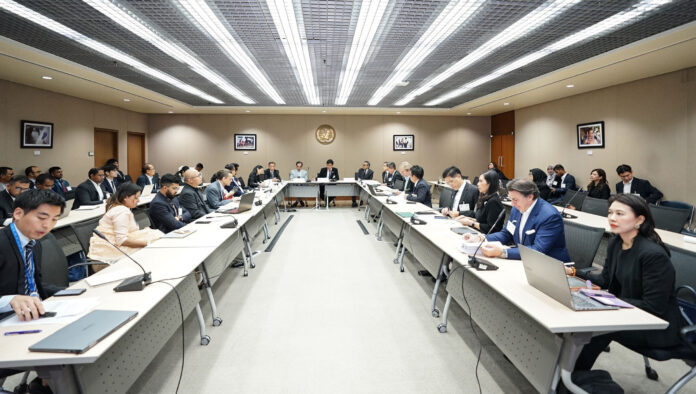
Thailand and Bangladesh are accelerating discussions on a free trade agreement (FTA) as both countries seek to expand trade, investment and regional connectivity across the Bay of Bengal.
The issue was highlighted at a conference held on May 12 at the United Nations Conference Centre (UNCC) in Bangkok, jointly organised by the International Institute for Trade and Development (ITD), the United Nations Economic and Social Commission for Asia and the Pacific (ESCAP), and the Embassy of Bangladesh in Thailand.
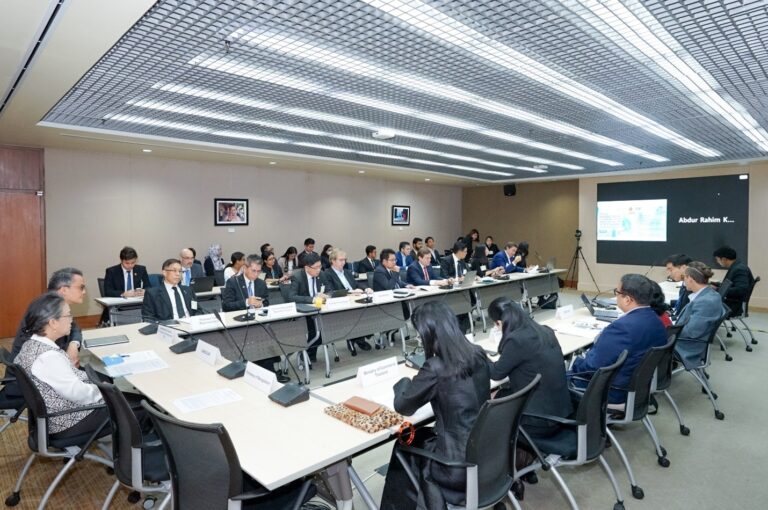
Officials, academics and business leaders from both countries said the agreement could become an important mechanism for strengthening economic ties between South Asia and Southeast Asia.
The talks come as Bangladesh prepares to graduate from Least Developed Country (LDC) status in 2029, which will eventually end trade privileges currently granted under the Duty-Free Quota-Free (DFQF) scheme.
Bangladesh has accelerated FTA negotiations with several trading partners and views Thailand as a strategic gateway to the Asean market under its “Look East Policy”.
According to Thailand’s Department of Trade Negotiations, bilateral trade between the two countries reached around US$1 billion in 2025, with Thailand exporting industrial raw materials and chemical products, while importing textiles, frozen seafood and natural gas from Bangladesh.
Speakers said the two economies were more complementary than competitive.
Thailand’s strengths in petrochemicals, advanced manufacturing and healthcare services could support Bangladesh’s growing manufacturing sector, large labour force and expanding consumer market.
Professor Selim Raihan of the University of Dhaka said the agreement should go beyond tariff reductions and include investment facilitation, technology transfer and supply-chain integration.

ESCAP estimates suggest Bangladesh’s GDP could increase by around 0.07% if the agreement is fully utilised alongside increased Thai investment. ESCAP’s TINA assessment also found that stronger trade facilitation measures could increase bilateral economic value by more than 40%.
Logistics connectivity was another major focus of the discussions, particularly the proposed link between Thailand’s Ranong Port and Bangladesh’s Chittagong Port, as well as Thailand’s Landbridge project.
Business leaders said improved transport routes could help reduce shipping costs, shorten delivery times and strengthen the Bay of Bengal’s role as an emerging regional trade hub.
The conference also highlighted investment opportunities in healthcare, renewable energy, agro-processing, logistics, ICT and advanced manufacturing.

Thailand and Bangladesh signed a joint statement of intent on FTA negotiations in 2024 and are currently preparing a scoping paper to define the framework for future talks.
Thailand Trade Representative Chutintorn Gongsakdi said the absence of major political or historical disputes between the two countries created favourable conditions for moving negotiations forward.
“This is the right time for both countries to move towards a more comprehensive economic partnership,” he said.
ITD executive director Suphakit Chareonkul said the agreement should be viewed not only as a trade pact, but also as a long-term platform for economic cooperation between South Asia and Southeast Asia.
“With Bangladesh’s growing market and Thailand’s industrial expertise, the agreement could become an important driver of sustainable regional growth in the future,” he said.