Republican presidential nominee former President Donald Trump gestures to the audience as he departs a campaign rally at the Calhoun Ranch, Saturday, Oct. 12, 2024, in Coachella, Calif. (AP Photo/Alex Brandon)
LOS ANGELES (AP) — A Nevada man with a shotgun, loaded handgun, ammunition and several fake passports in his vehicle was arrested at a security checkpoint outside Donald Trump’s rally Saturday night in the Southern California desert, authorities said. He was released the same day on $5,000 bail.
The suspect, a 49-year-old resident of Las Vegas, was driving an unregistered black SUV with a “homemade” license plate that was stopped by deputies assigned to the rally in Coachella, east of Los Angeles, Riverside County Sheriff Chad Bianco said at a news conference Sunday afternoon.
Law enforcement snipers look over the scene as Republican presidential nominee former President Donald Trump speaks at a campaign rally at the Calhoun Ranch, Saturday, Oct. 12, 2024, in Coachella, Calif. (AP Photo/Alex Brandon)
The driver claimed to be a journalist but it was unclear if he had the proper credentials. Deputies noticed the interior of the vehicle was “in disarray” and a search uncovered the weapons and ammo, along with multiple passports and driver licenses with different names, Bianco said.
The man was arrested on suspicion of possessing a loaded firearm and possession of a high-capacity magazine, the department said in a statement.
“This incident did not impact the safety of former President Trump or attendees of the event,” the Saturday statement said. Trump had not yet arrived at the rally at the time of the arrest, the sheriff said Sunday.
The suspect is scheduled to appear in court on Jan. 2, 2025, according to online records.
Republican presidential nominee former President Donald Trump gestures at a campaign rally at the Findlay Toyota Arena Sunday, Oct. 13, 2024, in Prescott Valley, Ariz. (AP Photo/Evan Vucci)
Bianco declined to speculate about the suspect’s motives or frame of mind. “We know we prevented something bad from happening, and it was irrelevant what that bad was going to be,” Bianco said.
The man made it past an outer security boundary and was stopped at an inner perimeter patrolled by the sheriff’s department, Bianco said. Another security checkpoint closer to the rally site was operated by the Secret Service.
“The U.S. Secret Service assesses that the incident did not impact protective operations and former President Trump was not in any danger,” the U.S. Attorney’s Office said in a statement Sunday. “While no federal arrest has been made at this time, the investigation is ongoing.”
Attendees watch as Republican presidential nominee former President Donald Trump speaks at a campaign rally at the Calhoun Ranch, Saturday, Oct. 12, 2024, in Coachella, Calif. (AP Photo/Alex Brandon)
Media members, as well as VIP ticket holders, were routed through a number of intersections manned by state and local law enforcement officers before arriving at a large, grassy area where drivers were asked to open hoods and trunks, and each vehicle was searched by a K-9 officer. Other general ticket holders were directed to a site roughly 3 miles away from the rally, where they were boarded onto buses and driven to the site.
Trump’s campaign did not immediately respond to a request for comment on the arrest.
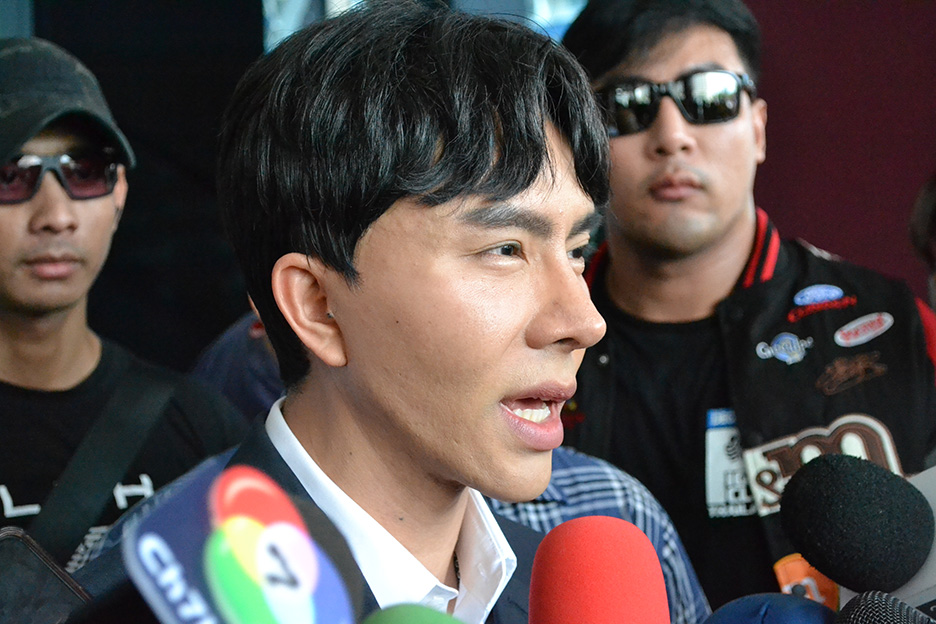
The facial expressions of the actors during the press conference involving The iCon Group business of Boss Paul (center). From top left: Kan Kanta Thaworn, bottom left: Sam Yuranunt, top right: Min Peechaya, and bottom right: Boy Pakorn. (Khaosod Photo)
BANGKOK — The iCon Group, a large business enterprise involving celebrities, influencers, and stars acting as “bosses” to promote online product sales, has gradually faced complaints from a group of victims, leading to its expansion into a major case in Thailand.
These complaints were aired through a hot-topic news discussion program “Ride the Wave” (Hoen Krasae in Thai) hosted by Kanchai Kamnerdploy on Channel 3 television, eventually evolving into a national-level case with hundreds of complainants.
They accused the group of running a Ponzi scheme by tricking them into buying large quantities of their beauty and consumer products to sell to others, only to find out there’s little demand. Many people said that the success of this business was not primarily based on selling products, but on persuading others to join the investment network.
The story that shocked society was that these people were encouraged to invest more and more until they were penniless. Some attempted suicide, and some died, with similar motivations stemming from their admiration for celebrities and trust in the wealthy image of stars or influencers.
A billboard of The iCon Group company featuring famous actors as presenters for various products including cosmetics, coffee, and supplements, once prominently displayed in the center of Pattaya city.
Especially notable is “Boss Paul” Waratthapon Waratthawarakul, owner of the catchphrase “10 years of misplaced diligence won’t make you rich,” founder and CEO of The iCon Group, an online business empire using the “buy-sell” model to generate enormous income.
He used his life story of growing up with a single mother in Bangkok’s slums, working hard to earn money, and paying for his own education. He started his business journey selling tiles online, learned, and eventually opened The iCon Group company in 2018, growing rapidly in 2021 with sales exceeding 5 billion baht, with credible famous stars joining to enhance the image.
This massive damage prompted the new Police Chief of the Royal Thai Police, Kittirat Phanphet, to order a full police investigation.
Similarly, the government, represented by Minister Attached to the Prime Minister’s Office Jiraporn Sinthuprai, who oversees consumer protection agencies, called an urgent meeting of all relevant agencies at Government House on October 11.
Boss Paul (Waratthapon Waratthawarakul), founder and CEO of The Icon Group, arriving to provide information to the police, insisting that his business is legal, at the Consumer Protection Police Division on October 12, 2024.
Subsequently, officials from the Office of the Consumer Protection Board (OCPB) led a raid on The Icon Group HQ in Bangkok’s Bang Khen district and at least 9 points of The iCon Group network companies.
Officials found several important pieces of evidence, especially the company’s product warehouses located in Moo 8, Khlong Si Subdistrict, Khlong Luang District, Pathum Thani Province. They found only 2 packing employees and very few products, contrary to the company’s assets of 700 million baht.
Meanwhile, the famous stars involved in this business, including Sam Yuranunt Pamornmontri, Boy Pakorn Chatborirak, Min Peechaya Wattanamontree, and Kan Kantathavorn, all came out to confirm that they were only presenters, not partners, and they were very sorry to learn that people had been seriously affected.
Then, each of them, except Boy Pakorn, gradually went to meet with police officers. Until Sunday, October 13, Pol. Maj. Gen. Sopon Saraphat, Deputy Commander of the Central Investigation Bureau, announced that so far, the executives of The iCon Group, Boss Paul, three famous stars (Sam, Min, and Kan), and other executives who had been accused, totaling 6 people, now have the status of “suspects.”
Some of the products belonging to a 66-year-old male victim in Chonburi province, who invested 500,000 baht after being misled by celebrities. He was only able to sell products worth a little over 1,000 baht, and the rest had to be donated.
Police summarized the total number of victims throughout the previous week to be as high as 800, with total damages of over 266 million baht. If it reaches 300 million baht, this case will be elevated to a special investigation by the DSI police.
Minister Jiraporn said that officials are currently collecting evidence based on facts, and the OCPB has sent a letter to the Anti-Money Laundering Office (AMLO) to issue a letter to freeze assets first. AMLO will monitor the assets, and if there’s any transfer, it may also fall under money laundering.
The iCon Group business was exposed as a scandalous case following the case of a husband and wife selling gold online, known as “Mae Tak and Pa Beer” or Ms. Kornkanok Suwanabut and Mr. Kanphon Ruangaram, which was found to have more than 200 victims.
The similarity to The iCon Group case is that many stars and influencers participated in marketing activities to promote their gold business to make it look credible and persuade people to buy.
Images of Mae Tuck and Pa Beer, a couple who posted on social media showcasing their wealth to entice people to buy their gold, before being investigated and found to be selling substandard products.
Moreover, “Mae Tak and Pa Beer” also created content distributed on social media boasting of wealth including branded assets, luxury watches, luxury cars, millions of cash in bundles, and a luxurious lifestyle.
Another similarity is the exposure of this fraudulent business through the “Ride the Wave” TV program, revealing that most of the gold from this shop did not meet standards and was far from the quality advertised, making it impossible to resell at a price close to what was paid. Also, the gold shop’s lottery was not legally correct.
Both were arrested and prosecuted for multiple legal offenses, including consumer-related offenses, public fraud, and also matters related to the Computer Act in bringing false information into the system.
During the prosecution, police seized their assets including several luxury cars, 16 land title deeds, real estate, 6 luxury watches, and various assets worth several million baht. However, the safe that appeared in the content to be full of luxury watches turned out to be empty.
An important issue of these similar large cases that those responsible must continue to investigate is whether there are police officers involved or benefiting from these dubious wealth-creating businesses.
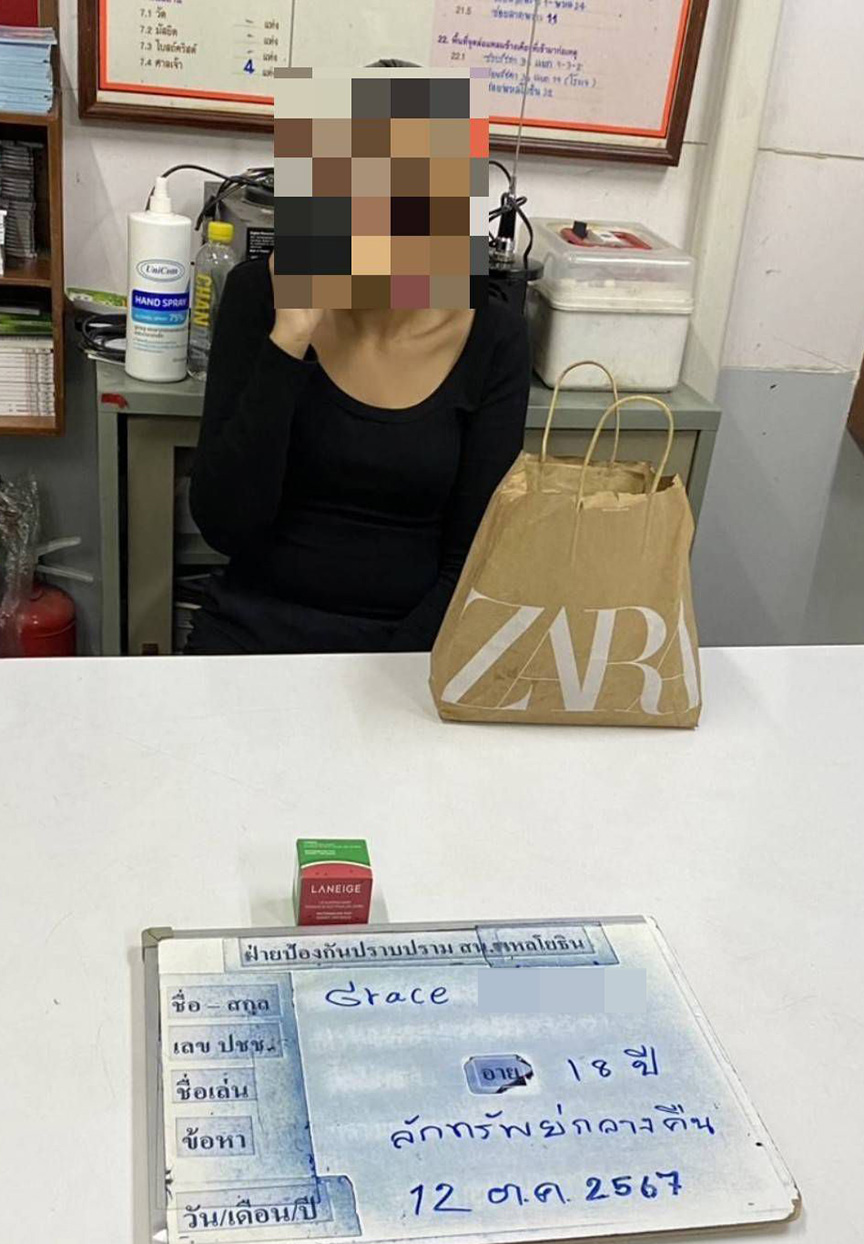
CCTV footage from the cosmetics store reveals the moment Miss Grace picked up a LANEIGE lip care product, which she did not pay for before leaving the store.
BANGKOK — Officers from Phahonyothin Police Station revealed on Sunday that they had received a theft notification on Saturday night about a foreign customer stealing goods from a cosmetics store.
Upon arrival at the scene in a cosmetics store on the 2nd floor of a well-known department store in the Phahonyothin area, Chatuchak sub-district, Chatuchak district, Bangkok at approximately 10:00 p.m. on October 12, the police officers found that store employees had prevented Miss Grace, an 18-year-old British nationa, from leaving the shop.
The staff stated that they noticed this woman behaving suspiciously while entering the store. She picked up a LANEIGE lip care product (Lip Sleeping Mask Watermelon Pop), priced at 700 baht ($21), and left without paying.
The police officers charge the British teen, Miss Grace, with theft at night, at the Phahonyothin Police Station, on October 13, 2024.
Store employees followed her and asked to check the receipt for the item she was carrying. When she couldn’t show a receipt, they escorted her to a reception room and called the Phahonyothin Police Station.
When questioned, Miss Grace denied the accusations. The police officers then took her to Phahonyothin Police Station, informed her of the charge of theft at night, and advised her of her rights. She was then handed over to the investigating officers along with the evidence to proceed with the case.
The theft of property is considered complete when the property is moved. Passing the payment point without paying is a matter of internal elements that only show whether the defendant had fraudulent intent or not.
In this case, the suspect’s inability to produce a payment receipt led the store to file a police report, with CCTV footage as evidence. The punishment for committing theft at night carries a penalty of imprisonment from one to five years and a fine of 20,000 to 100,000 baht.
Miss Grand International contestants give brief interviews to the media upon arriving at Suvarnabhumi Airport on October 7, 2024, after the pageant was moved from Cambodia to Thailand.
The decision by Thai-owned Miss Grand International Competition to suddenly move the site of its contest from Phnom Penh, Cambodia, to Bangkok, Thailand, with MGI big boss Mr Nawat Itsaragrisil citing substandard treatment by the Cambodian host deepens the existing bad blood between some Thais and Cambodians.
Nawat may have repeatedly stated that this is not about a feud between Thailand and Cambodia but the reality is that the relations between people to people, on some online platforms, have become toxic.
Some Cambodians accused Nawat and Thailand of lying, of tricking Cambodia into losing face and some Thai netizens felt the Cambodian counterpart were simply not committed to keep their words.
I am not going to get into the he-said-she-said feud here, both sides seem to have their own claims and counter claims. What’s more disturbing is the simmering hatred between some netizens of the two neighbouring countries.
Cambodians feel they are an older civilization and what is today known as Thailand not only copied and steal many cultural aspects from them and claim they are Thais, but also repeatedly invaded them and dominated them in the past. Thais (or Siamese as we are known back then) are portrayed and the villain who attacked Angkor and during the reign of Rama IV, the Thai King even ordered Angkor Wat to be disassemble it and have it moved to Bangkok only to discover that it was an impossible task back then. (See more of that here:
Then there was the Thai support of the Khmer Rouge (in order to keep the communist Vietnamese at bay during the Cold War) and the burning of a part of the Thai Embassy in Phnom Penh in 2003 after Cambodians fell for a widespread rumour that a well-known Thai actress has reportedly said Angkor Wat belongs to Thailand. Oh, and not to forget the legal and military fights for Preah Vihear Temple just 13 years ago, in 2011.
Basically, not a few Cambodians hate us, feel that we copy, steal, lie and invaded repeatedly and today, parts of Khmer-speaking northeastern were taken from them.
On the Thai side, Thai cultural supremacists believe the current lot of Cambodians had little to do with the great Angkor Empire which was lost into the jungle until the French rediscovered it during the colonial time.
Some Thais look down on Cambodia as underdeveloped, as a lackey of China, (wrongly) insist it’s common for people there to eat dogs – and that actually Thai culture, which partly evolved from Angkorian influence as improved upon the ancient Khmer culture to the point where it has been re-exported back to Cambodia and copied by Cambodians. While some ultra-nationalist Cambodians call Thailand “Lieland”, Thai cultural chauvinists and ultra-nationalists call Cambodia “Claimbodia”.
The toxic online exchanges between these Thais and Cambodians have been going on for years now and these hate speech and devaluing exchanges are leaving a very toxic digital footprint that could exacerbate the mutual animosity between the a good number of people between our two countries.
As a Thai, I feel ashamed the some of my fellow citizens falling lower and lower into hatred. Concerned Thais will have to recognize that this is a big problem facing Thai society, a time bomb waiting to explode.
Some my say these are just loonies, a minorities from two neighbouring countries and do not affect the G-to-G relations between the two government that will celebrate 75 years of diplomatic relations next year, 2025. I say the mistrust is feeling of animosity is deeper than that and slowly spreading.
For example, earlier this week, a joint statement between the Thai Journalists Association (TJA) and the Club of Cambodian Journalists (CCJ) were released saying they are “highly concerned” about the MGI incident. “We are worried that the unexpected situation my escalate into a wider conflict.”
Both organizations called for the media to report the incident with care and for social media users to “exercise discretion when receiving information about the disputes”.
Truth be told, the Miss Grand International feud is just the tip of a toxic iceberg that’s years in the making.
A few days before the MGI issue flares up, I watched an online report on one conservative Thai media (Top News Online, if you need to know), reporting that Thailand was among the 10 friendliest cities in the world 2024, according a survey by Con de Nast Traveller. The news clip started with a photo of Phnom Penh, with a caption and narration saying, “No sign of the Miracle Land”, a reference to Phnom Penh. This was totally uncalled and suggests the problem is much deeper and older than the MGI saga.
It’s time for the governments and the people of both countries to think about what to do instead of allowing the poisonous situations to destroy the relations between the people of the two countries.
PHNOM PENH, Cambodia (AP) — Thirteen pregnant Philippine women accused of illegally acting as surrogate mothers in Cambodia after being recruited online may face prison terms after they give birth, a senior Interior Ministry official said Saturday.
Interior Ministry Secretary of State Chou Bun Eng, who leads the country’s fight against human trafficking and sexual exploitation, said police found 24 foreign women, 20 Philippine and four Vietnamese, when they raided a villa in Kandal province, near the capital of Phnom Penh, on Sept. 23.
Thirteen of the Philippine women were found to be pregnant and were charged in court on Oct. 1 under a provision in the law on Suppression of Human Trafficking and Sexual Exploitation, she said.
The law was updated in 2016 to ban commercial surrogacy after Cambodia became a popular destination for foreigners seeking women to give birth to their children.
Developing countries have been popular for surrogacy because costs are much lower than in countries such as the United States and Australia, where surrogate services could cost around $150,000.
The surrogacy business boomed in Cambodia after it was put under tight restrictions in neighboring Thailand, as well as in India and Nepal.
In July 2017, a Cambodian court sentenced an Australian woman and two Cambodian associates to 1 1/2 years in prison for providing commercial surrogacy services.
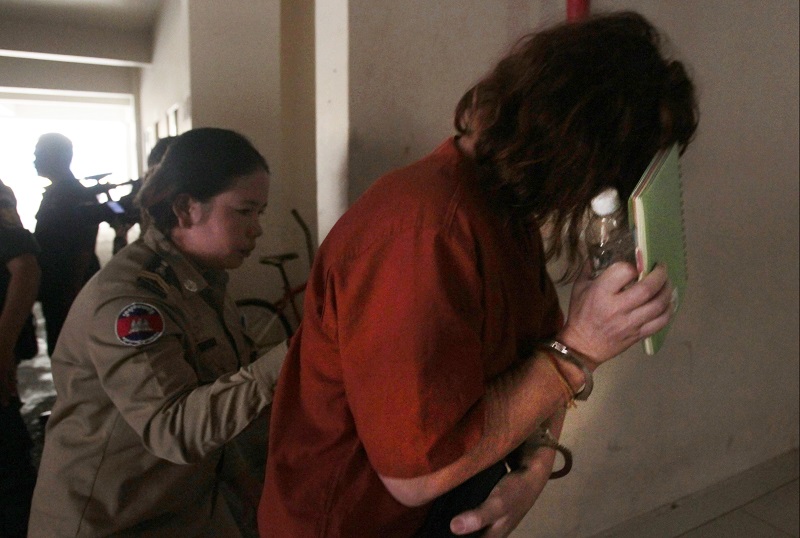
An Australian charged with providing commercial surrogacy services, hides her face as she enters the Phnom Penh Municipal Court in 2017 in Phnom Penh, Cambodia. Photo: Heng Sinith / Associated Press
The new case is unusual because surrogates normally are employed in their own countries, not transported elsewhere.
Cambodia already has a bad reputation for human trafficking, especially in connection with online scams in which foreigners recruited for work under false pretenses are kept in conditions of virtual slavery and help perpetrate criminal fraud online against targets in many countries.
Details of the new surrogacy case remain murky, and officials have not made clear whether the women were arrested or whether anyone involved in organizing the scheme has been identified.
Chou Bun Eng told The Associated Press that the business that recruited the surrogates was based in Thailand, and their food and accommodation in Cambodia were arranged from there. She said the authorities had not yet identified the business.
She said the seven Philippine women and four Vietnamese women who were caught in the raid but who were not pregnant would be deported soon.
The 13 pregnant women have been placed under care at a hospital in Phnom Penh, said Chou Bun Eng. She added that after they give birth, they could be prosecuted on charges that could land them in prison for two to five years.
She said that Cambodia considered the women not to have been victimized but rather offenders who conspired with the organizers to act as surrogates and then sell the babies for money. Her assertion could not be verified, as the women could not be contacted and it is not known if they have lawyers.
The Philippine Embassy in Cambodia, in response to a local press account of the affair, issued a statement on Wednesday confirming most of the details related to what it called the “rescue of 20 Filipino women.”
“The Philippine Embassy ensured that all 20 Filipinos were interviewed in the presence of an Embassy representative and an interpreter in every step of the investigation process,” it said.
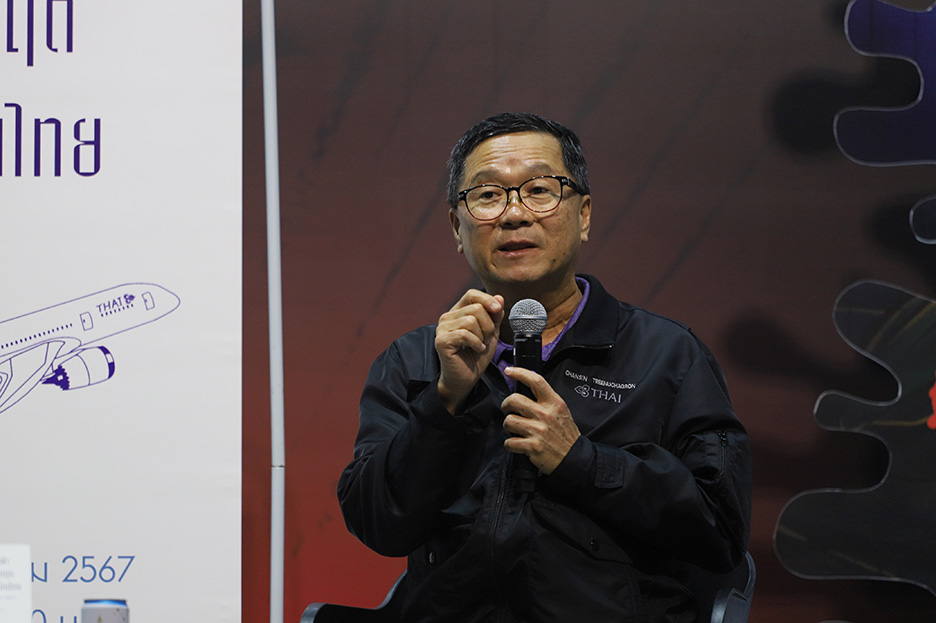
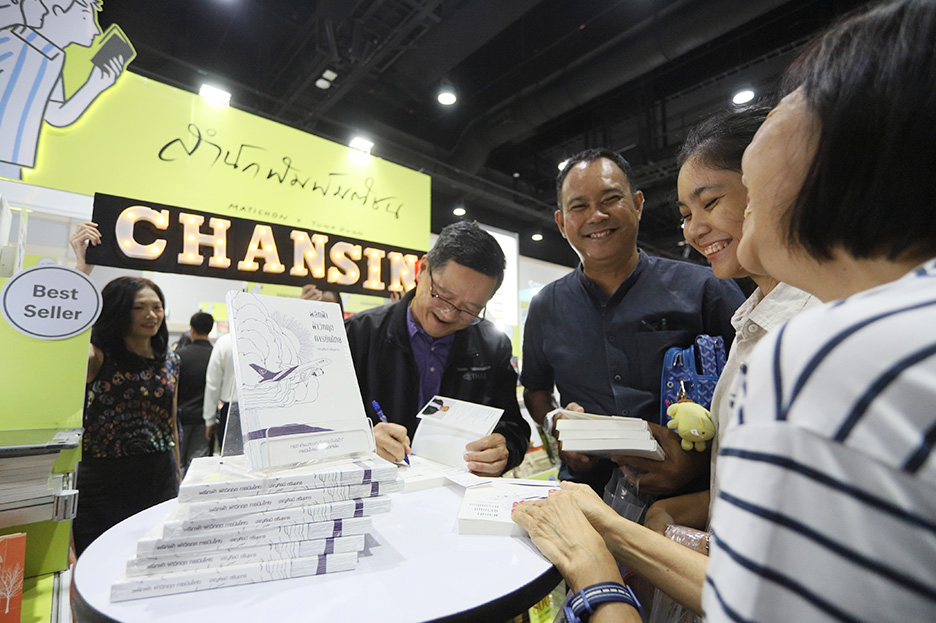
Chansin Treenuchagron, Director and Executive of Thai Airways' Rehabilitation Plan, signs books for readers at the Matichon Publishing booth at the 29th National Book Expo Thailand at the Queen Sirikit National Convention Center on October 12, 2024. (Khaosod Photo/Supachok Sornjang)
BANGKOK — Chansin Treenuchagron, Director and Executive of Thai Airways’ Rehabilitation Plan, marked his debut as an author with the book “Thai Airways: Soaring Through Turbulence,” which gained significant attention.
He shared details of this book at the 29th National Book Expo Thailand, which took place at the Queen Sirikit National Convention Center on October 12, 2024. This seminar was organized by Matichon Publishing and moderated by Sorakol Adulyanon, a well-known columnist of Prachachat Business, a media outlet of the Matichon Group.
The book offers insights into the airline’s survival strategies during one of the most challenging periods in its history, providing a blueprint for crisis management and recovery.
“After 38 years and having changed jobs 19 times, I was nearing the end of my role at PTT in early May 2020 when I received a call from Mr. Somkid Jatusripitak, then Deputy Prime Minister, and General Prayut Chan-o-cha, Prime Minister at the time, inviting me to lead Thai Airways at the height of its crisis,” Chansin shared about his journey to Thai Airways.
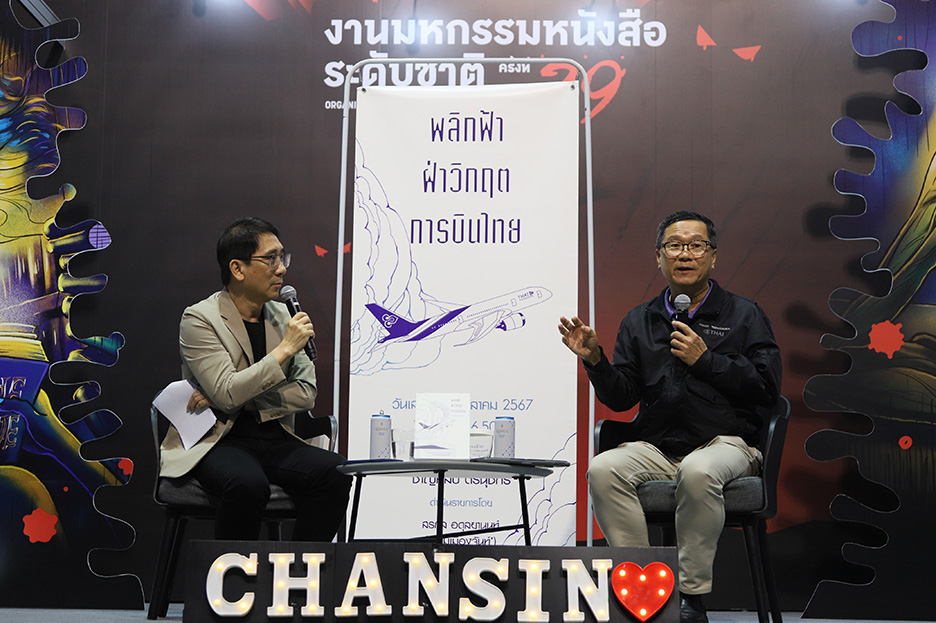
Chansin Treenuchagron, Director and Executive of Thai Airways’ Rehabilitation Plan, participates in a discussion panel to launch the book “Thai Airways: Soaring Through Turbulence,” with Sorakol Adulyanon, a well-known columnist, moderating the event on stage at the 29th National Book Expo Thailand 2024 at the Queen Sirikit National Convention Center on October 12, 2024. (Khaosod Photo/Supachok Sornjang)
Thai Airways, the national carrier was struggling financially before the pandemic, having accumulated significant debts over the years. The pandemic, however, became the tipping point that forced the airline to either restructure or collapse entirely.
Chansin remarked on the pivotal moment when he decided to take on the monumental task of saving the national airline. “We needed to change our mindset about why we were on the verge of collapse,” Chansin explained. “Thai Airways has been in business for over 60 years, the same age as me. It’s a symbol of the country. If Thai Airways were to disappear, it would have serious consequences for the country.”
In a critical conversation with PM Prayut at that time, Chansin posed three key questions: “First, does Thai Airways still have a future?” The answer was yes. “Second, will there be layoffs?” The Prime Minister confirmed that job cuts were inevitable, but those affected would be fairly compensated.
“Lastly, does Thai Airways need to remain a state enterprise?” The response was no, it didn’t have to be. These answers convinced Chansin to take on the role and begin the challenging process of restructuring.
Upon stepping into his new position, Chansin found the airline in dire straits, describing it as a “sick patient on the verge of death.” Thai Airways was facing nearly 400 billion baht ($12 billion) in debt, had 13,000 creditors, and was operating with a 70-billion-baht ($2.1 billion) deficit.
“To put it simply, the company was bankrupt, burdened with massive debt, and had no funds to pay it off. Thai Airways had two options: declare bankruptcy and sell assets, or enter a rehabilitation plan.”
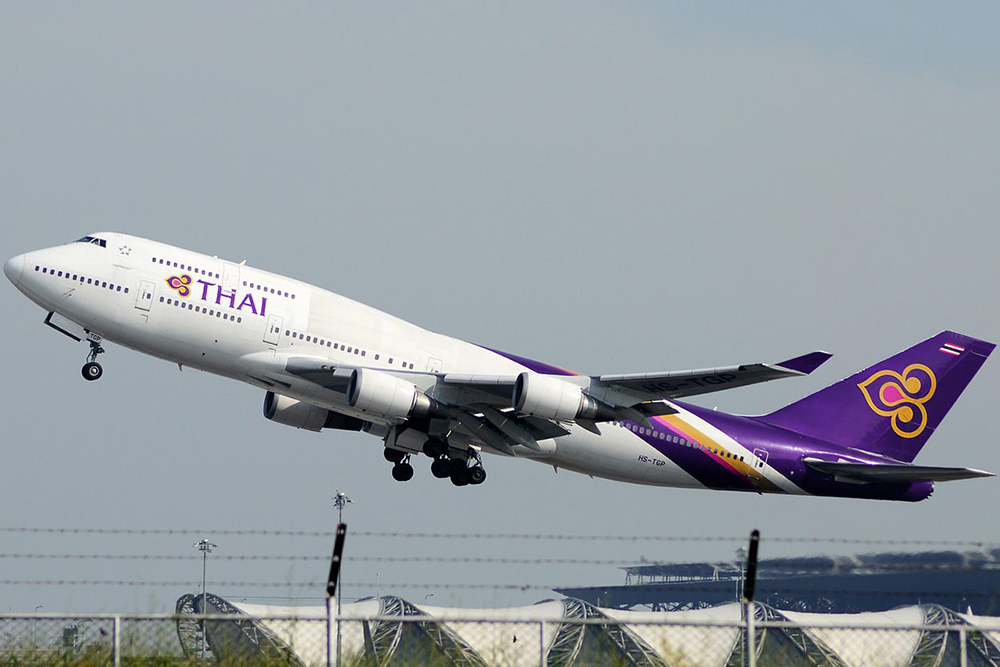
A file photo of a Thai Airways aircraft.
Thai Airways’ struggles were compounded by external crises over the years. He pointed out that, while the airline had accumulated losses, it only reported financial losses 12 times, mostly due to external shocks like the 1997 Asian financial crisis, the 9/11 attacks, the global financial crisis of 2008, and Thailand’s political instability after the 2011 floods. Missteps in aircraft and engine investments also contributed to the company’s long-term decline.
On May 27, 2020, Thai Airways officially filed for business rehabilitation, a move that sparked debate within Thai society. Some believed it would be better to let the airline go bankrupt.
However, Chansin strongly disagreed. “Thai Airways holds licenses to operate highly valuable routes across Europe and Asia, offering tremendous potential. But more importantly, Thai Airways is more than just an airline—it’s a national asset.”
THAI Soft Power
Chansin emphasized that Thai Airways is not just an airline, but a significant source of “soft power” for Thailand. He described the airline as a critical tool for the government, both in boosting the economy by attracting tourists and in ensuring national security. Over the years, Thai Airways has played a key role in evacuating Thai citizens from abroad during crises, showcasing its importance as a government asset in times of need.
“Thai Airways serves as a cultural ambassador, with our cabin crew representing ‘Thainess’ to the world,” he highlighted. He added that the airline not only promotes Thai hospitality but also introduces international passengers to Thai cuisine and products, contributing to the government’s broader soft power strategy.
Chansin Treenuchagron, Director and Executive of Thai Airways’ Rehabilitation Plan, marks his debut as an author with the book “Thai Airways: Soaring Through Turbulence,” which gained significant attention. (Khaosod Photo/Supachok Sornjang)
However, the airline’s financial situation before the pandemic was already challenging, and COVID-19 exacerbated these difficulties. Before the pandemic, Thai Airways typically had a cash flow of 30-40 billion baht ($900-1,200 million), but by the time the company entered its business rehabilitation phase, that figure had plummeted to just 14 billion baht ($420 million).
Monthly revenues, which used to average around 15-18 billion baht ($450-540 million), fell drastically to just 300-600 million ($9-18 million), as the pandemic grounded flights. With operating expenses at 1.5 billion baht ($45 million) per month, drastic changes were necessary.
Chansin implemented several strategies to keep the airline afloat. One of his key moves was converting grounded passenger planes into cargo planes through negotiations with the International Civil Aviation Organization (ICAO). This shift, known as “Cargo in Cabin,” increased Thai Airways’ cargo revenue from 200-300 million baht ($6-9 million) to 3 billion baht ($90.5 million) per month.
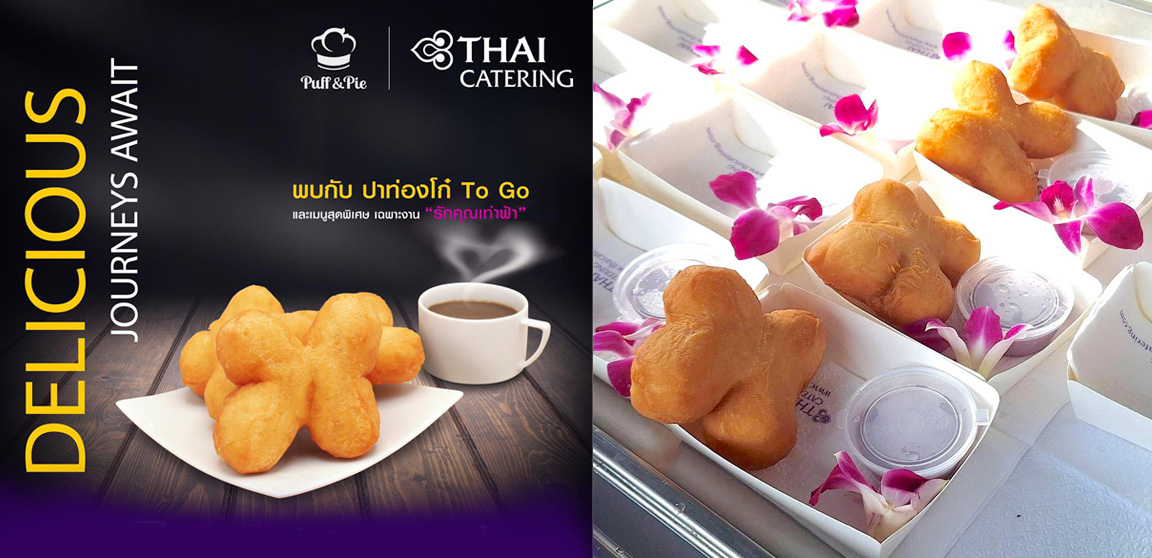
In addition to boosting cargo operations, Chansin made the difficult decision to sell some of Thai Airways’ office buildings and aircraft to reduce expenses. He also introduced innovative ideas to generate revenue by bringing the airline’s in-flight services to the ground. This included selling airline meals to the public, and one of the most successful ventures was the creation of “Thai Airways Patonggo” (deep-fried dough sticks), which became viral.
These efforts, Chansin explained, were aimed at transforming Thai Airways into a leaner, more sustainable enterprise, while continuing to serve as an important cultural and economic asset for Thailand.
THAI Deep-fried Dough
In his book, Chansin reflects on the viral success of Thai Airways Patonggo (deep-fried dough sticks) as more than just a sales initiative—it became a symbol of resilience. “During a crisis, communication with the team is crucial,” Chansin emphasized.
Throughout nearly 30 live-streamed sessions, management maintained direct contact with employees, fostering a sense of unity. One of the key symbols of this cooperation was the sale of Patonggo, which became a viral sensation.
“We didn’t sell Patonggo to pay off debts,” Chansin explained. “Patonggo was a source of encouragement, a symbol of teamwork. It showed that Thai Airways’ staff were still here, committed to the company’s survival.”
The sight of Thai Airways flight attendants frying and selling Patonggo in the heart of the city resonated with many, bringing the airline closer to the Thai public—not just as passengers, but as part of the broader community. The Patonggo phenomenon was more than a business success; it was a morale boost.
“The fact that Patonggo was selling so well reflected that many Thais still love and feel connected to Thai Airways. It gave us the strength to keep fighting,” he said.
Thai Airways Patonggo
One of the guiding principles Chansin used to steer Thai Airways through its crisis was rooted in empathy: ‘They are people, we are people.’ This philosophy was put to the test when the company had to make difficult decisions about downsizing.
“This was the hardest decision I had to make,” Chansin admitted. Thai Airways reduced its workforce from 21,000 to 14,000 employees, offering severance packages that were legally compliant and fair.
“The hardest part was signing the papers,” Chansin recalled, “because I knew the impact it would have on the families of those who were leaving and the people who remained. The 7,000 employees who left are sacrifices, and their departure was necessary for the company’s survival.”
Through these challenging decisions and the symbolic success of Patonggo, Thai Airways fought to rebuild itself during one of its most difficult periods, demonstrating resilience and a renewed connection with the Thai people.
State-owned Status
Chansin also reflected on the limitations Thai Airways faced due to its status as a state enterprise, particularly in its inability to sell old planes. “The plane had been parked for 13 years and couldn’t be sold because it was part of a state enterprise,” he said, highlighting one of the key obstacles that hindered the airline’s business flexibility.
Chansin Treenuchagron, Director and Executive of Thai Airways’ Rehabilitation Plan, signs books for readers at the Matichon Publishing booth at the 29th National Book Expo Thailand 2024 at the Queen Sirikit National Convention Center on October 12, 2024. (Khaosod Photo/Supachok Sornjang)
Before accepting his role as Thai Airways’ executive, he questioned the Prime Minister about this issue, acknowledging that the airline’s inability to quickly adapt to a rapidly changing competitive environment was partly due to its state-owned status.
Since then, he has made significant progress in reducing the airline’s burdens. “We’ve sold all of the old planes that were once a problem, including 10 B747-400s, 9 A340s, 6 A330s, B777-200s, and 6 A380s.” By selling these aircraft, the airline eliminated significant financial and operational strain.
One of the major reasons for moving Thai Airways away from state enterprise status was to attract shareholders with business expertise. Chansin noted that many creditors wanted the airline to operate as a private company to ensure it generated consistent revenue and could repay its debts.
The goal was to diversify its shareholder base, bringing in new expertise from the aviation industry. Thai Airways is currently preparing to sell shares through a Private Placement, seeking investors with aviation experience to help steer the company into the future.
Although Thai Airways has entered the final phase of its rehabilitation plan, Chansin acknowledged that external factors could still pose challenges.
“We’ve passed the lowest point, but there are risks we cannot control, such as international political factors, domestic politics, and oil prices,” he said.
As part of its recovery strategy, Thai Airways plans to set up a new board of directors to manage the organization and aims to return to the Stock Exchange of Thailand by early 2025.
The company has committed to paying off its debts within eight years, and while it will no longer operate as a state enterprise, it will continue to serve as the national airline, offering improved service for both Thai and international passengers.
The Association of South East Asian Nations (ASEAN) Summit and related countries’ meeting in Vientiane, Laos, which just concluded this week, had Myanmar as one of the important topics.
Thailand announced in this summit that it will host an informal ASEAN ministerial-level consultation on Myanmar in mid-December to try to find a path to peace, although it is unclear who will attend from Myanmar.
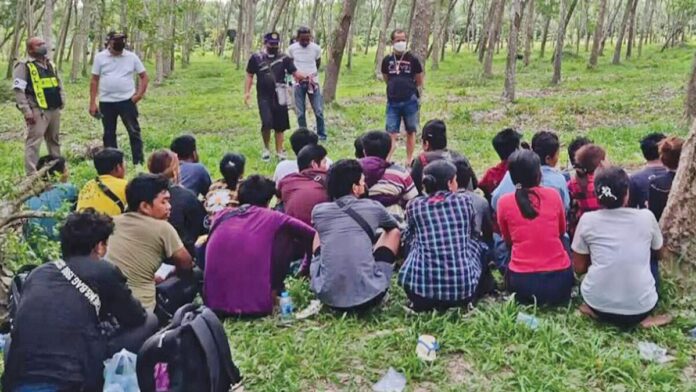
Meanwhile, Thet Swe Win, a Burmese political refugee who fled Myanmar’s military crackdown, is based in Mae Sot Town, Tak Province. He wrote to Khaosod English expressing concerns about how the situations regarding the perceptions among some Thais are changing.
Here is his unedited letter to us:
Dear Thai Friends,
I write to you as a refugee from Myanmar, one of the many displaced by the brutal military junta that has seized control of our homeland. We have fled to Thailand seeking refuge, safety, and the chance to rebuild our lives. For the opportunity to stay here and the supportive attitudes of many Thai people, we are deeply grateful.
However, I have recently watched with concern the growing protests and instigations by some unfriendly nationalist groups here in Thailand who seem angry about the presence of Myanmar migrants. I am beseeching Thai neighbours to see us not as threats, but as neighbors in need, but neighbors who can and want to contribute to the Thai economy and society. Also as neighbors who need your compassion and understanding.
Myanmar has suffered deeply from the devastating effects of extreme nationalism, with the military weaponizing this sentiment to persecute minorities. Decades ago, the anti-Rohingya movements began in our country, cynically used by dark forces as a tool for division. This culminated in the 2017 atrocities that saw over 700,000 Rohingya driven out of Myanmar into Bangladesh, with many more internally displaced, villages burned, and more than 30,000 lives lost.
This systematic targeting and exclusion of Rohingya among other minorities have sown deep divisions in our society, and we are now seeing this tactic used again by the military to suppress the broader population. Since the military coup in 2021, almost 50,000 people have been arrested and detained, more than 5,700 were killed and many of them abused or tortured. Entire towns and villages have been destroyed by airstrikes, artillery and ground attacks. The military has even used natural disasters, like the recent floods and cyclones, as opportunities to attack civilian areas and internally displaced people’s camps.
Many of us who have sought refuge in Thailand are professionals—teachers, doctors, engineers, and small business owners and students who have joined the Civil Disobedient Movement against militaryrule. But without proper documentation, we are unable to secure suitable jobs that match our skills. Many of us face unlawfully issued warrants by the Myanmar military, and if arrested in Thailand and deported, will face serious risk of torture or execution by the Myanmar military. Young people deported from Thailand have been forcibly conscripted into the Myanmar military (SAC) upon their return, according to various reports highlighting the regime’s crackdown on returnees.
Burmese in border areas live in fear of increasingly frequent raids by Thai police, who are searching homes and businesses for undocumented Burmese. This constant fear of arrest and deportation adds to the immense stress and trauma they already bear. Those who are involved in Myanmar’s restoration of democracy, and there are many living along the border in villages or in towns like Mae Sot, suffer other forms of trauma. Our struggle for democracy has come at a great cost, and living in hiding has taken a toll on our mental health.
Tragically, the mental health situation of refugees in Mae Sot is marked by high levels of anxiety, and stress due to displacement, uncertaintyand past experiences of violence and persecution. Despite these hardships, we do not want to be seen as a burden. So many are eager to contribute to Thailand’s economy and society, to offer our skills and labor to benefit both societies. All we ask is a chance to work openly and legally, to live without fear, and to rebuild our lives in safety.
Those who have sought refuge in Thailand range from young people to adults alike, having escaped the oppression of the military dictatorship. For some, arriving in Thailand has been their first experience of personal freedom. While this newfound sense of freedom may have led to a few misunderstandings with the local community, we want to emphasize that none of us ever intended to disrespect or disregard Thai culture or customs.
We aim not only to be good guests but also to contribute to the well-being and prosperity of this beautiful country as much as we can. For example, there are currently more than 40 university professors and lecturers among the Burmese community in Mae Sot, highly qualified and willing to teach Thai students, while offering Burmese youth the opportunity to study alongside them. Some Burmese musicians have even volunteered to teach music at Thai schools, demonstrating how our two communities can exchange knowledge and skills to benefit both nations. There are also numerous teachers and dozens of qualified medical practitioners including doctors and dentists who would be willing to help in any capacity.
I encourage my fellow Burmese to embrace the opportunity to learn about and appreciate Thai traditions, and to adapt to local customs with respect and openness. By doing so, we can build stronger connections with the Thai community, enriching our experience and contributing to a harmonious coexistence.I kindly ask the Thai people to continue demonstrating the remarkable patience and kindness that their country is so well known for. Your generosity and understanding have already made a profound difference, and by extending this warmth to those seeking refuge, you help foster an environment of compassion and unity.
This letter is a heartfelt call for solidarity, friendship, and cooperation. We share the same dreams of peace, freedom, and dignity. With your support, we believe we can achieve a brighter future, not just for Myanmar, but for Thailand and the region as a whole.
_______
Editor’s note: The writer added that he didn’t feel safe to have his photo published.
The four new plant species of the Yard genus are part of the "Flora of Thailand" project.
BANGKOK — Researchers from the Department of National Parks have introduced four new plant species that they have discovered, one of which has a strange flower resembling a monkey’s face. It is called “Yard Wanorn Pak” in Thai, which means “monkey’s face dewdrop.”
The four new plant species of the Yard genus include two species found in Saraburi, one in Rayong, and one in Lopburi. These plants grow in the specific ecosystem of limestone hills and are endangered and threatened with extinction.
A team of researchers from the Department of National Parks, Wildlife and Plant Conservation, under the Ministry of Natural Resources and Environment, has discovered four new plant species worldwide belonging to the genus Yard.
These four new species, found in Saraburi (2 species), Rayong (1 species) and Lopburi (1 species), thrive in restricted areas of limestone hill ecosystems and are classified as threatened and endangered.
Microchirita simia (Photo by Naiyana Tetsana)
The research team, consisting of Mrs. Naina Tetsana, Mr. Phachoke Pudja, Mr. Thirawat Thananthaisong, Mr. Khunanon Daonurai and Mr. Samran Suddee from the Forest Herbarium, the Forest and Plant Conservation Research Office, and Mr. Krirkwit Poompayak, the manager of Khao Somphot Wildlife Sanctuary in Lopburi, worked together on the research.
The researchers followed botanical research methods and consulted with Dr. David Middleton, an expert on the Gesneriaceae family, confirmed that the plants belonged to the genus Microchirita.
The results were published in the international journal Thai Forest Bulletin (Botany), volume 52(2), pages 80-88, in 2024. There are 51-55 species of this genus worldwide, 41 of which occur in Thailand, making the country the central hub for the diversity of this genus.
The Four New Species:
Yard Wanorn Pak
Microchirita simia (Photo by Naiyana Tetsana)
Microchirita simia D. J. Middleton, Thananth, Tetsana & Suddee: Found in the limestone hills of Mueang district in Lopburi province. This herb grows up to 30 cm tall and has succulent stems that are reddish-purple in color throughout.
The upper petals and corolla tube are deep reddish-purple, while the lower petals are alternately light yellow and deep reddish-purple. The specific epithet “simia” is Latin for “monkey” and refers to the flower’s resemblance to the face of a monkey when viewed from the front. The type specimen Tetsana, Pudja, Kerdkaew, Hemrat & Jirakorn 2785 is kept at the Forest Herbarium.
Yard Orathai
Microchirita orathaiae Suddee, D. J. Middleton, Tetsana & Pudja: Found in the limestone hills of the Khao Chamao district in Rayong province. This herb grows up to 40 cm high. The specific epithet “orathaiae” is in honor of Mrs. Orathai Kerdkaew, a botanical illustrator who has contributed to the Flora of Thailand project for many years. The type specimen Tetsana, Suddee, Pudja, Thananthaisong, Hemrat, Phankien & Daonurai 2256 is kept at the Forest Herbarium.
Microchirita orathaiae (Photo by Naiyana Tetsana)
Yard Pra-Bhotisat
Microchirita radiata D. J. Middleton, Daonurai, Poompayak & Suddee: Found in the limestone hills of Kaeng Khoi district, Saraburi province. This herb grows up to 50 cm high. The specific epithet “radiata” refers to the brown lines that run radially in the corolla tube. The type specimen Thananthaisong, Poompayak, Udomsiripong, Khananthong & Daonurai 1000 is kept in the forest herbarium.
Microchirita radiata (Photo by Kerkwit Poompayak)
Yard Thamkraborg
Microchirita puglisiae D. J. Middleton, Daonurai, Poompayak & Suddee: Found in the limestone hills of Phra Phutthabat district, Saraburi province. This herb grows up to 30 cm high. The specific epithet “puglisiae” is in honor of Dr. Carmen Puglisi, an expert on several genera within the Gesneriaceae family, who contributed to research for the Flora of Thailand project.
These new plant species are part of the “Flora of Thailand” project, which aims to publish comprehensive data on all plant families occurring in Thailand.
Microchirita puglisiae (Photo by Kerkwit Poompayak)
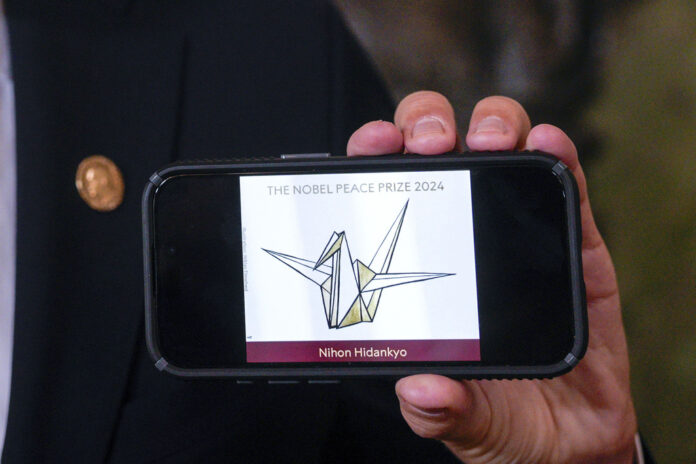
The head of the Nobel Committee, Jorgen Watne Frydnes, shows the logo of the Japanese organization Nihon Hidankyo, the winner of the Nobel Peace Prize for 2024, at the Nobel Institute in Oslo, Norway, Friday, Oct. 11, 2024. The Nobel Peace Prize was awarded Friday to Nihon Hidankyo, a Japanese organization of survivors of the U.S. atomic bombings of Hiroshima and Nagasaki, for its activism against nuclear weapons. (Javad Parsa/NTB Scanpix via AP)
The Nobel Peace Prize was awarded Friday to Nihon Hidankyo, a Japanese organization of survivors of the U.S. atomic bombings of Hiroshima and Nagasaki, for its activism against nuclear weapons.
Jørgen Watne Frydnes, chair of the Norwegian Nobel Committee, said the award was made as the “taboo against the use of nuclear weapons is under pressure.”
Last month, Russian President Vladimir Putin announced a shift in his country’s nuclear doctrine, in a move aimed at discouraging the West from allowing Ukraine to strike Russia with longer-range weapons. It appeared to significantly lower the threshold for the possible use of Russia’s nuclear arsenal.
Watne Frydnes said the Nobel committee “wishes to honor all survivors who, despite physical suffering and painful memories, have chosen to use their costly experience to cultivate hope and engagement for peace.”
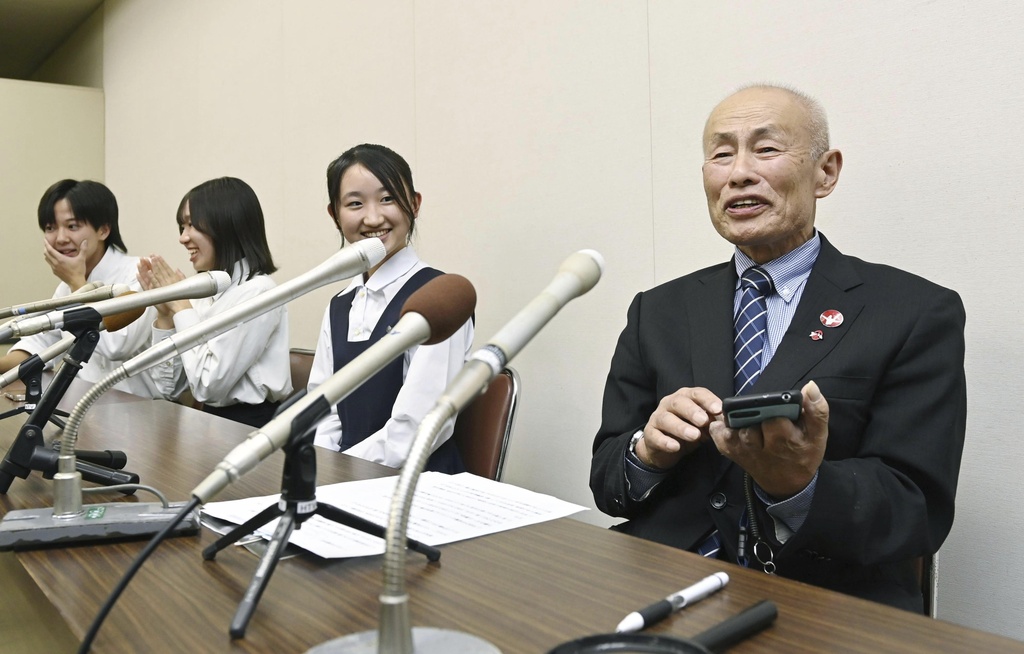
Hidankyo’s Hiroshima branch chairperson, Tomoyuki Mimaki, who was standing by at the city hall for the announcement, cheered and teared up when he received the news.
“Is it really true? Unbelievable!” Mimaki screamed.
Toshiyuki Mimaki, right, president of Nihon Hidankyo, or the Japan Confederation of A- and H-Bomb Sufferers Organizations, speaks to media members in Hiroshima, Japan, Friday, Oct. 11, 2024, as he reacts to Ninon Hidankyo’s winning the Nobel Peace Prize. (Moe Sasaki/Kyodo News via AP)
Efforts to eradicate nuclear weapons have been honored before by the Nobel committee. The International Campaign to Abolish Nuclear Weapons (ICAN) won the peace prize in 2017, and in 1995 Joseph Rotblat and the Pugwash Conferences on Science and World Affairs won for “their efforts to diminish the part played by nuclear arms in international politics and, in the longer run, to eliminate such arms.”
Beatrice Fihn, who was the executive director of ICAN when it won the Nobel, said honoring Nihon Hidankyo was “quite emotional.”
“We are partners in this fight,” she told The Associated Press.
The survivors of Hiroshima and Nagasaki “know nuclear weapons the best. … They know how it feels like, how it looks like, how it smells when your city is burning from nuclear weapons use,” she said.
This year’s prize was awarded against a backdrop of devastating conflicts raging in the Middle East, Ukraine and Sudan.
“It is very clear that threats of using nuclear weapons are putting pressure on the important international norm, the taboo of using nuclear weapons,” Watne Frydnes said in response to a question on whether the rhetoric from Russia surrounding nuclear weapons in its invasion of Ukraine had influenced this year’s decision.
“And therefore it is alarming to see how threats of use is also damaging this norm. To uphold an international strong taboo against the use is crucial for all of humanity,” he added.
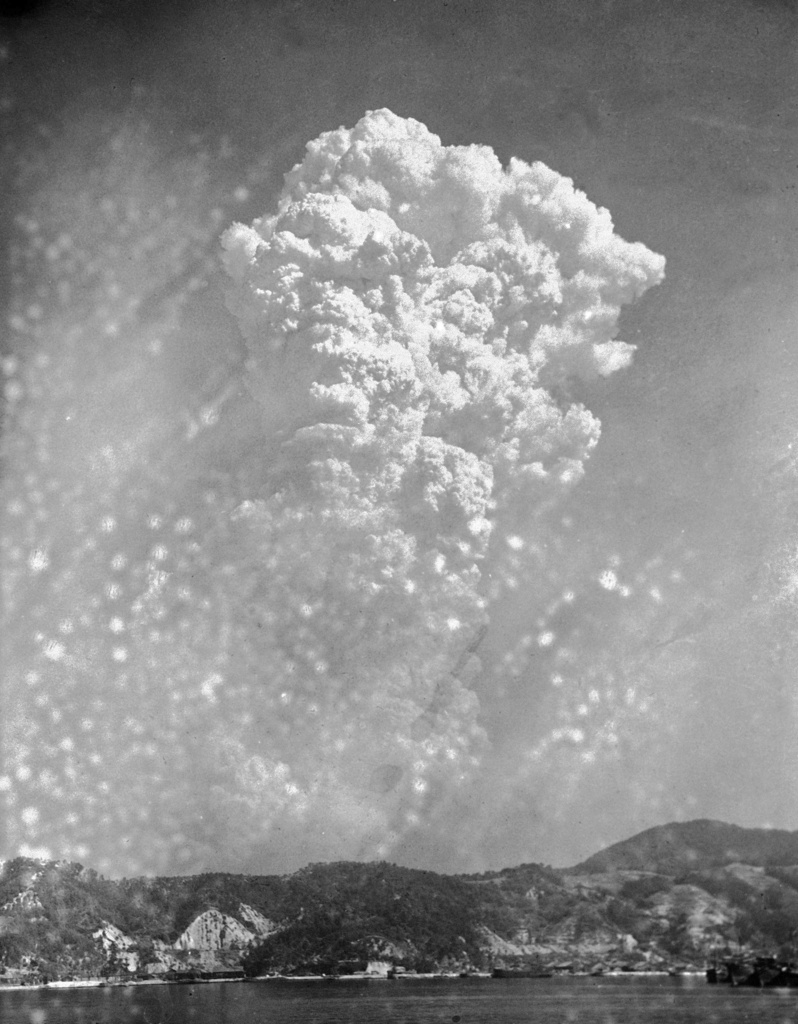
FILE – Smoke rises around 20,000 feet above Hiroshima, Japan, after the first atomic bomb was dropped, Aug. 6, 1945. The Nobel Peace Prize has been awarded to Nihon Hidankyo, a Japanese organization of survivors of the U.S. atomic bombings of Hiroshima and Nagasaki, for its activism against nuclear weapons. (AP Photo, File)
EU Commission President Ursula von der Leyen said on X that “the spectre of Hiroshima and Nagasaki still looms over humanity. This makes the advocacy of Nihon Hidankyo invaluable. This Nobel Peace Prize sends a powerful message. We have the duty to remember. And an even greater duty to protect the next generations from the horrors of nuclear war.”
The United States dropped an atomic bomb on Nagasaki on Aug. 9, 1945, killing 70,000 people, three days after its bombing of Hiroshima killed 140,000. Japan surrendered on Aug. 15, 1945, ending World War II and its nearly half-century of aggression across Asia.
Nihon Hidankyo was formed in 1956 by survivors of the attacks and victims of nuclear weapons tests in the Pacific amid demands for government support for health problems.
“The atomic bomb survivors from Hiroshima and Nagasaki, also known as the hibakusha, are selfless, soul-bearing witnesses of the horrific human cost of nuclear weapons,” U.N. Secretary-General Antonio Guterres said in a congratulatory statement.
“Nuclear weapons remain a clear and present danger to humanity, once again appearing in the daily rhetoric of international relations,” he added. “It is time for world leaders to be as clear-eyed as the hibakusha, and see nuclear weapons for what they are: devices of death that offer no safety, protection, or security.”
Alfred Nobel stated in his will that the peace prize should be awarded for “the most or the best work for fraternity between nations, for the abolition or reduction of standing armies and for the holding and promotion of peace congresses.”
Last year’s prize went to jailed Iranian activist Narges Mohammadi for her advocacy of women’s rights and democracy, and against the death penalty. The Nobel committee said it also was a recognition of “the hundreds of thousands of people” who demonstrated against the “theocratic regime’s policies of discrimination and oppression targeting women.”
In a year of conflict, there was speculation the Norwegian Nobel Committee might opt to not award a prize at all. The prize has been withheld 19 times since 1901, including during both world wars. The last time it was not awarded was in 1972.
In the Middle East, spiraling levels of violence in the past year have killed tens of thousands of people, including women and children. The war, sparked by a raid into Israel by Hamas-led militants on Oct. 7, 2023, that left about 1,200 people dead, mostly civilians, has spilled into the wider region.
In the past week, Israel sent ground troops into Lebanon to pursue Hezbollah militants firing rockets into Israel, while Iran -– which backs both Hamas and Hezbollah -– fired ballistic missiles into Israel. Israel has yet to respond, but its defense minister vowed this week that its retaliation would be both devastating and surprising.
The war in Gaza has killed more than 42,000 people, according to Gaza’s Health Ministry, which doesn’t differentiate between civilians and combatants in its count but says more than half are women and children. In Lebanon, more than 1,400 people have been killed, with thousands more injured and around 1 million displaced since mid-September, when the Israeli military dramatically expanded its offensive against Hezbollah.
The war in Ukraine, sparked by Russia’s invasion, is heading toward its third winter with a massive loss of human life on both sides.
The U.N. has confirmed more than 11,000 Ukrainian civilian dead, but that doesn’t take into account as many as 25,000 Ukrainians believed killed during the Russian capture of the city of Mariupol or unreported deaths in occupied regions.
The Nobel prizes carry a cash award of 11 million Swedish kronor ($1 million). Unlike the other prizes that are selected and announced in Stockholm, founder Alfred Nobel decreed the peace prize be decided and awarded in Oslo by the five-member Norwegian Nobel Committee.
The Nobel season ends Monday with the announcement of the winner of the economics prize, formally known as the Bank of Sweden Prize in Economic Sciences in Memory of Alfred Nobel.
Police General Kittirat Panpetch, the incoming National Police Chief and Director of the Technological Crime Suppression Center, leads a press conference on October 11, 2024, announcing the result of the large-scale operation against call center gangs "Operation Demolish Criminal Bridges."
BANGKOK — Police officials have named their latest large-scale operation against call center gangs “Operation Demolish Criminal Bridges.” The goal is to cut off connection routes between criminals and the public, including phone signals, internet signals, ghost SIMs, money mule accounts, SMS, and social media platforms.
The Technological Crime Suppression Center believes that by cutting off these routes, scammers operating from neighboring countries will be unable to contact or deceive Thai people without SIM boxes or individuals helping to register SIM cards for criminals, or registration systems that facilitate anonymous registration by criminals.
Police General Kittirat Panpetch, the incoming National Police Chief and Director of the Technological Crime Suppression Center, led a press conference on October 11th. He stated that this operation took place from October 1-10, mobilizing police nationwide and receiving data support from the NBTC and network providers.
They searched 647 SIM box locations and small retailers across the country that sell and register SIM cards for criminals. The aim was to gather evidence, issue arrest warrants, and prosecute those who register SIMs for criminals.
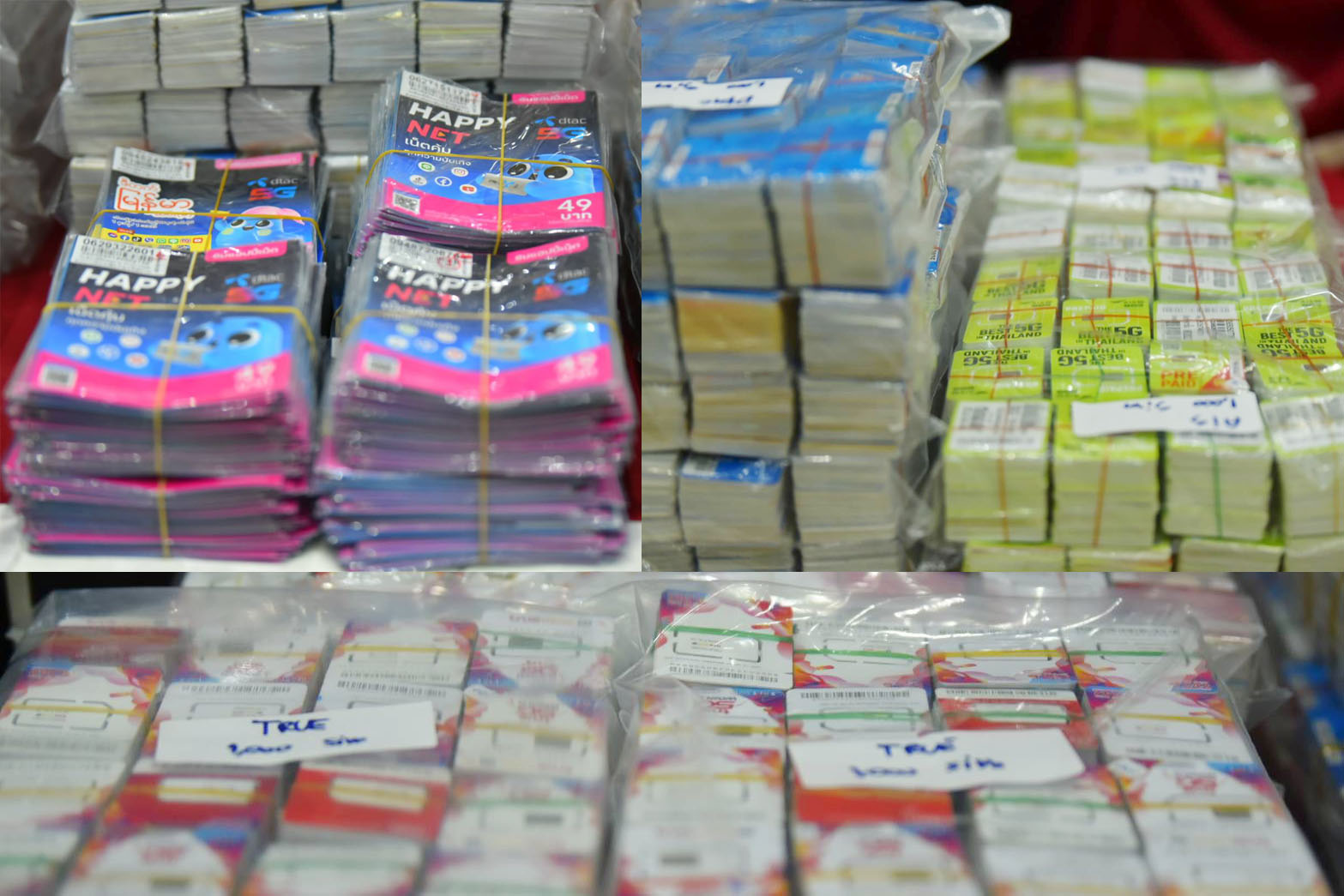
So far, police have arrested and charged over 20 shops caught in the act. They seized evidence including 101,068 Thai SIM cards, 113 SIM box devices, 575 mobile phones, 23 computers, and documents such as copies of ID cards, passports, and work permits of foreigners used for phone number registration. These are crucial evidence for issuing arrest warrants for those involved and bringing them to justice.
Police General Kittirat said that the nationwide search of targeted SIM boxes revealed two gaps in the registration process:
(1) Criminals still hold large numbers of SIMs registered before the NBTC’s announcement limiting SIM ownership to 5 per person.
(2) The online SIM registration system cannot detect incorrect registrations, such as uploading photos that aren’t of the actual person or entering any text as a name. The Technological Crime Suppression Center will urgently discuss this with the NBTC and network providers to address these issues.
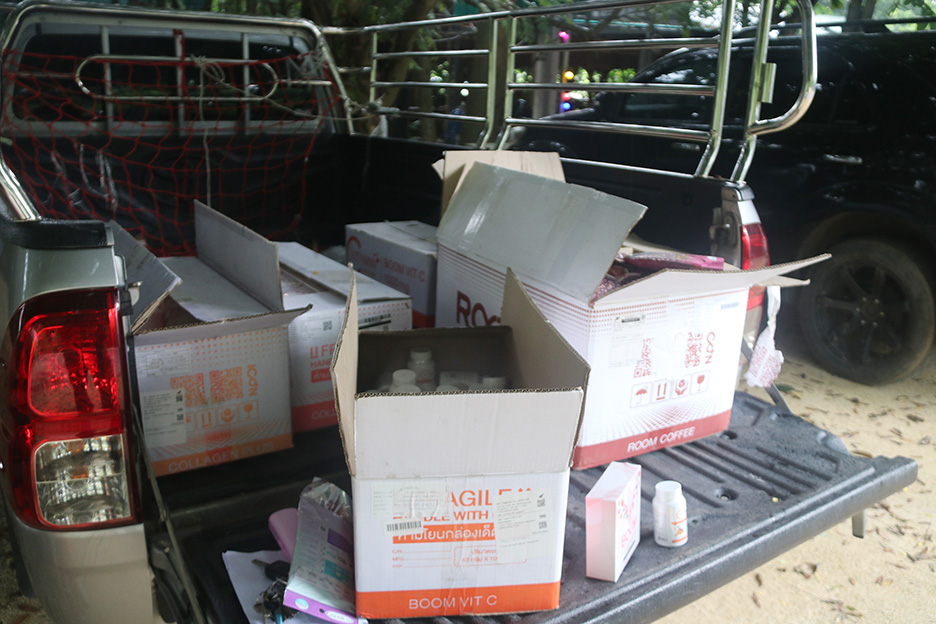
Police seize over 100,000 SIM cards.
Going forward, the Technological Crime Suppression Center will investigate phone numbers reported through the Thai Police Online system as being used by scammers to determine which SIM boxes registered them for call center gangs. They will take strict legal action.
“We warn all SIM box shops registering for scammer call centers, SIM card sellers, or anyone involved that this is equivalent to helping foreign scammer groups, supported by some Thai people, to deceive and steal assets from Thai people and send them abroad. Besides being unpatriotic, they will lose their freedom, be cut off from their families, and permanently lose their careers and businesses,” Police General Kittirat said.
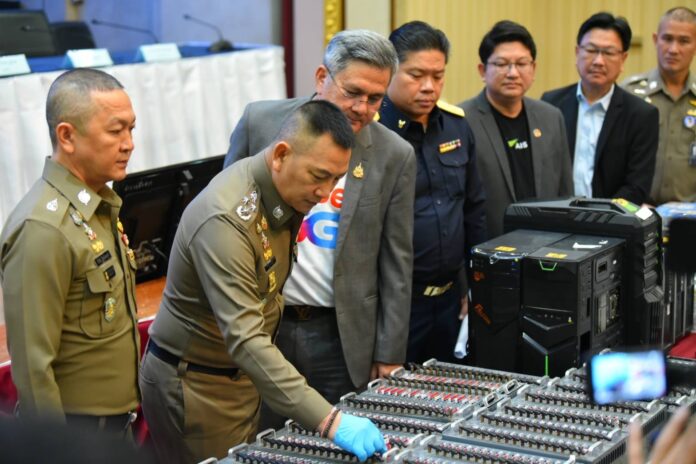
On October 9, Police Lieutenant General Thatchai Pitaneelaboot led a press conference announcing scam equipment seizure, which was part of “Operation Demolish Criminal Bridges.”
The police arrested two suspects: a 68-year-old Thai man named Theeraphat and a 33-year-old Chinese man named Chen. They seized over ten thousand registered SIM cards and a large number of SimBoxes. The equipment found would have allowed criminals to make outgoing calls from approximately 3,000 numbers at a time.