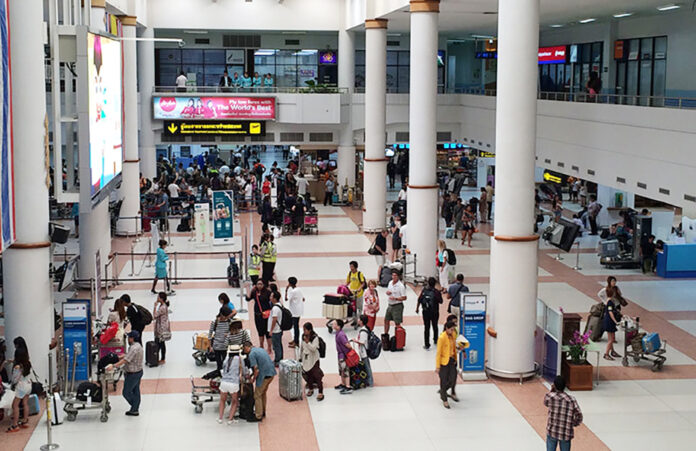
PHUKET — Many tourists are visiting Phuket during the high season. The Prime Minister held a meeting about this. He wants to make sure tourists are safe. He also wants to prevent crime. The Prime Minister said immigration checks should be faster. He wants tourists to wait no more than 30 minutes at immigration.
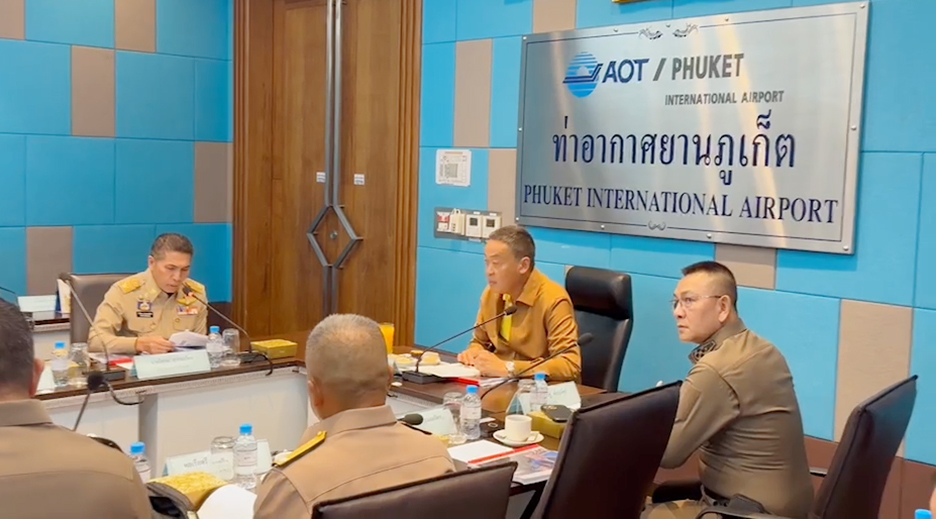
On August 11, reporters stated that Prime Minister Srettha Thavisin, during his vacation in Phuket, called a meeting with agencies related to tourism in Phuket to prepare for the high season from September to February.
Representatives at the meeting included the Royal Thai Police, Police Region 8, Phuket Provincial Police, Tourist Police, Immigration Police, Marine Police, Royal Thai Navy, the Provincial Governor, and Airports of Thailand Public Company Limited.
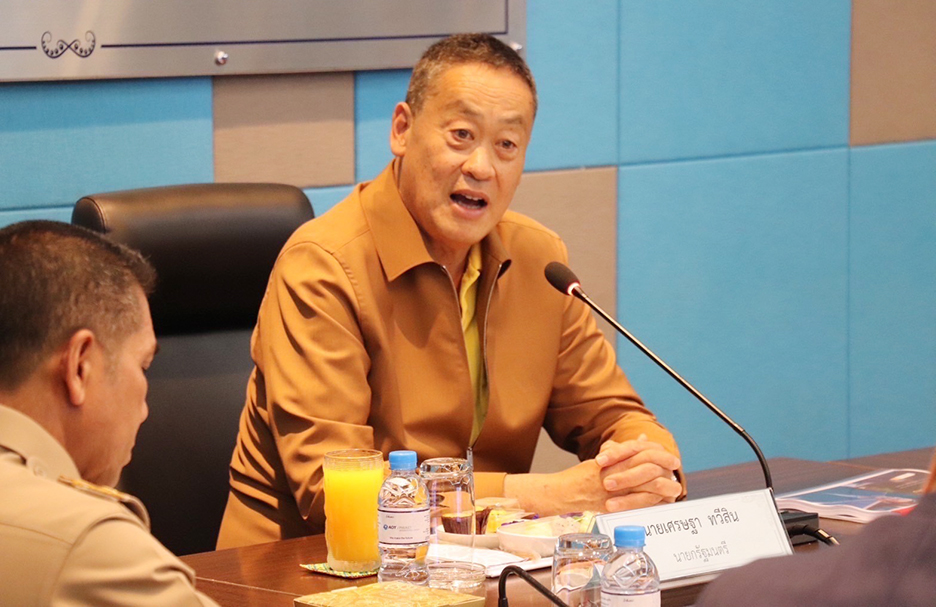
Prime Minister Srettha Thavisin holds a meeting about this. He wants to make sure tourists are safe at AOT Phuket on August 11, 2024.
The PM instructed all agencies, especially the police, to prepare for tourist services, focusing on potential crime issues involving or affecting tourists. Currently, tourist numbers are increasing, even though it’s not yet the peak season.
Airports of Thailand reported that in August, there are 20-30 daily flights to Phuket Airport. During the high season, 14,000-15,000 tourists are expected to arrive daily, totaling about 600,000 tourists per month – a 100% increase from last year.
The PM ordered the airport to facilitate tourists, especially in baggage handling to avoid long waits. He also emphasized using automated document verification to ease the burden on immigration officers and reduce waiting times to no more than 30 minutes during peak hours.
Prime Minister Srettha Thavisin holds a meeting about this. He wants to make sure tourists are safe at AOT Phuket on August 11, 2024.
Police Region 8 reported on measures to facilitate tourists and prevent crime, including coordination with consulates of countries with high tourist numbers such as Russia, China, India, Australia, UK, and Scandinavian countries. They’ve also increased multilingual volunteer numbers to assist tourists.
The PM asked the Navy, especially the 3rd Naval Area Command, to ensure marine safety, particularly for nature tourism, passenger boat issues, sea rescue operations, and assistance for large cruise ships visiting Phuket.
Lastly, Srettha asked the Phuket Governor to monitor the situation of hidden populations, especially foreign workers and long-stay tourists, coordinating with immigration police to ensure legal compliance.
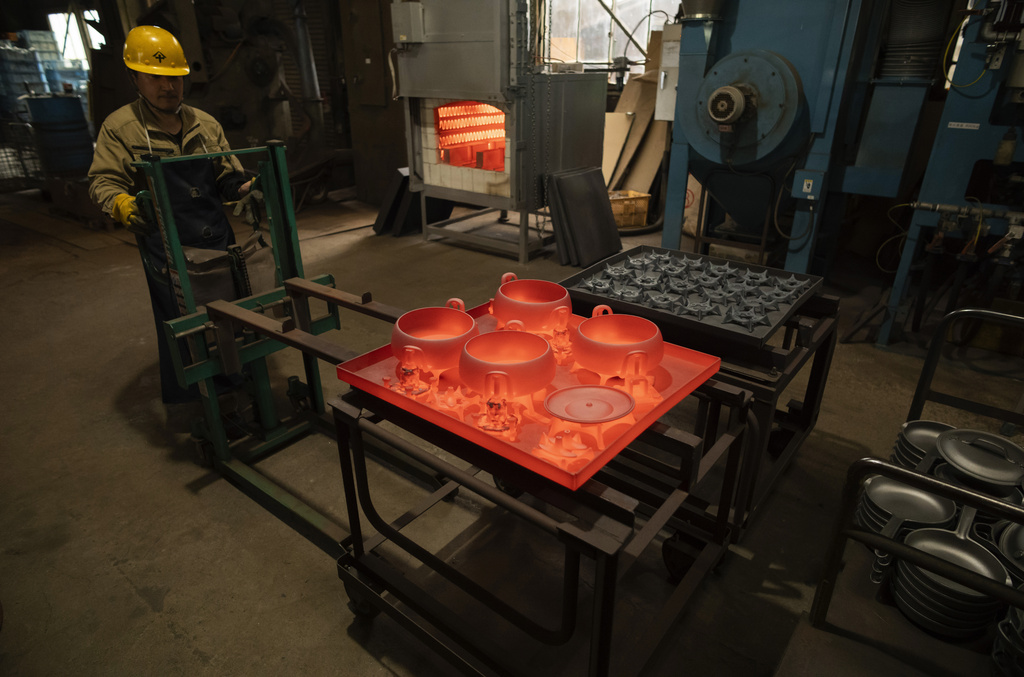
Oigen's handmade pot called "Kuwagata II," one of the "Mugu" series, is displayed at the company's store at the factory in Oshu, northeast of Japan, Friday, May 17, 2024. (AP Photo/Hiro Komae)
OSHU, Japan (AP) — Katsunori Suzuki is one of a few craftsmen in Japan still producing cast iron cookware by hand using laborious traditional techniques. The president of the 172-year-old foundry where he works says she wants to keep the tradition alive, even if it costs much more to produce.
Suzuki uses moist sand and a few other ingredients to make the molds using a method called “tegome,” or “hand stuffing.” He spends hours tamping the sand in an iron frame to compress it just the right amount to create the mold, in which he carves detailed designs for the pot.
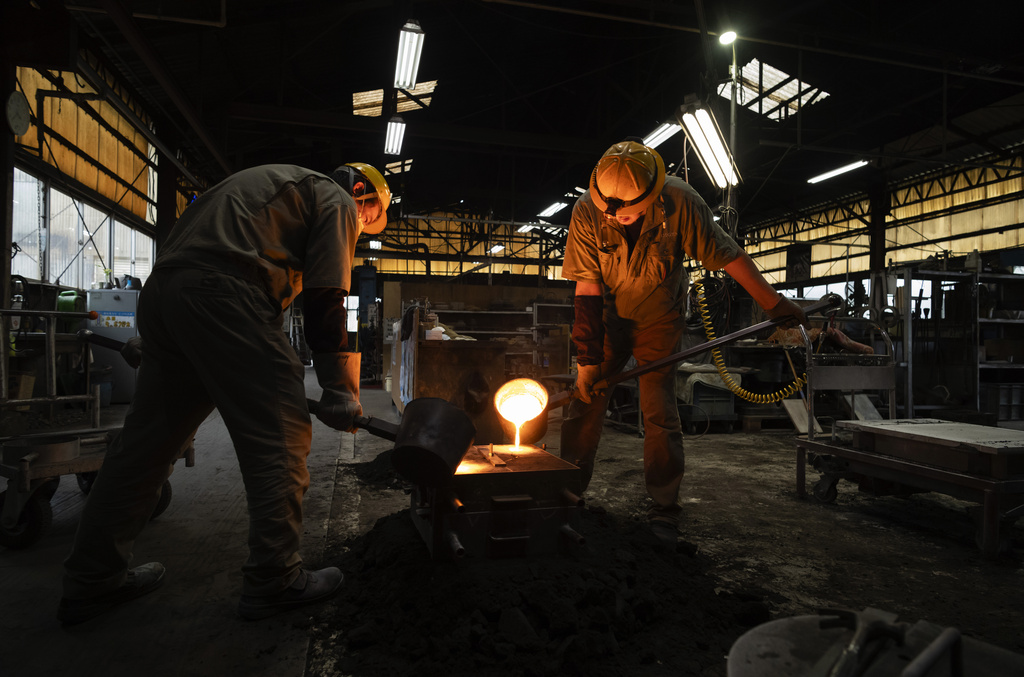
When the mold is ready, Suzuki fetches buckets of molten iron and hurriedly carries them back to his workspace so the temperature remains at about 1,450 degrees Celsius (2,462 degrees Fahrenheit) when it’s poured into the mold.
Craftsmen Suebsai Seksuk, left, a Thai native living in Japan, and Katsunori Suzuki pour molten iron into a mould while making a cast iron pot by hand at the Oigen foundry in Oshu, northeastern Japan, Thursday, May 16, 2024. (AP Photo/Hiro Komae)
After the iron cools and solidifies, the sand mold is broken into pieces with a hammer and the cookware is removed. Any extraneous pieces are cut off.
Suzuki, 59, who has worked in the Oigen cast iron foundry for 40 years, then follows the same process to make a mold for a smaller piece of cookware, such as a lid. Making one pot and a lid takes him an entire day.
In the following days, the cookware, still rough, will be sent to other workers who grind off smaller burrs, polish the surface and bake it at a high temperature to make it rust resistant.
In addition to the strength and dexterity needed to make the molds, the traditional method requires experience to condition the sand with just the right amount of moisture to match the weather conditions.
At the end of the day, Suzuki waters the sand that was used for the mold to begin reconditioning it to make new molds.
Kuniko Oikawa, Oigen’s president, said the traditional tegome method is considered inefficient and costly, and most foundries have abandoned it. Instead, they use molds made from other materials and mechanize the pouring of molten iron for mass production.
Like the other foundries, the Oigen factory until recently had only a mechanized production line. Oikawa, however, didn’t want the traditional method to die out.
A worker pulls out a tray of cast iron pots after they were baked in a kiln with high temperature to make them rust resistant at the Oigen foundry in Oshu, northeastern Japan, Thursday, May 16, 2024. (AP Photo/Hiro Komae)
The fifth president of the family-owned company, founded in 1852 in Iwate prefecture near the iron-rich Kitakami Mountains in northeastern Japan, decided to bring back the tegome method after talking to a retired craftsman who still knew how to do it. The area is famous for cast iron products, with its techniques believed to have been introduced over 900 years ago.
Oikawa said she doesn’t know of anyone else currently using the tegome method for cast iron cookware.
“There may be retired cast iron craftsmen who know how, but I don’t know anyone who is still working at a foundry that uses tegome,” she said.
“It will become only history once it’s gone. Instead of prioritizing economics, we want to respect our predecessors who preserved the cast iron trade. We also think there is something new and creative” about it, she said.
Kuniko Oikawa, center, president of Oigen Foundry, chats with craftsmen Katsunori Suzuki, left, and Suebsai Seksuk as they start their work at the Oigen foundry in Oshu, northeastern Japan, Thursday, May 16, 2024. (AP Photo/Hiro Komae)
In 2022, Oikawa created a new brand, Mugu, to offer high-end cast iron cooking pots designed by an artist who has been with the Oigen foundry for over 50 years. The name is derived from the local pronunciation of the Japanese word muku, which means pure.
Suzuki is training Seksuk Suebsai, a Thai citizen who began learning tegome after moving to the area in 2023. Suzuki, Seksuk and a few others make the sand molds for the Mugu pots.
The Mugu pots cost $337-$374, compared to $224 for Oigen’s most expensive machine-made pot. They are available on the Mugu website or at Oigen’s factory shop.
“They are pure because they are made from the goodness of iron,” Oikawa said. “Because they come from Iwate prefecture, I wanted to put Iwate’s wilderness and climate in the iron. That’s why I chose the local pronunciation of mugu instead of muku.”
Oigen’s handmade pot called “Kuwagata II,” one of the “Mugu” series, is displayed at the company’s store at the factory in Oshu, northeast of Japan, Friday, May 17, 2024. (AP Photo/Hiro Komae)
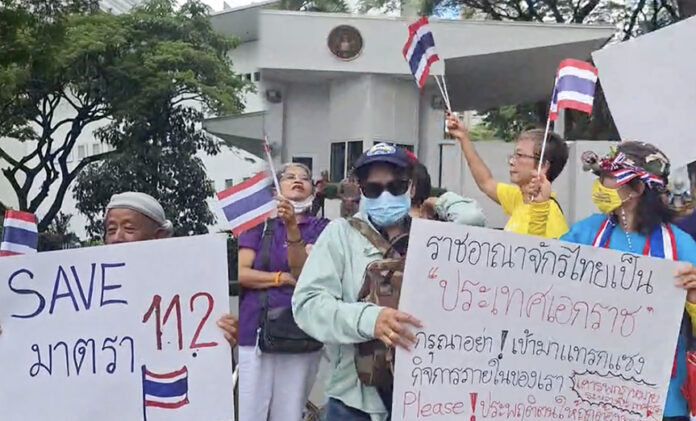
"Kingdom of Thailand is a sovereign state," reads a sign at a pro-monarchy protest in front of the U.S. Embassy in Bangkok on Aug. 9, 2024. Photo: ศูนย์รวมประชาชนปกป้องสถาบัน / Facebook
Listening to Wednesday’s ruling made by the Constitutional Court as they ordered the dissolution of the main opposition Move Forward Party and ban party executive board members, including the charismatic former leader Pita Limjaroenrat, from politics for 10 years, one asks why the perceived existential threat to the Thai monarchy is so acute?
It is imperative we try to understand their fears and paranoia and why they see a political party which pledge to amend a law, the lese majeste law, as such a threat. The court said in the ruling it has no other recourse but to dissolve the party and ban these politicians because what they are doing, if allowed to continue, would almost certainly lead to the destruction of the monarchy institution.
Basically, the court sees Move Forward Party (and now its avatar, People’s Party) as an existential threat to the monarchy. The context, often repeated among conspiracy theorists and ultra-royalists to justify such actions is that MFP (and now People’s Party) is not just an anti-monarchist party, but a trojan horse, either knowingly or unknowingly, used by the West, chiefly the United States, to undermine and destroy the Thai monarchy.
They reasoned that without the monarchy, it would be easier for the U.S. and the West to deal with the corrupt politicians and army generals, and further advance their neo-liberal agendas, thus in effect turning Thailand into a satellite state in the growing battle between the U.S. (or the West) and China.
Not that these Thais do not believe China is trying to spread its hegemonic influence over Thailand, but these Thais believe the U.S. is the greater of the two evils and that Pita, a Harvard-educated politician, and PM candidate, is America’s boy, an enemy to the Kingdom of Thailand that must be removed from possibly being in charge of the government.
Pita, and the party’s warm ties with western embassies in Bangkok convinced these ultra-royalists even more that Pita is a Manchurian candidate, a U.S. puppet, and the party is out to make Thailand a U.S. satellite state or a virtual colony.
Perception is reality, there is little or no point in trying to change the minds of these people. At best, they think Pita and the MFP, and now the People’s Party and its new leadership, are just unwittingly being used and manipulated by the U.S. and key European powers.
Pita is not alone in being accused of being an agent of the U.S. A prominent Thai human rights activist complained on Facebook earlier this week he has now been branded by some Pheu Thai government supporters as a traitor.
I posted on social media two days ago, after the party dissolution, that one of the crucial things that those against MFP and its former leader believed is that Pita is a Manchurian candidate of U.S. Imperialism – an allegation that both Pita and MFP have failed to effectively dispel. That it would be easier for the U.S. to deal with politicians and army generals if there’s no monarchy. Thus, though they are Thais, these Thais are perceived as the enemies of Thailand.
Following that post, one Thai Facebook user noted that I am no different.
“Pravit himself is a U.S. State Department asset,” posted user Danny Kalayanamit in English.
His Facebook profile stated that Danny studied finance and investment at the prestigious Chulalongkorn University and is rather young. “And he is correct. It would be easier. That’s the point. Did the nuance get lost in translation, or is he just straight up admitting his ZOG [Zionist Occupation Government] masters would have an easier time performing international interference if we were ruled under this “system” he and his handlers are shilling for?”
The fear is real, and again, perception is reality (at least for them). One very senior and very well-educated Thai contact kept warning me whenever I see him.
“Don’t be foolish! They are just out trying to use you. There is no sincerity in international relations.”
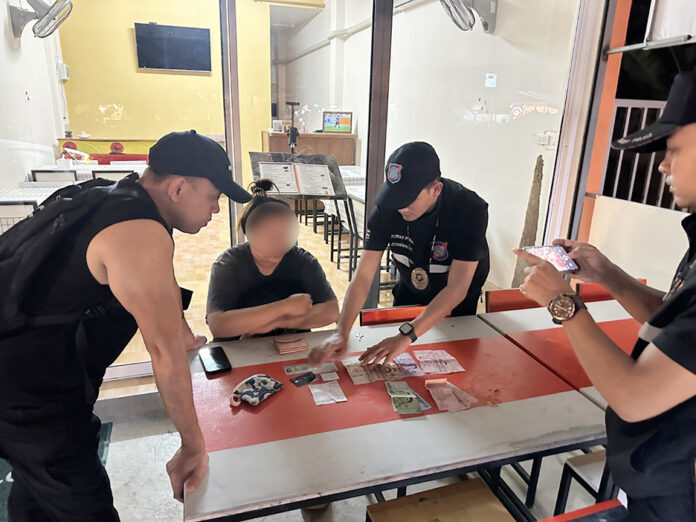
Koh Phangan Tourist Police arrest a 23-year-old Thai national after she picked up a tourist's wallet and used 2,959 baht for herself.
KOH PHANGAN — An Israeli woman who lost her wallet thanked the Koh Phangan Tourist Police for quickly tracking it down and returning it. The Thai woman who found and used the money from the wallet is being prosecuted.
On August 10, the Tourist Police Service Unit on Koh Phangan, Surat Thani Province, received a report from Miss Noga, a 24-year-old Israeli national, that she had dropped her wallet in front of a convenience store in Sri Thanu branch.
After checking CCTV footage, they found a woman wearing a black shirt and shorts, with a plump figure and long hair, picking up the wallet.
At 00:34 a.m. on August 10, that woman used the money to pay for goods at the convenience store counter and then left on a motorcycle.
An Israeli woman who lost her wallet thanks the Koh Phangan Tourist Police for quickly tracking it down and returning it on August 10, 2024.
At 7:30 p.m. on August 10, Koh Phangan Tourist Police gathered information, witness accounts, evidence, and identified the person who picked up the wallet as Miss Jutarat, a 23-year-old Thai national. She admitted to finding the wallet on the floor in front of an ATM, opening it to find cards and cash, and then using 2,959 baht of the victim’s money.
The investigating officers at Koh Phangan Police Station then brought her in for legal proceedings. The law states that if anyone finds someone else’s property but doesn’t return it to the owner or hand it over to the police, they may be guilty of theft under criminal law.
This offense carries a penalty of up to 3 years imprisonment and a fine not exceeding 60,000 baht, or embezzlement of lost property, which carries a penalty of up to 1 year and 6 months imprisonment or a fine not exceeding 30,000 baht, or both.
Pattaya police officers take Mr. Paul, an Icelandic national, to the hospital on Saturday night before summoning him for questioning at the Pattaya Police Station on August 11, 2024.
PATTAYA — A violent altercation between a foreigner and a Thai resulting in injuries occurred in Pattaya. Police officers at Pattaya City Police Station were notified of a fight in Soi Chaloem Phra Kiat 19, Nong Prue Subdistrict, Bang Lamung District, Chonburi Province, at 9:20 p.m. on August 10.
Upon arrival, they found two injured individuals. One was Paul, an Icelandic national aged around 50-60, with a bloodied face and a head wound. The other was Nipon, age 52, a police volunteer at Pattaya City Police Station, who was semi-conscious with a head injury. Emergency responders provided first aid before transporting them to a nearby hospital.
The other party involved was Jaemsawai, age 43, a driver for a ride-hailing app called Bolt, who waited at the scene to give his statement. He explained that the foreign man had requested a ride from Soi Bua Khao, accompanied by a Thai woman, to be dropped off at Soi Khao Noi.
Nipon, 52, a police volunteer at Pattaya City Police Station, receives aid for a head injury after he was knocked down by a foreigner while intervening in the fight.
Due to the foreigner incorrectly pinning the destination on the map, ending at Soi Chaloem Phra Kiat 19, the driver explained the mistake but offered to take them to the correct location as he lived in the same area.
However, during the ride, the heavily intoxicated foreigner continuously berated the driver and attempted to slap his head. The driver stopped and told the woman they should change cars.
Bystanders help restrain Mr. Paul, an Icelandic national, after he knocked down a police volunteer in Pattaya on August 10, 2024.
The foreigner, dissatisfied, slammed the car door open and started yelling. He then grabbed the driver’s shirt collar, hitting his neck and breaking his gold necklace. Enraged, the driver punched back, hitting the foreigner’s face, leading to a scuffle. The injured police volunteer who tried to intervene was knocked unconscious by the foreigner.
Witnesses corroborated that when the police volunteer tried to stop the fight, the foreigner said, “I want fighting,” before knocking him out. Bystanders then helped restrain the foreigner.
After medical treatment, the police will question all involved parties at Pattaya City Police Station.
ASEAN Week 2024 celebrates the 57th anniversary of ASEAN
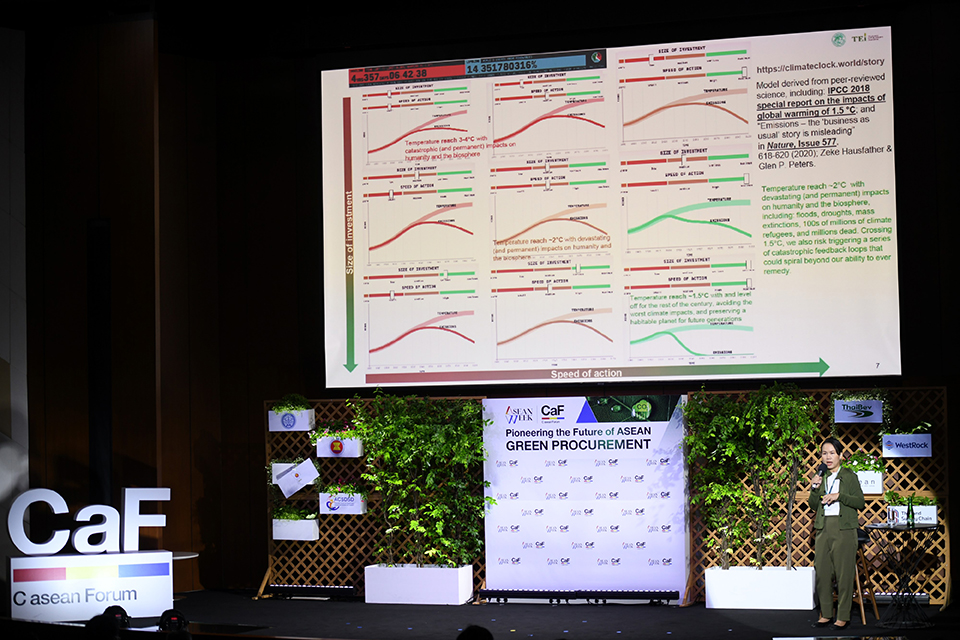
BANGKOK — C asean, along with several partners, organized ASEAN Week 2024 to celebrate the 57th anniversary of ASEAN. The event, held from August 6 to 8 at the CW Tower Building on Ratchadaphisek Road, focused on the theme “Shaping the Future of Sustainable ASEAN.”
The event was a joint effort by C asean, the Department of ASEAN Affairs, the Ministry of Foreign Affairs, the Ministry of Culture, ASEAN Association-Thailand, ASEAN Center for Sustainable Development Studies and Dialogue (ACSDSD), and the ASEAN Studies Center at Chulalongkorn University. Thai Beverage Public Company Limited was the main sponsor.
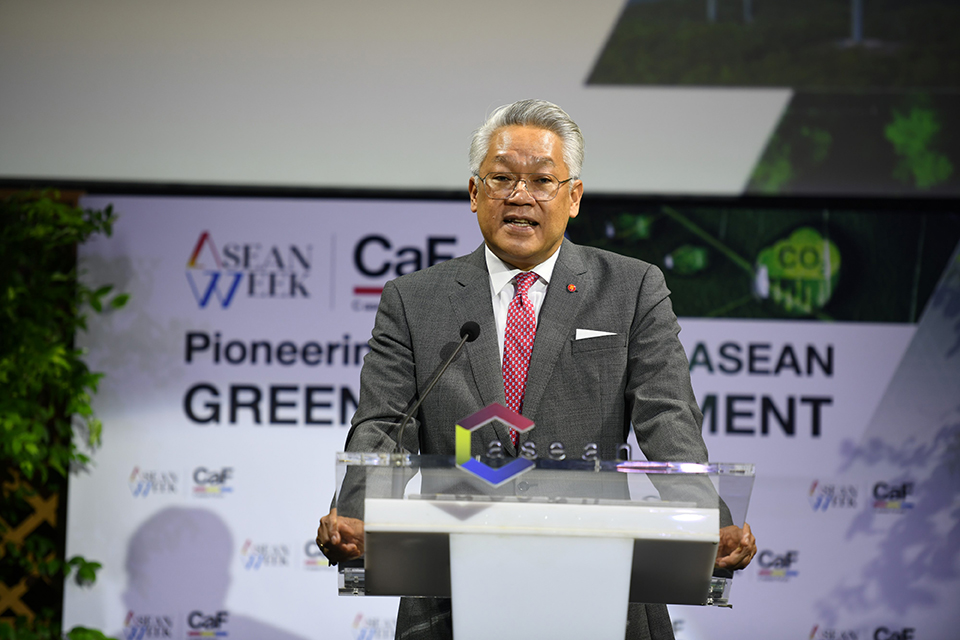
Pisanu Suvanajata, Ambassador of C asean, spoke about the organization’s mission during ASEAN Week 2024. “C asean Center is a social enterprise founded 8 years ago to connect the people of ASEAN. We aim to foster conversations and collaboration for the betterment of the ASEAN community. Our work focuses on three key areas: arts and culture, leadership and talent development, and business and sustainability,” he said.
Pisanu Suvanajata, Ambassador of C asean
Pisanu highlighted the organization’s commitment to diverse partnerships, including those with government entities, corporations, academic institutions, entrepreneurs, artists, and youth leaders. He mentioned the C asean Forum (CaF), a series of events that brings together experts and enthusiasts to share knowledge, network, and collaborate on community challenges.
Regarding climate change, Pisanu noted, “As we face the global climate crisis, business operations have significantly impacted the environment, leading to numerous problems. To mitigate these effects, we must transform our supply chain paradigm through strategic green procurement. This approach will help ensure our long-term prosperity while balancing economic growth with environmental preservation.
Region Embraces Green Buying
The week kicked off by focusing on “Pioneering the Future of ASEAN Green Procurement.” This session brought together experts and leaders to discuss sustainable procurement strategies and their importance in combating climate change. Dr. Chuttree Phurat from the Thailand Environment Institute spoke on “Greening Thailand’s Public Procurement: Ecolabelling Integration,” highlighting the country’s efforts to integrate eco-friendly practices into public procurement.
Thailand has launched a plan to buy greener products, Dr. Chuttree said. The National Action Plan for Green Public Procurement started in 2022 and is set to run until 2027.
The plan aims to get government agencies, state firms, schools, and businesses to buy eco-friendly products. It also wants to boost the production of these items, Dr. Chuttree added. The government is now working to include the plan in its overall economic strategy. He highlighted Thailand’s efforts to incorporate eco-labels into public procurement.
Dr. Chuttree Phurat from the Thailand Environment Institute
Now Thailand has become one of the regional leaders in green procurement, with its Thailand Green Public Procurement and Thailand Green Label programs serving as models for other ASEAN countries.
Hari Ramalu Ragavan from Akar Asia Consulting, another key speaker, noted that Malaysia, Vietnam, and Cambodia are making strides in green procurement. He stressed the importance of government agencies working together to meet these goals.
Ragavan highlighted both the challenges and opportunities of green procurement in ASEAN, with a particular focus on Malaysia’s expanding Government Green Procurement initiative, which now includes state and local authorities.
Despite these advancements, issues such as low awareness, poor reporting standards, and limited financial support remain. To address these challenges, greater collaboration, regional guidelines, and professional networks are crucial.
Humans Must Control AI
At the seminar on August 7, during the session on “AI Literacy: Challenges and Opportunities,” Asst. Prof. Yuen Poovarawan from the Faculty of Engineering, Kasetsart University, emphasized the evolution from the digital age to the current artificial intelligence (AI) age. He pointed out that nearly thirty years ago, Japan led Asian countries in AI research starting in the 1990s. However, Japan’s early investments did not yield immediate success due to the slower maturation of computer technology at the time.
Asst. Prof. Yuen Poovarawan from the Faculty of Engineering, Kasetsart University
“AI was created by humans to mimic human abilities and assist in tasks where humans may be slower or impaired,” said Asst. Prof. Yuen. “It is a tool designed to help humans perform various tasks more easily.”
Addressing the debate on whether AI will replace human jobs, Asst. Prof. Yuen noted, “AI accelerates the production of various goods, leading to oversupply. While some argue that AI will replace humans, the reality is that we are in an era with vast amounts of data flow, making AI essential for data management.
AI, which relies on vast amounts of stored data, can be unpredictable,” Asst. Prof. Yuen explained. “It’s good for generating ideas because everyone has different backgrounds and knowledge. When we combine our ideas with AI, they can become broader. However, we must be careful with AI in daily life. For emotional or deep opinions, AI still can’t match human detail. So, we need to use AI cautiously in some areas.”
FILE - A Chinese People's Liberation Army Air Force Su-30 fighter, at right, flies along with a H-6K bomber as they take part in a drill near the East China Sea in a photo released Sunday. Photo: Shao Jing / Xinhua / Associated Piress.
MANILA, Philippines (AP) — The Philippine military chief condemned Saturday what he said was the provocative actions of two Chinese air force aircraft that executed a dangerous maneuver and dropped flares in the path of a Philippine air force plane on routine patrol in the South China Sea.
All those aboard the Philippine air force NC-212i light transport plane were unharmed and returned safely to Clark Air Base north of Manila after Thursday morning’s incident over the Scarborough Shoal, Gen. Romeo Brawner said, without providing other details.
A top Philippine security official told The Associated Press that the Chinese jets flew at a “very close distance” to the Philippine air force turbo-prop plane and “put the lives of our pilots in real risk and danger.” Another security officer said at least eight flares came from the Chinese fighter jets.
Both spoke on condition of anonymity because of the sensitivity of the incident.
The Southern Theater Command of the Chinese People’s Liberation Army said in a statement Saturday that a Philippine Air Force aircraft on Thursday had “illegally” entered the airspace above Huangyan Island — the Chinese name for Scarborough Shoal, which China claims — and disrupted its training activities.
The command sent jets and ships to identify, track and drive away the Philippine aircraft, the statement added.
“The on-site operation was professional, standardized, legitimate and justified,” it said, adding that forces remained on high alert and ready to defend China’s national sovereignty and security.
The command has warned the Philippines to “stop its infringement, provocation, distortion and hyping-up,” the statement added.
FILE – In this photo provided by the Philippine Coast Guard, a Chinese Coast Guard ship, right, uses its water cannons on a Philippine Bureau of Fisheries and Aquatic Resources (BFAR) vessel, as it approaches Scarborough Shoal in the disputed South China Sea, Dec. 9, 2023. (Philippine Coast Guard via AP, File)
The Philippines’ Brawner said in a statement that “the incident posed a threat to Philippine air force aircraft and its crew, interfered with lawful flight operations in airspace within Philippine sovereignty and jurisdiction and contravened international law and regulations governing safety of aviation.”
He said the incident has been reported to Manila’s Department of Foreign Affairs, which has filed numerous diplomatic protests against China’s increasingly aggressive actions in the disputed waters.
Brawner suggested the incident would not stop the Philippines from undertaking such patrols in the contested region.
“We reaffirm our commitment to exercise our rights in accordance with international law,” Brawner said.
Aside from China and the Philippines, Brunei, Malaysia, Vietnam and Thailand have overlapping territorial claims in the busy sea passage, a key global trade and security route, but hostilities have particularly flared since last year between Chinese and Philippine coast guard and navy forces in the Scarborough Shoal and another hotly disputed atoll, the Second Thomas Shoal.
The U.S. military has reported encountering such dangerous maneuvers by Chinese air force planes in the past over the disputed waters, where it has deployed fighter jets and navy ships to promote freedom of navigation and overflight. China has bristled at U.S. military deployments in the disputed region, saying these have endangered regional security.
Washington has repeatedly warned that it’s obligated to defend the Philippines, its oldest treaty ally in Asia, if Filipino forces, ships and aircraft come under an armed attack, including in the South China Sea.
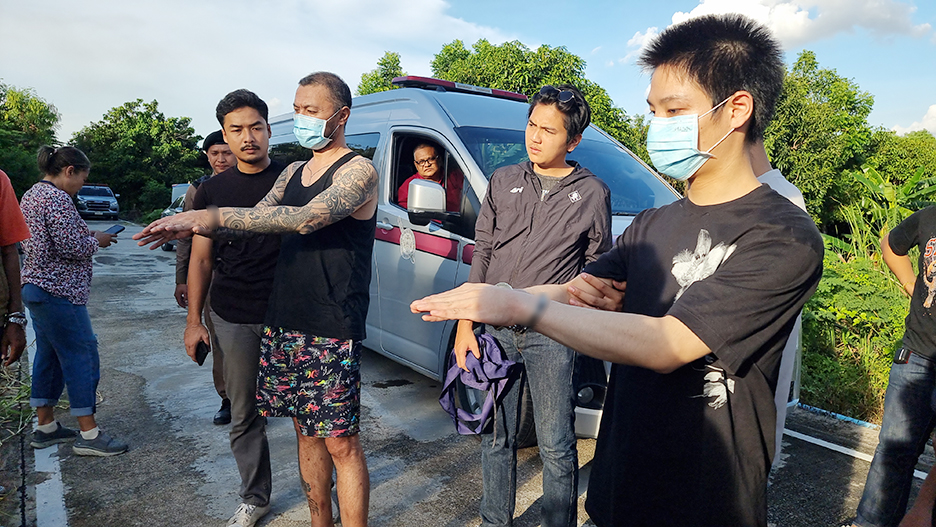
Yakuza gang members re-enact the murder and dismemberment of Ryosuke Kabashima, 47, at a Bang Bua Thong warehouse on August 10, 2024.
NINTHABURI — In a chilling display of international crime reaching Thailand, two Japanese Yakuza members re-enacted the gruesome murder and dismemberment of their compatriot at a warehouse in Nonthaburi province.
On August 10, Bang Bua Thong police and the investigation team brought suspects Takuya Kato, 50, and Hiroto Suzuki, 27, two gang members suspected of murdering fellow gangster Ryosuke Kabashima, 47, and dismembering his body, to perform a crime re-enactment.
The re-enactment took place at the warehouse where the murder and dismemberment occurred, located at the end of Soi Chatsan Swing 2, Phimonrat Subdistrict, Bang Bua Thong District, Nonthaburi Province.
The two Japanese men, who were detained in Laos for allegedly murdering and dismembering a compatriot in Thailand, had been extradited to Thailand on June 13. One of the suspects confessed to all charges, while the other denied the murder charge but admitted to helping dispose of the body parts. The police brought them for the re-enactment, employing 20 officers for security.
Yakuza gang members re-enact the murder and dismemberment of Ryosuke Kabashima, 47, at a Bang Bua Thong warehouse on August 10, 2024.
Re-enactment points:
On March 28, 2024, the suspects and the victim drove from Bangkok after having a meal and parked at the warehouse.
Kato, one of the suspects, argued with the victim in the middle of the warehouse. Then, he took the victim to a car parked in the warehouse, seated him in the front passenger seat facing outwards. The suspect stood outside and shot the victim, then left the body.
The next day, March 29, 2024, Kato dragged the body into a room inside the warehouse with a bathroom and dismembered the body alone.
The skull was disposed of in an abandoned garden at the end of Phu Yai Liam Alley, after the first piece of the body, the right hand bone with a tattoo on the wrist, was found by a boy who saw a dog carrying this part in its mouth on April 19.
Police Colonel Pruet Chamroonsan revealed that the motive, according to the confessing suspect, was a debt of 8 million baht ($227,000 or 33 million yen. Previously, the suspect had hired Mr. Ryosuke for an undisclosed job, which Ryosuke failed to complete and refused to return the money.
The suspects didn’t provide information about their escape route, but police investigations revealed they fled to a neighboring country, Laos. The investigation team is looking into what illegal activities these Yakuza gang members were involved in.
The suspects are currently charged with premeditated murder, firearms-related charges, concealment and destruction of a corpse, illegal entry, and overstaying their visa.
After the re-enactment, the investigation team took the suspects to Bang Bua Thong Police Station before transferring them to Nonthaburi Provincial Court for detention on Sunday, August 11.
BANGKOK — Thai government, led by Prime Minister Srettha Thavisin, is considering a plan to boost the real estate sector by allowing foreigners to buy or rent property in Thailand for up to 99 years. This proposal aims to attract foreign investment and stimulate the economy but has faced opposition from various groups.
Chinese investment in Thailand is growing rapidly, affecting nearly every business sector. Chinese supermarkets are expanding into the provinces, restaurant franchises offer low prices using mostly imported ingredients, and Chinese companies are involved in transportation, construction, and real estate.
Previously, Chinese investors mainly bought property to live in or rent out. Now, they are forming joint ventures with Thai partners to develop real estate, focusing on major urban areas like Bangkok, Phuket, Chiang Mai, and Pattaya.
A notable project is The Mansion by the Chao Phraya River, near the Sanambin Nam area, valued at 100 million baht. Developed by Lianshang Co., Ltd., established in March 2022 with a registered capital of 1,500 million baht, it targets Chinese businessmen seeking a second home in Thailand.
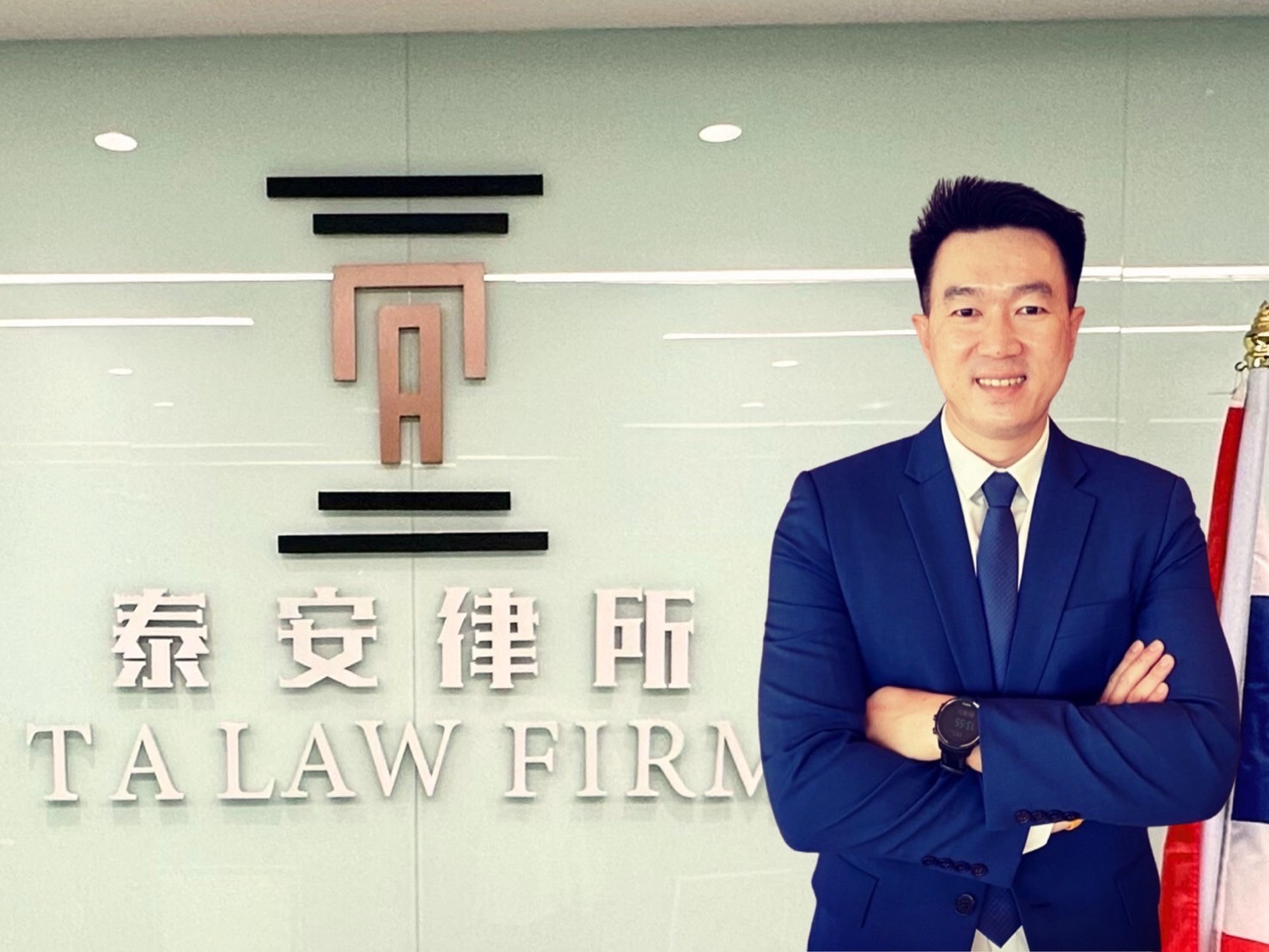
Mr. Thanakrit Thaimee, Co-Founder and Managing Director of TA Law Firm, previously worked in the legal department of a major Thai real estate development company for over a decade before opening his own firm that focuses on providing legal services to Chinese clients. He reflected to Khaosod English that before the pandemic, there were many more Chinese in Thailand. Currently, only 52% of Chinese have returned compared to before the outbreak.
Mr. Thanakrit Thaimee, Co-Founder and Managing Director of TA Law Firm
During the COVID-19 pandemic, many Chinese sought legal advice on various matters, mostly real estate. This demand led him to set up his own law firm four years ago.
“Before the pandemic, many Chinese tourists visited Thailand and sought opportunities to start businesses that catered to other fellow Chinese. This is why Chinese businesses continue to thrive, as their clientele is primarily Chinese. Most of these tourists came for tourism business, a sector typically handled by Thais. However, after the pandemic, this type of tour business has declined due to a drop in the number of Chinese tourists,” Thanakrit said.
Mr. Thanakrit told Khaosod English that since opening his law office, Chinese clients initially sought his services mainly for real estate leasing in Thailand. He noted that some Chinese investors often worked with unlisted real estate companies, which struggled to continue projects during the pandemic due to a lack of capital.
While initially, Chinese clients primarily consulted him on these real estate issues, their focus shifted post-pandemic. Now, most clients seek advice on relocating production bases from China to Thailand to avoid U.S. and EU tariffs. Many are exploring options to move their production to ASEAN countries, where costs are lower than in China.
Chinese Business
At his Law Firm, Thanakrit explained that besides helping Chinese clients with real estate legalization, he now also offers legal services for company registration and moving investments from China to Thailand, especially under the BOI framework. “Most of our clients are Chinese companies looking to move their production to Thailand, like China Sinopec gas stations and electric vehicle parts manufacturers,” he said.
Thanakrit noted that while Thailand benefits significantly from Japanese investments due to their working style, Chinese investments offer fewer benefits. He attributed this to the different work culture; Chinese investors often bring their own teams and prefer to work with other Chinese people, although this is starting to change.
“Chinese investors in Thailand usually bring many Chinese workers, though not necessarily all. This differs from Japanese factories, which follow BOI regulations for ownership and taxes.”
Thanakrit also discussed Chinese businesses opening stores in Thailand, such as cheap supermarkets spreading to the provinces. He commented, “Technically, some of these businesses shouldn’t be operating. Whether they have Thai nominees or not is up to Thai officials to investigate.”
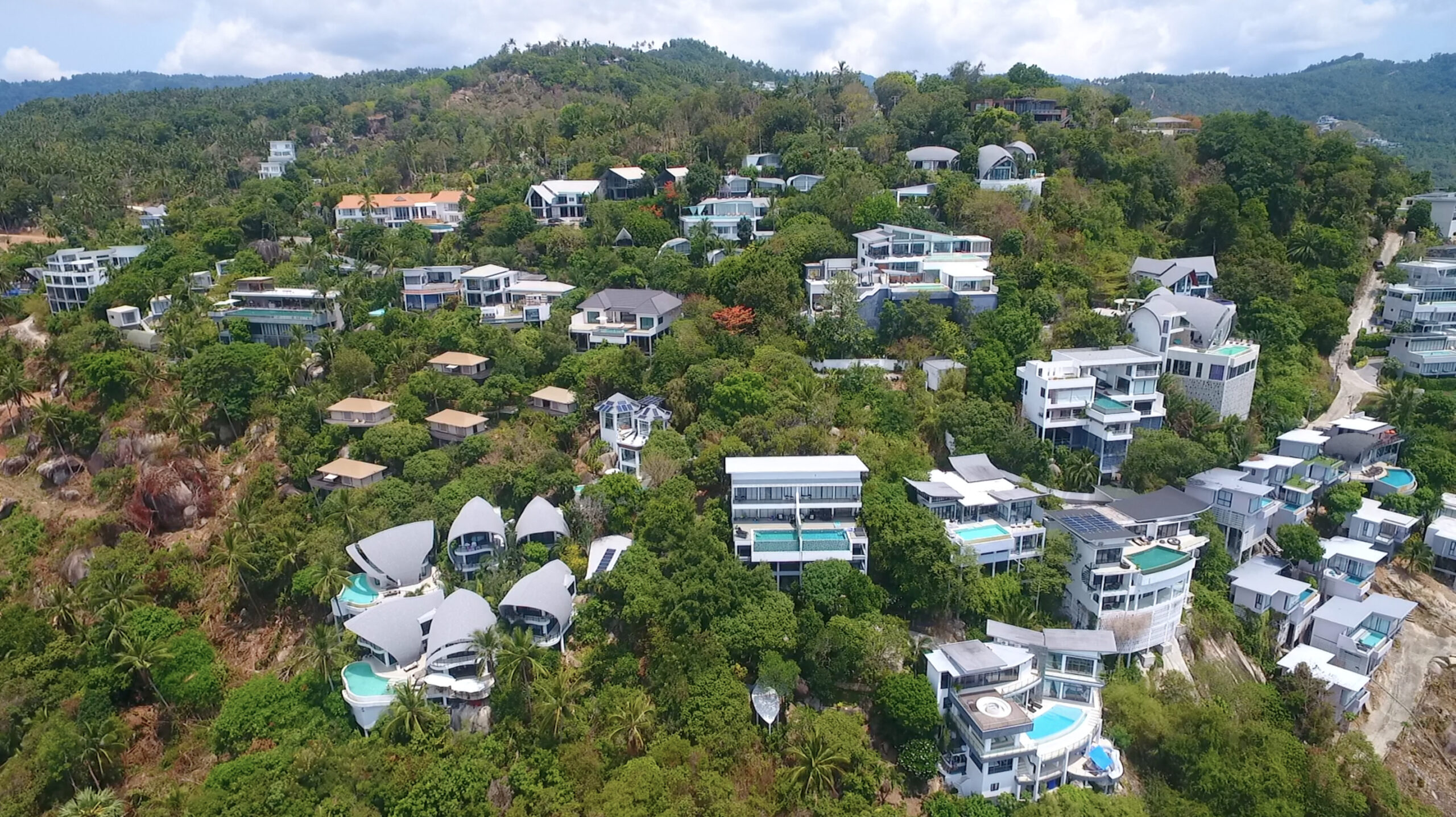
The luxury villas are located on Khao Ma Ngon, Village No. 3, Bo Phut Subdistrict, Ko Samui District, Surat Thani Province.
“Chinese businessmen want to operate in Thailand honestly. If there are concerns about Chinese mafia entering through illegal means, it’s important to examine how thorough our investigations are.”
Regarding tax concerns with Chinese retail businesses in Sampeng, Thanakrit said, “If there are tax issues, the Revenue Department can investigate. They can look into Thai online merchants as well, so foreign businesses are also subject to checks. Officials can investigate to ensure proper permits and legal ownership. The government needs to take investigations seriously, and certain professions should be reserved for Thais.”
When asked if it’s easier for Chinese to invest in Thailand compared to Thai investment opportunities in China, Thanakrit admitted that it is challenging due to different governance systems and legal standards between the two countries.
Thailand Is Not Hong Kong
When asked about the Thai government’s proposal to let foreigners buy or lease real estate in Thailand for up to 99 years and to own up to 75% of condos in a project, Thanakrit, who has over 10 years of experience in real estate law, said, “I think 99 years is too long. This is Thailand, not Hong Kong.
Most people retire at around 60 years old. Most buyers of real estate in Thailand are middle-aged, around 25-35 years old. A 60-year lease would cover a person’s lifetime, but a 99-year lease spans almost two generations. I believe 60 years is a more reasonable period.”
Thanakrit explained that changing the law to allow foreigners to lease or buy real estate for up to 99 years would require amending the Property Rights Act B.E. 2562. Currently, leases are set for 3-30 years and can be transferred, inherited, or mortgaged. The idea of extending leases to 99 years aims to attract foreign investors, as the current 30-year limit might not be attractive enough.
The period not exceeding 30 years has also led to issues with nominees in real estate transactions. Additionally, with many unsold properties in Thailand, extending the lease term is being considered. However, Thanakrit feels that 99 years is too long, though he supports a longer term than 30 years.
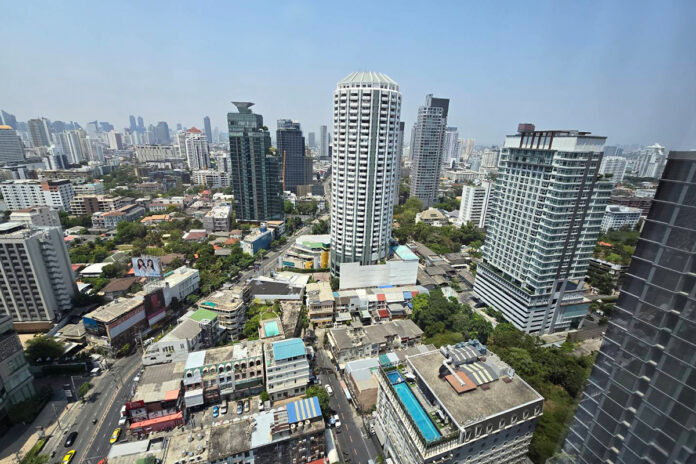
He also discussed the proposal to increase the foreign ownership limit in condos from 49% to 75%. He noted that in some parts of Bangkok, like Sukhumvit’s On Nut and Bang Na areas, there are still condos available for foreigners, but in more sought-after areas like Ekkamai and Thonglor, 49% of condos are already rented by foreigners. Leaving only the remaining share available for Thai buyers with reduced purchasing power, allowing foreigners to own 75% of condos might be excessive and could impact the project’s voting rights.
He concluded by saying he is concerned that changing the law to address real estate and Chinese investment might take too long in Parliament, amid ongoing foreign capital influx.
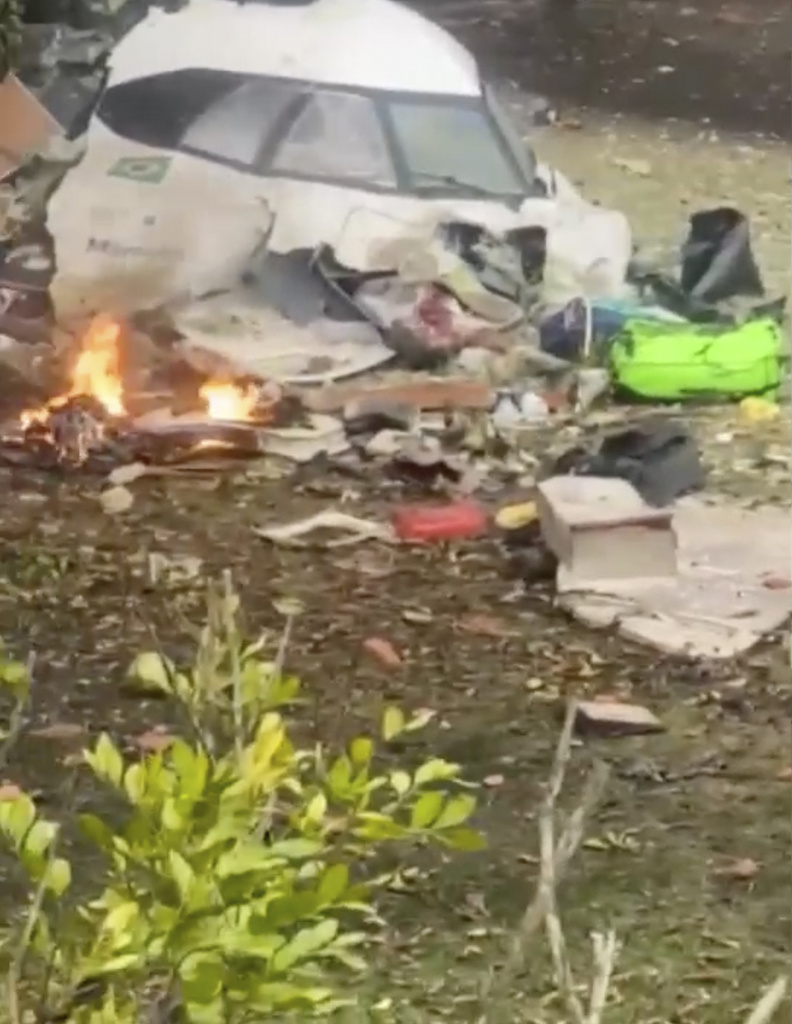
This frame grab from video shows fire coming from a plane that crashed by a home in Vinhedo, Sao Paulo state, Brazil, Friday, Aug. 9, 2024. (Felipe Magalhaes Filho via AP)
VINHEDO, Brazil (AP) — A passenger plane crashed into a gated residential community in Brazil’s Sao Paulo state Friday, killing all 61 people aboard and leaving a smoldering wreck, officials and the airline said.
Officials did not say if anyone was killed on the ground in the neighborhood where the plane landed in the city of Vinhedo, about 80 kilometers (50 miles) northwest of the metropolis of Sao Paulo. But witnesses at the scene said there were no victims among local residents.
The airline Voepass said that its plane, an ATR 72 twin-engine turboprop, was headed for Sao Paulo’s international airport Guarulhos with 57 passengers and 4 crew members aboard when it crashed in Vinhedo. It provided a flight manifest with passenger names, but not their nationalities. A prior statement had said there were 58 passengers.
“The company regrets to inform that all 61 people on board flight 2283 died at the site,” Voepass said in a statement. “At this time, Voepass is prioritizing provision of unrestricted assistance to the victims’ families and effectively collaborating with authorities to determine the causes of the accident.”
It was the deadliest airline crash since January 2023, when 72 people died on board a Yeti Airlines plane in Nepal that stalled and crashed while making its landing approach. That plane also was an ATR 72, and the final report blamed pilot error.
This frame grab from video shows wreckage from a plane that crashed by a home in Vinhedo, Sao Paulo state, Brazil, Friday, Aug. 9, 2024. (Felipe Magalhaes Filho via AP)
At an event in southern Brazil, President Luiz Inácio Lula da Silva asked the crowd to stand and observe a minute of silence as he shared the news. Friday evening, he declared three days of mourning.
The state’s firefighters, military police and civil defense authority dispatched teams to the location. Sao Paulo’s public security secretary Guilherme Derrite spoke to reporters and confirmed that no survivors had been found. He also said the plane’s black box was recovered.
“I thought it was going to fall in our yard,” a resident and witness who gave her name only as Ana Lucia de Lima told reporters near the crash site. “It was scary, but thank God there were no victims among the locals. It seems that the 62 people inside the plane were the real victims, though.”
Parana state’s Gov. Ratinho Júnior told journalists in Vinhedo that many of the passengers were doctors from his state attending a seminar.
“They were people who were used to saving lives, and now they lost theirs in such tragic circumstances,” Júnior said, adding he had friends aboard. “It is a sad day.”
Video obtained from a witness by The Associated Press and verified shows at least two bodies strewn about flaming pieces of wreckage.
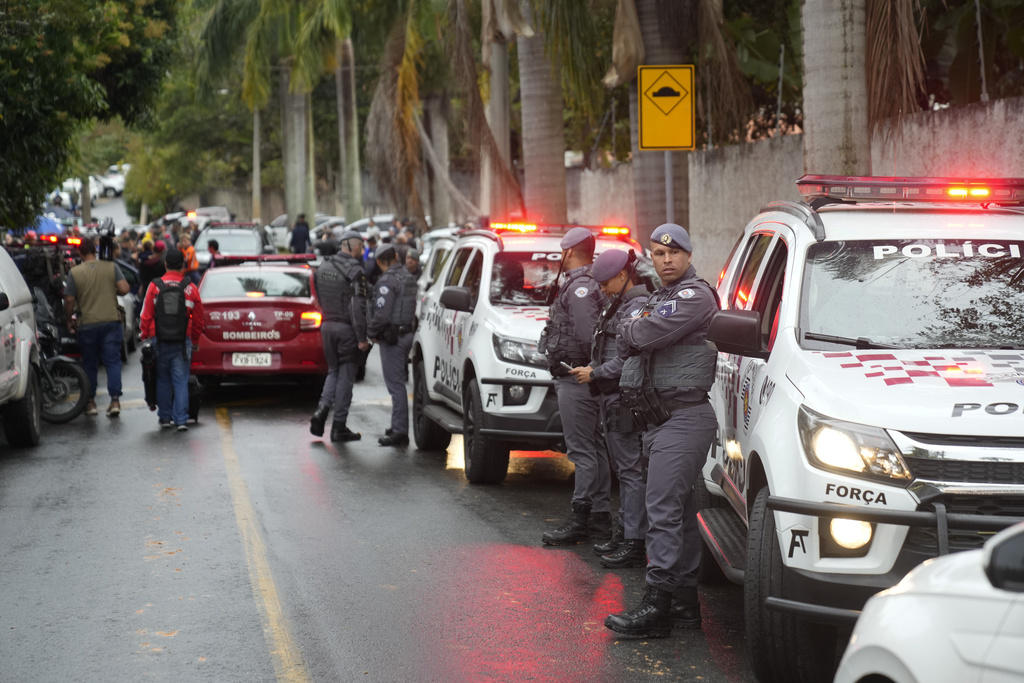
Police stand along the street leading to the gated community where a plane crashed in Vinhedo, Sao Paulo state, Brazil, Friday, Aug. 9, 2024. (AP Photo/Andre Penner)
Brazilian television network GloboNews showed aerial footage of an area with smoke coming out of an obliterated plane fuselage. Additional footage on GloboNews earlier showed the plane plunging in a flat spin.
A report from television network Globo’s meteorological center said it “confirmed the possibility of the formation of ice in the region of Vinhedo,” and local media cited analysts pointing to icing as a potential cause for the crash.
But aviation expert Lito Sousa cautioned that meteorological conditions alone might not be enough to explain why the plane fell as it did.
“Analyzing an air crash just with images can lead to wrong conclusions about the causes,” Sousa told the AP by phone. “But we can see a plane with loss of support, no horizontal speed. In this flat spin condition, there’s no way to reclaim control of the plane.”
And Marcelo Moura, director of operations for Voepass, told reporters Friday night that, while there were forecasts for ice, they were within acceptable levels for the aircraft.
Likewise, Lt. Col. Carlos Henrique Baldi, of the Brazilian air force’s center for the investigation and prevention of air accidents, told reporters in a late afternoon press conference that it was still too early to confirm whether ice caused the accident.
The plane is “certified in several countries to fly in severe icing conditions, including in countries unlike ours, where the impact of ice is more significant,” said Baldi, who heads the center’s investigation division.
In an earlier statement, the center said that the plane’s pilots didn’t call for help nor say they were operating under adverse weather conditions.
In a separate statement, Brazil’s Federal Police said it already had begun its investigation, and had dispatched specialists in plane crashes and the identification of disaster victims.
Authorities began transferring the corpses to the morgue on Friday, and called on victims’ family members to bring any medical, X-ray and dental exams in order as a means to help identify the bodies.
French-Italian plane manufacturer ATR said in a statement that it had been informed that the accident involved its ATR 72-500 model, and said company specialists are “fully engaged to support both the investigation and the customer.”
The ATR 72 generally is used on shorter flights. The planes are built by a joint venture of Airbus in France and Italy’s Leonardo S.p.A. Crashes involving various models of the ATR 72 have resulted in 470 deaths going back to the 1990s, according to a database of the Aviation Safety Network.
The Capela neighborhood where the plane crashed Friday sits in a district far from the center of the prosperous city that’s home to 77,000 residents. It had departed from Cascavel, in Parana state.