




























30.5 C
Bangkok
Sunday, June 28, 2026
Home Blog Page 550

Wide Faith Foods Launches “Rise Buddy Rice Chippies”  With 70M Investment

Wide Faith Foods invests 70 million baht to enter the Thai snack market, launching “Rise Buddy Rice Chippies” “Nonkul” as the first brand presenter

Wide Faith Foods, the manufacturer and distributor of “Rise Buddy”, a crispy rice snack made from Thai rice that has gained worldwide recognition, is making a bold move into the Thai snack market, which is worth over 40 billion baht. The company has launched a new product, “Rise Buddy Rice Chippies”, and appointed “Nonkul – Chanon Santinatornkul” as its first brand presenter. Nonkul represents the new generation of consumers who are discerning and health-conscious. 

The brand also launched its advertising campaign “Rice Chippies-Verse” to raise awareness and convey the message of “Rise Buddy Rice Chippies” as the new trend for healthy snacks and the snack of the future that is delicious in all universes. With this product, the crispy and savory experience is enhanced as they are the first chippies made from Thai rice, baked instead of fried, trans fat free, low calorie, gluten free and no added MSG, and all are Halal certified. The product is available in four new flavors: BBQ, Sour Cream & Onion, Sea Salt and Cheese. The product will be distributed through online marketplaces such as Shopee, Lazada, TikTok and through Yummy Trucks, which deliver delicious snacks nationwide, with plans to expand distribution channels in leading supermarkets. The company is targeting sales of 250 million baht by 2026.

image3 20

Mr. Oliver Chi-Kan, Yeh Managing Director of Wide Faith Foods Co, Ltd, the manufacturer and distributor of Rise Buddy, a crispy rice snack made from Thai rice, explained that the company has devoted with his entire team in the manufacture and development of rice-based snacks for the global market for over 22 years. With its expertise in design, research and professional development of crispy rice snacks, as well as the application of advanced, internationally certified technology in the production processes, Wide Faith Foods’ rice snack products are offered under various brands under the Master Rice umbrella, including Rise Buddy, Ravin, Bio-Earth and Kiddie Kare. Each brand is designed to combine deliciousness with health benefits. They are baked instead of fried, are free from trans fats, gluten and no added MSG and all products are Halal certified. This approach meets customer demands and is in line with the Worldwide health-conscious trend, same in market Thailand.

The company’s products are distributed worldwide, including the western United States, Eastern & Northern Europe, France and throughout Asia Pacific, including Australia, New Zealand, China, Japan, South Korea, Malaysia, Taiwan and the Philippines. In addition, the company offers Original Design Manufacture (ODM) services and designs and produces crispy rice snacks in more than 70 flavors for other companies. With a production and export capacity of 18,900 tons per year at two production sites in Thailand, Wide Faith Foods’ factories cover an area of more than 47 rai and are certified with an AA seal of approval from BRCGS and ISO9001:2015, as well as Gluten Free and Halal certificates.

Mr. Oliver added that the snack market in Thailand is estimated to be worth over 40 billion baht, a large and growing sector. The rice-based snacks market segment alone is estimated at over 2 billion baht. Therefore, the company is focusing its marketing efforts on the Rise Buddy brand in Thailand. In the export market, Rice Snacks hold a 36 percent market share in Australia worth USD 15 million and a 45 percent market share in New Zealand worth USD 5 million. The global export market for rice snacks is worth USD 30 million.

This year, the company plans to aggressively enter the market by developing new products, strategically selecting brand presenter and expanding distribution channels throughout Thailand. Recognizing the growth potential of the crispy rice snack market and the modern consumer trend demanding healthy, guilt-free snacks, the company has launched the new “Rise Buddy Rice Chippies” This innovative product is the first of its kind in the market. It is made from Thai rice in a chip shape similar to potato French fries and is baked instead of deep-fried for better health benefits. It meets the needs of snack lovers, especially teenagers and working adults, and offers deliciousness with health benefits, is gluten free and no added MSG and Halal certified. The launch of the first brand presenter, “Nonkul – Chanon Santinatornkul”,” represents the new generation who are picky eaters and health conscious. The “Rice Chippies-Verse” campaign was also launched to popularize the brand and convey the message that “Rise Buddy Rice Chippies” is a new trend for healthy snacks and the snack of the future that tastes delicious in all universes. The product is available in four new flavors: BBQ, Sour Cream & Onion, Sea Salt and Cheese, in a 60g size at a price of 39 baht.

image5 15

In terms of sales channels, the company focuses on comprehensive product distribution, with a focus on both online and offline channels. Online, the focus is on selling through platforms such as Shopee, Lazada and TikTok to target customers who do not have time to shop outside their homes. Offline, the focus is on selling products in leading supermarkets across the country. Wide Faith Foods aims to become one of the major players in the Thai snack market, which is estimated to be worth over 40 billion baht in 2024 and hopes to achieve a market share of 250 million baht in the rice-based snack market by 2026. The company aims to become a leading brand and manufacture in the global healthy rice-based snack industry under the concept of “Better for You”,” concluded Mr. Oliver Chi-Kan, Yeh

image4 18

About Wide Faith Foods Co, Ltd.

Wide Faith Foods Co, Ltd. was established in 2002 as a manufacturer and distributor of crispy rice snacks made from Thai rice for export and expansion in the domestic market under the name Rise Buddy. The company has a production and export capacity of 18,900 tons per year at two production sites in Thailand.

  • The first factory & the second factory are located in Bangplee Industrial Estate, Samut Prakan, and covers an area of 8 rai & 13 rai, built in 2002 & 2014 with an investment of 500 million baht. The facilities of first factory will be moved to Chonburi to improve the capacities and capabilities for innovative product production.
  • The factory is located in Hemaraj Industrial Estate, Chonburi, with an area of 34 rai, established in 2015 with an investment of 800 million baht for the Phase I instruction and facilities.
  • The capacities will be reached to 43,200 tons when the Phases I, II and III have completed.

image1 21

The total investment for the construction of the two-phase factories is 1,300 million baht. Wide Faith Foods’ factories are certified with an AA grade from BRCGS, ISO9001:2015, Gluten-Free and Halal certificates and have been awarded quality assurance marks. 

The global snacks market

The global snacks market is expected to reach USD 251.10 billion from 2024 to 2029, growing at a CAGR of 6.33 percent. The average volume per person in the Snack market is expected to amount to 5.0 kg in 2024 and per person revenues of US$ 32.41 are generated in 2024, in relation to total population figures.

The global crispy rice snacks market is estimated to reach USD 4.2 billion by 2025, with APAC contributing 84 percent of the growth.
Advertisement

Small Plane Crashes in Chachoengsao: All 9 On Board Feared Dead

small plane
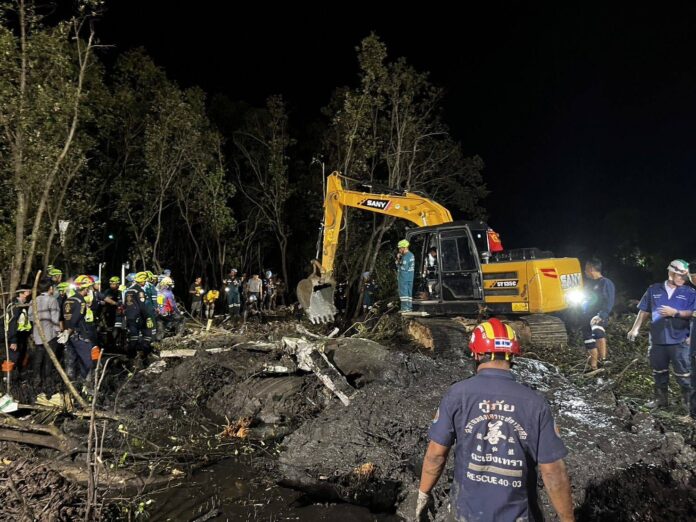
About 300 officials have been mobilized to search for the bodies of passengers on the small plane which crashed in Ban Khao Din, Bang Pakong District, Chachoengsao Province, on August 22, 2024.

CHACHOENGSAOA small plane carrying nine people, including passengers and crew, crashed in Chachoengsao Province on Thursday, just 10 minutes after takeoff. Officials have indicated that all on board are likely to have perished.

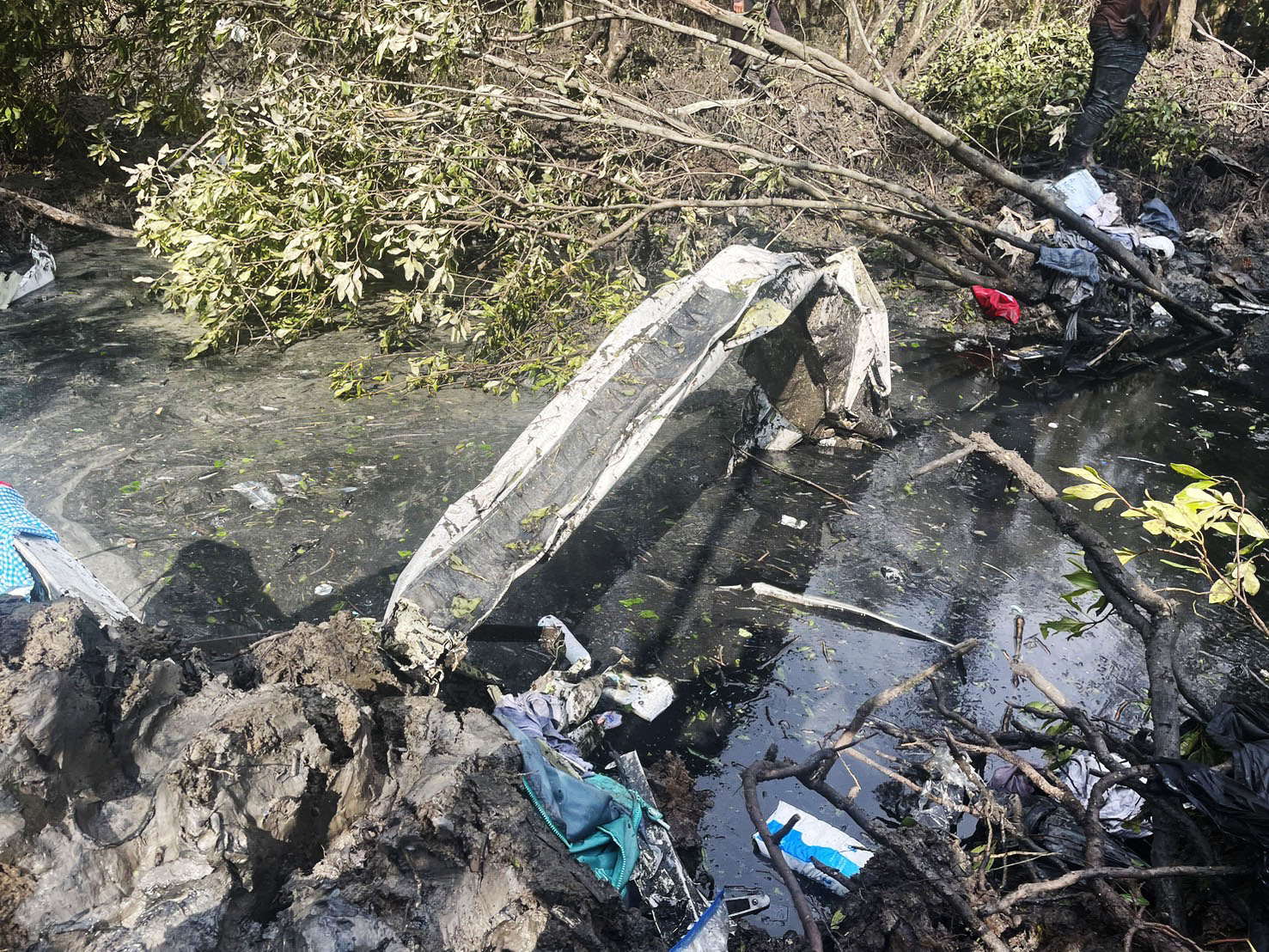
On the evening of August 22, officials were recovering the wreckage of the small plane that crashed in Moo 6, Ban Khao Din, Bang Pakong District, Chachoengsao. Initially, officials did not find any bodies of the passengers. It was later discovered that this was because the plane had plunged nose-first, embedding itself more than 10 meters deep into the muddy ground.

small plane
The search team finds the wreckage of the small plane which crashed in Ban Khao Din, Bang Pakong District, Chachoengsao Province, on August 22, 2024.

At one point, they used an excavator to clear the waterway at the crash site due to seawater pushing in and flooding the area, which is surrounded by rice fields, irrigation canals, fish ponds, and shrimp farms.

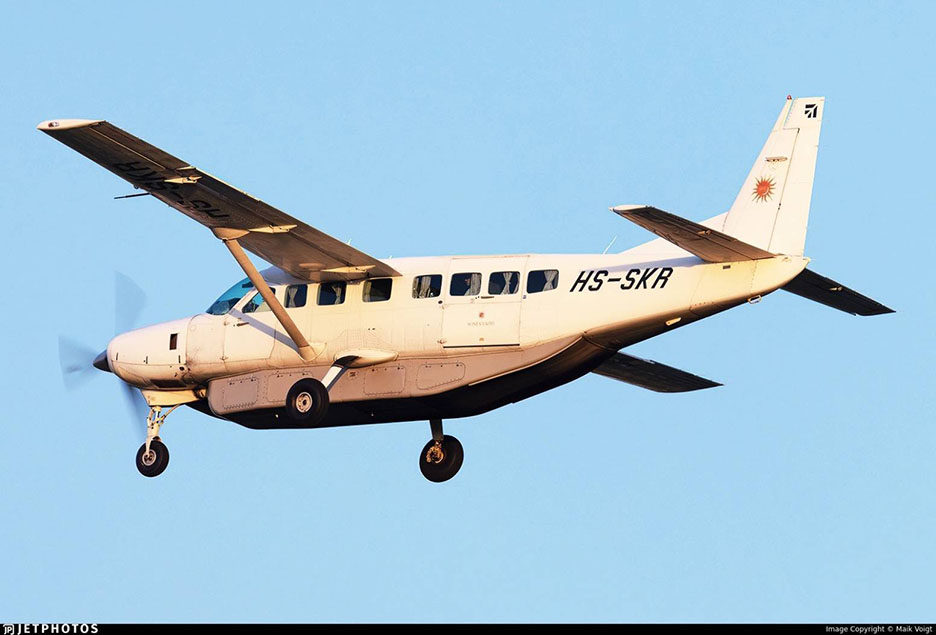
According to the Department of Civil Aviation, the aircraft belongs to Thai Flying Service Company Limited, flight TFT209, a Cessna Caravan C208 with registration HSSKR. It took off from Suvarnabhumi Airport at 2:46 p.m., destined for Trat Airport (Ko Mai Si).

Plane Crash Chachoengsao3
The aircraft belongs to Thai Flying Service Company Limited, flight TFT209, a Cessna Caravan C208 with registration HSSKR.

The aircraft lost contact with Bangkok Approach on frequency 122.35 MHz at 2:57 p.m., at a position 18.7 nautical miles southeast (BEARING 116/18.7 NM). It was reported that the aircraft was carrying seven passengers and two pilots on board.

Mr. Chonlatee Yangtrong, Governor of Chachoengsao Province, said that about 300 officials have been mobilized to search for the bodies of passengers on the small plane throughout the night. So far, several human body parts have been found.

Plane Crash Chachoengsao2
About 300 officials have been mobilized to search for the bodies of passengers on the small plane which crashed in Ban Khao Din, Bang Pakong District, Chachoengsao Province, on August 22, 2024.

He stated that the passengers included five Chinese nationals: a 12-year-old girl and a 43-year-old woman with the surname Zhang, a 45-year-old woman and a 13-year-old girl with the surname Yin, and a 13-year-old woman surnamed Tang. The four Thai nationals were: two female flight attendants – Ms. Napak, age 35, and Ms. Siriyupa, age 26; Mr. Pornsak, age 30, who was the co-pilot; and Flight Lieutenant Anucha, age 61, who was the pilot.

Rescue workers and search teams have rotated shifts to continue the mission of searching for the bodies of the deceased. They have also switched to an excavator with a longer arm, as the previously used excavator had a shorter arm and couldn’t dig deep enough.

__________

Advertisement

Another Illegal Luxury Villa by Chinese Investors Found on Koh Samui

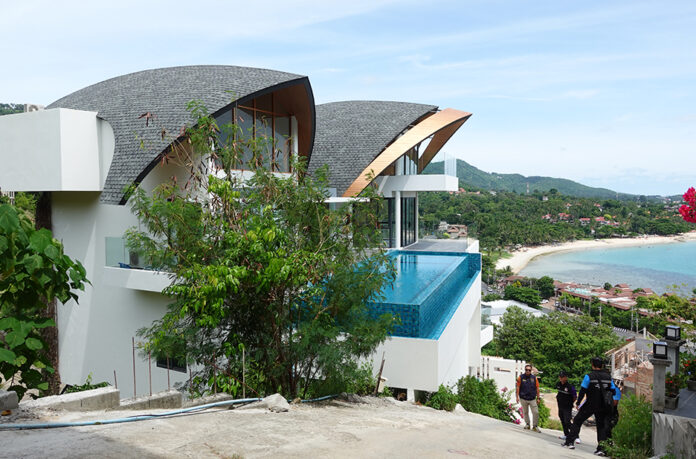
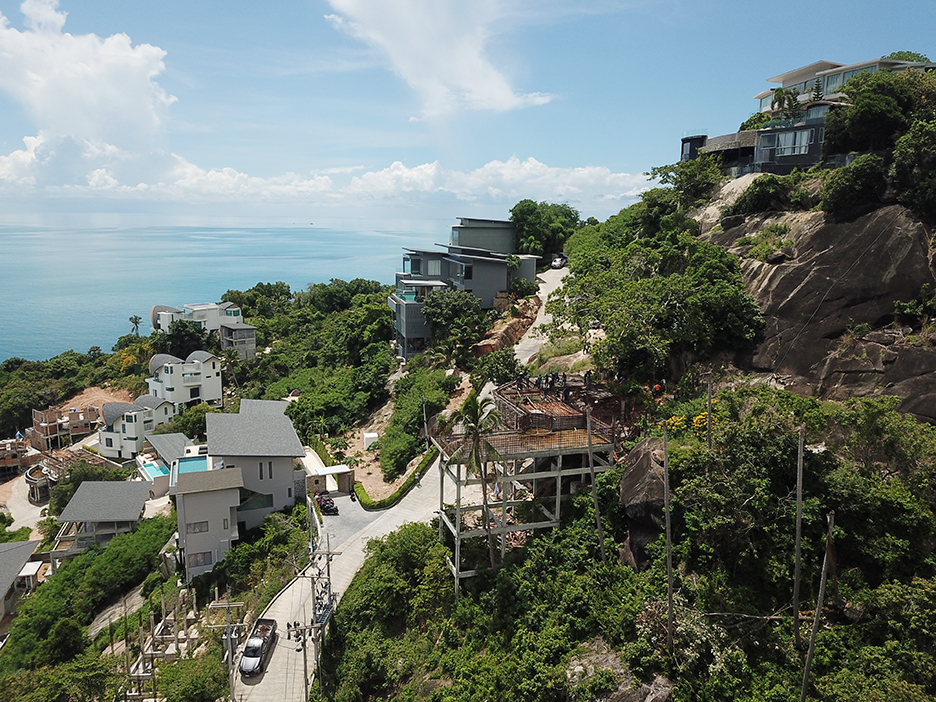
Thai authorities inspect a luxury villa located in the Chaweng Noi mountain area, Bo Phut sub-district, Koh Samui District, Surat Thani Province, on August 22, 2024.

KOH SAMUI — Officials continue the “Samui Model” operation to inspect illegal constructions on Koh Samui again, as they investigate a luxury villa that has appeared in the middle of a mountain, built on a steep slope in a red zone where construction is prohibited.

On August 22, officials from the Ministry of Natural Resources and Environment, local Koh Samui and Surat Thani authorities, along with 4th Army Region officials, ISOC Region 4, and Bo Phut Police, inspected a luxury villa located in the Chaweng Noi mountain area, Bo Phut sub-district.

Major General Anusorn O-urai, Deputy Commander of the 4th Army Region, stated that ISOC Region 4 received complaints about the luxury villa project, which involves the construction of 7 buildings on steep terrain, suspected to be operated as a hotel. Upon arrival at the construction site, no project owner, caretaker, or construction contractor was found.

samui aug22 2
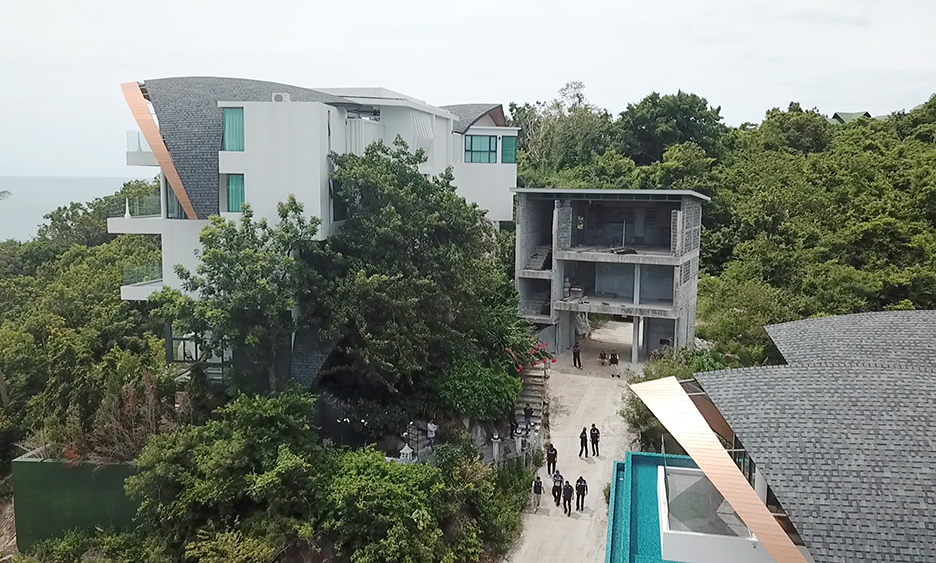
Thai authorities inspect a luxury villa located in the Chaweng Noi mountain area, Bo Phut sub-district, Koh Samui District, Surat Thani Province, on August 22, 2024.

Initial slope inspections, according to the Ministry of Natural Resources and Environment’s announcement, revealed that 5 out of 7 buildings are on sloped areas. One building is on a slope exceeding 50%, which is a no-construction zone, and 4 buildings are on slopes of 35-50%, where construction is limited to 6 meters in height as per law.

The working group will further investigate whether land rights documents were issued over public waterways. Meanwhile, Koh Samui district officials checked the e-DOPA License and found no information on hotel business permits or non-hotel accommodation notifications.

Colonel Dusit Ketsornkaew, head of the state land encroachment investigation and problem-solving team of ISOC Region 4, said that while they were monitoring the situation, construction workers were continuously brought in to work. However, on the day of inspection, no workers or project officials were present, making it impossible to conduct any checks.

samui aug22 1
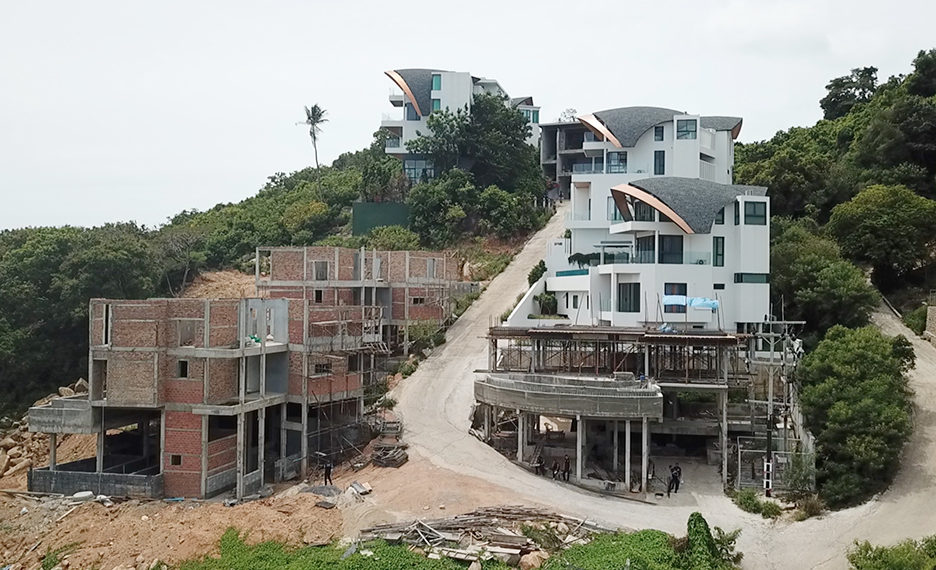
Thai authorities inspect a luxury villa located in the Chaweng Noi mountain area, Bo Phut sub-district, Koh Samui District, Surat Thani Province, on August 22, 2024.

This suggests that some government officials might be informing these investor groups, which they have long known to be Chinese investors.

He added that the project has 3-4 story buildings, which appears to be illegal. They will ask Koh Samui City Municipality to investigate how building permits were issued, especially for the villa in the red zone where construction is prohibited.

Previously, on August 8, this inspection team, along with police from the Natural Resources and Environmental Crime Suppression Division, civil engineers from Surat Thani Provincial Public Works and Town & Country Planning Office, and Koh Samui City Municipality, supervised the demolition of two buildings on steep terrain in Chaweng Noi mountain, Bo Phut sub-district, Surat Thani province, which violated the Building Control Act.

samui aug8 2
Thai authorities supervise the demolition of two buildings on steep terrain in Chaweng Noi mountain, Bo Phut sub-district, Surat Thani province, which violated the Building Control Act, on August 8, 2024.

The demolition took weeks due to the inability to bring large machinery to the site.
According to the Building Control Act, Department of Local Administration, Ministry of Interior, those who violate the law face the following penalties:

  • Construction or modification without permission or deviating from approved plans: imprisonment up to 3 months or a fine up to 60,000 baht, or both, plus a daily fine up to 10,000 baht until compliance.
  • Violating demolition orders without pending appeals: imprisonment up to 6 months or a fine up to 100,000 baht, or both, plus a daily fine up to 30,000 baht until compliance.
  • Violating local official orders to halt unauthorized construction or modification, and violating orders prohibiting use or entry of any part of the building: imprisonment up to 6 months or a fine up to 100,000 baht, or both, plus a daily fine up to 30,000 baht until compliance.

_____________

Advertisement

Cinema for All Ages: Pattaya Film Festival 2024 Opens to Public

PATTAYA — The Pattaya Film Festival 2024 is presented from August 21 to 25, featuring more than 20 films from around the world. Screenings are taking place both in theaters and outdoor venues, promoting a diverse film-viewing culture for audiences of all ages. All films will be shown free of charge.

Prachya Unphetwaragon, Deputy Governor of Chonburi Province, inaugurated the Pattaya Film Festival 2024 at Central Marina Shopping Center in Pattaya City, Chonburi Province, on August 21.

pattaya film33

The 2nd Pattaya Film Festival held in various venues in Pattaya, such as Central Marina shopping mall, Terminal 21 shopping mall, Burapha University, and Pattaya Redemptorist Technological College for People with Disabilities.

“The films in the festival are divided into the following programs:
International Competition: A selection of quality films with challenging and interesting content by new directors, suitable for both Thai and international audiences. Films compete for a prize of 5,000 US dollars and a trophy. Films in this program include:

Last Shadow at First Light (Singapore)
Gitling (Philippines)
The Monk and the Gun (Bhutan)
The Tenants (South Korea)
Sea Sparkle (Denmark)
The Great Phuket (China)

Panorama: A selection of films that have made a name for themselves at international film festivals in the past year, as well as classic films. Films in this program include:

Next Sohee
The Taste of Things
Ryuichi Sakamoto: Opus
Waltz with Bashir
My Sea Has Slight to Moderate Waves (with director present)
Not So Close (with director present)
One For the Road
Last Life in the Universe
Somsr 422R

Jury Showcase: Three films will be screened in honor of the participating jury members:

  • Last Time I Saw Macao by Portuguese director Joao Pedro Rodrigues
  • Tiger Stripes by Malaysian director Amanda Nell Eu
  • Morrison, a Thai film by Puttipong Aroonpheng

The Great Phuket china

For outdoor screenings at Lan Pho Public Park, Na Kluea Market, the focus is on entertaining films such as “The Undertaker,” (Sup Pa Rer) last year’s hit, and “Pattaya Heat,” the latest action film set in Pattaya.”

The City of Pattaya is leveraging its film festival to achieve multiple goals beyond tourism promotion. The city aims to raise awareness about its cinematic potential, encourage local community participation, and involve film industry professionals. This initiative is expected to stimulate investment, create jobs for locals, and contribute to Thailand’s economic growth.

The second Pattaya Film Festival, a key component of the city’s “City of Film” campaign, offers a diverse program. Activities include film screenings, a competition, the “Documentary Pitch 2024” workshop, tours of film locations, and industry seminars. These events showcase Pattaya’s potential as a prime filming destination.

Pattaya’s ultimate goal is to join the UNESCO Creative Cities Network (UCCN) in the film category. This ambition is supported by a 2022 Memorandum of Understanding signed with 12 organizations. The agreement aims to propel Pattaya towards UCCN recognition and establish the city as a film industry hub, aligning with the Pattaya City Development Plan (2022-2027).

Through these efforts, Pattaya is positioning itself not just as a tourist destination, but as a significant player in the global film industry.

_______

Advertisement

Thai Police Bust Asian Scammers: Korean Investors, Chinese Gamblers

South Korean
A rented room in a luxury building on Soi Ekkamai 3, which the Korean gang used as a base for their call center scam.

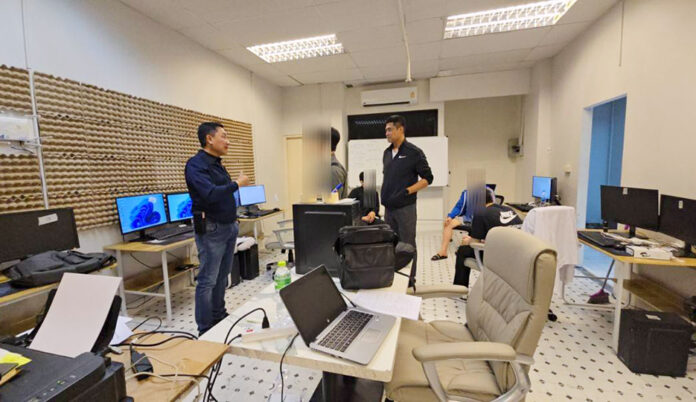
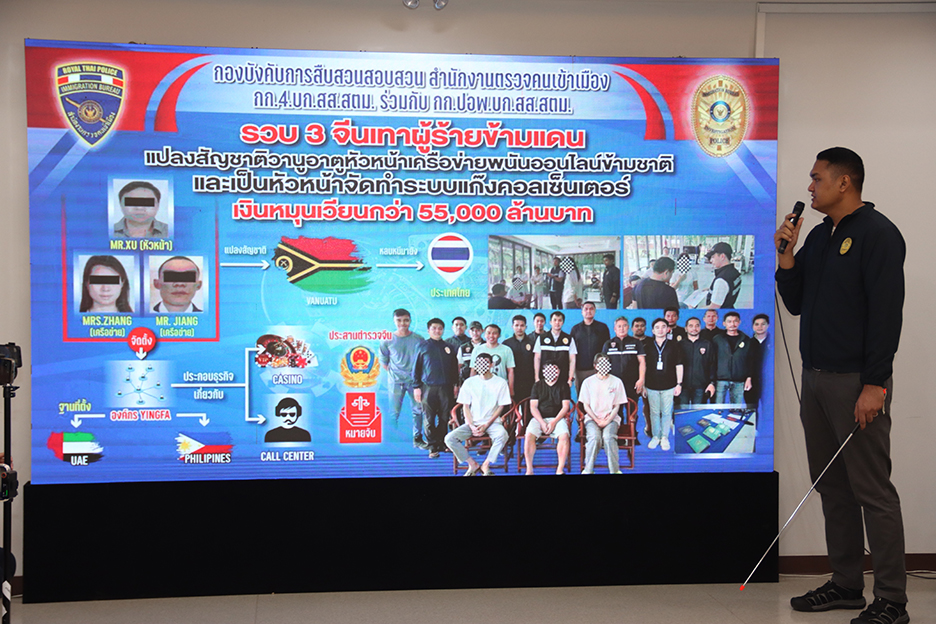
BANGKOK — Immigration authorities have arrested two groups of Asians working illegally in Thailand. The first group, made up of South Koreans, rented a luxury condominium in Bangkok’s business district to use as a base of operations for investment fraud. The second group, made up of Chinese nationals who falsely claimed Vanuatu citizenship, is led by a gang leader wanted for online casino crimes.

On August 22, at the Immigration Department office in Muang Thong Thani, Pol. Maj. Gen. Panthana Nuchnarot, deputy commander of the Immigration Department, held a press conference where he announced the arrest of foreign criminals involved in two separate cases in Thailand.

In the first case, officers investigated a condominium in Bangkok’s Ekkamai district after receiving reports that South Koreans had rented a room in a luxury building in Soi Ekkamai 3. They claimed to be running a digital currency office, but their suspicious behavior suggested they might be involved in online gambling or a call center scam.

korean callcenter 2 1
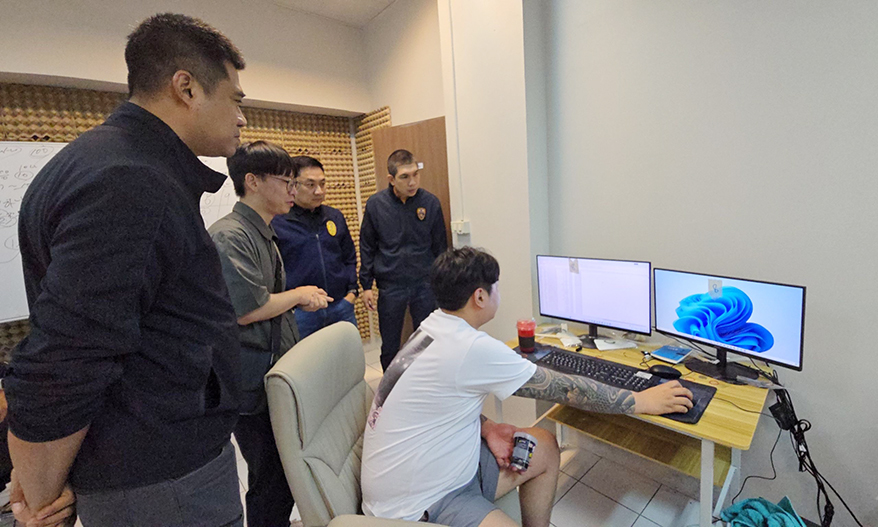
One of eight Korean gang members displays a computer used as a base for their call center scam.

The room on the 4th floor had frequent visitors from South Korea and bore a sign reading “Content Factory Korea & Thai” Inside, the room was divided into two sections: One contained 8 desktop computers, the other 12. Officers found eight South Koreans posing as stock analysts, experts and brokers from South Korean banks. They lured the victims to a website that mimicked that of a real bank in order to invest there.

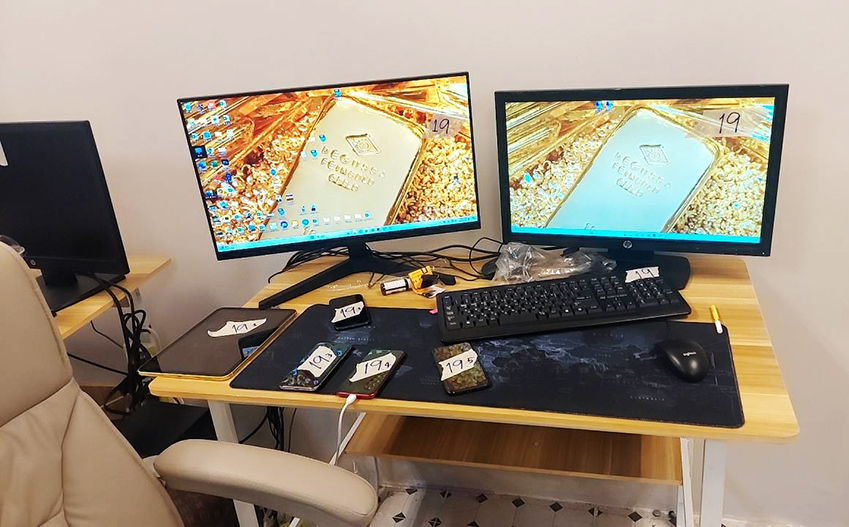
The eight South Korean men arrested were: Mr. Jaesuk (26), Mr. Junhee (31), Mr. Woojin (27), Mr. Jae (29), Mr. Sangki (26), Mr. Sanghoon (26), Mr. Hoonjin (26), and Mr. Junghoon (26). They were taken in for questioning, and 17 mobile phones, 4 iPads, and a whiteboard with scripted messages for deceiving victims were seized as evidence.

The South Korean suspects have confessed that they were hired in Thailand to entice clients to invest through the said website in exchange for a percentage of the investment. They were charged with working illegally in Thailand without a work permit and their visas were revoked. Coordination with South Korean police revealed that some of these individuals already had criminal records in South Korea.

korean callcenter 2 3
The Korean scammers entice clients to invest through the said website in exchange for a percentage of the investment.

Pol. Maj. Gen. Panthana stated that a review of computer data revealed information on more than 100,000 victims per computer. This indicates significant financial damage as the data was obtained from the dark web, including names, phone numbers, investment amounts and risk levels.

The South Korean group had just signed the lease for the room on 1 July, with Mr. Junghoon (26) acting as the leader. The other members gradually entered Thailand on tourist visas and stayed in nearby towns, from where they were picked up daily by van for work.

“We believe there are more members involved because of the large number of computers and that this operation probably has bases in other countries as well. We have found travel records that indicate that some suspects have frequently traveled to neighboring countries. We will therefore coordinate with police forces in other countries to expand the investigation,” said Pol. Maj. Gen. Panthana said.

chinese vanuatu2
Immigration police officers explain the route taken by Chinese suspects who entered Thailand using Vanuatu passports before three were arrested in Chonburi Province.

In another case, the Embassy of the People’s Republic of China has sent a formal request to the Ministry of Foreign Affairs asking the Thai authorities to arrest and extradite Mr. Xu, a 47-year-old Chinese national, to face charges of defrauding state and public funds and illegal gambling.

Immigration officers discovered that Mr. Xu had entered Thailand with a Vanuatu passport instead of a Chinese passport. They also found that Ms. Zhang and Mr. Jiang, relatives of Xu, had entered Thailand with passports from Vanuatu. They were arrested at their home in Chonburi province, where authorities confiscated cell phones, laptops and documents related to their false citizenship claims.

Mr. Xu and Ms. Zhang founded the Yingfa organization to operate an online casino based in Manila, Philippines, and Dubai, United Arab Emirates. Their gambling network processed transactions worth over 55 billion baht. In addition, Mr. Xu ran a call center fraud gang that defrauded its victims through telecommunication systems and whose backend was based in Dubai.

_______

Advertisement

European Traveler Confirmed as Bringing New Mpox Strain to Thailand

FILE - This undated image provided by the National Institute of Allergy and Infectious Diseases shows a colorized transmission electron micrograph of monkeypox particles (red) found within an infected cell (blue), cultured in the laboratory that was captured and color-enhanced at the NIAID Integrated Research Facility in Fort Detrick, Md. (NIAID via AP, File)

BANGKOK — A case of the severe strain of mpox, which is currently spreading rapidly in Africa, has been found as the first case in Thailand. The patient is a foreigner who traveled from Africa.

On August 22, acting Public Health Minister Somsak Thepsuthin confirmed that the first monkeypox case in Thailand, found in a European man who travelled from an African country to Thailand, was of the clade 1b strain.

None of the 43 people at risk due to close exposure to the patient has shown any sign of infection so far. They are under observation by public health officials without the need for a 21-day quarantine.

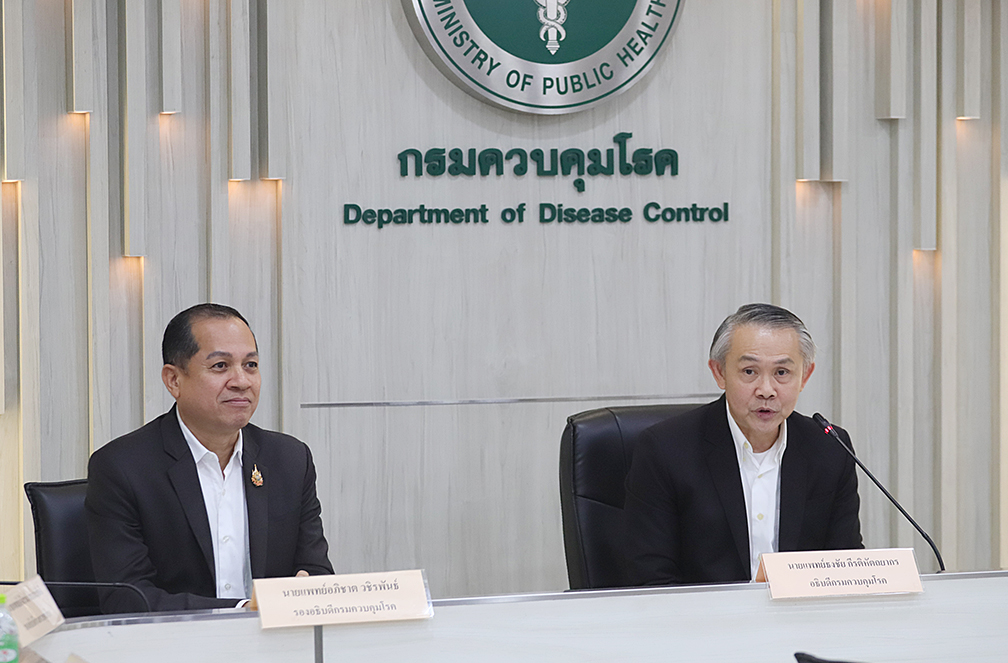
Previously, on August 21, Dr. Thongchai Keeratihatthayakorn, Director-General of the Department of Disease Control, held a press conference regarding this case of monkeypox (Clade I) at the Department of Disease Control. He stated that this patient is a 66-year-old European who traveled from a country on the African continent with an outbreak of monkeypox Clade I.

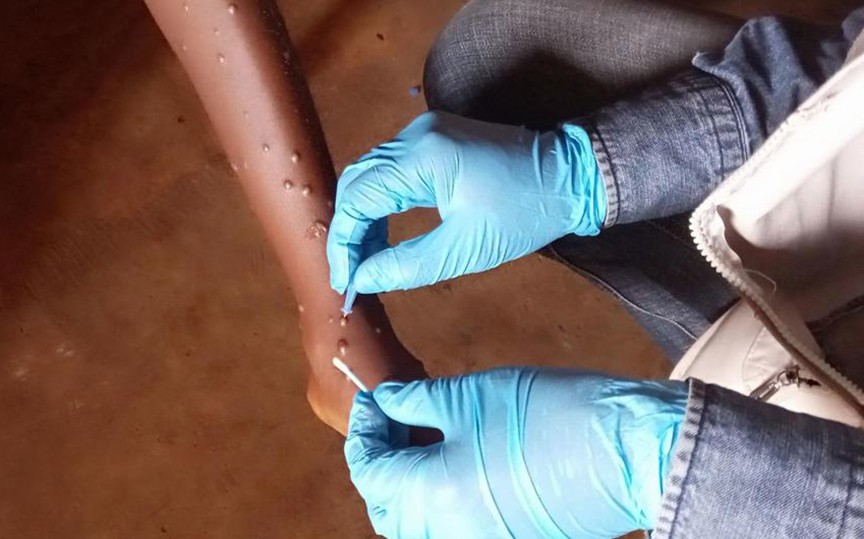
“It was a connecting flight, not a direct flight. The patient had very little contact with others because he arrived in Thailand at 6 p.m. on August 14 and went straight to his accommodation. Then, on the morning of August 15, symptoms began to appear with blisters, so he went to the hospital immediately,” said Dr. Thongchai.

The doctor suspected monkeypox infection, so they first tested for Clade IIb, which came back negative. They then tested for Clade Ib, but the results were inconclusive. Therefore, a detailed examination was conducted to obtain definitive confirmation.

monkeypox ministry1
Dr. Thongchai Keeratihatthayakorn, Director General of the Department of Disease Control, holds a press conference regarding this case at the Department of Disease Control on August 21, 2024.

“Disease control prevention and information awareness are crucial. We don’t want people to panic and self-diagnose. That is why we are holding a press conference today,” said Dr. Thongchai.

He added that this pathogen has many strains, depending on which strain is spreading. In 2022, it was Clade IIb, which was also detected in Thailand with about 800 cases reported in 2022 and about 140 cases in 2023. All of these cases belonged to the Clade IIb strain. The approximately 10 deaths from monkeypox in Thailand were all due to people co-infected with HIV.

Regarding the WHO’s surveillance recommendation, Clade I doesn’t spread as easily as COVID. It requires very close contact, such as sexual intercourse. The Disease Control Department, Ministry of Public Health, has consistently enforced strict control measures at entry points into the country since the WHO increased surveillance levels.

The WHO is particularly concerned about the rising number of cases in Africa, due to the increase in infections in children, suggesting that the virus may spread more easily by means such as saliva droplets. In the past, monkeypox was mainly spread through close contact, especially sexual contact.

“In Thailand, we have tightened controls for travelers entering the country and increased vigilance and public awareness, especially among foreign tourists and sex workers. They need to be more careful and watch out for symptoms such as unusual rashes or lesions on the body,” said Dr. Thongchai.

AP24229665979286
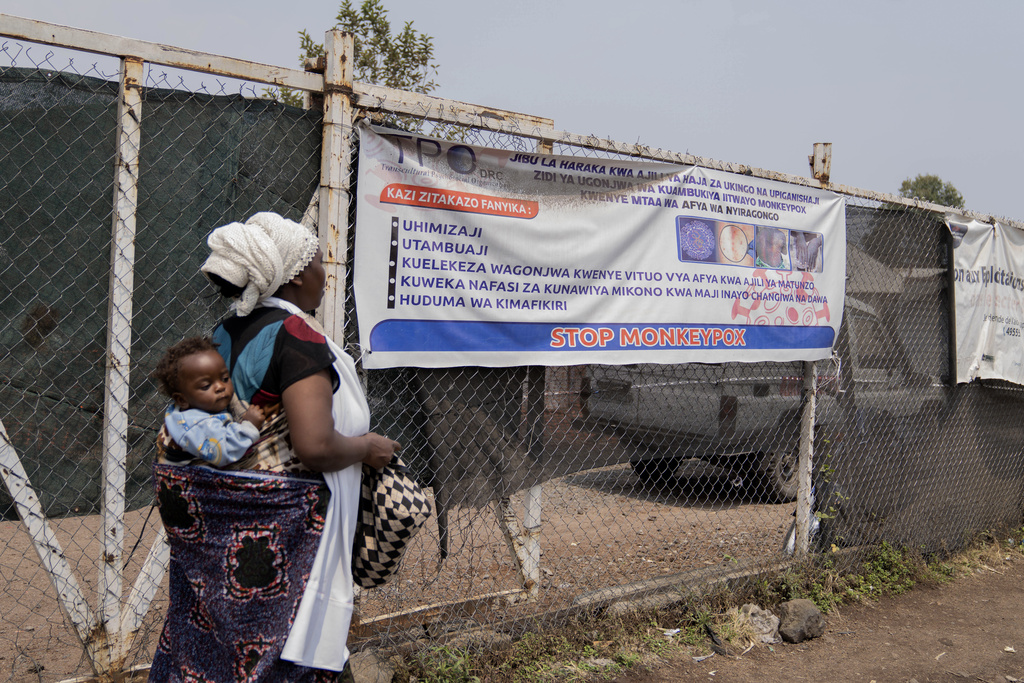
A woman walks past a sign that reads stop monkeypox at a clinic in Munigi, eastern Congo, Friday, Aug. 16, 2024. (AP Photo/Moses Sawasawa)

Symptoms to look out for include pustules on the body, fever and headache. If any of these symptoms occur, sufferers should see a doctor immediately and inform the hospital of their risk factors. The doctors will carry out a test for monkeypox. If a sample is found, it will be sent to the Department of Medical Sciences for identification of the strain of the pathogen and further monitoring.

Dr. Yongyos Thammawut, director-general of the Department of Medical Sciences, Ministry of Public Health, added that the department is closely monitoring monkeypox strains in Thailand through regular laboratory tests.

Recently, complete genome sequencing of 191 samples identified eight substrains: A.2, A.2.1, B.1, B.1.12, B.1.3, B.1.7, C.1, and C.1.1. The C.1 substrain was the most prevalent, accounting for 85.34% of cases, followed by A.2.1 (5.76 percent), C.1.1 (3.66 percent), and A.2 (2.09 percent). The C.1 substrain is now the predominant strain in Thailand, unlike in the early stages of the outbreak when A.2 was more prevalent. This indicates ongoing viral evolution and mutation accumulation as the virus adapts over time.

monkeypox un2
WHO is scaling up response to curb a growing mpox outbreak in the African region. WHO/Katson Maliro

Currently, monkeypox viruses are divided into three main strains: Clade I, clade IIa and clade IIb. Sub-strain C.1 is considered less severe than the other strains, particularly Clade I, which is spreading in Africa and has a mortality rate of up to 10 percent. In contrast, clade II, including C.1, has a mortality rate of less than 1 percent in people with normal immune systems.

The Department of Medical Sciences, along with the Public Health Sciences Research Institute and Medical Sciences Centers and a network of 62 laboratories, is prepared to test for monkeypox.

Results can be reported within 24 hours and cover 24 provinces including Bangkok, Khon Kaen, Chonburi, Chiang Rai, Chiang Mai, Trang, Nakhon Pathom, Nakhon Ratchasima, Nakhon Si Thammarat, Nakhon Sawan, Nonthaburi, Pathum Thani, Phitsanulok, Phuket, Ratchaburi, Lampang, Songkhla, Samut Prakan, Samut Songkhram, Sa Kaeo, Saraburi, Surat Thani, Udon Thani, and Ubon Ratchathani.

_______

Advertisement

Thailand Tackles ‘Cheap Travel’ Issues Despite Chinese Top Foreign Tourists

Chinese tourists
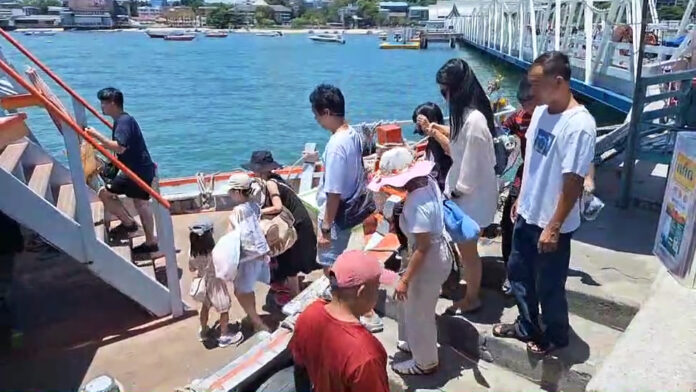
Tourists board a boat to visit Koh Larn at Bali Hai Pier, South Pattaya, Bang Lamung District, Chonburi Province, on August 11, 2024.

BANGKOK — The free visa policy for 53 countries/territories has led to a continuous increase in the number of tourists entering Thailand, with Chinese tourists ranking first. However, there are growing concerns that money is not flowing into Thailand as it should because Chinese zero-dollar tours have returned.

According to Tourism and Sports Economic Division, from January 1 to  August 18, 2024, Thailand received a total of 22,474,172 foreign tourists who generated revenue of 1.05 trillion baht through their spending. The five countries with the highest number of tourists are China (4,555,262), Malaysia (3,104,092), India (1,294,076), South Korea (1,193,255) and Russia (1,053,724).

Although Chinese tourists top the list, Thailand faces challenges related to market-disrupting tours [The practice of foreign tour companies using Thai nominees to bring foreign tour groups to Thailand involves offering the lowest possible prices — “underbidding with a willingness to take a loss” — to put Thai tour companies out of business and drive them out of the market].

chiangmai 1 2024
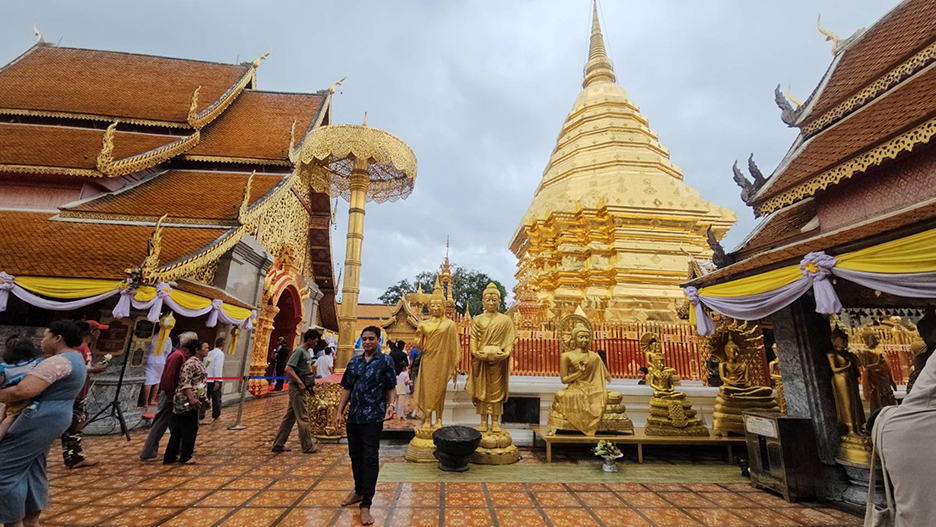
Tourists visit Wat Phra That Doi Suthep in Mueang District, Chiang Mai Province, on August 11, 2024.

Sermsak Pongpanich, the Minister of Tourism and Sports mentioned that the government is continuously monitoring and addressing these issues. Officials are investigating any hidden registration of intellectual property, which is critical because certain laws do not make it easy for foreigners to do business in Thailand.

“I urge Thai citizens to monitor and inform the authorities, especially in cases where foreigners use Thai nominees to register businesses that they cannot operate themselves in the country. This vigilance is important because it protects our national interests. The money earned by foreign tourists should circulate in the country and benefit Thai traders,” he said on August 21.

Sermsak also mentioned that since taking office, he has discussed cooperation with the Chinese government to seriously tackle the problem of market-disrupting tours. The cooperation has been positive and continuous talks are being held to address the issues as China also does not want any negative incidents that could harm the good relations between the two countries.

In terms of domestic tourism, Somrudi Jitjong, Deputy Governor for Domestic Marketing at the Tourism Authority of Thailand (TAT), stated that the TAT is confident of achieving the 2024 target of 200 million domestic trips, an increase of 25 percent from 2023, or returning to 2019 levels before the COVID-19 pandemic. This is expected to generate about 1.08 trillion baht in the economy.

Tourism 9 728x485 1
Charming Thailand

At the same time, the TAT is working to drive domestic tourism campaigns in line with the government’s policy to promote domestic tourism, with the aim of increasing the number of trips to 210 million and generating 1.2 trillion baht for the economy.

The campaign includes partnerships, such as at the 71st Thai Tiew Thai event at the Queen Sirikit National Convention Center, taking place from 22-25 August, where the “FLASH DEAL: Instant Happiness in the Rainy Season” campaign will offer travel packages, hotels and other services for 999 baht. In addition, TAT is working with airlines to prepare a “Super Deal” campaign on September 9, offering special ticket prices on weekdays (Monday-Thursday) from 9 September to 15 December 2024.

In September, the “Charming Thailand” event will also take place simultaneously in five regions of Thailand: Chiang Mai, Khon Kaen, Pattaya, Kanchanaburi and Nakhon Si Thammarat.

“Overall, domestic tourism is developing better this year than in 2019, which is no cause for concern. However, purchasing power is adjusting to the country’s economic conditions. Therefore, the TAT is focusing on increasing the number of tourists to stimulate more spending so that the government’s target is within reach.”

_____

Advertisement

Shocking Bathroom Encounter in Bangkok: Python Bites Man’s Testicle

python
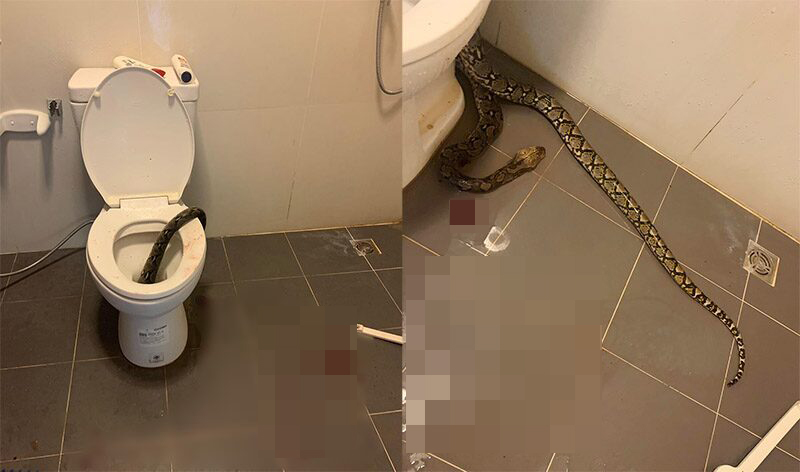
In shock, a resident in Bangkok grabs the python's neck and yanks it off when it emerges from the toilet.

BANGKOKA resident in Bangkok, Thanat Tangtewanont, gave an interview to “Khaosod Online” about his viral post describing an incident where a python nearly 2 meters long bit his testicle while he was sitting on the toilet at home.

He recounted that the incident occurred on August 19. He woke up to use the bathroom on the second floor of his house. He had previously seen snakes in the downstairs toilet and had called for help to catch them several times, but they always escaped. As a result, he had closed off the downstairs bathroom for a month and started using the upstairs one instead.

That morning, he used the upstairs bathroom twice. The first time, around 5 to 6 a.m., everything seemed normal. The second time, around 10 a.m., he flushed the toilet before sitting down and saw the water flow normally.

While sitting and using his phone, he felt something touch his testicles. At first, it felt like an ant bite, so he ignored it. When the bite became stronger and more painful, he stood up and looked down to see a python latched onto him. In shock, he grabbed its neck and yanked it off. He then tried to pull the snake up, not wanting it to roam around the house anymore.

snake bite 3 0
The resident hurts the python until it slithers out of the toilet.

He recorded a video, intending to show his girlfriend that a snake, which he didn’t think could reach the second floor, had bitten him. He tried calling several people, but no one answered.

After trying to pull the snake out for about 10 minutes without success, he draped its head over the toilet bowl and, in anger, hit its head several times with his hand and a toilet brush. The snake went still for a moment before finally slithering out of the toilet.

At this point, a neighbor called back, and Thanat asked them to call security to help remove the snake. He then rushed to the hospital. The first hospital noted a 1 cm wound and advised him to go to a larger hospital.

At the second hospital, the doctor said the wound didn’t need stitches but ordered a blood test to check for infections, despite the snake being non-venomous. The blood test results came back normal, and he was prescribed antibiotics. He still has some pain around the wound area.

Thanat said he’s still traumatized when using the bathroom. Even after flushing, he feels scared and now keeps a toilet brush nearby for protection.

“I want to warn everyone that this kind of incident can happen,” he said. “I think the snake might have been in the pipes because the neighboring house also found a snake in their toilet, though it was a different one from the one that bit me.”

______

Advertisement

Indonesia Searches for Ways to Balance Domestic Industries With Surging Chinese Imports

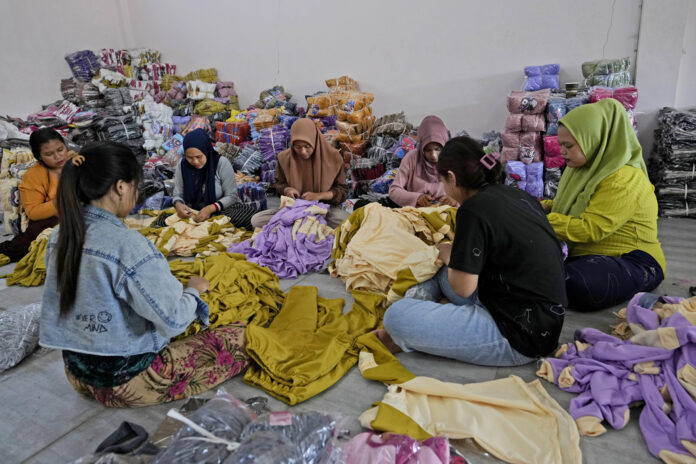
Workers inspect clothing products at Asnur Konveksi, a garment manufacturer in Bandung, West Java province, Indonesia, on July 11, 2024. (AP Photo/Achmad Ibrahim)

JAKARTA, Indonesia (AP) — A flood of Chinese products into Indonesia has hit local manufacturers hard, prompting the government to look for ways to placate domestic producers while avoiding angering the country’s biggest trading partner.

Garment makers — both home-based piece work producers and factories — have appealed for help as they lose market share to low-cost apparel and textiles from China. A surge of products bought online has added to the problem.

A protest by workers in Jakarta prompted Indonesian Minister of Trade Zulkifli Hasan to announce in July that the government will impose import tariffs of up to 200% on some products from China, particularly textiles, clothing, footwear, electronics, ceramics and cosmetics, to try to protect local businesses and prevent layoffs.

“The United States can impose a 200% tariff on imported ceramics or clothes, so we can do it as well,” Zulkifli said, to ensure micro, small, and medium-sized enterprises and industries “survive and thrive.”

But China is Indonesia’s largest trading partner, with two-way trade exceeding $127 billion in 2023. Imposing higher tariffs could prompt Chinese manufacturers to invest in more in factories in Indonesia, but could also backfire, leading Beijing to retaliate. As a result, the government announced in July that it was setting up a task force to monitor and handle problems related to certain imports.

AP24233175487339
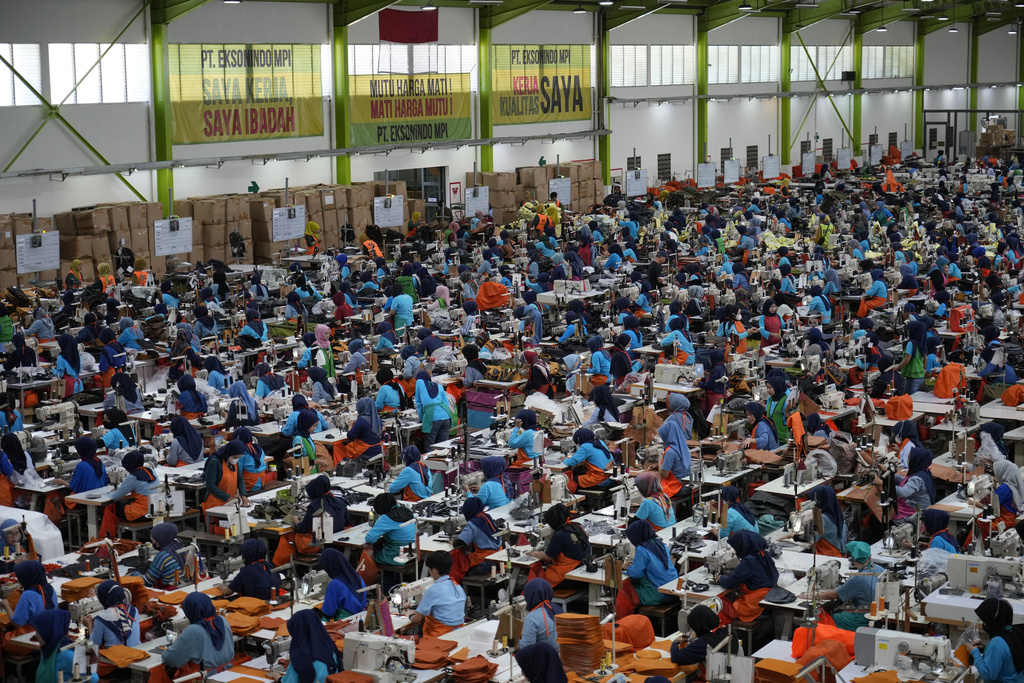
Workers sit in their stations at a factory belonging to PT Eksonindo Multi Product Industry, a manufacturer of garments and bag products, in Bandung, West Java province, Indonesia, July 11, 2024. (AP Photo/Achmad Ibrahim)

It’s an urgent matter, Hasan said, given the flood of imported products that has caused closures of textile factories and mass layoffs. From January to July 2024, at least 12 textile factories shut down operations, causing more than 12,000 workers to lose their jobs, according to the Nusantara Trade Union Confederation.

In Bandung district in Indonesia’s West Java province — an area famous for textiles such as batiks, handwoven fabrics and silks — imports of Chinese products have left thousands of workers idle and without regular incomes, said Neng Wati, a manager at manufacturing company Asnur Konveksi.

“Now they take turns. The number of workers stays the same, but the work is divided up and not all get some. Some of them have been off for two weeks, some of them haven’t gotten work for a month,” Wati said.

That’s a hard blow coming after the slow days of the COVID-19 pandemic, when many workers were shifted to e-commerce to make ends meet, said Nandi Herdiaman, head of a local organization of small- and medium-sized entrepreneurs. Only 60% of the 8,000 members of the association kept working after the pandemic.

AP24204148652617
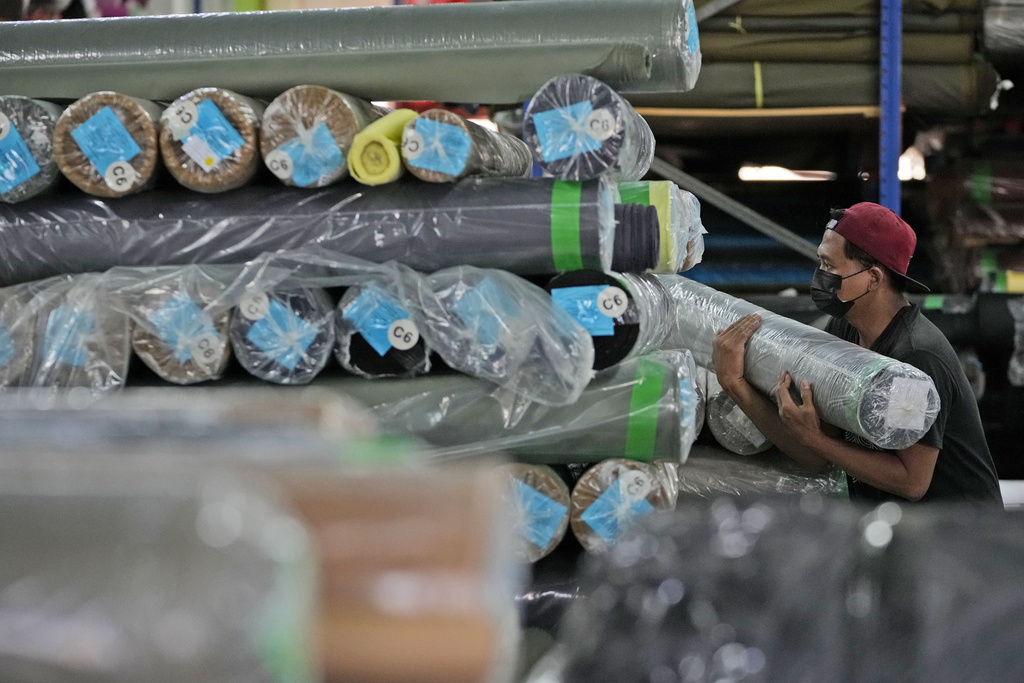
A worker arranges fabric rolls at a factory belonging to PT Eksonindo Multi Product Industry, a manufacturer of garment and bag products, in Bandung, West Java province, Indonesia, on July 11, 2024. (AP Photo/Achmad Ibrahim)

Now, the biggest challenge is cheap imports from China. In the past two months, output from home-based industries has fallen by 70%, the industry organization says.

The uptick in imports of Chinese products is partly seen as the result of trade friction between the U.S. and China, which has led to increased American tariffs on Chinese goods. But it also reflects rising trade within Asia as the region implements various free trade pacts, as well as weakening demand in Western markets for Chinese exports.

Industry groups in Thailand have also expressed increasing concern about an influx of cheap products from China, which they say have greatly hurt sales by domestic producers who are unable to compete.

In what it called an urgent measure, the Thai government imposed a 7% value-added tax on all imported products, a change from the previous rule that only collected taxes on imported products that cost more than 1,500 baht ($44). The policy is only in effect from July until December this year to give the government time to study the issue before a longer-term solution can be applied.

AP24204136123415
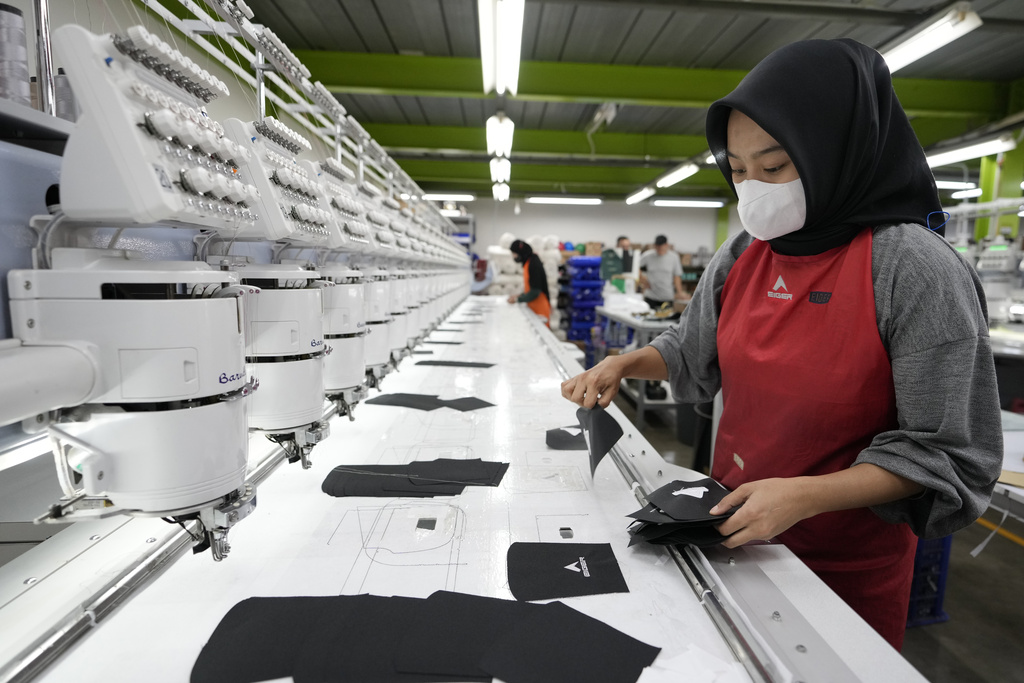
An employee works at PT Eksonindo Multi Product Industry, a manufacturer of garment and bag products, in Bandung, West Java province, Indonesia, on July 11, 2024. (AP Photo/Achmad Ibrahim)

In December, Indonesia issued a regulation to tighten monitoring of more than 3,000 imported goods, including food ingredients, electronics and chemicals. But the regulation was reversed after domestic industry said it hindered the flow of imported materials needed for local production, and the government began considering steep tariff hikes instead.

While smaller manufacturers have suffered the greatest setbacks, big factories are also hurting.

Jany Suhertan, managing director of PT Eksonindo Multi Product Industry, which makes clothing and accessories like backpacks and handbags in West Java, wants the government to raise import duties on finished goods from China but not on raw materials needed to make products in Indonesia.

Nearly half of the materials his company uses are from China.

“I don’t agree with imposing (higher tariffs) on raw products, since the government should protect the supply chain. If it is not secure, it will impact production,” Suhertan said.

___

Advertisement

Chinese Investors Build Factories in ‘Chonburi-Rayong’, Land Prices Rise

Nikhom Phatthana and Pluak Daeng areas

BANGKOK —  Meesak Chunharakchoti, former president of the Thai Real Estate Association, revealed that Chinese investors are increasingly buying land outside industrial estates in the Rayong region, such as in Nikhom Phatthana, Bo Win and Pluak Daeng districts, to set up factories to support investment in electric vehicle (EV) manufacturing in Thailand. Land prices in the industrial estates are relatively high, with some negotiations leading to discounts of up to 50 percent.

As for the real estate business, the situation remains unclear, but some investors have shown interest in partnering with local developers, possibly due to the current slowdown in the real estate market, which presents opportunities for investors.

Premsorn Sriviboonchai, Honorary Advisor to the Rayong Real Estate Trade Association, stated that Chinese investors are currently seeking to purchase land for building supply chain factories that support larger plants.

Most of the land sought is in the Nikhom Phatthana and Pluak Daeng areas, with desired land sizes ranging from 1,000 to 2,000 rai, causing land prices to double from 2 million baht per rai two years ago to 4 million baht ($117k) per rai now. In other zones, land prices are relatively high, such as in the Map Ta Phut area.

[ please note: Rai is the largest unit of land measurement in Thailand. It is commonly used for larger land areas, such as agricultural land, houses, and villas. One rai is equivalent to 1,600 square meters or approximately 0.40 acres.]

Premsorn also mentioned that land prices for housing projects have also doubled. In the Map Ta Phut area, for example, where the land is mainly forested, prices have risen from 2 million baht per rai to 4-6 million baht per rai.

bowin1
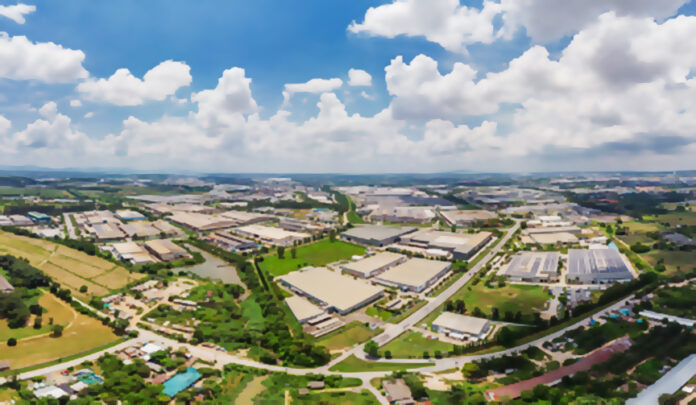
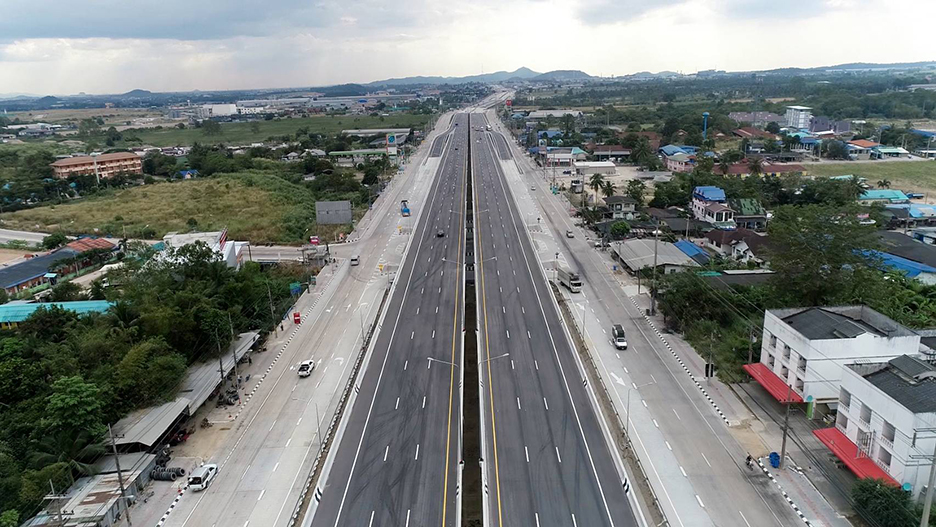
Overpass at the intersection of Bo Win Industrial Estate / Eastern Seaboard / Amata City and Pak Ruam Junction, Chonburi Province.

Once the land is purchased, further investment is required to prepare the area, driving up project development costs. However, house prices cannot increase accordingly, which could lead to a trend of more expensive and smaller houses in Rayong in the future.

Wattana Phonchiwin, president of the Chonburi Real Estate Association, noted that the situation of Chinese capital flowing into the Chonburi region is not significantly different from previous investments in projects in the Pattaya region.

The most recent trend observed is the purchase of land outside industrial areas, especially in purple zones, for the construction of factories to support automobile production and the acquisition of businesses from closed factories rather than investing in housing.

In addition, most Chinese workers prefer to rent apartments rather than buy them, with the rental period in residential projects where owners rent out their properties usually ranging from 3 to 5 years.

Chinese investors who buy land do so under legal entities, as foreigners are not allowed to own land. Land prices in Chonburi remain stable overall as there are more sellers than buyers, giving buyers more bargaining power than in the past. However, some areas have seen an increase in prices, such as Ban Bueng and Nong Yai, where prices have risen 20-30 percent from 2-3 million baht per rai to 3-4 million baht per rai following the development of new industrial estates.

“In areas with established industrial estates, prices are rising annually, such as Laem Chabang, Phan Thong, Amata and Si Racha, where the average price is 10 million baht per rai. In Pattaya, prices range from 10 to 100 million baht per rai, depending on whether the land is near hills or the sea,” Wattana said.

________

Advertisement

Hot News

LATEST NEWS

Bangkok
overcast clouds
30.5 ° C
32.2 °
30.5 °
76 %
4.9kmh
100 %
Sat
30 °
Sun
35 °
Mon
35 °
Tue
33 °
Wed
32 °