BANGKOK — The Ministry of Commerce announced that foreign investment in Thailand has surpassed the 70 billion baht (1.9 billion USD) mark in the first five months of this year, an increase of 58 percent, with Japan remaining the largest investor.
Ms. Oramon Sapthaweetham, Director-General of the Department of Enterprise Development at the Ministry of Commerce, said on June 23 that in the first five months (January-May) of 2024, 317 foreign companies received approval to invest in businesses in Thailand under the Foreign Business Act of 1999. The total investment amounted to 71.702 billion baht and created 1,212 jobs for Thai citizens.
Compared to the same period last year, the number of foreign investors rose from 273 to 317, an increase of 16 percent, while the value of investments rose from 45.392 billion baht (1.2 billion USD) to 71.702 billion baht, an increase of 26.310 billion baht (718 million USD) or 58 percent. However, the number of jobs for Thai citizens fell by 1,787, a decrease of 60 percent.
The top five countries investing in Thailand are:
1. Japan, with 84 investors and a total investment of 40.214 billion baht (1.1 billion USD).
2. Singapore, with 51 investors and an investment of 5.189 billion baht (141 million USD).
3. The United States, with 50 investors and an investment of 1.196 billion baht (32.6 million USD).
4. China, with 38 investors and an investment of 5.485 billion baht (149 million USD).
5. Hong Kong, with 28 investors and an investment of 12.048 billion baht (329 million USD).
Oramon explained that in the first five months of 2024, 99 foreign investors have shown interest in investing in the Eastern Economic Corridor (EEC), accounting for 31 percent of all foreign investors in Thailand. This is an increase of 106 percent compared to the same period last year, when 48 investors invested in the EEC.
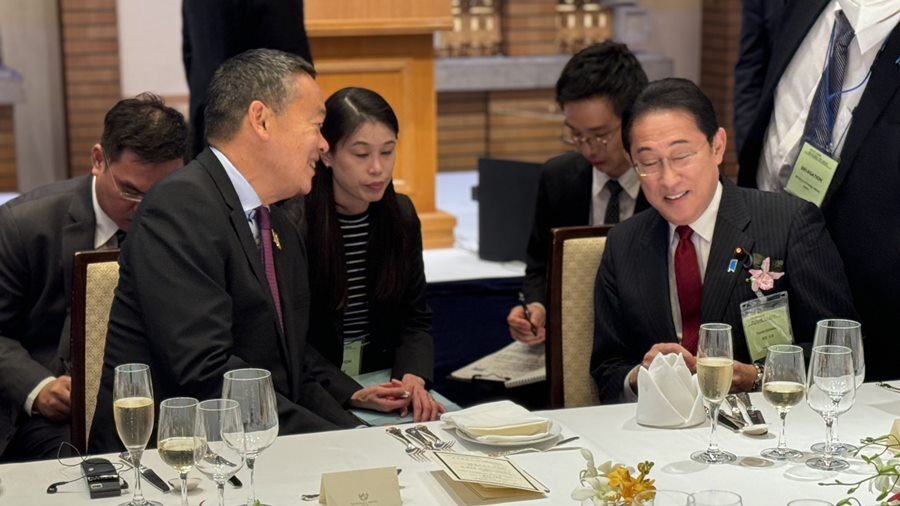
Prime Minister Srettha Thavisin meets Japanese Prime Minister Kishida Fumio at The Imperial Tokyo hotel, where they attend the 29th Nikkei Forum Future of Asia on May 23, 2024.
The total investment in the EEC area amounts to 18.224 billion baht (497 million USD), representing 25 percent of the total foreign investment. This is an increase of 8.782 billion baht or 93 percent from the previous year’s investment of 9.442 billion baht.
Most investors are from Japan (31 investors, 3.523 billion baht), followed by China (19 investors, 1.803 billion baht), Hong Kong (11 investors, 5.005 billion baht), and other countries (38 investors, 7.893 billion baht).
Foreign investments are primarily in:
1. Engineering services, including designing industrial systems such as electrical, cooling, and air conditioning systems.
2. Design services for automotive parts such as seat belts and airbags.
3. Application services for connecting to credit and debit card payment systems of financial service providers.
4. Contract manufacturing services (vehicle gear sets and components, plastic parts for electronic devices, metal parts, etc.).
5. Software development services for sale and/or provision, such as manufacturing control systems and warehouse management systems.
BANGKOK — Acting Director of the Real Estate Information Center, Vichai Viratkaphan, revealed that ongoing observation of condominium ownership transfers by foreigners has shown that the country’s reopening to foreign tourists since 2022 has had a remarkably positive impact on the growth of tourism.
The Thai government considers the tourism industry a key economic growth driver, combined with domestic factors that have greatly increased the demand for foreign condominium purchases. The number and value of ownership transfers exceeded the levels observed before the COVID-19 pandemic in 2018-2019.
In the first quarter of 2024, it was discovered that foreigners had transferred ownership of 3,938 condominium units, marking a 4.3% increase. The total value of the ownership transfers amounted to 18 billion baht (492 million USD), which reflected a 5.2% increase.
This led to a rise in the proportion of condominium ownership transfers by foreigners compared to nationwide ownership transfers, increasing to 16.7% from 15.9% in terms of the number of units and 28.6% from 24.3% in terms of value.
The proportion of condominium space purchased by foreigners increased to 21.1% from 19.1% compared to last year, marking the highest proportion since 2018.
The top five provinces with the highest number of condominium units transferred to foreigners are as follows:
Chonburi: 1,521 units, accounting for 38.6%, valued at 4,165 million baht. (113 million USD)
Bangkok: 1,498 units, accounting for 38%, valued at 10,699 million baht. (292 million USD)
These two provinces alone account for 76.6% of the units and 82.5% of the total value. Chonburi has held the top spot for two consecutive years.
Chiang Mai: 249 units valued at 574 million baht. (15.6 million USD)
Phuket: 242 units valued at 1,353 million baht. (37 million USD)
Samut Prakan: 140 units valued at 392 million baht. (10.7 million USD)
This data shows that foreigners are most interested in purchasing condominium units in central cities and tourist destinations in Thailand.
Moreover, the top three nationalities with the highest number of condominium ownership transfers are still led by the Chinese, with 1,596 units, accounting for 43.8% and a transfer value of 7,570 million baht.
Following this are the Myanmar with 392 units, accounting for 10%, which marks an increase of 415.8% compared to last year and a transfer value of 2,207 million baht.
Third place is held by the Russians, with 295 units, accounting for 7.5% and having a total value of 924 million baht.
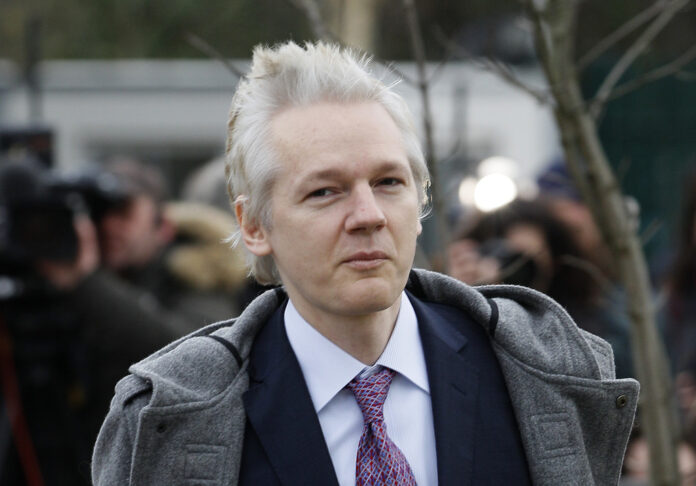
FILE - WikiLeaks founder Julian Assange arrivies at Belmarsh Magistrates' Court in London, Feb. 7, 2011. (AP Photo/Kirsty Wigglesworth, files)
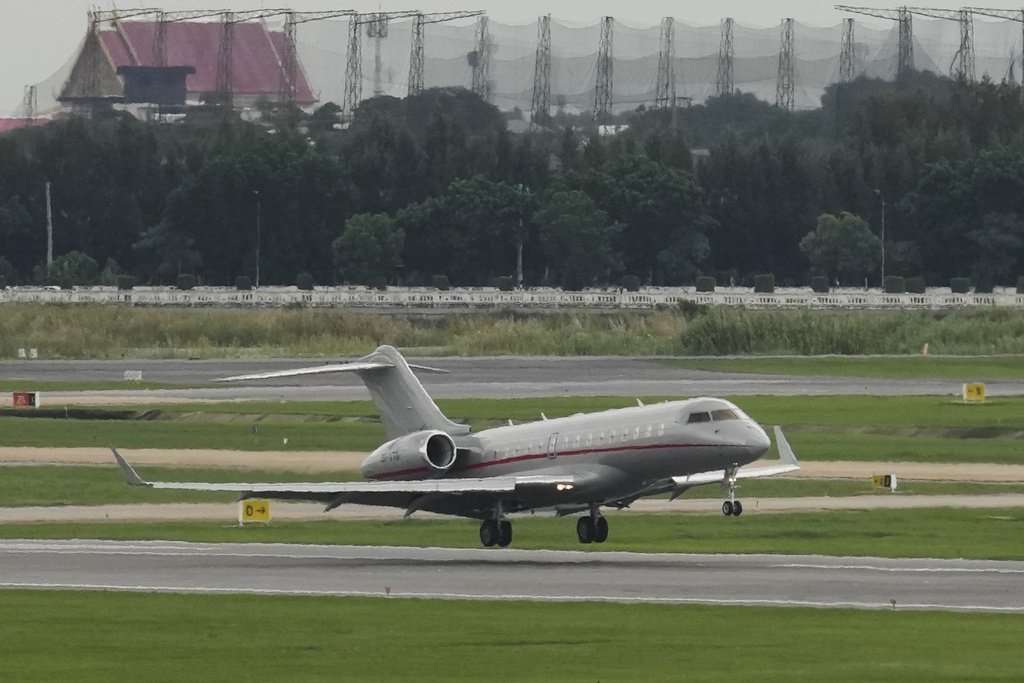
BANGKOK (AP) — A plane believed to be carrying WikiLeaks founder Julian Assange has landed in Bangkok on Tuesday, as he is on the way to enter a plea deal with the U.S. government that will free him and resolve the legal case that spanned years and continents over the publication of a trove of classified documents.
The chartered plane VJT199 landed after noon at Don Mueang International Airport, north of the Thai capital. It is unclear if the plane is only refueling or how Assange will continue traveling to the Northern Mariana Islands, a U.S. commonwealth in the Western Pacific, where he will appear in court Wednesday morning Saipan time.
He’s expected to plead guilty to an Espionage Act charge of conspiring to unlawfully obtain and disseminate classified national defense information, according to the U.S. Justice Department in a letter filed in court.
The plane thought to be carrying WikiLeaks’ Julian Assange, on his way to enter a plea deal in U.S. court, lands in Bangkok, Thailand, Tuesday, June 25, 2024. (AP Photo/Sakchai Lalit)
Assange is expected to return to his home country of Australia after his plea and sentencing. The hearing is taking place in Saipan, the largest island in the Northern Marianas, because of Assange’s opposition to traveling to the continental U.S. and the court’s proximity to Australia, prosecutors said.
The guilty plea, which must be approved by a judge, brings an abrupt conclusion to a criminal case of international intrigue and to the U.S. government’s years-long pursuit of a publisher whose hugely popular secret-sharing website made him a cause célèbre among many press freedom advocates who said he acted as a journalist to expose U.S. military wrongdoing. Investigators, by contrast, have repeatedly asserted that his actions broke laws meant to protect sensitive information and put the country’s national security at risk.
Attorneys for Assange didn’t immediately respond to a request for comment.
In a statement posted on X, WikiLeaks said Assange boarded a plane and departed the United Kingdom on Monday after leaving the British prison, where he has spent the last five years. WikiLeaks applauded the announcement of the deal, saying it was grateful for “all who stood by us, fought for us, and remained utterly committed in the fight for his freedom.”
“WikiLeaks published groundbreaking stories of government corruption and human rights abuses, holding the powerful accountable for their actions. As editor-in-chief, Julian paid severely for these principles, and for the people’s right to know,” WikiLeaks said.
The deal ensures that Assange will admit guilt while also sparing him from any additional prison time. He had spent years hiding out in the Ecuadorian embassy in London after Swedish authorities sought his arrest on rape allegations before being locked up in the United Kingdom.
Assange is expected to be sentenced to the five years he has already spent in the high-security British prison while fighting to avoid extradition to the U.S. to face charges, a process that has played out in a series of hearings in London. Last month, he won the right to appeal an extradition order after his lawyers argued that the U.S. government provided “blatantly inadequate” assurances that he would have the same free speech protections as an American citizen if extradited from Britain.
Assange has been heralded by many around the world as a hero who brought to light military wrongdoing in Iraq and Afghanistan. Among the files published by WikiLeaks was a video of a 2007 Apache helicopter attack by American forces in Baghdad that killed 11 people, including two Reuters journalists.
But his reputation was also tarnished by rape allegations, which he has denied.
The Justice Department’s indictment unsealed in 2019 accused Assange of encouraging and helping U.S. Army intelligence analyst Chelsea Manning steal diplomatic cables and military files that WikiLeaks published in 2010. Prosecutors had accused Assange of damaging national security by publishing documents that harmed the U.S. and its allies and aided its adversaries.
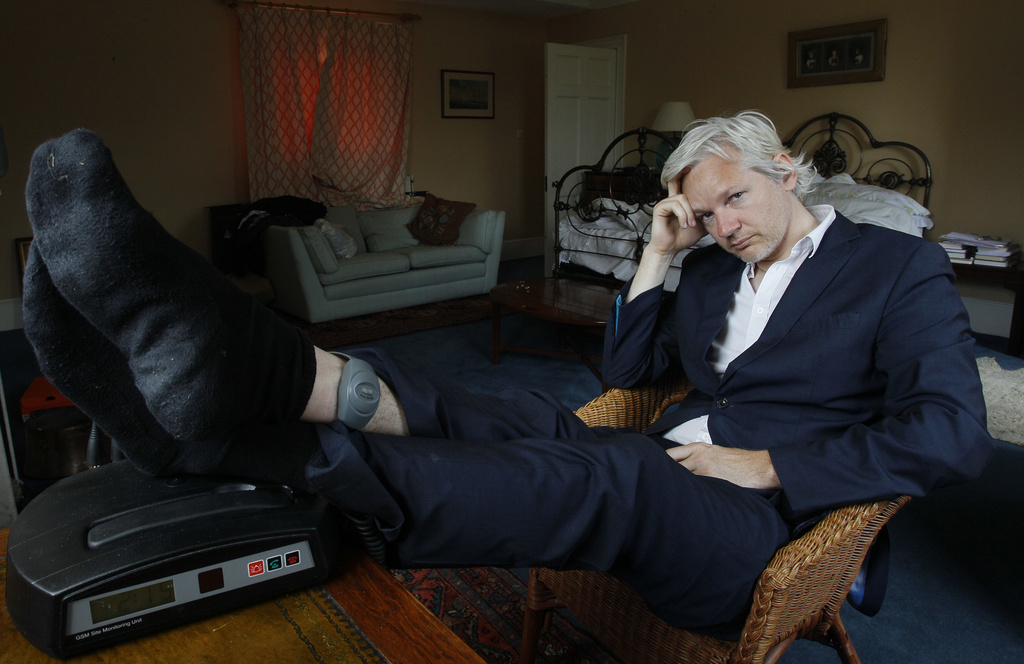
FILE – WikiLeaks founder Julian Assange is seen with his ankle security tag at the house where he is required to stay, near Bungay, England, Wednesday, June 15, 2011. (AP Photo/Kirsty Wigglesworth, File)
Prosecutors said in a charging document filed in connection with the plea agreement that Assange conspired with Manning to receive and obtain documents, notes and other writings related to the national defense and to “willfully communicate” those records. The document takes care to note that Assange was “not a United States citizen, did not possess a U.S. security clearance, and did not have authorization to possess, access, or control documents, writings, or notes relating to the national defense of the United States, including classified information.”
The case was lambasted by press advocates and Assange supporters. Federal prosecutors defended it as targeting conduct that went way beyond that of a journalist gathering information, amounting to an attempt to solicit, steal and indiscriminately publish classified government documents. It was brought even though the Obama administration Justice Department had passed on prosecuting him years earlier.
The plea agreement comes months after President Joe Biden said he was considering a request from Australia to drop the U.S. push to prosecute Assange. The White House was not involved in the decision to resolve Assange’s case, according to a White House official who was not authorized to speak publicly about the case and spoke to The Associated Press on condition of anonymity.
Manning was sentenced to 35 years in prison after being convicted of violating the Espionage Act and other offenses for leaking classified government and military documents to WikiLeaks. President Barack Obama commuted her sentence in 2017, allowing her release after about seven years behind bars.
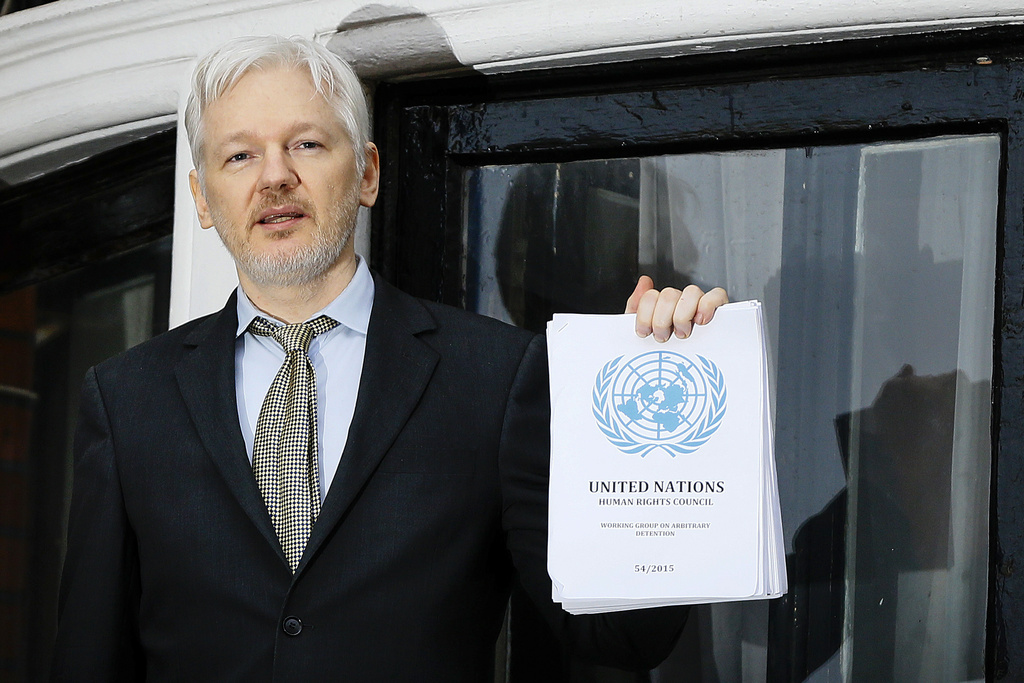
FILE – WikiLeaks founder Julian Assange speaks on the balcony of the Ecuadorean Embassy in London, Feb. 5, 2016. (AP Photo/Kirsty Wigglesworth, File)
Assange made headlines in 2016 after his website published Democratic emails that prosecutors say were stolen by Russian intelligence operatives. He was never charged in special counsel Robert Mueller’s Russia investigation, but the inquiry laid bare in stark detail the role that the hacking operation played in interfering in that year’s election on behalf of then-Republican candidate Donald Trump.
Justice Department officials mulled charges for Assange following the documents’ 2010 publication, but were unsure a case would hold up in court and were concerned it could be hard to justify prosecuting him for acts similar to those of a conventional journalist.
The posture changed in the Trump administration, however, with former Attorney General Jeff Sessions in 2017 calling Assange’s arrest a priority.
Assange’s family and supporters have said his physical and mental health have suffered during more than a decade of legal battles, which includes seven years spent inside the Ecuadorian Embassy in London.
Assange took refuge in the Ecuadorian Embassy in London in 2012 and was granted political asylum after courts in England ruled he should be extradited to Sweden as part of a rape investigation in the Scandinavian country. He was arrested by British police after Ecuador’s government withdrew his asylum status in 2019 and then jailed for skipping bail when he first took shelter inside the embassy.
Although Sweden eventually dropped its sex crimes investigation because so much time had elapsed, Assange has remained in London’s high-security Belmarsh Prison during the extradition battle with the U.S.
_____
Jintamas Saksornchai reported from Bangkok, Eric Tucker reported from Fort Pierce, Florida and Durkin Richer from Washington. Associated Press writer Colleen Long in Washington contributed to this report.
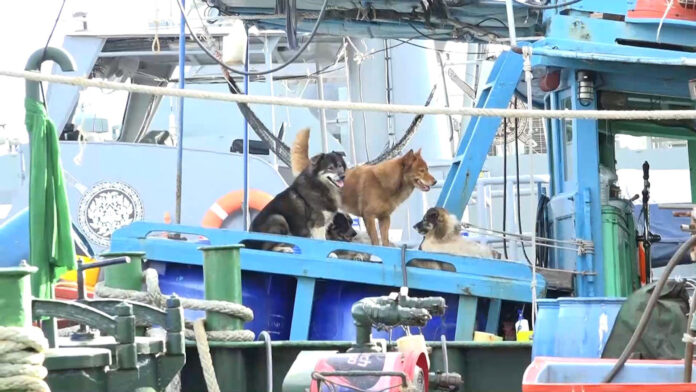
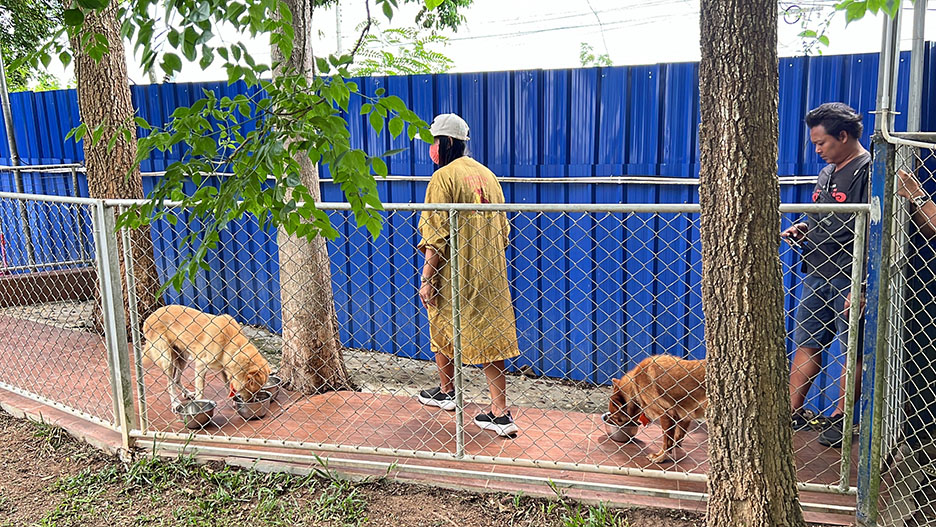
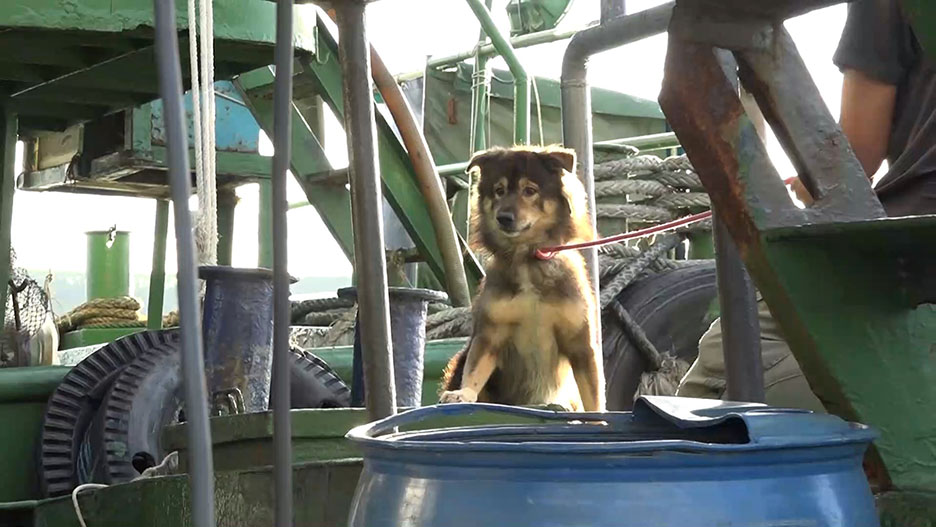
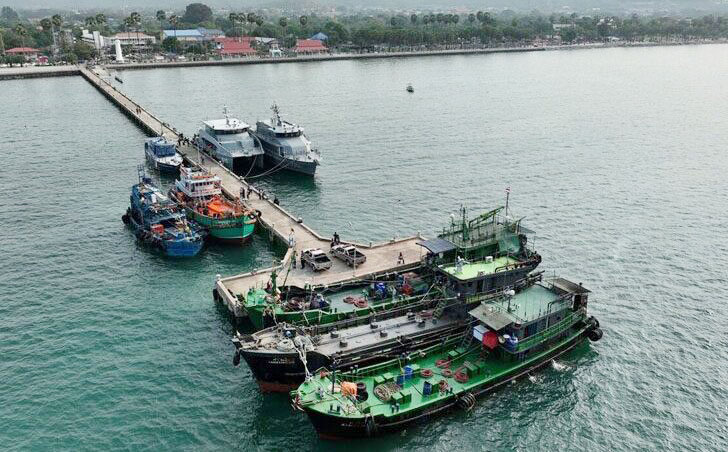
SONGKHLA — In the case of three oil smuggling boats that were seized by officials as evidence but subsequently disappeared from Sattahip Port in Chonburi Province for several days before officials found them at the border of Malaysian waters and brought them back, not only were 9 crew members affected and prosecuted, but 8 dogs on the boats also became strays.
On June 24, the dog rescue team from The Hope Songkhla, led by Ms. Somkid Bungachat, went to check on the condition of the 8 dogs rescued from the oil smuggling boats. The dogs were sent for physical and mental rehabilitation at Kru Nong K9 Dog Training Center in Khuan Lang Subdistrict, Hat Yai District, Songkhla Province, since June 20.
Somkid said that all 8 dogs are now well cared for by trainers in terms of welfare and physical condition, and their overall health has improved. They are in the process of adjusting to the new environment and are not as cheerful as they should be. They don’t eat pellet dog food, only wet dog food.
The dogs are taken care of for physical and mental rehabilitation at Kru Nong K9 Dog Training Center in Khuan Lang Subdistrict, Hat Yai District, Songkhla Province.
Currently, they are given goat’s milk, and their meals will likely be increased to twice a day, with an emphasis on exercise to relieve stress.
“There are two dogs that are still quite concerning. One is quite thin and unfamiliar with the cage. It bit the cage until it got wounded on the cheek and is currently being treated. But it has started eating. It still appears depressed because it misses its owner. Some dogs have swollen paws and fungal infections on their feet that need medication. A doctor will come to do blood tests to see if any of them have abnormal symptoms,” she said.
One of eight dogs seized with three oil smuggling boats on June 17, 2024.
Somkid also said that veterinarians will check the two female dogs to see if they are pregnant. If not, they will be spayed immediately. All 8 dogs will start getting spayed/neutered next week. After that, they may be moved to an animal shelter under the care of The Hope Thailand organization.
“We are currently waiting for an official letter from the Songkhla Marine Police Commander to hand over all 8 dogs, as the relatives of the dogs’ owners do not wish to take care of them. As for the other 3 dogs, it is reported that they are currently well cared for by the police at the 6th Division, Suppression Bureau. They are healthy and strong,” she said.
Three out of eight dogs are being bathed by The Hope Songkhla.
Regarding the progress of the case investigation, Pol. Maj. Gen. Charoongkiat Pankaew, Deputy Commissioner of the Central Investigation Bureau, revealed that all 9 suspected crew members are being investigated to determine if they were involved in the disappearance of the evidence ships. If involved, they will be prosecuted quickly. It is expected that everything will be clearer on Monday, July 1.
This case occurred on the evening of June 11 at the Marine Police Pier in Sattahip District, Chonburi Province, when three modified fishing boats, which were evidence in an illegal oil trading case, were taken from the dock and disappeared into the darkness along with more than 300,000 liters of illegal oil. The officials didn’t realize until late morning the next day.
Officials found the ships on June 17 in the Gulf of Thailand at the border of Malaysian waters and brought them back to port. However, it was discovered that out of the 320,000 liters of oil on the boats, only 5,000 liters remained. These three evidence boats are valued at approximately 30 million baht.
Three modified fishing boats, which were evidence in an illegal oil trading case, are taken from the dock on June 11, 2024.
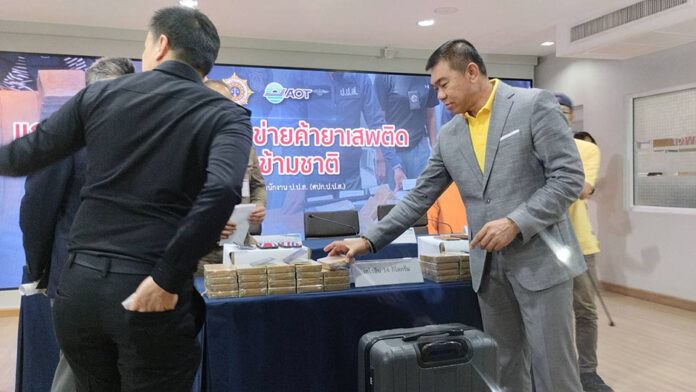
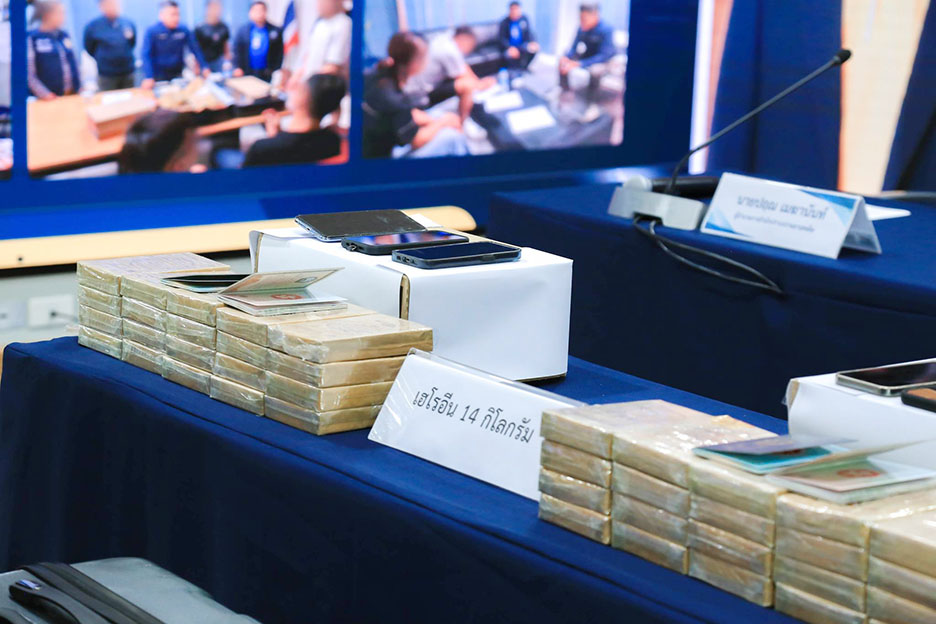
Police Lieutenant General Phanurat Lakboon, Secretary-General of the Office of Narcotics Control Board (ONCB), shows the seized 40 bars of heroin weighing 14 kilograms, hidden in a suitcase of Hong Kong gang member on June 24, 2024.
BANGKOK — The Airport Interdiction Task Force (AITF) arrested 4 Hong Kong nationals and seized 40 bars of heroin weighing 14 kilograms, hidden in a luggage at Suvarnabhumi Airport.
On June 24, Police Lieutenant General Phanurat Lakboon, Secretary-General of the Office of Narcotics Control Board (ONCB), along with Prin Mekanant, Director of the Narcotics Suppression Bureau, announced the arrest of an international drug trafficking network at the ONCB Operations Center in Bangkok.
The arrest of the 4 Hong Kong male suspects came after ONCB officials received information and conducted a joint investigation with Hong Kong police to track Leung Wai Kit, a major Hong Kong drug dealer who traveled to Thailand, along with Chun He Chow, a drug courier who also traveled to Thailand.
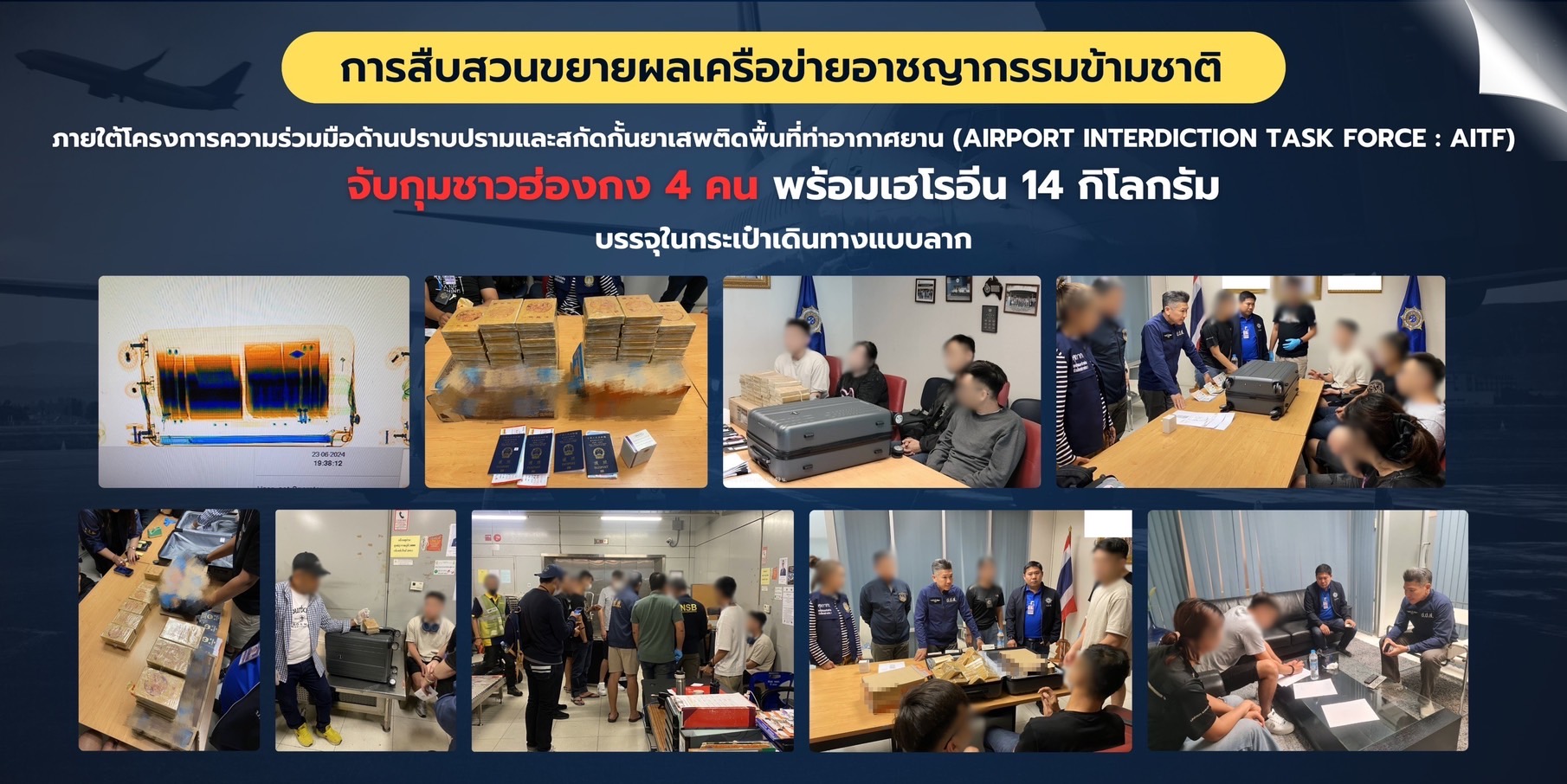
Chart showing the arrest of the 4 Hong Kong male suspects.
The AITF closely investigated these individuals. On Sunday, June 23, Leung and one associate entered Suvarnabhumi Airport with luggage believed to contain hidden drugs, preparing to hand it over to two other couriers. Officials immediately searched and detained these individuals.
The search uncovered 40 bars of heroin weighing 14 kilograms hidden in the luggage. Leung and his three associates were arrested and charged with “jointly attempting to export a Category 1 narcotic (heroin) without permission and jointly possessing a Category 1 narcotic (heroin) without permission.”
Pol. Lt. Gen. Phanurat said this case was unusual because drug trafficking networks typically hide contraband in parcels, rarely concealing it in luggage to be loaded onto airline check-in conveyor belts.
40 bars of heroin weighing 14 kilograms, hidden in luggage at Suvarnabhumi Airport, are displayed at a news conference on June 24, 2024
Prin added that airlines or security teams usually focus X-ray checks on explosives and firearms. Therefore, hiding heroin in milk crates and loading them onto conveyor belts, being non-metallic objects, likely allowed them to pass through the X-ray machines at check-in points.
The investigation revealed that the suspects traveled to Thailand to receive heroin from Hong Kong couriers in Thailand and sell it to buyers in Hong Kong. Officials discovered that the Hong Kong mastermind stayed at one hotel in Thailand, while the Hong Kong courier stayed at another. On Sunday, June 23, they all checked out and headed to Suvarnabhumi Airport, where they were arrested.
This week, Hong Kong police will travel to Thailand to question the four suspects to expand the investigation into networks in Hong Kong and possibly additional networks in Thailand.
Phantong Loykulnanta, Tax Collection Development and Management Advisor at the Customs Department, said that although luggage loaded onto conveyor belts at check-in points goes through color X-ray machines to detect anomalies, items can still slip through. The Customs Department will review lessons learned from this incident.
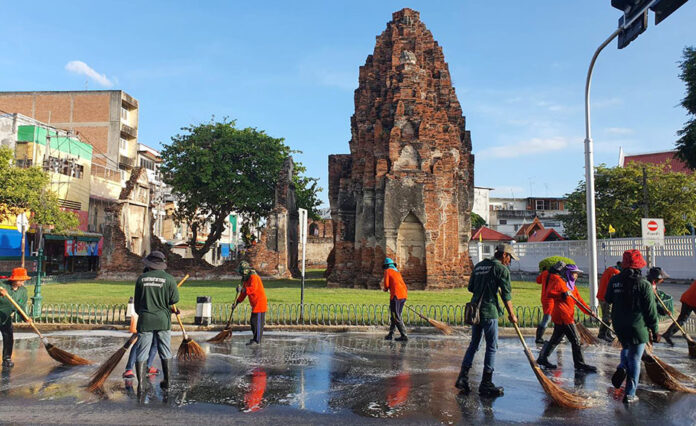
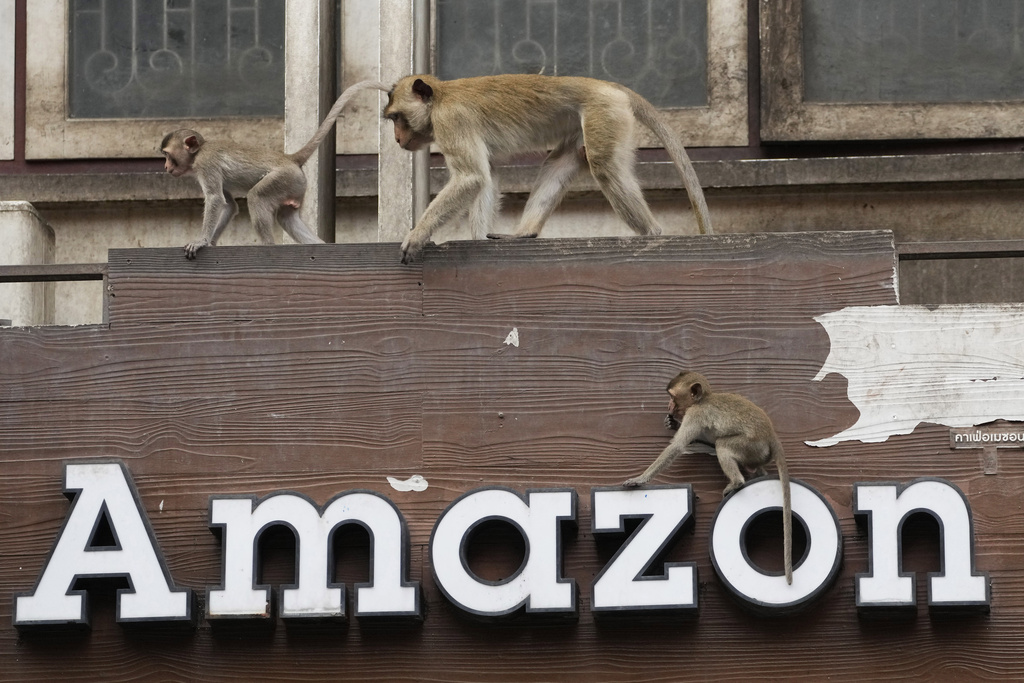
Lopburi City municipal officials cleaned the area around Phra Prang, the province's landmark, following the control of the monkey population in the city center on June 24, 2024.
LOPBURI — Efforts to get the monkey population under control are making progress and businesses in Lopburi Province are regaining confidence because they believe the problem is being tackled properly. Many companies are planning to revive instead of going out of business.
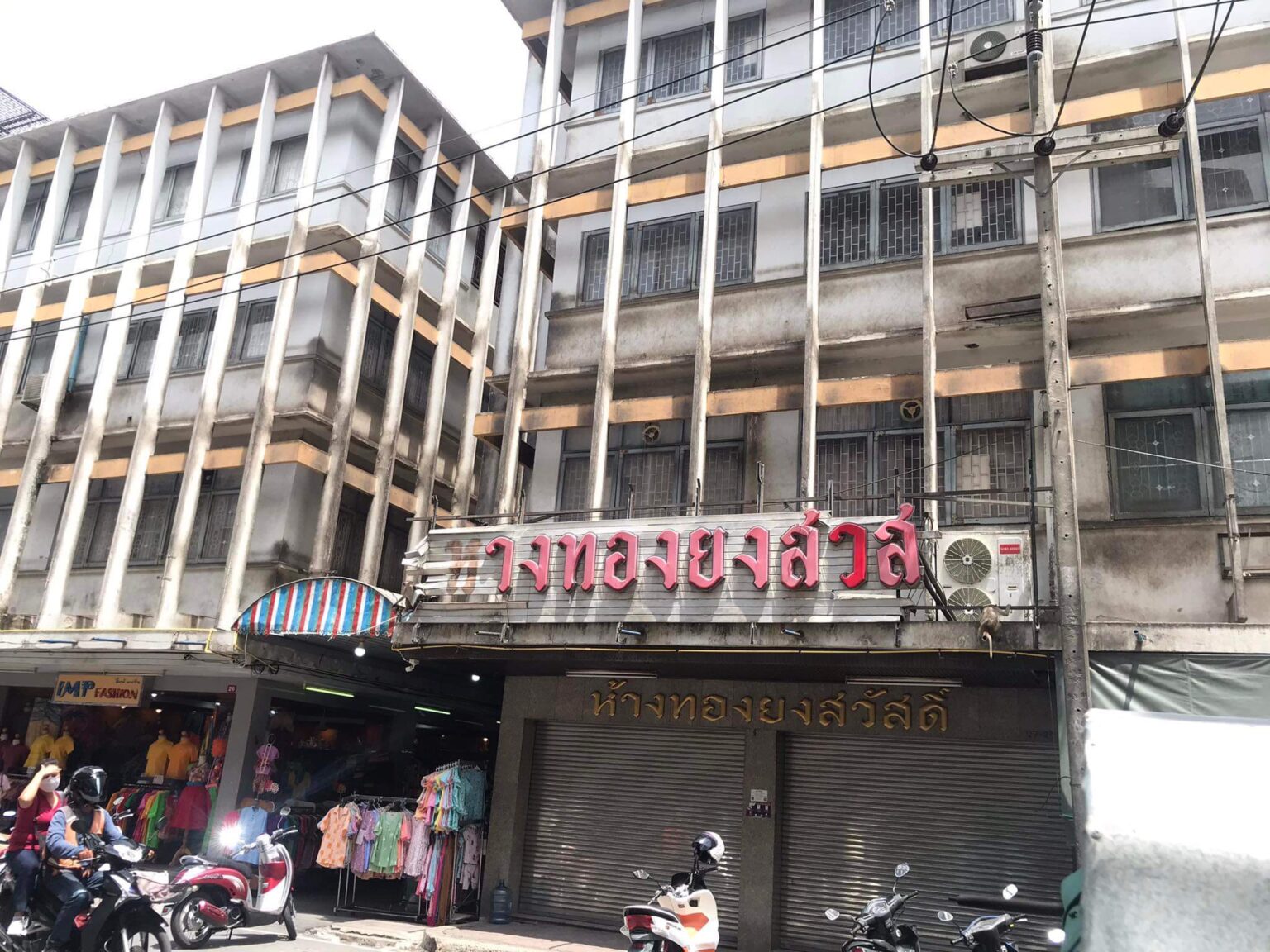
Damrongchai Market, for example, is rejuvenating its stalls to offer vendors over 60 blocks again, and the former shopping district known as “Heavy Alley” is being revitalized. In addition, the large department store “Apinya” has abandoned its plans to sell its property and is preparing to renovate the building while launching promotions to attract customers.
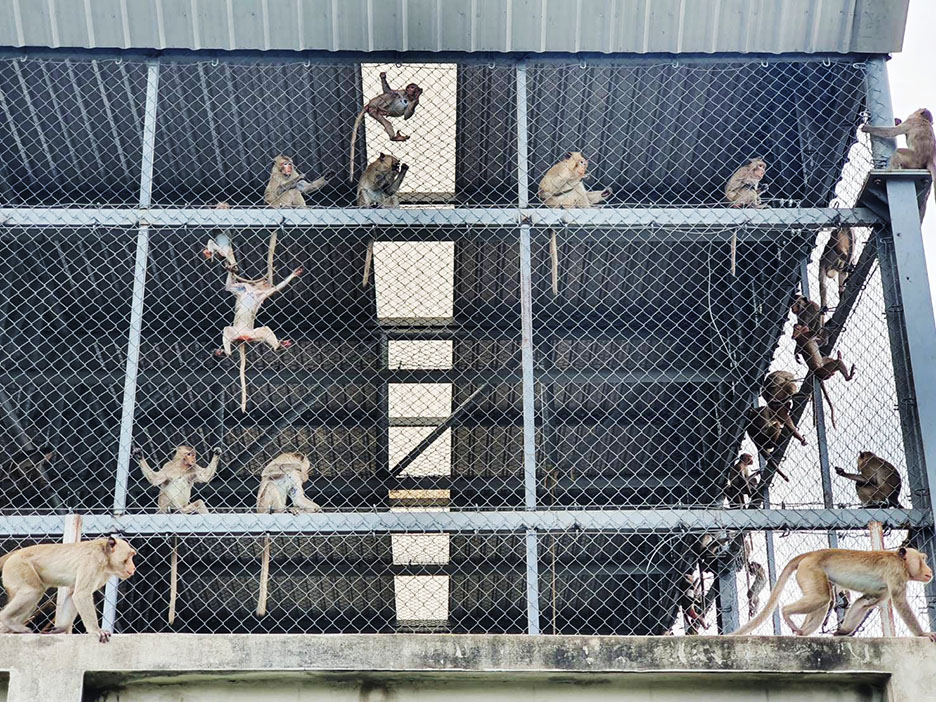
The Department of National Parks, Wildlife and Plant Conservation, in cooperation with Lopburi Municipality, has captured 1,200 of the estimated 3,000 monkeys and relocated them to an animal care facility in Phokhaoton Subdistrict, Mueang Lopburi District. The monkeys will be registered, tested for diseases and sterilized there. However, the capture process has been temporarily halted because the cages are full.
Lopburi Municipality, has captured 1,200 of the estimated 3,000 monkeys and relocated them to an animal care facility.
Prachachat Business reporters recently visited the old town of Mueang Lopburi district, which has been plagued by an overpopulation of monkeys for more than 10 years, causing disturbances in stores, businesses and homes. Starting at the landmark Phra Kan Shrine, they found less than 10 monkeys in the area in the afternoon.
When the reporters crossed the road and railroad line from Phra Kan Shrine to Phra Prang Sam Yot, they found that there were not many monkeys. However, local traders have noticed that the number of monkeys increases in the evening.
The area from Phra Prang Sam Yot to Prang Khaek, which used to be overrun by monkeys destroying property, is now “much calmer” after the first 300 monkeys were caught. Meanwhile, preparations are underway for the renovation of Damrongchai Market in Soi Heavy on Damrongchai Road. This market, once a center for youth products such as clothing, student uniforms and cosmetics, is being revived.
Monkeys climb a billboard in Lopburi Province, north of Bangkok, Thailand, Friday, May 24, 2024. (AP Photo/Sakchai Lalit)
Mr. Pancake Panichcharoen, the owner of Damrongchai Market, told “Prachchat Business” that the quality of life of local residents has improved significantly after some monkeys were caught. Previously, shoppers had their bags snatched by monkeys on a daily basis, causing constant fear. At the market, where some vendors remained despite the monkey infestation, many stalls were canceled at the height of the problem. However, thanks to the current measures, the market is almost back to full capacity and almost all 60 stalls have been rented out again.
“The government’s solution is good because it allows traders to return to normal trade. However, it will take time to monitor the situation further, as this is just the beginning. Tourists may or may not return, but for now, Lopburi’s economy seems to be moving in a better direction,” Mr. Pancake said.
Prachachat Business reporters also investigated other major business areas, including large and small stores opposite the Fresh Market, such as Seng Heng Shop and Apinya Shopping Center. This area is bustling with street vendors and stalls.
Ms. Phan Phookyu, who has been selling fruit for over 30 years, expressed her satisfaction that Lopburi officials and the government have recognized the long-standing monkey problem. She noted a significant decline in monkeys after some of them were relocated, but also a drop in tourist numbers.
“The concern is whether we have conveyed that the problem has been solved and that the monkeys in Lopburi are now orderly and safe for locals and tourists. We want Lopburi to be as busy as it used to be,” she said.
Mr. Surachat Chanprasith, deputy managing director of Apinya Shopping Center, said the monkey problem has been “properly addressed” and taken more seriously than ever before. The number of monkeys has visibly decreased, but business confidence will take some time to recover due to the decades-old problem.
“Getting rid of the monkeys will not immediately revitalize businesses. Businesses need time to adapt. Apinya plans to invest and renovate and negotiate with new business partners and brands to attract tenants with special offers, such as a monthly rent of only 1,000 baht with no three-month deposit.
“Some areas offer free monthly rent and additional support to ensure sustainability. Our goal is for our inner business district to regain 50 percent of its vibrancy from before the monkey problem and before COVID-19. I believe that businesses are willing to invest but have been deterred by unresolved issues. Now that the monkey problem is solved, we can move forward,” said Mr. Surachat.
Local businessmen say they have been operating in Lopburi for 40 years, when there were fewer monkeys. The recent capture of 1,200 monkeys out of a total of about 3,000 has significantly improved the environment in Lopburi. However, economic recovery will take time and continuous, long-term efforts.
“Currently, there is a major problem: After the monkeys have been captured and controlled, the Department of National Parks lacks a clear long-term plan for relocating the monkeys. The department has delegated responsibility for the budget and feeding of the 1,200 monkeys to Lopburi Municipality, which is struggling to meet these costs due to budget regulations. The daily feeding cost averages 20 baht per monkey, totaling about 24,000 baht per day or 720,000 baht per month.
“The city government cannot simply redistribute the funds, so local businesses, residents and even monks are trying to collect leftover food and vegetables for the monkeys. The government and Prime Minister Srettha Thavisin must intervene to find a comprehensive solution,” they said.
BANGKOK — After the COVID-19 pandemic, the foreign film production business has continuously grown. Therefore, Thai government aims to generate more revenue.
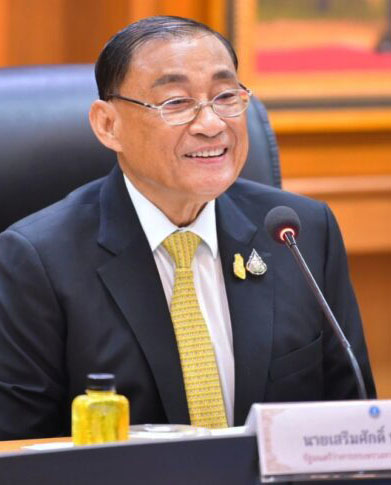
On June 24, 2024, Sermsak Pongpanich, Minister of Tourism and Sports emphasized that the government recognizes the importance of foreign film production, as foreign films have an influential role in attracting tourists to visit various locations featured in the films, as well as in encouraging them to follow in the footsteps of famous actors.
Sermsak Pongpanich, Minister of Tourism and Sports
In 2023, revenue from foreign film productions amounted to over 6.753 billion baht (184 million USD), setting the highest record since the promotion of foreign film production in Thailand began. From January to May 2024 (within five months), Thailand hosted film productions worth up to 3.416 billion baht (93 million USD).
Moreover, the government believes that the wide range of stunning settings in Thailand, combined with the skilled local crews accustomed to international film projects, the support from government bodies, and, notably, the attractive 20% cash rebate incentive, will make Thailand a more popular choice for foreign film productions.
The Ministry of Tourism and Sports has set a target to yield over 7.5 billion baht (204 million USD) in revenue from foreign film productions by 2024. Additionally, it aspires to cultivate film tourism by drawing visitors to sites featured in major international movies filmed in Thailand, which will greatly contribute to the Thai economy.
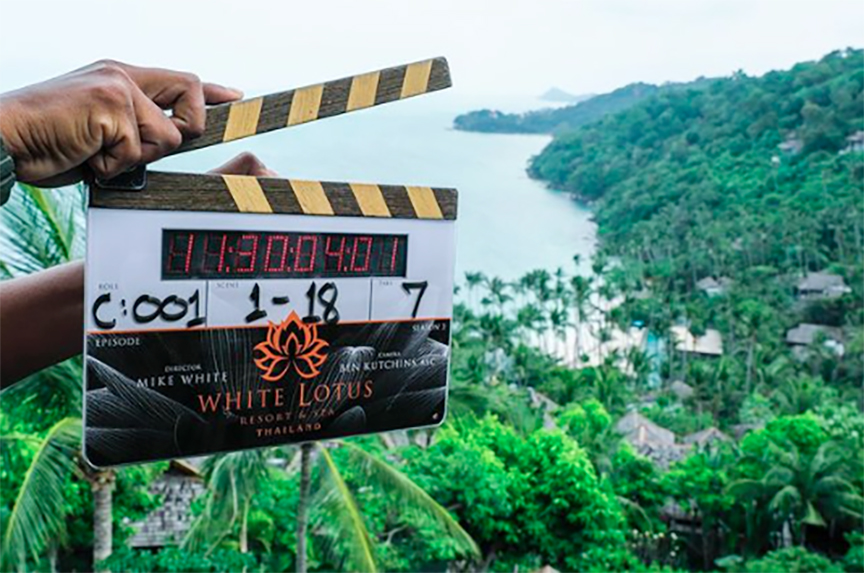
Mr. Sermsak also revealed that he had assigned Ms. Penpisut Jintasopon, Secretary to the Minister of Tourism and Sports, to welcome Mr. Scott Schaeffer, Senior Vice President of HBO Production for “The White Lotus S3”, a globally popular series that has swept Emmy Awards. The production team has been filming in Thailand since February of this year.
Instagram: thewhitelotus and streamonmax
Mr. Scott expressed his admiration for the professionalism of the Thai crew and appreciated the facilitation provided by the Ministry of Tourism and Sports, as well as other relevant government agencies and local communities. He mentioned that the filming locations in Thailand are of world-class beauty, highlighting the stunning scenery of Koh Samui, Phuket, and various islands in the Gulf of Thailand.
The intention to produce a series in Thailand was mainly driven by the country’s attractive incentive measures, which HBO and Warner Bros. have endorsed as the best in Asia.
When the series is released, it is expected to attract tourists to the filming locations, produce revenue for the tourism sector, generate employment opportunities, and boost economic activity, thereby positively impacting the future of the tourism industry.
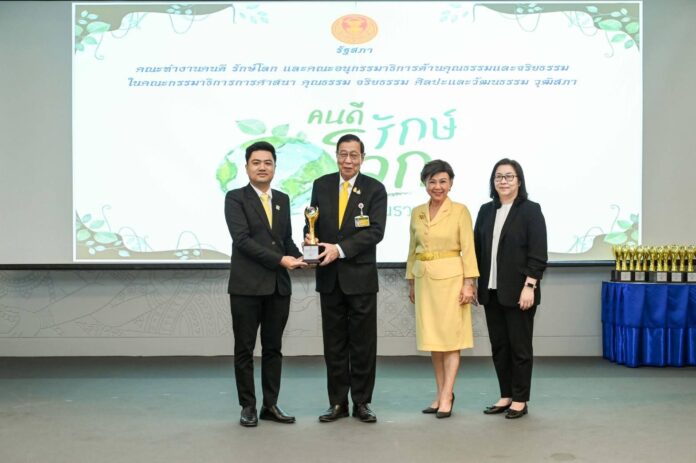
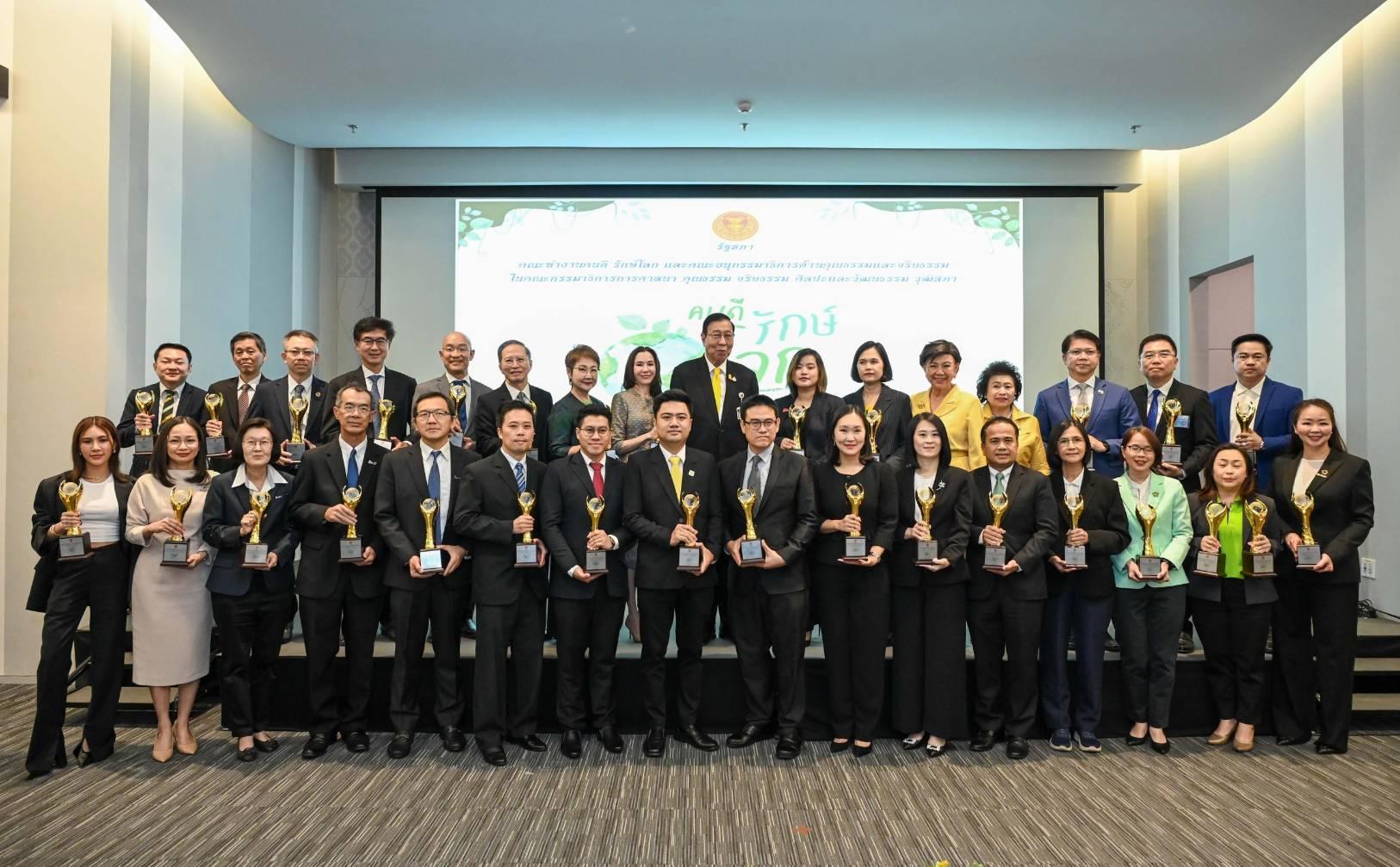
Charoen Pokphand Foods Public Company Limited (CP Foods) has been awarded the prestigious “Khon Dee Ruk Lok: Good People Preserve the World Award” in the private sector category by the Sub-Committee on Morals and Ethics, under the Senate Standing Committee on Religions, Morals, Ethics, Arts and Culture. This accolade underscores CP Foods’ unwavering commitment to environmental stewardship and natural resource conservation.
The award ceremony, presided over by Prof. Pornpetch Wichitcholchai, President of the Senate, was organized by the Sub-committee on Morals and Ethics in collaboration with the “Khon Dee Ruk Lok: Good People Preserve the World Award” working group. The event recognized organizations demonstrating exceptional ESG practices and dedication to natural resource conservation.
The “Khon Dee Ruk Lok: Good People Preserve the World Award” exemplifies CP Foods’ dedication to aligning its integrated agro-industrial and food business operations with CP Group’s “Three-Benefit Principle.” This principle prioritizes benefits to countries and communities where the business operates, followed by company interests. CP Foods has successfully integrated ESG principles into its business strategies and has emphasized protecting natural resources crucial for food security. The company focuses on efficient resource utilization in operations while implementing innovative waste reduction solutions in line with Circular Economy principles.
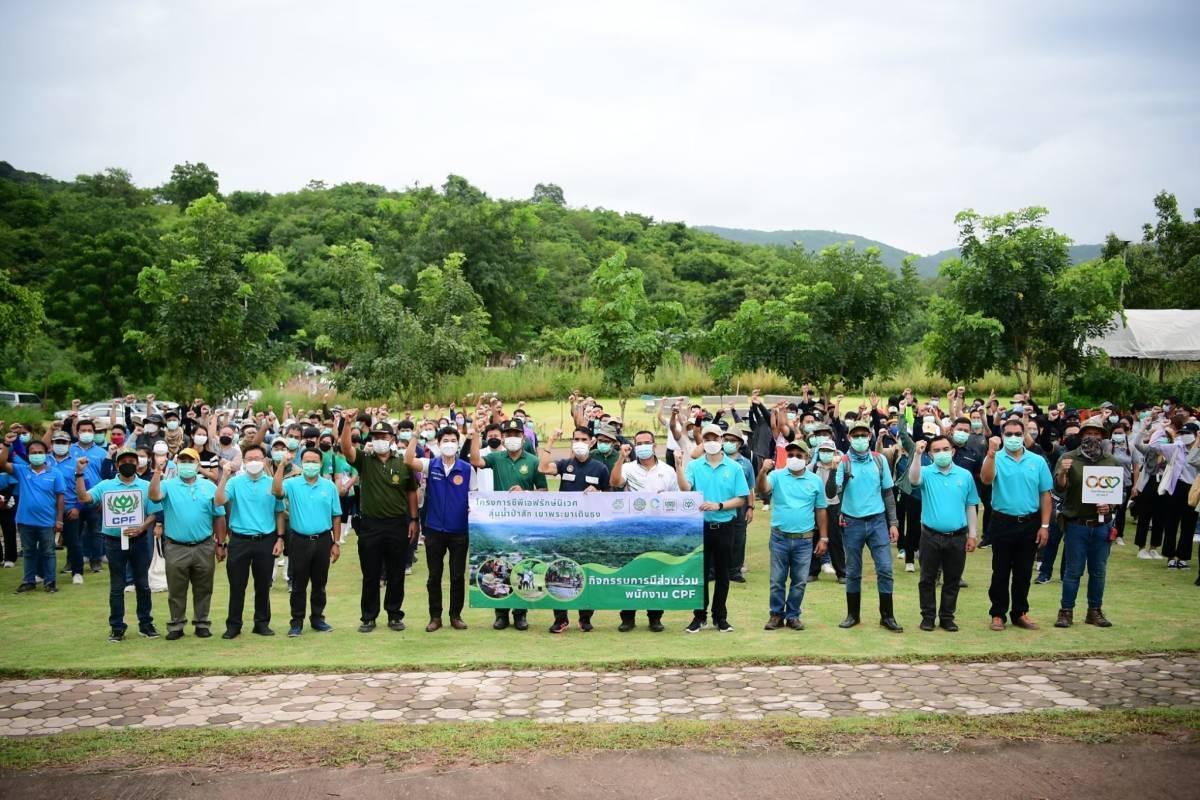
CP Foods fosters environmental responsibility among its employees, encouraging active participation in hands-on conservation projects and natural resource management initiatives. These include watershed forest and mangrove conservation and restoration efforts, as well as the expansion of green spaces at operational sites. So far, CP Foods’ operations in Thailand and abroad have contributed to the conservation, restoration, and planting of over 6 million trees. The company actively engages surrounding communities and schools in environmental conservation initiatives, aiming to sustainably enhance the well-being of ecology and society.
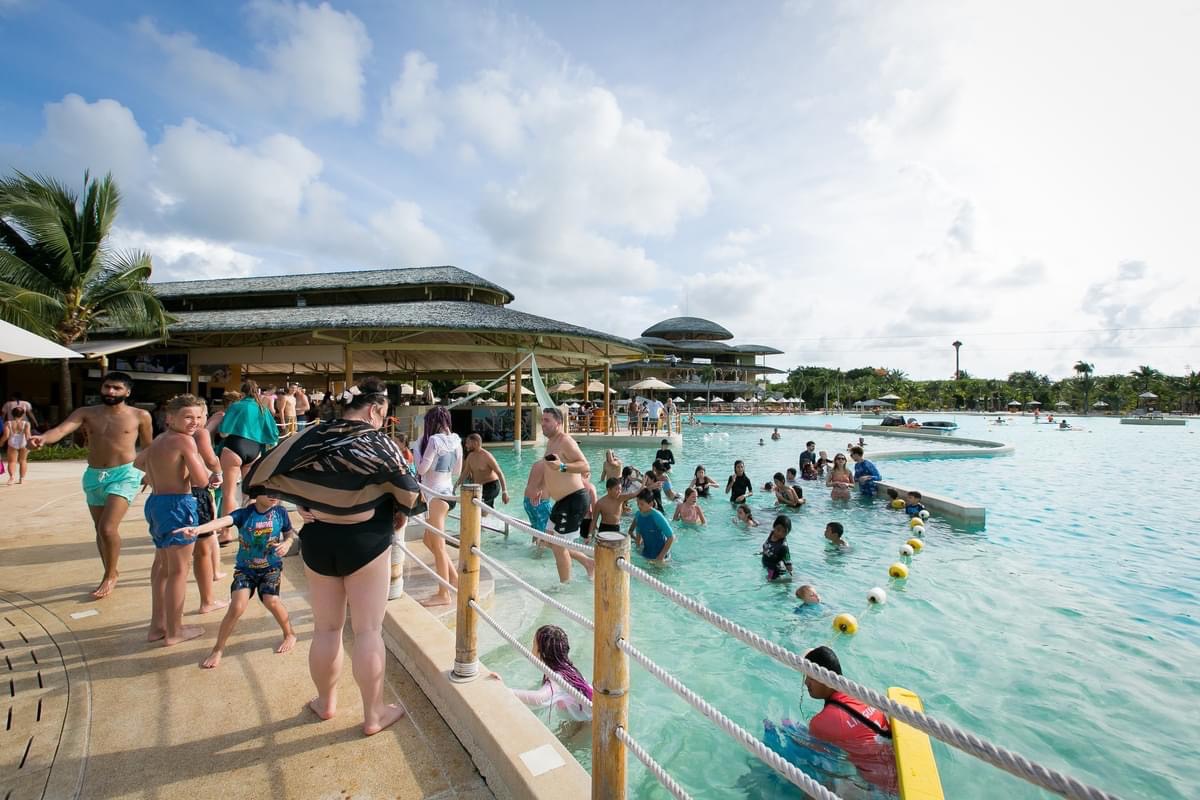
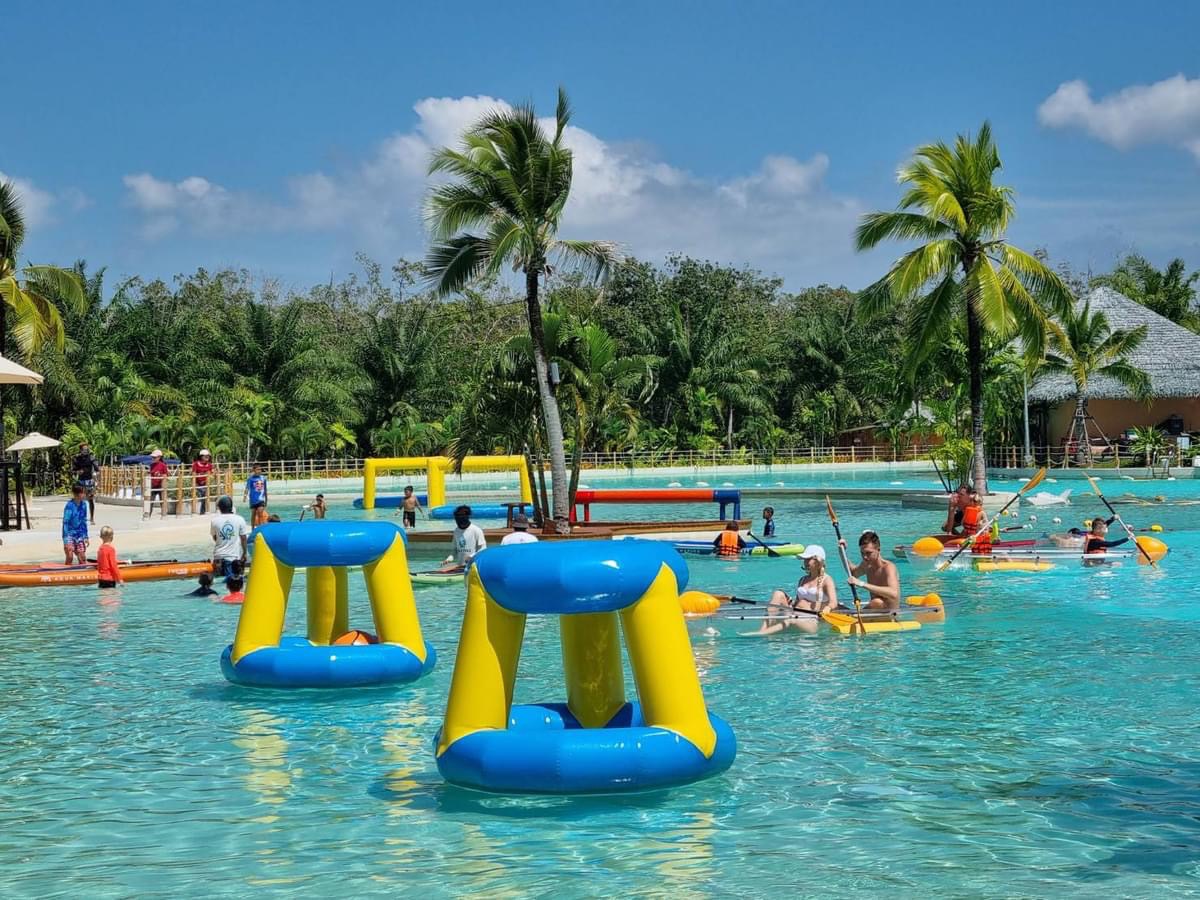
PHUKET — Blue Tree Phuket announced over the weekend that it will cease operations of Blue Tree Lagoon, its water park, and lay off more than 70 percent of its current staff. This comes after about five years of operation and raises questions among those unfamiliar with the Phuket business landscape, especially considering that Phuket’s tourism industry is thriving.
The Phuket Tourism Business Association reports that the province’s tourism business is booming, with revenue expected to exceed 400 billion baht (10.9 billion USD) by the end of 2024, surpassing pre-COVID-19 levels.
Blue Tree Phuket
Prachachat Business delved deeper into the situation and discovered even more intriguing information. Blue Tree Phuket announced on June 22, 2024 that the decision to cease operations of Blue Tree Lagoon, the company’s main business segment, on 1 August 2024, was made to meet changing customer demands.
The company emphasized that other areas within Blue Tree Phuket will continue to operate as usual and announced plans to open newly designed facilities in the Lifestyle Village Zone as part of a strategic business shift.
The company will introduce a range of family-friendly activities, including shopping, dining and other recreational areas. These include clothing stores, fitness activities such as judo and Muay Thai, and outdoor concert events that will make Lifestyle Village a new destination for everyone.
Blue Tree Phuket
“The company is preparing to transition its business model to a new concept that focuses on healthcare services and includes the promotion of physical and mental health as well as social connections to improve the quality of life for both locals and tourists,” the statement reads.
Even if outsiders might assume that the company is in financial difficulties, this might not be the case.
Several sources in Phuket told “Prachachat” that the group behind the project is “Pirate Girl”, the daughter of the owner of the world’s most expensive watch brand, Patek Philippe. Liquidity problems can therefore be ruled out.
“As far as I know, the project started because the daughter of the famous watch brand owner visited Phuket, liked it and told the driver that she wanted to buy land for investment. The investment of 1.2 billion baht is not worth mentioning because the sale of a few watches would cover the cost. But the ultra-rich are not stupid. When they calculate investments, they must be worth every penny,” said a source.
Blue Tree Phuket
The exact reasons for the closure are still unclear, but it is known that Blue Tree has been struggling with “internal management problems” for some time, with the management team having changed several times.
There is also an attractive factor: selling the business now would bring significant profits as the value of the land has increased many times over. The 140 rai plot alone could be sold for billions, as land prices in the area currently stand at 30-40 million baht per rai.
Another source suggested that there may be plans to shift investment to the hotel business or other ventures. As for the 300 employees, don’t worry because Blue Tree has made arrangements and many hotels and tourism businesses in Phuket are still short staffed and ready to hire.
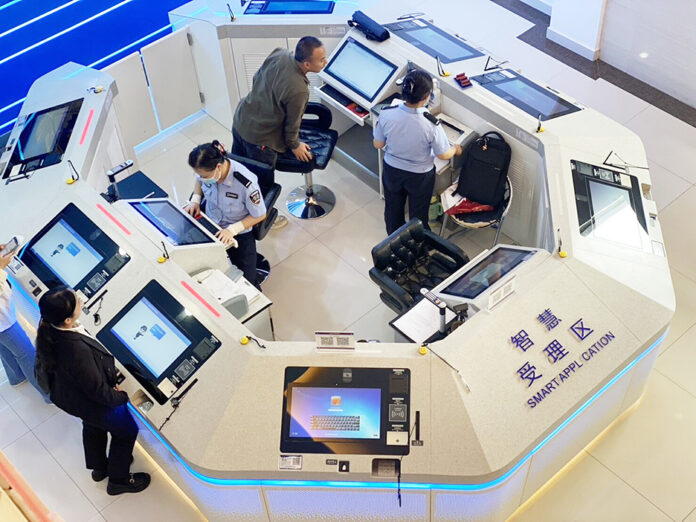
The Kunming Immigration Office in Kunming, Yunnan.
KUNMING — A new problem of trafficking Thai teenage girls for elderly care in China has been discussed in the meeting between Thai and Chinese authorities in Kunming, China.
According to Matichon Online, the Central Investigation Bureau sent Anti-Trafficking in Persons Division police to coordinate with Chinese police in Yunnan Province to address human trafficking and call center gang issues.
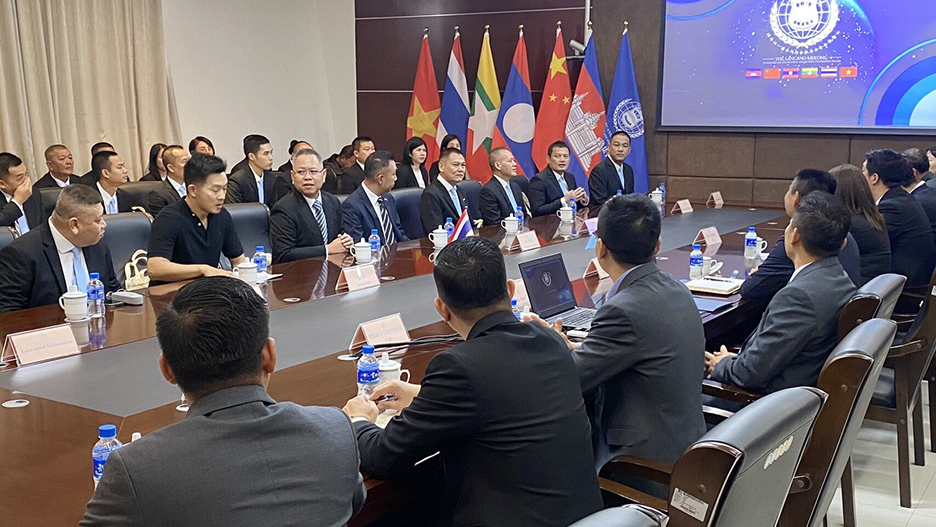
On June 23, at the Kunming Immigration Office in Yunnan, China, Pol. Maj. Gen. Saruti Khwaengsopha, Commander of the Anti-Trafficking in Persons Division, and 30 related Thai police officers met with Pol. Maj. Gen. Kong Yiping, Deputy Commander of Kunming Immigration Office.
The meeting included observing immigration work that uses technology to reduce police workload by about 80%. They also met with various units in Kunming to update on transnational crime suppression.
Previously, Pol. Lt. Gen. Jirapop Phuridej, Commander of the Central Investigation Bureau, ordered anti-trafficking police to coordinate regarding the movement of Thai people into northern Myanmar, which is partly a base for call center gangs causing problems for both Thailand and China.
The meeting between Thai and Chinese authorities is taken place in Kunming, China on June 23, 2024.
Pol. Maj. Gen. Saruti said China doesn’t have specific anti-trafficking laws, but Thai police consuls are working to keep information updated between the two countries. They have tracked 27 Thai human trafficking suspects hiding in China and are cooperating on cases involving prostitution and the use of teenage labor, with many Thai people illegally working in Kunming.
The use of young Thai female workers is becoming popular among elderly Chinese who hire them for marriage, but some end up abandoned, causing problems that the Thai consulate in Kunming is trying to resolve.
The meeting also involved discussions with the Lancang-Mekong Integrated Law Enforcement and Security Cooperation Center (LMLECC), which coordinates between China, Laos, Cambodia, Myanmar, Vietnam, and Thailand in preventing and suppressing transnational crimes in the region.
Pol. Maj. Gen. Saruti added that last year, over 300 human trafficking cases were arrested, with 50% involving child prostitution, 30% child pornography, and the rest forced labor and begging.
The cooperation with LMLECC is expected to increase, which is crucial as the Mekong River is often used for human trafficking and call center operations.
Jiang Shui, Deputy Secretary-General of LMLECC, stated that since its establishment, LMLECC has helped reduce crime significantly. He emphasized the importance of the Mekong River as a trade route and called for Thai officials to join their operations for standardized practices, which would benefit regional economic growth and international trade.