The Pattaya medical team tried to save Mr. Igor's life at the scene but was unsuccessful.
PATTAYA – A party at a pool villa in Pattaya turned into a criminal case when a British man punched a Russian man with a single blow, causing him to fall to the ground. The Russian man later died in the hospital. The British man revealed that he acted out of anger but did not think his opponent would die.
The incident occurred at a pool villa in View Point Village, Soi Chaiyaphruek 1, Moo 12, Nong Prue Subdistrict, Bang Lamung District, Chonburi Province, around 2:50 a.m. on May 27. Mr. Igor, a 36-year-old Russian, was punched in the face once by a British man at the party before falling and hitting his head on the ground, sustaining serious injuries.
The medical team tried to save his life but was unsuccessful. He passed away at Bangkok Hospital Pattaya.
The Pattaya medical team took Mr. Igor into the ambulance. He died later at the hospital.
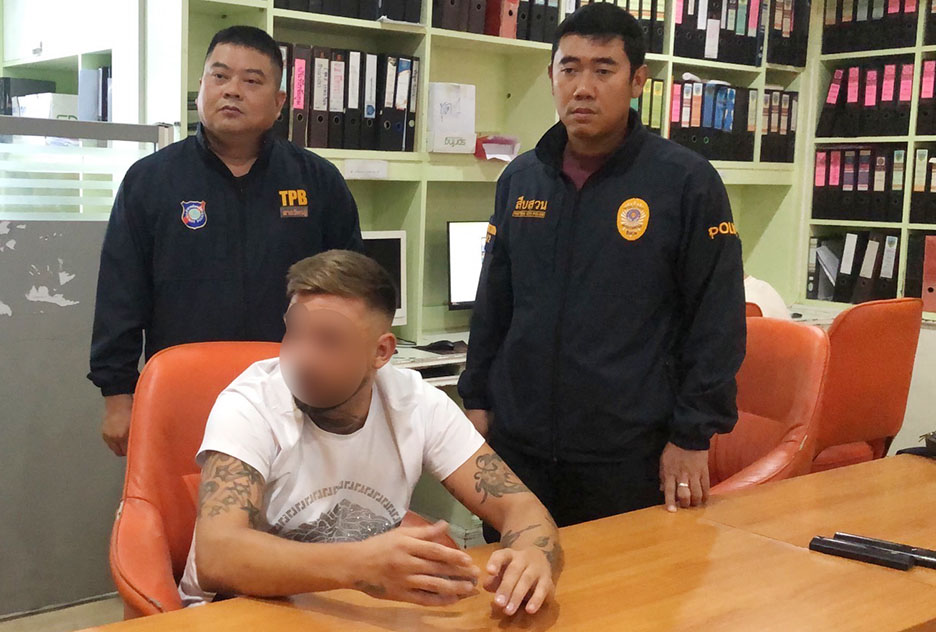
Later, at 1:00 p.m., after identifying the perpetrator, Pol. Lt. Col. Nawin Thirawit, Superintendent of Pattaya City Police Station, ordered the investigation team to request an arrest warrant from the Pattaya Provincial Court for Mr. Ricki, a 35-year-old British national. The police went to arrest him, charging him with “assaulting another person, causing death.”
Mr. Ricki was arrested at a guest house in Ban Amphoe, Na Jomtien Subdistrict, Sattahip District, Chonburi Province, about 10 km from the pool villa where the incident occurred. He was taken into custody for questioning at Pattaya City Police Station.
Ms. Mod, 28, the Thai wife of Mr. Ricki, said that before the incident, her husband sent her a map location to join the party at the pool villa with a group of friends. Not long after the party started, she excused herself to return to work. Around 3 a.m., her husband sent her a message saying he wanted to go home. Worried, she quickly returned to the villa but found her husband walking in the middle of the street.
Mr. Ricki, a 35-year-old British national, was questioned at Pattaya City Police Station.
Ms. Mod revealed details of her husband’s statement to the police, saying that while people at the party were drinking until they were drunk, Mr. Igor began to make flirtatious comments toward their daughter, even though Mr. Igor’s wife was also at the party.
The Russian man then began to sexually harass their daughter, walking up to her and whispering in her ear that he wanted to have sex with her. This angered Mr. Ricki, who punched Mr. Igor in the face once, causing him to fall to the ground.
He did not think his actions would lead to the man’s death, and he regrets what he did.
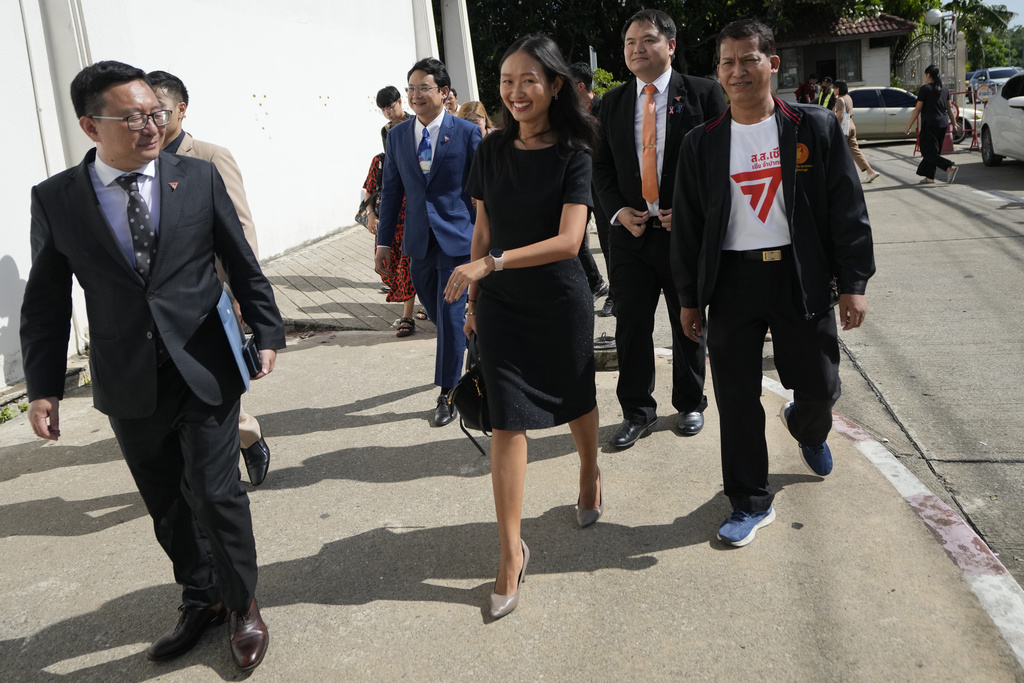
Move Forward Party's Chonthicha Jangrew, left, hugs her supporter on her arrival at the Thanyaburi Provincial Court in Pathum Thani province, north of Bangkok, Thailand, Monday, May 27, 2024. (AP Photo/Sakchai Lalit)
BANGKOK (AP) — A Thai court on Monday sentenced a lawmaker from a progressive opposition party to two years in prison after finding her guilty of defaming the monarchy in a speech she made during a protest rally three years ago.
Chonthicha Jangrew of the Move Forward Party was greeted by several supporters when she arrived at the Thanyaburi Provincial Court in Pathum Thani province, north of Bangkok, with some party colleagues. Chonthicha, popularly known by her nickname “Lookkate,” represents a constituency in Pathum Thani.
Her charges stemmed from her speech in 2021 that demanded the release of all political prisoners during a rally in front of the same court that delivered Monday’s sentence.
She was found guilty for parts of the speech concerning how the government then led by Prime Minister Prayuth Chan-ocha had amended laws to give King Vajiralongkorn more power to control the palace wealth, which is managed by the Crown Property Bureau.
The judge said her speech could misinform the public by suggesting that King Vajiralongkorn can spend taxpayers’ money for his personal use and use his influence to interfere with politics, which could tarnish his reputation.
Move Forward Party’s Chonthicha Jangrew, center, arrives at the Thanyaburi Provincial Court in Pathum Thani province, north of Bangkok, Thailand, Monday, May 27, 2024. (AP Photo/Sakchai Lalit)
The judge originally sentenced her to three years in prison, but reduced it to two years because of her cooperation in the trial. The law for defaming the monarchy, an offense known as lese majeste, carries a penalty of three to 15 years imprisonment. It is widely referred to as Article 112 from its place in the Criminal Code.
Chonthicha was afterwards released on bail of 150,000 baht ($4,100). Had bail not been granted and she been sent directly to prison, she would have immediately been removed from her seat in Parliament.
She told reporters that she wasn’t surprised about the verdict as the majority of 112 charges led to convictions.
She said she will appeal, adding that she was glad to have been granted release on bail but wished that other political prisoners were given the same right.
A young activist charged with lese majeste died in detention earlier this month after carrying out a monthslong hunger strike to protest the revocation of her bail in January.
Chonthicha and nine other defendants in the case were charged with other offenses including illegal assembly and violating an emergency decree enacted during the COVID-19 pandemic. All 10 were acquitted of those charges. Chonthicha was the only one who had been charged with violating the lese majeste law.
Before becoming a politician, Chonthicha had been an activist since she was a college student. She became a high-profile figure in the youth-dominated movement by confronting the police during the mass street protests that demanded democratic reform of several powerful institutions including the monarchy.
Move Forward Party’s Chonthicha Jangrew, front, takes a selfie with supporters on her arrival at the Thanyaburi Provincial Court in Pathum Thani province, north of Bangkok, Thailand, Monday, May 27, 2024.(AP Photo/Sakchai Lalit)
However, it failed to take power after the party was out-maneuvered by influential conservative forces, as members of the Senate refused to approve the party’s leader as prime minister.
Criticism of Thailand’s monarchy is considered taboo, and insulting or defaming key royal family members is punishable by up to 15 years in prison.
But student-led pro-democracy protests began to challenge that taboo in 2020, openly criticizing the monarchy. That led to vigorous prosecutions under what was previously a little-used law. Critics say the law is often wielded as a tool to quash political dissent.
The advocacy group Thai Lawyers for Human Rights says that since early 2020, more than 270 people — many of them student activists — have been charged with violating Article 112.
In December, another lawmaker from the Move Forward Party was convicted and sentenced to six years in prison over two posts she allegedly shared two years ago on the social media platform X, then known as Twitter. She appealed and was granted release on bail.
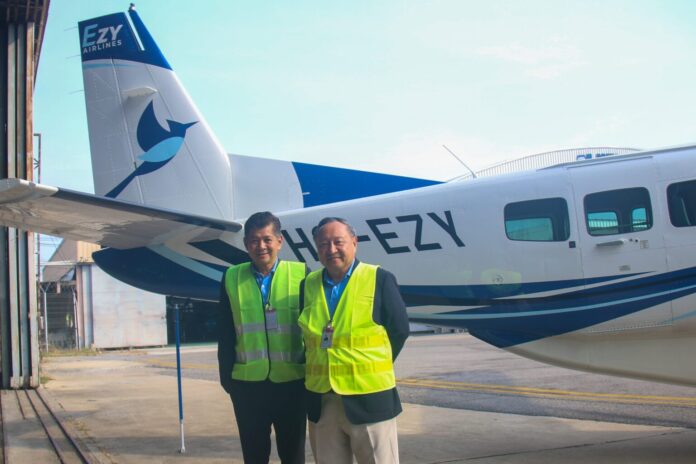
Gen. Supakorn Sanguanchartsornkrai (right) and Thanee Tharapak, Managing Director of Ezy Airlines (left)
BANGKOK – Following the soft-opening and unveiling of the new aircraft at Centara Grand Beach Resort & Villas Hua Hin in Hua Hin, Prachuap Khiri Khan, Gen. Supakorn Sanguanchartsornkrai, chief consultant of Ezy Airlines, M-Landarch Co Ltd, experts in the 12-seater aircraft business, gave Matichon an insight into entering the aviation market. Ezy Airlines is ready to offer scheduled and charter flights and sees itself as a short-haul airline connecting major and secondary cities in the south within 60 minutes.
“Ezy Airlines’ aviation business aims to improve convenience for business travelers, locals and people who need services, such as hospital patients. This will sustainably boost the economy and allow both tourists and business people to realize the true potential of the southern region and promote it on a national scale,” he said.
New Market in the Blue Ocean
The Ministry of Tourism and Sport expects over 23 million tourists to visit the southern region in 2024. So far, around 300,000 passengers have traveled by plane each year, with only 30,000 flights offered, which represents only 1 percent of the potential market. This is an opportunity for a new market in the blue ocean.
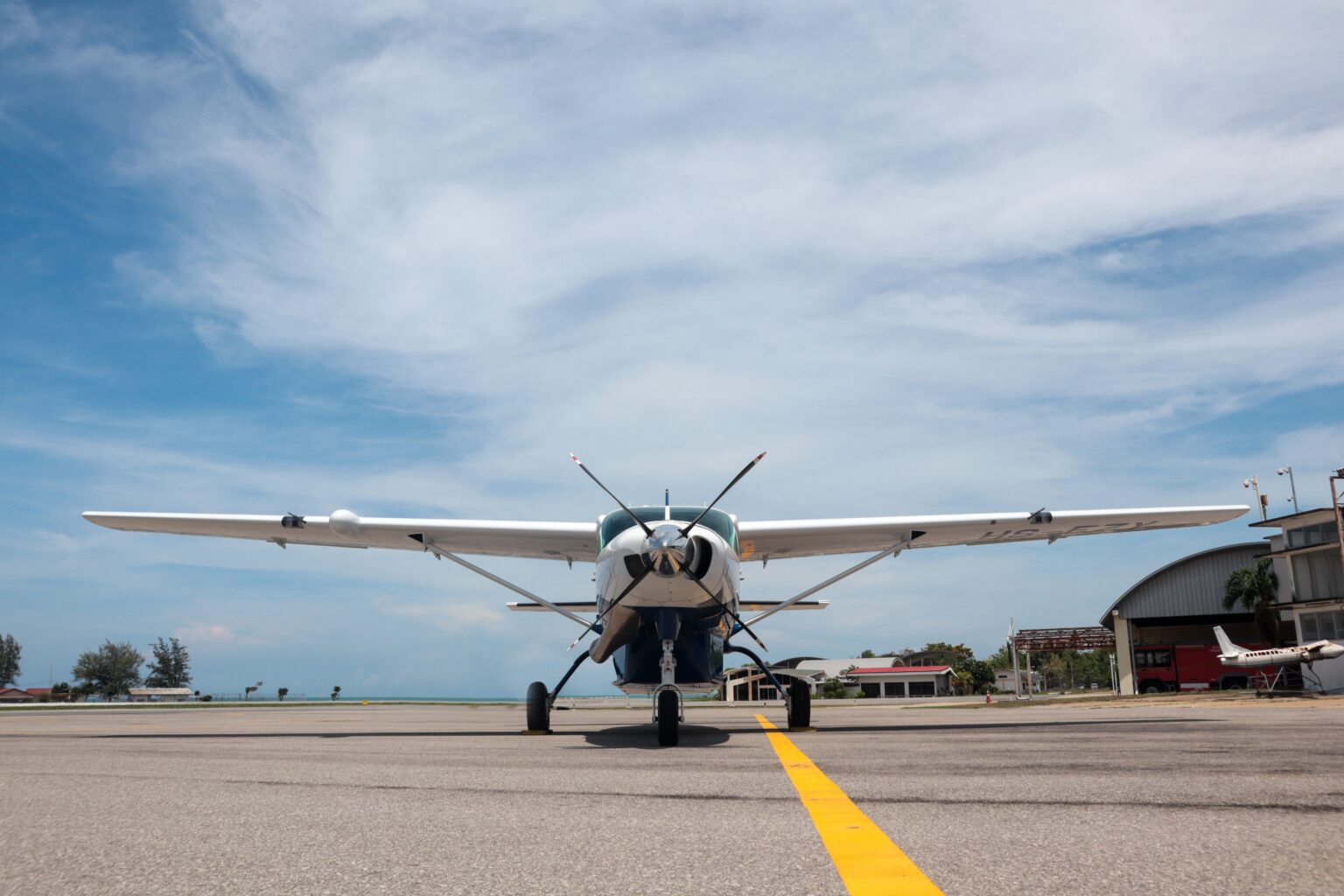
Ezy Airlines has introduced the Cessna 208B Grand Caravan Ex, which can accommodate 8-12 passengers. This aircraft is extremely safe, durable and versatile, able to land anywhere and fly in all weather conditions and terrain. It is easy to maintain and will officially begin flying on 1 July 2025.
Ezy Airlines held the soft-opening and unveiling of the new aircraft at Centara Grand Beach Resort & Villas Hua Hin in Hua Hin, Prachuap Khiri Khan on May 24, 2024.
If Ezy Airlines obtains the Air Operator’s License (AOL) and Air Operator’s Certificate (AOC), it will operate charter flights and use Hat Yai International Airport in Songkhla as its hub from October 2024. Initial routes include Hat Yai to Surat Thani, Nakhon Si Thammarat, Betong and Narathiwat, with fares for the Hat Yai – Betong route ranging from 1,900 to 2,500 baht per seat.
Gen. Supakorn explained that the company plans to increase the number of flights to a total of nine in the medium term (in 3 to 5 years) by purchasing additional aircraft. This will cover other regions of Thailand and establish connections to neighboring countries such as Malaysia (Langkawi, Penang and Ipoh airports) and Indonesia. The aim is to offer passengers new travel options and break even by 2027, generating billions in revenue.
Ezy Sets Sights on Betong Airport
Meanwhile, On May 27, Chatchwee Sakornvisai, Senior Director of Business Development and International Coordination at Ezy Airlines, gave an interview in Betong District, Yala Province, southern Thailand. He stated that the company sees that the previous government has already built Betong Airport, and there were initial problems (suspension of operations). So it is a good choice.
Ezy Airlines’ aircraft are small, with 12 seats, which are suitable for regional travel. Moreover, Betong’s local people, various economies, and border trade between Thailand and Malaysia have a demand for goods and services, including connecting to the center of the South, which is Hat Yai District, Songkhla Province.
“When there are planes to help shorten the travel time from 4.5 hours by car to only 30 or 35 minutes, it can save time and reduce the danger of driving on the winding mountain roads of Highway 410 Yala-Betong. Those who have traveled by car on this route probably understand well how winding the route is and how it causes motion sickness,” he said.
Chatchwee said that when the airline service opens from Hat Yai International Airport in Songkhla Province, it will fly directly to Betong. After that, it will expand to cover the entire southern region, focusing on secondary city airports such as Ranong, Krabi, Phang Nga, Trang, and Narathiwat, to connect travel between them and help shorten travel time and expenses for people in the South.
Local Travel Connections and Tourism
Thanee Tharapak, Managing Director of Ezy Airlines, pointed out the need for government support in reducing various charges that represent a significant cost to the company. Ezy Airlines is a smaller airline compared to the big players in the industry and focuses on facilitating local travel connections and tourism.
Cessna 208B Grand Caravan Ex
Tourism in Songkhla province and the southern region has seen significant growth in terms of visitor numbers and spending, such as tourists from Malaysia who can easily travel to nearby provinces. However, the current travel infrastructure does not support this convenience and Ezy Airlines aims to take on this task.
Thanee added that there is a high demand from passengers, but the supply is insufficient. Passengers from the south, especially those who fly, often inquire about chartering entire planes rather than ticket prices, reflecting their high purchasing power supported by lucrative rubber prices and various industries such as agriculture and fishing. Consequently, they are willing to pay for convenient travel options.
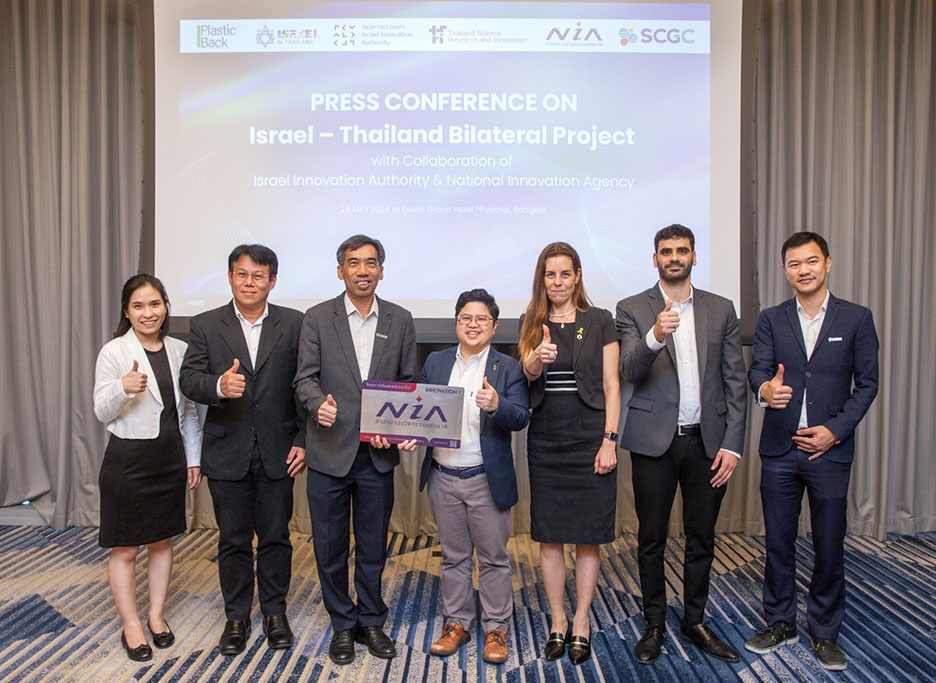
Ms. Orna Sagiv, Ambassador of Israel to Thailand, and Dr. Krithpaka Boonfueng, Executive Director of NIA
BANGKOK – The Israel Innovation Authority (IIA) in collaboration with The National Innovation Agency (NIA), under the Ministry of Higher Education, Science, Research, and Innovation, showcased an innovative process for recycling PVC-contaminated plastic waste using superoxide processes to produce naphtha oil for the chemical industry.
This is the first use case of this technology in Thailand, a result of the cooperation between SCG Chemicals from Thailand and Plastic Back from Israel.
The innovation aims to address the challenge of disposing of PVC-contaminated plastic waste, by producing naphtha oil that can be used in factories, replacing the high-cost fossil-based naphtha.
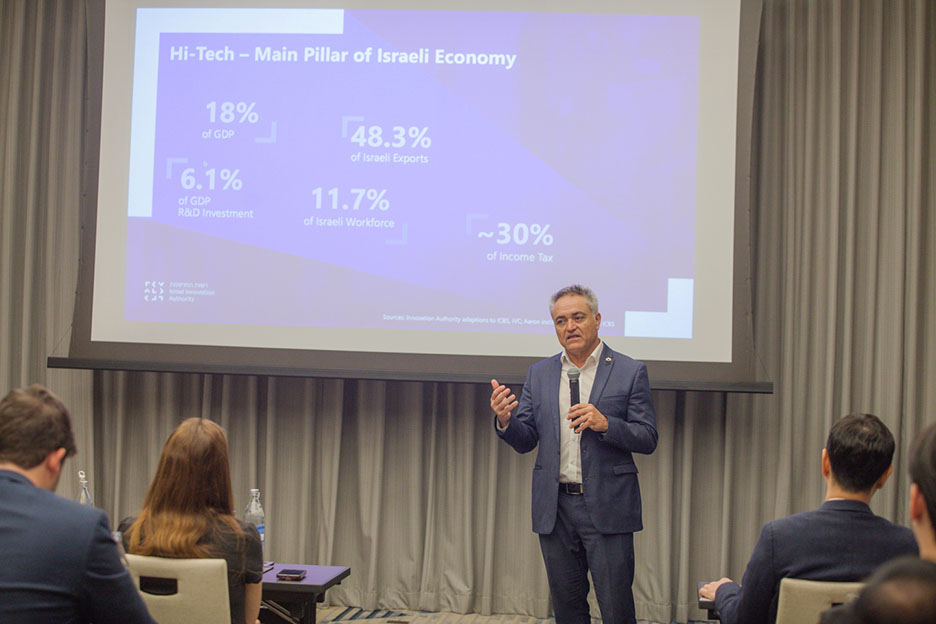
Ms. Orna Sagiv, Ambassador of Israel to Thailand, delivered the opening remarks at the press conference on the Israel-Thailand Bilateral Project on May 24, 2024. She expressed her happiness to hear that the introduction initiated by the Economic and Trade Mission, Embassy of Israel in Thailand, has led to a successful cooperation between SCG Chemicals and the Israeli start-up Plastic Back.
“I am sure that this is the first of many successful cooperation. I truly believe in the combination of small Israeli Start-Ups and big Thai Power-Houses, benefiting the peoples of our two countries,” she said.
Dr. Krithpaka Boonfueng, Executive Director of NIA, stated thay NIA is committed to promote the development of innovations that create economic and social value. Recognizing the importance of building international collaborative networks.
NIA partnered with the Israel Innovation Authority (IIA) to launch the ‘Bilateral Programs for Parallel Support’ to enhance the capabilities of innovative business entrepreneurs in sectors of mutual interest between the two countries.
This plastic waste recycling innovation project between SCG Chemicals and Plastic Back is the first success since the signing of Memorandum of Understanding (MoU) in innovation cooperation in 2018.
Dr. Suracha Udomsak, Chief Innovation Officer at SCGC, explained that the recycling technology developed by Plastic Back can transform PVC-contaminated plastic waste, traditionally challenging to recycle, into high-value products with an exceptional recycling rate nearing 100%.
This technology can be integrated either as independent units within factories or deployed regionally across diverse provinces. SCGC plans to trial this innovative technology with plastic waste in Thailand, aiming to ascertain the optimal conditions for producing hydrocarbon feedstock used in petrochemicals.
“This collaboration will advance SCGC’s circular economy concepts according to our business concepts. We aim to develop green solutions based on the Low Waste, Low Carbon approach to tangibly achieve sustainability goals and move towards a low-carbon society,”
Mr. Tal Binder Cohen, Chief Executive Officer at Plastic Back, added, “We have identified the PVC chemical recycling segment as a big opportunity. The collaborative efforts with SCGC will allow us to close the loop on the upcycling of difficult-to-treat PVC waste streams. We look forward to strengthening our collaboration with SCGC as we scale up our process and partnership. The bi-lateral R&D framework, supported by the NIA and IIA have allowed us to bring together innovation, industry expertise, and a fertile ground for collaboration.”
Matichon Forum gathers scholars and experts in political science, economics, and geopolitics to lecture the topic "Thailand 2024: Surviving Geopolitics" at the 19th floor of Gaysorn Urban Resort, Bangkok, on May 24.
BANGKOK – Matichon’s editorial team organized the Matichon Forum “Thailand 2024: Surviving Geopolitics” to reflect on the current situation and ways to adapt under the influence of geopolitics affecting the world population, various sectors and Thai citizens politically, economically and socially.
Professor Dr. Surachart Bamrungsuk from the Faculty of Political Science at Chulalongkorn University opened the forum with the topic “Thailand 2024: Surviving Geopolitics”,” highlighting three alarming issues: war, pandemics and climate change. However, “geopolitics” is seen as a “global risk”
Thailand Must Adapt Quickly
Professor Dr. Surachart Bamrungsuk
The Ukraine war, which began in 2022 and will continue in 2024, is a major conflict reminiscent of the Spanish Civil War of 1936 — a precursor to the Second World War of 1939. The war in Ukraine is expected to last from the third quarter of 2024 to the second quarter of 2025. The conflict in Gaza will end, but how it ends, whether with an Israeli victory or a significant political defeat, remains uncertain.
Professor Dr. Surachart outlined several geopolitical challenges: the Ukraine conflict, the Gaza Strip, the Red Sea, the Taiwan Strait where China is conducting major military exercises, North Korea’s missile tests and the highly volatile South China Sea. If war does not break out in the South China Sea, it could happen in the Taiwan Strait. He emphasized the increasing fear of a possible third world war, especially after the turn of the year, which is reflected in the rise in gold prices.
He asked how Thailand would react to this by pointing out that the country’s bureaucratic system is slow to adapt compared to global trends. As a result, he said, Thailand has limited preparation to deal with these problems, like pushing a boulder uphill. He called on the Thai leadership to be understanding and far-sighted and warned that without adaptation, Thailand would find it difficult to compete with the major powers.
Professor Dr. Surachart Bamrungsuk (right) opens the forum with the topic “Thailand 2024: Surviving Geopolitics” on May 24, 2024.
Professor Dr. Surachart also analyzed the trend of right-wing movements that have already won elections in many countries, both in Europe and Asia, which are moving towards electoral democracy. This year, more than 50 countries worldwide are holding elections, with more than 49% of the global population casting their ballots.
This includes the upcoming United States election in November, which is considered a global election as well, because if Donald Trump returns, there will be many more issues to follow.
However, the Thai right-wing groups do not follow the global trend of electoral victories. Instead, they are a backward right-wing that is fixated on a single idea: the endless dream of a coup d’état. Therefore, he believes that under the context of the volatility of Thai and global politics, coups remain an issue in Thai society due to anxiety and fear. Coups are considered a violation of international order, which the liberal world stage does not accept.
Clash of values of Superpowers
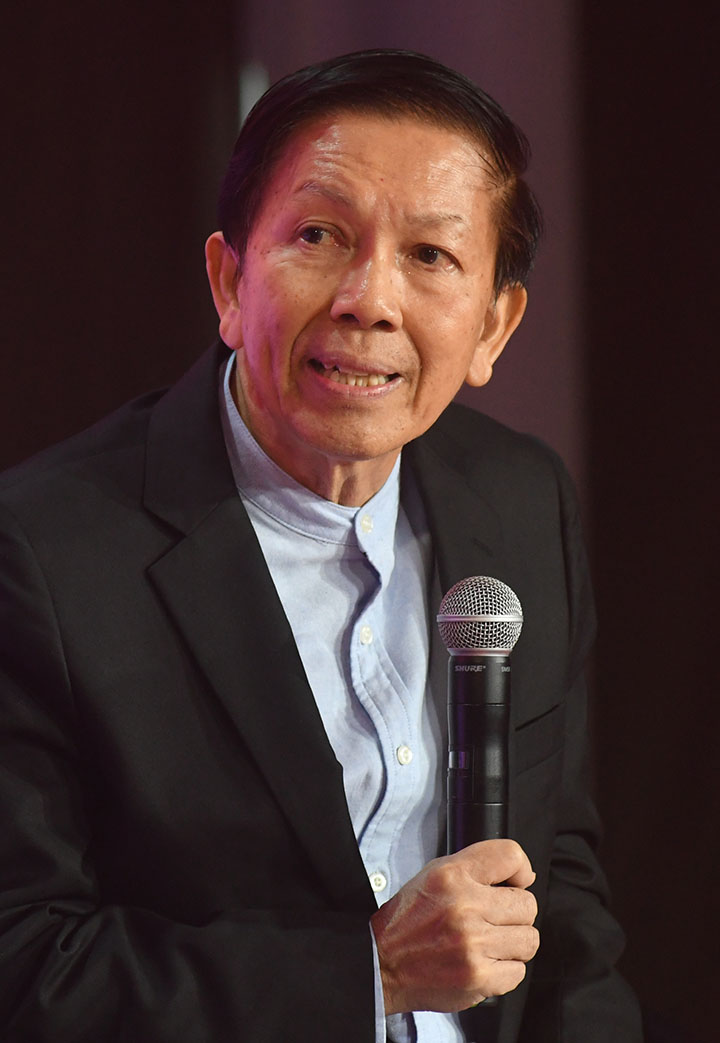
Assistant Professor Dr. Thanee Chaiwat, Chairman of the Political Economy Program, Faculty of Economics, Chulalongkorn University, gave a lecture on “The Frontline of Values in the Geopolitical Battlefield”
He said that people generally regard “China-America” as a symbol of Geopolitics, while the two superpowers have different values and the clash of values that influence Thai society’s thinking, leading to conflicts.
The conflicts between Eastern and Western values in Thai society are increasing, which also affects the way people from each culture conduct business.
Assistant Professor Dr. Thanee Chaiwat
The Chinese culture is skilled in negotiation and adept at handling complexity, while the foundation of Western culture is to conduct business openly, not limited to just within the country, but they cannot handle complex businesses. Therefore, no one knows what is more suitable for Thailand, or it may be possible to combine them.
Four Paths and Two Axes: The Myanmar Game
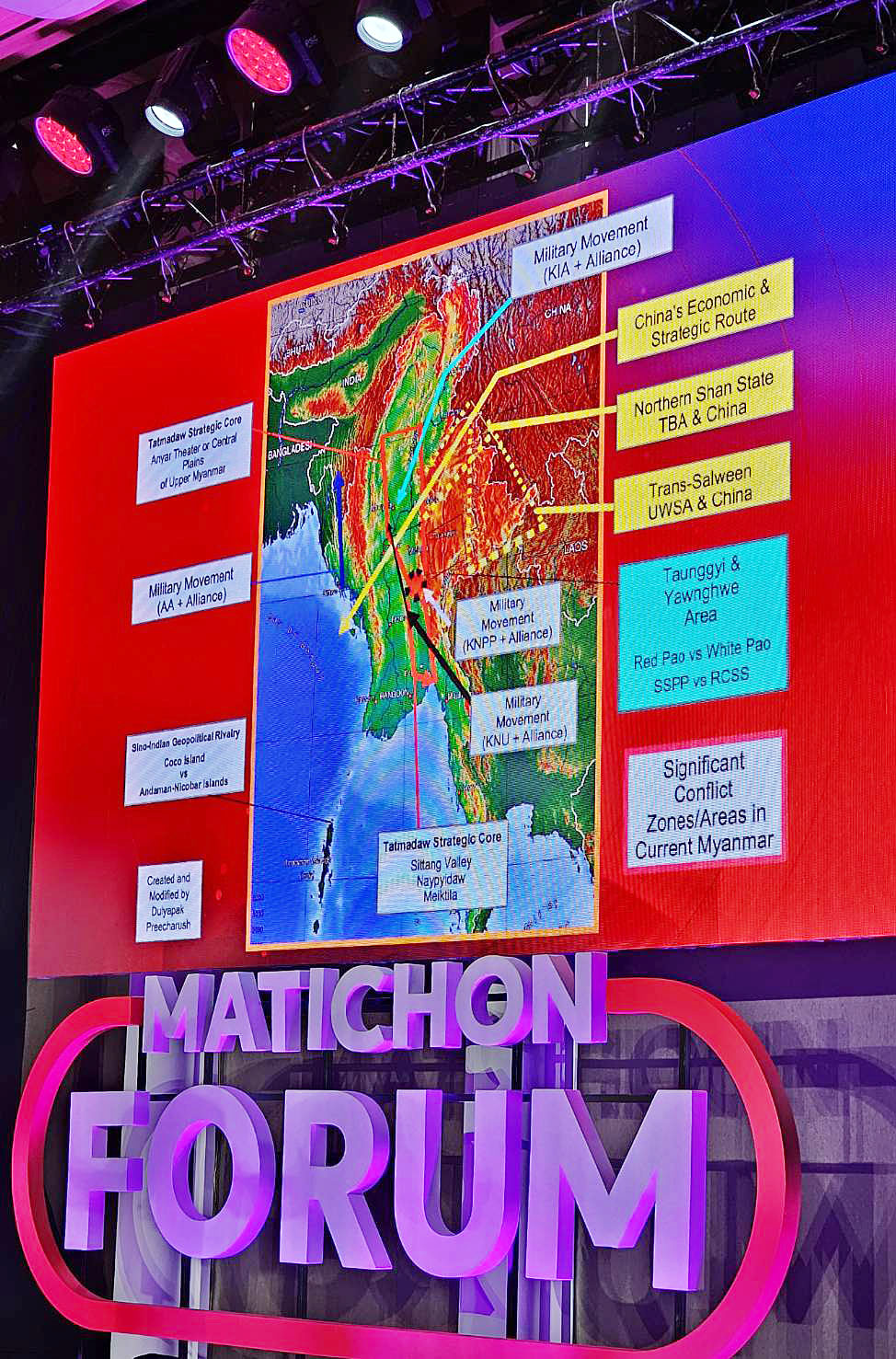
Associate Professor Dr. Dulyapak Preecharush, from the Southeast Asian Studies Program at Thammasat University discussed Thailand’s need for its own geopolitical vision with a strategy that includes four paths and two axes:
Central relations with Myanmar: The Thai government should maintain close relations with the military government of Myanmar.
Border relations with Myanmar: Thailand should strengthen cooperation with ethnic armed groups and the democratic government.
Cooperation with major powers and global organizations: Cooperate with China, India, Japan, the United States and the United Nations.
Associate Professor Dr. Dulyapak Preecharush describes the Myanmar map showing the area captured and controlled by the revolutionary forces.
Cooperation within ASEAN: Strengthen relations and information exchange with Laos, the ASEAN chair, and maintain relations with other ASEAN members such as Indonesia, Malaysia and the Philippines.
In terms of strategic defense, he said the first axis is the defense of Thailand’s sovereignty along its borders. The second axis involves establishing new zones outside Thai territory, especially in strategic areas in Myanmar, to proactively protect Thai interests and strengthen Thailand’s influence.
“Some areas that should be our zones of interest require a more proactive strategy rather than just being defensive. For example, investing in those areas, combating drug trafficking, and contributing to the promotion of human rights in surrounding regions. Instead of merely responding to problems, we should not confine ourselves to the Golden Axe territory alone,” Associate Professor Dr. Dulyapak said.
Building Negotiating Power
Associate Professor Dr. Piti Srisangnam from the Faculty of Economics at Chulalongkorn University suggested that for Thailand to be a leader in ASEAN, it needs to strengthen its negotiating position so that all sides cooperate with Thailand. This includes adhering to international principles, avoiding interference in internal activities and playing a more proactive role. He emphasized the need for Thailand to:
Improve the efficiency of the production sector, taking into account the environmental impact, digitalization and financial sustainability.
Improve the quality of the workforce and open up labor markets.
Become a principled state in regional forums.
Associate Professor Dr. Piti Srisangnam from the Faculty of Economics at Chulalongkorn University joins the forum by videocall from Indonesia.
“If Thailand wants to play a leading role in ASEAN, it must build negotiating power so that we do not have to choose sides, but instead, all sides come to negotiate with us. We need to adhere to principles, not interfere in internal activities, but accept international rules. We should take a more proactive role and reclaim our leadership in ASEAN. Several months have passed, and our leaders have still not visited all the ASEAN countries.”
Creating Agendas Instead of Just Responding
Independent scholar Khunakon Vanichvirun highlighted the importance of managing oneself amidst competing powers by setting agendas rather than merely reacting to events. He distinguished between the tangible aspects of geography and the imaginative constructs of political science, asserting that creating a geopolitical agenda is essential for Thailand’s positioning on the global stage.
“Political science is an imagination, a creation of human society, where humans believe in what they imagine. Therefore, if we have confidence in geopolitical figures and create an agenda within a geopolitical framework, we can achieve significant results as the traditional Thai state.”
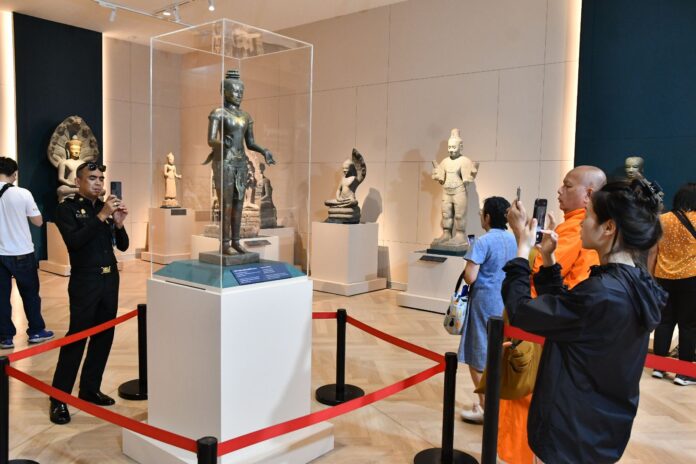
Visitors take photo of the Standing Shiva (also known as the Golden Boy statue) at the National Museum in Bangkok on May 23, 2024.
Dear Cambodian neighbors,
It saddened me to learn that over the past week, some Thais and Cambodians on social media heightened the level of toxic and degrading verbal and written attacks against one another as a result of the repatriation of “The Golden Boy” bronze statue from the Metropolitan Museum of Art in New York City after many decades.
This should cause both Thailand and Cambodia to rejoice that this important and exquisite Khmer art bronze statue, which is around 900-year-old, has finally returned to the region where it belongs.
To my Cambodian friends, brothers and sisters, I say, much of what is today central and northeastern Thailand was once part of a great and accomplished Angkor civilization and you have all the reasons to be proud of your history and the historical and cultural facts that your ancient culture influenced much of what is today traditional Thai culture, arts, architecture, and even language. This should be the right attitude forward and a peaceful and friendly relationship and coexistence between our two nations.
It is without doubt that a lot of work remains to be done to counter or dissuade a growth of narrow nationalism and degrading views on the neighbors, both in Cambodia and Thailand. As a Thai citizen, I am sorry and would like to apologize for many degrading and narrow-minded remarks made on social media by some Thai extremist nationalists.
Sometimes I feel helpless and ashamed upon seeing the spread of these very toxic and reprehensible anti-Cambodian sentiment and all the derogatory words hurled against Cambodia, Cambodians, and Khmer culture, by these Thais. I feel the same upon reading similar anti-Thai and degrading remarks about Thailand and the Thai people and culture from extremist Cambodians online.
It is clear that some Thais and Cambodians have become prisoners of a narrowly interpreted history, real or imagined, which neglect the porous nature of cultural exchanges. Both nations, and not just our respective governments, have a lot of work to do to mitigate or at least prevent these sentiments from poisoning the relationship between the majority of the people of our two nations.
Ancient empires fall and split into more than one modern nation state – that is nothing uncommon. Thais will have to learn more about the depth of cultural debt they owe the great Angkorian civilization, but I hope Cambodian friends who are reading this letter should also recognize that Thai culture is also partly Angkorian culture although over the centuries we evolved in a slightly different directions (which is natural) – not unlike that of how traditional Japanese, Korean, and even Vietnamese cultures and architectures evolved from ancient Chinese culture and yet are distinct and different today.
Look at the beautiful temples in central Thailand and palaces and we see it is quite similar to those in your country, Cambodia, and yet different. We thank you for having influenced us in the past, to enrich Thai culture, and we look forward to cross cultural exchanges in the future.
Back to the Golden Boy statue, I wish one day the statue, which was originally found in Buriram province where many ethnic Khmer people reside, can be loaned to the National Museum in Phnom Penh. The problem is many Thais would likely say no as they do not trust that it will be returned. That is the alarming reality of the level of distrust. (If there is a consolation, please note that the description below the statue at the National Museum in Bangkok clearly stated both in Thai and English that the statue represents a “Khmer Art in Thailand”)
For both Cambodians and Thais who recognize the toxicity of our people-to-people relationship, particularly among extreme and narrow-minded nationalists, we have a lot of work to do to address the problem and to prevent it from causing a wider toxicity and hatred. The repatriation of the Golden Boy is a reminder of this troubled relationship, and mutual animosity among some on both sides of the border, but this might also be the golden opportunity if we recognize the wake call and try to address it before we risk losing a generation to this needless and petty mutual hatred and degradation.
Andreas Kalias or Woonsen, who looks like John Wick, poses for a picture with his wife Kanchalee Phromma, or Tuk, at their house in Nakhon Ratchasima.
NAKHON RATCHASIMA – The person behind the viral clip has been found – a foreigner who looks like John Wick, a character from a Hollywood action movie played by Keanu Reeves, appeared in Thailand with a caption saying, “John Wick stopped killing people and turned to sell coffee and grilled squid.” The clip has over 4 million views and many comments, with many people wondering if it was the real Keanu Reeves.
On May 27, Khaosod Online reported that they found the person who posted this intriguing clip. Her name is Ms. Kanchalee Phromma, or Tuk, 49 years old, the owner of the account “tuktiklife,” residing in Moo 13, Klang Dong Subdistrict, Pak Chong District, Nakhon Ratchasima Province.
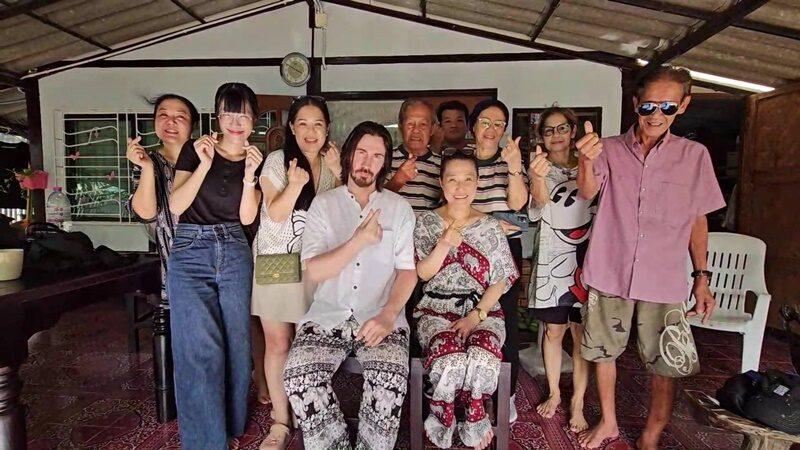
Andreas Kalias or Woonsen, who looks like John Wick, poses for a picture with his wife Kanchalee Phromma, or Tuk, and her family, at their house in Nakhon Ratchasima.
She is the wife of the man who looks like John Wick. In their home, there are also his parents and relatives who took group photos with him.
Tuk said that she met her German husband, named Andreas Kalias, through a dating app. They hit it off, and she nicknamed him “Woonsen,” which means “Glass Noodles” in Thai. Today, they have been married for 4 years without children. He loves family and is a real family man.
She also revealed that Woonsen used to have blond hair until one day in Germany, there was a carnival event with a celebrity look-alike costume contest. She dressed up her husband, dyed his hair black, and was surprised that he looked a lot like John Wick.
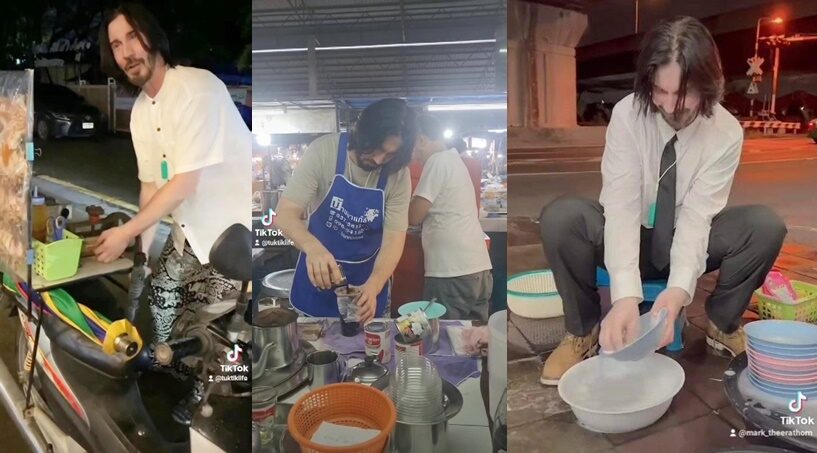
John Wick stopped killing people and turned to sell coffee, grilled squid and wash noodle bowl.
Since then, wherever they go, people would come to take pictures with him. Many people said he looks just like John Wick, to the point that a television channel came to interview him. From then on, he became known for his resemblance, and event teams continuously contacted him for work. When she asked her husband if he liked being recognized as a celebrity look-alike, he said he did.
This time, they came to Thailand on May 13 and will return to Germany in 2-3 days. During this trip, people asked to take photos with him, thinking he was a celebrity. She took pictures of him riding a motorcycle, washing dishes, and selling squid, then posted them on TikTok, which got over 4 million views.
Woonsen, or Andreas, said he likes it when people come up to him and say he looks like a celebrity. Wherever he goes, both in Germany and Thailand, people recognize him and ask for photos. He doesn’t feel tired of it.
“Thank you to the Thai people for welcoming me. Thai people are lovely, especially my wife,” he said.
Earlier, Mr. Mark, a noodle stall owner in Bangkok’s Prachachuen area where the look-alike John Wick washed noodle bowls, told the press that he and his wife were “utterly stunned” when they saw the man approaching. His wife soon ordered the look-alike to help wash the noodle bowls at the stall. The man removed his black suit jacket and obediently complied, washing the bowls alongside him.
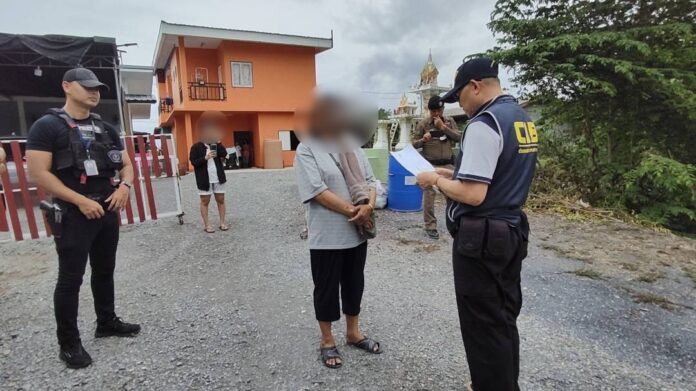
A police officer read the arrest warrant from the Criminal Court to Ms. Kulsiria, a suspect of involvement in a scam operation worth up to 800 million baht.
SUPHAN BURI – A Thai mother-in-law of a Malaysian son-in-law has been arrested for her alleged involvement in a scam operation worth up to 800 million baht. She claimed her son-in-law borrowed her bank account.
On May 26, officers from the Economic Crime Suppression Division (ECD) under the Central Investigation Bureau (CIB) arrested Ms. Kulsiria, 49, in front of her residence in Moo 19, Don Kha Subdistrict, U Thong District, Suphan Buri Province. Investigations revealed that she was involved with a scammer gang.
Kulsiria was issued an arrest warrant by the Criminal Court on charges of “jointly defrauding the public, jointly committing fraud or deception by bringing false information into a computer system, knowingly using it to commit an offense, and participating in a transnational criminal organization.”
The investigation into this case began when police received reports that a group of fraudsters had posted on Facebook, inviting people to invest in foreign stocks through an application they had created. They impersonated well-known individuals in the stock trading industry to build credibility and offered high returns to create incentives.
However, in the end, no promised returns were paid, and investors were unable to withdraw their invested money. A total of 10 victims, who lost over 800 million baht, filed complaints with the ECD.
Authorities later learned that the criminals operated as a syndicate, with Chinese-Malaysian financiers behind the scenes along with a number of Thais. Evidence was gathered to request court warrants for the arrest of more than 50 people involved, and 20 suspects have been apprehended so far.
Kulsiria used a domestic bank account in Thailand to receive benefits from Malaysians. She denied any involvement in the fraudulent scheme but admitted to being the mother-in-law of one of the key Malaysian suspects, who had previously borrowed her bank account without her knowledge of its intended use.
Bar hostesses await customers in Pattaya, a popular tourist destination.
PATTAYA – Police officers in Pattaya arrested three entertainment venue security guards who used violence against two foreign tourists in the Pattaya Soi 6 area. The incident appeared in a clip on social media.
Two video clips of the incident were first published on the evening of May 26 on the Nui voice AnyWay page, with a message questioning, “Is it necessary to do this?” along with a message thanking the Thai women who tried to intervene and stop the incident.
This post garnered various criticisms and opinions about the appropriateness, violence, barbarism, and disturbance of the incident. Some people suggested looking at the root cause before the violent incident occurred.
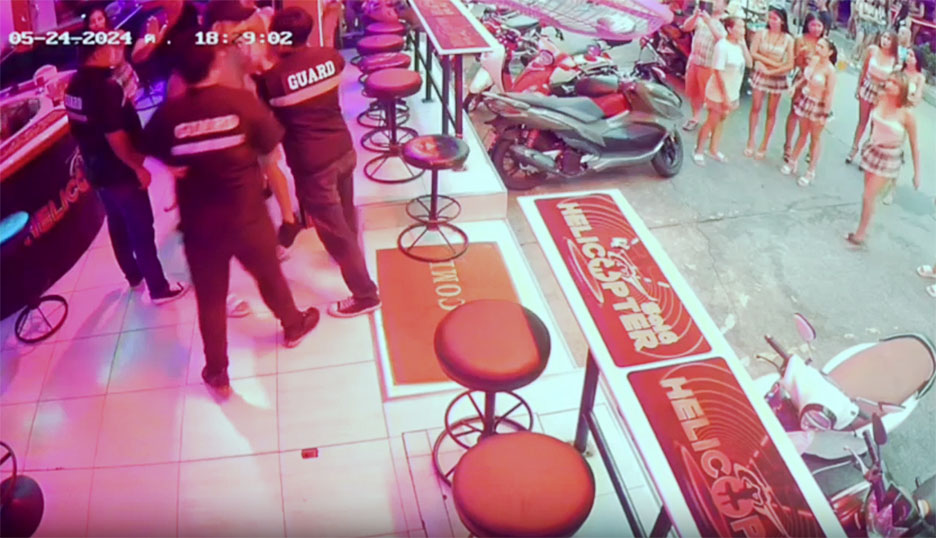
In the clip, the group of guards rushed in to punch and jump-kick the foreign man in a white shirt until he fell to the ground, then followed up with more kicks. Before the tourist in a gray shirt could run to help, he was also punched and kicked relentlessly in the face by the group of guards until he fell unconscious and lay still. The guards then turned back to the man in the white shirt and continued to beat him, all in front of Thai and foreign tourists.
Screenshots from clips capture the incident in which three entertainment venue security guards used violence against two foreign tourists in the Pattaya Soi 6 area.
After a group of beer bar service women intervened and the situation became less tense, the beer bar staff provided first aid to the foreigners.
Ms. Samorn, 38 years old, a cashier at the bar where the incident took place and a witness to the event, said that 3 foreign tourists came to drink at the shop. The first two paid their bills, while the other one had not yet paid and changed seats several times before walking out of the bar.
At this point, she asked the group of friends to collect payment. The tourist in the white shirt argued that he had already paid. She explained that the money she was asking for was from another person in the group who had not yet paid, and that there was no problem with his own bill.
The CCTV footage captured the incident from the moment the group of tourists were arguing with the guards and the situation escalated into violence.
However, he retorted with various profanities, claiming that the bar was cheating on the bill, and insisted that he would not pay. He then went on to assault other tourist who was going to call the police. The bar then called the guards, informing them that a customer was refusing to pay the bill and asking them to come and take a look. When the guards arrived, one of the tourists in this group agreed to pay the shop 2,800 baht.
Ms. Samorn also said that after the tourists had paid the bill, she thought everything would be alright. However, the tourist in the white shirt rushed to push the guard’s chest, which escalated into a chaotic situation in the middle of the street, as shown in the video clip.
“If the guards had not arrived in time to stop the incident, this group of foreigners might have assaulted me and other tourists who were customers as well” she said.
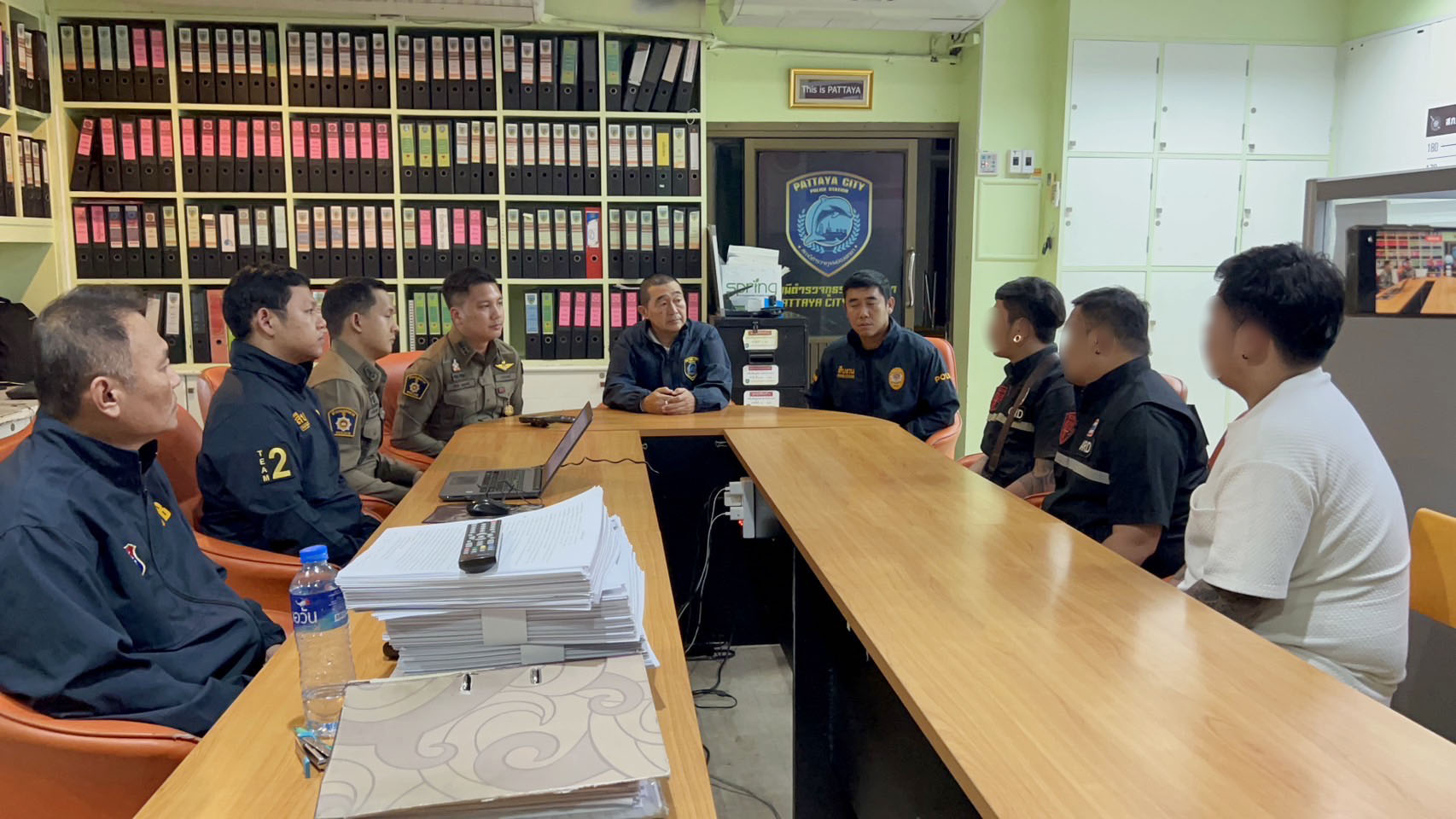
Later, at 23:36 p.m. on Sunday, Pattaya Police Investigation officers and Pattaya Tourist Police Investigation officers arrested the three guards: Mr. Ball, 27 years old, Mr. Tom, 36 years old, and Mr. Ice, 24 years old. They were brought in for questioning at Pattaya Police Station.
Three guards were brought in for questioning at Pattaya Police Station on May 26, 2024.
The three suspects confessed that they were the perpetrators as seen in the video clip recorded by tourists. Mr. Ball revealed that he was the first to be slapped and punched by a tourist, resulting in injuries to his nose bridge that required six stitches. This led to the chaotic situation seen in the clip.
They admitted that their actions were excessive and were done out of anger and lack of judgment. They apologized to Thai society for their actions.
Pol. Lt. Col. Nawin Thirawit, Superintendent of Pattaya Police Station, said the police must proceed with legal action. He also reprimanded the suspects, stating that as security guards, their duty is to ensure the safety of tourists, not to cause trouble. Their actions have greatly damaged the image of Pattaya as a tourist city.
“As security guards, you should have exercised restraint and called the police to control the situation. Do not let emotions control your actions while on duty. Your role is to prevent incidents, not to harm others,” he told the suspects.
Meanwhile, the CCTV footage, which captured the incident from the moment the group of tourists were arguing with the cashier until the guards intervened and the situation escalated into violence, has been submitted to the inquiry officer as evidence for the case file.
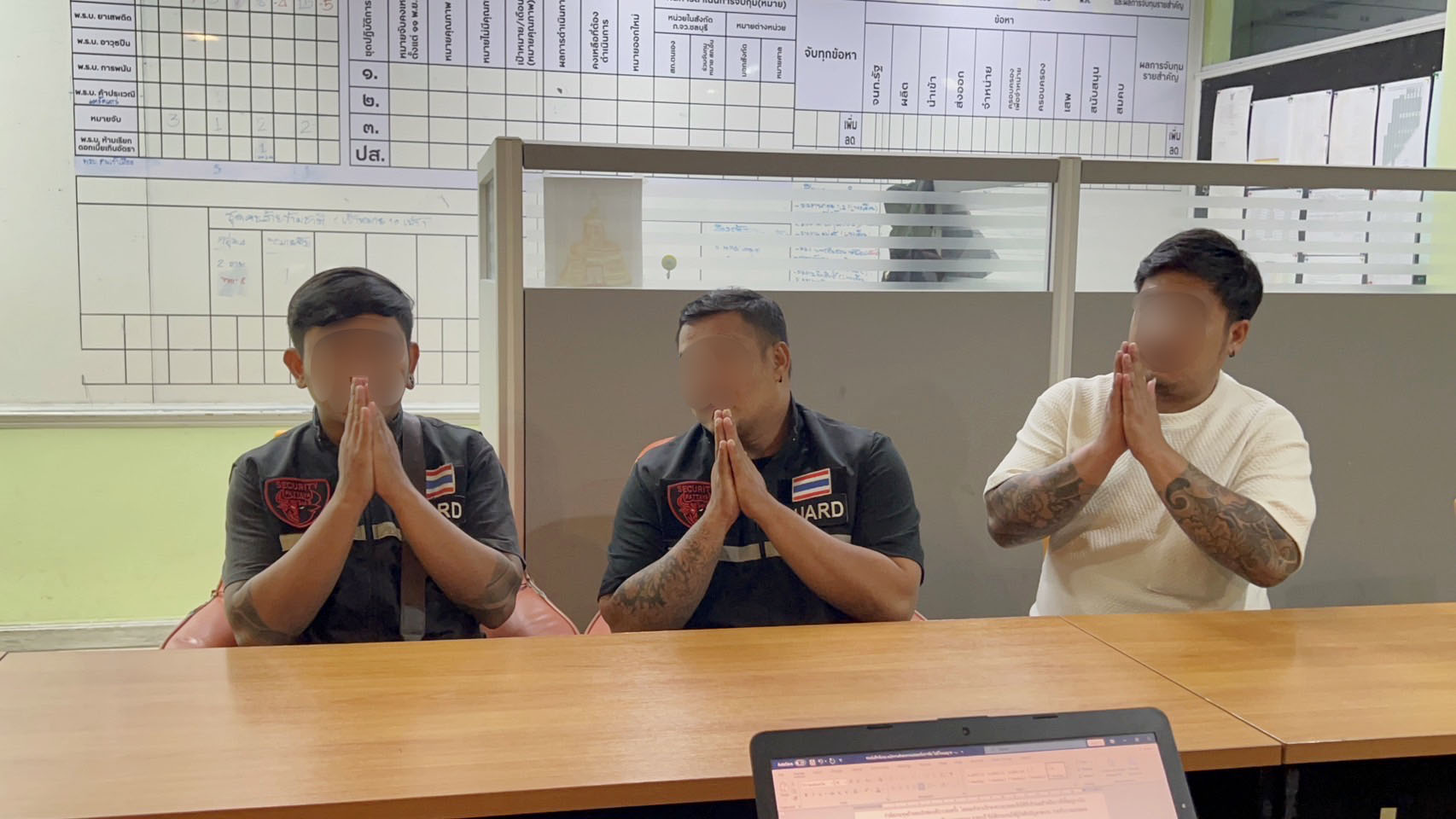
Three security guards who assaulted two foreign visitors admitted that their actions were excessive, raised their hands performing the “Wai” gesture, and apologized to Thai society for their actions.
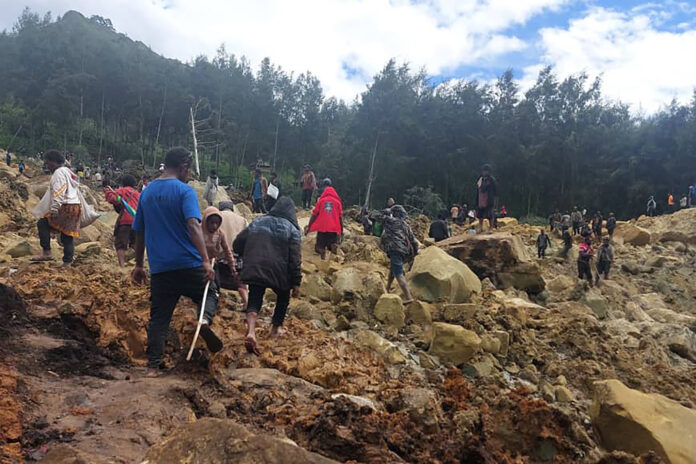
People cross over the landslide area to get to the other side in Yambali village, Papua New Guinea, Friday, May 24, 2024. More than 100 people are believed to have been killed in the landslide that buried a village and an emergency response is underway. (Benjamin Sipa/International Organization for Migration via AP)
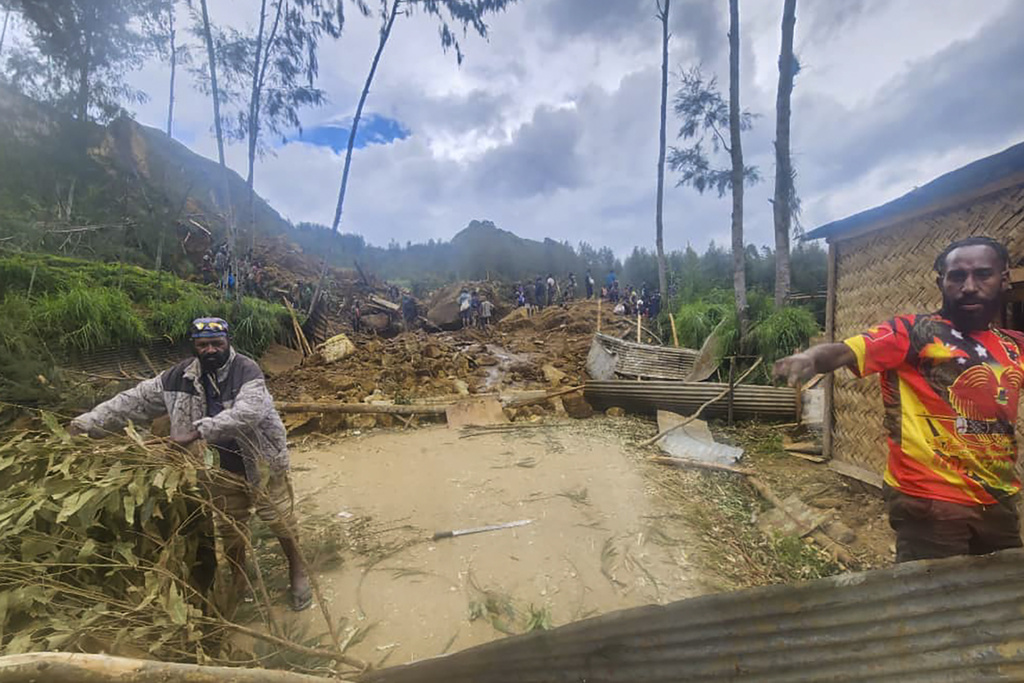
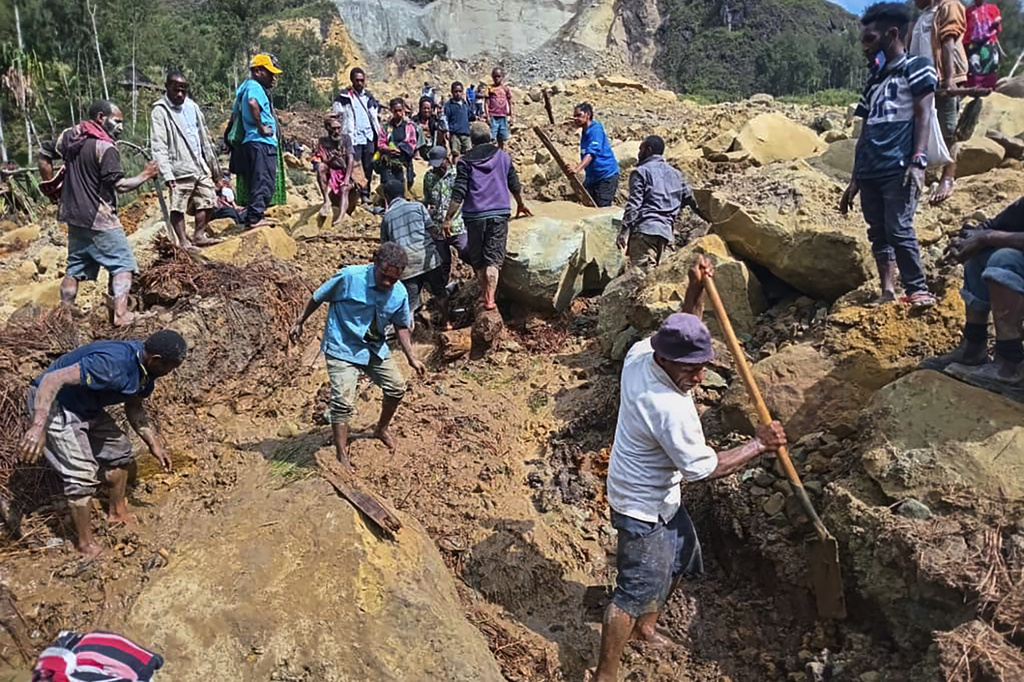
MELBOURNE, Australia (AP) — The International Organization for Migration on Sunday increased its estimate of the death toll from a massive landslide in Papua New Guinea to more than 670 as emergency responders and traumatized relatives gave up hope that any survivors will now be found.
Serhan Aktoprak, the chief of the U.N. migration agency’s mission in the South Pacific island nation, said the revised death toll was based on calculations by Yambali village and Enga provincial officials that more than 150 homes had been buried by Friday’s landslide. The previous estimate had been 60 homes.
“They are estimating that more than 670 people (are) under the soil at the moment,” Aktoprak told The Associated Press.
Local officials had initially put the death toll on Friday at 100 or more. Only five bodies and a leg of a sixth victim had been recovered by Sunday, when an excavator donated by a local builder became the first piece of mechanical earth-moving equipment to join the recovery effort.
Villagers search through a landslide in Yambali in the Highlands of Papua New Guinea, Sunday, May 26, 2024. (Mohamud Omer/International Organization for Migration via AP)
Relief crews were moving survivors to safer ground on Sunday as tons of unstable earth and tribal warfare, which is rife in the Papua New Guinea Highlands, threatened the rescue effort.
Around 250 additional houses have been condemned since the landslide because of still-shifting ground, leaving an estimated 1,250 people homeless, officials said.
The national government meanwhile is considering whether it needs to officially request more international support.
Crews have given up hope of finding survivors under earth and rubble 6 to 8 meters (20 to 26 feet) deep.
“People are coming to terms with this so there is a serious level of grieving and mourning,” Aktoprak said.
He said the new estimated death toll was “not solid” because it was based on the average size of the region’s families per household. He would not speculate on the possibility that the actual toll could be higher.
“It is difficult to say. We want to be quite realistic,” Aktoprak said. “We do not want to come up with any figures that would inflate the reality.”
In this photo provided by the UNDP Papua New Guinea, villagers search through a landslide in Yambali village in the Highlands of Papua New Guinea, Sunday, May 26, 2024. (Kafuri Yaro/UNDP Papua New Guinea via AP)
Government authorities were establishing evacuation centers on safer ground on either side of the massive swath of debris that covers an area the size of three to four football fields and has cut the main highway through the province.
Beside the blocked highway, convoys that have transported food, water and other essential supplies since Saturday to the devastated village 60 kilometers (35 miles) from the provincial capital, Wabag, have faced risks related to tribal fighting in Tambitanis village, about halfway along the route. Papua New Guinea soldiers were providing security for the convoys.
Eight locals were killed in a clash between two rival clans on Saturday in a longstanding dispute unrelated to the landslide. Around 30 homes and five retail businesses were burned down in the fighting, local officials said.
Aktoprak said he did not expect tribal combatants would target the convoys but noted that opportunistic criminals might take advantage of the mayhem to do so.
“This could basically end up in carjacking or robbery,” Aktoprak said. “There is not only concern for the safety and security of the personnel, but also the goods because they may use this chaos as a means to steal.”
Longtime tribal warfare has cast doubt on the official estimate that almost 4,000 people were living in the village when a side of Mount Mungalo fell away. The count was years old and did not take into account people who had relocated to the village more recently to flee clan violence that authorities are unable to contain.
Local authorities on Sunday accepted the village population had been substantially more than 4,000 people when the limestone mountainside sheared away, but a revised estimate was not yet available.
Justine McMahon, country director of the humanitarian agency CARE International, said moving survivors to “more stable ground” was an immediate priority along with providing them with food, water and shelter. The military was leading those efforts.
Villagers search through a landslide in Yambali, in the Highlands of Papua New Guinea, Sunday, May 26, 2024. (Mohamud Omer/International Organization for Migration via AP)
The numbers of injured and missing were still being assessed on Sunday. Seven people including a child had received medical treatment by Saturday, but officials had no details on their conditions.
Papua New Guinea Defense Minister Billy Joseph and the government’s National Disaster Center director Laso Mana were flying from Port Moresby by helicopter to Wabag on Sunday to gain a firsthand perspective of what is needed.
Aktoprak expected the government would decide by Tuesday whether it would officially request more international help.
The United States and Australia, a near neighbor and Papua New Guinea’s most generous provider of foreign aid, are among governments that have publicly stated their readiness to do more to help responders.
Papua New Guinea is a diverse, developing nation with 800 languages and 10 million people who are mostly subsistence farmers.











































 Cooperation within ASEAN: Strengthen relations and information exchange with Laos, the ASEAN chair, and maintain relations with other ASEAN members such as Indonesia, Malaysia and the Philippines.