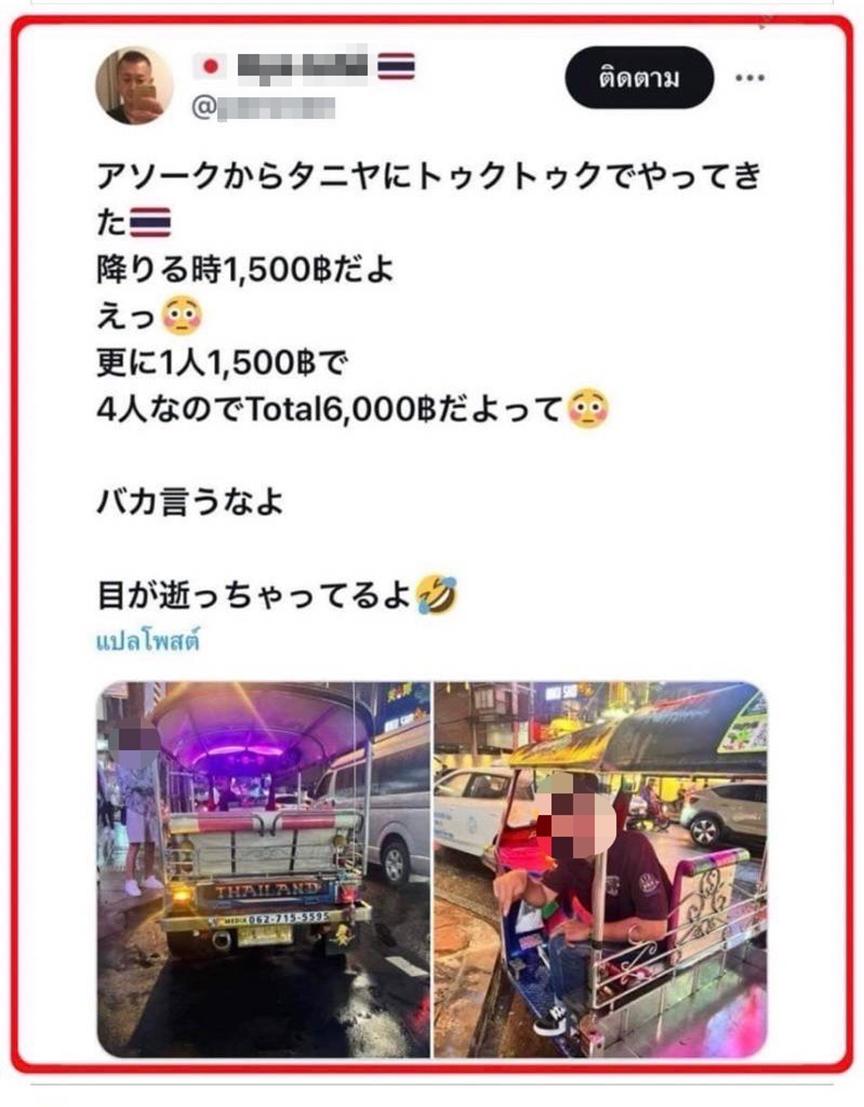
A Japanese tourist posted a complaint on social media about being overcharged by a tuk-tuk driver in Bangkok.
BANGKOK – Recently, a Japanese tourist took to social media to complain about being overcharged by a tuk-tuk driver in Bangkok. The tourist was charged 1,500 baht per person for a 5.8-kilometer ride from Asoke to Thaniya shopping mall, a total of 6,000 baht for four people.
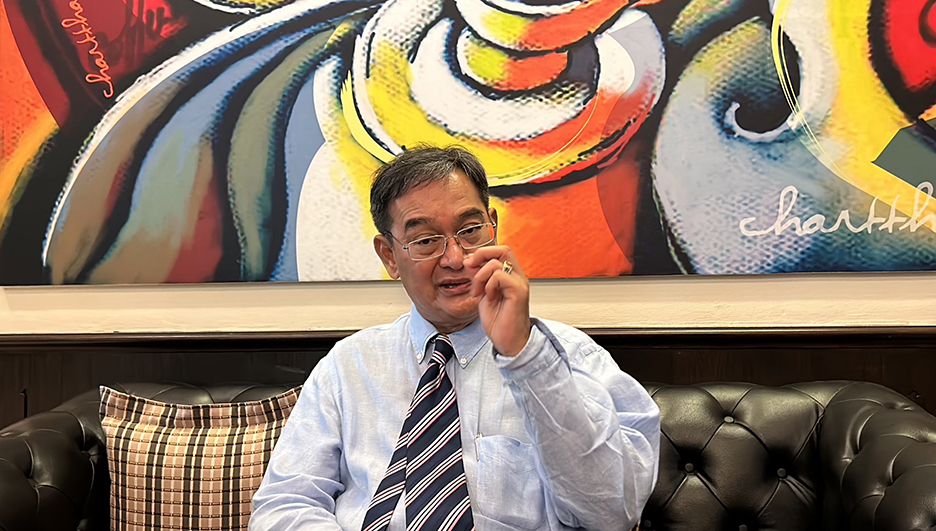
On May 16, 2024, Mr. Nikorn Jumnong, director of the Chart Thai Pattana Party and former deputy transport minister, saw the tourist’s post and was deeply disturbed. He thought of the Public Transport Passenger Protection Center, which he had founded in 2003 and which has a hotline with the number 1584.
Mr. Nikorn Jumnong, director of the Chart Thai Pattana Party
He called the hotline and reported the incident. The staff responded promptly and asked the tuk-tuk driver to report for investigation. The tuk-tuk driver admitted to the allegations made by the tourist.
The Land Transport Department considered the driver’s actions to be a violation of the Motor Vehicle Act B.E. 2522 (1979) and imposed the following penalties:
Violation of fare regulations under Section 22 in conjunction with Section 60: A fine of 2,000 baht.
Violation of dress regulations under Section 5(15) in conjunction with Section 58: A fine of 500 baht.
Suspension of driving license for 90 days.
Mandatory attendance of a 3-hour training course on passenger service awareness.
A Thai netizen reposted the complaint message of a Japanese tourist who was overcharged by a tuk-tuk driver and satirically said, “How Amazing Thailand.”
“I am relieved that we have managed to solve this problem to some extent,” said Nikorn. “On 28 May, when I attend a reception for the Japanese Ambassador to Thailand, Mr. Otaka Masato, at the Okura Prestige Bangkok Hotel, I will apologize to the Japanese people for this mistake,” said Mr. Nikorn.
He also shared that he is very happy that the Public Transport Passenger Protection Center 1584, which he founded and whose logo he designed himself, is still able to provide good service to Thai and foreign passengers. He encourages the public to know about this service so that they can make use of it.
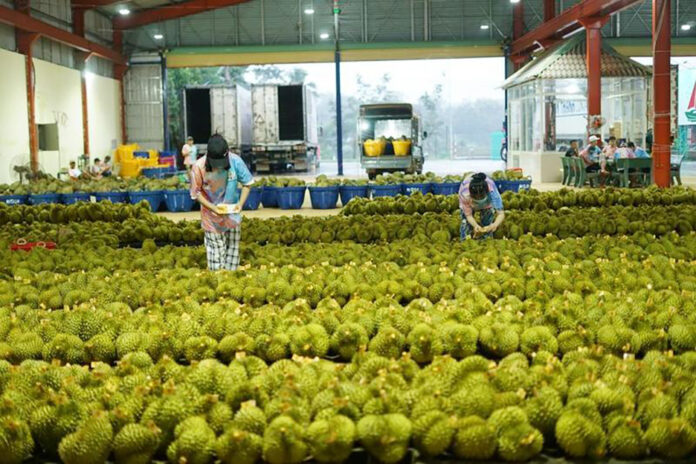
Staff members label durians to be exported to China at a durian processing plant in Dak Lak province, Vietnam, Sept. 15, 2023. (Xinhua/Hu Jiali)
BANGKOK – At Youyi Port, a land border port with Vietnam in Pingxiang, China’s Guangxi Zhuang Autonomous Region, China imported 48,000 tons of fresh durians in the first quarter of this year. Among them, 35,000 tons were imported from Vietnam, an increase of 48.1%, and 13,000 tons of fresh durians were imported from Thailand.
With this trend, Vietnamese durian exports to China are expected to increase by 30 percent in 2024, while Thailand would face more risks, said an academic.
Huai Ta durian, Long-Lin Lab Lae cultivar from Uttaradit province
Mr. Ath Pisalvanich, an independent scholar and international economics expert, and advisor to Intelligent Research Consultant Co., Ltd. (IRC), has released an analysis on the Thai Durian Risk Index for 2024 and evaluated Thai durian over the next five years, identifying multiple risks.
At present, durian is the only important economic crop that contributes significantly to the income of farmers and their related parties. In 2023, durian exports were estimated at 140 billion baht, surpassing the export values of rubber and cassava but still lagging behind rice.
Durian exports account for 25 percent of the total export value of the four main export crops: Rice, durian, rubber and cassava. However, the value of durian exports in 2024 remains uncertain due to several risk factors.
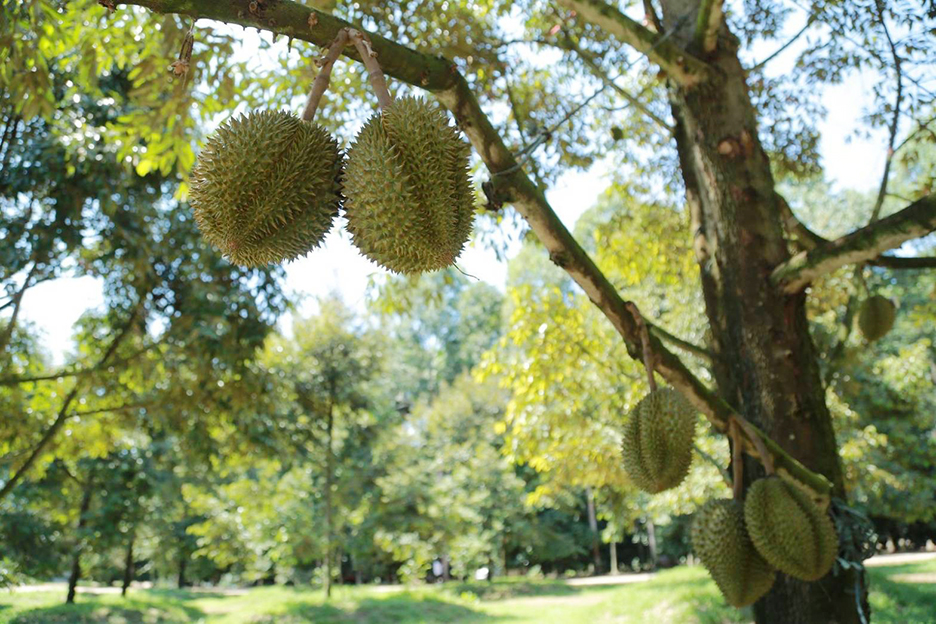
Durian produce at the Nuanthongchan durian orchard, Mab Phai Subdistrict, Khlung District, Chanthaburi Province.
The analysis of the DURI (Durian Risk Index) for 2024 and the next five years indicates that the Thai Durian Risk Index for 2024 is at 57, which is considered high risk as it exceeds 50. The DURI values over the next five years also consistently exceed 50, due to three main risk factors: agricultural drought, increased durian exports from Vietnam, and rising transportation costs to China.
In the last 12 years, Thai durian production has increased by 180 percent from 500,000 tons to 1.4 million tons, due to an 80 percent increase in cultivation areas across the country. However, it is predicted that the drought will reduce durian production by 50 percent over the next five years if the government does not tackle the drought problem head on.
It is estimated that Thai durian production will decrease by 53 percent or 640,000 tons over the next five years. This year, the drought is expected to reduce durian production by 42 percent or 540,000 tons.
Durian produce at the Nuanthongchan durian orchard, Mab Phai Subdistrict, Khlung District, Chanthaburi Province.
In contrast, durian production in Vietnam has increased by 200 percent in the last 10 years. In 2023, Vietnam produced 800,000 tons of durian, up from 270,000 tons in 2014, on a cultivated area of almost 700,000 rai.
For the full year 2024, Vietnam is expected to export 500,000 tons of durian to China, while Thailand’s exports are expected to be 800,000 tons, a decrease of almost 200,000 tons. In addition, the production cost of durian in Thailand is twice as high as in Vietnam. In 2023, Vietnam’s production cost was 15 baht/kg, rising to 19 baht/kg by 2024.
“Between 2022 and 2024, the number of Chinese middle men increased by 665, while the number of Thai middle men decreased from 25 to 10. In the future, the number of Thai middle men is expected to decrease further to a maximum of five. Therefore, the most urgent national task for the government is to solve the drought problem for durian farmers to prevent the impact on farmers’ income and rising product prices, and to focus on quality production. In the next three years, Vietnamese durian quality will approach Thai durian quality”
However, in 2024, spending related to the Thai durian business is expected to reach 980 billion baht, an increase of 140 billion baht or 16.2 percent compared to 2023. The eastern region will see the highest amount of money in circulation, followed by the southern and northern regions. The business with the highest money in circulation will be the middleman, which will generate 280 billion baht.
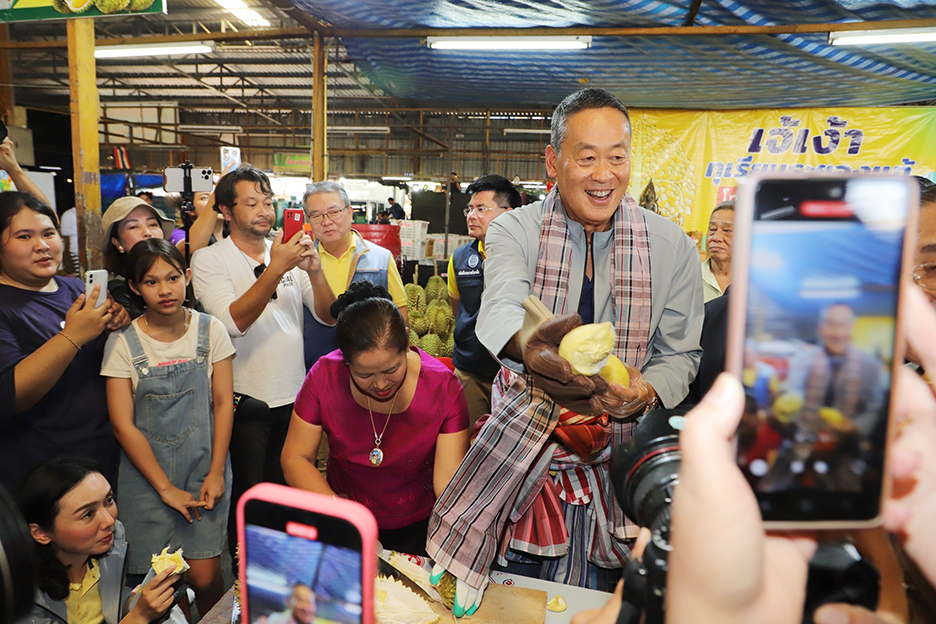
Prime Minister Srettha Thavisin cut open Rayong durians and distributed them to participants during his trip at Je Ngao Durian Shop in the central vegetable and fruit market of Ratchaburi province on May 12, 2024.
Prime Minister Srettha Thavisin commented on the competition between Vietnamese and Thai durian fruits on the Chinese market, saying that it was a matter of free competition. Every target country, including China, demands durian. Therefore, quality and taste are crucial. It is our responsibility to promote competition by developing varieties, controlling durian conditions and quality, and efficient transportation to ensure fast delivery.
According to Xinhua, the Chinese news agency, China imported approximately 6.7 billion U.S. dollars worth of durians in 2023. Thailand, the leading exporter of fresh durians to China, has seen sustained growth in demand for its produce. Economists believe that the surge in durian demand presents opportunities for the rest of Southeast Asia, not just Thailand.
Remarkable year-end figures from 2023 revealed that Vietnamese durian exports to China hit 2.1 billion U.S. dollars, capturing 31 percent of a growing durian market in its northern neighbor, according to data released by China’s General Administration of Customs.
AIS collaborates with partners to host a forum elevating Thai Creators unveil exclusive formulas, tips, and strategies to advance coaching professions, empowering entrepreneurs for sustainable growth.
AIS organizes the Global Creator Culture Summit, featuring world-renowned Professor David Craig, a leading social media scholar from the United States. The event unveils global coach growth figures, emphasizing the communication context in the new world. It gathers ecosystem partners and top Thai Creator, revealing inspiration, secret formulas, and tips to foster creator into professions capable of sustainable and robust growth.
Mr.Pratthana Leelapanang, Chief Consumer Business Officer at AIS said “As the developers of the country’s digital infrastructure, apart from the goal of delivering experiences and technologies to Thai customers and people, we are also ready to support various tools and connect knowledge and skills for all types of entrepreneurs in line with the Ecosystem Economy. This includes particularly supporting Content Creators, who are crucial drivers of the economy, society, culture, and serve as focal points for global context changes from every angle. This is the rationale behind organizing the “Global Creator Culture Summit”, where besides the privilege of hosting esteemed global scholars like Professor David Craig, one of the world’s leading social media scholars from the United States, to provide valuable insights for Thai Content Creators, we have also invited top Thai Content Creators and stakeholders involved in driving Thailand’s Creator Culture ecosystem to exchange ideas on this platform.”
Professor David Craig stated, “Today, creators are influential individuals who serve as the primary drivers of the global economy. They have the potential to act as their own ‘brands,’ community builders online, and generate income through various channels such as O2O (online-to-offline) from their own spaces, platforms, and other channels. They also contribute to the economic value of other industries, driving the development of various services and features on mobile phones, which are crucial for the growth of the telecommunications industry.
This confirms that creators are the focal point for creating economic revenue on platforms and related ecosystems, estimated to be worth about $7 trillion globally. For example, the Wanghong Culture or internet celebrities in China, who wield significant influence in the online world, have propelled the growth of social commerce dramatically. In China, anyone, even agricultural workers, can become renowned influencers because they are supported to become Wanghong creators. Therefore, I believe that through the exchange and research efforts in this event, we can identify clear pathways to create an economy from global creator cultures, shaping the future and direction of the global economy and society together.”
The “Global Creator Culture Summit,” organized by AIS and its partners, took place on Tuesday, May 14, 2024 The event featured numerous experts exchanging knowledge, inspiration, and success tips for becoming creators. Speakers included:
Mr. Asa PiwkhumDirector of Business and Innovation Development, Creative Economy Agency (Public Organization), on the topic “Directions and Roles in Promoting Thai Creators Globally.”
Mr. Sarun Bangkusonjit CEO of Uppercuz Creative, on “How to Generate Income as a Content Creator.”
Mr. Aticharn Cherngchavano Founder of Spin 9, discussing “Opportunities for Thai Creators Recognized by Global Brands.”
Mr. Wuttipong Likitchewan CEO of Artee Media and CEO of VEGA Creator (Thailand), on “Opening Pathways for Creators to Live Commerce, Ranked No. 1 in Thailand, Generating 1 billion Baht in Sales.”
Mr. Thammachad Yothajul (Thammachad), a prominent TikToker, discussing “Unconventional Nature of ‘Thammachad,’ LGBTQ+ Breaking All Fears, to Drag Queen Creator Dominating Social Media.”
Mr. Kawin Panusittikorn, Head of Seller Management Thailand, TikTok Shop, on “From Seller to Creator: Making Money on TikTok.”
Mr. Tanapon Subsomboon, CEO of YDM Thailand, on “New Success Formula for Creator Marketing Strategies in the Digital Age.”
Mr. Kanatip Theerateep, Head of Product Marketing and Postpaid, AIS, on “Good, Popular, and AIS’s Products to Empower Creators to Go Far Beyond the Frontier.”
These discussions provided invaluable insights for aspiring and established content creators.
One of the three South Korean suspects went on May 3, 2024, to buy a large plastic barrel, which matches the barrel in which the body of Mr. Roh Eui Jong, a 34-year-old Korean, was found inside and dumped in a reservoir in Pattaya.
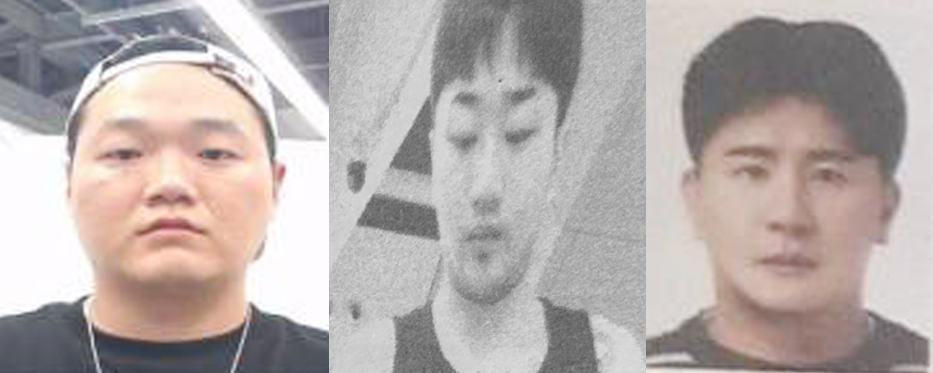
BANGKOK – The South Criminal Court of Bangkok has approved arrest warrants for three South Korean suspects in the kidnapping and murder of Mr. Roh Eui Jong, a 34-year-old Korean who went missing in Bangkok before May 7. His body, which had been found in a plastic barrel filled with cement in a Pattaya reservoir on May 11, was confirmed by DNA results on May 14.
Pol. Maj. Gen. Somkuan Phuenthap, Deputy Commissioner of the Metropolitan Police Bureau and chairman of the joint meeting of investigating officers in this case, revealed that although all ten fingers of the victim were cut off to destroy fingerprint evidence, the results of the DNA test compared with the deceased’s father, including his sister and cousin who traveled to confirm that the body found was Mr. Roh Eui Jong.
CCTV footage from several points in Bangkok, especially at RCA, Bangkok’s entertainment area, showed that Mr. Roh was taken away in a car by three men who were also South Korean. After that, Mr. Roh’s mother received a phone call from a mysterious person threatening to extort 3 million baht from her for ransom.
“The investigation team has gathered quite clear evidence, both images and personal witnesses, renters and lessors, guarantors for the rental, and related evidence that complements who else was involved,” the Deputy Commissioner said.
The suspects in this case are Mr. Lee Yongjin, 29 years old; Mr. Lee Roun, 25 years old; and Mr. Kim Hyeonngwon, 38 years old.
The suspects in this case are Mr. Lee Roun, 25 years old, Mr. Kim Hyeonngwon, 38 years old, and Mr. Lee Yongjin, 29 years old. They were arrested on charges of jointly coercing others to act, not act, or submit to something by making them fearful of danger to life, body, liberty, reputation, or property; jointly using tricks, deception, coercion, violence, abuse of power, or jointly detaining or confining others, or committing any act to deprive others of their physical freedom, causing the detained person to die in order to obtain a ransom.
In addition, there are also charges of jointly killing another person to take or retain benefits arising from other offenses committed to conceal one’s own offenses or to evade punishment for other offenses committed, concealing, moving, or destroying a corpse or part of a corpse to conceal the death or cause of death, and jointly stealing property and illegally using another person’s electronic card.
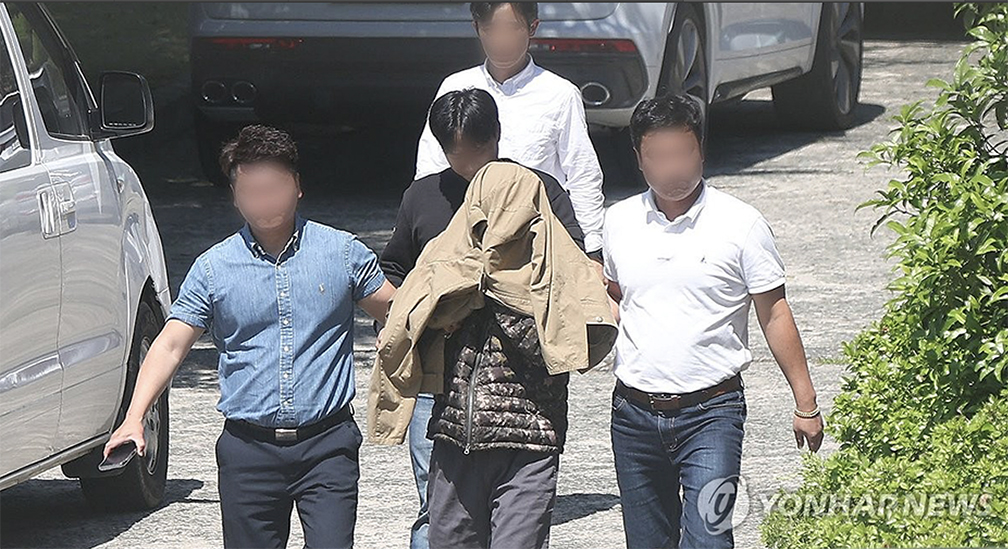
A suspect behind the murder and abandonment of a body involving a South Korean tourist in Pattaya who was arrested Sunday evening is escorted by police officers for questioning in Jeongeup, North Jeolla Province, on May 13, 2024. (Yonhap)
Pol. Maj. Gen. Somkuan said that after the court approved the issuance of arrest warrants, the investigation team accelerated coordination with Interpol and the South Korean police to bring the two perpetrators to Thailand for immediate prosecution, as Thailand and South Korea already have an extradition treaty between them.
Initially, from the investigative approach, it was found that the motive involved property, and no other issues were found.
The autopsy results currently indicate that the deceased had been dead for about 3-4 days, but it is not yet possible to specify in depth at what time or where the death occurred. However, the investigation found that the murder may have occurred between the area of Bangkok and Chonburi province, as blood traces were found as evidence in many areas.
A team of divers found a black plastic barrel filled with cement and a body inside in the Mabprachan reservoir in Pattaya on May 11, 2024.
After this, the investigation team will have to thoroughly examine the timeline again, as it is still found that there are some missing time points that need to be investigated urgently.
Prior to this, according to a report by Yonhap, a South Korean news agency, a suspect in his 20s was arrested at his residence in the southwestern city of Jeongeup on Sunday evening and placed under emergency arrest. The Gyeongnam Provincial Police stated that the suspect has denied all charges brought against him during an overnight police interrogation.
Later on May 14, another suspect was nabbed at a lodging in Phnom Penh at around midnight following a tip-off that a South Korean suspected of involvement in the case was spotted in the area.
The authorities suspect that the third suspect fled from Thailand to Myanmar.
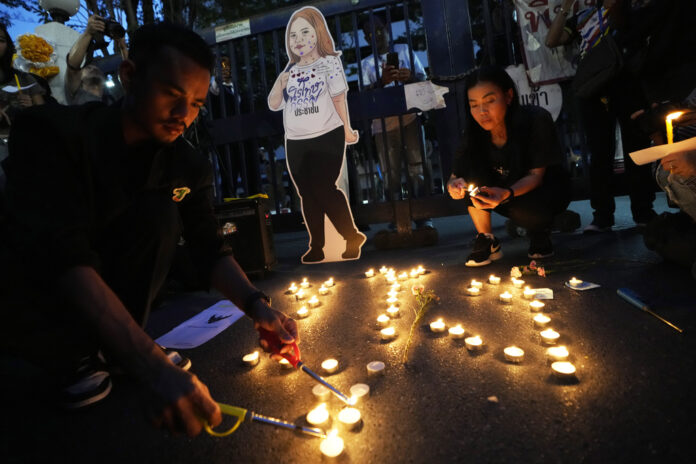
Thai activists hold candles during a vigil for Netiporn Sanesangkhom, a member of the activist group Thaluwang, known for their bold and aggressive campaigns demanding reform of the monarchy and abolition of the law that makes it illegal to defame members of the royal family, outside of Criminal court in Bangkok, Thailand, Tuesday, May 14, 2024. (AP Photo/Sakchai Lalit)
NAPAT KONGSAWAD, BANGKOK — A young Thai activist who went on a hunger strike after being jailed for advocating reform of the country’s system of monarchy died Tuesday in a prison hospital, officials said.
Netiporn Sanesangkhom, 28, was a member of the activist group Thaluwang, known for their bold and aggressive campaigns demanding reform of the monarchy and abolition of the law that makes it illegal to defame members of the royal family. The group’s name can be loosely translated to “breaking through the palace,” a reference to its open criticism of Thailand’s monarchy.
She appears to be the first political activist in Thailand to have died after carrying on a hunger strike.
The royal institution until recent years was widely considered an untouchable, bedrock element of Thai nationalism. Criticism of the monarchy was taboo, and insulting or defaming key royal family members remains punishable by up to 15 years in prison under a lese majeste law, usually referred to as Article 112 of Thailand’s Criminal Code.
Student-led pro-democracy protests beginning in 2020 openly criticized the monarchy, leading to vigorous prosecutions under the law, which had previously been relatively rarely employed. Critics say the law is often wielded as a tool to quash political dissent.
The protest movement faded due to government harassment and the coronavirus pandemic, but Netiporn was one of more than 270 activists charged with Thailand’s royal defamation law since the protests in 2020-21.
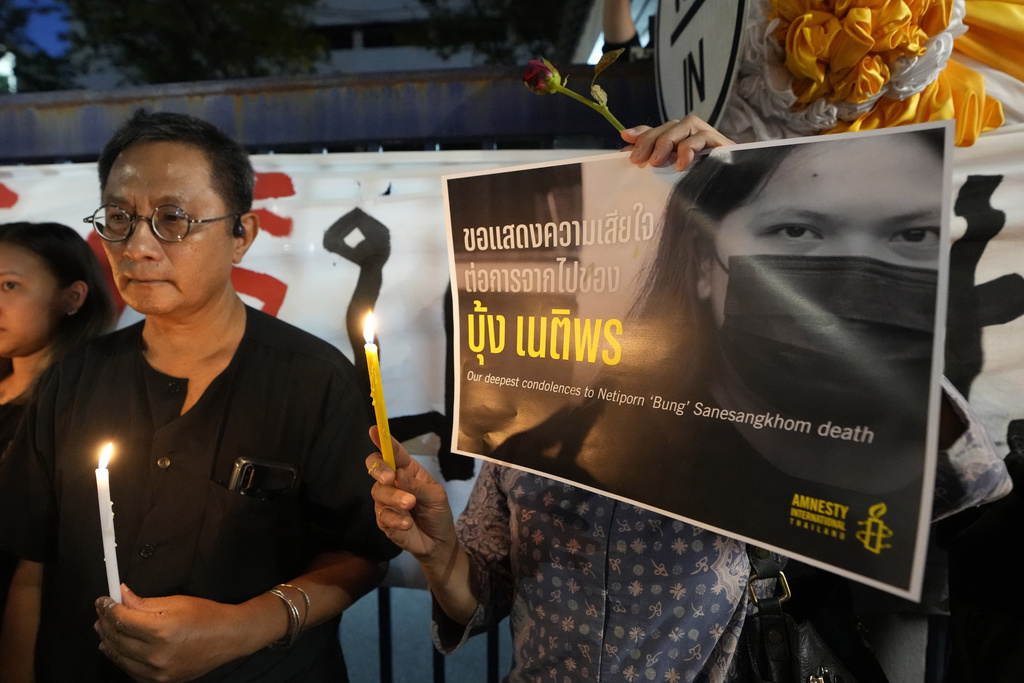
Thai activists hold a portrait of Netiporn Sanesangkhom, a member of the activist group Thaluwang, known for their bold and aggressive campaigns demanding reform of the monarchy and abolition of the law that makes it illegal to defame members of the royal family outside of Criminal court in Bangkok, Thailand, Tuesday, May 14, 2024. (AP Photo/Sakchai Lalit)
Netiporn suffered cardiac arrest early Tuesday morning, and medical teams spent several hours trying to resuscitate her. She was pronounced dead just before noon, according to a press release from the Corrections Department..
She had two charges of lese majeste pending against her, both of them involving conducting polls in public spaces in 2022 asking people’s opinion about the royal family, according to the group Thai Lawyers for Human Rights. Her release on bail was revoked in January due to her participation in a political rally last year.
Netiporn started her hunger strike after she was detained in January. The Corrections Department said she started eating and drinking water again after April 4. However, the human rights lawyer group’s latest update on her condition on April 25 said she was still fasting.
Two fellow jailed activists are also carrying out hunger strikes. Both are Thaluwang’s monarchy reform activists slapped with lese majeste charges, and they started their hunger strike about a month after Netiporn.
Netiporn’s lawyers had applied to transfer her from the Central Corrections Hospital to Thammasat University Hospital but was never granted a prolonged stay there for treatment, said her lawyer Kritsadang Nutcharas.
“Does it seem like there’s standard treatment in the Thai justice system when we compare what these kids are going through with their political charges and what some prominent adults have gone through?” Kritsadang said. He was making an apparent reference to former Prime Minister Thaksin Shinawatra, who returned from exile last year to serve a prison term on corruption-related cases but never spent a single night in jail on grounds of ill health.
Thaluwang has made high-profile protests calling not only for reform of the monarchy, but also changes in the justice system and an end to political persecution through the courts. It has also called for rejection of Thailand’s application to join the U.N. Human Rights Council.
Thailand announced its bid for a seat on the U.N. Human Rights Council for the 2025-2027 term after the current government took office last year, seeking to show its commitment to protect human rights. Critics charge that the reality of law enforcement in the country strongly contradicts its ambition to be recognized by the international community as a human rights defender.
Human Rights Watch has raised concerns over “the Thai government’s use of arbitrary arrest and pretrial detention to punish critics of the monarchy for their views” which it says is a violation of their rights under international human rights law.
The driver whose car caught fire on Saturday was identified on May 14, 2024, as a 35-year-old Nigerian man.
BANGKOK – The police officer at Bangkok’s Prawet Police Station announced on May 14 the results of the identity verification of the driver who crashed into a road median and whose car caught fire on Saturday. The driver was identified as a 35-year-old Nigerian man named Daniel, whose Thai wife came to confirm his identity with the police.
This serious road accident occurred at 5:30 a.m. on May 11 on a three-lane road near Soi Phatthanakan 53/1, Suan Luang Subdistrict and District, Bangkok. When officials received the report and arrived at the scene, they found a gray Toyota Vios with Samut Prakan province license plates overturned and engulfed in flames, blocking the middle of the road.
The officers spent about 10 minutes spraying water to extinguish the fire, but the car was completely damaged by the flames.
A gray Toyota Vios overturned and engulfed in flames, blocking the middle of the road near Soi Phatthanakan 53/1, Suan Luang District, Bangkok, on May 11, 2024.The officers spent about 10 minutes spraying water to extinguish the fire, but the car was completely damaged by the flames.
At that time, rescuers had to use cutting and prying equipment to remove the driver’s body from the wreckage and send it to the Police Hospital for an autopsy. They found a document with a front-facing photo of a foreign man.
Eyewitnesses stated that they saw the car driving at high speed in the far right lane before losing control and crashing into the road median. The car spun and hit a palm tree with such force that it flipped over and ended up on its roof in the middle of the road. At that moment, good Samaritans tried to pry open the door to help the unconscious driver, but before they could pull him out, sparks ignited, and the car quickly caught fire.
According to the Thai Road Safety Center (Thai RSC), there were 240 foreigner died in road accidents in Thailand in 2024. Chiang Mai had the highest number with 26 deaths, followed by Phuket and Ratchaburi with 18 each, then Surat Thani and Chonburi with 15 each. Bangkok had 14 deaths.
As for injuries, there have been over 10,744 cases, with Phuket having the highest number at 2,541 and Bangkok at 1,648.
Ms. Sudthida Saensaeng, also known as Waew, 32, from Udon Thani, was murdered in Keelung City, Taiwan.
UDON THANI – The mother and sister of Ms. Sudthida Saensaeng, also known as Waew, 32, the Thai woman who was murdered in Keelung on Saturday, have traveled to Taiwan to perform her funeral rites, with the help of relatives and neighbors who jointly raised money to donate for the cost of the plane tickets.
When the officials from the Udon Thani Provincial Department of Labor visied Ms. Sudthida’s family in Tad Thong Sub-district, Sri That District, Udon Thani Province, they met Mrs. Duangporn Changlek, 59, Sudthida’s aunt.
They asked her aunt about Sudthida’s working conditions in Taiwan and provided information about the social security system. As Sudthida had not contacted an official employment agency, the Ministry of Foreign Affairs had to negotiate the funeral assistance.
The officials from the Udon Thani Provincial Department of Labor visited Ms. Sudthida’s family in Tad Thong Sub-district, Sri That District, Udon Thani Province.
“In the past, the bodies of deceased workers were not repatriated due to the high costs involved. Most of the time, funerals are held in Taiwan and the family bring back the ashes home for rituals. I advise the family to inform the Thai officials in Taiwan about the deceased’s belongings so that they can be returned in full,” said Nalinpan Siowchaisakul, senior labor academic from the Udon Thani Labor Office.
When Sudthida’s rights were checked, it was discovered that she had never worked abroad and had gone to Taiwan illegally this time. However, she was still entitled to benefits under the Social Security Act as she had previously worked in a factory and had joined the social security system.
Ms. Sudthida Saensaeng
After leaving employment, she continued to be voluntarily insured under Section 39 by contributing to the Social Insurance Fund. Therefore, her family would receive funeral expenses of 50,000 baht, a retirement pension of 63,744 baht and a death benefit of 28,800 baht.
Mrs. Duangporn thanked the officials and told them that Sudthida was a single mother of two children. On her sister’s recommendation, she traveled to Taiwan on a three-month tourist visa to work as a traditional Thai massage therapist. After her visa expired, she continued to work illegally to send money home and save 5 baht of gold (about 200,000 baht or 5,500 USD) to sell and build a house in Thailand.
Later, Sudthida was in a relationship with a man from Nakhon Phanom who had worked legally in a factory for four years. She told him that she no longer wanted to work as a masseuse because it was too strenuous and looked for a new job. She found a job advertisement on Facebook for a housekeeper with a salary of 35,000 baht and applied. However, after working for only three days, she was murdered.
“She called me and told me that her boyfriend had taken her to work. A female employer who is also Thai picked her up and took her to a messy and dirty house. The employer went through her luggage and probably saw the gold. During the three days she worked, the employer made her work very hard without breaks. On the day of the incident, she called and said she was exhausted and had not eaten. Out of anger, she kicked a bucket of water,” Duangporn said.
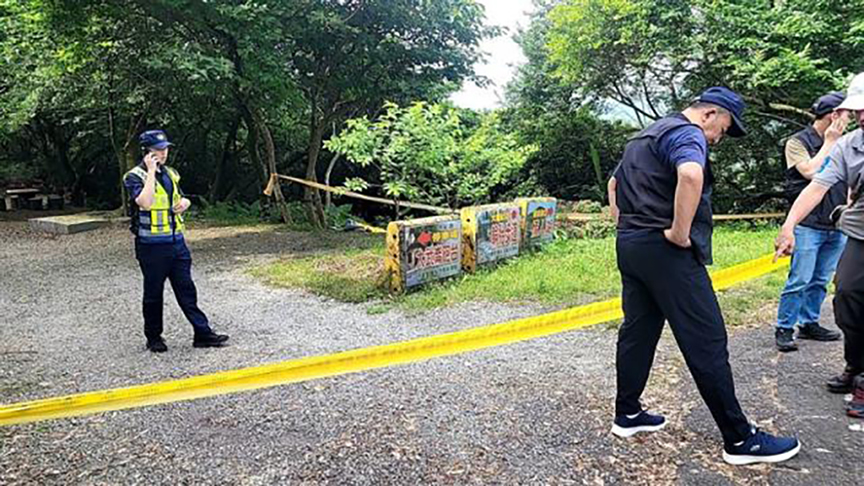
The Taiwanese police sealed off the scene for investigation on May 11, 2024.
She added that on Friday night, the employer asked Sudthida to pick vegetables on the mountain, but she was scared and sent her location to her boyfriend, who reported to the police and tried to rescue her but was too late.
Sudthida’s boyfriend found her body hanging from a branch at the foot of a cliff before the police arrived. He carried her out and found several stab wounds on her back, indicating that she had suffered a lot before she died.
The doctor confirmed that she died from significant blood loss. The family believes that the employer killed her for her valuables as the police found Sudthida’s gold in the employer’s room and a thorough investigation is still pending.
According to Taiwan media Liberty Times, the police apprehended the suspect, surnamed Lin at her residence in Zhongzheng District, Keelung City, around 3 p.m. on May 12. They gathered evidence of her involvement in the crime and asked the court for Lin’s detention, citing the risk of destroying evidence and fleeing.
Mr. Amnat Phalapleewan, Director of the Division of Protection and Assistance for Thai Nationals Abroad, Department of Consular Affairs, Ministry of Foreign Affairs, stated on May 14 that since this case is a murder, it is necessary to wait for the autopsy results to be completed first.
After that, the Thai Trade and Economic Office in Taipei will provide advice to the relatives regarding the management of the body. As for the investigation of the case, it will proceed according to Taiwan’s domestic laws. The Thai side is similarly waiting for Taiwan to report on the progress.
Charoen Pokphand Foods Public Company Limited (CP Foods), a leading company operating integrated agro-industrial and food business, announced a net profit of THB 1,152 million for the first quarter of fiscal year 2024, marking a notable 142% increase from the same period in the previous year. This impressive performance is attributed mainly to the favorable livestock pricing trends in Asia and ongoing enhancement in production efficiency, leading to significant softening of animal husbandry costs.
Mr. Prasit Boondoungprasert, CEO of CP Foods, reflected on the company’s improved performance, acknowledging the challenges faced in the previous year. He noted the significant cost escalations and market saturation in several countries, driven by an unexpected decline in consumer purchasing power. Nevertheless, these difficulties prompted the company to prioritize efficiency and prudent investment practices, leading to the divestment of partial assets to bolster operational effectiveness.
Additionally, there was a concerted focus on research and development to innovate and add value to products in response to consumer demands, particularly in the realm of nutritious and healthy products. Moreover, strategies in marketing, sales, and distribution channels were adjusted to better align with market dynamics and changing consumer preferences.
In the first quarter of this year, the company observed a notable surge of 142%, especially in its overseas operations in Vietnam and Cambodia, propelled by the expansion of sales channels and the increase in pig prices.
Additionally, the company witnessed improved profits from joint ventures and enhanced performance from CPALL and the swine business in China. It is anticipated that CP Foods’ performance will continue to strengthen consistently throughout the remaining quarters of 2024.
"Bung" Netiporn Sanesangkhom, a 28-year-old political activist, died on May 14, 2024.
PATUM THANI – “Bung” Netiporn Sanesangkhom, a 28-year-old political activist who advocated for youth to demand reform of the monarchy under the group “Talu Wang” (meaning “breakthrough the palace”), passed away shortly before noon on May 14 at Thammasat University Hospital in Pathum Thani province after being transferred from prison with sudden cardiac arrest.
Doctors from the Medical Correctional Hospital and Thammasat University Hospital tried their best to revive the patient from 6:20 a.m. to 11:22 a.m. The patient’s body did not respond to treatment and she passed away peacefully at 11:22 a.m. The Department of Corrections expressed their condolences to the deceased’s relatives and provided a statement regarding her condition.
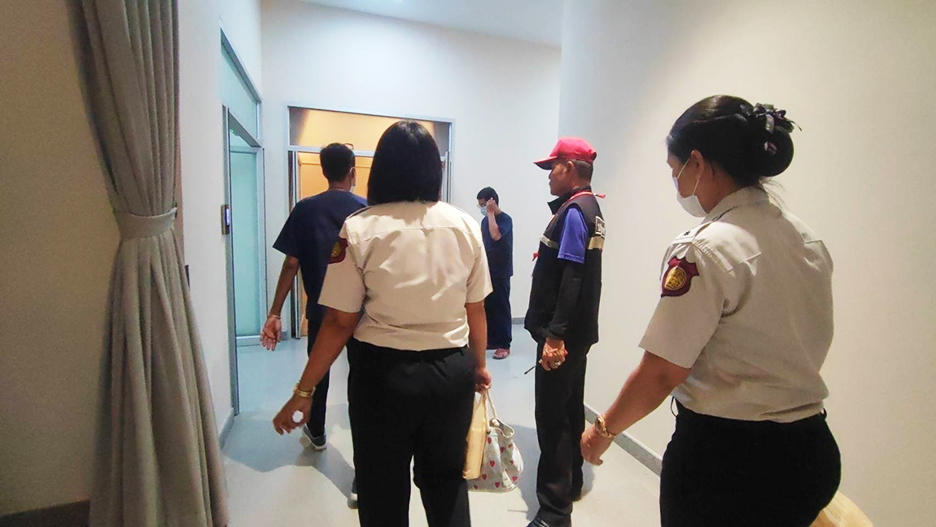
Correctional officers brought Ms. Netiporn, also known as Bung, to Thammasat University Hospital, but doctors were unable to save her life on May 14, 2024.
“After the Medical Correctional Institution Hospital received Ms. Netiporn from Thammasat University Hospital on April 4, 2024, Ms. Netiporn resumed eating and drinking. Doctors and nurses provided close and continuous care, but she still had mild weakness and swelling in her legs. Blood tests showed mild anemia and low electrolytes, but Ms. Netiporn refused to take electrolytes and blood-nourishing vitamins, leading to the aforementioned symptoms and her death today,” the statement said.
Bung’s most recent hunger strike took place while she was detained for violating the law on royal defamation, also known as Article 112, for conducting a poll on the public’s inconvenience caused by royal motorcades on February 8, 2022, as well as for contempt of court.
In 2022, Bung had previously gone on a hunger strike alongside Ms. Nattanich Duangmusit, or Baipor, another activist friend, for as long as 64 days before being granted bail on August 4, 2022.
She was detained again on January 26, 2024, after the Bangkok South Criminal Court revoked her bail in the Article 112 case and sentenced her to one month in prison for contempt of court. After hearing the rulings in both cases, Bung did not request bail and was sent to the Central Women’s Correctional Institution on the evening of January 26.
“Bung” Netiporn Sanesangkhom, a 28-year-old political activist passed away on May 14, 2024.
She began a dry hunger strike on the evening of January 27 to demand reform of the justice system and that no one should be imprisoned for political dissent again.
The criminal law provision, Section 112, is seen as a political tool that allows individuals to be targeted and charged with severe penalties. The law states: “Whoever defames, insults, or threatens the king, queen, heir to the throne, or regent shall be punished with imprisonment for a term of three to fifteen years.”
Bung had given an interview to BBC Thai in 2022, stating that she grew up in a family of judiciary members. Her father was a judge, and her older sister was a lawyer. She was a bright student with excellent academic performance and was also active in extracurricular activities.
When Bung was studying at Triam Udom Suksa Nomklao School, she served as a member of the student committee. She then went on to study at the Department of Finance, Faculty of Business Administration, Kasetsart University, while also working as an English tutor.
When Bung was in high school, she participated in the PDRC (People’s Democratic Reform Committee) protests in 2014 to oust the democratically elected government of Yingluck Shinawatra. However, her political views gradually changed as she received new information through social media, especially when she learned that one of the 99 people who died during the crackdown on the Red Shirt protesters in 2010 was a homeless man shot by a sniper.
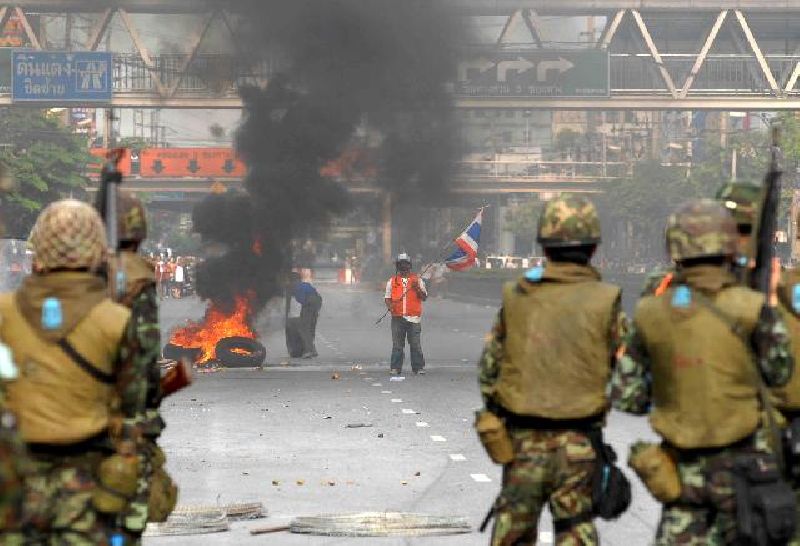
Soldiers face off with Redshirts protesters on Rama IV Road, 14 May 2010.
Feeling politically guilty, Bung changed her approach to activism and began focusing on education issues in mid-2020. As a tutor, she felt that the education system in Thailand was outdated in many aspects. One of her early activities involved advocating for students’ right to have their preferred hairstyles and for LGBT+ students’ right to express their gender identity.
From then on, she continued to support the youth who came out to protest and later engaged in activities with the Talu Wang group. She had never thought that she would also be charged under Article 112 simply for taking care of the youth participating in the activities.
She later became more well-known for her role as the guardian of “Yok,” the youngest female youth to be prosecuted under Article 112 at the age of 15, to enable Yok to return to her original school.
A group of activists, including 15-year-old Yok, stormed the Pheu Thai Party headquarters on August 7, 2023.
The activism of Bung and Yok was often criticized as being aggressive, exhibiting excessive protest behavior, and using words that led to quarrels. In addition, a youth who had fled abroad posted a message saying that when she was 16 years old, she had been manipulated by Bung in a manner similar to Yok, in what she described as “child grooming,” to make everything newsworthy and attention-grabbing, and to use the results of the activism to seek funding for further movements.
However, Yok insisted that she had never been manipulated by Bung and had engaged in various activities on her own. Eventually, Bung was detained in prison again, while Yok announced that she was ending her political activism on March 23, 2024.
Bung had previously made a will dated February 2, 2024, stating her intentions for the disposition of her assets in the event of her death. She expressed her wish to bequeath all her cash assets, bank deposits in all commercial banks, as well as her wristwatch, earrings, and pets solely to Yok.
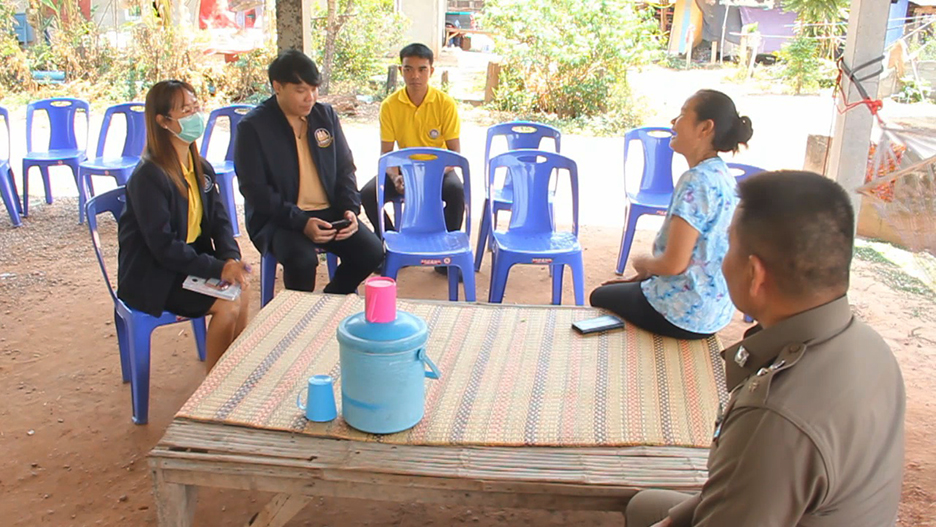
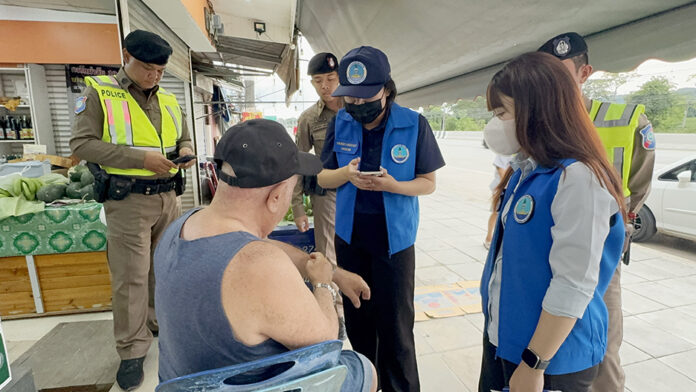
Mr. Albert, an 81-year-old Israeli national, tries to communicate with the tourist police officers.
CHONBURI – Thai residents in Sattahip District, Chonburi Province notified the tourist police that they found a foreigner asking for help after being dropped off by a motorcycle taxi near the J intersection on Sukhumvit Road, and his phone was taken.
Tourist police, officials from the Chonburi Provincial Tourism and Sports Office, and Sattahip Police Station officers then went to investigate.
They found the foreigner sitting and waiting for the police near a roadside shop. He could not communicate well in English, but he used a translation application to indicate that his name was Mr. Albert, 81 years old, and an Israeli national. The tourist police then invited him for questioning at the Pattaya Tourist Police Office to find a Hebrew-speaking interpreter for further communication.
Police Lieutenant Apisit Phuengyaem, Deputy Inspector of Tourism, revealed that this foreigner traveled from Pattaya to visit Sattahip. He hired a motorcycle taxi driver in Soi Bua Khao, Pattaya, to drop him off at the incident location. The motorcycle driver then took his mobile phone.
If the tourist police investigation finds evidence, they will take the elderly Israeli man to file a complaint at the Sattahip Police Station to track down the motorcycle taxi driver for questioning and legal action.