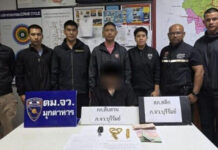
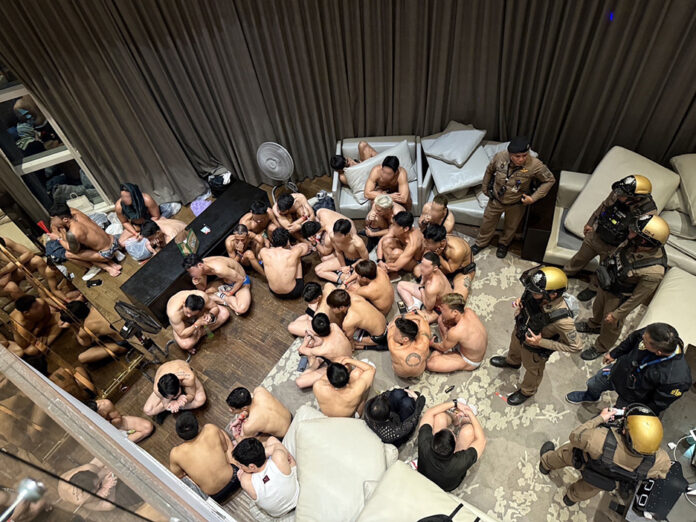
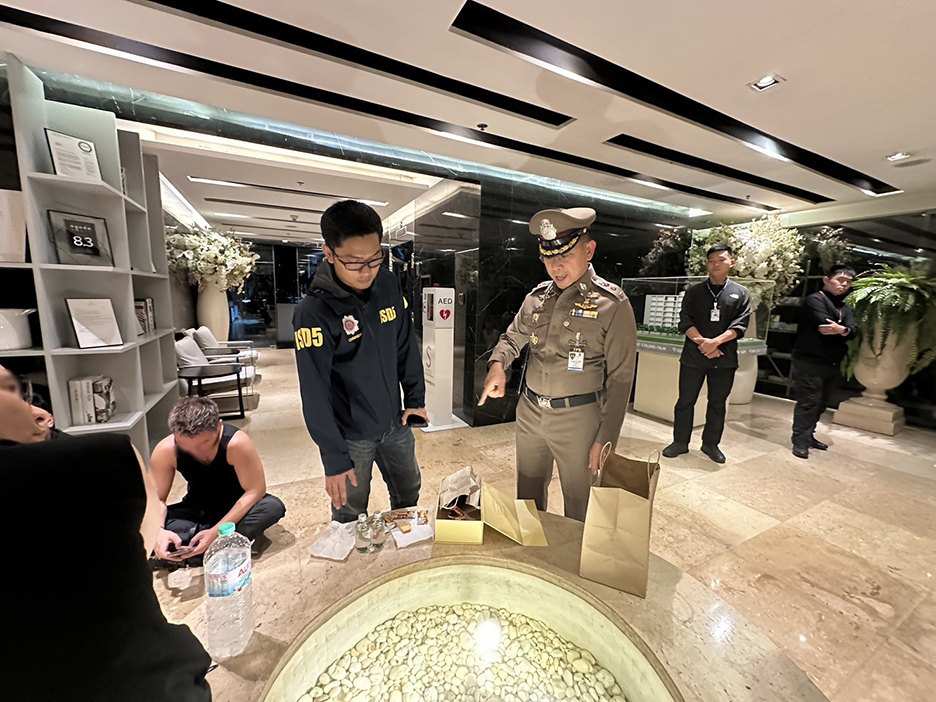
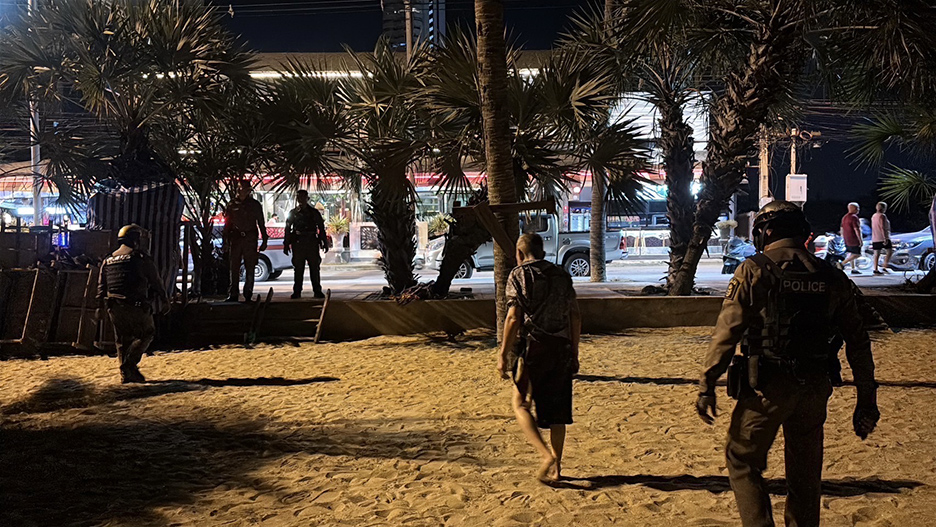
Thonglor police raid a gay party in downtown Bangkok, where hundreds of attendees, including three foreigners, are subjected to hours-long drug testing on Dec. 8, 2024.
BANGKOK — In an early hour operation Sunday, Thonglor police raided a gay party in downtown Bangkok, where hundreds of attendees, including three foreigners, were subjected to hours-long drug testing.
Police Colonel Pansa Amarapitak, Superintendent of Thonglor Police Station, reported that the operation stemmed from intelligence received on December 6 about an illegal party involving drug use at room 2001 on the 20th floor of a hotel in North Klongtoey, Wattana district, Bangkok.
On December 7, Thonglor police collaborated with Metropolitan Police Division 5 investigators and Police 191 to plan the raid. The operation was executed at 1:30 a.m. on December 8, when officers received confirmation of numerous individuals entering the specified room.
Police Officers discover quantities of Ecstasy and Ketamine during their initial search at a hotel in Thong Lor, Wattana district, Bangkok on Dec. 8, 2024.
Upon entry, police found hundreds of Thai and foreign male partygoers, all wearing identical underwear. Officers discovered quantities of Category 1 narcotics (Ecstasy) and Category 2 psychotropic substances (Ketamine) during their initial search. All attendees were subsequently detained and transported to Thonglor Police Station.
Preliminary investigations revealed 120 attendees, including several notable figures – a TV series actor, a former executive of a renowned beauty clinic, professors, doctors, and celebrities. Three foreign tourists, one of them is Vietnamese national and a few women were also present.
According to police investigations, the partygoers had attended an earlier gathering before converging at the hotel. The event required pre-registration through a private group chat, with administrators vetting potential attendees. Thonglor police’s attempts to infiltrate the group were unsuccessful, leading to the decision to conduct the raid.
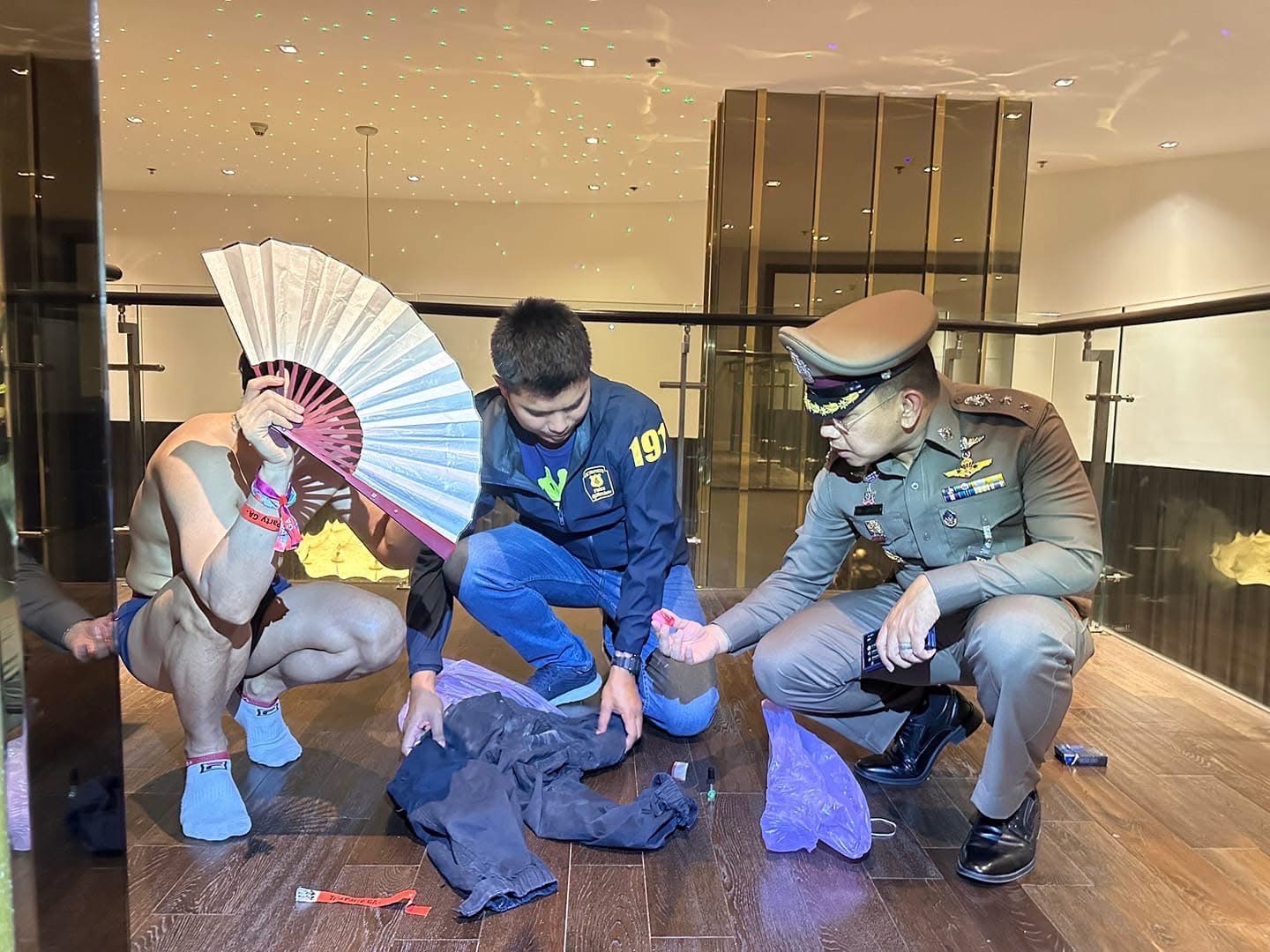
Police officers examine attendees’ clothing, finding narcotics concealed in one participant’s trousers during the raid on a gay party in Thonglor, Bangkok on December 8, 2024.
After all detainees underwent drug testing as part of the ongoing investigation, 97 individuals tested positive for narcotics. Police have charged 31 individuals (30 men and 1 woman) with drug possession, including a Taiwanese man found with three Ecstasy pills and a Vietnamese man found with 1.0 grams of ketamine. An additional 66 people (65 men and 1 woman) were charged with drug use. All suspects were over 20 years old and have voluntarily agreed to enter rehabilitation programs
On December 9, 2024, authorities will summon those charged with drug use to report for mandatory rehabilitation as required by law. Meanwhile, suspects found with drugs in their possession remain in custody and will be detained at either the South Bangkok District Court or the South Bangkok Criminal Court, depending on their specific charges and the quantity of drugs involved.
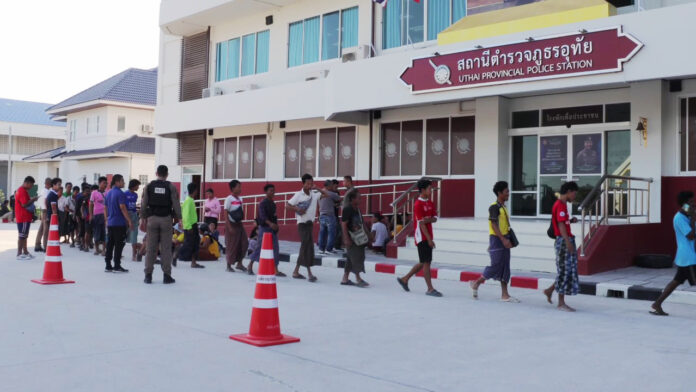
Illegal foreign workers are transferred to Uthai Police Station for further legal proceedings on Dec. 8, 2024.
AYUTTHAYA — Police in Phra Nakhon Si Ayutthaya Province conducted a pre-dawn raid Sunday on a construction workers’ camp in Nong Nam Som subdistrict, Uthai district, following reports of illegal foreign laborers.
The operation on December 8, carried out jointly by Ayutthaya police and Uthai district administrative officials, led to dramatic scenes as panicked workers attempted to escape, with some even climbing onto rooftops.
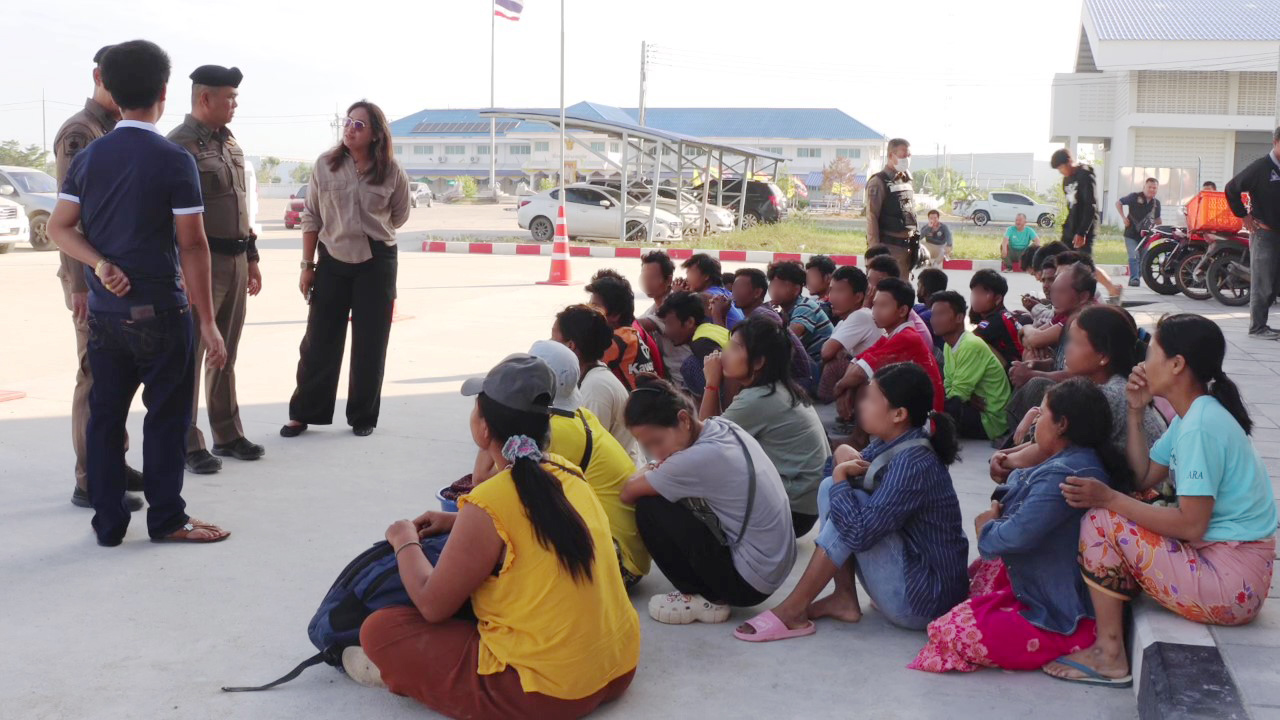
Authorities successfully detained 100 Myanmar nationals, including 26 men and 11 women who were found without passports. The suspects were charged with illegally entering and residing in the Kingdom without permission and were transferred to Uthai Police Station for further legal proceedings.
In a compassionate gesture, police officers ordered grilled chicken with sticky rice to feed the detained workers while processing their cases.
Illegal foreign workers are transferred to Uthai Police Station for further legal proceedings on Dec. 8, 2024.
Speaking to reporters, a 32-year-old Myanmar worker identified as Lucky revealed that the workers had entered Thailand illegally through natural border passages in Mae Hong Son province. Each worker paid between 15,000 to 20,000 baht for the journey. He explained that general laborers earned 500 baht daily, while skilled workers received 600 baht per day. Lucky cited the ongoing conflict in Myanmar as the primary reason for seeking work in neighboring countries.
“The fighting in Myanmar has forced us to seek opportunities abroad to survive,” Lucky told reporters.
The raid highlights Thailand’s ongoing challenges with illegal immigration, particularly as neighboring Myanmar continues to face internal conflict, driving more people to seek work opportunities across the border.
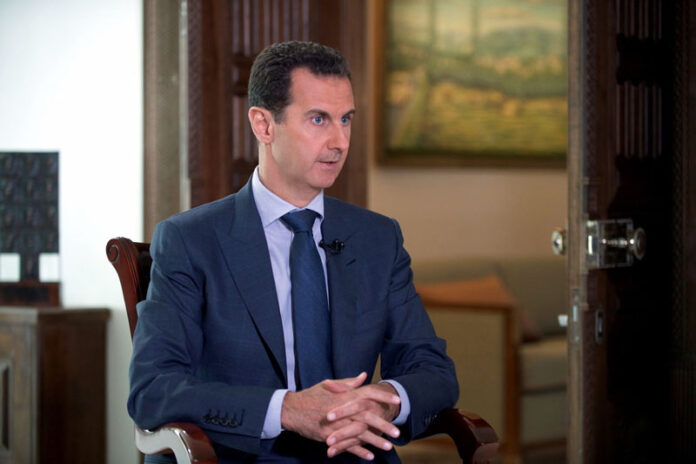
Syrian President Bashar Assad speaks to The Associated Press at the presidential palace in Damascus, Syria, in a Wednesday, Sept. 21, 2016, photo released by the Syrian Presidency. Photo: Syrian Presidency / Associated Press
BEIRUT (AP) — The fall of Syrian President Bashar Assad’s government Sunday brought to a dramatic close his nearly 14-year struggle to hold onto power as his country fragmented amid a brutal civil war that became a proxy battlefield for regional and international powers.
Assad’s downfall came as a stark contrast to his first months as Syria’s unlikely president in 2000, when many hoped he would be a young reformer after three decades of his father’s iron grip. Only 34 years old, the Western-educated ophthalmologist was a rather geeky tech-savvy fan of computers with a gentle demeanor.
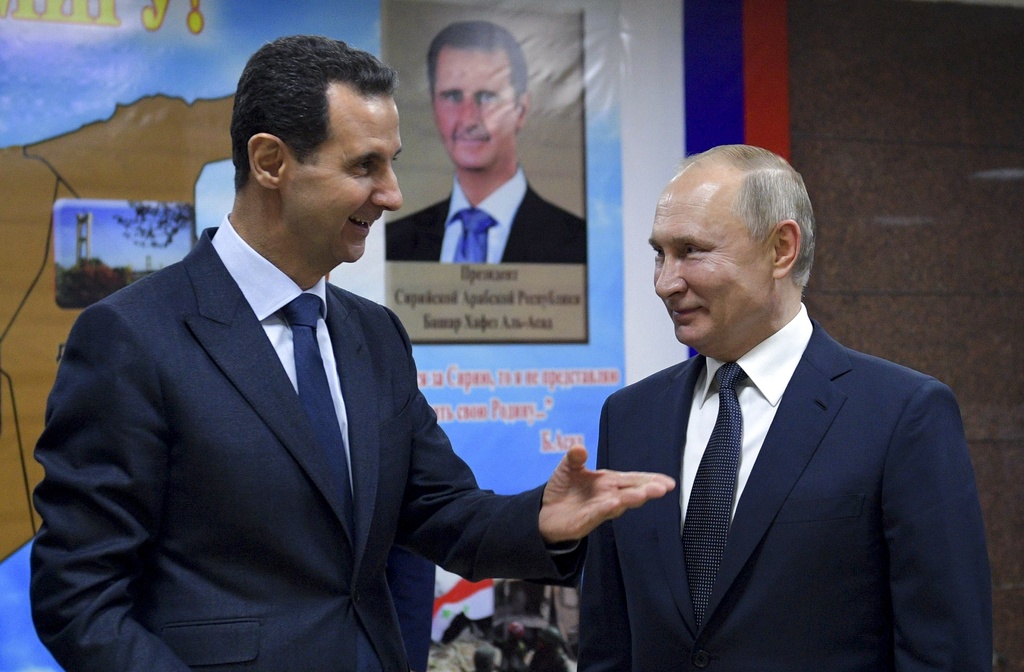
But when faced with protests against his rule that erupted in March 2011, Assad turned to the brutal tactics of his father in an attempt to crush them. As the uprising hemorrhaged into an outright civil war, he unleashed his military to blast opposition-held cities, with support from allies Iran and Russia.
FILE – Syrian President Bashar Assad, left, gestures while speaking to Russian President Vladimir Putin during their meeting in Damascus, Syria, Jan. 7, 2020. (Alexei Druzhinin, Sputnik, Kremlin Pool Photo via AP, File)
International rights groups and prosecutors alleged widespread use of torture and extrajudicial executions in Syria’s government-run detention centers.
The Syrian war has killed nearly half a million people and displaced half the country’s pre-war population of 23 million. As the uprising spiraled into a civil war, millions of Syrians fled across the borders into Jordan, Turkey, Iraq and Lebanon and on to Europe.
His departure brings an end to the Assad family rule, spanning just under 54 years. With no clear successor, it throws the country into further uncertainty.
Until recently, it seemed that Assad was almost out of the woods. The long-running conflict had settled along frozen conflict lines in recent years, with Assad’s government regaining control of most of Syria’s territory while the northwest remained under the control of opposition groups and the northeast under Kurdish control.
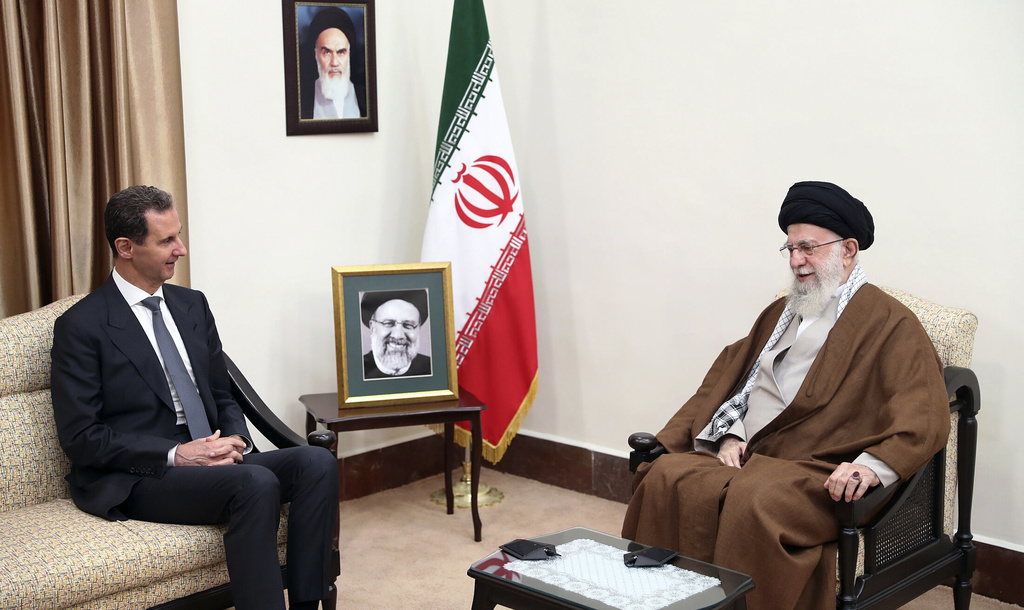
FILE – In this photo released by the official website of the office of the Iranian supreme leader, Supreme Leader Ayatollah Ali Khamenei, right, speaks with Syrian President Bashar Assad in a meeting in Tehran, Iran, May 30, 2024. (Office of the Iranian Supreme Leader via AP, File)
While Damascus remained under crippling Western sanctions, neighboring countries had begun to resign themselves to Assad’s continued hold on power. The Arab League reinstated Syria’s membership last year, and Saudi Arabia in May announced the appointment of its first ambassador to Syria since severing ties with Damascus 12 years earlier.
However, the geopolitical tide turned quickly with a surprise offensive launched by opposition groups based in northwest Syria in late November. Government forces quickly collapsed, while Assad’s allies, preoccupied by other conflicts — including Russia’s war in Ukraine and the yearlong wars between Israel and the Iran-backed militant groups Hezbollah and Hamas — appeared reluctant to forcefully intervene.
Assad’s whereabouts were not clear Sunday, amid reports he had left the country as insurgents took control of the Syrian capital.
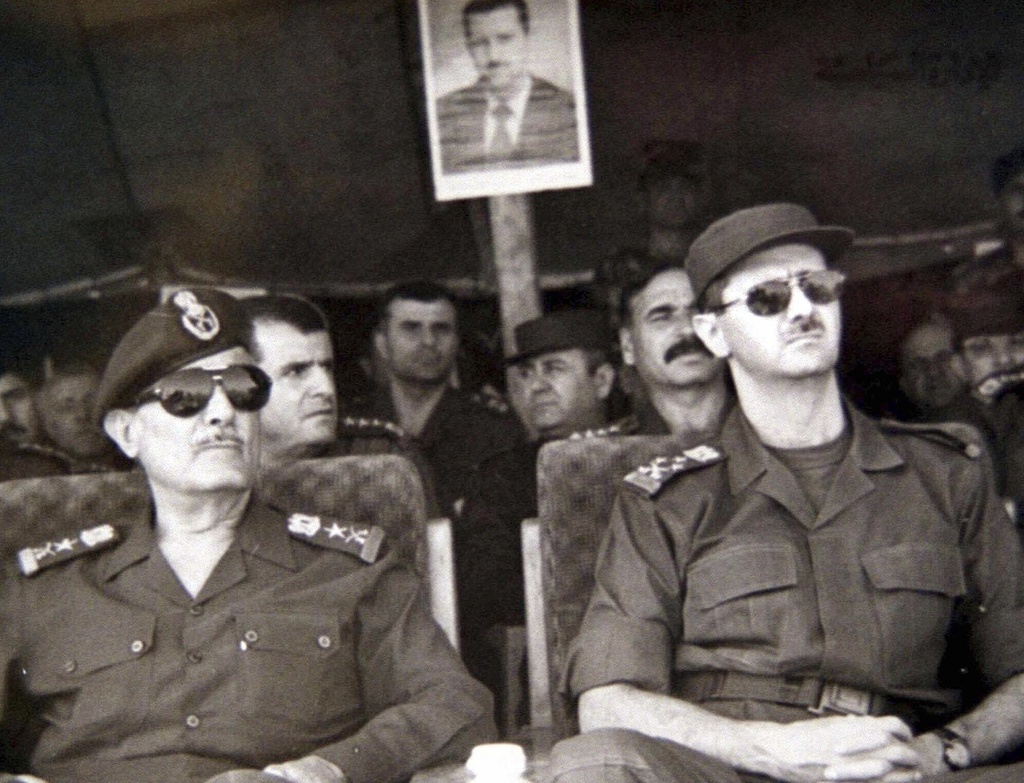
He came to power in 2000 by a twist of fate. His father had been cultivating Bashar’s oldest brother Basil as his successor, but in 1994 Basil was killed in a car crash in Damascus. Bashar was brought home from his ophthalmology practice in London, put through military training and elevated to the rank of colonel to establish his credentials so he could one day rule.
FILE – President-elect Lt. Gen. Bashar al Assad, right, attends military training games with Ali Aslan, Chief of Staff of the Syrian army, July 12, 2000, in Syria. (SANA via AP, File)
When Hafez Assad died in 2000, parliament quickly lowered the presidential age requirement from 40 to 34. Bashar’s elevation was sealed by a nationwide referendum, in which he was the only candidate.
Hafez, a lifelong military man, ruled the country for nearly 30 years during which he set up a Soviet-style centralized economy and kept such a stifling hand over dissent that Syrians feared even to joke about politics to their friends.
He pursued a secular ideology that sought to bury sectarian differences under Arab nationalism and the image of heroic resistance to Israel. He formed an alliance with the Shiite clerical leadership in Iran, sealed Syrian domination over Lebanon and set up a network of Palestinian and Lebanese militant groups.
Bashar initially seemed completely unlike his strongman father.
Tall and lanky with a slight lisp, he had a quiet, gentle demeanor. His only official position before becoming president was head of the Syrian Computer Society. His wife, Asma al-Akhras, whom he married several months after taking office, was attractive, stylish and British-born.
The young couple, who eventually had three children, seemed to shun trappings of power. They lived in an apartment in the upscale Abu Rummaneh district of Damascus, as opposed to a palatial mansion like other Arab leaders.
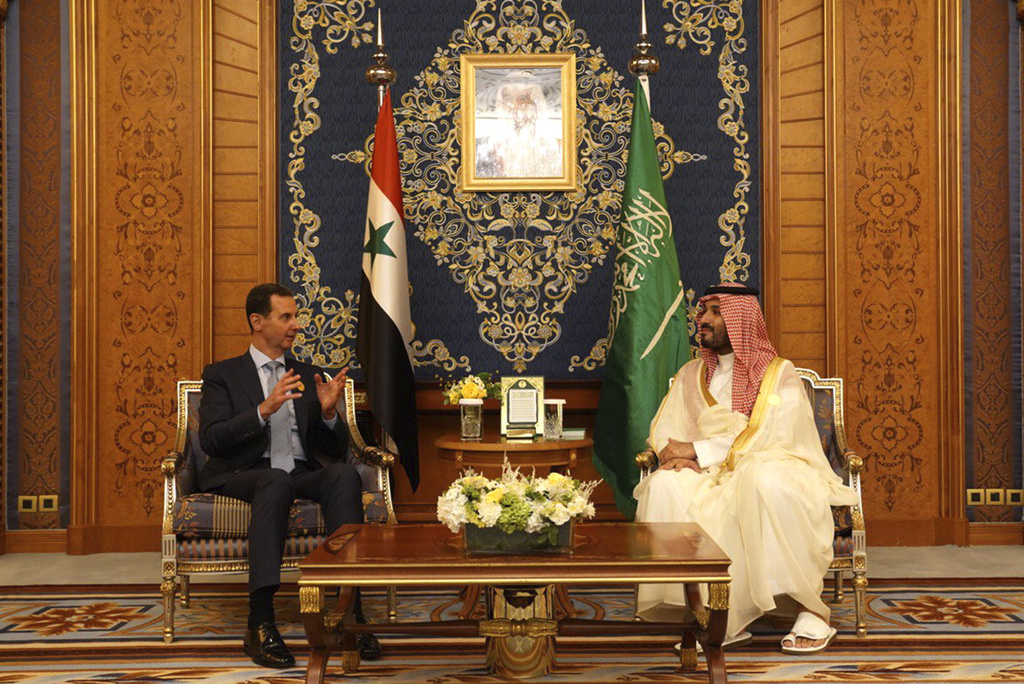
FILE – In this photo released by the Syrian official news agency SANA, shows Syrian President Bashar Assad, left, meets with Saudi Crown Prince Mohammed bin Salman, during the Arab summit in Jeddah, Saudi Arabia, May 19, 2023. (SANA via AP, File)
Initially upon coming to office, Assad freed political prisoners and allowed more open discourse. In the “Damascus Spring,” salons for intellectuals emerged where Syrians could discuss art, culture and politics to a degree impossible under his father.
But after 1,000 intellectuals signed a public petition calling for multiparty democracy and greater freedoms in 2001 and others tried to form a political party, the salons were snuffed out by the feared secret police who jailed dozens of activists.
Instead of a political opening, Assad turned to economic reforms. He slowly lifted economic restrictions, let in foreign banks, threw the doors open to imports and empowered the private sector. Damascus and other cities long mired in drabness saw a flourishing of shopping malls, new restaurants and consumer goods. Tourism swelled.
Abroad, he stuck to the line his father had set, based on the alliance with Iran and a policy of insisting on a full return of the Israeli-annexed Golan Heights, although in practice Assad never militarily confronted Israel.
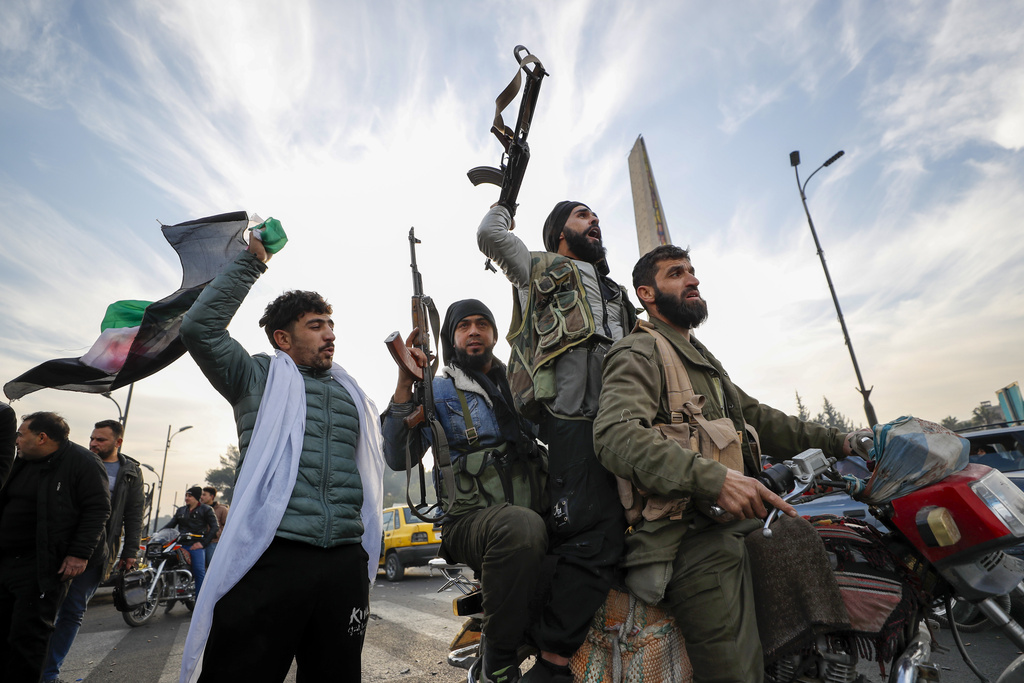
Syrian opposition fighters celebrate after the Syrian government collapsed in Damascus, Syria, Sunday, Dec. 8, 2024. (AP Photo/Omar Sanadiki)
In 2005, he suffered a heavy blow with the loss of Syria’s decades-old control over neighboring Lebanon after the assassination of former prime minister Rafik Hariri. With many Lebanese accusing Damascus of being behind the slaying, Syria was forced to withdraw its troops from the country and a pro-American government came into power.
At the same time, the Arab world became split into two camps – one of U.S.-allied, Sunni-led countries like Saudi Arabia and Egypt, the other Syria and Shiite-led Iran with their ties to Hezbollah and Palestinian militants.
Throughout, Assad relied for largely on the same power base at home as his father: his Alawite sect, an offshoot of Shiite Islam comprising around 10 percent of the population. Many of the positions in his government went to younger generations of the same families that had worked for his father. Drawn in as well were the new middle class created by his reforms, including prominent Sunni merchant families.
Assad also turned to his own family. His younger brother Maher headed the elite Presidential Guard and would lead the crackdown against the uprising. Their sister Bushra was a strong voice in his inner circle, along with her husband Deputy Defense Minister Assef Shawkat, until he was killed in a 2012 bombing. Bashar’s cousin, Rami Makhlouf, became the country’s biggest businessman, heading a financial empire before the two had a falling out that led to Makhlouf being pushed aside.
Assad also increasingly entrusted key roles to his wife, Asma, before she announced in May that she was undergoing treatment for leukemia and stepped out of the limelight.
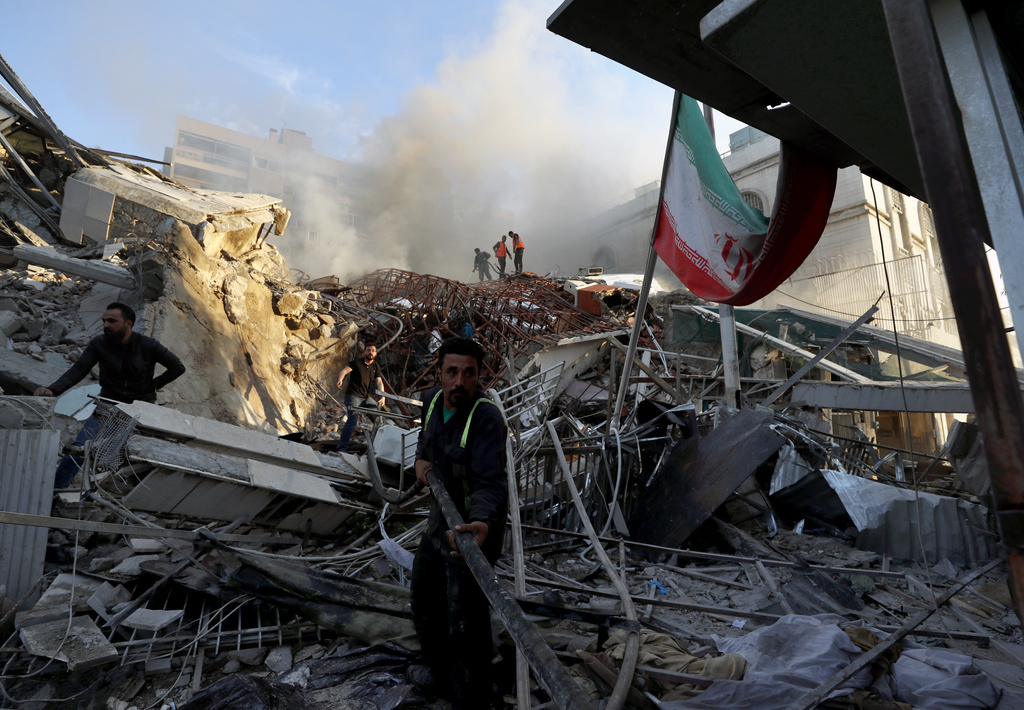
Emergency services work at a destroyed building hit by an air strike in Damascus, Syria, Monday, April 1, 2024. An Israeli airstrike has destroyed the consular section of Iran’s embassy in Damascus, killing or wounding everyone inside, Syrian state media said Monday. (AP Photo/Omar Sanadiki)
When protests erupted in Tunisa and Egypt, eventually toppling their rulers, Assad dismissed the possibility of the same occurring in his country, insisting his regime was more in tune with its people. After the Arab Spring wave did move to Syria, his security forces staged a brutal crackdown while Assad consistently denied he was facing a popular revolt, instead blaming “foreign-backed terrorists” trying to destabilize his regime.
His rhetoric struck a chord with many in Syria’s minority groups – including Christians, Druze and Shiites – as well as some Sunnis who feared the prospect of rule by Sunni extremists even more than they disliked Assad’s authoritarian rule.
Ironically, on Feb. 26, 2011, two days after the fall of Egypt’s Hosni Mubarak to protesters and just before the wave of Arab Spring protests swept into Syria — in an email released by Wikileaks as part of a cache in 2012 — Assad e-mailed a joke he’d run across mocking the Egyptian leader’s stubborn refusal to step down.
“NEW WORD ADDED TO DICTIONARY: Mubarak (verb): To stick something, or to glue something. … Mubarak (adjective): slow to learn or understand,” it read.
Who is Abu Mohammed al-Golani, the leader of the insurgency that toppled Syria’s Assad?
Abu Mohammed al-Golani, the militant leader whose stunning insurgency toppled Syria’s President Bashar Assad, has spent years working to remake his public image, renouncing longtime ties to al-Qaida and depicting himself as a champion of pluralism and tolerance. In recent days, the insurgency even dropped his nom de guerre and began referring to him by his real name, Ahmad al-Sharaa.
The extent of that transformation from jihadi extremist to would-be state builder is now put to the test.
Insurgents control capital Damascus, Assad has fled into hiding, and for the first time after 50 years of his family’s iron hand, it is an open question how Syria will be governed.
Syria is home to multiple ethnic and religious communities, often pitted against each other by Assad’s state and years of war. Many of them fear the possibility Sunni Islamist extremists will take over. The country is also fragmented among disparate armed factions, and foreign powers from Russia and Iran to the United States, Turkey and Israel all have their hands in the mix.
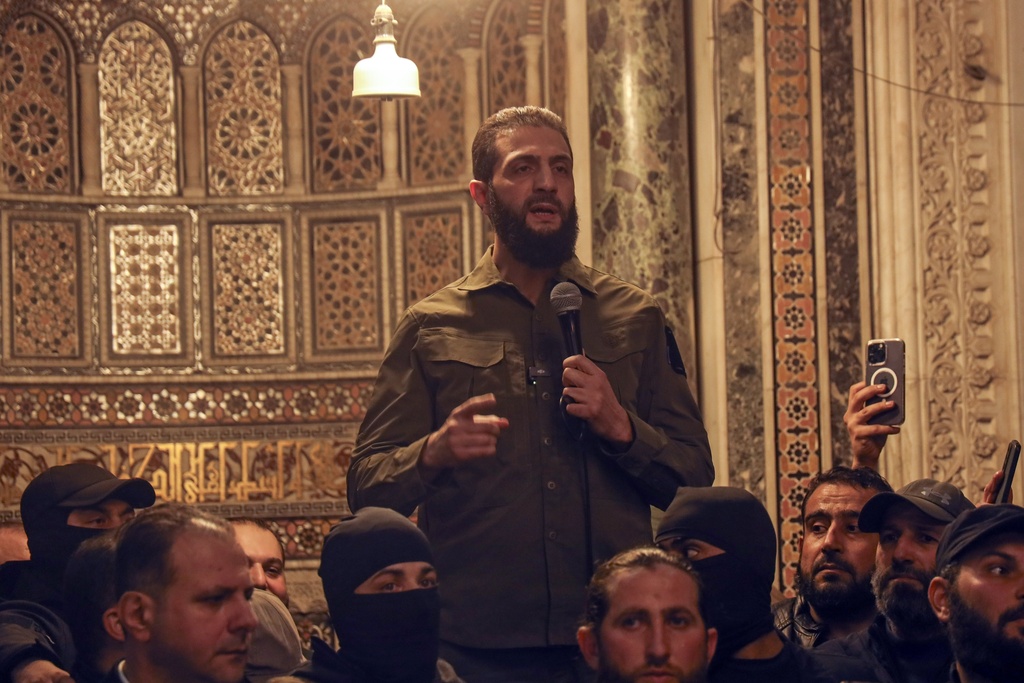
The 42-year-old al-Golani — labeled a terrorist by the United States — has not appeared publicly since Damascus fell early Sunday. But he and his insurgent force, Hayat Tahrir al-Sham, or HTS – many of whose fighters are jihadis — stand to be a major player.
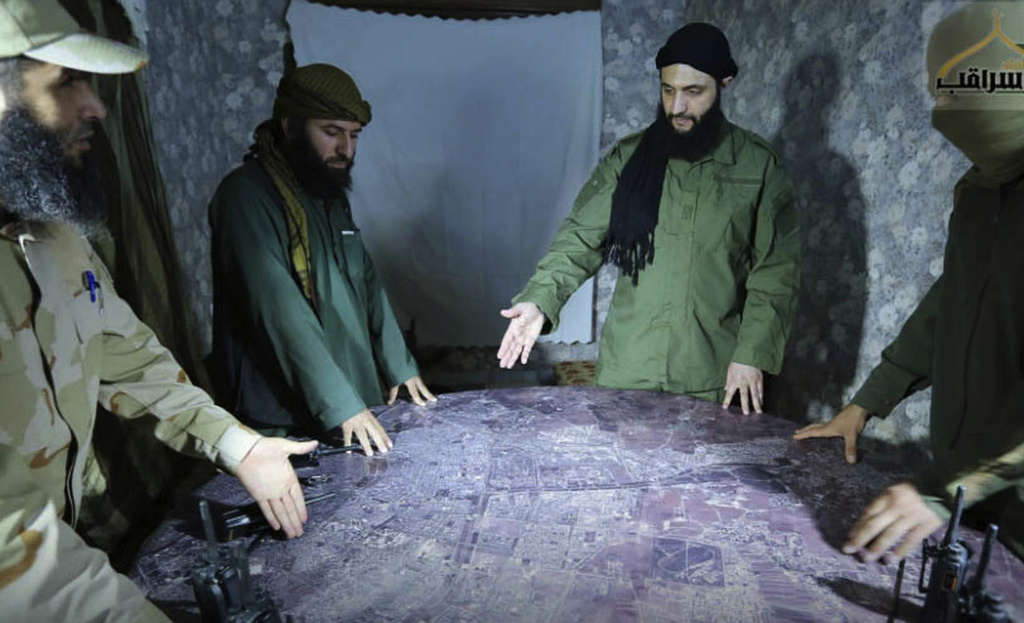
FILE – This undated photo released by a militant group in 2016, shows Abu Mohammed al-Golani, the leader of Syria’s al-Qaida affiliate, second from right, discussing battlefield details with commanders in Aleppo, Syria. (Militant UGC via AP, File)
For years, al-Golani worked to consolidate power, while bottled up in the province of Idlib in Syria’s northwest corner as Assad’s Iranian- and Russian-backed rule over much of the country appeared solid.
He maneuvered among extremist organizations while eliminating competitors and former allies. He sought to polish the image of his de-facto “salvation government” that has been running Idlib to win over international governments and reassure Syria’s religious and ethnic minorities. And he built ties with various tribes and other groups.
Along the way, al-Golani shed his garb as a hard-line Islamist guerrilla and put on suits for press interviews, talking of building state institutions and decentralizing power to reflect Syria’s diversity.
“Syria deserves a governing system that is institutional, no one where a single ruler makes arbitrary decisions,” he said in an interview with CNN last week, offering the possibility HTS would eventually be dissolved after Assad falls.
“Don’t judge by words, but by actions,” he said.
Al-Golani’s beginnings in Iraq
Al-Golani’s ties to al-Qaida stretch back to 2003, when he joined extremists battling U.S. troops in Iraq. The Syrian native was detained by the U.S. military but remained in Iraq. During that time, al-Qaida usurped like-minded groups and formed the extremist Islamic State of Iraq, led by Abu Bakr al-Baghdadi.
In 2011, a popular uprising against Syria’s Assad triggered a brutal government crackdown and led to all-out war. Al-Golani’s prominence grew when al-Baghdadi sent him to Syria to establish a branch of al-Qaida called the Nusra Front. The United States labeled the new group as a terrorist organization. That designation still remains in place and the U.S. government has put a $10 million bounty on him.
Abu Mohammed al-Golani speaks at the Umayyad Mosque in Damascus Sunday Dec. 8, 2024. Golani, a former al-Qaida commander who cut ties with the group and says he embraces pluralism and religious tolerance, leads the biggest rebel faction and is poised to chart the country’s future. He calls himself by his given name, Ahmad al-Sharaa, and not his nom de guerre. (AP Photo/Omar Albam)
The Nusra Front and the Syrian conflict
As Syria’s civil war intensified in 2013, so did al-Golani’s ambitions. He defied al-Baghdadi’s calls to dissolve the Nusra Front and merge it with al-Qaida’s operation in Iraq, to form the Islamic State of Iraq and Syria, or ISIS.
Al-Golani nonetheless pledged his allegiance to al-Qaida, which later disassociated itself from ISIS. The Nusra Front battled ISIS and eliminated much of its competition among the Syrian armed opposition to Assad.
In his first interview in 2014, al-Golani kept his face covered, telling a reporter for Qatari network Al-Jazeera that he rejected political talks in Geneva to end the conflict. He said his goal was to see Syria ruled under Islamic law and made clear that there was no room for the country’s Alawite, Shiite, Druze and Christian minorities.
Consolidating power and rebranding
In 2016, al-Golani revealed his face to the public for the first time in a video message that announced his group was renaming itself Jabhat Fateh al-Sham -– the Syria Conquest Front — and cutting its ties to al-Qaida.
“This new organization has no affiliation to any external entity,” he said in the video, filmed wearing military garb and a turban.
The move paved the way for al-Golani to assert full control over fracturing militant groups. A year later, his alliance rebranded again as Hayat Tahrir al-Sham -– meaning Organization for Liberating Syria — as the groups merged, consolidating al-Golani’s power in northwest Syria’s Idlib province.
HTS later clashed with independent Islamist militants who opposed the merger, further emboldening al-Golani and his group as the leading power in northwestern Syria, able to rule with an iron fist.
With his power consolidated, al-Golani set in motion a transformation that few could have imagined. Replacing his military garb with shirt and trousers, he began calling for religious tolerance and pluralism.
He appealed to the Druze community in Idlib, which the Nusra Front had previously targeted, and visited the families of Kurds who were killed by Turkish-backed militias.
In 2021, al-Golani had his first interview with an American journalist on PBS. Wearing a blazer, with his short hair gelled back, the now more soft-spoken HTS leader said that his group posed no threat to the West and that sanctions imposed against it were unjust.
“Yes, we have criticized Western policies,” he said. “But to wage a war against the United States or Europe from Syria, that’s not true. We didn’t say we wanted to fight.”
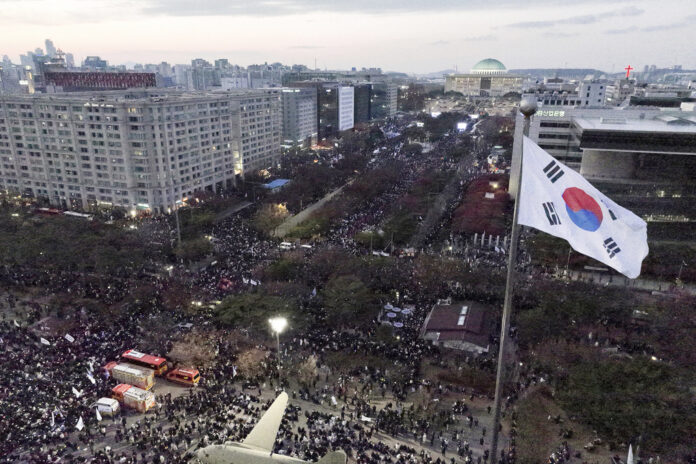
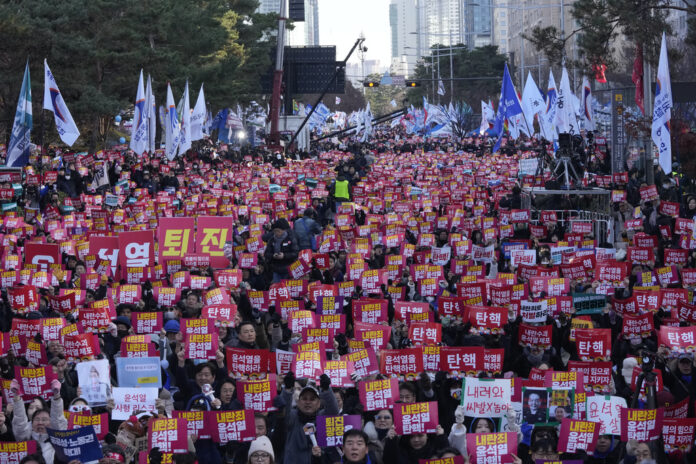
Protesters stage a rally demanding South Korean President Yoon Suk Yeol's impeachment following the president's short-lived martial law declaration in front of the National Assembly in Seoul, South Korea, Saturday, Dec. 7, 2024. (Seo Dae-yeon/Yonhap via AP)
The South Korean people have made it clear earlier this week that they were not going to tolerate a return to dictatorship. The short-lived martial law imposed by President Yoon Sok Yeol on Dec 3, which lasted less than 6 hours, demonstrates the maturity of many members of the National Assembly, which voted 190 to 0 to lift the martial law, and also the maturity of soldiers, and police, deployed under martial law who recognised that not only that the martial law was unwarranted but that their ultimate allegiance belong to the people. Thus they didn’t really prevent the members of the National Assembly from entering the hall to vote in an emergency session that night nor did they resort to the use of force against opposition politicians and civilians.
Apparently, they have learned and moved on from the dark years of military dictatorship and the Gwangju uprising in May 1980 when hundreds of people, mostly students, occupied the City Hall in that southern city and confronted the savage army under then dictator Chun Doo-hwan and sacrificed their lives. After civilian supremacy over the military was established some years later, it became customary for the sitting president of the republic to visit the cemetery of the martyrs every May to pay respect to those who died fighting for a free and democratic South Korea that is today.
And although on Saturday, December 7, the National Assembly has failed to pass a motion to impeach President Yoon after most assembly men and women from the People’s Power Party, the ruling Party, refused to participate in the vote, it’s apparent that President Yoon is now but a lame duck president and his days are numbered, as more civilians take to the street demanding for his resignation.
Thais were impressed by the swift actions taken by opposition lawmakers and the restraint shown by the military and police despite the imposition of martial law. In this regard, Thais have a long way to go before we can confidently consign dictatorship, military or otherwise, to the dustbin of history. This is because many people either lack courage or do not think they should or have to do something when the country is being taken over by dictators, particularly through an army coup. Many Thai politicians instead, kowtow to the rogue generals who staged military coup, joined their military government, and acted as apologists for military rule. Some prominent activists, academics, and public figures fled abroad instead of putting up a fight right away. Majority of the Thai press took a wait-and-see stance or even acted as a lubricant, thus ensuring a “successful” coup by telling the public these generals who took over power meant well for the country and have said they won’t be in power for long before returning power to the people. In the case of coup-maker Gen Prayut Chan-ocha, who staged the 2014 putsch, he ended up in power for nine ‘short’ years. Most soldiers, police, and judges, almost all simply accept the new order of the rogue generals like Prayut.
What’s more, only a few thousand civilians were willing to protest on the street against the 2014 coup while some civilian groups even congratulated, or lauded the coup makers. Some were proud to hand these generals a bouquet of flowers.
It is in this context where Thais can, and should, learn more from South Koreans on how to protect their fundamental political rights and freedom from being too easily taken away.In the end, we get what we are willing to pay, or willing to sacrifice, to defend our political rights and liberty. We only have ourselves to blame for this seemingly never ending vicious cycle of dictatorship.
Protesters stage a rally demanding South Korean President Yoon Suk Yeol's impeachment following the president's short-lived martial law declaration in front of the National Assembly in Seoul, South Korea, Saturday, Dec. 7, 2024. Slogans read "Impeach Yoon Suk Yeol." (AP Photo/Ahn Young-joon)
SEOUL, South Korea (AP) — South Korean prosecutors on Sunday detained a former defense minister who allegedly recommended last week’s brief but stunning martial law imposition to President Yoon Suk Yeol, making him the first figure detained over the case.
The development came a day after Yoon avoided an opposition-led bid to impeach him in parliament, with most ruling party lawmakers boycotting a floor vote to prevent the two-thirds majority needed to suspend his presidential powers. The main opposition Democratic Party said it will prepare a new impeachment motion against Yoon.
On Sunday, ex-Defense Minister Kim Yong Hyun was taken into custody at a Seoul detention facility after undergoing an investigation by prosecutors, a law enforcement official said, requesting anonymity in line with privacy rules.
The official gave no further details. But South Korean media reported that Kim voluntarily appeared at a Seoul prosecutors’ office, where he had his mobile phone confiscated and was detained. The reports said police searched Kim’s former office and residence on Sunday.
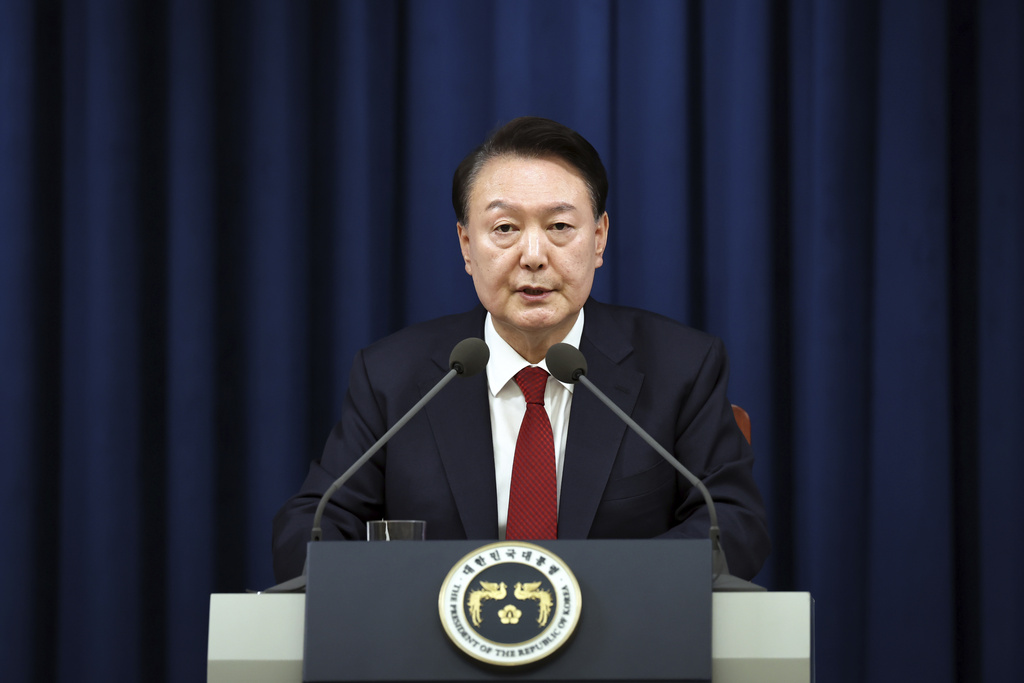
In this photo provided by South Korea Presidential Office, South Korean President Yoon Suk Yeol speaks during a press briefing at the presidential office in Seoul, South Korea, Tuesday, Dec. 3, 2024. (South Korea Unification Ministry via AP).
Repeated calls to Seoul prosecutors’ offices and police agency were unanswered.
Senior prosecutor Park Se-hyun said in a televised statement Sunday that authorities launched a 62-member special investigation team on the marital law case. Park, who will head the team, said the probe would “leave no suspicions.”
Yoon accepted Kim’s resignation offer on Thursday after opposition parties submitted a separate impeachment motion against him.
Kim is a central figure in Yoon’s martial law enforcement, which led to special forces troops encircling the National Assembly building and army helicopters hovering over it. The military withdrew after the parliament unanimously voted to overturn Yoon’s decree, forcing his Cabinet to lift it before daybreak Wednesday.
In Kim’s impeachment motion document, the Democratic Party and other opposition parties accused him of proposing martial law to Yoon. Vice Defense Minister Kim Seon Ho told parliament that Kim Yong Hyun ordered the deployment of troops to the National Assembly.
The Democratic Party called Yoon’s martial law imposition “unconstitutional, illegal rebellion or a coup.” It has filed complaints with police against at least nine people, including Yoon and Kim, over the alleged rebellion.
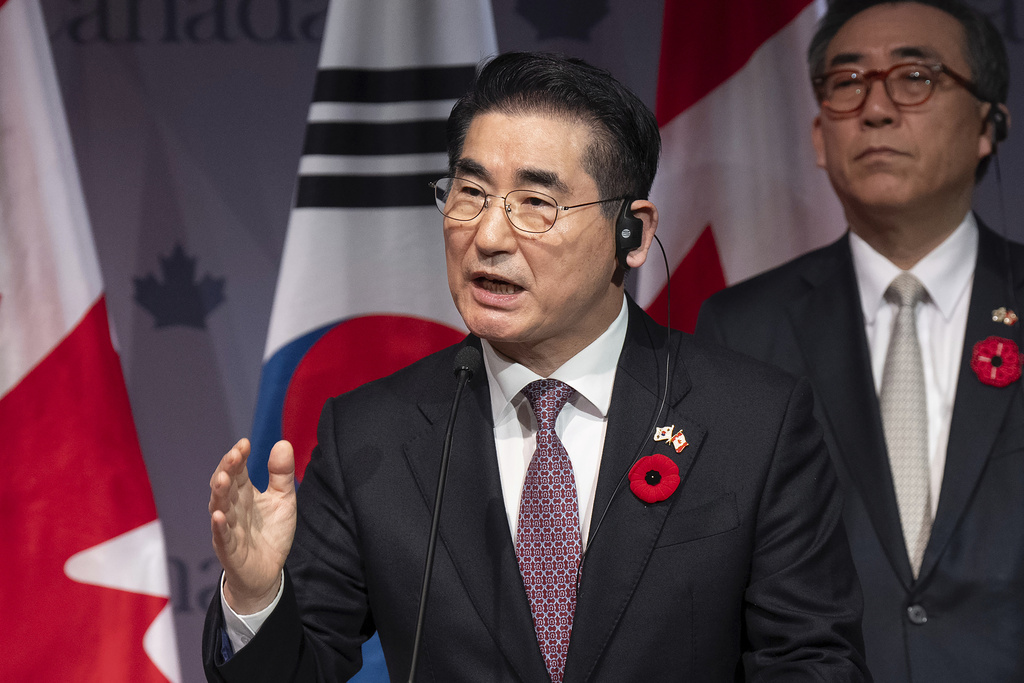
FILE – South Korea’s Foreign Minister Cho Tae-yul, right, looks on as South Korea’s Defense Minister Kim Yong Hyun speaks during a news conference in Ottawa, Ontario, on Nov. 1, 2024. (Adrian Wyld/The Canadian Press via AP, File)
In a statement Wednesday, Kim said that “all troops who performed duties related to martial law were acting on my instructions, and all responsibility lies with me.”
Prosecutor General Shim Woo Jung told reporters on Thursday the prosecution plans to investigate the rebellion charges against Yoon following complaints. While the president mostly has immunity from prosecution while in office, that does not extend to allegations of rebellion or treason.
The Defense Ministry said it has suspended three top military commanders over their alleged involvement in the martial law imposition. They were among those facing the opposition-raised rebellion allegations.
On Saturday, Yoon issued an apology over the martial law decree, saying he won’t shirk legal or political responsibility for the declaration. He said he would leave it to his party to chart a course through the country’s political turmoil, “including matters related to my term in office.”
Since taking office in 2022 for a single five-year term, Yoon has struggled to push his agenda through an opposition-controlled parliament and grappled with low approval ratings amid scandals involving himself and his wife. In his martial law announcement on Tuesday night, Yoon called parliament a “den of criminals” bogging down state affairs and vowed to eliminate “shameless North Korea followers and anti-state forces.”
The declaration of martial law was the first of its kind in more than 40 years in South Korea. The turmoil has sparked alarm among key diplomatic partners like the U.S. and Japan.
The scrapping of Yoon’s impeachment motion is expected to intensify protests calling for his ouster and deepen political chaos in South Korea, with a survey suggesting a majority of South Koreans support the president’s impeachment. Yoon’s martial law declaration drew criticism from the conservative ruling party, but it is determined to oppose Yoon’s impeachment apparently because it fears losing the presidency to liberals.
Ruling People Power Party leader Han Dong-hun said Sunday the PPP will work with the government to determine Yoon’s early and orderly exit from office in a way that minimizes confusion, but he didn’t say when that would happen. He also claimed Yoon will not be involved in state affairs, including foreign policy.
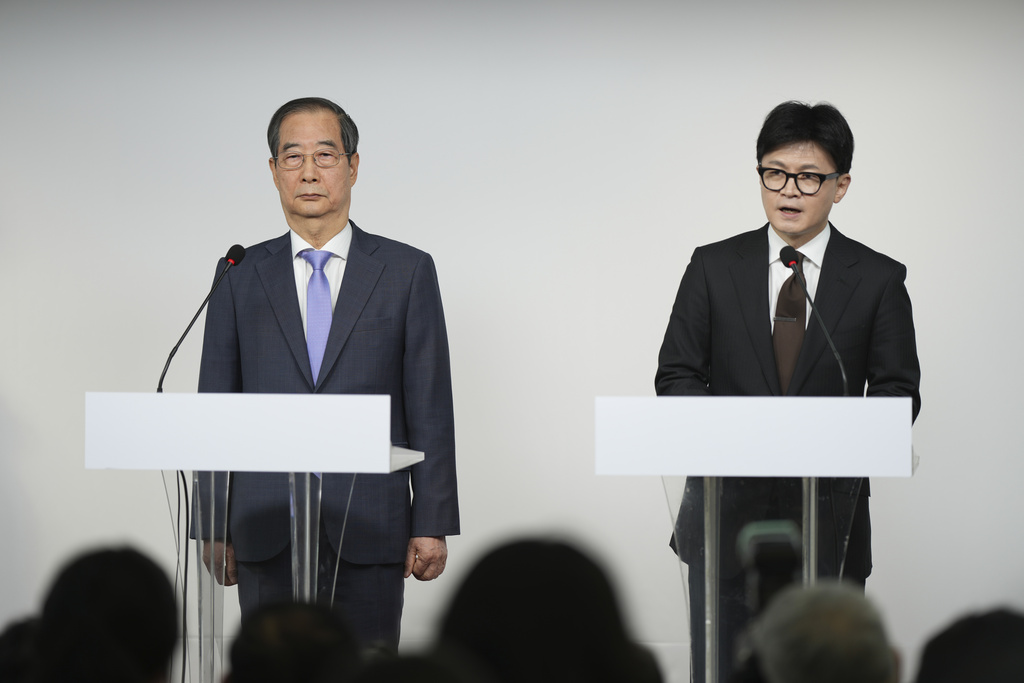
South Korea’s ruling People Power Party leader Han Dong-hun, right, speaks as South Korean Prime Minister Han Duck-soo listens during their joint statements in Seoul, South Korea, Sunday, Dec. 8, 2024, after President Yoon Suk Yeol avoided an opposition-led attempt to impeach him over his short-lived imposition of martial law. (AP Photo/Lee Jin-man)
Yoon’s presidential office didn’t immediately respond. The Democratic Party criticized Han Dong-hun’s comments, saying that the exclusion of an incumbent president from state affairs isn’t supported by the constitution. The party said authorities should immediately arrest Yoon and all others implicated in the case.
The presidential office said Sunday that Yoon accepted the resignation offer by Safety Minister Lee Sang-min, who has also faced an opposition-led impeachment motion over his alleged role in the martial law enforcement.
In a parliamentary hearing on Friday, Lee, one of Yoon’s closest associates, defended Yoon’s martial law decree, saying the president exercised his powers “within the boundaries of constitutional processes and law.”
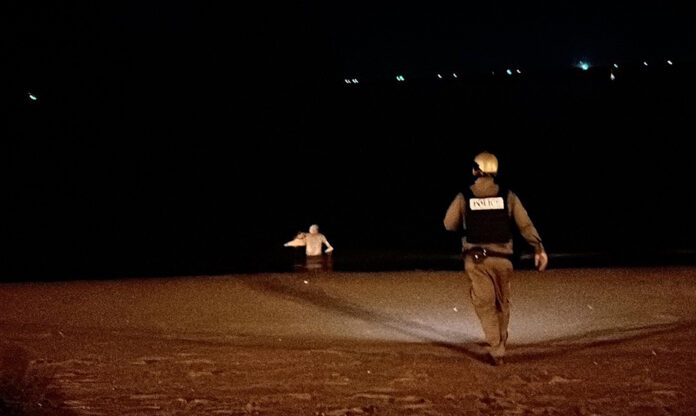
Police intervene to stop public indecency at Jomtien Beach in late-night incident on December 6, 2024.
PATTAYA — A Chinese man and a Thai woman were arrested late Friday night after engaging in public sexual activity at Jomtien Beach, shocking tourists and beachgoers.
Police responded to multiple complaints around 11 p.m. about a couple openly engaging in intimate acts both on the beach and in the water, showing complete disregard for public presence. According to witnesses, the couple continued their activities for over 30 minutes despite numerous warnings from bystanders.
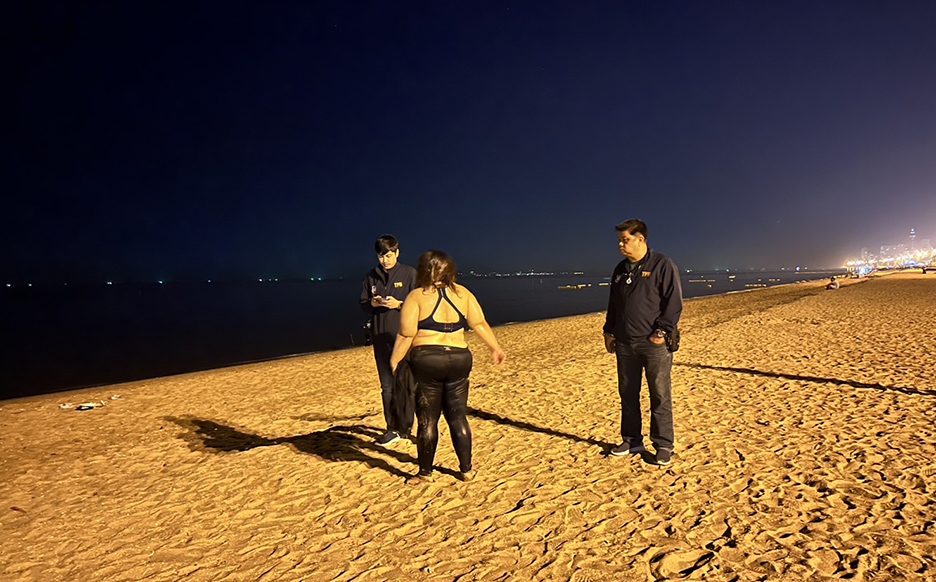
The woman confronts police officers, demanding to know what she had done wrong after being halted from indecent behavior at Jomtien Beach, shortly before midnight on December 6, 2024.
Police Lieutenant Colonel Piyapong Ensarn of the Pattaya Tourist Police reported that when officers arrived at the scene, the couple was still engaged in sexual activity. While officers were able to immediately detain the male suspect, the female suspect initially remained in the water, claiming she couldn’t exit as she was unclothed. She later demanded police provide her with clothing before emerging.
The woman confronted police officers, demanding to know what she had done wrong, before being taken into custody by Pattaya City Police officers for questioning.
The suspects were identified as a Chinese national in his 50s-60s and a 53-year-old Thai woman. According to witness accounts, the woman had been drinking at a nearby restaurant before encountering the Chinese tourist. Witnesses observed the pair initially arguing on the beach before their public display began.
Pattaya police officers immediately detain the male suspect at Jomtien Beach on Dec..6, 2024.
“At first, they appeared to be having a lovers’ quarrel,” one tourist witness stated. “But the situation quickly evolved into something inappropriate, prompting us to contact the authorities.”
The couple has been taken to Pattaya City Police Station for further investigation. The woman reportedly challenged officers during her arrest, questioning whether she had committed any offense.
The incident is being processed under public indecency laws, according to local authorities.
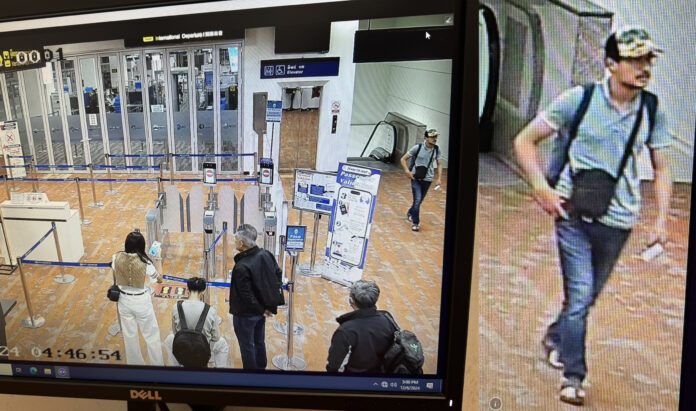
Surveillance footage shows the Moroccan suspect at Chiang Mai International Airport, where he boarded a flight to Hong Kong at 6:00 a.m. on Dec. 5, 2024.
CHIANG MAI — Thai police are working with Hong Kong authorities to locate a suspect in the murder of Dr. Sammy, a prominent transgender clinic owner in Chiang Mai. The victim, Thitikan Dulikhanon, known professionally as Dr. Sammy, was found dead at the Dr. Sammy Clinic in the Bishop Point complex on December 6, 2024, though investigators believe the murder occurred on December 4.
Thitikan Dulikhanon, known professionally as Dr. Sammy
Police Colonel Prachya Thisa, superintendent of Chiang Mai City Police Station, announced that authorities have identified the prime suspect as Bilal Chefinu, a 30-year-old Moroccan national who was reportedly the victim’s former partner. The court has issued an arrest warrant following extensive review of surveillance footage and other evidence.
According to investigators, security cameras captured Dr. Sammy arriving at the clinic with Chefinu around 8:00 p.m. on December 4. The pair, who had reportedly separated a year earlier, entered the building together. Police believe Chefinu had returned to attempt reconciliation with Dr. Sammy.
Surveillance footage shows Chefinu leaving alone in Dr. Sammy’s black Toyota Camry around 2:00 a.m. on December 5. He was later seen parking the car near the city moat and taking a tuk-tuk to Chiang Mai International Airport, where he boarded a flight to Hong Kong at 6:00 a.m. the same day.
When police discovered Dr. Sammy’s body on the clinic’s third floor, the victim had been dead for approximately three days. The cause of death was determined to be strangulation with a red elastic cord, which was found hanging on a clothes rack in the bathroom. The body was found covered with a blanket and towel, with clear signs of strangulation visible on the neck.
Police recovered two mobile phones belonging to the victim from the abandoned vehicle. Investigators have completed their analysis of the surveillance footage tracking the suspect’s escape route and are now working with Hong Kong Interpol to locate and apprehend Chefinu. Authorities expect to make an arrest in the near future.
The case has drawn significant attention in Chiang Mai, where Dr. Sammy’s clinic was well-known. Police believe the motive for the murder was related to a personal dispute between the victim and the suspect.
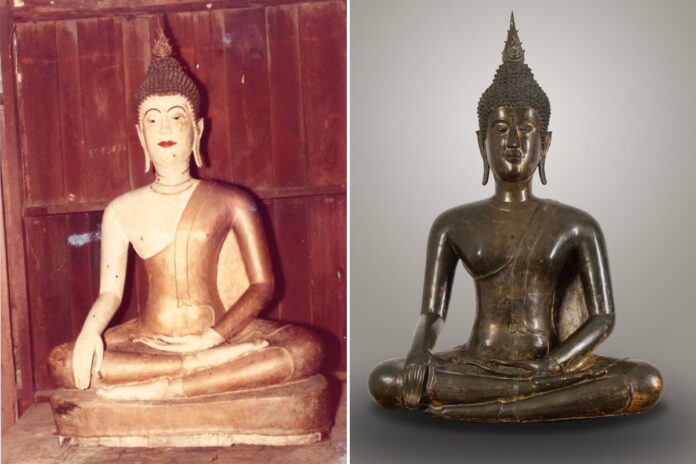
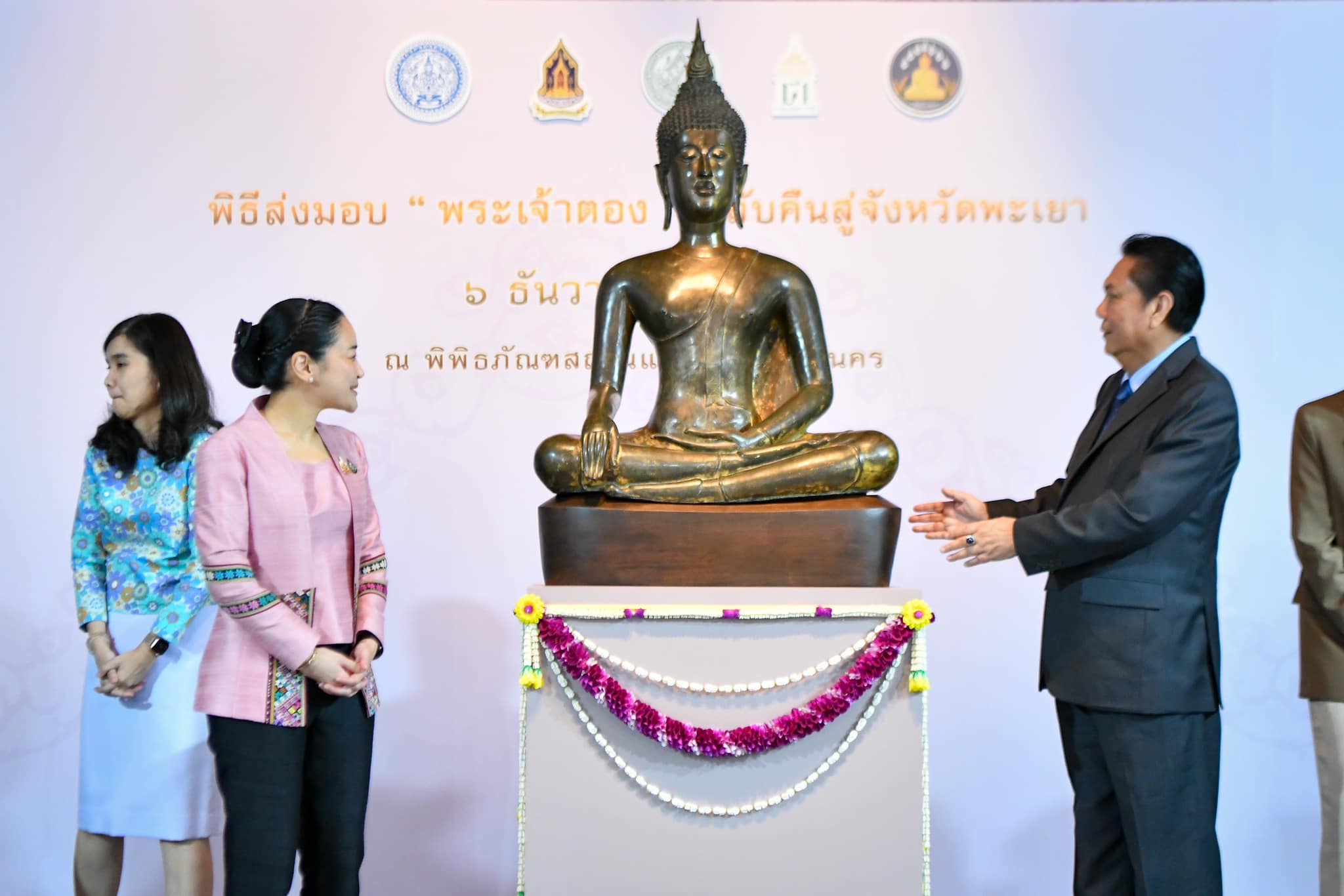
“Phra Chao Tong",” a Lanna-style Buddha statue that was stolen decades ago
BANGKOK — A Lanna-style Buddha statue that was stolen decades ago, and returned it to Phayao Province on Friday.
Culture Minister Sudawan Wangsuphakijkosol presided over the handover ceremony for “Phra Chao Tong”,”Deputy Governor Bumrong Sangkhaw and Director General of the Fine Arts Department Panomboot Chandrachoti attended the ceremony at the National Museum on December 6.
Minister Sudawan emphasized the importance of Phra Chao Tong as a revered symbol of Phayao’s cultural heritage. The statue will be returned to its original location at Wat Si Ping Mueang in Phayao.
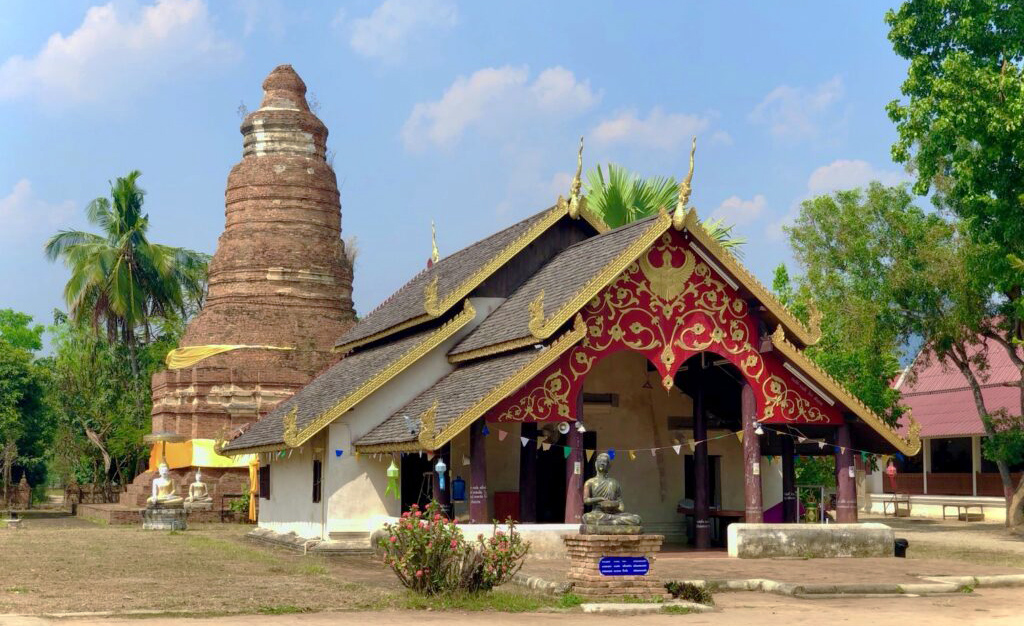
Wat Si Ping Mueang in Phayao Province
Phra Chao Tong or “Luang Por Lor” is a Buddha statue in the Maravijaya posture that is worshipped by the people of Phayao province. The bronze statue, which was originally located at Wat Si Ping Mueang, Village No. 1, Wiang Lo, Lo Subdistrict, Chun District, Phayao, measures 78 cm in width and 110 cm in height. It features a unique blend of Lanna and Sukhothai art styles that were popular in the early 20th and 21st Buddhist centuries.
The statue was officially registered as a national ancient and significant Buddha image under the care of temples. The registration was published in the Royal Gazette, Volume 103, Section 79, on May 12, 1986.
In a ceremonial handover at the Culture Ministry, Minister Sudawan Wangsuphakijkosol, along with Wisut Chainaroon, Chairman of the Government Whip, returns the recovered “Phra Chao Tong,” a historic Lanna-style Buddha statue, to Phayao Province on Dec. 6, 2024.
Stolen in 1988
At the end of 1988, the Phra Chao Tong was stolen from Wat Si Ping Mueang and its whereabouts remained unknown for over 36 years. In August 2024, the Fine Arts Department was informed by Wisut Chainaroon, Chairman of the Government Whip, about a Buddha statue resembling Phra Chao Tong that had turned up in a European auction house. Detailed photos and extensive information were provided, which enabled negotiations with the current owner and facilitated the return of the statue to Thailand.
Panombutr Chandrachoti, Director General of the Fine Arts Department, explained that after receiving the statue on October 24, 2024, the department verified its authenticity based on archival photos and records kept by the National Museum Department since 1985. The artwork and features matched those of Phra Chao Tong.
Additionally, scientific analysis revealed traces of paint previously applied to the statue, invisible to the naked eye but consistent with descriptions of Phra Chao Tong before its theft. This confirmed that the recovered statue is indeed Phra Chao Tong, cherished by the people of Wiang Lo, Phayao.
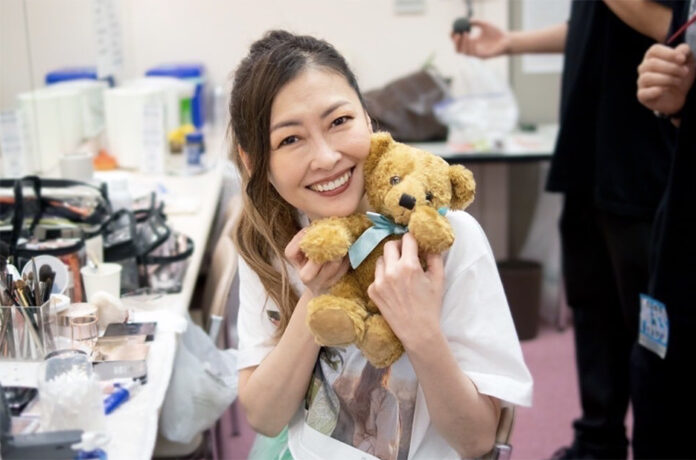
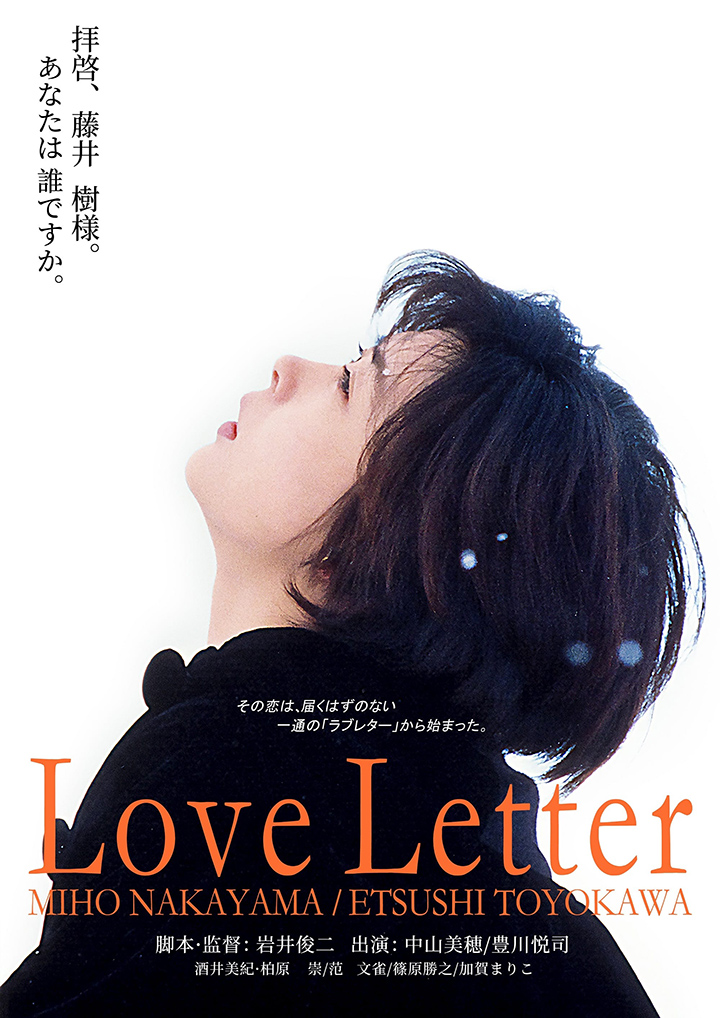
TOKYO — Japanese actress and singer Miho Nakayama, known for having starred in the acclaimed 1995 romantic film “Love Letter,” and a string of hit dramas, was found dead Friday in the bathtub of her Tokyo home, investigative sources said.
Photo: miho_nagayama instagram
A representative of the 54-year-old’s agency and an acquaintance discovered her body when they visited her home after she failed to show up for an appointment, according to police.
Nakayama was found seated in a bathtub filled with water, with the front door of her home locked. Foul play is considered unlikely, and police are conducting an investigation into the circumstances of her death, the sources said.
She was due to perform at a Christmas concert in Osaka later in the day, but her official website announced a cancellation, citing “health issues.” She last held a concert in Yokohama near Tokyo on Sunday.
“We are in shock and grief at this sudden turn of events. The cause of her death and other details are currently being investigated,” her agency said in a statement.
Love Letter, 1995
Nakayama made her acting debut in 1985 with the television drama “Maido Osawagase Shimasu,” and often starred in the “trendy dramas” from the 1980s to the 1990s that often featured romance and the trends at the time.
The actress, affectionately known as “Miporin,” also launched her music career in 1985 with the single “C.”
She quickly rose to popularity as an idol with numerous hit songs, including her 1986 single “Waku Waku Sasete.” Her 1992 single “Sekaiju no Dare Yori Kitto” (Surely More Than Anyone in the World), in collaboration with rock band Wands, sold over 1.8 million copies.
Her 1994 hit “Tada Nakitaku Naruno” (I Just Want to Cry) also sold over a million copies.
Nakayama won the Blue Ribbon Award for Best Actress for her performance in “Love Letter,” which also enjoyed great popularity in South Korea and elsewhere in East Asia.
Her former husband Hitonari Tsuji is a writer and musician.
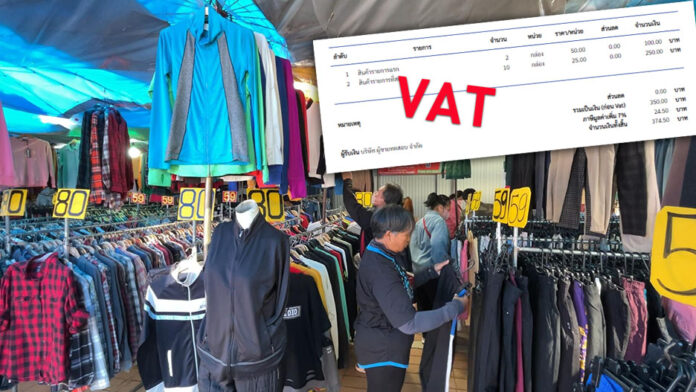
Thailand current VAT rate of 7 percent has remained unchanged for 32 years.
BANGKOK — The Thai Prime Minister has clarified the government’s plans for tax reform and assured the public that there will be no increase in the VAT rate to 15 percent. The current VAT rate of 7 percent has remained unchanged for 32 years and is well below the OECD average of 19 percent.
The VAT system is being widely discussed following a proposal for a comprehensive tax reform by the Ministry of Finance led by Deputy Prime Minister and Minister of Finance Pichai Chunhavajira and Permanent Secretary for Finance Lavaron Sangsnit. The proposed reforms include possible adjustments to VAT rates, which have sparked public debate.
The Ministry of Finance explained that the VAT increase is only one part of a broader tax reform initiative. Other measures include reducing personal and corporate income tax, introducing a capital gains tax, introducing the Negative Income Tax (NIT), tackling the shadow economy and using technology to optimize efficiency and fairness in the tax system.
Prime Minister Paetongtarn Shinawatra discusses VAT issues with Deputy Prime Minister and Finance Minister Pichai Chunhavajira and the PM’s policy advisory team at Government House on December 6, before confirming that there will be no VAT increase to 15%
The Untouchable VAT?
VAT is one of the primary sources of government revenue, levied on goods and services at various stages of production and distribution, both domestically and for imports. Though Thailand’s VAT was originally set at 10 percent in 1992, a Royal Decree effectively reduced it to 7 percent (6.3% VAT + 0.7% local tax). Despite a brief increase in 1997, the Asian financial crisis prompted another reduction to 7 percent, a rate that has persisted to this day as political and public resistance has deterred any government from implementing an increase.
The current government faced criticism and opposition after addressing the proposal to increase VAT. The opposition’s accusations that the government was insolvent because it had spent on economic stimulus programs were firmly rejected by the government.
On December 6, Prime Minister Paetongtarn Shinawatra addressed the concerns in a public statement and emphasized that no decision had been made to increase VAT to 15 percent. She explained that the Ministry of Finance was looking at a comprehensive restructuring of taxes to ensure fairness, reduce inequality and improve national competitiveness. The process will take time, as in other countries where tax reforms have taken over a decade.
The Prime Minister reiterated the Government’s priority to reduce public spending, increase the efficiency of public sector spending and create new income opportunities for citizens.
VAT rates in Other Countries
According to a report by Prachachat Business, VAT systems originated in France 70 years ago and have since been adopted by over 175 countries.
OECD countries, including Denmark, Italy, Finland and South Korea, have an average VAT rate of 19 percent. Non-OECD countries have an average VAT collection rate of 15 percent: Croatia (25%), Argentina (21%), Tunisia (19%), Jordan (16%), and Singapore (9%). Hungary has the highest VAT rate at 27 percent, with exceptions for certain goods and services.
Some countries, like Canada, Taiwan, and the UAE, maintain lower VAT rates at 5 percent, with exemptions for certain exports. In Saudi Arabia, the introduction of VAT at 5 percent in 2018 and its increase to 15 percent in 2020 significantly impacted businesses, reducing short-term profits by an average of 2.16 percent.
Research suggests that VAT increases may not raise sufficient revenue in economies with significant tax evasion or limited public taxpayer capacity, underscoring the need for careful policy design.