
































27.7 C
Bangkok
Friday, June 26, 2026
Home Blog Page 71

Thai, Chinese workers clash at Rayong construction site, several injured

RAYONG — A violent clash broke out between Thai and Chinese workers at a construction site in Rayong province on 26 April, leaving several people with minor injuries, authorities said.

The incident occurred at around 10:30 at a site in tambon Map Kha, Nikhom Phatthana district, where dozens of workers from both groups were involved in a heated argument that escalated into a physical fight.

Video footage recorded on mobile phones showed workers wearing reflective vests and safety helmets exchanging punches and using nearby construction tools as weapons. The scuffle took place near a motorcycle parking area and beside large trucks, with some workers attempting to intervene as others continued fighting.

Officials said the situation remained tense for some time before it was brought under control. Several workers from both sides sustained minor injuries.

news128658 FwUa3O2DcV1777281891

On 27 April, police, local administrative officials and Internal Security Operations Command (ISOC) officers in Rayong visited the site to monitor the situation and gather evidence.

Authorities summoned site supervisors and those involved for questioning to establish the facts and consider legal action on a case-by-case basis. Initial findings indicate multiple individuals may face charges related to assault and causing a public disturbance.

The site operator has temporarily suspended some operations and separated Thai and Chinese workers to prevent further clashes. Interpreters are also being brought in to improve communication, as language barriers were identified as a key factor behind the conflict.

ISOC Rayong officials are reviewing CCTV footage to identify additional suspects and are coordinating with relevant agencies to implement measures to prevent similar incidents.

Authorities urged all parties to resolve disputes peacefully, warning that further escalation could affect the image of foreign labour management and investor confidence in the province’s industrial estates.
Advertisement

NBTC backs Google-linked subsea cable project

NBTC backs Google-linked subsea cable project

BANGKOK — 27 April 2026, Thailand’s telecom regulator has approved an application to exercise rights under telecommunications law for a new subsea cable project linked to Google, officials said.

At its meeting No. 12/2026, the National Broadcasting and Telecommunications Commission (NBTC) endorsed a request under Section 39 of the 2001 Telecommunications Business Act, following a resolution by its subcommittee on rights of way. The application was submitted by International Gateway Co.

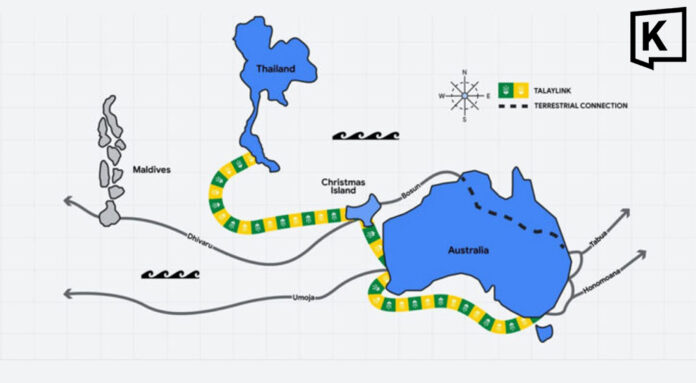
NBTC officials said the project is a collaboration between International General Company (IGC) and Alphabet, the parent company of Google. It involves laying more than 300 kilometres of subsea cable conduits, containing 11 cable lines, through territorial waters, with a landing point in Thailand. The system will also connect to Australia’s Christmas Island.

A source at the NBTC said the project uses a single conduit route housing 11 separate cable lines that can branch out to other destinations. Establishing a landing point in Thailand requires regulatory approval.

Subsea cable networks form the backbone of Thailand’s internet infrastructure. The country currently has around 10–12 systems, with at least nine already operational, including SMW3, FLAG, TIS, SMW4, AAG, SJC, APG, AAE1 and ADC (Asia Direct Cable). Projects under development include Google Cloud’s TalayLink, SJC2 (Southeast Asia-Japan Cable 2), expected to launch in 2026, and SEA-H2X.

Data from the Thai Internet and Cloud Service Provider Association shows that about 70% of Thailand’s international connectivity still relies on terrestrial links to data and internet hubs in Singapore.

The approved permit forms part of Google Cloud’s TalayLink project, a new subsea cable route connecting Thailand and Australia aimed at strengthening digital connectivity across the Asia-Pacific and globally. It marks the start of a previously announced 30 billion baht investment in regional cloud infrastructure in Thailand.

TalayLink is also part of Australia Connect, an initiative positioning Australia as a hub linking Pacific island nations and countries in the Indian Ocean via the Sunda Strait, a major corridor for existing subsea cables.

The network will connect to Google’s planned cloud region in Thailand, part of a US$1 billion investment announced last year, enabling future data centre consolidation and integration with Google’s global cloud network.

Google has also announced plans for new connectivity hubs in Western Australia, including Mandurah, and in southern Thailand to support regional demand. Once completed, the network is expected to enhance resilience across Australia, Africa and Southeast Asia, while supporting Thailand’s digital economy transition, including AI adoption and broader digital inclusion.

Advertisement

Coral in Ao Nang show 20% paling, bleaching feared

Coral in Ao Nang show 20% paling, bleaching feared

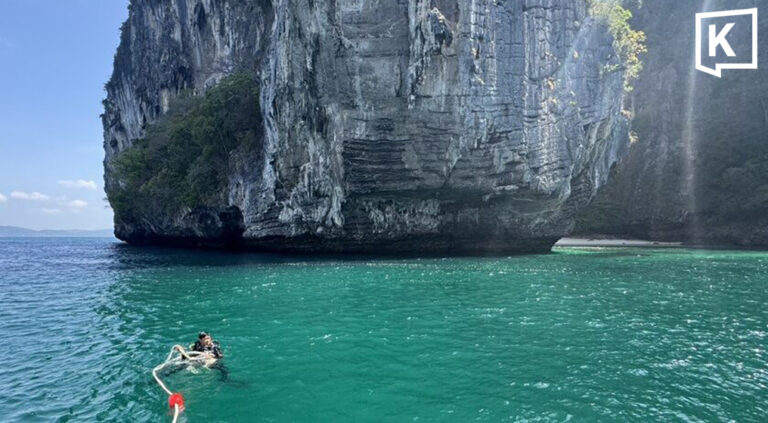
KRABI — 27 April 2026, Coral reefs in Ao Nang have shown signs of paling, with about 20% of live coral affected, raising concerns of possible bleaching as sea temperatures rise.

Saengsuree Songthong, chief of Hat Noppharat Thara–Mu Ko Phi Phi National Park, said officials conducted an underwater survey on 26 April led by Nattawat Limsunthon, assistant park chief, around the western side of Koh Samet, Ao Nang subdistrict, Mueang Krabi district, covering an area of 4,068 square metres.

Sea temperatures were recorded at 32°C, dropping to 31°C in shaded areas created by natural underwater structures at depths of 2.9–9.7 metres.

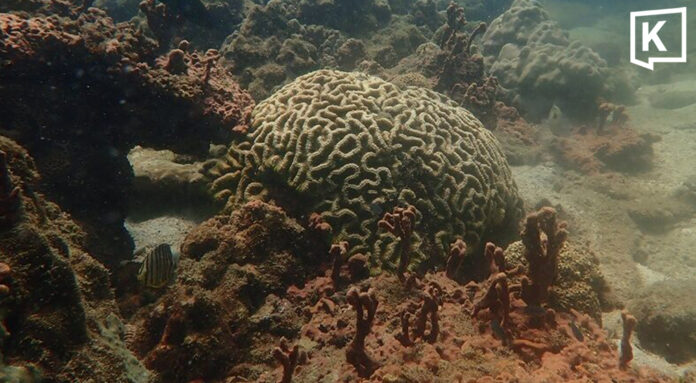
The survey found 20% of live coral in normal condition, while another 20% showed signs of paling. Affected species included massive corals, large star corals, staghorn corals, brain corals, Pavona cactus coral, galaxy coral, honeycomb coral, small-grooved brain corals, smaller star corals and angular star corals.

One colony of Pavona cactus coral was found fully bleached, while about 30% of coral in the area was already dead. Other bleaching-sensitive marine life, including giant clams, soft corals and sea anemones, showed about 3% paling.

Officials installed a 100-metre boundary buoy line near Ao Pu Ya on Koh Poda, collected about 25 kilogrammes of marine debris from the reef area and removed one fishing trap, which contained no marine life.

Authorities said they will closely monitor the situation, warning that sustained sea temperatures of up to 32°C could worsen coral bleaching in the coming period.​​​​​​​​​​​​​​​​

Coral in Ao Nang show 20 paling bleaching feared 2

Advertisement

Thailand to allocate 20 million baht to restore Ta Kwai Temple within two years

BANGKOK — The Fine Arts Department will allocate up to 20 million baht to restore Ta Kwai Temple in Surin province, with completion expected within two years, officials said.

Fine Arts Department Director-General Phanombootra Chandrajoti said on 27 April 2026 that the restoration plan follows a major ritual ceremony held at Prasat Ta Kwai in tambon Bang Dai, Phanom Dong Rak district.

He said the project has been assigned under coordination between the Ministry of Culture and the Ministry of Defence, with the restoration scheduled to begin in fiscal year 2027 and continue through 2028.

The plan includes detailed archaeological surveys of the surrounding area, excavation work to uncover additional historical evidence, and reinforcement of the temple’s foundation. Fallen bricks and stones will be carefully documented and reassembled, with each stone marked to ensure accurate restoration.

Officials estimate that around 40–50% of the original bricks remain usable, while the rest will be supplemented with new materials. The department said the restoration will clearly distinguish between original and newly added materials.

Phanombootra said experts from the Fine Arts Office 10 in Nakhon Ratchasima, including specialists in architecture, engineering and archaeology, will lead the restoration work.

He added that the Ministry of Defence has confirmed military personnel will assist in site security throughout the project, citing concerns over potential unexploded ordnance or hazards left from past military use of the area.

Modern technology and innovation will also be used to reduce risks for workers during the restoration process, he said.

The department also plans to register around 30 ancient sites in Thailand’s lower northeastern border region as officially recognised archaeological sites.

Phanombootra said the restoration will return the temple to its original beauty.

“Everything will be restored to its original splendour. We are confident the Fine Arts Department can complete this work,” he said, adding that the site holds strong historical and emotional significance as a symbol of national heritage and sacrifice.

Advertisement

Bangkok becomes first city in Asia-Pacific to receive UNDP Gold gender equality certification

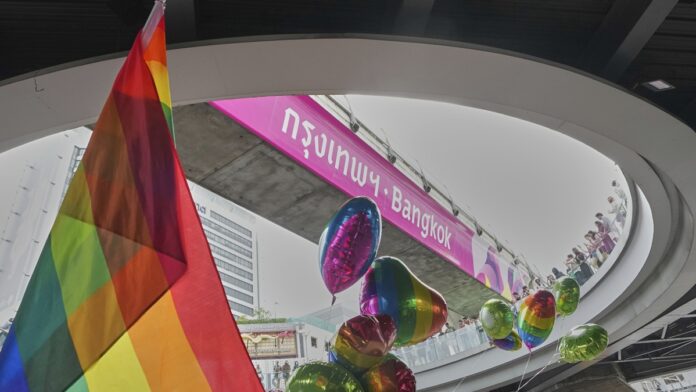
Participants hold a rainbow flag during the annual Pride Parade to celebrate the LGBTQ+ community’s Pride Month in Bangkok, Thailand, Sunday, June 1, 2025. (AP Photo/Sakchai Lalit)

BANGKOK — Bangkok has become the first city and first public-sector entity in the Asia-Pacific region to receive the “Gold” level certification for gender equality from the United Nations Development Programme (UNDP), marking a major milestone in its push for inclusive urban development.

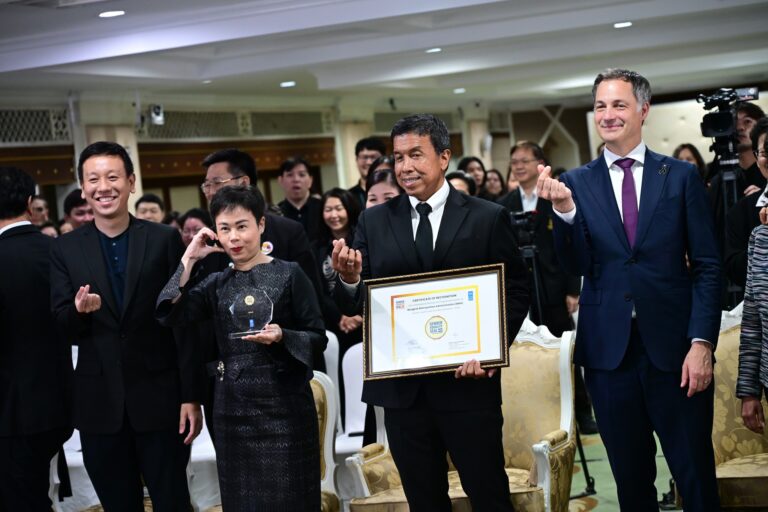
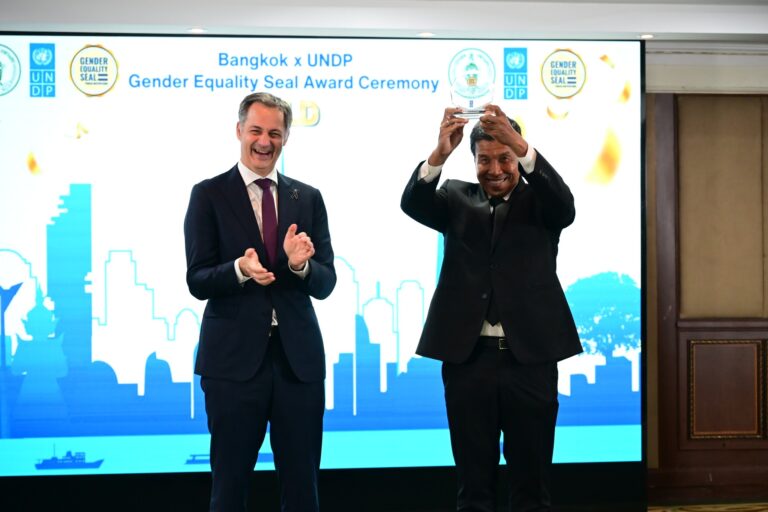
Bangkok Governor Chadchart Sittipunt received the Gender Equality Seal for public institutions at the Rattanakosin Room of City Hall on 24 April 2026, alongside UNDP Administrator Alexander De Croo, who attended the ceremony with senior officials and partners.

The UNDP Gender Equality Seal is an international certification framework that assesses public institutions on their commitment to advancing gender equality and reducing structural gaps that hinder development. The programme currently works with more than 100 institutions across over 30 countries.

678735566 1305474211760725 3642599522508447767 n

Chadchart said the award reflects not only Bangkok’s achievement but also Thailand’s broader progress, noting that the city represents people from across the country.

“This is not just Bangkok’s award, but Thailand’s achievement,” he said, adding that it is the first city in the Asia-Pacific region to reach the Gold standard.

He said Bangkok began the certification process more than two years ago, initially scoring just 8.8%. Through cooperation between public agencies, private sector partners and civil society, the city improved its score to 94.8%, meeting 38 of 40 indicators, including all 14 Gold-standard benchmarks.

Chadchart said sustainability will depend on embedding gender equality into organisational culture, ensuring it continues regardless of leadership changes.

Bangkok Deputy Governor Taweeda Kamolvej said collaboration with UNDP helped identify remaining gaps and improve policy implementation, adding that the achievement was only possible through cooperation with citizens, private sector partners and diverse communities.

UNDP Administrator Alexander De Croo congratulated Bangkok and its residents, calling the achievement a collective success and highlighting the city’s leadership role in the region.

He also pointed to Thailand’s recent progress on equality policies, including the passage of marriage equality legislation, as well as Bangkok’s bid to host World Pride.

According to the UNDP, Bangkok improved its score from 8% at the start of the programme in 2023 to 94.8% in the final assessment, integrating gender perspectives into more than 200 municipal projects aligned with Sustainable Development Goal 5 on gender equality.

Initiatives include free sanitary pad distribution, installation of more than 30,000 LED streetlights under the “Bangkok Must Be Bright” campaign, and efforts to close the gender pay gap from 3.1% to 0.9%.

678335564 1305474115094068 3660835809456818493 n

The city has also expanded inclusive healthcare services through 31 “BKK Pride Clinics”, providing care for more than 8,400 people, particularly from LGBTQI+ communities.

Bangkok has also implemented progressive workplace policies, including 120-day maternity leave, childcare support, and allowing staff to dress according to gender identity. Women currently make up 43% of the workforce and 50% of senior management positions.

UNDP said it will continue working with Bangkok to further advance gender equality and promote the city as a model for inclusive urban development globally.

Advertisement

Thai Airways to raise Japan fuel surcharge from May

Thai Airways to raise Japan fuel surcharge from May

BANGKOK — 27 April 2026, Thai Airways International will increase fuel surcharges on flights between Thailand and Japan from 1 May, citing rising and volatile global jet fuel prices.

The airline said it had issued a notice to adjust fuel surcharge rates for international tickets to reflect higher-than-expected aviation fuel costs. The revised rates are pending approval from aviation regulators and will apply to tickets issued from 1 May 2026.

For routes between Suvarnabhumi Airport and major Japanese cities — Tokyo, Nagoya, Osaka, Fukuoka and Sapporo — the new surcharges per flight segment will be as follows:

First class (Royal First) will rise by 90 US dollars (3,213 baht) to 170 dollars (6,200 baht).

Business class (Royal Silk) will also increase by 90 dollars (3,213 baht) to 170 dollars (6,200 baht).

Economy class will increase by 85 dollars (3,035 baht) to 140 dollars (5,100 baht).

Tickets issued on or before 30 April 2026 will remain subject to the current rates. The surcharge is levied in US dollars, with the amount paid in baht depending on the exchange rate at the time of ticket issuance.

Advertisement

Want to go abroad? Thailand considers exit fee for Thai travellers

BANGKOK — Thailand is considering introducing a fee on Thai nationals travelling abroad, or an “exit fee”, as part of a plan to generate funding to support domestic tourism promotion, Tourism and Sports Minister Surasak Phancharoenworakul said.

Surasak said the proposal is a joint policy initiative with the Ministry of Finance and is aimed at strengthening Thailand’s “Thai travel within Thailand” campaign by creating a dedicated funding mechanism for domestic tourism programmes.

He said, for example, a fee of 1,000 baht per outbound traveller could generate around 10 billion baht annually, based on an estimated 10 million outbound trips by Thai nationals each year.

The revenue could then be used to subsidise domestic travel, such as providing 1,000-baht support per trip for Thai travellers within the country, or other incentive schemes depending on suitability.

“This type of programme will help strengthen the long-term sustainability of Thailand’s tourism sector without relying on annual government budgets,” Surasak said, adding that it would also allow for clearer long-term planning.

He said the ministry is currently preparing short-term domestic stimulus measures to offset a slowdown in international tourism caused by geopolitical tensions, including conflicts in the Middle East.

The ministry is reviewing previously successful domestic tourism schemes for possible revival, such as the “We Travel Together” co-payment programme and other travel subsidy initiatives, including bus travel promotions, tax incentives and measures to boost secondary-city tourism.

Advertisement

Thailand to revert visa-free list to 57 countries, scrap 60-day scheme for 93 nations

BANGKOK — Thailand plans to roll back its visa-free policy to a list of 57 eligible countries and territories, replacing the expanded 60-day exemption for 93 countries introduced in 2024, as part of efforts to tighten visitor screening and shift toward quality tourism.

Tourism and Sports Minister Surasak Phancharoenworakul said the ministry is proposing to cancel the 60-day visa-free scheme introduced during the previous government in July 2024 and return to the earlier framework.

Under the proposal, Thailand would reinstate the original list of 57 countries and territories eligible for visa exemption. Any future additions would be considered on a case-by-case basis depending on suitability and travel behaviour.

Surasak said the policy shift is aimed at improving immigration screening and addressing concerns over long-stay visitors using tourism privileges for non-tourism purposes.

He said the revised approach is part of a broader restructuring of Thailand’s tourism sector, focusing on high-value, sustainable tourism rather than visitor volume, with an emphasis on safety, confidence and long-term sustainability.

The minister said the proposal has been coordinated with the Foreign Ministry and is expected to be submitted to the Cabinet for approval soon.

He added that the policy review follows concerns over rising issues linked to foreign visitors after the 60-day visa-free scheme took effect, citing tourism police data.

Authorities also argue that most foreign tourists already stay in Thailand for less than 30 days, while those needing longer stays can apply under existing visa categories such as business, education or long-term residence schemes.

The ministry said the shift is also intended to ensure visa policy better reflects actual travel behaviour while reducing administrative and security risks associated with extended stays.

Advertisement

Navy boosts eastern border with Thai-made AWAV 8×8 vehicles

BANGKOK — The Royal Thai Navy will procure additional Armoured Wheel Amphibious Vehicle 8×8 (AWAV 8×8) units to strengthen its operational capability along the eastern border and support domestic defence industry development, a navy spokesperson said on 27 April 2026.

Rear Admiral Parach Rattanachaiyaphan said the procurement from Chaiseri Metal and Rubber Co., Ltd. is part of an ongoing effort to enhance the navy’s readiness in line with current security conditions, including safeguarding maritime sovereignty, responding to emerging threats and supporting disaster relief operations.

The AWAV 8×8 was designed by Thai engineers and manufactured domestically using local labour and machinery, reflecting the country’s growing defence industrial capability. At least 40% of its production value comes from locally sourced materials, helping strengthen domestic supply chains, reduce reliance on imports and support long-term industrial security.

50865 0

The eight-wheeled vehicle offers high mobility across all terrains and can operate effectively alongside the navy’s landing platform dock (LPD) vessels.

In terms of protection and firepower, the AWAV meets STANAG standards for ballistic and blast resistance and is equipped with machine guns, control systems and integrated communications that connect with the navy’s network. It also complies with MIL-STD environmental standards, ensuring durability in both land and maritime operations.

The navy has already deployed seven AWAV units, which have demonstrated high operational readiness and effectiveness. Additional procurement is considered necessary to meet force requirements and support future operational plans.

Rear Admiral Parach said the move not only enhances the navy’s capability but also advances Thailand’s defence industry policy, strengthening long-term self-reliance and contributing to national security in both military and economic dimensions.

Advertisement

Teens spark fire near bamboo, raising wildfire fears

Teens spark fire near bamboo, raising wildfire fears

NAKHON RATCHASIMA — 27 April 2026, Social media users have shared a video showing two teenagers lighting a fire near a bamboo grove, prompting concerns it could spread uncontrollably in dry conditions.

A local Facebook page posted the clip with a caption stating that two youths were seen starting a fire near Saphan 1 Market in Sikhio subdistrict, Sikhio district. The area is close to dry bamboo, which can act as highly flammable fuel, raising the risk of a wider blaze. The purpose of the fire remains unclear, and authorities have been urged to investigate and monitor the situation. Residents were also asked to report similar incidents immediately.

The footage was recorded in the early evening of 26 April 2026. It shows two teenagers, one wearing a blue shirt and white shorts, the other a patterned shirt with black trousers, crouching as they build a fire beside a large bamboo cluster. Smoke can be seen spreading into the surrounding area.

Although the location resembles a wooded community area without nearby homes, passers-by expressed concern that the fire could spread quickly due to the dry season. The ground is covered with fallen bamboo leaves, twigs and other dry debris, which could fuel a fast-moving fire that may be difficult to control.

Online users also questioned the teenagers’ intentions, with some speculating they may have been using smoke to drive out bees, catch insects or grill fish.

However, provincial authorities in Nakhon Ratchasima have enforced a strict no-burning policy. The Provincial Disaster Prevention and Mitigation Office announced on 5 November 2025 a ban on all burning from late winter 2025 through the summer of 2026 to tackle haze and PM2.5 pollution.

The ban, covering all 32 districts, applies to forests, agricultural land, roadsides and community areas, particularly during the dry season from January to April. Officials, including local administrators, police and community leaders, have been instructed to strictly enforce the law. Any burning must be stopped immediately, and violators will face legal action. The order remains in effect until 31 May 2026.

Advertisement

Hot News

LATEST NEWS

Bangkok
broken clouds
27.7 ° C
27.7 °
27.7 °
81 %
2.7kmh
67 %
Fri
36 °
Sat
36 °
Sun
37 °
Mon
36 °
Tue
35 °