
































33.7 C
Bangkok
Friday, November 27, 2026
Home Blog Page 724

Bolt Partners with Raks Thai Foundation to Promote Safety with ‘Drive Confidently, Drive Safely’ Initiative

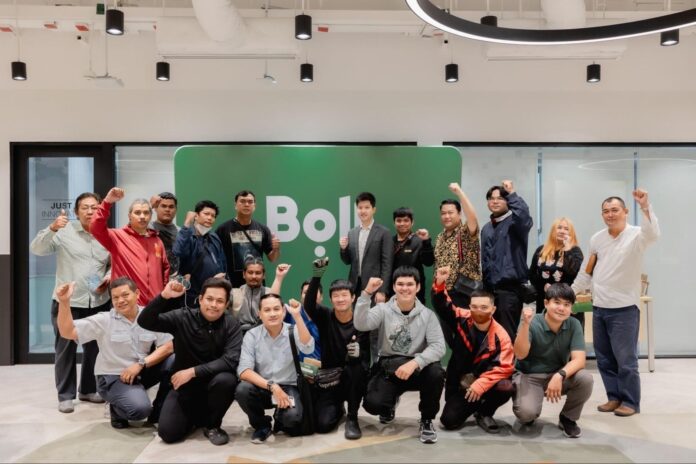
September 24, 2024 – Recently, Bolt Thailand partnered with the Raks Thai Foundation to organize a special training activity titled “Boosting Confidence, Driving Safely with Bolt.” This initiative reflects Bolt’s continued commitment to enhancing safety in its services. The goal of the activity was to raise awareness about creating a safe and respectful environment by emphasizing the importance of setting both physical and mental boundaries between drivers and passengers, which is key to ensuring smooth and safe journeys. Clear boundaries not only create a secure atmosphere for both drivers and passengers but also boost confidence, fostering a positive experience for all parties involved.

This activity was supported by the Raks Thai Foundation, an organization dedicated to promoting sustainable development and gender equality. The foundation contributed valuable insights on human rights and preventing rights violations in the workplace. Atiya Kulkobkiat, a representative from Raks Thai Foundation, said, “We see the importance of this training and are committed to building understanding and awareness of human rights among all stakeholders. Collaborating with Bolt on this initiative is a great opportunity to empower both drivers and passengers to maintain appropriate boundaries and ensure every journey is safe and respectful of human rights principles.”

image3 18

During the event, Bolt also demonstrated its key safety features for both drivers and riders: 

  • Audio trip recording: The trip recording feature offers drivers and riders the possibility to trigger an in-app audio recording if they ever feel uncomfortable during a ride.
  • Trip Sharing: Bolt’s trip sharing feature is an extra layer of safety for drivers and riders by allowing them to share the status of a trip in real time. 
  • SOS button: it allows riders and drivers to get in contact with the police by simply pushing a button.  
  • Share my ride: this feature enables riders and drivers to share a link with their real-time journey information.
  • In-app calls: in-app calls and messaging will be available on the app so phone numbers of riders and drivers will not have to be disclosed unless necessary. 
  • Trip Anomaly Detection: If a vehicle has not been moving for longer than a certain time period, a ticket will be created to the safety team with a title Trip anomaly detected.
  • Rider Verification: As part of this in-app feature, new riders to the platform will be asked to take a selfie before they are able to place a ride-hailing order. For the selfie to be valid, it needs to be an authentic picture of a physically present person, with the face clearly visible. 
  • Driver Selfie Checks – verify the person using the driver account is really who they say they are.

These features play a vital role in providing both drivers and riders with confidence and peace of mind, ensuring a smooth and worry-free journey.

The event also provided an opportunity for drivers to share their experiences and feedback with Bolt and the Raks Thai Foundation teams, helping to improve service quality. Drivers were encouraged to engage in discussions about how to handle various situations they might encounter at work, and the exchange of ideas was lively and enjoyable.

Nathadon Suksiritarnan, Bolt Thailand’s General Manager, said, “This ongoing initiative provides valuable insights into maintaining appropriate boundaries during journeys. It’s an excellent opportunity to gather real feedback from users, which helps us improve our services to meet the needs of both drivers and passengers. Creating a safe space between drivers and passengers is a crucial first step in fostering a safer environment that extends to the broader community.”

Bolt underscores the importance of safety as its top priority, ensuring every ride is a positive and memorable experience for both drivers and passengers. This collaboration with the Raks Thai Foundation is a significant step in reaffirming Bolt’s commitment to leading the way in providing safe, respectful, and professional transportation in Thailand.
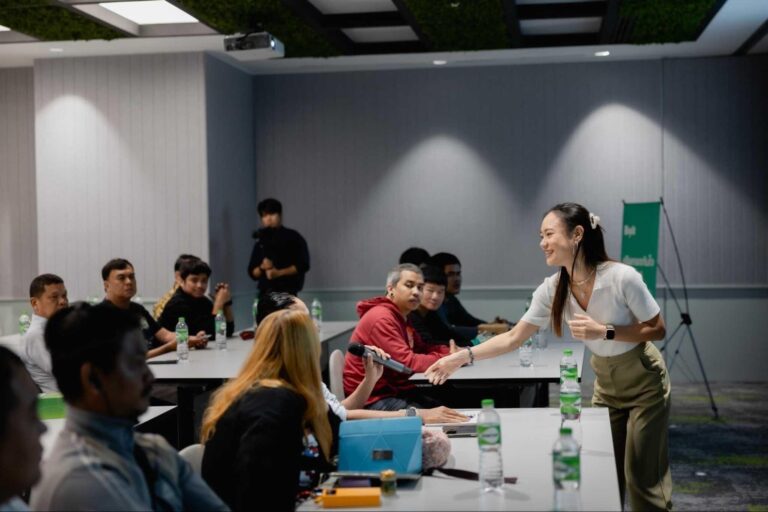
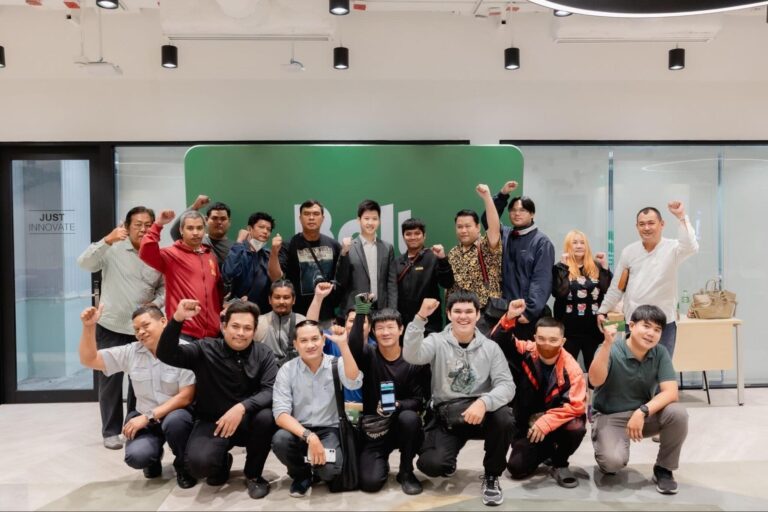
image2 21 image4 15

Advertisement

9 Vietnamese Nabbed for Kidnapping Thai-Taiwanese Couple, $52K Extortion

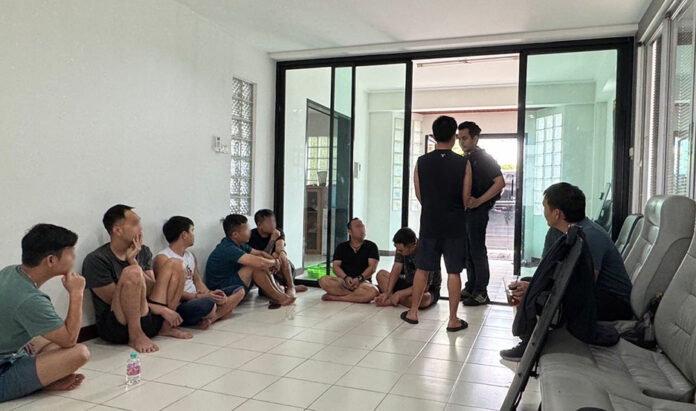
Immigration police arrest nine Viietnamese suspects at a house at Soi Lat Phrao 41, Chankasem Subdistrict, Chatuchak District, Bangkok.

BANGKOK — A gang of nine Vietnamese nationals have been arrested for kidnapping a Taiwanese man and his Thai girlfriend and extorting over 1.7 million baht ($52,200). The man was so badly beaten that he almost died.

According to a press conference held at the Immigration Bureau on September 26, the investigation began when authorities received information about an unknown group of criminals who held a Thai woman and a Taiwanese man and demanded more than 1.7 million baht in ransom while threatening to kill them and severely assaulting them.

Authorities later identified the Thai woman as Ms. Suchada, 33, and the Taiwanese man as Mr. Li, 21. The perpetrators were a group of Vietnamese nationals doing business in Thailand, including trading in digital currencies. The couple was lured to a house at Soi Lat Phrao 41, Chankasem Subdistrict, Chatuchak District, Bangkok.


Police surveillance of the house revealed suspicious activity, including the presence of several Vietnamese-looking people. A red Mazda with fake license plates was seen leaving the house. Police followed the vehicle to a warehouse in Suphanburi province. Late in the evening, the same car was seen returning to the house in Soi Lat Phrao 41, where a man and a woman were taken into the house.

Believing that the two were the victims, police contacted Taiwanese police stationed in Thailand. They confirmed that Mr. Li’s father had reported to the Zhongping Police Station in New Taipei City that his son had called and asked for a money transfer, claiming that he was being held captive, assaulted and killed.
Immigration applied for and obtained a search warrant from the criminal court. During the search, they found Ms. Suchada and Mr. Li held captive in the house. Mr. Li has injuries from assault all over his body, including his back.

Nine Vietnamese suspects were arrested, including Mr. Pham Van, 40 (the leader), Mr. Pham Ngoc, 37 (deputy leader), Mr. Nguyen Xuan, 49, Mr. Ngoc Phap, 34, Mr. Nguyen Ngoc, 41, Mr. Nguyen Thanh, 33, Mr. Tran Vu, 41, Mr. Ngoc Tu, 35, and Mr. Nguyen Hou, 40.

vietnam gang
Immigration police found Ms. Suchada and Mr. Li held captive in the house.

Police seized a Smith & Wesson .22 caliber revolver, 33 bullets and two cars as evidence.

Pol. Col. Ratchachote Chotikun, deputy commander of the Immigration Bureau, said a background check revealed that one of the nine suspects had overstayed his visa and all had traveled in and out of the country multiple times. They had been running a cannabis plantation in Suphanburi province and there were no previous convictions for such criminal activities.

When Mr. Li’s background was checked, it was found that he had also failed to comply with his visa. He also had an arrest warrant for assault in Taiwan, which is being handled separately as he is both a victim and a suspect.

Ms. Suchada informed the police that she was Mr. Li’s girlfriend. They had come to the house at 41 Soi Lat Phrao with a Thai broker so that Mr. Li could buy 50,000 dollars (a cryptocurrency) worth about 1.7 million baht. When they arrived, they met Mr. Pham Ngoc and negotiated the transaction.

After Mr. Pham Ngoc transferred 50,000 dollars to the wallet provided by Mr. Li, Mr. Li did not transfer Thai baht in return because he was merely a middleman for a man named Dong. Mr. Li tried to contact Dong, but after Dong received the cryptocurrency, he broke off all contact.

The Vietnamese gang detained the couple and threatened to kill them if they did not pay back the money. As time passed and the ransom was not paid, Mr. Li was only able to return 990 dollars. The gang then began to attack him and led him to a warehouse in Suphanburi province.

There they beat him with metal rods, strangled him with a rope and threatened to cut off his fingers with garden shears. They also beat him with a pistol and held a gun to his head, threatening to kill him and bury him there if he did not get the money. The couple was eventually taken back to the house where police later rescued them.

The Immigration Department revoked the suspects’ visas, confiscated their firearms, ammunition and vehicles and handed them over to the Phahonyothin Police Station for prosecution.

_______

Advertisement

CP Foods Wins 6 Regional Marketing Excellence Awards

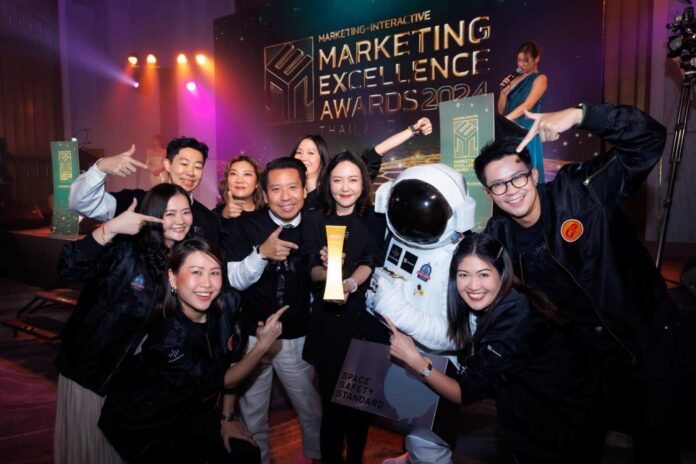
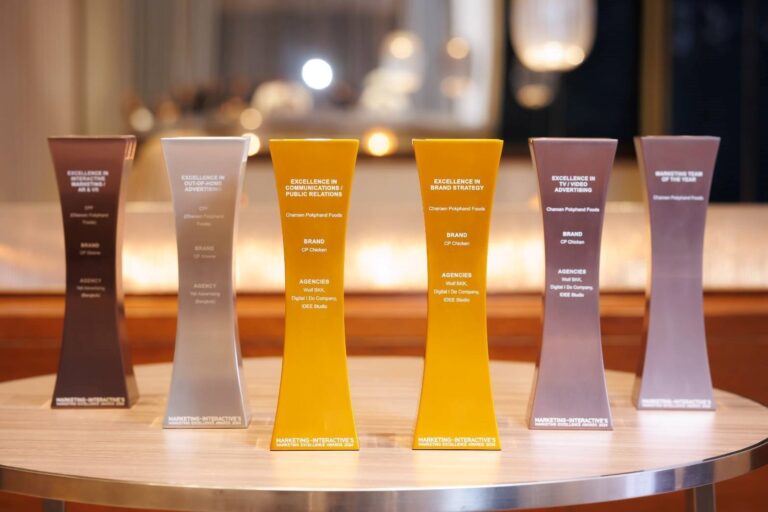
Charoen Pokphand Foods Public Company Limited (CP Foods) received 6 Marketing Excellence Awards 2024 for its outstanding international campaign “Thai Chicken Going to Space”. The campaign won 2 Gold awards in the categories of “Excellence in Brand Strategy” for its exceptional strategic marketing planning, and “Excellence in Communications” for the year’s most outstanding communication campaign.

Additionally, the “Thai Chicken Going to Space” campaign also secured 2 Bronze awards in the categories of “Excellence in TV / Video Advertising” for best TV and video advertising campaign, and “Marketing Team of the Year”, which recognizes the top teamwork that combines ideas and creativity to produce excellent marketing results.

image3 17

Furthermore, the “CP Extreme Cheese Lava Sausage” campaign also won two awards at the same event, including a Silver Award in the Excellence in Out-of-Home Advertisement category for the best out-of-home advertising campaign, and a Bronze award in the Excellence in Interactive Marketing AR & VR category for online marketing using AR & VR technology.

Ms. Anarkawee Chooratn, Head of Marketing at CP Foods, said that the 6 awards reflect the success of our marketing strategy leading to business growth, especially the “Thai Chicken Going to Space” and “CP Extreme Cheese Lava Sausage” campaigns. These campaigns focused on addressing consumer needs, based on in-depth consumer behavior studies, and were able to communicate to enhance relationship between brand and customers effectively, leading to long-term brand loyalty and repeat purchases.

image2 20

The awards for the “Thai Chicken Going to Space” campaign prove that CP brand chicken meat’s safety standards have reached space-level safety, ‘Space Safety Standard’, following NASA’s food safety criteria, which is the same standard that astronauts can consume. CP Foods has organized marketing communication activities for consumers to participate and take pride in this national-level success, transforming Siam Square, the heart of shopping and entertainment in Bangkok, into a space station, which became the #1 trend on X (Twitter) in Thailand and #3 globally, as well as increasing domestic sales by 11% and expanding positive business results internationally.

image5 11

The “Extreme Cheese Lava Sausage” campaign focused on a communication strategy that could reach and captivate ‘Gen Z & Alpha’ consumers by using AR and VR innovations, including ‘ROBLOX’, a Virtual World game, as communication channels. The campaign used language that created closeness with the younger generation to target school children and those who enjoy challenging activities. By decorating BTS and MRT stations into cheese-filled cities that attract to the target audience, the campaign was able to boost sausage sales by 25%.

image4 14

The Marketing Excellence Awards are organized by MARKETING-INTERACTIVE, a leading Asian online magazine for advertising and marketing based in Singapore, which reaches marketing executives across Asia. The awards honor notably outstanding marketing, creative advertising, public relations, market research, and marketing communications work in the Asia region.

Advertisement

Sports Car Menace Caught: Russian Driver Fined on Koh Samui

sports car
The car used in the offense is being held by the police, awaiting inspection by the Surat Thani Provincial Transport Office.

KOH SAMUI —  Police at Bo Phut Police Station, Koh Samui, have arrested a Russian man driving a sports car with loud engine revving, causing disturbances on Koh Samui. He was fined 5,000 baht, warned, and his car has been seized pending inspection by the Department of Land Transport.

Officials investigated information from a video shared on the “Koh Samui People’s Group” Facebook page on September 23. The video showed a yellow sports car driving recklessly, impolitely, and revving its engine loudly, disturbing road users in Koh Samui district.

Traffic police and investigators tracked down the vehicle, finding it parked in front of a villa. The car matched the description: a yellow Nissan 350Z with Ang Thong province license plates. Nearby residents reported that a foreigner had parked it there but didn’t know where he was staying.


When checking with the Department of Land Transport, it was found that the car’s color didn’t match the registration, there was no tax sticker, and the front license plate was missing. The car was then seized and sent to investigators.

On September 24 at around 9:30 p.m., a 30-year-old Russian man named Mr. Aleksandr came forward as the car’s owner, presenting purchase documents for inspection at Bo Phut Police Station.

The inspection revealed that the car had proper documentation, with a Thai person listed as the rightful owner. It was in the process of ownership transfer, but during this time, the car’s color had been changed and modifications made.

samui car2
A 30-year-old Russian man comes forward as the car’s owner, presenting purchase documents for inspection at Bo Phut Police Station, on September 26, 2024.

Mr. Aleksandr confessed to driving the car with loud engine revving and agreed to pay a fine of 5,000 baht as per traffic laws. Officials warned him about proper road use, and Mr. Aleksandr apologized for his actions, promising not to repeat the offense and to modify the car to comply with the law.

On September 26, Bo Phut police investigators revealed that the Russian man had entered the country legally and had no criminal record. The car used in the offense is being held by the police, awaiting inspection by the Surat Thani Provincial Transport Office, which is expected to take no more than a week.

_______

Advertisement

Japan Court Acquits a Former Boxer, the Longest-Serving Death Row Inmate, in a 1966 Murder Retrial

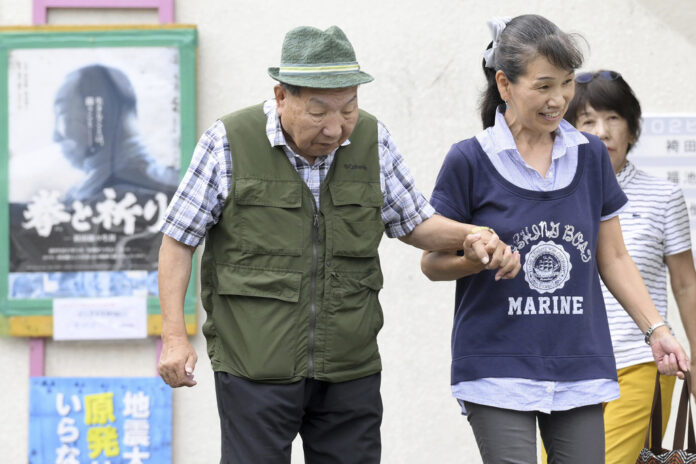
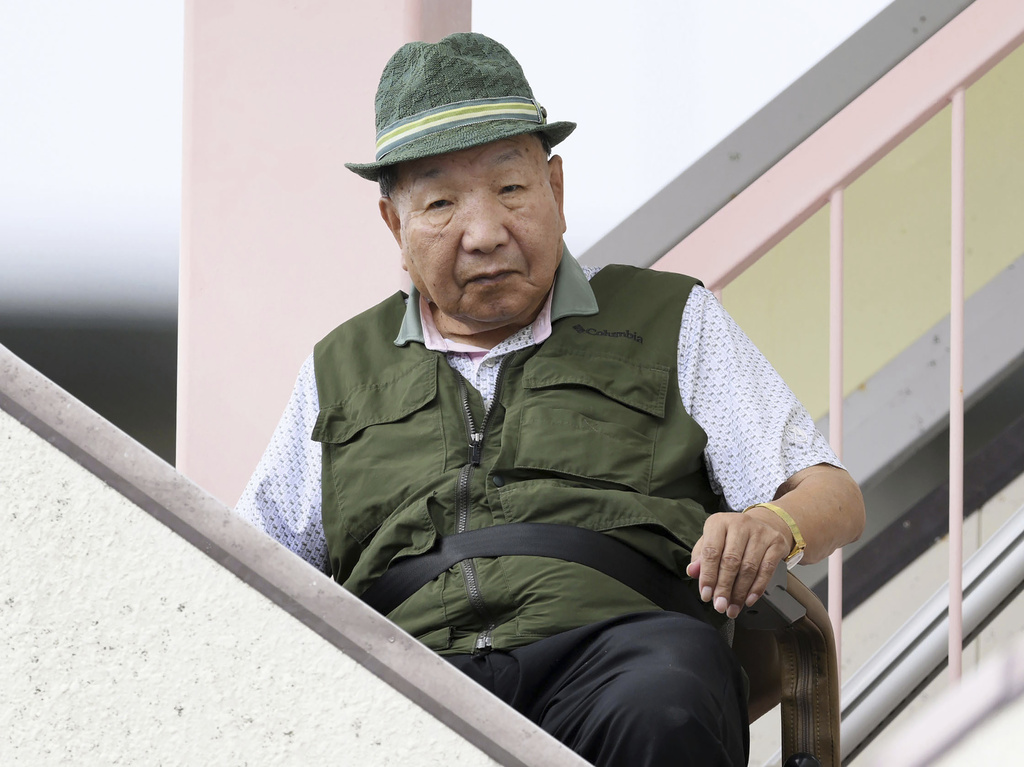
Iwao Hakamada, left, 88-year-old former boxer who has been on death row for nearly six decades after his murder conviction that his lawyers said was based on forced confession and fabricated evidence, is helped by a supporter as he goes for a walk in Hamamatsu, Shizuoka prefecture, central Japan Wednesday, Sept. 25, 2024. (Kyodo News via AP)

TOKYO (AP) — A Japanese court ruled Thursday that an 88-year-old former boxer was not guilty in a retrial for a 1966 quadruple murder, reversing an earlier decision that made him the world’s longest-serving death row inmate.

Iwao Hakamada’s acquittal by the Shizuoka District Court makes him the fifth death-row convict to be found not guilty in a retrial in postwar Japanese criminal justice. The case could rekindle a debate around abolishing the death penalty in Japan.

The court’s presiding judge, Koshi Kunii, said the court acknowledged multiple fabrications of evidence and that Hakamada was not the culprit, Hakamada’s lawyer said.

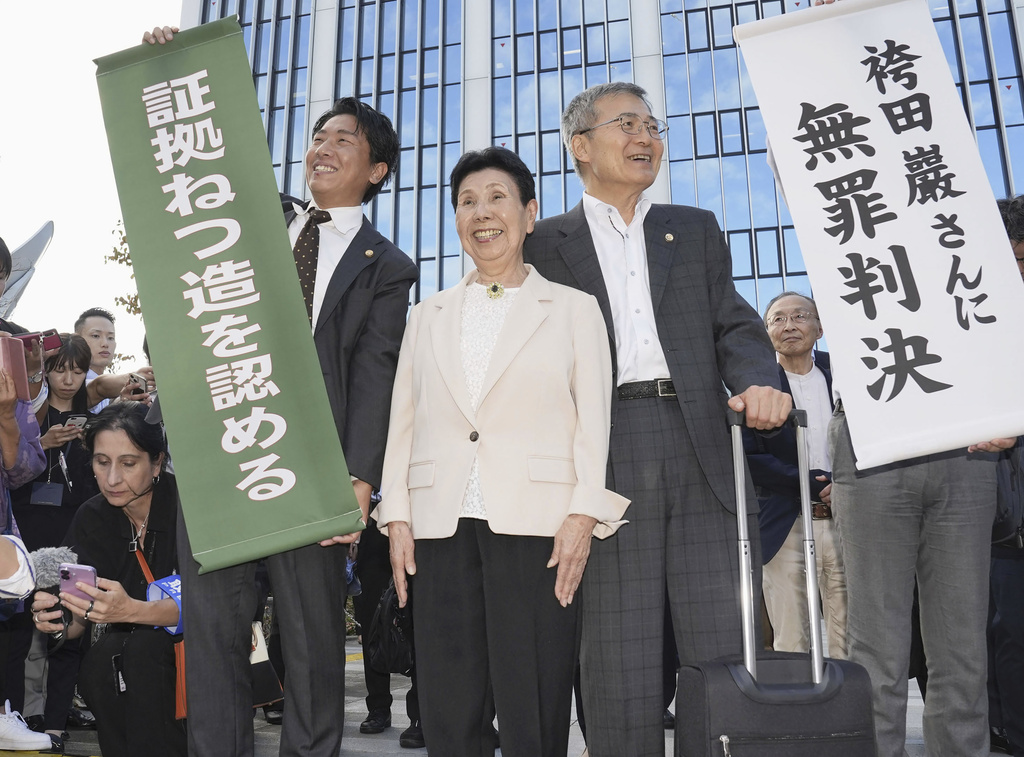
After the two-hour full explanation of the ruling that followed the main sentencing, his 91-year-old sister Hideko Hakamada walked out of the courthouse with a big smile, welcomed by burst of cheers and two big bouquets to celebrate the acquittal of her brother after the 58-year legal battle.

“Thank you everyone, (the victory) is thanks to your support,” she said. “Thank you very much for supporting us for such a long time.”

Hakamada was convicted of murder in the 1966 killing of a company manager and three of his family members, and setting a fire to their central Japan home. He was sentenced to death in 1968, but was not executed due to lengthy appeals and the retrial process in Japan’s notoriously slow-paced criminal justice system where prosecutors have 99% conviction rate.

AP24270297221339
Hideko Hakamada, center, sister of 88-year-old former boxer Iwao Hakamada who has been on death row for nearly six decades after his murder conviction that his lawyers said was based on forced confession and fabricated evidence, reacts after a court ruled that her brother was not guilty in a retrial for a 1966 quadruple murder, in front of the court in Hamamatsu, Shizuoka prefecture, Thursday, Sept. 26, 2024. The signs read “Acquittal to Mr. Iwao Hakamada, ” right, and “Acknowledged fabrications of evidence.” (Kyodo News via AP)

He spent 48 years behind bars — more than 45 of them on death row — making him the world’s longest-serving death row inmate, according to the Amnesty International.

It took 27 years for the top court to deny his first appeal for retrial. His second appeal for a retrial was filed in 2008 by his sister. Hakamada was released from prison in 2014 when a court ordered a retrial based on evidence suggesting his conviction was based on fabricated accusations by investigators, but he was not cleared of the conviction. He was allowed to await retrial at home because his frail health and age made him a low risk for escape. Then, in 2023, the court finally ruled in his favor, paving the way for the latest retrial that began in October.

“I have nothing to do with the case … I am innocent,” he wrote in his letter to his mother while on trial in 1967. He apologized for troubling the family and relatives, but expressed confidence in proving his innocence.

After the death sentence, he expressed fear of death and anger at being falsely accused.

“When I go to sleep in soundless solitary cell every night, I sometimes cannot help cursing God. I have not done anything wrong,” he wrote to his family. “What a cold-blooded act to give me such cruelty. We don’t need such God. I’m tempted to shout this to God,” Hakamada wrote in one of his letters.

Hakamada, whose Christian name is Paulo, was invited to a Mass in Tokyo during Pope Francis’ visit in 2019, five years after his release.

Supporters say Hakamada’s nearly half-century detention took a toll on his mental health. The first two months after Hakamada’s release, he kept pacing around inside the apartment, without even trying to go outside, his sister said. Most of his 48 years behind bars was spent in solitary confinement, in fear of execution.

One day, Hakamada’s sister asked him to help her with groceries to get him to agree to leave the house. Going out for a walk then became his daily routine, though today he is less able and he goes out by car, assisted by his supporters.

At a final hearing at the Shizuoka court in May before Thursday’s decision, prosecutors again demanded the death penalty, triggering criticism from rights groups that prosecutors were trying to prolong the trial.

The extremely high hurdles for retrials have also prompted legal experts to call for a revision to the system.

During the investigation that followed his arrest, Hakamada initially denied the accusations, then confessed. He later said he was forced to confess under violent interrogation by police.

A major point of contention was five pieces of blood-stained clothing that investigators claimed Hakamada wore during the crime and hid in a tank of fermented soybean paste, or miso. The clothes were found more than a year after his arrest.

A Tokyo High Court ruling in 2023 acknowledged scientific experiments that clothing soaked in miso for more than a year turns too dark for bloodstains to be spotted, noting a possible fabrication by investigators.

Defense lawyers and earlier retrial decisions said the blood samples did not match Hakamada’s DNA, and trousers that prosecutors submitted as evidence were too small for Hakamada and did not fit when he tried them on.

AP24270297226842
Iwao Hakamada, 88-year-old former boxer who has been on death row for nearly six decades after his murder conviction that his lawyers said was based on forced confession and fabricated evidence, goes for a walk in Hamamatsu, Shizuoka prefecture, central Japan Thrusday, Sept. 26, 2024. (Kyodo News via AP)

On Thursday, the Shizuoka court judge concluded that clothing soaked in miso for more than a year would never show red blood stains, upholding the experiments submitted by the defense lawyers and calling it an “inhumane investigation” that led to forced confessions.

Ogawa, Hakamada’s lawyer, praised the ruling as “groundbreaking” for clearly stating that the prosecution fabricated key evidence at the beginning. “I believe this ruling puts an end to the case. … Now we must prevent prosecutors from appealing no matter what.”

The lawyer said he planned to go to the district prosecutors to demand they not appeal the case, as it is technically possible to do so even though they have nothing left to make the case.

Japan and the United States are the only two countries in the Group of Seven advanced nations that retain capital punishment. A survey by the Japanese government showed an overwhelming majority of the public support executions.

Executions are carried out in secrecy in Japan and prisoners are not informed of their fate until the morning they are hanged. In 2007, Japan began disclosing the names of those executed and some details of their crimes, but disclosures are still limited.

Hideko Hakamada has devoted around half of her life to win her brother’s innocence. Before Thursday’s ruling, she said she was in a never-ending battle.

“It is so difficult to get a retrial started,” She told reporters in Tokyo. “Not just Iwao, but I’m sure there are other people who have been wrongly accused and crying. … I want the criminal law revised so that retrials are more easily available.”

_________

Advertisement

Book Lovers, Get Ready for a Haunting Experience: 29th Book Expo Thailand

Book Expo
PUBAT President, Mr. Suwich Rungwattanapaiboon

BANGKOK — The 29th Book Expo Thailand returns with a spine-tingling theme: “Read to the Next Life.” From October 10-20, 2024, at the Queen Sirikit National Convention Center, this literary extravaganza promises an otherworldly experience for book enthusiasts.

The expo features distinct zones for different book categories and introduces “Krasue Reading a Book” as its mascot. Visitors can explore curated book selections, participate in book swaps, and engage in specialized discussions at the Book Lab.

PUBAT President, Mr. Suwich Rungwattanapaiboon, expects record attendance and sales surpassing 400 million baht. The event aims to be more than a book fair – it’s a celebration of literature, offering skill-enhancing activities and entertainment alongside an extensive book collection.

book

The event will feature distinct book zones to enhance the attendee experience: 1. Fiction and Literature 2. Comics and Teen Books (Book Wonderland) 3. Children’s and Educational Books 4. General Books 5. Old Books 6. Non-Book Items & Board Games.

With over 2 million books showcased from 286 publishers and leading bookstores, the event will span more than 20,000 square meters, offering a comprehensive and immersive literary experience.

“With these statistical figures – the number of book titles, publishing houses, and authors increasing in this event – it emphasizes that books or printed materials are not dying out. They are simply adapting alongside internet media,” said the President of PUBAT.

He invites everyone to attend the 29th Book Expo Thailand 2024, which is set to take place from October 10-20, 2024, at Halls 5-7, LG Floor, Queen Sirikit National Convention Center. If anyone needs additional information and updates about the event, they can follow the Facebook page: Thai Book Fair.

Key Highlights:

  • Over 2 million books from 286 publishers across 855 booths
  • Special focus on horror literature, including legendary ghost stories and 1990s one-baht ghost books
  • Unique installations like “Krasue (Filth-Eating Spirit) Airline” and “Exit to the Next Life”
  • 100+ activities including ghost-themed competitions and cosplay
  • Meet international authors from various genres such as:
    • Jiu Lu Fei Xiang (China): Immortal world novels
    • Zhao Yao (China): Ghost stories and romance
    • Chinen Mikito (Japan): Mystery novels
    • Kim Ho-yeon (South Korea): Supernatural fiction
    • Ratih Kumala (Indonesia): Contemporary fiction
    • Peter A. Jackson (Australia): Non-fiction on Thai culture

book

book expo4 scaled

________

Advertisement

ADB Raises Growth Forecast for Region, But Warns of Risks from Trade Sanctions

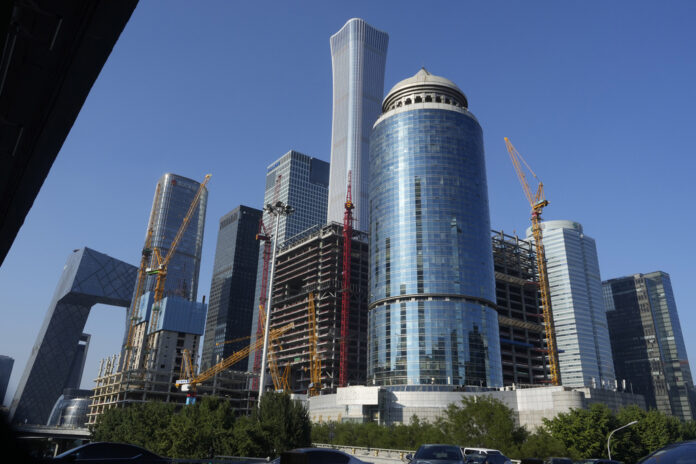
FILE - Construction cranes are seen near the central business district in Beijing, Aug. 8, 2024. (AP Photo/Ng Han Guan, File)

Developing economies in Asia are forecast to grow at a 5.0% annual pace this year, helped by a strong U.S. economy and surging demand for computer chips that power artificial intelligence, the Asian Development Bank said in a report Wednesday.

The forecast was revised upward slightly from the ADB’s April estimate of 4.9% growth.

However, the regional lender warned of the potential threat of more protectionist measures, such as higher tariffs on exports from China, depending on the outcome of the U.S. presidential election.

The report highlighted several positive trends, including a rebound in exports from Asia of computer chips and other advanced electronics this year due to rapid adoption of artificial intelligence. It also noted that energy and food prices are moderating, though inflation remains painfully high in countries such as Pakistan, Laos and Myanmar.

The upturn in global demand for semiconductors and related electronics materials and components has helped drive stronger growth in Taiwan, Hong Kong, Singapore and South Korea, and to a lesser extent, the Philippines and Thailand, and that trend is expected to continue.

The report cited data from World Semiconductor Trade Statistics projecting that spending on memory chips, vital for AI applications, will expand 77% this year.

Other types of exports, especially autos from China and South Korea, also are growing quickly, it said.

AP24268182139293
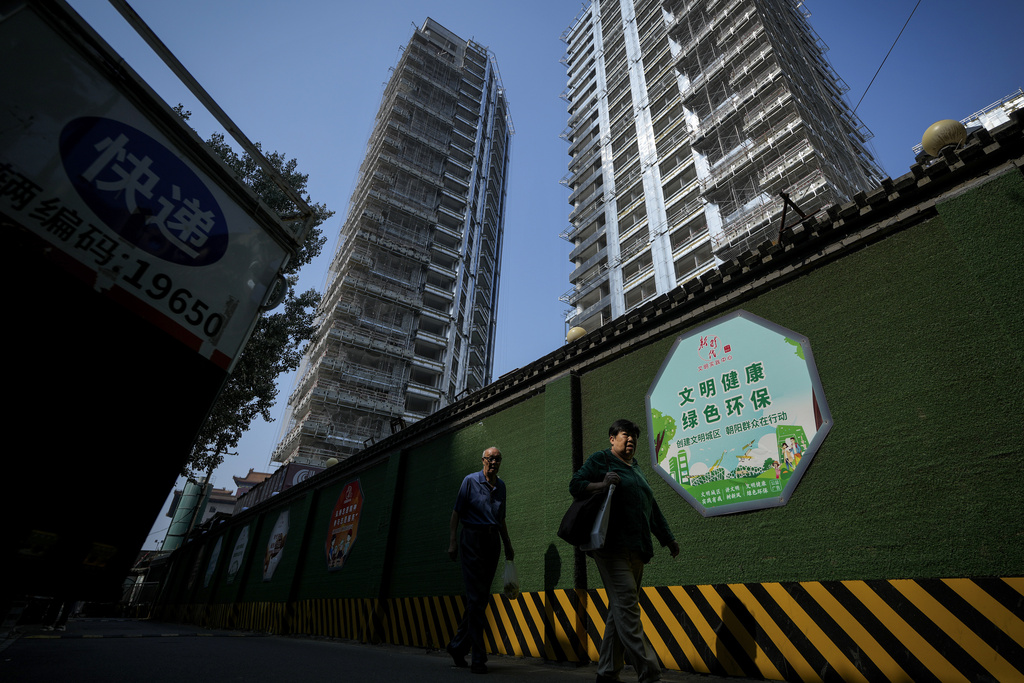
Residents walk by a luxury housing construction site in Beijing, Tuesday, Sept. 24, 2024. (AP Photo/Andy Wong)

The U.S. presidential election is a major source of uncertainty.

“The election could result in higher blanket tariffs by the U.S. on all global imports, and a broad-based and steep increase in tariffs on all U.S. imports from the PRC (China),” the report said. “This would significantly escalate U.S.-PRC trade tensions, with potential negative spillovers to developing Asia through real and financial channels.”

Former President Donald Trump has pledged to stop U.S. businesses from shipping jobs overseas and to take other countries’ jobs and factories away by relying heavily on sweeping tariffs. Vice President Kamala Harris has criticized Trump’s plan to impose large tariffs on most imported goods, which she says would severely raise the cost of goods.

Asia’s developing economies are also vulnerable to other U.S. moves that might affect their currencies or the cost of borrowing on foreign loans, the report said.

China’s ailing property market remains a key risk and the report kept its forecasts for growth for the world’s second-largest economy at 4.8% in 2024 and 4.5% next year. The ADB’s chief economist, Albert Park, welcomed a flurry of fresh measures announced Tuesday by Beijing to cut borrowing costs and encourage more home purchases.

“It’s good to see. Certainly there’s room for monetary policy expansion,” he told reporters in a briefing before the report’s release. “Whether that will work remains to be seen.”

Among other positive developments, the report noted that energy inflation has returned to levels seen before the COVID-19 pandemic began in 2020. That alleviates pressures on some economies that depend heavily on imports of oil and other fuels, such as Sri Lanka, China and Japan.

Food inflation is still slightly higher, but falling. Rice prices fell by 12% to $589 per metric ton in late August after hitting a 16-year peak of $669 per metric ton in late January, the report said.

They are expected to fall further, as rice harvests are projected to hit record levels in the 2024-2025 growing year, and prices for wheat and maize also have declined. Crops are likely to benefit from the La Nina climate phenomenon, which could bring beneficial higher rainfall to some regions though it also could cause destructive flooding in others.

Advertisement

Thai Government Begins 10,000 Baht Handout, Bypasses Digital Wallet

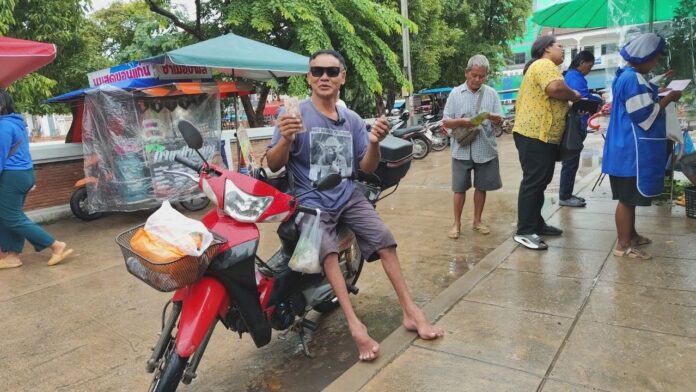
Mr. Prasit Artsai, 58 years old, a resident of Ban Bo Sam, Nikhom Sub-district, Phimai District, Nakhon Ratchasima Province, shows 10,000 baht transferred by the government on September 25. He says he is very happy because he has a disability with an atrophied leg, which makes it difficult for him to work and earn money. With this sum, he plans to buy food, new clothes, and use it for household expenses to help his younger sibling.

BANGKOK — After the government announced that it would focus on boosting the economy and dealing with the flood disaster before debating amendments to the current constitution, the Pheu Thai Party, which leads the government, has backed away from its proposal to amend the constitution article by article.

Previously, the party had proposed amendments to the articles on political ethics to draw clear boundaries and prevent them from being used as a political weapon. However, when other coalition parties, particularly the Bhumjaithai Party, the second largest party in the government led by Anutin Charnvirakul, put up strong resistance, Pheu Thai immediately halted its move.

This coincides with the launch of an economic stimulus program, a detail mentioned by former Prime Minister Thaksin Shinawatra in August.

On September 25, 2024, Prime Minister Paetongtarn Shinawatra presided over the kick-off event for the disbursement of the 2024 stimulus program by welfare card holders and people with disabilities. The event was attended by the Cabinet and relevant authorities.

10000baht 3
Prime Minister Paetongtarn Shinawatra presides over the kick-off event for the disbursement of the 2024 stimulus program at the Government House on September 25, 2024.

This economic stimulus program has shifted its approach from the digital wallet project, which is still not operational, to direct transfers to the bank accounts of needy groups. In the first phase, 14.5 million people will receive money, including 12.40 million welfare card holders and 2.15 million people with disabilities, who will receive 10,000 baht ($305) each.

The government has set the transfer dates for September 25-30, with the funds being transferred by the Comptroller General’s Department through the PromptPay system, which is linked to national ID numbers.

On the first day, funds will be transferred to the accounts of 2.1 million people with disabilities and welfare recipients whose National ID ends in 0 on 26 September. Subsequent transfers will be based on the last digit of the national ID from 1 to 9.

The Prime Minister said that the Thai economy has been sluggish due to both domestic and international factors. The global economy is recovering more slowly than usual, and there are also problems with geopolitical conflicts and environmental crises that have intensified. This can be seen in the severe flooding in Thailand this year, which is one of the worst in the country’s history.

These factors are the main reasons for the sluggish economy and lack of investment. It is obvious that money has been taken out of circulation. Now the money in circulation is scarce, so investment and the establishment of new industries in Thailand are becoming rarer. The most affected groups are vulnerable, low-income populations, including people with disabilities.

10000baht 5
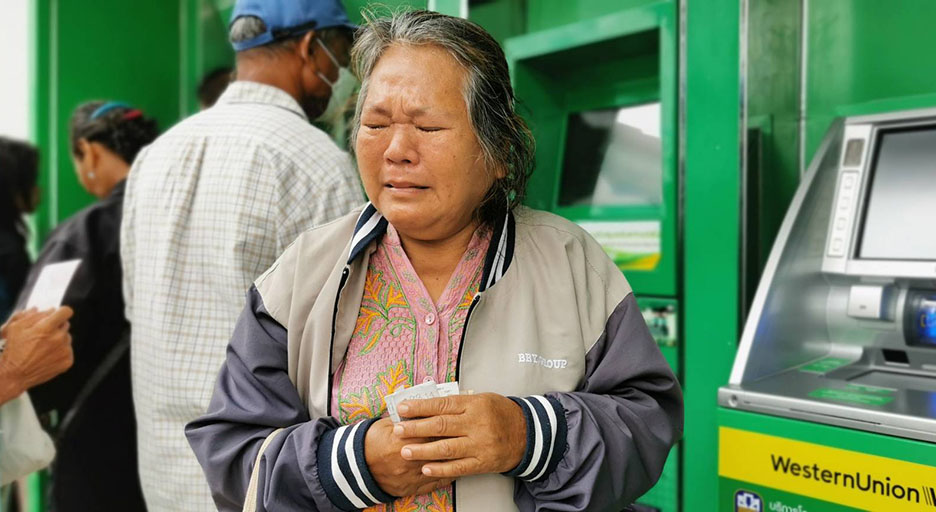
Ms. Noi Yaemprakon, 64 years old, cries with emotion after withdrawing 10,000 baht transferred by the government from an ATM of the Bank for Agriculture and Agricultural Cooperatives (BAAC), Buriram branch, on September 25. She says she hasn’t touched 10,000 baht in over ten years, having been unable to sell conveniently due to health issues.

The policies pursued by Prime Minister Srettha Thavisin’s government over the past year to date have focused heavily on economic issues. However, many policies will take months or even years to implement and require political stability to ensure continuity and ensure that development reaches the people. These are the government’s challenges that need to be turned into opportunities for the people.

Measures that have already been implemented include debt relief for farmers and the promotion of tourism through visa-free travel. Although the number of tourists has increased noticeably, it has not yet boosted the overall economy. A large-scale economic recovery is therefore needed today.

“The economy is now being boosted with over 145.552 billion baht ($4.450 billion), creating a significant economic whirlwind for the first time, creating opportunities in the overall economy and providing relief to struggling small citizens,” the Prime Minister said.

Julapun Amornvivat, Deputy Minister of Finance, added that the first day of money transfers went smoothly. If the first phase of the project is completed within the 450 billion baht ($13.8 billion) budget, he believes that the Thai economy will easily recover to its potential level.

10000baht 2
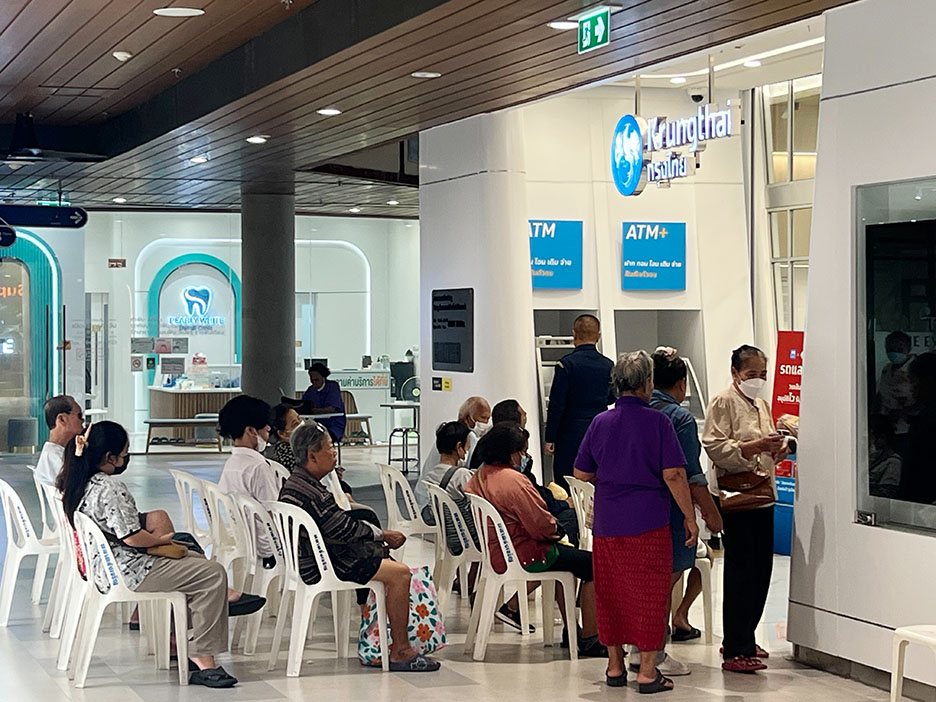
People queue at a Krungthai Bank ATM in Bangkok on the first day the government transferred funds as part of the economic stimulus program, providing 10,000 baht to each vulnerable individual, on September 25ม 2024.

However, he added, “We do not accept that Thailand’s economic potential is only growing at about 2% per year. We want to see the Thai economy grow at its potential rate of 5% per year. We need to expand our potential ceiling through various mechanisms, such as developing labor skills and restructuring industries, which must be done in parallel.”

As for the digital wallet project, the Prime Minister confirmed that the government will continue the scheme to boost the economy and lay the foundation for a digital economy for the Thai people.

The aim is to provide citizens with a digital ID that connects the government and citizens and makes transactions with the authorities more convenient, transparent and verifiable. This system is being developed.

The digital wallet project has been criticized by members of the opposition parties, particularly with regard to the source of funding and execution. During a by-election campaign in Phitsanulok province, Pita Limjaroenrat, former chairman of the Move Forward Party, attacked the government’s digital project, claiming that it had become an analog system.

Sirikanya Tansakul, Deputy Leader of the Thai Sang Thai Party, also expressed doubt about whether the digital wallet project, which has been postponed several times already, will be indefinitely delayed.

_____

Advertisement

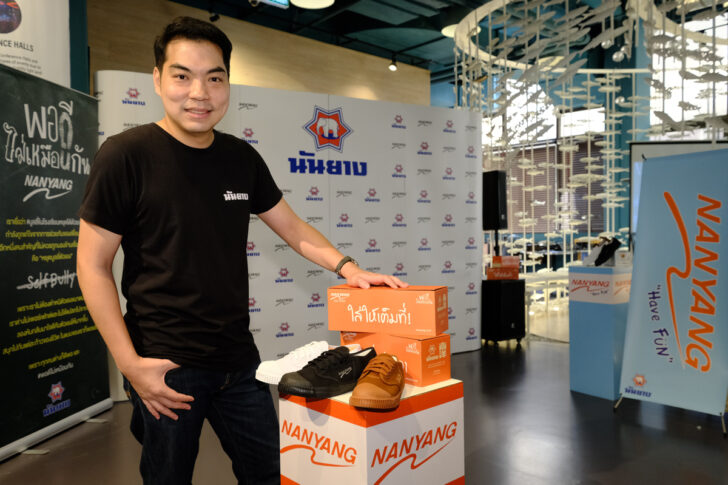
Nanyang Launches Moo Deng-Inspired Sandals to Boost Business

Nanyang
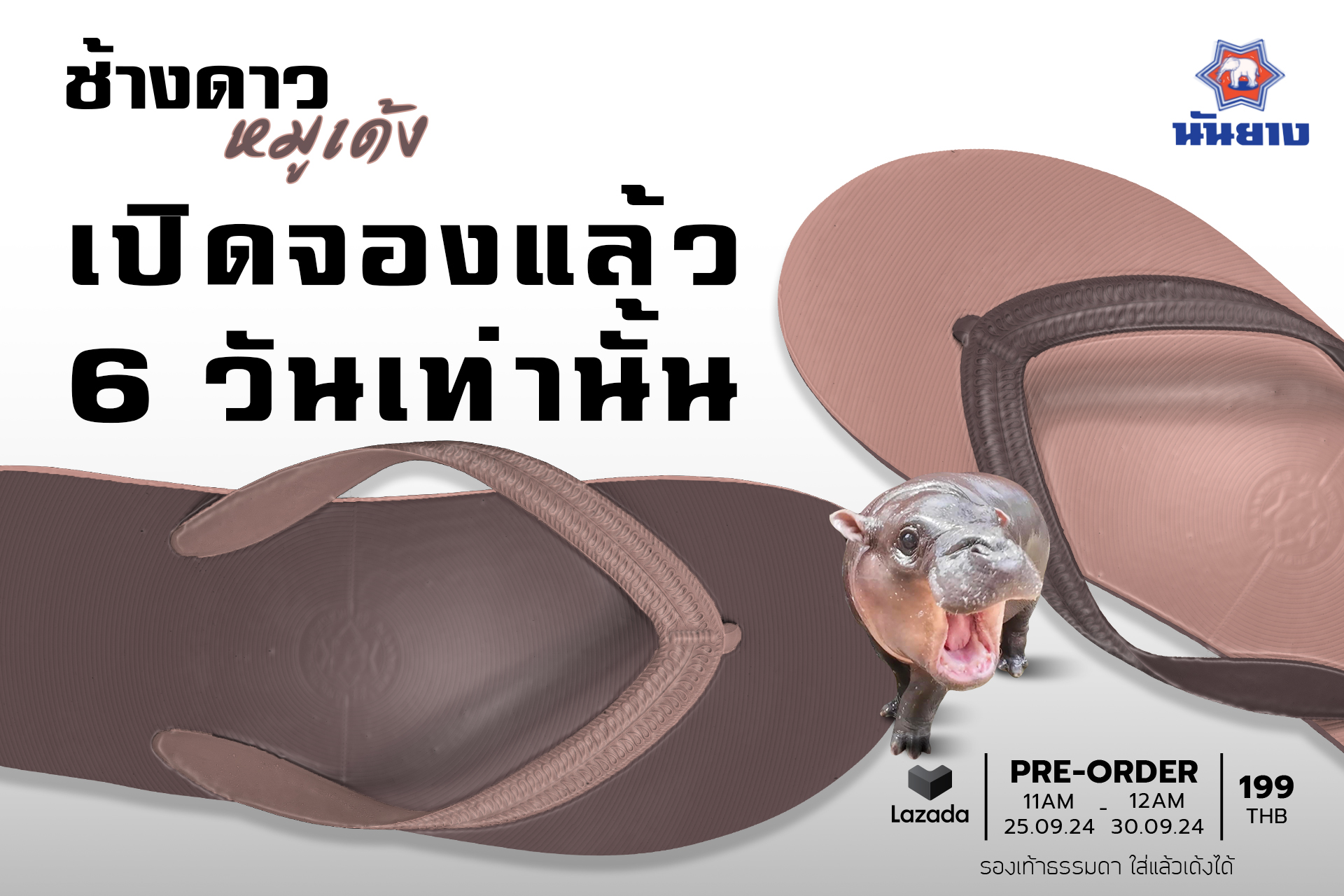
A new sandal model of Nanyang called Chang Dao Moo Deng Edition (2024)

BANGKOK —  Nanyang, a leading shoe manufacturer in Thailand, is capitalizing on the popularity of Moo Deng, the baby pygmy hippo celebrity, by collaborating with the Zoological Park Organization of Thailand under the Royal Patronage, owner of Khao Kheow Open Zoo, Moo Deng’s home.

They are producing a new sandal model called Chang Dao Moo Deng Edition (2024), advertised as “ordinary sandals that make you bounce when you wear them.”

These sandals are available for pre-order from Wednesday, September 25, at 11:00 a.m. until Monday, September 30, at 12:00 p.m., priced at 199 baht per pair. Part of the proceeds will contribute to the “Moo Deng Project for Flood Victims and Animal Welfare” by the Zoological Park Organization.

nanyang4
A new sandal model called Chang Dao Moo Deng Edition (2024) are available for pre-order from September 25, 2024.

This isn’t the first time Nanyang, a 70-year-old shoe brand, has used social trends for business promotion. Previously, when elephant pants were trendy, Nanyang, whose logo features an elephant on a star, launched the “Experience Thailand” campaign, promoting the matching of elephant pants with Chang Dao sandals, which received a great response.

“When it started trending, we launched another campaign before Songkran. We used tuk-tuks as Chang Dao ambassadors, giving Chang Dao sandals to tuk-tuk drivers to wear, using the slogan ‘Wear like locals, wear Chang Dao.’ This helped make Chang Dao sandals one of Thailand’s ambassadors,” said Dr. Jakraphol Chanthawimon, Managing Director of Nanyang Marketing Co., Ltd.

He recounted that Nanyang started when a Thai businessman of Chinese descent, Wichai Sosothikul, imported “Nam-Ia” brand canvas shoes from Singapore to sell in Thailand. The name was later changed to “Nan-Yang” in Mandarin Chinese.
In 1953, as Singapore began to change and reduce production, Nanyang started manufacturing shoes themselves. As the business grew, they requested to become manufacturers within Thailand.

nanyang2
Dr. Jakraphol Chanthawimon, Managing Director of Nanyang Marketing Co., Ltd.

From the first day Nanyang shoes entered Thailand until today, everything remains the same, but what has changed is the era, with foreign investors and new technologies. In the past, Nanyang shoes could be worn for sports, school, travel, and work, but as times changed, shoes could no longer be all-around. For example, there’s a need for specialized shoes for running on different terrains.

Competition is another challenge that Nanyang had to adapt to, focusing on the student shoe market. Nanyang canvas shoes have about 80% of their customer base as students. Therefore, to stay in the student market, Nanyang must constantly adapt.

Currently, Nanyang has a 45% market share in 2023, and in 2024, they aim for growth higher than the market average, confident in their unique strategy that not only helps reach new consumers but also builds a continuous customer base for the future.

Nanyang has performed very well financially. Even though the market growth is only average, Nanyang can grow higher than the market and above average. In 2023, their revenue grew by 13.7% with a market share of 45%, up from 43-44%. For 2024, they set a sales growth target of 3-5%.

The Moo Deng trend is expected to be part of what helps Nanyang achieve its goals.

______

Advertisement

Banthat Thong Blazes Fame as Bangkok’s Food and Tourism Hotspot

Banthat Thong
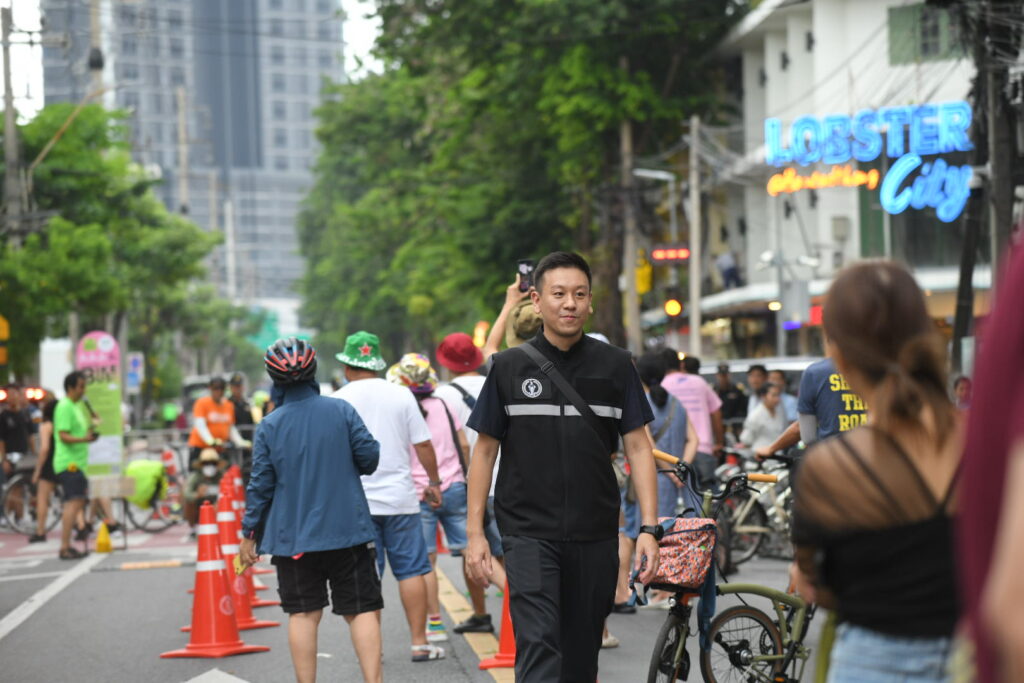
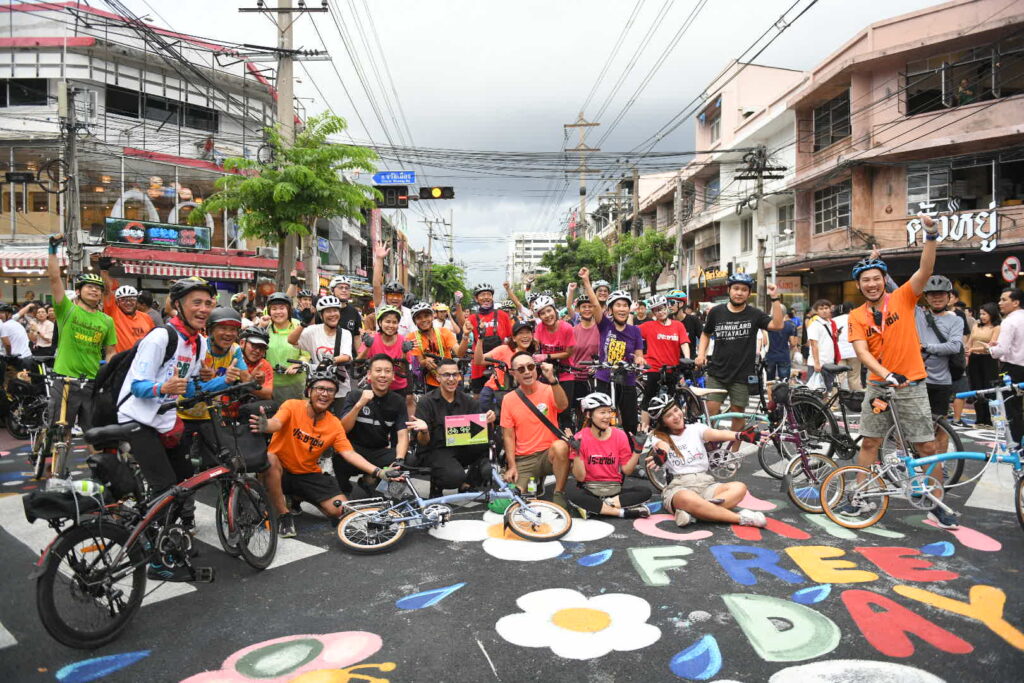
The "Bangkok Car Free 2024: Connecting For Life" event, take place on September 21-22, 2024 on Banthat Thong Road in Pathumwan district, Bangkok.

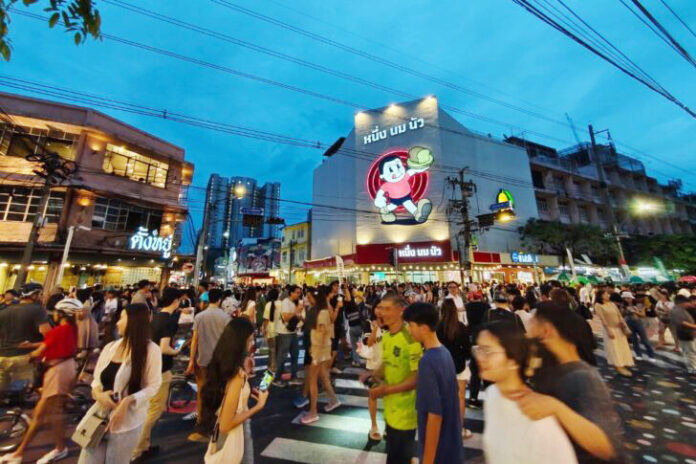
BANGKOK — Banthat Thong, a street in Bangkok which runs 2.2 kilometres from its junction with Rama IV Road at Saphan Lueang Intersection through Pathum Wan and Ratchathewi districts, has turned into a golden opportunity for business and could become a flourishing pedestrian zone.

The “Bangkok Car Free 2024: Connecting For Life” event, which took place on 21-22 September on Banthat Thong Road in Pathumwan district, was a great success and was well received. Many called for this event to be held every weekend.

During these two days, the Bangkok Metropolitan Administration (BMA) transformed Banthat Thong into a pedestrian zone based on the concept of “organizing footpaths and transforming car-dominated streets into living spaces for people”

banthat5
The graphic shows the “Bangkok Car Free 2024: Connecting For Life” event taking place on September 21-22, 2024, on Banthat Thong Road in Pathumwan district, Bangkok.

Deputy Governor of Bangkok, Sanon Wangsrangboon, explained that the event was held as part of World Car Free Day on 22 September, with the aim of reducing the use of private cars and promoting public transportation.

The transformation of Banthat Thong into a pedestrian zone during the two-day event was very well received. People enjoyed walking safely and many suggested that this event should be held regularly. The aim of the BMA was to hear the public’s feedback on this event.

Surveys conducted during the event revealed a positive response, but feedback from all stakeholders, including Chulalongkorn College, local residents and businesses, will also be taken into account to assess the overall impact.

Extending this concept to other areas requires careful consideration to avoid traffic congestion. An earlier trial on Maha Rat Road in Phra Nakhon district showed minimal impact on traffic for a short period. Pedestrian zones have also been implemented in other districts.

“We will see which roads are suitable for car-free Sundays or weekends or even permanent pedestrian zones,” said Deputy Governor Sanon.

Banthat Thong
Deputy Governor of Bangkok, Sanon Wangsrangboon

From Sports to Food Hotspot

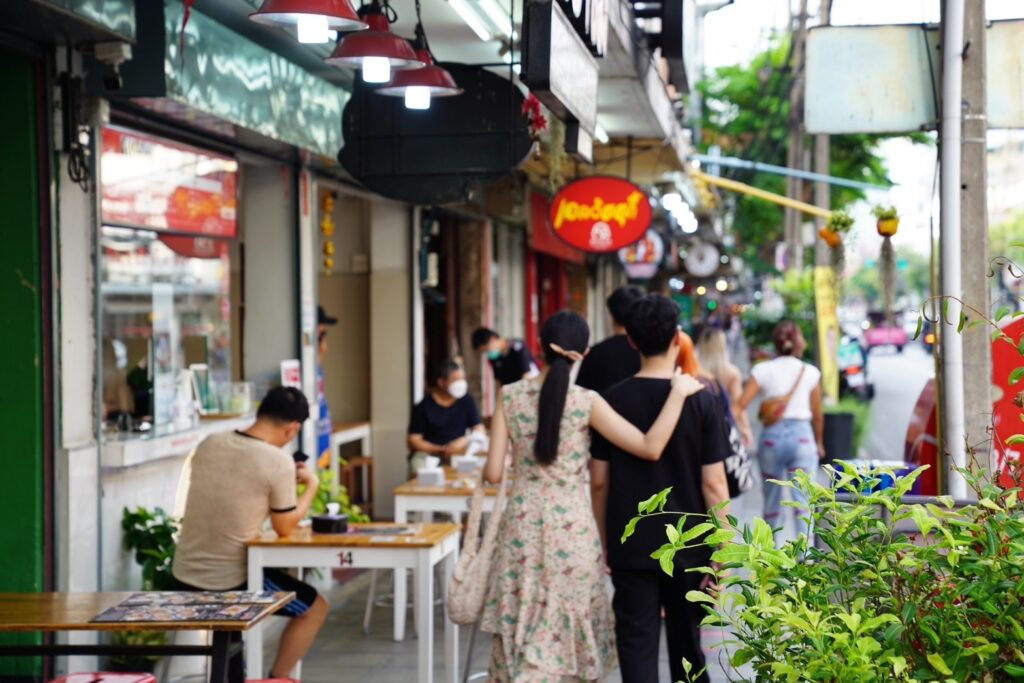
Banthat Thong has evolved considerably since the COVID-19 pandemic as returning tourists flock to the check-in spots. The mismatch between supply and demand has led to the emergence of many new businesses. In addition, the Property Management Office (PMCU) of Chulalongkorn College has drawn up a 15-year plan for the development of the area to make Banthat Thong an economic hub.

Banthat Thong can be divided into three sections. The first is “Stadium One”, which is mainly visited by Thai consumers. The second area, around Jae Oh’s Restaurant, has become a hotspot for tourists, frequented by a mix of Thai visitors, and there are more and more popular restaurants. The final section, where Banthat Thong meets Rama IV Road, is mainly populated by Thai pedestrians, with parking lots frequented by office workers and food seekers.

banthat3
The “Bangkok Car Free 2024: Connecting For Life” event, take place on September 21-22, 2024 on Banthat Thong Road in Pathumwan district, Bangkok.

Assoc. Prof. Dr. Jittisak Thammapornpilas, Vice President for Asset and Physical Management, and Director of Chulalongkorn University’s Property Management Office, told ‘Prachachat Business’ that the area initially developed with university buildings and surrounding slums. The plan was to clear the slums and create organized shophouses, allowing external residents to rent space for housing and business.

In the past, Thais seldom lived in shophouses, which became predominantly occupied by Chinese residents from “Yaowarat” and “Talat Noi”, accustomed to living in shophouses, conducting business downstairs while living upstairs.

The area has seen a variety of businesses, with the food industry being particularly successful. Previously, food businesses were more spread out, unlike today’s concentrated zones around landmarks like “Chamchuri Square” and “Samyan Mitrtown”, both near Chulalongkorn University.

banthat4
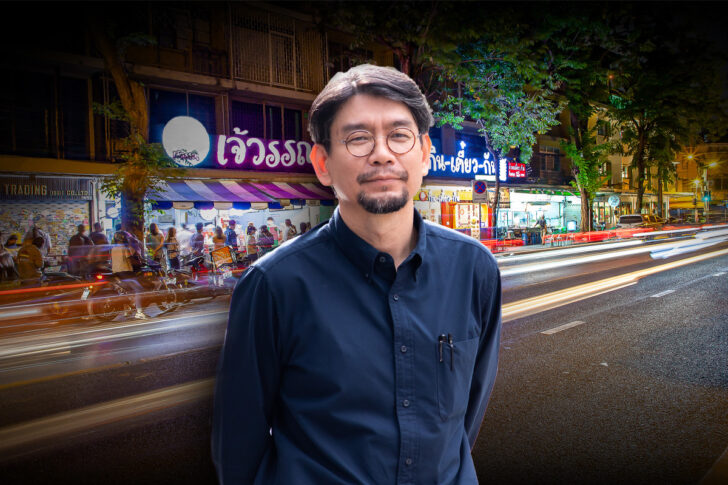
Assoc. Prof. Dr. Jittisak Thammapornpilas, Vice President for Asset and Physical Management, and Director of Chulalongkorn University’s Property Management Office

Before the park was built to commemorate Chulalongkorn’s 100th anniversary, Suan Luang-Banthat Thong was known for its used car parts market, where repair work often spilled out onto the streets and sidewalks. However, as the city developed, traffic became heavier and stores, including sports and auto parts stores, declined.

Supachalasai stadium also played a role in attracting sports stores to the area, but as new stadiums like Rajamangala came up and sports stores moved to malls, these stores also declined.

Social Media Boosts Popularity

Before COVID-19, efforts were made to densify the area, especially with Stadium One, which was originally intended to promote sports stores. However, the pandemic put paid to those plans, and instead the food scene in the area flourished.

Credit must be given to the rise of popular eateries in the area, like Jok Samyan, alongside new branches of famous restaurants, catering to late-night crowds.

“Chula-Samyan and Banthat Thong used to be quiet after 5 p.m., with only some areas open until 8 p.m. Now the restaurants in Stadium One serve as a meeting place for night workers, with a lively scene until 10.11 pm, leading to further growth,” said a representative.

banthat6
Social media trends also helped boost the area’s popularity, with influencers and YouTubers making it a must-visit destination for new restaurant openings.

As word spread on social media, the area saw an influx of international tourists, especially from China, Vietnam, and South Korea, attracted by the food. Banthat Thong has one advantage over Yaowarat: there are several parking lots for tour buses.

Social media trends also helped boost the area’s popularity, with influencers and YouTubers making it a must-visit destination for new restaurant openings.

The food business in the Suan Luang-Banthat Thong area generates an estimated 300-400 million baht ($9-12 million) annually. While this does not directly feed into Chulalongkorn College’s property management, it reflects the overall economic impact on tourism and social media presence.

_______

Advertisement

Hot News

LATEST NEWS

Bangkok
overcast clouds
33.7 ° C
35 °
32.2 °
51 %
3.3kmh
99 %
Fri
34 °
Sat
33 °
Sun
31 °
Mon
31 °
Tue
32 °