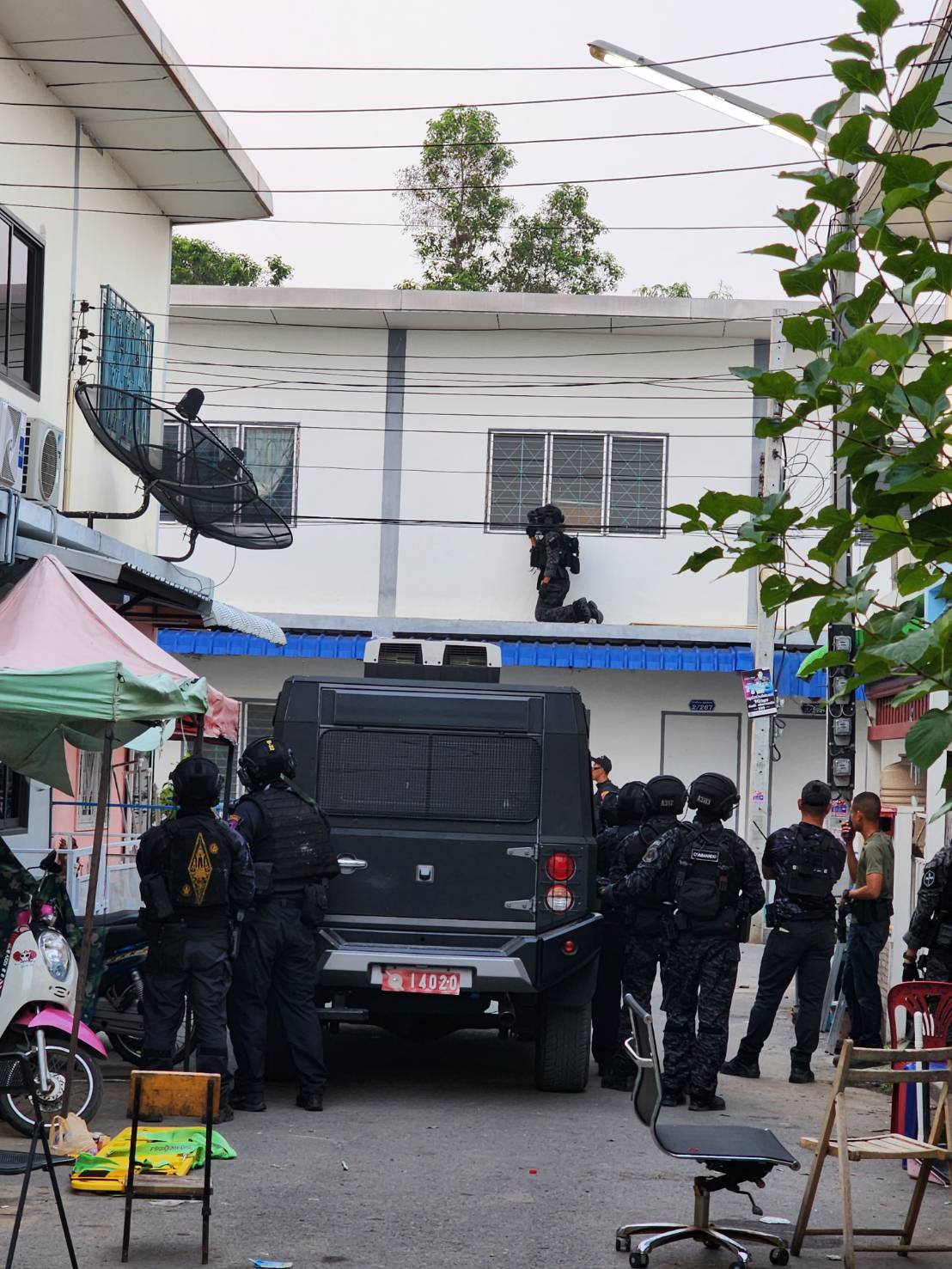
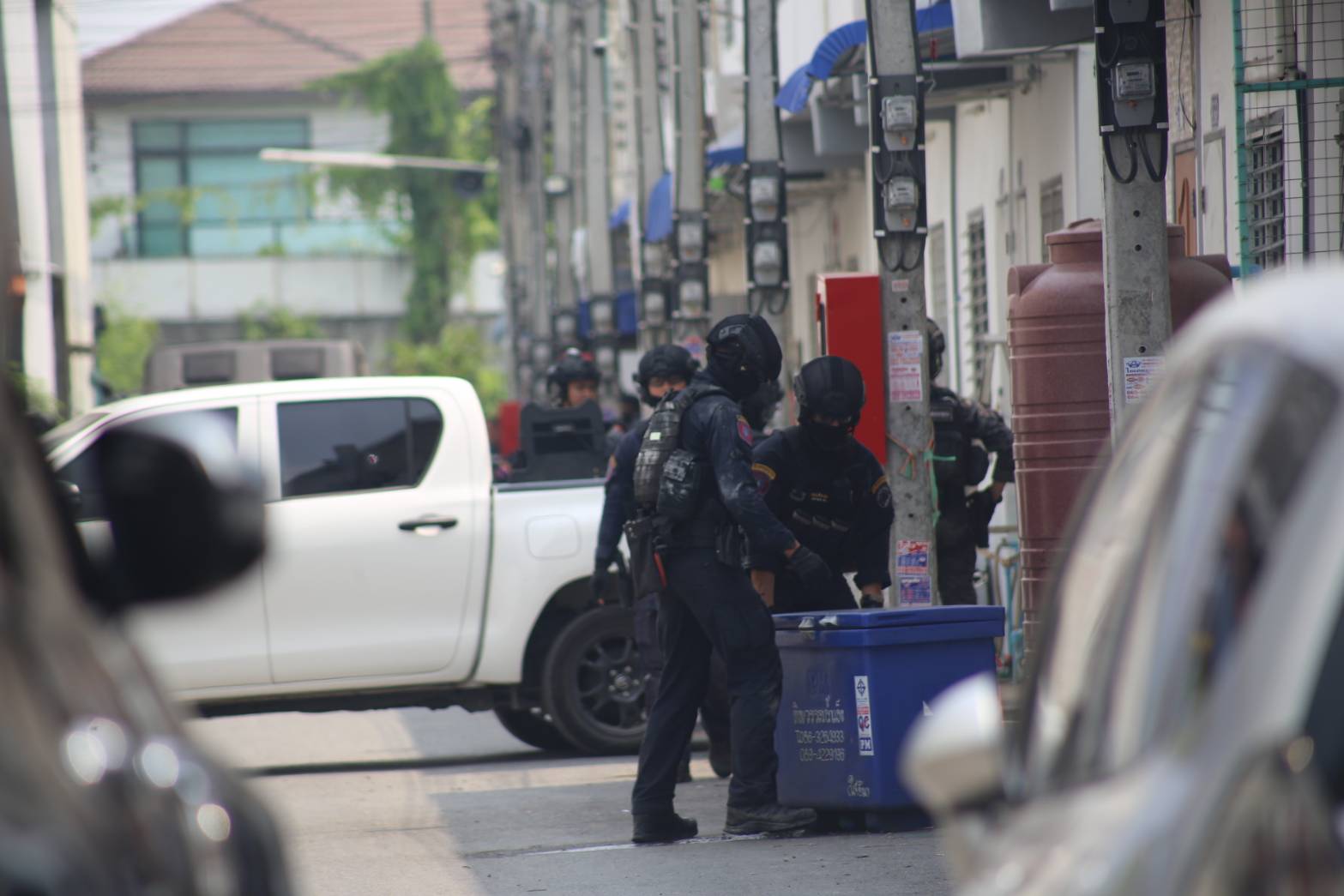
Rescue workers transport the wounded gunman to hospital on Mar. 15, 2023.
Update: Police said Kitikarn died at hospital on Wednesday night.
BANGKOK — Police said a disgruntled police officer who fired multiple shots in a residential area north of Bangkok was arrested Wednesday afternoon after an overnight standoff. He later died of injuries at hospital.
The lengthy standoff, which lasted for more than 24 hours, ended when police commandos decided to raid a house on Soi Jiramakron in Sai Mai district where the gunman, identified as Pol. Lt. Col. Kitikarn Sangbun, 51, an inspector with the Special Branch Police’s intelligence unit, was hiding. Kitikarn was reportedly shot during the firefight and taken to hospital.
No one, except for the Kitikarn, was injured in the incident, police said. He later died at Bhumibol Adulyadej Hospital on the same evening, Sai Mai police superintendent Rangsan Sornsing said Wednesday.
The gunman, who has a history of mental illness, went into hiding in his house on Tuesday morning after he opened fire on his colleagues who attempted to take him to hospital to treat his condition. His colleagues came to visit him with an ambulance after he did not report for duty for days, Pol. Col. Rangsan said Tuesday.
After driving his colleagues away, Kitikarn decided to lock himself up in the house and refused to surrender. He also fired multiple salvos throughout the day as police negotiators attempted to calm him down.
Police had said earlier they would not use lethal force since the gunman was not taking any hostages or targeting any individuals, though a bullet did lodge in a helmet of one of the police commandos.
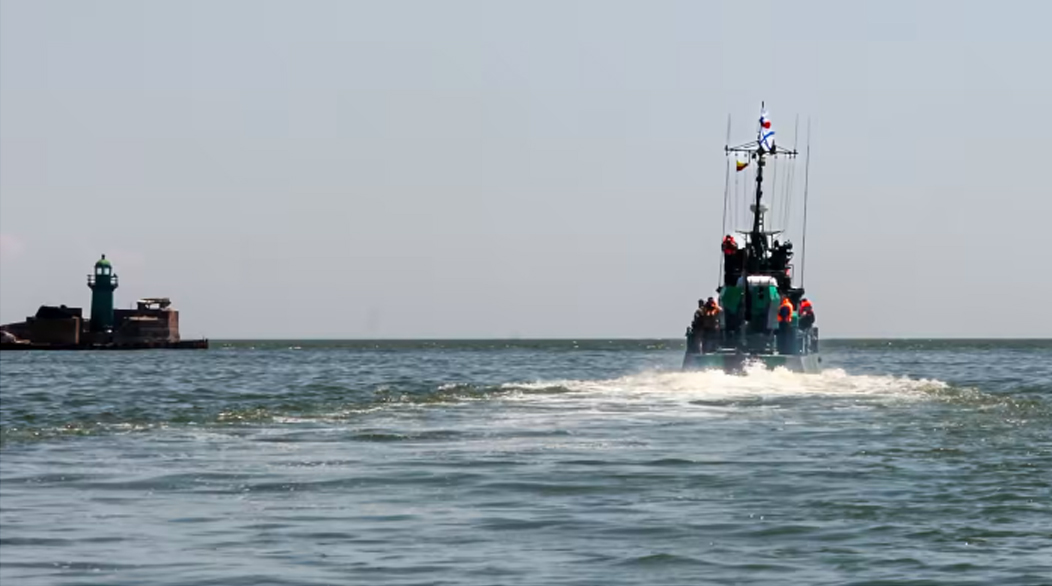
Picture shot from drone; police gunman was inside the house.
“There is no need for violence” deputy police commissioner Torsak Sukvimol, who supervised the operation, said Tuesday. “Please allow more time for us to work and wait for this police officer to calm down.”
Various tactics were used to subdue the gunman, who was trained in counter-terrorism, from using his relatives and superiors as negotiators, using his colleagues to sing his favorite songs through a megaphone, to firing tear gas into his house, but only with limited success.
National police commissioner Damrongsak Kittiprapas said Wednesday he would consider discharging Kitikarn from service as he is no longer fit for duty. He also apologized to civilians who were affected by the incident.
“We must work carefully to prevent any loss on both sides,” Pol. Gen. Damrongsak said. “The police will compensate affected civilians or any damages to their homes.”
The star Wolf-Rayet 124, center, captured by the James Webb Space Telescope. (NASA, ESA, CSA, STScI, Webb ERO Production Team via AP)
The Webb Space Telescope has captured the rare and fleeting phase of a star on the cusp of death.
NASA released the picture Tuesday at the South by Southwest conference in Austin, Texas.
The observation was among the first made by Webb following its launch in late 2021. Its infrared eyes observed all the gas and dust flung into space by a huge, hot star 15,000 light-years away. A light-year is about 5.8 trillion miles.
Shimmering in purple like a cherry blossom, the cast-off material once comprised the star’s outer layer. The Hubble Space Telescope snapped a shot of the same transitioning star a few decades ago, but it appeared more like a fireball without the delicate details.
Such a transformation occurs only with some stars and normally is the last step before they explode, going supernova, according to scientists.
This Hubble image shows the nebula M1-67 around the Wolf-Rayet star WR 124. Image credit: NASA / ESA / Hubble / Judy Schmidt, geckzilla.com.
“We’ve never seen it like that before. It’s really exciting,” said Macarena Garcia Marin, a European Space Agency scientist who is part of the project.
This star in the constellation Sagittarius, officially known as WR 124, is 30 times as massive as our sun and already has shed enough material to account for 10 suns, according to NASA.
___
By MARCIA DUNN AP Aerospace Writer
The Associated Press Health and Science Department receives support from the Howard Hughes Medical Institute’s Science and Educational Media Group. The AP is solely responsible for all content.
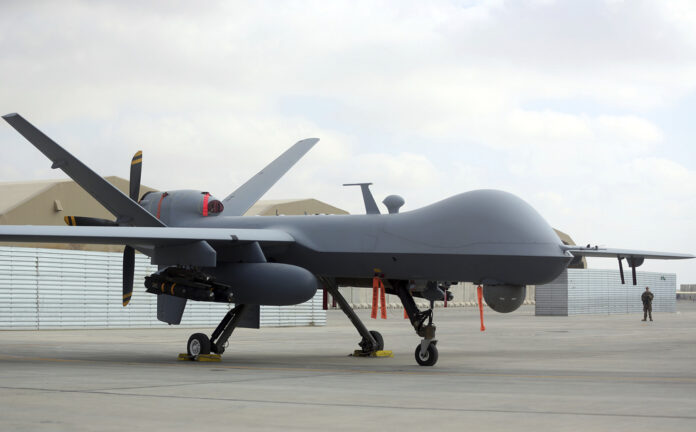
FILE - A U.S. MQ-9 drone is on display during an air show at Kandahar Airfield, Afghanistan, Tuesday, Jan. 23, 2018. (AP Photo/Massoud Hossaini, File)
KYIV, Ukraine (AP) — A Russian fighter jet struck the propeller of a U.S. surveillance drone over the Black Sea on Tuesday in a “brazen violation of international law,” causing American forces to bring down the unmanned aerial vehicle, the U.S. said.
But Russia insisted its warplanes didn’t hit the MQ-9 Reaper drone. Instead, it said the drone maneuvered sharply and crashed into the water following an encounter with Russian fighter jets that had been scrambled to intercept it near Crimea.
The incident, which added to Russia-U.S. tensions over Moscow’s war in Ukraine, appeared to be the first time since the height of the Cold War that a U.S. aircraft was brought down after an encounter with a Russian warplane.
U.S. President Joe Biden was briefed on the incident by national security adviser Jake Sullivan, according to White House national security spokesman John Kirby. He added that U.S. State Department officials would be speaking directly with their Russian counterparts and “expressing our concerns over this unsafe and unprofessional intercept.”
President Joe Biden walks with Ukrainian President Volodymyr Zelenskyy at St. Michael’s Golden-Domed Cathedral on a surprise visit, Monday, Feb. 20, 2023, in Kyiv. (AP Photo/ Evan Vucci)
State Department spokesman Ned Price called it a “brazen violation of international law.” He said the U.S. summoned the Russian ambassador to lodge a protest and the U.S. ambassador to Russia, Lynne Tracy, has made similar representations in Moscow.
The U.S. European Command said two Russian Su-27 fighter jets intercepted the drone while it was operating within international airspace. It said one of the Russian fighters struck the propeller of the MQ-9, causing U.S. forces to bring it down in international waters.
Prior to that, the Su-27s dumped fuel on the MQ-9 and flew in front of it several times in “a reckless, environmentally unsound and unprofessional manner,” the U.S. European Command said in a statement from Stuttgart, Germany.
“This incident demonstrates a lack of competence in addition to being unsafe and unprofessional,” it added.
U.S. Air Force Gen. James B. Hecker, commander of U.S. Air Forces Europe and Air Forces Africa, said the MQ-9 aircraft was “conducting routine operations in international airspace when it was intercepted and hit by a Russian aircraft, resulting in a crash and complete loss of the MQ-9.” He added that “in fact, this unsafe and unprofessional act by the Russians nearly caused both aircraft to crash.”
Pentagon spokesman Air Force Brig. Gen. Pat Ryder said the incident occurred at 7:03 a.m. Central European time (0603 GMT; 2:03 a.m. EST) over international waters, and well clear of Ukraine, after the Russian jets had flown in the vicinity of the drone for 30 to 40 minutes. There did not appear to be any communications between the aircraft before the collision, Ryder added.
The MQ-9 includes a ground control station and satellite equipment and has a 66-foot (20-meter) wingspan. It is capable of carrying munitions, but Ryder would not say whether it was armed. The U.S. had not recovered the crashed drone, U.S. Air Forces-Europe said in a statement, and neither had Russia, Ryder said.
He said it appeared the Russian aircraft also was damaged in the collision, but the U.S. has confirmed that it did land, although Ryder would not say where.
Russia’s Defense Ministry said the U.S. drone was flying over the Black Sea near Crimea and intruded in an area that was declared off limits by Russia as part of what it calls its “special military operation” in Ukraine, causing the military to scramble fighters to intercept it.
“As a result of a sharp maneuver, the MQ-9 drone went into unguided flight with a loss of altitude and crashed into the water,” it said. “The Russian fighters didn’t use their weapons, didn’t come into contact with the unmanned aerial vehicle, and they safely returned to their base.”
The Russian ambassador to Washington, Anatoly Antonov, described the U.S. drone flight as a “provocation” and argued that there was no reason for U.S. military aircraft and warships to be near Russia’s borders.
Anatoly Antonov, Russian ambassador to the United States, departs after meeting with Assistant Secretary of State for Europe Karen Donfried at the U.S. State Department in Washington, Tuesday, March 14, 2023.. (AP Photo/Patrick Semansky)
Speaking after meeting with U.S. Assistant Secretary of State for Europe Karen Donfried, Antonov insisted that the Russian warplanes didn’t hit the American drone or fire their weapons. He added that Moscow wants “pragmatic” ties with Washington, adding that “we don’t want any confrontation between the U.S. and Russia.”
Moscow has repeatedly voiced concern about U.S. intelligence flights close to the Crimean Peninsula, which Russia seized from Ukraine in 2014 and illegally annexed. The Kremlin has charged that by providing weapons to Ukraine and sharing intelligence information with Kyiv, the U.S. and its allies have effectively become engaged in the conflict.
Kirby emphasized that the incident wouldn’t deter the U.S. from continuing its missions in the area.
“If the message is that they want to deter or dissuade us from flying, and operating in international airspace, over the Black Sea, then that message will fail,” Kirby said. “We’re going to continue to fly and operate in international airspace over international waters. The Black Sea belongs to no one nation.”
FILE NATO Black Sea exercise
The U.S. European Command said the incident followed a pattern of dangerous actions by Russian pilots while interacting with U.S. and allied aircraft over international airspace, including over the Black Sea.
“These aggressive actions by Russian aircrew are dangerous and could lead to miscalculation and unintended escalation,” it warned.
Gen. David Berger, commandant of the Marine Corps, said this type of collision is his greatest concern, both in that part of Europe as well as in the Pacific.
“Probably my biggest worry both there and in the Pacific is an aggressive Russia or China pilot or vessel captain, or something gets too close, doesn’t realize where they are, and causes a collision,” Berger said, in response to a question at a National Press Club event Tuesday.
As fighting continued in Ukraine, a Russian missile struck an apartment building Tuesday in the eastern city of Kramatorsk, killing at least one person and wounding nine others in one of the major urban strongholds the Donetsk region.
Ukrainian President Volodymyr Zelenskyy posted a video showing gaping holes in the façade of the low-rise building, which bore the brunt of the strike that damaged nine apartment blocks, a kindergarten, a bank branch and two cars, said regional Gov. Pavlo Kyrylenko.
Russian President Vladimir Putin, speaking with workers at a helicopter factory in southern Siberia, again cast the conflict in Ukraine as an existential one for Russia.
“For us, it’s not a geopolitical task,” Putin said, “it’s the task of survival of Russian statehood and the creation of conditions for the future development of our country.”
Russia had welcomed a Chinese peace proposal, but Kremlin spokesman Dmitry Peskov said Kyiv’s refusal to talk leaves Moscow with only military options.
“We must achieve our goals,” Peskov told reporters. “Given the current stance of the Kyiv regime, now it’s only possible by military means.”
The Russian onslaught has focused on the devastated eastern city of Bakhmut, where Kyiv’s troops have been fending off attacks for seven months and which has become a symbol of resistance, as well as a focal point of the war.
Zelenskyy discussed Bakhmut with the military brass and they were unanimous in their determination to face down the Russian onslaught, according to the presidential office.
“The defensive operation in (Bakhmut) is of paramount strategic importance to deterring the enemy. It is key for the stability of the defense of the entire front line,” said Valerii Zaluzhnyi, the commander in chief of Ukraine’s armed forces.
___
Lolita C. Baldor, Tara Copp, Zeke Miller, Aamer Madhani and Matthew Lee in Washington, and Lorne Cook in Brussels, contributed.
This image provided by Qibin Zhao shows ghost catfish showing iridescence. The ghost catfish has a see-through body that flickers with rainbow colors when the light hits it. Now, scientists have cracked the case of how the fish creates its iridescent glow. (Qibin Zhao via AP)
NEW YORK (AP) — You can see right through this little aquarium fish from Thailand: Its skin is almost completely transparent. But when the light hits it just right, its body flickers with shimmering rainbow colors.
Now, scientists have figured out how this fish — called the ghost catfish — creates its iridescent glow.
That glow comes from within, according to a study published Monday in the journal Proceedings of the National Academy of Sciences. As light passes through the fish’s skin, it hits tiny structures in the muscle that turn the light into a colorful spectrum.
This image provided by Qibin Zhao shows ghost catfish showing iridescent colors with a backlight. (Xiujun Fan/Qibin Zhao via AP)
The ghost catfish — sometimes known as the glass catfish — is a small species native to rivers in Thailand, averaging just a few inches (centimeters) long. It’s sold around the world as an aquarium fish.
Other creatures are also iridescent, creating the shimmering rainbow effect where colors shift as you move. Usually, they have shiny outer surfaces that reflect the light — like a hummingbird’s feathers or a butterfly’s wings, explained Arizona State University biologist Ron Rutowski, who was not involved with the research.
But the ghost catfish has no scales, said senior author Qibin Zhao, a physicist at China’s Shanghai Jiao Tong University, who became fascinated by the fish after seeing it in an aquarium store.
The ghost catfish has a see-through body that flickers with rainbow colors when the light hits it. Now, scientists have cracked the case of how the fish creates its iridescent glow. (Qibin Zhao via AP)
Instead, it has tightly packed structures in the muscles that can bend light into rainbow hues, which researchers found after shining different lights and lasers onto its body in the lab. As the ghost catfish swims, those muscles relax and tighten, sending off a glinting range of colors.
And the very see-through skin, which lets in around 90% of outside light, is essential: “We wouldn’t be able to see the colors if the skin of the fish is not so transparent,” Zhao said in an email.
Some species use their iridescence to attract mates or give off warning signals, but it’s not clear whether the ghost catfish’s colors serve a purpose, Rutowski said.
———
Report By MADDIE BURAKOFF AP Science Writer
The Associated Press Health and Science Department receives support from the Howard Hughes Medical Institute’s Science and Educational Media Group. The AP is solely responsible for all content.
A person stands in front of a Meta sign outside of the company's headquarters in Menlo Park, Calif., Tuesday, March 7, 2023. (AP Photo/Jeff Chiu)
Facebook parent Meta is slashing another 10,000 jobs and will not fill 5,000 open positions as the social media pioneer cuts costs.
The company announced 11,000 job cuts in November, about 13% of its workforce at the time.
Meta and other tech companies have been hiring aggressively for at least two years and in recent months have begun to let some of those workers go. Hiring in the U.S. is still strong, but layoffs have hit hard in some sectors.
Early last month, Meta posted falling profits and its third consecutive quarter of declining revenue.
The company said Tuesday it will reduce the size of its recruiting team and make further cuts in its tech groups in late April, and then its business groups in late May.
“This will be tough and there’s no way around that,” said CEO Mark Zuckerberg. “It will mean saying goodbye to talented and passionate colleagues who have been part of our success.”
People talk near a Meta sign outside of the company’s headquarters in Menlo Park, Calif., Tuesday, March 7, 2023. (AP Photo/Jeff Chiu)
The Menlo Park, California, company has invested billions of dollars to realign its focus on the metaverse. In February it said a downturn in online advertising and competition from rivals such as TikTok weighed on results.
“As I’ve talked about efficiency this year, I’ve said that part of our work will involve removing jobs — and that will be in service of both building a leaner, more technical company and improving our business performance to enable our long term vision,” said Zuckerberg.
The biggest tech companies in the U.S. are cutting costs elsewhere, too.
This month, Amazon paused construction on its second headquarters in Virginia following the biggest round of layoffs in the company’s history and its shifting plans around remote work.
In early trading, Meta shares rose more than 6% Tuesday.
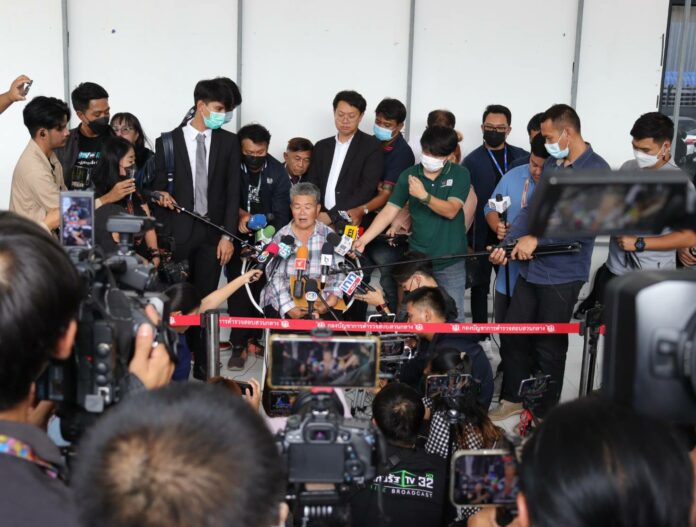
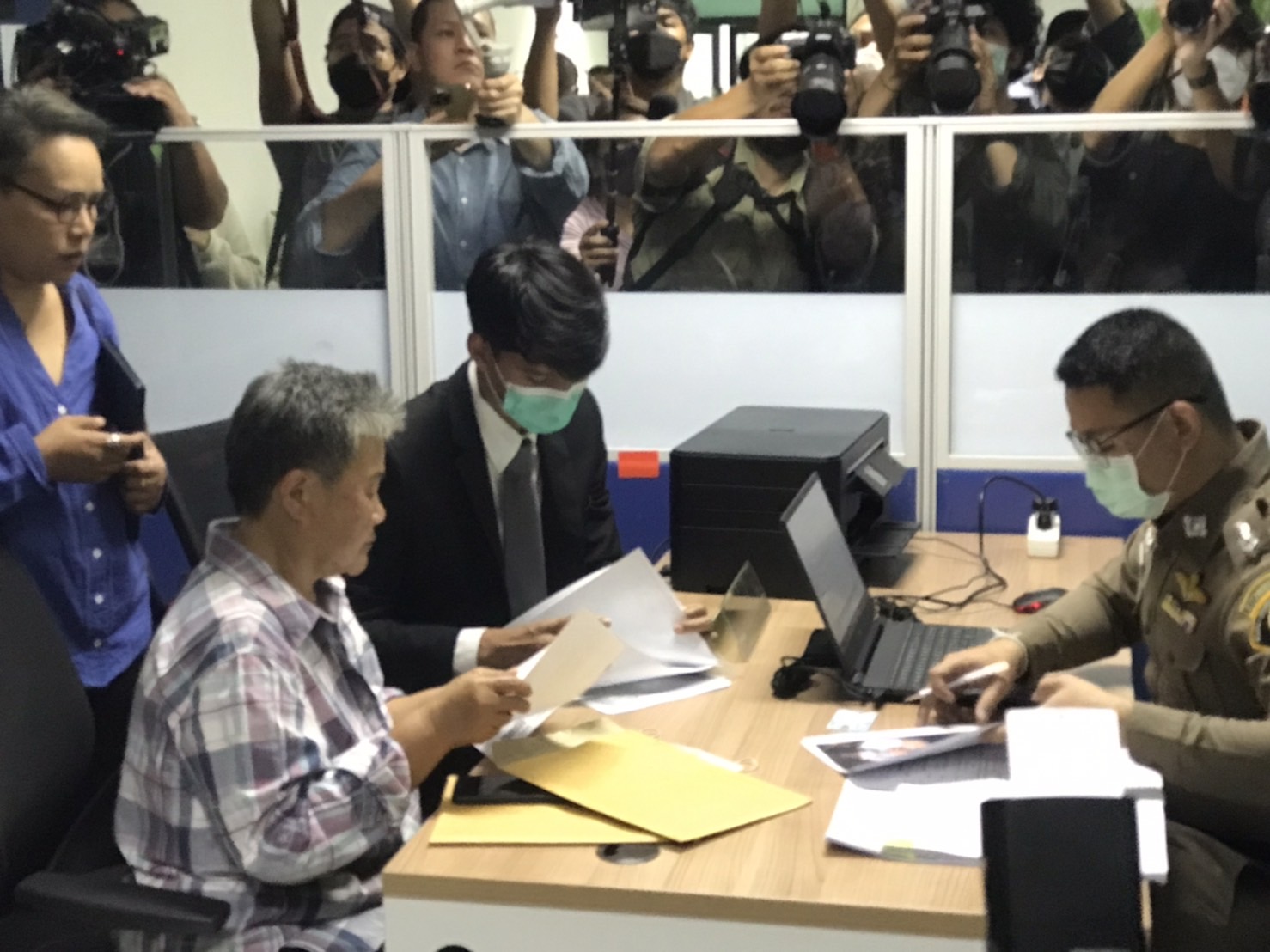
Anti-Prayut protester Wantana O-Thong, 62, filed a complaint on Tuesday March 14 with the Central Investigation Bureau in Bangkok against security officers of Prime Minister General Prayut Chan-o-cha for physical assault and holding her against her will. She displayed her swollen wrists, ankles and wounds to reporters.
Wantana said she was dragged away, pressed hard on her wrists, had her mouth and nose covered to the point where she had breathing difficulties.
The move came after she was charged late on Monday with assaulting and preventing officers from carrying out its duty, including biting a finger of one officer, making loud noise in public and not remaining in a designated area by Ban Pong police in Ratchaburi province.
The crime of assaulting and obstructing officers from carrying out its duty is subject to a maximum imprisonment term of one year and/or fine of no more than 10,000 baht. Wantana’s move came after she was granted bail.
She said she was dragged away by five to six officers after she told then, “don’t come close or I’ll remove my clothes” because she didn’t know what’s their intention.
Wantana also denied trying to block PM Gen Prayut Chan-o-cha’s motorcade, saying the incident occurred well before the motorcade arrived.
One official can be seen trying to cover her mouth, while another using umbrella to block news cameras. Wantana was a former MO candidate for Pheu Chart Party and added she has tried to petition the PM at the Government House several times in the past about the economic impacts on the livelihood of the locals, herself including.
“I would like to exercise my rights to choose a PM who truly solve the livelihood problems of the people and truly listen to people’s problems and not just imagining things like Prayut,” Wantana said.
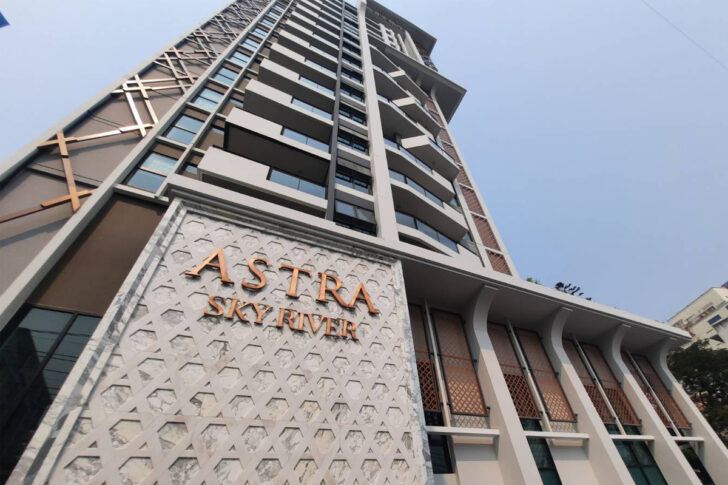
Chiang Mai is popular with Chinese property investors, especially in the city’s San Kamphaeng district and Hang Dong district. A survey by Prachachat Business found that several Chinese investors have invested directly as a group, as well as those who buy property as a residence and as an investment.
Arak Kampanartbawon, head of the registration department at the Chiang Mai Provincial Land Office, said sales in both sectors – land/property and house, and flat/condominium – have increased after Thailand reopens in 2022. For condominiums, the Chinese are the main buyers.
In 2020, the total turnover of land and land-and-houses in the city was THB 9.4bn. It then rose to THB 10.4bn in 2021 before rising to THB 13.2bn last year.
The main factors were the reopening and the COVID-19 situation improving. Between January and February 2023, total sales were THB 1.5bn. Total sales of land and properties and houses in the city amounted to THB 34.5bn in the last 3 years alone.
Arak pointed out that flat and condo sales have increased significantly. Previously, the main buyers were Europeans, Americans and the Middle East, but after the pandemic, Chinese buyers predominate and even trump Thai buyers.
Under the Thai Condominium Act (B.E. 2522), foreigners can only be 49 percent owners. They cannot own land or a plot of land with a house. Looking at the current trend in residential property expansion, it is likely that foreign investors, especially Chinese, will invest heavily, including in the flat and condominium sector.
Arak said the government will carefully consider whether foreign investors use Thai nominees to invest in land, both before and after acquiring the land.
A source in Chiang Mai’s property market told Prachachat Business that Chinese investors are now entering the whole construction business. They are constructing their own buildings and importing materials from China. This is affecting the local business because Chinese materials are much cheaper.
Chang Klan Road is the area where Chinese investors invest the most to buy property. The price per square metre rose to THB 100,000. Chinese investors preferred to buy the floor and rent it out as Airbnb on Chinese social media.
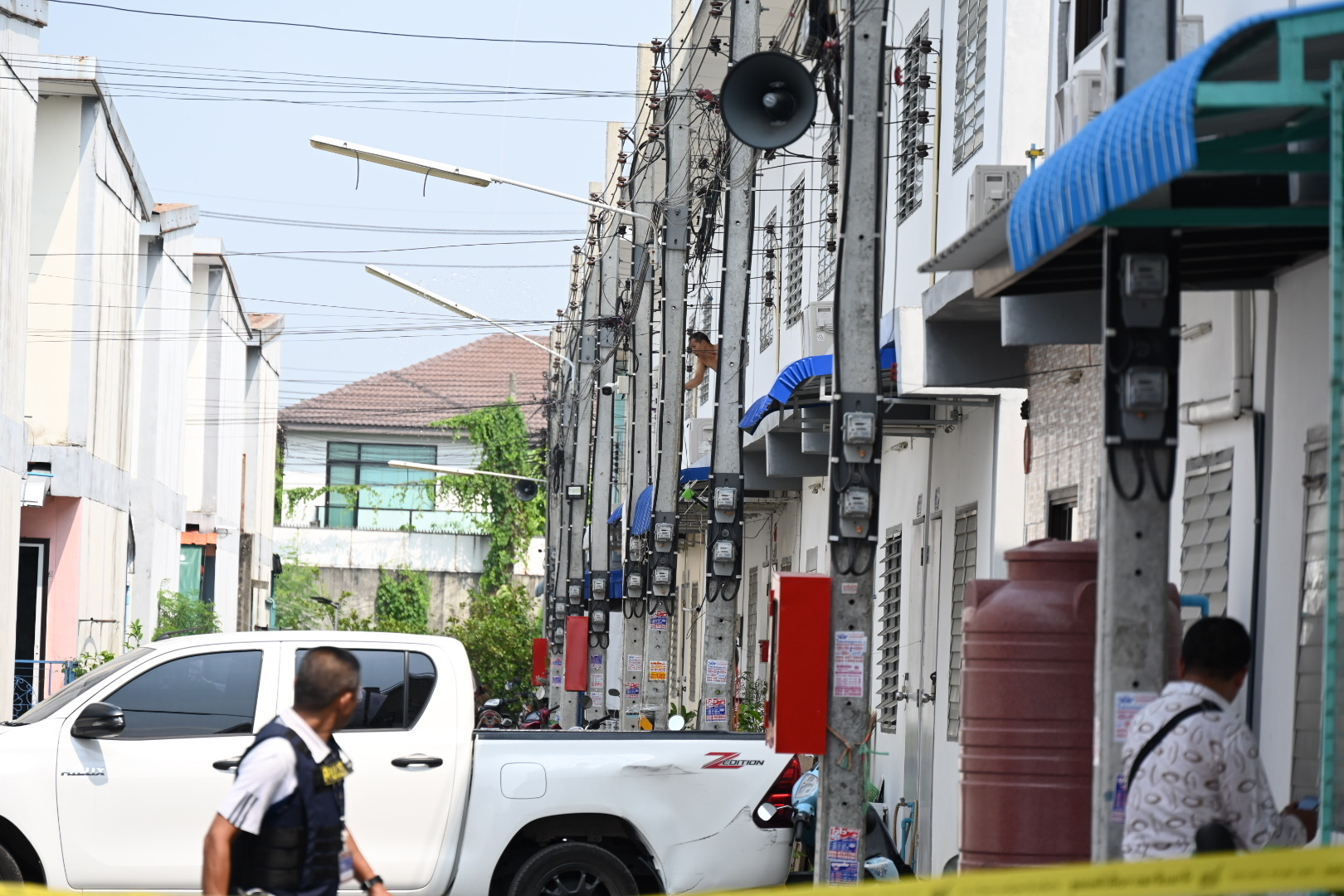
Police commandos take position outside a house in Bangkok’s Sai Mai district where a gunman is hiding on Mar. 14, 2023.
BANGKOK — Police are cordoning off an alley north of Bangkok on Tuesday after a disgruntled police officer fired multiple shots in a residential area.
Police identified the gunman as Pol. Lt. Col. Kitikarn Sangbun, 51, an inspector with the Special Branch Police’s intelligence unit. Police commandos are surrounding his house on Soi Jiramakron in Sai Mai district as they are trying to convince the gunman to surrender. There is no report of any injury in today’s shooting as of publication time, police said.
Sai Mai police superintendent Rangsan Sornsing said the gunman started firing his handgun from his house when his colleagues attempted to take him to hospital to treat his mental health issues after he had been absent from work for days. When his colleagues arrived with an ambulance, the gunman fired shots through the door, sending the crew scurrying for cover.
After hours of standoff, the gunman became more agitated and fired another salvo from his house. Police said they would not use force since the gunman is not taking any hostages or targeting any individuals. Members of the public were advised to stay clear from the area while the operation is ongoing.
Neighbors said they often heard Kitikarn getting into a heated argument with someone over the phone and sometimes he would fire shots into the air, causing panic in the neighborhood. Col. Rangsan of the Sai Mai police said Kitikarn has a history of mental illness, though his motive remains unclear.
Gun violence involving police officers is not uncommon in Thailand and oftentimes involves mental illness. In October 2022, 36 people, including 24 children, were shot and stabbed to death by an ex-police officer who got fired over drug use in the country’s worst mass killing in modern history.
This is a developing story and may be updated without notice.
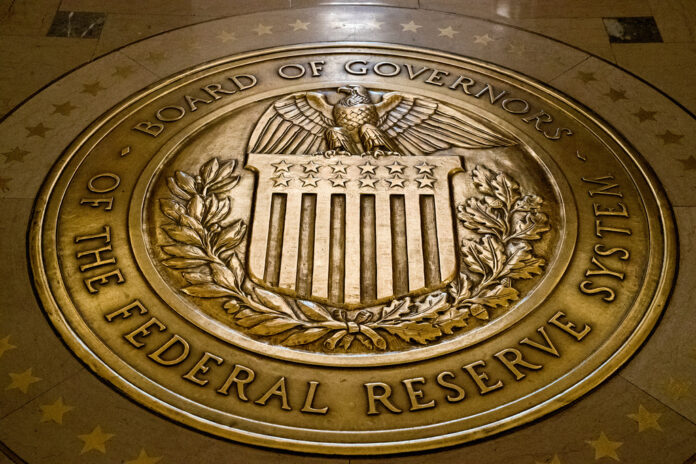
FILE- The seal of the Board of Governors of the United States Federal Reserve System is displayed in the ground at the Marriner S. Eccles Federal Reserve Board Building in Washington, Feb. 5, 2018. F(AP Photo/Andrew Harnik, File)
WASHINGTON (AP) — Two large banks that cater to the tech industry have collapsed after a bank run, government agencies are taking emergency measures to backstop the financial system, and President Joe Biden is reassuring Americans that the money they have in banks is safe.
It’s all eerily reminiscent of the financial meltdown that began with the bursting of the housing bubble 15 years ago. Yet the initial pace this time around seems even faster.
Over the last three days, the U.S. seized the two financial institutions after a bank run on Silicon Valley Bank, based in Santa Clara, California. It was the largest bank failure since Washington Mutual went under in 2008.
How did we get here? And will the steps the government unveiled over the weekend be enough?
Here are some questions and answers about what has happened and why it matters:
WHY DID SILICON VALLEY BANK FAIL?
Silicon Valley Bank had already been hit hard by a rough patch for technology companies in recent months and the Federal Reserve’s aggressive plan to increase interest rates to combat inflation compounded its problems.
The bank held billions of dollars worth of Treasuries and other bonds, which is typical for most banks as they are considered safe investments. However, the value of previously issued bonds has begun to fall because they pay lower interest rates than comparable bonds issued in today’s higher interest rate environment.
That’s usually not an issue either because bonds are considered long term investments and banks are not required to book declining values until they are sold. Such bonds are not sold for a loss unless there is an emergency and the bank needs cash.
Silicon Valley, the bank that collapsed Friday, had an emergency. Its customers were largely startups and other tech-centric companies that needed more cash over the past year, so they began withdrawing their deposits. That forced the bank to sell a chunk of its bonds at a steep loss, and the pace of those withdrawals accelerated as word spread, effectively rendering Silicon Valley Bank insolvent.
WHAT DID THE GOVERNMENT DO SUNDAY?
The Federal Reserve, the U.S. Treasury Department, and Federal Deposit Insurance Corporation decided to guarantee all deposits at Silicon Valley Bank, as well as at New York’s Signature Bank, which was seized on Sunday. Critically, they agreed to guarantee all deposits, above and beyond the limit on insured deposits of $250,000.
Many of Silicon Valley’s startup tech customers and venture capitalists had far more than $250,000 at the bank. As a result, as much as 90% of Silicon Valley’s deposits were uninsured. Without the government’s decision to backstop them all, many companies would have lost funds needed to meet payroll, pay bills, and keep the lights on.
The goal of the expanded guarantees is to avert bank runs — where customers rush to remove their money — by establishing the Fed’s commitment to protecting the deposits of businesses and individuals and calming nerves after a harrowing few days.
Also late Sunday, the Federal Reserve initiated a broad emergency lending program intended to shore up confidence in the nation’s financial system.
Banks will be allowed to borrow money straight from the Fed in order to cover any potential rush of customer withdrawals without being forced into the type of money-losing bond sales that would threaten their financial stability. Such fire sales are what caused Silicon Valley Bank’s collapse.
If all works as planned, the emergency lending program may not actually have to lend much money. Rather, it will reassure the public that the Fed will cover their deposits and that it is willing to lend big to do so. There is no cap on the amount that banks can borrow, other than their ability to provide collateral.
A Silicon Valley Bank sign is shown in San Francisco, Monday, March 13, 2023. (AP Photo/Jeff Chiu)
HOW IS THE PROGRAM INTENDED TO WORK?
Unlike its more byzantine efforts to rescue the banking system during the financial crisis of 2007-08, the Fed’s approach this time is relatively straightforward. It has set up a new lending facility with the bureaucratic moniker, “Bank Term Funding Program.”
The program will provide loans to banks, credit unions, and other financial institutions for up to a year. The banks are being asked to post Treasuries and other government-backed bonds as collateral.
The Fed is being generous in its terms: It will charge a relatively low interest rate — just 0.1 percentage points higher than market rates — and it will lend against the face value of the bonds, rather than the market value. Lending against the face value of bonds is a key provision that will allow banks to borrow more money because the value of those bonds, at least on paper, has fallen as interest rates have moved higher.
As of the end of last year U.S. banks held Treasuries and other securities with about $620 billion of unrealized losses, according to the FDIC. That means they would take huge losses if forced to sell those securities to cover a rush of withdrawals.
HOW DID THE BANKS END UP WITH SUCH BIG LOSSES?
Ironically, a big chunk of that $620 billion in unrealized losses can be tied to the Federal Reserve’s own interest-rate policies over the past year.
In its fight to cool the economy and bring down inflation, the Fed has rapidly pushed up its benchmark interest rate from nearly zero to about 4.6%. That has indirectly lifted the yield, or interest paid, on a range of government bonds, particularly two-year Treasuries, which topped 5% until the end of last week.
When new bonds arrive with higher interest rates, it makes existing bonds with lower yields much less valuable if they must be sold. Banks are not forced to recognize such losses on their books until they sell those assets, which Silicon Valley was forced to do.
HOW IMPORTANT ARE THE GOVERNMENT GUARANTEES?
They’re very important. Legally, the FDIC is required to pursue the cheapest route when winding down a bank. In the case of Silicon Valley or Signature, that would have meant sticking to rules on the books, meaning that only the first $250,000 in depositors’ accounts would be covered.
Going beyond the $250,000 cap required a decision that the failure of the two banks posed a “systemic risk.” The Fed’s six-member board unanimously reached that conclusion. The FDIC and the Treasury Secretary went along with the decision as well.
People stand outside of an entrance to Silicon Valley Bank in Santa Clara, Calif., Friday, March 10, 2023. The Federal Deposit Insurance Corporation seized the assets of the bank on Friday, marking the largest bank failure since Washington Mutual during the height of the 2008 financial crisis. (AP Photo/Jeff Chiu)
WILL THESE PROGRAMS SPEND TAXPAYER DOLLARS?
The U.S. says that guaranteeing the deposits won’t require any taxpayer funds. Instead, any losses from the FDIC’s insurance fund would be replenished by a levying an additional fee on banks.
Yet Krishna Guha, an analyst with the investment bank Evercore ISI, said that political opponents will argue that the higher FDIC fees will “ultimately fall on small banks and Main Street business.” That, in theory, could cost consumers and businesses in the long run.
WILL IT ALL WORK?
Guha and other analysts say that the government’s response is expansive and should stabilize the banking system, though share prices for medium-sized banks, similar to Silicon Valley and Signature, plunged Monday.
“We think the double-barreled bazooka should be enough to quell potential runs at other regional banks and restore relative stability in the days ahead,” Guha wrote in a note to clients.
Paul Ashworth, an economist at Capital Economics, said the Fed’s lending program means banks should be able to “ride out the storm.”
“These are strong moves,” he said.
Yet Ashworth also added a note of caution: “Rationally, this should be enough to stop any contagion from spreading and taking down more banks … but contagion has always been more about irrational fear, so we would stress that there is no guarantee this will work.”
_____
By CHRISTOPHER RUGABER and KEN SWEET Associated Press
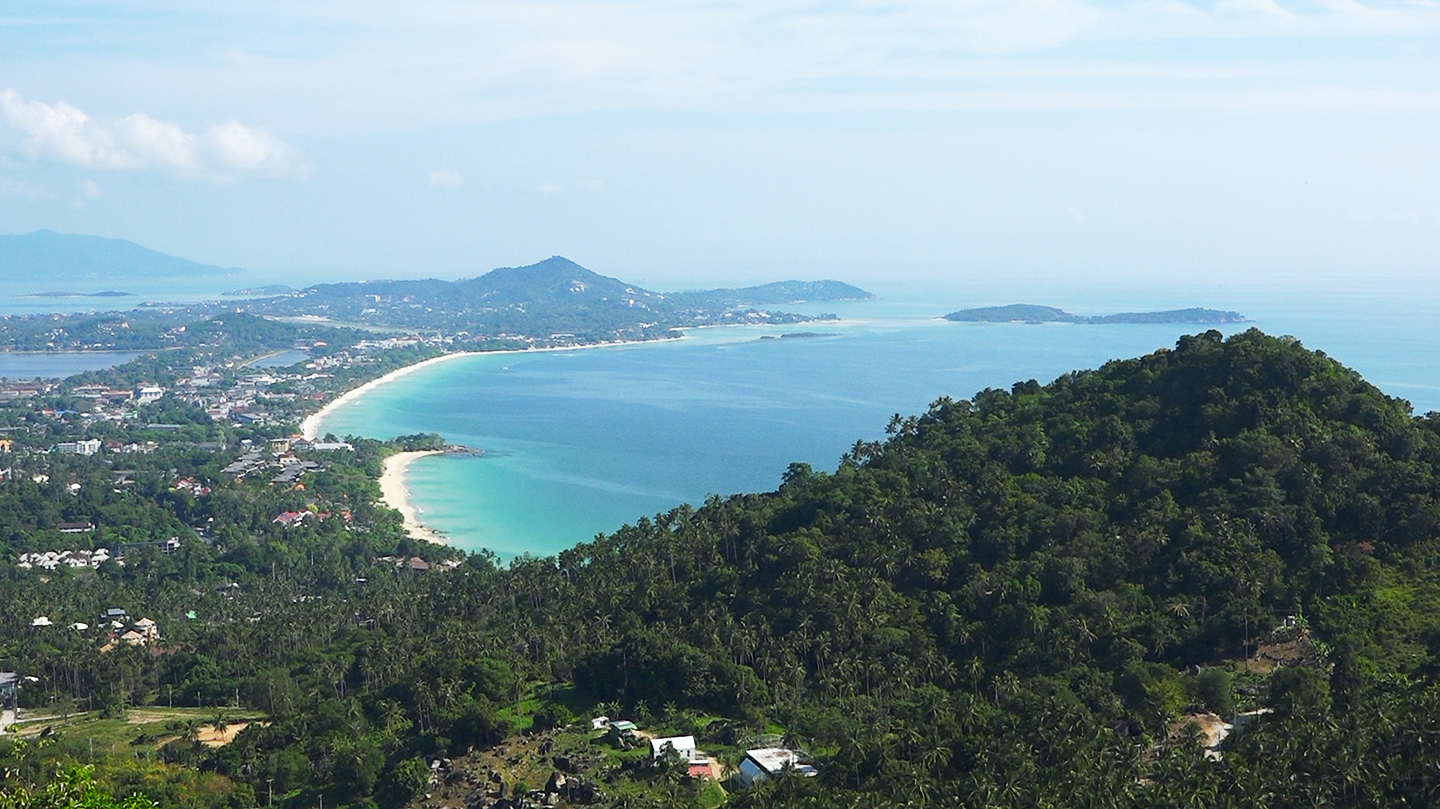
The Tourism Association of Koh Samui, Surat Thani, together with the Tourism Authority of Thailand (TAT) organised the Post ITB Roadshow in Amsterdam, Netherlands on March 13, 2023.
The event was attended by Surat Thani Governor Vitchavut Jinto, Thai Ambassador to The Hague Chatri Archjananun, Deputy Director of TAT in the Paris office Nuttira Aumponpan, more than 40 travel agents from the Netherlands, 20 entrepreneurs from Koh Samui, Koh Pangan, Koh Tao and Khao Sok, and airlines such as Bangkok Airways and EVA, which offer direct flights from Amsterdam to Thailand.
Business discussions between the Thai entrepreneurs and the Dutch went well, as the travel agents were very interested and asked for more details on accommodation, activities, prices and other package tours to nearby areas such as Koh Samui, Koh Pangan, Koh Tao and the city of Surat Thani.
The focus was on cultural tours and wellness. The province wanted to focus on relaxation while focusing on environmentally friendly tourism, e.g. low-carbon tourism.
The province also intends to combine the marketing of Khao Sok National Park and Cheow Lan Lake for the coming summer. It is expected that the promotion will bring more tourists to the province this year and hopes that the number of tourists will return to the same level as before COVID-19. The local businessmen are willing to accommodate the tourists.
Chengdu to Samui
With Koh Samui now opening up to Chinese tourists, Kanokkittika Kritwuttikon, director of TAT Koh Samui, said there will be one flight a week from Chengdu to Samui in March 2023, on Sunday, using an Airbus A319 that seats 140. The TAT Samui plans to increase the frequency of flights to 3 times a week in May 2023. She said most tourists come alone and stay for about 7 days.
Koh Samui is a popular destination for Chinese tourists with high spending power. In 2019, a total of 308,303 Chinese tourists came to the region, spending an average of THB 6,118 per day, resulting in revenue of THB 14bn, about 24 per cent of the total revenue from foreign spending in the region.
TAT estimates the number of Chinese tourists coming to Thailand in the first quarter of this year to be around 300,000. Although it is steady growth, TAT has hopes that the trend will continue to increase throughout the year and that the target of 5 million Chinese tourists in 2023 will be reached.