


























32.3 C
Bangkok
Monday, June 8, 2026
Home Blog Page 907

EU, Beijing Heading for Collision Over China’s COVID Crisis

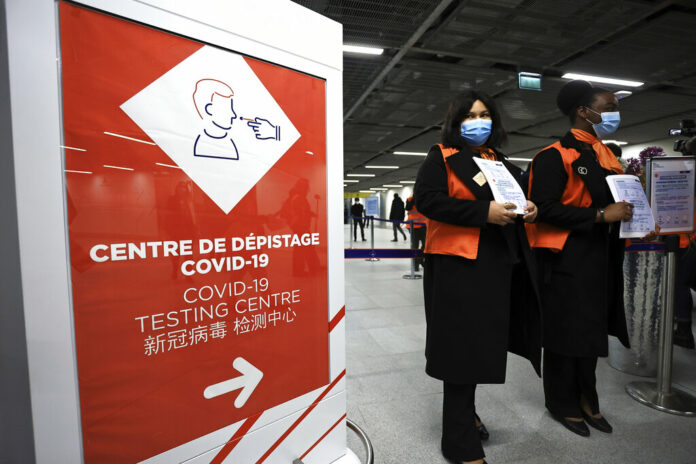
Airport staff wait from passengers coming from China in front of a COVID-19 testing area set at the Roissy Charles de Gaulle airport, north of Paris, Sunday, Jan. 1, 2023. Photo: Aurelien Morissard / AP

BRUSSELS (AP) — The European Union and China on Tuesday moved closer to a political standoff over the COVID-19 crisis, with Beijing vehemently rejecting travel restrictions some EU nations have started to impose that could be expanded in coming days.

An EU offer of help, including vaccine donations, was also as good as slapped down, with Beijing insisting the situation was “under control” and medical provisions “in adequate supply,” government spokesperson Mao Ning said.

And as the 27-nation bloc moved closer to imposing some sort of restrictions on travelers from China, Beijing threatened countermeasures.

“We are firmly opposed to attempts to manipulate the COVID measures for political purposes and will take countermeasures based on the principle of reciprocity,” Mao said.

Still, the EU seemed bent on taking some sort of joint action to ensure incoming passengers from China would not transmit any potential new variants to the continent.

A special EU health security committee joining representatives from the EU member nations discussed potential measures Tuesday, and EU spokesman Tim McPhie said that “the overwhelming majority of countries are in favor of pre-departure testing” in China.

Sweden, which holds the EU presidency, also said in a statement that “travelers from China need to be prepared for decisions being taken at short notice.”

Fearful of being caught unawares like at the outset of the global pandemic in early 2020, the EU Integrated Political Crisis Response group is now set on Wednesday to decide whether to impose EU-wide entry requirements from China.

Several member nations announced individual efforts over the past week. At the same time, the EU’s European Centre for Disease Prevention and Control insisted that the situation in China didn’t pose an immediate overall health threat.

“The variants circulating in China are already circulating in the EU, and as such are not challenging for the immune response” of EU citizens, it said in its latest impact study published Tuesday. Other scientists have also said limits on travel would have little impact on containing the disease, but they also insisted on the value of looking for potential variants not in Europe at the moment.

Over the past week, EU nations reacted in a chaotic cascade of national measures to the crisis in China, disregarding an earlier commitment to act in unity before anything else.

Italy was the first EU member in requiring coronavirus tests for airline passengers coming from China, but several others have said such measures might not be the best option to protect local populations since new variants now coming from China have already been around in Europe, often for many months.

France, Spain and Italy have already announced independent measures to implement tougher COVID-19 rules for passengers arriving from China.

France’s government is requiring negative tests, and is urging French citizens to avoid nonessential travel to China. France is also reintroducing mask requirements on flights from China to France.

Spain’s government said it would require all air passengers coming from China to have negative tests or proof of vaccination.

The United States has announced new testing requirements for all travelers from China, joining some Asian nations that had imposed restrictions because of a surge of infections.

White House press secretary Karine Jean-Pierre said Tuesday that “there’s no cause for retaliation” by Beijing for countries “taking prudent health measures to protect their citizens” with COVID related travel restrictions on travelers coming from China. She said restrictions were “based on public health and science.”

____

Story: Raf Casert. AP video producer Liu Zheng contributed from Beijing.
Advertisement

Floods in Philippines Leave 51 Dead, Over a Dozen Missing

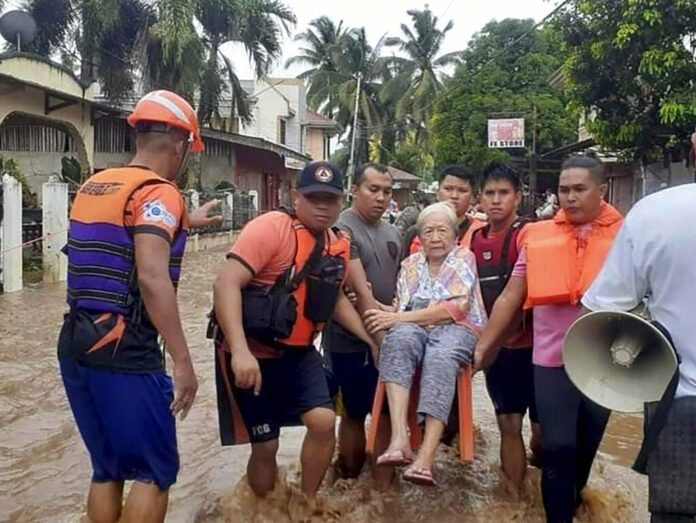
In this image provided by the Philippine Coast Guard, an elderly woman sits on a chair while being carried by coast guard personnel wading through floodwaters in Plaridel, Misamis Occidental province in the southern Philippines, Monday, Dec. 26, 2022. Photo: Philippine Coast Guard via AP

MANILA, Philippines (AP) — Thousands of people in the Philippines remained in emergency shelters in the wake of devastating Christmas flooding, as the death toll climbed to 51 with 19 missing, authorities said Monday.

Images showed residents in southern Misamis Occidental province sweeping away thick mud from the floors of their homes. In the seaside village of Cabol-anonan, coconut trees were uprooted and huts made of light material were nearly flattened.

The Northern Mindanao region bore the brunt of the disaster, reporting 25 deaths, according to the National Disaster Risk Reduction and Management Council. Most of the deaths were from drowning and landslides, and among the missing were fishermen whose boats capsized.

Floods have subsided in most parts, but more than 8,600 people were still in shelters.

Over 4,500 houses were damaged by the floods, along with roads and bridges, and some areas still struggle with disrupted power and water supply, the disaster management agency said.

Ivy Amor Amparo, a hospital worker from Ginoog city in Misamis Oriental province, said that the seaside home of her parents and siblings was damaged by big waves and uprooted trees. Rescuers ferried the mother of two and her relatives in a truck to a nearby shelter, where they spent the Christmas weekend.

She said her father bought materials using the 5,000 pesos ($90) cash aid from the local government to build a temporary shelter for the household, whose seven members are now miserably cramped in the small living room of the damaged house.

“Their things are still with the neighbor and some in our house,” Amparo told The Associated Press in a phone interview. “When they need to take a bath at the community water pump, they have to get their clothes from the neighbor’s house.”

Officials said the government sent food and other essentials, deployed heavy equipment for clearing operations, and provided iron sheets and shelter repair kits. Teams from the capital Manila were sent to assist communities with limited clean water in setting up water filtration systems.

At least 22 cities and municipalities have declared a state of calamity. The move will allow the release of emergency funds and hasten rehabilitation efforts.

A shear line — the point where warm and cold air meet — triggered heavy rains in parts of the country last week, causing the floods, the state weather bureau said.

Advertisement

Helicopters Collide Over Australian Beach, 4 People Dead

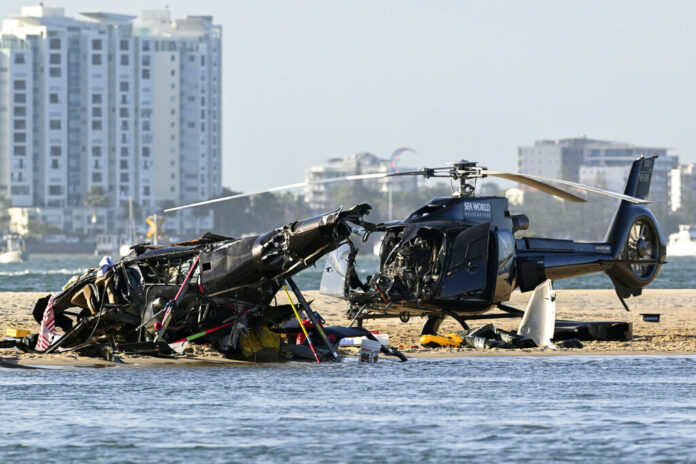
Two cashed helicopters sit on the sand at a collision scene near Seaworld, on the Gold Coast, Australia, Monday, Jan. 2, 2023. Photo: Dave Hunt / AAP Image via AP

MELBOURNE, Australia (AP) — Two helicopters collided in an Australian tourist hotspot Monday afternoon, killing four people and critically injuring three others in a crash that drew emergency aid from beachgoers enjoying the water during the southern summer.

One helicopter was taking off and the other landing when they collided near the Sea World theme park in Main Beach, a northern beach on the Gold Coast, Gary Worrell, Queensland state police acting inspector, said at a news conference.

One helicopter landed safely on a sandbank, but debris from the other was spread across an area police described as difficult to access.

The dead and three most seriously injured people were all in the crashed helicopter. The pilot was killed and three of its six passengers.

“Members of the public and police tried to remove the people and they commenced first aid and tried to get those people to safety from an airframe that was upside down,” Worrell said.

“(People on) Jet Skis, family boaters, ordinary members of the public rushed to assist these people.”

Passengers in the other helicopter, which lost its windscreen in the crash, also received medical assistance.

Footage of the crash showed a helicopter shortly after takeoff being clipped by another helicopter flying over the water.

Sea World Helicopters, a separate company from the theme park, expressed its condolences and said it was cooperating with the authorities handling the crash investigation.

“We and the entire flying community are devastated by what has happened and our sincere condolences go to all those involved and especially the loved ones and family of the deceased,” the statement said.

The company operated both helicopters. It said in the statement it would not comment further because of the investigation.

A witness named John told Melbourne radio station 3AW that patrons at Sea World heard the crash.

He said staff at the theme park moved swiftly to close off areas closest to the crash.

“There was a massive, massive bang,” he said. “It was just huge. I’m not sure if it was the propellers or whatever hitting against each other. But there was this poor lady and her son near the helipad in tears.”

Queensland Premier Annastacia Palaszczuk said the accident was an “unthinkable tragedy.

“My deepest sympathies are with each of the families and everyone affected by this terrible accident,” she said.

Australian Transport Safety Bureau chief commissioner Angus Mitchell said an investigation into the cause of the crash was underway.

The Gold Coast region is at its busiest in January, the peak time for holidays in Australia’s summer.

___

Story: Courtney Walsh.

Advertisement

Benedict XVI, First Pope To Retire in 600 Years, Dies at 95

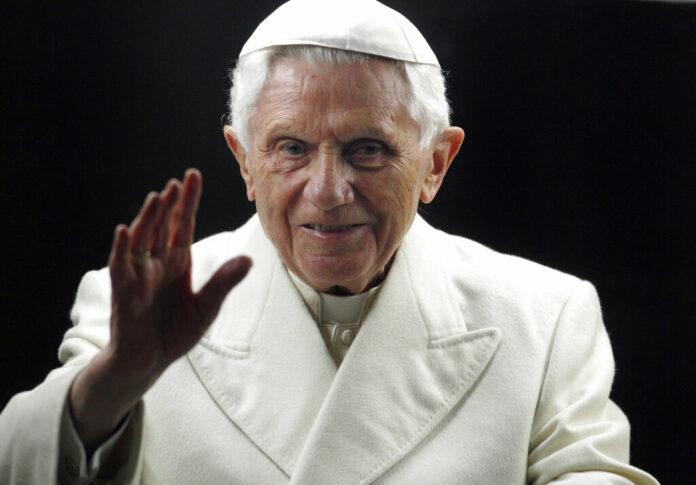
FILE - Pope Benedict XVI blesses the faithful as he arrives in St. Peter's Square at the Vatican to bless the nativity scene on Dec. 31, 2011. Photo: Pier Paolo Cito / AP File

VATICAN CITY (AP) — Pope Emeritus Benedict XVI, the shy German theologian who tried to reawaken Christianity in a secularized Europe but will forever be remembered as the first pontiff in 600 years to resign from the job, died Saturday. He was 95.

Benedict stunned the world on Feb. 11, 2013, when he announced, in his typical, soft-spoken Latin, that he no longer had the strength to run the 1.2 billion-strong Catholic Church that he had steered for eight years through scandal and indifference.

His dramatic decision paved the way for the conclave that elected Francis as his successor. The two popes then lived side-by-side in the Vatican gardens, an unprecedented arrangement that set the stage for future “popes emeritus” to do the same.

And it set the stage for a reigning pope to celebrate the funeral Mass for a retired one. The Vatican announced that Francis would preside over the funeral Thursday in St. Peter’s Square.

A statement from Vatican spokesman Matteo Bruni on Saturday morning said that: “With sorrow I inform you that Pope Emeritus Benedict XVI died today at 9:34 in the Mater Ecclesia Monastery in the Vatican.”

The former Cardinal Joseph Ratzinger had never wanted to be pope, planning at age 78 to spend his final years writing in the “peace and quiet” of his native Bavaria.

Instead, he was forced to follow the footsteps of the beloved St. John Paul II and run the church through the fallout of the clerical sex abuse scandal and then a second scandal that erupted when his own butler stole his personal papers and gave them to a journalist.

Being elected pope, he once said, felt like a “guillotine” had come down on him.

Nevertheless, he set about the job with a single-minded vision to rekindle the faith in a world that, he frequently lamented, seemed to think it could do without God.

“In vast areas of the world today, there is a strange forgetfulness of God,” he told 1 million young people gathered on a vast field for his first foreign trip as pope, to World Youth Day in Cologne, Germany, in 2005. “It seems as if everything would be just the same even without him.”

With some decisive, often controversial moves, he tried to remind Europe of its Christian heritage. And he set the Catholic Church on a conservative, tradition-minded path that often alienated progressives. He relaxed the restrictions on celebrating the old Latin Mass and launched a crackdown on American nuns, insisting that the church stay true to its doctrine and traditions in the face of a changing world. It was a path that in many ways was reversed by his successor, Francis, whose mercy-over-morals priorities alienated the traditionalists who had been so indulged by Benedict.

Benedict’s style couldn’t have been more different from that of John Paul or Francis. No globe-trotting media darling or populist, Benedict was a teacher, theologian and academic to the core: quiet and pensive with a fierce mind. He spoke in paragraphs, not soundbites. He had a weakness for orange Fanta as well as his beloved library; when he was elected pope, he had his entire study moved — as is — from his apartment just outside the Vatican walls into the Apostolic Palace. The books followed him to his retirement home.

Like his predecessor John Paul, Benedict made reaching out to Jews a hallmark of his papacy.

In his 2011 book, “Jesus of Nazareth,” Benedict made a sweeping exoneration of the Jewish people for the death of Christ.

Yet Benedict also offended some Jews who were incensed at his constant defense of and promotion toward sainthood of Pope Pius XII, the World War II-era pope accused by some of having failed to sufficiently denounce the Holocaust.

Benedict’s relations with the Muslim world were also a mixed bag. He riled Muslims with a speech in September 2006 — five years after the Sept. 11 attacks in the United States — in which he quoted a Byzantine emperor who characterized some of the teachings of the Prophet Muhammad as “evil and inhuman,” particularly his command to spread the faith “by the sword.”

But Benedict’s legacy was irreversibly colored by the global eruption in 2010 of the sex abuse scandal, even though as a cardinal he was responsible for turning the Vatican around on the issue.

Benedict had firsthand knowledge of the scope of the problem, since his old office — the Congregation for the Doctrine of the Faith, which he had headed since 1982 — was responsible for dealing with abuse cases.

And once he became pope, Benedict essentially reversed his beloved predecessor, John Paul, by taking action against the 20th century’s most notorious pedophile priest, the Rev. Marcial Maciel.

In October 2012, Benedict’s former butler, Paolo Gabriele, was convicted of aggravated theft after Vatican police found a huge stash of papal documents in his apartment.

Once the “Vatileaks” scandal was resolved, including with a papal pardon of Gabriele, Benedict felt free to take the extraordinary decision that he had hinted at previously: He announced that he would resign rather than die in office as all his predecessors had done for almost six centuries.

“After having repeatedly examined my conscience before God, I have come to the certainty that my strengths due to an advanced age are no longer suited” to the demands of being the pope, he told cardinals.

He made his last public appearances in February 2013 and then boarded a helicopter to the papal summer retreat at Castel Gandolfo, to sit out the conclave in private. Benedict then largely kept to his word that he would live a life of prayer in retirement.

Born April 16, 1927, in Marktl Am Inn, in Bavaria, Benedict wrote in his memoirs of being enlisted in the Nazi youth movement against his will in 1941, when he was 14 and membership was compulsory. He deserted the German army in April 1945, the waning days of the war.

Benedict was ordained, along with his brother, Georg, in 1951. After spending several years teaching theology in Germany, he was appointed bishop of Munich in 1977 and elevated to cardinal three months later by Pope Paul VI.

His brother Georg was a frequent visitor to the papal summer residence at Castel Gandolfo until he died in 2020. His sister died years previously. His “papal family” consisted of Monsignor Georg Gaenswein, his longtime private secretary who was always by his side, another secretary and consecrated women who tended to the papal apartment.

___

Story: Nicole Winfield.

Advertisement

Court in Myanmar Again Finds Suu Kyi Guilty of Corruption

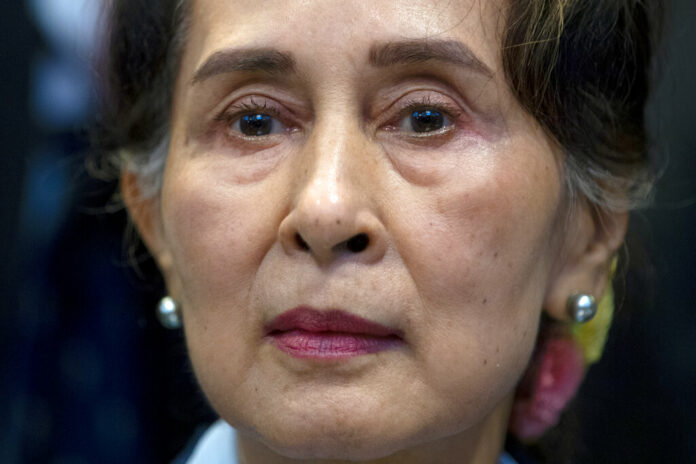
In this Dec. 11, 2019, file photo, Myanmar's leader Aung San Suu Kyi waits to address judges of the International Court of Justice in The Hague, Netherlands. Photo: Peter Dejong, File / AP

BANGKOK (AP) — A court in military-ruled Myanmar on Friday convicted the country’s ousted leader Aung San Suu Kyi of corruption, sentencing her to seven years in prison in the last of a string of criminal cases against her, a legal official said.

The court’s action leaves her with a total of 33 years to serve in prison following a series of politically tinged prosecutions since the army toppled her elected government in February 2021.

The case that ended Friday involved five offenses under the anti-corruption law and followed earlier convictions on seven other corruption counts, each of which was punishable by up to 15 years in prison and a fine.

The 77-year-old Suu Kyi has also been convicted of several other offenses, including illegally importing and possessing walkie-talkies, violating coronavirus restrictions, breaching the country’s official secrets act, sedition and election fraud.

All her previous convictions had landed her with a total of 26 years’ imprisonment.

Suu Kyi’s supporters and independent analysts say the numerous charges against her and her allies are an attempt to legitimize the military’s seizure of power while eliminating her from politics before an election it has promised for next year.

In the five counts of corruption decided Friday, Suu Kyi was alleged to have abused her position and caused a loss of state funds by neglecting to follow financial regulations in granting permission to Win Myat Aye, a Cabinet member in her former government, to hire, buy and maintain a helicopter.

Suu Kyi was the de facto head of government, holding the title of state counsellor. Win Myint, who was president in her government, was a co-defendant in the same case.

Friday’s verdict in the purpose-built courtroom in the main prison on the outskirts of the capital, Naypyitaw, was made known by a legal official who insisted on anonymity for fear of being punished by the authorities. The trial was closed to the media, diplomats and spectators, and her lawyers were barred by a gag order from talking about it.

The legal official said Suu Kyi received sentences of three years for each of four charges, to be served concurrently, and four years for the charge related to the helicopter purchase, for a total of seven years. Win Myint received the same sentences.

The defendants denied all the charges, and her lawyers are expected to appeal in the coming days.

The end of the court cases against Suu Kyi, at least for now, raises the possibility that she would be allowed outside visitors, which she has been denied since she was detained.

The military government has repeatedly denied all requests to meet with her, including from the Association of Southeast Asian Nations, which seeks to help mediate an end to the crisis in Myanmar that some U.N. experts have characterized as a civil war because of the armed opposition to military rule.

The U.N. announced after its special envoy, Noeleen Heyzer, met in August with Senior Gen. Min Aung Hlaing, the head of Myanmar’s military-installed government, that he “expressed openness to arranging a meeting at the right time” between her and Suu Kyi.

A statement from the military government said: ”Depending on the circumstances after the completion of the judiciary process, we will consider how to proceed.”

Suu Kyi is currently being held in a newly constructed separate building in the prison in Naypyitaw, near the courthouse where her trial was held, with three policewomen whose duty is to assist her.

Allowing access to Suu Kyi has been a major demand of the many international critics of Myanmar’s military rulers, who have faced diplomatic and political sanctions for their human rights abuses and suppression of democracy.

State-controlled media reported last year that Win Myat Aye, the figure at the center of the corruption case that ended Friday, used the rented helicopter for only 84.95 hours between 2019 and 2021, but paid for a total of 720 flight hours, which resulted in a loss of more than $3.5 million in funds.

The state-run Global New Light of Myanmar newspaper said he also allegedly failed to follow official procedures in buying the state-owned helicopter, resulting in a further loss of 23 billion Myanmar Kyat ($11 million).

Win Myat Aye is now Minister of Humanitarian Affairs and Disaster Management in the National Unity Government established as a parallel administration by elected legislators who were barred from taking their seats when the military seized power last year. The military has declared NUG to be an outlawed “terrorist organization.”

Suu Kyi, the daughter of Myanmar’s martyred independence hero Gen. Aung San, spent almost 15 years as a political prisoner under house arrest between 1989 and 2010.

Her tough stand against the military rule in Myanmar turned her into a symbol of nonviolent struggle for democracy, and won her the 1991 Nobel Peace Prize.

Her National League for Democracy party initially came to power after easily winning the 2015 general election, ushering in a true civilian government for the first time since a 1962 military coup.

But after coming to power, Suu Kyi was criticized for showing deference to the military while ignoring atrocities it is credibly accused of committing in a 2017 crackdown on the Muslim Rohingya minority.

Her National League for Democracy won a landslide victory again in the 2020 election, but less than three months afterwards, elected lawmakers were kept from taking their seats in Parliament and top members of her government and party were detained.

The army said it acted because there had been massive voting fraud in the 2020 election, but independent election observers did not find any major irregularities.

The army’s takeover in 2021 triggered widespread peaceful protests that security forces tried to crush with deadly forces and that soon erupted into armed resistance.

According to a detailed list compiled by the Assistance Association for Political Prisoners, a non-governmental organization that tracks killings and arrests, Myanmar security forces have killed at least 2,685 civilians and arrested 16,651.

On Wednesday last week, the U.N. Security Council called on Myanmar’s military rulers to release all “arbitrarily detained” prisoners including Suu Kyi in its first resolution on the situation in Myanmar since the army’s seizure of power.

The U.N. resolution also calls for an immediate end to violence in Myanmar and urges all parties in the country to work on starting a dialogue and reconciliation aimed at peacefully resolving the crisis.

Myanmar’s foreign ministry retorted that the situation in the Southeast Asian country solely concerns internal affairs that pose no risk to international peace and security.

___

Story: Grant Peck.

Advertisement

Pelé, Who Died at 82, Was a Sports Star and Cultural Icon

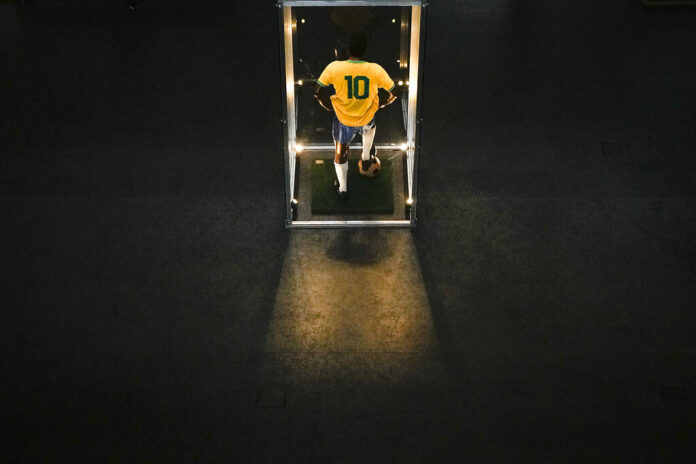
A life size statue of Brazilian soccer legend is on display at Pele Museum in Santos, Brazil, Monday, Dec. 26, 2022. Photo: Matias Delacroix / AP

SAO PAULO (AP) — Pelé will be famous for 15 centuries.

The Brazilian soccer star said Andy Warhol told him that. It was a twist on something else the American artist is widely credited with saying, that “in the future, everyone will be world-famous for 15 minutes.” Warhol made the soccer star’s portrait in 1977, and Pelé took great pride in turning his sports fame into decades of global affection and renown.

For most Brazilians Pelé was a cultural and social phenomenon. He was the country’s statesman without an office, a role he played since age 17. He usually took quiet political positions, if any.

Born poor in a small city in Brazil’s southeast, the South American nation’s first millionaire soccer player appeared in ads for gasoline, toothpaste, sugar-cane liquor, bicycles, soda, soccer shoes and Viagra, among other products.

“Pelé always knew his place,” his former assistant Pepito Fornos said. “If it was a meeting with Queen Elizabeth, Pope John Paul II, Bono Vox or just a kid he met on the street, everyone treated him with reverence. He was the same boy from the countryside, but when he shared a table with people he was quickly the center.”

Edson Arantes do Nascimento, globally known as Pelé, died Thursday at a Sao Paulo hospital. Throughout his career and afterward, he walked a fine line between his fame and taking on social problems.

He founded a charity carrying his name and dedicated to helping children. He became a United Nations goodwill ambassador. He did not publicly dedicate much time to activism for any particular cause, however. Brazil’s first modern Black national hero, Pelé rarely spoke about racism in a country where the rich and powerful tend to hail from the white minority.

Opposing fans taunted Pelé with monkey chants at home and all over the world.

“He said that he would never play if he had to stop every time he heard those chants,” said Angelica Basthi, one of Pelé’s biographers. “He is key for Black people’s pride in Brazil, but never wanted to be a flag-bearer.”

The country’s military dictatorship (1964-1985) tortured and killed its Brazilian opponents. Pelé posed for pictures with government leaders and said they knew what was best.

When Pelé scored the goal he counts as the 1,000th of his career in 1969, he pleaded with authorities “to care for the little children.” He did not assign blame for their misfortune.

Pelé said in a 2021 documentary that he felt pressure from President Emilio Medici to play in the World Cup in Mexico in 1970 and did so even though he had wanted to quit the national team after a poor Brazilian performance in 1966.

Still, the star marveled the world one last time on the sport’s biggest stage. Brazil’s and Pelé’s third World Cup title came when Medici was torturing adversaries, had closed congress and had put a gag on the nation’s top court.

Pelé and every other Brazil player received a Volkswagen from an ally of the dictator upon arrival from Mexico. None of the footballers refused the gift, but the star player was most vehemently critiqued due to his hero status.

“At that moment I did not want to be Pelé,” he said. “We knew a lot of things that were going on in the country.”

Pelé retired from the national team in 1971, left his boyhood club Santos three years later and moved to the United States to play for the New York Cosmos after being lured by then-U.S. Secretary of State Henry Kissinger. During those years, he spoke about love, caring for children and stopping wars.

The Brazilian finished his professional soccer career in 1977 and returned to his country soon after, as democracy was returning.

Pelé’s six-year relationship with popular TV host Xuxa Meneghel also boosted his post-soccer fame nationwide in the early 1980s. She was 17 when they started dating, one year short of legal age in Brazil. The former footballer, 20 years older than Meneghel, had to ask her father’s permission to date.

Pelé became more politically vocal in retirement. He criticized Ricardo Teixeira, then head of the Brazilian soccer confederation and son-in-law of then-FIFA President João Havelange (1916-2016). He was banned from the draw for the 1994 World Cup, attending it as a pundit for TV Globo.

In 1995, Pelé became sports minister in the center-right administration of President Fernando Henrique Cardoso but spent seven years in the job maintaining a relatively low public profile.

For decades, Pelé’s meeting and greeting leaders around the world landed great results for him and his allies. He was one of the key figures of Rio de Janeiro’s winning bid team to host the 2016 Olympics, when he was center stage again at an International Olympic Committee meeting in 2009. Pelé’s old foe Havelange was in his team again.

“Everyone came to see Pelé and then the others had a chance to speak to them too,” former Brazilian President Luiz Inácio Lula da Silva said in an interview after Rio’s victory over Chicago, Tokyo and Madrid. “And who could blame the delegates? I would have wanted the same.”

Pelé later struggled with mobility problems he blamed on failed hip surgery, and made his final major appearance on a wheelchair at the 2018 World Cup in Russia. Argentina’s Diego Maradona kissed his head in front of the cameras. Russian President Vladimir Putin — who this year received a letter from Pelé asking him to stop the invasion of Ukraine — helped carry him around.

“Years ago, I promised to myself that, as long as I can, I will always raise my voice in favor of peace,” Pelé said in the letter dated June 1st.

___

Story: Mauricio Savarese.

Advertisement

Fire at Hotel Casino on Cambodia Border Kills at Least 10

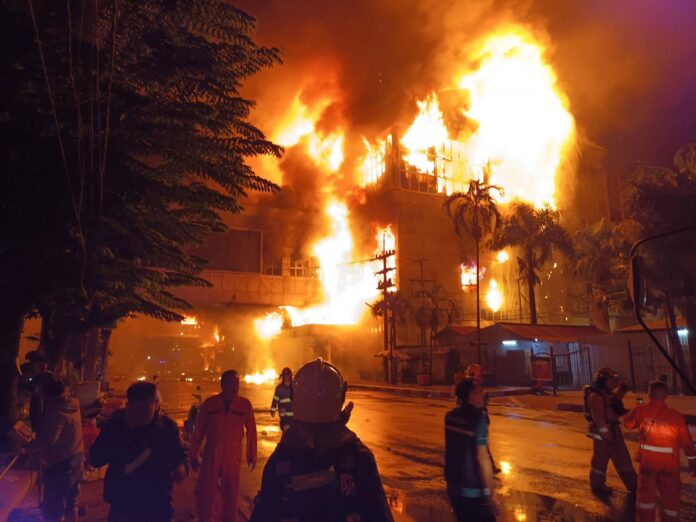
Flames rise from the Grand Diamond City Casino and Hotel in the border town of Poipet, Cambodia on Dec. 29, 2022.

PHNOM PENH, Cambodia (AP) — A fire burning through a Cambodian hotel casino has killed at least 10 people and injured 30 others, police said Thursday, and neighboring Thailand sent firetrucks to help fight the blaze in a bustling border region.

Videos posted on social media showed people apparently jumping from windows after they were trapped by the fire at the Grand Diamond City Casino and Hotel in the border town of Poipet. Thailand’s public broadcaster reported dozens of Thais were trapped inside.

The blaze that started around midnight Wednesday was still burning Thursday morning.

At least 10 people had been killed and another 30 injured, some critically, said Maj. Gen. Sithi Loh, police chief in Banteay Meanchey province.

He said 360 emergency personnel and 11 firetrucks were sent to the scene and rescue teams were looking for victims.

Sithi Loh said the cause of the blaze was not yet known. The casino employed about 400 workers.

Thai PBS reported that 50 Thais, both staff and customers, were trapped inside the casino complex. It reported that Cambodian authorities requested help to deal with the fire from Thailand, which sent five firetrucks and 10 rescue vans.

Poipet in western Cambodia is opposite the more affluent Thai city of Aranyaprathet, and there is busy cross-border trade and tourism.

Thai PBS cited reports that the Aranyaprathet Hospital’s emergency ward was full and other victims had to be sent to other hospitals.

___

Story: Sopheng Cheang.

Advertisement

Lack of Info on China’s COVID Outbreak Stirs Global Concerns

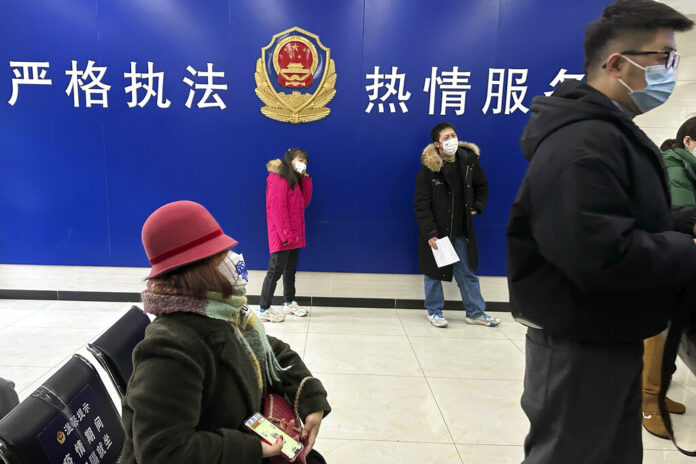
Residents line up at the community police station for document applications including for passports near the words
Residents line up at the community police station for document applications including for passports near the words "Strict law enforcement, enthusiastic service" in Beijing, Wednesday, Dec. 28, 2022. Photo: Ng Han Guan / AP

BEIJING (AP) — Moves by the U.S., Japan and others to mandate COVID-19 tests for passengers arriving from China reflect global concern that new variants could emerge in its ongoing explosive outbreak — and the government may not inform the rest of the world quickly enough.

There have been no reports of new variants to date. But given the country’s track record, the worry is that China may not be sharing data on any signs of evolving strains that could spark fresh outbreaks elsewhere.

The U.S., in announcing a negative test requirement Wednesday for passengers from China, cited both the surge in infections and what it said was a lack of information, including the genomic sequencing of the virus strains in the country.

Japanese Prime Minister Fumio Kishida expressed a similar concern about a lack of information when he announced a testing requirement for passengers from China earlier this week.

More broadly, Director-General Tedros Adhanom Ghebreyesus said recently that the WHO needs more information on the severity of the outbreak in China, particularly regarding hospital and ICU admissions, “in order to make a comprehensive risk assessment of the situation on the ground.”

That dubiousness, tinged with anger, on the part of the international community is a direct outcome of the ruling Communist Party’s sudden and poorly prepared exiting of its hardline policies, said Miles Yu, director of the China Center at the Hudson Institute think tank.

“You can’t conduct the lunacy of zero-covid lockdowns for such a long period of time, which was doomed to fail, and then suddenly unleash a multitude of the infected from a caged China to the world to risk further infections of potentially hundreds of millions more in other countries,” Yu said in an email.

India, South Korea, Taiwan and Italy have also announced various testing requirements for passengers from China. German health authorities are monitoring the situation but have not taken similar pre-emptive steps.

“We have no indication that a more dangerous variant has developed in this outbreak in China that would be grounds to declare a virus variant area, which would bring corresponding travel restrictions,” Health Ministry spokesperson Sebastian Guelde said.

Chinese Foreign Ministry spokeswoman Mao Ning said last week that China has always shared its information responsibly with the WHO and the international community.

“We stand ready to work with the international community in solidarity to tackle the COVID challenge more effectively, better protect people’s lives and health and jointly restore steady economic growth and build a global community of health for all,” she said.

However, in a hardening of China’s rhetoric, Mao’s colleague Wang Wenbin on Wednesday lashed out at critical foreign reporting on China’s new approach.

“This type of rhetoric is driven by bias, intended to smear China and politically motivated,” Wang said at a daily ministry briefing.

China rolled back many of its tough pandemic restrictions earlier this month, allowing the virus to spread in a country that had seen relatively few infections since an initial devastating outbreak in the city of Wuhan in early 2020.

The spiraling of infections led to shortages of cold medicine, long lines at fever clinics, and emergency rooms turning away patients because they were at capacity. Cremations have risen several-fold, with a request from overburdened funeral homes in the city of Guangzhou for families to postpone funeral services until next month.

China has not reported this widely and blamed Western media for hyping up the situation. The government has been accused of controlling information about the outbreak since the start of the pandemic.

An AP investigation showed that China was controlling dissemination of its internal research on the origins of COVID-19 in 2020. A WHO expert group said in a report this year that “key pieces of data” were still missing on the how how the pandemic began and called for a more in-depth investigation.

___

Story: Ken Moritsugu and Huizhong Wu. Wu reported from Taipei, Taiwan. AP writers Geir Moulson in Berlin and video producer Liu Zheng in Beijing contributed.

Advertisement

Why Pallet Wrapping is Important

Why Pallet Wrapping is Important

In the world of logistics and the shipping industry, pallet wrapping is now the industry standard when it comes to shipping pallets. Why has this become the case, and why is pallet wrapping so important when it comes to shipping, whether domestic or internationally? 

There are many advantages to wrapping your pallets before shipping them. But one of the most important reasons is the products that you’re shipping. Wrapping allows these products to arrive at their destination safely and without any tampering. This gives both you and your customer much-needed peace of mind, especially when your product is traveling long distances to reach your customers. 

In the past, pallet wrapping was a service that could only be offered by the biggest companies, mostly due to the large cost involved in the wrapping. These days, however, wrapping pallets has become so commonplace and widely adopted that the material costs involved have dropped significantly, making it affordable for even small companies to do pallet wrapping. 

Here are some of the common reasons to do pallet wrapping

Preventing Damage

Putting your product in a layer of plastic prevents it from succumbing to damage from the environment when it’s being transported. And because the plastic film comes in so many different varieties, you can choose an opaque plastic film that will protect your products from damage from UV (sunlight) or becoming wet from the rain. The plastic film acts as a resilient physical barrier and protects your products from all these environmental factors. 

The thin layer of plastic has the added benefit of preventing your products from damage that can happen in the hectic logistics environment. The plastic film will be able to protect your products from light scuffing that may occur, especially on a ship or a truck where pallets may be loaded in close proximity to one another. 

Another advantage of plastic wrapping is that during the shipping process, pallets are often moved around and sometimes violently depending on the road condition or the weather in the ocean. The plastic film will prevent any items from becoming loose and getting lost. This is especially true of pallets that are stacked high, the plastic film has the added benefit of keeping your pallet stable during the transportation journey. On top of that, the plastic film adds a level of puncture and tear resistance to your pallets. 

Discourages Theft

Another added advantage of wrapping your pallets is that it prevents theft. Thieves are opportunistic criminals and will usually pass on stealing an item if it requires more work. Given that having layers of plastic on your product will add more work for the thieves, it gives your products an added level of protection. 

MMP Corporation produces a range of pallet-wrapping products, including pallet-wrapping machines and different stretch films. Contact us today for your ideal pallet wrapping solution. 

Advertisement

CP Foods improves its suppliers’ capacity to tackle climate change

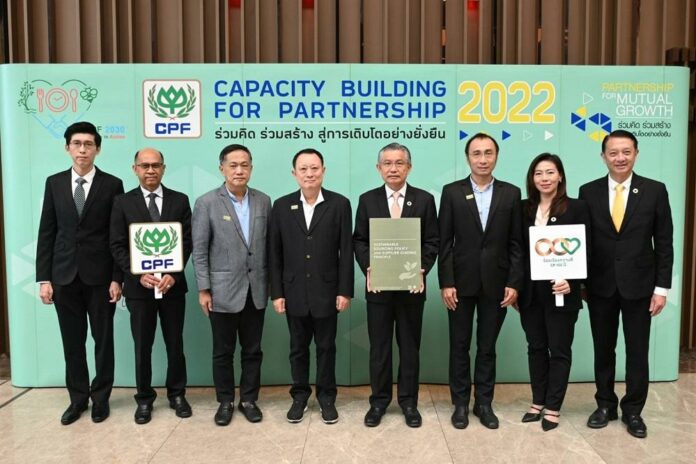
Charoen Pokphand Foods Public Company Limited (CP Foods) held the seminar “CPF Capacity Building for Partnership 2022″ to update more than 200 suppliers on current global sustainable issues, improve their competitiveness, and encourage them to take action against climate change. This program aims to promote CP Foods’ supply chain to become environmentally and socially sustainable.   

image2 24

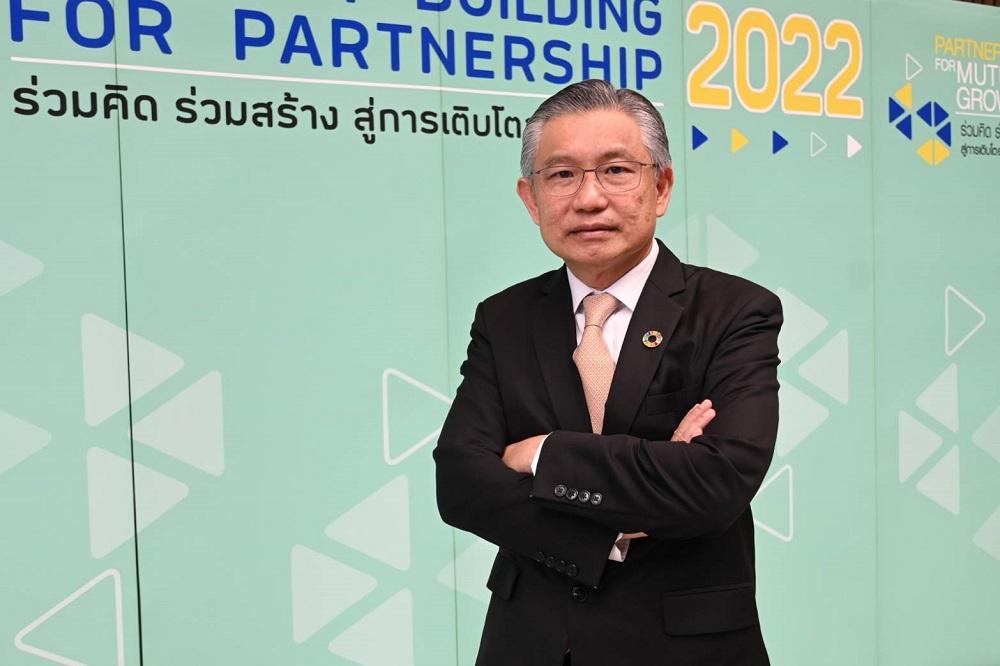
Mr.Siripong Arunrattana, Chief Operating Officer- Livestock Business of CP Foods said the corporation continues to organize conferences for suppliers to share their knowledge and skills on how to adapt their operations to the changing global climate. This endeavor is part of the company’s sustainable sourcing policy and supplier guiding concept, which aims to assure the sourcing of raw materials is slavery-free, and must come from deforestation areas. 

This year, the company’s emphasis on sustainable partnerships in action toward green and smart mutual growth approaches to motivate the value chain’s suppliers to address environmental, social, and corporate governance (ESG) principles in their businesses in response to unprecedent changes and climate change challenges.

CP Foods expects that its suppliers will prioritize smarter and greener operations in line with the current global trend. This will ensure that the company meets worldwide customer demand for products made in an ethical manner. This will provide suppliers with new business options for long-term growth.,” Mr.Siripong said.

Furthermore, CP Foods invited environmental experts from three leading organizations, namely the National Institute of Development Administration (NIDA),  South Pole Thailand, and the Thailand Board of Investment (BOI), to share their knowledge and experience in order to assist suppliers in implementing best practices in their businesses. This is intended to support suppliers in being prepared to address climate change concerns, develop innovations, and embrace new ways of producing ecologically and socially friendly products.

Miss Thuninka Kaewnopparat, deputy managing director of SPK Frozen Products Company Limited, noted that as a supplier to CP Foods supplying fresh, pre-cut fruits and vegetables, the company recognizes the severe effects of global warming on agricultural productivity, which increases operating costs. As a result, the company prioritizes adapting the business to the global context by developing plastic baskets to be used for containing products for transportation instead of using plastic bags, which helps reduce the use of plastic bags in the manufacturing process.

Miss Piyawan Panyanukul, Patum Vegetable Oil Company Limited’s sales manager, said that the company has incorporated sustainable practices into the supply chain and is urging all stakeholders, including farmers who supply raw materials, to establish production processes that meet international standards. Although the adjustment is challenging, everyone will benefit from these efforts.

Advertisement

Hot News

LATEST NEWS

Bangkok
overcast clouds
32.3 ° C
33.3 °
30 °
80 %
5kmh
100 %
Mon
32 °
Tue
37 °
Wed
35 °
Thu
34 °
Fri
32 °