
































25.5 C
Bangkok
Friday, June 19, 2026
Home Blog Page 921

Pelé, Who Died at 82, Was a Sports Star and Cultural Icon

A life size statue of Brazilian soccer legend is on display at Pele Museum in Santos, Brazil, Monday, Dec. 26, 2022. Photo: Matias Delacroix / AP

SAO PAULO (AP) — Pelé will be famous for 15 centuries.

The Brazilian soccer star said Andy Warhol told him that. It was a twist on something else the American artist is widely credited with saying, that “in the future, everyone will be world-famous for 15 minutes.” Warhol made the soccer star’s portrait in 1977, and Pelé took great pride in turning his sports fame into decades of global affection and renown.

For most Brazilians Pelé was a cultural and social phenomenon. He was the country’s statesman without an office, a role he played since age 17. He usually took quiet political positions, if any.

Born poor in a small city in Brazil’s southeast, the South American nation’s first millionaire soccer player appeared in ads for gasoline, toothpaste, sugar-cane liquor, bicycles, soda, soccer shoes and Viagra, among other products.

“Pelé always knew his place,” his former assistant Pepito Fornos said. “If it was a meeting with Queen Elizabeth, Pope John Paul II, Bono Vox or just a kid he met on the street, everyone treated him with reverence. He was the same boy from the countryside, but when he shared a table with people he was quickly the center.”

Edson Arantes do Nascimento, globally known as Pelé, died Thursday at a Sao Paulo hospital. Throughout his career and afterward, he walked a fine line between his fame and taking on social problems.

He founded a charity carrying his name and dedicated to helping children. He became a United Nations goodwill ambassador. He did not publicly dedicate much time to activism for any particular cause, however. Brazil’s first modern Black national hero, Pelé rarely spoke about racism in a country where the rich and powerful tend to hail from the white minority.

Opposing fans taunted Pelé with monkey chants at home and all over the world.

“He said that he would never play if he had to stop every time he heard those chants,” said Angelica Basthi, one of Pelé’s biographers. “He is key for Black people’s pride in Brazil, but never wanted to be a flag-bearer.”

The country’s military dictatorship (1964-1985) tortured and killed its Brazilian opponents. Pelé posed for pictures with government leaders and said they knew what was best.

When Pelé scored the goal he counts as the 1,000th of his career in 1969, he pleaded with authorities “to care for the little children.” He did not assign blame for their misfortune.

Pelé said in a 2021 documentary that he felt pressure from President Emilio Medici to play in the World Cup in Mexico in 1970 and did so even though he had wanted to quit the national team after a poor Brazilian performance in 1966.

Still, the star marveled the world one last time on the sport’s biggest stage. Brazil’s and Pelé’s third World Cup title came when Medici was torturing adversaries, had closed congress and had put a gag on the nation’s top court.

Pelé and every other Brazil player received a Volkswagen from an ally of the dictator upon arrival from Mexico. None of the footballers refused the gift, but the star player was most vehemently critiqued due to his hero status.

“At that moment I did not want to be Pelé,” he said. “We knew a lot of things that were going on in the country.”

Pelé retired from the national team in 1971, left his boyhood club Santos three years later and moved to the United States to play for the New York Cosmos after being lured by then-U.S. Secretary of State Henry Kissinger. During those years, he spoke about love, caring for children and stopping wars.

The Brazilian finished his professional soccer career in 1977 and returned to his country soon after, as democracy was returning.

Pelé’s six-year relationship with popular TV host Xuxa Meneghel also boosted his post-soccer fame nationwide in the early 1980s. She was 17 when they started dating, one year short of legal age in Brazil. The former footballer, 20 years older than Meneghel, had to ask her father’s permission to date.

Pelé became more politically vocal in retirement. He criticized Ricardo Teixeira, then head of the Brazilian soccer confederation and son-in-law of then-FIFA President João Havelange (1916-2016). He was banned from the draw for the 1994 World Cup, attending it as a pundit for TV Globo.

In 1995, Pelé became sports minister in the center-right administration of President Fernando Henrique Cardoso but spent seven years in the job maintaining a relatively low public profile.

For decades, Pelé’s meeting and greeting leaders around the world landed great results for him and his allies. He was one of the key figures of Rio de Janeiro’s winning bid team to host the 2016 Olympics, when he was center stage again at an International Olympic Committee meeting in 2009. Pelé’s old foe Havelange was in his team again.

“Everyone came to see Pelé and then the others had a chance to speak to them too,” former Brazilian President Luiz Inácio Lula da Silva said in an interview after Rio’s victory over Chicago, Tokyo and Madrid. “And who could blame the delegates? I would have wanted the same.”

Pelé later struggled with mobility problems he blamed on failed hip surgery, and made his final major appearance on a wheelchair at the 2018 World Cup in Russia. Argentina’s Diego Maradona kissed his head in front of the cameras. Russian President Vladimir Putin — who this year received a letter from Pelé asking him to stop the invasion of Ukraine — helped carry him around.

“Years ago, I promised to myself that, as long as I can, I will always raise my voice in favor of peace,” Pelé said in the letter dated June 1st.

___

Story: Mauricio Savarese.
Advertisement

Fire at Hotel Casino on Cambodia Border Kills at Least 10

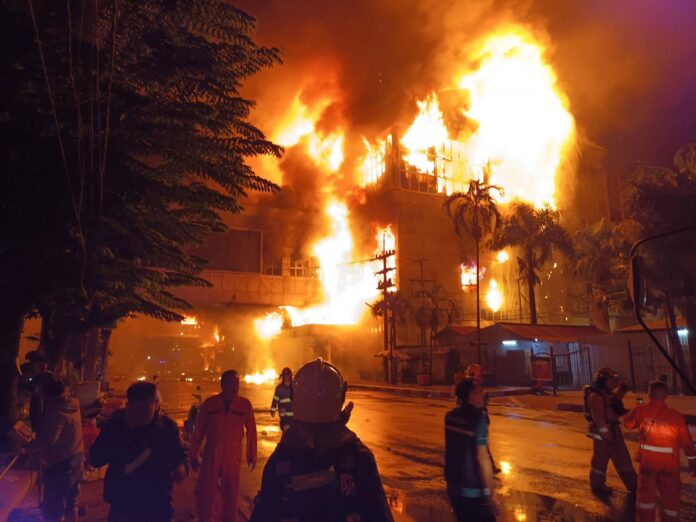
Flames rise from the Grand Diamond City Casino and Hotel in the border town of Poipet, Cambodia on Dec. 29, 2022.

PHNOM PENH, Cambodia (AP) — A fire burning through a Cambodian hotel casino has killed at least 10 people and injured 30 others, police said Thursday, and neighboring Thailand sent firetrucks to help fight the blaze in a bustling border region.

Videos posted on social media showed people apparently jumping from windows after they were trapped by the fire at the Grand Diamond City Casino and Hotel in the border town of Poipet. Thailand’s public broadcaster reported dozens of Thais were trapped inside.

The blaze that started around midnight Wednesday was still burning Thursday morning.

At least 10 people had been killed and another 30 injured, some critically, said Maj. Gen. Sithi Loh, police chief in Banteay Meanchey province.

He said 360 emergency personnel and 11 firetrucks were sent to the scene and rescue teams were looking for victims.

Sithi Loh said the cause of the blaze was not yet known. The casino employed about 400 workers.

Thai PBS reported that 50 Thais, both staff and customers, were trapped inside the casino complex. It reported that Cambodian authorities requested help to deal with the fire from Thailand, which sent five firetrucks and 10 rescue vans.

Poipet in western Cambodia is opposite the more affluent Thai city of Aranyaprathet, and there is busy cross-border trade and tourism.

Thai PBS cited reports that the Aranyaprathet Hospital’s emergency ward was full and other victims had to be sent to other hospitals.

___

Story: Sopheng Cheang.

Advertisement

Lack of Info on China’s COVID Outbreak Stirs Global Concerns

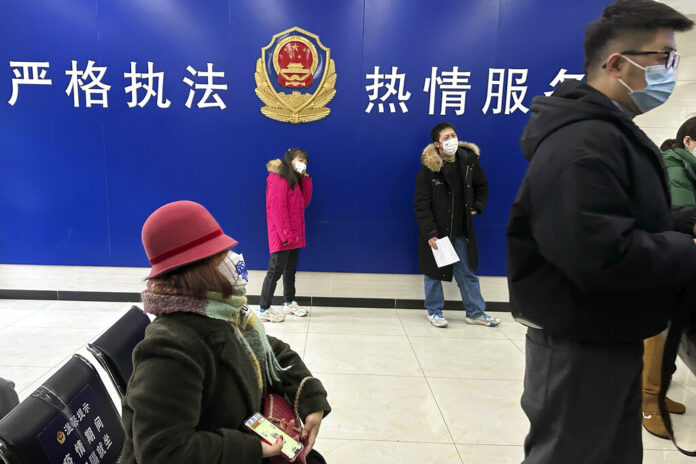
Residents line up at the community police station for document applications including for passports near the words
Residents line up at the community police station for document applications including for passports near the words "Strict law enforcement, enthusiastic service" in Beijing, Wednesday, Dec. 28, 2022. Photo: Ng Han Guan / AP

BEIJING (AP) — Moves by the U.S., Japan and others to mandate COVID-19 tests for passengers arriving from China reflect global concern that new variants could emerge in its ongoing explosive outbreak — and the government may not inform the rest of the world quickly enough.

There have been no reports of new variants to date. But given the country’s track record, the worry is that China may not be sharing data on any signs of evolving strains that could spark fresh outbreaks elsewhere.

The U.S., in announcing a negative test requirement Wednesday for passengers from China, cited both the surge in infections and what it said was a lack of information, including the genomic sequencing of the virus strains in the country.

Japanese Prime Minister Fumio Kishida expressed a similar concern about a lack of information when he announced a testing requirement for passengers from China earlier this week.

More broadly, Director-General Tedros Adhanom Ghebreyesus said recently that the WHO needs more information on the severity of the outbreak in China, particularly regarding hospital and ICU admissions, “in order to make a comprehensive risk assessment of the situation on the ground.”

That dubiousness, tinged with anger, on the part of the international community is a direct outcome of the ruling Communist Party’s sudden and poorly prepared exiting of its hardline policies, said Miles Yu, director of the China Center at the Hudson Institute think tank.

“You can’t conduct the lunacy of zero-covid lockdowns for such a long period of time, which was doomed to fail, and then suddenly unleash a multitude of the infected from a caged China to the world to risk further infections of potentially hundreds of millions more in other countries,” Yu said in an email.

India, South Korea, Taiwan and Italy have also announced various testing requirements for passengers from China. German health authorities are monitoring the situation but have not taken similar pre-emptive steps.

“We have no indication that a more dangerous variant has developed in this outbreak in China that would be grounds to declare a virus variant area, which would bring corresponding travel restrictions,” Health Ministry spokesperson Sebastian Guelde said.

Chinese Foreign Ministry spokeswoman Mao Ning said last week that China has always shared its information responsibly with the WHO and the international community.

“We stand ready to work with the international community in solidarity to tackle the COVID challenge more effectively, better protect people’s lives and health and jointly restore steady economic growth and build a global community of health for all,” she said.

However, in a hardening of China’s rhetoric, Mao’s colleague Wang Wenbin on Wednesday lashed out at critical foreign reporting on China’s new approach.

“This type of rhetoric is driven by bias, intended to smear China and politically motivated,” Wang said at a daily ministry briefing.

China rolled back many of its tough pandemic restrictions earlier this month, allowing the virus to spread in a country that had seen relatively few infections since an initial devastating outbreak in the city of Wuhan in early 2020.

The spiraling of infections led to shortages of cold medicine, long lines at fever clinics, and emergency rooms turning away patients because they were at capacity. Cremations have risen several-fold, with a request from overburdened funeral homes in the city of Guangzhou for families to postpone funeral services until next month.

China has not reported this widely and blamed Western media for hyping up the situation. The government has been accused of controlling information about the outbreak since the start of the pandemic.

An AP investigation showed that China was controlling dissemination of its internal research on the origins of COVID-19 in 2020. A WHO expert group said in a report this year that “key pieces of data” were still missing on the how how the pandemic began and called for a more in-depth investigation.

___

Story: Ken Moritsugu and Huizhong Wu. Wu reported from Taipei, Taiwan. AP writers Geir Moulson in Berlin and video producer Liu Zheng in Beijing contributed.

Advertisement

Why Pallet Wrapping is Important

Why Pallet Wrapping is Important

In the world of logistics and the shipping industry, pallet wrapping is now the industry standard when it comes to shipping pallets. Why has this become the case, and why is pallet wrapping so important when it comes to shipping, whether domestic or internationally? 

There are many advantages to wrapping your pallets before shipping them. But one of the most important reasons is the products that you’re shipping. Wrapping allows these products to arrive at their destination safely and without any tampering. This gives both you and your customer much-needed peace of mind, especially when your product is traveling long distances to reach your customers. 

In the past, pallet wrapping was a service that could only be offered by the biggest companies, mostly due to the large cost involved in the wrapping. These days, however, wrapping pallets has become so commonplace and widely adopted that the material costs involved have dropped significantly, making it affordable for even small companies to do pallet wrapping. 

Here are some of the common reasons to do pallet wrapping

Preventing Damage

Putting your product in a layer of plastic prevents it from succumbing to damage from the environment when it’s being transported. And because the plastic film comes in so many different varieties, you can choose an opaque plastic film that will protect your products from damage from UV (sunlight) or becoming wet from the rain. The plastic film acts as a resilient physical barrier and protects your products from all these environmental factors. 

The thin layer of plastic has the added benefit of preventing your products from damage that can happen in the hectic logistics environment. The plastic film will be able to protect your products from light scuffing that may occur, especially on a ship or a truck where pallets may be loaded in close proximity to one another. 

Another advantage of plastic wrapping is that during the shipping process, pallets are often moved around and sometimes violently depending on the road condition or the weather in the ocean. The plastic film will prevent any items from becoming loose and getting lost. This is especially true of pallets that are stacked high, the plastic film has the added benefit of keeping your pallet stable during the transportation journey. On top of that, the plastic film adds a level of puncture and tear resistance to your pallets. 

Discourages Theft

Another added advantage of wrapping your pallets is that it prevents theft. Thieves are opportunistic criminals and will usually pass on stealing an item if it requires more work. Given that having layers of plastic on your product will add more work for the thieves, it gives your products an added level of protection. 

MMP Corporation produces a range of pallet-wrapping products, including pallet-wrapping machines and different stretch films. Contact us today for your ideal pallet wrapping solution. 

Advertisement

CP Foods improves its suppliers’ capacity to tackle climate change

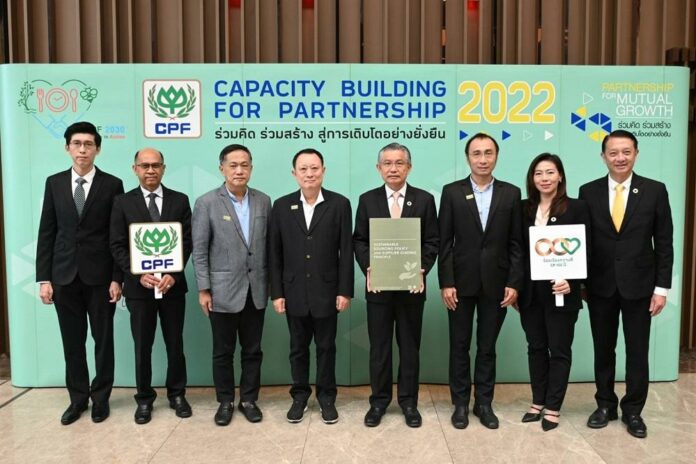
Charoen Pokphand Foods Public Company Limited (CP Foods) held the seminar “CPF Capacity Building for Partnership 2022″ to update more than 200 suppliers on current global sustainable issues, improve their competitiveness, and encourage them to take action against climate change. This program aims to promote CP Foods’ supply chain to become environmentally and socially sustainable.   

image2 24

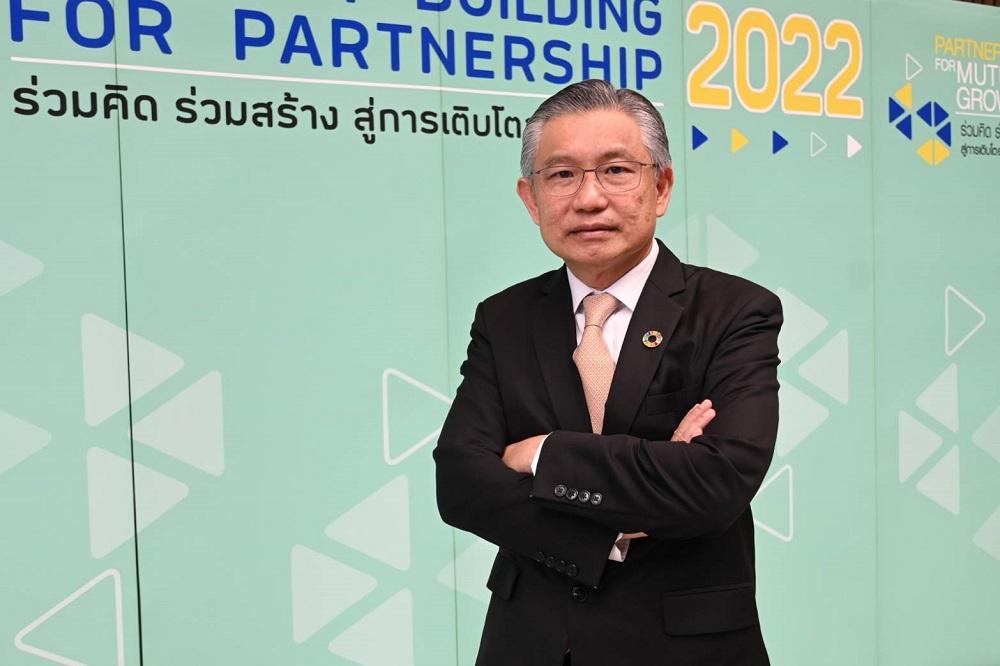
Mr.Siripong Arunrattana, Chief Operating Officer- Livestock Business of CP Foods said the corporation continues to organize conferences for suppliers to share their knowledge and skills on how to adapt their operations to the changing global climate. This endeavor is part of the company’s sustainable sourcing policy and supplier guiding concept, which aims to assure the sourcing of raw materials is slavery-free, and must come from deforestation areas. 

This year, the company’s emphasis on sustainable partnerships in action toward green and smart mutual growth approaches to motivate the value chain’s suppliers to address environmental, social, and corporate governance (ESG) principles in their businesses in response to unprecedent changes and climate change challenges.

CP Foods expects that its suppliers will prioritize smarter and greener operations in line with the current global trend. This will ensure that the company meets worldwide customer demand for products made in an ethical manner. This will provide suppliers with new business options for long-term growth.,” Mr.Siripong said.

Furthermore, CP Foods invited environmental experts from three leading organizations, namely the National Institute of Development Administration (NIDA),  South Pole Thailand, and the Thailand Board of Investment (BOI), to share their knowledge and experience in order to assist suppliers in implementing best practices in their businesses. This is intended to support suppliers in being prepared to address climate change concerns, develop innovations, and embrace new ways of producing ecologically and socially friendly products.

Miss Thuninka Kaewnopparat, deputy managing director of SPK Frozen Products Company Limited, noted that as a supplier to CP Foods supplying fresh, pre-cut fruits and vegetables, the company recognizes the severe effects of global warming on agricultural productivity, which increases operating costs. As a result, the company prioritizes adapting the business to the global context by developing plastic baskets to be used for containing products for transportation instead of using plastic bags, which helps reduce the use of plastic bags in the manufacturing process.

Miss Piyawan Panyanukul, Patum Vegetable Oil Company Limited’s sales manager, said that the company has incorporated sustainable practices into the supply chain and is urging all stakeholders, including farmers who supply raw materials, to establish production processes that meet international standards. Although the adjustment is challenging, everyone will benefit from these efforts.

Advertisement

US Supreme Court Keeps Asylum Limits in Place for Now

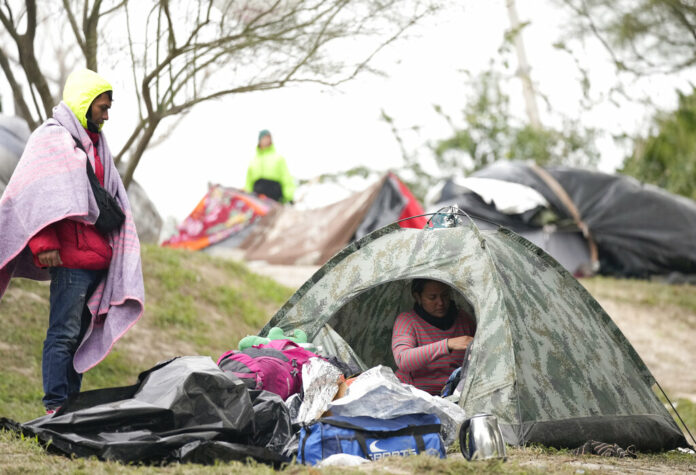
FILE - Migrants from Venezuela prepare for relocation to a refugee shelter in Matamoros, Mexico, Dec. 23, 2022. Photo: Fernando Llano / AP File

WASHINGTON (AP) — The Supreme Court is keeping pandemic-era limits on asylum in place for now, dashing hopes of migrants who have been fleeing violence and inequality in Latin America and elsewhere to reach the United States.

Tuesday’s ruling preserves a major Trump-era policy that was scheduled to expire under a judge’s order on Dec. 21. The case will be argued in February and a stay imposed last week by Chief Justice John Roberts will remain in place until the justices make a decision.

The limits, often known as Title 42 in reference to a 1944 public health law, were put in place under then-President Donald Trump at the beginning of the pandemic, but unwinding it has taken a torturous route through the courts. The U.S. Centers for Disease Control and Prevention attempted to end the policy in April 2022, but a federal judge in Louisiana sided with 19 Republican-led states in May to order it kept in place. Another federal judge in Washington said in November that Title 42 must end, sending the dispute to the Supreme Court. Officials have expelled asylum-seekers inside the United States 2.5 million times on grounds of preventing the spread of COVID-19.

Immigration advocates sued to end the policy, saying it goes against American and international obligations to people fleeing to the U.S. to escape persecution. They’ve also argued that the policy is outdated as coronavirus treatments improve.

The Supreme Court’s 5-4 decision comes as thousands of migrants have gathered on the Mexican side of the border, filling shelters and worrying advocates who are scrambling to figure out how to care for them.

“We are deeply disappointed for all the desperate asylum seekers who will continue to suffer because of Title 42, but we will continue fighting to eventually end the policy,” said Lee Gelernt, a lawyer with the American Civil Liberties Union, which had been arguing to end Title 42′s use.

Andrea Rudnik, co-founder of non-profit immigration aid organization Team Brownsville in South Texas, said the situation at the border is a humanitarian crisis. She said there are thousands of migrants camped on cardboard boxes and in makeshift tents near the entrance of the Gateway International Bridge in Matamoros, Mexico, opposite Brownsville, without food, water, clothing or bathrooms.

“It is very readily becoming a dangerous situation because there’s no toilets,” Rudnik said. “Get that many people together with no bathrooms and you know what you have got.”

States that wanted Title 42 kept in place hailed the outcome. In a press release Tuesday, Iowa Gov. Kim Reynolds praised the court’s decision while saying it’s not a permanent solution to the country’s immigration woes.

“I’m grateful that Title 42 remains in place to help deter illegal entry at the US southern border. But make no mistake — this is only a temporary fix to a crisis that President Biden and his administration have ignored for two years,” she said.

The Supreme Court’s decision said that the court will review the issue of whether the states have the right to intervene in the legal fight over Title 42. Both the federal government and immigration advocates have argued that the states waited too long to intervene and — even if they hadn’t waited so long — that they don’t have sufficient standing to intervene.

In the dissent, Justices Neil Gorsuch and Ketanji Brown Jackson wrote that even if the court were to find the states have the right to intervene and Title 42 was lawfully adopted “… the emergency on which those orders were premised has long since lapsed.”

The justices said the “current border crisis is not a COVID crisis.”

“And courts should not be in the business of perpetuating administrative edicts designed for one emergency only because elected officials have failed to address a different emergency. We are a court of law, not policymakers of last resort,” the justices wrote.

Justices Elena Kagan and Sonia Sotomayor also voted to deny the stay but did not sign a dissent.

White House press secretary Karine Jean-Pierre said Tuesday that President Joe Biden’s administration “will, of course, comply with the order and prepare for the Court’s review.”

“At the same time, we are advancing our preparations to manage the border in a secure, orderly, and humane way when Title 42 eventually lifts and will continue expanding legal pathways for immigration,” Jean-Pierre added. “Title 42 is a public health measure, not an immigration enforcement measure, and it should not be extended indefinitely.”

In November, a federal judge sided with advocates and set a Dec. 21 deadline to end the policy. Conservative-leaning states appealed to the Supreme Court, warning that an increase in migration would take a toll on public services and cause an “unprecedented calamity” that they said the federal government had no plan to deal with.

Roberts, who handles emergency matters that come from federal courts in the nation’s capital, issued a stay to give the court time to more fully consider both sides’ arguments.

The federal government asked the Supreme Court to reject the states’ effort while also acknowledging that ending the restrictions abruptly would likely lead to “disruption and a temporary increase in unlawful border crossings.”

The precise issue before the court is a complicated, largely procedural question of whether the states should be allowed to intervene in the lawsuit. A similar group of states won a lower court order in a different court district preventing the end of the restrictions after the Centers for Disease Control and Prevention announced in April that it was ending use of the policy.

Until the judge’s November order in the advocates’ lawsuit, the states had not sought to take part in that case. But they say that the administration has essentially abandoned its defense of the Title 42 policy and they should be able to step in. The administration has appealed the ruling, though it has not tried to keep Title 42 in place while the legal case plays out.

The Biden administration still has considerable leeway to enforce Title 42 as aggressively or as leniently as it chooses. For example, when a judge ordered last year that Trump’s “Remain in Mexico” policy to make asylum-seekers wait in Mexico for hearings in U.S. immigration court be reinstated, it did so with such limited scope that it had little impact. That policy ended in August after the administration prevailed in the Supreme Court.

The Biden administration’s use of Title 42 includes an opaque, bewildering patchwork of exemptions that are supposed to be for migrants deemed most vulnerable in Mexico, perhaps for gender identity or sexual orientation, or for being specifically threatened with violence. U.S. Customs and Border Protection works with partners it doesn’t publicly identify and doesn’t say how many slots are made available to each.

Mexico is another wild card. The use of Title 42 to quickly expel migrants depends largely on Mexico’s willingness to accept them. Right now Mexico takes expelled migrants from Guatemala, Honduras, El Salvador and Venezuela, in addition to Mexico, but not other countries, such as Cuba. Most asylum seekers who cannot be sent to Mexico are not expelled.

Biden is scheduled meet with Mexican President Andres Manuel López Obrador in Mexico City next month.

___

Story: Rebecca Santana and Elliot Spagat. Spagat contributed from San Diego. Associated Press journalist Acacia Coronado contributed from Austin, Texas.

Advertisement

Lavrov: Ukraine Must Demilitarize or Russia Will Do It

Ukrainian servicemen hold a flag over the coffin of their comrade during the funeral ceremony of Volodymyr Yezhov killed in a battlefield with Russian forces at St. Volodymyr Cathedral in Kyiv, Ukraine, Tuesday, Dec. 27, 2022. Photo: Efrem Lukatsky / AP

KYIV, Ukraine (AP) — Russia’s foreign minister on Tuesday warned anew Ukraine that it must demilitarize, threatening further military action and falsely accusing Kyiv and the West of fueling the war that started with Moscow’s invasion.

Sergey Lavrov said Ukraine must remove any military threat to Russia — otherwise “the Russian army (will) solve the issue.” His comments also reflected persistent unfounded claims by the Kremlin that Ukraine and its Western allies were responsible for the 10-month war, which has killed tens of thousands of people and displaced millions.

Russia launched the war on Feb. 24, alleging a threat to its security and a plot to bring NATO to its doorstep. Lavrov reiterated on Tuesday that the West was feeding the war in Ukraine to weaken Russia, and said that it depends on Kyiv and Washington how long the conflict will last.

“As for the duration of the conflict, the ball is on the side of the (Kyiv) regime and Washington that stands behind its back,” Lavrov told the state Tass news agency. “They may stop senseless resistance at any moment.”

In an apparent reaction, Ukrainian presidential adviser Mykhailo Podolyak tweeted that “Russia needs to face the reality.”

“Neither total mobilization, nor panicky search for ammo, nor secret contracts with Iran, nor Lavrov’s threats will help,” he said. “Ukraine will demilitarize the RF (Russian Federation) to the end, oust the invaders from all occupied territories. Wait for the finale silently…”

A day earlier, Ukraine’s Foreign Minister Dmytro Kuleba told the Associated Press in an interview that his government wants a summit to end the war but that he doesn’t anticipate Russia taking part.

Kuleba said Ukraine wants a “peace” summit within two months with U.N. Secretary-General António Guterres acting as mediator. But he also said that Russia must face a war crimes tribunal before before his country directly talks with Moscow.

Both statements illustrate how complex and difficult any attempts to end the war could be. Ukraine has said in the past that it wouldn’t negotiate with Russia before the full withdrawal of its troops, while Moscow insists its military gains and the 2014 annexation of the Crimean Peninsula cannot be ignored.

Testifying to the hardships of war, families of Ukrainian prisoners of war believed held by Russia on Tuesday said the Christmas holiday season is particularly painful and appealed for more to be done to bring their loves ones back home.

Neither Ukraine nor Russia have revealed the exact numbers of POWs they hold, while hundreds have been released as part of prisoner exchanges. Iryna Latysh’s husband Yevhen was captured exactly 300 days ago, in the early days of the war, and she says Christmas isn’t the same without him.

“We were decorating the Christmas tree together this time last year,” she sobbed. “We put the star together, the decorations.”

U.N. human rights investigators have warned that Ukrainian POWs appear to be facing “systematic” mistreatment — including torture — both when they are captured and when they are transferred into areas controlled by Russian forces or Russia itself.

Meanwhile, fierce fighting continued on Tuesday in the Russia-claimed Donetsk and Luhansk regions that recently have been the scene of the most intense clashes.

Ukraine’s Deputy Defense Minister Hanna Maliar said that Russian forces are trying to encircle the city of Bakhmut in the Donetsk region, but without success. Heavy battles are also underway around the city of Kreminna in the Luhansk region, Luhansk governor Serhiy Haidai said.

In the partially occupied southern Kherson region, Russian forces shelled Ukrainian-held areas 40 times on Monday, wounding one person, Ukrainian authorities said. The city of Kherson itself — which Ukraine retook last month in a major win — was targeted 11 times, said regional administrator Yaroslav Yanushevich.

Since its initial advances at the start of the war 10 months ago, Russia has made few major gains, often pummeling Ukraine’s infrastructure instead and leaving millions without electricity, heating and hot water amid winter conditions.

Lavrov didn’t specify how the Russian army will achieve its goals of demilitarizing and “denazifying” Ukraine — which was Russia’s stated goal when the invasion started in February. The reference to “denazification” comes from Russia’s allegations that the Ukrainian government is heavily influenced by radical nationalist and neo-Nazi groups. The claim is derided by Ukraine and the West.

Lavrov warned further Western support for Ukraine could lead to direct confrontation.

“We keep warning our adversaries in the West about the dangers of their course to escalate the Ukrainian crisis,” he said, adding that “the risk that the situation could spin out of control remains high.”

“The strategic goal of the U.S. and its NATO allies is to win a victory over Russia on the battlefield to significantly weaken or even destroy our country,” he said.

On Tuesday, Russian President Vladimir Putin signed a decree banning oil exports to countries that support a $60-per-barrel price cap that was declared by the European Union and Group of Seven countries in a bid to reduce Moscow’s revenue during wartime. The ban takes effect in February and will run through July.

The price cap is higher than what Russian oil has sold for in recent weeks, so the potential effects of Putin’s ban are uncertain.

___

Story: E. Eduardo Castillo.

Advertisement

S. Korea Launches Jets, Fires Shots After North Flies Drones

FILE - A suspected North Korean drone is viewed at the Defense Ministry in Seoul, South Korea, on June 21, 2017. Photo: Lee Jung-hoon / Yonhap via AP File

SEOUL, South Korea (AP) — South Korea’s military fired warning shots, scrambled fighter jets and flew surveillance assets across the heavily fortified border with North Korea on Monday, after North Korean drones violated its airspace for the first time in five years in a fresh escalation of tensions.

South Korea’s military detected five drones from North Korea crossing the border, and one traveled as far as the northern part of the South Korean capital region, which is about an hour’s drive away, South Korea’s Joint Chiefs of Staff said.

The military responded by firing warning shots and launching fighter jets and attack helicopters to shoot down the North Korean drones. The attack helicopters fired a combined 100 rounds but it wasn’t immediately known if any of the North Korean drones were shot down, according to the Defense Ministry.

There were no immediate reports of civilian damage on the ground in South Korea. One of the North Korean drones returned to the North after three hours in South Korea, while the rest disappeared from South Korean military radars one after another, the Joint Chiefs said.

The North Korean drones and the swift response from the South came three days after the North fired two short-range ballistic missile in the latest in its torrid run of weapons tests this year. Friday’s launches were seen as a protest of the South Korean-U.S. joint air drills that North Korea views as an invasion rehearsal.

One of the South Korean fighter jets scrambled on Monday, a KA-1 light attack plane, crashed during takeoff but its two pilots both ejected safely, defense officials said. They said they also requested civilian airports in and near Seoul to halt takeoffs temporarily.

South Korea also sent surveillance assets near and across the border to photograph key military facilities in North Korea as corresponding measures against the North Korean drone flights, the Joint Chiefs said. It didn’t elaborate, but some observers say that South Korea likely flew unmanned drones inside North Korean territory.

“Our military will thoroughly and resolutely respond to this kind of North Korean provocation,” Maj. Gen. Lee Seung-o, director of operations at the South Korean Joint Chiefs of Staff, told reporters.

South Korea’s public confirmation of any reconnaissance activities inside North Korea is highly unusual and likely reflects a resolve by the conservative government led by President Yoon Suk Yeol to get tough on North Korean provocations. North Korea could respond with more fiery rhetoric or weapons tests or other provocation, some observers say.

It’s the first time for North Korean drones to enter South Korean airspace since 2017, when a suspected North Korean drone was found crashed in South Korea. South Korean military officials said at the time that the drone with a Sony-made camera photographed a U.S. missile defense system in South Korea.

North Korea has touted its drone program, and South Korean officials have previously said the North had about 300 drones. In 2014, several suspected North Korean drones equipped with Japanese-made cameras were found south of the border. Experts said they were low-tech but could be considered a potential security threat.

A White House National Security official said U.S. officials were “consulting closely with the (Republic of Korea) about the nature of this incursion.”

“We recognize the need of the ROK to protect its territorial integrity,” said the official, who was not authorized to be identified and commented on condition of anonymity. “The U.S. commitment to the defense of the Republic of Korea remains ironclad.”

Earlier this month, North Korea claimed to have performed major tests needed to acquire its first spy satellite and a more mobile intercontinental ballistic missile capable of reaching the U.S. mainland. They were among high-tech weapons systems that North Korean leader Kim Jong Un has vowed to introduce along with multi-warheads, underwater-launched nuclear missiles, nuclear-powered submarines and hypersonic missiles.

Kim has also called for the development of reconnaissance drones capable of precision surveillance up to 500 kilometers (310 miles) deep into enemy’s territory. In 2013, he watched a drone attack drill on a simulated South Korean target, according to the North’s state media.

North Korea had earlier released low-resolution photos of South Korean cities as viewed from space, but some experts in South Korea said the images were too crude for surveillance purposes. Such assessments infuriated North Korea, with Kim’s powerful sister Kim Yo Jong issuing a series of derisive terms to insult unidentified South Korean experts and express her anger.

North Korea is to hold a key ruling Workers’ Party conference this week to review past policies and set policy goals. Some experts say that during the meeting, North Korea will likely reaffirm its push to bolster nuclear and missile arsenals to cope with what it calls hostile U.S. policies, such as U.S.-led international sanctions and its regular military training with South Korea.

North Korea would eventually use its boosted nuclear capability as a bargaining chip to win international recognition as a legitimate nuclear state, the relaxing of international sanctions and other concessions, analysts say.

___

Story: Hyung-jin Kim. AP White House Correspondent Zeke Miller in Washington contributed to this report.

Advertisement

China to Scrap COVID-19 Quarantine for Incoming Passengers

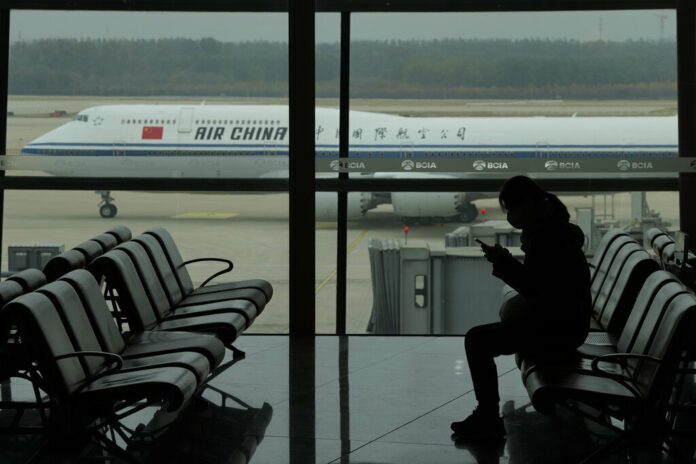
A passenger checks her phone as an Air China passenger jet taxi past at the Beijing Capital International airport in Beijing, Saturday, Oct. 29, 2022. Photo: Ng Han Guan / AP

BEIJING (AP) — China will drop a COVID-19 quarantine requirement for passengers arriving from abroad starting Jan. 8, the National Health Commission announced Monday in the latest easing of the country’s once-strict virus-control measures.

Currently, arriving passengers must quarantine for five days at a hotel, followed by three days at home. That is down from as much as three weeks in the past.

The scrapping of the quarantine requirement is a major step toward fully reopening travel with the rest of the world, which the government severely curtailed in a bid to keep the virus out.

The restrictions have prevented most Chinese from traveling abroad, limited face-to-face diplomatic exchanges and sharply reduced the number of foreigners in China for work and study.

China’s health commission said that steps would be taken to make it easier for some foreigners to enter the country, though it didn’t include tourists. It did indicate that Chinese would be gradually allowed to travel abroad for tourism again, an important source of revenue for hotels and related businesses in many countries.

People coming to China will still need a negative virus test 48 hours before departure and passengers will be required to wear protective masks on board, an online post from the health commission said.

China abruptly dropped many of its pandemic restrictions earlier this month, sparking widespread outbreaks that have swamped hospital emergency rooms and funeral homes.

The move followed rare public protests against the restrictions, which have slowed the economy, putting people out of work and driving restaurants and shops out of business.

For more than 2 ½ years, Chinese authorities enforced a strict zero-COVID approach that became a signature policy of leader Xi Jinping.

The arrival of the fast-spreading omicron variant in late 2021 made the strategy increasingly untenable, requiring ever-wider lockdowns that stymied growth and disrupted lives.

Advertisement

DeeMoney Pairs Up with Visa to Empower Near Real-time, Cross-Border Payment.

The new service, expected to launch in 2023, will allow DeeMoney’s customers to send Thai Baht to over 170 countries in near real-time

Bangkok, 26 December 2022 — SawasdeeShop Co., Ltd, branded as DeeMoney, Thailand’s leading and fastest-growing fintech company specializing in cross-border payments, has announced a partnership with Visa, the world’s leader in digital payments, to integrate Visa Direct solution into DeeMoney’s international payment platform.

The partnership will allow DeeMoney to offer its customers near real-time cross-currency payment service using only the recipient’s Visa card credentials to over 170 countries and territories. The move is in line with DeeMoney’s mission to expand its borderless payment product offerings to reach more people, reaffirming its position as Thailand’s leading fintech. The company will launch this new service within 2023.

An API with near real-time push payment capability, Visa Direct is changing how the world sends and receives funds. The solution helps deliver fast, convenient peer-to-peer payments that are seamlessly integrated with customer accounts and cards. Visa Direct provides banks and fintechs, such as DeeMoney, new opportunities to engage with customers through cross-border P2P transactions. Through DeeMoney’s licensed international payment platform, customers can easily send money to friends, families, or businesses by entering the recipient’s 16-digit Visa card number. The funds will then be credited to the recipient’s eligible Visa credit, debit, or prepaid card within 30 minutes. The recipient can use the received funds at any Visa merchant or ATM. When sent to a Visa credit card, the amount is offset against the outstanding balance.

Screen Shot 2565 12 26 at 15.41.59

“From the get-go, DeeMoney’s goal has always been making international transfers fast, secure and hassle-free for everyone. We know the traditional method for international transfer takes days to process with the need for documents and sensitive financial information,” explained Mr. Aswin Phlaphongphanich, Chief Executive Officer and Founder of DeeMoney (Sawasdeeshop Co., Ltd.).

“With the simplicity, speed, and proven security it offers, Visa is our ideal partner for near real-time payments. This partnership allows our customers to send funds directly to their friends’ or family’s debit card accounts in real-time to more than 170 countries in over 160 transaction currencies. It also enables real-time payments 24/7, including weekends and holidays, which are not feasible with traditional banks.”

“As the world becomes more globalized, we see rising demand for instant, cross-border payments. Visa Direct allows our customers to get money where it needs to go thanks to Visa’s global network,” said Ms. Rasmegh Srisethi, Managing Director of DeeMoney.

“At DeeMoney, we seek strategic partnerships that strengthen our core offerings with the goal of bringing more value to our customers with our comprehensive one-stop financial services and solutions tailored to their global lifestyles. Our landmark partnership with Visa marks an important milestone in our effort to foster innovations and build a digital-first financial ecosystem. We are thrilled that our customers will soon experience this breakthrough service.”

Screen Shot 2565 12 26 at 15.42.04

Incorporated in 2017, DeeMoney is Thailand’s largest and fastest-growing cross-border money transfer service provider. With an annual average growth rate of 300%, the company offers money transfers and foreign currency exchange services for individuals and businesses through its DeeMoney Neo mobile application and the DeeBusiness Portal. These services allow flat-fee inbound and outbound money transfers to 64/43+ countries. The fintech firm recently announced its readiness to transform into Thailand’s first full-fledged independent neobank with the upcoming launch of its licensed cross-currency e-wallet services in Q1/2023 and its ultimate mission to become a Challenger bank within 2025.

With this significant partnership with Visa, Mr. Aswin is confident that the new service will gain traction and help DeeMoney grow its customer base. “Upon its launch, DeeMoney’s Visa-licensed near real-time payment solution will be one ofthe fastest ways to send funds to the rest of the world. In the meantime, we will continue to work with leading partners and explore new opportunities to make financial services easier and more accessible for everyone,” the CEO concluded.

Advertisement

Hot News

LATEST NEWS

Bangkok
overcast clouds
25.5 ° C
25.5 °
25.5 °
93 %
3.2kmh
100 %
Fri
25 °
Sat
32 °
Sun
35 °
Mon
37 °
Tue
37 °