29.4 C
Bangkok
Saturday, June 20, 2026
Home Blog Page 929

Polish-Thai Trade Growing Rapidly.

Trade between Poland and Thailand is fast growing and Poland is an attractive investment destination within the EU for Thai corporations due to its strategic location, reasonable wage and costs of living plus friendly workforce, said speakers at Poland-Thailand Business Forum in Bangkok on Tuesday.

“Keep close eyes on Poland, a country worth monitoring from a business perspective,” said Polish Ambassador to Thailand Waldermar Dubaniowski.

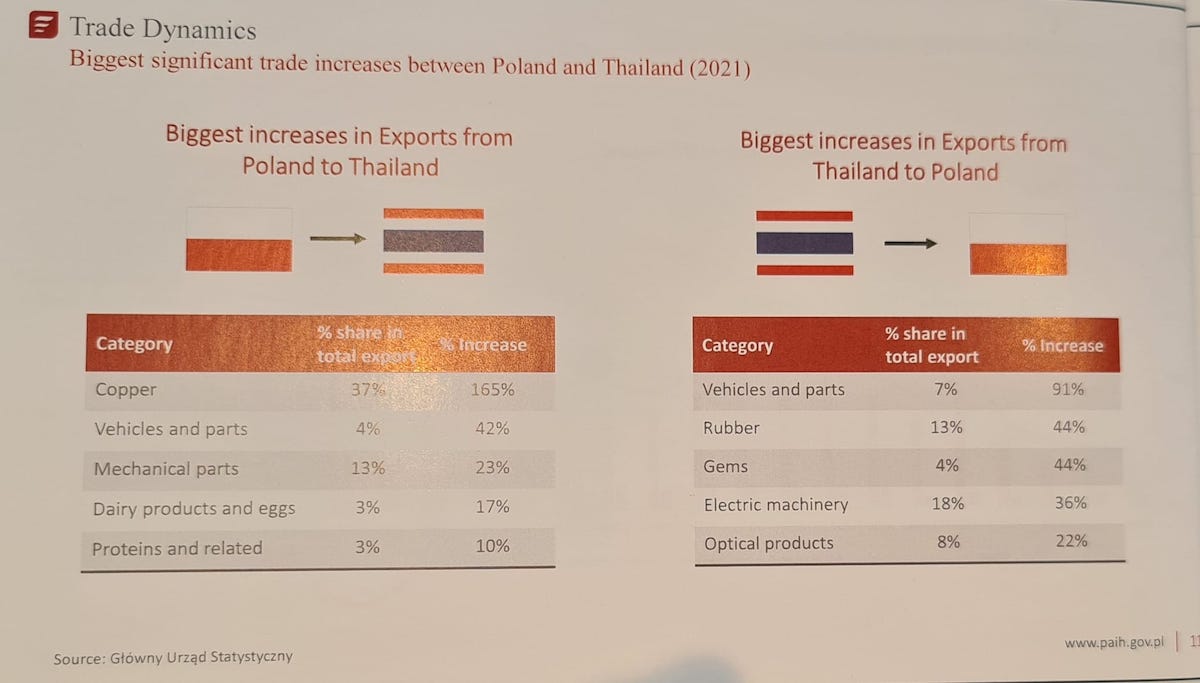
Top Polish exports to Thailand such as copper increased by 165 percent in 2021 while dairy products’ export to the kingdom rose by 17 percent in the same year.

At present, the embassy is also promoting Polish apples in Thailand as Poland is the world’s second largest producers of apple and boasts some of the best apples at competitive prices.

317404036 526123139560199 2015948205112931105 n

Large Thai corporations such as CP Foods and Thai Union Group as well as Indorama Ventures are already established in Poland. As for Polish investment in Thailand, Comarch, an Polish IT firm has its regional office in Bangkok with 20 staff. Royalty points calculated by Home Pro and True rely on Comarch’s programme while Krungsri Bank turns to the Polish firm for its online wealth management system.

Less-known exports include the supply of Polish mozzarella cheese to many restaurants in Bangkok, Pawel Mokrzycki told Khaosod English.

Other speakers believe an EU-Thai FTA once realized, would significantly boost trade between the two nations.

(Photo and text by Pravit Rojanaphruk.)

Advertisement

CP Foods wins four MAT Award 2022 trophies MEAT ZERO receives Grand Prize for Campaign of the Year

Charoen Pokphand Foods Public Company Limited (CP Foods) received 4 awards from Marketing Award of Thailand 2022 (MAT Award 2022), Thailand’s largest marketing campaign competition, which is organized annually by the marketing Association of Thailand (MAT), to recognize Thai organizations’ marketing campaign success.

image3

MEAT ZERO products won Grand Prize for Campaign of the Year, which recognizes excellence in its marketing strategy, execution, creativity, and good results by receiving the highest score of all award categories and the highest votes from the judges, the MAT judges, and the honorary consultant team.

Moreover, MEAT Zero was also granted Gold Award for Strategic Marketing Category to recognize its success in becoming the market leader within 18 months of product launch. Meanwhile, MEAT ZERO and CP Bologna won Bronze Award in Innovations& Martech which recognizes it marketing campaigns that best utilize innovation and technology to propel businesses to a new height.

image2

image4

Anarkawee Choorath, Senior Vice Presidents for Marketing of CP Foods, said we are honored that the plant-based product MEAT ZERO’s marketing campaign was also named Strategic Marketing in the MAT Award 2022. According to the results of a consumer behavior survey conducted for a year, up to 28% of Thai population are flexitarian, which is consistent with the global trend. As a result, the campaign focuses on MEAT ZERO’s health benefits due to it is made with Plant-TEC innovation, a technique for creating a meat-like flavor. The company raises public awareness through appropriate channels and diversifies distribution channels to increase access to the target group.

In addition, two products received the Bronze award in the category of Innovations & Martech. 1.) MEAT ZERO, which uses technology to gain precise insight into target groups behavior, and 2.) CP Bologna from its “CP Bologna MEWTaVerse” virtual event, which had the most participants in the world since this format was introduced. It also enables those interested in Metaverse trends to visit and learn about them. This award recognizes a marketing campaign for two products that uses modern marketing ideas to make a positive impact and achieve a business goal.

Advertisement

Arabs Unite in Celebration as Morocco Advances in World Cup

Morocco fans cheer prior of the World Cup group F soccer match between Canada and Morocco at the Al Thumama Stadium in Doha , Qatar, Thursday, Dec. 1, 2022. Photo: Manu Fernandez / AP

DOHA, Qatar (AP) — First Qatar was out, exiting the World Cup with the worst record of a host country. Then the Saudi national team’s run ended, despite a historic upset against Argentina last week. Finally Tunisia was eliminated, after a dramatic victory against already-qualified France.

Now, at the first World Cup ever to be held in the Middle East, Morocco is the Arab world’s last hope. The fractured region is rallying around the North African nation after its 2-1 win Thursday against Canada that advanced Morocco to the knockout stage of the tournament for the first time since 1986.

Morocco’s success sparked angry street riots in Belgium after a match earlier this week, but on Thursday triggered an outpouring of joy in the Arab world, where local teams are often underdogs. There were celebrations in Gaza City and Cairo. A similar rush of regional goodwill followed Saudi Arabia’s shock win against two-time World Cup winner Argentina last week. Arabs have also backed Qatar’s hosting of the World Cup in the face of harsh Western criticism.

Jubilant Moroccans, Qataris, Saudis, Palestinians and others poured through historic alleys of Souq Waqif in central Doha after Morocco’s win, clad in red and green and waving the Moroccan flag wildly in celebration. The flag illuminated skyscrapers along Doha’s glittering corniche.

Streaming crowds chanted, “Congratulations to us on this beginning! It will go on and on!” The metro near Al Thumama Stadium became a pulsing dance party of Moroccans drumming on the windows and ululating in celebration.

“All the Arabs left the tournament, but we made it up for them and we got our revenge,” said Najwa Boumahraz, a Moroccan living in London. “We are very proud.”

Malika Jellal, a businesswoman from Casablanca, Morocco, said she felt like a celebrity on Thursday.

“Arabs keep coming up to me and saying ‘thank you, you honored us, you saved us all,’” she said.

A pair of Saudi brothers who had flown to Doha to see the match from the eastern province of Dammam said they were so proud of Morocco that they practically forgot their sorrow that their own team was headed home.

“Over this week we feel that as Arabs, we are all one people,” said 23-year-old Saudi Turki al-Qahtani, draped in a Moroccan flag. “We forget about borders in this World Cup.”

___

Story: Isabel Debre.

Advertisement

China Security Forces Are Well-prepared for Quashing Dissent

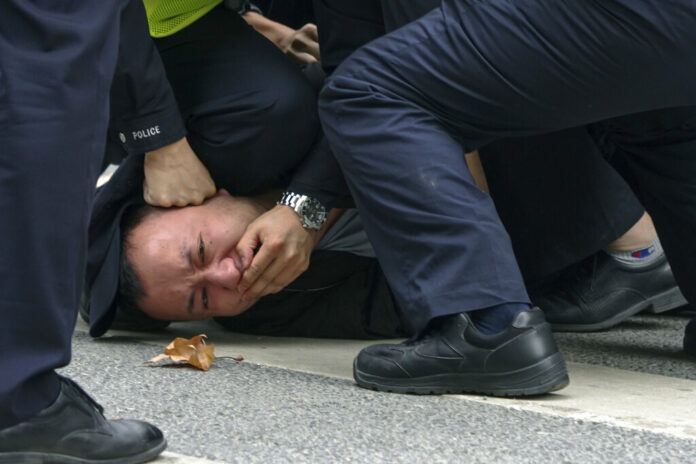
FILE - Policemen pin down and detain a protester during a protest on a street in Shanghai, China on Nov. 27, 2022. Photo: AP File

BEIJING (AP) — When it comes to ensuring the security of their regime, China’s Communist Party rulers don’t skimp.

The extent of that lavish spending was put on display when the boldest street protests in decades broke out in Beijing and other cities, driven by anger over rigid and seemingly unending restrictions to combat COVID-19.

The government has been preparing for such challenges for decades, installing the machinery needed to quash large-scale upheavals.

After an initially muted response, with security personnel using pepper spray and tear gas, police and paramilitary troops flooded city streets with jeeps, vans and armored cars in a massive show of force.

The officers fanned out, checking IDs and searching cellphones for photos, messages or banned apps that might show involvement in or even just sympathy for the protests.

An unknown number of people were detained and it’s unclear if any will face charges. Most protesters focused their anger on the “zero-COVID” policy that seeks to eradicate the virus through sweeping lockdowns, travel restrictions and relentless testing. But some called for the party and its leader Xi Jinping to step down, speech the party considers subversive and punishable by years in prison.

While much smaller in scale, the protests were the most significant since the 1989 student-led pro-democracy movement centered on Beijing’s Tiananmen Square that the regime still views as its greatest existential crisis. With leaders and protesters at an impasse, the People’s Liberation Army crushed the demonstrations with tanks and troops, killing hundreds, possibly thousands.

After the Tiananmen crackdown, the party invested in the means to deal with unrest without resorting immediately to using deadly force.

During a wave of dissent by unemployed workers in the late 1990s and early 2000s, the authorities tested that approach, focusing on preventing organizers in different cities from linking up and arresting the leaders while letting rank-and-file protesters go largely untouched.

At times, they’ve been caught by surprise. In 1999, members of the Falun Gong meditation sect, whose membership came to rival the party’s in size, surrounded the leadership compound in Beijing in a show of defiance that then-leader Jiang Zemin took as a personal affront.

A harsh crackdown followed. Leaders were given heavy prison sentences and members were subject to harassment and sometimes sent to re-education centers.

The government responded with overwhelming force in 2008, when anti-government riots broke out in Tibet’s capital Lhasa and unrest swept through Tibetan regions in western China, authorities responded with overwhelming force.

The next year, a police crackdown on protests by members of the Uyghur Muslim minority in the capital of the northwestern Xinjiang region, Urumqi, led to bloody clashes in which at least 197 were killed, mostly Han Chinese civilians.

In both cases, forces fired into crowds, searched door-to-door and seized an unknown number of suspects who were either sentenced to heavy terms or simply not heard from again. Millions of people were interned in camps, placed under surveillance and forbidden from traveling.

China has been able to muster such resources thanks to a massive internal security budget that reportedly has tripled over the past decade, surpassing that for national defense. Xinjiang alone saw a ten-fold increase in domestic security spending during the early 2000s, according to Western estimates.

The published figure for internal security exceeded the defense budget for the first time in 2010. By 2013, China stopped providing a breakdown. The U.S. think tank Jamestown Foundation estimated that internal security spending had already reached 113% of defense spending by 2016. Annual increases were about double those for national defense in percentage terms and both grew much faster than the economy.

There’s a less visible but equally intimidating, sprawling system in place to monitor online content for anti-government messages, unapproved news and images. Government censors work furiously to erase such items, while propaganda teams flood the net with pro-party messages.

Behind the repression is a legal system tailor-made to serve the one-party state. China is a nation ruled by law rather than governed by the rule of law. Laws are sufficiently malleable to put anyone targeted by the authorities behind bars on any number of vague charges.

Those range from simply “spreading rumors online,” tracked through postings on social media, to the all-encompassing “picking quarrels and provoking trouble,” punishable by up to five years in prison.

Charges of “subverting state power” or “incitement to subvert state power” are often used, requiring little proof other than evidence the accused expressed a critical attitude toward the party-state. Those accused are usually denied the right to hire their own lawyers. Cases can take years to come to trial and almost always result in convictions.

In a further disincentive to rebel, people released from prison often face years of monitoring and harassment that can ruin careers and destroy families.

The massive spending and sprawling internal security network leaves China well prepared to crackdown on dissent. It also suggests “China’s internal situation is far less stable than the leadership would like the world to believe,” China politics expert Dean Cheng of the Heritage Foundation wrote on the Washington, D.C.-based conservative think tank’s website.

It’s unclear how sustainable it is, he said. “This could have the effect of either changing Chinese priorities or creating greater tensions among them.”

Advertisement

Buckingham Palace Household Member Resigns Amid Race Comment

FILE - Britain's Queen Elizabeth II, left, and her then lady in waiting, Lady Susan Hussey arriving at St Mary Magdalene Church, on the royal estate at Sandringham in Norfolk, England, Jan. 23, 2011. Photo: Chris Radburn / PA via AP File

LONDON (AP) — An honorary member of the Buckingham Palace household has resigned after repeatedly asking a Black woman who runs a charity for survivors of domestic abuse what country she “came from,” despite her insistence she was a British national.

The conversation was detailed on Twitter by Ngozi Fulani, chief executive of Sistah Space, an east London refuge that provides specialist support for women of African and Caribbean heritage.

The incident took place at a reception hosted by Camilla, the queen consort, for women working to fight domestic violence.

Fulani said that when she told a household member she was from east London, she was asked, “No, what part of Africa are YOU from?”

The palace said it took the incident extremely seriously and investigated the “unacceptable and deeply regrettable comments.’’

Britain’s Press Association and a number of other media outlets in Britain identified the woman who made the remarks as Lady Susan Hussey, who served as Queen Elizabeth II’s lady in waiting for more than 60 years. She is also a godmother to the Prince of Wales.

Fulani named the member of the palace household only as Lady SH. Buckingham Palace declined comment on the identity of the individual.

The incident will spark concern at the palace following allegations of racism by Meghan, the Duchess of Sussex, who is married to Prince Harry. Meghan, a biracial American, last year said a member of the royal household asked her what color skin her baby would have when she was pregnant with her first child.

Advertisement

Chinese Users Play Cat-and-Mouse With Censors Amid Protests

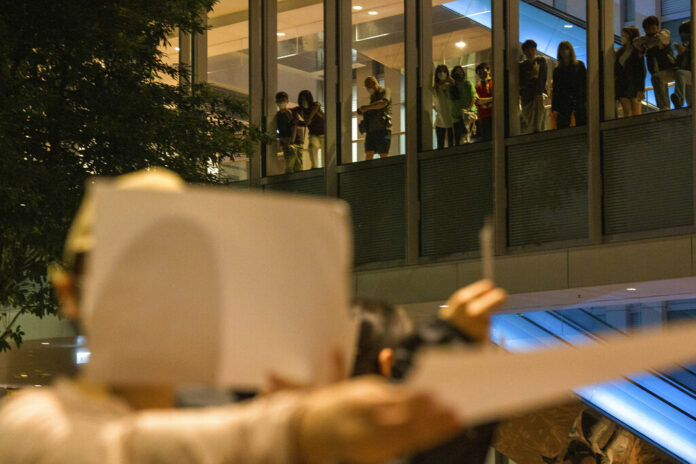
People watch from above at a protest gathering at the University of Hong Kong in Hong Kong, Tuesday, Nov. 29, 2022. Photo: Bertha Wang / AP

HONG KONG (AP) — Videos of hundreds protesting in Shanghai started to appear on WeChat Saturday night. Showing chants about removing COVID-19 restrictions and demanding freedom, they would only stay up for only minutes before being censored.

Elliot Wang, a 26-year-old in Beijing, was amazed.

“I started refreshing constantly, and saving videos, and taking screenshots of what I could before it got censored,” said Wang, who only agreed to be quoted using his English name, in fear of government retaliation, . “A lot of my friends were sharing the videos of the protests in Shanghai. I shared them too, but they would get taken down quickly.”

That Wang was able to glimpse the extraordinary outpouring of grievances highlights the cat-and-mouse game that goes on between millions of Chinese internet users and the country’s gargantuan censorship machine.

Chinese authorities maintain a tight grip on the country’s internet via a complex, multi-layered censorship operation that blocks access to almost all foreign news and social media, and blocks topics and keywords considered politically sensitive or detrimental to the Chinese Communist Party’s rule. Videos of or calls to protest are usually deleted immediately.

But images of protests began to spread on WeChat, a ubiquitous Chinese social networking platform used by over 1 billion, in the wake of a deadly fire in the western city of Urumqi Friday. Many suspected that lockdown measures prevented residents from escaping the flames, something the government denies.

The sheer number of unhappy Chinese users who took to the Chinese internet to express their frustration, together with the methods they used to evade censors led to a brief period of time where government censors were overwhelmed, according to Han Rongbin, an associate professor at the University of Georgia’s Public and International Affairs department.

“It takes censors some time to study what is happening and to add that to their portfolio in terms of censorship, so it’s a learning process for the government on how to conduct censorship effectively,” said Han.

In 2020, the death from COVID-19 of Li Wenliang, a doctor who was arrested for spreading rumors following an attempt to alert others about a “SARS-like” virus, sparked widespread outrage and an outpouring of anger against the Chinese censorship system. Users posted criticism for hours before censors moved to delete posts.

As censors took down posts related to the fire, Chinese internet users often used humor and metaphor to spread critical messages.

“Chinese netizens have always been very creative because every idea used successfully once will be discovered by censors the next time,” said Liu Lipeng, a censor-turned-critic of China’s censorship practices.

Chinese users started posting images of blank sheets of white paper, said Liu, in a silent reminder of words they weren’t allowed to post.

Others posted sarcastic messages like “Good good good sure sure sure right right right yes yes yes,” or used Chinese homonyms to evoke calls for President Xi Jinping to resign, such as “shrimp moss,” which sounds like the words for “step down” as well as “banana peel”, which has the same initials as Chinese President Xi Jinping.

But within days, censors moved to contain images of white paper. They would have used a range of tools, said Chauncey Jung, a policy analyst who previously worked for several Chinese internet companies based in Beijing.

Most content censorship is not done by the state, Jung said, but outsourced to content moderation operations at private social media platforms, who use a mix of human and AI. Some censored posts are not deleted, but may be made visible only to the author, or removed from search results. In some cases, posts with sensitive key phrases may be published after review.

A search on Weibo Thursday for the term “white paper” turned up mostly posts that were critical of the protests, with no images of a single sheet of blank paper, or of people holding white paper at protests.

It’s possible to access the global internet from China by using technologies such as virtual private networks that disguise internet traffic, but these systems are illegal and many Chinese internet users access only the domestic internet. Wang does not use a VPN.

“I think I can say for all the mainlanders in my generation that we are really excited,” said Wang. “But we’re also really disappointed because we can’t do anything… They just keep censoring, keep deleting, and even releasing fake accounts to praise the cops.”

But the system works well enough to stop many users from ever seeing them. When protests broke out across China over the weekend, Carmen Ou, who lives in Beijing, initially didn’t notice.

Ou learned of the protests only later, after using a VPN service to access Instagram.

“I tried looking at my feed on WeChat, but there was no mention of any protests,” she said. “If not for a VPN and access to Instagram, I might not have found out that such a monumental event had taken place.”

Han, the international affairs professor, said that censorship “doesn’t have to be perfect to be effective”

“Censorship might be functioning to prevent a big enough size of the population from accessing the critical information to be mobilized,” he said.

China’s opaque approach to tamping down the spread of online dissent also makes it difficult to distinguish government campaigns from ordinary spam.

Searching Twitter using the Chinese words for Shanghai or other Chinese cities reveals protest videos, but also also a near-constant flood of new posts showing racy photos of young women. Some researchers proposed that a state-backed campaign could be seeking to drown out news of the protests with “not safe for work” content.

A preliminary analysis by the Stanford Internet Observatory found lots of spam but no “compelling evidence” that it was specifically intended to suppress information or dissent, said Stanford data architect David Thiel.

“I’d be skeptical of anyone claiming clear evidence of government attribution,” Thiel said in an email.

Twitter searches for more specific protest-related terms, such as “Urumqi Middle Road, Shanghai,” produced mainly posts related to the protests.

Israeli data analysis firm Cyabra and another research group that shared analysis with the AP said it was hard to distinguish between a deliberate attempt to drown out protest information sought by the Chinese diaspora and a run-of-the-mill commercial spam campaign.

Twitter didn’t respond to a request for comment. It hasn’t answered media inquiries since billionaire Elon Musk took over the platform in late October and cut back much of its workforce, including many of those tasked with moderating spam and other content. Musk often tweets about how he’s enacting or enforcing new Twitter content rules but hasn’t commented on the recent protests in China.

___

Story: Zen Soo. AP Business Writer Kelvin Chan in London and AP Technology Writer Matt O’Brien in Providence, Rhode Island contributed to this story.


Advertisement

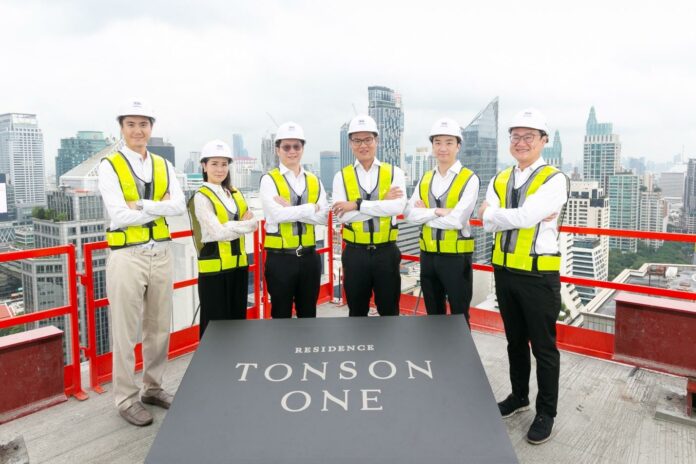
Asset Five and Capstone Asset holds “ Tonson One Residence Topping Off Ceremony”

Mr. Supachoke Panchasarp , Chief Executive Officer of Asset Five Group PLC (3rd from right) together with Mr.  Titiwat Kuvijitsuwan, Managing Partner of Capstone Asset (4th from right) teams up recently at a topping off ceremony to mark the successful completion of the construction of Tonson One Residence at Chidlom. Also present to celebrate the occasion were Mr. Pakin Techavisesa Miss Nuengnuch Kuvijitsuwan Mr. Yu, Daniel Kwan Kin Mr. Nuttawat Kuvijitsuwan.

Tonson One Residence is 80 units super luxury freehold condo in a prime Bangkok location .Sited within 300m from BTS Chidlom station,the 29 Floor building features private lift throughout servicing 1 -, to 2- and 3 bedrooms , all – corner units plus a spectacular Penthouse and Duplex Penthouse. The units come with full facilities and lounges can be adjusted for private meeting and event. The amenities also include a gym with private training room and auto parking service. Tonson One Residence will be ready to move in second quarter of 2023. 

Advertisement

San Francisco Will Allow Police To Deploy Robots That Kill

FILE - San Francisco Police Chief Bill Scott answers questions during a news conference in San Francisco, on May 21, 2019. Photo: Eric Risberg / AP File

SAN FRANCISCO (AP) — Supervisors in San Francisco voted Tuesday to give city police the ability to use potentially lethal, remote-controlled robots in emergency situations — following an emotionally charged debate that reflected divisions on the politically liberal board over support for law enforcement.

The vote was 8-3, with the majority agreeing to grant police the option despite strong objections from civil liberties and other police oversight groups. Opponents said the authority would lead to the further militarization of a police force already too aggressive with poor and minority communities.

Supervisor Connie Chan, a member of the committee that forwarded the proposal to the full board, said she understood concerns over use of force but that “according to state law, we are required to approve the use of these equipments. So here we are, and it’s definitely not a easy discussion.”

The San Francisco Police Department said it does not have pre-armed robots and has no plans to arm robots with guns. But the department could deploy robots equipped with explosive charges “to contact, incapacitate, or disorient violent, armed, or dangerous suspect” when lives are at stake, SFPD spokesperson Allison Maxie said in a statement.

“Robots equipped in this manner would only be used in extreme circumstances to save or prevent further loss of innocent lives,” she said.

Supervisors amended the proposal Tuesday to specify that officers could use robots only after using alternative force or de-escalation tactics, or concluding they would not be able to subdue the suspect through those alternative means. Only a limited number of high-ranking officers could authorize use of robots as a deadly force option.

San Francisco police currently have a dozen functioning ground robots used to assess bombs or provide eyes in low visibility situations, the department says. They were acquired between 2010 and 2017, and not once have they been used to deliver an explosive device, police officials said.

But explicit authorization was required after a new California law went into effect this year requiring police and sheriffs departments to inventory military-grade equipment and seek approval for their use.

The state law was authored last year by San Francisco City Attorney David Chiu while he was an assembly member. It is aimed at giving the public a forum and voice in the acquisition and use of military-grade weapons that have a negative effect on communities, according to the legislation.

A federal program has long dispensed grenade launchers, camouflage uniforms, bayonets, armored vehicles and other surplus military equipment to help local law enforcement.

In 2017, then-President Donald Trump signed an order reviving the Pentagon program after his predecessor, Barack Obama, curtailed it in 2015, triggered in part by outrage over the use of military gear during protests in Ferguson, Missouri, after the shooting death of Michael Brown.

San Francisco police said late Tuesday that no robots were obtained from military surplus, but some were purchased with federal grant money.

Like many places around the U.S., San Francisco is trying to balance public safety with treasured civilian rights such as privacy and the ability to live free of excessive police oversight. In September, supervisors agreed to a trial run allowing police to access in real time private surveillance camera feeds in certain circumstances.

Debate on Tuesday ran more than two hours with members on both sides accusing the other of reckless fear mongering.

Supervisor Rafael Mandelman, who voted in favor of the policy authorization, said he was troubled by rhetoric painting the police department as untrustworthy and dangerous.

“I think there’s larger questions raised when progressives and progressive policies start looking to the public like they are anti-police,” he said. “I think that is bad for progressives. I think it’s bad for this Board of Supervisors. I think it’s bad for Democrats nationally.”

Board President Shamann Walton, who voted against the proposal, pushed back, saying it made him not anti-police, but “pro people of color.”

“We continuously are being asked to do things in the name of increasing weaponry and opportunities for negative interaction between the police department and people of color,” he said. “This is just one of those things.”

The San Francisco Public Defender’s office sent a letter Monday to the board saying that granting police “the ability to kill community members remotely” goes against the city’s progressive values. The office wanted the board to reinstate language barring police from using robots against any person in an act of force.

On the other side of the San Francisco Bay, the Oakland Police Department has dropped a similar proposal after public backlash.

The first time a robot was used to deliver explosives in the U.S. was in 2016, when Dallas police sent in an armed robot that killed a holed-up sniper who had killed five officers in an ambush.

___

Story: Janie Har.

Advertisement

China Vows Crackdown on ‘Hostile Forces as Public Tests Xi

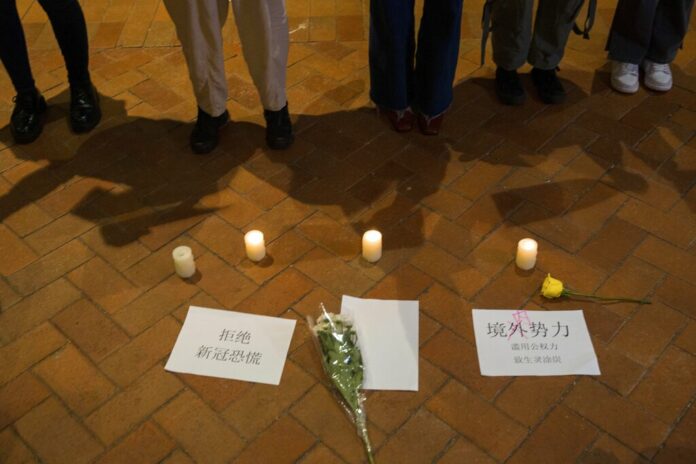
Papers with the words
Papers with the words "Refuse COVID terror" and "Not foreign forces but internal forces" are placed on the ground near protesters during a gathering at the University of Hong Kong in Hong Kong, Tuesday, Nov. 29, 2022. Photo: Bertha Wang / AP

BEIJING (AP) — China’s ruling Communist Party has vowed to “resolutely crack down on infiltration and sabotage activities by hostile forces,” following the largest street demonstrations in decades staged by citizens fed up with strict anti-virus restrictions.

The statement from the Central Political and Legal Affairs Commission released late Tuesday comes amid a massive show of force by security services to deter a reoccurrence of the protests that broke out over the weekend in Beijing, Shanghai, Guangzhou and several other cities.

While it did not directly address the protests, the statement serves as a reminder of the party’s determination to enforce its rule.

Hundreds of SUVs, vans and armored vehicles with flashing lights were parked along city streets Wednesday while police and paramilitary forces conducted random ID checks and searched people’s mobile phones for photos, banned apps or other potential evidence that they had taken part in the demonstrations.

The number of people who have been detained at the demonstrations and in follow-up police actions is not known.

The commission’s statement, issued after an expanded session Monday presided over by its head Chen Wenqing, a member of the party’s 24-member Politburo, said the meeting aimed to review the outcomes of October’s 20th party congress.

At that event, Xi granted himself a third five-year term as secretary general, potentially making him China’s leader for life, while stacking key bodies with loyalists and eliminating opposing voices.

“The meeting emphasized that political and legal organs must take effective measures to … resolutely safeguard national security and social stability,” the statement said.

“We must resolutely crack down on infiltration and sabotage activities by hostile forces in accordance with the law, resolutely crack down on illegal and criminal acts that disrupt social order and effectively maintain overall social stability,” it said.

Yet, less than a month after seemingly ensuring his political future and unrivaled dominance, Xi, who has signaled he favors regime stability above all, is facing his biggest public challenge yet.

He and the party have yet to directly address the unrest, which spread to college campuses and the semi-autonomous southern city of Hong Kong, as well as sparking sympathy protests abroad.

Most protesters focused their ire on the “zero-COVID” policy that has placed millions under lockdown and quarantine, limiting their access to food and medicine while ravaging the economy and severely restricting travel. Many mocked the government’s ever-changing line of reasoning, as well as claims that “hostile outside foreign forces” were stirring the wave of anger.

Yet bolder voices called for greater freedom and democracy and for Xi, China’s most powerful leader in decades, as well as the party he leads, to step down — speech considered subversive and punishable with lengthy prison terms. Some held up blank pieces of white paper to demonstrate their lack of free speech rights.

The weekend protests were sparked by anger over the deaths of at least 10 people in a fire on Nov. 24 in China’s far west that prompted angry questions online about whether firefighters or victims trying to escape were blocked by anti-virus controls.

Authorities eased some controls and announced a new push to vaccinate vulnerable groups after the demonstrations, but maintained they would stick to the “zero-COVID” strategy.

The party had already promised last month to reduce disruptions, but a spike in infections swiftly prompted party cadres under intense pressure to tighten controls in an effort to prevent outbreaks. The National Health Commission on Wednesday reported 37,612 cases detected over the previous 24 hours, while the death toll remained unchanged at 5,233.

Beijing’s Tsinghua University, where students protested over the weekend, and other schools in the capital and the southern province of Guangdong sent students home in an apparent attempt to defuse tensions. Chinese leaders are wary of universities, which have been hotbeds of activism including the Tiananmen protests.

Police appeared to be trying to keep their crackdown out of sight, possibly to avoid encouraging others by drawing attention to the scale of the protests. Videos and posts on Chinese social media about protests were deleted by the party’s vast online censorship apparatus.

“Zero-COVID” has helped keep case numbers lower than those of the United States and other major countries, but global health experts including the head of the World Health Organization increasingly say it is unsustainable. China dismissed the remarks as irresponsible.

Beijing needs to make its approach “very targeted” to reduce economic disruption, the head of the International Monetary Fund told The Associated Press in an interview Tuesday.

“We see the importance of moving away from massive lockdowns,” said IMF Managing Director Kristalina Georgieva in Berlin. “So that targeting allows to contain the spread of COVID without significant economic costs.”

Economists and health experts, however, warn that Beijing can’t relax controls that keep most travelers out of China until tens of millions of older people are vaccinated. They say that means “zero-COVID” might not end for as much as another year.

On Wednesday, U.S. Ambassador to China Nicholas Burns said restrictions were, among other things, making it impossible for U.S. diplomats to meet with American prisoners being held in China, as is mandated by international treaty. Because of a lack of commercial airline routes into the country, the Embassy has to use monthly charter flights to move its personnel in and out.

“COVID is really dominating every aspect of life” in China, he said in an online discussion with the Chicago Council on Global Affairs.

On the protests, Burns said the embassy was observing their progress and the government’s response, but said, “We believe the Chinese people have a right to protest peacefully.”

“They have a right to make their views known. They have a right to be heard. That’s a fundamental right around the world. It should be. And that right should not be hindered with, and it shouldn’t be interfered with,” he said.

Burns also referenced instances of Chinese police harassing and detaining foreign reporters covering the protests.

“We support freedom of the press as well as freedom of speech,” he said.

Advertisement

PTT and Siam Piwat join forces to lead business towards social and environmental sustainability goals  

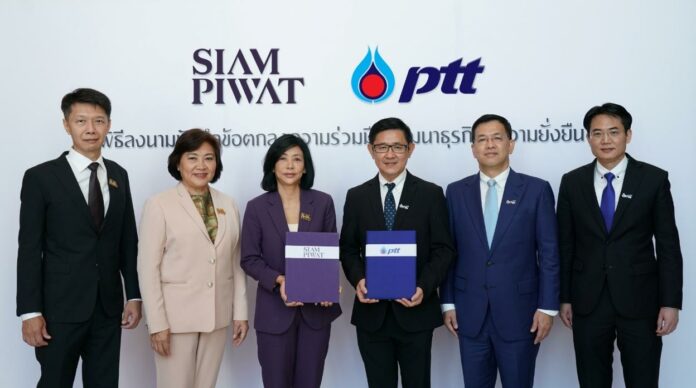
PTT, a national energy company that operates integrated energy and petrochemical businesses, with aiming to promote the development of future energy innovations for the good quality of life of Thai people, and Siam Piwat Group, a leading real estate and retail developer, led by Siam Piwat, owner and operator of Siam Paragon, Siam Center, Siam Discovery, and a joint venture partner of  ICONSIAM and Siam Premium Outlets Bangkok, recently signed a Memorandum of Understanding (MoU) to promote sustainable development in Thailand. This is the first time that the two leading organizations have joined forces in business towards the sustainable development goals. Dr. Buranin Rattanasombat, Chief New Business and Infrastructure Officer, PTT Public Company Limited and Mrs. Mayuree Chaipromprasith, President – Corporate Affairs and Communications at Siam Piwat Co., Ltd. jointly signed an agreement of collaboration covering 3 areas: 1) renewable energy management to achieve net zero emission goal through cooperation with ReAcc Co., Ltd., a PTT Group company, 2) waste management, and 3) development projects that promote future sustainability. The collaborative agreement reaffirms the vision and business goals towards sustainability and promotes the business sector in Thailand to operate in parallel with social and environmental considerations.

Dr. Buranin Rattanasombat, Chief New Business and Infrastructure Officer of PTT, said the collaboration with Siam Piwat will be a stepping stone for PTT to encourage business sectors in switching from present energy sources to renewable ones so that Thailand could attain net zero emission and increase potential for sustainable energy innovation on the world stage in the near future. This is in line with the vision of the organization to drive Thailand towards a low-carbon society and promote business operation to create truly sustainable growth. The pilot project on renewable energy management to achieve net zero emission is at the Exploratorium, Siam Discovery – a shopping center of Siam Piwat Group – is going to be a prototype for running business operation under the sustainability concept by using electricity from 100% renewable energy through the purchase of renewable energy certificates (RECs) from ReAcc, a marketplace for clean energy and carbon neutrality for companies which endeavor to use renewable energy for electricity. In addition to showing the intention of both organizations to strive for using environmentally-friendly energy, this collaboration will help reduce greenhouse gas emissions that cause global warming and supports producers of green energy power in Thailand to generate more revenues from renewable energy in terms of RECs.

Mrs. Mayuree Chaipromprasith, President – Corporate Affairs and Communications at Siam Piwat Co., Ltd said that Siam Piwat has fostered sustainable value in every process to create mutual growth for all sectors, including people, environment, and economy. Creating synergy from Siam Piwat’s strength as a developer of shopping centers that are center of life and creativity, Siam Discovery, a shopping center which operates under Co-creation concept, is utilized to pioneer the concept of focusing on environment by partnering with ReAcc, a company in the PTT Group which aims to create renewable energy innovations. This will enable both companies to develop business models with sustainability concepts, help restore and pass on a livable planet to the next generation, bringing environmental conservation closer into people’s daily lives. In this regard, Siam Piwat has implemented several projects to elevate the environmental management and promote circular economy principles such as the “Siam Piwat 360° Waste Journey to Zero Waste” project to develop a waste management system throughout the whole chain, a collaboration with various alliances to opened Recycle Collection Center, Thailand’s first Drive-Thru waste drop-off point, at Siam Paragon. Another highlight included value creation through collaborating with 12 eco-friendly creators and entrepreneurs to curate eco-friendly products under the brand “ECOTOPIA”, which is a model store that serves eco-friendly lifestyle. For the promotion of clean energy, ICONSIAM has installed the solar rooftop to utilize solar energy, which is a clean energy in place of electricity, while Siam Premium Outlets Bangkok is in the process of developing and installing solar rooftop in an area of ​​more than 20,000 square meters as part of the organization’s goal to reduce carbon emissions and contribute to the creation of a low carbon society for the world.

In addition, PTT and Siam Piwat plan to study the feasibility of expanding cooperation in the development of energy-saving building (Smart Building), installation of EV charging stations, and installation of solar panels. Regarding waste management, Siam Piwat, the first company in the real estate and retail business that creates a role model to promote the principles of the circular economy towards a “zero waste organization” and the 360-degree waste management, has expanded its collaboration with companies in the PTT Group through PTT Global Chemical PCL (GC) for the 5th consecutive year in recycling waste plastics, such as water bottles, plastic boxes, plastic glasses, bottle caps, CD and plastic spoons and forks, to create the eco-friendly Christmas tree, which is being displayed during the Christmas and New Year season, between November 24th 2022 – January 8th 2023 at Discovery Plaza, Siam Discovery.  Moreover, Siam Piwat is also looking for a possible collaboration that will expand the current waste management into ONESIAM to create more tangible value in the future by using the ECOTOPIA store at Siam Discovery as a space to increase opportunities and connect young entrepreneurs with consumers, as part of its efforts to continuously promote sustainable environmental management. 

Advertisement

Hot News

LATEST NEWS

Bangkok
overcast clouds
29.4 ° C
29.4 °
26.6 °
82 %
1.8kmh
98 %
Sat
29 °
Sun
36 °
Mon
37 °
Tue
36 °
Wed
37 °