



























30 C
Bangkok
Saturday, June 20, 2026
Home Blog Page 932

162 Dead as Indonesia Quake Topples Homes, Buildings, Roads

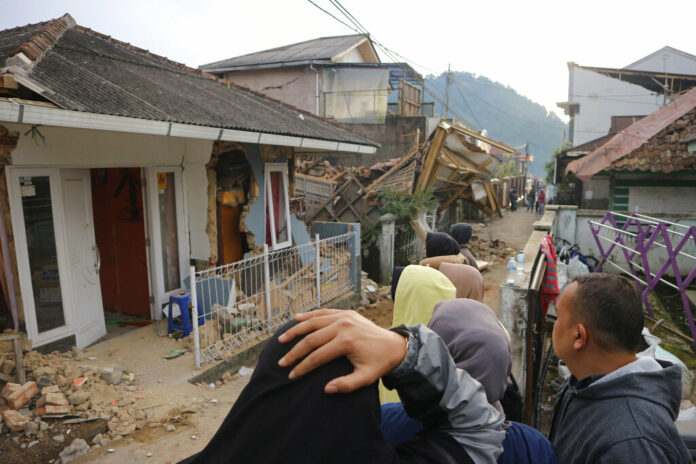
Residents react as they inspect houses damaged by Monday's earthquake in Cianjur, West Java, Indonesia Tuesday, Nov. 22, 2022. Photo: Rangga Firmansyah / AP

CIANJUR, Indonesia (AP) — Rescuers searched for bodies and survivors Tuesday in the rubble of buildings that collapsed in an earthquake that killed at least 162 people on Indonesia’s main island of Java and injured hundreds more, overwhelming hospitals.

Excavators, trucks and other heavy equipment sent overnight reached the hardest-hit city of Cianjur, south of Jakarta. The city, in the country’s most densely populated province of West Java, was near the epicenter of magnitude 5.6 temblor Monday afternoon, which sent terrified residents fleeing into the streets, some covered in blood and debris.

One woman told The Associated Press when the earthquake hit her home in Cianjur, the building started “shaking like it was dancing.”

“I was crying and immediately grabbed my husband and children,” said the woman, who gave her name only as Partinem. The house collapsed shortly after she escaped with her family.

“If I didn’t pull them out we might have also been victims,” she said, gazing over the pile of concrete and timber rubble.

In addition to those killed, authorities reported more than 300 people were seriously hurt and at least 600 more suffered minor injuries. It was not immediately clear how many remain missing.

In the village of Cijedil, northwest of Cianjur, the quake triggered a landslide that blocked streets and buried several houses, and there were reports that 25 people were still buried, said Henri Alfiandi, the chief of the National Search and Rescue Agency.

“We are maximizing operations at several points where it is suspected that there are still casualties. Our team is also trying to reach remote areas,” he said. “For us, all victims are a priority, our goal is to find them and save lives by getting them evacuated as soon as possible and get medical help.”

With hospitals already overwhelmed, patients lay on stretchers and cots in tents set up outside, with intravenous drips in their arms as they awaited further treatment.

Many of the dead were public school students who had finished their classes for the day and were taking extra lessons at Islamic schools when the buildings collapsed, West Java Gov. Ridwan Kamil said.

Initial rescue attempts were hampered by damaged roads and bridges and power blackouts, and a lack of heavy equipment to help move the heavy concrete rubble. By Tuesday, power supplies and phone communications had begun to improve.

Operations were focused on about a dozen locations in Cianjur, where people are still believed trapped, said Endra Atmawidjaja, the public works and housing spokesperson.

“We are racing against time to rescue people,” Atmawidjaja said, adding that seven excavators and 10 large trucks had been deployed from neighboring Bandung and Bogor cities to continue clearing trees and soil that blocked roads.

Cargo trucks carrying food, tents, blankets and other supplies from Jakarta were arriving early Tuesday in temporary shelters. Still, thousands spent the night in the open fearing aftershocks.

“Buildings were completely flattened,” said Dwi Sarmadi, who works for an Islamic educational foundation in a neighboring district.

Roughly 175,000 people live in Cianjur, part of a mountainous district of the same name with more than 2.5 million people. Known for their piety, the people of Cianjur live mostly in towns of one- and two-story buildings and in smaller homes in the surrounding countryside.

Kamil said that more than 13,000 people whose homes were heavily damaged were taken to evacuation centers. Outside the Cianjur Regional Hospital, hundreds waited for treatment.

“I was working inside my office building. The building was not damaged, but as the quake shook very strongly, many things fell. My leg was hit by heavy stuff,” Sarmadi said.

He was waiting near a tent outside the hospital after some overwhelmed clinics were unable to see him. Many people were coming in worse shape. “I really hope they can handle me soon,” he said.

Hasan, a construction worker who, like many Indonesians uses one name, was also one of the survivors who was taken to the hospital.

“I fainted. It was very strong,” Hasan recalled. “I saw my friends running to escape from the building. But it was too late to get out and I was hit by the wall.”

The quake struck at a depth of 10 kilometers (6.2 miles). It also caused panic in the greater Jakarta area, about a three hour-drive away, where high-rises swayed and some people evacuated.

The country of more than 270 million people is frequently struck by earthquakes, volcanic eruptions and tsunamis because of its location on the arc of volcanoes and fault lines in the Pacific Basin known as the “Ring of Fire.”

In February, a magnitude 6.2 earthquake killed at least 25 people and injured more than 460 in West Sumatra province. In January 2021, a magnitude 6.2 earthquake killed more than 100 people and injured nearly 6,500 in West Sulawesi province.

A powerful Indian Ocean quake and tsunami in 2004 killed 230,000 people in a dozen countries, most of them in Indonesia.

___

Story: Andi Jatmiko and Edna Tarigan. Tarigan reported from Jakarta. Associated Press writer Niniek Karmini in Jakarta, Indonesia, contributed to this report.
Advertisement

Nawha Model Restoration of wisdom, textile pattern and the history of The Support Foundation of Her Majesty Queen Sirikit

The Support Foundation of Her Majesty Queen Sirikit is one of the Royal Initiative Projects of Her Majesty Queen Sirikit, the Queen Mother that offers Thai people innumerable benefits. This project was founded in the same place where “The First Silk Weaving Group of Thailand” was established in 1977—Ban Nawha, Nawha District, Nakhon Phanom Province. Her Royal Highness Princess Sirivannavari Nariratana Rajakanya is dedicated to advancing and preserving the great royal aspirations through this initiative at this moment. The princess hopes to carry on this initiative in line with Her Majesty’s vision and intelligence, “Thai fabrics are fun to wear,” which aims to use Thai arts and crafts to reinvest income into the local economy. The princess also hopes to promote and encourage Thai fabrics on the global stage so that they become more contemporary and suitable for people of all ages and occasions.

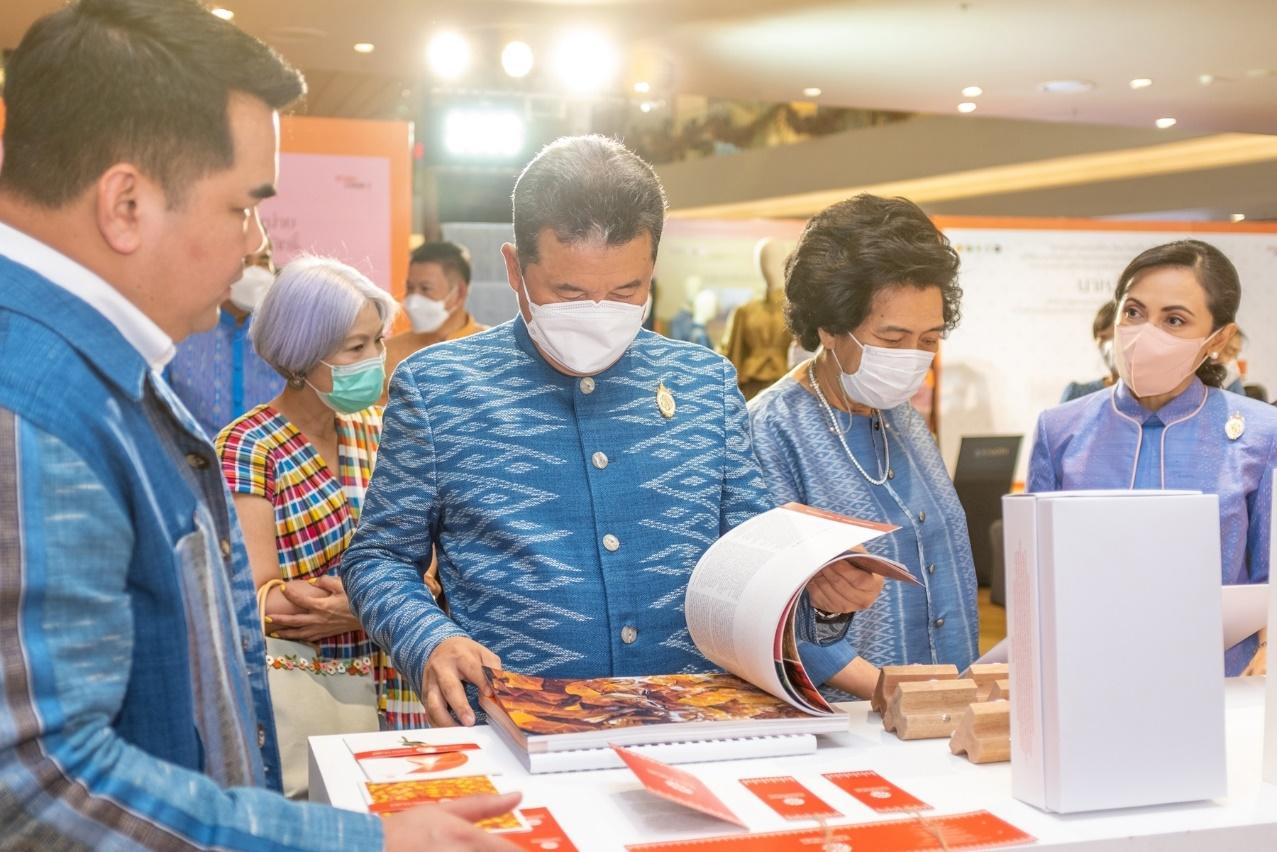
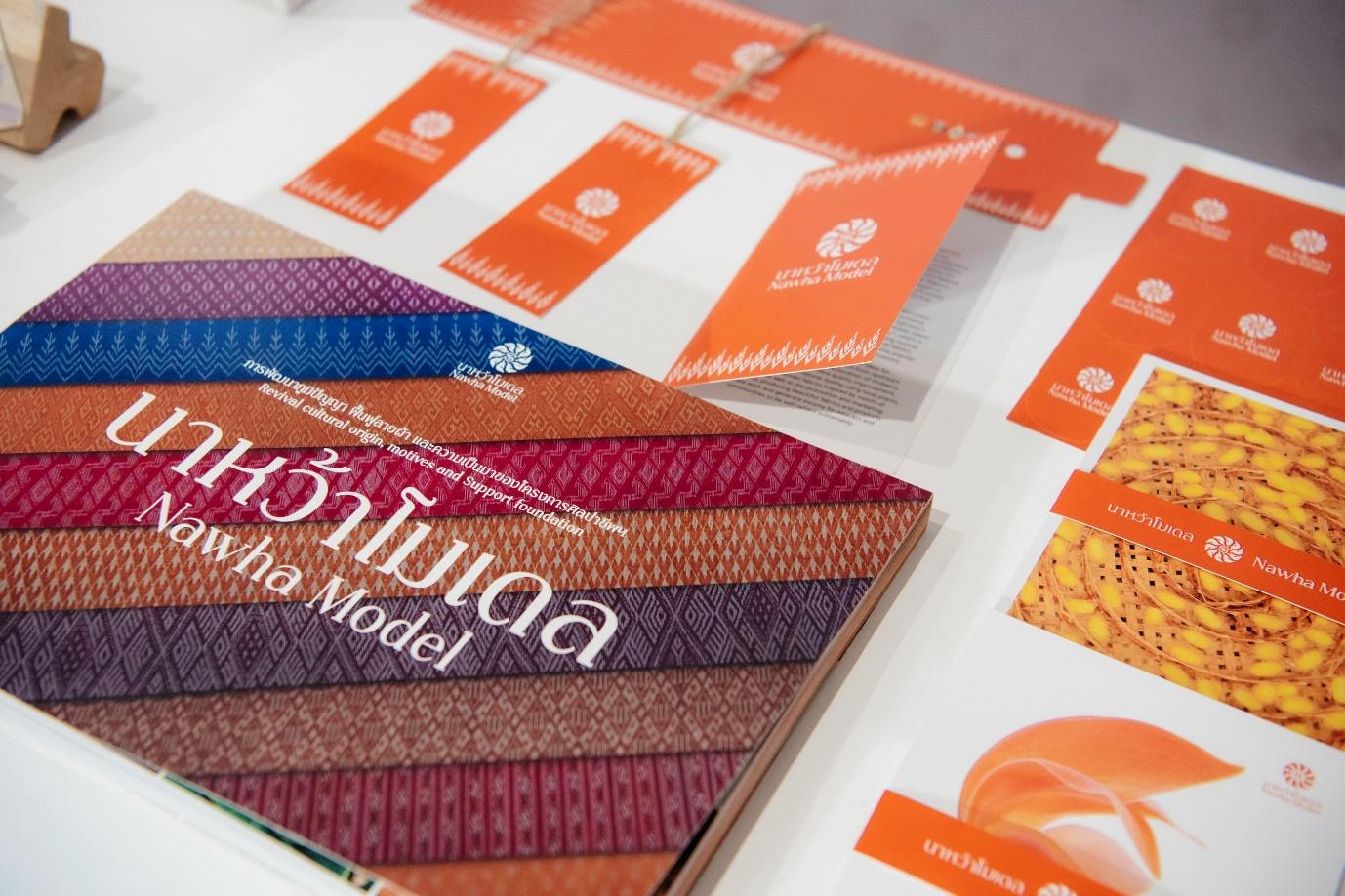
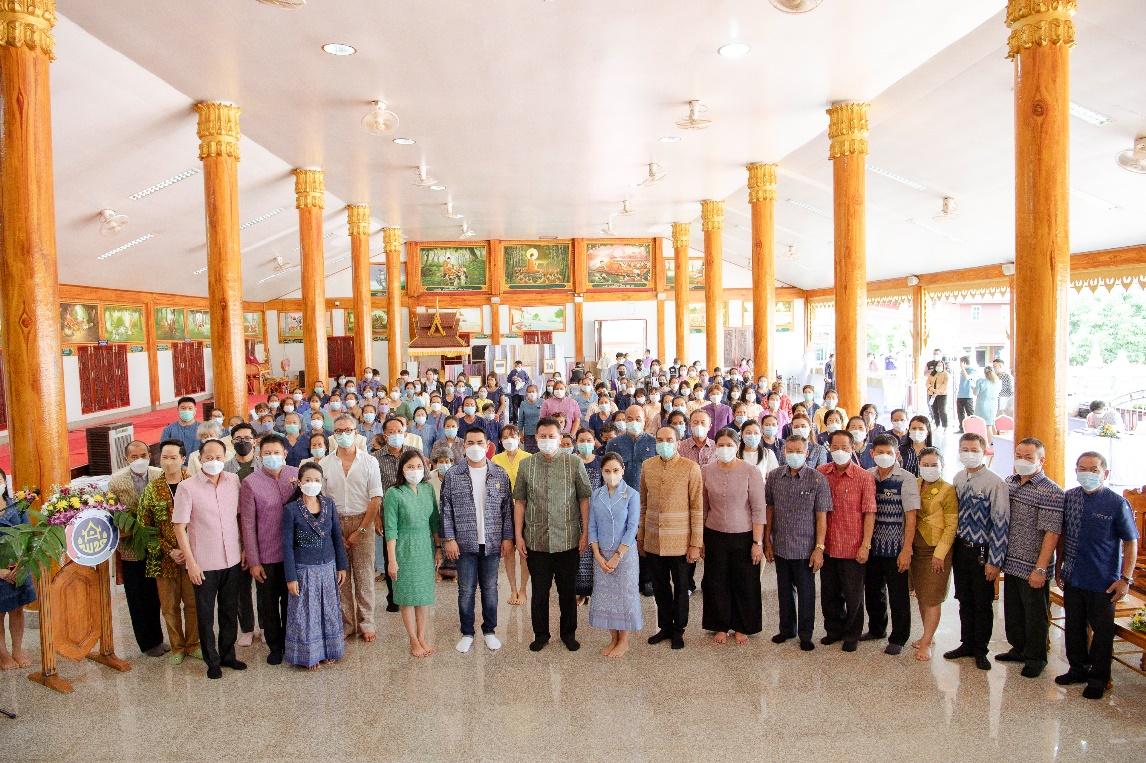
image5 16On January 23rd, 2022. Her Royal Highness Princess Sirivannavari Nariratana Rajakanya visited and observed exhibition of the history of the first silk weaving group of this foundation at Wat That Prasit in the Nawha District of Nakhon Phanom Province then explored The Support Foundation of Her Majesty Queen Siriki’s history, which aspires to develop wisdoms of Thai textile, restoring ancient cloth patterns to the global stage and to be more contemporary. Her Majesty Queen Sirikit aims to contribute incomes back to the Ban Nawha community. This served as the inspiration for the creation of “Nawha Model”. The Queen also generously provided “Nawa Model” a project logo with a profound and impressive meaning to carry on the royal aspirations.

image4 18

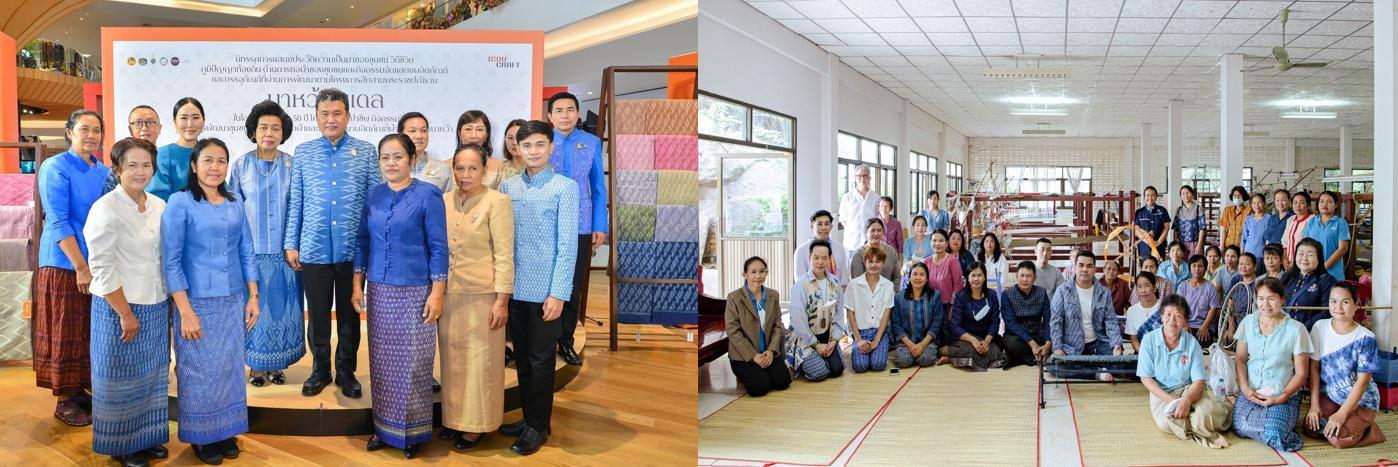
The mission of the Royal Initiative Project’s “Nawha Model” is to revive expertise and textile designs. The Community Development Department and Ministry of Interior, both work to support the initiative of Her Royal Highness Princess Sirivannavari Nariratana Rajakanya in 2022. They are key drivers behind the history of The Support Foundation of Her Majesty Queen Sirikit to assist weavers in being sustainably self-sufficient in the creation of fabric from upstream to downstream. Six weaving groups from the Ban Nawha community participated in the project as follows:

  1. Wat That Prasit Handicraft Center and Local Product Distribution Center
  2. Foundation of the Promotion of Supplementary Occupations and Related Techniques Ban Tha Rua
    3. Wat SriboonRuang local weaving community
  3. Women weaving association of Ban Kock Sa-ard
  4. Ban Nawha local weaving community
  5. The new generation group is the heart of the community

The Community Development Department and Ministry of Interior have organized operational training sessions and site visits for Thai fabric designers who are experts in a variety of fields in order to share ideas, pay close attention to community needs and incorporate knowledge that can be used as a guide for creating fabrics for contemporary products to be more modernized and appreciated by both domestic and the international markets.

image7 3

This makes Nawha model becomes a model project that shows significant success in bringing back wisdom to the community with the purpose to encourage the community to be self-sufficient and have the ability to create products that are globally recognized from upstream to downstream. Also, to create jobs, generate incomes, and sustainably improve lives of the weavers and their families.

image6 9

This is the origin of “Nawha Model Exhibition” on the occasion of the 50th anniversary of The Support Foundation of Her Majesty Queen Sirikit.

image1 23

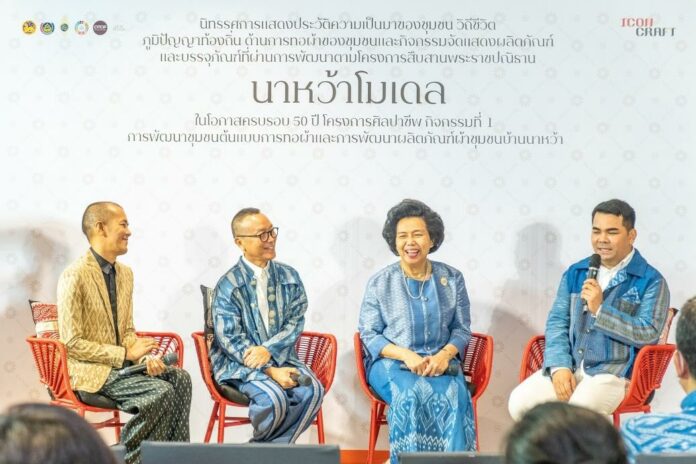
In order to develop the model of weaving community and the development of Ban Nawha community textile products. Mr. Suthipong Chulcharoen, Permanent Secretary of the Ministry of Interior and Dr. Wandee Khunchornyakong Juljarern, President of the Interior wives Association attended the opening ceremony, along with Mr. Thananrat Thanasetthakarn, advisory board member of “Thai fabrics are fun to wear” project and an expert in Thai fabric, Mr. Sirichai Taharanon, an expert in pattern design and development of Thai fabric and members of six weaving groups from the Ban Nawha community on October 21st , 2022 at ICONCRAFT, 5th Floor of ICONSIAM. 

Advertisement

Enjoy “Buy 1 Get 1 Free!” promotional campaign at “Blue Tree Phuket” including free rides on all park attractions in Nov! 

Enjoy “Buy 1 Get 1 Free!” promotional campaign at “Blue Tree Phuket” including free rides on all park attractions in Nov! Don’t miss the world-class 2022 Spartan Asia Pacific Championship and other fun events and happenings.

To welcome in the high season and to celebrate the 2022 Spartan Asia Pacific Championship which is being held from 26-27 November 2022, Blue Tree Phuket is offering “Buy 1 Get 1 Free!” on admission tickets to the Blue Tree Lagoon.

image2 19

Tickets are priced at THB650 for adults and THB250 for children with free rides on all attractions including underwater scooters, wakeboarding and free towels! Whether it is launching yourself in the air on Thailand’s longest Super Fly, ziplining over the clear crystal water or simply paddling on a Stand Up Paddle Board, there is something for everyone at Blue Tree Lagoon especially at the Family Fun Zone where the whole family can enjoy a variety of activities together.

The “Buy 1 Get 1 Free!” promotion runs throughout November 2022 and tickets can be purchased on www.bluetree.fun or through LINE SHOPPING. Just click on https://shop.line.me/@bluetreesales .

#BlueTree #BlueTreePhuket #BlueTreeLagoon #Lagoon  #Buy1Get1Free #Promotion

Advertisement

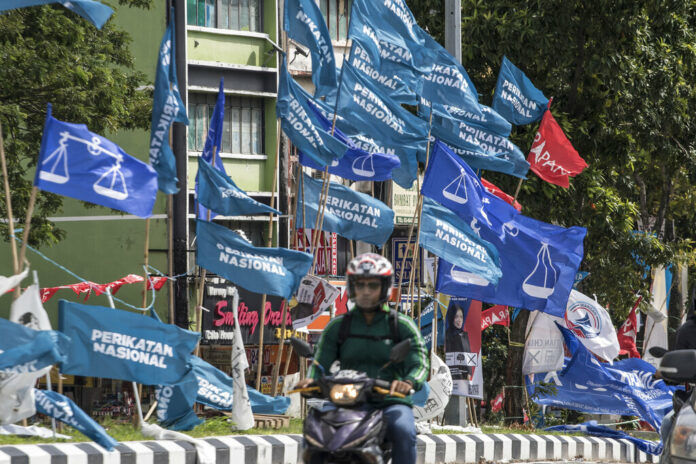
Malaysia’s Nationalist Block Closer To Forming Government

Motorcycles passing by campaign flags of Malaysia's ruling National Front coalition, or Barisan Nasional (blue) and Pakatan Harapan (Alliance of Hope) coalition (red) displayed in Kuala Lumpur, Malaysia, Sunday, Nov. 20, 2022. Photo: Ahmad Yusni / AP

KUALA LUMPUR, Malaysia (AP) — Malaysia’s next government appeared to be leaning to the religious right as a coalition of Malay nationalists won support of an influential bloc on Sunday after tightly fought general elections failed to produce a clear winner. The nation’s king still has to approve any deal.

The unprecedented hung parliament after Saturday’s divisive polls saw the rise of the the Malay-centric Perikatan Nasional, or National Alliance, led by former Prime Minister Muhyiddin Yassin. It stunned many Malaysians who had hoped for stability and unity after political turmoil that has seen three prime ministers since 2018 polls.

Muhyiddin’s alliance was an underdog that enjoyed an unexpected surge of votes with 73 out of 222 parliamentary seats. Its hard-line ally is the Pan-Malaysian Islamic Party, the biggest winner with a haul of 49 seats — more than double what it won in 2018. Known as PAS, it touts Sharia, rules three states and is now the single largest party. Its rise has stoked fears of greater Islamization in the country.

Opposition leader Anwar Ibrahim’s reformist multiethnic alliance topped the race with 82 federal seats, but fell far short of the 112 needed for a majority.

In negotiations Sunday, Muhyiddin’s coalition edged closer to a victory after securing the backing of a political bloc in Sarawak, a state on Borneo island, that won 22 seats. He still needs a nod from another key player, the long-ruling United Malays National Organization, to muster a majority.

The arrangement, if confirmed by the king, means that Muhyiddin will return as prime minister.

UMNO President Ahmad Zahid Hamidi said he hasn’t held any talks with Muhyiddin on the formation of a government. He said candidates from his National Front alliance have signed a pledge to give him the mandate to decide on any political cooperation.

Zahid, who has come under pressure to resign after UMNO’s second drubbing at the polls, warned that any members who violated party rules will be sacked and will have to vacate their parliamentary seat under a new law that bans switching of parties.

His statement came amid a split in the once-powerful alliance that had ruled Malaysia since independence from Britain until corruption scandals brought it down in 2018 . It won only 3 0 seats in its worst-ever performance as many Malays opted for Muhyiddin’s bloc, which has touted itself as a “caring, clean and stable” alternative.

Anwar reiterated Sunday that he had sufficient support from lawmakers for a simple majority but refused to divulge details until King Sultan Abdullah Sultan Ahmad Shah gives his approval. The king’s role is largely ceremonial in Malaysia, but he appoints the person he believes has majority support in Parliament as prime minister.

“With the level of support, I am confident I will be given the chance to lead this country,” he said.

The palace said in a statement that Sultan Abdullah asked political chiefs to submit their choice for prime minister and for the alliance that will be formed for a parliamentary majority by Monday. The monarch said his decision will be final as he urged Malaysians to accept the outcome to ensure a stable government.

“This election had reinforced identity politics. Given that no party has outright majority, the newly formed coalition government will need to unite the nation,” said Amir Fareed Rahim, director of strategy at public affairs at political risk consultancy KRA Group.

Many rural Malays, who form two-thirds of Malaysia’s 33 million people — which includes large minorities of ethnic Chinese and Indians — fear they may lose their rights with greater pluralism under Anwar’s alliance. This, together with corruption in UMNO, has benefited Muhyiddin’s bloc.

Among other key election losers was two-time former Prime Minister Mahathir Mohamad, who at 97 is leading a separate Malay movement. He suffered a shocking defeat to the National Alliance.

Muhyiddin took power in March 2020, defecting from Anwar’s alliance and joining hands with the UMNO-led coalition in a move that triggered the government’s collapse. The partnership was beset by infighting and he resigned after 17 months.

___

Story: Eileen Ng.

Advertisement

Hong Kong Leader Lee Tests Positive for COVID-19 After APEC

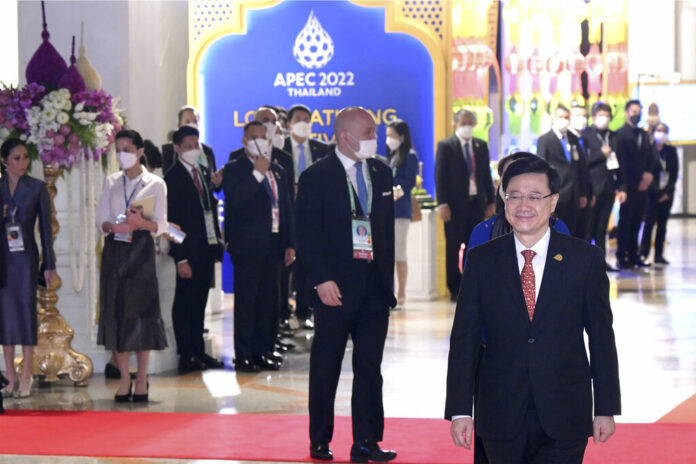
In this photo released by Hong Kong Government Information Services, Hong Kong Chief Executive John Lee, foreground right, attends a gala dinner at the Asia-Pacific Economic Cooperation (APEC) Summit in Bangkok, Thailand on Nov. 17, 2022. Photo: Hong Kong Government Information Services via AP

HONG KONG (AP) — Hong Kong leader John Lee tested positive for COVID-19 after meeting with other regional leaders the Asia-Pacific Economic Cooperation forum in Thailand, the city government said Monday.

Lee tested negative throughout his four-day stay in Bangkok but his test upon his arrival at Hong Kong’s airport on Sunday night was positive, a government statement said.

Lee is now in isolation and will work from home, according to a spokesperson of the Chief Executive’s Office. Other officials at his office who went to Thailand with Lee all tested negative.

Lee’s aim at the forum of Asia-Pacific economies was to promote Hong Kong’s image as the city reopens to the world after imposing severe COVID-19 restrictions for much of the pandemic.

During his trip, Lee met various leaders including Indonesian President Joko Widodo and Singapore Prime Minister Lee Hsien Loong. In some closed-door sessions, he sat next to Chinese President Xi Jinping, where both leaders were seen without masks. He also shook hands with Chinese Foreign Minister Wang Yi, who was wearing a mask.

On his first day, he welcomed Xi at the airport in Bangkok and was seen standing next to the Chinese president as they entered the venue of a gala dinner that evening. On Saturday, Lee said he had talked to Xi and briefed the president about Hong Kong’s status.

In September, Hong Kong scrapped its mandatory hotel quarantine measures for incoming travelers as it sought to remain competitive and open up globally. But travelers have to undergo three days of home monitoring. If they test negative for COVID-19 after three days, they will be allowed into venues such as restaurants and bars.

Starting last Friday, rules have been further relaxed for visitors coming to Hong Kong in tour groups. Those who apply and meet certain conditions can eat at designated restaurants during the first three days of their visit.

Lee said Sunday the easing of the restrictions would be gradual and balanced against the risks.

Last week, Cambodian Prime Minister Hun Sen left the Group of 20 summit in Indonesia early because of his own COVID-19 diagnosis. It came just days after he had hosted President Joe Biden and other leaders for a Southeast Asian summit. Biden did not attend the APEC meeting.

___

Story: Kanis Leung.

Advertisement

Asia-Pacific Leaders Condemn War, Renew Calls for Open Trade

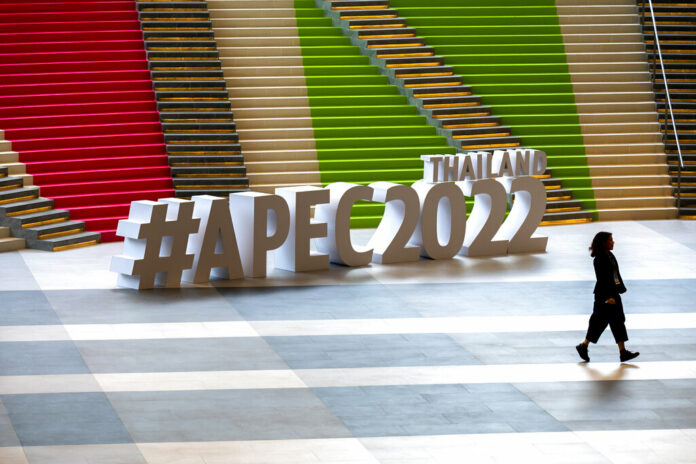
A participant runs past signage at the venue of the Asia-Pacific Economic Cooperation APEC summit venue, Friday, Nov. 18, 2022, in Bangkok, Thailand. Photo: Anupam Nath / AP

BANGKOK (AP) — Leaders from around the Asia-Pacific called for an end to Russia’s war on Ukraine and pledged to steer the region’s economies toward sustainable growth as they wrapped up summit meetings Saturday.

Host Thailand garnered a diplomatic coup in managing to bridge divisions among the 21 members of the Asia-Pacific Economic Cooperation forum by saying that most members had condemned the war. Russia is an APEC member, as is China, which generally has refrained from criticizing Moscow.

The declaration issued by APEC leaders acknowledged differing views on the war and said the forum, which is devoted largely to promoting trade and closer economic ties, was not a venue for resolving such conflicts.

But it noted that the conflict and other security issues “can have significant consequences for the global economy.”

The leaders’ statement said most members had strongly condemned the war in Ukraine, stressing that it is causing immense human suffering and worsening inflation, supply chain troubles, food insecurity and financial risks.

Like a statement issued by the Group of 20 leading economies in Bali, Indonesia, earlier this week, it echoed the wording of a March 2 United Nations General Assembly resolution that “deplores in the strongest terms the aggression by the Russian Federation against Ukraine and demands its complete and unconditional withdrawal from the territory of Ukraine.”

The meetings Saturday wrapped up a flurry of events in Southeast Asian countries this week that gave leaders opportunities for face-to-face talks that have been rare in the past two years of pandemic precautions.

Much of the activity at such summits occurs on the sidelines and in the interludes before and after the formal meetings.

U.S. Vice President Kamala Harris and Chinese President Xi Jinping spoke briefly on Saturday before the final APEC meeting began. Harris reiterated President Joe Biden’s call, made in a meeting with Xi at the G-20, for both sides to keep lines of communication open.

Xi said he viewed his talks with Biden as a step toward a “next stage” in ties between the two largest economies, according to a Chinese government summary of the meeting.

Relations have deteriorated recently amid friction over trade and technology, Chinese claims on the separately governed island of Taiwan, human rights and other issues. But Harris told Xi the U.S. “does not seek confrontation or conflict with China.”

She received a “handover” in the form of a symbolic “chalom” bamboo basket from the APEC host, Thai Prime Minister Prayuth Chan-ocha. The U.S. will host next year’s APEC summit in San Francisco, with preliminary meetings to be held in other cities throughout the year.

Though summit meetings are often sidetracked by other more urgent concerns, APEC’s long-term mission is promoting closer economic ties, and Prayuth opened Saturday’s meeting by urging the leaders to push ahead with APEC’s agenda of free trade in the Pacific region.

“We have to give priority to turning this plan into action,” he said.

Security risks are not on the formal APEC agenda, but Prayuth said North Korea’s numerous recent missile launches were discussed and “everybody shares concern on that issue.”

On Friday, Harris and leaders of Australia, Canada, Japan, New Zealand and South Korea met separately to air concerns about the North’s launch earlier in the day of an intercontinental ballistic missile that landed near Japan’s northern island of Hokkaido.

Both at APEC in Thailand and at the G-20 meeting in Indonesia, officials appear to have chosen to agree to disagree about the war in Ukraine while voicing anguish over its deepening impact. In both Bangkok and Bali, countries that have refused to condemn the invasion refrained from blocking the release of statements harshly criticizing Moscow.

APEC members account for nearly four of every 10 people and almost half of world trade. Much of APEC’s work is technical and incremental, carried out by senior officials and ministers, covering areas such as trade, forestry, health, food, security, small- and medium-size enterprises and women’s empowerment.

The leaders’ declaration released Saturday also called for promoting more use of clean energy and more secure, environmentally sustainable food systems, among an array of goals that also address illegal, unregulated and unauthorized fishing, illegal logging, marine waste, improvements to public health and better access to vaccinations.

Other APEC members include Brunei, Chile, Hong Kong, Indonesia, Malaysia, Mexico, Papua New Guinea, Peru, the Philippines, Singapore, Taiwan and Vietnam.

Cambodian Prime Minister Hun Sen was to represent the Association of Southeast Asian Nations but did not attend after getting COVID-19.

The summit venue, at Bangkok’s main convention center near a vast parkland, was cordoned off with some streets closed to traffic. Riot police stood guard behind barricades at major intersections to keep protesters well away.

On Friday, police clashed in another area of Bangkok with demonstrators who took the opportunity of the APEC meeting to renew calls for democratic reforms in Thailand and accuse the government of promoting policies to APEC that favor big business over ordinary people. Several people were injured and a number of arrests made.

___

Story: Krutika Pathi, Chisato Tanaka, and Chalida Ekvitthayavechnukul. Associated Press journalists Elaine Kurtenbach, Tian McLeod Ji, Grant Peck, Jerry Harmer and Tassanee Vejpongsa contributed to this report.
Advertisement

Opinion: Thailand’s ‘Open, Connect, Balance’ APEC 2022? Spare Me the Propaganda

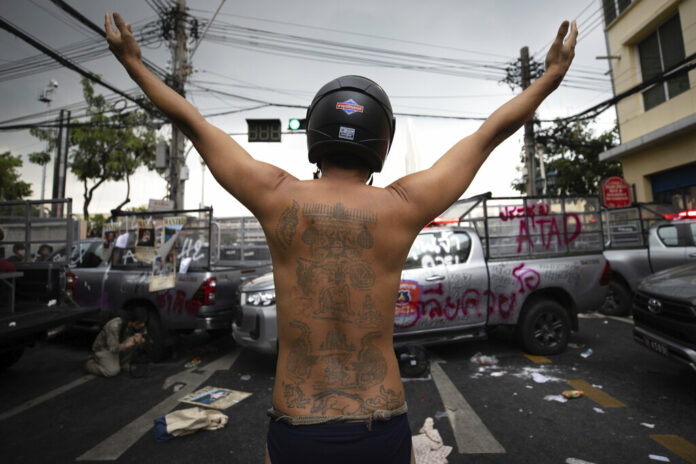
A protester raises his arms behind vandalized police vehicles during a confrontation with police as they try to march to the Asia-Pacific Economic Cooperation APEC summit venue, Friday, Nov. 18, 2022, in Bangkok, Thailand. Photo: Wason Wanichakorn / AP

Examine the just-concluded APEC 2022 Summit in Bangkok positively and one can learn a few things about the propaganda.

Let’s start with the APEC motto, or propaganda, if you will. The Prayut Chan-o-cha regime came up with this: “Open, Connect, Balance.”

This motto is at least partly true. If you are head of state or a government or an economic area, cabinet ministers, CEO of a big corporation, or senior diplomats, then the APEC Summit at the Queen Sirikit National Convention Center is indeed at least open and connective.

It is only “open and connect” for the elites only. For most others, the common people, it is about blocked roads, closed skywalks, and putting up with it – it is closed and disconnect. You would not get a chance to take a selfie with French President Emmanuel Macron or the infamous Saudi Crown Prince Mohammaed bin Salman Al Saud, not to mention U.S. Vice President Kamala Harris or Chinese President Xi Jinping, who is branded by one western media as the most powerful man in the world.

Just opposite the convention center, on the other side of the Ratchadapisek Road, I talked to two slum dwellers of Klong Phai Singto community on Monday. Boonthom Robkhob, 62, told me that police kept visiting and reminding her and her neighbors daily to stay inside their shanty homes for the week unless it is absolutely necessary to be outside and to not hawk or set up any stall selling anything for a week. Asked if the government compensated for any lost income and she told me none.

Thus basically, APEC 2022 in Bangkok is only “open and connect” for a few elites and closed and disconnected for most people.

The Prayut regime, led by a former junta leader who staged a coup back in 2014, would not stop with the propaganda there, however. In a desperate attempt to convince the world, the guests and the 2,200 foreign journalists who parachuted in for the PR summit extravaganza over the past week, a giant billboard was put up close Suvarnabhumi International Airport carrying the following message in English: “All Thais are proud to be the host of APEC 2022”.

On Friday, this over generalized claim was literally shattered when a group of 200 or so anti-APEC-cum-anti-government protesters clashed with riot police on Din Sor Road, next to Democracy Monument, which is seven kilometers away from the summit venue. Twenty-five protesters were arrested, half a dozen police were slightly injured.

On the protesters’ side, some were also injured and one young male protester, Payu Dao Din, will almost likely lose one of his eyesight after police’s rubber bullet hit straight into his eyeball from a fairly close range.

Not even a totalitarian society like North Korea is without dissent and for the Thai government to claim that all Thais “are proud” to play host to APEC is just a lie. After the clash on Friday afternoon, police quickly put up many container walls around the protest area, making sure the area is neither open nor connected to the rest of Bangkok.

Prayut will frame countless photos of himself shaking hands with world leaders, while Payu will most likely lose one of his eyes, and soon people may forget the propagandas and the three-billion baht of taxpayers’ money used in funding APEC 2022 Summit in Bangkok.

Advertisement

War, North Korea Missile Test Loom Over Asia-Pacific Summit

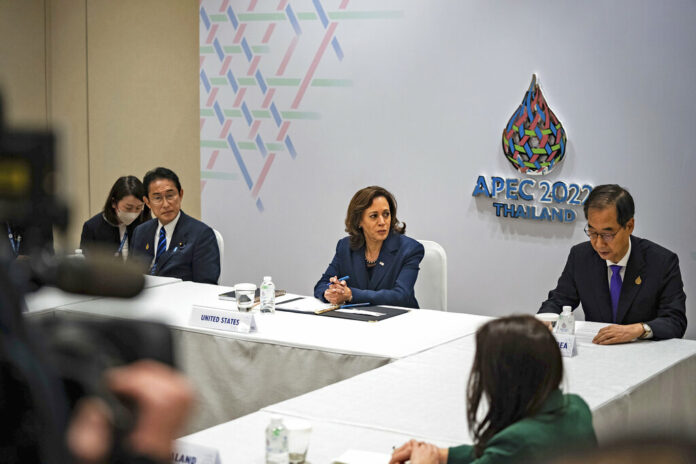
U.S. Vice President Kamala Harris, middle, holds an emergency meeting with Japanese Prime Minister Fumio Kishida, left, South Korean Prime Minister Han Duck-soo, right, Australian Prime Minister Anthony Albanese, New Zealand's Prime Minister Jacinda Ardern, and Canadian Prime Minister Justin Trudeau to discuss North Korea's recent ballistic missile launch during the Asia-Pacific Economic Cooperation (APEC) summit, Friday, Nov. 18, 2022, in Bangkok, Thailand. Photo: Haiyun Jiang / Pool Photo via AP

BANGKOK (AP) — Threats to peace and stability burst onto the agenda at a summit of Pacific Rim leaders in Bangkok on Friday after North Korea fired an intercontinental ballistic missile that landed near Japanese territorial waters.

The missile test was a stark reminder of persisting risks of conflict in the region and beyond, on top of frictions between the big powers that threaten to unravel the global order.

U.S. Vice President Kamala Harris and the leaders of Japan, South Korea, Canada, Australia and New Zealand convened an emergency meeting on the missile launch.

“This conduct by North Korea most recently is a brazen violation of multiple U.N. Security Council resolutions. It destabilizes security in the region, and unnecessarily raises tensions,” Harris said in remarks as the meeting started.

“We strongly condemn these actions and we again call for North Korea to stop further unlawful, destabilizing acts,” she said.

North Korea is under United Nations sanctions for past weapons tests but has not faced new sanctions this year because U.S. attempts were opposed by China and Russia in the Security Council.

A Thai government spokesperson said leaders also expressed concern about the missile launch in closed-door meetings of the Asia Pacific Economic Cooperation forum on Friday

The 21-member APEC’s long-term mission is promoting closer economic ties but its summits often are sidetracked by other more urgent issues.

APEC leaders appeared likely to issue a joint declaration condemning the war in Ukraine after their foreign ministers agreed on a statement that “deplores in the strongest terms” the invasion by Moscow.

The statement followed a similar approach as that adopted at a summit of the Group of 20 leading economies earlier this week, where leaders endorsed a statement saying that “most” — not all — had agreed and that there were differing opinions. Russia’s foreign minister attended the G-20.

The strategy is a shift from the past, when rules requiring a consensus prevented such gatherings from issuing declarations on such divisive issues. None of the earlier APEC preparatory meetings this year issued statements due to disagreements over whether to mention the conflict in Ukraine.

Both at APEC in Thailand and at the G-20 meeting in Bali, Indonesia, officials appear to have chosen to agree to disagree. In Bali, China and India, after months of refusing to condemn Russia’s war in Ukraine, did not block the release of a statement that harshly criticized Moscow.

“Most members strongly condemned the war in Ukraine and stressed it is causing immense human suffering and exacerbating existing fragilities in the global economy –- constraining growth, increasing inflation, disrupting supply chains, heightening energy and food insecurity, and elevating financial stability risks,” said the statement issued Friday. “There were other views and different assessments of the situation and sanctions.”

It noted that APEC ”is not the forum to resolve security issues,” but acknowledged “security issues can have significant consequences for the global economy.”

It’s a message that has been voiced by many during this week heavy in summitry.

“Geopolitical tensions are detracting from peace and stability and undermining the rules-based international order, which we all agree are essential,” Australian Prime Minister Anthony Albanese told the opening session of the two-day APEC leaders meeting, which ends Saturday.

At the meeting, leaders appealed for an end to Russia’s war on Ukraine and considered strategies for nursing along economic recoveries from the coronavirus pandemic while contending with food and energy crises, the need to cut the carbon emissions that cause climate change and other urgent tasks.

At a business conference on the sidelines of APEC, French President Emmanuel Macron called for an end to confrontation, both in Ukraine and also in Asia, where he said friction between the biggest economies, the U.S. and China, was forcing countries to take sides.

“There is no stability or peace except one based on international order and respect,” said Macron, who was invited to the APEC summit as a guest by the host country, Thailand.

In her remarks to the business conference, Harris assured Asian leaders “the United States is here to stay” as she pitched Washington as a reliable economic partner committed to the region and its prosperity.

“And there is no better economic partner for this region than the United States of America,” Harris said.

APEC members account for nearly four of every 10 people and almost half of world trade. Much of APEC’s work is technical and incremental, carried out by senior officials and ministers, covering areas such as trade, forestry, health, food, security, small and medium-size enterprises and women’s empowerment.

Other APEC members include Brunei, Chile, Hong Kong, Indonesia, Malaysia, Mexico, Papua New Guinea, Peru, the Philippines, Singapore, Taiwan and Vietnam.

Apart from the French president, Thailand also invited Crown Prince Mohammed bin Salman, the prime minister of Saudi Arabia; and Cambodian Prime Minister Hun Sen, who was to represent ASEAN but is not attending after getting COVID-19.

The summit venue, at Bangkok’s main convention center, was cordoned off with some streets closed to traffic. Riot police stood guard behind barricades at a major intersection.

Police clashed in another area of Bangkok with protesters who took the opportunity of the APEC meeting to renew calls for democratic reforms in Thailand and accuse the government of promoting policies to APEC that favor big business over ordinary people.

Several hundred protesters gathered about 7 kilometers (4 miles) from the APEC meeting site, hoping to march to the venue and hand over a letter stating their concerns.

Police blocked them, sparking a violent confrontation with some protesters tossing debris and other items at police, who then charged the crowd, shooting rubber bullets. Several people were injured and a number of arrests were made in the standoff, which lasted several hours.

___

Story: Krutika Pathi and Tassanee Vejpongsa. Associated Press journalists Grant Peck, Chalida Ekvitthayavechnukul, Tian McLeod Ji, David Rising, Chisato Tanaka, Jerry Harmer and Elaine Kurtenbach contributed to this report.
Advertisement

Siam Piwat joins forces in APEC 2022,  to drive sustainability to the economy, society, and environment,  bringing pride to the Thai nation

image4 17

Siam Piwat Group is a leading property and retail developer, owner of global destinations including Siam Paragon, Siam Center, and Siam Discovery, and a joint-venture partner of ICONSIAM and Siam Premium Outlets Bangkok. As an Official Communication Partner of the 2022 Asia-Pacific Economic Cooperation Summit (APEC 2022), Siam Piwat is joining forces to welcome delegates from 21 economies members and members of the press around the world.The partnership is a great opportunity for Siam Piwat to support the Thai government and be a part to reaffirm confidence towards Thailand, which pave ways to increasing investment and business opportunities, especially in tourism and hospitality businesses. 

image7 2

To welcome delegates from around the world, Siam Piwat is showcasing its business approach to sustainability at APEC Showcase Green Press Center, Queen Sirikit National Convention Center from November 14-19, 2022.  Through the concepts “the Universe of Value,” “Shared Value,” and “Co-creation,” Siam Piwat has delivered experience beyond expectations both on physical and digital platforms, creating an ecosystem to achieve mutual success as part of its “Collaboration to Win” strategy and fostering sustainable value in every process and business operation to create mutual growth for the people, the environment, and economy.”

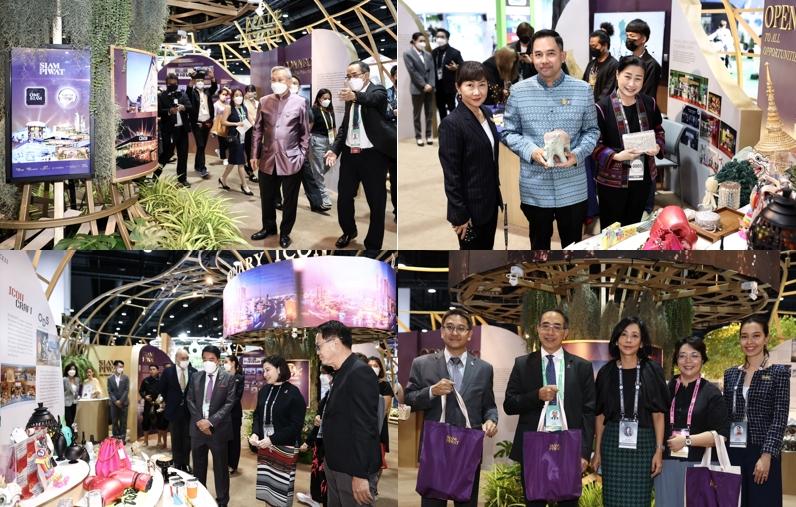
Within the APEC Showcase Green Press Center, Siam Piwat’s showcase’s most prominent feature is a golden woven structure reminiscent of APEC’s Chalom logo, or a woven bamboo basket with the information displayed on a large 360o digital screen recounting the achievements and successes of Siam Piwat over the past 63 years as a developer of world-class destinations that have accomplished a global top-of-mind position among the public, customers, and business partners. The booth also delineates Siam Piwat’s business philosophy in fostering mutual growth sustainably in line with APEC 2022’s main theme “Open. Connect. Balance.” 

Siam Piwat’ s booth also features demonstrations of Thai handicrafts from ICONCRAFT and Sook Siam that reflect the Thai identity. Held in collaboration with communities and various sectors, featuring different Thai arts and craft each day. 

image3 14

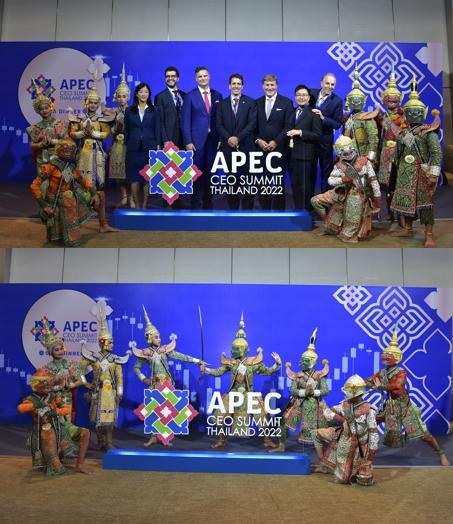
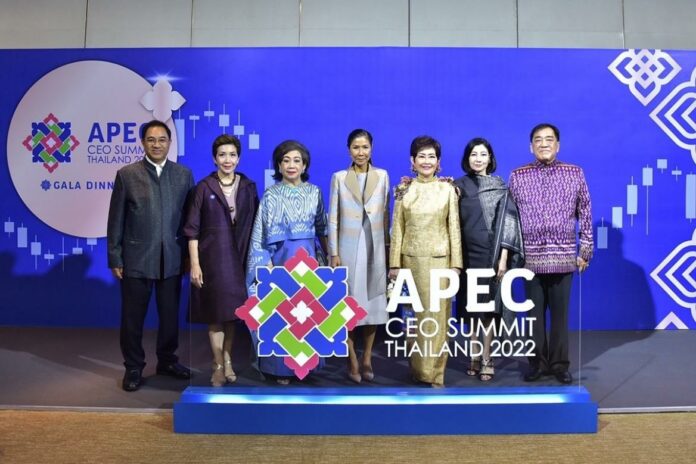
On November 16, 2022, ICONSIAM was honored to co-host and be the venue for the Welcome Reception for the APEC CEO Summit Thailand 2022. Attendees discovered the impressive experience where the river-front River Park area was transformed into a courtyard with Traditional Thai dance performance and puppet theatre show which is a cherished cultural heritage of Siam.  Participants also enjoyed the taste of traditional delicacies from four regions of Thailand, emphasizing food as one of the country’s key ‘soft power.’ Featured also were Thai Arts and crafts demonstrations. 

image5 15

image1 21

On November 17, 2022, Siam Paragon was chosen as the venue for Gala Dinner, to show appreciation for over 1,000 delegates of APEC CEO Summit Thailand 2022. A special evening was held at Royal Paragon, 5th floor, Siam Paragon, which was beautifully designed as a banquet venue under the theme of “Connect the World.”  The participants were greeted by performers of Khon which is a national performing art heritage. Showcased also were traditional Thai arts and crafts such as  exquisite fruit carving, garland making, khon mask panting, potpourri making. The delegates also enjoyed the taste of authentic Thai food and magnificent performances. 

Hosting APEC 2022 is an important agenda of Thailand and Siam Piwat Group is proud to be a part of this major event, presenting Thai identities to the world, delivering great impression and marking Thailand as a global destination – a must-visit and top-of-mind destination for people all over the world. 

Advertisement

Asia-Pacific Leaders Seek Unity on War, Economic Ills, Virus

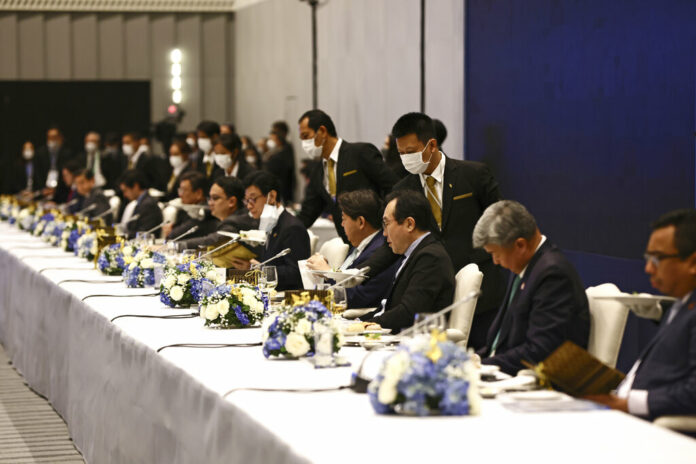
Food is served to delegates at a working lunch at the 33rd APEC Ministerial Meeting (AMM) during the Asia-Pacific Economic Cooperation (APEC) summit, Thursday, Nov. 17, 2022, in Bangkok, Thailand. Photo: Jack Taylor / Pool Photo via AP

BANGKOK (AP) — Pacific Rim leaders were striving to find common ground on the war in Ukraine and other dire threats to humankind in an annual meeting that began Friday at a heavily guarded venue in Thailand’s capital.

The annual summit of the 21-member Asia-Pacific Economic Cooperation forum is the last of three back-to-back meetings of world leaders in the region.

On Thursday, foreign and commerce ministers were completing their yearlong effort to form a consensus on an array of often-divisive issues.

U.S. Secretary of State Antony Blinken said he saw signs of a “convergence” in views about how to move forward in solving the world’s problems.

Whether that might enable Thailand as host of the meetings to produce a final joint statement remained to be seen: consensus generally is required among the 21 APEC members, including Russia. None of the earlier APEC preparatory meetings this year issued statements due to disagreements over whether to mention the conflict.

But leaders of the Group of 20 did manage a show of unity when China and India, after months of refusing to condemn Russia’s war in Ukraine, did not stand in the way of the release of a statement by the world’s leading economies that harshly criticized Moscow.

“At G-20, we really welcomed that we could have a joint statement,” said Yasuhiro Tsukamoto, a Japanese Foreign Ministry spokesperson.

Asked about the prospects for a show of unity, U.S. Secretary of State Antony Blinken said he did not want to “get ahead” of the talks.

But, “on issue after issue we’re seeing, as I said, a growing convergence among the major countries in the world,” he told reporters after Thursday’s meetings.

The APEC meetings and earlier summits of the Group of 20 major economies on the Indonesian island resort of Bali and the Association of Southeast Asian Nations in Cambodia have brought together leaders who have had little opportunity to meet face-to-face since the pandemic began in 2020.

“It is such a relief for us to be able to go back to the conduct of business in the way that we know is most efficient and most productive,” Philippine President Ferdinand Marcos Jr, told a business conference held ahead of the APEC summit meetings. But he noted, “Dark clouds loom large if we are not to be prepared.”

The war in Ukraine has pushed food and energy prices sharply higher, disrupting supply chains and hindering the world’s recovery from the pandemic.

“The global economy faces mounting downward pressure and growing risks of recession,” Chinese President Xi Jinping said in written remarks distributed to the business conference.

The Chinese economy has slowed sharply under restrictions meant to quash COVID-19 outbreaks. Xi warned against a “new Cold War” and attempts to dismantle supply chains built over decades, and called for strengthened cooperation and progress in achieving APEC’s vision of an open Asia-Pacific economy.

The threat of a coronavirus resurgence remains, with China reporting 23,276 new COVID-19 cases across the country on Thursday despite its costly and stringent “zero-COVID” policy. The southern metropolis of Guangzhou plans to build quarantine facilities with almost 250,000 beds to cope with outbreaks.

Xi stayed close to home throughout the pandemic, making his first trip outside China since it began only in September. But he has had a busy roster of meetings both in Bali and Bangkok, where much of the activity is on the sidelines of the summits.

Xi and Japanese Prime Minister Fumio Kishida met Thursday for what Kishida told reporters was a “candid and detailed discussion.”

“Because we are neighbors, there are various problems between Japan and China,” he said. But he added that “I think our talks today were a good start for us to pursue dialogue toward building constructive and stable Japan-China relations.”

Before the summit, Thai officials said they were hoping to steer APEC toward long-term solutions in various areas, including climate change, economic disruptions and faltering recoveries from the pandemic.

The APEC leaders meet formally in closed-door sessions on Friday and Saturday. For some, it will be at least the third such opportunity for face-to-face talks in the past two weeks. U.S. Vice President Kamala Harris is attending instead of President Joe Biden, who will be hosting his granddaughter’s wedding at the White House.

With both Biden and Russian President Vladimir Putin absent, Xi is the star attendee in Bangkok.

Thailand hoped to have all members agree on a set of targets for meeting the challenges of climate change, promoting sustainable trade and investment and environmental goals,

The wording of any statement on Ukraine would be the “most challenging element of our negotiations,” said Cherdchai Chaivaivid, director-general of Thailand’s Department of International Economic Affairs.

“I am cautiously optimistic that we should be able to reach a good level of consensus. The thing is, are we going to reach consensus on every single issue in the draft or not? That remains to be answered by all senior officials working around the clock during the next few days,” Cherdchai said.

APEC members account for nearly four of every 10 people and almost half of world trade. Much of APEC’s work is technical and incremental, carried out by senior officials and ministers, covering areas such as trade, tourism, forestry, health, food, security, small and medium-size enterprises and women’s empowerment.

Members also include Australia, Brunei, Canada, Chile, China, Hong Kong, Indonesia, Malaysia, Mexico, New Zealand, Papua New Guinea, Peru, Singapore, South Korea, Taiwan, Thailand and Vietnam.

As host, Thailand invited three special guests to the meeting: French President Emmanuel Macron; Crown Prince Mohammed bin Salman, the prime minister of Saudi Arabia; and Cambodian Prime Minister Hun Sen, who was to represent ASEAN but will not attend after getting COVID-19.

The APEC summit venue, at downtown Bangkok’s main convention center, was cordoned off with some streets in the area completely closed to traffic. Rows of riot police stood guard behind barricades at a major intersection nearby, underscoring Thailand’s determination to ensure no disruptions.

In recent years, Bangkok has seen a wave of large-scale protests aimed both at the government and the powerful monarchy, though they have faded under the pressures of the pandemic and targeted arrests of key figures.

A small but noisy group of protesters scuffled briefly with police Thursday demanding to deliver a letter to leaders attending the summit. The demonstrators back various causes including the removal of Prime Minister Prayuth and the abolition of Thailand’s strict anti-royal defamation laws.

___

Story: Elaine Kurtenbach and Chalida Ekvitthayavechnukul. Associated Press journalists Grant Peck, Krutika Pathi, Jerry Harmer and Tassanee Vejpongsa contributed to this report. Mari Yamaguchi contributed from Tokyo.
Advertisement

Hot News

LATEST NEWS

Bangkok
overcast clouds
30 ° C
30 °
27.7 °
76 %
2kmh
95 %
Sat
30 °
Sun
36 °
Mon
37 °
Tue
36 °
Wed
36 °