




























32.8 C
Bangkok
Saturday, June 27, 2026
Home Blog Page 956

Opinion: Lest We Forget: The Movement Changed, The Struggle Continues

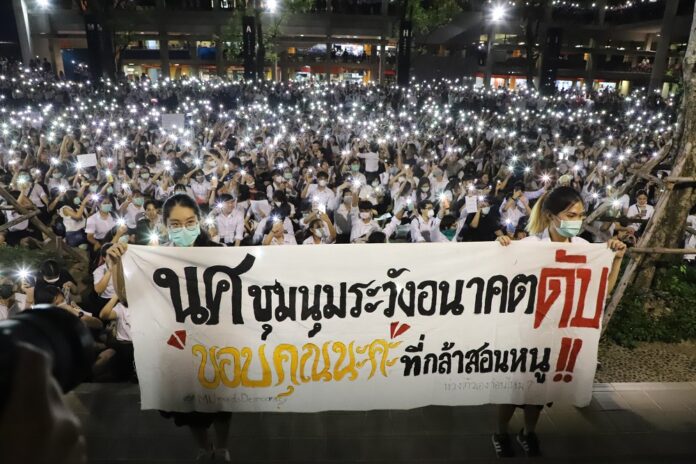
Protest at Mahidol University Salaya Campus in Nakhon Pathom province on Feb. 25, 2020.

By Bunkueanun “Francis” Paothong

I was a part of the movement calling for democracy that began two years ago, in the midst of the ill-advised dissolution of the opposition Future Forward Party back in February 2020.

Much has happened since then. People who led the protests, including myself, were forced to cease their active engagement with the pro-democracy movement. The protests seemed dead in the water, although some had tried bringing them back, without much success or a follow-through strategy of sorts.

What happened? Was it inevitable? And, the most important question of all, “what now?”

To my eyes, and the eyes of many who helped organize protests back in the day, the lack of coordination and follow-through was one of the main reasons why protests and demonstrations had failed to elicit the much-hoped response. The demands made by many, including the college students from Thammasat University and elsewhere, could have been met if they had a robust strategy on how to enforce such demands.

In other words, if the protest leaders were bold enough, in their actions, to back their demands with actions to occupy key government ministries or bureaux, or other actions on the same levels such as these, then there’s a certain hope that these demonstrations might have yielded results.

The lack of coordination, or even of planning, could be stemmed from the simple fact: most protest leaders were only college and high school students. The fact that hope of the entire movement struggling for democracy was suddenly thrusted upon many of them gave them the limelight as well as the superiority complex upon which they have no way to mitigate.

Many of them fell to the same trap that a leader could have felt at any given time when they attained popularity and control. These facts, combined with constant dangers of imprisonment and of their own lives, completely isolated them mentally and emotionally, which led to irrational and sometimes downright irresponsible actions that we have come to see. Many, including myself, failed to see such a fact at the time, but it was inevitable that even the most intense heat would eventually burn itself out.

Such desperate actions were nothing new, however. It was the result of what Thailand’s tone-deaf and dictatorial establishment has done to all of us. Years of conditioning and conforming to authoritarian and submissive beliefs have left us all dead inside, yearning and hoping towards better things.

With what happened in the past two years, some might even find it more appealing to offer their creativity and intelligence to other countries that actually value them for what they are. And at this point, it is hard to blame any one of them.

What happens now? One might ask. The movement, in protest form, is dead. Yet, the struggle for democracy in Thailand never completely ceases. Many have begun looking for other ways to bring about change on their own terms.

Some look towards the opposition political parties to do just that. Some work with civil society organizations. Some, like myself, worked in the Student Governments in their universities, bringing about democratic changes within the confines of their own institutions. The movement may have changed, the struggles and the tenets to bring about democracy stays the same.

Now, it is about playing the long game. Bring about freedom and democracy one step at a time. While for most of us, we want democracy restored, freedom respected, and liberty ensured at this moment without delay. We must not delude ourselves of that notion. We must recognize that for a country that has been conditioned to obey and respect authorities for so long, one cannot battle centuries-old institutions and traditions within years, or even decades.

Like the black people of South Africa struggling against Apartheid, we too must endure the harsh years ahead of us, the hope shall not fade away as long as we have the audacity to hope, daring the fears to dream for a better country.

The movement is dead, long live the movement.

About the author

Bunkueanun “Francis” Paothong was a student activist from Mahidol University and was accused of harming Queen’s Liberty during the October 14th 2020 protest. Currently, he serves his university’s Student Council as its 45th President.
Advertisement

After Days Focused on Ukraine, Other Concerns Emerge at UN

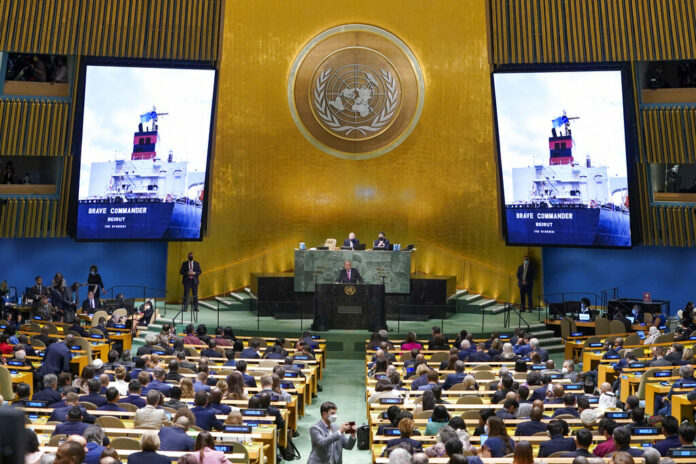
An image of the 'Brave Commander' ship carrying grain from Ukraine is displayed on screens as Secretary-General António Guterres addresses the 77th session of the General Assembly at United Nations headquarters Tuesday, Sept. 20, 2022. Photo: Mary Altaffer / AP

UNITED NATIONS (AP) — After three days in which the war in Ukraine consumed world leaders at the United Nations, other conflicts and concerns are beginning to emerge.

Some are long-simmering ones with global reach that have receded from the public’s attention recently. Israel’s prime minister called for the establishment of a Palestinian state in a speech Thursday that focused on that conflict. The Palestinian president speaks on Friday.

Others are regional conflicts that have flared. Armenia’s prime minister warned that “the risk of new aggression by Azerbaijan remains very high” after the largest outbreak of hostilities between the two adversaries in nearly two years. The ex-Soviet countries are locked in conflict over Nagorno-Karabakh, which is part of Azerbaijan but has been under the control of ethnic Armenian forces backed by Armenia since a separatist war there ended in 1994.

Leaders from Iraq and Pakistan, meanwhile, take the stage Friday. Both nations are pivotal to the geopolitical world order but have received less global attention in recent years.

The annual gathering of leaders at the U.N. General Assembly provides an opportunity for each country to air its concerns and express its hopes. This year’s meeting has thus far focused heavily on Russia’s invasion of Ukraine and the ensuing war, as countries have deplored how the conflict has upended the geopolitical order, repeatedly raised the specter of nuclear disaster and unleashed food and energy crises.

Russia and Ukraine faced off Thursday at a Security Council meeting — an extraordinary if brief encounter during which the top diplomats from nations at war were in the same room exchanging barbs and accusations, albeit not directly to each other.

At the meeting, the United States called on other nations to tell Russia to stop making nuclear threats and end “the horror” of its war. Moscow repeated its frequent claims that Kyiv has long oppressed Russian speakers in Ukraine’s east — one of the explanations Vladimir Putin’s government has offered for the invasion.

The Security Council meeting came a day after Ukrainian President Volodymyr Zelenskyy, speaking to the assembled leaders via video, insisted that his forces would win the war and demanded more robust U.N. action. The General Assembly gave Zelenskyy a pass from leaving his wartime nation so he could appear remotely — a decision Russia opposed.

Meanwhile, over in the assembly hall, Israeli Prime Minister Yair Lapid delivered a speech focused on the Palestinians.

The speech, ahead of Nov. 1 elections, appeared to be part of an effort by Lapid to portray himself — both to voters and global leaders — as a statesman and moderate alternative to his main rival, hardline former Prime Minister Benjamin Netanyahu.

“An agreement with the Palestinians, based on two states for two peoples, is the right thing for Israel’s security, for Israel’s economy and for the future of our children,” Lapid said.

But he was short on details, and there is virtually no chance Lapid, who has long supported a two-state solution, will get to push forward with his vision. Israel’s parliament is dominated by parties that oppose Palestinian independence, and opinion polls forecast a similar result after the upcoming elections.

The Palestinians seek the West Bank, east Jerusalem and the Gaza Strip — territories captured by Israel in 1967 — for an independent state, a position that enjoys wide international support.

___

Story: Sarah Dilorenzo.

Advertisement

Japan To Loosen Travel Restrictions Imposed During Pandemic

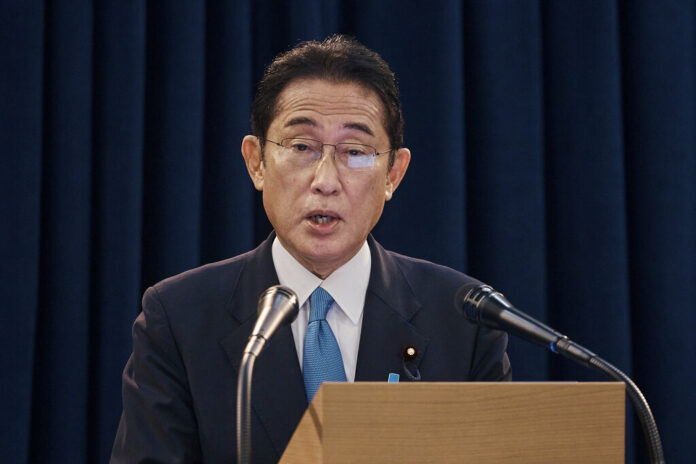
Prime Minister of Japan Fumio Kishida speaks during a press conference on Thursday, Sept. 22, 2022 in New York. Photo: Andres Kudacki / AP

NEW YORK (AP) — Japan’s strict border restrictions will be loosened next month, the prime minister announced Thursday, allowing tourists to easily enter for the first time since the start of the pandemic.

In a news conference at the foot of Central Park in New York, Prime Minister Fumio Kishida said independent tourists would again be welcomed as of Oct. 11, not just those traveling with authorized groups.

A cap on the number of tourists who are granted entry — which has been gradually increased this year — will be nixed altogether. And visa requirements that were imposed in response to the pandemic will also be rescinded.

Japan’s tough COVID-19 restrictions have sent the number of visitors plummeting and its tourism industry reeling. Though foreign tourists were welcomed back in June after a pause of more than two years, the reopening has been confusing to many seeking to visit.

A previous announcement billed as an easing of the group tour rule turned out, for many tourists, to be anything but — introducing a convoluted process requiring obtaining clearance via a Japanese travel agent, often with hefty fees or commissions attached.

Now, the country appears to be returning to normal, in time for some to book travel for Japan’s fall foliage. Kishida said a campaign aimed at bolstering the tourism industry would be rolled out offering discounts.

“We hope that many citizens will take advantage,” he said as he wrapped up a trip to New York.

Until now, Japan persisted in pandemic travel rules that many other countries have long since dropped. Some tourists have shifted vacations to countries including South Korea and Thailand, which have had looser rules of late.

Kishida spoke on the sidelines of the U.N. General Assembly. In other remarks, he called for reform of the U.N. Security Council and dismissed any skepticism about Japan’s increased military spending, saying it remained a “peace-loving nation.”

He also said Japan would “boldly take necessary steps” to combat excessive fluctuation of the yen, which has dropped to its lowest level against the U.S. dollar in more than two decades.

___

Story: Matt Sedensky.

Advertisement

HUAWEI CONNECT 2022 Begins Global Tour in Bangkok – “Unleash Digital”

Ken Hu, Huawei's Rotating Chairman, delivered his opening keynote at the ‘HUAWEI CONNECT 2022’ event

[Bangkok, Thailand, September 19, 2022] HUAWEI CONNECT 2022, Huawei’s 7th annual flagship event for the global ICT industry, began today in Bangkok. The theme of this year’s event is “Unleash Digital,” gathering over 10,000 ICT industry leaders, experts, and partners from around the world to explore how to more effectively unleash digital productivity, promote the digital economy, and build up stronger digital ecosystems.

At the event, Huawei shared the steps it’s taking to advance digital development across a wide range of industries, and released 15+ innovative cloud services for the global market.

Three initiatives to help all industries go digital

To kick off the event, Ken Hu, Huawei’s Rotating Chairman, delivered a keynote outlining three ways the ICT ecosystem can help break through common barriers in digital transformation: 

  • Boost digital infrastructure, including more robust connectivity and stronger, more diverse computing resources. 
  • Help organizations go beyond simple cloud adoption and truly make the most of cloud, focusing on advanced technology services that drive leapfrog development.
  • Build out local digital ecosystems, including partner development, strengthening the digital talent pool, and providing more support for SMEs.

GDP growth has been unstable over the past two years. However, the digital economy has seen consistent growth on a global scale – more than 15% in 2021. This has prompted many organizations to transform their operations and service offerings with next-generation digital technology.

“Going digital is clearly the right choice,” said Hu. “The demand is there, and so are the technologies. The world is unleashing digital productivity, and it’s happening right now.”

New Huawei Cloud Region in Indonesia, and 15+ new services

At the event, Zhang Ping’an, the CEO of Huawei Cloud, announced the launch of new Huawei Cloud Regions in Indonesia and Ireland. By the end of 2022, Huawei Cloud will operate 75 availability zones in 29 regions around the world, boosting services for more than 170 countries and regions. 

Huawei Cloud and its partners also took this opportunity to launch the “Go Cloud, Go Global” ecosystem plan. With a focus on Everything as a Service, the plan is designed to accelerate the development of a global digital industry ecosystem for joint innovation and shared success.

Focusing on Everything as a Service, Huawei Cloud is committed to building the industry-leading platform for innovations on the cloud. As part of these efforts, Jacqueline Shi, President of Huawei Cloud’s Global Marketing and Sales Service, announced the global launch of 15+ new advanced services, including Huawei Cloud CCE Turbo, Ubiquitous Cloud Native Service (UCS), Pangu wave model, DataArts LakeFormation, Virtual Live, CodeCheck and CloudTest, KooMessage, KooSearch, and KooGallery.

Building out local ecosystems for shared success

At the event, Huawei reinforced its commitment to open collaboration and shared success. The company called for governments and enterprises to work more closely together to cultivate local digital ecosystems that build up innovation partners, strengthen the talent pool, and support startups.

In his keynote, Simon Lin, the President of Huawei Asia-Pacific Region, released the Digital First Economy whitepaper that delves into targeted policy suggestions for digital infrastructure construction and digital economy development in the Asia-Pacific region. 

“The Asia-Pacific region is standing at the forefront of the global digital landscape,” said Lin. “Huawei is committed to becoming a key contributor to the digital economy in the region. We will keep supporting its digitalization and sustainable development efforts, and building out the industry ecosystem.”

At the event, a distinguished group of government representatives from the Asia-Pacific region also took the stage to share the progress they have made with advancing digital economy development in their respective countries. These include H.E. Supattanapong Punmeechaow, Thailand’s Deputy Prime Minister and Minister of Energy; H.E. Chaiwut Thanakamanusorn, Minister of Digital Economy and Society of the Kingdom of Thailand; H.E. Airlangga Hartarto, Coordinating Minister for Economic Affairs of the Republic of Indonesia; H.E. Muhammad Abdul Mannan, Planning Minister of Bangladesh; H.E. David Almirol, Undersecretary of E-Government, Department of Information and Communications Technology, Philippines; and Dr. Yang Mee Eng, Executive Director of the ASEAN Foundation.

The three-day conference in Bangkok is the first stop on HUAWEI CONNECT’s global tour in 2022. Featuring two keynote sessions, six summits, as well as multiple breakout sessions and demos, this year’s event dives into the challenges that governments and enterprises face at all stages of their digital transformation journey, Huawei’s advancements in digital infrastructure, as well as the company’s latest cloud services and ecosystem partner solutions.

image1 13
Mr. Chaiwut Thanakamanusorn, Minister of Digital Economy and Society (MDES), delivers his keynote speech at ‘HUAWEI CONNECT 2022’
Advertisement

Iranians See Widespread Internet Blackout Amid Mass Protests

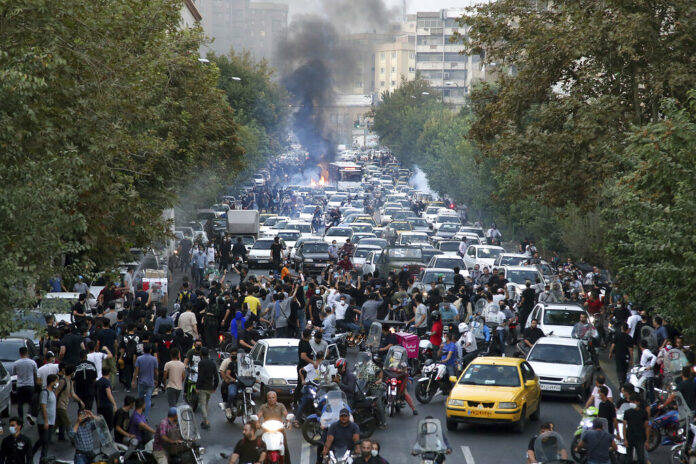
In this Wednesday, Sept. 21, 2022, photo taken by an individual not employed by the Associated Press and obtained by the AP outside Iran, protesters chant slogans during a protest over the death of a woman who was detained by the morality police, in downtown Tehran, Iran. Photo: AP

DUBAI, United Arab Emirates (AP) — Iranians experienced a near-total internet blackout on Wednesday amid days of mass protests against the government over the death of a woman held by the country’s morality police for allegedly violating its strictly-enforced dress code.

An Iranian official had earlier hinted that such measures might be taken out of security concerns. The loss of connectivity will make it more difficult for people to organize protests and share information about the government’s rolling crackdown on dissent.

Iran has seen nationwide protests over the death of 22-year-old Mahsa Amini, who was detained for allegedly wearing the mandatory Islamic headscarf too loosely. Demonstrators have clashed with police and called for the downfall of the Islamic Republic itself, even as Iran’s President Ebrahim Raisi addressed the U.N. General Assembly on Wednesday.

The protests continued for a fifth day on Wednesday, including in the capital, Tehran. Police there fired tear gas at protesters who chanted “death to the dictator,” and “I will kill the one who killed my sister,” according to the semiofficial Fars news agency.

London-based rights group Amnesty International said security forces have used batons, birdshot, tear gas, and water cannons to disperse protesters. It reported eight deaths linked to the unrest, including four people killed by security forces. It said hundreds more have been wounded.

Iranian officials have reported three deaths, blaming them on unnamed armed groups.

Witnesses in Iran, who spoke on condition of anonymity for fear of reprisal, said late Wednesday they could no longer access the internet using mobile devices.

“We’re seeing internet service, including mobile data, being blocked in Iran in the past couple of hours,” Doug Madory, director of internet analysis at Kentik, Inc., a network intelligence company, said late Wednesday.

“This is likely an action by the government given the current situation in the country,” he said. “I can confirm a near total collapse of internet connectivity for mobile providers in Iran.”

NetBlocks, a London-based group that monitors internet access, had earlier reported widespread disruptions to both Instagram and WhatsApp.

Facebook parent company Meta, which owns both platforms, said it was aware that Iranians were being denied access to internet services. “We hope their right to be online will be reinstated quickly,” it said in a statement.

Earlier on Wednesday, Iran’s Telecommunications Minister Isa Zarepour was quoted by state media as saying that certain restrictions might be imposed “due to security issues,” without elaborating.

Iran already blocks Facebook, Telegram, Twitter and YouTube, even though top Iranian officials use public accounts on such platforms. Many Iranians get around the bans using virtual private networks, known as VPNs, and proxies.

In a separate development, several official websites, including those for Supreme Leader Ayatollah Ali Khamenei, the presidency and the Central Bank, were taken down at least briefly as hackers claimed to have launched a cyberattack on state agencies.

Hackers linked to the shadowy Anonymous movement said they targeted other Iranian state agencies, including state TV.

Central Bank spokesman Mostafa Qamarivafa denied that the bank itself was hacked, saying only that the website was “inaccessible” because of an attack on a server that hosts it, in remarks carried by the official IRNA news agency. The website was later restored.

Iran has been the target of several cyberattacks in recent years, many by hackers expressing criticism of its theocracy. Last year, a cyberattack crippled gas stations across the country, creating long lines of angry motorists unable to get subsidized fuel for days. Messages accompanying the attack appeared to refer to the supreme leader.

Amini’s death has sparked protests across the country. The police say she died of a heart attack and was not mistreated, but her family has cast doubt on that account, saying she had no previous heart issues and that they were prevented from seeing her body.

In a phone interview with BBC Persian on Wednesday her father, Amjad Amini, accused authorities of lying about her death. Each time he was asked how he thinks she died, the line was mysteriously cut.

The U.N. human rights office says the morality police have stepped up operations in recent months and resorted to more violent methods, including slapping women, beating them with batons and shoving them into police vehicles.

President Joe Biden, who also spoke at the U.N. General Assembly on Wednesday, voiced support for the protesters, saying “we stand with the brave citizens and the brave women of Iran, who right now are demonstrating to secure their basic rights.”

The U.K. also released a statement Wednesday calling for an investigation into Amini’s death and for Iran to “respect the right to peaceful assembly.”

Raisi has called for an investigation into Amini’s death. Iranian officials have blamed the protests on unnamed foreign countries that they say are trying to foment unrest.

Iran has grappled with waves of protests in recent years, mainly over a long-running economic crisis exacerbated by Western sanctions linked to its nuclear program.

The Biden administration and European allies have been working to revive the 2015 Iran nuclear accord, in which Iran curbed its nuclear activities in exchange for sanctions relief, but the talks have been deadlocked for months.

In his speech at the U.N., Raisi said Iran is committed to reviving the nuclear agreement but questioned whether it could trust America’s commitment to any accord.

Iran insists its nuclear program is for peaceful purposes. It began ramping up its nuclear activities after then-President Donald Trump unilaterally withdrew from the 2015 agreement, and experts say it now likely has enough highly-enriched uranium to make a bomb if it chooses to do so.

Advertisement

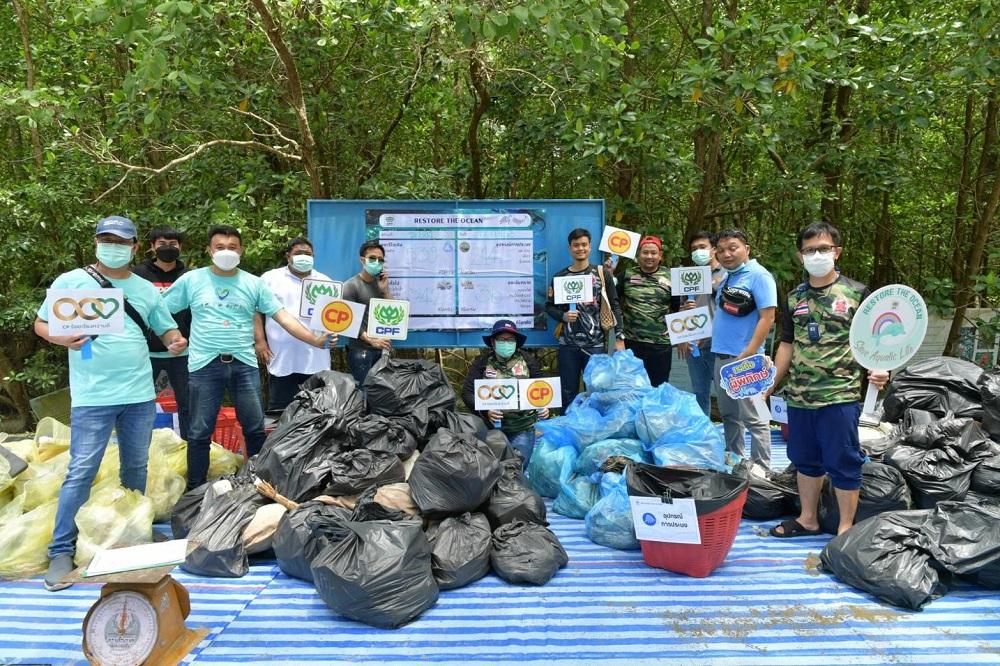
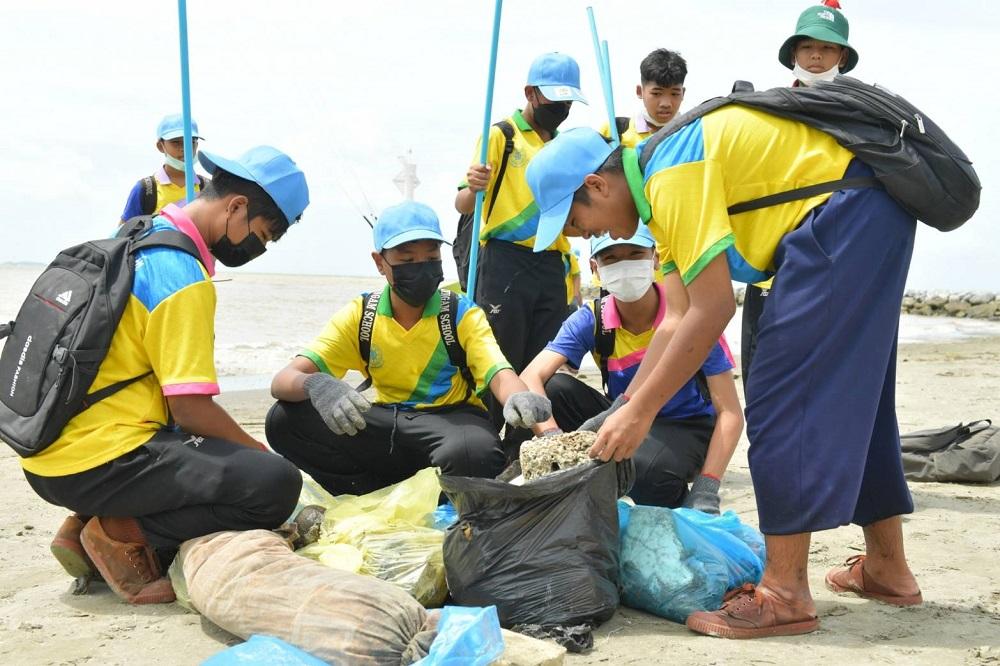
CP Foods employees and partner clean-up trashes in 7 coastal areas across Thailand

Charoen Pokphand Foods Public Company Limited (CP Foods) collaborated with local authorities, communities, and volunteers in seven provinces to clear up trashes on beaches and mangrove forests on the occasion of the “International Coastal Cleanup Day” to raise awareness on ocean sustainability and to promote circular economy practices by bringing back marine plastic waste and other debris back for recycling as part of its ongoing the Restore the Ocean project. 

image3 7 image2 10

The activities, which took place in seven provinces along coastlines of Thailand, including Samut Sakhon, Rayong, Trad, Chumporn, Phang Nga, Songkhla and Nakhon Si Thammarat province, aimed at protecting the environment from ocean waste pollution. 

Over 2,000 volunteers from CP Foods, government officials and communities took part in this coastal cleaning initiative during September 15 and September 17. 7,153 kg of trashes were collected in total.

image5 4

CP Foods’ senior vice president for social responsibility and sustainable development, Wuthichai Sithipreedanant, said the company has operated business with social and environmental responsibility. This also includes collaborations with partners worldwide to raise awareness and take action against all kinds of global issue that affected food security and, ultimately, driving food industry toward sustainability. In seafood business, the company has joined Seafood Business for Ocean Stewardship (SeaBOS) in order to conserve natural resources and marine environment while also eradicating the IUU problem throughout the value chain.

image4 4

The “Restore the Ocean” program is an initiative to mitigate ocean waste problem in accordance with the circular economy principle as a part of CP Foods’ kitchen of the World vision, building safe and sustainable food system. This is also in line with the company’s sustainable strategy, “CPF Sustainability in Action 2030”, and supports the United Nations Sustainable Development Goals (SDGs).

Advertisement

France: No Nation Can Stay ‘Indifferent’ on Ukraine War

President of France Emmanuel Macron addresses the 77th session of the United Nations General Assembly, Tuesday, Sept. 20, 2022 at U.N. headquarters. Photo: Mary Altaffer / AP

UNITED NATIONS (AP) — French President Emanuel Macron admonished countries Tuesday not to stay neutral about condemning Russia’s war in Ukraine as he declared that Moscow’s invasion amounts to a new form of imperialism.

Speaking to the U.N. General Assembly gathering of world leaders, Macron also insisted that any negotiation to end the more than six-month-old war can succeed only “if Ukraine’s sovereignty is respected, its territory liberated and its security protected.”

The war in Ukraine — and its effects on food prices, fuel costs, Ukrainian nuclear power plants, and the larger context of tensions between Russia and the West — is looming over the annual gathering of presidents, prime ministers, monarchs and other dignitaries. Neither Russia nor Ukraine has yet had its turn to speak during the nearly weeklong series of speeches.

Macron made the war the centerpiece of his speech, arguing that the conflict threatens to usher in a world where “the security and sovereignty of everyone no longer depends on a balance of strength, on the strength of alliances, but rather that of armed groups and militias.”

“Who here can defend the idea that the invasion of Ukraine justifies no sanction?” he asked. “Who of you here can consider that the day when something similar with a more powerful neighbor happens to you, there’ll be silence from the region, from the world?”

Speaking before him were leaders from Africa who said they do not want their continent to be “the breeding ground of a new Cold War” as nations pressure countries around the world take sides in the conflict.

So far, Africa has stayed somewhat neutral on Ukraine. The former Soviet Union backed many African movements that fought to end colonial rule, and Russia’s foreign minister has voiced support for reform of the U.N. Security Council to give African countries permanent seats and greater influence.

In two General Assembly votes soon after Russia’s Feb. 24 invasion of Ukraine, about 140 of the U.N.’s member nations overwhelmingly deplored Russia’s aggression against Ukraine, called for an immediate cease-fire and withdrawal of all Russian forces, and urged protection for millions of civilians. But more than 30 countries abstained, including China, India and South Africa.

On April 7, some 58 nations abstained from voting on a measure calling for Russia’s suspension from the Human Rights Council. It passed, 93-24.

Macron called on the United Nations’ member countries “to act so that Russia rejects the path of war,” and he said that staying out of the matter isn’t an option.

“Those who are keeping silent today actually are, in a way, complicit with a cause of a new imperialism, a new order that is trampling over the current order, and there’s no peace possible here,” he said. “The war in Ukraine must not be a conflict that leaves anyone indifferent.”

“We’re not talking about choosing a camp here between the East and the West, between the North or the South, either,” the French president insisted. “What we’re talking about is everybody’s responsibility — everybody who’s committed to the respect of the (U.N.) Charter and our common, precious good: peace.”

Macron spoke shortly after Russian-controlled regions of eastern and southern Ukraine announced plans to start voting this week to become integral parts of Russia.

The Kremlin-backed votes, in territory Russia already controls, are virtually certain to go Moscow’s way. Western leaders who are backing Ukraine with military and other support have dismissed the votes as illegitimate.

“Russia declared war, it invaded this region, it bombed it, it killed people, it made other people flee, and now it explains that, in this same region, it is going to organize a referendum,” Macron told reporters before his speech. “If this were not tragic, we could laugh.”

___

Story: Jennifer Peltz. Associated Press writer Edith M. Lederer contributed to this report.

Advertisement

Myanmar’s Military Gov’t Denies Deadly Air Attack on School

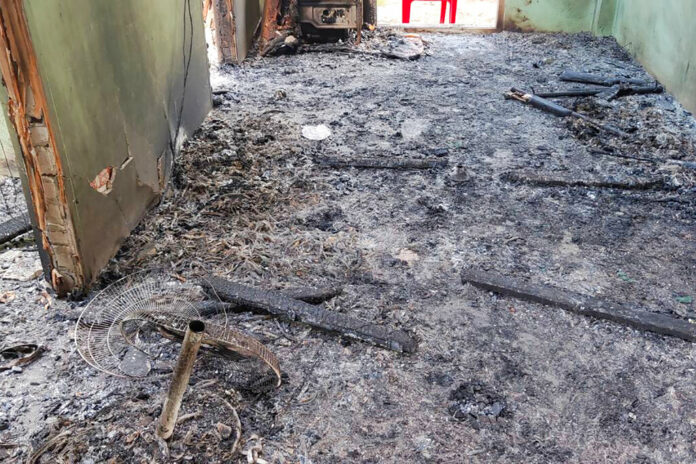
Debris and soot cover the floor of a middle school in Let Yet Kone village in Tabayin township in the Sagaing region of Myanmar on Saturday, Sept. 17, 2022, the day after an air strike hit the school. Photo: AP

BANGKOK (AP) — Myanmar’s military-ruled government on Tuesday denied reports it carried out an air attack on a school in the country’s turbulent north-central region that killed at least seven children, accusing the media of distorting the truth.

Maj. Gen. Zaw Min Tun, spokesperson for the ruling military council, acknowledged at a news conference in the capital, Naypyitaw. that there had been fighting last Friday in Tabayin township in Sagaing region. However, he blamed the government’s armed opponents for the casualties, which in addition to children sheltering at the school included six adult villagers.

Witnesses told The Associated Press and other media that two helicopters fired machine guns and heavier weapons at a school in a Buddhist monastery in the village of Let Yet Kone attended by 240 students from kindergarten to Grade 8 taught by about 20 volunteer teachers.

A school administrator said that after about an hour of continuous shooting, about 80 soldiers charged into the monastery grounds, firing their weapons. The administrator, who used the pseudonym Mar Mar so she would not be identified by the authorities, said about 30 children were wounded, and 20 were taken away by soldiers along with three teachers.

The number of children killed in the air strike appeared to be the highest in a single day since the army seized power in a coup in February last year, ousting the elected government of Aung San Suu Kyi.

The army’s takeover triggered mass nonviolent protests nationwide, but when the military and police responded with deadly force, armed resistance arose in the cities and the countryside.

Fighting has been especially fierce in Sagaing, where the military has launched several offensives, in some cases burning down villages, and displacing more than half a million people. There are six camps hosting displaced people in Tabayin, which is also known as Depayin.

Zaw Min Tun told journalists on Tuesday that the incident occurred when soldiers went to check on information that there were members of the armed anti-government People’s Defense Force and their allies from the Kachin Independence Army, an ethnic rebel group, in Let Yet Kone. The People’s Defense Force was established last year to oppose military rule.

He said the armed groups’ members herded the villagers into the monastery ahead of the fighting.

“They forced the people to stay under the main building of the monastery. And then they started to fire on the security forces while using the villagers as human shields. The army shot back at them,” Zaw Min Tun said.

He said the army rescued the people hiding at the monastery after the armed groups ran away, and that when the soldiers found two children with serious injuries, they were immediately taken by helicopter to a military hospital. Other wounded villagers were taken to nearby hospitals, he said.

He charged that the accounts of the attack on the school were made up to come just ahead of the annual meeting of the U.N. General Assembly, where Myanmar’s violent crisis will be debated.

His account of the incident was challenged by the school administrator.

“What Zaw Min Tun said at the press conference were words opposite to the truth. Teaching the students every day is our job. No one forced us into the monastery and there was no armed group in the village,” Mar Mar said by phone on Tuesday.

___

Story: Grant Peck.

Advertisement

Storm Damages Space Center in Japan, 130K Still Lack Power

People share an umbrella against strong wind and rain Tuesday, Sept. 20, 2022, in Kawasaki, near Tokyo. Photo: Eugene Hoshiko / AP

TOKYO (AP) — A tropical storm that dumped heavy rain as it cut across Japan moved into the Pacific Ocean on Tuesday after killing two and injuring more than 100, paralyzing traffic and leaving thousands of homes without power.

New damage was reported in southern Japan, where Typhoon Nanmadol hit over the weekend before weakening as it moved north.

On Tanegashima island, south of Kyushu island, a wall was damaged at a Japan Aerospace and Exploration Agency’s space center, the Economy and Industry Ministry said. The extent of damage to the building used for rocket assembly was being assessed.

Two deaths were reported in Miyazaki prefecture on Japan’s southern main island of Kyushu on Monday, when the storm was more powerful, the Fire and Disaster Management Agency said. One was a man was found in a car sunk in a flooded farm in Miyakonojo town, and another was found underneath a landslide in Mimata.

One person was missing in the western prefecture of Hiroshima, and 115 others were injured across western Japan, the agency said. Most of injuries were minor, with people falling down in the rainstorm, hit by shards of broken windows or flying objects.

More than 130,000 homes, most of them in the Kyushu region, were still without power Tuesday morning, according to the Economy and Industry Ministry. Many convenience stores were at one point closed and some distribution of supplies has been delayed.

Most transportation returned to normal on Tuesday when commuters returned to work after a three-day weekend. Bullet trains and most ground transportation resumed operation, but dozens of flights were grounded in northeastern Japan.

The tropical storm has headed out to the Pacific Ocean off northern Japanese coast, the Japan Meteorological Agency said Tuesday.

___

Story: Mari Yamaguchi.

Advertisement

Witnesses: Myanmar Air Attack Kills 13, Including 7 Children

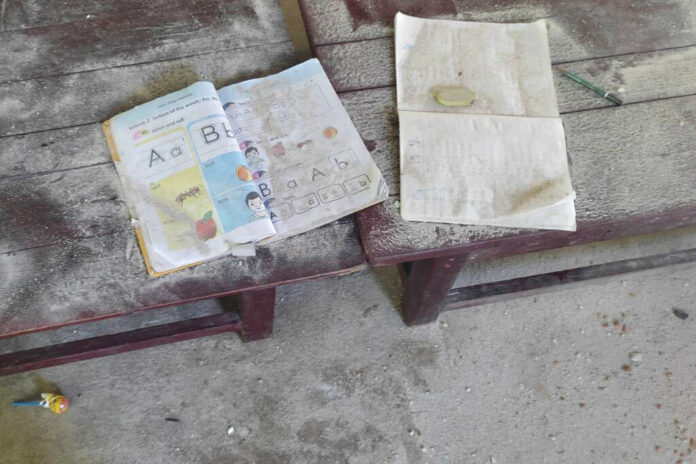
An alphabet book and a notebook lie on top of an elevated wooden floorboard of a middle school in Let Yet Kone village in Tabayin township in the Sagaing region of Myanmar on Saturday, Sept. 17, 2022, the day after an air strike hit the school. Photo: AP

BANGKOK (AP) — Government helicopters have attacked a school and village in north-central Myanmar, killing at least 13 people including seven children, a school administrator and an aid worker said Monday.

Civilian casualties often occur in attacks by the military government on pro-democracy insurgents and their allies. However, the number of children killed in the air attack last Friday in Tabayin township in Sagaing region appeared to be the highest since the army seized power in February last year, ousting the elected government of Aung San Suu Kyi.

The army’s takeover triggered mass nonviolent protests nationwide. The military and police responded with deadly force, resulting in the spread of armed resistance in the cities and countryside. Fighting has been especially fierce in Sagaing, where the military has launched several offensives, in some cases burning villages, which displaced more than half a million people, according to a report issued by UNICEF this month.

Friday’s attack occurred in Let Yet Kone village in Tabayin, also known as Depayin, about 110 kilometers (70 miles) northwest of Mandalay, the country’s second-largest city.

School administrator Mar Mar said she was trying to get students to safe hiding places in ground-floor classrooms when two of four Mi-35 helicopters hovering north of the village began attacking, firing machine guns and heavier weapons at the school, which is in the compound of the village’s Buddhist monastery.

Mar Mar works at the school with 20 volunteers who teach 240 students from kindergarten to eighth grade. She has been hiding in the village with her three children since fleeing for safety to avoid the government crackdown after participating last year in a civil disobedience movement against the military takeover. She uses the pseudonym Mar Mar to protect herself and relatives from the military.

She said she had not expected trouble since the aircraft had been over the village before without any incident.

“Since the students had done nothing wrong, I never thought that they would be brutally shot by machine guns,” Mar Mar told The Associated Press by phone on Monday.

By the time she and the students and teachers were able to take shelter in the classrooms, one teacher and a 7-year-old student had already been shot in the neck and head and Mar Mar had to use pieces of clothing to try to stanch the bleeding.

“They kept shooting into the compound from the air for an hour,” Mar Mar said. ”They didn’t stop even for one minute. All we could do at that time was chant Buddhist mantras.”

When the air attack stopped, about 80 soldiers entered the monastery compound, firing their guns at the buildings.

The soldiers then ordered everyone in the compound to come out of the buildings. Mar Mar said she saw about 30 students with wounds on their backs, thighs, faces and other parts of the bodies. Some students had lost limbs.

“The children told me that their friends were dying,” she said. “I also heard a student yelling, ’It hurts so much. I can’t take it anymore. Kill me, please.’ This voice still echoes in my ears,” Mar Mar said.

She said at least six students were killed in the school and a 13-year-old boy working at a fishery in a nearby village was also fatally shot. At least six adults were also killed in the air attack in other parts of the village, she said. The bodies of the dead children were taken away by the soldiers.

More than 20 people, including nine wounded children and three teachers, were also taken by the soldiers, she said. Two of those captured were accused of being members of the anti-government People’s Defense Force, the armed wing of the resistance to the military.

Security forces also burned down a house in the village, causing residents to flee.

A volunteer in Tabayin assisting displaced people who asked not to be identified because of fear of government reprisals said the bodies of the dead children were cremated by the soldiers in nearby Ye U township.

“I am now telling the international community about this because I want redress for our children,” Mar Mar said. “Instead of humanitarian aid, what we really need is genuine democracy and human rights.”

Myanmar Now, an online news service, and other independent Myanmar media also reported the attack and the students’ deaths.

A day after the attack, the state-run Myanma Alinn newspaper reported that security forces had gone to check the village after receiving information that the members of the People’s Defense Force were hiding there.

The report said members of the People’s Defense Force and their allies from the Kachin Independence Army, an ethnic rebel group, were hiding inside houses and the monastery and started shooting at the security forces, causing deaths and injuries among village residents. It said the injured were taken to hospitals, but did not mention the situation of the students.

According to the Thailand-based Assistance Association for Political Prisoners, which monitors human rights in Myanmar, at least 2,298 civilians have been killed by the security forces since the army seized power last year.

The U.N. has documented 260 attacks on schools and education personnel since the coup, the U.N. Child Rights Committee said in June.

___

Story: Grant Peck.

Advertisement

Hot News

LATEST NEWS

Bangkok
overcast clouds
32.8 ° C
36.6 °
32.7 °
68 %
3.3kmh
100 %
Sat
37 °
Sun
36 °
Mon
35 °
Tue
34 °
Wed
33 °