29.9 C
Bangkok
Saturday, June 27, 2026
Home Blog Page 960

Opinion: Expats and Thai Politics

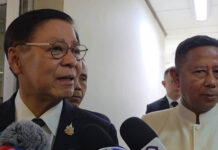
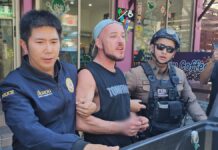
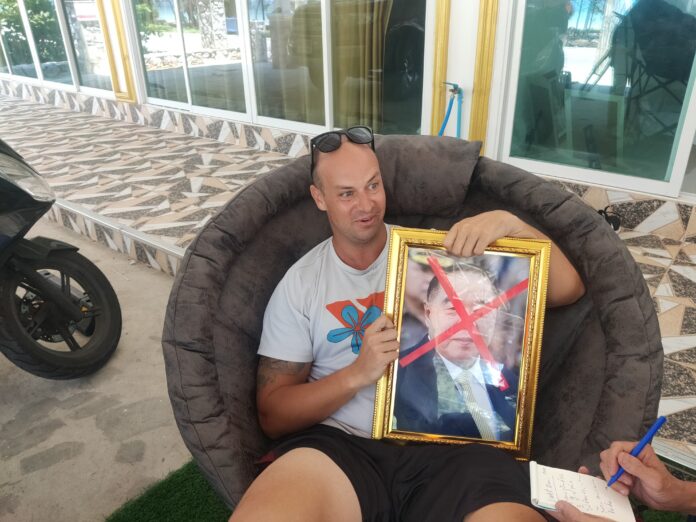
Moritz Pfoh, a.k.a. Mr. Fuck Thong, talks to reporters on Sept. 2, 2022.

Foreigners, especially Western expats, expressing strong political views about Thailand inside Thailand is always controversial.

Some say if you are a foreigner and thus a “guest” in Thailand, then you should just keep your political opinion about Thailand to yourself or do no more than posting comments on Thai-based English-language news websites – and definitely join a Thai political protest or stage a protest yourself.

Others say anyone should have the right to express themselves in public, online, and on the streets, as this is the year 2022 and not a medieval era.

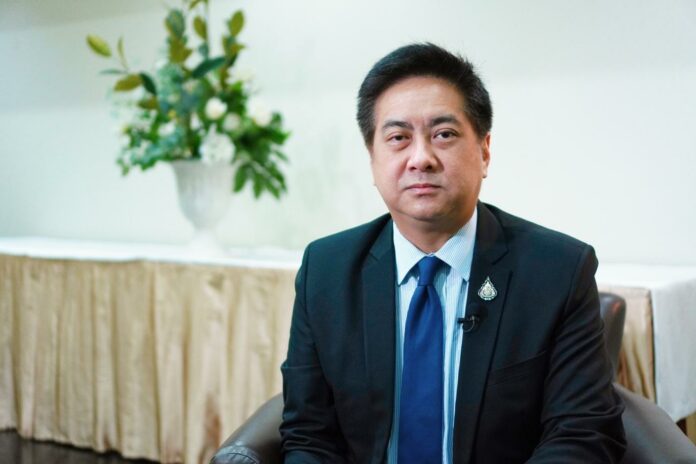
In a recent case, a German, known in Thai as Mr. Fuck Thong (Mr. Pumpkin), said on Friday he was warned by police his visa may not be extended if he continues to protest caretaker PM Gen. Prawit Wongsuwan.

Moritz Pfoh, 35, said he believes 90 percent of Thais do not like either Prawit or Gen. Prayut Chan-o-cha, both former coup leaders.

Pfoh, 35, has been in Thailand for eight years and has a Thai girlfriend. The Rayong-based German held a photo of Prawit with an X mark symbol taped over Prawit’s face at a major intersection in Rayong days ago.

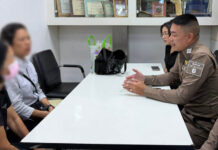
Mr. Fuck Thong said police told him on Thursday. “My visa may not be extended if I make a political defamation again.”

Some foreigners were quick to point out they this this is a taboo.

“First rule as an expat in Thailand. Be grateful to be permitted to live in paradise and do not meddle into politics or any state affairs whatsoever,” wrote Facebook user Adri Adrien, following the news post about Mr. Fuck Thong on Khaosod English Friday.

“None of his business. Can a Thai go to America and protest against Biden in public?” wrote another, Edrian Ye.

Whether you agree with Pfoh or not, he is not alone. “Been there done that” was French man Yan Marchal who was refused a reentry into Thailand last November after having stayed in the kingdom for 18 years.

Marchal, who now resides in the southeastern outskirt of Paris since he was effectively declared a persona non grata by the Thai authorities for mocking the Thai monarchy on YouTube, could not help, but post his opinion on the comment section following the news about Mr. Fuck Thong on Khaosod English Friday.

“Been there, done that. The good part of being deported and relocating abroad is that you can then speak all your mind while gaining a large following in Thailand since you made the news, and there is nothing the authorities can do about it anymore,” Marchal wrote. “Basically, they deprive themselves from a way to keep you in check. Good luck, Sir!”

Marchal, whom this writer happened to have just met for an interview in Paris on Tuesday along with exiled Thai political dissident Jaran Ditapichai (more of the interviews in the near future) received 49 Likes and four Loves for his comment about men like himself and Mr. Fuck Thong.

Many fellow foreign readers of Khaosod English were not impressed, however, and one told Marchal, “Yan Marchal. Then again, you’ll be stuck eating mediocre Thai food in Paris when you choose to do that. I prefer being in Thailand instead.”

The khao pad kra pao kung (holy basil shrimp stir-fry with rice) I had weeks ago at Paris’s 13th Arrondissement, the so-called Asian district, was not that mediocre, just a little overpriced at 10 euros, however.

Thai gastronomy aside, there is little room to convince those from one side or the other to switch – you either believe a foreigner should simply strictly behave as a guest while in Thailand or you believe in a borderless word and global citizenship.

Blurry line in a global interconnected world means Marchal and Mr. Fuck Thong would not be the last farangs in Thailand to be publicly politicized. Thailand has a long history of welcoming and integrating foreigners into its host society over the centuries – way back to the era of Louis XIV when some Thais suspected French Catholic priests and the Sun King wanted to convert King Narai to Catholicism.

On the other spectrum from Mr. Fuck Thong, after the 2014 coup, one American-born naturalized Thai businessman penned a commentary on a local English-language newspaper defending the coup makers and argued that it is business as usual because military intervention in Thailand is unique.

Truth be told, I found people like Marchal more (explicitly) concerns about the future of human rights, freedom of expression, and democracy in Thailand than many Thais. When he hosted me at his suburban abode for a night, the next morning I was also utterly surprised that he steamed sticky rice and prepared northeastern spicy pork salad (larb moo) for me for breakfast and not a croissant.

Marchal still very active on social media producing popular contents in Thai language critical of the monarchy for his largely Thai audience, particularly on the draconian lese majeste law. It seems although he is physically in France, he is still very much attached to Thailand and social media makes connecting with his Thai friends and audience instantaneous.

Marchal was married to a Thai and his two adolescent kids are half-Thai. He and Mr. Fuck Thong are not alone and would not be the last, whether some may think they are plonkers or not.

You cannot stop people from caring and being outspoken about the state of another country as much as you cannot choose where to be born. You cannot prevent foreigners from feeling more passionate about Thai politics while some Thais have already accepted their lot in life.

Advertisement

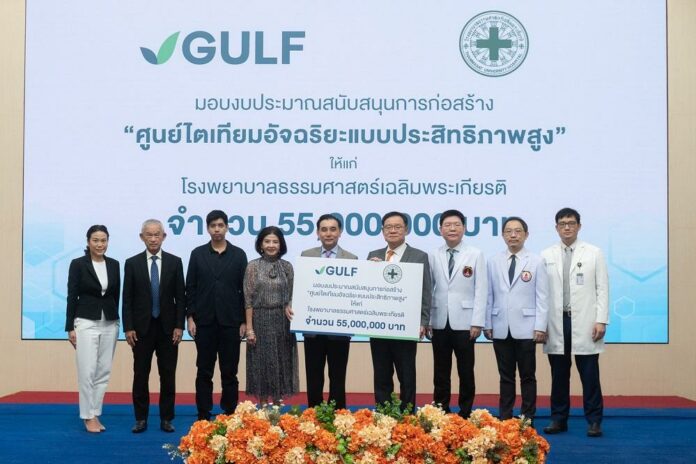
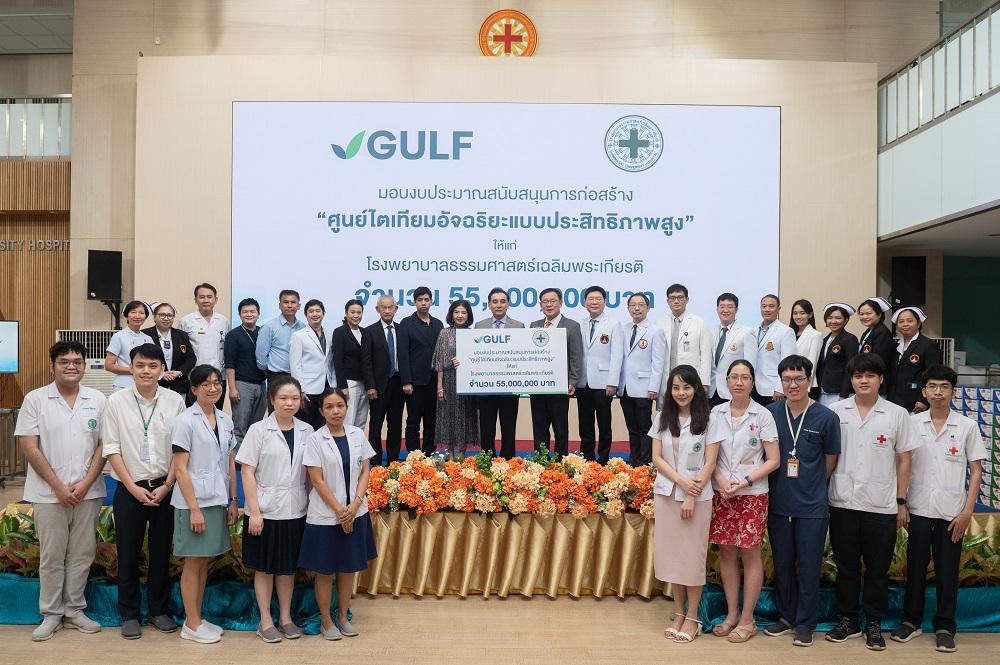
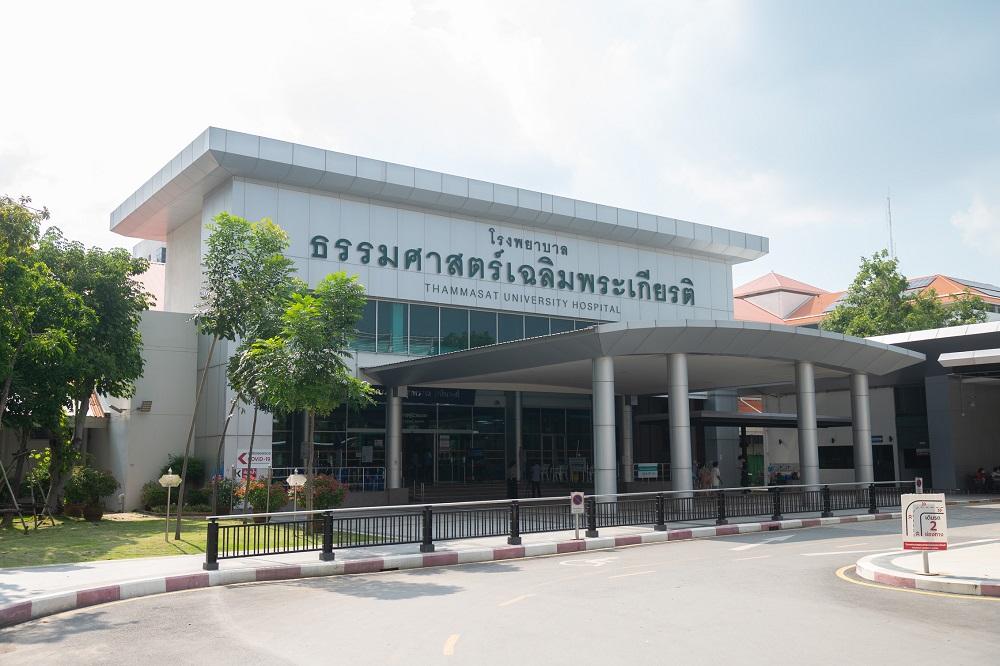
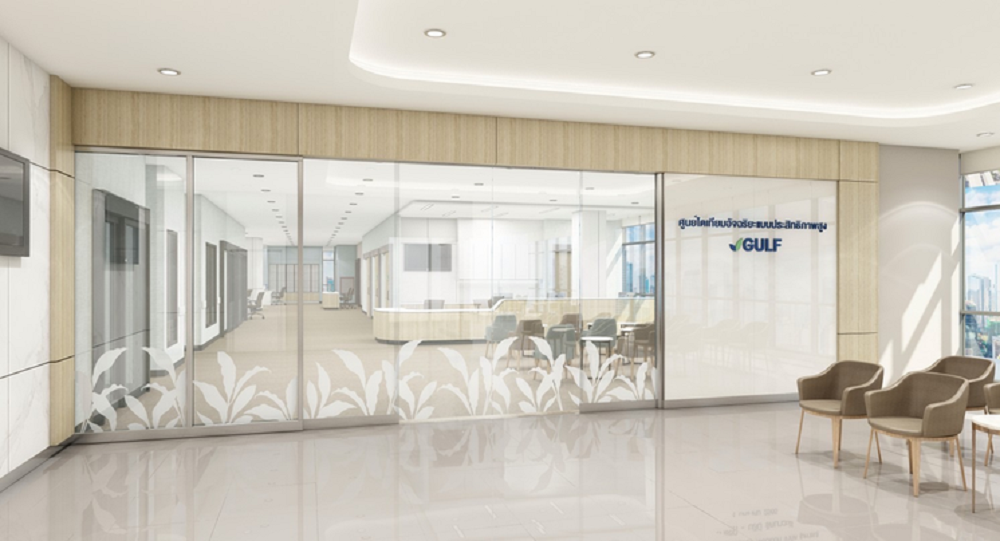
GULF presents THB 55M donation to Thammasat University Hospital for the establishment of Hemodialysis Center with Advanced Technologies

With the current situation in Thailand where there is the rising number of kidney disease patients who need dialysis, having equal access to standardized medical care is therefore essential to the quality of life of patients. At present, the hemodialysis unit of Thammasat University Hospital needed to increase the round of dialysis services daily to accommodate more patients. In the upper central region, Thammasat University Hospital is considered to be the only hospital that can provide comprehensive medical services. Therefore, people living in nearby provinces like Saraburi and Phra Nakhon Si Ayutthaya do not have to travel to Bangkok. The hospital also receives referrals from other hospitals in the Northern Bangkok area, the Upper Central region, the lower Northern region and the North Eastern region, resulting in a high number of patients. Consequently, the facility and medical equipment are insufficient for treatment and services.

image3

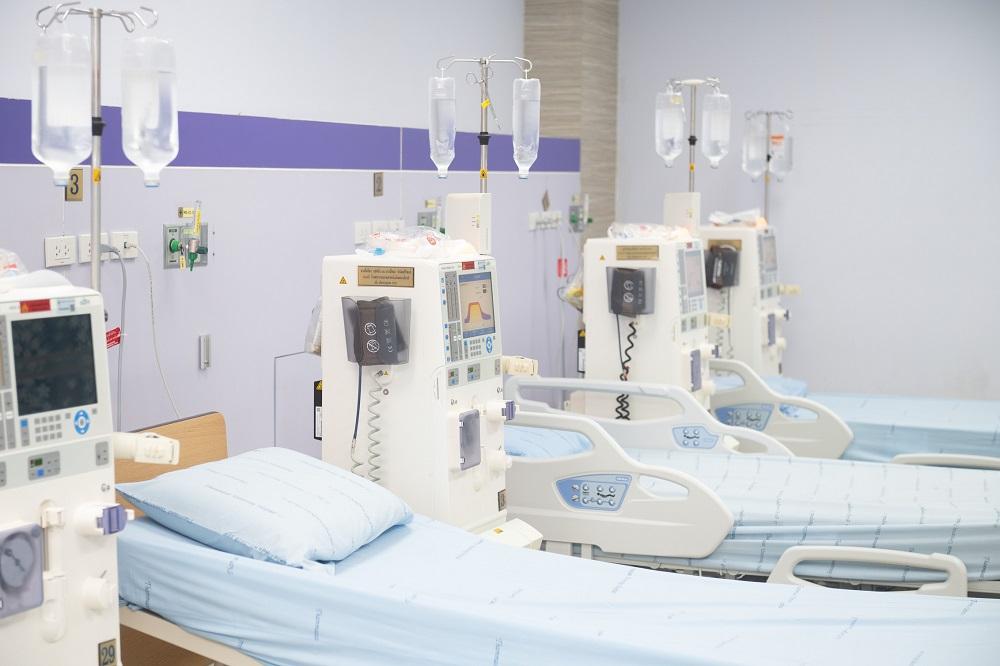
Gulf Energy Development Public Company Limited (GULF) recognizes the importance of this issue so for that reason, the company presented a donation of 55 million baht to Thammasat University Hospital to fund the establishment of the state-of-the-art Hemodialysis Center with 30 high-efficiency on-line hemodiafiltration machines to provide disadvantaged patients with chronic renal failure access to comprehensive and standardized treatment. The center also aims to be the Center of Excellence, offering comprehensive for patients with kidney disease and patients in need of kidney replacement therapy; acute hemodialysis, chronic hemodialysis, peritoneal dialysis, kidney transplant surgery, plasmapheresis, etc. In addition, the center will be an on-site teaching facility for medical students, nursing student and resident physicians specializing in nephrology. This is in line with GULF’s mission to promote public health along with improving the quality of life of people in the community

image2

Mr. Sarath Ratanavadi, Chief Executive Officer, GULF stated, “Since the spread of Covid-19 for over 2 years, GULF has consistently supported public health programs such as supporting the fund for procurement of medical equipment as well as supporting vulnerable people in the community, affected by Covid-19 with free meals. Therefore, GULF hopes that funding to support the establishment of the hemodialysis center will improve the quality of life of kidney disease patients. and this is also a long-term investment as this medical center will benefit the hospital moving forward.”

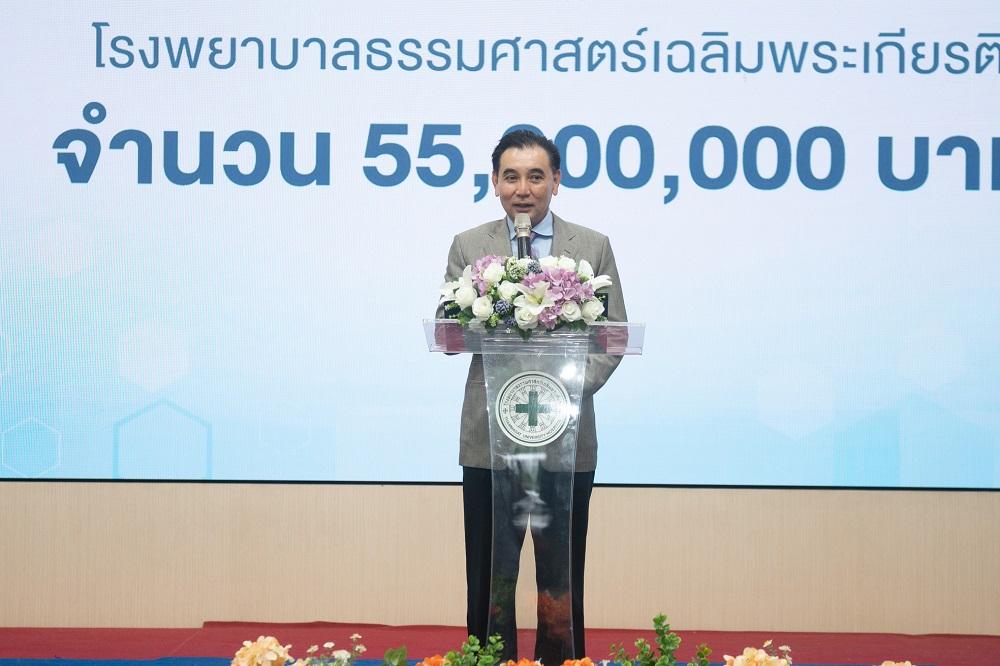
Professor Dr. Surapon Nitikraipoj, Chairman of the Executive Committee, Thammasat University Hospital said, “The current hemodialysis center has received a large number of patients since there is an increasing number of patients with severe and complicated kidney disease, resulting in insufficient space and equipment. Therefore, the hospital has to increase the service rounds to 3 times per day. However, the center is still not capable of providing service to every patient, causing delay or inadequate treatment. In order to support the hospital’s mission of providing underprivileged patients with equal access to medical care, Thammasat Hospital therefore carries on a policy with the opening of 30 high-efficiency advanced hemodialysis units to expand the potential and help patients with kidney disease in the long run. We would like to thank Gulf Group for recognizing the importance of building this hemodialysis center with advanced technologies.”

image5 image4

image6

“This hemodialysis center with advanced technologies will provide dialysis services to disadvantaged patients suffering from chronic renal failure, enabling them to have access to good and standardized medical care. It will be an agency that provides specialized services to patients with kidney disease with professional staff with expertise in caring of patients from OPD (outpatient) to OR (operating room) and wards with systematic care. The center aims to provide a one stop service where blood collection, examination, drug reception and other procedures will be taken in one place, delivering faster and more convenient service,” Associate Professor Pharuhat Tor-Udom, M.D, Director, Thammasat University Hospital said.

Hemodialysis Center with Advanced Technologies is located on the 4th floor in the laboratory and diagnostic radiology building, Thammasat University Hospital. With a total area of ​​900 square meters, the center is equipped with 30 dialysis machines with innovative technology and smart IT system to assess the methods of dialysis. The amount of fluid required for each patient is calculated by weight, blood tests, including the patient’s vital signs during dialysis to optimize the dialysis treatment according to the symptoms. In addition, the dialysis machine uses two waste disposal processes combined, namely the diffusion process, and the convection process, which are mostly used in European countries thanks to its efficiency to eliminate large molecular waste in the body which traditional dialysis cannot do as well as help reduce infection, side effects, complication rate including mortality rate. Overall, it will allow patients to have a better quality of life and longer lifespan. Currently, the Hemodialysis Center is under construction and expected to be open within 2023.

Advertisement

OSMEP is confident that APEC SMEs Meetings will alleviate Thai’s SME participation in Global Supply Chain.

As Thailand will host the upcoming APEC 2022 and one of the main topic of cooperation will be to support Small and Medium-sized Enterprises (SMEs). The Government has tasked the Office of Small and Medium Enterprise Promotion (OSMEP) to take the lead in hosting the 28th APEC SME Ministerial Meeting, the 54th APEC SME Working Group Meeting and related activities under the theme “Open. Connect. Balance.” which will be held during 5 – 10 September 2022, in Phuket.

APEC is an important forum to support economic cooperation, including 21 major economies which has a combined GDP of more than U$D 53 trillion or more than half of the World GDP, to come and meet for the best economic way forward.

This is a golden opportunity for Thailand to showcase its potential and capabilities in driving the economy from the primary, secondary and tertiary levels during the covid-19 pandemic over the past two years.

Assoc. Professor Dr. Veerapong Malai, Director General of OSMEP, revealed that the main goal for OSMEP is to play a strategic role in order to safeguard Thailand interests and SME business in the multilateral forum to create opportunities for SMEs to gain better access to finance, global markets, and to keep up with new challenges for a better living standard for all.

“Our aim is to safeguard the interests of Thailand and SME business, and to link Thai entrepreneurs with alliance in the Asia Pacific region in order to increase economic opportunities and strengthen the link leading to become part of the Global Supply Chain.”

Additionally, this meeting in Phuket will be a golden opportunity to showcase the Thailand’ssoft power in important travel destinations, heritage and culture to the World to experience.  In Phuket alone, there are 42,598 SME operators and more than 59% are from the service industry, especially in the tourism related activities such as hotels, resorts, restaurants. With the wide variety of natural beauty all over Thailand combined with the unique Thai traditional heritage these can generate a lot of income each year.

The main theme of the APEC SME Meeting is the Bio-Circular-Green Economy Model (BCG Model) focusing on “Inclusive Recovery of APEC MSMEs through BCG & High Impact Ecosystem” taking into account the climate change and sustainability which is the global current trend right now.

“With no less than 20 SME operators who will be given the opportunity to exhibit their specialties on food, textiles-clothing, handicrafts and home decoration etc. in accordance with the BCG Model throughout the entire period of the Meeting to the international market.”

“Delegates and Associates will also visit 2 districts of importance; namely the Phuket Old Town, rich in Chino-Portuguese architecture and the 200 years old Baan Bang Rong community in Talang which formed a highly successful agro-tourism conservation group and became popular with both local and foreign tourists alike” revealed Dr. Veerapong.

In order to ensure a greater success for this Meeting, OSMEP has integrated full cooperation with Phuket Municipality and other units within and outside the province such as TAT, AOT, Phuket Chamber of Commerce, Provincial Tourism and Sports as co-hosts to ensure maximum benefits to the Thai SME.

“The outcome from this Meeting will give Thailand a clear direction to develop and support SME operators for quick and comprehensive recovery, sustainability, be able to face new challenges and to become part of the greater economy in a more efficient way” Dr. Veerapong concluded.

Interested individual and operator can follow this Meeting at: https://apecsme2002.SME.go.th  or from OSMEP facebook at: https://www.facebook.com/officeofsmes

Advertisement

UN Inspectors Arrive at Ukraine Nuclear Plant Amid Fighting

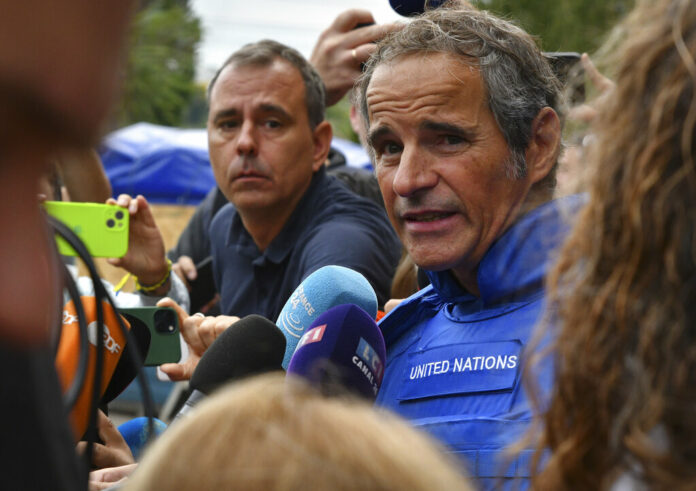
Director General of the International Atomic Energy Agency (IAEA) Rafael Mariano Grossi speaks to the media as a mission of the International Atomic Energy Agency prepare to visit the Zaporizhzhia nuclear power plant, in Zaporizhzhia, Ukraine, Thursday, Sept. 1, 2022. Photo: Andriy Andriyenko / AP

ZAPORIZHZHIA, Ukraine (AP) — A U.N. inspection team entered Ukraine’s Zaporizhzhia nuclear power plant Thursday on a mission to safeguard it against catastrophe, reaching the site amid fighting between Russian and Ukrainian forces that prompted the shutdown of one reactor and underscored the urgency of the task.

The 14-member delegation from the International Atomic Energy Agency arrived in a convoy of SUVs and vans after months of negotiations to enable the experts to pass through the front lines and get inside Europe’s biggest nuclear plant.

“The IAEA is now there at the plant and it’s not moving. It’s going to stay there. We’re going to have a continued presence there at the plant with some of my experts,” IAEA director Rafael Grossi, the mission leader, declared after the group got its first look at conditions inside.

But he added: “I will continue to be worried about the plant until we have a situation which is more stable.”

As the experts made their way through the war zone toward the complex, Russia and Ukraine accused each other of shelling the area and trying to derail the visit. The fighting delayed the team’s progress.

“There were moments when fire was obvious — heavy machine guns, artillery, mortars at two or three times were really very concerning, I would say, for all of us,” Grossi said.

Just before the IAEA team arrived, Energoatom, Ukraine’s state nuclear power company, said Russian mortar shelling had led to the shutdown of one of its reactors by its emergency protection system and had damaged a backup power supply line used for in-house needs.

One of the plant’s reactors that wasn’t operating was switched to diesel generators, Energoatom said.

Once inside the plant, Grossi said, his experts were able to tour the entire site, including control rooms, emergency systems and diesel generators. He said he met with the plant’s staff and residents of the nearby village, Energodar, who asked him for help from the agency.

He reported that the team had collected important information in its initial inspection and will remain there to continue its assessment.

“It is obvious that the plant and the physical integrity of the plant has been violated several times by chance, deliberately — we don’t have the elements to assess that,” Grossi said. “And this is why we are trying to put in place certain mechanisms and the presence, as I said, of our people there.”

The Zaporizhzhia plant has been occupied by Russian forces but run by Ukrainian engineers since the early days of the 6-month-old war. Ukraine alleges Russia is using it as a shield to launch attacks, while Moscow accuses Ukraine of recklessly firing on the area.

Ukrainian President Volodymyr Zelenskyy had tough words for the IAEA delegation. While applauding its arrival at the plant, he said independent journalists were kept from covering the visit, allowing the Russians to present a one-sided, “futile tour.”

And he said that while Grossi agreed to support Ukrainian demands for the demilitarization of the plant — including the withdrawal of Russian forces from it — the IAEA has yet to issue such a call publicly.

Fighting in early March caused a brief fire at its training complex, and in recent days, the plant was briefly knocked offline because of damage, heightening fears of a radiation leak or a reactor meltdown. Officials have begun distributing anti-radiation iodine tablets to nearby residents.

Experts have also expressed concern that the Ukrainian staff is overworked and stressed out from the occupation of the plant by Russian forces — conditions they say could lead to dangerous errors.

Grossi said after his initial tour that the Ukrainian employees are “in a difficult situation, but they have an incredible degree of professionalism. And I see them calm and moving on.”

Russian Foreign Minister Sergey Lavrov said Moscow expects “impartiality” from the team.

“We are taking all the necessary measures to ensure that the plant is secure, that it functions safely and that the mission accomplishes all of its plans there,” he said.

Ahead of the visit, Russia’s Defense Ministry reported that Ukrainian forces unleashed an artillery barrage on the area and sent a group of up to 60 scouts to try to seize the plant on the Dnieper River. It said that the Ukrainian troops arrived in seven speedboats but that Russian forces “took steps to destroy the enemy,” using warplanes.

Some of the Ukrainian shells landed 400 meters (yards) from the plant’s No. 1 reactor, Russian authorities said.

The Russian-installed administration in Enerhodar reported that at least three residents were killed early Thursday by Ukrainian shelling.

Ukrainian officials, meanwhile, accused Russian forces of shelling Enerhodar and a corridor that the IAEA team was set to go through.

Neither side’s version of events could immediately be independently verified.

The fighting came as Ukraine endeavored to start the new school year in the middle of a war. Just over half of the country’s schools are reopening to in-person classes despite the risks.

In other developments, authorities with the Russian-backed separatist government in the eastern region of Donetsk said 13 emergency responders were killed by Ukrainian shelling in Rubtsi, a village in neighboring Kharkiv province. Much of the fighting in recent weeks and months has centered on the area.

___

Story: Yesica Fisch and Derek Gatopoulos. Gatopoulos reported from Kyiv, Ukaine.

Advertisement

Myanmar Court Convicts Suu Kyi of Vote Fraud, Adds Jail Time

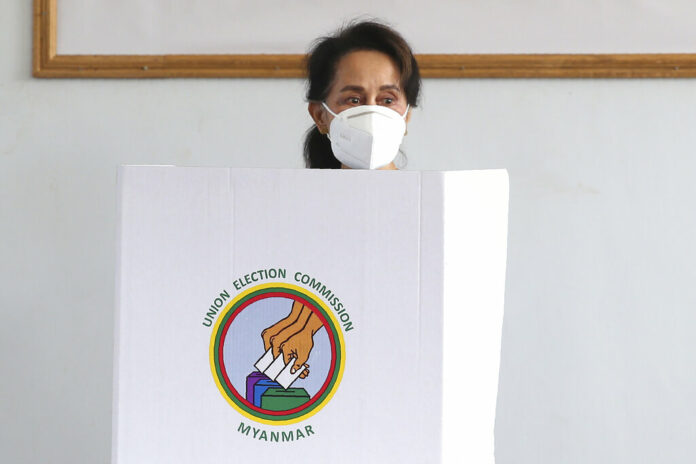
FILE - Myanmar's leader Aung San Suu Kyi makes an early voting for upcoming Nov. 8 general election at Union Election Commission office in Naypyitaw, Myanmar, on Oct. 29, 2020. Photo: Aung Shine Oo / AP File

BANGKOK (AP) — A court in Myanmar on Friday sentenced ousted leader Aung San Suu Kyi to three years’ imprisonment with labor after finding her guilty of election fraud, adding more jail time to the 17 years she is already serving for other offenses prosecuted by the military government.

The latest verdict also carries potentially significant political consequences for Suu Kyi’s National League for Democracy party by lending support to the government’s explicit threats to dissolve it before a new election the military has promised for 2023.

Suu Kyi’s party won the the 2020 general election in a landslide victory, but the army seized power the following February and kept her from a second five-year term in office. The army contends it acted because of alleged widespread fraud in the polls though independent election observers did not find any major irregularities. Some critics of Senior Gen. Min Aung Hlaing, who led the takeover and is now Myanmar’s top leader, believe he acted because the vote thwarted his own political ambitions.

The military’s seizure prompted widespread peaceful protests that were quashed with lethal force, triggering armed resistance that some U.N. experts now characterize as civil war.

Suu Kyi had already been sentenced to 17 years in prison on charges of illegally importing and possessing walkie-talkies, violating coronavirus restrictions, sedition and five counts of corruption. Many top members of her party and government also have been jailed, while others are in hiding or have fled abroad.

Suu Kyi’s supporters and independent analysts say all the charges against her are politically motivated and an attempt to discredit her and legitimize the military’s seizure of power while keeping her from returning to politics.

Friday’s ruling by the special court at the prison in the capital, Naypyitaw, was conveyed by a legal official who insisted on anonymity for fear of being punished by the authorities, who have restricted the release of information about Suu Kyi’s trials. He said all the defendants appeared in good health.

He said that ousted President Win Myint and the former minister of the president’s office, Min Thu, both co-defendants in the election fraud case, each received sentences of three years. All three received prison terms with labor, a category of punishment distinct from hard labor that can involve light workshop activities. Lawyers will file appeals in the coming days, he added.

The election fraud charge against Suu Kyi was filed in November by the Election Commission, whose members were replaced by the military after it seized power.

It charged that Suu Kyi and her colleagues violated provisions in the constitution by allegedly influencing the old commission.

The military-appointed commission accused them of being “involved in electoral processes, election fraud and lawless actions” related to the election.

The commission claimed it has found more than 11 million irregularities in voter lists that could have let voters cast multiple ballots or commit other fraud.

Thein Soe, the new Election Commission chief, has said his agency would consider dissolving Suu Kyi’s party, charging that it had worked illegally with the government to give itself an advantage at the polls.

State media reported after a meeting two months ago of the ruling National Defense and Security Council that 2,417 officials had been prosecuted for failing to supervise the electoral processes and action was underway to prosecute voters who cast their ballots more than once.

The Election Commission has also warned that Suu Kyi’s party would be disbanded if it did not submit its financial accounts and expenses for inspection. The commission said it was examining political parties to see whether they were maintaining and using funds in accordance with the law.

Commission member Khin Maung Oo said the examination of Suu Kyi’s party would be delayed because some of its officers had been arrested and others had gone into hiding. Party officials who have escaped arrest said last year that they do not recognize the military-appointed commission and its statements are illegal.

In separate proceedings, Suu Kyi is being tried on the charge of violating the Official Secrets Act, which carries a maximum sentence of 14 years, and seven counts of corruption charges, which carry a maximum sentence of 15 years each.

Although there is little support for the army’s power grab and skepticism about its claims, they were not alone in criticizing the election, even before the vote took place.

The bedrock problem with Myanmar’s democracy is that the country’s 2008 constitution, drafted under a previous army-led government, reserves 25% of seats in parliament for unelected military officials and grants the military control of key government ministries.

Independent rights groups had criticized the disenfranchisement of the Muslim Rohingya ethnic minority and cancellation of the vote in certain areas under Suu Kyi’s first government. The Election Commission had cited the dangers of combat between government forces and ethnic minority guerrillas, but critics suggested certain areas were singled out for cancellation because they were certain to elect lawmakers from parties not allied to Suu Kyi’s.

A lack of transparency raised questions about the impartiality of the commission, which was appointed by Suu Kyi’s government.

Human rights groups and other observers also had concerns about a continued crackdown by her government on the rights to freedom of expression and peaceful assembly, including the arbitrary arrest and detention of civil society actors and activists.

___

Story: Grant Peck.

Advertisement

Malaysian Court To Rule on Graft Case of Jailed Ex-PM’s Wife

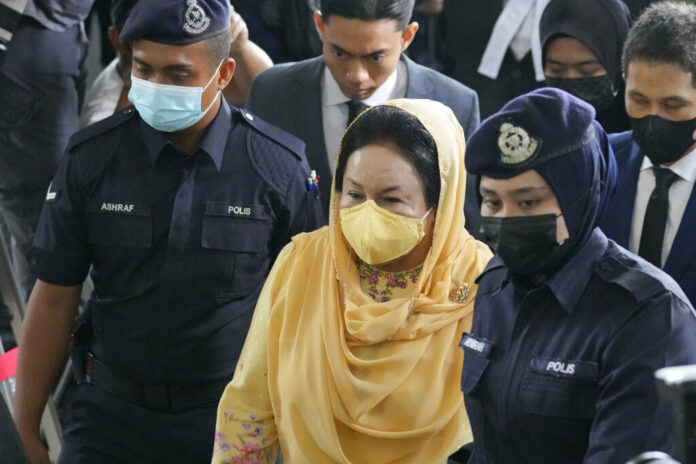
Rosmah Mansor, center, wife of former Malaysian Prime Minister Najib Razak, arrives at Kuala Lumpur High Court in Kuala Lumpur, Thursday, Sept. 1, 2022. Photo: Vincent Thian / AP

KUALA LUMPUR, Malaysia (AP) — The wife of jailed ex-Prime Minister Najib Razak arrived in court Thursday for a verdict in her corruption trial involving a 1.25 billion ringgit ($279 million) solar energy project, just days after her husband was imprisoned over the looted 1MDB state fund.

Rosmah Mansor faces three charges of soliciting bribes and receiving 6.5 million ringgit ($1.5 million) between 2016 and 2017 to help a company secure a project to provide solar energy panels to schools on Borneo island.

Before the verdict is delivered, the court is expected to hear an application filed Tuesday by Rosmah to disqualify High Court Judge Mohamed Zaini Mazlan. Rosmah cited a loss of confidence in the judge after a 71-page document was leaked last Friday on a website that allegedly contained a guilty judgment against her. She said she was shocked to read it was not written by the judge himself but by unknown people in the court’s “research unit.”

Rosmah, 70, said she was not confident that the judge can be fair as he may be influenced by third parties. She is requesting Zaini to recuse himself and for a retrial by a new judge.

Malaysia’s top court has slammed the action of the website, run by a blogger based in England, as “a deliberate act” to smear the court’s reputation and has lodged a complaint with police. Police have said the leaked document was research work on the ongoing trial and not a judgment.

Last week, the court also filed a police report against the same website for publishing a document it said was the Federal Court’s guilty verdict against Najib, just before the ruling was read out in court. The court has said the leaked document was a working draft of the ruling.

Najib began a 12-year prison term last week after losing his final appeal in one of the five graft cases against him involving the multibillion-dollar pilfering of 1MDB.

If found guilty, Rosmah is expected to remain out on bail for her appeal to higher courts.

The couple have been hit with multiple counts of graft after the shocking ouster of Najib’s United Malays National Organization in May 2018 elections, fueled by public anger over the 1MDB scandal. UMNO has since returned to power after defections caused the collapse of the reformist government that won 2018 polls.

Rosmah’s trial had shed light on her alleged sway in the government since her husband took office in 2009. Prosecutors said Rosmah wielded considerable influence due to her “overbearing nature,” even though she held no official position. Witnesses testified that a special department, called First Lady of Malaysia, was set up to handle Rosmah’s affairs.

Her former aide, who was jointly charged with Rosmah but later testified for the prosecution, told the court that many businessmen lobbied Rosmah for help to secure government projects. The aide testified Rosmah was feared by civil servants and requests from her department were often swiftly carried out.

The court also heard that she spent 100,000 ringgit a month ($22,300) to hire online propagandists to deflect criticism of her lavish lifestyle that led to her being despised by many Malaysians.

After Najib lost power, police raiding family residences seized hundreds of boxes of luxurious Hermes Birkin handbags, 423 watches, 14 tiaras and other jewelries plus cash estimated at more than 1.1 billion ringgit ($246 million).

During her trial, 23 prosecution witnesses testified but only two defense witnesses were called, including Rosmah. She has told the court she was never involved in government affairs and that her former aide was a corrupt liar who had used her name to solicit bribes and pocketed the money himself.

Separately, Rosmah has also been charged with laundering illegal proceeds and tax evasion linked to 1MDB in another trial that hasn’t started.

1MDB was a development fund that Najib set up after taking office. Investigators allege more than $4.5 billion was stolen from the fund and laundered by Najib’s associates through layers of bank accounts in the U.S. and other countries to finance Hollywood films and extravagant purchases that included hotels, a luxury yacht, art works and jewelry.

Advertisement

N. Korea May Send Workers To Russian-occupied East Ukraine

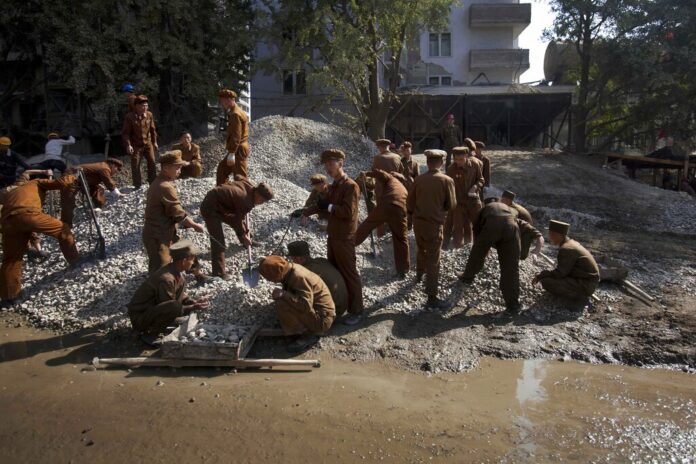
FILE - North Korean construction workers labor in the Mansudae area of Pyongyang, North Korea, Oct. 11, 2011. Photo: David Guttenfelder / AP File

SEOUL, South Korea (AP) — As the war in Ukraine stretches into its seventh month, North Korea is hinting at its interest in sending construction workers to help rebuild Russian-occupied territories in the country’s east.

The idea is openly endorsed by senior Russian officials and diplomats, who foresee a cheap and hard-working workforce that could be thrown into the “most arduous conditions,” a term Russia’s ambassador to North Korea used in a recent interview.

North Korea’s ambassador to Moscow recently met with envoys from two Russia-backed separatist territories in the Donbas region of Ukraine and expressed optimism about cooperation in the “field of labor migration,” citing his country’s easing pandemic border controls.

The talks came after North Korea in July became the only nation aside from Russia and Syria to recognize the independence of the territories, Donetsk and Luhansk, further aligning with Russia over the conflict in Ukraine.

The employment of North Korean workers in Donbas would clearly run afoul of U.N. Security Council sanctions imposed on the North over its nuclear and missile programs and further complicate the U.S.-led international push for its nuclear disarmament.

Many experts doubt North Korea will send workers while the war remains in flux, with a steady flow of Western weapons helping Ukraine to push back against much larger Russian forces.

But they say it’s highly likely North Korea will supply labor to Donbas when the fighting eases to boost its own economy, broken by years of U.S.-led sanctions, pandemic border closures and decades of mismanagement.

The labor exports would also contribute to a longer-term North Korean strategy of strengthening cooperation with Russia and China, another ideological ally, in an emerging partnership aimed at reducing U.S. influence in Asia.

Russian Deputy Prime Minister Marat Khusnullin has said that North Korean construction companies have already offered to help rebuild war-torn areas in Donbas, and that North Korean workers would be welcomed if they come.

That’s a clear break from Russia’s position in December 2017, when it backed new U.N. Security Council sanctions, imposed on North Korea for testing an intercontinental ballistic missile, requiring member states to expel all North Korean workers from their territories within 24 months.

Russia now seems eager to undercut those sanctions as it faces a U.S.-led pressure campaign aimed at isolating its economy over its aggression in Ukraine, said Lim Soo-ho, a senior analyst at the Institute for National Security Strategy, a think tank run by South Korea’s spy agency.

“For Russia, the idea of employing North Korean workers for postwar rebuilding has real merit,” Lim said. “Large numbers of North Korean construction workers came to Russia in previous years, and demand for their labor was strong because they were cheap and known for quality work.”

Before the 2017 sanctions, labor exports were a rare legitimate source of foreign currency for North Korea, bringing hundreds of millions of dollars a year to the government.

The U.S. State Department earlier estimated that about 100,000 North Koreans were working overseas in government-arranged jobs, primarily in Russia and China, but also in Africa, the Middle East, Europe and South Asia.

Civilian experts say the workers earned $200 million to $500 million a year for North Korea’s government while pocketing only a fraction of their salaries, often toiling for more than 12 hours a day under constant surveillance by their country’s security agents.

While Russia sent home some North Korean workers before the U.N. deadline in December 2019, an uncertain number remained, continuing to work or becoming stuck after the North sealed its borders to fend off COVID-19.

North Korea could easily mobilize possibly several hundreds or even thousands of workers to Donbas if it decides to use the laborers who remained in Russia, said Kang Dong Wan, a North Korea expert at South Korea’s Dong-A University.

It’s not yet clear how lucrative Donbas would be for North Korea.

Russia is short of cash, battered by Western sanctions targeting its financial institutions and a broad swath of industries. North Korea likely has no interest in being paid in rubles because of worries about the currency’s purchasing power, which bottomed out during the war’s early days before Moscow took steps to artificially restore its value.

North Korea might be willing to be compensated with food, fuel and machinery, an exchange that would likely also violate Security Council sanctions, Lim said.

Hong Min, a senior analyst at South Korea’s Institute for National Unification, said North Korea could have bigger things in mind than short-term gains from labor exports.

“The United States’ strategic competition with China and confrontation with Russia have given North Korea breathing room as it steps up to join Moscow and Beijing in a united front to counter U.S. influence and promote a multipolar international system,” Hong said.

North Korea has already used the war in Ukraine to ramp up its weapons development, exploiting divisions in the Security Council, where Russia and China vetoed U.S.-sponsored resolutions to tighten sanctions on North Korea over its revived ICBM tests this year.

North Korea and Russia also see eye-to-eye on key policies.

North Korea has repeatedly blamed the United States for the Ukraine crisis, saying the West’s “hegemonic policy” justifies military actions by Russia in Ukraine to protect itself.

Russia, meanwhile, has repeatedly condemned the revival of large-scale military exercises between the U.S. and South Korea this year, accusing the allies of provoking North Korea and aggravating tensions.

Alexander Matsegora, Russia’s ambassador to North Korea, has backed its dubious assertion that its COVID-19 outbreak was caused by South Korean activists who flew anti-North Korean leaflets and other materials across the border with balloons.

Nam Sung-wook, a professor at the unification and diplomacy department of South Korea’s Korea University, is one of the few experts who sees the labor exports beginning soon.

Desperate to address its economic woes, North Korea might send small groups of workers to Donbas on “scouting missions” over the next few months and gradually increase the numbers depending on how the war goes, he said.

“Interests are aligning between Pyongyang and Moscow,” Nam said. “One hundred or 200 workers could eventually become 10,000.”

___

Story: Kim Tong-hyung.

Advertisement

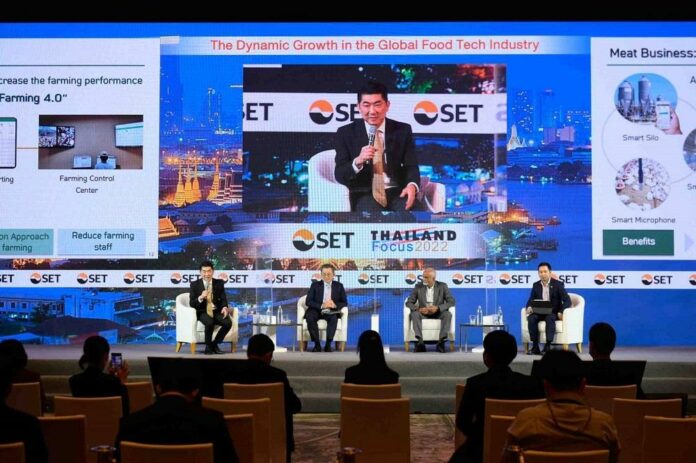
CP Foods CEO addresses five megatrends that shape the future of food industry

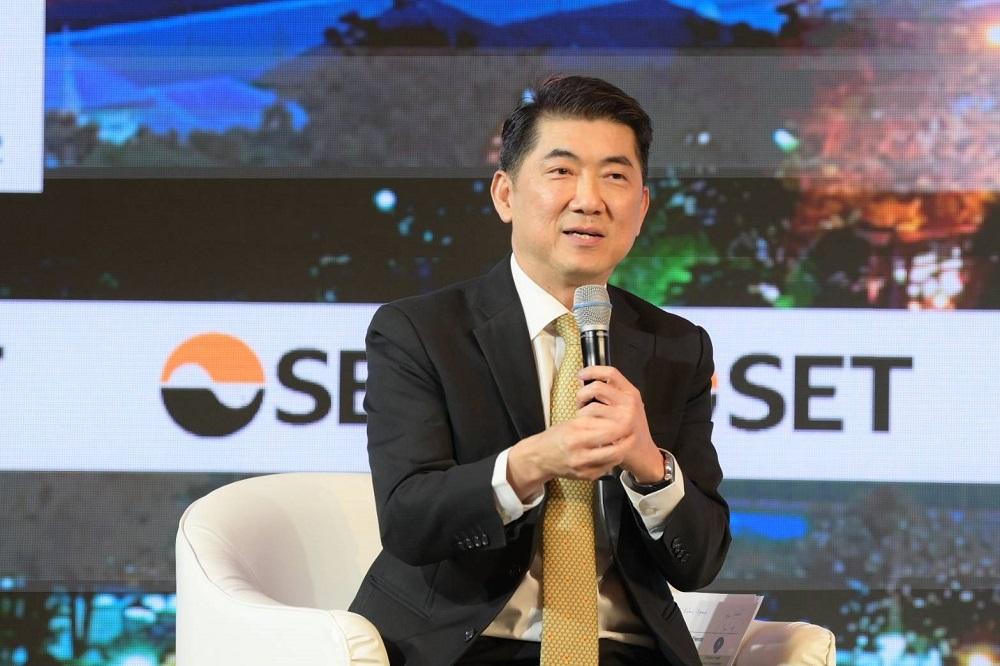
Prasit Boondoungprasert, Chief Executive Officer of Charoen Pokphand Foods Public Company Limited (CP Foods) said technology and innovations will transform food value chain in response to

five global customer trends, included Healthy foods, convenient, Product and Channel Innovation, Premium and Value for Money and sustainability, that are shaping the future of global food industry.

Mr. Prasit, who spoke at the recent The Dynamic Growth in the Global Food Tech Industry” Seminar in Thailand Focus 2022, hosted by Thailand Stock Exchange, suggested Thai food producers should aware the consumer behaviors across the world have changed drastically due to outbreak of Covid-19. The future of food production and agriculture are required to match five global consumer trends:

1.Health and Wellbeing: People trends to consume healthy and fresh food. Healthy products have fastest growing demand.

2.Convenient: Convenient drives the food industry which mean easy to buy at any time. For example, the rise of food delivery app.

  1. Product and channel innovation: New generations are willing to explore the new products, packaging and delivery channel.
  2. Premium and Value for Money: Growth of segment for premium and value for money. Slightly reduction of middle segment.
  3. Envirผnmental sustainability: sustainability packaging and environmental certification are not just added value, but a necessary.

image4 26

To follow up with these trends, Mr, Prasit further explained that CP Foods has constantly placed importance on research and development of nutrition innovations and created added value to food products, continuously focused on healthy foods and good nutrition in accordance with consumer behaviour. CP Foods has launched premium foods with nutritional value added such as Benja Chicken, the first brown rice fed chicken and certified by NSF that guaranteed Benja Chicken is Raised Without Antibiotics and No Hormones Added. Cheeva Pork, a pork with high omega-3 from normal pigs that fed with superfood including Flaxseed, Fish Oil, Seaweed. Recently, CP Foods had developed Meat Zero, a plant-based meat alternatives, using the company’s PLANTTEC Innovation that allows plant-based meat to taste and having texture like real meat. It is also cholesterol-free and has good nutrients such as protein and fibre. Moreover, the company is also seeking the opportunities with its potential partners to develop cell-based meat, in a bid to keep up the global food trends. The company believes cell-based meat technology might disrupt the food production and consumption in the future.

image3 26

image5 22

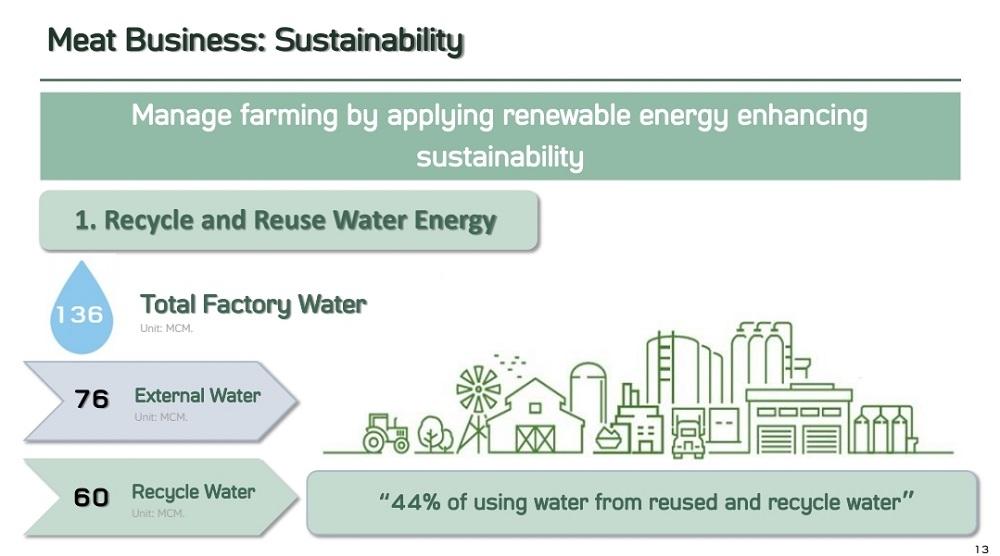
At the forum, in the challenging circumstances, the company also emphasizes the importance of digitization and technology will play a crucial role in boosting Thai food industry’s competitiveness. For CP Foods itself, the company already implemented variety of technologies, automation and digitization to enhance its production efficiency, and to ensure food safety and quality. The company operates “Smart Farm”, a nearly autonomous ecosystem, integrating IoT, Automation and AI into its operation to enhance production efficiency, health of animal and positive impact on consumers health as well.

Mr. Prasit added that the company implements smart silo solutions to help streamline the feed inventory and order management processes. When combined with advance breeding program, and good animal welfare practices, the efficiency is improved and the animals can live healthy and happy lives throughout their time at farms.

image1 34

Aside discussion on technology, Mr. Prasit said that CP Foods will use Thailand as a country base for research and development of new products and export globally. However, the country still needs to build up capacities for raw materials in order to gain competitive advantage in global market.

Advertisement

Feds Cite Efforts To Obstruct Probe of Docs at Trump Estate

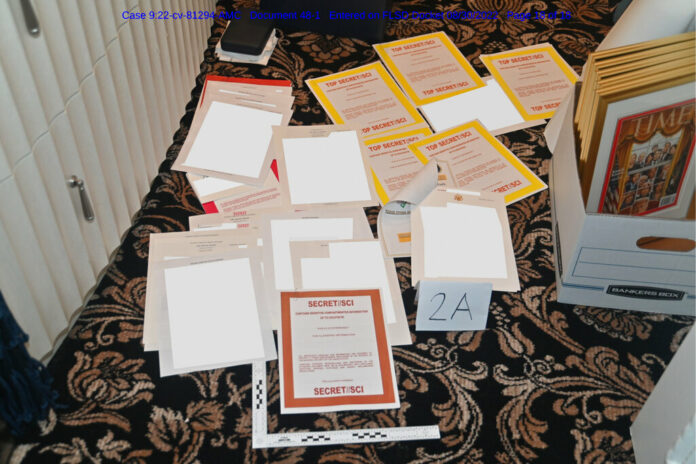
This image contained in a court filing by the Department of Justice on Aug. 30, 2022, and redacted by in part by the FBI, shows a photo of documents seized during the Aug. 8 search by the FBI of former President Donald Trump's Mar-a-Lago estate in Florida. Photo: U.S. Department of Justice via AP

WASHINGTON (AP) — The Justice Department said Tuesday it had uncovered efforts to obstruct its investigation into the discovery of classified documents at Donald Trump’s Florida estate, saying “government records were likely concealed and removed” from a storage room even after the former president’s representatives had assured officials that they’d thoroughly searched the property.

The FBI also seized 33 boxes containing more than 100 classified records during its Aug. 8 search of Mar-a-Lago and found three classified documents stashed in office drawers, according to a filing that lays out the most detailed chronology to date of stained interactions between Justice Department officials and Trump representatives over the discovery of government secrets.

Tuesday night’s filing included a photo showing the cover pages of a smattering of paperclip-bound classified documents — some marked as “TOP SECRET//SCI” with bright yellow borders, and one marked as “SECRET//SCI” with a rust-colored border — along with whited-out pages, splayed out on a carpet at Mar-a-Lago. Beside them sits a cardboard box filled with gold-framed pictures, including a Time Magazine cover.

The filing offers yet another indication of the sheer volume of classified records retrieved from Mar-a-Lago. It shows how investigators conducting a criminal probe have focused not just on why the records were improperly stored there, but also on the question of whether the Trump team intentionally misled them about the continued, and unlawful, presence of government secrets.

The document sheds new details on the events of this past May and June, when FBI and Justice Department officials issued a subpoena for the missing records and then visited a storage room at Mar-a-Lago that contained top-secret documents and other information.

During that June visit, the document says, Trump’s lawyers told investigators that all the records that had come from the White House were stored in one location — a Mar-a-Lago storage room — and that “there were no other records stored in any private office space or other location at the Premises and that all available boxes were searched.”

After that, though, the Justice Department “developed evidence that government records were likely concealed and removed from the Storage Room and that efforts were likely taken to obstruct the government’s investigation.”

In their search earlier this month, agents found classified documents both in the storage room as well as in the former president’s office, including three classified documents found not in boxes, but in office desks.

The filing responds to a request from the Trump legal team for a special master to review the documents seized during the Aug. 8 search of Mar-a-Lago. U.S. District Judge Aileen Cannon is set to hear arguments on the matter.

Trump’s lawyers last week asked for the appointment of a special master who’d be tasked with reviewing the records taken and setting aside documents protected by claims of legal privilege. Cannon on Saturday said it was her “preliminary intent” to appoint such a person but also gave the Justice Department an opportunity to respond.

On Monday, the department said it had already completed its review of potentially privileged documents and identified a “limited set of materials that potentially contain attorney-client privileged information.”

In a separate development, the Trump legal team has grown with the addition of another attorney. Chris Kise, Florida’s former solicitor general, has joined the team of lawyers representing Trump, according to two people familiar with the matter who were not authorized to discuss the move by name and spoke on condition of anonymity. Kise did not return messages seeking comment.

___

Story: Eric Tucker, Jill Colvin, and Michael Balsamo. Colvin and Balsamo reported from New York.

Advertisement

Gorbachev, Who Redirected Course of 20th Century, Dies at 91

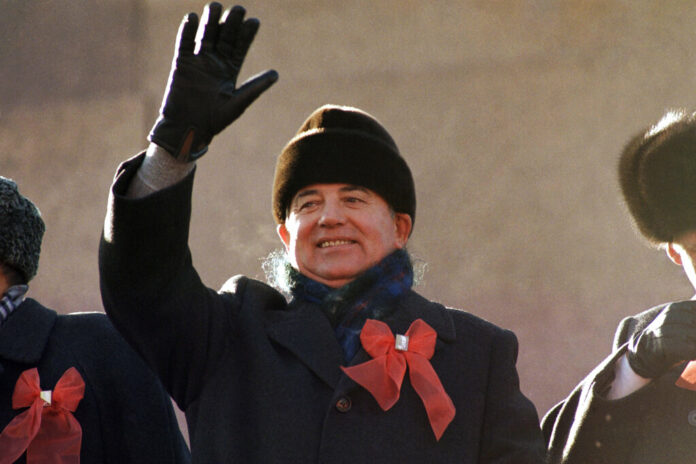
FILE - Soviet leader Mikhail Gorbachev waves from the parade review stand of the Lenin Mausoleum on Saturday, Nov. 7, 1987 in Moscow' s Red Square during the 70th anniversary of the Russian Revolution. Photo: Boris Yurchenko / AP

MOSCOW (AP) — Before Mikhail Gorbachev came along, the Soviet Union seemed an immovable superpower in perpetual antagonism to the United States. With a breathtaking series of reforms, Gorbachev changed all that — and re-directed the course of the 20th century.

Alongside Ronald Reagan and Margaret Thatcher, Gorbachev was a key protagonist in a global drama that many thought impossible and, for those who lived through it, seemed almost surreal.

Under Gorbachev, the Berlin Wall crumbled, thousands of political prisoners were released and millions of people who had known only communism got their first real taste of freedom. But he was unable to control the forces he unleashed — and ultimately waged a losing battle to salvage a crumbling empire.

Gorbachev died Tuesday at a Moscow hospital at 91.

Although little known outside Sovietologist circles before he became leader in 1985, he quickly became a dominant and charismatic figure on the world stage. The splotchy purple birthmark on his bald pate made him instantly recognizable, and his vigor stood in sharp contrast to the recent run of aged and barely articulate Kremlin leaders.

His vision of remaking the Soviet Union into a more humane and flexible country had the power of the epochal. By 1990, he had won the Nobel Prize for his “leading role” in ending the Cold War and reducing nuclear tensions.

But a mere year later, he was the sad and bewildered embodiment of failure. The country had fallen apart in his hands, and at home he was derided, despised and increasingly shunted aside as irrelevant.

His power hopelessly sapped by an attempted coup against him in August 1991, Gorbachev spent his last months in office watching republic after republic declare independence until he resigned on Dec. 25, 1991, and the Soviet Union wrote itself into oblivion a day later.

Many of the changes, including the Soviet breakup, bore no resemblance to the transformation that Gorbachev had envisioned when he became the Soviet leader in March 1985.

By the end of his rule, he was powerless to halt the whirlwind he had sown. Yet Gorbachev may have had a greater impact on the second half of the 20th century than any other political figure.

“I see myself as a man who started the reforms that were necessary for the country and for Europe and the world,” Gorbachev told The Associated Press in a 1992 interview shortly after he left office.

“I am often asked, would I have started it all again if I had to repeat it? Yes, indeed. And with more persistence and determination,” he said.

Russians blamed him for the 1991 implosion of the Soviet Union — a once-fearsome superpower whose territory fractured into 15 separate nations.

His run for president in 1996 was a national joke, and he polled less than 1 percent of the vote. In 1997, he resorted to making a TV ad for Pizza Hut to earn money for his charitable foundation.

His former allies deserted him and made him a scapegoat for the country’s troubles.

“In the ad, he should take a pizza, divide it into 15 slices like he divided up our country, and then show how to put it back together again,” quipped Anatoly Lukyanov, a one-time Gorbachev supporter.

Gorbachev never set out to dismantle the Soviet system. He wanted to improve it.

Soon after taking power, he began a campaign to end his country’s economic and political stagnation, using “glasnost,” or openness, to help achieve his goal of “perestroika,” or restructuring.

In his memoirs, he said he had long been frustrated that in a country with immense natural resources, tens of millions were living in poverty.

“Our society was stifled in the grip of a bureaucratic command system,” Gorbachev wrote. “Doomed to serve ideology and bear the heavy burden of the arms race, it was strained to the utmost.”

Once he began, one move led to another: He freed political prisoners, allowed open debate and multi-candidate elections, gave his countrymen freedom to travel, halted religious oppression, reduced nuclear arsenals, established closer ties with the West and did not resist the fall of communist regimes in Eastern European satellite states.

But the forces he unleashed quickly escaped his control. Long-suppressed ethnic tensions flared, sparking wars and unrest in trouble spots such as the southern Caucasus region. Strikes and labor unrest followed price increases and shortages of consumer goods.

In one of the low points of his tenure, Gorbachev sanctioned a crackdown on the restive Baltic republics in early 1991. The violence turned many intellectuals and reformers against him.

Competitive elections also produced a new crop of populist politicians who challenged Gorbachev’s policies and authority. Chief among them was his former protege and eventual nemesis, Boris Yeltsin, who became Russia’s first president.

“The process of renovating this country and bringing about fundamental changes in the international community proved to be much more complex than originally anticipated,” Gorbachev told the nation as he stepped down.

“However, let us acknowledge what has been achieved so far. Society has acquired freedom; it has been freed politically and spiritually. And this is the most important achievement, which we have not fully come to grips with, in part because we still have not learned how to use our freedom.”

There was little in Gorbachev’s childhood to hint at the pivotal role he would play on the world stage. On many levels, he had a typical Soviet upbringing in a typical Russian village.

But it was a childhood blessed with unusual strokes of good fortune.

Mikhail Sergeyevich Gorbachev was born March 2, 1931, in the village of Privolnoye in southern Russia. Both his grandfathers were peasants, collective farm chairmen and members of the Communist Party, as was his father.

Despite stellar party credentials, Gorbachev’s family did not emerge unscathed from the terror unleashed by Soviet dictator Josef Stalin: Both grandfathers were arrested and imprisoned for allegedly anti-Soviet activities. But, rare in that period, both were eventually freed.

In 1941, when Gorbachev was 10, his father went off to war, along with most of the other men from Privolnoye. Meanwhile, the Nazis pushed across the western steppes in their blitzkrieg against the Soviet Union. They occupied Privolnoye for five months. When the war was over, young Gorbachev was one of the few village boys whose father returned.

By age 15, Gorbachev was helping his father drive a combine harvester after school and during the region’s blistering, dusty summers. His performance earned him the order of the Red Banner of Labor, an unusual distinction for a 17-year-old.

That prize and the party background of his parents helped him land admission in 1950 to the country’s top university, Moscow State. There, he met his wife, Raisa Maximovna Titorenko, and joined the Communist Party.

The award and his family’s credentials also helped him overcome the disgrace of his grandfathers’ arrests, which were overlooked in light of his exemplary Communist conduct.

In his memoirs, Gorbachev describes himself as something of a maverick as he advanced through the party ranks, sometimes bursting out with criticism of the Soviet system and its leaders.

His early career coincided with the “thaw” begun by Nikita Khrushchev. As a young Communist propaganda official, he was tasked with explaining the 20th Party Congress that revealed Soviet dictator Josef Stalin’s repression of millions to local party activists. He said he was met first by “deathly silence,” then disbelief.

“They said: ‘We don’t believe it. It can’t be. You want to blame everything on Stalin now that he’s dead,’” he told the AP in a 2006 interview.

He was a true if unorthodox believer in socialism. He was elected to the powerful party Central Committee in 1971, took over Soviet agricultural policy in 1978 and became a full Politburo member in 1980.

Along the way, he was able to travel to the West, to Belgium, Germany, France, Italy and Canada. Those trips had a profound effect on his thinking, shaking his belief in the superiority of Soviet-style socialism.

“The question haunted me: Why was the standard of living in our country lower than in other developed countries?” he recalled in his memoirs. “It seemed that our aged leaders were not especially worried about our undeniably lower living standards, our unsatisfactory way of life, and our falling behind in the field of advanced technologies.”

But Gorbachev had to wait his turn.

Soviet leader Leonid Brezhnev died in 1982, and was succeeded by two other geriatric leaders: Andropov, Gorbachev’s mentor, and Konstantin Chernenko. It wasn’t until March 1985, when Chernenko died, that the party finally chose a younger man to lead the country. Gorbachev was 54.

His tenure was filled with rocky periods, including a poorly conceived anti-alcohol campaign, the Soviet military withdrawal from Afghanistan and the Chernobyl nuclear disaster.

But starting in November 1985, Gorbachev began a series of attention-grabbing summit meetings with world leaders, especially U.S. Presidents Ronald Reagan and George Bush, which led to unprecedented, deep reductions in the American and Soviet nuclear arsenals.

After years of watching a parade of stodgy leaders in the Kremlin, Western leaders practically swooned over the charming, vigorous Gorbachev and his stylish, brainy wife.

But perceptions were very different at home. It was the first time since the death of Soviet founder Vladimir Lenin that the wife of a Soviet leader played such a public role, and many Russians found Raisa Gorbachev showy and arrogant.

Although the rest of the world benefited from the changes Gorbachev wrought, the rickety Soviet economy collapsed in the process, bringing with it tremendous economic hardship for the country’s 290 million people.

In the final days of the Soviet Union, the economic decline accelerated into a steep skid. Hyper-inflation robbed most older people of their life’s savings. Factories shut down. Bread lines formed — and popular hatred for Gorbachev and his wife grew.

But the couple won sympathy in summer 1999, when it was revealed that Raisa Gorbachev was dying of leukemia. During her final days, Gorbachev spoke daily with television reporters, and the lofty-sounding, wooden politician of old was suddenly seen as an emotional family man surrendering to deep grief.

Gorbachev worked on the Gorbachev Foundation, which he created to address global priorities in the post-Cold War period, and with the Green Cross foundation, which was formed in 1993 to help cultivate “a more harmonious relationship between humans and the environment.”

He took the helm of the small United Social Democratic Party in 2000 in hopes it could fill the vacuum left by the Communist Party, which he said had failed to reform into a modern leftist party after the breakup of the Soviet Union. He resigned from the chairmanship in 2004.

He continued to comment on Russian politics as a senior statesman — even if many of his countrymen were no longer interested in what he had to say.

“The crisis in our country will continue for some time, possibly leading to even greater upheaval,” Gorbachev wrote in a memoir in 1996. “But Russia has irrevocably chosen the path of freedom, and no one can make it turn back to totalitarianism.”

Gorbachev veered between criticism and mild praise for Russian President Vladimir Putin, who has been assailed for backtracking on the democratic achievements of the Gorbachev and Yeltsin eras. He said Putin had done much to restore stability and prestige to Russia after the tumultuous decade following the Soviet collapse.

He did, however, protest growing limitations on media freedom and in 2006 bought one of Russia’s last investigative newspapers, Novaya Gazeta, with a businessman associate.

“We should — this is one of our goals — promote the newspaper’s qualitative development in the interests of democratic values,” he said, tacitly criticizing the Kremlin’s efforts to bring Novaya Gazeta and other independent media outlets to heel.

Gorbachev ventured into other new areas in his 70s, winning awards and kudos around the world. He won a Grammy in 2004 along with former U.S. President Bill Clinton and Italian actress Sophia Loren for their recording of Prokofiev’s Peter and the Wolf, and the United Nations named him a Champion of the Earth in 2006 for his environmental advocacy.

He had a daughter, Irina, and two granddaughters.

___

Story: Jim Heintz.

Advertisement

Hot News

LATEST NEWS

Bangkok
overcast clouds
29.9 ° C
31.1 °
28.8 °
90 %
2.8kmh
97 %
Sat
37 °
Sun
36 °
Mon
36 °
Tue
33 °
Wed
34 °