36.5 C
Bangkok
Wednesday, June 24, 2026
Home Blog Page 985

“Everything Shook”: Last Civilians Leave Ukraine Steel Mill

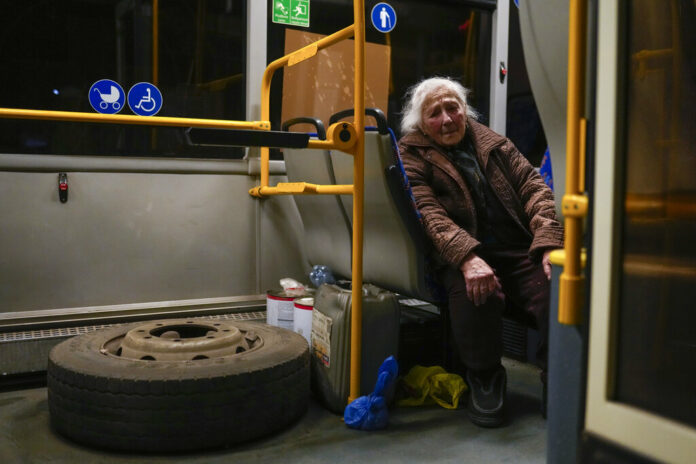
A woman who fled from the Azovstal steel plant in Mariupol waits in a bus to be processed upon her arrival to a reception center for displaced people in Zaporizhzhia, Ukraine, Sunday, May 8, 2022. Photo: Francisco Seco / AP

ZAPORIZHZHIA, Ukraine (AP) — Pale and drawn, the last civilians sheltering in bunkers beneath a sprawling steel mill in the decimated Ukrainian port city of Mariupol arrived late Sunday night in Zaporizhzhia, the first major Ukrainian city beyond the frontlines.

The shattered survivors spoke of constant shelling, dwindling food, ubiquitous mold — and using hand sanitizer for cooking fuel.

Ten buses slowly pulled into Zaporizhzhia’s deserted streets under darkness, carrying 174 evacuees from the Mariupol area. They included more than 30 of the 51 civilians evacuated in the last day from the Azovstal steel mill, where an estimated 2,000 Ukrainian fighters are making what appears to be their last stand. Both Ukrainian and Russian officials have said these civilians are the last non-combatants from the industrial complex.

“It was terrible in the bunkers,” said 69-year-old Lyubov Andropova, who had been in Azovstal since March 10. “Water would run down from the ceilings. There was mold everywhere. We were worried for the children, for their lungs.”

The shelling was constant, and there was fear “that our bunker would collapse,” she said. “Everything shook, we didn’t go out.”

The seaside steel mill is the only part of Mariupol not under Russian control. Thanks to its warren of tunnels and bunkers deep underground, many civilians had chosen it as the safest place to take cover from the relentless shelling of the formerly thriving port city that has now been largely destroyed.

Just a few days after the war began on Feb. 24, Dmytro Sviydakov took shelter in the bunkers with his wife and 12-year-old daughter. They entered Azovstal on Feb. 27. It would be more than two months before they could leave.

Huddled in a bunker with around 50 to 60 people, the first month and a half was bearable, he said, but then the shelling intensified. A food storage area was blown up, and he and others resorted to scavenging, including searching through workers’ lockers. Fuel for cooking was scarce too, but then they discovered that hand sanitizer — well-stocked because of the coronavirus pandemic — was a good substitute.

“What can’t you do when you have nothing!” he said, as he waited for a bus that would carry Azovstal evacuees to temporary accommodations in Zaporizhzhia.

Yehor, a steel mill employee sheltering in the bunker who would only provide his surname, was in the bunker with his two sons, wife and their dog. He said that when food ran low, soldiers defending Azovstal helped.

“We wouldn’t have made it otherwise,” he said. “I don’t know how long we could have survived, but for sure we wouldn’t have survived until today.” In the last few days, they had just pasta, water and some spices left – enough for soup once a day.

His family entered the mill on March 1 for safety, he said, after he narrowly escaped being shelled while walking his dog.

Despite the widespread destruction of Mariupol, some of the 51 evacuated from Azovstal chose to remain in the city, said United Nations officials, who were involved in securing safe passage for the evacuees.

Two — a man and a woman — were detained by Russian forces. The woman, who was held on suspicion of being a military medic, had been traveling with her 4-year-old daughter. The mother and child were separated, and the little girl made it to Zaporizhzhia with the rest of the evacuees, U.N. officials said.

But several hundred more who wanted to join the evacuation convoy from other areas held by Russian forces had to stay behind after Russia and Ukraine failed to reach an agreement on their evacuation.

“It was quite heartbreaking to see them waiting and not being able to join us,” said United Nations Humanitarian Coordinator Osnat Lubrani.

“Overall within a period of 10 days we’ve been able to bring a total of 600 people in very complex, high-risk, very sensitive safe passage operations,” Lubrani said, adding that the U.N. hoped to be able to bring more civilians out in the future.

___

Story: Elena Becatoros.

Advertisement

ENTEC/NSTDA, EGAT and Thai-Chinese Corporates joined hand demonstrate 50 electric

motorcycle taxi under Memorandum of Agreement on

Promotion of Electric Motorcycle as Motorcycle Taxi and Collaborative Research Project Kick-off: 

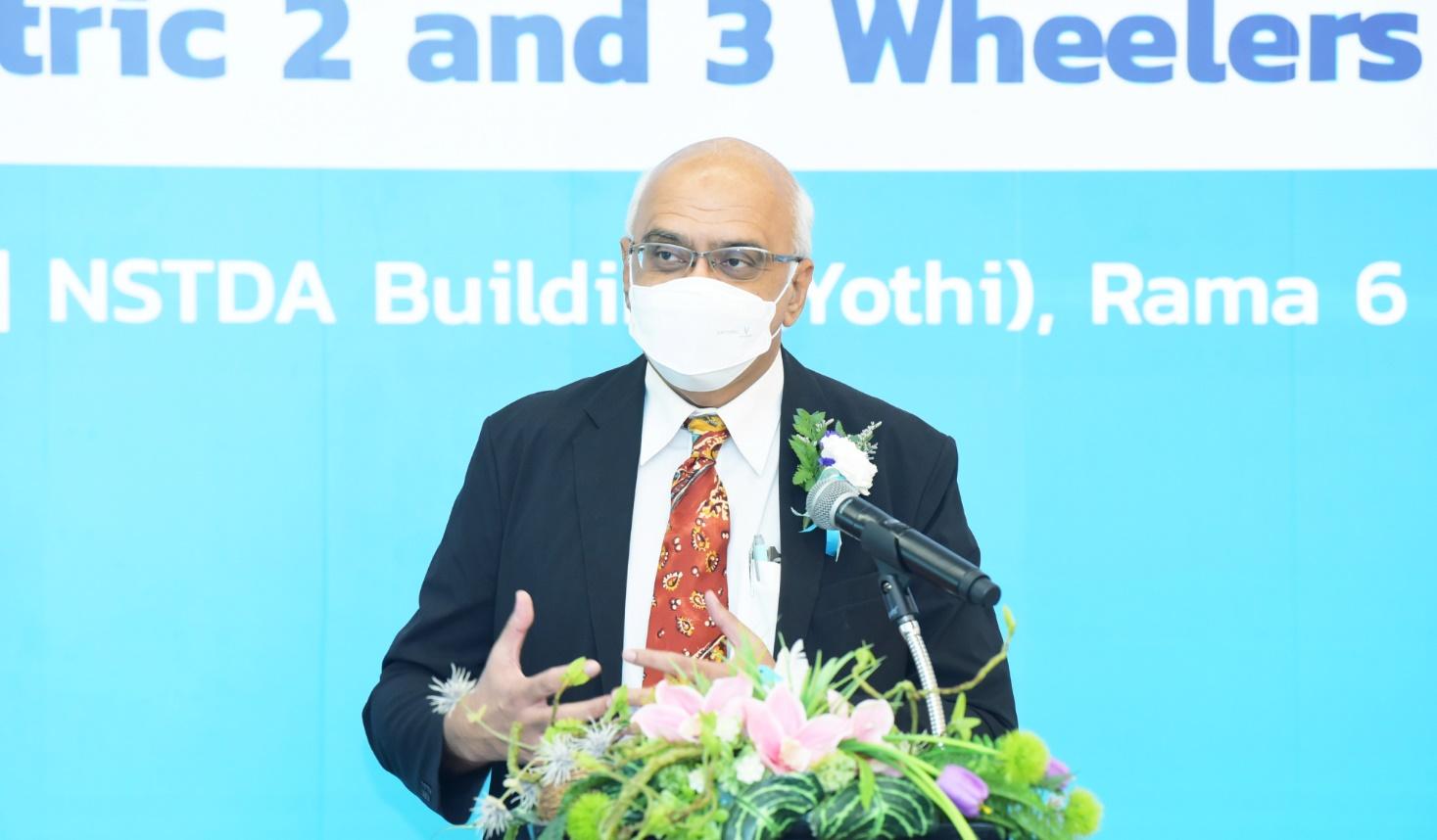
“Mainstreaming Electric 2 and 3 Wheelers in Thailand: Phase II”

Thursday 5th May 2022 9:00 – 12:00, NSTDA Building (Yothi) 1st Floor, Rama 6 Road, Bangkok, Thailand

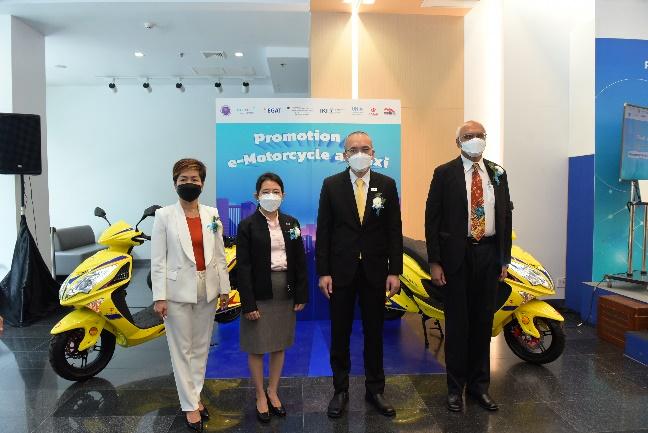
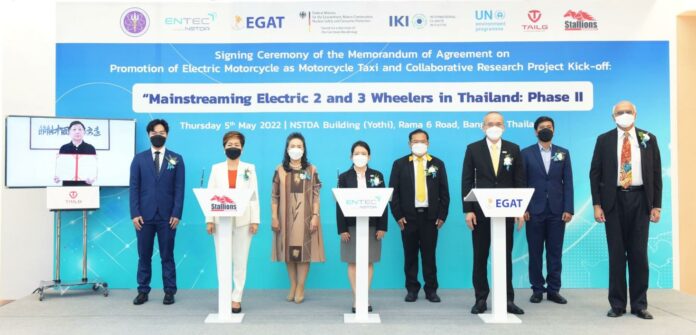
On 5 May 2022, National Science and Technology Development Agency (NSTDA) by National Energy Technology Center (ENTEC) has organized Signing Ceremony of Memorandum of Agreement on “Promotion of Electric Motorcycle as Motorcycle Taxi and Collaborative Research Project Kick-off” attended by Dr. Sumittra Charojrochkul, Executive Director of ENTEC, Mr. Suttipong Chalermkiat, Assistant Governor (Sustainability Management) of Electricity Generating Authority of Thailand (EGAT), Mrs. Areerat Sriprathai, Chief Executive Officer of The Stallions Co., Ltd. and Mr. Li Yao, President of Dongguan Tailing Electric Vehicle Co., Ltd. (TAILG) under witness by Dr. Mushtaq Memon, Regional Coordinator for Chemicals and Pollution Action and Mr. Bert Fabian from United Nations Environment Programme (UNEP)

Under auspicious support of the International Climate Initiative (IKI) by the German Federal Ministry for the Environment, Nature Conservation, Nuclear Safety and Consumer Protections (BMUV), the project “Integrating Electric 2&3 Wheelers into Existing Urban Transport Modes in Developing and Transitional Countries” was awarded to UN Environment Programme (UNEP) to develop programs in 6 countries from 2 sub-regions, namely Philippines, Thailand, Vietnam, Ethiopia, Kenya and Uganda, to integrate electric 2&3 wheelers into existing urban transport modes via a comprehensive policy framework, which could be replicated to other countries in the sub-regions. 

As a private sector partner with UNEP’s Global Electric Mobility Program, the Shenzhen Shenling Car Company Limited (or TAILG) has been donating electric motorcycles to various countries, such as Kenya, Uganda and Philippines, in order to raise awareness of electric mobility and to provide crucial data to stakeholders for policy formulation. For Thailand, UNEP is working with the National Energy Technology Center (ENTEC) of National Science and Technology Development Agency (NSTDA) on the project, “Mainstreaming Electric 2 and 3 Wheelers in Thailand” with 1st phase focusing on policy development to support transition to electric mobility (electric 2&3 wheelers) in Thailand with assessment of national baseline and scenarios for uptake of electric 2&3 wheelers in Thailand in accordance with national policy on electric vehicle for carbon neutral target of 2050. 

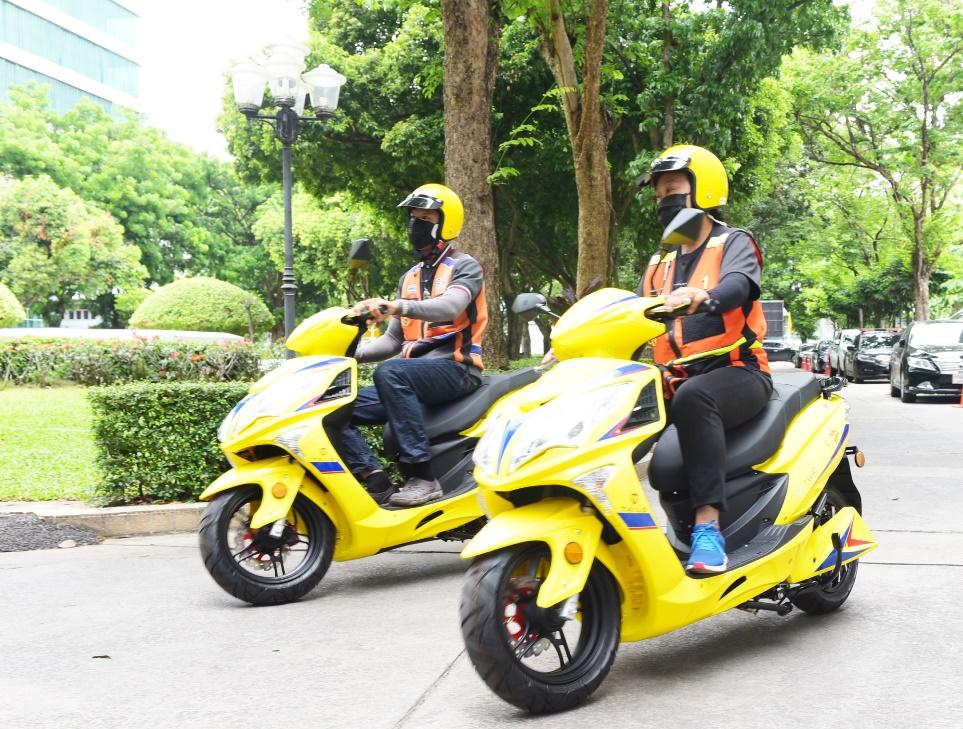
The 2nd phase of this project focuses on a demonstration project of electric motorcycle taxis with the Electricity Generating Authority of Thailand (EGAT) and The Stallions contributing to the successful implementation of over 100 electric motorcycles under the “ENGY” brand used within EGAT and used as electric motorcycle taxis to assess real-life data for policy formulation. 50 motorcycle taxi riders will be selected by project committee and trained under this project to use electric motorcycles in their daily job with technical, economic and environmental data monitoring over a period of 1 year. Driving & battery swapping patterns, energy consumption, emission reduction and energy cost saving will be analyzed to formulate appropriate model to scale up electric motorcycle taxi in Thailand, as another step toward 2050 carbon neutrality commitment in 26th United Nations Climate Change Conference (COP26) last year. 

image3 2

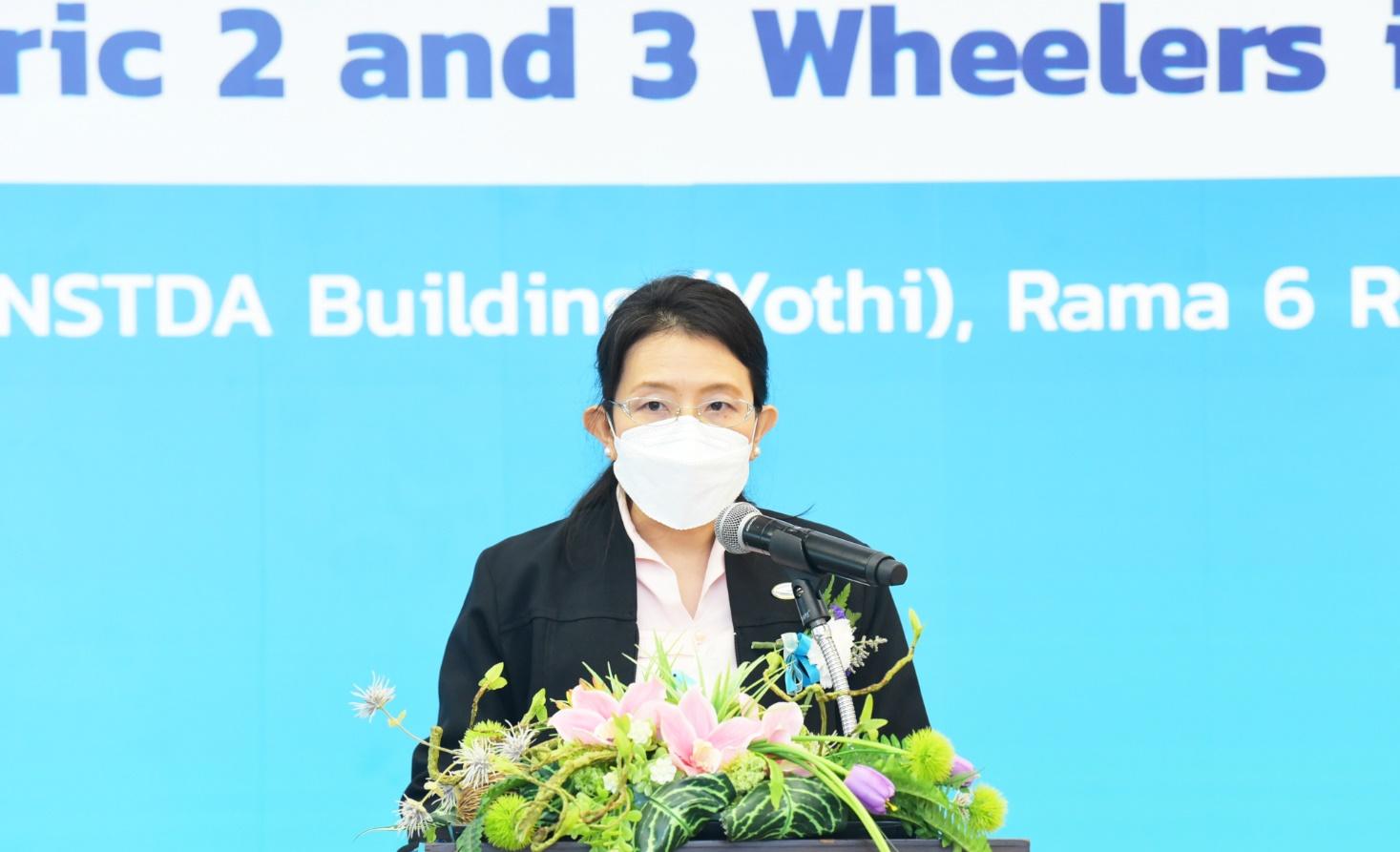
Dr. Memon, Regional Coordinator for Chemicals and Pollution Action of UNEP, highlighted UNEP role to promote 2-3 wheelers electric mobility under the Global Electric Mobility Program through pilot projects in 6 countries from two regions, such as Philippines, Thailand, Vietnam, Ethiopia, Kenya and Uganda. Thailand project is partnered with ENTEC to pioneer electric motorcycle for public transport.  

image2 2

Mr. Suttipong Chalermkiat, Assistant Governor (Sustainable Management) of EGAT, highlighted on-going support for electric motorcycles through the Energy Efficiency Label No.5 certification over 31 electric motorcycle models, including the EGAT’s ENGY brand. 51 ENGY units have been used within EGAT branches throughout Thailand and another 51 ENGY units were launched as electric motorcycle taxis in Bang Kruai district, Nonthaburi Province. 
image5

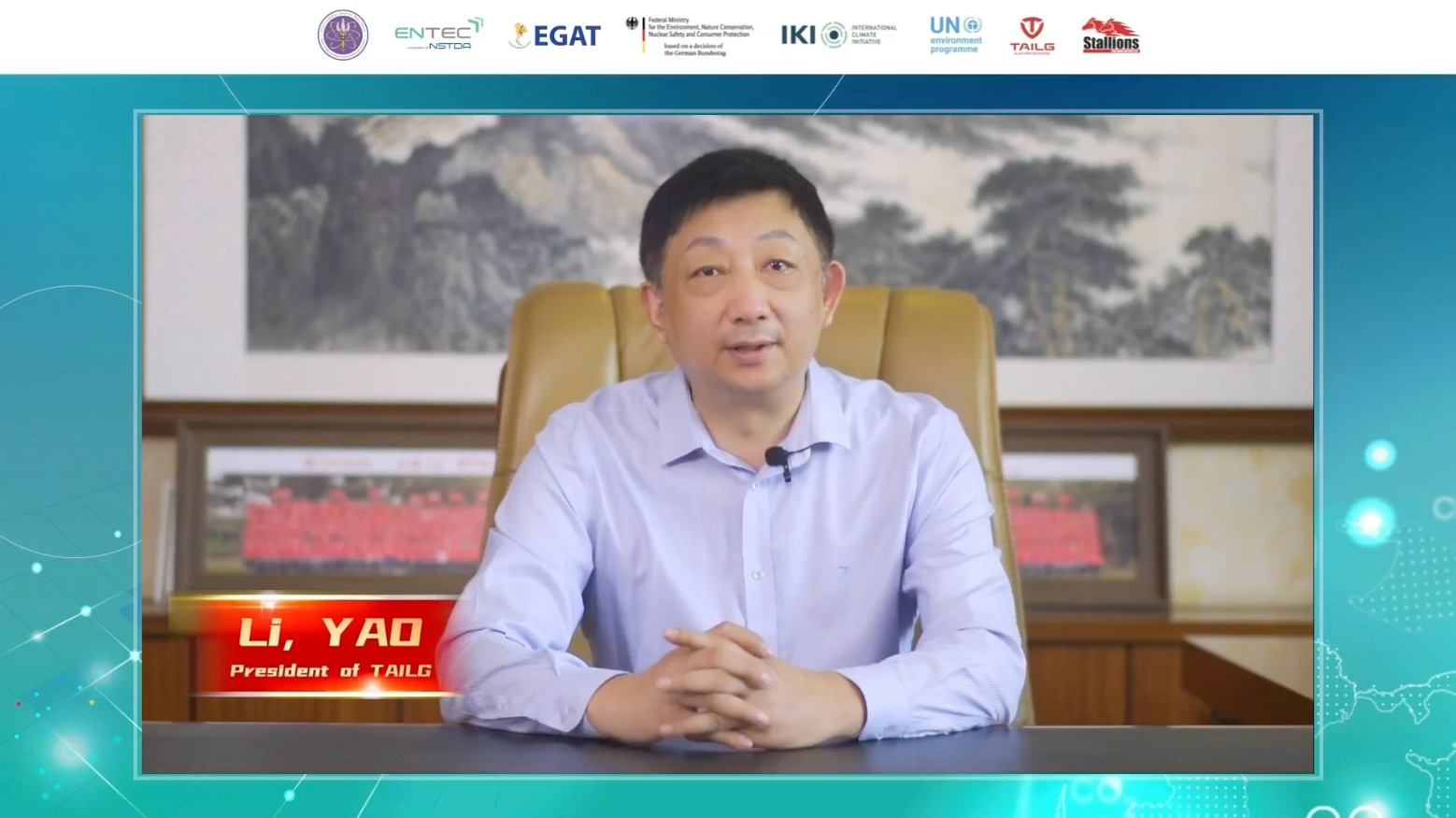
Mr. Li Yao, President of TAILG, emphasized TAILG role, as a partner of UNEP, to promote electric motorcycles in many countries around the world. In addition, TAILG has cooperated with China Quality Certification Center (CQC) to establish Low Carbon Mobility Research Institute to provide technical supports for standard certificated testing. 

image4 2

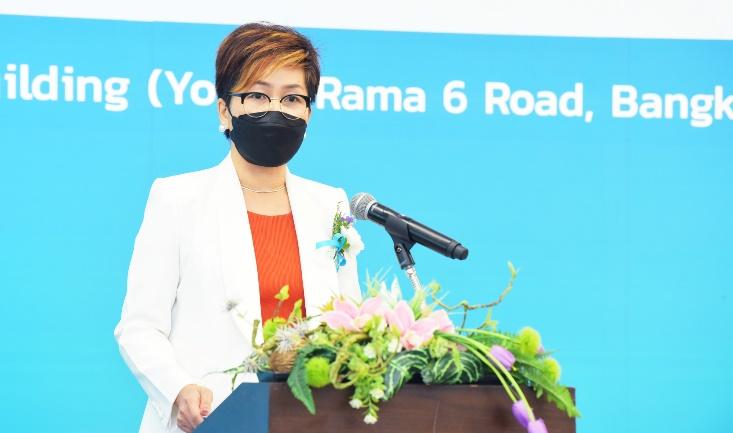
Mrs. Areerat Sriprathai, Chief Executive Officer of the Stallions, elaborated Stallions role to continue supporting EGAT to conduct electric motorcycle pilot project in terms of rider training, maintenance, monitoring and evaluation of the motorcycle taxis usage in Bang Kruai area and others. 
image7

Finally, Dr. Sumittra Charojrochkul, Executive Director of ENTEC, concluded ENTEC role to collaborate with UNEP in the promotion of electric motorcycle usage in Thailand, where 1st phase has developed transport energy demand model with scenario analysis on electric motorcycle integration  to support national electric vehicle policy. For this 2nd phase, demonstration of 50 electric motorcycle taxi will provide necessary data for future policy deployment.

image6 1

Advertisement

Opinion: Solidarity in the Face of Russian Aggression

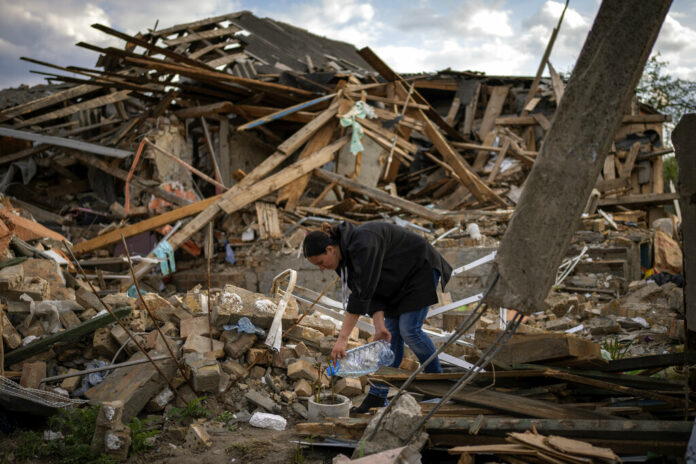
Anna Shevchenko, 35, waters the few flowers that survived in the garden of her home in Irpin, near Kyiv, on Tuesday, May 3, 2022. Photo: Emilio Morenatti / AP

by Andrzej Duda, President of the Republic of Poland

Almost one year ago, as Poland marked the 230th anniversary of the adoption of the Constitution of 3 May, Warsaw was visited by the presidents of Ukraine, Estonia, Latvia and Lithuania. Besides neighbourly bonds, our countries share common values, culture, history and present-day challenges. These links are symbolised by the world’s second constitution whose aim was to transform Polish nobles’ democracy into a more efficient constitutional monarchy.

Unfortunately, it came too late. Three absolutist powers – Russia, Prussia and Austria – joined forces to destroy the unique political and civilisational project of the multiethnic and multi-faith First Republic. Most ancestors of today’s citizens of Central and Eastern European countries became the tsar’s subjects. They were forced to contribute to the expansion of the Russian Empire with their blood, property and work.

Mindful of this historical lesson – the looting, persecution, destruction of cultural heritage and acts of genocide committed by Russia and the Soviet Union against our nations –
as well as the de facto occupation of part of Ukraine by Russian Federation troops since 2014, we, the presidents of the region’s countries, signed a solemn declaration. We made it clear that a uniting Europe should remain open to all countries and nations that share its values and that to all of us the solidarity of nations, especially under current threats to our common security, is one of the cornerstones of peace, stability, development, prosperity and resilience […].

The words were reiterated with equal force nearly a year later, when the presidents of Poland, Ukraine, Lithuania, Latvia and Estonia met again on 13 April 2022. This time round we were hosted by President Volodymyr Zelenskyy. We gathered in Kiev, even as the city was being shelled by the Russian invaders.

The dramatic calls for firmness and European solidarity in the face of Russian neo-imperialism that have been made for years failed to convince some political elites on our continent. Putin’s openly declared plan to reinstate – in one form or another – the “prison of nations” that was the Soviet Union and its sphere of influence in the former Easter-bloc countries; glorifying communism and Stalin; sowing division among the European family of nations; attempts to interfere in the democratic procedures of NATO and EU member states; repressions and assassination attempts against Russian dissidents; repeated violations of air and sea space of European counties by the Russian armed forces and hostile cyber activities; the invasion of Georgia in 2008 and hybrid war against Ukraine in 2014; the hybrid attack in 2021 when Lukashenko’s Moscow-controlled regime flew in Middle East migrants to Belarus and then forced them to storm Poland’s eastern border which is also the border of NATO and the EU – all these “alarm bells” did not stop some politicians and leaders from bringing up the need to “understand Russia and its sensibilities”.

The representatives of the countries in our region were not believed when they warned that the new infrastructural investments and contracts related to the supply of Russian energy products would sooner or later be used by Moscow as a tool of brutal blackmail. The recent events have proved us right.

24 February 2022 is a watershed date in the history of the world. After the tragic conflict in Bosnia and Herzegovina from 30 years ago, a new war has erupted in Europe. Scenes not witnessed here since 1945 are again taking place. Thousands of soldiers and civilians are killed. Villages and cities are being bombed out of existence, while the Russian aggressors do not allow their inhabitants to be evacuated.

Their tactics is one of terror and scorched earth. They commit acts of plundering, rape and torture – including against women and children – as well as genocidal mass executions. The on-going investigations carried out by the prosecutors of the International Criminal Court must result in punishing those who gave orders and perpetrated these horrible crimes against humanity.

From the very outbreak of the war in Ukraine, the Polish authorities, volunteers and millions of ordinary Poles have helped those fleeing the conflagration. We help citizens of over 150 countries get back to their homes. Almost 3 million people have entered Polish territory, out of which nearly 2 million have stayed. They are mainly women, children and old people.

Even though we call them guests rather than refugees, even though they have found shelter in private homes, parish houses, monasteries, health care centres and public buildings rather than transition camps, the situation remains a great challenge for us. By way of comparison, during the migration crisis of 2015, Europe admitted just over 1.8 million people. We urgently need financial support that would be at least as high as the one granted to Turkey after the country received 3 million refugees from the Middle East.

First and foremost, however, help must be provided to Ukrainians who are defending themselves against criminal aggression. They need military equipment and unflinching economic pressure put on Russia to weaken its war machine.

The fate of our continent is being decided on the plains of Ukraine. It is there that the unbelievably dramatic struggle is waged for the safe future, freedom, identity and reputation of the entire Europe. The time of talking is over. We now have to show solidarity and take firm action.

Advertisement

Cambodia praises CP Foods’ fair labour treatment

Charoen Pokphand Foods PCL (CP Foods) has assured Cambodia of the Company’s fair labour practices which are aligned with national law and international standards, ready to offer continuous capability development to all.

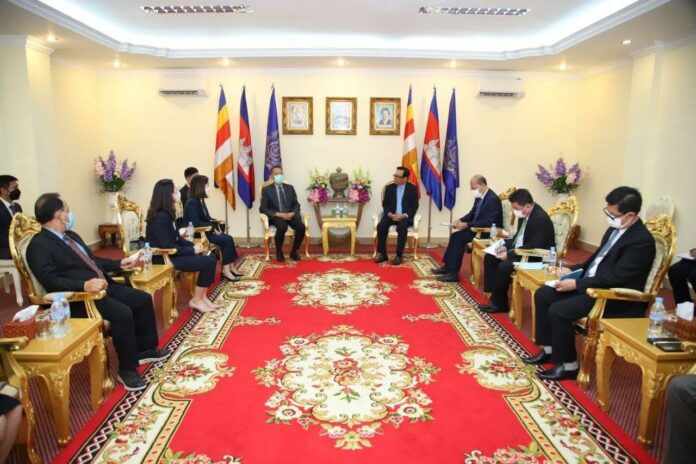
The assurance was given by Mr. Preeda Chunwong, Vice President of CP Cambodia, and Ms. Pimonrat Reephattanavijitkul, Chief People Officer at CP Group and CP Foods, who were recently granted an audience with Mr. Ith Samheng, Minister of Cambodia’s Ministry of Labour and Vocational Training, for an update on CP Foods’ operations in Cambodia and the Company’s labour practices. 

Mr. Ith Samheng praised CP Foods for its contributions via CP Cambodia in creating jobs and opportunities for Cambodian citizens and the employment of Cambodian workers for its operations in Thailand which largely supports the country’s economic and social development. 

He affirmed the alignment of CP Foods and CP Cambodia’s labour management with human rights principles, through an emphasis on the recruitment of legal workers as well as fair and equitable labour treatment in line with international standards. He reiterated his supports for CP Foods’ continuous business expansion in Cambodia. 

image3 1

In his response, Mr. Preeda said throughout the past 26 years of operations in Cambodia, CP Cambodia has won positive supports from the Cambodian government, including the Ministry of Labour and Vocational Training. CP Cambodia has upheld the international standards on fair and equitable labour treatment and continually offered skill and capability development to support Cambodia’s human resource development and attainment of safe food production standards in the supply chain for the benefits of Cambodian consumers. 

Ms. Pimonrat added that CP Foods in Thailand currently employed 8,042 foreign workers and is seeking another 2,000 workers. CP Foods has adopted the direct recruiment policy for migrant workers, including those from Cambodia. The recruitment process is aligned with international standards and all workers are assured of fair and equitable treatment as well as benefits and welfare. All workers are also entitled to the development of necessary knowledge and skill and digital capability to keep up with global trends.

image2 1

In collaboration with the Labour Protection Network Foundation, CP Foods has implemented the Labour Voice Hot Line by LPN since 2017, whereby migrant workers can submit their requests for help or consultation in Cambodia and Myanmar languages. The foundation has also conducted training on human rights, safety and occupational health, and access to labour rights. 

In light of the COVID-19 outbreak, CP Foods has imposed safety and occupational health measures that cover all workers including those from Cambodia. The measures are aimed at safeguarding their safety while en route to workplaces, at workplaces or at their accommodations. Cambodian workers have been taken care of and facilitated while working and residing in Thailand. CP Foods has also sufficiently sourced COVID-19 vaccines for all employees. Thanks to those measures, in 2021 CP Foods won human rights awards from several organizations including an outstanding award among large-sized organizations for being a role model on good human rights practices from the Human Rights Award 2021 by the Rights and Liberties Protection Department, Ministry of Justice.  Other awards included “HR Asia Best Companies to Work for in Asia Awards 2021” from HR Asia, a leading Human Resources magazine; and Goal medal of Asia Sustainability Reporting Awards 2021 (Human Right) by CSRWorks International. 

image2 1

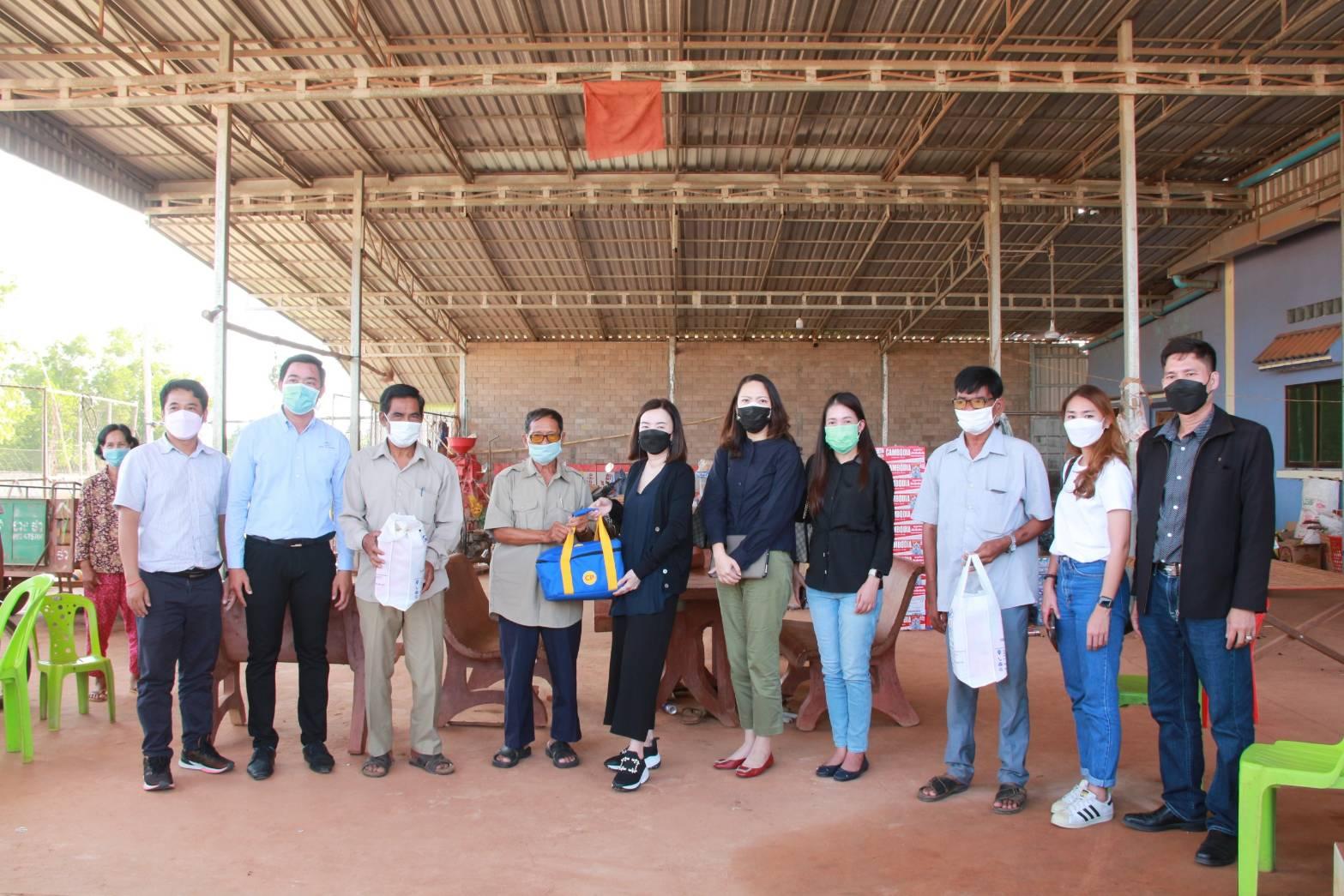
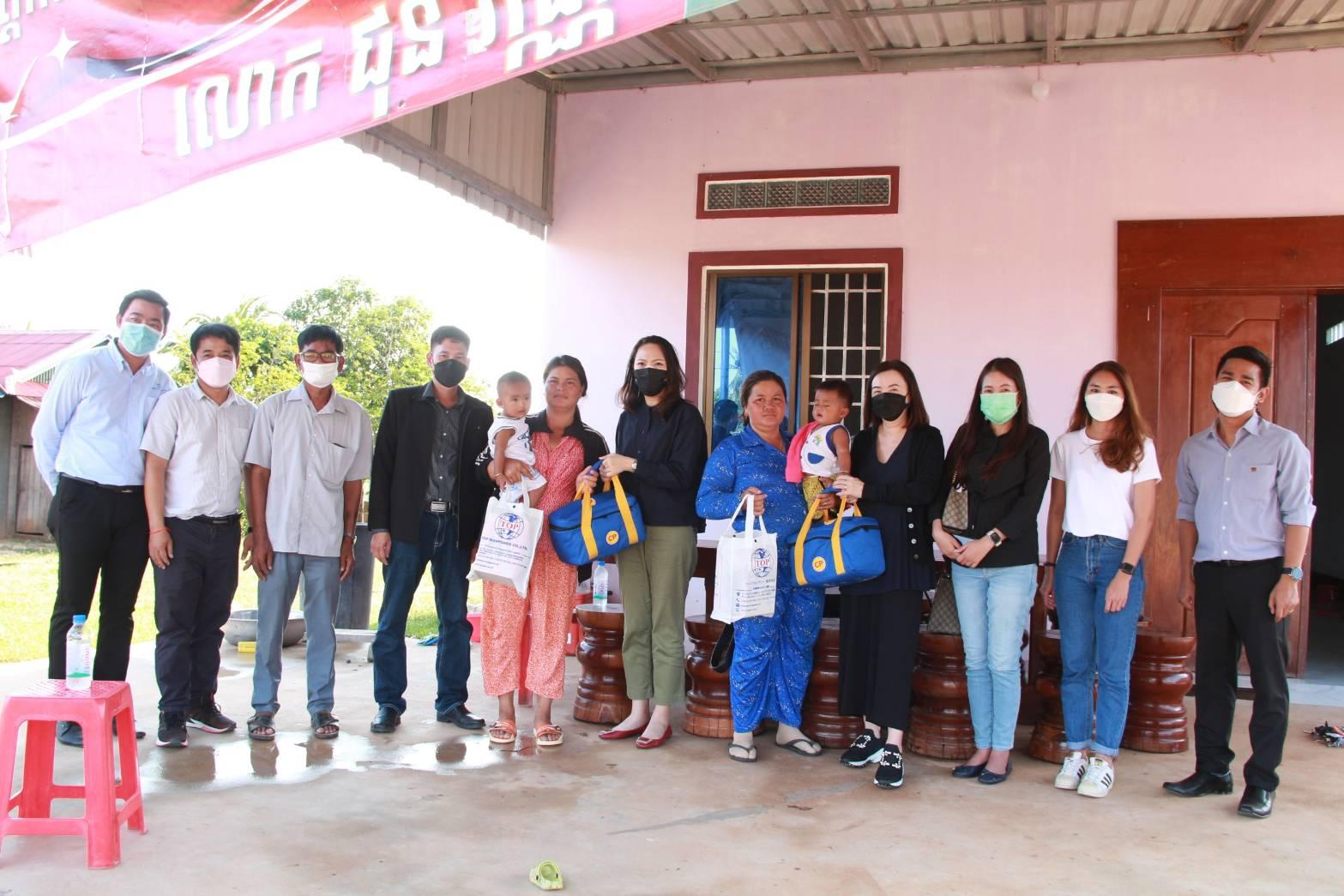
The executives of CP Foods and CP Cambodia later visited Kampot Province where they met the Cambodian workers who once worked for CP Foods in Thailand. All workers said they were proud of those days as CP Foods’ employment helped improve the wellbeing of their families and they would be delighted if being reemployed by the Company. 

CP Foods also supports Cambodian students’ study in Thailand in collaboration with educational institutions in Cambodia, so that these students can play a part in driving their country forward.

Advertisement

Marcos Redux? Dictator’s Son May Win Philippine Presidency

Ferdinand
Ferdinand "Bongbong" Marcos Jr. gestures as he greets the crowd during a campaign rally in Quezon City, Philippines on April 13, 2022. Photo: Aaron Favila / AP

MANILA, Philippines (AP) — Ferdinand Marcos Jr. and Sara Duterte smile and chat of their love of burgers and mango shakes on the election trail in a carefree YouTube video before breaking into a short rap penned for their campaign for president and vice president of the Philippines by a popular singer.

Marcos Jr., the son of the late dictator who bilked the country out of billions and ruled for years with an iron fist, and Duterte, daughter of outgoing populist President Rodrigo Duterte, whose brutal anti-drug campaign has brought an investigation of crimes against humanity by the International Criminal Court, like to keep things light.

Their carefully choreographed campaign whitewashes the past and is short on specifics about their vision for the future, but it appears to be resonating with the average Filipino, with the latest polls showing both with seemingly insurmountable leads in their races, which are held separately, in Monday’s elections.

The campaign has made deft use of social media, primarily TikTok and YouTube, to push the simple slogan of “unity” — “Uniteam” as they put it — and frame them as beyond politics and disagreements, said Adele Webb, a lecturer at the Queensland University of Technology and author of ”Chasing Freedom: The Philippines’ Long Journey to Democratic Ambivalence.”

“His message really is very well crafted with this avoidance strategy,” Webb said. “Let’s stop talking about the past, let’s stop fighting about what those martial law years really looked like, and let’s look forward, let’s move forward.”

Ferdinand Marcos Sr. was ousted in 1986 as millions of people took to the streets in the largely peaceful “People Power” uprising to force a return to democracy.

Some of the assets obtained by Marcos, wife Imelda and their cronies were later seized and sold, with the money remitted to the Philippine government. The Presidential Commission on Good Government, created to recover ill-gotten gains, says it has so far collected more than $3.3 billion.

But rather than apologize for his father’s excesses, Marcos Jr., who goes by his childhood nickname “Bongbong” or “BBM” in campaign posters, embraces his image. The 64-year-old portrays his father’s decades in office as a time of prosperity and national pride, glossing over the corruption and years of martial law with a harsh crackdown on dissent that scarred generations of Filipinos.

“He’s just projecting a youthful version of his father, because he’s really banking on the Filipinos ‘… nostalgic craving of Marcos rule,” said Andrea Chloe Wong, a political scientist. “They want to visit the golden age of the Philippines — and that’s what Marcos is propagating.”

With the median age in the Philippines of about 25, Marcos has taken advantage of the fact that many voters have no personal memory of his father’s rule. He’s avoided confrontation by refusing head-to-head debates, hand-selecting the journalists for the sole press conference he has held since his campaign started, and has limited the number of interviews he has given.

In one of those — with CNN Philippines a week ago — Marcos defended his family’s opulent lifestyle, saying his parents always reminded him that “any comfort or privilege that we enjoy comes from the people, and that’s why we have to serve.” He brushed aside criticism of martial law, saying “there were people who wanted to bring down the government and the government had to defend itself.”

“This is actually true, that was what really happened,” he said emphatically.

The rehabilitation of the Marcos name started decades ago, with the family returning to the Philippines — and politics — only a few years after Marcos died in 1989 in exile in Hawaii.

Imelda Marcos — whose expansive collection of jewelry and 1,220 pairs of shoes shocked the world after they were discovered in the presidential palace that was stormed in the uprising — ran for president herself in 1992 and 1998, losing both times.

The 92-year-old, who still lives in Manila, had faced some 900 civil and criminal cases after her return — from embezzlement and corruption to tax evasion. Most were dismissed for lack of evidence, and the few convictions were overturned on appeal. A 2018 graft conviction remains on appeal.

Marcos Jr. has held several political offices, including being elected to the House of Representatives in 1991 and the Senate in 2010, despite ongoing legal issues.

He has been dogged by a past conviction for failure to file his income tax papers and a government demand for a huge estate tax payment, which opponents unsuccessfully tried to use to disqualify his bid for the presidency. The petitions against his candidacy remain on appeal and could reach the Supreme Court.

Outside the Philippines, a U.S. District Court in Hawaii in 2011 found him and his mother in contempt of an order to furnish information on assets in connection with a 1995 human rights class action suit against Marcos Sr., fining them $353.6 million. That has never been paid, which could complicate any future possible visits to the United States if he is elected.

Rodrigo Duterte, in the first year of his presidency in 2016, helped the family gloss over its past, allowing the burial of Marcos in the country’s heroes’ cemetery, which had been blocked by previous administrations. The funeral with full military honors was condemned by human rights and left-wing groups.

By pairing up with 43-year-old Sara Duterte, Marcos has been able to combine his family’s support in their northern home province and hers in the south to both of their advantage.

At the same time, there have been allegations — which Marcos denies — that he has enlisted an army of online trolls and commentators to smear his opponents and revise his family’s history.

The approach has worked so far, with Marcos and Duterte, who is the mayor of Davao city, each with about 55% support in the most recent polls.

Marcos’ biggest challenger, Leni Robredo — the current vice president who defeated Marcos in his bid for that office in 2016 — has mobilized a groundswell of support against him and has drawn huge crowds with a message of reform and corruption-free governance, but she is still polling at less than half his number.

The vast majority of the country’s 67 million registered voters are working class, and despite both being part of longtime political families, both Marcos and Duterte have been polling as well — or better — among them as with the upper classes.

Many have bought into Marcos’ version of history, and also feel that the reform-oriented governments that came after Marcos Sr. failed to deliver, Wong said.

About a quarter of the population lives in poverty, government agencies and courts are seen as too weak to prosecute corruption and the gap between rich and poor remains wide. For many, good education is unaffordable and decent jobs found abroad.

Many of the ills besetting the Philippines can be traced to Marcos, who took huge loans that he could not repay to keep the country afloat while his regime imprisoned and tortured opponents and spurred rebellions — but that is carefully avoided in his son’s election narrative.

“People are fascinated, not of him per se but of the memory of his father’s rule,” Wong said. “A lot of the young people didn’t experience it but because of the propaganda being repeated over and over again, they think the Philippines was better off before.”

At a recent rally in a Manila suburb, Shirley Quirit, a 38-year-old mother of five, was one of several thousands who turned out to see Marcos Jr. in a rally heavy on glitz with giant television screens, celebrities and a rock band.

She brushed off concerns about his past as being from people “just trying to destroy them” and said there was nothing that could change her mind to vote for him.

“If the allegations they are hurling against BBM are true, they should have raised them a long time ago, not now when he’s running,” she said despite longstanding cases involving Marcos. “The Marcoses have accomplishments from before that still benefit people, like hospitals, schools, foot bridges … and he may do so much more.”

Even though challenger Robredo’s ”pink revolution” movement, named for the color worn by her volunteers, is trailing in the polls, it does show that if Marcos wins and slides into his father’s old ways, a significant portion of the population could push back, Webb said.

“There’s a lot of energy in the country, there’s a lot of spirit, there’s a lot of hope and a sense of people power resurrected, where people aren’t willing to give up on the democratic project yet,” she said.

___

Story: David Rising and Jim Gomez. Rising reported from Bangkok. Associated Press journalists Joeal Calupitan and Aaron Favila contributed to this report.


Advertisement

Official: US Gave Intel Before Ukraine Sank Russian Warship

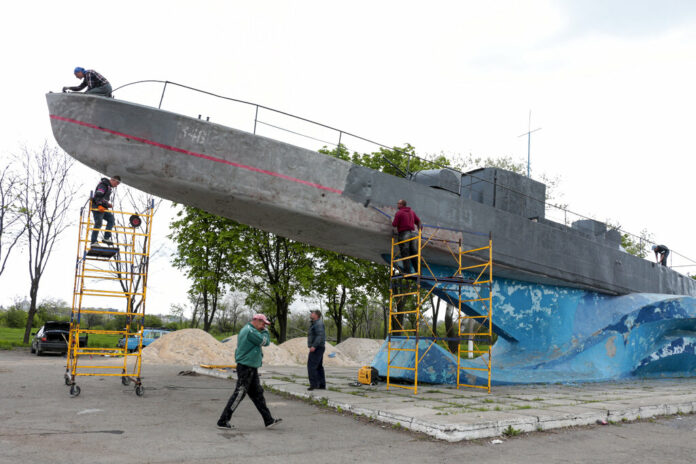
Municipal workers clean and paint a Soviet style torpedo boat preparing to celebrate 77 years of the victory in WWII in Mariupol, in territory under the government of the Donetsk People's Republic, eastern Ukraine, Thursday, May 5, 2022. Photo: AP

WASHINGTON (AP) — The U.S. says it shared intelligence with Ukraine about the location of the Russian missile cruiser Moskva prior to the strike that sank the warship, an incident that was a high-profile failure for Russia’s military.

An American official said Thursday that Ukraine alone decided to target and sink the flagship of Russia’s Black Sea Fleet using its own anti-ship missiles. But given Russia’s attacks on the Ukrainian coastline from the sea, the U.S. has provided “a range of intelligence” that includes locations of those ships, said the official, who was not authorized to speak publicly and spoke on condition of anonymity.

The Biden administration has ramped up intelligence sharing with Ukraine alongside the shipment of arms and missiles to help it repel Russia’s invasion. The disclosure of U.S. support in the Moskva strike comes as the White House is under pressure from Republicans to do more to support Ukraine’s resistance and as polls suggest Americans question whether President Joe Biden is being tough enough on Russia.

Since Russian President Vladimir Putin ordered the invasion in February, the White House has tried to balance supporting Ukraine, a democratic ally, against not doing anything that would seem to provoke a direct war between Putin and the U.S. and NATO allies. As the war has gone on, the White House has ramped up its military and intelligence support, removing some time and geographic limits on what it will tell Ukraine about potential Russian targets.

The official who spoke Thursday said the U.S. was not aware that Ukraine planned to strike the Moskva until after they conducted the operation. NBC News first reported on the American role in the sinking of the ship.

Speaking earlier Thursday after a New York Times report about the U.S. role in supporting Ukraine’s killing of Russian generals, Pentagon spokesman John Kirby said American agencies “do not provide intelligence on the location of senior military leaders on the battlefield or participate in the targeting decisions of the Ukrainian military.”

“Ukraine combines information that we and other partners provide with the intel that they themselves are gathering and then they make their own decisions and they take their own actions,” Kirby said.

___

Story: Aamer Madhani, Nomaan Merchant, and Lolita C. Baldor.

Advertisement

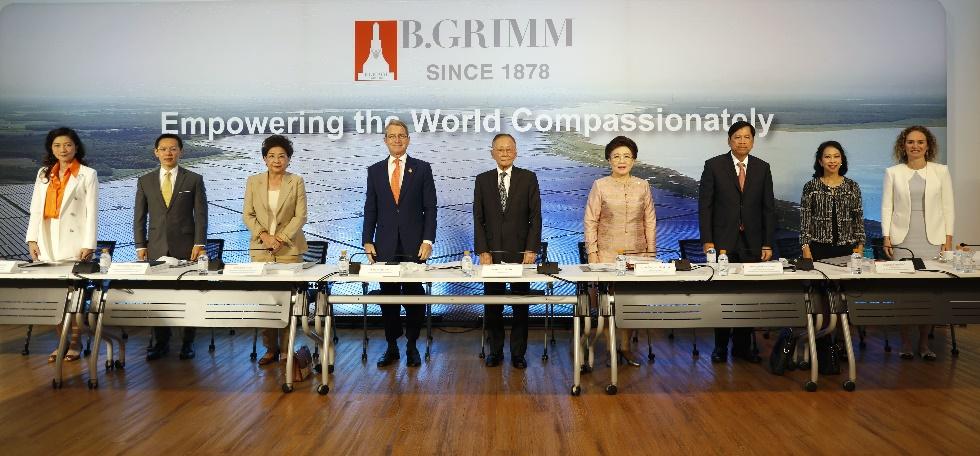
BGRIM’s AGM approves the extension of 5-year debentures issuance ceiling to B100bn Striving to expand renewable energy portfolio to meet Net-Zero emissions target

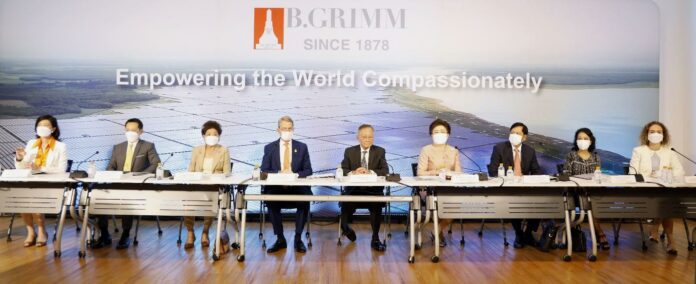
BANGKOK, April 28, 2022: B.Grimm Power PCL (BGRIM) on 27 April got the approval from shareholders to extend the limit of the amount of debentures issuance within 5 years (2022-2026) to 100 billion baht.

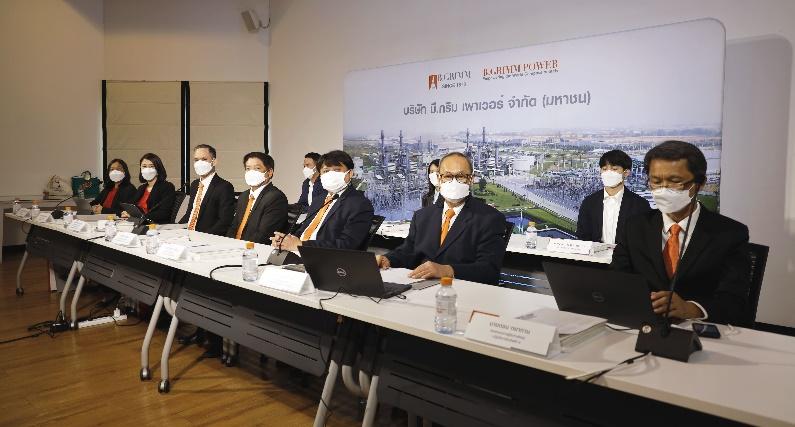
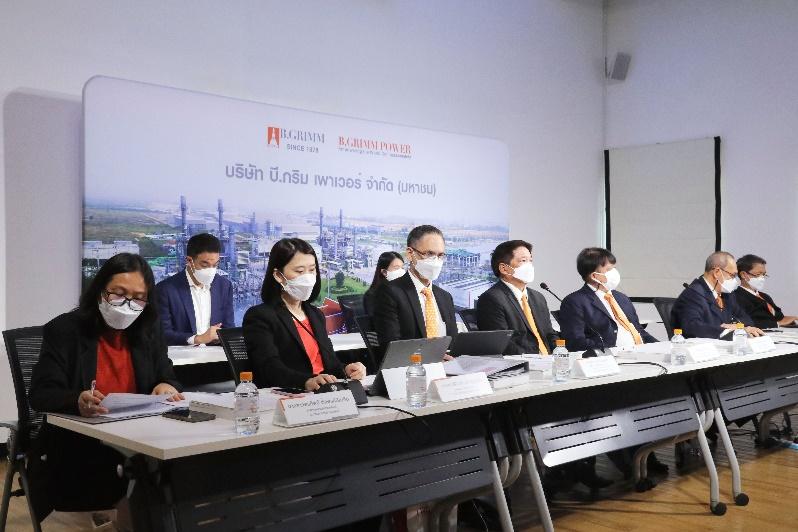
The approval from the 2022 annual general meeting of shareholders held online will prepare BGRIM financially to support its business expansion and capturing forthcoming investment opportunities.

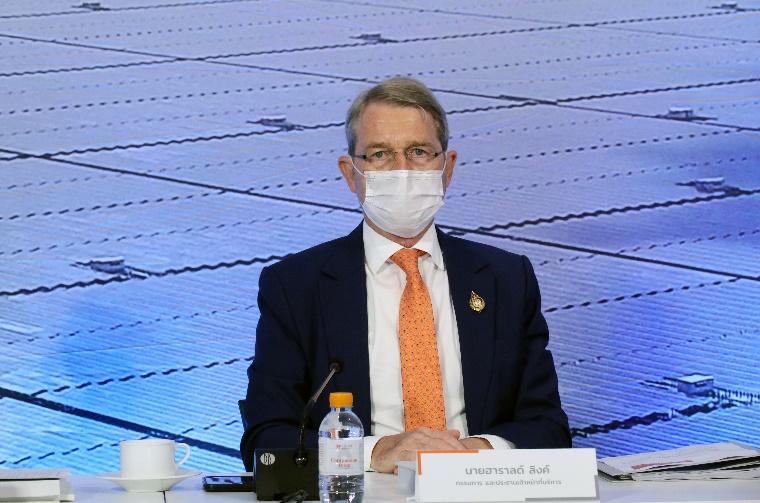
Dr. Harald Link, President of BGRIM, noted that debenture is one of the several instruments for financial management BGRIM has effectively used.

Among them are issuing equity instruments, using assets or subsidiaries to raise funds through various means such as listing on the Stock Exchange and establishing infrastructure funds.

“BGRIM is well prepared financially, maintaining a strong financial foundation and adopting proper financial management in terms of liabilities and equity along with achieving the targeted installed capacity of 7,200 megawatts by 2025 and further to 10,000 megawatts by 2030,” Dr. Link said.

image4

He added that BGRIM is working strenuously to expand its investment in renewable energy, including solar energy, hydropower, wind energy and energy storage systems (ESS).

Sustainable generation of electricity from clean energy under a long-term power sale agreement in Thailand and abroad has been at the forefront of BGRIM’s business strategies.

BGRIM aims to increase its power generation investment internationally over the next five years to 15 countries from 7 countries at the present.

The company is determined to achieve Net-Zero Carbon Emissions by 2050.

Meanwhile, BGRIM shareholders resolved to allocate the profit earned from the year 2021 operation as a legal reserve and paying 0.27 baht per share in dividends for operations in the second half of 2021.

When combined with the interim dividends paid in 2021, amounted to 0.15 baht per share, the overall annual dividend payment for 2021 is 0.42 baht per shares, totalling 1,094.90 million baht, to be paid on 12 May 2022.

image3

image6

The meeting also endorsed the election of three directors to replace those retiring by rotation.

They are Dr. Link as Director, President and Director who is authorised with contractual bindings; Khunying Suchada Kiranan as Independent Director, Chairperson of Independent Committee, Director of the Nomination and Remuneration Committee; and Mrs. Anchalee Chawanich as Independent Director, Chairperson of the Audit Committee and Member of the Corporate Governance and Sustainability Committee.

The meeting resolved to re-elect them as directors for another term.

BGRIM continues to strive to energise the global society by its “Empowering the World Compassionately” mission by adhering to the principles of generosity in business to create value for society.

“Our entry to each country is marked by being friendly to the society, helping their society and the environment, and being part of the society. This will strengthen BGRIM’s S-Curve, meaning which every country we enter, we can expand and grow sustainably,” said Dr. Link.

image5

image1

Advertisement

Survivor Found Almost 6 Days After China Building Collapse

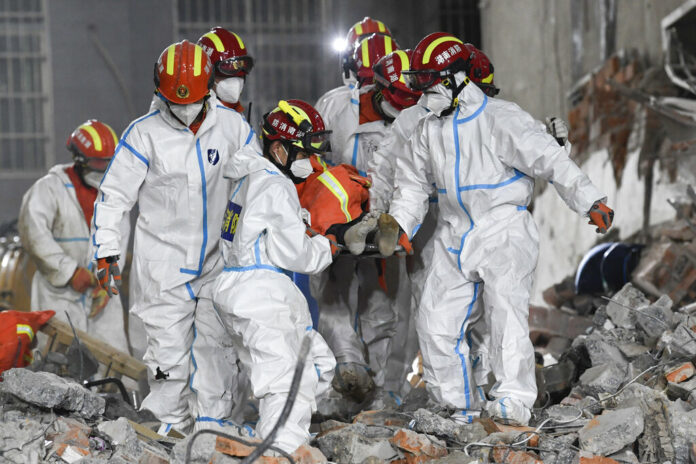
In this photo released by Xinhua News Agency, rescue workers evacuate the 10th survivor pulled alive after being trapped 132 hours from the debris of a self-built residential structure that collapsed in Changsha in central China's Hunan Province on Thursday May 5, 2022. Photo: Shen Hong / Xinhua via AP

BEIJING (AP) — Rescuers in central China have pulled a woman alive from the rubble of a building that partially collapsed almost six days earlier, state media reported Thursday.

The unidentified woman is the 10th survivor of the disaster in the city of Changsha, in which at least five people have died and an unknown number, possibly dozens, are still missing.

She was rescued shortly after midnight on Thursday, about 132 hours after the rear of the six-story building suddenly caved in on April 29, the official Xinhua News Agency reported.

The woman was conscious and advised rescuers on how to pull her out without causing further injury, Xinhua said. Teams had used dogs and hand tools as well as drones and electronic life detectors in the search.

All the survivors were reportedly in good condition after having been treated in a hospital. Intermittent rain showers in recent days may have increased their chances of survival without food or water.

At least nine people have been arrested in relation to the collapse of what Xinhua has described as a “self-built building,” including its owner, on suspicion of ignoring building codes or committing other violations.

Also held were three people in charge of design and construction and five others who allegedly gave a false safety assessment for a guest house on the building’s fourth to sixth floors.

The building also held a residence, a cafe and shops.

An increase in the number of collapses of self-built buildings in recent years prompted Chinese President Xi Jinping to call last month for additional checks to uncover structural weaknesses.

Poor adherence to safety standards, including the illegal addition of extra floors and failure to use reinforcing iron bars, is often blamed for such disasters. China also suffers from decaying infrastructure such as gas pipes that has led to explosions and collapses.

Advertisement

Russian Strikes Try To Disrupt Delivery of Western Weapons

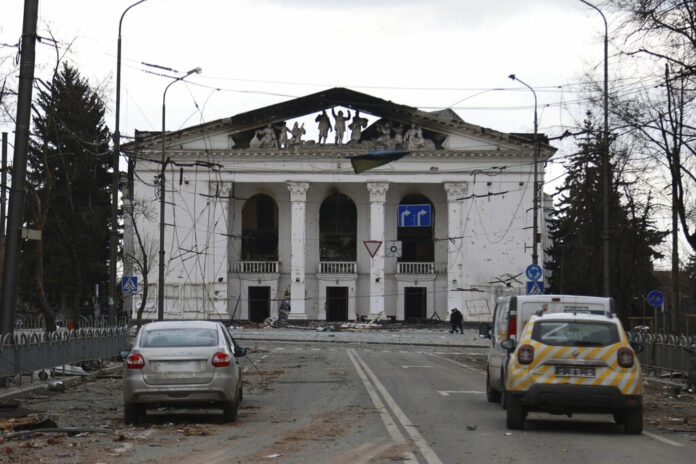
FILE - People walk past the Donetsk Academic Regional Drama Theatre in Mariupol, Ukraine, following a March 16, 2022, bombing of the theater, which was used as a shelter, in an area now controlled by Russian forces on Monday, April 4. Photo: Alexei Alexandrov / AP File

LVIV, Ukraine (AP) — Russia moved to obstruct the flow of Western weapons to Ukraine by bombarding rail stations and other supply-line targets across the country while the European Union weighed whether to further punish Moscow with a ban on oil imports.

Heavy fighting also raged Wednesday at the Azovstal steel mill in Mariupol that represented the last stronghold of Ukrainian resistance in the ruined southern port city, according to the mayor. A Russian official denied that Moscow’s troops were storming the plant, but the commander of the main Ukrainian military unit inside said Russian soldiers had pushed into the mill’s territory.

The Russian military said it used sea- and air-launched missiles to destroy electric power facilities at five railway stations across Ukraine. Artillery and aircraft also struck troop strongholds and fuel and ammunition depots.

Ukrainian Foreign Minister Dmytro Kuleba accused Russia of “resorting to the missile terrorism tactics in order to spread fear across Ukraine.”

Air raid sirens sounded in cities across the country on Wednesday night, and attacks were reported near Kyiv, the capital; in Cherkasy and Dnipro in central Ukraine; and in Zaporizhzhia in the southeast. In Dnipro, authorities said a rail facility was hit. Videos on social media suggested a bridge there was attacked.

There was no immediate word on casualties or the extent of the damage.

Responding to the strikes in his nightly video address, Ukrainian President Volodymyr Zelenskyy said: “All of these crimes will be answered, legally and quite practically – on the battlefield.”

The flurry of attacks comes as Russia prepares to celebrate Victory Day on May 9, marking the Soviet Union’s defeat of Nazi Germany. The world is watching for whether Russian President Vladimir Putin will use the occasion to declare a victory in Ukraine or expand what he calls the “special military operation.”

A declaration of all-out war would allow Putin to introduce martial law and mobilize reservists to make up for significant troop losses.

Kremlin spokesman Dmitry Peskov dismissed the speculation as “nonsense.”

Meanwhile, Belarus, which Russia used as a staging ground for its invasion, announced the start of military exercises Wednesday. A top Ukrainian official said the country will be ready to act if Belarus joins the fighting.

The attacks on rail infrastructure were meant to disrupt the delivery of Western weapons, Russian Defense Ministry spokesman Maj. Gen. Igor Konashenkov said. Defense Minister Sergei Shoigu complained that the West is “stuffing Ukraine with weapons.”

A senior U.S. defense official, speaking on condition of anonymity to discuss the Pentagon’s assessment, said that while the Russians have tried to hit critical infrastructure around the western city of Lviv, specifically targeting railroads, there has been “no appreciable impact” on Ukraine’s effort to resupply its forces. Lviv, close to the Polish border, has been a major gateway for NATO-supplied weapons.

Weaponry pouring into Ukraine helped its forces thwart Russia’s initial drive to seize Kyiv and seems certain to play a central role in the growing battle for the Donbas, the eastern industrial region that Moscow now says is its main objective.

Ukraine has urged the West to ramp up the supply of weapons ahead of that potentially decisive clash.

In addition to supplying weapons to Ukraine, Europe and the U.S. have sought to punish Moscow with sanctions. The EU’s top official called on the 27-nation bloc on Wednesday to ban Russian oil imports, a crucial source of revenue.

“We will make sure that we phase out Russian oil in an orderly fashion, in a way that allows us and our partners to secure alternative supply routes and minimizes the impact on global markets,” European Commission President Ursula von der Leyen told the European Parliament in Strasbourg, France.

The proposal needs unanimous approval from EU countries and is likely to be the subject of fierce debate. Hungary and Slovakia have already said they won’t take part in any oil sanctions. They could be granted an exemption.

The EU is also talking about a possible embargo on Russian natural gas. The bloc has already approved a cutoff of coal imports.

Russia’s economy is heavily dependent on oil and natural gas exports.

In Mariupol, Mayor Vadym Boychenko said that Russian forces were targeting the already shattered Azovstal plant with heavy artillery, tanks, aircraft, warships and “heavy bombs that pierce concrete 3 to 5 meters thick.”

“Our brave guys are defending this fortress, but it is very difficult,” he said.

Ukrainian fighters said Tuesday that Russian forces had begun storming the plant. But the Kremlin denied it. “There is no assault,” Peskov said.

Denys Prokopenko, commander of the Ukrainian Azov regiment that’s defending the plant, said Russian forces got into the plant’s territory.

Prokopenko said in a video that the incursions continued for a second day, “and there are heavy, bloody battles.”

“The situation is extremely difficult, but in spite of everything, we continue to carry out the order to hold the defense,” he added.

His wife, Kateryna Prokopenko, told The Associated Press: “We don’t want them to die. They won’t surrender. They are waiting for the bravest countries to evacuate them.”

Meanwhile, the United Nations announced that more than 300 civilians were evacuated Wednesday from Mariupol and other nearby communities. The evacuees arrived in Zaporizhzhia, about 140 miles (230 kilometers) to the northwest, where they were receiving humanitarian assistance.

Over the weekend, more than 100 people — including women, the elderly and 17 children — were evacuated from the plant during a cease-fire in an operation overseen by the U.N. and the Red Cross. But the attacks on the plant soon resumed.

The Russian government said on the Telegram messaging app that it would open another evacuation corridor from the plant during certain hours on Thursday through Saturday. But there was no immediate confirmation of those arrangements from other parties, and many previous such assurances from the Kremlin have fallen through, with the Ukrainians blaming continued fighting by the Russians.

It was unclear how many Ukrainian fighters were still inside, but the Russians put the number at about 2,000 in recent weeks, and 500 were reported to be wounded. A few hundred civilians also remained there, the Ukrainian side said.

Mariupol, and the plant in particular, have come to symbolize the misery inflicted by the war. The Russians have pulverized most of the city in a two-month siege that has trapped civilians with little food, water, medicine or heat.

The city’s fall would deprive Ukraine of a vital port, allow Russia to establish a land corridor to the Crimean Peninsula, which it seized from Ukraine in 2014, and free up troops to fight elsewhere in the Donbas.

___

Story: Jon Gambrell and Cara Anna. Anna reported from Zaporizhzhia, Ukraine. Associated Press journalists Yesica Fisch in Zaporizhzhia, Inna Varenytsia and David Keyton in Kyiv, Yuras Karmanau in Lviv, Mstyslav Chernov in Kharkiv, Lolita C. Baldor in Washington and AP staff around the world contributed to this report.

Advertisement

Opinion: Promises and Pitfalls of Thailand’s Social Media Landscape

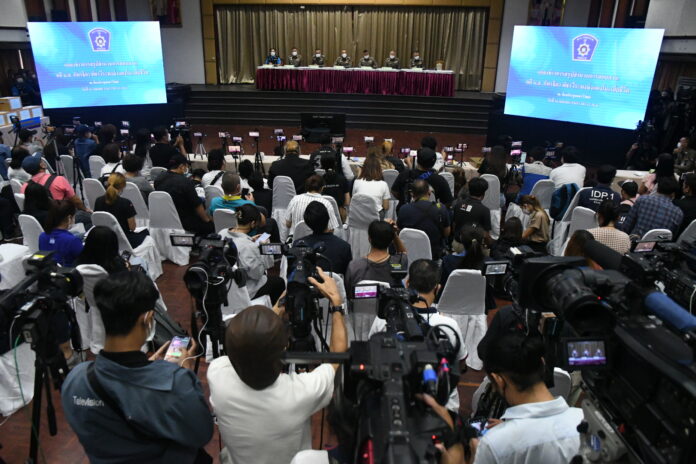
Photographers and journalists at a police press conference on the investigation into the death of actress Nida
Photographers and journalists at a police press conference on the investigation into the death of actress Nida "Tangmo" Patcharaveerapong in Nonthaburi province on Apr. 26, 2022.

Today is the World Press Freedom Day and it got this writer thinking about the changing media landscape in Thailand.

These days, it is harder to locate a newspaper kiosk in Bangkok than a nearest convenience store to buy booze. Young people increasingly do not read a physical newspaper. And when they go read it online, they tend to only go straight to what they are interested in.

The change is not just about the decline of physical print media or people watching less and less primetime news on television, but the rise of social media on everyone’s ubiquitous smartphone.

The duty of the press as a gatekeeper of what is fit to print or watch, is being undermined or made almost irrelevant over the past few years as citizens – social media users and consumers – became increasingly powerful in driving news agenda. Social media is nothing less than a game changer to the traditional mass media landscape.

Take the trending hashtags on Twitter for example. These days, Twitter hashtags and viral Facebook posts drive a lot of Thai society’s conversations and news agenda. The mainstream media monitors them, and reporters write stories based on what is trending which further amplify these topics.

Also, mass media’s censorship and self-censorship on sensitive issues, particularly on the monarchy institution, have been rendered ineffective. Many Thai social media users share and spread critical news, information, gossip, and hearsay about the monarchy. This is the other side of the Thai media landscape today.

Some became citizen journalists and offer social media users uncensored and uninterrupted Facebook Live coverage of sensitive protests such as that of the monarchy-reform movement.
State censorship is rendered largely ineffective, all they can do is to invoke the Computer Crime Act with a maximum five-year imprisonment term. But for every arrest and prosecution, thousands more still share critical news and information about the monarchy every day.
On the other hand, with the mainstream mass media no longer being able maintain its monopoly on news agenda and public conversation, what we see is not only the fragmentation of news and topics, but the tendency for many social media users to tailor and dwell inside its own parochial social media bubble.

Blocking, un-friending, and subscribing only to people and media organizations that reflect one’s political inclination is so prevalent these days and users end up dwelling in their own self-created bubble of news and information comfort zone. In the real world and a functioning democracy, we need to engage and deliberate with people who vehemently disagree or think differently from us in hope of compromise and finding a common solution for society.

When there is a political debate or argument online, people tend to be far less civil compared to face-to-face interactions. This is creating a more toxic political environment. Political tolerance is a dying value on social media and people could turn outright nasty, uninhibited, and rude when engaging in a political debate online with others.

Social media users may have found a new freedom, some have become media influencers with tens of thousands of followers if not more. Nevertheless, we should not forget that not all Thais are active on social media and not all agendas worthy of trending or being discussed on Twitter and Facebook can be found on social media.

The unhealthy attraction of excessive celebrity news consumption spread by the traditional media have become even more acute and addictive in the social media era, for example.

All social media users should recognize this and get out of their bubble every now and then, be Facebook ‘friends’ and follow those who disagree with them politically, or Thailand risks facing a new social and political isolation. The social and political divisions between regular social media users and those who seldom use social media is also real.

There is more to life than the parochial existence inside one’s social media sphere.

Advertisement

Hot News

LATEST NEWS

Bangkok
few clouds
36.5 ° C
36.6 °
35.5 °
40 %
3.6kmh
21 %
Wed
37 °
Thu
37 °
Fri
37 °
Sat
36 °
Sun
37 °