32.1 C
Bangkok
Saturday, June 13, 2026
Home Blog Page 99

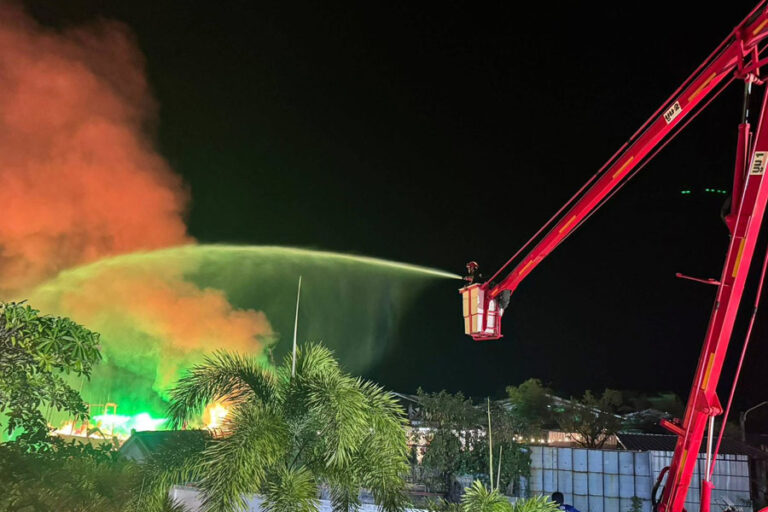
Fishing boats gutted in 4-hour blaze, 8 vessels destroyed, losses exceed 10 million baht

NAKHON SI THAMMARAT — 20 March 2026, A fire tore through a cluster of fishing boats in Khanom district early Friday, burning for about four hours and destroying eight vessels, with damage estimated at more than 10 million baht.

Police were alerted to the blaze at around 01:00 at a fishing pier in Khanom. Officers from Khanom Police Station, marine police, and local rescue units rushed to the scene.

2banner 1

Firefighters found intense flames engulfing a group of older fishing boats moored at a raft area in Khlong Khanom. The fire spread to nearby structures, while strong winds hampered efforts to contain it. Crews took approximately four hours to bring the blaze under control.

4banner

Initial reports indicate that all eight fishing boats were completely destroyed. Authorities suspect the fire may have been caused by an electrical short circuit on one vessel, which then spread to others.

However, police have not ruled out arson and are still investigating the exact cause. It remains unclear which boat was the source of the fire.

A witness said one burning boat broke free after its mooring rope snapped and drifted into nearby vessels, causing the flames to spread rapidly from one boat to another.

Forensic officers will conduct a detailed examination of the scene to determine the cause. Speculation has circulated that the fire could be linked to frustration over high fuel prices and shortages, though this has not been confirmed.

Reports also suggest the boats belong to the family of a parliamentary candidate who was not elected. The fleet is said to be among the largest in Nakhon Si Thammarat, consisting mainly of large single-trawl fishing vessels. The full extent of the damage is still being assessed.

3banner

Advertisement

Thai Baht as Gold Proxy Is Changing Forex Dynamics for Global Investors

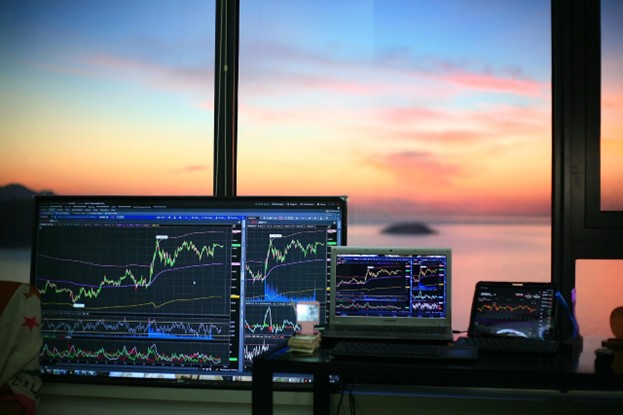
Thailand’s currency market is entering a very unusual phase, and forex traders are starting to notice that the Thai baht is no longer moving only on the usual drivers like tourism, exports, and interest rate expectations. Gold has become so influential in Thailand’s financial system that foreign investors are increasingly treating the baht as a proxy for gold exposure. That may sound surprising at first, but it makes sense once you look at how strongly gold transactions have begun affecting capital flows and exchange rate behavior inside the country. Reuters reported in January that Thailand’s central bank was moving to tighten controls on gold related transactions specifically because heavy gold trading in baht was helping drive the currency higher and increasing volatility.

This is a major shift for Thailand because it changes how the baht should be understood. For years, many forex investors looked at the Thai currency mainly through the lens of current account trends, political headlines, and regional risk appetite. Those factors still matter, but the role of gold has become too large to ignore. When gold buying and selling starts influencing the baht directly, the currency becomes something more than just a national unit of exchange. It becomes a financial signal tied to one of the world’s most important safe haven assets.

For Thailand, this new dynamic matters because it affects far more than short term market charts. It has implications for exporters, tourism competitiveness, central bank policy, and the wider way global investors engage with the country. A baht that is partly behaving like a gold linked currency is not just a technical market curiosity. It is a structural shift that could reshape how Thailand is priced in international financial markets.

Why the Thai Baht Is Becoming Linked to Gold

Thailand has always had a strong relationship with gold. Gold is widely understood, actively traded, and deeply familiar to Thai households and investors. But in 2026, that relationship has become large enough to influence the country’s currency in a visible way. This is what makes the current environment so important.

Gold flows are now affecting the baht directly

The strongest evidence comes from the Bank of Thailand itself. Reuters reported that the central bank blamed large gold related foreign exchange transactions for part of the baht’s rise and said these flows were strong enough to justify new controls beginning in March. The measures included tighter scrutiny, limits on daily online gold transactions, and closer monitoring of foreign currency inflows tied to gold activity.

That tells the market something very important. It means the baht is not strengthening only because of broad confidence in Thailand. It is also being pulled by the mechanics of gold trade and settlement. When investors buy or move gold in ways that require baht conversion, the currency starts reacting to gold market behavior more directly than normal.

Why foreign investors care about this relationship

Foreign investors are always looking for indirect ways to express a market view. Sometimes they buy a currency because they like a country’s economy. Other times they buy it because the currency gives them access to a wider theme. In Thailand’s case, the baht is increasingly reflecting gold related flows, which means it may now serve as a partial proxy for gold sentiment under certain market conditions.

That creates a new kind of appeal. An investor who believes gold demand will remain strong may begin to watch the baht more closely, not because Thailand has suddenly become a pure commodity economy, but because local financial structures have made gold activity more relevant to currency direction. This does not make the baht identical to gold, but it does make the link more meaningful than many traders expected.

The result is a market where Thailand’s currency story now includes a precious metals dimension that would have seemed unusual just a few years ago.

Why This Changes the Forex Picture for Thailand

A currency that starts behaving like a proxy for another asset cannot be analyzed in the same old way. Thailand’s baht now needs to be understood not only through macroeconomic fundamentals but also through the rhythm of gold demand, safe haven positioning, and trading rules around precious metals.

Traditional baht analysis is no longer enough

In the past, a trader looking at the baht would focus on exports, tourism receipts, domestic politics, central bank signals, and regional flows. All of that still matters, but the gold connection adds another layer. If gold prices surge and Thai gold activity intensifies, the baht can strengthen for reasons that have little to do with standard domestic demand.

That is a big change for Thailand centric traders. It means a currency move may no longer be explained fully by local growth or inflation alone. Sometimes the real answer may lie in the gold market.

Policy makers are now forced to respond differently

This new relationship also forces the central bank to think differently. Reuters reported that Thai officials were worried that baht appreciation linked partly to gold flows was hurting export and tourism competitiveness. That is a highly specific policy problem. It means the authorities are not dealing only with normal capital inflows. They are dealing with a currency being shaped by trading behavior in another asset class.

When a central bank starts introducing gold related controls to manage exchange rate pressure, it signals that the currency has entered a different kind of market environment. That makes the baht more complex, more interesting, and in some ways more difficult to predict.

For Thailand, this means the baht is now part of a broader financial ecosystem where gold and currency movement can no longer be separated cleanly.

What This Means for Investors Watching Thailand

The emergence of the baht as a gold proxy does not mean every move in the currency will follow bullion prices. Thailand is still influenced by growth, trade, politics, and regional sentiment. But the gold link is strong enough now that investors who ignore it may miss an important part of the story.

A new source of volatility and opportunity

For traders, this creates both opportunity and complexity. If the market begins pricing the baht partly through gold related flows, then periods of strong gold demand could create unusual currency moves. This could make the baht more sensitive during times of geopolitical stress, inflation fears, or global risk aversion when gold normally attracts attention.

Thailand’s market identity is evolving

More broadly, this suggests Thailand’s financial identity is changing. The country is no longer just a tourism and manufacturing story in currency markets. It is becoming a place where gold activity can shape exchange rate behavior in a serious way. That is a notable evolution, and it may increase the baht’s importance for global investors looking at Asia through a wider thematic lens.

For Thailand, that shift could bring more attention from international capital, but it also means managing a more complicated currency narrative in the years ahead.

Conclusion

Foreign investors are increasingly treating the Thai baht as a proxy for gold because gold linked transactions have become large enough to influence the currency directly. Reuters reporting makes clear that Thailand’s central bank has already recognized this connection and moved to tighten oversight because of its impact on baht strength and volatility.

This changes everything because it gives the baht a new role in global markets. It is no longer just a reflection of Thailand’s economy. It is becoming part of a wider story about how gold, capital flows, and currency behavior now interact inside one of Southeast Asia’s most important financial systems. For anyone watching Thailand closely, that makes the baht one of the most interesting currencies in the region right now.


Advertisement

Gunmen ambush Prachachat MP in Narathiwat; two aides critically injured

Gunmen ambush Prachachat MP in Narathiwat; two aides critically injured

NARATHIWAT — 20 March 2026, A member of parliament from the Prachachat Party narrowly escaped an assassination attempt after gunmen opened fire on his vehicle outside his home in Bacho district early on Friday, leaving two aides seriously wounded.

The attack occurred at 01:09 local time when an unidentified group of assailants travelling in a white four-door pickup truck trailed and then overtook the vehicle of Kamolsak Leewamoh, 59, MP for Narathiwat’s constituency 5.

According to initial reports, the gunmen reversed their vehicle and fired more than 10 rounds from what authorities described as a military-style firearm at the black Toyota Alphard carrying Kamolsak and his aides. The shooting took place in front of his residence on Phetkasem Road in tambon Bacho.

Two people in the vehicle were critically injured: the driver, Uchalumh Koloh, 55, and Pol. Snr. Sgt. Maj. Harirak Heemmina, 43, a police officer assigned to the MP’s security detail. Both sustained multiple gunshot wounds and were rushed by local residents to Bacho Hospital before being transferred to Naradhiwas Rajanagarindra Hospital.

Kamolsak, who had been returning from Hat Yai, survived unhurt after lying down across the back seat when he heard gunfire, narrowly avoiding the bullets.

CCTV footage from nearby homes captured the incident, showing the attackers overtaking the MP’s vehicle before reversing and opening fire, then fleeing the scene towards central Bacho.

Police have launched an investigation to identify and apprehend the suspects. Motive for the attack was not immediately known.

Advertisement

Blast rocks Mini Big C in Pattani, no injuries reported

PATTANI — 20 March 2026, A loud explosion was reported at a Mini Big C convenience store in Thung Yang Daeng district early Friday, triggering a major fire that caused extensive damage.

The incident occurred at approximately 03:10 at the Mini Big C Thung Yang Daeng branch in tambon Thung Yang Daeng, Thung Yang Daeng district. Witnesses reported hearing a blast-like sound before flames rapidly engulfed the premises.

No injuries have been reported as of initial checks. Authorities are investigating the cause of the incident, and further updates will be provided as more information becomes available.

Advertisement

Seven migrant workers arrested in Trat market crackdown

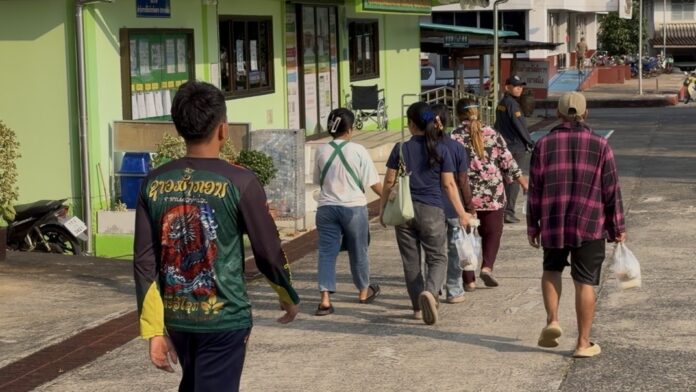
TRAT — Authorities in Khao Saming district arrested seven migrant workers during a joint inspection at Saen Tung municipal fresh market on 19 March, officials said.

The operation, conducted at 10:00 by a multi-agency team including Khao Saming Police, Internal Security Operations Command (ISOC) Trat, provincial employment officials, immigration police and local administrative officers, targeted illegal foreign labour and sought to protect jobs reserved for Thai nationals.

Officials said the suspects — four Cambodians, two Myanmar nationals and one Lao — were found working as vendors selling vegetables, sausages, grilled chicken and ice, occupations prohibited for foreign workers. They were charged with working beyond permitted rights under Section 8, with penalties under Section 101. Some were also found to have expired passports or border passes. All suspects were later handed over to investigators at Khao Saming Police Station for legal proceedings and will be deported after due process, authorities said

Advertisement

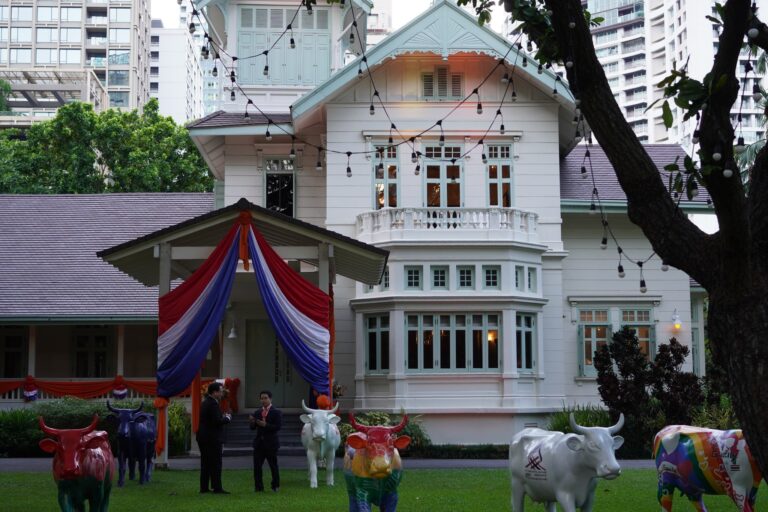
Netherlands to sell Bangkok embassy site, move to Dusit Central Park

BANGKOK — Embassy of the Netherlands in Bangkok has announced plans to sell its current embassy site in the Thai capital as part of a broader relocation strategy.

In a Facebook post on 19 March, Ambassador Remco van Wijngaarden said the embassy will move to a new office at Dusit Central Park, with the relocation expected in August 2026.

The embassy said the decision to sell the existing premises is part of efforts by the Dutch Ministry of Foreign Affairs to invest in buildings that are more sustainable, efficient, secure and suited to future needs.

492427740 1154683760027974 1086124443642734027 n

Dutch embassies and official residences worldwide serve as key venues for cooperation and engagement, and the ministry aims to ensure they remain well maintained and fit for purpose, the statement said.

Despite the planned move, consular and other services for Dutch nationals and businesses in Thailand, Cambodia and Laos will continue as normal. The embassy will close for several days during the relocation, but emergency consular assistance will remain available.

The new location at Dusit Central Park will place the embassy in Bangkok’s central business district with improved accessibility for visitors.

Advertisement

As the war against Iran is felt economically in Thailand, it’s time to rethink what needs to be done

The psychological irony of telling the public not to worry about Thailand running out of petrol and other forms of energy—due to the ongoing, unjust war by Israel and the United States against Iran—is that people feel even more uncertain and panicked by the ‘reassurance.’ By simply following the news, they can conclude that the Strait of Hormuz is effectively choking global fuel supplies due to the conflict and, by extension, the world economy.

​Whether you like it or not, and regardless of which side you root for in the Middle East, the global economic impact is undeniable and increasingly reverberating around the world. This includes Thailand, where several provinces report long queues at petrol stations and acute fuel shortages.

​On Thursday, for example, long queues continued at petrol stations in Yasothon province as fuel shortages persisted, particularly for diesel, despite a recent price increase.

​Reporters surveying several locations in the Northeast found that many stations had run out of diesel and were forced to display signs showing “out of diesel” and “temporarily closed,” even after prices rose by 0.50–1 baht per litre, effective today.

​“Motorists were seen driving from station to station in search of fuel, while long lines of vehicles extended onto nearby roads at stations that remained open,” we reported this morning. “At one station in Yasothon, large numbers of drivers began queuing from early morning. Several stations were later forced to shut in the afternoon after running out of stock, particularly diesel, which remains in high demand. Some stations have introduced rationing measures, limiting purchases to no more than 500 baht per vehicle in an effort to distribute fuel more evenly.”

​That is not all. Five major household goods producers in Thailand have also warned of across-the-board price increases starting next month, as Middle East tensions drive up oil, raw material, and transport costs.

​“Retail sources say current stock at old prices may last only until April. After that, higher prices are likely,” we also reported today. Companies including Nestlé, F&N, Unilever, Saha Pathanapibul, and BJC have all alerted partners to possible supply disruptions, rising costs, and the need to stock up in advance.

While some firms are increasing inventory and adjusting logistics, they say the situation remains uncertain, with no clear end in sight. The bottom line: expect higher prices and tighter supplies of everyday goods in the coming weeks.

​As for the Thai tourism industry, as many as 1,000 flights from the Middle East have been cancelled so far, and we are not even three weeks into the conflict.

​Globally speaking, Reuters reported on Wednesday that “the UN warns up to 45 million more people could face severe hunger in 2026 if the Iran war continues and oil prices stay high.”

​Despite this bleak news, it is notable that more major countries which are allies of the US are now saying “no” to US President Donald Trump. When Trump requested that allied nations—chiefly those in Europe, but also Japan, South Korea, and Australia—join the US in the conflict by securing the Strait of Hormuz militarily, these countries rejected the move. With varying levels of diplomatic politeness, they made it clear that this is not their war and they do not wish to risk the lives of their soldiers for a conflict they are not convinced is necessary.

Trump’s attempt to drag more nations into the conflict, to shoulder the burden of his aggression, and, in effect, widen the war and make a bigger mess fell flat after there were no takers.

​It is not Thailand’s war either, but we must act as a responsible member of the international community and voice our opposition to the continuation of this senseless and illegitimate violence. This war is killing not just soldiers but civilians on all sides involved and, as the UN has stated, is now putting 45 million vulnerable people at risk of “severe hunger.”

​To this end, the Thai government should urge ASEAN to form a more cogent and united stance against the war, calling for an immediate and unconditional ceasefire.

Blame Israel and the US all you want; blame Iran if you are so inclined; or blame well-connected Thai businesses allegedly receiving priority access to fuel if such claims can be proven. But try not to blame the petrol station staff, who are merely doing their jobs, as you wait for hours in a queue to fill your car.

Government emergency measures aside, we must all do our part to conserve energy, recognising that we are part of the same society. Acting out of pure self-interest—hoarding fuel in a panic—risks triggering a wider crisis, not unlike a stock market sell-off or even a stadium stampede.

Paradoxically, the more the government urges calm, the more unease spreads. Moments like this reveal a deeper question: will people act out of self-interest, or with a sense of responsibility to others? Cutting back on unnecessary car use—especially when driving alone—is a simple place to start.

​If you can save electricity—and in reality, virtually everyone can—you should start. Even Donald Trump does not know how or when this unjust war involving the United States and Israel against Iran—and Iran’s retaliation—will end.

​For those Thais who think they do not care about the war, you now have a direct incentive to call for peace. Trump and Netanyahu may not want to listen, but a louder, collective voice from around the world will eventually make them think twice.

Advertisement

Ukraine envoy visits Matichon, outlines war situation and ties with Thailand

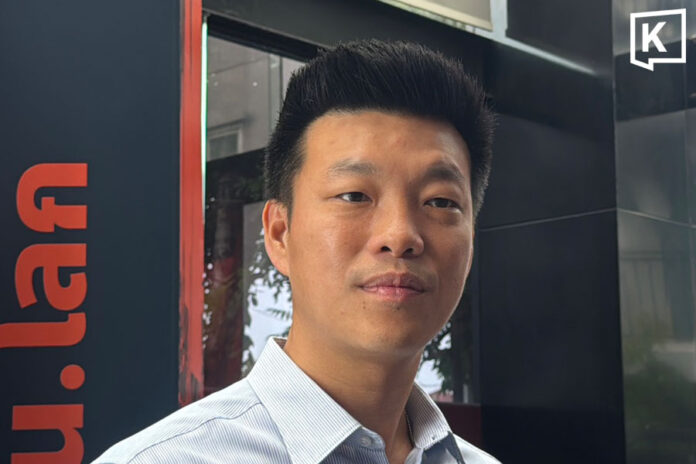
Ukraine’s Chargé d’Affaires a.i. to Thailand, Viktor Semenov

BANGKOK — Viktor Semenov, Chargé d’Affaires a.i. of Ukraine to Thailand, who has been in the post in Bangkok since September 2024, and Bohdan Ivashchenko, Second Secretary of the Embassy of Ukraine, visited Matichon on 19 March 2026.

They were welcomed by Prap Boonpan, managing director of Matichon, and the company’s executives at the Matichon office in Bangkok.

During the visit, Semenov briefed executives on the situation in Ukraine, stating that the country is fighting for its independence and the rights of its people. He said the struggle is not only for Ukraine itself but also for the preservation of international law.

He described the past period as difficult, noting that Russia had targeted energy infrastructure and generators during winter. However, Ukraine has been able to endure with support from the international community and is now working to restore its energy systems.
03

Semenov also cited humanitarian impacts, saying that over the past 12 years, hundreds of thousands of Ukrainian civilians and soldiers have been killed or injured, while children have been abducted and women subjected to sexual violence.

On relations with Thailand, he said the two countries have maintained good ties and cooperation across multiple areas. While some view Thailand as neutral in the Ukraine–Russia conflict, Semenov said he believes Thailand stands on the side of international law.

He expressed appreciation for Thailand’s support for Ukraine in international forums aimed at achieving peace, calling it a clear signal of the country’s position.

Semenov also noted the spread of disinformation throughout the conflict and thanked Matichon for helping audiences better understand the situation. He added that Ukraine has many other aspects to share, including its culture and economy, beyond the war.


Advertisement

People’s Party urges urgent action on energy crisis, highlights oil shortage issues

BANGKOK — 19 March 2026, Natthaphong Ruengpanyawut, leader and prime ministerial candidate of the People’s Party, said the party is preparing to submit an urgent motion to parliament to address the ongoing energy crisis, expressing hope the majority will allow space for discussion and public concerns to be raised.

Speaking at Parliament at 09:35, Natthaphong responded to criticism that the opposition had not been sufficiently active in scrutinising the energy crisis and rising oil prices. He said the formal opposition has not yet begun its role, as a prime minister has not been voted in.

However, in his capacity as a Member of Parliament, discussions are already under way to propose an urgent verbal motion for debate in today’s parliamentary session to seek solutions.

He said he believes the majority or government side will allow the opposition to present views and recommendations to the caretaker government.

Natthaphong stressed that, alongside rising oil prices, the more pressing concern is the apparent shortage of refined fuel. He noted that the government has yet to clearly explain where supplies have gone or who may be responsible for stockpiling.

He added that the government is expected to meet with private-sector operators across the supply chain later today, and said the quickest way to restore public confidence is through transparent disclosure of information.

2banner

Since the crisis began, the People’s Party has deployed its MPs and representatives to survey fuel prices and shortages in various areas, as well as rising costs of essential goods. These findings will be compiled and presented in parliament.

“If the government allows space in the House, we are ready to submit recommendations to the caretaker government to resolve the issue as quickly as possible,” he said.

Addressing criticism that the party has gone easy on the Bhumjaithai Party, Natthaphong denied any leniency. He said today’s debate on the prime ministerial vote is expected to include discussion of the candidate’s qualifications, with MPs from multiple parties likely to speak.

He noted, however, that the session is not a no-confidence debate, and that remarks must remain within the proper parliamentary framework, while reaffirming that scrutiny can be carried out fully in all appropriate forums.

Advertisement

Foreign tourists brawl in Patong over dispute involving woman

Foreign tourists brawl in Patong over dispute involving woman

PHUKET — 19 March 2026, Two foreign tourists believed to be friends were involved in a late-night brawl near the entrance of Soi Bangla in Patong, allegedly over a dispute involving a woman, police said.

The incident occurred at around 02:40 on Thursday along Thaweewong Road in tambon Patong, Kathu district. A video of the altercation was shared on Facebook by a user identified as Apichat Phanchalad, showing the men fighting before one collapsed and lay motionless on the ground.

According to the witness, the pair had been travelling together and began arguing inside Soi Bangla before the confrontation escalated into a physical fight. Bystanders attempted to intervene, but the two continued until one of them fell.

Police were alerted and arrived at the scene to find an injured foreign man, later identified as an Australian tourist, lying on the ground.

Pol. Col. Korakrit Khankhrea, superintendent of Patong Police Station, said the injured man told officers he had argued and fought with his friend over a woman. The other man fled the scene before police arrived.

Rescue workers from the Kusoldharm Phuket Foundation provided first aid before transporting the injured tourist to Patong Hospital for further treatment.

Police have advised the victim to file a formal complaint to proceed with legal action.

Advertisement

Hot News

LATEST NEWS

Bangkok
broken clouds
32.1 ° C
32.8 °
30 °
73 %
2.5kmh
71 %
Sat
36 °
Sun
36 °
Mon
35 °
Tue
34 °
Wed
34 °