29.4 C
Bangkok
Tuesday, June 23, 2026
Home Blog Page 991

Much of Shanghai Locked Down as Mass COVID-19 Testing Begins

FILE - A delivery man walks by police officers with protective suit outside of a hotel in Shanghai, China, on March 15, 2022. Photo: AP

BEIJING (AP) — China began locking down most of its largest city of Shanghai on Monday as a coronavirus outbreak surges and amid questions about the economic toll of the nation’s “zero-COVID” strategy.

China’s financial capital, Shanghai had been relatively unscathed by the pandemic, with lockdowns limited to specific housing compounds and places of work. The citywide lockdown conducted in two phases will be China’s most extensive since the central city of Wuhan, where the virus was first detected in late 2019, confined its 11 million people to their homes at the start of the outbreak in 2020.

Shanghai’s Pudong financial district and nearby areas will be locked down from Monday to Friday as citywide mass testing begins, the local government said. In the second phase of the lockdown, the vast downtown area west of the Huangpu River that divides the city will then start its own five-day lockdown Friday.

Residents will be required to stay home and deliveries will be left at checkpoints to ensure there is no contact with the outside world. Offices and all businesses not considered essential will be closed and public transport suspended.

Already, many communities within the city of 26 million have been locked down for the past week, with their housing compounds blocked off with blue and yellow plastic barriers and residents required to submit to multiple tests for COVID-19. Shanghai’s Disneyland theme park is among the businesses that closed earlier. Automaker Tesla is also suspending production at its Shanghai plant, according to media reports.

Panic buying was reported on Sunday, with supermarket shelves cleared of food, beverages and household items. Additional barriers were being erected in neighborhoods Monday, with workers in hazmat suits staffing checkpoints.

Shanghai detected another 3,500 cases of infection on Sunday, though all but 50 were people who tested positive for the coronavirus but were not showing symptoms of COVID-19. While people who are asymptomatic can still infect others, China categorizes such cases separately from “confirmed cases” — those in people who are sick — leading to much lower totals in daily reports.

Nationwide, 1,219 new confirmed cases of domestic infection were detected on Sunday, more than 1,000 of them in the northeastern province of Jilin, along with 4,996 asymptomatic cases, according the National Health Commission reported on Monday.

China has reported more than 56,000 confirmed cases nationwide this month, with the surge in Jilin accounting for most of them.

Jilin province is enforcing travel bans and partial lockdowns in several cities, including Changchun, one of the centers of the Chinese auto industry. Although the province has seen more than 1,000 new confirmed cases per day, prevention and control measures taken there do not appear to have been as extreme as in other places.

China has called its long-standing “zero-tolerance” approach the most economical and effective prevention strategy against COVID-19.

The new measures being enforced in Shanghai aim to “curb the virus spread, protect people’s life and health, and achieve the dynamic zero-COVID target as soon as possible,” the city’s COVID-19 prevention and control office stated in an announcement Sunday evening.

That requires lockdowns and mass testing, with close contacts often being quarantined at home or in a central government facility. The strategy focuses on eradicating community transmission of the virus as quickly as possible.

While officials, including Communist Party leader Xi Jinping have encouraged more targeted measures, local officials tend to take a more extreme approach, concerned with being fired or otherwise punished over accusations of failing to prevent outbreaks.

With China’s economic growth already slowing, the extreme measures are seen as worsening difficulties striking employment, consumption and even global supply chains.

Although China’s vaccination rate is around 87%, it is considerably lower among older people.

National data released earlier this month showed that over 52 million people aged 60 and older have yet to be vaccinated with any COVID-19 vaccine. Booster rates are also low, with only 56.4% of people between 60-69 having received a booster shot, and 48.4% of people between 70-79 having received one.

Advertisement

Will Smith, Chris Rock Confrontation Shocks Oscar Audience

Will Smith, right, hits presenter Chris Rock on stage while presenting the award for best documentary feature at the Oscars on Sunday, March 27, 2022, at the Dolby Theatre in Los Angeles. Photo: Chris Pizzello / AP

LOS ANGELES (AP) — A 94th Academy Awards that steadily maintained a buoyant spirit was rocked by an unbelievable exchange after Will Smith took offense to a joke made by Chris Rock about his wife, Jada Pinkett Smith.

After Rock joked to Smith that he was looking forward to a sequel to “G.I. Jane,” Smith stood up from his seat near the stage, strode up to Rock and slapped him. After sitting back down, Smith shouted at Rock to “keep my wife’s name out of your (expletive) mouth.” When Rock, who joked about Jada Pinkett Smith while hosting the Oscars in 2016, protested that it was just a “GI Jane” joke, Smith repeated the same line.

“That was the greatest night in the history of television,” Rock said, before awkwardly returning to presenting best documentary, which went to Questlove’s “Summer of Soul (…or When the Revolution Was Not Televised).”

The moment shocked the Dolby Theatre audience and viewers at home. At the commercial break, presenter Daniel Kaluuya came up to hug Smith, and Denzel Washington escorted him to the side of the stage. The two talked and hugged and Tyler Perry came over to talk as well.

Smith, who plays Venus and Serena Williams’ father in “King Richard,” later in the show won best actor, his first Oscar. It meant Smith again took the stage shortly after what seemed likely to be one of the most infamous moments in Academy Awards history.

Smith’s acceptance speech vacillated between defense and apology.

“Richard Williams was a fierce defender of his family,” Smith said in his first remarks. He continued: “I’m being called on in my life to love people and to protect people and to be a river to my people.”

Williams shared what Washington told him: “At your highest moment, be careful because that’s when the devil comes for you.”

Ultimately, Smith apologized to the academy and to his fellow nominees.

“Art imitates life. I look like the crazy father” said Smith. “But love will make you do crazy things.”

Up until that moment, the show had been running fairly smoothly. Ariana DeBose became the first Afro-Latina to win an Academy Award for supporting actress, while Troy Kotsur became the first deaf actor to win an acting award.

Jane Campion won the Oscar best director for “The Power of the Dog,” her open-plains psychodrama that twisted and upended western conventions. Campion, who had been the first woman ever twice nominated in the category (previously for 1993’s “The Piano”), is only the third woman to win best director. It’s also the first time the directing award has ever gone to women in back-to-back years, after “Nomadland” filmmaker Chloé Zhao won last year.

Best actress went to Jessica Chastain, who also won her first Oscar. Chastain won for her empathetic portrayal of the televangelist Tammy Faye in “The Eyes of Tammy Faye,” a movie she also produced. The award was presented by Anthony Hopkins, who last year was absent when he surprisingly won best actor in that ceremony’s final award.

After record-low ratings and a pandemic-marred 2021 show, producers this year turned to one of the biggest stars around — Beyoncé — to kick off an Oscars intended to revive the awards’ place in pop culture. After an introduction from Venus and Serena Williams, Beyoncé performed her “King Richard” nominated song, “Be Alive,” in an elaborately choreographed performance from a lime-colored, open-air stage in Compton, where the Williams sisters grew up.

Hosts Wanda Sykes, Amy Schumer and Regina Hall then began the telecast from the Dolby Theatre.

“All right, we are here at the Oscars,” began Hall. Sykes finished: “Where movie lovers unite and watch TV.”

Sykes, Schumer and Hall breezily joked through prominent Hollywood issues like pay equity — they said three female hosts were “cheaper than one man” — the Lady Gaga drama that Sykes called “House of Random Accents,” the state of the Golden Globes (now relegated to the memoriam package, said Sykes) and Leonardo DiCaprio’s girlfriends. Their most pointed political point came at the end of their routine, in which they promised a great night and then alluded to Florida’s “Don’t Say Gay” bill.

“And for you people in Florida, we’re going to have a gay night,” said Sykes.

The first broadcast award went, fittingly, to Ariana DeBose, who became the first openly LGBTQ actor and first Latina to win best supporting actress. Her win came 60 years after Rita Moreno won for the same role in the 1961 original “West Side Story.” DeBose thanked Moreno for leading the way for “tons of Anitas like me.”

“You see an openly queer woman of color, an Afro-Latina, who found her strength and life through art. And that is, I think, what we’re here to celebrate,” said DeBose. “So if anyone has ever questioned your identity or you find yourself living in the gray spaces, I promise you this — there is indeed a place for us.”

Later, Kotsur became the first male deaf actor to ever win an acting Oscar, and joined his “CODA” costar Marlee Matlin at the only deaf actors to win an Academy Award. He received a standing ovation while many in the Dolby gave the Deaf clap, waving both hands in the air.

“This is for the Deaf community, the CODA community and the disabled community,” said Kotsur, signing from the stage. “This is our moment.”

“Encanto,” the Disney hit propelled by its chart-topping soundtrack, won best animated film. Lin-Manuel Miranda, who penned the film’s hit songs, missed the ceremony after his wife tested positive for COVID-19. Ryusuke Hamaguchi’s three-hour Japanese drama “Drive My Car,” one of the year’s most acclaimed films, won for best international film.

After two years of pandemic, and beneath a warm California sun Sunday, the Hollywood rite of glamour again got into swing, with a jammed red carpet and a COVID-tested audience.

To help regain the cultural spotlight, the Oscars leaned heavily on musical performances (Billie Eilish, Reba McEntire), film anniversaries (“The Godfather,” “Pulp Fiction,” “White Men Can’t Jump”) and as many mentions of the “Encanto” breakout song, “We Don’t Talk About Bruno,” as possible. That made for an often buoyant ceremony that put less focus on the pandemic. The Ukrainian-born Mila Kunis led a 30-second moment of silence for Ukraine. Some stars, like Sean Penn, had lobbied the academy to have Ukrainian President Volodymyr Zelenskyy speak at the ceremony

Aside from a few blue ribbons spotted on the red carpet, politics were seldom center stage. The Oscars instead doubled down on razzle dazzle, and the movies as an escape. Producers brought in the likes of BTS and Tony Hawk to rope in more viewers. Some things worked better than others. Fan favorite rankings, as voted on by Twitter users — in a moment unlikely to be remember as an Oscar highpoint — honored Zack Snyder’s version of “Justice League.”

Feel-good movies also fared well. Sian Heder’s family drama “CODA,” a coming-of-age film about the hearing daughter of a deaf family, won for best adapted screenplay. Kenneth Branagh’s autobiographical “Belfast,” an affectionate family drama bathed in nostalgia and shot in black-and-white, took best original screenplay.

Eilish and her brother Finneas, won for their Bond theme to “No Time to Die,” a song that was released before the pandemic began. The film was subsequently delayed several times.

The Academy Awards got underway Sunday off-camera, with the first eight awards on the night being handed out at the Dolby Theatre before the start of the ABC telecast. The Dolby was largely full in time for the 7 p.m. EDT pre-show, dubbed the “golden hour” by the academy. Speeches were later edited into the broadcast.

“Dune” got out to an early lead in those early awards, and it kept it through the night. The biggest blockbusters of this year’s 10 best-picture nominees, “Dune” won for production design, cinematography, editing, visual effects, sound and Hans Zimmer’s score. Though it’s not favored in the top awards, “Dune” was widely expected to clean up in the technical categories.

Greig Fraser’s cinematography win denied one chance for Oscar history. Some had been rooting for Ari Wenger, who lensed Jane Campion’s “The Power of the Dog,” to become the first woman to win best cinematography, the sole Oscar category that has never been won by a woman in the Academy Awards’ nine decade-plus history

Best makeup and hairstyling went to Linda Dowds, Stephanie Ingram and Justin Raleigh for “The Eyes of Tammy Faye.” That film’s star and producer, Jessica Chastain, had been among the many academy members who thought all the awards should have been handed out live during the broadcast. Chastain hugged each winner as they took the stage.

“I just hope that each and every day on set everyone takes a moment to just look around and look at all those talented people who work hard,” said Dowds, the make-up artist.

“The Queen of Basketball,” about the basketball great Lusia Harris, took best short documentary film. Its executive producers include Steph Curry and Shaquille O’Neal. Best animated short went to “The Windshield Wiper,” while “The Long Goodbye,” a blistering fictional short starring Riz Ahmed, took best fiction short.

“This is for everyone who feels like they’re stuck in No Man’s Land,” said Ahmed. “You’re not alone. We’ll meet you there.”

Behind this year’s telecast changes was alarm over the Oscars fast-falling ratings. While drops have been common to all major network award shows, last year’s show attracted only about 10 million viewers, less than half of the 23.6 million the year before. A decade ago, it was closer to 40 million.

Netflix’s “The Power of the Dog,” Campion’s gothic western, came in with a leading 12 nominations and a good chance of snagging the top award. But all the momentum is with Sian Heder’s deaf family drama “CODA,” which, despite boasting just three nods, is considered the favorite. A win would be a triumph for Apple TV+, which acquired the movie out of the Sundance Film Festival last year and has spent big promoting it to academy members.

___

Story: Jake Coyle. Associated Press Writers Lindsey Bahr, Jocelyn Noveck and Andrew Dalton contributed to this report.


Advertisement

Opinion: A Week of Army-run TV5 Diplomatic Blunder on Russia and Ukraine News

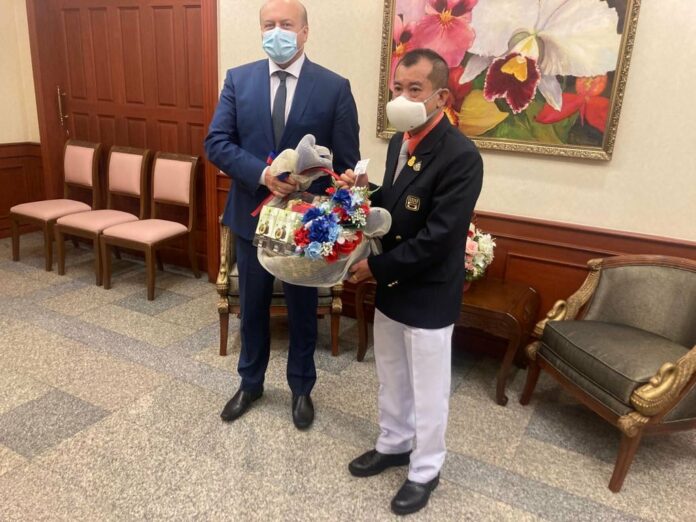
Russian Ambassador to Thailand Yevgeny Tomikhin receives a gift hamper from TV5 president Gen. Rangsee Kitiyanasap at the Russian Embassy in Bangkok on Mar. 21, 2022. Photo: Russian Embassy in Bangkok / Facebook.

In a week of diplomatic faux pas, a prominent state organization in Thailand attempted to publicly take sides with Russia amidst the Russian invasion of Ukraine, only to capitulate, having abruptly canceled its partisan press conference without a proper explanation. This was followed by a visit to the Ukrainian Embassy hours before the cancelled press conference.

We are not talking about the Thai Foreign Ministry here, even though at times they could be clumsy, calculated, lacking in moral courage, and Janus-faced.

The Foreign Ministry should, in fact, be commended for at least joining 139 states on early Friday morning in voting at the United Nations for the resolution on “Humanitarian consequences of the aggression against Ukraine,” which calls for the protection of Ukrainian civilians and aid access to Ukraine.

Thank you, the Foreign Ministry, and I am not typing these words with any iota of sarcasm despite our differences on a load of other issues – you folks are on the right track on this one as only five nations voted against, well four not countering Russia itself, while 38 abstained.

The very public diplomatic faux pas was in fact committed by an organization which is part of a state within a state in Thailand – the army-run and army-controlled TV Channel 5. TV5 is one of the major half a dozen free TV stations in the kingdom.

We first saw its president, Gen. Rangsee Kitiyanasap, visiting the Russian Ambassador to Thailand Yevgeny Tomikhin on Monday, handing Tomikhin a gift hamper and discussing foreign news sharing plans among others.

It was then followed by an announcement on Wednesday of a press conference by the station’s management to launch foreign news sharing “cooperation” initiative with state-controlled Russian media as well as those from China’s CGTN and Iran. No mention of Ukrainian media was made and there was no embassy visit.

The hours following the announcement of the presser (which did not include a cooperation with the North Korean Central News Agency, by the way) was followed by a barrage of angry online criticisms and accusation that the station is partial towards Russia and its allies, China, and Iran.

By Wednesday night, multiple sources confirmed that the press conference slated for 2pm Thursday has been indefinitely postponed without any formal explanation.

Well-known military-beat reporter Wassana Namuam confirmed on her Facebook post Wednesday night that the army-run station came under criticism for Rangsee’s attempt to “balanced American/Western media” with contents from Russia, China, and Iran and “thwart fake news,” so Thais can “receive the right news and information” about the war in Ukraine.

It’s clear that the Ukrainian Embassy in Bangkok was a non-entity from the beginning in the eyes of TV5 executives until late that night. It was not part of the original partners for the sharing of foreign news by TV5.

That changed after heavy criticisms and who knows who might have rung Rangsee and instructed him to embark upon a damage control mission by visiting the Chargé d’affaires of the Ukrainian Embassy the following morning. This is a state-run TV station after all and the station’s chairman of the board is no less than the army chief, ex officio.

By Thursday morning, Rangsee paid a visit to Ukrainian Chargé d’affaires Olexandr Lysak. Lysak told this writer on the phone Thursday afternoon that TV5 has agreed to also broadcast news from the state-run Ukrainian media and gave him a gift hamper.

On air, TV5 announced that Ukraine is now also a partner in its news-sharing cooperation, but its newscaster falsely stated during its noon news program Thursday that it was Lysak who went to see Rangsee.

This, despite the fact that the news broadcast showed the meeting between the two with the unique spire of one of the buildings at the All Seasons Place complex on Wireless Road, where the embassy is located, visible in the background, it was probably an attempt to minimize the loss of face suffered by the station chief, if not an outright misinformation or fake news by the station which said it is worried about fake news.

Rangsee then said on TV5 that the station is doing this to balance the news about the war in Ukraine after all as they can get news from these countries including Russia and China “for free,” unlike the two million baht of news content paid annually to Reuters.

I personally have no qualms if any private TV station wants to relay news from Russia’s RT 24/7 or China state-run sources round the clock. They have the right to do so. And people should be treated as adults and be able to decide by themselves what they want to watch and believe.

The problem is TV5 is army-run and state-controlled, partly taxpayers funded, and they committed a grave diplomatic faux pas when they initially excluded Ukraine from the news sharing cooperation – which was against the current stance of the Thai government to remain neutral on the matter.

TV5 is not a private station, it’s part of the Thai state. Actually, calling TV5 a state-controlled media, as labelled by Facebook on the station’s page, is rather inaccurate and misleading since the Thai army is a state within a state, with a penchant for military coup making.

Thus, TV5 is a state-within-a-state-controlled media. That may seem confusing, but the reality is confusing, and Thailand continues to put up with having the army running a major free TV station with the salaries of these senior military officers in charge paid by taxpayers, while in fact they should simply stay inside the barracks.

Army-run TV5 is first, a propaganda tool for the Royal Thai Army, and second, a propaganda tool of the state.

Thai generals fancy themselves doing more than what their supposed job descriptions specified, so they fancy themselves being junta-appointed senators, junta-appointed board members at various state enterprises, coup makers, unelected prime ministers, and in the case of TV5 and its top executives like Rangsee, broadcasters.

No wonder Thailand remains under the shadow of the military and is in a very confused state. The latest blunder from TV5 was just one example.

Advertisement

100 Objects of Political Campaigns On Exhibit Till Sunday

Anon Chawalawan at his exhibition of objects related to Thai political conflicts at Kinjai Contemporary.

BANGKOK — Anon Chawalawan was rather pleased with the fact that about 500 people visited the exhibition of political objects he collected after nearly a month on show. Looking at the objects, he was reminded that Thailand remains in a loop of political violence, however.

He said there is this Cold-War era metal bowl with an anti-communist message printed on it and then fast forward to the past few years, a white sleeve shirt with blood stain belong to anti-junta activist Sirawith Serithiwat.

“It’s as if we’re trapped in a loop of [political] violence,” Anon said.

To him, nothing could substitute visitors seeing the 1,000 real political objects he has been collected for nearly four years now under the project called Museum of Popular History. There is no such physical museum yet but the current exhibitions at a gallery in Bangkok means a hundred curated objects can be viewed by the public.

Beside the Cold-War era bowl, his other favorite piece on exhibit is a A4-sized placard from an anti-government cum monarchy-reform protest he collected from a young female protester at a protest site last year. The message written on it reads: “If politics is good, my mom would have a dishwashing machine already.”

A sign collected from a recent anti-government protest which reads "If politics is good, my mom would have a dishwashing machine already."
A sign collected from a recent anti-government protest which reads “If politics is good, my mom would have a dishwashing machine already.”

“This is so meaningful,” Anon quipped. “It made us understand that the street protests between 2020 to 2021 is not something far removed from daily life.”

Despite the power of these objects in speaking directly to viewers, Anon, 37, admits that no public institutions or universities are collecting these valuable political objects.

“The state may collect them but only to use an evidence to lodge legal charges against protesters then they would likely discard them. Some books may be kept but as means of understanding anti-establishment groups but not to guard history,” Anon pointed out.

A Cold-War era metal bowl with anti-Communist message printed on.

This means the task is left to him and during the past months, some visitors to the exhibition offer to donate more items to him despite the fact that establishing a physical Museum of Popular History is still a distant dream for not just Anon but Thailand.

The exhibit at Kinjai Contemporary runs until Mar. 27, 2022 from 11am to 7pm. Admission is free.

Advertisement

Charoen Pokphand Foods and Future Meat Technologies will develop cultured meat products for the Asian market

Charoen Pokphand Foods Public Company Limited (CPF), one of the world’s leading integrated agro-industrial and food business, announced a first-of-its-kind partnership with Future Meat Technologies, a leading cultured meat company.

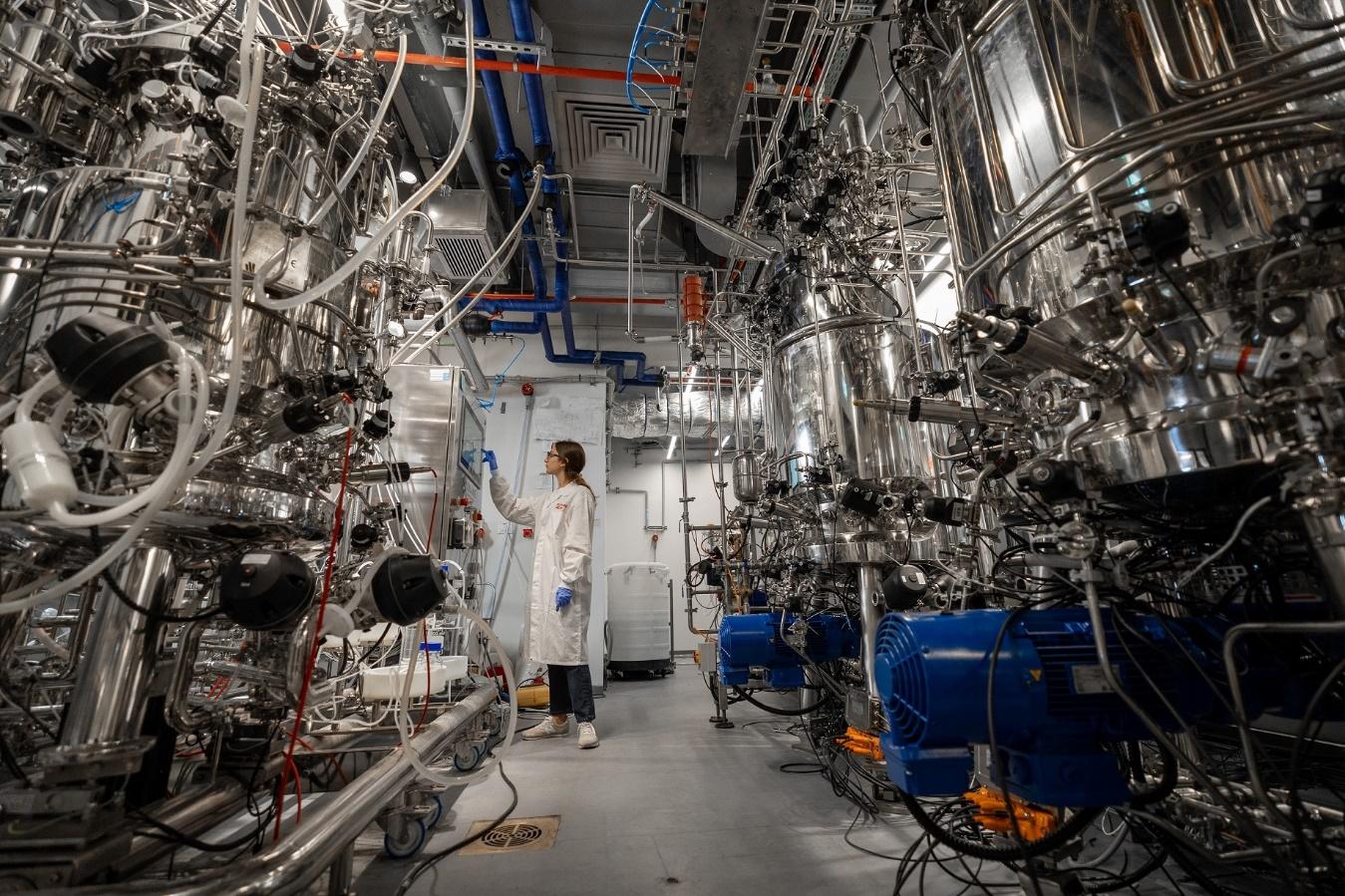
CPF and Future Meat Technologies aims to develop hybrid cultured meat products for the Asian market, matching the unique consumer preferences of the Asian continent and leveraging the company’s knowledge of the market demands and vast distribution network in the region. The announcement comes months after Future Meat Technologies launched the world’s first cultured meat production line just south of Tel Aviv capable of producing up to 500 kg of products a day.

image3 18

Future Meat products are uniquely non-GMO as their technology allows chicken, lamb, pork, and beef cells to grow forever without the use of genetic modification. Proprietary engineering technology, also allowed the company to produce cultured meat products for less than $16 per lbs.

Prasit Boondoungprasert, CEO at CPF said “After the first launch of CPF’s plant-based products under the Meat Zero brand last year, we have received exceptional recognition from the market both in Thailand and the Asian market. This year we will be rolling out to other parts of the world, including USA and the European markets. Cultured meat is another exciting technology, having the same sustainability and animal welfare proposition as plant-based meat. It can also offer new properties to satisfy future consumer needs and will be a key part of our ambition to be one of the leading alternative protein companies. Future Meat is one of the technology leaders in this field, and we are excited to be working with them to combine our expertise and deliver exceptional products for the Asian markets.”

image2 18

“We are incredibly excited about the opportunity to expand our activity and to work in Asia”, said Prof. Yaakov Nahmias, the company’s President and founder, “Our technology is uniquely suited to meet the rising demands for quality protein in Asia at a time of dwindling environmental resources. It is time to meet this challenge head on to secure a future for all coming generations”.

Moses Talbi, EVP Finance & Business Development at Future Meat added “We are eager to partner with CPF, a world leading food company which truly believes in delivering quality products while maintaining the sustainability of our plant. Future Meat is proud to embark in this partnership”.

image4 16

Advertisement

Rich Countries Getting New COVID Vaccine Before Poorer Ones

FILE - A worker moves boxes carrying Novavax's COVID-19 vaccine at SK Bioscience Co. in Andong, South Korea, on Feb. 9, 2022. Photo: Kim Hyun-tae/Yonhap via AP File

NEW DELHI (AP) — The company behind a COVID-19 vaccine touted as a key tool for the developing world has sent tens of millions of doses to wealthy nations but provided none yet to the U.N.-backed effort to supply poorer countries, a sign that inequity persists in the global response to the pandemic.

A quarter-million doses from the company were supposed to be available to the vaccine-sharing initiative, called COVAX, by March. But the U.N. agency in charge of deliveries says the first shipments now likely won’t be made until April or May.

It wasn’t supposed to be this way. The company, Novavax, got $388 million from one of the organizations leading COVAX to fast-track the vaccine’s development and help make the shot available in poorer countries.

The investment guaranteed COVAX the “right of first refusal” to the first Novavax doses, but the deal applied only to factories in the Czech Republic, South Korea and Spain, said Bjorg Dystvold Nilsson, spokesman for COVAX co-founder CEPI.

There are other factories that aren’t part of the deal — and their shots are going elsewhere.

The Serum Institute of India, the world’s largest vaccine maker, has manufactured millions of Novavax doses. According to India’s Ministry of External Affairs and the institute, more than 28.9 million of those doses were sent to the Netherlands in January and February, while Australia received about 6 million doses. Indonesia also received about 9 million doses in December.

Thousands of other Novavax doses were also shipped from a Netherlands factory to other EU countries.

“Whatever the reason, a vaccine that was believed to be highly suitable for poor countries is now in large part going to rich countries,” said Zain Rizvi, a drug policy expert at the U.S. advocacy group Public Citizen. “It’s tragic that in year three of the pandemic, we still cannot get the resources, attention and political will to solve vaccine inequity.”

The delay is the latest setback for COVAX, which has been repeatedly hit by supply problems and has missed numerous targets to share doses.

Last year, WHO’s director-general Tedros Adhanom Ghebreyesus decried the chasm in vaccine supplies between rich and poor countries as a “catastrophic moral failure.”

Vaccine availability has been improving in poorer regions recently, but logistical problems persist.

According to data from Oxford University, only about 14% of people in low-income countries have received at least one dose of COVID-19 vaccine. More than 680 million doses of COVAX-provided vaccines remain unused or have expired, according to government data.

Even with vaccine supplies improving, some officials were eagerly awaiting the Novavax vaccine in particular because it is easier to transport and store than some other coronavirus shots. They also hoped it might be more enticing to people skeptical of the AstraZeneca vaccine, which suffered through a botched rollout in Europe.

Countries including Zimbabwe, the Central African Republic and Kiribati were among those in line to be offered Novavax doses by March from COVAX.

Before the pandemic, Novavax was a small American company that had never brought any vaccine to market. Its shots have proven highly effective, but it is relying heavily on other companies to make them.

The company, struggling to scale up production, also has delayed delivery to other countries, including some in the European Union. COVAX is supposed to receive more than 1 billion Novavax doses.

In a statement, the Gaithersburg, Maryland, company acknowledged that it had yet to share any shots with the vaccines alliance Gavi, which fronts the COVAX effort, but said it stands ready to do so.

“We continue to work with Gavi to reach our shared goal of ensuring global access to our protein-based vaccine where it is needed most,” Novavax said.

Gavi suggested part of the delay is that the Novavax vaccine wasn’t authorized by WHO until December. Gavi said it planned to allocate Novavax in the future and was “in close touch with the manufacturer and expects the supply to be available for delivery when countries need it.”

Health officials also worry that the urgency to vaccinate people everywhere against COVID-19 has disappeared — especially as many countries roll back precautions and the world’s attention is diverted.

“Rich countries have moved on from COVID and everyone is fixated on the war in Ukraine, but COVID-19 remains an acute crisis for most people in the world,” said Ritu Sharma, a vice-president at the charity CARE.

She said COVAX was still desperately short of vaccines and that based on the current pace of vaccination, the world was still “years and years” away from immunizing enough people to stop future COVID-19 waves.

Other experts said it was incumbent on public health agencies to ensure their investments into vaccines would benefit poor countries and to be more transparent about what went wrong.

“Whatever the explanation is, it’s unsatisfactory,” said Brook Baker, an access to medicines specialist at Northeastern University. “The bottom line is that there are still a lot of unvaccinated people in poor countries and once again, they are at the back of the line.”

___

Story: Maria Cheng and Aniruddha Ghosal.

Advertisement

Putin’s War in Ukraine Nearing Possibly More Dangerous Phase

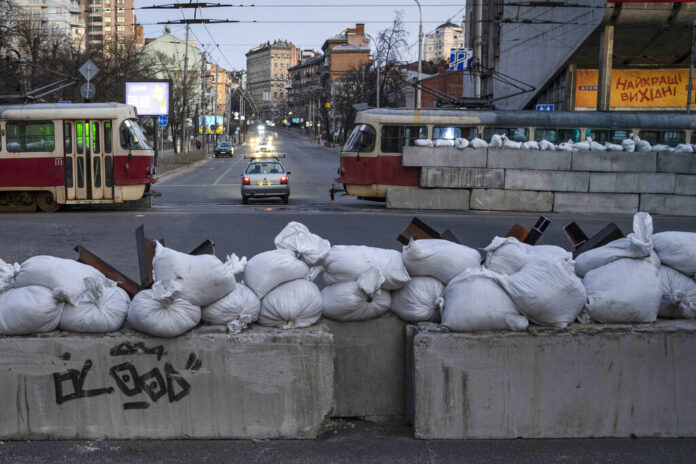
FILE - A driver passes through a barricade built by territorial defense units downtown in Kyiv, Ukraine, March 19, 2022. Photo: Rodrigo Abd / AP

WASHINGTON (AP) — President Vladimir Putin’s war in Ukraine is approaching a new, potentially more dangerous phase after a month of fighting has left Russian forces stalled by an outnumbered foe. He is left with stark choices — how and where to replenish his spent ground forces, whether to attack the flow of Western arms to Ukrainian defenders, and at what cost he might escalate or widen the war.

Despite failing to score a quick victory, Putin is not relenting in the face of mounting international pressure, including sanctions that have battered his economy. The Western world is aligned largely against Putin, but there have been no indications he is losing support from the majority of the Russian public that relies predominantly on state-controlled TV for information.

Ukrainian defenders, outgunned but benefitting from years of American and NATO training and an accelerating influx of foreign arms and moral support, are showing new signs of confidence as the invading force struggles to regroup.

Russian shortcomings in Ukraine might be the biggest shock of the war so far. After two decades of modernization and professionalization, Putin’s forces have proved to be ill-prepared, poorly coordinated and surprisingly stoppable. The extent of Russian troop losses is not known in detail, although NATO estimates that between 7,000 and 15,000 have died in the first four weeks — potentially as many as Russia lost in a decade of war in Afghanistan.

Robert Gates, the former CIA director and defense secretary, said Putin “has got to be stunningly disappointed” in his military’s performance.

“Here we are in Ukraine seeing conscripts not knowing why they’re there, not being very well trained, and just huge problems with command and control, and incredibly lousy tactics,” Gates said at a forum sponsored by The OSS Society, a group honoring the World War II-era intelligence agency known as the Office of Strategic Services.

Battlefield trends are difficult to reliably discern from the outside, but some Western officials say they see potentially significant shifts. Air Vice-Marshal Mick Smeath, London’s defense attaché in Washington, says British intelligence assesses that Ukrainian forces probably have retaken two towns west of Kyiv, the capital.

“It is likely that successful counterattacks by Ukraine will disrupt the ability of Russian forces to reorganize and resume their own offensive towards Kyiv,” Smeath said in a brief statement Wednesday.

Ukraine’s navy said Thursday it sank a large Russian landing ship near the port city of Berdyansk.

Faced with stout Ukrainian resistance, Russian forces have resorted to bombardment of urban areas but made little progress capturing the main prize — Kyiv. The Pentagon said Wednesday that some Russian troops were digging in at defensive positions outside of Kyiv rather than attempting to advance on the capital, and that in some cases the Russians have lost ground in recent days.

In an assessment published Thursday, the Atlantic Council said a major Russian breakthrough is highly unlikely.

Not long before Putin kicked off his war Feb. 24, some U.S. military officials believed he could capture Kyiv in short order — perhaps just a few days — and that he might break the Ukrainian military within a couple of weeks. Putin, too, might have expected a quick victory, given that he did not throw the bulk of his pre-staged forces, estimated at more than 150,000, into the fight in the opening days. Nor did his air force assert itself. He has made only limited use of electronic warfare and cyberattacks.

Putin is resorting to siege tactics against key Ukrainian cities, bombing from afar with his ground troops largely stagnant.

Stephen Biddle, a professor of international affairs at Columbia University, says Putin’s shift is likely based on a hope that President Volodymyr Zelenskyy will give up rather than allow the killing and destruction to continue.

“This plan is very unlikely to work. Slaughtering innocent civilians and destroying their homes and communities is mostly just stiffening Ukrainian resistance and resolve,” Biddle said in an email exchange.

Ukrainian units have begun counterattacking in some areas, according to John Kirby, the Pentagon press secretary. But the Ukrainians face an uphill battle even as the United States and its allies accelerate and widen a flow of critical weapons and supplies, including anti-aircraft missiles and armed drones. Biden has vowed to seek longer-range air defense systems for Ukraine as well as anti-ship missiles. Last week he approved a new $800 million package of arms for Ukraine.

Philip Breedlove, a retired Air Force general who served as the top NATO commander in Europe from 2013 to 2016 and is now a Europe specialist with the Middle East Institute, said Ukraine may not win the war outright, but the outcome will be determined by what Zelenskyy is willing to accept in a negotiated settlement.

“I think it’s highly unlikely that Russia is going to be defeated in detail on the battlefield,” Breedlove said, because Russia has a large reserve of forces it could call on. But Ukraine might see winning as forcing Russia to pay such a high price that it is willing to strike a deal and withdraw.

“I think there is a chance of that,” Breedlove said.

With the war’s outcome in doubt, so too is Putin’s wider goal of overturning the security order that has existed in Europe since the end of the Cold War and the collapse of the Soviet Union in 1991. Putin demands that NATO refuse membership to Ukraine and other former Soviet states like Georgia, and that the alliance roll back its military presence to positions held prior to expanding into Eastern Europe.

NATO leaders have rejected Putin’s demands, and with uncharacteristic speed are bolstering the allied force presence in Romania, Slovakia and Hungary, which border Ukraine, and in Bulgaria, which like Ukraine sits on the Black Sea.

“We are united in our resolve to counter Russia’s attempts to destroy the foundations of international security and stability,” leaders of the 30 allied nations said in a joint statement after meeting in Brussels on Thursday.

The human tragedy unfolding in Ukraine has overshadowed a worry across Europe that Putin could, by miscalculation if not by intent, escalate the conflict by using chemical or nuclear weapons in Ukraine or attempt to punish neighboring NATO nations for their support for Ukraine by attacking them militarily.

“Unfortunately there is now not a single country that can live with the illusion that they are safe and secure,” Bulgarian Prime Minister Kiril Petkov said, referring to his fellow European members of NATO.

With that threat in mind, the United States and other allied countries have begun assembling combat forces in Bulgaria and other Eastern European NATO countries — not to enter the war directly but to send Putin the message that if he were to widen his war he would face allied resistance.

Speaking at a windswept training range in Bulgaria last week, U.S. Army Maj. Ryan Mannina of the 2nd Cavalry Regiment said the tension is palpable.

“We’re very aware that there’s a war going on only a few hundred miles from us,” he said.

___

Story: Robert Burns. Associated Press writer Lolita C. Baldor contributed to this report.

Advertisement

GIVE THE PLANET A BREAK! THE STANDARD, HUA HIN MARKS EARTH HOUR 2022 WITH LIGHTS-OUT EVENT

Guests will be invited the join this important environmental occasion, as the resort switches off all non-essential lighting and sets the stage for social interaction and sustainability debate

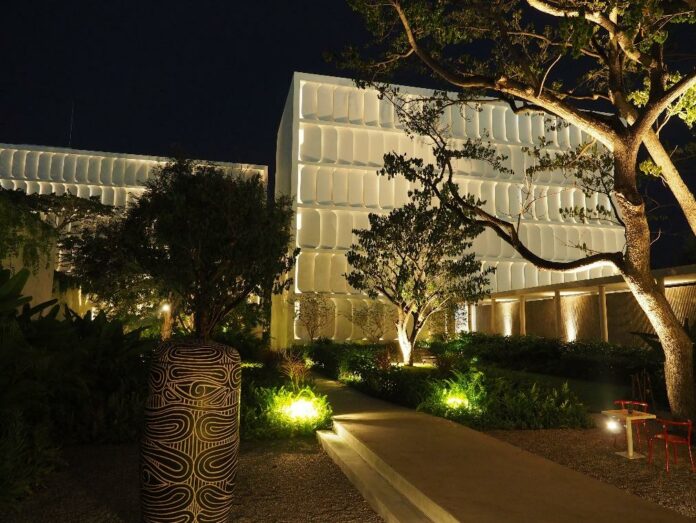
Before and after: The Standard, Hua Hin will turn off all non-essential lighting for an hour on 26th May 2022

HUA HIN, THAILAND, MARCH 2022: The Standard, Hua Hin’s new vibrant breach resort is not only great at creating amazing social and cultural experiences, it can also tackle the world’s biggest issues – including the fight against climate change.

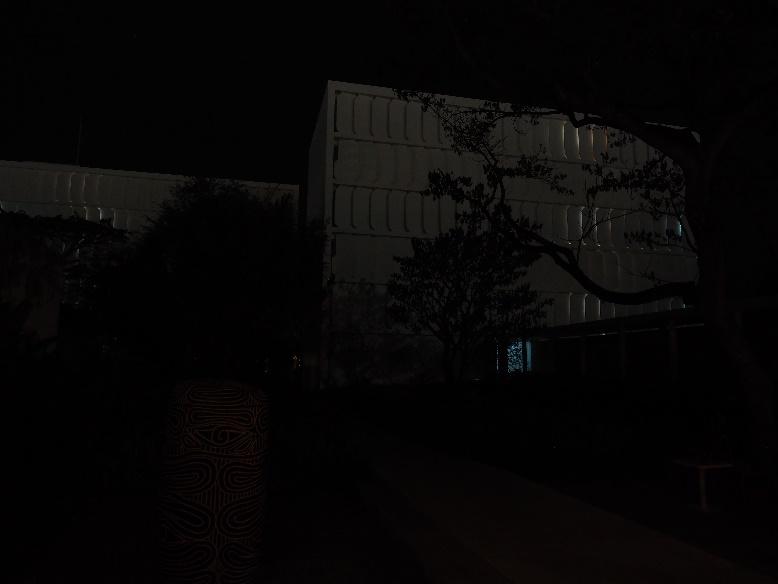
This month, like millions of other homes and businesses around the world, The Standard will be plunged into darkness to mark Earth Hour 2022, the global movement that has become a catalyst for environmental action. The resort will mark this important occasion by switching off all non-essential lights for one hour on 26th March 2022, in a dramatic and highly meaningful gesture.

From 8.30pm to 9.30pm (local time), The Standard will extinguish the lights in all parts of the property, including the exterior façades of both main hotel buildings, the lobby area, The Lido restaurant, The Lido Bar, Juice Café and Praça, the restored heritage house and Thai izakaya.

The Earth Hour message will also be communicated to in-house guests, who will be encouraged to turn off their room lights and come together in candlelight at the resort’s atmospheric restaurants and lounges, to discuss critical issues and exchange ideas on the practical action we can all take to help save the planet.

“At The Standard, we understand the importance of supporting Earth Hour. This annual event reflects a philosophy we try to practice all-year-round – to reduce our carbon footprint, operate in a more sustainable manner, and build a better future for the next generation. Participating in Earth Hour is a simple gesture, but it forms part of a powerful global movement. The Earth needs a break, so let’s all turn off our lights on 26th March,”  said Mr. Amar Lalvani, Executive Chairman of Standard International.
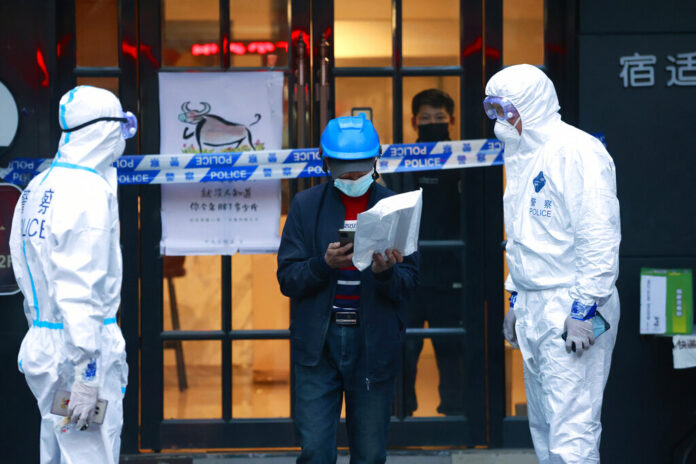
image2 17

Launched in 2007 by the World Wildlife Fund (WWF), Earth Hour started out as a symbolic lights-out event to raise awareness of climate change. It has grown into one of the world’s largest grassroots environmental movements. Held annually on the last Saturday of March, it engages supporters in more than 190 countries and territories, all taking action to ensure a brighter future for the planet.  To learn more, visit www.earthhour.org

Newly-opened in December 2021, The Standard, Hua Hin brings a cool Miami vibe to Thailand’s golden gulf coast. With 199 rooms, suites and villas, the mid-century design Lido pool and bar, a beachfront Thai izakaya restaurant and juice café, this chic seafront hotel is a haven for curious global explorers.

The Standard hotels are present in the most desirable of destinations, from Miami Beach to the Maldives, London to New York, now Hua Hin and soon Ibiza and Bangkok.

Connect with the hotel via:
Facebook: The Standard Hua Hin
Line: @thestandardhuahin
Web: www.standardhotels.com

Advertisement

COURTYARD BY MARRIOTT NORTH PATTAYA OPENS ITS DOORS AT THAILAND’S DYNAMIC EASTERN SEABOARD

22 March 2022, Pattaya, Thailand – Courtyard by Marriott, the trailblazing brand with the largest global footprint of Hotels within Marriott Bonvoy’s portfolio of 30 extraordinary brands, today announced the opening of its newest hotel in the popular leisure destination, Pattaya in Thailand. Courtyard by Marriott North Pattaya is set to welcome guests in comfort and style with inviting spaces, thoughtful amenities and technology catering to the needs of next-gen business and leisure travelers. 

Located a few minutes away from the Wongamat Beach in Naklua, North Pattaya, the new hotel is only two hours’ drive from Bangkok and 1.5 hours from Suvarnabhumi Airport, making it easily accessible for local and international guests alike. Guests staying at Courtyard by Marriott North Pattaya can enjoy many of the local attractions in the city, from world-class water parks and retail malls, including Terminal 21 and Central Festival, to cultural sites such as the Sanctuary of Truth and floating market, championship golf courses, beautiful beaches and Pattaya’s famous Walking Street.

“It gives me great pleasure to unveil the newest addition to the Courtyard by Marriott brand portfolio in Thailand. Designed to provide guests with everything they need to move forward, Courtyard by Marriott North Pattaya is the ideal choice for trailblazing business and leisure travelers,” said Jakob Helgen, Area Vice President – Thailand, Vietnam, Cambodia & Myanmar, Marriott International. “Our Select Services portfolio is driving momentum for growth in the region with an exciting pipeline. With international borders opening, we look forward to welcoming international travelers with expanded travel choices and diversified experiences.” 

image4 15

Accentuating contemporary design that encompasses comfort and functionality, the new hotel’s decor also incorporates elements and patterns of the sand and beach, creating a connection to the local community. Guests can choose from 233 contemporary rooms and suites, ranging from the 28-square metre Superior Rooms and Premier Rooms, to the larger 37-square metre Deluxe Rooms, spacious 41-square metre Deluxe Suites and premium 44-square metre Courtyard Suites, which are equipped with comfortable bedding, ergonomic workspaces, LCD TVs, complimentary Wi-Fi and spacious marble bathrooms with rain showers to ensure peaceful and productive stays. The guestrooms also feature the brand signature window side lounger, providing guests a perfect spot to recline, relax and enjoy the view.

Dining options at the hotel include Café 22, the all-day dining venue that serves a wide selection of local and seasonal cuisine along with international favorites in a vibrant ambiance with open kitchens. This is the perfect place to kickstart the day with an energizing buffet breakfast, grab light bites and healthy snacks throughout the day, and enjoy memorable evening meals. The poolside Surf Bar is a great spot to enjoy refreshing drinks whilst gazing out over Pattaya’s skyline. The Spart’s Bar where guests can relax and unwind over crafted cocktails, cold-brew coffee, and more by an expert mixologist and barista. 

When visitors are not working or exploring the area’s many local attractions, they can work out at the 24/7 Fitness Center, with its state-of-the-art equipment, changing rooms and showers, or soak up the sun at the inviting rooftop pool, while children are kept fully engaged and entertained at the Kid’s Club, with its indoor and outdoor play zones.

image3 17 

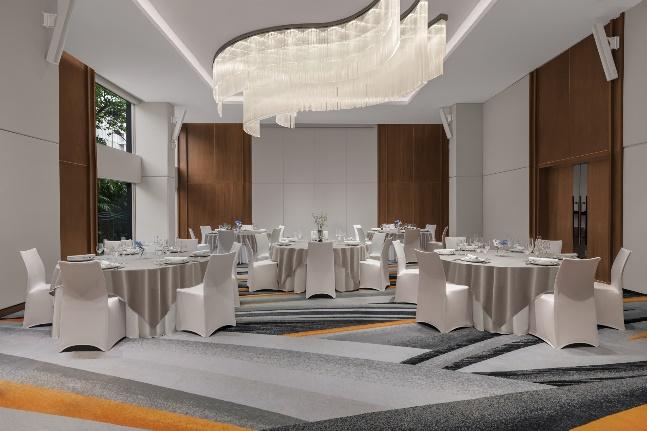
For business travelers and meeting planners, Courtyard by Marriott North Pattaya’s Grand Ballroom can host exceptional events. This impressive 230-square meter, pillar-free function room can host mid-sized meetings or social occasions, or be divided into two smaller spaces for more intimate events. The foyer also provides a great option for coffee breaks and cocktail receptions.

“Pattaya is a great destinations and has a lot to offer to every kind of travelers, from business travelers visiting the vibrant business parks of the Eastern Seaboard to couples seeking a spot of beachfront relaxation, and families or friends planning an energizing break with plenty of activities. We look forward to welcoming travelers to Pattaya and extending to them the same amazing levels of service excellence and great hospitality that our guests have come to expect from Courtyard hotels across the world,” said Shashank Singha , General Manager, Courtyard by Marriott North Pattaya.

image6 6

Guests can rest assured that Courtyard by Marriott North Pattaya upholds the highest health and safety standards under Marriott International’s global “Commitment to Clean”. It has also been certified by the Amazing Thailand Safety & Health Administration Extra Plus (SHA++) program.

Courtyard by Marriott North Pattaya becomes the third Courtyard branded hotel in Thailand, joining the popular Courtyard by Marriott Bangkok and the recently-opened Courtyard by Marriott Phuket Town. For more information about Courtyard by Marriott, please visit courtyard.marriott.com.

image5 12

image1 20

Advertisement

Thailand Bans Cryptocurrency Payments for Goods and Services

A bitcoin logo is displayed at a 2014 Inside Bitcoins conference and trade show in New York. Photo: Mark Lennihan / AP

BANGKOK (AP) — Thailand’s securities regulator announced Wednesday that it is barring the use of cryptocurrencies for payment of goods and services.

The ruling effective April 1 does not ban investment in cryptocurrencies, which has become increasingly popular in the past year after being promoted by local exchanges.

The Securities and Exchange Commission said it was taking action in order to protect the stability of the country’s financial and monetary systems from threats including money laundering and other cybercrimes.

The regulation also specifically bans the promotion of cryptocurrencies for payment along with the distribution of software and devices for that purpose.

It says as well that operators of digital asset businesses must warn their customers of the ban and can suspend their accounts if they violate the regulation.

Businesses have until the end of April to comply with the ban.

Advertisement

Hot News

LATEST NEWS

Bangkok
broken clouds
29.4 ° C
29.4 °
25.5 °
71 %
2.9kmh
60 %
Mon
29 °
Tue
38 °
Wed
37 °
Thu
36 °
Fri
37 °