































LANZHOU (Xinhua) — The northwest region of China, which used to be cold and dry, is now getting warmer and wetter, climate experts said.
Academics have noticed as early as the 1980s the increasing rainfall in the northwestern areas and speculated that the areas would become warm and wet.
“The speculation about the climate change in northwest China in the next 30 years has been confirmed,” said Ding Yihui, an expert of the China Meteorological Administration.
Chen Baofu works for an airport in Gansu Province. As an old shuttle bus driver, Chen said he has noticed the changes on the road linking the airport and the capital city of Lanzhou over the past few years.
“The 70-km-long road was built on barren mountains. But there is more rainfall here, and more plants grow on the mountains nowadays,” Chen said.
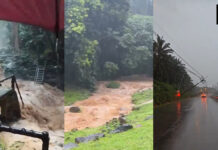
The arid climate was a major reason that the Mogao Grottoes, a UNESCO World Heritage site, has been preserved for thousands of years. But as rainfall increased in the summer, the tourist attraction in Gansu was shut down temporarily, while the gobi desert nearby has also seen grass growing.
“We used global climate models to predict that this trend will last until the mid-21st century,” Ding added.
Statistics from the meteorological departments of northwestern provinces of Shaanxi, Gansu, Qinghai and Ningxia Hui Autonomous Region showed these areas have seen climate warming and increasing precipitation since 1961, while the trend of warming and humidification has become striking since 2000.
In Gansu alone, from 1961 to 2015, the temperature in the province has risen steadily at a rate of 0.29 degrees Celsius every 10 years.
In 2018, the average temperature in Gansu was 0.7 degrees Celsius higher, and the average precipitation increased by 27.7 percent as well.
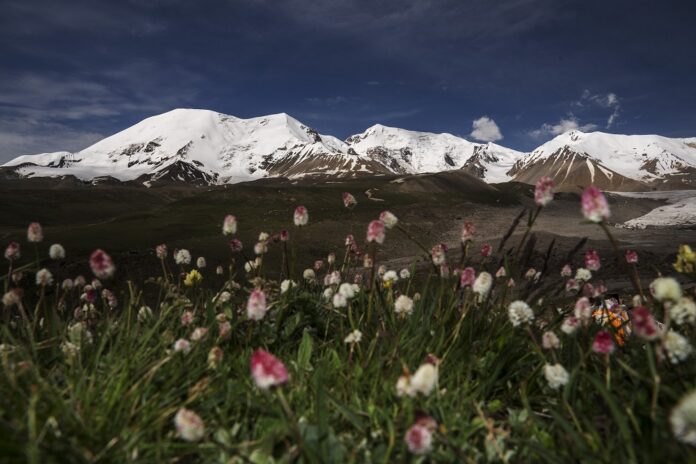
Research results released by the Chinese Academy of Sciences (CAS) and other institutions also showed that China’s northwestern regions, particularly the central and western areas within the range, have more precipitation, including part of Xinjiang, the Qilian Mountains, the Hexi Corridor and the Qinghai-Tibet Plateau.
In the eastern part of northwest China, the increase in precipitation was not obvious, with some areas even having a slight decrease.
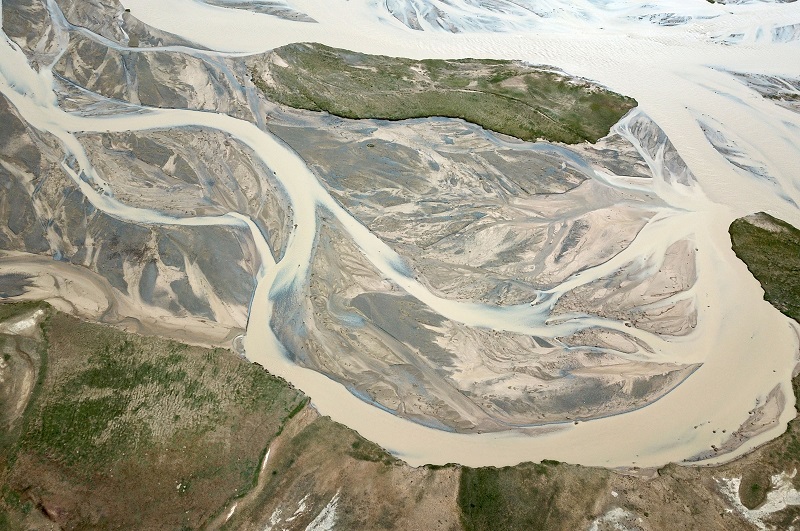
Meanwhile, an increase in melting glaciers, river runoff and the rise of lakes’ water levels have emerged in northwest China.
A research report carried out by the CAS suggested that the changes in northwest China were probably caused by an intensification of the water cycle triggered by global warming.
Zhang Qiang, deputy director of Gansu’s provincial meteorological bureau, said that the northwest region is more sensitive to global warming, therefore, the impact of climate change on the regions is more significant.
Some experts believe that the warmer and wetter climate is good for the development of agriculture and ecological restoration.
Li Zongsheng, an associate researcher with the Northwest Institute of Eco-Environment and Resources, CAS, said that, in the short term, it is of positive significance for local economic development by seizing the opportunities to appropriately increase the scale of agricultural cultivation.
However, Li stressed that the droughty weather in northwest China cannot be changed. “We should coordinate the relationship between sustainable development and water resources,” Li added.
“As the climate gets warmer, more natural disasters including torrential rainfall and landslides could occur in the region. It is important to raise the awareness of disaster prevention and relief,” Zhang warned.