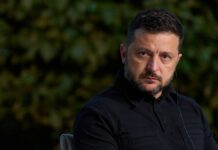






















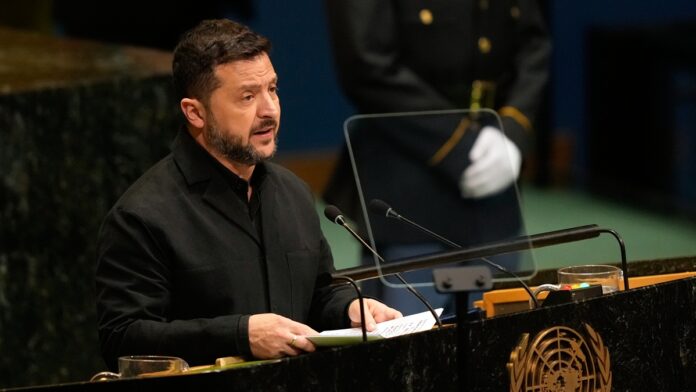
SEOUL, South Korea (AP) — Ukraine has sent two North Korean prisoners of war to South Korea, Ukrainian President Volodymyr Zelenskyy told the U.N. General Assembly on Wednesday, following months of consultations between Kyiv and Seoul after the soldiers were captured in Russia’s Kursk region in 2025.
South Korea’s Foreign Ministry did not directly confirm Zelenskyy’s comments but said it had been consulting with Kyiv and other relevant parties to resolve the matter in a manner that respects the soldiers’ free will and complies with international law and humanitarian principles.
The ministry said in a statement that it would not confirm details about the soldiers’ “disposition, the timing or route of their transfer or specific contents of consultations” with Ukraine, calling it a sensitive matter concerning the safety of the soldiers and their families.
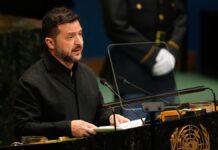
In his speech to the U.N., Zelenskyy said Ukraine recently transferred the soldiers to South Korea, but did not provide more details about the transfer.
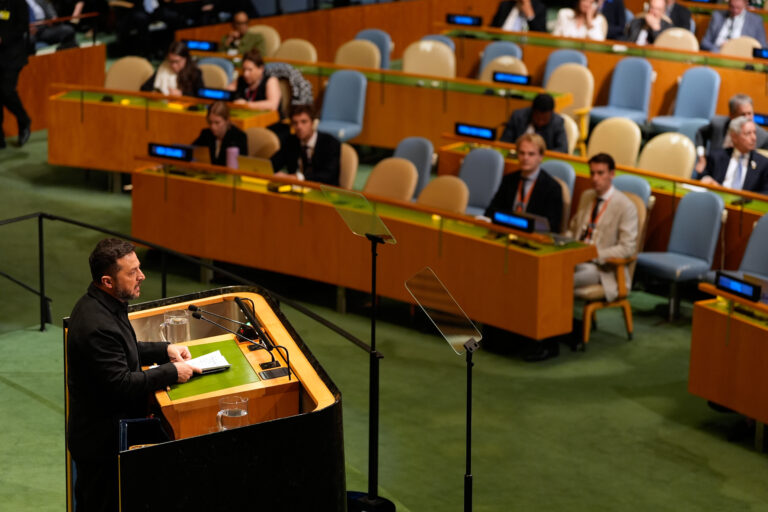
“These guys are not easy to capture alive,” he said. “One of them, when he realized he was going to be taken prisoner, tried to kill himself and he was shocked that fate didn’t let him die. This is how they raise people in the North.”
The soldiers were among thousands of North Korean troops sent to support Russia’s war on Ukraine. North Korean leader Kim Jong Un has also supplied Russia with large quantities of weapons, including artillery shells and ballistic missiles, while leveraging his strengthened ties with Moscow to accelerate the development of his nuclear-armed military and pursue a more assertive foreign policy, positioning Pyongyang alongside Moscow and Beijing in a united front against Washington.
South Korea, the U.S. and their partners worry Russia may transfer high-tech technologies in exchange that can enhance North Korea’s nuclear and missile programs.
Following the soldiers’ capture in Kursk in January 2025, South Korea urged Kyiv not to send them back to North Korea, where they could face persecution, and said it was willing to accept them if they wished to resettle in the South. In some media interviews, the soldiers appeared to express a desire to go to South Korea.
In April 2025, North Korea and Russia confirmed that their soldiers fought together to repel a Ukraine incursion into Russia’s Kursk border region. The two countries haven’t disclosed exactly how many North Koreans soldiers were deployed. South Korea’s intelligence service estimated in April 2025 that North Korea had sent about 15,000 troops to Russia since October 2024 and that about 2,000 of them were killed.