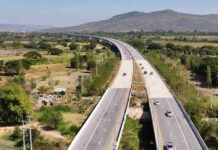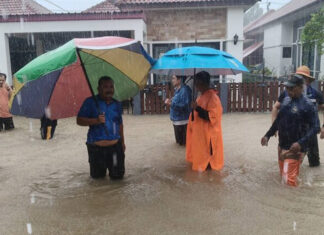



































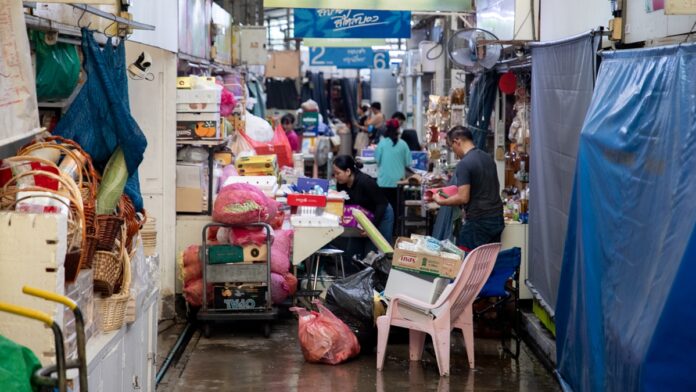
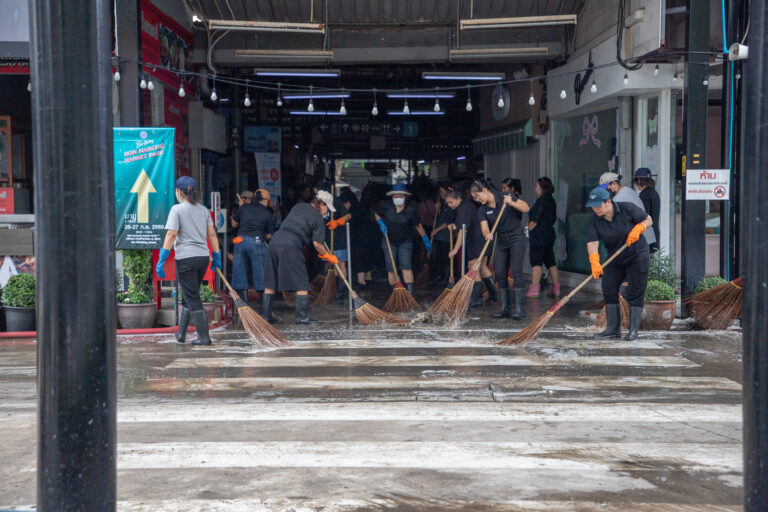
Flooding continued in parts of Bangkok on Monday despite easing rain, with authorities assisting affected residents and moving some people to temporary shelters. Nationwide, at least eight people have reportedly died in flooding over the past 10 days.
Government spokesperson Ekkaphop Pienpisan said rainfall in Bangkok had decreased, with drainage continuing in several areas. Some roads have returned to normal, but several communities and sois remain heavily flooded, including Kheha Khlong Chan, Kheha Rom Klao, Kheha Ram Inthra, Soi Prasert-Manukit 27, Soi Lat Phrao 101/1 and Soi Ramkhamhaeng 24.
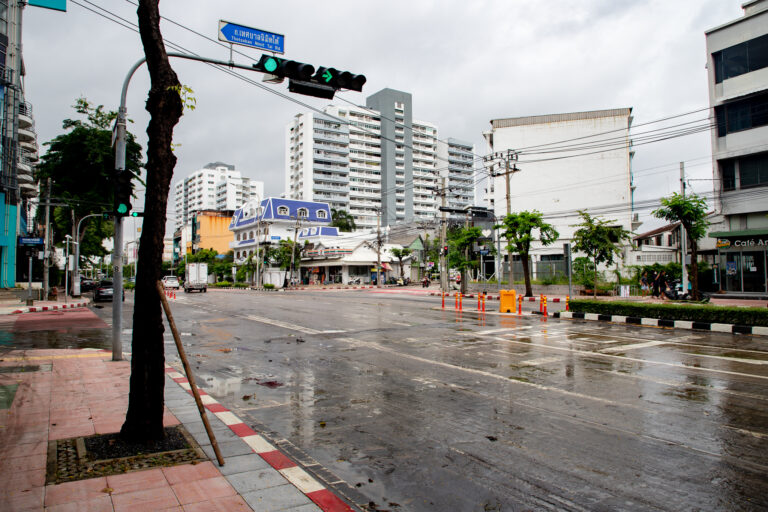
The Chao Phraya Dam continues to release water at 1,900 cubic metres per second, with no increase in the release rate, according to the government.
Floods expected to cause 12.3bn baht in economic losses
The University of the Thai Chamber of Commerce’s Centre for Business and Economic Forecasting estimates that flooding between 25 and 29 September could cause 12.28 billion baht in economic losses, equivalent to 0.066% of Thailand’s annual GDP.
Bangkok is expected to suffer the largest losses, estimated at 7.01 billion baht, or 57% of the total. The eastern region is estimated to lose 2.98 billion baht, while Samut Prakan, Pathum Thani, Nonthaburi and Nakhon Pathom face combined losses of about 1.84 billion baht.
The centre estimates total losses could range from 5.9 billion to 20.6 billion baht, depending on the actual flooded areas and how quickly disrupted economic activity can resume. The estimate does not include damage to property, homes, vehicles, inventories or agricultural output.
Consumer spending, tourism and urban services have been among the hardest-hit sectors, affecting travel, hotels, restaurants and small businesses. Some flooded roads have also disrupted the transportation and distribution of goods, while prices of fresh vegetables, particularly leafy vegetables, have started to rise.
Industrial activity has so far been affected mainly by disruptions to workers’ travel and the transportation of raw materials. No industrial estates in the Eastern Economic Corridor have reportedly been forced to halt production.
Authorities monitor high-risk areas as government prepares relief
Authorities are also monitoring areas in Kanchanaburi, Phetchaburi and Rayong. Residents in vulnerable areas have been advised to follow official announcements and prepare for possible evacuation.
In Phetchaburi, four districts — Kaeng Krachan, Tha Yang, Ban Lat and Mueang Phetchaburi — have been placed under watch after rainfall north of Kaeng Krachan Dam prompted the need for increased water releases.
In Rayong, the Prasae Reservoir was at 112.6% of capacity as of 7:00 Monday, requiring additional discharge through its spillway. Areas of Klaeng and Wang Chan districts could be affected. Officials also said an embankment at the Khao Chuk reservoir had not broken, although part of the right side of its spillway had been damaged by erosion.
The government has begun the process of compensation and recovery. Officials said Bangkok residents could be eligible for the same basic compensation criteria used in other provinces, although details of the Bangkok scheme still need to be worked out.
The government has set aside about 2 billion baht in central funds for flood relief nationwide, covering flooding reported from 20 September onwards.
The economic forecasting centre expects the flooding to ease within a week if the situation does not persist. It warned that prolonged flooding in the Chao Phraya basin into the fourth quarter could put further pressure on Thailand’s economy.